
 English
 한국어
한국어 Español
 Deutsch
Ice is an essential part of the customer experience in cafés, milk tea shops, restaurants, fast-food outlets, offices, and homes. It cools drinks, supports food presentation, improves convenience, and helps businesses serve products quickly during busy periods. However, not every ice maker delivers the same balance of production efficiency, storage convenience, hygiene, compactness, and ease of use. The Touchscreen Ice Maker, identified as the Alien-Z01, is designed to address these practical requirements through a compact bullet-ice format, rapid cooling performance, efficient continuous ice-making principles, and a fully opening design that simplifies cleaning and maintenance.
Unlike a conventional freezer that produces large, solid cubes over an extended period, this type of ice maker is designed for users who need ice on demand. Its bullet-shaped ice is formed with a perforated center, creating a larger contact area between the ice and the beverage. As a result, drinks can be cooled quickly without requiring a large amount of ice. The shape also helps reduce sticking during storage and dispensing, making the machine suitable for both manual service and applications where ice must be handled frequently throughout the day.
The product combines a 150-watt operating system with a compact footprint of 325 by 295 by 252 millimeters. Its 220V–240V, 50Hz power supply is suitable for many standard electrical environments, while its R600a refrigerant and 19-gram charge support the machine’s refrigeration system. These specifications make the unit practical for locations where counter space is limited but reliable access to fresh ice is still important.
Behind the product is a manufacturer focused on household appliances, including ice makers, coffee machines, and air fryers. Its development philosophy centers on smart technology, practical design, dependable quality, continuous improvement, and the goal of making everyday life more convenient. These priorities are reflected in the machine’s compact structure, user-oriented operation, service-friendly design, and emphasis on hygiene.
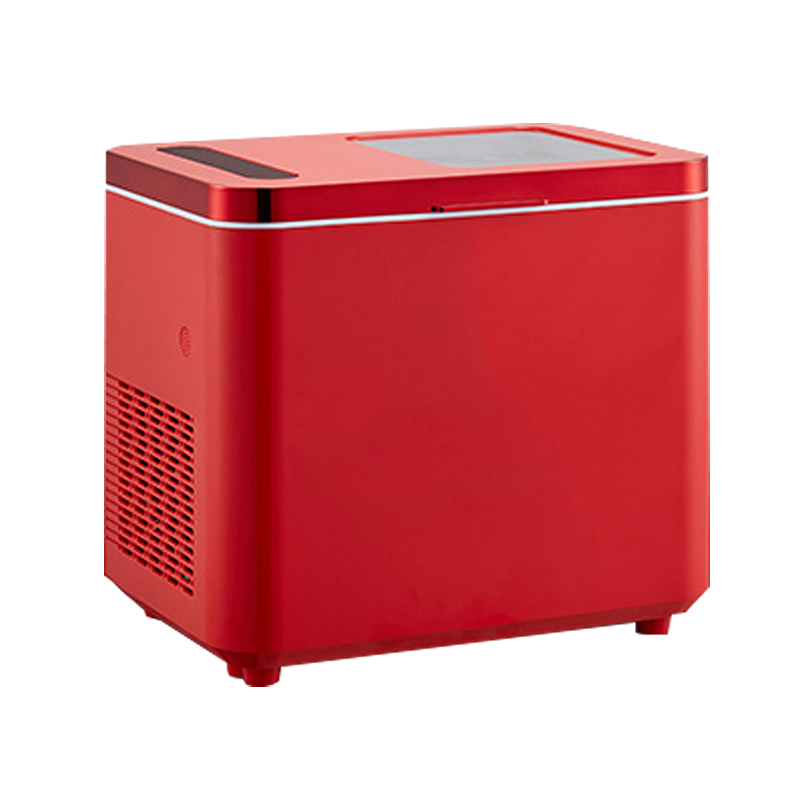
Touchscreen ice maker
A Practical Ice-Making Solution for Daily Use
The Alien-Z01 is a bullet ice maker developed for users who value speed, convenience, and efficient use of space. It is suitable for households that regularly prepare chilled beverages, but its design also has clear value in commercial environments such as milk tea shops, fast-food restaurants, cafés, snack counters, and small catering operations. The machine can produce a continuous supply of ice without requiring the user to manually fill trays, transfer frozen cubes, or wait for a large freezer compartment to reach the correct temperature.
Its product category is listed as Bullet Ice Maker, a format recognized for producing hollow or partially hollow ice pieces with a rounded, bullet-like shape. The perforated center is more than a visual feature. It affects cooling performance, handling, and the way the ice interacts with beverages. Because the ice has an open or recessed center, more of its surface can come into contact with the liquid. This helps beverages cool rapidly, which is especially valuable when a customer expects a cold drink immediately.
For businesses, faster cooling can support smoother service. A customer does not need to wait for a drink to reach the desired temperature before it is served. Staff members can prepare beverages more quickly, and the ice can perform effectively even when drinks are assembled during busy service periods. At home, the same feature is useful when preparing iced coffee, soft drinks, fruit beverages, cocktails, mocktails, tea, and other chilled refreshments.
The compact structure is another important characteristic. With dimensions of 325X295X252mm, the machine can fit on many kitchen counters, beverage stations, office tables, and service shelves. Its relatively small footprint gives users greater flexibility when arranging equipment. A large commercial ice machine may offer high capacity but can be difficult to place in a small shop or home kitchen. This product is aimed at the practical middle ground: it provides dedicated ice-making capability while avoiding the space demands of larger equipment.
Space efficiency also helps businesses make better use of limited working areas. A beverage station often needs to accommodate cups, sealing machines, syrups, tea equipment, coffee machines, blenders, refrigeration, and storage containers. An ice maker that occupies less counter space leaves more room for preparation and customer service. This can be particularly useful for compact stores, kiosks, mobile food-service settings, and small office kitchens.
Rapid Cooling Through a Perforated Ice Design
One of the product’s main advantages is the rapid cooling effect created by its perforated bullet-shaped ice. Solid ice cubes have a relatively simple external surface. A bullet ice piece with a hollow or perforated center exposes more area to the surrounding beverage. This increased contact area allows heat to transfer from the drink to the ice more efficiently.
Rapid cooling is valuable in many practical situations. In a café, iced coffee may need to be cooled quickly after brewing. In a milk tea shop, freshly prepared tea must be brought to a serving temperature before ingredients are added. In a restaurant, soft drinks and juices may need to be chilled for immediate service. At home, users may want a cold drink without waiting for a refrigerator to cool it gradually. The design of the ice supports all of these applications.
The ice shape can also help reduce the amount of ice needed to achieve a refreshing result. Since the ice has a large effective contact area, it can cool a beverage efficiently while providing a pleasant visual appearance. This does not mean that every drink will require the same quantity of ice, because results depend on the drink’s initial temperature, serving volume, room conditions, and personal preference. Nevertheless, the geometry gives the product a practical advantage over basic solid ice when quick cooling is a priority.
Fast cooling is also connected to customer satisfaction. A cold drink is often associated with freshness and quality. If the beverage remains warm or takes too long to cool, the customer experience can suffer. By making ice available whenever it is needed, the machine helps staff maintain consistent service. This consistency is important for businesses that want to deliver the same product experience throughout the day.
The rounded bullet form is also gentle on many drink containers. While users should always handle ice carefully and follow suitable serving practices, the absence of sharp corners can make the pieces convenient to scoop and add to cups. The shape is visually distinct from ordinary cube ice and may contribute to a more recognizable beverage presentation.
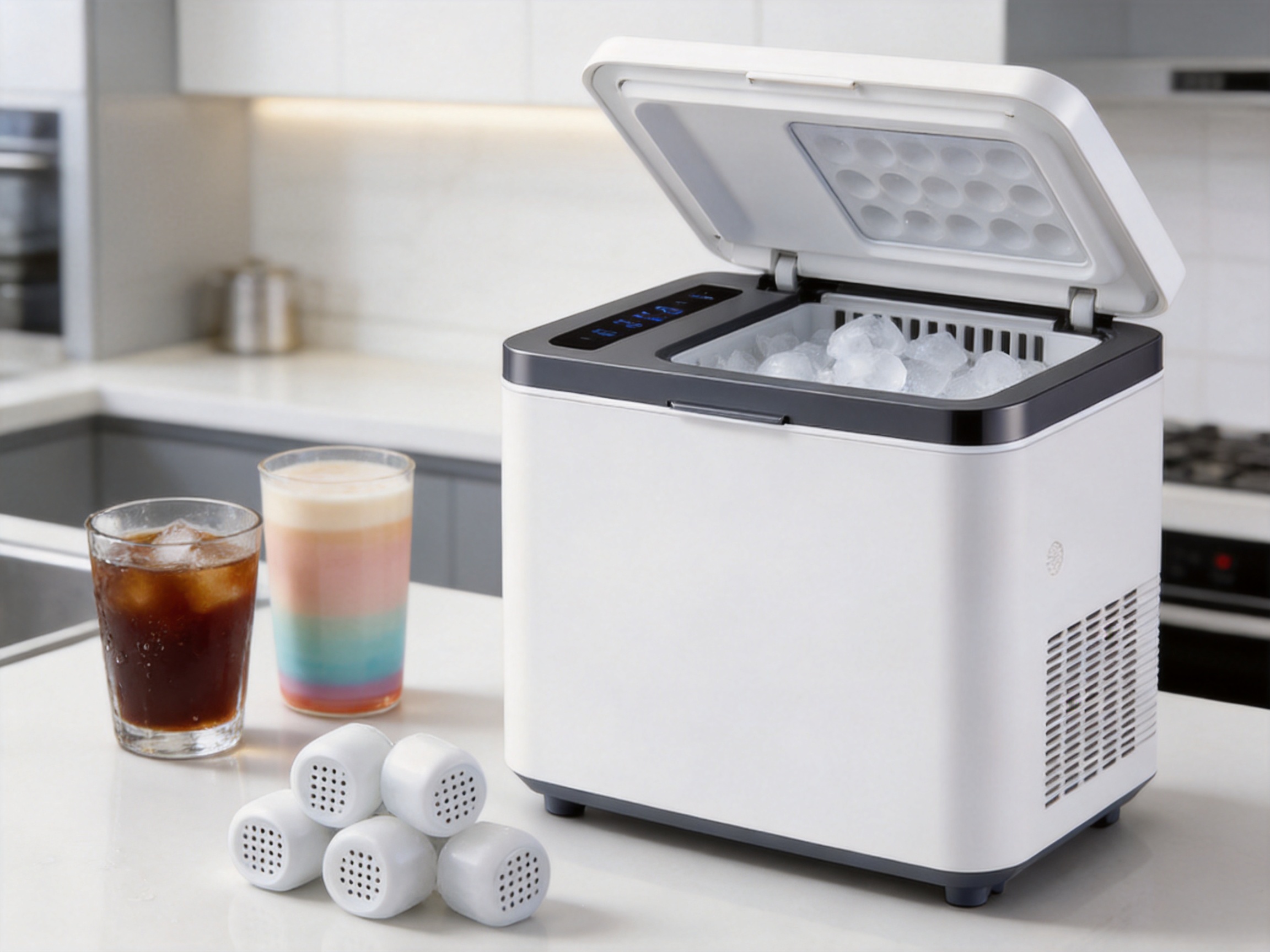
Non-Sticky Ice for Easier Storage and Dispensing
Ice that clumps together can create unnecessary problems. When frozen pieces stick together, staff may need to separate them manually before serving. This slows down preparation, creates inconvenience, and can make portion control more difficult. In automatic dispensing systems, clumping may also interfere with smooth movement through the dispensing path.
The unique bullet form of the ice is designed to provide high flowability and reduce sticking during storage and dispensing. Its shape gives pieces fewer large flat surfaces that can freeze together. As a result, the ice is easier to handle with a scoop and more suitable for regular service operations. This advantage is particularly relevant to milk tea shops, fast-food restaurants, beverage counters, and other settings where ice is used repeatedly throughout the day.
Easy dispensing improves workflow. A staff member can open the storage area, collect the required amount, and add it to the drink without spending time breaking apart a frozen mass. When orders arrive quickly, small improvements in handling can produce meaningful gains in overall service speed. The same convenience benefits households, where users can take out only the amount they need for a single drink or family gathering.
High flowability can also support better hygiene practices. If ice pieces separate easily, users are less likely to use excessive force or touch a large quantity of ice while trying to break it apart. A scoop can be used more effectively, helping reduce unnecessary hand contact. Users should still follow normal food-safety procedures, including washing hands, cleaning utensils, and keeping the ice storage area closed when not in use.
The shape is compatible with different serving styles. It can be placed directly into cups, transferred with an ice scoop, or used in beverage preparation stations. For businesses considering future automation, the free-flowing design may also be useful in systems that require ice to move through a controlled path. Actual compatibility depends on the specific dispensing equipment, but the product’s design direction is clearly suited to easy handling.
A Crunchy Texture with Broad Consumer Appeal
Ice texture influences the way people enjoy a beverage. Some consumers prefer large, hard cubes that melt slowly. Others enjoy ice that is easier to bite and has a light, crunchy character. Bullet ice occupies an appealing position between these preferences. It has moderate hardness and is not as dense as a fully solid ice cube, which can create a pleasant eating texture for consumers who enjoy chewing ice.
This characteristic has helped similar ice formats become popular in milk tea shops, fast-food restaurants, cafés, and casual beverage outlets. Consumers may enjoy the texture after finishing the drink, while the ice remains visually attractive during service. The rounded pieces can also complement drinks served in transparent cups, where the ice becomes part of the presentation.
Texture is not only about taste. It can influence how quickly ice melts, how it mixes with the beverage, and how comfortable it is to consume. Because the bullet form is comparatively light and has a perforated center, it can offer a different experience from large solid cubes. Users can choose it for drinks where refreshing texture and quick cooling are more important than very slow melting.
For businesses, a distinctive ice format can support product differentiation. Customers may notice when a beverage is served with an appealing, recognizable type of ice. Although the ice maker is not a substitute for good ingredients, careful preparation, or strong service, it can contribute to the overall identity of a beverage menu. The result is a small equipment choice that may have a visible effect on customer perception.
Continuous Ice-Making for Efficient Service
The machine uses a continuous ice-making principle. Instead of relying on traditional ice trays that freeze a fixed batch and require manual removal, the system is designed to produce a steady quantity of ice over time. This approach is well suited to users who need repeated access to fresh ice rather than a single small batch.
Continuous production can improve operational efficiency. Staff do not need to prepare trays in advance or transfer ice from a freezer to a separate storage container. The machine handles the core ice-making process in a dedicated unit, allowing users to focus on drink preparation and customer service. In a household, continuous operation is useful before parties, family meals, or social gatherings when demand for chilled drinks increases.
Commercial models based on continuous ice-making principles are often valued for their ability to produce significant quantities within a given period. The precise output of a particular unit can vary according to water temperature, ambient temperature, ventilation, operating conditions, and other factors. Even so, the operating concept offers an efficient alternative to manual freezing methods.
Continuous production also gives users more flexibility. They can start the machine ahead of a busy period and allow ice to accumulate in the storage area. During service, newly produced ice can continue to replenish the supply. This is more convenient than estimating demand several hours in advance and filling multiple trays. It also reduces the risk of running out of ice unexpectedly during periods of high demand.
Efficient ice production should be considered together with power consumption and equipment size. The Alien-Z01 lists a current and power rating of 0.9A/150W. This indicates a compact electrical system designed for practical everyday operation rather than the heavy power requirements associated with much larger industrial equipment. Users should always connect the product to a suitable electrical supply and observe the operating instructions supplied with the unit.
Specification |
Product Information |
Practical Significance |
Product name |
Touchscreen Ice Maker |
Provides convenient ice production for household and commercial beverage use |
Model description |
Alien-Z01 |
Identifies the compact bullet ice maker configuration |
Ice category |
Bullet Ice Maker |
Produces rounded, perforated ice designed for rapid cooling and easy handling |
Power supply |
220V–240V / 50Hz |
Designed for compatible standard electrical environments |
Current and power |
0.9A / 150W |
Supports a compact and practical operating system |
Refrigerant |
R600a / 19g |
Used by the refrigeration system for ice-making operation |
Machine dimensions |
325X295X252mm |
Helps the unit fit into limited counter and service areas |
Compact Construction for Flexible Installation
Many users want an ice maker but do not have room for a large appliance. The dimensions of the Alien-Z01 make it suitable for compact environments where every part of the counter must be used efficiently. A machine measuring 325X295X252mm can be considered for home kitchens, office pantries, café counters, beverage kiosks, small restaurants, and hospitality spaces with limited back-of-house capacity.
Compactness offers several advantages beyond simple placement. A smaller appliance is easier to integrate into an existing workflow. It can be positioned near cups, drink ingredients, and service tools, reducing unnecessary movement. In a shop, shorter movement paths may help staff prepare orders more efficiently. In a home, the machine can remain accessible without dominating the kitchen or requiring a separate equipment room.
The product’s compact structure is also consistent with the operating principle of bullet ice production. The design does not need the same internal arrangement as a large industrial machine, making it possible to provide useful ice-making functionality in a smaller body. This gives the product a competitive advantage over bulky units that may offer more capacity than a small business or household actually needs.
Installation planning remains important. Users should place the machine on a stable, level surface with sufficient clearance for ventilation and maintenance. The surrounding area should be dry, clean, and protected from excessive heat. The electrical connection should match the stated voltage and frequency requirements. A compact appliance can be easy to place, but it still needs an appropriate operating environment to deliver reliable performance.
Fully Opening Design for Easier Cleaning
Hygiene is one of the most important considerations when an appliance produces ice for human consumption. Ice comes into direct contact with beverages, so the storage and production areas must be kept clean. The Alien-Z01 uses a fully flip-top design that allows users to open the ice storage and ice-making areas more completely. This makes routine cleaning and inspection easier than designs with narrow openings or difficult-to-reach internal corners.
A wide-opening structure gives users better visibility. They can inspect the interior, identify residue, remove remaining ice, and wipe surfaces more effectively. This is helpful because hidden corners can be overlooked during daily cleaning. By making more of the interior accessible, the design supports a more thorough maintenance routine.
The cleaning process should be performed according to the manufacturer’s instructions. In general, users should disconnect the appliance from power when appropriate, remove unused ice, clean food-contact surfaces with suitable materials, rinse or wipe away residues, and allow areas to dry properly. Cleaning frequency depends on usage, water quality, environmental conditions, and local hygiene requirements. Commercial users may need a documented cleaning schedule.
The flip-top design also supports preventive maintenance. When the internal areas are easy to open, users can notice unusual buildup, water residue, or other conditions at an early stage. Early attention can help protect product quality and maintain smooth operation. It may also reduce the chance that small hygiene issues become larger maintenance problems.
Cleaning convenience is a meaningful advantage over machines that are difficult to access. An appliance may have strong production performance, but if its internal areas are inconvenient to clean, users may postpone maintenance. A fully opening structure encourages better habits because cleaning becomes a manageable part of everyday operation rather than a complicated task.
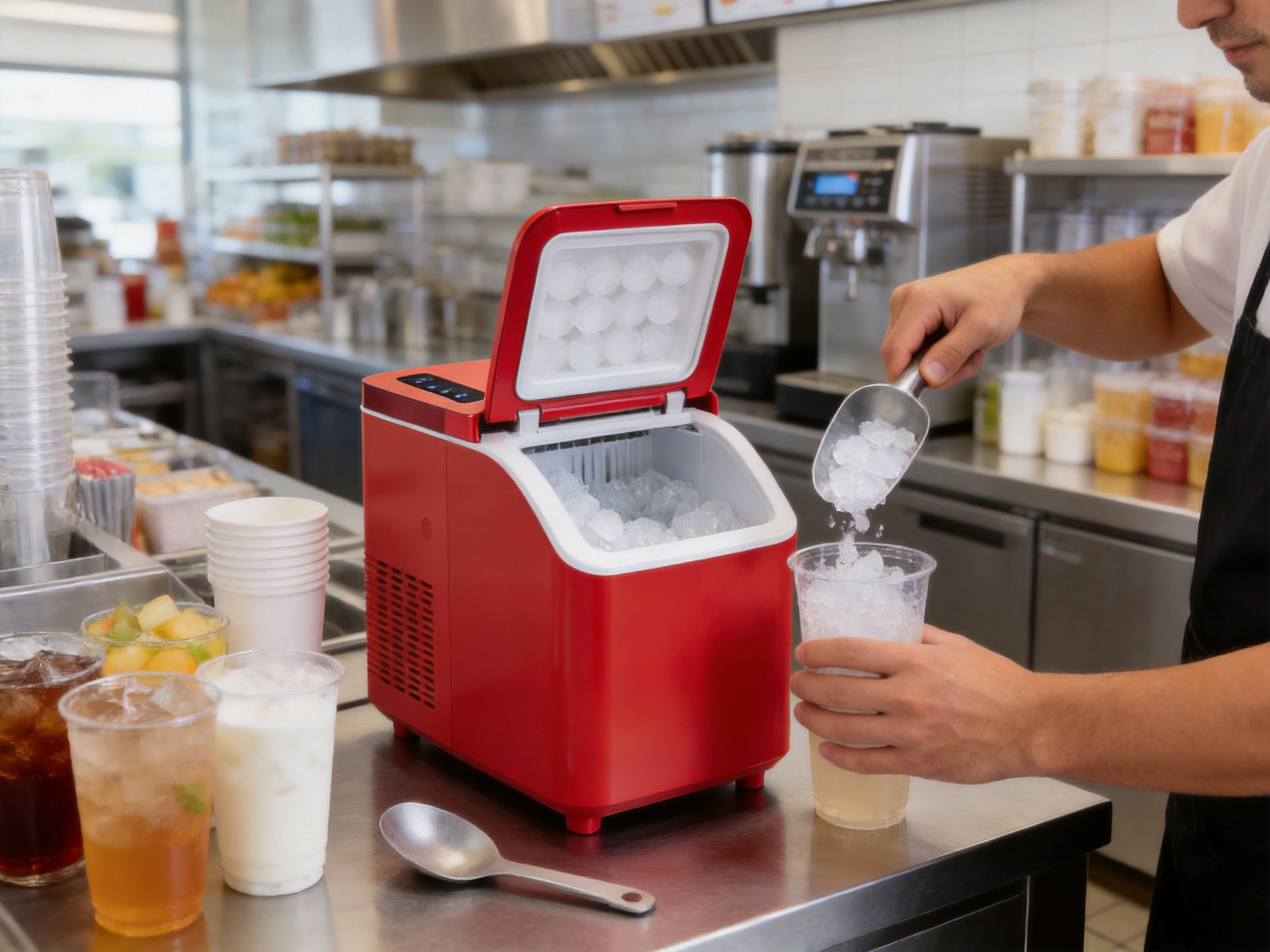
Designed Around User Convenience
The product title identifies the machine as a touchscreen ice maker, indicating an operating concept centered on straightforward user interaction. A touchscreen interface can make common controls more accessible by presenting them in a clear, modern format. Users can expect the controls to be designed around regular functions such as starting operation, selecting settings, checking status, or managing the ice-making cycle, subject to the final operating instructions for the unit.
Simple controls are valuable in busy environments. Staff members may need to begin production quickly, check whether the machine is operating, or respond to changing demand without navigating complicated mechanical controls. At home, an intuitive interface can make the appliance approachable for different members of the household.
User-friendly operation also supports consistency. When controls are clearly presented, different operators are more likely to use the machine in the same way. This helps businesses establish repeatable procedures for starting, stopping, cleaning, and checking the appliance. Consistency is especially important where several employees share responsibility for beverage preparation.
Smart technology should not mean unnecessary complexity. The most useful form of intelligent appliance design is technology that reduces effort and makes the appliance easier to understand. The manufacturer’s stated mission of simplifying life through smart technology is reflected in this product direction. The goal is not merely to add electronic features, but to make ice production more convenient, visible, and manageable.
Advantages Over Conventional Ice-Making Methods
The Alien-Z01 offers several advantages when compared with manual ice trays. Trays require users to fill them, place them in a freezer, wait for freezing, remove the ice, and repeat the process. This method can be inexpensive, but it is slow and labor-intensive. It also produces limited quantities and may occupy valuable freezer space.
A dedicated ice maker automates the production process. Users can add water according to the operating instructions and allow the appliance to create ice without repeatedly handling trays. The machine is better suited to situations where ice is needed regularly and in larger quantities than a household freezer can conveniently provide.
Compared with ordinary solid cubes, bullet ice offers faster cooling because of its perforated center and increased contact area. It also has a lighter, crunchier texture and may be easier to scoop because of its rounded form. These properties can make it more suitable for cold beverages served quickly.
Compared with large commercial ice machines, the compact design may be more appropriate for small spaces and moderate demand. A large machine can be valuable in a high-volume operation, but not every user needs industrial capacity. The Alien-Z01 is positioned as a practical option for users who want dedicated ice-making capability without the footprint and complexity of a larger installation.
Compared with machines that are difficult to access internally, the fully flip-top construction offers a maintenance advantage. Users can open the storage and production areas more completely, making it easier to clean and inspect the appliance. This can support hygiene, reduce maintenance friction, and improve long-term usability.
These advantages should be evaluated according to each user’s needs. A business with very high peak demand may require a larger system or multiple units. A household with occasional ice use may prefer manual freezing. However, for users who value quick, accessible, easy-to-handle ice in a compact appliance, the product provides a well-balanced solution.
Manufacturing Strengths and Product Development Philosophy
The manufacturer specializes in small household appliances, including ice makers, coffee machines, and air fryers. This product focus is significant because appliances in these categories share several demanding requirements: compact mechanical construction, reliable heating or cooling systems, user-friendly controls, food-contact hygiene, efficient use of electricity, and attractive integration into everyday spaces.
Experience across related appliance categories can support a broader understanding of consumer needs. An ice maker must be easy to operate and clean. A coffee machine must manage water, heat, and user interaction. An air fryer must combine airflow, temperature control, and practical cooking capacity. Across all three categories, successful products depend on the careful coordination of mechanical components, electrical systems, housing design, and user experience.
The company describes its manufacturing approach through a commitment to reliable quality, customer satisfaction, continuous improvement, and innovation. These principles are visible in the product’s practical features. The compact dimensions reflect attention to space efficiency. The perforated ice design shows consideration for cooling performance and texture. The easy-opening structure demonstrates awareness of hygiene and maintenance. The touchscreen concept indicates a focus on accessible operation.
Advanced manufacturing does not only refer to automated machinery or sophisticated electronics. It also includes the disciplined process of converting user requirements into a dependable finished appliance. This involves product planning, structural design, refrigeration-system integration, electrical safety considerations, component assembly, inspection, functional testing, packaging, and after-sales support. Each stage contributes to the product’s overall value.
For a compact ice maker, manufacturing precision is particularly important. The refrigeration system, water pathway, ice-forming components, storage area, controls, and housing must work together in a limited internal space. Components need to be arranged carefully so that the machine remains compact without sacrificing accessibility or serviceability. A well-coordinated production process helps maintain consistent assembly quality from one unit to the next.
Quality control is also important for food-related appliances. The surfaces that contact water or ice should be designed for practical cleaning and regular use. The housing must protect internal components while remaining easy for the user to operate. Electrical and refrigeration systems must be assembled according to appropriate production procedures. Functional testing can help verify that the finished product performs as intended before shipment.
Continuous improvement is especially valuable in a competitive small-appliance market. User feedback can reveal where controls need clarification, where cleaning access can be improved, or where packaging and instructions can be made more useful. By combining customer information with internal engineering and production experience, a manufacturer can refine later product batches and develop stronger future models.
Refrigeration System and Responsible Product Use
The product uses R600a refrigerant with a listed charge of 19g. R600a is a refrigerant commonly used in compact refrigeration appliances. The specification identifies the refrigerant type and charge used by the product’s refrigeration system, allowing users and service personnel to understand the equipment configuration.
Because refrigeration systems involve pressure, electrical components, and specialized materials, users should not attempt unauthorized repairs or refrigerant handling. Maintenance requiring access to the sealed refrigeration circuit should be performed by qualified personnel. The machine should be operated in accordance with the supplied instructions, including requirements related to placement, ventilation, cleaning, and electrical connection.
The 150W power rating reflects the product’s compact operating scale. Actual energy use can vary depending on ambient temperature, water temperature, production frequency, operating duration, and the condition of the machine. To support efficient use, users should avoid placing the unit near strong heat sources, maintain adequate ventilation, and keep the appliance clean.
Responsible use also includes selecting suitable water. Water quality can influence ice appearance, taste, residue, and maintenance requirements. Users should follow the manufacturer’s recommendations for water and cleaning. Where local water conditions are hard or contain significant mineral content, more frequent cleaning may be appropriate.
Applications in Homes and Commercial Locations
In a household, the ice maker can support daily cold drinks without relying entirely on freezer trays. It can be used for iced tea, lemonade, fruit juice, sparkling water, iced coffee, smoothies, mocktails, and other refreshments. It is also useful during celebrations, family gatherings, weekend meals, and hot-weather activities when the demand for ice is higher than usual.
In an office, the machine can provide convenient ice for staff kitchens, meeting rooms, reception areas, and informal hospitality. Employees can prepare chilled water or coffee without taking up freezer space. The compact format is suitable for workplaces where a large appliance would be unnecessary.
In cafés and milk tea shops, rapid cooling and easy scooping are major benefits. Staff can use the ice during tea preparation, cold coffee service, fruit drinks, and specialty beverages. The crunchy texture may also appeal to customers who enjoy chewing ice after finishing a drink.
In fast-food restaurants, quick service is essential. The machine’s bullet ice can cool beverages efficiently, while its non-sticky form supports fast handling. The fully opening design is useful for establishments that need a clear daily cleaning routine and frequent access to the storage area.
Small catering businesses can use the machine for events, service counters, and temporary beverage stations, provided that the installation environment, power supply, ventilation, and water access are suitable. Hospitality businesses may also consider it for guest refreshment areas, breakfast stations, lounges, and staff facilities.
The product can also be useful in environments where a large ice-making system would be excessive. A boutique café, small restaurant, studio, salon, showroom, or home-based beverage business may benefit from a compact appliance that provides dedicated ice production without requiring a major renovation.
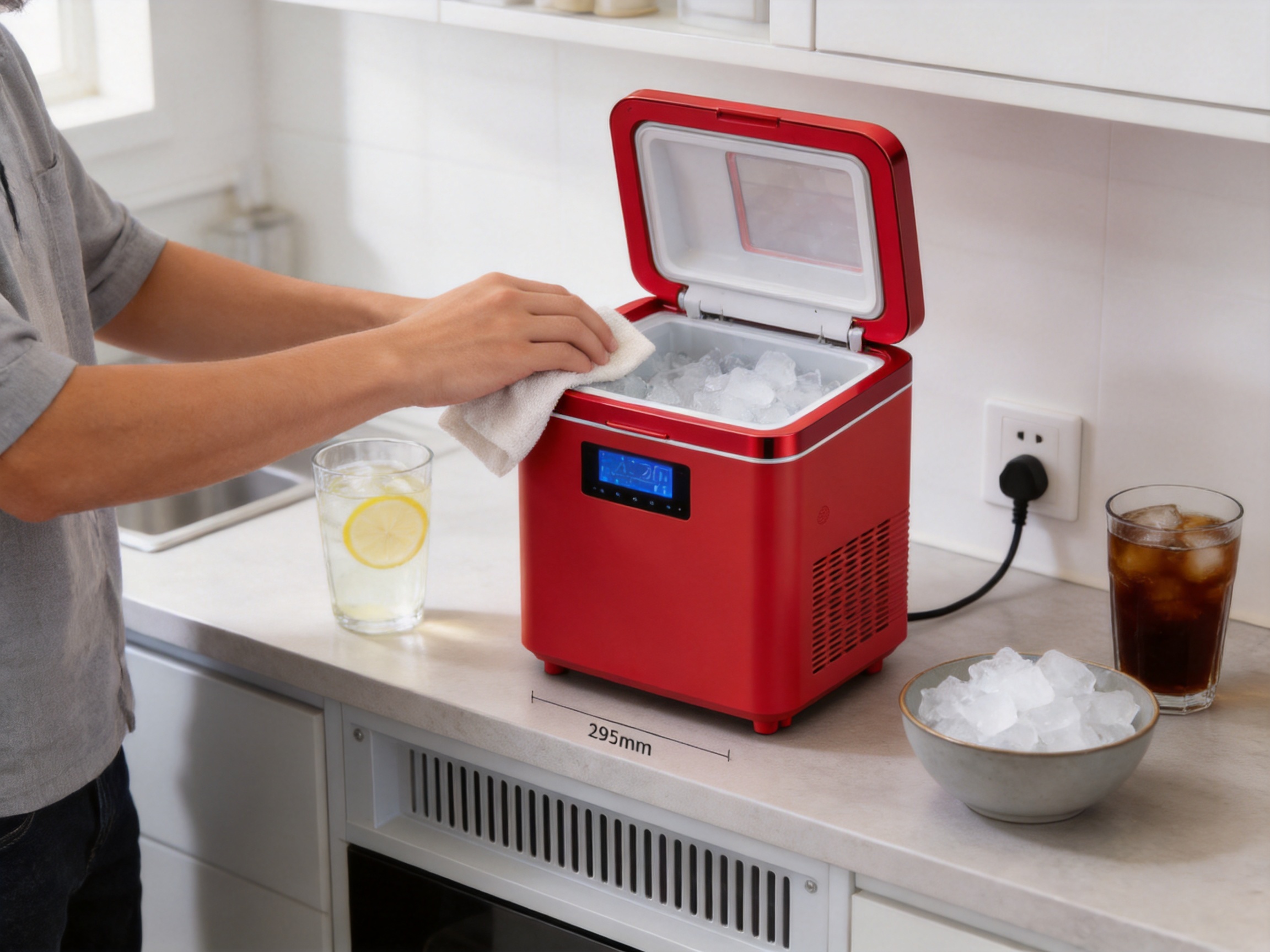
How to Maximize Performance
Correct placement is the first step toward reliable operation. The machine should be installed on a level, stable surface that can support its weight and withstand moisture. Adequate space should be left around ventilation areas so heat can dissipate. The appliance should not be placed directly beside an oven, radiator, or other strong heat source.
Before use, operators should confirm that the electrical supply matches the stated 220V–240V/50Hz requirement. The power cord and plug should be checked for visible damage. If any electrical problem is suspected, the machine should not be used until it has been inspected by a qualified professional.
Water should be added according to the operating instructions. Overfilling, using unsuitable water, or operating the appliance without the required water supply may affect performance. Users should also avoid introducing contaminants into the water reservoir or storage area.
To support efficient ice production, the machine should be operated in a reasonably cool and well-ventilated environment. Very high ambient temperatures may increase the time needed to make ice. Keeping the exterior and ventilation areas free from dust can help maintain airflow and reduce unnecessary strain on the refrigeration system.
Ice should be handled with a clean scoop or suitable utensil. Users should avoid touching stored ice directly with bare hands. The storage area should remain closed whenever ice is not being removed. These simple habits help preserve product hygiene in both household and commercial settings.
Regular cleaning is essential. The storage area, water-contact surfaces, ice-making area, and accessible internal surfaces should be cleaned according to the recommended schedule. Any cleaning agent used must be suitable for the appliance and food-contact environment. After cleaning, surfaces should be rinsed or wiped as directed and allowed to dry appropriately.
Maintenance, Hygiene, and Long-Term Value
A well-maintained ice maker can provide better performance and a more consistent user experience. Maintenance should not be treated as an occasional emergency task. It is more effective when incorporated into a routine that includes cleaning, inspection, and correct operating procedures.
Users should monitor the ice for unusual taste, odor, discoloration, or excessive residue. If any of these conditions appear, production should be paused while the appliance and water supply are inspected. The machine should not be used to produce ice for consumption until the cause has been addressed.
The fully flip-top construction makes routine inspection less difficult. Users can open the relevant areas, remove remaining ice, and inspect surfaces that may otherwise be hidden. This accessibility is a practical advantage because maintenance is more likely to be completed when it does not require complicated disassembly.
Long-term value also comes from using the machine for the right application. The Alien-Z01 is designed as a compact ice maker, not necessarily as a replacement for every high-volume commercial system. When matched with an appropriate workload, it can provide useful capacity, fast cooling, manageable cleaning, and efficient use of space. If demand becomes significantly higher, businesses can review their workflow and consider additional units or a larger dedicated system.
Dependable manufacturing supports this long-term value. A product designed with attention to structure, refrigeration integration, controls, and cleaning access can be easier to operate and maintain over time. The manufacturer’s emphasis on customer satisfaction and continuous improvement provides a foundation for refining products in response to practical user needs.
Why This Product Stands Out
The strongest advantage of the Touchscreen Ice Maker is its combination of features rather than one isolated specification. It offers a perforated bullet ice shape for rapid cooling, a non-sticky design for easier dispensing, moderate hardness for a crunchy texture, a continuous ice-making principle for repeated production, and a compact body for space-conscious installation.
It also addresses an issue that is sometimes overlooked in product comparisons: cleaning accessibility. The fully flip-top design makes the ice storage and ice-making areas easier to open, inspect, and clean. For a machine that produces ice for consumption, this is a major practical consideration. A product that is convenient to clean can support better hygiene habits and more consistent daily use.
The stated 220V–240V/50Hz power supply, 0.9A/150W operating rating, R600a/19g refrigerant specification, and 325X295X252mm dimensions provide useful information for planning installation and procurement. Buyers can compare the product with alternatives according to electrical compatibility, available counter space, intended workload, ice texture, handling requirements, and maintenance expectations.
The manufacturer’s strength lies in combining appliance specialization with an understanding of everyday convenience. Its product range includes ice makers, coffee machines, and air fryers, all of which require practical engineering and attention to household and food-service use. The company’s stated mission, centered on smart technology, simplified living, health, enjoyment, quality, and innovation, aligns with the needs addressed by this appliance.
For users seeking a compact machine that can produce distinctive, quick-cooling ice without the inconvenience of manual trays, the Alien-Z01 is a well-rounded choice. It is particularly attractive to customers who value service speed, easy handling, straightforward maintenance, and flexible placement.
Q&A
What type of ice does the machine produce?
The machine is categorized as a Bullet Ice Maker. It produces rounded, bullet-shaped ice with a perforated center. This structure increases the contact area between the ice and a beverage, supporting rapid cooling and providing a light, crunchy texture.
Why does the perforated center help cool drinks quickly?
The perforated center increases the effective surface area of the ice that can contact the beverage. Greater contact allows heat to transfer from the drink to the ice more efficiently, helping the beverage become cold in a shorter period under suitable operating conditions.
Is the ice easy to scoop?
Yes. The product is designed to produce ice with high flowability and reduced clumping. The rounded form helps the pieces separate more easily during storage and dispensing, making them convenient to handle with a clean ice scoop.
Can the ice be used in milk tea and fast-food beverages?
Yes. The product information specifically identifies milk tea shops and fast-food restaurants as suitable applications. The ice can also be used for iced coffee, juice, soft drinks, tea, cocktails, mocktails, and other chilled beverages.
What is the machine’s power requirement?
The listed power supply is 220V–240V/50Hz. The current and power specification is 0.9A/150W. Users should confirm that their electrical supply matches these requirements before installation and operation.
What refrigerant does the machine use?
The machine uses R600a refrigerant with a listed charge of 19g. Refrigeration-system repairs and refrigerant handling should be performed only by qualified personnel.
How large is the ice maker?
The listed machine dimensions are 325X295X252mm. This compact size allows the unit to fit into many home kitchens, office pantries, café counters, beverage stations, and other areas where counter space is limited.
Is the machine suitable for commercial use?
It can be suitable for small commercial applications such as milk tea shops, cafés, fast-food outlets, small restaurants, catering stations, and beverage counters. Businesses should assess their expected ice demand, peak service periods, installation conditions, and local operating requirements before selecting equipment.
How does the fully flip-top design help users?
The fully flip-top design allows users to open the ice storage and ice-making areas more completely. This improves visibility and access, making it easier to remove remaining ice, inspect surfaces, and perform daily cleaning and maintenance.
How often should the machine be cleaned?
Cleaning frequency depends on usage, water quality, environmental conditions, and local hygiene requirements. Users should follow the manufacturer’s instructions and establish a regular cleaning routine. Commercial operators may require more frequent cleaning than occasional household users.
Can the machine be placed anywhere in a kitchen?
The machine should be placed on a stable, level surface with suitable ventilation and access to a compatible electrical supply. It should be kept away from strong heat sources, excessive moisture, and locations that prevent routine cleaning or maintenance.
Does the product replace a large industrial ice machine?
Not necessarily. The Alien-Z01 is a compact appliance intended for household use and moderate commercial applications. Businesses with very high ice demand may require a larger machine, multiple units, or a dedicated industrial system. Its advantage is the balance of compactness, convenience, ice design, and practical operation.
What makes this product different from manual ice trays?
Manual trays require filling, freezing, removing, and repeating the process. This machine automates ice production through a continuous ice-making principle, providing more convenient access to fresh ice and reducing the need to use freezer space for repeated tray preparation.
Who manufactures the product?
The product is manufactured by Alien Technology Co., Ltd., a Zhejiang-based appliance company specializing in ice makers, coffee machines, air fryers, and related household appliances. The company emphasizes smart technology, reliable quality, customer satisfaction, continuous improvement, and innovation.
How should buyers evaluate this ice maker against competitors?
Buyers should compare ice shape, cooling speed, production method, storage convenience, machine dimensions, power requirements, cleaning access, operating environment, expected workload, and after-sales support. The Alien-Z01 is especially competitive for users who want compact bullet ice, easy handling, and a fully accessible cleaning design.
Conclusion
The Touchscreen Ice Maker is designed to make fresh ice more accessible for modern households and small food-service operations. Its bullet-shaped ice provides rapid cooling through a perforated center, while its rounded form supports high flowability and convenient scooping. The moderate hardness offers a crunchy texture that appeals to many beverage consumers, particularly in milk tea, café, and fast-food settings.
The continuous ice-making principle reduces the inconvenience of manual trays and gives users a practical supply of ice throughout the day. The compact 325X295X252mm structure helps the machine fit into limited spaces, and the 220V–240V/50Hz, 0.9A/150W configuration provides clear information for installation planning. The use of R600a refrigerant with a 19g charge identifies the refrigeration system used by the appliance.
Its fully flip-top construction is one of the most valuable practical features. By allowing broader access to the ice storage and production areas, the design supports easier inspection, cleaning, and maintenance. This is important for households and especially important for commercial users who need a consistent hygiene routine.
Manufactured by a company specializing in small household appliances, the product reflects a broader commitment to practical design, smart technology, dependable quality, customer satisfaction, and continuous improvement. The result is a compact ice maker that combines efficient cooling, user convenience, distinctive ice texture, space-saving construction, and service-friendly maintenance.
For buyers seeking an alternative to manual ice trays, bulky commercial equipment, or difficult-to-clean appliances, the Alien-Z01 offers a balanced solution. It is a suitable choice for users who need quickly cooling bullet ice, easy dispensing, flexible placement, and a machine designed around the realities of everyday beverage preparation.
References
1. Product specification sheet for the Touchscreen Ice Maker, model Alien-Z01.
2. Product information covering bullet ice design, rapid cooling, flowability, texture, continuous production, space efficiency, and cleaning access.
3. Manufacturer information for Alien Technology Co., Ltd., including company mission, product categories, quality principles, and business focus.
4. General refrigeration appliance maintenance principles for compact household and commercial ice makers.
5. General food-service hygiene principles for ice storage, utensil handling, water-contact surfaces, and routine equipment cleaning.