
 English
 한국어
한국어 Español
 Deutsch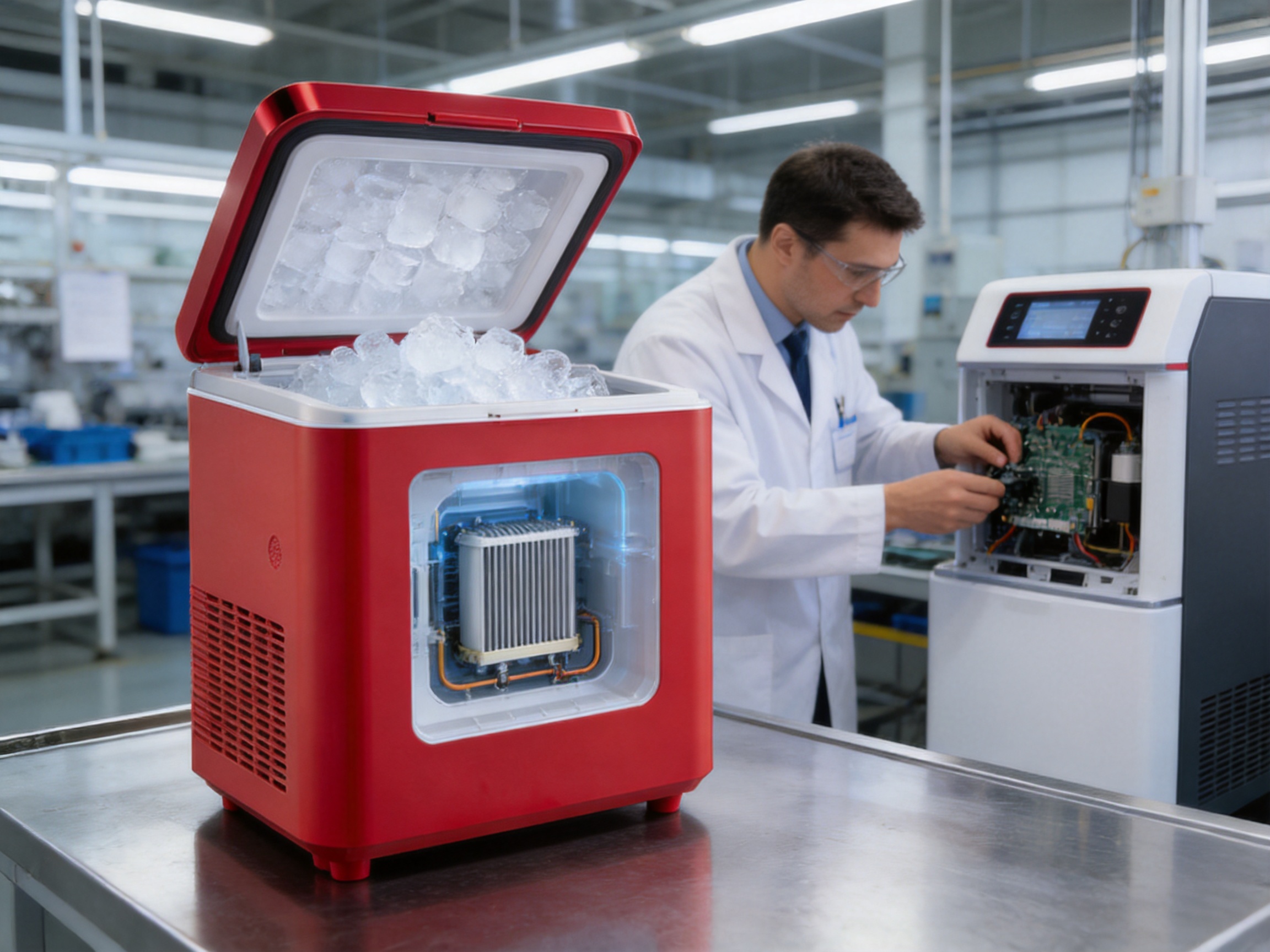
Reliable ice production is essential in homes, cafés, milk tea shops, restaurants, offices, convenience stores, and other food and beverage environments. Ice is not simply an accessory added to a drink at the end of preparation. It affects serving temperature, texture, presentation, customer satisfaction, workflow efficiency, and operating cost. A suitable ice maker must therefore deliver more than frozen water. It must provide convenient control, consistent ice quality, easy cleaning, efficient operation, and a practical footprint.
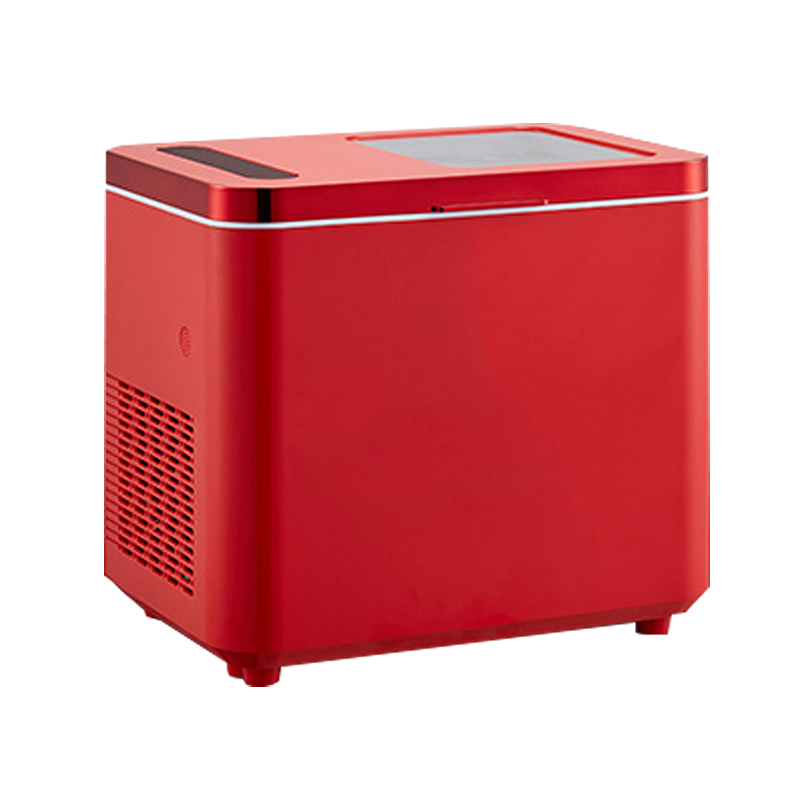
The touchscreen ice maker described in this article is a compact bullet ice maker designed around these practical requirements. Identified as the Alien-Z01 model, it combines a modern touchscreen interface with a compact machine structure, a 150-watt electrical system, and a refrigerant configuration based on R600a. Its listed dimensions are 325 by 295 by 252 millimeters, making it suitable for counters, preparation stations, home kitchens, beverage counters, and other locations where space is limited.
Its ice-making concept is particularly suitable for users who prefer ice with a distinctive shape and pleasant texture. The perforated center increases the surface area that comes into contact with a beverage, encouraging rapid cooling. At the same time, the unique shape helps reduce sticking and clumping during storage and dispensing. These characteristics make the ice practical for iced coffee, milk tea, soft drinks, fruit beverages, cocktails, smoothies, and other chilled products.
In addition to its product design, the strength of this offering comes from the manufacturing background of Alien Technology Co., Ltd. The company operates in Zhouxiang, Zhejiang Province, a well-known manufacturing area for small household appliances. Its product range includes ice makers, coffee machines, and air fryers. This concentration on small appliances supports a product-development philosophy based on compact engineering, user-centered controls, practical daily maintenance, and dependable household operation.
A Practical Solution for Fast and Convenient Ice Production
The most important function of any ice maker is to produce usable ice within a reasonable period while maintaining stable operation. A compact machine should be easy to place, simple to start, and convenient to monitor. The touchscreen ice maker addresses these expectations through a modern control interface and a streamlined cabinet design.
A touchscreen interface is more than a visual upgrade. It can make routine operation easier by providing a clear control surface with fewer physical switches and a more intuitive layout. In a busy beverage environment, operators may need to start production, check the operating status, or adjust a function quickly. In a home kitchen, users may prefer a control panel that is easy to understand without studying a complicated manual. The touchscreen format supports both situations by presenting the machine’s functions in a direct and accessible way.
The machine is also designed around compactness. With dimensions of 325 by 295 by 252 millimeters, it can fit into areas that would be unsuitable for a larger commercial ice-making system. It may be placed on a kitchen counter, a drink preparation table, a café workstation, or an office refreshment area, provided that the installation space allows proper ventilation and safe electrical operation.
Compact size does not automatically mean limited usefulness. A well-planned ice maker can use its internal arrangement efficiently, placing the refrigeration, ice-making, storage, and control elements into a relatively small enclosure. This approach is particularly valuable for small businesses, apartments, cafés with limited counter space, and mobile or semi-mobile beverage service stations.
Compared with conventional ice trays, the machine offers a more consistent and less labor-intensive process. Users do not need to fill trays manually, wait for them to freeze, or twist and handle each tray before serving. Compared with large fixed commercial systems, the compact design can be easier to install and relocate. The result is a balance between convenience and practical capacity for users who need regular ice production without a large industrial footprint.
Touchscreen ice maker
Ice Shape and Rapid Cooling Performance
The ice produced by this type of machine is characterized by a perforated center. This feature is important because it changes the relationship between the ice and the beverage. Solid cubes have a relatively limited external contact area in relation to their volume. A perforated or hollow-centered piece of ice exposes additional surfaces to the surrounding liquid, allowing the beverage to contact more frozen material.
Greater contact area can support faster cooling. This is useful when a customer wants a cold drink prepared quickly or when a beverage must be chilled during a busy service period. Fast cooling is especially valuable in milk tea stores, cafés, fast-food restaurants, juice bars, and event service. It can help reduce waiting time and support a smoother preparation sequence.
The shape also contributes to the sensory experience. The information supplied for this product describes the ice as moderately hard rather than extremely dense and solid. This can create a crunchy texture that many consumers enjoy. Customers may appreciate ice that is pleasant to chew, while beverage operators may value an ice style that gives drinks a recognizable appearance and texture.
Ice shape can also influence how a drink looks in a transparent cup. Distinctive pieces can create a fuller presentation and help differentiate a beverage from ordinary chilled water. For milk tea, fruit tea, soft drinks, and specialty beverages, the visual appearance of ice may contribute to the perceived quality of the final product.
The perforated structure also helps the ice interact efficiently with liquids. The opening can allow beverage flow through and around the ice, increasing contact during stirring, pouring, or shaking. This does not mean that every drink will cool at exactly the same rate, since performance depends on the starting temperature, drink volume, cup material, ambient conditions, and ice quantity. Nevertheless, the design is inherently suited to rapid and active cooling.
Reduced Clumping and Improved Handling
Ice storage and dispensing can become inconvenient when individual pieces stick together. Clumping makes it harder to use a scoop, slows down service, and may result in uneven portions. The special shape of this ice is intended to provide high flowability and reduce the tendency of pieces to form large frozen masses during storage.
For a home user, this means the ice can be easier to take from the storage area when preparing a drink. For a commercial operator, it can improve the speed and consistency of serving. Staff members can use a scoop more efficiently, and individual pieces can move through the storage and dispensing area with less manual separation.
High flowability is also useful for automated or semi-automated dispensing arrangements. Although the exact dispensing configuration depends on the installation and equipment used, ice that is less prone to clumping is generally easier to transfer. It can support portion control and reduce the interruptions caused by breaking apart frozen pieces.
The shape offers a practical advantage over ice styles that form large, dense blocks. Large blocks may require manual force to separate and can be inconvenient for fast service. The perforated bullet form is designed to remain more manageable, which is one reason similar ice styles are popular in milk tea stores, quick-service restaurants, and high-volume beverage operations.
Good handling also depends on correct machine operation. Users should avoid overfilling the storage area, should keep the interior clean, and should follow suitable temperature and sanitation practices. The machine’s design can make handling easier, but proper daily use remains essential for maintaining ice quality.
Efficient Ice-Making Principles
The product information describes the ice-making process as continuous. A continuous ice-making principle is different from the traditional use of removable household trays. Instead of freezing a fixed tray and waiting for the entire tray to be removed, the machine is designed to form ice repeatedly as part of an ongoing production cycle.
This approach can make better use of the machine’s operating time. As ice is formed and transferred into the storage area, the refrigeration and forming process can continue according to the machine’s control logic. The precise production rate will depend on ambient temperature, water temperature, ventilation, operating conditions, and the amount of ice already stored. However, the continuous concept is well suited to users who need a regular supply rather than one occasional batch.
Continuous production is particularly useful during beverage preparation. A shop may need ice repeatedly throughout the day rather than all at once. A household may want fresh ice available for several drinks, family gatherings, or entertaining. An office may need a convenient supply without relying on manually filled trays. In each case, ongoing production can reduce the need for repeated preparation.
The 150-watt power rating reflects a compact appliance design intended for efficient everyday operation. The listed electrical supply is 220 to 240 volts at 50 hertz, with a current and power specification of 0.9 amperes and 150 watts. Users should verify that their local electrical supply matches the product requirements before installation. The machine should also be connected in accordance with applicable electrical safety practices.
Energy performance in real operation is influenced by more than the power rating. The ambient temperature, ventilation clearance, water temperature, operating frequency, and cleaning condition can all affect how hard the refrigeration system must work. Positioning the machine away from direct sunlight and heat-producing equipment can support more stable operation. Adequate airflow around the cabinet is also important for heat dissipation.
R600a Refrigerant and Compact Refrigeration Design
The specified refrigerant is R600a, with a listed charge of 19 grams. R600a is commonly used in compact refrigeration appliances because it can support efficient refrigeration performance in appropriately designed systems. Its use reflects a modern approach to small-appliance cooling, although all refrigerants must be handled responsibly and in accordance with relevant safety requirements.
Because R600a is flammable, users should not attempt to open, modify, puncture, or repair the sealed refrigeration system without qualified technical support. The machine should be transported, installed, and serviced carefully. Ventilation and the avoidance of ignition sources during professional service are important considerations.
The small refrigerant charge is consistent with the machine’s compact dimensions. A compact refrigeration system can reduce the amount of internal space required for cooling components and help manufacturers create a countertop product rather than a large freestanding unit. This makes the appliance easier to integrate into small kitchens and beverage stations.
Refrigeration engineering must balance cooling ability, noise, cabinet dimensions, electrical consumption, heat removal, and long-term reliability. The product’s specifications show an effort to keep these factors within a compact household-appliance format. While users should not expect the exact same output or storage volume as a large commercial ice plant, the machine is designed to meet the needs of smaller-scale and regular-use applications.
The refrigerant specification also demonstrates why installation and maintenance quality matter. A refrigeration system performs best when its sealed circuit remains intact, the condenser area stays clean, and the machine has enough space to release heat. Regular care can help protect cooling performance and extend the useful life of the appliance.
Easy Cleaning and Hygienic Daily Operation
Ice comes into direct contact with water and is consumed in many applications. For that reason, hygiene is a core product requirement. A machine may have excellent cooling performance, but it must also be easy to clean if it is to remain suitable for regular food and beverage use.
The product features a fully flip-top design that allows users to open the ice storage and ice-making areas more completely. This broad access is valuable because hidden corners and difficult-to-reach surfaces can make routine cleaning inconvenient. When users can see and reach more of the internal area, they can more effectively remove water residue, mineral deposits, loose ice fragments, and other contamination risks.
A fully opening top can also simplify inspection. Users can check whether water is flowing correctly, whether ice is accumulating normally, and whether the storage area requires attention. Visual access encourages routine maintenance rather than leaving the interior unexamined for long periods.
Daily cleaning procedures should follow the product manual and local food-safety practices. Users should disconnect the appliance when required, empty unused ice, clean suitable food-contact surfaces with appropriate materials, rinse where necessary, and dry the interior before restarting. Harsh chemicals, abrasive tools, and unauthorized internal modifications should be avoided unless specifically approved by the manufacturer.
Water quality affects both hygiene and machine performance. Hard water can leave mineral deposits on components and surfaces. Depending on local conditions, filtered water may help reduce scale and improve the appearance and taste of the ice. Filtration does not replace cleaning, but it can be a useful part of a broader maintenance routine.
The open-access design is a clear advantage over machines with narrow openings or complicated internal compartments. Easier cleaning reduces the time required for maintenance and may help businesses establish a more consistent sanitation schedule. It also supports a better user experience in the home, where convenience often determines whether an appliance is maintained properly.
Advantages for Homes, Cafés, and Beverage Shops
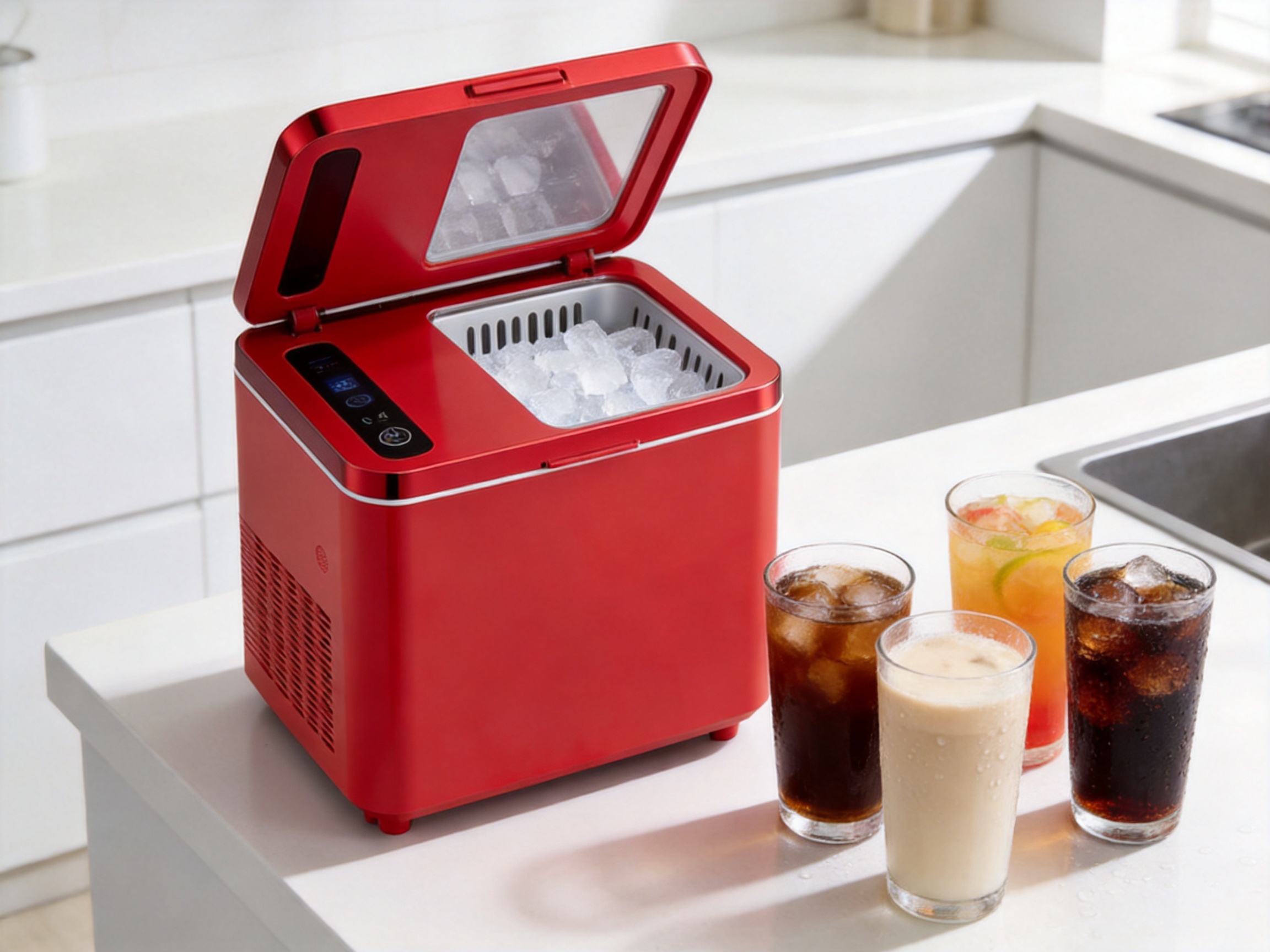
The touchscreen ice maker is flexible enough for several types of users. In a home kitchen, it can provide a steady supply of ice for everyday drinks, weekend gatherings, parties, and seasonal refreshments. Its compact dimensions make it suitable for counters where a large refrigerator ice dispenser or commercial machine would be impractical.
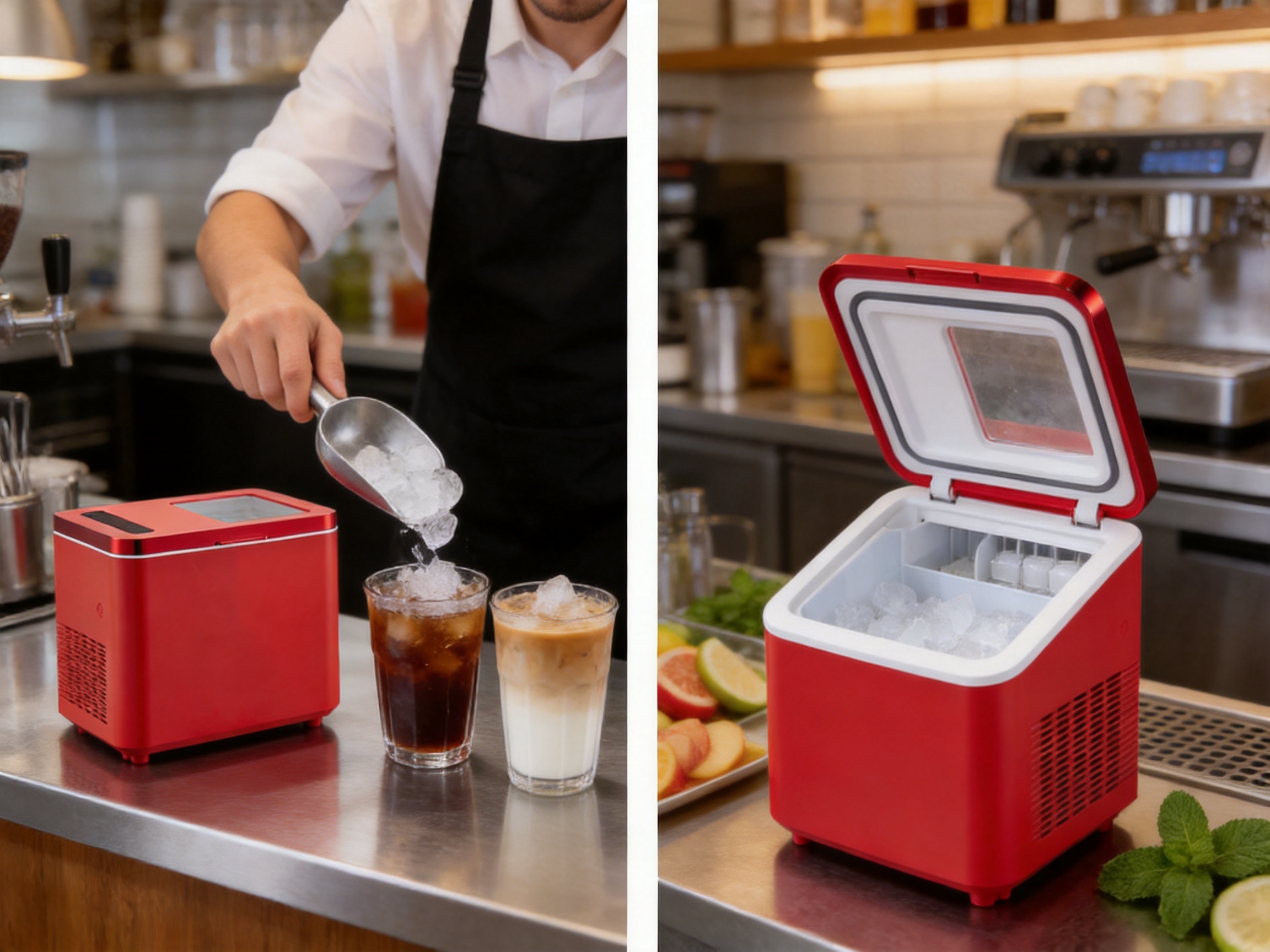
For cafés and coffee shops, the machine can support iced coffee, cold brew, blended drinks, flavored beverages, and customer-requested chilled servings. Its ice shape may be particularly suitable for drinks served in transparent cups, where the appearance of the ice contributes to presentation.
Milk tea shops and fast-food restaurants can benefit from fast beverage cooling and easy scooping. The moderate hardness and crunchy texture described for this ice may also appeal to customers who enjoy chewing ice while drinking. Because the pieces are designed to be less sticky, staff may be able to serve them more efficiently during busy periods.
In offices, hotels, small catering operations, and event spaces, the compact footprint can make the product easier to position near a beverage station. It can provide an independent ice source without requiring a large permanent installation. This flexibility can be useful when the layout changes or when a facility needs additional ice during peak periods.
The product is not limited to one beverage category. It can be used with water, juice, soda, tea, coffee, mocktails, cocktails, and other drinks, provided that the ice is handled hygienically and the application follows appropriate food-service standards. It may also be useful for temporary service areas where an accessible countertop appliance is preferable to a larger centralized system.
Comparison with Other Ice-Making Options
Different ice makers serve different purposes. A conventional ice tray is inexpensive and simple, but it requires manual filling, freezer space, and a long waiting period. Ice trays also tend to create inconsistent sizes when water levels differ. The touchscreen ice maker provides a more automated alternative for users who need repeated production and convenient access.
Standard refrigerator ice dispensers can be convenient, but their performance depends on the refrigerator model and available freezer space. Some refrigerator systems produce relatively small quantities and may not be adequate for entertaining or commercial beverage service. A dedicated countertop machine can provide a separate supply without opening the freezer repeatedly.
Large commercial cube ice machines often offer higher production volumes, but they can require more floor space, more complex installation, and a larger investment. They may be appropriate for hotels, bars, restaurants, and high-volume food-service operations, but they are not always practical for small businesses or households. The compact bullet ice maker occupies a useful middle position between manual trays and large fixed systems.
Solid cube ice is often valued for slow melting, especially in spirits and premium drinks. However, slow melting is not the only desirable characteristic. Some beverages require rapid cooling, easy scooping, and a pleasant chewable texture. The perforated bullet form is designed for those priorities rather than for maximum density alone.
Flake ice can offer excellent surface contact and is useful in displays and food service, but it may be softer and less suitable for every beverage presentation. Nugget-style ice can be popular for its texture, yet machines producing it may have different structures and maintenance requirements. The described bullet ice design provides a distinctive combination of cooling contact, moderate hardness, flowability, and compact production.
Evaluation Factor |
Touchscreen Bullet Ice Maker |
Manual Ice Tray |
Large Commercial Ice Machine |
Operation |
Automated countertop production with touchscreen control |
Manual filling and removal |
Automated production, generally requiring a larger installation |
Ice Style |
Perforated bullet form with a crunchy texture |
Usually solid cubes or similar molded pieces |
Varies by machine, including cubes, flakes, or other forms |
Cooling Behavior |
Large contact area supports rapid beverage cooling |
Depends on cube size and drink conditions |
Depends on the selected ice type and machine design |
Space Requirement |
Compact countertop footprint |
Requires freezer space |
Often requires dedicated floor or under-counter space |
Handling |
Designed for high flowability and reduced clumping |
Cubes may stick together in storage |
Usually designed for commercial scooping or dispensing |
Cleaning Access |
Fully flip-top access to storage and ice-making areas |
Tray is easy to access but freezer cleaning is separate |
May require more extensive maintenance procedures |
Best Fit |
Homes, offices, cafés, beverage shops, and small food-service settings |
Occasional household use |
High-volume commercial operations |
Manufacturing Strengths and Product Development Approach
Product performance begins with manufacturing discipline. Alien Technology Co., Ltd. is located in Zhouxiang, Zhejiang Province, an area associated with the production of small household appliances and supported by convenient logistics. This location gives the company access to an established appliance supply environment and a practical foundation for product development, component sourcing, assembly, testing, packaging, and distribution.
The company specializes in ice makers, coffee machines, and air fryers. These product categories share several engineering requirements: compact housing, thermal management, electrical safety, user-friendly controls, food-contact considerations, and repeated daily operation. Experience across these categories can support a broader understanding of how consumers use countertop appliances and where convenience improvements are most valuable.
The company’s stated mission is “Smart Technology, Simplifying Life, Enhancing Happiness.” In the ice maker, this mission is reflected in several visible design choices. The touchscreen simplifies interaction. The compact structure simplifies placement. The flip-top access simplifies cleaning. The ice shape simplifies cooling and dispensing. These elements show how technology can be applied to everyday tasks without making the appliance unnecessarily complicated.
A modern manufacturing process for a product of this type normally involves coordinated stages. Product planning begins with identifying user requirements such as footprint, ice form, operating controls, service access, and cleaning needs. Industrial design then considers the cabinet shape, interface position, access panel, ventilation, and the relationship between the exterior appearance and internal components.
Engineering development must coordinate the refrigeration circuit, water path, ice-forming structure, storage area, electrical controls, sensors, and housing. Each part must work with the others. The refrigeration system must remove heat effectively, the water system must deliver water consistently, the ice-forming area must release the finished product, and the control system must manage the production cycle safely.
Assembly quality is also important. Electrical wiring must be routed and secured correctly. Refrigeration components must be assembled without damaging the sealed circuit. Water-contact areas must be positioned to reduce leakage risk. Panels and seals must fit properly so that the appliance remains stable during normal use. These details are not always visible to the consumer, but they strongly influence reliability.
Testing is another essential manufacturing stage. Finished units should be checked for electrical operation, cooling response, water delivery, ice formation, control-panel function, cabinet fit, and unusual leakage or vibration. A comprehensive quality process can identify assembly problems before products leave the factory and helps ensure greater consistency between units.
The supplied materials do not specify particular certifications, factory automation levels, or laboratory procedures. Therefore, such details should be confirmed directly with the company for a specific purchasing project. Nevertheless, the company’s stated focus on reliable quality, customer satisfaction, continuous improvement, and innovation indicates a manufacturing philosophy centered on practical product performance rather than appearance alone.
User-Centered Engineering in a Compact Cabinet
Small appliances require careful internal planning because every millimeter matters. The manufacturer must provide enough room for refrigeration components, water management, ice formation, storage, controls, insulation, and airflow while keeping the exterior compact. The listed dimensions demonstrate a product architecture intended for countertop placement rather than large-scale industrial installation.
Compact engineering can improve more than space efficiency. A smaller cabinet may be easier to move, easier to clean around, and easier to integrate into an existing workflow. It may also reduce visual clutter in a kitchen or beverage counter. For a small business, this can allow the operator to preserve valuable counter space for cups, ingredients, coffee equipment, or preparation tools.
However, compact appliances must be used thoughtfully. The machine should not be pushed directly against a wall or enclosed in a cabinet unless the installation instructions specifically permit it. Heat generated by the refrigeration system needs an escape path. Blocking ventilation can increase operating stress and reduce cooling efficiency.
The touchscreen and flip-top design also show attention to the user’s daily routine. Controls are located where they can be accessed quickly, while the opening mechanism allows the user to reach internal areas without disassembling the cabinet. This reduces the number of steps required for normal operation and maintenance.
In appliance design, convenience is often the result of many small decisions. A control panel that is easy to read, a lid that opens widely, a storage area that accepts a scoop, a shape that reduces clumping, and a cabinet that fits under a counter can collectively create a significantly better experience than a product that focuses only on freezing water.
Operating Guidelines for Better Results
Before first use, the machine should be placed on a stable, level surface that can support its weight during operation. The area should be dry, clean, and adequately ventilated. Users should check the voltage and frequency requirements, inspect the power cord, and allow the appliance to settle after transportation if required by the operating instructions.
Water should be added according to the manufacturer’s instructions. Overfilling or using an unsuitable water source may affect operation. Clean drinking water is appropriate for ice intended for beverages, and filtered water may be beneficial in regions with high mineral content.
The first production cycle may be discarded if recommended by the manual. This can help remove any residue associated with manufacturing, packaging, or initial water-system preparation. The storage area should be kept clean, and ice should be handled with a clean scoop rather than bare hands.
Users should observe the machine during its first operating cycles. They can check whether the touchscreen responds correctly, whether water enters the ice-making area, whether the machine produces the expected ice form, and whether the storage area fills normally. Unusual sounds, odors, leaks, or electrical behavior should be treated as reasons to stop operation and seek qualified assistance.
The machine should not be overloaded beyond its intended storage level. Removing ice regularly can help maintain an orderly storage area and may ensure that newly produced pieces have sufficient room. In a commercial setting, staff should establish a simple routine for checking water, ice condition, cleanliness, and the control display.
Cleaning frequency depends on use, water quality, and local hygiene requirements. High-use beverage businesses may need more frequent cleaning than occasional household users. The fully flip-top design supports this process by providing broad access to the internal areas that require attention.
Maintenance, Safety, and Long-Term Value
Routine maintenance protects both hygiene and performance. Mineral deposits can restrict water flow or affect the ice-forming surfaces. Dust around ventilation areas can reduce heat transfer. Ice fragments and moisture left in the storage area can create an unpleasant environment. A consistent maintenance schedule can help prevent these issues from developing into larger problems.
Because the product uses a refrigeration system with R600a, repairs to the sealed circuit should be performed only by qualified technicians. Users should not drill into the cabinet, attempt to recharge refrigerant, or use unauthorized tools near the refrigeration components. The machine should also be kept away from flames and other ignition sources during service.
Electrical safety is equally important. The appliance should be connected to a suitable outlet, and extension cords or adapters should be used only when permitted by the instructions and local regulations. The power cord should not be placed where it can be crushed, exposed to standing water, or damaged by heat.
Long-term value is influenced by durability, maintainability, energy use, and user satisfaction. A machine that is easy to clean is more likely to receive regular care. A machine that is compact is less likely to be removed because it occupies too much space. A machine that produces convenient ice with simple controls is more likely to be used consistently. These practical factors can be as important as the initial purchase price.
For business operators, the product may also contribute to workflow value. Faster access to ice can reduce preparation interruptions. Easier scooping can support quicker service. A distinctive ice form can add presentation value. A compact machine can reduce the need for major remodeling or dedicated utility space. The actual business benefit will depend on demand and operating conditions, but the design is clearly oriented toward practical efficiency.
Why Manufacturing Experience Matters to Buyers
Buyers of small appliances often evaluate more than a single model. They want confidence that the supplier understands product development, quality control, communication, packaging, delivery, and after-sales cooperation. A manufacturer focused on several related household-appliance categories may be better positioned to understand shared concerns such as motor and compressor operation, heat management, plastic and metal housing, interface design, and consumer safety.
Alien Technology Co., Ltd. presents itself as a manufacturer committed to reliable quality, customer satisfaction, continuous improvement, and innovation. These principles are relevant to both individual buyers and business customers. A household buyer may prioritize ease of use and cleaning. A café may prioritize stable operation and space efficiency. A distributor may prioritize product consistency, packaging, documentation, and cooperation. A focused manufacturing partner should be able to discuss these needs directly.
The company’s location in Zhejiang also offers logistical advantages. Zhouxiang is part of a broader small-appliance manufacturing network, which can support access to suppliers, production services, transportation channels, and technical resources. Convenient logistics can be particularly important for overseas customers who require coordinated export arrangements and dependable communication.
Prospective buyers should still request the technical and commercial information appropriate to their application. This may include production capacity under specified conditions, storage capacity, noise data, operating instructions, packaging details, warranty terms, spare-part availability, electrical approvals, and customization options. Confirming these points helps ensure that the selected machine matches the intended market and usage environment.
Applications in Beverage Preparation
Iced coffee is one of the most natural applications for this machine. Ice can rapidly lower the temperature of coffee, cold brew, flavored lattes, and blended coffee beverages. The perforated form may provide an attractive appearance in clear cups, while the moderate hardness offers a satisfying texture for customers who enjoy chewable ice.
Milk tea shops can use the ice for tea-based drinks, fruit teas, lemon beverages, and flavored milk drinks. These businesses often need efficient service and easy scooping, especially during peak hours. Reduced clumping can help staff portion the ice more smoothly and limit the time spent separating pieces.
Restaurants and fast-food outlets can use ice for soft drinks, iced tea, water, juices, and combo meals. Since the machine is relatively compact, it can serve as a supplementary ice source or support a smaller beverage station. Its usefulness will depend on the restaurant’s daily demand and storage requirements, but the space-saving structure makes it relevant to locations that cannot install a large commercial system.
At home, the machine can support entertaining and family use. Guests may want iced beverages throughout a gathering, and a dedicated ice maker can reduce pressure on the freezer. It may also be useful during warm weather when household ice consumption increases.
Hotels, offices, studios, salons, and small hospitality spaces can also benefit from convenient countertop ice. In these settings, the machine may be used less intensively than in a beverage shop but can still provide a professional refreshment service without a large installation.
Q&A
What type of ice does the machine produce?
The machine is identified as a bullet ice maker and is described as producing a perforated or hollow-centered ice form. This shape offers a larger contact area with beverages and is associated with fast cooling, easy handling, and a crunchy texture.
Why can the perforated center help cool drinks quickly?
The perforation increases the amount of ice surface that can contact the surrounding beverage. More contact can encourage faster heat transfer from the drink to the ice, although actual cooling speed also depends on beverage temperature, volume, cup material, ambient conditions, and the amount of ice used.
Is the ice hard or soft?
The supplied information describes the ice as having moderate hardness. It is not as dense as some solid ice styles and may offer a crunchy texture that many consumers enjoy. The exact texture can vary according to water conditions and operating conditions.
Does the ice tend to stick together?
The unique bullet shape is designed to provide high flowability and reduce clumping during storage and dispensing. Proper storage conditions, regular ice removal, suitable temperature control, and good cleaning practices are also important for maintaining easy handling.
What are the electrical specifications?
The listed power supply is 220 to 240 volts at 50 hertz. The listed current and power are 0.9 amperes and 150 watts. Buyers should confirm that these specifications match the electrical supply in the intended installation location.
What refrigerant does the machine use?
The specified refrigerant is R600a, with a listed charge of 19 grams. Since R600a is flammable, refrigeration repairs and sealed-system service should be performed by qualified personnel using appropriate safety procedures.
How large is the machine?
The listed machine dimensions are 325 by 295 by 252 millimeters. This compact format makes it suitable for many countertop locations, although users should allow additional clearance for ventilation, power access, and cleaning.
Is the machine suitable for commercial use?
It can be suitable for cafés, milk tea shops, fast-food restaurants, offices, small hospitality operations, and other beverage environments that need convenient ice production. Businesses should compare their expected daily demand with the machine’s confirmed production and storage performance before purchase.
How does the touchscreen benefit users?
The touchscreen provides a modern interface for interacting with the machine. It can make operation more direct and easier to monitor than a complicated collection of mechanical controls. The exact functions available should be confirmed in the product documentation.
How does the flip-top design help with cleaning?
The fully flip-top structure allows broader access to the ice storage and ice-making areas. This makes it easier to inspect surfaces, remove residue, clean internal areas, and reduce hard-to-reach sanitary corners.
What water should be used?
Clean drinking water should be used for beverage ice. In areas with hard water, filtration may help reduce mineral deposits, although filtration does not eliminate the need for regular cleaning and sanitation.
Where is the product manufactured?
The product is manufactured by Alien Technology Co., Ltd., which is located at No. 138, Huixiang'an Road, Zhouxiang Town, Cixi City, Zhejiang Province, China. The company specializes in ice makers, coffee machines, and air fryers.
Can the supplier support business cooperation?
The company welcomes new and existing customers to contact it for business cooperation. Buyers can discuss wholesale supply, distribution, technical documentation, packaging, delivery, and any available customization or support requirements directly with the company.
Conclusion
The touchscreen bullet ice maker offers a practical combination of compact size, modern controls, rapid cooling potential, manageable ice texture, reduced clumping, continuous ice-making operation, and accessible cleaning. Its listed 220 to 240 volt supply, 150-watt power rating, R600a refrigerant system, and 325 by 295 by 252 millimeter dimensions position it as a countertop appliance for homes and smaller professional environments.
Its principal advantage over manual ice trays is automation and convenience. Its principal advantage over large commercial ice machines is a smaller and easier-to-place structure. Its principal advantage over dense solid ice styles is the perforated form, which increases beverage contact and provides a crunchy texture. Its principal advantage in daily maintenance is the fully flip-top design, which opens the storage and ice-making areas for more direct cleaning.
The product is supported by a manufacturer focused on small household appliances and located in a mature appliance-manufacturing region. Alien Technology Co., Ltd. combines experience in ice makers, coffee machines, and air fryers with a stated commitment to quality, customer satisfaction, continuous improvement, and innovation. For buyers seeking a compact ice solution and a manufacturing partner for business cooperation, these characteristics make the product worthy of consideration.
As with any refrigeration appliance, the best results depend on proper installation, suitable water, adequate ventilation, regular cleaning, and qualified servicing. When used and maintained correctly, the touchscreen ice maker can help make cold beverage preparation faster, more convenient, and more consistent across a wide range of everyday applications.
References
1. Product specification sheet for the Alien-Z01 touchscreen ice maker, including electrical supply, power, refrigerant, and machine dimensions.
2. Product information supplied for the Alien-Z01 bullet ice maker, including ice shape, cooling behavior, flowability, texture, continuous ice-making, space-saving design, and cleaning access.
3. General principles of refrigeration appliance operation, heat transfer, ventilation, and routine maintenance.
4. General food-service guidance concerning clean water, hygienic ice handling, storage, and sanitation practices.
5. General safety guidance for appliances using R600a refrigerant and for the servicing of sealed refrigeration systems.
6. Company information supplied for Alien Technology Co., Ltd., including its location, product categories, mission, manufacturing focus, and business cooperation policy.