
 English
 한국어
한국어 Español
 Deutsch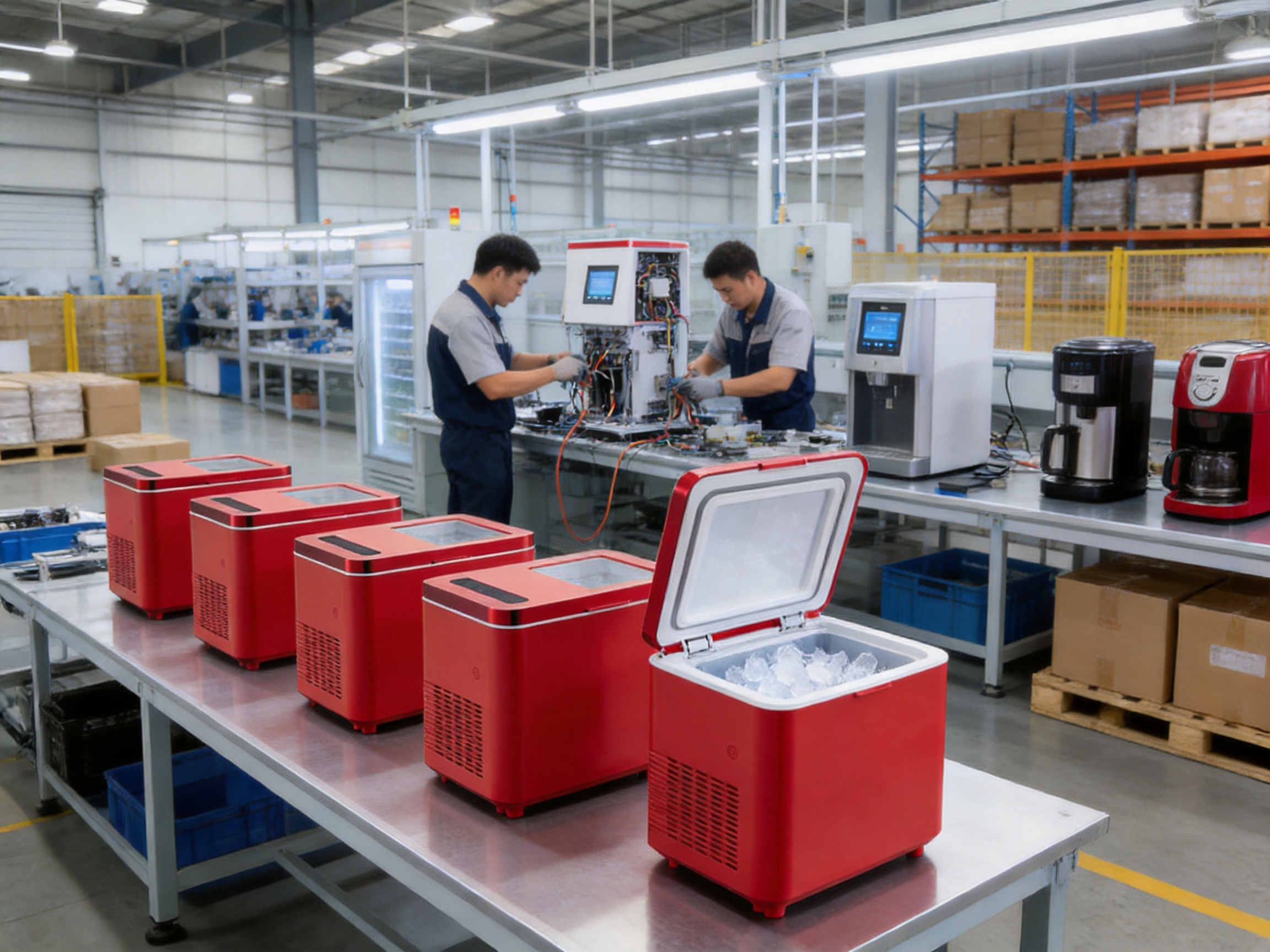
Ice is more than a simple ingredient. In homes, cafés, milk tea shops, fast-food restaurants, beverage counters, and hospitality settings, the right type of ice can influence cooling speed, drink presentation, customer satisfaction, workflow efficiency, and operating costs. A reliable ice maker must therefore do more than freeze water. It must produce useful ice consistently, occupy limited space, remain easy to clean, and support the daily rhythm of the business or household.
The Touchscreen Ice Maker, identified as the Alien-Z01, is designed around these practical requirements. It belongs to the bullet ice maker category and combines a compact machine structure with a continuous ice-making principle. Its bullet-style ice features a perforated center that increases contact between the ice and the beverage, helping drinks cool quickly. The shape also supports high flowability, reducing the likelihood of clumping during storage and dispensing.
With a rated power supply of 220V-240V at 50Hz, a current and power rating of 0.9A and 150W, and a compact footprint of 325 x 295 x 252 millimeters, the machine is suitable for environments where counter space and electrical efficiency matter. It uses R600a refrigerant with a 19-gram charge. Its fully flip-top design allows users to open the ice-making and storage areas widely, making routine cleaning and maintenance more accessible.
This article examines the machine’s operating concept, product advantages, suitability for different applications, cleaning benefits, energy-conscious design, and the manufacturing strengths behind the company’s appliance portfolio. It also compares the product’s practical value with common alternatives and answers frequently asked questions for potential buyers.
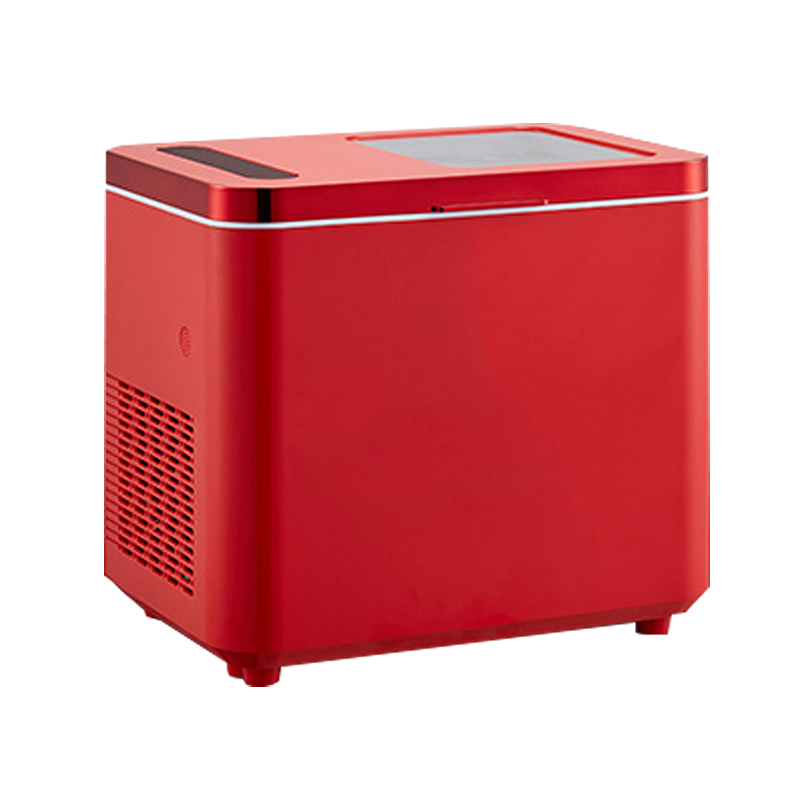
Touchscreen ice maker
1. Understanding the Product Concept
The Alien-Z01 is a compact bullet ice maker developed for users who need accessible ice production without installing a large commercial ice system. Its design focuses on delivering a specialized form of ice while maintaining a relatively small external structure. This is especially useful for beverage businesses, compact kitchens, offices, hospitality spaces, and homes that regularly serve chilled drinks.
Bullet ice is recognized by its rounded or cylindrical form and central opening. The opening is not merely decorative. It creates additional surface area, allowing the beverage to make contact with more of the ice. As a result, the ice can transfer its cooling effect efficiently through the drink. For beverages prepared quickly during busy service periods, this characteristic can help reduce waiting time and support a consistently cold serving temperature.
The product category identifies the machine as a Bullet Ice Maker, while its product title emphasizes a touchscreen-oriented user experience. A touchscreen control surface can make operation more direct by reducing the need for multiple mechanical switches and presenting controls in a clear, contemporary format. In a modern kitchen or commercial counter, a clean control interface can contribute to a more organized appearance and a simpler operating routine.
Although compact, the machine is designed around continuous ice-making principles. Rather than relying only on occasional batch production, continuous production can support a steady supply of ice over time. This operating approach is valuable for locations that serve drinks throughout the day and need to replenish their ice supply regularly.
Compact dimensions for flexible placement
The machine measures 325 millimeters in length, 295 millimeters in width, and 252 millimeters in height. This compact size makes it easier to position on a counter, service station, beverage preparation table, or home kitchen work surface. Compared with larger floor-standing ice systems, a compact countertop unit can simplify installation and reduce the need for dedicated floor space.
Space efficiency is an important advantage in cafés, milk tea shops, food stalls, offices, and small restaurants. These environments often need to place several appliances close together, including beverage equipment, refrigeration, preparation tools, and storage containers. A smaller ice maker allows operators to preserve more room for other essential activities without abandoning on-site ice production.
Compact dimensions can also make the unit easier to relocate when a workspace is reorganized. A business may change its counter layout according to seasonal demand, menu updates, or customer-flow improvements. A machine that does not require permanent floor installation provides greater flexibility during these changes.
Electrical specifications for everyday use
The product operates on a 220V-240V, 50Hz power supply and has a rated current of 0.9A with a power rating of 150W. These specifications provide buyers and installers with the essential information needed to evaluate compatibility with the intended location. Operators should always confirm that the local electrical supply, socket, grounding, ventilation, and installation conditions are appropriate before use.
A 150W rating is modest for an appliance intended to make ice, particularly when compared with many larger commercial systems. Actual energy consumption will vary according to ambient temperature, water temperature, production duration, cleaning cycles, and operating conditions. Nevertheless, the relatively low rated power supports the product’s position as a compact and practical solution for users who do not require the capacity or infrastructure of a large ice plant.
2. The Cooling Advantages of Bullet-Shaped Ice
The most important product advantage is the shape of the ice itself. The perforated center increases the ratio of exposed ice surface to overall ice volume. When the ice is added to a beverage, the drink can flow around both the outside and inside surfaces. This helps promote rapid cooling and can be particularly useful when drinks are prepared at room temperature or when service speed is important.
For milk tea shops, juice counters, coffee shops, fast-food restaurants, and casual dining businesses, rapid cooling can contribute to a more efficient serving process. Staff members can prepare a beverage, add the required quantity of ice, and serve it promptly. Customers receive a colder drink without the business needing to rely exclusively on pre-chilled ingredients or extended refrigeration time.
The shape also creates a distinctive drinking experience. Bullet ice is not as dense or hard as some solid ice forms. It often offers a crunchy texture that many customers enjoy. This texture can make the ice feel more approachable for beverages served in takeaway cups, milk tea products, flavored drinks, and casual refreshments.
Fast cooling without excessive hardness
Solid cubes can be durable and slow-melting, but some customers find them too hard to bite or chew. Smaller crushed ice can cool drinks quickly, but it may melt faster, become compacted during storage, and be difficult to dispense consistently. Bullet ice offers a balance between these characteristics. It provides effective cooling through its open shape while maintaining moderate hardness and a pleasant texture.
This balance gives the product a practical advantage over ice formats that are designed for only one purpose. Very hard ice may be suitable for long-term chilling but less appealing to customers who prefer a crunchy texture. Fine crushed ice may create strong initial cooling but may also create drainage, splashing, or inconsistent portioning. Bullet ice is suitable for operators seeking a versatile middle ground.
Suitable for a broad beverage menu
The ice can be used with many common drink categories. It is appropriate for milk tea, fruit tea, iced coffee, soft drinks, juices, flavored water, smoothies, and other chilled beverages. Its open center allows the liquid to pass around the ice, while its shape provides visual interest inside transparent cups.
In food-service environments, product consistency matters. When each beverage receives ice with a similar size and form, the final drink can appear more uniform. This is useful for businesses that want to maintain a recognizable presentation across multiple orders and service locations.
The ice can also be used for general cooling tasks, such as chilling packaged drinks during a short service period. Users should follow food-safety procedures and ensure that the water supply, ice storage area, utensils, and surrounding surfaces are kept clean.
3. Continuous Ice-Making for Higher Workflow Efficiency
The machine uses a continuous ice-making principle. This means its design is intended to produce ice repeatedly over time rather than limiting the operator to a single isolated production event. Continuous production can be especially valuable during busy operating hours, when the demand for ice changes from one order to the next.
A continuous approach can also improve the relationship between machine size and output potential. Large batch machines may require considerable space because they need a substantial freezing chamber and storage compartment. A compact continuous system can make better use of its internal operating process, helping maintain a smaller external structure while supporting ongoing ice production.
The exact production quantity and time will depend on water temperature, room temperature, ventilation, water quality, operating conditions, and the way the machine is used. Buyers should evaluate the product against their expected demand and should not assume that a compact countertop appliance will replace a high-capacity commercial ice plant. Its strength is flexibility, convenience, and efficient use of space.
Support for peak service periods
Food and beverage demand is rarely constant. A milk tea store may be quiet in the morning and busy in the afternoon. A restaurant may experience concentrated demand during lunch and dinner. A household may need more ice during weekends, celebrations, or warm weather. Continuous production helps the machine respond to these changing requirements by maintaining an ongoing supply rather than waiting for a complete large batch before producing more.
For staff, this can simplify preparation planning. Instead of transporting bags of ice from a remote storage area or repeatedly purchasing packaged ice, the operator can produce ice close to the beverage station. This may reduce movement across the workplace and help keep the preparation area more organized.
Reduced dependence on external ice purchases
Purchasing packaged ice can create several operational challenges. Bags take up storage space, may be difficult to handle, and can introduce uncertainty regarding availability. The business must also plan deliveries or make emergency purchases when demand is higher than expected. An on-site ice maker offers greater independence and can help the operator manage routine ice needs internally.
On-site production does not remove the need for proper water treatment, cleaning, or inventory planning. However, it can give the operator more control over when ice is made and how it is handled. This control is valuable for businesses that want to standardize their preparation process.
4. High Flowability and Resistance to Clumping
Another significant advantage of the ice shape is its flowability. The unique bullet form is designed to reduce clumping during storage and dispensing. Ice that sticks together can slow service, make portioning difficult, and create unnecessary waste when staff members have to break apart frozen masses.
Better flowability supports the use of an ice scoop and may also facilitate automatic or assisted ice-dispensing systems. When pieces move more freely, staff can measure portions more quickly and place ice into cups with less effort. This is a useful characteristic in high-volume drink preparation, where even small delays can accumulate over the course of a shift.
Clumping can occur because of moisture, temperature fluctuations, excessive storage time, or the natural contact between ice pieces. A well-designed shape cannot eliminate every cause of clumping, but it can reduce the tendency of pieces to lock together. Operators should still maintain suitable storage conditions and avoid allowing melted water to accumulate in the ice area.
Improved portion control
Flowable ice is easier to scoop in repeatable quantities. Consistent portioning helps businesses control beverage recipes, maintain predictable drink quality, and manage raw material costs. If too much ice is added to one cup and too little to another, the customer experience may vary. More consistent dispensing supports a stable relationship between ice, beverage volume, flavor concentration, and serving appearance.
For home users, flowability also improves convenience. A person can access the desired amount of ice without spending excessive time separating pieces. This is particularly helpful when preparing several drinks at once.
Compatibility with service routines
In a commercial setting, every appliance should fit naturally into the existing service routine. A machine that produces ice but requires complicated handling may create new problems. The combination of compact size, accessible storage, and free-flowing bullet ice is intended to make the product easier to integrate into a beverage station.
Staff can prepare drinks, scoop ice, clean the work area, and replenish supplies without needing specialized handling procedures. The simpler the routine, the easier it may be to train new employees and maintain consistent service during busy periods.
5. Hygienic Design and Easy Cleaning
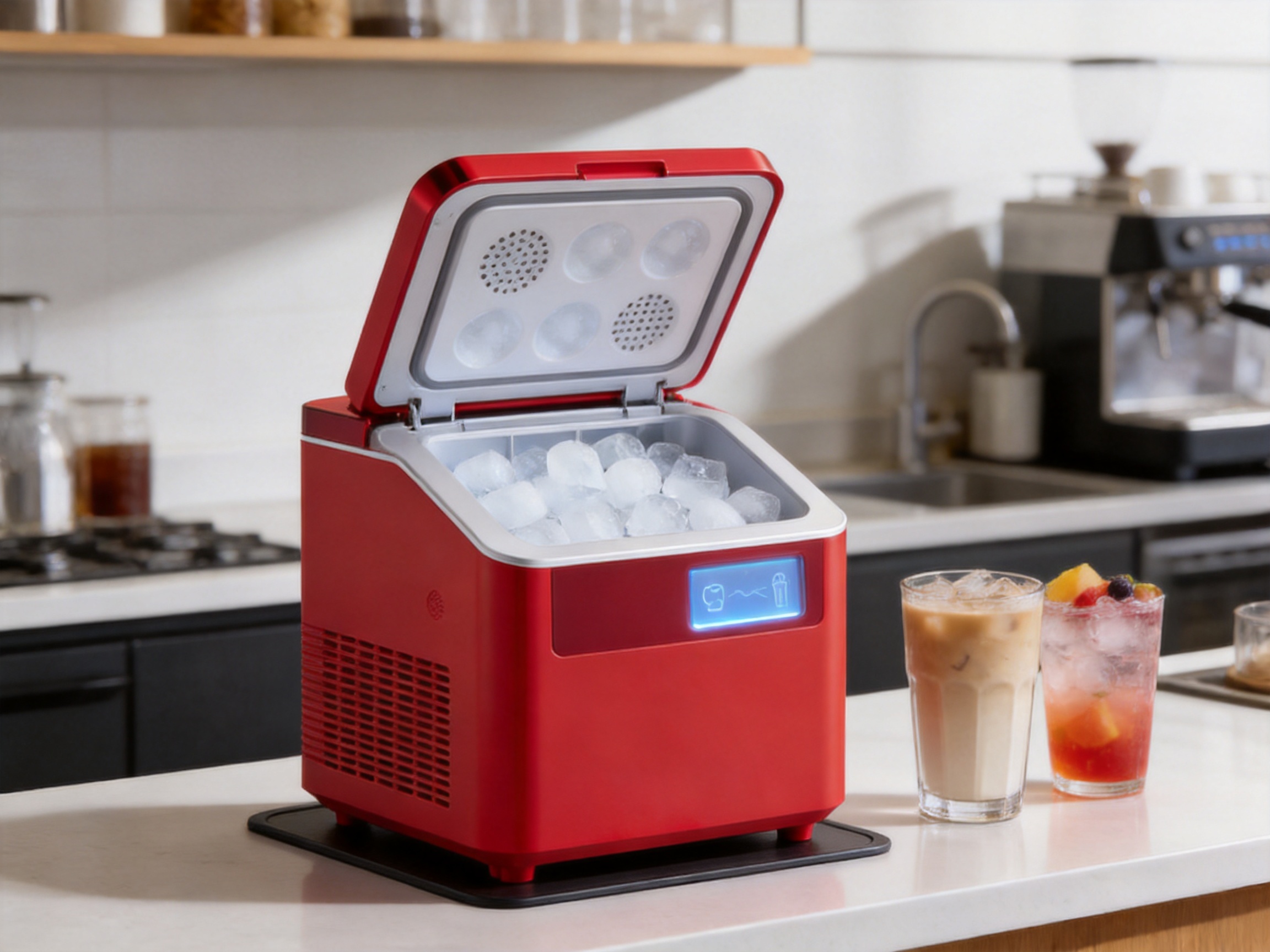
Hygiene is essential for any appliance that produces ice intended for drinks or food service. Water, ice, storage areas, and contact surfaces must be managed carefully. The Alien-Z01 includes a fully flip-top design that allows users to open the ice storage and ice-making areas more completely. This feature is intended to make daily cleaning and maintenance easier by improving access to areas that might otherwise be difficult to reach.
Many appliances become difficult to maintain when narrow corners, covered compartments, or hidden surfaces prevent thorough inspection. A wide-opening design can help users see the interior more clearly, remove residual water, wipe surfaces, and check for buildup. Better access can support a more consistent cleaning routine and reduce the risk of neglected areas.
Why access matters in ice equipment
Ice-making equipment is exposed to moisture during normal operation. If water is allowed to remain in unsuitable areas, it can contribute to odors, residue, mineral deposits, or microbial growth. Even when an appliance is operating correctly, routine cleaning remains necessary. The ability to open the relevant compartments fully allows operators to address these issues more effectively.
Cleaning schedules should be based on usage frequency, water quality, local food-safety requirements, and the manufacturer’s instructions. High-volume commercial users may need to clean more often than occasional household users. If the machine is used continuously, operators should inspect the ice-making and storage areas regularly.
Practical maintenance principles
Before cleaning, the machine should be switched off and disconnected from the power supply according to the applicable operating instructions. Remaining ice should be removed, and water should be drained or handled as directed. Surfaces should be cleaned using appropriate food-contact-safe materials. Abrasive tools, harsh chemicals, and methods that may damage interior surfaces should be avoided unless specifically approved for the appliance.
After cleaning, the machine should be rinsed or wiped as required, allowed to dry appropriately, and checked before returning to operation. Users should also keep the exterior, power area, ventilation openings, and surrounding counter clean and dry. Good housekeeping protects both hygiene and equipment performance.
The flip-top structure is therefore more than a convenience feature. It supports visibility, access, and repeatable maintenance. Compared with designs that force users to work through small openings, a full-access approach can make hygiene procedures less time-consuming and more dependable.
6. Space-Saving Advantages Over Larger Ice Systems
One of the clearest competitive advantages of this product is its compact structure. Large commercial ice makers may provide substantial production capacity, but they often require dedicated floor space, special placement, stronger supporting infrastructure, or a separate storage arrangement. Not every business needs that level of equipment.
The Alien-Z01 is designed for users who want local ice production while preserving valuable workspace. Its 325 x 295 x 252 millimeter dimensions allow it to fit into many countertop environments. The machine can be positioned near drink preparation, which may shorten the distance between ice production and final serving.
Space-saving design is especially valuable for small businesses. A start-up beverage shop, compact café, food truck support kitchen, office pantry, or home-based food business may not have the room for a large system. A smaller unit can provide useful production without forcing a major renovation or rearrangement.
Efficient use of the beverage station
Placing the ice maker near the beverage station can improve workflow. Staff do not need to walk repeatedly to a distant freezer or storage room. The shorter route may help reduce spills, unnecessary movement, and interruptions during peak periods.
The machine should still be installed with enough clearance for ventilation, cleaning, filling, and safe operation. Compact does not mean that the unit should be pushed against a wall or surrounded by heat-generating appliances. Proper placement contributes to cooling performance and helps protect the equipment.
More practical than oversized capacity for some users
It is easy to assume that a larger ice maker is always better. In practice, oversized equipment may increase purchase cost, occupy more space, require greater power, and produce more ice than the operator can use. Unused ice can melt, require additional handling, or create storage challenges.
A compact unit may be the better choice when demand is moderate, service space is limited, or the user values flexible placement. The key is matching the machine to actual demand rather than selecting capacity based solely on the largest available specification.
7. Power, Refrigerant, and Operating Considerations
The Alien-Z01 uses a 220V-240V, 50Hz power supply and has a rated power of 150W. These figures are important when planning installation. The intended site should have a compatible electrical circuit and a safe, stable connection. Users should also follow local electrical requirements and the product’s operating instructions.
The machine uses R600a refrigerant with a 19-gram charge. R600a is commonly associated with compact refrigeration systems, but refrigerant safety must always be treated seriously. Because the refrigerant is flammable, users should not attempt unauthorized repairs, puncture the refrigeration system, or expose the appliance to ignition sources during servicing. Refrigeration work should be performed by qualified personnel using appropriate procedures.
Operating performance can be affected by external conditions. High room temperature, inadequate ventilation, warm incoming water, frequent lid opening, and poor maintenance may increase the time required to make ice. Maintaining a clean and well-ventilated installation area helps the appliance work under more favorable conditions.
Responsible use of electrical power
Users can support efficient operation by placing the machine away from ovens, direct sunlight, hot exhaust, and other heat sources. The water supply should be suitable for ice production, and the ice storage area should not be opened more often than necessary. Regular cleaning can also help avoid performance losses caused by mineral buildup or restricted airflow.
Energy use should be evaluated over the complete operating cycle rather than by rated power alone. A machine’s actual consumption depends on how long it runs and how heavily it is used. Nevertheless, the 150W rating positions this model as a relatively modest-power countertop appliance compared with many larger systems.
8. Manufacturing Strengths Behind the Product
The company behind the product is Alien Technology Co., Ltd., located in Zhouxiang, Zhejiang Province. The area is described as a hub for small household appliances with convenient logistics. This location provides a practical environment for appliance manufacturing, component sourcing, product development, assembly, quality coordination, and distribution.
The company specializes in household appliances including ice makers, coffee machines, and air fryers. This product range indicates experience across several appliance categories that require a combination of thermal management, electrical control, user interface design, compact mechanical structures, and consumer-oriented operation.
Although the supplied information does not list specific certifications, factory size, automated production equipment, or named quality-control standards, the company’s stated strengths can be understood through its product focus and business philosophy. It emphasizes humanized design, reliable quality, intelligent technology, customer satisfaction, continuous improvement, and innovation. These priorities are directly relevant to the development of a compact ice maker.
Product-oriented engineering
An ice maker must coordinate several systems at once. It requires a refrigeration circuit, water management, ice formation surfaces, storage access, electrical controls, structural housing, and a user interface. A successful design must balance performance with safety, size, manufacturability, cleanability, and visual appeal.
The Alien-Z01 reflects this kind of product-oriented engineering through the combination of a compact body, continuous ice-making concept, bullet ice geometry, touchscreen-oriented operation, and flip-top access. Each feature addresses a practical user requirement. Rapid cooling responds to beverage performance. Flowability responds to dispensing. Compact dimensions respond to space restrictions. Full access responds to hygiene. The electrical and refrigerant specifications provide a defined operating foundation.
Manufacturing process considerations
Producing a compact appliance consistently requires careful coordination from component preparation through final assembly. A typical manufacturing process for this type of product may include incoming inspection of electrical and mechanical components, formation or preparation of the exterior housing, assembly of the refrigeration system, installation of water and ice-making components, wiring and control-panel integration, sealing, visual inspection, and functional testing.
For an ice maker, process discipline is particularly important. Refrigeration tubing must be connected and sealed properly. Electrical wiring must be routed securely. Water-contact areas must be assembled cleanly. The lid and access structure must align correctly. Controls must respond as intended. The final unit must be checked for stable operation before packaging and shipment.
The company’s focus on continuous improvement is relevant to each of these stages. Feedback from customers and production teams can be used to refine assembly methods, improve component matching, simplify maintenance, and enhance the user experience. A stable and pragmatic business philosophy can help support repeatable production rather than relying only on short-term design changes.
Logistics and supply-chain advantages
Being located in a recognized small-appliance manufacturing region can provide access to supporting suppliers, transportation networks, packaging services, technical labor, and related production resources. Convenient logistics are important for both domestic and international business cooperation. They can help coordinate materials, manage finished-product delivery, and respond to customer requirements more efficiently.
For buyers and distributors, supply-chain familiarity can be a practical advantage. It may support communication about product specifications, packaging, shipment planning, replacement components, and future orders. The company welcomes new and existing customers to contact it for business cooperation, making the product suitable for consideration by importers, distributors, appliance retailers, hospitality suppliers, and food-service equipment providers.
Humanized design as a manufacturing priority
Humanized design means that the machine is developed around the way people actually use it. A full flip-top opening, a compact footprint, accessible controls, and free-flowing ice are examples of decisions that focus on daily interaction rather than appearance alone.
For manufacturers, humanized design requires attention to details that may not be visible in a basic specification sheet. The operator must be able to fill, clean, inspect, open, close, and use the machine without unnecessary difficulty. These requirements influence the shape of the housing, the placement of components, the strength of hinges and panels, and the relationship between internal volume and external dimensions.
9. Advantages Compared with Common Alternatives
Every ice format and machine type has a suitable application. The value of the Alien-Z01 becomes clearer when compared with common alternatives such as traditional freezer trays, packaged ice, large batch ice makers, and simple crushed-ice systems.
Compared with freezer trays
Freezer trays are inexpensive and familiar, but they require manual filling, long freezing periods, and repeated handling. They also produce limited quantities and demand freezer space. For a user who needs ice regularly, tray production can become inconvenient and inconsistent.
The Alien-Z01 offers automated ice production in a dedicated appliance. It provides a more organized process and can produce ice continuously rather than waiting for individual trays to freeze. Its bullet shape also provides beverage-cooling characteristics that ordinary tray cubes may not offer.
Compared with packaged ice
Packaged ice can be useful in emergencies or for occasional events, but it requires purchasing, transportation, storage, and disposal of packaging. Availability and quality may also vary. On-site production gives the operator more direct control over timing and handling, provided that the machine is cleaned and supplied with suitable water.
For a café or small beverage shop, reducing dependence on packaged ice may simplify inventory management. The machine can be positioned close to the point of use, reducing the need to carry heavy bags through the workplace.
Compared with large commercial ice makers
Large commercial machines may be more appropriate for hotels, banquet halls, large restaurants, and operations with extremely high demand. However, their size, power requirements, purchase cost, and installation complexity may be excessive for smaller users.
The Alien-Z01 competes by emphasizing compactness, flexibility, and ease of access. It is intended for users who want practical on-site ice production without committing to a large floor-standing system. Its value lies in matching moderate demand with a smaller appliance footprint.
Compared with crushed ice
Crushed ice cools quickly, but it can melt rapidly and may be difficult to store without compacting. It may also create a different texture and visual appearance in beverages. Bullet ice provides rapid cooling through its perforated shape while retaining a more substantial piece structure.
The choice depends on the drink and service style, but bullet ice is particularly suitable for businesses that want fast cooling, a crunchy texture, and easier portioning than loose crushed ice may provide.
10. Applications in Different Environments
Milk tea shops
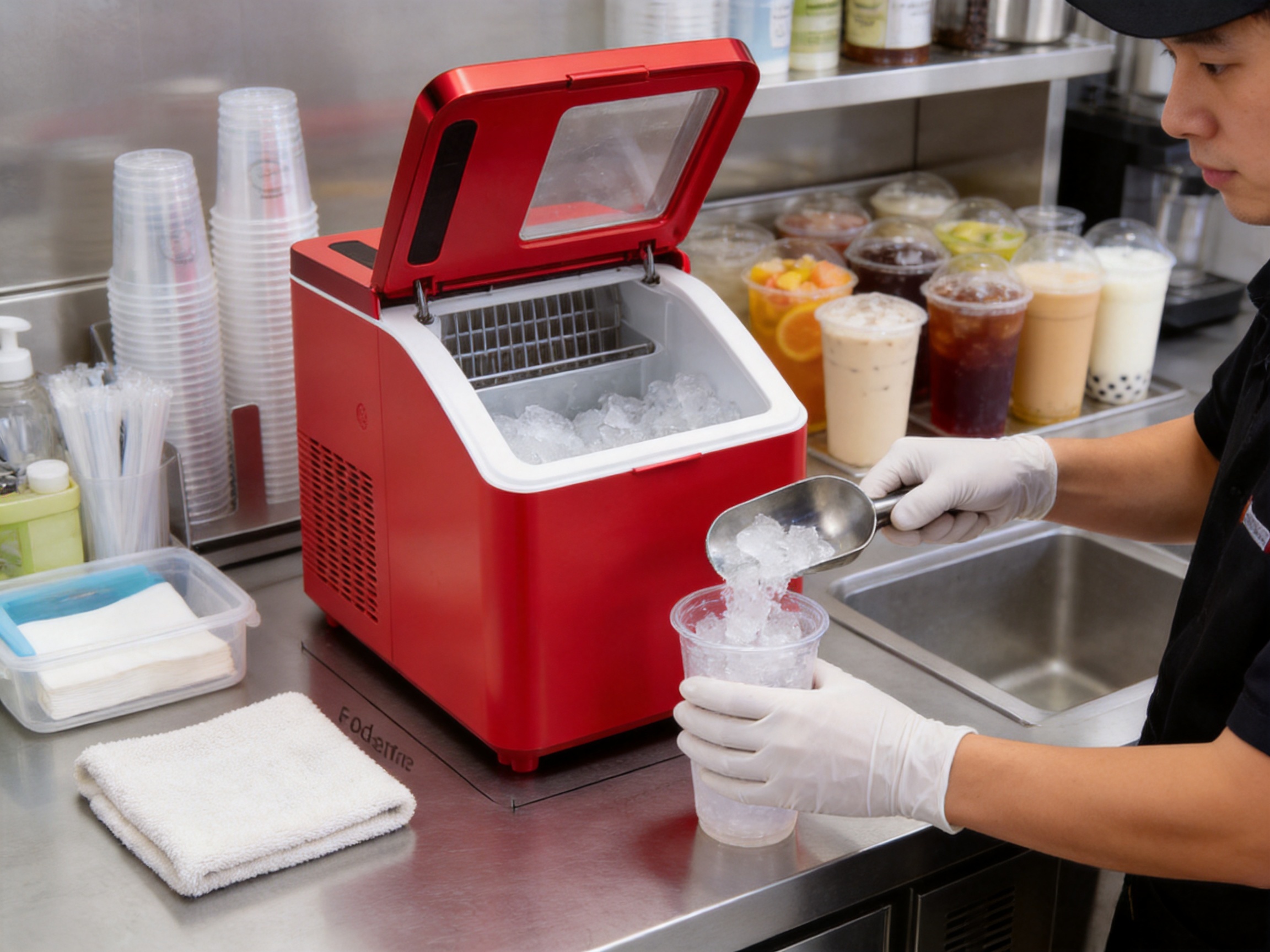
Milk tea businesses frequently prepare iced drinks in rapid succession. The bullet ice format is well suited to this environment because it cools drinks efficiently, offers a popular crunchy texture, and can be scooped with relative ease. The compact body can fit near the sealing, mixing, or topping station, helping staff reduce unnecessary movement.
The machine can support a consistent beverage workflow, but operators should plan production around peak periods. A store should assess expected order volume, cup sizes, ice ratios, and backup arrangements before deciding whether one unit is sufficient.
Fast-food restaurants
Fast-food service depends on speed, repeatability, and simple staff procedures. Flowable ice can make dispensing more convenient, while rapid cooling supports cold drink preparation. The compact design is useful where counter space is shared by multiple pieces of equipment.
The fully flip-top design also has value in a high-use environment. Frequent cleaning and inspection are easier when staff can access the storage and ice-making areas directly. Clear cleaning responsibilities should be included in the restaurant’s daily operating procedures.
Cafés and beverage counters
Cafés can use bullet ice for iced coffee, tea, fruit drinks, sparkling beverages, and seasonal specials. The ice’s open structure can help cool drinks while adding a distinctive appearance in transparent cups. It can also be used during events or promotional periods when beverage demand increases.
Because cafés often have limited back-of-house space, a compact countertop design can be more practical than a large dedicated ice installation. The machine can be placed near preparation areas as long as ventilation, access, and hygiene requirements are maintained.
Offices and shared kitchens
An office, studio, showroom, or shared kitchen may need a regular supply of ice without requiring industrial production capacity. A compact appliance can support staff refreshments, meetings, customer hospitality, and occasional events. The flip-top opening makes it easier for designated personnel to clean and inspect the unit.
In shared environments, clear usage rules are important. Users should avoid placing unclean objects into the ice storage area, should use a dedicated scoop, and should report unusual noise, leaks, odor, or performance changes promptly.
Households
For households, the machine can provide ice for everyday drinks, family gatherings, weekend meals, and warm-weather activities. Its relatively small size is suitable for kitchens where freezer capacity is limited. The product can be especially useful for families who regularly prepare iced beverages and prefer a crunchy ice texture.
Home users should remember that compact does not mean maintenance-free. Cleaning, water quality, safe electrical use, and proper ventilation remain essential for reliable operation.
11. Installation and Daily Operating Guidance
Before using the machine, users should read the supplied operating documentation and confirm that the installation location is suitable. The counter or support surface should be stable, level, dry, and strong enough to hold the appliance. There should be sufficient room to open the flip-top structure fully and to access the sides or rear as needed for ventilation and maintenance.
The machine should not be placed directly beside a heat source. Direct sunlight, ovens, hot beverage equipment, and restricted airflow can negatively affect refrigeration performance. The power connection should match the specified 220V-240V, 50Hz supply and should comply with local safety requirements.
Water should be added or connected according to the product instructions. The quality of the water can influence taste, odor, mineral deposits, and cleaning frequency. If local water contains high mineral content, operators may need to use an appropriate filtration or treatment method that is compatible with the appliance.
Starting a production routine
After installation, users should inspect the water area, lid, ice storage section, control interface, and exterior. The first production cycle may be handled according to the manufacturer’s recommended preparation procedure. Ice that is not intended for immediate use should be stored in a clean condition and protected from contamination.
During operation, users should avoid overfilling the ice storage area. They should also avoid using hands or unsuitable containers to remove ice. A dedicated scoop supports better hygiene and more consistent portioning.
Monitoring performance
Operators should pay attention to changes in ice shape, production speed, unusual noise, excessive water accumulation, temperature behavior, and control response. Early attention to small changes can prevent larger problems. If the machine shows signs of refrigerant leakage, electrical damage, persistent water leakage, or abnormal heating, it should be disconnected and assessed by qualified service personnel.
12. Buying Considerations for Distributors and End Users
Potential buyers should begin by identifying the intended application. A household, small café, milk tea shop, restaurant, and distributor may have different expectations regarding output, packaging, after-sales support, and operating schedules. The compact dimensions and product category make the machine attractive for moderate-demand applications, but buyers should compare expected ice consumption with the machine’s actual production capability.
Electrical compatibility is another important consideration. The specified supply is 220V-240V at 50Hz, so customers in other electrical markets may need to confirm suitability before ordering. Voltage and frequency should not be treated as interchangeable specifications.
Buyers should also evaluate countertop depth, lid clearance, ventilation, water access, drainage arrangements, cleaning space, and staff workflow. A machine can be compact while still requiring sufficient open space for safe and hygienic operation.
Questions for commercial buyers
Commercial buyers may wish to ask about production expectations under different ambient conditions, recommended cleaning procedures, packaging dimensions, spare parts, warranty terms, service arrangements, minimum order quantities, and shipping schedules. Importers and distributors may also need product labeling, carton information, technical documentation, and market-specific compliance materials.
The company’s location in Zhejiang’s small-appliance manufacturing region and its specialization in ice makers, air fryers, and coffee machines may be useful to buyers seeking a broader appliance supplier. Businesses can contact the company to discuss cooperation and product requirements.
13. Company Capabilities and Business Philosophy
Alien Technology Co., Ltd. presents itself as a manufacturer focused on household appliances that make everyday life more convenient, healthy, and enjoyable. Its stated mission is “Smart Technology, Simplifying Life, Enhancing Happiness.” This mission aligns with the product’s practical design direction: a compact appliance that uses intelligent operation, accessible maintenance, and a specialized ice format to simplify beverage preparation.
The company emphasizes reliable quality, customer satisfaction, continuous improvement, and innovation. These principles are important in appliance manufacturing because the product must perform repeatedly in real-world conditions. An ice maker is used many times over its service life, and its value depends on consistent operation rather than a single impressive demonstration.
The company’s product portfolio includes ice makers, coffee machines, and air fryers. These categories share several manufacturing challenges. They require safe electrical systems, user-friendly interfaces, thermal or refrigeration management, compact housing design, and attention to cleaning. Experience across these product groups can support a broader understanding of household and food-service appliance requirements.
The company also follows a stable and pragmatic business philosophy. For customers, this can be relevant when building a long-term supplier relationship. Stable cooperation involves more than purchasing a finished unit. It includes clear communication, dependable specifications, responsive problem-solving, product improvement, and an understanding of changing market needs.
14. Frequently Asked Questions
What type of ice does the machine produce?
The product is categorized as a Bullet Ice Maker. Its ice has a distinctive shape with a perforated center. This structure increases contact between the ice and beverage, supporting rapid cooling and creating a crunchy texture that many users enjoy.
Why does the perforated center help cool drinks?
The opening increases the amount of ice surface that can contact the beverage. Liquid can flow around the outside and through the center, allowing cooling to take place across a larger contact area than with some solid ice shapes.
Is the machine suitable for milk tea shops?
Yes. The product information specifically identifies characteristics that are popular in milk tea shops and fast-food restaurants, including rapid cooling, moderate hardness, a crunchy texture, flowability, and continuous ice-making potential. Each business should still compare expected daily demand with the machine’s production capability.
Does the ice tend to clump during storage?
The bullet shape is designed to provide high flowability and reduce clumping during storage and dispensing. Actual results can also depend on storage time, moisture, temperature changes, water quality, and maintenance conditions.
Can the ice be dispensed with a scoop?
Yes. The product information indicates that its shape makes it easy to use with an ice scoop. A dedicated, clean scoop should be used to support hygienic handling.
Is the machine difficult to clean?
The fully flip-top design is intended to make cleaning easier by allowing broader access to the ice storage and ice-making areas. Users should follow the recommended cleaning schedule and procedures, especially in commercial environments with frequent operation.
What are the machine dimensions?
The dimensions are 325 x 295 x 252 millimeters. Buyers should also allow additional surrounding space for ventilation, lid opening, filling, cleaning, and safe access.
What power supply does it require?
The specified power supply is 220V-240V at 50Hz. The rated current is 0.9A, and the rated power is 150W. Customers should confirm local electrical compatibility before installation.
What refrigerant does it use?
The machine uses R600a refrigerant with a 19-gram charge. Because R600a is flammable, users should not open or repair the refrigeration circuit themselves. Refrigeration service should be performed by qualified personnel.
Can it replace a large commercial ice machine?
It may be suitable for moderate-demand applications, but it should not automatically be considered a replacement for a high-capacity commercial system. Large restaurants, hotels, and event venues should assess their peak demand and required storage volume before selecting equipment.
What types of businesses may benefit from this product?
Potential users include milk tea shops, cafés, fast-food restaurants, small restaurants, beverage counters, offices, hospitality spaces, food-service operators, and households. Its compact structure is especially useful where counter space is limited.
What should be considered before purchasing?
Buyers should consider expected ice consumption, electrical compatibility, installation space, ventilation, water quality, cleaning requirements, storage needs, service access, and the availability of commercial support. Distributors should also discuss packaging, documentation, shipping, and cooperation terms with the manufacturer.
15. Final Assessment
The Touchscreen Ice Maker, or Alien-Z01, is designed to address several common challenges in beverage preparation. Its bullet-shaped ice uses a perforated center to promote rapid cooling. Its moderate hardness provides a crunchy texture. Its form is intended to improve flowability and reduce clumping, supporting easier scooping and dispensing. Its continuous ice-making principle is suited to users who need a recurring supply rather than occasional tray production.
The compact dimensions are a strong advantage for kitchens, beverage stations, offices, and small commercial sites where space is limited. The 150W rating and 220V-240V, 50Hz electrical specification provide a clear operating foundation, while the R600a refrigerant system supports the appliance’s compact refrigeration design. The full flip-top structure improves access to the storage and ice-making areas, making routine cleaning and inspection more practical.
Compared with freezer trays, packaged ice, large floor-standing systems, and loose crushed ice, the product offers a balanced combination of convenience, cooling performance, space efficiency, and user-friendly maintenance. Its best application is not necessarily the highest-volume ice production environment. Instead, it is particularly attractive to users who need dependable on-site ice production in a compact format.
The manufacturing company strengthens this proposition through its specialization in small household appliances, location in Zhejiang’s appliance manufacturing region, focus on humanized design, and stated commitment to reliable quality, customer satisfaction, continuous improvement, and innovation. These strengths support a product philosophy centered on practical technology rather than unnecessary complexity.
For businesses and households seeking an accessible ice-making solution, the machine offers a thoughtful combination of ice quality, operating convenience, hygiene-oriented design, and compact placement. Proper installation, cleaning, water management, and demand planning will be essential to achieving the best results over the product’s service life.
References
1. Product specification sheet for the Touchscreen Ice Maker, model Alien-Z01.
2. Product information describing bullet ice characteristics, cooling performance, flowability, texture, continuous production, space-saving structure, and cleaning access.
3. General principles of commercial food-service equipment sanitation and ice-handling practices.
4. General appliance installation guidance concerning electrical compatibility, ventilation, water quality, and routine maintenance.
5. General refrigeration safety guidance for appliances using R600a refrigerant.
6. Company profile and business information for Alien Technology Co., Ltd.