
 English
 한국어
한국어 Español
 Deutsch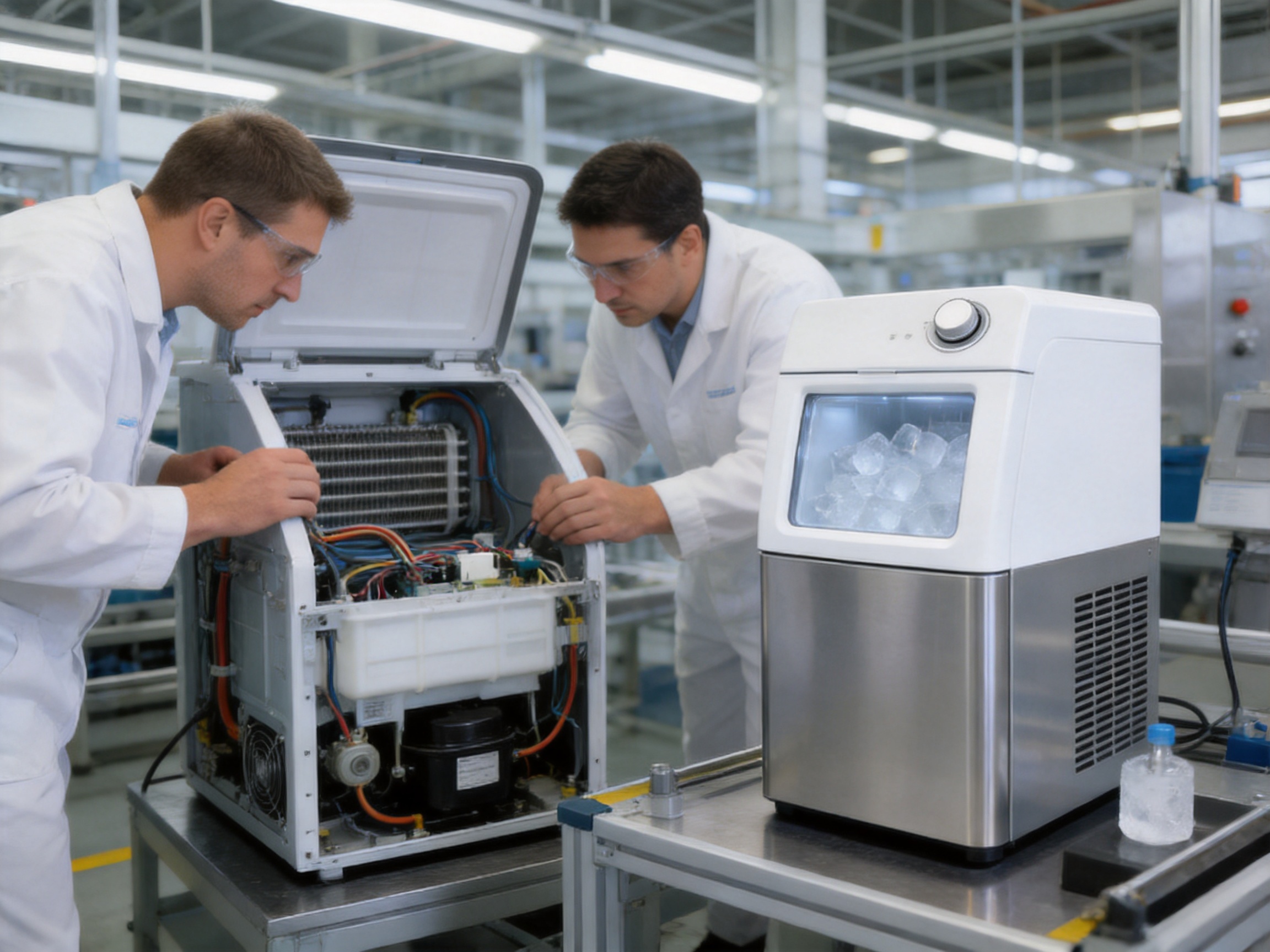
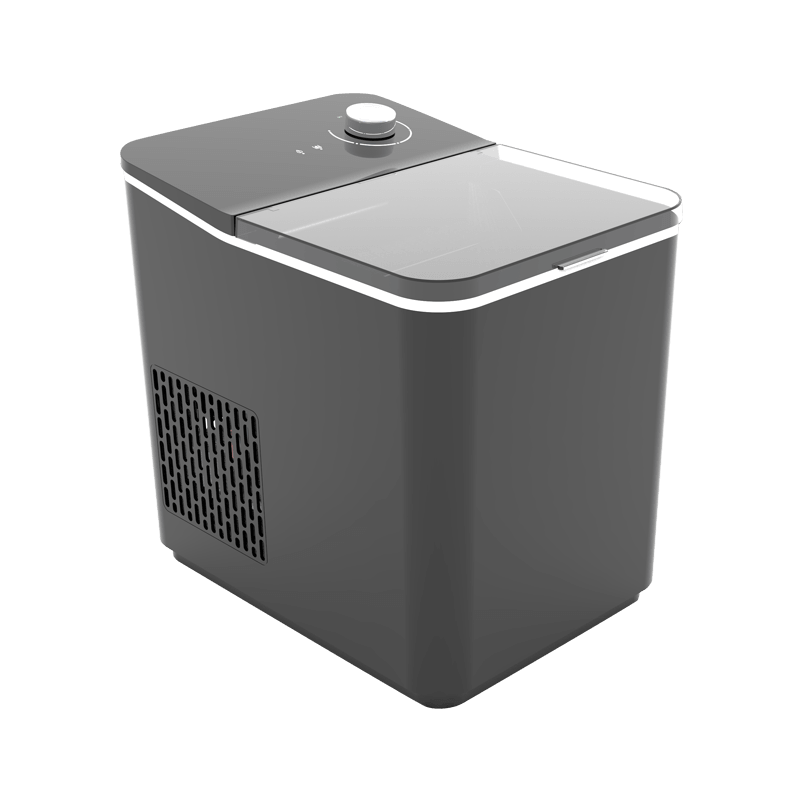
Modern homes, offices, cafés, entertainment spaces, and outdoor kitchens increasingly need convenient ways to produce ice without depending entirely on freezer trays or large commercial machines. The Knob-type ice maker, identified as Alien-Z02 and classified as a Bullet Ice Maker, is designed to answer that need with a compact body, a straightforward control approach, and a refrigeration system intended for reliable household ice production. It combines a 150-watt electrical system, R600a refrigerant, a lightweight countertop form, and bullet-shaped ice that can cool drinks quickly while supporting everyday convenience.
Unlike a conventional freezer tray, this appliance is designed specifically for active ice production. Users add water, start the machine, and allow its refrigeration system to form hollow bullet-shaped pieces. Unlike many large commercial ice makers, it does not require a dedicated installation area, complex plumbing, or a permanent connection to a water supply. Its compact format allows it to serve apartments, family kitchens, home bars, offices, recreational rooms, and outdoor settings where space and mobility matter.
The product also reflects the manufacturing direction of Alien Technology Co., Ltd., a household appliance manufacturer based in Cixi, Zhejiang Province. The company specializes in ice makers, coffee machines, air fryers, and other small appliances. Its stated approach combines humanized design, reliable quality, intelligent technology, continuous improvement, and customer-focused service. These principles are visible in the product concept: the machine concentrates on the features that matter most to daily users, including compactness, simple operation, fast ice production, stable refrigeration, and energy-conscious component selection.
Product Overview
The Knob-type ice maker is intended for users who want fresh ice on demand without purchasing a large appliance. Its bullet ice format is recognizable by a rounded exterior and hollow center. This shape is practical for mixed beverages, soft drinks, cocktails, iced coffee, smoothies, and general cooling. Because the ice is formed around a refrigerated surface, the production process can be repeated in cycles, allowing users to prepare multiple batches during gatherings or ordinary daily use.
The machine operates on a 220V–240V, 50Hz power supply and has a rated current of 0.9A with a power rating of 150W. These figures place it within a practical range for household countertop equipment. The relatively modest power rating supports the product’s positioning as a compact home appliance rather than a high-capacity commercial ice plant. It is intended to deliver useful quantities of ice while fitting into kitchens and other spaces where electrical capacity and countertop area may be limited.
Its refrigeration system uses R600a refrigerant with a 19-gram charge. R600a, or isobutane, is widely associated with compact refrigeration appliances because of its effective thermodynamic performance and low global warming potential compared with many older refrigerant options. The use of this refrigerant supports the company’s stated interest in environmentally conscious and energy-saving appliance design. As with all refrigeration equipment, the refrigerant circuit should be serviced only by trained professionals, and the appliance should be operated in accordance with applicable safety instructions.
The technical specification lists machine dimensions of 313 x 226 x 309 millimeters. The product information also presents a compact-size reference of 325 x 295 x 252 millimeters. These measurements may correspond to different measurement methods, packaging or design references, and should be confirmed against the final production drawing before installation or procurement. In either case, the product is clearly designed for countertop use and space-efficient placement.
Product Attribute |
Specification |
Product Type |
Knob-type bullet ice maker |
Model Description |
Alien-Z02 |
Power Supply |
220V–240V, 50Hz |
Current and Power |
0.9A / 150W |
Refrigerant |
R600a |
Refrigerant Charge |
19g |
Listed Machine Dimensions |
313 x 226 x 309mm |
Primary Application |
Home, office, countertop, bar, and outdoor-use settings |
Knob-type ice maker
Why Bullet Ice Is Useful
Ice shape influences how ice behaves in a drink. Bullet ice has a rounded exterior and a hollow center, creating a balance between cooling surface area, weight, and ease of use. The hollow structure allows the ice to cool beverages efficiently while remaining light enough for everyday handling. It is especially suitable for cups, pitchers, cocktail shakers, and beverage dispensers where a large solid cube may be inconvenient.
The shape also supports rapid cooling during ordinary beverage preparation. When added to water, juice, soda, iced coffee, or a mixed drink, bullet ice quickly lowers the beverage temperature. Its smooth form is comfortable to handle and less likely to create sharp corners than certain cube styles. This makes it suitable for family settings, hospitality areas, and casual gatherings.
Another advantage is versatility. The same ice can be used for a morning iced coffee, an afternoon soft drink, an evening cocktail, or a cooler filled for a weekend event. Users do not need to purchase several different types of ice for different occasions. A compact bullet ice maker can therefore serve as a practical support appliance for both routine consumption and occasional entertaining.
The hollow center is also part of the product’s performance appeal. The information supplied for this product notes that bullet ice is less prone to melting than some alternative forms because of its distinctive shape. Actual melting time depends on room temperature, beverage temperature, ventilation, storage conditions, and the quantity of ice used. Nevertheless, the shape is well suited to rapid chilling and general beverage service.
Fast Ice Production for Everyday Convenience
The central advantage of a dedicated ice maker is the ability to produce ice when it is needed. Freezer trays require long preparation periods and occupy freezer space. They may also spill while being moved, absorb odors, or produce less ice than a family needs during a gathering. A countertop machine removes much of this inconvenience by providing an independent ice-making function.
The Alien-Z02 uses a high-performance refrigeration system intended to produce bullet ice in a relatively short period. The supplied product information does not specify an exact production time or hourly output, so users and buyers should consult the final technical datasheet for those figures. Even without a stated cycle time, the product’s design purpose is clear: it is built to create fresh ice in repeated cycles rather than forcing users to plan ice production many hours in advance.
This makes the appliance particularly useful in situations where demand can change quickly. A family may need extra ice for visitors. A home bar may require chilled ingredients for several drinks. An office may need ice for water and refreshments during a meeting. A small restaurant, guesthouse, or event space may use the appliance as a supplementary ice source. In each case, on-demand production offers more flexibility than relying exclusively on stored ice.
The machine’s compact power system also supports convenient placement near beverage preparation areas. It can be positioned on a stable kitchen counter, a bar counter, or another suitable surface with access to the correct power supply. Because the appliance is not described as requiring permanent plumbing, it can be moved more easily than built-in ice-making equipment. Users should still provide adequate ventilation, keep the appliance level, and follow the manufacturer’s operating and cleaning instructions.
Compared with manual ice trays, the product offers a more consistent and less labor-intensive process. Instead of filling and carrying multiple trays, waiting for freezing, and removing ice by hand, users can operate one dedicated appliance. This saves preparation time and reduces the repeated handling associated with traditional freezing methods.
Compact Design and Flexible Placement
Space efficiency is one of the strongest advantages of this product category. Modern kitchens often have limited countertop area, while apartments and offices may not have room for a full-size appliance. The Knob-type ice maker is designed to occupy a relatively small footprint, allowing it to be integrated into existing spaces without overwhelming the surrounding environment.
The product information describes the appliance as measuring only 325 x 295 x 252 millimeters in one reference, while the technical table lists 313 x 226 x 309 millimeters. Although the exact final dimensions should be confirmed before purchase, both references communicate the same design goal: a small and portable household ice maker. Buyers planning to place it under cabinets, on shelves, or inside mobile beverage stations should verify the official production dimensions, clearance requirements, and ventilation space.
A compact body provides more than visual convenience. It can lower the practical barrier to ownership. Users do not need to reorganize an entire kitchen or build a dedicated installation platform. The machine can be placed near a coffee machine, beverage refrigerator, sink, or home bar, making ice available where drinks are prepared. Its design may also appeal to property managers, short-term rental operators, and hospitality providers that want to provide an extra convenience without installing a large appliance.
The lightweight format supports flexible use in different areas, although the machine should be moved carefully and only when it is safe to do so. Suitable applications may include kitchen counters, home entertainment areas, office refreshment stations, recreational rooms, and outdoor spaces protected from rain, excessive heat, and direct exposure to weather. Outdoor use should always consider electrical safety, stable placement, temperature conditions, and access to a protected power outlet.
Compared with larger commercial ice makers, this type of appliance is easier to integrate into a home environment. It has a less demanding spatial requirement, a simpler operating concept, and a more approachable scale. Compared with small freezer compartments, it provides an independent ice-making function and avoids using valuable freezer storage for trays or bags of ice.
Simple Knob-Type Operation
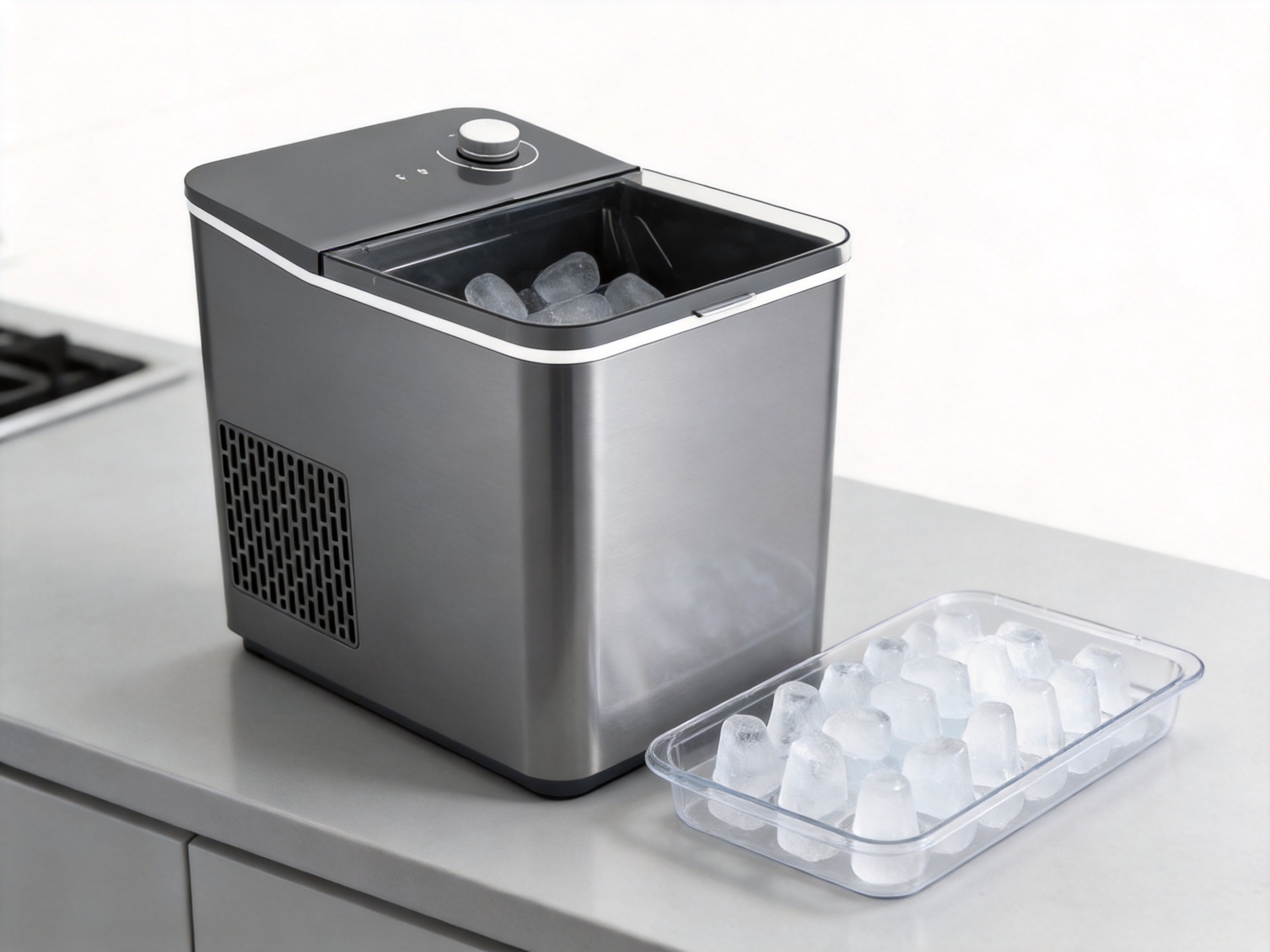
The product title identifies the appliance as a knob-type ice maker. This indicates an emphasis on direct, accessible control rather than a complicated operating interface. A knob-based design can be useful for households with different levels of technical familiarity because the user can understand the basic control action quickly. A straightforward interface also reduces the learning curve for offices, rental properties, and hospitality environments where many different people may operate the appliance.
Simple operation is an important part of humanized product design. A machine can contain advanced refrigeration components while still presenting the user with an uncomplicated experience. The user should be able to prepare the appliance, add the appropriate amount of water, select or activate the desired function, and monitor the ice-making process without unnecessary steps. This balance between internal technology and external simplicity is consistent with a mission of using smart technology to simplify daily life.
A knob-type control may also support durability in daily use by reducing reliance on a large number of delicate interface elements. The exact control architecture, indicator lights, safety functions, and operating modes should be confirmed in the final user manual. Regardless of the detailed interface, a clear control system helps users avoid mistakes, operate the appliance efficiently, and maintain predictable results.
For commercial buyers considering the appliance as a supplementary unit, simple controls can reduce training time. Staff members can learn the basic operating sequence quickly, while property owners can provide clear instructions to guests. In a family setting, the uncomplicated format makes it easier for several household members to share responsibility for preparing ice.
Energy-Conscious Refrigeration
Energy use is increasingly important when selecting a household appliance. Consumers want useful performance without adding unnecessary demand to their electricity bills. The Alien-Z02 is rated at 150W, a specification that supports its position as a compact appliance designed for intermittent or periodic household operation. Actual energy consumption depends on ambient temperature, water temperature, operating duration, ventilation, cleaning condition, and the number of production cycles.
The use of R600a refrigerant is another important design choice. R600a is a natural hydrocarbon refrigerant with a low global warming potential. It is commonly used in compact refrigeration products because it can provide effective cooling with a relatively small refrigerant charge. The listed charge for this machine is 19 grams.
Environmental performance involves more than refrigerant selection. A well-designed appliance should also use materials efficiently, maintain stable operation, avoid unnecessary heat loss, and provide a service life that supports responsible ownership. The company’s stated emphasis on reliable quality and continuous improvement is relevant here. Durable construction can help reduce premature replacement, while straightforward maintenance can help the appliance continue operating effectively.
Users also influence energy performance. Placing the ice maker in a cool, ventilated area can reduce the workload on the refrigeration system. Keeping the air pathways clear, avoiding excessive exposure to heat, and using clean water can support stable operation. Users should not operate the appliance in a confined location where heat cannot escape, because poor ventilation may reduce efficiency and affect performance.
Compared with producing ice in a large freezer, a dedicated compact machine may provide more direct control over ice production. Users can run it when ice is required rather than freezing trays continuously. This can be especially practical for households that need fresh ice periodically but do not want to allocate permanent freezer capacity to ice storage.
Manufacturing Strengths and Product Development Approach
Alien Technology Co., Ltd. is located in Zhouxiang, Zhejiang Province, an area recognized for its concentration of small household appliance manufacturing and convenient logistics. This location can support efficient access to component suppliers, production services, packaging resources, and transportation networks. For an appliance manufacturer, proximity to an established industrial ecosystem can help coordinate development, sourcing, assembly, quality management, and delivery.
The company’s product range includes ice makers, coffee machines, air fryers, and related household appliances. Working across several appliance categories can encourage the development of transferable capabilities in compact motor systems, heating and cooling technologies, electrical controls, molded housings, user interfaces, and consumer-oriented product design. The ice maker benefits from this broader small-appliance focus because its success depends on the coordinated performance of mechanical, electrical, thermal, and exterior components.
The company describes its mission as “Smart Technology, Simplifying Life, Enhancing Happiness.” For the Alien-Z02, this mission is reflected in a practical product strategy. The machine does not attempt to overwhelm users with unnecessary complexity. Instead, it concentrates on a clear household benefit: making ice in a compact appliance that can be placed close to the point of use.
Advanced manufacturing does not necessarily mean that every product must have a complex screen or numerous digital functions. In a compact appliance, advanced manufacturing can also mean accurate component matching, stable assembly, consistent sealing, controlled refrigerant charging, dependable electrical connections, and repeatable production quality. These fundamentals are essential to the long-term performance of a refrigeration product.
A reliable production process begins with appropriate material and component selection. The outer housing must be sufficiently robust for daily countertop use while remaining lightweight enough for convenient placement. Internal refrigeration components must be matched to the intended power rating and cooling requirements. Electrical parts must be selected for the specified 220V–240V, 50Hz operating environment. Controls must be assembled so that users receive consistent responses over repeated cycles.
Refrigeration assembly requires particular attention. The cooling circuit must be properly connected and sealed. The listed R600a charge must be controlled accurately, and the finished product should be checked for leakage and operational stability. Because R600a is flammable, safe manufacturing, handling, labeling, transport, and servicing practices are important. These processes should be performed according to applicable regulations and professional procedures.
Quality control should also include inspection of the water-contact areas, ice-forming components, housing fit, control operation, power performance, noise behavior, and general appearance. A compact appliance is used at close range in the home, so loose parts, poor alignment, or inconsistent control action can affect the user’s perception of quality. Consistent inspection helps identify issues before products reach customers.
Production testing can verify whether the machine starts correctly, cools as intended, forms the expected bullet shape, and responds properly to normal operating conditions. Testing may also evaluate electrical safety, insulation, grounding, temperature behavior, and protection against abnormal operating situations. The exact tests depend on the target market and applicable certification requirements, but a disciplined testing program is a key strength for any household appliance producer.
The company’s focus on customer satisfaction and continuous improvement further supports product development. Feedback from distributors, retailers, installers, and end users can reveal opportunities to refine the housing, controls, packaging, maintenance instructions, or production process. This kind of feedback loop is valuable in competitive appliance markets, where small improvements in convenience and reliability can strongly influence purchasing decisions.
Advantages Over Common Alternatives
Compared with Freezer Trays
Freezer trays are inexpensive and familiar, but they require advance planning and occupy freezer space. The user must fill the trays, place them carefully in the freezer, wait for freezing, and remove the ice manually. Trays can also be difficult to handle when full, and the resulting ice may be limited by the available freezer capacity.
The Knob-type ice maker provides a dedicated alternative. It is designed to make bullet ice in repeated cycles and does not require users to sacrifice a large section of freezer storage. Its direct production approach is particularly useful when ice demand changes during the day or when a household wants fresh ice without waiting overnight.
Compared with Bagged Ice
Bagged ice is convenient for large events, but it requires storage, transportation, and advance purchase. It may also melt during travel or occupy freezer space after purchase. A countertop ice maker gives users the option to produce ice at the location where it will be consumed. This can reduce dependence on packaged ice for routine needs.
The home machine is not intended to replace all high-volume commercial ice supply. However, it can reduce the need to purchase bags of ice for ordinary family use, small gatherings, and personal beverages. It also provides a more consistent solution for users who want access to ice without repeatedly visiting a store.
Compared with Large Commercial Ice Makers
Large commercial machines can produce much higher volumes, but they normally require more space, greater investment, more complex installation, and more demanding maintenance. They are appropriate for restaurants, hotels, bars, and food-service facilities with constant high demand. A compact household unit is better suited to users whose requirements are moderate and intermittent.
The Alien-Z02 offers a practical middle ground. It delivers dedicated ice-making capability without adopting the physical scale or installation burden of commercial equipment. Its 150W rating, compact dimensions, and household-oriented design make it suitable as a primary appliance for a home or as a supplementary machine for a small business.
Compared with Multi-Function Appliances
Some refrigerators and beverage systems include built-in ice-making functions. These can be convenient, but they are tied to the location and design of the main appliance. If the refrigerator is full, the ice-making capacity may not meet demand. If the user wants ice in another room or at an outdoor beverage station, a built-in function may be less flexible.
A stand-alone ice maker can be positioned where it is most useful. It gives users a dedicated source of ice and allows the main refrigerator to remain focused on food and beverage storage. This separation can be valuable in households that entertain often or require ice in more than one location.
Applications in Homes and Small Businesses
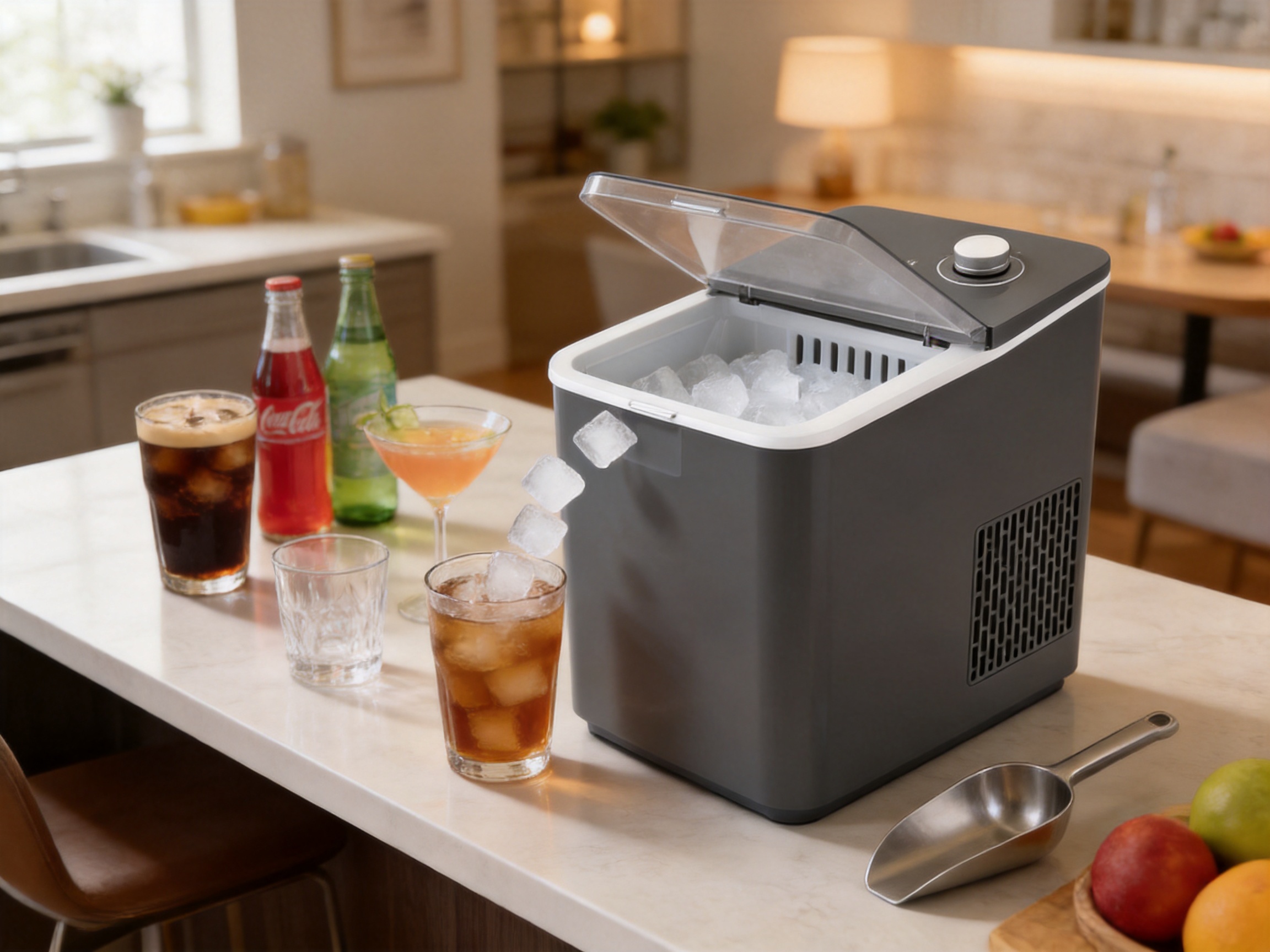
In a family kitchen, the product can support daily drinks, packed lunches, iced coffee, cold water, and weekend gatherings. Its compact design helps it fit into kitchens where every appliance must justify its use of space. The machine can be operated when required and stored or repositioned when the counter needs to be used for other tasks.
For a home bar, bullet ice is useful for cocktails, mixed drinks, soft drinks, and chilled serving pitchers. The rounded hollow shape is visually distinctive and practical for beverage presentation. A home bar can use the machine as a convenient source of fresh ice without relying solely on freezer trays.
In an office, the appliance can support employee refreshments and meetings. Its simple control concept can make shared use easier, while its moderate power rating fits the general profile of small office equipment. The office should provide a stable surface, proper ventilation, safe electrical access, and a cleaning routine appropriate for shared food-contact use.
In a guesthouse, rental property, or hospitality room, a compact ice maker can add value to the guest experience. It offers a service feature that does not require a large installation. Property operators should establish clear operating instructions and cleaning procedures, especially when the appliance will be used by many people.
For cafés, small restaurants, and event spaces, the product may function as a supplementary ice source. Buyers should assess expected demand carefully because a compact household ice maker is not a replacement for high-capacity commercial equipment. Its greatest value in a business environment is flexibility, backup capability, and convenient production near a service point.
Outdoor use can be practical for patios, recreational areas, and protected entertainment spaces. However, the unit should be sheltered from rain, water splashes, direct sunlight, and extreme temperatures. A safe power supply and stable, level placement are essential. The machine should not be treated as a weatherproof appliance unless the manufacturer expressly confirms that rating.
Operation, Care, and Maintenance
Proper use begins with placement. The machine should stand on a firm, level surface that can support its weight and resist vibration. Adequate clearance should be left around ventilation areas so that heat can dissipate. The appliance should not be placed beside ovens, heaters, or other sources of intense heat.
Users should follow the recommended water-filling procedure and avoid exceeding the indicated water level. Clean drinking water is appropriate for ordinary ice production, subject to local water quality and the manufacturer’s instructions. The water reservoir and ice-contact components should be cleaned regularly to preserve hygiene and reduce the possibility of odors or mineral deposits.
After use, users should follow the manual’s instructions for draining, drying, or storing the appliance. Standing water can affect cleanliness and may contribute to unwanted odors. A regular cleaning schedule is particularly important in offices, hospitality settings, and shared spaces.
The refrigeration system should not be opened by unqualified users. R600a is a flammable refrigerant, and any repair involving the sealed system should be performed by trained personnel using appropriate tools and procedures. Users should also avoid damaging the refrigeration tubing when moving, cleaning, or handling the machine.
Routine care can help preserve performance. Keeping the exterior clean, maintaining ventilation clearance, avoiding overfilling, and addressing unusual sounds or operating behavior promptly are simple steps that support longer service life. If the appliance does not cool properly, develops a refrigerant odor, shows electrical damage, or behaves abnormally, it should be unplugged when safe and inspected by qualified service personnel.
Purchasing Considerations for Distributors and Buyers
Consumers should evaluate the intended use before selecting a countertop ice maker. Important considerations include available space, electrical compatibility, expected ice demand, placement conditions, cleaning requirements, and the availability of local service support. The listed 220V–240V, 50Hz specification should be matched to the electrical standard in the intended market.
Distributors should confirm the final production dimensions because the supplied materials contain two different dimensional references. Packaging dimensions, net product dimensions, clearance requirements, and shipping weight should be identified separately. This information is important for retail listings, warehouse planning, countertop demonstrations, and installation guidance.
Business buyers should also request details not included in the supplied specification, such as ice production per cycle, maximum daily output, water reservoir capacity, storage-bin capacity, noise level, operating temperature range, certification status, warranty terms, and replacement-part availability. These details help determine whether the product is best suited as a primary household machine or as a supplemental unit in a commercial environment.
For international cooperation, buyers may consider the company’s location in Zhejiang and its experience with multiple household appliance categories. A manufacturer with a focused product range may be able to support private-label projects, product customization, packaging development, and coordinated sourcing, subject to direct negotiation and technical review. The company welcomes contact from new and existing customers interested in business cooperation.
Quality, Reliability, and Customer Value
Quality in a small refrigeration appliance is measured by more than appearance. Users expect the machine to start reliably, cool consistently, form recognizable ice, operate safely, and remain easy to maintain. A well-organized manufacturing process supports these expectations by combining component control, assembly accuracy, functional testing, electrical inspection, and feedback-based improvement.
The product’s compact design can also contribute to customer value by reducing installation demands. A machine that can be placed on a countertop is accessible to a wider customer group than a built-in unit. Its independent operation can extend the usefulness of existing kitchens and beverage spaces without requiring major renovation.
Environmental considerations add another layer of value. The use of R600a and the product’s energy-conscious positioning respond to consumer interest in appliances that balance performance and environmental responsibility. While no appliance is impact-free, thoughtful refrigerant selection and efficient operating practices can contribute to a more responsible product profile.
The overall value proposition is therefore based on several connected benefits: convenient ice production, a useful bullet shape, a compact footprint, direct operation, moderate power demand, flexible placement, and a manufacturer focused on reliable household appliance production. These strengths make the machine relevant to users who want more convenience than freezer trays can provide without the cost and complexity of a commercial ice system.
Q&A
What type of ice does the machine produce?
The machine produces bullet-shaped ice with a hollow center. This form is suitable for cooling water, soft drinks, iced coffee, cocktails, mixed beverages, and other cold drinks.
Is this ice maker intended for home use?
Yes. The compact format, 150W power rating, and countertop-oriented design make it suitable for homes, apartments, offices, home bars, and other moderate-demand environments. It may also serve as a supplementary appliance in small commercial settings.
What power supply does the product require?
The listed power supply is 220V–240V at 50Hz. Buyers should confirm that this specification matches the electrical system in the intended country or region.
How much power does it use?
The product is listed at 0.9A and 150W. Actual electricity consumption varies according to operating time, ambient temperature, water temperature, ventilation, and the number of ice-making cycles.
Which refrigerant does it use?
The machine uses R600a refrigerant with a listed charge of 19 grams. Because R600a is flammable, the sealed refrigeration system should be serviced only by appropriately trained professionals.
Where can the ice maker be placed?
It can be placed on a stable kitchen countertop, bar counter, office refreshment station, or suitable protected outdoor surface. It should be kept level, protected from rain and direct weather exposure, and positioned where adequate ventilation is available.
Does the product require permanent plumbing?
The supplied information presents it as a compact countertop appliance and does not identify a permanent plumbing requirement. Buyers should confirm the exact water-filling method and reservoir instructions in the final user manual.
What are the listed dimensions?
The technical specification lists 313 x 226 x 309 millimeters. The product information also gives 325 x 295 x 252 millimeters as a compact-size reference. Since these figures differ, purchasers should verify the final production dimensions and required clearance before installation.
How does it compare with freezer trays?
It provides dedicated, repeated ice production and does not require users to freeze trays in advance. This can save preparation time and preserve freezer space. Freezer trays may still be appropriate for users with very low ice demand or no need for on-demand production.
Can it replace a commercial ice maker?
It is designed primarily for household and moderate-demand use. It may supplement a small business, but buyers with continuous high-volume requirements should compare the machine’s confirmed output and storage capacity with the demands of a commercial operation.
How should the appliance be cleaned?
Users should follow the cleaning and draining instructions supplied with the product. Water-contact areas should be cleaned regularly, and the machine should be kept dry and hygienic between uses. Shared-use environments may require a more frequent cleaning schedule.
What manufacturing strengths support the product?
The manufacturer is based in Zhejiang’s small-appliance manufacturing hub and specializes in ice makers, coffee machines, air fryers, and other household appliances. Its stated strengths include humanized design, reliable quality, continuous improvement, innovation, customer satisfaction, and a stable business philosophy.
Is the appliance environmentally conscious?
The use of R600a, a natural refrigerant with low global warming potential, supports the product’s environmental positioning. Responsible use also depends on proper maintenance, efficient operation, correct servicing, and appropriate end-of-life handling.
Conclusion
The Knob-type ice maker is a practical solution for users who want fresh bullet ice without installing a large commercial machine or filling their freezer with trays. Its compact design, direct operating concept, 150W electrical rating, R600a refrigerant, and flexible placement make it suitable for a broad range of household and moderate-demand applications.
Its most important advantage is balance. The product combines dedicated ice production with a size that fits modern living spaces. It offers more convenience than manual freezing while remaining less demanding than a full commercial system. Bullet ice provides a useful shape for beverages, and the refrigeration design is intended to support quick, repeated production.
The manufacturing background of Alien Technology Co., Ltd. adds further value. Based in a major small-appliance production region, the company focuses on ice makers, coffee machines, air fryers, and related household products. Its commitment to humanized design, reliable quality, intelligent technology, customer satisfaction, and continuous improvement provides a clear foundation for developing appliances that are practical, accessible, and suitable for everyday life.
For consumers, the product can simplify beverage preparation and make entertaining more convenient. For distributors and business buyers, it offers a compact appliance category with applications across homes, offices, hospitality spaces, and small commercial environments. Final buyers should verify detailed output, dimensions, certifications, warranty coverage, and service arrangements before purchase, but the product’s core strengths position it as a capable and space-conscious choice in the countertop ice maker market.
References
1. Product specification sheet for the Knob-type Bullet Ice Maker, model description Alien-Z02.
2. Product information supplied for compact home bullet ice production and beverage cooling applications.
3. General technical literature on R600a hydrocarbon refrigerants and low-global-warming-potential refrigeration systems.
4. General appliance design principles concerning countertop ventilation, electrical compatibility, water-contact hygiene, and refrigeration maintenance.
5. Company profile information for Alien Technology Co., Ltd., Zhejiang Province, China.