
 English
 한국어
한국어 Español
 Deutsch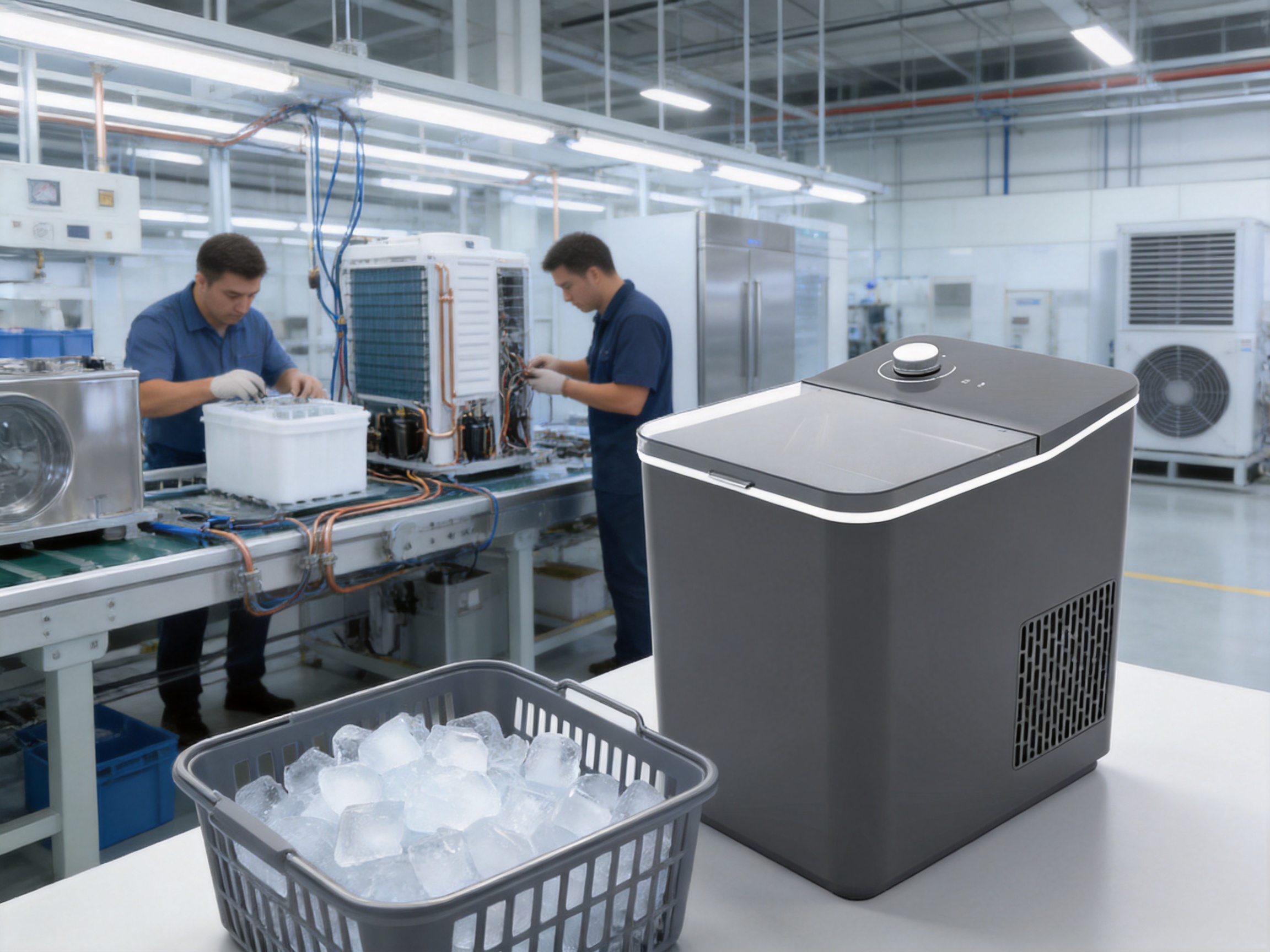
In modern homes, entertaining spaces, offices, small cafés, and outdoor kitchens, convenient access to fresh ice has become an important part of everyday comfort. A compact ice maker can eliminate the need to wait for freezer trays, purchase bags of ice, or reserve valuable freezer space for a single purpose. The Knob-type ice maker, identified as the Alien-Z02 model, is designed to provide a practical answer to these needs through a compact structure, efficient refrigeration, simple operation, and bullet-shaped ice production.
This household bullet ice maker combines a 150-watt operating system with R600a refrigerant, a small countertop footprint, and a lightweight format suitable for flexible placement. Its design is intended for users who want ice quickly without installing a permanent water line or committing to a large commercial machine. The appliance can fit into a kitchen, home bar, office pantry, recreational vehicle, outdoor serving area, or hospitality setting where space is limited and regular access to ice is valuable.
What makes this product particularly appealing is the balance between performance and practicality. It is not designed as an oversized industrial ice system. Instead, it focuses on the daily requirements of households and small-scale users: straightforward operation, manageable energy consumption, a compact body, stable cooling, and ice that can be used in cold drinks, cocktails, blended beverages, and food presentation.
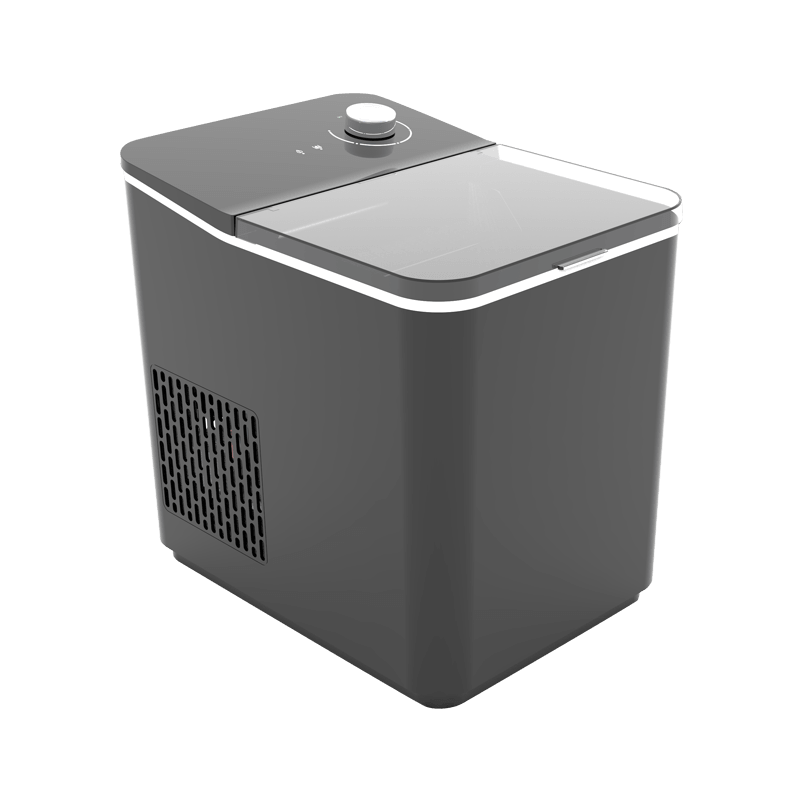
Knob-type ice maker
Product Overview and Intended Use
The Knob-type ice maker belongs to the bullet ice maker category. Bullet ice is recognized by its rounded, hollow shape. This form is convenient for a wide range of beverages because it cools liquid efficiently while remaining easy to scoop, pour, and mix. The hollow center gives the ice a distinctive appearance and helps it interact effectively with drinks.
The machine is engineered for countertop use. Its stated technical dimensions are 313 by 226 by 309 millimeters, while the product information also describes a compact overall format measuring approximately 325 by 295 by 252 millimeters. Because product dimensions can vary according to the measuring position, external panel, feet, or packaging configuration, purchasers should confirm the final installation dimensions before placing the unit in a tightly fitted cabinet or shelf. In either case, the machine is intended to occupy considerably less space than a full-size freezer or commercial ice-making system.
The product is suitable for several common situations:
First, it can support everyday family use. A household can prepare cold drinks without waiting for conventional freezer ice to form. This is valuable during warm weather, family meals, weekend gatherings, and informal celebrations.
Second, it can serve home entertainment areas. A bar counter, game room, patio, or outdoor dining station can benefit from an independent source of ice. Users do not need to repeatedly walk between the serving area and the main kitchen freezer.
Third, it can assist small workplaces. Offices often require ice for drinking water, refreshments, and employee events but do not need the capacity or complexity of a commercial ice dispenser. A compact unit provides a dedicated solution without requiring major renovation.
Fourth, it can support small hospitality and food-service applications where moderate, convenient ice production is required. It may be appropriate for a guest room, reception area, boutique beverage counter, or temporary event station, provided the expected ice demand remains within the appliance’s intended household capacity.
Core Technical Specifications
The technical configuration reflects a product designed for ordinary household electrical systems and efficient refrigeration. The following table summarizes the supplied specifications.
Specification |
Product Information |
Product category |
Bullet ice maker |
Model description |
Knob-type ice maker |
Product identification |
Alien-Z02 |
Power supply |
220V–240V, 50Hz |
Current and power |
0.9A, 150W |
Refrigerant and charge |
R600a, 19 grams |
Stated machine dimensions |
313 × 226 × 309 millimeters |
Product category application |
Household and compact countertop ice production |
These specifications show that the appliance is intended for regions using a 220V to 240V, 50Hz electrical supply. Users should always confirm that the local power standard matches the product rating before operation. Proper electrical compatibility is essential for safe and stable performance.
The 150-watt power rating places the product in a relatively modest household appliance range. Actual energy use can vary according to ambient temperature, water temperature, ventilation, operating duration, and the frequency of ice production. Nevertheless, the rating demonstrates an effort to provide useful cooling capability without the electrical demand associated with larger commercial machines.
Fast Bullet Ice Production for Everyday Convenience
The most important advantage of a countertop ice maker is convenience. Traditional freezer trays require hours to freeze and often produce an insufficient quantity for gatherings. Purchased bagged ice requires planning, transportation, storage, and additional expense. A dedicated ice maker offers a more direct alternative by producing ice when needed.
The product uses a high-performance refrigeration system to support rapid ice formation. Water is cooled through the internal refrigeration circuit until it freezes around the ice-forming components. Once the ice reaches the required condition, the machine can release the pieces and continue the production cycle. This automatic cycle is intended to reduce the waiting time associated with conventional household freezing methods.
Rapid ice production is especially useful when drinks are being prepared for several people. During a meal, users may need ice for water, juice, soda, iced tea, coffee drinks, or cocktails. Instead of rationing a small tray of frozen cubes, the user can operate the appliance as a dedicated source of fresh bullet ice.
The bullet shape also provides practical benefits. Its rounded surface is comfortable to handle, while the hollow center reduces the amount of solid material in each piece. This shape is commonly used in portable ice makers because it can be formed efficiently and used in many beverage types. Bullet ice is also visually distinctive, making it suitable for presentation in clear glasses, pitchers, and serving containers.
The phrase “quick ice making” should be understood as a description of the product’s intended operating advantage rather than a guarantee of identical performance in every environment. Ambient temperature, water temperature, ventilation, and cleaning condition can influence cycle time. In a warm room or a poorly ventilated location, the refrigeration system may need more time to remove heat. When the unit is placed correctly and maintained regularly, its compact refrigeration design can provide a dependable supply for normal household requirements.
Compact Dimensions and Flexible Placement
Space efficiency is one of the clearest advantages of this type of appliance over larger ice machines. Many homes have limited countertop area, and a bulky appliance can interfere with food preparation or storage. The compact body of the product allows it to be placed in a practical position without dominating the room.
Potential installation locations include kitchen countertops, breakfast stations, bar counters, office pantries, recreational spaces, and outdoor serving areas. Because the appliance is relatively lightweight and compact, it can also be moved when the user changes the layout of a room or prepares for a gathering.
However, compact placement does not mean the machine should be enclosed tightly. Refrigeration equipment needs suitable airflow around its ventilation areas. Users should leave adequate clearance according to the operating instructions, keep the air outlet unobstructed, and avoid positioning the unit next to ovens, radiators, or other major heat sources. Correct placement allows the compressor and condenser system to release heat more effectively.
The small format also improves logistical flexibility. A large built-in ice maker may require plumbing, dedicated cabinetry, professional installation, and permanent floor or counter space. A portable countertop product generally avoids these requirements. Users can fill the appropriate water reservoir, connect the appliance to a compatible electrical outlet, and begin the operating process according to the manual.
This flexibility gives the product an advantage over permanently installed alternatives for renters, temporary residences, event organizers, and consumers who do not want to modify their kitchen. It can also function as a secondary ice source during holidays or seasonal events, then be stored when demand is lower.
Simple Knob-Type Operation
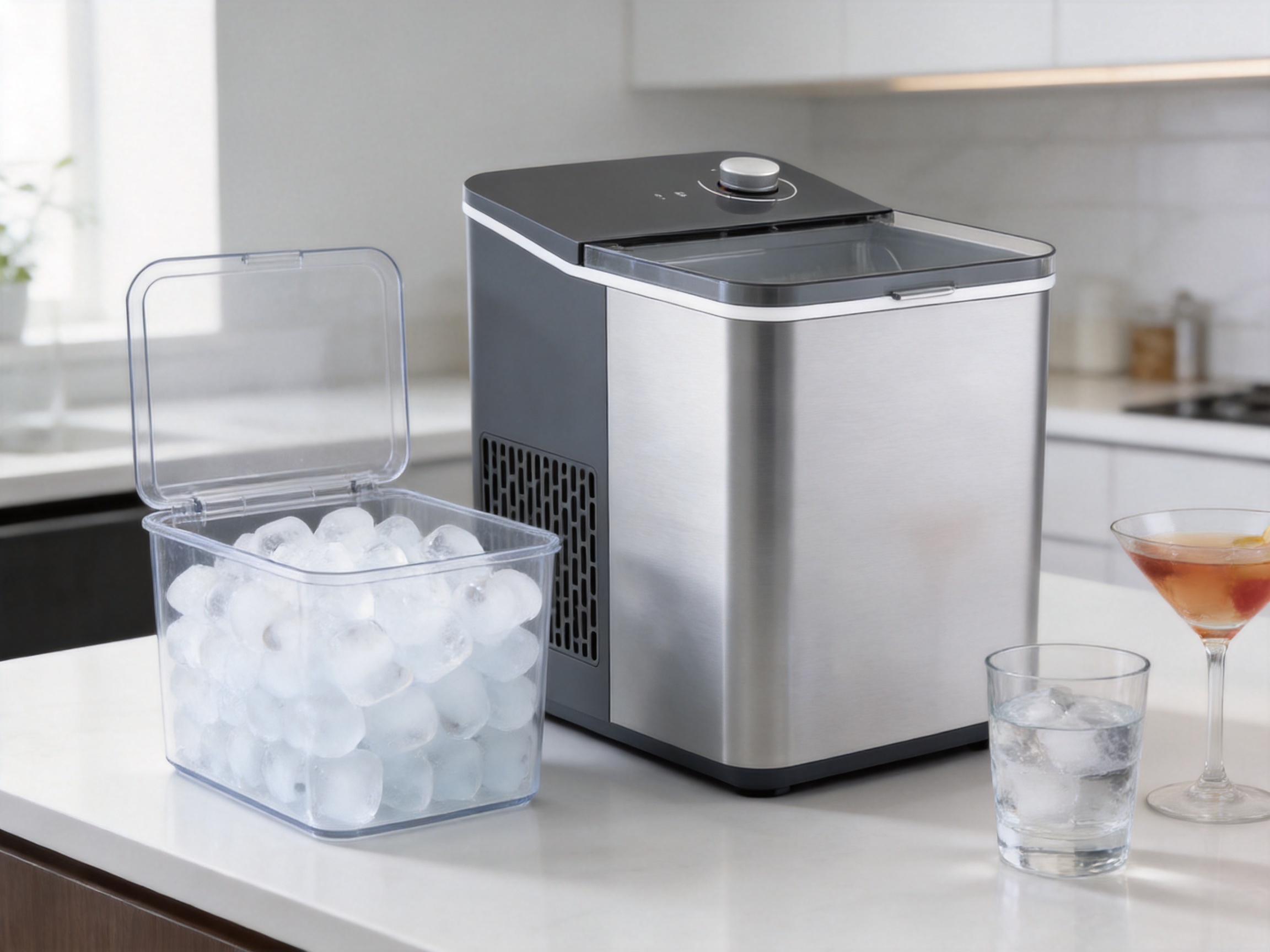
The knob-type control approach emphasizes ease of use. Instead of requiring a complicated interface with numerous settings, the control arrangement is intended to provide direct access to the primary operating function. This can be valuable for users who prefer physical controls that are easy to understand and operate.
A simple control system can also reduce the learning curve for families and shared workplaces. Different users can quickly understand how to start the appliance, monitor its operation, and stop the cycle when necessary. Physical knobs are often practical in kitchen environments because they can be operated without navigating multiple menus or relying on a mobile application.
For a household appliance, simplicity is not merely a matter of appearance. It can contribute to consistent usage. If the user can easily understand the controls, the machine is more likely to be used correctly and maintained regularly. Clear operation also helps reduce accidental settings changes and unnecessary energy consumption.
The product’s design is therefore focused on essential functionality rather than excessive complexity. Its value comes from combining a straightforward interface with a refrigeration system that performs a clearly defined task. This approach may appeal to customers who want reliable ice production without smart-home integration, complicated programming, or an extensive digital control panel.
R600a Refrigerant and Environmental Considerations
The appliance uses R600a refrigerant, also known as isobutane, with a stated charge of 19 grams. R600a is widely associated with compact refrigeration equipment because it offers effective refrigeration performance and a low global warming potential compared with many older refrigerants.
Using a natural hydrocarbon refrigerant reflects the broader movement toward more environmentally responsible cooling technology. Refrigerant selection can influence the environmental profile of an appliance throughout its service life. A refrigerant with a low global warming potential can help reduce the potential climate impact associated with leakage, provided that the system is manufactured, transported, serviced, and disposed of correctly.
R600a is flammable under certain conditions, which means that the sealed refrigeration system must be handled appropriately. Users should not puncture, disassemble, modify, or attempt to recharge the refrigerant circuit. Repairs involving refrigerant should be performed by qualified service personnel using suitable procedures and equipment.
The use of R600a also demonstrates the importance of responsible manufacturing controls. Refrigerant charging must be accurate, the sealed system must be properly joined, and the finished product should be inspected for leakage. These requirements place strong emphasis on process discipline, worker training, quality inspection, and safe handling during production.
Environmental performance is not determined by refrigerant alone. Energy consumption, product life, repairability, packaging, transport, and end-of-life recycling also matter. A well-designed appliance that operates efficiently and remains useful for many years can reduce the need for frequent replacement. The product’s compact structure may also help reduce material use compared with larger machines, although actual environmental performance depends on the full manufacturing and distribution process.
Manufacturing Strengths and Process Control
The manufacturer is based in Zhouxiang, Zhejiang Province, an area known for the production and distribution of small household appliances. This location provides access to an established manufacturing ecosystem, component suppliers, logistics providers, engineering resources, and experienced production workers. Such an industrial environment can support efficient product development and coordinated supply-chain management.
The company specializes in household appliances including ice makers, coffee machines, and air fryers. Experience across these product categories can create useful technical advantages. Ice makers require refrigeration knowledge, water-contact component management, electrical assembly, thermal control, and compact mechanical design. Coffee machines require fluid routing, heating or pressure systems, control assemblies, and food-contact considerations. Air fryers require heating, airflow management, insulation, and user-interface design. Knowledge gained across these categories can strengthen the company’s ability to develop practical, user-centered appliances.
A modern small-appliance manufacturing process normally begins with product definition and engineering review. At this stage, designers evaluate the product’s expected use, target dimensions, operating environment, material requirements, electrical configuration, and maintenance needs. For a compact ice maker, the internal arrangement must balance the compressor, condenser, evaporator, water system, fan, insulation, control components, outer housing, and ice collection area.
Space planning is especially important. The internal refrigeration components need sufficient room to operate correctly, while the external body must remain compact enough for countertop placement. Engineers must consider airflow, heat transfer, vibration, noise, water drainage, assembly access, and the ability to inspect or replace components during service.
After design review, manufacturers typically use prototype evaluation to identify structural and functional problems before mass production. Prototype testing can include refrigeration performance, ice formation, water leakage, electrical operation, control response, vibration, noise, temperature endurance, and repeated cycling. These tests help determine whether the product can perform consistently under normal household conditions.
Component sourcing is another important manufacturing strength. A stable supply chain helps ensure that compressors, fans, electrical parts, plastic housings, water-contact materials, wiring, controls, and fasteners meet consistent specifications. Supplier evaluation and incoming inspection can reduce the risk of variation between production batches.
Plastic housing production requires accurate molds, controlled material temperatures, and attention to surface quality. A well-made housing should fit securely around the internal assembly, resist ordinary household handling, and provide a clean appearance. Dimensional consistency is important because gaps or misalignment can affect noise, vibration, water management, and overall product perception.
Electrical assembly requires careful wire routing, insulation, connection security, and grounding or protective design appropriate to the product configuration. Each electrical connection should be properly secured so that movement during transport or vibration during operation does not create a safety concern. Manufacturing inspections can include visual checks, continuity tests, insulation tests, and functional power-up testing.
The sealed refrigeration circuit is one of the most technically important parts of the product. It must be assembled with clean joints and correctly charged with the specified quantity of refrigerant. A controlled process reduces the chance of leaks, undercharging, overcharging, or contamination. Quality checks may include pressure testing, vacuum procedures, leak detection, and performance verification.
Because the appliance uses R600a, safety procedures during charging and service are particularly important. Proper production areas, trained personnel, suitable equipment, and controlled material handling support both worker safety and product reliability. These manufacturing practices are not visible to the consumer, but they directly influence the machine’s operating life.
Final assembly should be followed by functional testing. A finished ice maker can be checked for start-up behavior, water movement, refrigeration response, ice release, control operation, abnormal sound, leakage, and packaging condition. Batch-based testing and individual unit testing can work together to identify both general process problems and unit-specific defects.
These manufacturing controls create a competitive advantage over products produced with inconsistent assembly practices. A low purchase price alone does not guarantee value. Customers also need predictable performance, safe electrical operation, consistent ice production, and a reasonable service life. Process discipline is therefore a significant part of product competitiveness.
Advantages Over Larger and Less Specialized Alternatives
The product offers several advantages compared with using a standard freezer to make ice. Freezer trays are inexpensive, but they usually require many hours to freeze and can be inconvenient to fill, stack, and remove. They also occupy permanent freezer space. A dedicated ice maker separates ice production from food storage, allowing the freezer to remain available for its primary purpose.
Compared with purchasing bagged ice, the countertop machine offers greater convenience for repeated household use. Bagged ice requires a trip to a store, storage space, and planning. It may also melt during transportation or storage. A household ice maker allows users to prepare ice at the location where it will be served.
Compared with a large commercial ice maker, the product is easier to place and generally requires less space and less complex installation. Commercial systems may provide much greater output, but they can be excessive for a family kitchen or small office. A compact model is more appropriate when the priority is accessibility and moderate, regular production.
Compared with highly connected smart appliances, the knob-type design offers a simpler ownership experience. It does not require an internet connection, application installation, software updates, or account registration for basic operation. This can be an advantage for users who value reliability and direct control over digital features.
Compared with larger countertop appliances, the product’s compact structure can make cleaning, movement, and storage more manageable. A small machine is easier to relocate when countertops are needed for food preparation. It can also be placed in a seasonal storage area when not required.
Ice Shape, Beverage Quality, and Serving Experience
Bullet ice is suitable for many beverages because its rounded form is easy to place in glasses and pitchers. The hollow center can help the ice cool drinks effectively while contributing less solid mass than a large, dense cube. This creates a balance between cooling and practical melting behavior.
Users can add bullet ice to water, fruit drinks, soft drinks, iced tea, cold coffee, smoothies, and mixed beverages. It can also be used for casual cocktail preparation. The smooth shape is visually appealing in transparent glassware, which can improve the presentation of drinks at home or during gatherings.
The product information states that the ice is less prone to melting because of its shape and hollow center. Actual melting speed depends on drink temperature, room temperature, storage conditions, and the quantity of ice used. Even so, the bullet format is widely valued for its comfortable texture, attractive appearance, and ability to cool beverages efficiently.
Freshly made ice should be handled hygienically. Users should fill the water reservoir with clean, potable water and keep the ice collection area clean. Ice should not be touched with unwashed hands, and a clean scoop or utensil should be used when transferring ice to another container.
Energy-Conscious Household Operation
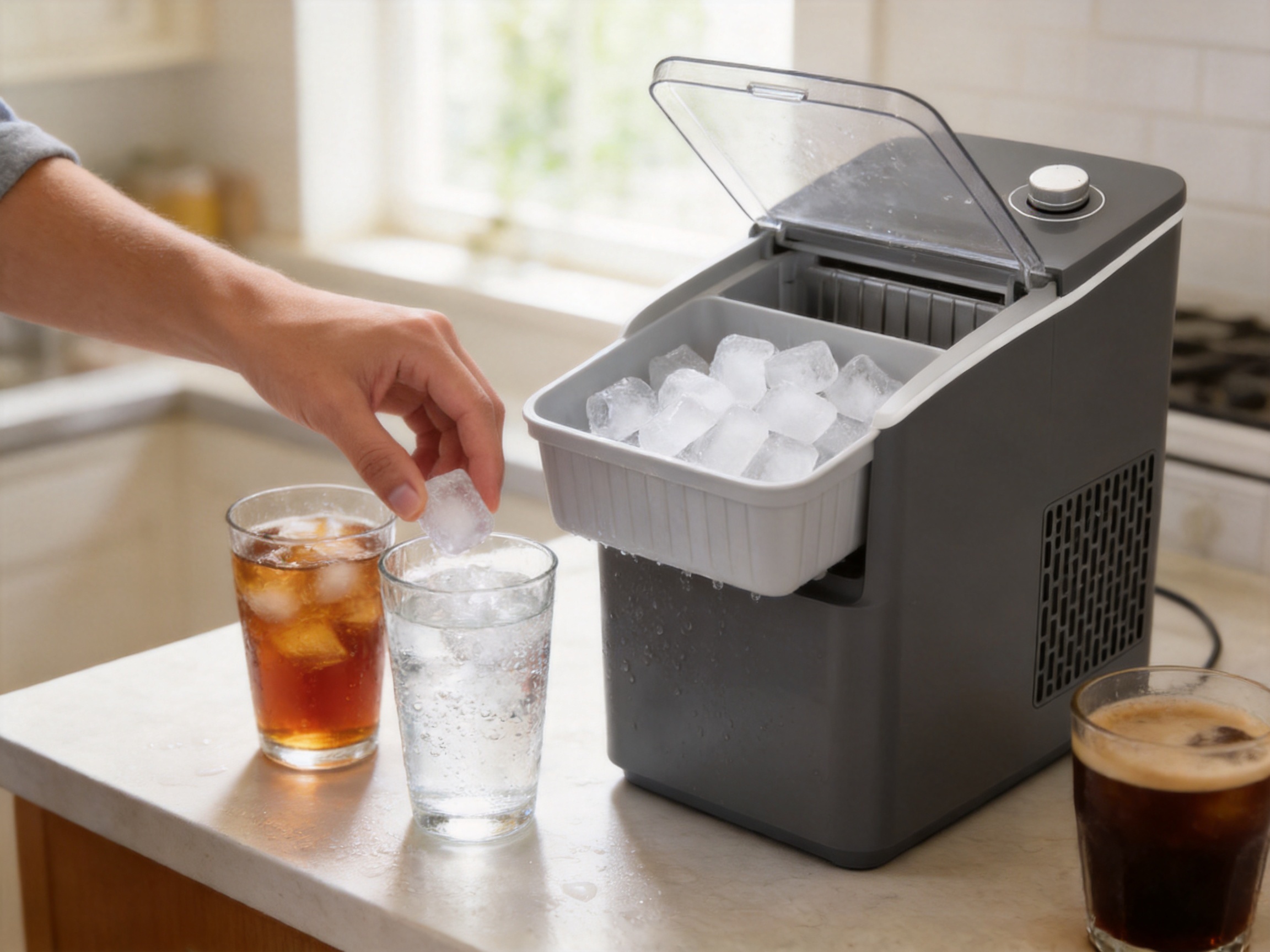
Energy efficiency is increasingly important when consumers evaluate small appliances. The product’s stated 150-watt power rating indicates an effort to keep electrical demand within a practical household range. While total consumption depends on operating conditions and duration, a compact ice maker can provide a more targeted solution than operating a large freezer at maximum cooling simply to produce extra ice.
Several user habits can support efficient operation. The appliance should be placed away from direct sunlight and heat-producing equipment. Ventilation openings should remain clear, and the surrounding area should not be crowded with objects that trap warm air. Water should be supplied at a reasonable temperature, and the machine should not be operated unnecessarily when sufficient ice has already been produced.
Regular cleaning can also support efficiency. Mineral deposits, dust, and residue may interfere with water flow, heat exchange, or ice release. A clean condenser area can release heat more effectively, while a clean water system helps maintain reliable operation. The exact cleaning method should follow the product instructions, especially when dealing with electrical areas and the sealed refrigeration circuit.
Energy-conscious operation benefits both the user and the appliance. Lower unnecessary runtime can reduce operating costs and place less stress on the compressor and fan. Over time, careful usage can contribute to longer service life and more predictable performance.
Maintenance and Long-Term Reliability
Like all water-handling appliances, a countertop ice maker requires regular care. Maintenance begins with the water reservoir and ice collection area. These parts should be emptied and cleaned at suitable intervals, particularly when the appliance is used frequently or remains in a warm environment.
Cleaning helps prevent unpleasant odors, mineral buildup, and the accumulation of residue. If local water contains substantial mineral content, deposits may form more quickly. In such situations, the user should follow the manufacturer’s recommendations for descaling and avoid using aggressive chemicals that may damage internal surfaces or leave unsafe residues.
The external housing can generally be wiped with a soft, slightly damp cloth. Water should not be poured directly over the controls, electrical connections, ventilation openings, or lower mechanical areas. Before cleaning, the machine should be switched off and disconnected from the power supply when required by the operating instructions.
The ventilation area should be checked periodically for dust. Restricted airflow can make the refrigeration system work harder and may reduce ice-making performance. Keeping the surrounding space open and clean is a simple but important part of ownership.
When the appliance will not be used for an extended period, the water should be drained and the internal areas should be allowed to dry according to the manual. The machine should be stored in a clean, dry location and protected from impact, freezing conditions, and excessive heat. These steps help reduce odor, moisture-related problems, and unnecessary wear.
Reliability begins with manufacturing, but it is supported by correct use. A well-built product can perform poorly if it is overloaded, operated without adequate ventilation, filled with unsuitable water, or neglected for long periods. Clear user instructions and responsible maintenance allow the product’s engineering strengths to deliver their intended benefits.
Safety and Responsible Use
The appliance should be used only with the electrical voltage and frequency stated on its rating information. It should be connected to a suitable outlet and should not be operated with damaged cords, loose plugs, or signs of electrical malfunction.
The machine should be positioned on a stable, level surface. Uneven placement may contribute to vibration, unusual sound, water movement, or drainage problems. Users should avoid moving the appliance while it is operating unless the instructions specifically allow it.
The refrigeration system should never be pierced or opened by the user. Since the product uses R600a, any service involving the refrigerant circuit should be assigned to a qualified technician familiar with flammable refrigerants. The appliance should also be kept away from open flames and ignition sources during service or disposal.
Children should use the product only with appropriate supervision. The ice maker is a household appliance, not a toy, and small ice pieces can present a choking risk for young children. Ice should be stored and served responsibly.
Water intended for ice production should be clean and suitable for drinking. The user should not place food, chemicals, oils, or other liquids into the water reservoir. Doing so may contaminate the ice, damage internal parts, or interfere with the freezing process.
Quality, Customer Satisfaction, and Continuous Improvement
The company describes its business philosophy through a focus on excellent quality, customer satisfaction, continuous improvement, and innovation. These principles are important in a competitive household-appliance market where customers compare not only price, but also reliability, appearance, ease of use, and after-sales support.
Customer satisfaction begins with accurate product communication. Specifications, electrical requirements, dimensions, refrigerant information, operating instructions, and maintenance expectations should be presented clearly. Transparent information helps users choose a product that fits their home and reduces disappointment caused by unsuitable installation or unrealistic expectations.
Continuous improvement can be applied to many parts of the ice maker. Engineers may evaluate noise reduction, insulation, control clarity, ice-release performance, water management, housing durability, packaging protection, and service access. Even small design improvements can make a daily-use appliance more comfortable and dependable.
Innovation does not always mean adding more electronic functions. In this product category, innovation can mean improving the refrigeration cycle, making the body smaller, reducing unnecessary energy use, simplifying the controls, selecting more suitable materials, or improving the production process. Practical innovation is particularly valuable in appliances that users operate frequently.
The manufacturer’s experience with ice makers, coffee machines, and air fryers provides a broad foundation for product development. These categories share the need for compact construction, household safety, attractive design, reliable controls, and repeatable manufacturing. The company’s location within a small-appliance production region can further support rapid communication between design, sourcing, assembly, inspection, and logistics teams.
Who Should Consider This Ice Maker?
This product is well suited to households that regularly serve chilled beverages but do not want a large ice machine. It may also appeal to people who have limited freezer space or who want ice available in a location separate from the main kitchen.
It can be useful for apartment residents, renters, home entertainers, office managers, small hospitality operators, and families in warm climates. Its compact size is particularly attractive where countertop space is limited but convenience remains important.
The machine may also be suitable for seasonal use. During summer, holidays, parties, or outdoor events, users can place it near the serving area and produce bullet ice as needed. When the event ends, its smaller body makes it easier to clean and store than a large commercial unit.
Buyers who require continuous, high-volume ice production for a restaurant, hotel, supermarket, or large catering operation should evaluate commercial equipment instead. A compact household model is designed for convenience and moderate demand, not for replacing a high-capacity commercial ice plant.
Recommended Evaluation Criteria for Buyers
Before purchase, buyers should confirm the available electrical supply. The product is specified for 220V to 240V at 50Hz, so it should not be connected to an incompatible electrical system without appropriate professional guidance.
Buyers should also measure the intended placement area. The appliance should fit with adequate clearance for ventilation, access, cleaning, and removal of the ice collection container. A machine that technically fits a shelf but cannot release heat or be cleaned comfortably is not installed effectively.
Water quality and maintenance expectations should be considered. If the local water supply is hard or contains high mineral content, more frequent cleaning may be needed. Users should be prepared to follow a regular cleaning schedule to protect ice quality and appliance performance.
Expected demand is another important consideration. The product is designed for household and compact applications. Buyers should compare their normal ice requirements with the product’s intended capacity and cycle behavior. For occasional drinks and family use, compact production can be sufficient. For large commercial demand, a higher-capacity system may be more appropriate.
Finally, buyers should evaluate the value of simple operation. Some consumers prefer a knob-type appliance because it offers direct physical control and fewer technological dependencies. Others may prefer a digital or connected system. The best choice depends on the user’s priorities, but a straightforward control system can be a meaningful advantage for reliability and ease of use.
Q&A
What type of ice does this machine produce?
The machine produces bullet-shaped ice. Bullet ice has a rounded exterior and a hollow center, making it suitable for water, soft drinks, iced coffee, cocktails, juices, and other chilled beverages.
Is this product designed for household use?
Yes. The compact format, 150-watt power rating, and countertop design are intended primarily for homes, offices, small entertainment spaces, and other applications with moderate ice requirements.
What power supply does the appliance require?
The stated power supply is 220V to 240V at 50Hz. Users should check the rating label and local electrical conditions before operation.
How much power does it use?
The stated current and power information is 0.9A and 150W. Actual energy consumption can vary according to operating time, ambient temperature, water temperature, ventilation, and the number of ice-making cycles.
What refrigerant does the ice maker use?
The appliance uses R600a refrigerant with a stated charge of 19 grams. R600a is a natural hydrocarbon refrigerant with low global warming potential, but it is flammable and should only be handled by qualified service personnel.
Can the machine be placed on a kitchen countertop?
Yes. The product is designed for countertop placement. It should be installed on a stable, level surface with sufficient clearance around ventilation areas and away from major heat sources.
Can it be used in an outdoor area?
The product information describes outdoor areas as one possible placement environment. It should be protected from rain, direct water exposure, excessive humidity, extreme heat, and unstable surfaces. Users should also confirm the operating instructions before outdoor use.
Does it require a permanent water connection?
The product is presented as a compact household ice maker rather than a permanently installed commercial system. Users should follow the supplied instructions for filling and draining the water reservoir. The exact water-handling procedure should be confirmed in the product manual.
Why is bullet ice useful for drinks?
Bullet ice is easy to place in glasses and pitchers, and its hollow center provides a distinctive shape that can cool beverages effectively. It is also visually attractive for casual and social drink service.
Is the knob-type control difficult to use?
The knob-type design is intended to provide direct and simple operation. It may be especially suitable for users who prefer physical controls instead of complex digital menus or application-based operation.
How can users improve ice-making performance?
Users should place the machine in a cool, well-ventilated location, keep the ventilation openings clear, use clean water, avoid direct sunlight, and maintain the water and ice-contact areas regularly.
How often should the appliance be cleaned?
Cleaning frequency depends on water quality and usage. Frequent users or households with mineral-rich water may need to clean the appliance more often. The manufacturer’s instructions should determine the appropriate cleaning and descaling procedure.
Can users repair the refrigeration circuit themselves?
No. The sealed refrigeration circuit should not be opened or modified by the user. Repairs involving R600a refrigerant require qualified service personnel with suitable safety equipment and procedures.
How does this product compare with freezer trays?
It is designed to produce ice more conveniently and without occupying freezer space. Freezer trays are simple and inexpensive, but they usually require a much longer freezing period and may not provide enough ice for gatherings.
How does it compare with a commercial ice machine?
The compact ice maker is easier to place and is more appropriate for household or moderate-demand use. A commercial machine generally offers greater capacity but requires more space, higher investment, and potentially more complex installation.
What should buyers confirm before ordering?
Buyers should confirm the electrical standard, installation dimensions, ventilation clearance, expected ice demand, water-handling method, cleaning requirements, and available service support.
Conclusion
The Knob-type ice maker is a practical countertop appliance designed around a clear purpose: making bullet ice conveniently for homes and other compact settings. Its strengths include a small footprint, direct operation, a 150-watt electrical configuration, R600a refrigerant, flexible placement, and ice suited to a wide range of cold drinks.
Its advantage over freezer trays is faster access to dedicated ice. Its advantage over bagged ice is convenience at the point of use. Its advantage over large commercial machines is a more manageable format for users who need moderate output without extensive installation. Its advantage over complicated connected appliances is straightforward operation that does not depend on digital ecosystems.
The product’s value also depends on manufacturing discipline. Consistent component sourcing, accurate assembly, controlled refrigeration charging, electrical inspection, functional testing, and attention to housing quality all contribute to dependable performance. The manufacturer’s experience in small household appliances and its location within an established appliance-production region provide a solid foundation for product development and supply-chain coordination.
For consumers who want fresh bullet ice without sacrificing valuable freezer space, this compact ice maker offers a balanced combination of convenience, environmental awareness, flexible placement, and practical household performance. With correct installation, responsible cleaning, safe operation, and regular maintenance, it can become a useful part of everyday beverage preparation and home entertaining.
References
1. Product specification sheet for the Knob-type ice maker, including electrical rating, refrigerant information, and machine dimensions.
2. Product information for the Alien-Z02 household bullet ice maker, including design features, intended applications, and operating advantages.
3. General household refrigeration engineering principles concerning compressor systems, heat exchange, ventilation, and maintenance.
4. General technical literature on R600a hydrocarbon refrigerant, low-global-warming-potential refrigeration, and safe service practices.
5. General small-appliance manufacturing quality principles concerning prototype testing, incoming inspection, electrical safety checks, sealed-system testing, and final functional inspection.