
 English
 한국어
한국어 Español
 Deutsch
Modern households increasingly expect small appliances to do more than complete a single task. They must save time, improve comfort, fit neatly into everyday spaces, and deliver an experience that feels noticeably better than ordinary alternatives. A home chewing ice maker meets this expectation by bringing a highly desirable style of ice into the kitchen, home bar, office pantry, entertainment room, or family beverage station. Instead of producing hard cubes that chill slowly and can be uncomfortable to bite, this appliance is designed to create soft, chewable ice with a satisfying texture, fast cooling performance, and wide usability across drinks, food displays, chilled desserts, and cold applications.
The Home Chewing Ice Maker, model Alien-ZJ01, is designed around one clear idea: ice should be enjoyable, practical, and easy to use. Its compact dimensions, efficient rated power, and user-oriented purpose make it suitable for home users who want the convenience of chewable ice without relying on restaurant takeout, convenience store bags, or bulky commercial equipment. For families who enjoy iced coffee, soda, fruit tea, cocktails, smoothies, shaved ice, and chilled snacks, a dedicated chewing ice maker can become one of the most frequently used appliances in the home.
Chewing ice is often valued because it combines cooling power with texture. Its smaller particle structure gives beverages a larger surface contact area than many conventional cubes, allowing it to lower drink temperature quickly. At the same time, it is gentler on teeth because it is softer and more porous. This difference is especially important for people who dislike biting hard, dense cubes but still enjoy the crisp sound and mouthfeel of ice. The result is a cooling medium that is not only functional but also pleasurable.
Compared with many general-purpose ice makers, a chewing ice maker is not merely an appliance that freezes water. It is a specialized system designed to produce ice with a distinct sensory profile. The product must balance refrigeration performance, water flow, forming method, texture consistency, and easy dispensing. The better the balance, the more reliable the output. This is where professional appliance manufacturing, mature process control, and strong product design become important advantages.
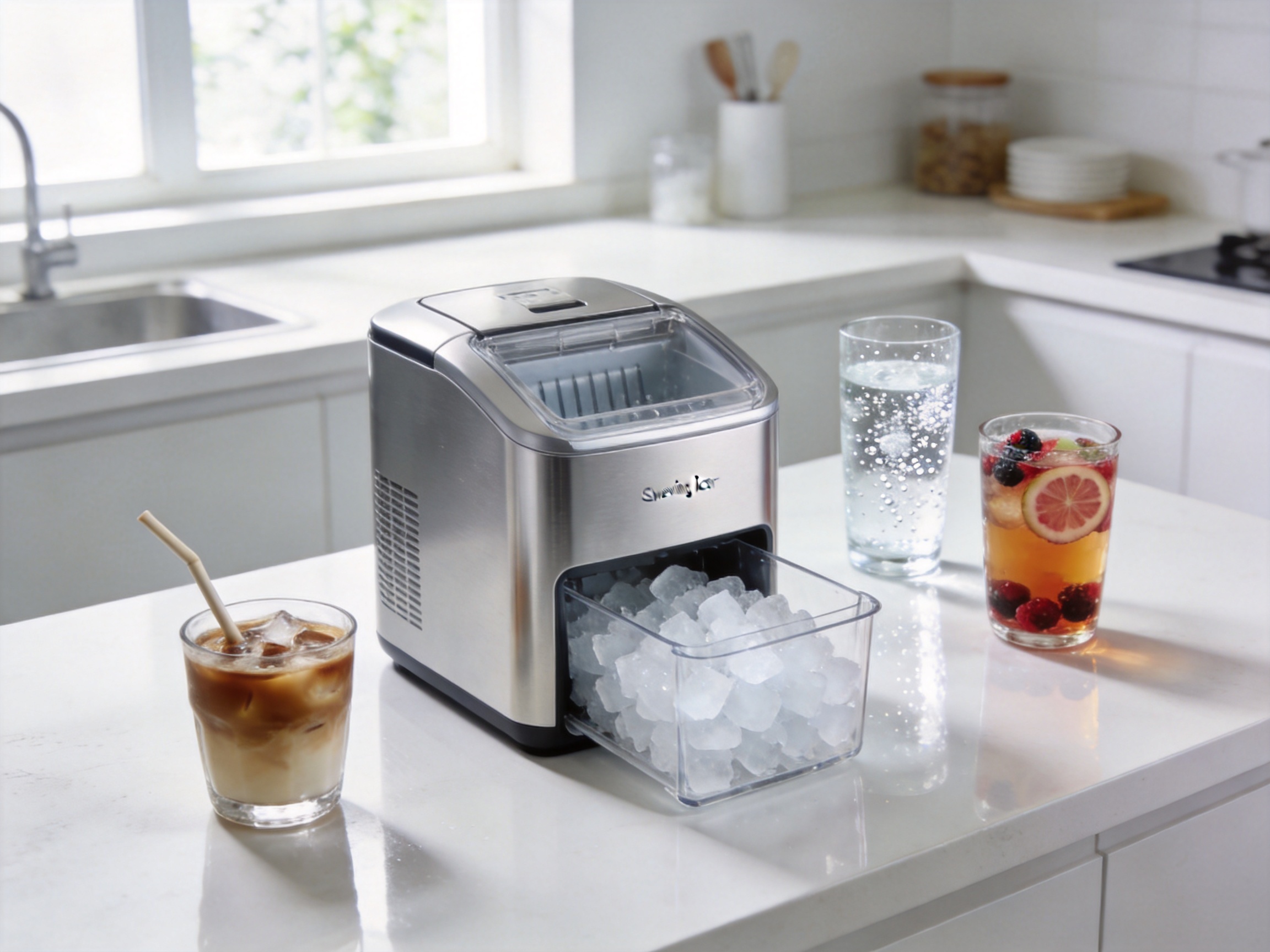
Understanding the Value of Chewing Ice
Chewing ice is known for its soft texture, light crunch, and ability to blend naturally with beverages. Many people call it nugget ice, pellet ice, or chewable ice, although the exact structure may vary depending on the machine design. What makes it attractive is not only its shape but also its behavior. It absorbs flavor quickly, chills drinks rapidly, and can be scooped, mixed, and layered more easily than many larger cube formats.
Traditional ice cubes are usually dense and hard. They may look clear and attractive, but they can be slow to cool a drink when the contact area is limited. They can also be difficult or unpleasant to chew. Crushed ice solves part of the problem by increasing surface area, but it often melts too quickly and may become irregular, watery, or messy. Chewing ice occupies a valuable middle ground. It provides fast chilling and a soft bite while keeping a form that is easy to serve and appealing in the glass.
For iced coffee, the advantage is especially clear. Coffee drinkers often want a quick drop in temperature without waiting for large cubes to slowly do the work. Chewing ice surrounds the liquid more evenly, helping cool it quickly from multiple contact points. For soda, sparkling water, and fruit drinks, it adds a refreshing texture and produces the familiar chilled mouthfeel associated with fountain beverages. For cocktails and mocktails, it helps create visual fullness and a pleasant dilution profile when used properly.
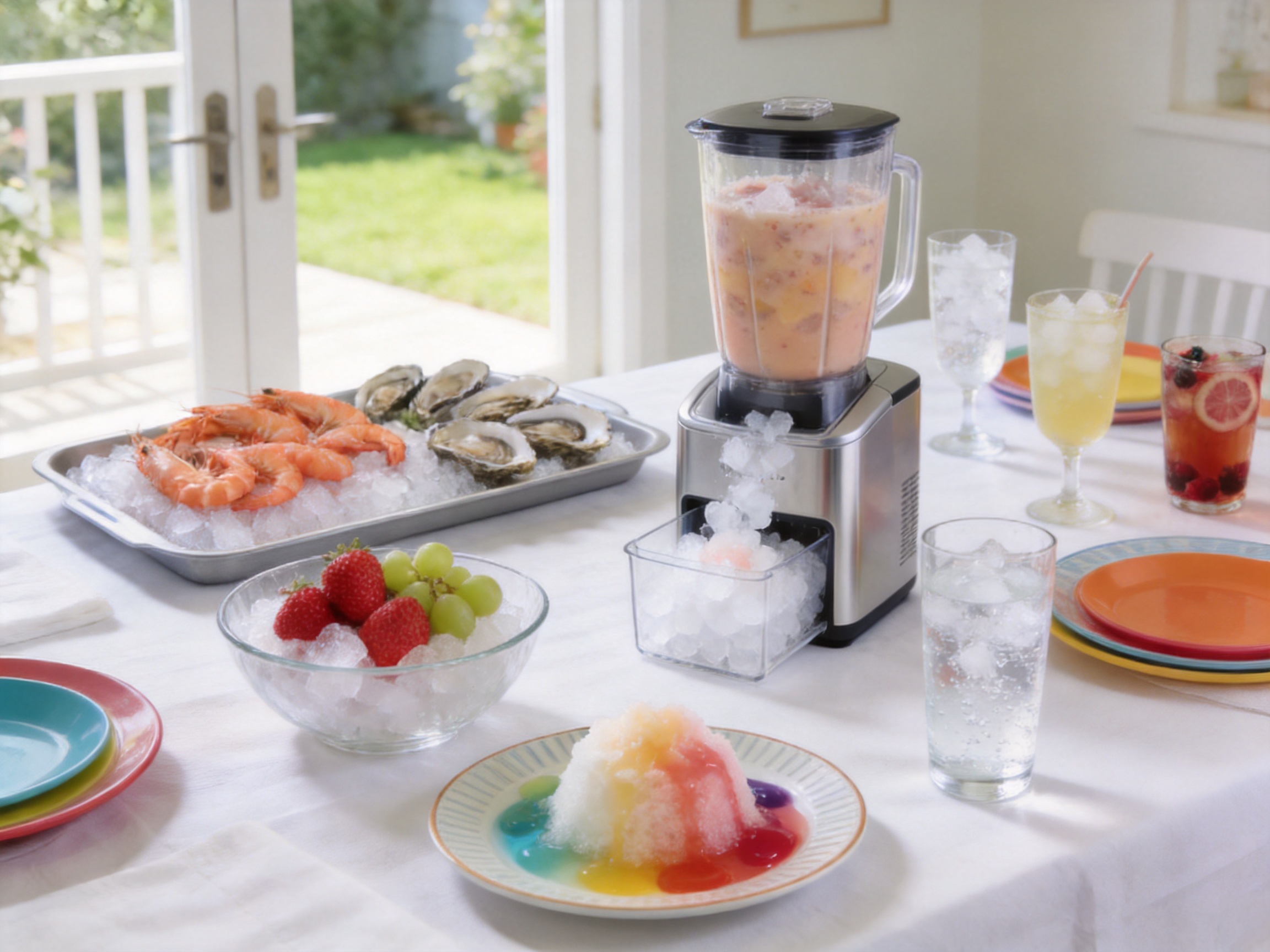
The product also serves food presentation and preservation needs. Because the ice pieces can closely surround objects, they are useful for keeping seafood, sashimi, fruit, vegetables, and salad ingredients chilled. In a home setting, this may mean better presentation for gatherings, summer meals, outdoor parties, and family events. The ice can be shaped around bowls and trays more easily than large cubes, helping maintain a cold environment across a broader surface area.
Another benefit is flexibility in frozen beverages. Chewing ice is a practical base for smoothies, slush-style drinks, shaved ice desserts, and blended fruit beverages. Since the ice is already smaller and softer than standard cubes, it is generally easier to work with when mixed with other ingredients. This can reduce the strain placed on blenders compared with dense cubes and can help create a smoother final texture.
Product Overview and Key Specifications
The Home Chewing Ice Maker is designed as a compact household appliance for users who want chewable ice at home. Its size makes it suitable for kitchens, beverage counters, small offices, dining rooms, home bars, and other locations where convenience matters. The machine dimensions are 224 x 333 x 325 mm, allowing it to fit into many spaces where a larger ice appliance would be impractical.
The product uses a 220V/60Hz power supply and has a current and power rating of 0.55A/130W. These values indicate a household-oriented design with a moderate operating power level. The refrigerant is R600a with a 19g charge. R600a is widely used in modern refrigeration appliances because it offers effective cooling performance in compact systems when properly engineered and manufactured.
The following table summarizes the technical information provided for the model.
Specification |
Details |
Product Type |
Home Chewing Ice Maker |
Model Description |
Alien-ZJ01 |
Product Power Supply |
220V/60Hz |
Current and Power |
0.55A/130W |
Refrigerant and Charge |
R600a/19g |
Machine Dimensions |
224 x 333 x 325 mm |
Main Use |
Soft chewable ice for drinks, food cooling, smoothies, shaved ice, and everyday household use |
Although compact, the product is built around a specialized use case. This is important because many countertop ice makers prioritize general cube production, while a chewing ice maker focuses on texture and mouthfeel. The user does not simply need frozen water; the user wants a specific form of ice that can improve beverages and food experiences.
The 224 x 333 x 325 mm footprint gives the product a practical advantage over larger ice-making equipment. A machine intended for daily home use must be accessible, visible, and easy to place. If it is too large, it may be stored away and used less often. If it is compact enough to remain on the counter, it becomes part of the normal beverage routine. This design direction supports frequent use and encourages families to enjoy fresh chewing ice whenever needed.
Core Advantage: The Ultimate Chewing Experience
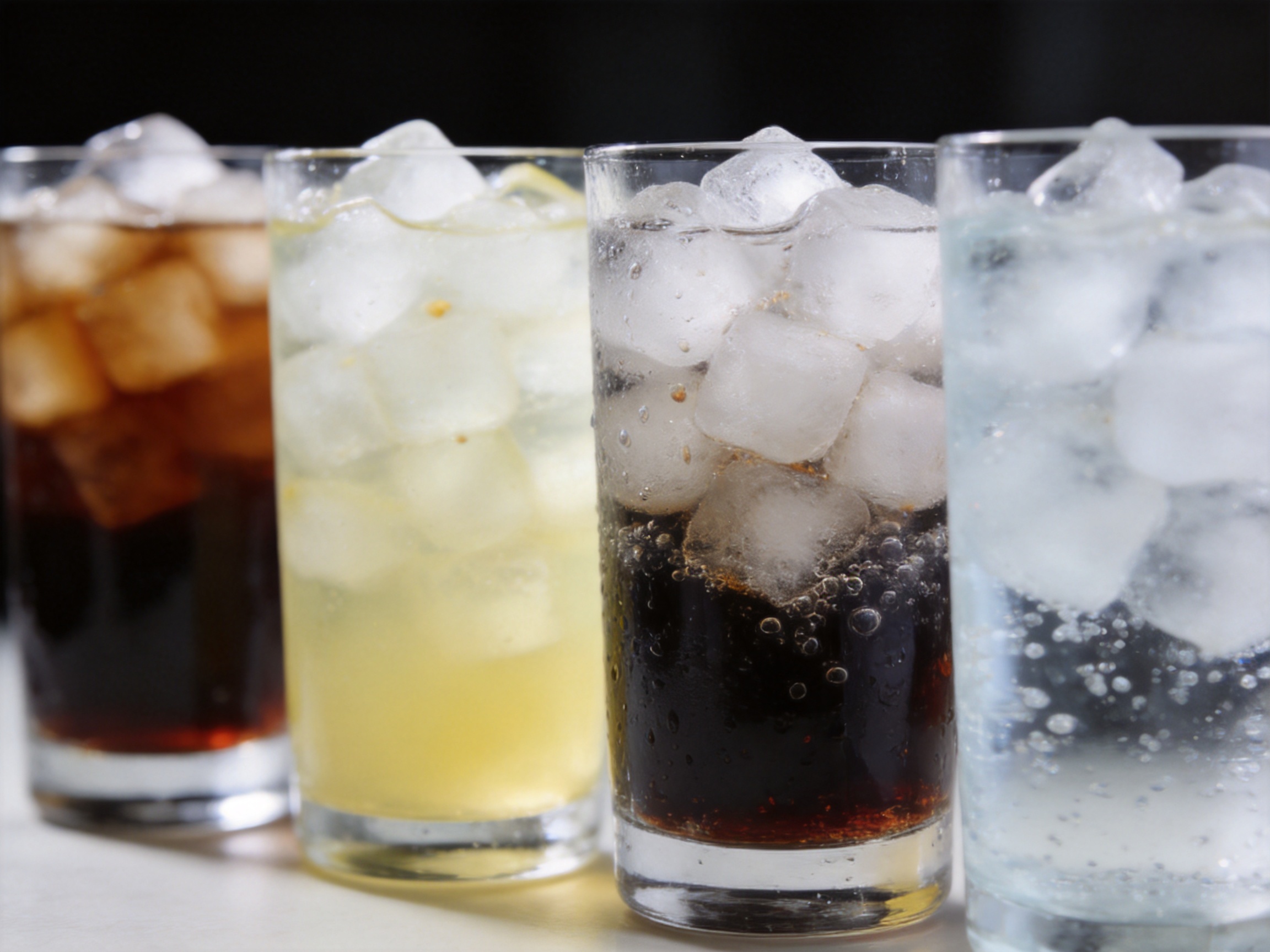
The defining advantage of this product is the ice texture. Soft chewable ice is fundamentally different from hard freezer cubes. It is designed to be pleasant in the mouth, gentle when bitten, and satisfying in both sound and feel. For many users, this sensory experience is the main reason to choose a chewing ice maker instead of a standard ice machine.
The texture advantage matters because ice is often part of the drinking experience, not just a cooling tool. People who enjoy iced drinks frequently interact with ice by stirring, sipping, scooping, and chewing. If the ice is too hard, it can be uncomfortable. If it is too watery, it can dilute the beverage too quickly. If it is too irregular, it can feel messy or inconsistent. Chewing ice solves these issues by offering a consistent, soft, and enjoyable structure.
The product is especially appealing to users who like the sound and feel of chewable ice. The gentle crunch can make a simple drink feel more refreshing. A glass of water becomes more satisfying, iced coffee becomes colder and more textured, soda feels more like a fountain drink, and fruit tea gains a pleasant cooling layer. This kind of everyday improvement is the reason many households become loyal to chewable ice once they experience it regularly.
From a competitive perspective, the chewing experience is a powerful differentiator. Many ordinary countertop ice makers produce bullet-shaped ice or small cubes. These shapes can be useful, but they do not always provide the soft bite that consumers associate with premium chewable ice. A dedicated chewing ice maker can stand apart by focusing on the exact texture that people seek. Rather than competing only on basic ice output, it competes on enjoyment, comfort, and beverage quality.
The product’s soft texture also supports broader accessibility. Users who avoid chewing hard cubes may find soft chewing ice more comfortable. While no ice should be consumed carelessly, a gentler ice texture can reduce the harshness often associated with dense cubes. In family settings, this makes the appliance more appealing to a wider range of users, from adults who enjoy iced coffee to guests who prefer cold drinks with a softer mouthfeel.
Rapid Cooling Through Greater Contact Area
One of the most practical advantages of chewing ice is rapid cooling. Because the ice pieces are smaller and have a greater contact area relative to their volume, they can interact with a beverage more efficiently than many larger cubes. When added to coffee, soda, juice, water, or mixed drinks, they quickly surround the liquid and help reduce temperature faster.
This fast cooling effect is important in daily use. Many people prepare drinks in a hurry. A person making iced coffee before work does not want to wait for hot or warm coffee to cool slowly. Someone serving guests wants drinks to feel cold immediately. A family preparing lemonade or soda on a warm day wants instant refreshment. Chewing ice supports these moments by working quickly.
Compared with hard cubes from a freezer tray, chewing ice provides a more immediate cooling sensation. Large cubes can remain isolated within the glass, cooling nearby liquid but leaving other areas warmer until stirred. Chewing ice distributes more evenly, creating many small contact points. This helps the beverage reach a more consistent cold temperature sooner.
Compared with crushed ice made manually, chewing ice offers better consistency and convenience. Manual crushing can produce sharp fragments, fine snow, and uneven chunks in the same batch. This inconsistency affects drink texture and melting speed. A dedicated chewing ice maker produces a more controlled style of ice, giving users a repeatable result without the noise, mess, and effort of crushing cubes by hand.
Rapid cooling also improves flavor perception. Cold beverages often taste cleaner, crisper, and more refreshing. Carbonated drinks feel more lively when chilled properly. Iced coffee tastes smoother when the temperature drops quickly. Fruit beverages become brighter and more refreshing. By cooling drinks efficiently, the appliance improves not only temperature but also the overall drinking experience.
Excellent Coating and Quick Flavor Infusion
Chewing ice is valuable because it can coat and surround items more effectively than large cubes. This is useful in beverages, food presentation, and cold holding. Its small form allows it to fill gaps and create a more complete chilled layer. When placed around food items, it conforms to the shape more closely and provides more even contact.
For home entertaining, this advantage can be significant. A chilled seafood tray, a fruit display, a salad station, or a sashimi platter benefits from ice that can hold items securely and maintain a cold surface. Large cubes may leave empty spaces, causing uneven chilling and unstable presentation. Chewing ice creates a smoother bed that looks cleaner and functions more effectively.
In beverages, the coating effect helps the ice mix naturally with liquid. Because the ice has more surface area and a softer structure, it can take on beverage flavor more quickly. This is one reason it feels especially pleasant in sodas, fruit teas, lemonades, and iced coffee. The ice does not remain separate from the drink experience; it becomes part of it.
This flavor infusion quality is one of the reasons chewable ice has strong emotional appeal. Users often enjoy not only the drink but also the flavored ice remaining at the end. A glass of cola, fruit punch, iced tea, or coffee can leave behind chilled pieces that carry a mild taste of the beverage. This creates a satisfying finish that ordinary hard cubes do not provide in the same way.
The same conforming quality can be useful for cold compress applications. Soft, small ice pieces can fit around body areas more easily than large cubes, helping create more comfortable cold contact when properly wrapped and used safely. For home care, sports recovery, or occasional swelling management, this flexibility can be convenient. Users should always follow safe cold therapy practices, avoid direct prolonged skin contact, and consult appropriate guidance for medical conditions.
Versatility for Drinks, Desserts, Food, and Daily Cooling
A strong home appliance earns its place by serving many needs. The Home Chewing Ice Maker is not limited to one type of drink or one season. It supports daily hydration, coffee routines, family gatherings, entertaining, summer desserts, food presentation, and quick cooling tasks throughout the year.
For beverages, the machine is suitable for water, soda, iced coffee, cold brew, tea, lemonade, fruit tea, juice, cocktails, mocktails, sports drinks, and flavored sparkling water. It can also be used to prepare layered drinks because the ice fills the glass attractively and helps maintain temperature. A full glass of chewable ice gives drinks a premium appearance that resembles cafe or fountain service.
For desserts, chewing ice can serve as a base for shaved ice, smoothies, slush-style drinks, frozen fruit bowls, and sweetened ice treats. Because the ice is softer than dense cubes, it is easier to mix with syrups, fruit purees, milk-based ingredients, and flavored toppings. Home users can create refreshing desserts without purchasing bags of ice or relying on specialized commercial dessert equipment.
For food display, the ice can be placed beneath serving bowls, around chilled dishes, or in trays for events. It helps maintain cold temperatures while improving the visual presentation. During holidays, outdoor meals, family celebrations, or small parties, this can make food service look more organized and professional.
For everyday convenience, the appliance reduces dependence on freezer trays. Freezer trays take time, occupy freezer space, absorb odors, and often produce ice slowly. Bagged ice can be inconvenient, heavy, and difficult to store. A countertop chewing ice maker gives the household more control. Users can produce fresh ice as needed and enjoy a specific texture that standard freezer ice usually cannot provide.
Ease of Use and Mixing Convenience
One of the practical pleasures of chewing ice is how easy it is to scoop, pour, and mix. Its softer texture and smaller form make it more manageable than large cubes. Users can add it to a glass, blender, serving tray, or bowl with less effort. This matters because a product that is easy to use is more likely to become part of daily life.
In beverages, chewing ice distributes quickly and evenly. A user can stir it into coffee, tea, soda, or juice without dealing with large cubes that splash or block the glass. It also fills cups with fewer awkward gaps, creating a more complete chilled drink. For people who enjoy a full cup of ice, this is a clear advantage.
In blended drinks, the softer starting texture helps ingredients combine more smoothly. Frozen fruit, milk, syrup, juice, and ice can come together more easily when the ice is not oversized or extremely dense. While blender performance still depends on the blender itself, chewing ice can be a friendlier ingredient than large hard cubes.
In food service, the ice is easy to shape around bowls and trays. It can be spread into an even layer, piled for presentation, or used to support cold dishes. This makes it useful not only for drinks but also for home chefs, hosts, and families who value attractive presentation.
The appliance also encourages healthier choices. When cold water, unsweetened tea, fruit-infused drinks, or sparkling water become more enjoyable, users may be more likely to choose them instead of warmer or less refreshing alternatives. A satisfying ice texture can make simple drinks feel special without adding sugar or calories.
Advantages Over Common Competitors
The chewing ice maker category competes with several alternatives: freezer trays, refrigerator ice dispensers, ordinary countertop bullet ice makers, manual crushed ice, bagged ice, and commercial machines. Each alternative has strengths, but a compact home chewing ice maker offers a distinct combination of texture, convenience, placement flexibility, and user enjoyment.
Freezer trays are inexpensive, but they are slow and limited. They require manual filling, freezer space, and planning ahead. The cubes they produce are usually hard and dense. They may also absorb freezer odors if stored uncovered. For users who want soft chewable ice on demand, freezer trays are not a true substitute.
Refrigerator ice dispensers are convenient when available, but they often produce standard cubes or crushed ice rather than true chewable ice. Crushed refrigerator ice can be inconsistent and may include sharp fragments. It also depends on the refrigerator model, maintenance condition, and water system. A dedicated chewing ice maker gives users more control over the specific ice texture they prefer.
Ordinary countertop ice makers often produce bullet ice. Bullet ice can be useful for cooling drinks, but it tends to be harder and less satisfying to chew than soft nugget-style ice. Many bullet ice machines focus on speed and basic ice availability, not on the premium sensory experience. The Home Chewing Ice Maker competes by addressing a more refined consumer preference.
Manual crushed ice requires effort and can create mess. It may involve ice bags, mallets, hand-crank crushers, or noisy electric crushers. The result can be uneven, with powder, shards, and chunks mixed together. In contrast, a chewing ice maker is designed for regular production of a more consistent chewable form.
Bagged ice is convenient for large events but less ideal for daily use. It requires shopping, transport, freezer storage, and handling. It may also contain large cubes that do not match the desired texture. For households that use ice frequently, producing fresh chewing ice at home can be more convenient and more satisfying.
Commercial nugget ice machines can produce large quantities, but they are often expensive, heavy, and designed for restaurants or hospitality environments. They may require dedicated installation, drainage, higher capacity service, or more space. A compact home chewing ice maker offers a more practical solution for residential use, balancing performance with size and usability.
Compact Design for Modern Living Spaces
Modern kitchens often require appliances to be compact and visually appropriate. Counter space is valuable, especially in apartments, smaller homes, office pantries, and shared living environments. With dimensions of 224 x 333 x 325 mm, the Home Chewing Ice Maker is designed to fit into realistic household spaces without demanding a major layout change.
Compact size also improves portability within the home. Users may place the appliance in the kitchen during daily use, move it to a dining area for a party, or position it near a home bar for weekend entertaining. This flexibility is a major advantage over built-in systems and larger commercial machines.
The appliance’s size supports a more personal ice-making experience. Instead of producing ice far away in a freezer or utility area, it can be positioned close to where drinks are prepared. This shortens the distance between ice production and ice use, making the product feel convenient and immediate.
A compact chewing ice maker can also support office use. In a workplace pantry, chewable ice can improve water, coffee, tea, and soft drinks throughout the day. It can make the office refreshment area feel more thoughtful and welcoming without requiring a large commercial installation.
For home bars, the product adds a premium feature. Many people invest in coffee machines, air fryers, beverage refrigerators, and cocktail tools, but overlook ice quality. In reality, ice strongly affects drink quality. A dedicated chewing ice maker can upgrade the entire beverage station.
Refrigeration System and Energy-Oriented Engineering
The product’s refrigeration system uses R600a refrigerant with a 19g charge. R600a, also known as isobutane, is commonly used in household refrigeration products because it can support efficient cooling in compact sealed systems when designed and handled correctly. Its use reflects the broader industry move toward refrigerants with favorable environmental characteristics compared with older options.
With a rated power of 130W, the appliance is positioned for household use. Efficient engineering in an ice maker requires careful coordination between compressor performance, evaporator design, insulation, heat exchange, water movement, and control logic. If any of these elements are poorly matched, the machine may waste energy, produce inconsistent ice, or experience reduced reliability.
A well-designed chewing ice maker must create the correct freezing conditions for the desired texture. Too much hardness can reduce chewability; too much softness can lead to excess melting. The system must therefore be tuned to produce ice that is firm enough to hold its shape but soft enough to deliver the expected bite.
Thermal management is also essential. The appliance must remove heat from water efficiently while managing heat released from the refrigeration cycle. Compact appliances require thoughtful internal layouts because components are close together. Airflow, component spacing, heat dissipation, and material selection all influence long-term performance.
Noise and vibration are additional engineering concerns. A home appliance must operate in living spaces where comfort matters. Manufacturing precision, component fit, compressor mounting, and housing design can all help reduce unwanted vibration. While specific sound ratings are not provided, the product category benefits greatly from process control that supports stable operation.
Manufacturing Strength Behind the Product
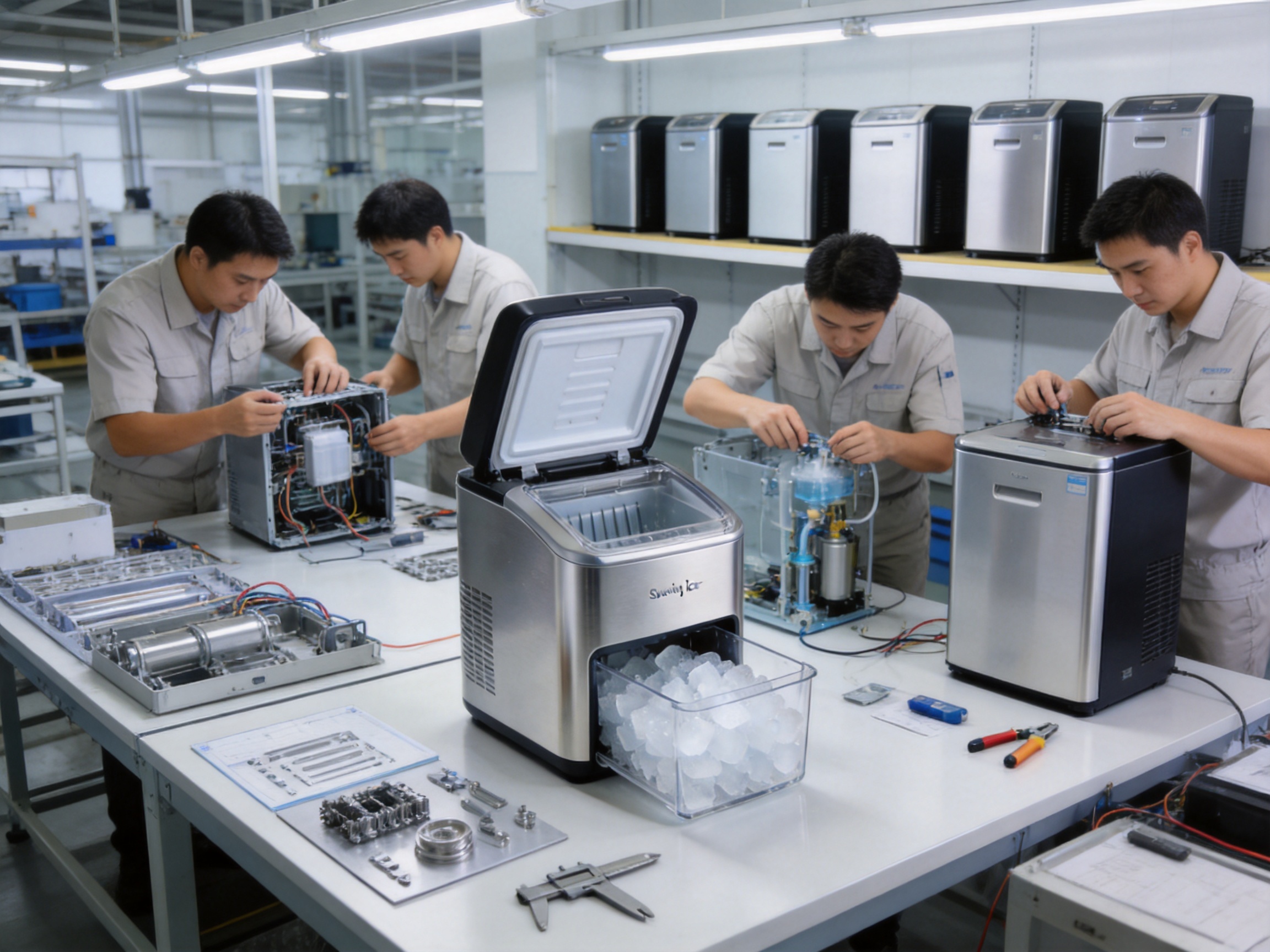
Alien Technology Co., Ltd. is located in Zhouxiang, Cixi City, Zhejiang Province, an area known for small household appliance manufacturing and convenient logistics. This location provides an important industrial advantage. Strong appliance manufacturing regions typically offer access to component suppliers, experienced technicians, tooling resources, testing services, packaging support, and efficient transportation networks.
The company specializes in household appliances such as ice makers, coffee machines, and air fryers. This product range is meaningful because it reflects experience with multiple appliance categories that require heating, cooling, fluid handling, user interface design, electrical safety, and mechanical assembly. Knowledge gained from one category can improve design discipline in another.
For an ice maker, manufacturing capability is especially important because the product combines refrigeration, water contact, electrical control, structural housing, and user handling. The factory must manage multiple process requirements at the same time. Precision assembly, leak prevention, reliable electrical connections, clean water-path handling, and stable performance testing all influence the final user experience.
Advanced manufacturing is not only about machines. It is also about workflow, inspection standards, supplier control, employee training, process documentation, and continuous improvement. A company that produces household appliances at scale must coordinate design engineering, production planning, incoming material inspection, assembly line management, functional testing, aging tests where applicable, packaging checks, and after-sales feedback.
The company’s mission, “Smart Technology, Simplifying Life, Enhancing Happiness,” aligns with the purpose of the chewing ice maker. The product simplifies access to a premium ice experience and makes daily drinks more enjoyable. This is a practical example of technology improving routine life in a small but meaningful way.
Process Control for Reliable Ice Quality
In a chewing ice maker, consistent output depends heavily on manufacturing process control. Even small deviations can affect ice texture, cooling efficiency, or reliability. The assembly of refrigeration components must be accurate, sealed, and tested. Water-contact components must be fitted properly. Sensors and controls must operate within expected ranges. Housings must align cleanly to support airflow and user access.
Incoming material inspection is the first step. Components such as compressors, tubing, pumps, fans, control boards, housings, water tanks, and seals should be checked against specifications before assembly. A strong supplier management system helps reduce variation and prevents avoidable quality issues from entering the production line.
During assembly, process instructions help ensure repeatability. Workers must follow defined procedures for fastening, routing wires, fitting tubes, placing seals, and assembling mechanical modules. Proper torque control, fixture use, and visual inspection can reduce defects. This kind of disciplined production is especially important in appliances that combine water and electricity.
Refrigerant handling requires trained operation and proper equipment. The specified R600a charge must be controlled carefully because refrigeration performance depends on correct system charge and sealed circuit integrity. Leak checking and vacuum processes are important parts of manufacturing refrigeration appliances. A well-controlled process helps ensure that the appliance cools effectively over time.
Functional testing gives confidence that the finished product performs as intended. Testing may include power-on checks, cooling operation verification, water movement checks, control response, abnormal condition observation, and appearance inspection. For a chewing ice maker, ice output texture and stability are also key indicators. Each unit should meet the expected user experience before packaging.
Design Philosophy: Humanized, Reliable, and Practical
The company emphasizes humanized design, reliable quality, and intelligent technology. These principles are highly relevant to home appliances because customers judge products not only by technical specifications but also by how naturally they fit into daily routines. A successful chewing ice maker must be easy to place, easy to operate, easy to clean, and easy to enjoy.
Humanized design begins with understanding user behavior. People want ice quickly, but they also want a product that does not feel complicated. Controls should be straightforward. Maintenance should be manageable. The machine should fit typical spaces and support common drinkware and serving habits. Compact dimensions and a clear purpose contribute to this user-friendly approach.
Reliability is equally important. Ice makers often operate in warm environments, handle water repeatedly, and depend on refrigeration performance. Customers expect stable operation across many cycles. Strong manufacturing processes, component selection, and quality inspection support this expectation.
Practical design also considers cleaning and hygiene. Ice is consumed directly, so users care about cleanliness. While cleaning procedures depend on the specific product design and user manual, a good home ice maker should encourage regular maintenance and make water-contact areas as accessible as possible. Users should follow the manufacturer’s cleaning guidance, use clean water, and maintain the appliance regularly.
Intelligent technology in household appliances does not always mean unnecessary complexity. In many cases, it means using controls and system design to make operation simpler and more dependable. For an ice maker, intelligent design can involve efficient operating cycles, protective functions, user alerts, and stable coordination between water and refrigeration systems.
Applications in Everyday Home Scenarios
In the morning, the chewing ice maker can support iced coffee routines. A user can add soft ice to a glass, pour coffee over it, add milk or flavoring, and enjoy a cold drink with cafe-like texture. The ice chills the coffee quickly and makes the drink feel fuller and more refreshing.
At lunch, it can improve water and fruit beverages. Lemon water, cucumber water, iced tea, and sparkling water become more appealing when served over chewable ice. This can encourage hydration, especially during warm weather or after exercise.
In the afternoon, it can support smoothies and blended drinks. Fruit, yogurt, juice, and chewing ice can be combined for a refreshing snack. Since the ice is already soft and small, it blends more easily than many dense cubes, helping create a pleasant texture.
During dinner, the appliance can support chilled food presentation. A family serving shrimp, oysters, sashimi, fruit, or salad ingredients can use the ice as a cold base. It enhances both function and appearance, making ordinary meals feel more carefully prepared.
For parties, the product becomes a beverage station centerpiece. Guests can scoop chewing ice into cups and prepare soda, mocktails, cocktails, tea, or juice. The texture gives drinks a premium feeling and reduces the need for hosts to constantly refill ice trays or buy bags of ice.
Why Ice Texture Changes Beverage Quality
Ice texture influences dilution, temperature, appearance, and mouthfeel. A drink served with large hard cubes feels different from the same drink served with soft chewing ice. The difference is not merely visual. It changes how quickly the drink cools, how it moves in the glass, how it feels when sipped, and how enjoyable it is at the end.
Chewing ice creates a layered beverage experience. At first, it chills the drink rapidly. As the drink is consumed, the ice gradually absorbs flavor. Near the end, the remaining ice can be chewed or spooned, extending the enjoyment. This is one reason many people associate chewable ice with restaurant-style refreshment.
For carbonated drinks, the ice helps create a lively, cold mouthfeel. For coffee, it helps balance temperature quickly. For fruit beverages, it enhances the refreshing effect. For cocktails and mocktails, it provides body and texture. These improvements can make home-prepared drinks feel more professional.
Ice also affects presentation. A glass filled with chewable ice looks abundant and inviting. It supports garnishes, fruit slices, herbs, and colored beverages. When serving guests, presentation can be as important as taste. Chewing ice helps create a polished appearance with minimal effort.
Because the Home Chewing Ice Maker is designed specifically for this style of ice, it gives users a repeatable way to improve beverage quality. Instead of leaving ice texture to chance, the household can make the desired ice form whenever needed.
Quality, Stability, and Customer Satisfaction
Alien Technology Co., Ltd. states a commitment to excellent quality, customer satisfaction, continuous improvement, and innovation. These values are important in the competitive small appliance market, where customers have many choices and expectations continue to rise. A product must perform reliably, but the company must also listen, improve, and adapt.
Customer satisfaction in an ice maker depends on several factors: ice texture, cooling speed, ease of operation, machine size, cleaning convenience, reliability, and service support. A company that specializes in home appliances can use customer feedback to refine design details and improve future production.
Continuous improvement is particularly important for products involving refrigeration and water systems. Over time, manufacturers can improve component layout, user interface clarity, mold precision, assembly methods, packaging protection, and quality testing procedures. These refinements may not always be visible to customers, but they strongly affect the ownership experience.
Innovation does not always mean radical change. Sometimes it means making an appliance simpler, more compact, more stable, or more enjoyable. The chewing ice maker reflects this kind of practical innovation by delivering a specific premium ice experience in a home-friendly format.
The company’s stable and pragmatic business philosophy also matters for partners and buyers. In appliance supply, reliability is not only technical; it is commercial. Customers and business partners value consistent communication, steady production capability, quality control, and long-term cooperation.
Manufacturing Location and Supply Chain Advantages
Zhouxiang, Cixi City, Zhejiang Province, is associated with household appliance manufacturing. Being located in such a region can support efficient production in several ways. Suppliers may be closer, reducing component lead time. Skilled labor may be more available. Logistics networks may be more mature. Technical service providers may be easier to coordinate.
For small appliances, supply chain integration is a major advantage. A product such as a chewing ice maker includes plastic parts, metal parts, refrigeration components, electrical controls, packaging materials, and user documentation. Coordinating all of these elements requires a strong production environment.
Convenient logistics help the company serve domestic and international customers more efficiently. Finished products can move from factory to distribution channels with better planning. This matters for seasonal products like ice makers, which may experience higher demand during warm months or before holidays.
Regional manufacturing strength can also improve responsiveness. If a design needs adjustment, a supplier issue must be solved, or a production schedule must be modified, proximity to industrial partners can reduce delays. This responsiveness helps maintain product availability and supports customer cooperation.
For buyers comparing suppliers, manufacturing location and category experience are meaningful indicators. A company positioned within a strong appliance ecosystem and already engaged in ice makers, coffee machines, and air fryers has a practical foundation for developing and producing consumer appliances.
Safety and Responsible Use
As with any household appliance, safe use is essential. Users should operate the chewing ice maker according to the product manual, use the correct power supply, place the appliance on a stable surface, and keep it away from inappropriate environments. Because the product involves water and electricity, careful handling is important.
The specified power supply is 220V/60Hz. Users should confirm compatibility with their local electrical system or use the product only in regions and installations for which it is designed. Incorrect power supply can create performance problems or safety risks.
Clean water should be used for ice production. Since ice is consumed directly, water quality affects taste and hygiene. Users should empty and clean the appliance as recommended, avoid leaving stagnant water for long periods, and keep the surrounding area clean.
Ventilation should not be blocked. Refrigeration appliances need proper heat dissipation. If vents are obstructed or the appliance is placed in a very confined space, cooling performance may be affected. Leaving suitable clearance around the machine can support stable operation.
Chewing ice should be enjoyed responsibly. Although softer than many hard cubes, ice is still frozen material. Users should avoid excessive chewing if they have dental concerns and should supervise children as appropriate. For cold compress use, ice should be wrapped and applied safely to avoid cold injury.
Business Cooperation and Market Potential
The Home Chewing Ice Maker fits a growing consumer trend toward specialized home beverage appliances. Many households already use coffee machines, air fryers, sparkling water makers, blenders, and compact refrigerators. A chewing ice maker complements these products because it upgrades the drinks and foods that accompany daily life.
For retailers, the product offers a clear selling story: soft chewable ice at home, fast cooling, versatile use, compact size, and enjoyable texture. These benefits are easy for consumers to understand. Demonstrations can be especially effective because the texture of chewing ice is best appreciated through direct experience.
For distributors, the product category can serve multiple markets. It appeals to families, young professionals, coffee lovers, home entertainers, office users, and small hospitality settings. It can be promoted during summer, holiday seasons, home improvement campaigns, and beverage-related sales events.
For private-label or cooperation discussions, the company’s broader household appliance capability may be valuable. Experience with ice makers, coffee machines, and air fryers indicates familiarity with consumer appliance expectations and production organization. This can support long-term product development and supply partnerships.
The company welcomes new and existing customers to contact them for business cooperation. The provided contact details include phone number +86-13968281299 and email address [email protected]. The company address is No. 138, Huixiang'an Road, Zhouxiang Town, Cixi City, Zhejiang Province.
Q&A Section
What makes a home chewing ice maker different from an ordinary countertop ice maker?
A home chewing ice maker is designed to produce soft, chewable ice rather than standard hard cubes or bullet-shaped ice. The main advantage is texture. Chewing ice is gentler to bite, cools drinks quickly, mixes easily, and creates a more enjoyable beverage experience.
Why is chewing ice suitable for iced coffee and soda?
Chewing ice has a small particle structure and a large contact area, allowing it to cool beverages rapidly. In iced coffee, it helps bring the temperature down quickly. In soda and sparkling drinks, it creates a refreshing fountain-style texture and cold mouthfeel.
Can this type of ice be used for food presentation?
Yes. Chewing ice can closely surround food items, making it useful for seafood displays, sashimi, fruit, vegetables, and salad ingredients. Its ability to form an even chilled bed helps improve both preservation and presentation during home gatherings or events.
Is chewing ice useful for smoothies and shaved ice?
Yes. Because the ice is softer and smaller than many standard cubes, it can be used as a base for smoothies, slush-style drinks, shaved ice desserts, and other frozen beverages. It mixes well with syrups, fruit, milk, juice, and flavorings.
What are the main specifications of the product?
The Home Chewing Ice Maker uses a 220V/60Hz power supply, has a current and power rating of 0.55A/130W, uses R600a refrigerant with a 19g charge, and measures 224 x 333 x 325 mm.
How does the product compare with bagged ice?
Bagged ice can be useful for large events, but it requires shopping, transport, freezer storage, and handling. It also may not provide the desired chewable texture. A home chewing ice maker allows users to produce fresh soft ice when needed and enjoy a consistent texture.
Why is compact size important?
Compact size allows the appliance to remain accessible on a counter or beverage station. If an appliance is easy to place and use, it becomes part of daily life. The product’s dimensions make it suitable for kitchens, office pantries, home bars, and entertainment areas.
What manufacturing strengths support the product?
Alien Technology Co., Ltd. is located in a household appliance manufacturing hub and specializes in appliances such as ice makers, coffee machines, and air fryers. The company emphasizes humanized design, reliable quality, intelligent technology, customer satisfaction, continuous improvement, and innovation.
What should users remember for safe operation?
Users should follow the product manual, use the correct 220V/60Hz power supply, keep the appliance on a stable surface, maintain ventilation, use clean water, and clean the machine regularly. Because the appliance involves water and electricity, responsible operation is important.
Who is this product best suited for?
It is suitable for families, coffee lovers, soda drinkers, home entertainers, office users, smoothie makers, and anyone who enjoys soft chewable ice. It is also useful for people who want a compact appliance that improves daily drinks and food presentation.
Conclusion
The Home Chewing Ice Maker offers more than basic ice production. It delivers a distinct ice experience built around soft texture, fast cooling, easy mixing, attractive presentation, and versatile household use. For users who enjoy iced coffee, soda, fruit drinks, smoothies, shaved ice, cocktails, chilled foods, and refreshing daily beverages, chewable ice can transform ordinary routines into more enjoyable moments.
Its competitive advantage lies in specialization. While freezer trays, bullet ice makers, refrigerator dispensers, crushed ice tools, bagged ice, and commercial machines each have a role, a compact home chewing ice maker provides a unique balance of convenience and premium texture. It brings the pleasure of soft chewable ice into everyday spaces without requiring a large installation or repeated purchases of bagged ice.
The product’s specifications, including its 220V/60Hz power supply, 0.55A/130W rating, R600a/19g refrigerant charge, and compact 224 x 333 x 325 mm dimensions, support its position as a practical home appliance. Its design purpose is clear: to provide fresh, enjoyable chewing ice for modern households and beverage-focused lifestyles.
Behind the product is Alien Technology Co., Ltd., a company located in a strong household appliance manufacturing region and focused on ice makers, coffee machines, and air fryers. Its commitment to smart technology, simplified living, happiness, reliable quality, and continuous improvement strengthens the product story. Manufacturing discipline, process control, supply chain access, and category experience all contribute to the ability to deliver a dependable appliance.
As consumers continue to invest in better home beverage experiences, the demand for specialized ice solutions is likely to grow. A home chewing ice maker is not simply a seasonal convenience; it is a lifestyle appliance that improves hydration, coffee routines, entertaining, food presentation, and frozen treats. For households and business partners seeking a compact, enjoyable, and practical ice-making solution, this product represents a compelling choice.
References
ASHRAE. Refrigeration Systems and Applications Handbook. American Society of Heating, Refrigerating and Air-Conditioning Engineers.
International Institute of Refrigeration. Principles of Refrigeration and Cold Chain Technology.
Potter, N. N., and Hotchkiss, J. H. Food Science. Springer.
Fellows, P. J. Food Processing Technology: Principles and Practice. Woodhead Publishing.
McGee, H. On Food and Cooking: The Science and Lore of the Kitchen. Scribner.
International Electrotechnical Commission. Household and Similar Electrical Appliances Safety Standards.
United Nations Environment Programme. Refrigeration, Air Conditioning and Heat Pumps Technical Options Reports.