
 English
 한국어
한국어 Español
 Deutsch
A reliable supply of ice has become an everyday necessity in modern homes, offices, entertainment spaces, small cafés, recreational vehicles, and hospitality environments. Whether the need is for cold beverages, smoothies, cocktails, iced coffee, food chilling, or quick refreshment during warm seasons, users increasingly want an ice-making appliance that is compact, easy to operate, efficient, and dependable. The Button-Operated Ice Maker is designed around exactly these expectations. As a bullet ice maker, it combines simple one-touch operation, fast ice-making performance, practical dimensions, quiet operation, and easy maintenance in one compact appliance.
This article introduces the product’s functions, technical characteristics, user benefits, competitive advantages, and the manufacturing strengths behind it. It also explains why a button-operated design remains highly valuable in a market filled with complicated digital panels, app-based appliances, and feature-heavy machines that do not always improve the user experience. By focusing on practical convenience, stable performance, energy-conscious operation, and user-friendly design, this ice maker offers a strong solution for daily ice production.
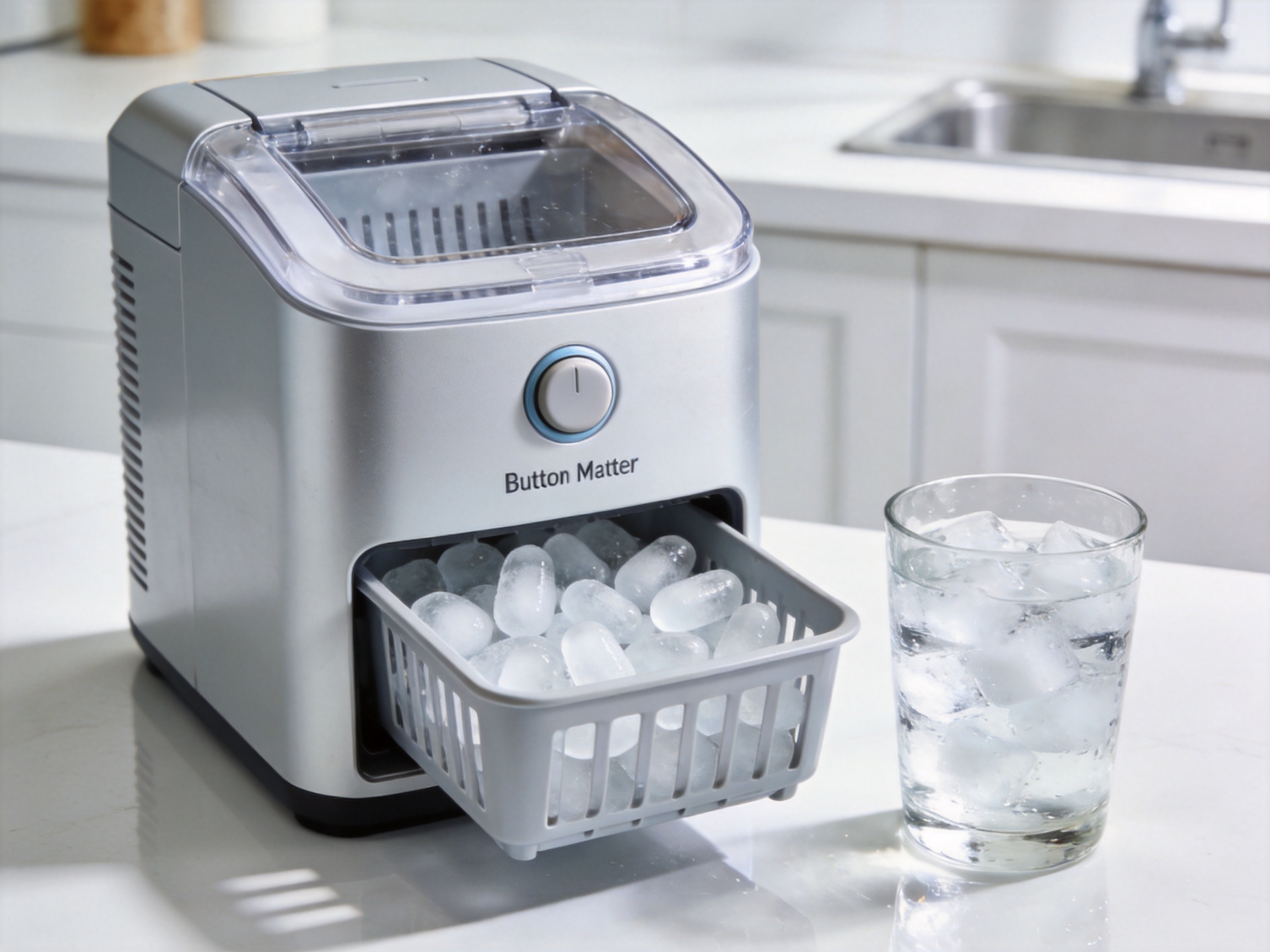
Product Overview
The Button-Operated Ice Maker is a compact bullet ice maker created for users who want fresh ice without complex setup or difficult controls. The machine is especially suitable for households, offices, bars, small commercial service areas, RVs, dormitory rooms, vacation homes, entertainment spaces, and meeting rooms. It is designed to produce ice quickly, often completing an ice-making cycle in approximately 6 to 10 minutes, depending on ambient conditions, water temperature, and selected ice size.
Unlike traditional freezer ice trays, which require long waiting times and manual handling, this appliance automates the process. Users add water, select the desired setting where applicable, press the button, and wait for the ice to be produced. The removable ice basket makes it easy to collect ice, while smooth internal surfaces support simple cleaning. For many users, this balance of speed, convenience, and low maintenance is the main reason to choose a compact ice maker.
The product is categorized as a bullet ice maker, meaning it forms rounded bullet-shaped ice pieces. Bullet ice is widely appreciated because it is easy to scoop, suitable for many beverages, and typically less sharp than irregular freezer ice. It can chill drinks efficiently and is convenient for daily household use. The shape also works well for iced tea, soft drinks, fruit beverages, mixed drinks, iced coffee, and casual food cooling.
Core Technical Specifications
The technical configuration of an ice maker affects its stability, energy consumption, cooling performance, and placement flexibility. The Button-Operated Ice Maker is built with a practical set of specifications that support household and light commercial use.
Specification |
Details |
User Benefit |
Product Type |
Button-Operated Bullet Ice Maker |
Simple operation and widely usable bullet-shaped ice |
Power Supply |
220V-240V / 50Hz |
Suitable for regions using this voltage standard |
Current / Power |
0.9A / 150W |
Efficient operation for regular daily use |
Refrigerant / Charge |
R600a / 19g |
Effective cooling with a commonly used refrigerant in compact appliances |
Machine Dimensions |
313 x 226 x 309 mm |
Compact size for countertops, offices, RVs, and small spaces |
Ice-Making Cycle |
Approximately 6-10 minutes per cycle |
Fast access to fresh ice for drinks and entertaining |
Control Method |
One-touch button operation |
Easy to use for first-time users and all age groups |
These specifications show that the appliance is designed for practical daily convenience rather than unnecessary complexity. Its 150W operating power supports efficient ice production, while its compact dimensions make it suitable for limited spaces. The use of R600a refrigerant reflects a common trend in compact cooling appliances toward effective refrigeration performance.
Why Button Operation Still Matters
Many appliances now include advanced panels, multiple menus, touchscreens, and connectivity functions. While these features can be useful in some categories, they may also create unnecessary complexity for a product whose main purpose is straightforward: making ice quickly and reliably. The Button-Operated Ice Maker focuses on simple use. Its one-touch button control allows users to begin ice production without reading a long manual or adjusting complicated settings.
This simplicity creates several practical advantages. First, it improves accessibility. Elderly users, guests, staff members, teenagers, and first-time appliance users can operate the machine confidently. Second, it reduces the chance of operating errors. With fewer steps, users are less likely to select incorrect modes or interrupt the ice-making cycle. Third, it improves speed of use. In offices, bars, or parties, people can start the machine quickly and return to other tasks.
In a competitive market, simplicity is often underestimated. Some competing ice makers may emphasize a large number of functions but require users to navigate complicated interfaces. For many buyers, the best appliance is not the one with the most buttons, but the one that performs the needed task with the least effort. This model stands out by offering convenience through direct and intuitive control.
Fast Ice Production for Daily Convenience
One of the strongest advantages of this ice maker is its fast ice-making cycle. Producing ice in approximately 6 to 10 minutes per cycle means users do not have to wait hours for freezer trays to solidify. This is especially valuable during gatherings, office meetings, family meals, summer afternoons, outdoor dining preparation, and beverage service.
Fast ice production also changes how users plan their day. With traditional ice trays, people must remember to fill trays ahead of time. If the trays are empty, the waiting time can be inconvenient. With a countertop ice maker, users can begin producing ice when it is needed. This makes the appliance ideal for spontaneous use, such as unexpected visitors, last-minute drinks, or sudden demand during warm weather.
Compared with many slow or freezer-dependent alternatives, the Button-Operated Ice Maker provides a more responsive experience. It cannot replace a large industrial ice machine for very high-volume commercial operations, but it is highly effective for personal, household, office, and light service environments. Its fast cycle time supports a steady supply of ice without requiring a large built-in system.
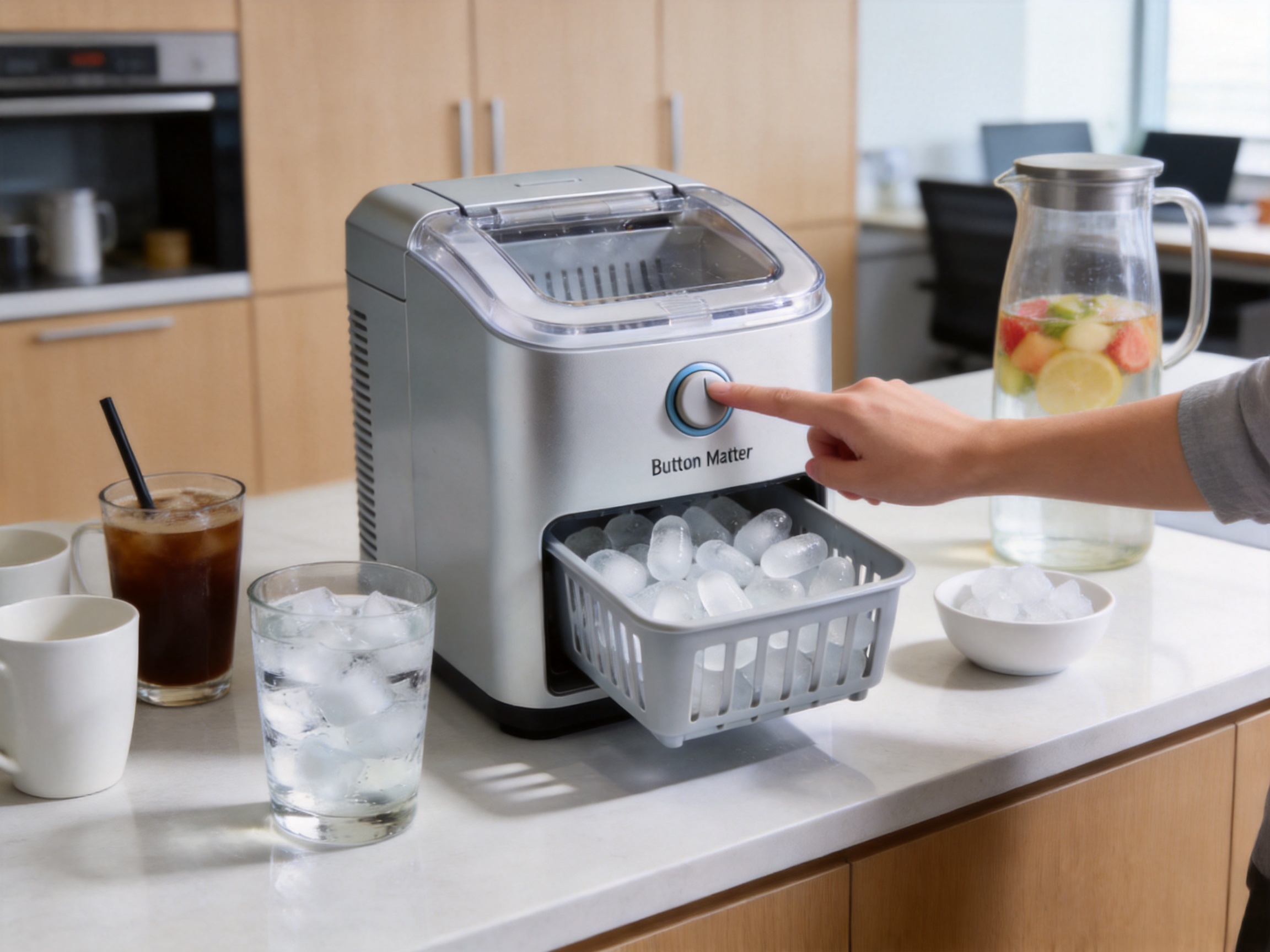
Bullet Ice: Practical Shape for Many Uses
Bullet-shaped ice is popular because it works well in many common situations. Its rounded form is easy to handle, less likely to have sharp edges, and convenient for scooping into cups, pitchers, or storage containers. The hollow or rounded structure typical of bullet ice can help it cool beverages quickly, making it suitable for everyday drinks.
This type of ice is especially useful for soft drinks, juices, iced tea, iced coffee, cocktails, sparkling water, and fruit-infused beverages. It can also be used for keeping bottled drinks cool in small containers, supporting food presentation, or chilling items temporarily during preparation. For families, bullet ice is a practical all-purpose option because it does not require specialized handling.
Compared with cube ice or large block ice, bullet ice is usually easier to produce quickly in compact machines. This makes it a strong choice for countertop appliances. While large cubes may melt more slowly in premium cocktails, bullet ice offers better convenience for broad everyday use. The Button-Operated Ice Maker therefore prioritizes the ice type that best matches daily household and office demand.
Multiple Ice Sizes for Flexible Use
The availability of different ice sizes increases the appliance’s flexibility. Smaller ice pieces may be suitable for quickly cooling drinks, narrow bottles, small cups, or children’s beverages. Larger ice pieces may be preferred for stronger cooling capacity, larger glasses, pitchers, or mixed drinks. This adaptability allows users to match the ice output to their exact needs.
In competitive comparison, some basic ice makers offer only one ice size, which can limit usefulness. A single ice size may be acceptable for simple beverage cooling, but it may not satisfy users who frequently prepare different drink types. By allowing selection among ice sizes, the Button-Operated Ice Maker becomes more versatile in daily life.
This flexibility is especially important in shared environments. In an office, one user may want small ice for iced coffee, while another may need larger pieces for a water bottle. At home, parents may use smaller ice for juice while adults use larger ice for cocktails or tea pitchers. A compact appliance that serves multiple preferences provides better value over time.
Compact Dimensions and Space Efficiency
The machine dimensions of 313 x 226 x 309 mm make the appliance compact enough for many countertops and small utility areas. Space efficiency is one of the most important factors for modern consumers. Kitchens are often filled with coffee machines, air fryers, blenders, kettles, toasters, and other small appliances. An ice maker must deliver useful performance without occupying excessive space.
This product’s compact footprint supports flexible placement. It can be used on kitchen counters, office refreshment tables, pantry shelves, bar counters, RV counters, reception areas, or small service stations. Because it does not require the same installation process as a built-in ice machine, it offers practical mobility. Users can move it when needed, store it during seasons of lower use, or position it near guests during events.
Compared with larger commercial-style ice makers, this compact model is easier to integrate into everyday environments. It does not demand permanent installation, professional plumbing, or large floor space. For many buyers, that means lower setup burden and greater convenience. Its compactness does not eliminate the need for appropriate ventilation and safe placement, but it makes daily use much easier.
Energy-Conscious Performance
Energy efficiency is a major consideration for appliance buyers. The Button-Operated Ice Maker operates at 150W, which is appropriate for a compact ice-making appliance designed for regular use. Its energy-conscious design supports users who want convenience without excessive power consumption.
The product is also described as using optimized water usage, helping reduce waste. This matters because traditional ice-making methods can lead to spilled water, forgotten trays, freezer burn, and unused ice. A compact ice maker allows users to produce ice closer to the moment of consumption, reducing the need to store excessive quantities.
Compared with some larger machines that may consume more energy or require continuous operation, this product is suitable for targeted use. Users can run it when ice is needed and clean or store it when not in use. This use pattern may be attractive for households and small offices that do not need industrial-scale ice production throughout the entire day.
Quiet Operation for Comfortable Environments
Noise is often overlooked until an appliance becomes part of daily life. A loud ice maker can disturb conversations, work, rest, or entertainment. The Button-Operated Ice Maker is designed with quiet operation in mind, making it appropriate for kitchens, offices, bedrooms, RVs, and other areas where comfort matters.
Quiet performance is particularly valuable in offices. Employees may use the appliance in a shared pantry or meeting area without creating excessive distraction. In homes, quiet operation allows the machine to run while family members are talking, watching television, cooking, or relaxing. In hospitality or small bar settings, lower noise supports a better customer experience.
Compared with some competing compact ice makers that may produce noticeable fan, compressor, or ice-drop noise, a quieter design improves user satisfaction. While all ice makers create some operational sound, reducing unnecessary noise demonstrates attention to real-life use conditions. This is part of the product’s human-centered design philosophy.
Easy Cleaning and Maintenance
An ice maker must be easy to clean because it handles water and produces a consumable item. The Button-Operated Ice Maker includes smooth interior surfaces and a removable ice basket, making cleaning quicker and more convenient. Users can remove the basket, empty remaining water as needed, wipe accessible surfaces, and maintain better hygiene with less effort.
Easy maintenance is an important advantage over appliances that have difficult corners, fixed baskets, or hard-to-reach areas. If cleaning is inconvenient, users may delay maintenance, which can affect odor, taste, and overall experience. A practical interior design encourages regular care and helps preserve ice quality.
For households, this means less stress and better everyday usability. For offices or small service locations, it means staff can clean the appliance efficiently without specialized training. The combination of removable parts and smooth surfaces improves long-term satisfaction, especially for users who value hygiene and simple routines.
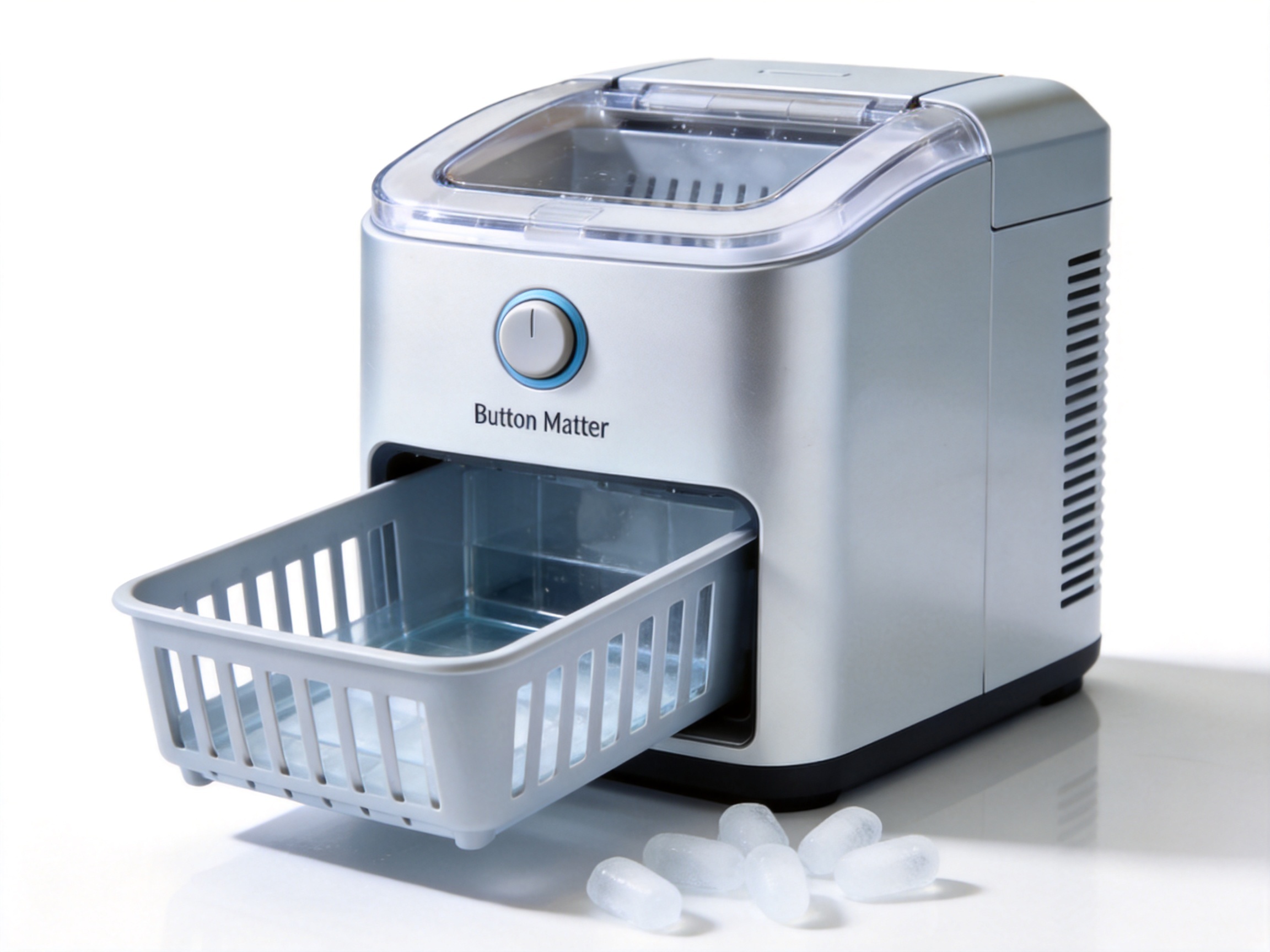
Advantages Over Traditional Freezer Ice Trays
Traditional freezer ice trays are inexpensive, but they are limited in speed, convenience, and cleanliness. They require users to fill trays, carry them carefully to the freezer, wait for hours, remove the ice manually, and remember to refill them afterward. If the freezer is crowded, the trays may spill or absorb odors from stored food. Ice production also depends on freezer space and temperature stability.
The Button-Operated Ice Maker solves many of these problems. It produces ice much faster, does not require freezer shelf space, and allows users to make ice on demand. The removable basket simplifies collection, while the button-operated system eliminates the inconvenience of tray handling. Users can produce fresh ice for immediate use rather than relying on stored ice that may have absorbed freezer odors.
For families and shared spaces, the difference is significant. No one has to complain that the trays were not refilled. No one has to wait until the next day for enough ice. No one has to twist plastic trays or break frozen pieces apart. The appliance creates a more reliable and user-friendly solution.
Advantages Over Complex Digital Ice Makers
Some compact ice makers include digital panels, icons, countdowns, touch-sensitive controls, and multiple operating modes. These features may appear attractive, but they can also increase cost, learning time, and the possibility of confusion. Touch panels may be less convenient when users have wet hands, and complex interfaces may not be necessary for basic ice production.
The Button-Operated Ice Maker takes a different approach. It emphasizes dependable, straightforward operation. The one-touch control reduces the learning curve and supports broad usability. This makes it especially suitable for environments where multiple people use the appliance, such as offices, break rooms, rental homes, bars, or shared kitchens.
In competitive terms, the product’s advantage is not excessive complexity but practical simplicity. It gives users what they need: fast ice, easy control, compact size, and simple maintenance. For many buyers, this creates better value than paying for features that are rarely used.
Advantages Over Larger Built-In Ice Machines
Large built-in ice machines have their place in restaurants, hotels, and high-volume commercial settings. However, they often require more space, higher installation costs, plumbing connections, drainage planning, and professional maintenance. For homes, small offices, RVs, and light commercial areas, these requirements can be excessive.
The Button-Operated Ice Maker offers a more flexible alternative. Its compact size and portable design allow users to place it where ice is needed. It does not require the same installation commitment as a built-in unit. This makes it ideal for renters, small business owners, event hosts, and families who want convenience without remodeling or permanent installation.
Its lower space requirement also makes it easier to use seasonally. For example, a family may use it heavily during summer and store it during colder months. A small café may bring it out for iced beverage service. An RV owner may use it during travel and store it afterward. This mobility gives it an advantage over fixed systems.
Humanized Design for Real-Life Scenarios
Humanized design means creating products around how people actually live and work. The Button-Operated Ice Maker reflects this principle in several ways. It uses simple controls because users want quick operation. It offers fast cycles because people often need ice immediately. It has a removable basket because ice must be easy to collect. It supports quiet operation because appliances should not disrupt daily comfort. It uses a compact body because counter space is valuable.
This combination of details shows that the appliance is not merely a technical device; it is a daily-use product designed for convenience. In the home, it supports meals, drinks, and entertaining. In the office, it improves refreshment access. In a bar or small service area, it assists beverage preparation. In an RV, it provides comfort during travel. In each case, the product helps simplify a routine task.
Many competing products focus heavily on appearance or feature lists, but the strongest appliances are those that remain useful after months and years of operation. A product that is easy to use, easy to clean, and easy to place is more likely to become part of the user’s normal routine.
Manufacturing Strengths Behind the Product
The Button-Operated Ice Maker is produced by Alien Technology Co., Ltd., a manufacturer located in Zhouxiang Town, Cixi City, Zhejiang Province. This region is known as a strong hub for small household appliances and benefits from convenient logistics and an established industrial supply environment. Location matters in appliance manufacturing because access to component suppliers, skilled workers, logistics networks, and production experience can affect efficiency, consistency, and delivery reliability.
The company specializes in household appliances, including ice makers, coffee machines, and air fryers. This focus gives it practical experience across several categories of compact home appliances. Manufacturing ice makers requires knowledge of refrigeration systems, electrical control, plastic and metal components, water contact materials, assembly precision, performance testing, and user safety considerations. Experience in related appliance categories can support stronger process discipline and better understanding of consumer expectations.
The company’s mission, “Smart Technology, Simplifying Life, Enhancing Happiness,” aligns closely with the design of this product. Rather than creating complexity for its own sake, the appliance uses technology to simplify a daily need. This mission is reflected in the one-touch button operation, fast production cycle, compact form, and easy maintenance features.
Process-Oriented Production and Quality Focus
Advanced manufacturing is not only about machines; it is also about process control. A reliable ice maker depends on consistent assembly, accurate refrigerant charging, stable electrical connections, proper insulation, water system integrity, and effective final testing. A manufacturer that pursues excellent quality and continuous improvement is better positioned to produce appliances that meet user expectations.
In the production of a compact ice maker, several process stages are especially important. Component inspection helps ensure that incoming parts meet design requirements. Assembly control helps maintain correct positioning of the cooling system, water channels, sensors, and housing components. Refrigeration system handling must be careful because the performance of the ice maker depends on the correct charge and sealing. Electrical testing helps verify safe operation under the intended power supply. Functional testing confirms that the machine can produce ice properly before shipment.
The company’s commitment to customer satisfaction and continuous improvement supports these manufacturing priorities. In a competitive appliance market, quality is not achieved by a single inspection at the end. It is built through repeated attention to design, materials, production standards, worker training, and feedback from customers.
Refrigeration System Considerations
The product uses R600a refrigerant with a 19g charge. Refrigeration performance is central to any ice maker because the cooling system must remove heat from water quickly enough to form ice within the expected cycle time. In compact appliances, the refrigeration system must also fit within limited space while maintaining stable operation.
Proper refrigerant charging is critical. Too little refrigerant can reduce cooling capacity, while too much can affect system performance and reliability. Manufacturing precision therefore plays an important role. The charging process, sealing process, and leak checking procedures all influence final product performance. A well-managed production line helps ensure that each machine delivers consistent cooling results.
Using a compact refrigeration configuration also requires careful thermal design. Airflow, compressor placement, condenser efficiency, and ventilation all matter. The user sees a simple appliance, but behind that simplicity is a system that must coordinate water circulation, cooling, ice release, and collection. Manufacturing experience helps transform these technical requirements into a stable consumer product.
Electrical Design and User Safety
The appliance is designed for a 220V-240V / 50Hz power supply and operates at 0.9A / 150W. Electrical consistency is essential for safe and reliable use. A button-operated machine may appear simple, but its internal control system must coordinate the refrigeration cycle, water movement, and user interface. Stable electrical design helps the product respond properly when the user starts a cycle.
In production, electrical testing is important to verify correct wiring, insulation, grounding where applicable, and component operation. For an appliance that works with water, careful separation and protection of electrical components are especially important. Manufacturing discipline contributes to long-term trust because users expect the machine to operate safely in kitchens and other daily environments.
Compared with low-quality competing products that may use inconsistent components or weak assembly practices, a process-focused manufacturer can provide better dependability. The difference may not always be visible on the outside, but it becomes clear through stable performance, reduced maintenance issues, and better user confidence.
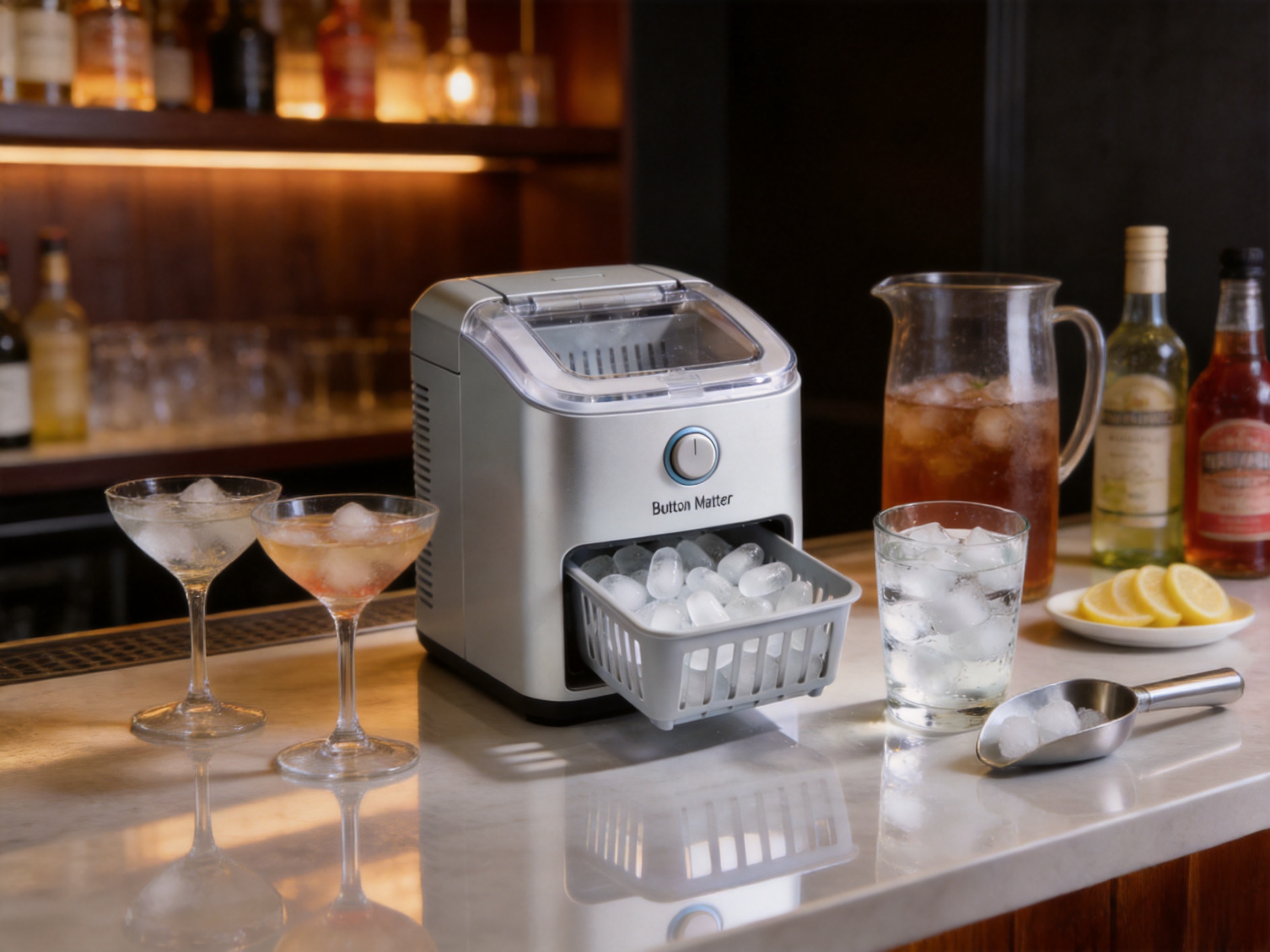
Material Selection and Structural Design
A compact ice maker must balance strength, weight, cost, appearance, insulation, and cleanability. The outer housing should protect the internal components while remaining suitable for countertop use. Internal water-contact areas must support hygiene and easy cleaning. The removable ice basket must be strong enough for repeated handling while remaining lightweight and convenient.
Smooth interior surfaces are particularly important because they reduce areas where residue may accumulate. This improves cleaning efficiency and supports better user experience. A carefully designed basket shape helps users remove ice without difficulty. The machine’s compact body must also allow sufficient internal space for water storage, ice formation, cooling components, and airflow.
Compared with competitors that may prioritize only low price, a balanced structural design improves daily usability. Users may not think about wall thickness, basket ergonomics, or internal surface finishing at the time of purchase, but these details affect satisfaction every time the appliance is used.
Logistics and Supply Chain Advantages
Being located in a major small-appliance manufacturing region provides important operational advantages. Zhouxiang and the broader Cixi area have a strong base of appliance manufacturing activity. This can support access to suppliers, production resources, packaging services, and transportation routes. Efficient logistics help manufacturers respond to customer demand and manage shipments more effectively.
For buyers, supply chain strength can translate into more stable availability, better production scheduling, and improved cooperation. For business customers, distributors, or importers, working with a manufacturer located in an established appliance hub may reduce uncertainty. A stable and pragmatic business philosophy further supports long-term cooperation.
The company welcomes new and existing customers for business cooperation, indicating openness to partnerships. In product categories such as ice makers, coffee machines, and air fryers, cooperation may include product selection, volume orders, specification discussions, packaging requirements, and after-sales communication. Manufacturing strength is therefore not limited to the product itself; it also includes the ability to support customers throughout the purchasing and supply process.
Use in Homes
In a household setting, the Button-Operated Ice Maker can become a useful part of daily routines. Families can use it during breakfast for iced coffee, during lunch for cold drinks, in the afternoon for fruit beverages, and in the evening for cocktails or chilled water. It is especially helpful during hot weather, family gatherings, birthday parties, and holidays.
Parents may appreciate the convenience of quick ice for children’s drinks or lunch preparation. Hosts may use it to keep pitchers and beverage stations supplied. People who exercise at home may use ice for water bottles or recovery drinks. The machine’s compact size means it can fit into many kitchens without requiring major rearrangement.
Compared with buying bagged ice, making ice at home can be more convenient and may reduce the need for last-minute trips to stores. Bagged ice can be useful for large events, but it requires storage space and can melt during transport. A countertop ice maker gives households more control over timing and quantity.
Use in Offices
Office refreshment areas benefit greatly from simple appliances. Employees do not want complicated procedures during short breaks. A button-operated ice maker supports quick and shared use. It can help improve the workplace environment by making cold drinks more accessible, especially during warm seasons or long meetings.
The quiet operation is valuable in office spaces because loud appliances can disturb concentration. The compact size allows placement in a break room, pantry, conference area, or reception refreshment station. The removable basket helps staff collect ice easily and clean the appliance regularly.
Compared with relying on a refrigerator freezer, a dedicated ice maker can reduce crowding and avoid disputes over empty trays. It also makes the office feel more comfortable and better equipped for employees and visitors. For small businesses, this is a practical upgrade that does not require major facility changes.
Use in Bars and Small Commercial Spaces
Small bars, beverage counters, tea shops, guest lounges, and light service areas often need accessible ice but may not require a large industrial machine. The Button-Operated Ice Maker can support these environments as a supplementary or light-duty ice source. It is useful for preparing cold drinks, serving guests, and managing temporary increases in demand.
Its fast cycle time helps staff respond quickly, while the button operation reduces training requirements. New employees or temporary staff can understand the basic operation without difficulty. The compact design allows placement near the service area, reducing the need to walk repeatedly to a remote freezer or storage room.
For businesses with high ice demand, the product should be viewed as a compact solution rather than a replacement for a commercial high-capacity ice system. However, for small venues or backup use, it offers strong convenience. Its value lies in flexibility, speed, and ease of use.
Use in RVs, Vacation Homes, and Flexible Living Spaces
RVs, cabins, vacation homes, and flexible living spaces often have limited freezer capacity. In these environments, a compact countertop ice maker can be especially useful. Travelers can produce ice for drinks, coolers, and food preparation without depending entirely on campsite stores or small freezer compartments.
The machine’s compact dimensions make it easier to fit into limited spaces. Button operation is also helpful in travel settings, where users prefer appliances that work simply and reliably. During vacations, people want convenience, not complicated setup. A fast ice maker adds comfort to outdoor meals, road trips, and temporary stays.
Compared with carrying bags of ice, producing ice on site can reduce melting problems and storage inconvenience. It also improves independence, especially in locations where stores are far away or ice is not always available.
How to Get the Best Performance
To obtain the best results from a compact ice maker, users should place the appliance on a stable, level surface with suitable ventilation. The surrounding temperature and water temperature can affect ice-making speed. Cooler input water and a moderate room temperature generally support faster performance. Users should avoid placing the machine near strong heat sources or in direct sunlight for extended periods.
Regular cleaning is also important. Emptying unused water, wiping internal surfaces, and cleaning the removable basket help maintain better taste and hygiene. Users should follow the product instructions for safe cleaning methods and avoid harsh chemicals that are not recommended for food-contact appliances.
It is also wise to use clean drinking water. Water quality affects ice clarity, taste, and appliance cleanliness. If local water has strong mineral content or odor, filtered water may improve the experience. These simple practices help users enjoy stable performance and better ice quality over time.
Competitive Value Summary
The Button-Operated Ice Maker offers a strong combination of advantages. It is faster than freezer trays, simpler than many digital models, more flexible than built-in machines, and more compact than large commercial equipment. Its one-touch control makes it accessible, while its fast cycle time supports real daily convenience. Multiple ice sizes increase versatility, and quiet operation makes it suitable for shared living and working environments.
Its manufacturing background also strengthens its value. The producer’s location in a small-appliance manufacturing hub, focus on household appliances, commitment to quality, and mission of simplifying life through smart technology all support the product’s positioning. For consumers and business customers, the result is an appliance designed not only to produce ice, but to make ice production easier, cleaner, faster, and more dependable.
Q&A Section
What type of ice does this machine produce?
It produces bullet-shaped ice, a practical and widely used ice form suitable for soft drinks, iced coffee, cocktails, juice, tea, water bottles, and general beverage cooling.
How fast can it make ice?
The machine can produce ice in approximately 6 to 10 minutes per cycle, depending on room temperature, water temperature, selected ice size, and operating conditions.
Is the machine difficult to operate?
No. It is designed with one-touch button control, allowing users to start ice production quickly and easily. This makes it suitable for homes, offices, guests, elderly users, and first-time users.
Where can this ice maker be used?
It can be used in homes, offices, bars, RVs, vacation homes, dormitories, small cafés, meeting rooms, reception areas, and other compact spaces where fresh ice is needed.
What are the main technical specifications?
The machine uses a 220V-240V / 50Hz power supply, operates at 0.9A / 150W, uses R600a refrigerant with a 19g charge, and has dimensions of 313 x 226 x 309 mm.
Is it suitable for small commercial use?
Yes, it can be suitable for light-duty commercial environments such as small bars, beverage counters, guest areas, and office refreshment stations. However, very high-volume businesses may still need a larger commercial ice system.
How does it compare with freezer ice trays?
It is much faster, more convenient, and does not require freezer shelf space. Users can make ice on demand instead of waiting hours for trays to freeze.
How should users maintain the machine?
Users should clean the removable ice basket and wipe smooth interior surfaces regularly. Clean drinking water should be used, and the appliance should be placed in a ventilated area away from strong heat sources.
Why is button operation an advantage?
Button operation reduces complexity, shortens the learning curve, and makes the appliance easy for many people to use. It is especially useful in shared spaces where different users may operate the machine.
What manufacturing strengths support the product?
The product is supported by a manufacturer specializing in household appliances such as ice makers, coffee machines, and air fryers. The company is located in a major small-appliance production region and emphasizes quality, customer satisfaction, continuous improvement, and practical innovation.
Conclusion
The Button-Operated Ice Maker is a practical appliance designed for people who want fresh ice quickly and easily. Its one-touch operation, fast 6 to 10 minute cycle, bullet ice output, multiple ice size options, compact dimensions, quiet operation, and easy cleaning features make it a strong choice for many environments. It offers meaningful advantages over freezer trays, overly complex digital machines, and large built-in systems when the user’s priority is convenient daily ice production.
Behind the appliance is a manufacturer with experience in small household appliances and a philosophy centered on smart technology, simplified living, and improved daily comfort. Through practical design, process-focused production, and attention to user needs, the product delivers more than ice; it delivers convenience, flexibility, and confidence. For homes, offices, RVs, bars, and small service areas, it provides a dependable way to keep cold drinks and daily refreshment within easy reach.
References
ASHRAE Handbook: Refrigeration. American Society of Heating, Refrigerating and Air-Conditioning Engineers.
Household Refrigerating Appliances: Performance and Energy Considerations. International Electrotechnical Commission Publications.
Food Equipment Hygiene Principles for Water and Ice Contact Surfaces. Foodservice Equipment Industry Guidelines.
Small Household Appliance Manufacturing and Quality Control Practices. Appliance Manufacturing Technical Review.
Compact Refrigeration Systems: Design, Operation, and Maintenance. Refrigeration Engineering Reference Series.