
 English
 한국어
한국어 Español
 Deutsch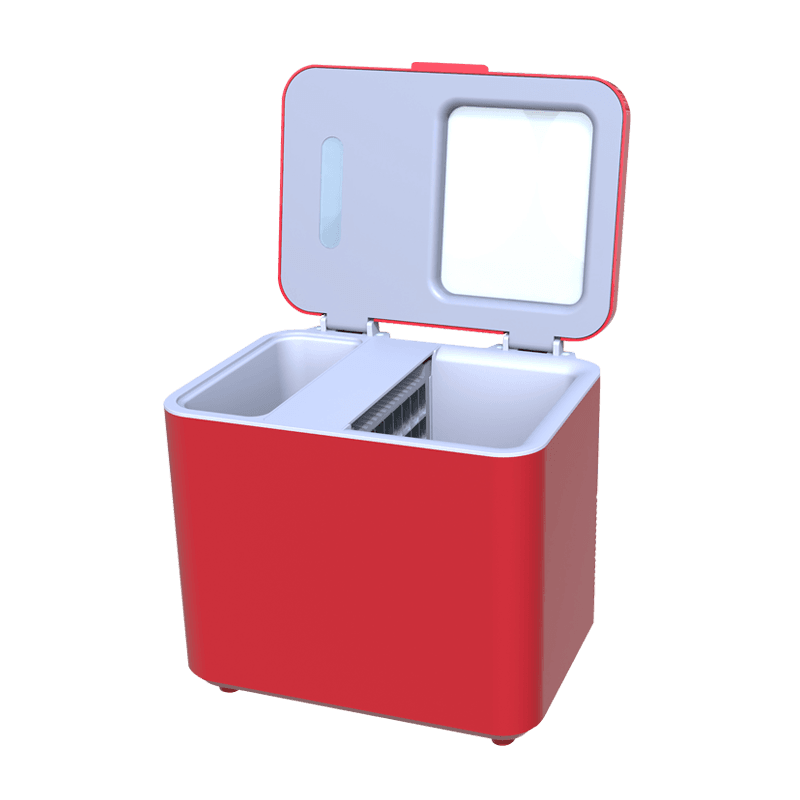
A home ice cube maker is no longer a luxury appliance reserved for bars, hotels, or professional kitchens. It has become a practical daily companion for households that want cold drinks, cleaner presentation, and reliable ice availability without constantly buying bagged ice or waiting for freezer trays to harden. The Home Ice Cube Maker, model Alien-ZF01, is designed for families, small offices, entertainment spaces, and hospitality corners that need convenient ice production in a compact form. With a 220V/50Hz power supply, 140W operating power, R290 refrigerant, and a space-saving body measuring 325 x 295 x 252 mm, it combines performance, efficiency, and home-friendly usability.
The core value of this ice maker lies in its ability to produce neat ice cubes that support a wide range of beverage and kitchen uses. Square ice cubes are valued because their regular geometry allows them to chill drinks effectively while melting more slowly than smaller or irregular ice pieces. This is especially useful for whisky, cocktails, iced coffee, soda, fruit tea, and other beverages where dilution can damage taste. The product also reflects a broader manufacturing philosophy: simple operation, stable performance, reliable refrigeration, and thoughtful engineering suited to modern households.
Compared with many ordinary ice-making solutions, this unit offers an important balance between compact size and practical output. Freezer trays are inexpensive but slow, messy, and limited in capacity. Bagged ice is convenient but requires storage space, has uncertain hygiene conditions after transportation, and may not always be available when needed. Oversized commercial ice machines can be powerful but are often noisy, expensive, and unsuitable for domestic spaces. A compact home ice cube maker solves these problems by creating ice where and when it is needed, while occupying only a modest footprint on a countertop.
Alien Technology Co., Ltd. manufactures this product in Zhouxiang, Cixi City, Zhejiang Province, a region known for small household appliance production and supply chain efficiency. The company focuses on ice makers, coffee machines, air fryers, and related household appliances, giving it practical experience in heating, refrigeration, electrical control, and compact appliance assembly. Its mission emphasizes smart technology, simplified living, and enhanced happiness, and this product is a direct expression of that mission. Instead of adding unnecessary complexity, the machine is built around a clear purpose: make dependable ice conveniently for everyday life.
Product Overview
The Home Ice Cube Maker is a compact household appliance designed to produce ice cubes for daily beverage and kitchen use. Its product category is ice cube maker, and its design emphasizes home convenience, countertop placement, and stable refrigeration performance. With dimensions of 325 x 295 x 252 mm, the machine can fit into kitchens, pantry areas, home bars, office refreshment stations, dormitory common areas, and small hospitality settings where space is important.
The unit uses a 220V/50Hz power supply and operates at 0.65A with 140W rated power. This specification places it within the practical range for home appliances: strong enough to drive a refrigeration system, yet not excessive for ordinary domestic use. It uses R290 refrigerant with a 26g charge. R290, also known as propane refrigerant, is valued in modern refrigeration engineering for its low environmental impact and strong thermodynamic performance when applied correctly in suitable systems. Its use reflects the growing shift toward more responsible refrigerant choices in compact appliances.
The design concept is not merely about producing cold material. It is about improving the complete drink experience. Ice shape affects temperature control, melting speed, appearance, stacking, and overall convenience. Neat ice cubes have a professional appearance and offer better storage efficiency than irregular ice fragments. In transparent glassware, square ice cubes create a cleaner presentation and elevate the visual quality of drinks. For homes that entertain guests, this can turn a simple beverage into something that feels carefully prepared.
In daily life, the appliance can support many scenarios. It can provide ice for iced coffee in the morning, lemonade in the afternoon, cocktails during gatherings, chilled juice for children, and ice packs for basic cooling needs. It can also be useful when preparing seafood, cold desserts, smoothies, and picnic coolers. Instead of relying on freezer trays that take hours, users can maintain a more flexible ice routine and respond to unexpected needs with less planning.
Specification |
Details |
Product Type |
Home Ice Cube Maker |
Model |
Alien-ZF01 |
Power Supply |
220V/50Hz |
Current / Power |
0.65A / 140W |
Refrigerant / Charge |
R290 / 26g |
Machine Dimensions |
325 x 295 x 252 mm |
Suitable Uses |
Home drinks, office beverages, small gatherings, kitchen preparation, ice storage, and cooling applications |
Why Square Ice Cubes Improve the Drinking Experience
The quality of ice has a stronger effect on beverages than many people realize. Ice is not simply frozen water; it is a temperature-control tool, a presentation element, and a factor that influences flavor concentration. Poor ice can melt too quickly, water down the beverage, and make even a carefully prepared drink taste weak. Better-formed cubes provide cooling with more control, especially when used in spirits, cocktails, iced coffee, tea, and premium soft drinks.
Square ice cubes are particularly appreciated because their shape is orderly and predictable. Their regular surfaces make them easy to handle and visually pleasing. When placed in a glass, they create a sense of cleanliness and intention. Unlike irregular crushed ice or loosely formed freezer-tray cubes, a neat cube communicates a more professional serving standard. This matters in home entertaining, where small presentation details can make guests feel that drinks were prepared with care.
Another important advantage is slower melting. Solid ice cubes have a relatively high density and, compared with small ice fragments, a smaller exposed surface area in contact with liquid. This means they absorb heat more gradually and melt more slowly. A drink stays cold for longer without being diluted too quickly. For whisky, brandy, rum, neat spirits, and spirit-forward cocktails, this is especially valuable because excessive dilution changes the aroma, texture, and finish. For non-alcoholic drinks, slow melting also helps preserve sweetness, acidity, and carbonation.
Square cubes are also easier to stack and store. Their regular geometry allows them to fit neatly in containers, freezer bags, ice buckets, and glassware. This improves storage efficiency and reduces wasted space in the freezer. When a household prepares ice in advance for a party, shape uniformity makes storage and serving more orderly. The same advantage applies to cooling boxes and beverage buckets, where organized ice can pack more tightly around bottles and cans.
The Home Ice Cube Maker supports this style of everyday refinement. It is not just a machine for making frozen water; it is a machine for improving beverage quality, social presentation, and household convenience. Its value becomes clear when users compare a drink cooled with neat, slowly melting cubes to one cooled with cloudy, broken, or rapidly melting ice fragments. The difference can be seen, tasted, and felt.
Advantages Over Common Competitors
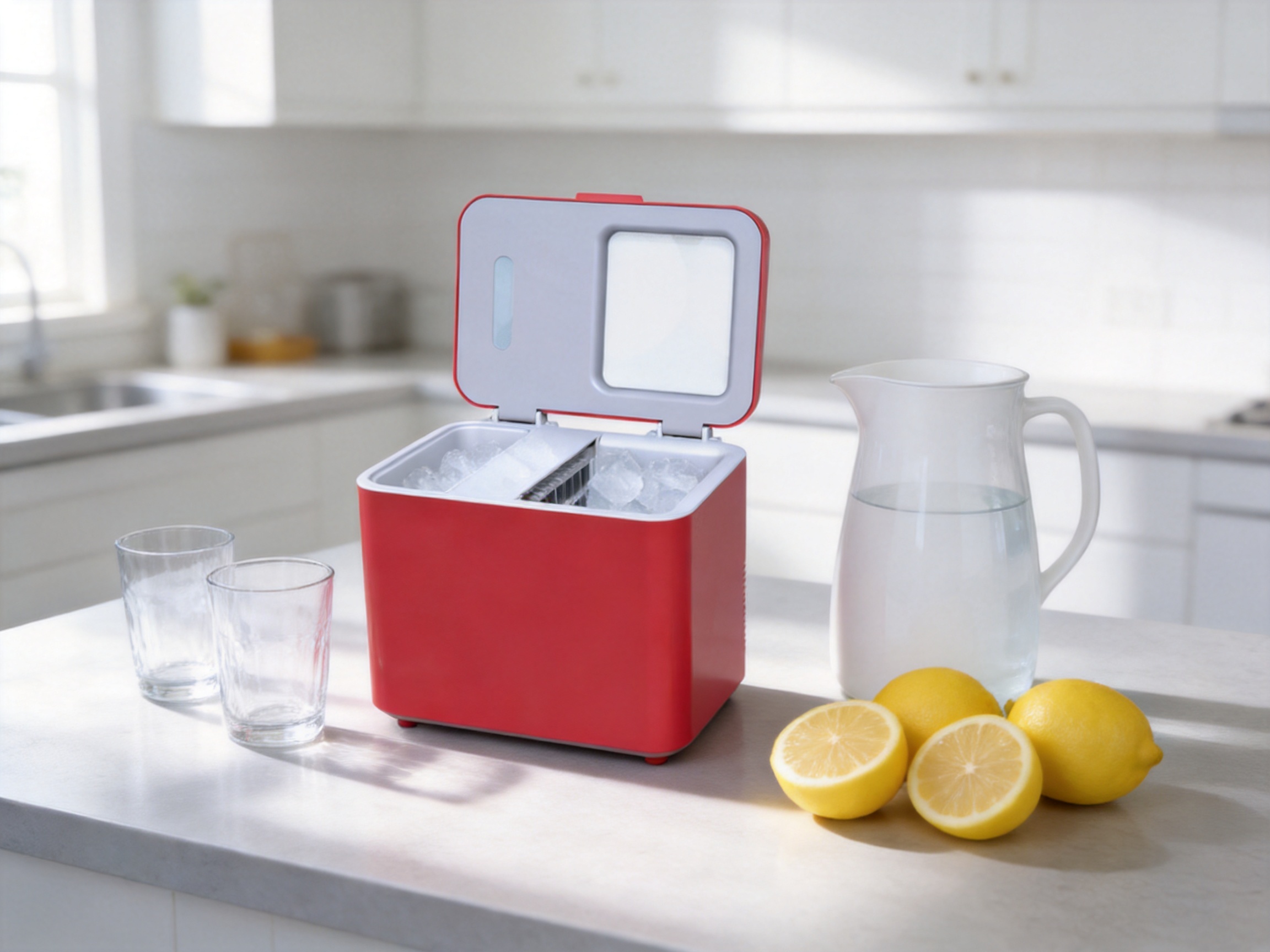
In the market for household ice production, consumers generally compare four options: freezer trays, bagged ice, large commercial machines, and compact countertop ice makers. The Home Ice Cube Maker stands out because it takes the practical strengths of each option while reducing their disadvantages. It gives users independence from purchased ice, faster availability than trays, smaller size than commercial equipment, and more consistent convenience than improvised household methods.
More Convenient Than Freezer Trays
Traditional freezer trays are simple, but they require planning. Users must fill the tray, carry it carefully to the freezer, wait for hours, then twist or strike the tray to release the cubes. This process can be inconvenient, especially when ice is needed suddenly. Trays also compete for freezer space with food storage. If the freezer contains strong-smelling foods, the ice may absorb odors, affecting beverage taste. A dedicated ice maker reduces these inconveniences by keeping ice production separate, more predictable, and easier to manage.
Freezer trays also often produce irregular or partially cracked cubes, depending on freezing conditions and tray quality. In contrast, a purpose-built ice cube maker is designed around consistent refrigeration and ice formation. For users who care about drink presentation, consistency matters. A neat cube looks better in a glass and performs better during slow chilling. This makes the appliance more suitable for families who enjoy coffee, tea, mixed drinks, or entertaining guests.
Cleaner and More Reliable Than Bagged Ice
Bagged ice can be useful, but it creates dependence on external supply. Users must buy it, carry it home, and store it. During warm weather or holidays, stores may run out. Once purchased, the bag may partially melt during transport and refreeze into a solid block. Hygiene is another concern. Although commercial ice is typically produced under controlled conditions, bags pass through transportation, retail storage, and multiple handling stages. A home ice maker gives users more control over water source, handling, and freshness.
Making ice at home also reduces packaging waste from disposable plastic ice bags. For households that frequently use ice, this can be a meaningful long-term advantage. Instead of repeatedly buying and discarding bags, users can produce ice as needed. Over time, the appliance supports a more sustainable and self-sufficient lifestyle.
More Suitable for Homes Than Commercial Ice Machines
Commercial ice machines are designed for high-volume environments such as restaurants, hotels, and bars. They may produce large quantities, but they can be bulky, costly, and unsuitable for ordinary kitchens. They may require special installation, drainage, water lines, and maintenance procedures. Their noise, size, and power requirements can also be excessive for home users.
The Home Ice Cube Maker is built for a different purpose. Its compact 325 x 295 x 252 mm body is much easier to place on a countertop or storage shelf. Its 140W power level is appropriate for home appliance use. Rather than overwhelming a domestic space, it integrates into it. This makes it a better choice for households that want improved ice convenience without the complications of commercial equipment.
A Better Balance Than Many Low-End Countertop Models
Not all countertop ice makers are equal. Some low-cost machines focus only on price, with less attention to material quality, refrigeration stability, structural durability, and manufacturing consistency. A lower purchase price can quickly lose its appeal if the appliance is noisy, inefficient, unreliable, or difficult to clean. The Home Ice Cube Maker benefits from the manufacturer’s appliance experience and production foundation, which support a more balanced product: compact, practical, and supported by systematic manufacturing.
The use of R290 refrigerant, a defined refrigeration charge, stable power specifications, and carefully controlled dimensions indicates a design based on engineering discipline rather than casual assembly. In refrigeration appliances, small details matter. Tubing quality, sealing, evacuation, refrigerant charging accuracy, fan airflow, insulation, and electrical layout all influence performance and reliability. A manufacturer with experience in small household appliances is better positioned to control these details consistently.
Compact Design for Modern Living Spaces
Space is a major factor in appliance selection. Many kitchens already contain coffee machines, air fryers, kettles, rice cookers, toasters, blenders, and other devices. A new appliance must justify its footprint. The Home Ice Cube Maker does this by offering a compact body that can fit into common countertop environments while providing a clear daily function. At 325 x 295 x 252 mm, it is small enough for convenient placement yet substantial enough to house the refrigeration system required for ice production.
The compact format also makes it flexible. It can be used in an apartment kitchen, a family home, a home bar, a vacation property, a small meeting room, or a staff refreshment corner. It can be moved more easily than built-in equipment and does not require the kind of permanent installation associated with commercial machines. This flexibility is especially valuable for renters, small businesses, and households that rearrange spaces according to season or activity.
Modern consumers prefer appliances that simplify life rather than adding complexity. A compact home ice maker supports this expectation by reducing the need for repeated shopping trips, freezer management, and manual tray handling. When guests arrive unexpectedly, when children want cold juice, or when someone prepares an iced coffee on a hot day, ice can be produced with less friction. Convenience becomes part of the household rhythm.
Another benefit of compact design is improved storage efficiency. When the appliance is not in use, it can be placed on a shelf or in a cabinet more easily than larger machines. Its regular shape allows it to integrate cleanly into kitchen layouts. This is important because even useful appliances may be abandoned if they are awkward to store or too large to leave out. A well-sized ice maker remains accessible, which encourages regular use.
Refrigeration System and R290 Environmental Advantage
The heart of any ice maker is its refrigeration system. The Home Ice Cube Maker uses R290 refrigerant with a 26g charge. R290 is widely recognized in modern appliance engineering because it offers strong cooling properties and a low global warming potential compared with many traditional refrigerants. When used in properly designed and manufactured systems, it can support efficient heat transfer while aligning with environmental trends in refrigeration.
R290 requires disciplined manufacturing because it is a hydrocarbon refrigerant. The charge quantity must be controlled accurately, the system must be sealed correctly, and safety-related production procedures must be followed. This places importance on manufacturing quality. Tubing joints, brazing points, leak detection, evacuation, charging, electrical separation, and ventilation design must be managed carefully. A competent manufacturer does not simply select a refrigerant; it builds a production system capable of applying that refrigerant safely and reliably.
The 26g refrigerant charge is a defined technical parameter that reflects system calibration. Refrigeration performance depends on matching the compressor, evaporator, condenser, capillary or flow control system, refrigerant quantity, and airflow. Too much or too little refrigerant can reduce efficiency and ice-making stability. Accurate charging is therefore a competitive advantage, because it helps ensure that every unit leaving the production line performs within expected limits.
For customers, the benefit is practical. A well-engineered refrigeration system supports stable ice formation, reasonable energy use, and dependable daily operation. It also reflects responsibility toward environmental expectations. As consumers become more aware of appliance sustainability, refrigerant choice becomes more than a hidden technical detail. It becomes part of the product’s value.
Electrical Performance and Household Practicality
The machine operates on 220V/50Hz power with 0.65A current and 140W power. These values place it in a practical range for household use. A 140W ice maker can run from normal domestic electrical outlets in suitable regions and does not require the high-power infrastructure associated with large commercial refrigeration machines. This makes it easier to incorporate into ordinary living spaces.
Electrical performance also affects the user experience. A properly designed power system supports stable compressor operation, fan performance, and control response. Household appliances must handle repeated use, start-stop cycles, and varying ambient conditions. Good electrical design includes appropriate wiring, insulation, component placement, heat management, and safety testing. These details may not be visible from the outside, but they influence long-term reliability.
Compared with poorly engineered alternatives, a product made with controlled electrical specifications can offer greater confidence. Low-quality appliances may suffer from unstable operation, overheating, weak internal connections, or inconsistent component quality. A manufacturer focused on quality control reduces these risks through incoming material inspection, assembly standards, in-process checks, and final testing.
The Home Ice Cube Maker is designed to be useful without demanding technical knowledge from the user. That simplicity depends on hidden engineering. The appliance must manage refrigeration, water contact areas, electrical systems, and structural components in a compact body. The result is a product that feels easy to use because complexity has been handled during design and production.

Manufacturing Strengths Behind the Product
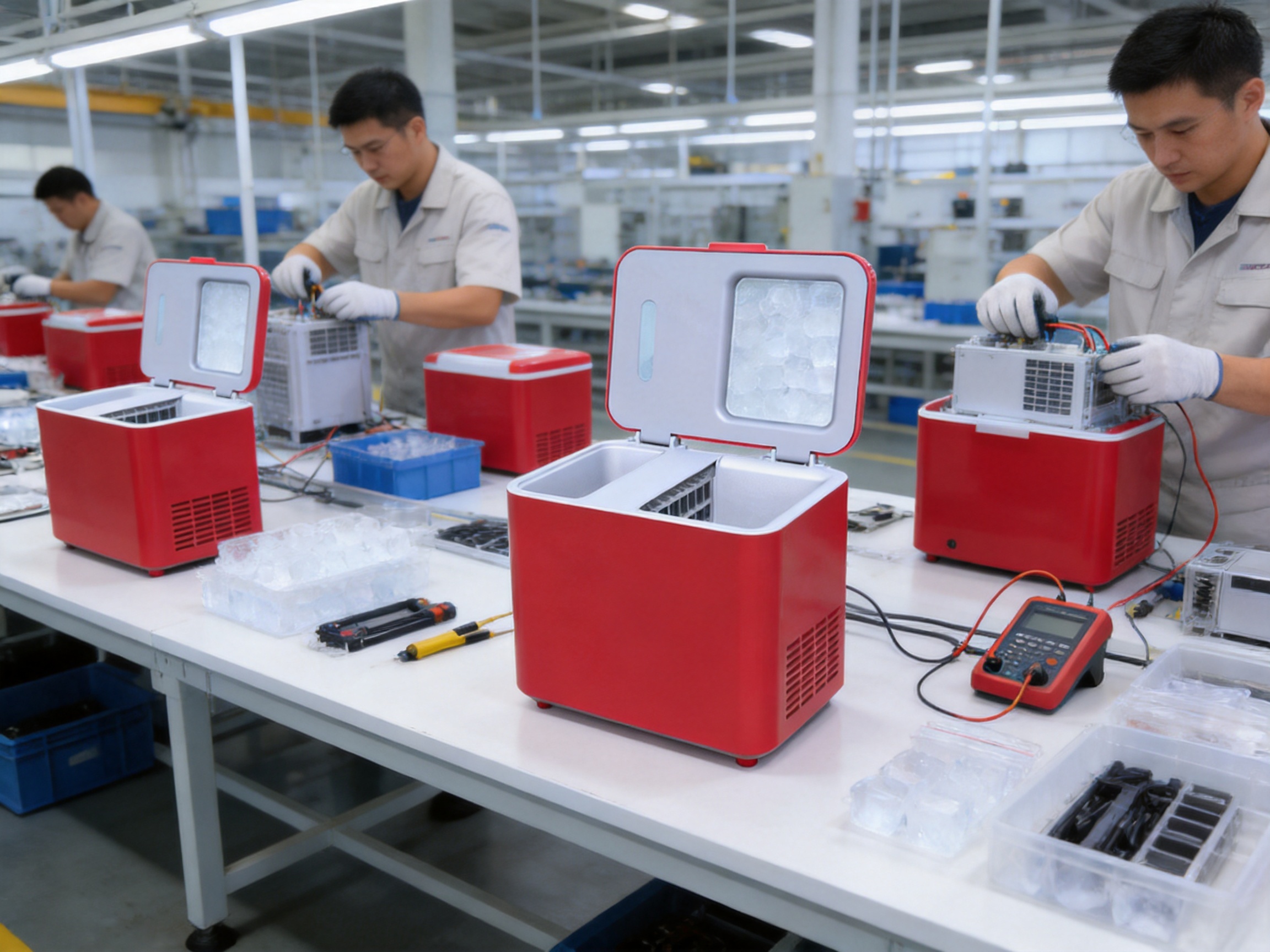
Alien Technology Co., Ltd. is located in Zhouxiang, Zhejiang Province, an area with a strong industrial base for small household appliances. This location provides several manufacturing advantages: access to component suppliers, experienced labor, logistics convenience, and established production knowledge. In appliance manufacturing, regional supply chain maturity can strongly influence quality, cost control, and delivery stability. A factory positioned within such an ecosystem can respond faster to material needs, technical adjustments, and customer orders.
The company specializes in household appliances including ice makers, coffee machines, and air fryers. This product range is important because it involves multiple technical disciplines. Coffee machines require water heating, pressure handling, electrical control, sealing, and user-interface design. Air fryers require heating elements, airflow engineering, temperature control, and food-contact material management. Ice makers require refrigeration, water systems, insulation, and timing control. Experience across these categories strengthens the company’s ability to design compact appliances that are reliable and user-friendly.
Controlled Component Selection
Advanced manufacturing begins before assembly. It starts with selecting suitable components and materials. For an ice maker, key parts may include the compressor or refrigeration module, condenser, evaporator, fan, tubing, pump or water handling elements, sensors, control components, housing parts, power cord, switches, and internal insulation. Each part must meet performance, safety, and durability requirements. A weak component can compromise the entire appliance.
A quality-focused manufacturer evaluates suppliers, checks material consistency, and confirms that incoming parts match required specifications. This is especially important for refrigeration parts, where dimensional accuracy, cleanliness, and sealing performance affect the cooling circuit. It is also important for plastic parts, which must withstand moisture, temperature variation, cleaning routines, and repeated handling.
Precision Refrigeration Assembly
Refrigeration assembly is one of the most technically important production stages. Tubes must be cut, shaped, connected, and sealed correctly. Brazing or joining points must be strong and leak-resistant. The system must be evacuated to remove moisture and air before refrigerant charging. If moisture remains inside the system, it can affect cooling performance and long-term reliability. If air remains, pressure behavior can become unstable.
After evacuation, refrigerant must be charged accurately. The specified R290/26g charge indicates the importance of precision. A controlled charging process helps ensure consistent performance from unit to unit. After charging, leak testing is essential. Even a very small leak can reduce performance over time and affect safety. Advanced production lines therefore use systematic checks rather than relying on visual inspection alone.
Electrical Safety and Functional Testing
Electrical safety is another crucial manufacturing area. Appliances that combine water and electricity must be designed and tested carefully. Wiring must be secured, insulation must be adequate, and electrical components must be positioned to reduce risk. Production testing may include power-on checks, grounding verification where applicable, insulation resistance evaluation, functional control testing, and operating observation.
Functional testing verifies that the machine works as intended before leaving the factory. For an ice maker, this may involve checking refrigeration response, water movement, control operation, sound level, indicator function, and overall assembly integrity. A product that passes through structured testing is more likely to deliver a consistent customer experience. This is a major advantage over competitors that rely on minimal inspection to reduce cost.
Appearance and Structural Quality Control
Consumers judge appliances not only by performance but also by appearance and tactile quality. A compact countertop ice maker should look clean, fit well in the kitchen, and feel stable during operation. Housing panels should align properly. Edges should be smooth. Knobs or controls should feel secure. Lids and openings should operate correctly. These visible details reflect hidden manufacturing discipline.
Structural quality also affects durability. The machine must tolerate transport vibration, daily movement, moisture exposure, and repeated opening and closing. Good manufacturing processes include assembly fixtures, torque control for fasteners, fitting checks, and packaging evaluation. Proper packaging is especially important because appliances may travel long distances before reaching customers. Protecting the refrigeration system and housing during transportation helps reduce damage and returns.
Humanized Design and Everyday Usability
The best home appliances succeed because they fit into real routines. Users do not want complicated steps just to get ice. They want a machine that feels understandable and reliable. The Home Ice Cube Maker is designed around this principle. Its compact body, practical power rating, and focused function make it suitable for ordinary users rather than only technical operators.
The product alias, Knobtype-ice-maker, suggests a simple control approach. Knob-style controls are valued by many users because they are direct, intuitive, and easy to understand. In an era when some appliances become unnecessarily complex, a straightforward control interface can be an advantage. It reduces the learning curve and makes the product accessible to different age groups.
Humanized design also means thinking about placement. A machine that fits comfortably on a countertop encourages frequent use. A machine that is too large may be stored away and forgotten. This ice maker’s compact dimensions support accessibility. It can be placed near a sink, coffee station, dining area, or bar counter. By positioning it close to where drinks are prepared, users can reduce unnecessary movement and improve serving efficiency.
Another usability advantage comes from the regular cube shape. Cubes are easy to scoop, pour, store, and serve. They do not create the same mess as crushed ice, and they look better than random freezer fragments. For families, this makes daily use more pleasant. For hosts, it improves the speed and appearance of drink preparation during gatherings.
Applications in Daily Life
Home Beverage Preparation
The most obvious use is beverage cooling. Cold water, soda, juice, lemonade, iced tea, cold brew coffee, and sparkling drinks all benefit from convenient ice. The machine is especially useful in summer, but it also has year-round value for people who enjoy chilled beverages. Many coffee lovers now prepare iced coffee and cold brew at home, and a reliable ice supply makes this routine easier.
For families, the product can reduce small daily frustrations. Parents can prepare cold drinks quickly for children after school. Guests can be served without searching through the freezer. Home cooks can chill sauces, desserts, or blanched vegetables more efficiently. These small moments accumulate into meaningful convenience.
Home Bar and Entertainment
For home bars, the quality of ice matters greatly. A cocktail can be carefully mixed, but if the ice melts too quickly, the balance changes. Square cubes help slow dilution and maintain drink integrity. They also look more professional in glassware. Whether serving whisky, gin and tonic, rum drinks, mocktails, or fruit cocktails, the presentation becomes cleaner and more appealing.
During parties, having an ice maker reduces pressure on freezer storage. Instead of filling the freezer with trays days in advance, hosts can produce ice closer to the event. The regular shape also improves stacking in ice buckets and storage containers, allowing better use of space. Guests notice when drinks stay cold and look well served.
Office and Meeting Spaces
Small offices and meeting rooms can also benefit from a compact ice maker. Employees may want iced coffee, cold water, or chilled tea during work. Clients and visitors may appreciate a more polished refreshment experience. Because the machine is compact, it can be placed in a pantry area without requiring major installation.
Compared with buying bagged ice for office events, producing ice on-site is more convenient and controlled. It also reduces last-minute errands before meetings or celebrations. For small businesses, this can improve hospitality while keeping operation simple.
Kitchen Preparation and Cooling Needs
Ice is useful beyond beverages. It can be used to cool cooked foods quickly, prepare ice baths for vegetables, chill dessert mixtures, support seafood presentation, and create temporary cold packs. The regular shape makes it easy to portion and handle. In small kitchens, having an appliance dedicated to ice can make preparation more efficient.
Ice cubes can also be stored for later use. Because square cubes stack efficiently, users can transfer them to containers and make room for additional production. This is helpful before gatherings, picnics, or hot-weather activities. The ability to build an ice reserve adds flexibility.
Quality, Reliability, and Customer Confidence
Reliability is one of the strongest selling points for any household appliance. Customers want a machine that works consistently, not one that performs well for a few days and then declines. Reliability depends on design, materials, production control, and testing. The Home Ice Cube Maker benefits from a manufacturer that understands the household appliance sector and values stable, pragmatic business development.
Alien Technology Co., Ltd. emphasizes excellent quality, customer satisfaction, continuous improvement, and innovation. These principles matter because appliance markets are highly competitive. Customers compare not only price but also experience. A product that is easy to use, dependable, and attractive can create repeat business and positive recommendations. A manufacturer that listens to customers and improves products over time is better able to meet changing market expectations.
Advanced manufacturing strength also supports business customers such as distributors, importers, appliance brands, and retailers. They need consistent supply, stable specifications, and products that can satisfy end users. A factory located in a strong appliance manufacturing region with convenient logistics can support efficient order fulfillment. This is an advantage over suppliers with weaker production organization or less mature supply chains.
The company’s focus on multiple household appliance categories further strengthens its competitiveness. It can apply lessons from air circulation, water handling, heating, refrigeration, and compact structure design across different products. This cross-category knowledge helps improve new designs and production methods. For example, experience with coffee machines supports understanding of water contact parts and user cleaning needs. Experience with air fryers supports knowledge of airflow, heat management, and housing durability. These capabilities contribute to better appliance engineering overall.
Comparison With Alternative Ice Solutions
The following comparison highlights why a compact home ice cube maker is a strong choice for many users.
Option |
Main Strength |
Main Weakness |
How the Home Ice Cube Maker Compares |
Freezer Trays |
Low cost and simple |
Slow, limited capacity, uses freezer space, may absorb odors |
Provides dedicated ice production with better convenience and presentation |
Bagged Ice |
Ready to use when available |
Requires purchase, transport, storage, and disposable packaging |
Allows on-demand production with greater household control |
Commercial Ice Machine |
High output |
Large, costly, often requires installation and more maintenance |
Offers a compact and home-friendly alternative |
Low-End Countertop Unit |
Often inexpensive |
May have inconsistent quality, weaker testing, or less reliable components |
Benefits from structured appliance manufacturing and defined technical specifications |
This comparison shows that the product’s advantage is not based on one single feature. It is the combined value of size, refrigeration design, cube practicality, manufacturing quality, and user convenience. For many households, the best appliance is not the biggest or the cheapest; it is the one that fits daily life most effectively.
Design Philosophy: Smart Technology That Simplifies Life
The company’s mission, “Smart Technology, Simplifying Life, Enhancing Happiness,” is well matched to the product. Smart technology does not always mean complicated screens, excessive buttons, or unnecessary connectivity. In many cases, smart design means solving a real problem in a simple and dependable way. This ice maker does exactly that: it helps users obtain ice conveniently, improves drink quality, and reduces dependence on slower or less controlled methods.
Enhancing happiness may sound abstract, but it is visible in daily details. A cold drink after work, a neat whisky glass during a quiet evening, iced tea for guests, cold coffee during a hot morning, or well-presented beverages at a family gathering can all improve comfort and enjoyment. Appliances that remove small inconveniences can make home life smoother. Over time, convenience becomes part of well-being.
The product also supports healthier and more enjoyable routines. Users can prepare homemade iced drinks instead of relying on store-bought beverages. They can control ingredients, sweetness, and water quality. With ice readily available, making cold fruit tea, lemon water, or low-sugar drinks becomes easier. This aligns with modern lifestyle preferences for convenience and personal control.
Maintenance and Best Use Practices
Like all appliances that handle water, an ice maker benefits from regular care. Users should follow the instruction manual supplied with the product, but several general principles apply. Clean water should be used to improve ice quality and reduce mineral buildup. The water contact areas should be cleaned periodically to maintain freshness. If the machine will not be used for an extended period, it should be emptied, cleaned, dried, and stored properly.
Placement also matters. The appliance should be used on a stable, level surface with suitable ventilation around it. Refrigeration systems need airflow to release heat. Blocking vents or placing the machine in a hot, enclosed area can reduce performance. Keeping the machine away from heat sources such as ovens, direct sunlight, or high-temperature appliances can help maintain efficient operation.
Users should also consider the quality of water used for ice. Filtered water may improve taste and reduce mineral residue, depending on local water conditions. Since ice becomes part of the beverage, water quality directly affects flavor. A premium drink experience begins with clean water and well-formed cubes.
Routine inspection is wise. Users should check that the power cord is in good condition, the machine is clean, and the surrounding area is dry. Because the appliance includes refrigeration and electrical components, users should avoid unauthorized disassembly or modification. If service is needed, professional support or authorized guidance should be used.
Business Cooperation and Market Potential
The market for compact home appliances continues to expand as consumers seek convenient solutions for kitchens, apartments, offices, and entertainment spaces. Ice makers fit this trend well because they address a clear need and support lifestyle upgrades. They are especially attractive in warm regions, hospitality markets, beverage culture markets, and urban households where freezer space is limited.
For distributors and retailers, the Home Ice Cube Maker offers a product with clear selling points: compact size, practical power specification, R290 refrigerant, square cube utility, and manufacturer experience in small household appliances. These features are easy to explain to customers and suitable for online product pages, retail demonstrations, and promotional campaigns. The machine can be positioned for home entertainment, summer beverage preparation, office refreshment, and small hospitality use.
The manufacturer’s location in Cixi City, Zhejiang Province, supports logistics convenience and access to a mature appliance supply chain. This can be valuable for business partners who require stable production, timely delivery, and the ability to discuss product improvement or cooperation. The company welcomes new and existing customers for business cooperation, reflecting an open and practical approach to market development.
Contact channels include phone at +86-13968281299 and email at [email protected]. The company address is No. 138, Huixiang'an Road, Zhouxiang Town, Cixi City, Zhejiang Province. These details support direct communication for buyers interested in product information, cooperation, or supply discussions.
Frequently Asked Questions
What is the main purpose of this home ice cube maker?
The main purpose is to provide convenient ice cube production for home beverages, small gatherings, office refreshment areas, and kitchen cooling needs. It helps users avoid the inconvenience of freezer trays and the repeated purchase of bagged ice.
What are the machine dimensions?
The machine measures 325 x 295 x 252 mm. This compact size makes it suitable for countertops, pantry spaces, home bars, and small office areas.
What power supply does the product use?
The product is designed for a 220V/50Hz power supply. Its current and power specification is 0.65A/140W.
What refrigerant is used?
The machine uses R290 refrigerant with a 26g charge. R290 is known for strong refrigeration performance and low environmental impact when used in properly designed systems.
Why are square ice cubes useful?
Square ice cubes have a neat appearance, stack efficiently, and can melt more slowly than small or irregular ice pieces because of their relatively compact shape. This helps chill drinks while reducing excessive dilution.
Is this product suitable for whisky and cocktails?
Yes. Neat, solid cubes are especially suitable for whisky, cocktails, and other drinks where controlled dilution and attractive presentation are important.
How does it compare with freezer trays?
Freezer trays are slow, limited in capacity, and occupy freezer space. A dedicated ice cube maker offers more convenient ice production and better control over the ice-making process.
How does it compare with bagged ice?
Bagged ice requires purchase, transport, and freezer storage. Producing ice at home gives users better control over freshness, water source, and availability while reducing disposable packaging.
Is it only for beverages?
No. The ice cubes can also be used for kitchen preparation, ice buckets, temporary cooling, food chilling, seafood presentation, and basic cold-pack applications.
Why is manufacturing quality important for an ice maker?
An ice maker combines refrigeration, water contact areas, electrical components, and structural parts. Reliable manufacturing ensures better sealing, accurate refrigerant charging, safer electrical operation, and more consistent performance.
What makes the manufacturer competitive?
The manufacturer is located in a major small-appliance production region and specializes in ice makers, coffee machines, and air fryers. This provides experience in refrigeration, heating, water systems, airflow, assembly control, and appliance quality management.
Who should consider buying this product?
It is suitable for families, apartment residents, home bar users, small offices, meeting rooms, vacation homes, and anyone who wants convenient, attractive ice cubes for daily use.
Conclusion
The Home Ice Cube Maker is a practical and refined solution for modern households that want better ice without relying on slow freezer trays, uncertain bagged ice, or oversized commercial machines. Its compact 325 x 295 x 252 mm body makes it easy to place in kitchens, home bars, offices, and refreshment spaces. Its 220V/50Hz, 140W electrical specification supports household practicality, while its R290/26g refrigeration system reflects modern environmental and performance considerations.
The product’s value is strengthened by the advantages of square ice cubes. They melt more slowly, preserve drink flavor, look clean and professional, stack efficiently, and support a wide range of uses. From iced coffee and lemonade to whisky, cocktails, ice buckets, and kitchen preparation, they improve both function and presentation. For users who appreciate convenience and detail, this makes a meaningful difference.
Behind the appliance is Alien Technology Co., Ltd., a manufacturer located in Zhouxiang, Zhejiang Province, with experience in small household appliances including ice makers, coffee machines, and air fryers. Its strengths in manufacturing control, appliance engineering, component selection, refrigeration assembly, electrical safety, and quality testing provide a strong foundation for product reliability. The company’s mission of using smart technology to simplify life is clearly expressed through a machine that solves a real household need in a compact and user-friendly way.
In a competitive market, the best appliance is not always the largest, most complicated, or cheapest. It is the product that delivers dependable performance, fits naturally into daily routines, and improves the user experience. This home ice cube maker does exactly that. It offers convenient ice production, better beverage quality, attractive cube presentation, and manufacturing-backed confidence for families, offices, and business partners seeking a reliable compact ice solution.
References
ASHRAE Handbook: Refrigeration, American Society of Heating, Refrigerating and Air-Conditioning Engineers.
International Institute of Refrigeration, Guide to the Role of Refrigerants in Sustainable Cooling.
United Nations Environment Programme, Refrigeration, Air Conditioning and Heat Pumps Technical Options Committee Assessment Reports.
Food and Beverage Service Principles, professional hospitality training materials on beverage temperature control and ice use.
Household Appliance Quality Management Practices, manufacturing guidance on electrical safety, component inspection, and final product testing.
Small Refrigeration Appliance Engineering Notes, technical references on compact refrigeration systems, refrigerant charging, and leak detection.