
 English
 한국어
한국어 Español
 Deutsch
In modern homes, offices, cafés, milk tea shops, fast food counters, and hospitality spaces, ice is no longer a simple accessory. It is part of beverage quality, service speed, customer experience, and operational convenience. A well-designed ice maker must do more than freeze water. It must produce ice quickly, deliver a pleasant texture, remain easy to clean, fit into limited spaces, and operate reliably day after day. The touchscreen bullet ice maker introduced here is designed around these practical needs, combining compact engineering, rapid cooling performance, convenient operation, and a hygienic flip-top structure.
This product belongs to the bullet ice maker category, a category valued for producing ice pieces with a hollow or perforated center. This shape is not accidental; it is a functional design that improves contact with beverages, accelerates cooling, reduces clumping, and creates a chewable texture appreciated by many users. Compared with ordinary cube ice machines or oversized commercial equipment, this touchscreen bullet ice maker offers a more balanced solution for users who want efficiency, comfort, and easy maintenance in one compact appliance.
The machine is powered by a 220V-240V/50Hz power supply and operates at 0.9A/150W. It uses R600a refrigerant with a 19g charge and has machine dimensions of 325 x 295 x 252 mm. These specifications indicate a design focused on practical daily use: enough performance for fast ice production, a compact body for countertop placement, and a refrigeration system suitable for efficient cooling. Whether used in a household kitchen, a small beverage counter, an office pantry, or a service area that requires quick access to fresh ice, the unit is built to simplify ice preparation.
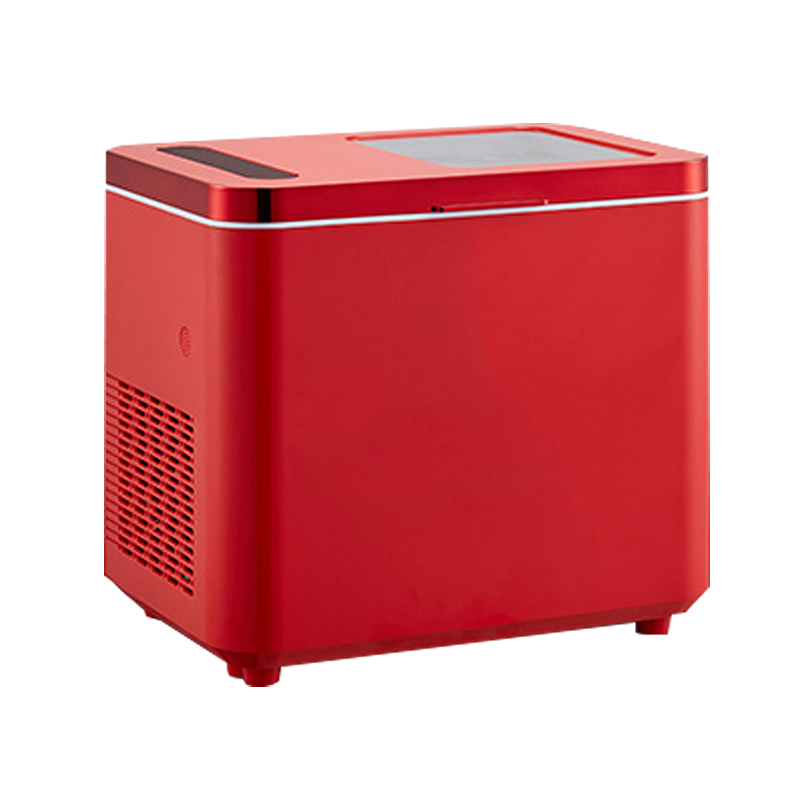
Product Overview: Compact Engineering with Touchscreen Convenience
The touchscreen bullet ice maker is developed for users who expect fast results without complicated procedures. Its interface is designed to make operation intuitive, allowing users to start ice making, monitor status, and manage basic functions more conveniently than with traditional button-based models. In environments where several people may use the same machine, such as offices or small commercial spaces, a clear touchscreen interface reduces confusion and improves workflow.
The compact dimensions of 325 x 295 x 252 mm make the machine suitable for countertops, cabinet areas, and compact workstations. Space-saving design is especially important for modern appliance users. Many kitchens, retail beverage spaces, and office pantries are already filled with equipment such as coffee machines, air fryers, blenders, water dispensers, and storage containers. An ice maker that delivers useful capacity without occupying excessive space provides a clear advantage over bulkier alternatives.
The bullet ice shape is another defining feature. Instead of producing solid cubes that may freeze together or cool drinks unevenly, the machine produces hollow-centered ice pieces that expose more surface area to liquid. The result is quicker chilling and a satisfying texture. This makes the product particularly suitable for iced coffee, milk tea, soft drinks, cocktails, smoothies, fruit tea, and fast-service beverages where cooling speed and presentation both matter.
The machine also features a fully flip-top design, allowing the ice storage and ice-making areas to open widely for cleaning and inspection. This structure helps reduce hidden corners where water scale, residue, or debris may accumulate. Hygiene is a major concern for any appliance that directly contacts drinking water and ice. By making cleaning easier, the machine helps users maintain a healthier ice-making environment with less effort.
Key Specifications
Product Type |
Touchscreen Bullet Ice Maker |
Power Supply |
220V-240V/50Hz |
Current/Power |
0.9A/150W |
Refrigerant/Charge |
R600a/19g |
Machine Dimensions |
325 x 295 x 252 mm |
Ice Type |
Bullet Ice with Hollow Center |
Operation Style |
Touchscreen Control |
Maintenance Design |
Fully Flip-Top Structure for Easier Cleaning |
Why Bullet Ice Matters
Bullet ice has become popular because it solves several common problems found in standard ice shapes. Solid cube ice may be visually familiar, but it can be harder, slower to chill beverages, and more likely to stick together during storage. Flake ice and nugget ice have their own advantages, but they may melt too quickly for certain drinks or require more specialized machines. Bullet ice offers a balanced middle ground: it cools quickly, remains easy to handle, and provides a pleasant crunchy texture.
The hollow center is the key to performance. When the ice is placed into a beverage, liquid can contact not only the outside surface but also the inner surface of the hollow section. This larger contact area allows heat transfer to occur more rapidly. For restaurants, milk tea shops, convenience counters, and home users who want cold drinks without long waiting times, faster cooling is a direct benefit.
Another advantage is flowability. The shape of bullet ice helps reduce clumping when stored or dispensed. Ice pieces that stick together can slow service, frustrate users, and reduce convenience. In commercial settings, poor ice flow may interrupt beverage preparation, especially during busy periods. The non-sticky nature of bullet ice makes it easier to scoop and more compatible with automatic dispensing concepts.
Texture also contributes to user satisfaction. Bullet ice is generally softer and easier to chew than dense solid ice. It has moderate hardness, creating a crisp but not excessively hard bite. This is why bullet ice is popular in fast food restaurants, tea shops, iced coffee service, and casual beverage occasions. Consumers often enjoy ice not only for cooling but also for mouthfeel, and bullet ice delivers a friendly chewing experience.
Rapid Cooling for Beverage Efficiency
One of the main performance advantages of this touchscreen ice maker is rapid cooling. The hollow-centered bullet ice has a perforated structure that increases the surface area contacting the beverage. In practical terms, this means iced drinks can reach a pleasant serving temperature more quickly. For a household user, this improves everyday comfort. For a commercial beverage operator, it can improve service speed and consistency.
Consider the workflow in a busy milk tea shop. Staff prepare drinks repeatedly throughout the day, and every second matters. If ice cools slowly, beverages may require more stirring, longer preparation time, or more ice to achieve the desired temperature. Bullet ice can reduce these inefficiencies because its shape supports faster heat exchange. The result is a smoother operating rhythm, particularly during peak hours.
For home use, rapid cooling is equally valuable. Iced coffee, fruit tea, sparkling drinks, lemonade, and after-work cocktails become easier to prepare. Users do not need to rely entirely on freezer trays, which take hours and can absorb odors from frozen food compartments. A dedicated ice maker creates fresh ice when needed and helps keep beverage preparation independent from freezer limitations.
Compared with many ordinary countertop ice solutions, the touchscreen bullet ice maker is designed for both speed and usability. Some basic machines may produce ice but fail to provide consistent handling, cleaning convenience, or intuitive controls. This product combines the benefits of bullet ice with a user-friendly interface and an accessible internal structure, giving it an advantage in daily practicality.
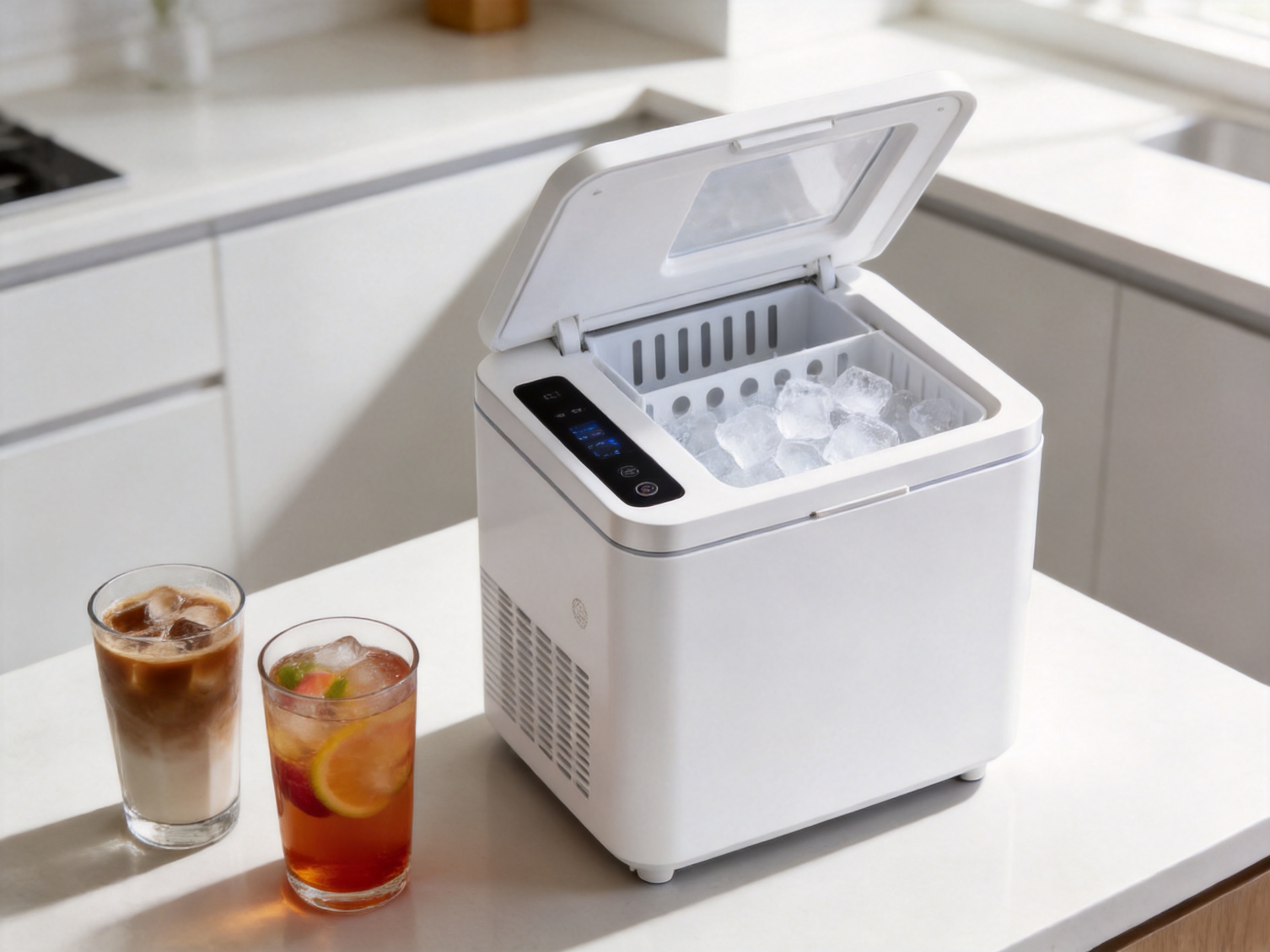
Non-Sticky Ice with High Flowability
Ice quality is not only about how fast ice is made. It is also about how easily the ice can be used after it is produced. If ice pieces freeze into a hard block, users must break them apart before scooping. This can be inconvenient in a home kitchen and highly disruptive in a commercial setting. Bullet ice naturally helps reduce this problem because its shape limits tight flat-surface contact between pieces.
The touchscreen bullet ice maker is especially useful for users who value smooth dispensing and scooping. The rounded form of bullet ice makes it move more freely in storage compared with certain cube shapes. This high flowability is helpful when users need to scoop ice quickly into cups, pitchers, bottles, or serving containers. It also supports the idea of automated or semi-automated ice dispensing systems, where smooth ice movement is essential.
Non-sticky ice is also more visually appealing. Clumped ice can look poorly maintained, especially in customer-facing beverage operations. Separated bullet ice looks fresh and clean, helping improve the perception of drink quality. For cafés, office hospitality areas, and small foodservice counters, appearance is part of the customer experience.
This advantage becomes more important in humid environments. In warm service areas, ice may partially melt and refreeze, increasing the risk of clumping. While all ice requires proper handling, bullet ice’s rounded and hollow design provides a practical benefit compared with flat-sided cubes that may bond more easily. Users can enjoy easier scooping, quicker drink preparation, and reduced waste from broken or stuck ice.
Pleasant Crunch and Consumer Appeal
Many consumers do not think of ice as a textured ingredient until they experience the difference between hard solid cubes and chewable bullet ice. The moderate hardness of bullet ice makes it enjoyable for customers who like to chew ice after finishing a drink. It is not as hard as dense freezer-made cubes, making it more comfortable and less harsh. This texture is one reason bullet ice is widely appreciated in quick-service food and beverage settings.
Milk tea shops, fast food restaurants, and casual drink bars often depend on small details to build repeat customer preference. Ice texture can influence how a drink feels in the mouth, how quickly flavors release, and how enjoyable the beverage remains as the ice gradually melts. Bullet ice provides a crunchy sensation while still serving the core purpose of cooling.
For home users, this texture adds everyday enjoyment. Families can use the ice for fruit juices, soft drinks, sports drinks, chilled tea, iced coffee, and homemade desserts. Its shape also makes it convenient for filling water bottles, small cups, and insulated tumblers. Unlike large cubes that may be difficult to fit into narrow openings, bullet ice is often easier to handle across different container types.
In competitive product comparisons, texture is a meaningful advantage. Many low-cost ice makers focus only on making ice quickly but do not optimize the user experience after the ice is produced. This touchscreen bullet ice maker emphasizes the practical and sensory qualities of ice: it is quick-cooling, manageable, chewable, and suitable for a wide range of drinks.
High Ice-Making Efficiency for Daily Demand
Efficiency is a central requirement for any ice maker. Users want to turn on the machine and receive usable ice without excessive waiting. The continuous ice-making principle of bullet ice makers supports production of a large quantity of ice over time. While actual output can vary depending on ambient temperature, water temperature, and usage conditions, the design concept is built around repeated cycles and steady availability.
The 150W power specification suggests a balance between cooling capability and household or light commercial practicality. It is powerful enough to support effective refrigeration while remaining suitable for countertop appliance use. The refrigerant system uses R600a with a 19g charge, reflecting a compact refrigeration design that can achieve cooling performance with a relatively small refrigerant quantity.
High ice-making efficiency is useful in many scenarios. In an office, employees may need ice throughout the day for water, coffee, and beverages. In a small café, ice demand may rise sharply during lunch or afternoon service. At home, family gatherings, parties, and summer days can quickly empty freezer trays. A dedicated countertop ice maker reduces dependence on pre-planning and allows users to produce ice closer to the moment of need.
Compared with traditional freezer ice trays, this machine offers a major convenience advantage. Freezer trays require filling, carrying, freezing, twisting, emptying, and refilling. They also occupy freezer space and may absorb odors. A countertop bullet ice maker offers a more specialized and hygienic approach, keeping ice production separate from frozen food storage and making the process much easier to manage.
Space-Saving Structure for Modern Environments
Space is one of the most valuable resources in appliance design. Many users do not have room for a large commercial ice machine, yet they still want reliable ice production. With dimensions of 325 x 295 x 252 mm, this touchscreen bullet ice maker offers a compact footprint that can fit into a variety of spaces. It can be placed on a kitchen counter, office pantry surface, small café workstation, hospitality counter, or beverage preparation area.
Compact design does not simply mean making the product smaller. It requires efficient internal layout, careful placement of refrigeration components, logical airflow design, and accessible water and ice areas. A poorly designed compact appliance may be difficult to clean, noisy, or inefficient. A well-designed compact machine delivers performance while maintaining usability.
The product’s space-saving advantage is especially relevant when compared with larger ice equipment. Commercial ice machines can be powerful but often require plumbing, drainage, dedicated installation space, and higher investment. This touchscreen bullet ice maker gives users a more flexible option. It can serve households and light commercial users who need convenient ice without committing to a fixed installation.
In retail beverage environments, a compact machine can support supplementary ice production near the serving station. In offices, it can sit near a coffee machine or water dispenser. In homes, it can be stored or positioned according to seasonal needs. This flexibility makes it more adaptable than many traditional ice solutions.
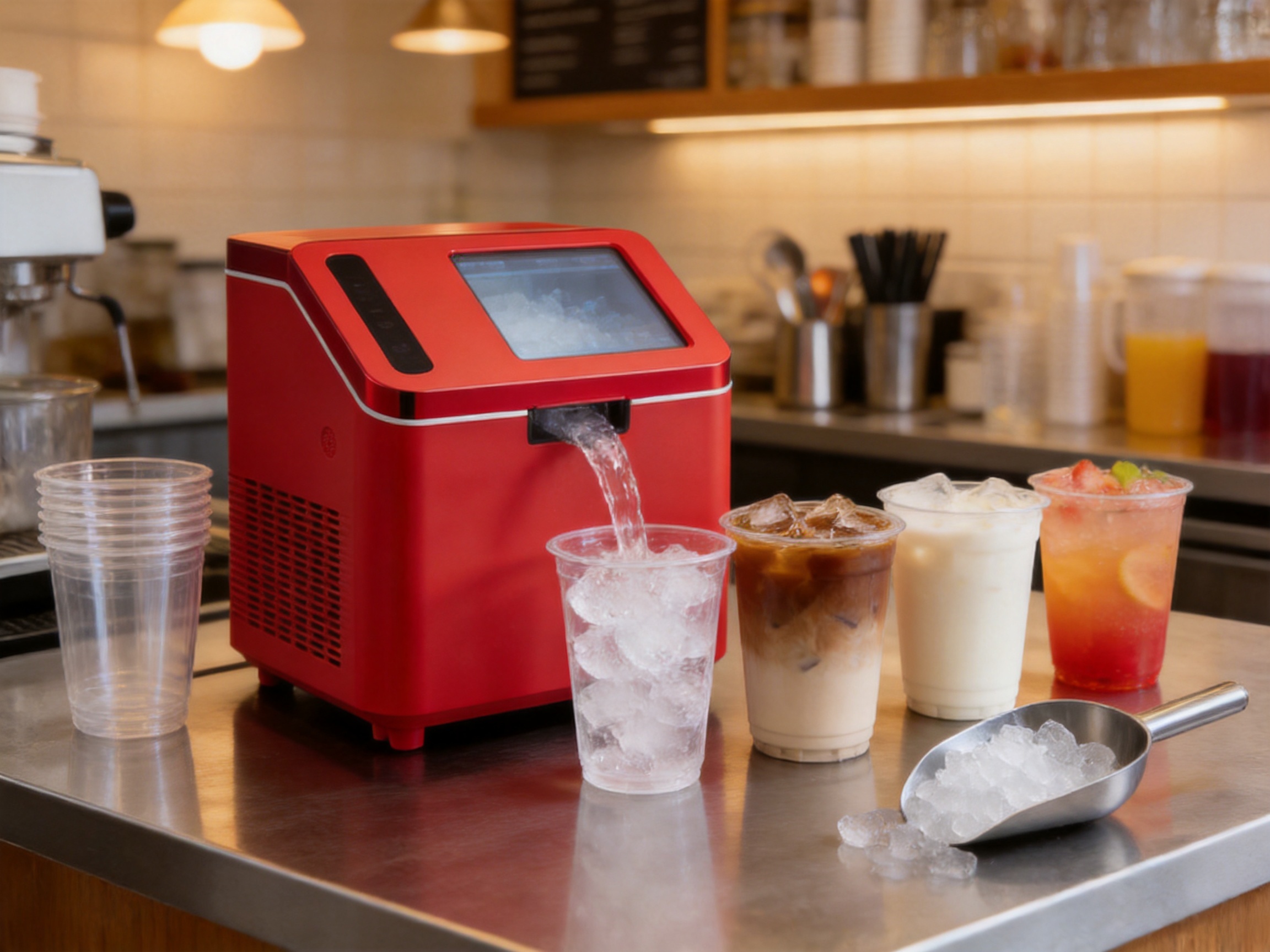
Fully Flip-Top Design for Easy Cleaning and Hygiene
Hygiene is one of the most important factors in ice production. Ice is consumed directly and often added to drinks without further treatment. Any area that contacts water or ice must be easy to access and clean. The fully flip-top design of this touchscreen bullet ice maker is a significant advantage because it allows users to open the ice storage and ice-making areas more completely.
In many appliances, narrow openings and hidden corners make cleaning difficult. Users may neglect maintenance simply because the structure is inconvenient. Over time, mineral deposits, water spots, and residue can accumulate. A flip-top structure reduces these problems by giving users a clearer view and better reach. Cleaning becomes less of a burden and more of a routine process.
This design also supports better inspection. Users can easily check the ice area, remove leftover ice, wipe surfaces, and confirm that the machine is ready for use. In commercial or shared environments, visual inspection is particularly useful because multiple people may operate the appliance. Easy access helps maintain consistent hygiene standards.
Compared with competitors that rely on partially enclosed compartments or small access lids, the fully flip-top approach offers practical superiority. It reduces unsanitary blind spots and helps users maintain confidence in the cleanliness of the appliance. For families, this means safer daily use. For beverage service operators, it helps protect drink quality and customer trust.
Touchscreen Operation for a Modern User Experience
Touchscreen controls have become common in modern appliances because they create a cleaner appearance and more intuitive interaction. For an ice maker, the benefit is straightforward: users can operate the machine with minimal learning. A touchscreen interface can present functions clearly, reduce mechanical button wear, and contribute to a refined overall product design.
In shared spaces, ease of operation matters. Employees, guests, family members, or service staff should be able to use the machine without reading a long manual. Clear touch control supports faster adoption. It also gives the appliance a more premium feel compared with older button-only designs.
A touchscreen surface can be easier to wipe than a panel with many raised buttons or crevices. This supports the product’s hygiene-oriented design philosophy. While cleaning should always follow the manufacturer’s instructions, smooth control surfaces generally simplify daily maintenance and help keep the appliance looking neat.
From a competitive standpoint, touchscreen control helps differentiate the product from basic countertop ice makers. Many low-end models focus only on essential operation. This product combines essential performance with modern interaction, making it attractive for users who care about both function and appearance.
Refrigeration System and R600a Efficiency
The refrigeration system is the heart of any ice maker. This machine uses R600a refrigerant with a 19g charge. R600a, also known as isobutane, is widely used in compact refrigeration appliances because it can support efficient cooling with a relatively low refrigerant charge. It is known for favorable thermodynamic properties in small refrigeration systems and is commonly applied in household refrigerators, freezers, and ice-making equipment.
A well-designed R600a refrigeration system must be assembled with precision. Refrigerant charging must be accurate, tubing connections must be secure, and leak prevention must be carefully managed. In ice makers, refrigeration performance directly affects ice cycle speed, ice quality, power use, and long-term reliability.
The 150W power specification reflects the need to deliver effective cooling while maintaining reasonable energy use for a countertop appliance. Users want ice quickly, but they also want an appliance that is practical for everyday operation. Balancing compressor performance, evaporator design, heat dissipation, and control logic is essential for achieving that balance.
Compared with poorly optimized ice makers, a well-built refrigeration system can offer more consistent cycles, better cooling recovery, and greater reliability. The user may not see the internal engineering, but they experience it through faster ice availability, fewer interruptions, and more dependable operation during repeated use.
Advanced Manufacturing Processes Behind the Product
A reliable ice maker depends not only on design but also on manufacturing discipline. The production of a compact refrigeration appliance requires coordinated processes across metal forming, plastic molding, refrigeration assembly, electrical integration, testing, and packaging. Strong manufacturing capability is what turns a product concept into a dependable appliance that can be delivered consistently to customers.
Alien Technology Co., Ltd. is located in Zhouxiang, Zhejiang Province, a region recognized for small household appliance manufacturing and convenient logistics. This location provides access to supply chain resources, skilled labor, component networks, and efficient shipping routes. For customers, the strength of the manufacturing base supports stable production, responsive cooperation, and practical cost control.
The company specializes in household appliances such as ice makers, coffee machines, and air fryers. This broader appliance experience is valuable because many production principles overlap across categories: temperature control, electrical safety, enclosure design, user interface integration, airflow management, and quality testing. Experience in multiple household appliance segments helps improve problem-solving and product refinement.
Manufacturing an ice maker begins with design validation. Engineers must confirm that the machine layout supports airflow, refrigeration efficiency, water circulation, ice release, and cleaning access. The compact size requires careful integration of the evaporator, compressor, fan, water system, electronic controls, and housing. Each component must fit accurately while remaining serviceable and safe.
Plastic components are typically produced through injection molding, where precision tooling is essential for consistent dimensions and surface finish. Mold quality affects assembly fit, lid movement, water reservoir accuracy, and overall product appearance. A touchscreen appliance also requires careful panel integration so that the control area aligns properly and remains durable during use.
Metal and refrigeration components require additional precision. Tubing must be formed without cracks or restrictions, joints must be properly sealed, and evaporator surfaces must support effective ice formation and release. Refrigerant charging requires controlled equipment and trained operators. Because the machine uses R600a, production must follow appropriate safety practices for handling flammable refrigerants, including ventilation, leak control, and process monitoring.
Electrical assembly involves connecting the control board, touchscreen interface, sensors, compressor circuit, fan, and other functional elements. Wiring layout must avoid interference, heat exposure, water contact, and mechanical strain. A quality manufacturer uses standardized assembly procedures to ensure that every unit meets the same basic electrical and mechanical requirements.
Quality Control and Testing Strengths
Quality control is a major difference between a dependable appliance and a disappointing one. For an ice maker, testing must address refrigeration performance, electrical safety, water handling, user interface response, noise, vibration, appearance, and packaging durability. Strong manufacturing processes include inspection at multiple stages rather than relying only on final checks.
Incoming material inspection helps confirm that components meet required specifications before assembly. Plastic parts are checked for deformation, color consistency, dimensional accuracy, and surface defects. Electrical components are checked for compatibility and safety. Refrigeration parts are inspected for cleanliness and dimensional correctness. This early control prevents many downstream problems.
During assembly, process checks help ensure that screws are tightened properly, seals are positioned correctly, wires are routed safely, and refrigeration connections are secure. In a compact appliance, a small assembly error can affect performance or reliability. Standardized work instructions and operator training help reduce variation.
Leak testing is particularly important for refrigeration products. If refrigerant escapes, cooling performance declines and the product may fail. Proper leak detection after tubing assembly and refrigerant charging helps protect long-term reliability. For R600a systems, careful leak control is also important for safety.
Performance testing verifies that the machine can produce ice under defined conditions. Testing may evaluate cooling speed, ice formation, compressor operation, fan function, water circulation, and automatic control response. Touchscreen responsiveness should also be checked to ensure the interface operates smoothly.
Noise and vibration checks contribute to user comfort. Countertop appliances are often used in kitchens, offices, and service areas where excessive noise is undesirable. Stable assembly, balanced components, and proper compressor mounting help reduce unwanted sound and vibration.
Appearance inspection is also important. A modern touchscreen ice maker should look clean, well-finished, and suitable for visible placement. Surface scratches, gaps, uneven panels, or poor lid movement can reduce user confidence even if the machine functions. Consistent cosmetic quality supports both customer satisfaction and brand reputation.
Advantages Over Competing Ice Makers
The touchscreen bullet ice maker offers several advantages over common competing products. First, its bullet ice shape provides faster beverage cooling than many solid ice forms because of the hollow center and increased surface area. This is a direct functional benefit for anyone preparing cold drinks quickly.
Second, the ice has high flowability and reduced clumping. Compared with flat-sided cube ice, bullet ice is easier to scoop and dispense. This improves convenience in homes and helps maintain service speed in beverage operations. Ice that flows smoothly saves time and reduces frustration.
Third, the texture is highly appealing. Many users prefer ice that is crunchy but not excessively hard. Bullet ice provides moderate hardness, making it popular in casual dining, fast food, milk tea, and iced beverage culture. Competing machines that produce very hard cubes may not deliver the same pleasant chewing experience.
Fourth, the machine is compact. With dimensions of 325 x 295 x 252 mm, it offers practical countertop placement without demanding the space of a large commercial unit. This makes it suitable for users who want frequent ice production but cannot accommodate fixed, bulky equipment.
Fifth, the fully flip-top design improves cleaning access. Many competing machines have limited openings that make it difficult to reach internal surfaces. Easier cleaning is not only convenient; it also supports hygiene and long-term product care.
Sixth, touchscreen operation gives the product a modern and user-friendly feel. In a market where many basic ice makers rely on simple buttons, touchscreen control enhances perceived quality and makes daily operation more intuitive.
Seventh, the company’s manufacturing background in multiple household appliance categories supports product reliability and continuous improvement. Experience with ice makers, coffee machines, and air fryers strengthens the ability to manage heating, cooling, airflow, electronics, and user-focused design.
Application Scenarios
Home Kitchens
For home users, the touchscreen bullet ice maker provides freedom from slow freezer trays. It supports daily beverages, family dinners, parties, weekend gatherings, and summer refreshment. The compact size makes it easy to place on a countertop, while the touchscreen interface keeps operation simple for different family members.
Office Pantries
In offices, employees often prepare iced coffee, tea, sparkling water, and other drinks during breaks. A dedicated ice maker improves workplace comfort and reduces dependence on refrigerator ice compartments. The non-sticky bullet ice is easy for employees to scoop quickly, helping maintain a clean and efficient pantry area.
Milk Tea and Beverage Shops
Milk tea shops need ice that cools beverages quickly and has an enjoyable texture. Bullet ice is especially suitable because it provides rapid cooling and customer-friendly crunch. The compact machine can support small beverage stations or serve as supplementary equipment during busy periods.
Cafés and Coffee Counters
Iced coffee and cold brew service require consistent ice. Bullet ice works well in cups, tumblers, and takeaway containers. It helps chill coffee rapidly and creates a pleasant drinking experience. The touchscreen interface and compact body fit well with modern café equipment layouts.
Fast Food and Casual Dining
Fast food restaurants and casual dining spaces benefit from ice that is easy to scoop, quick to chill, and enjoyable to chew. While high-volume restaurants may use large ice systems, a compact bullet ice maker can be valuable for supplementary service, back counters, private rooms, or small beverage stations.
Hospitality and Meeting Areas
Hotels, guest lounges, meeting rooms, and reception areas often need convenient access to fresh ice. A compact ice maker can support beverage service without requiring guests or staff to walk to a distant kitchen. Its clean appearance and modern controls make it suitable for visible hospitality spaces.
Design Philosophy: Smart Technology for Simpler Living
The product reflects a design philosophy centered on simplifying daily life through intelligent and humanized appliance design. Modern users do not want machines that require constant effort. They want products that fit naturally into daily routines, deliver dependable results, and reduce the small inconveniences that accumulate throughout the day.
A touchscreen ice maker may appear simple from the outside, but it combines several important user-focused ideas. It produces a useful ice shape, operates through an intuitive interface, occupies limited space, and opens widely for cleaning. Each of these features addresses a real user pain point: slow cooling, difficult scooping, limited counter space, confusing controls, and inconvenient maintenance.
Reliability is another important element of the design philosophy. A good appliance should perform consistently, not only during the first few uses but throughout its service life. That requires careful material selection, controlled manufacturing, quality inspection, and ongoing improvement based on customer feedback.
The company’s commitment to quality, customer satisfaction, continuous improvement, and innovation supports this philosophy. In the competitive household appliance market, success depends on more than producing a machine that works. It depends on understanding how people actually use the product and improving details that make ownership easier.
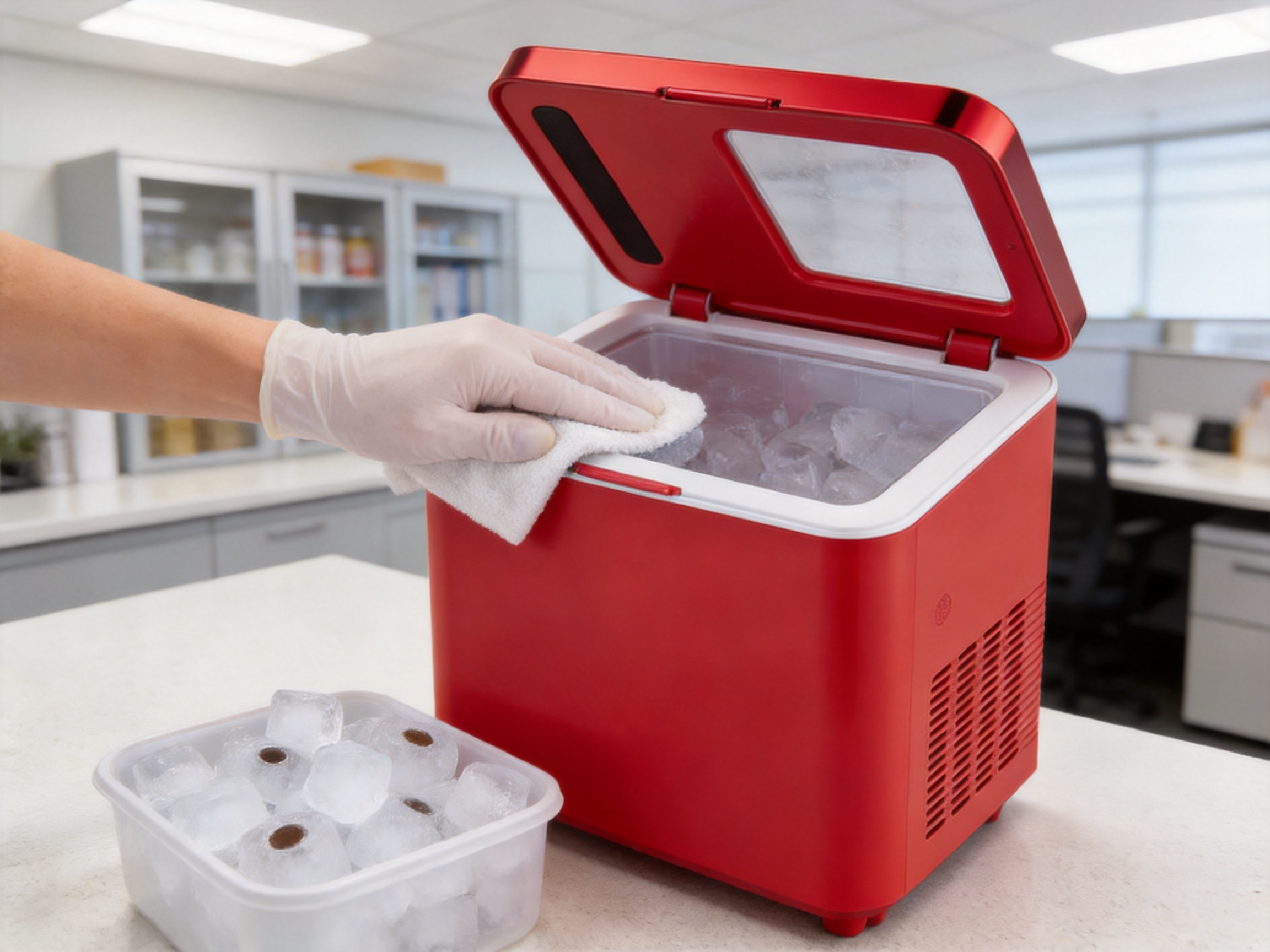
Maintenance Recommendations for Long-Term Performance
To maintain good ice quality and appliance performance, users should clean the machine regularly according to product instructions. Because the machine has a fully flip-top design, routine cleaning is easier than with many more enclosed models. Users should remove remaining ice, wipe accessible surfaces, and keep the water area fresh.
Water quality affects ice clarity, taste, and mineral buildup. Using clean drinking water is essential. In areas with hard water, mineral deposits may form more quickly, so users may need more frequent cleaning. Regular maintenance helps preserve ice taste and supports hygienic operation.
The appliance should be placed on a stable, level surface with adequate surrounding space for ventilation. Refrigeration systems need proper airflow to release heat. Blocking vents or placing the machine too close to heat sources can reduce efficiency and slow ice production.
Users should avoid using the machine in excessively hot environments when possible. Ambient temperature and water temperature influence ice-making speed. Cooler water and reasonable room temperature generally support better performance. This is true for nearly all compact ice makers.
After long periods of non-use, the machine should be cleaned before operation. Any stored water should be removed, and the internal area should be refreshed. These simple habits help ensure that every batch of ice is suitable for beverages.
How the Product Supports Healthier and More Enjoyable Living
Ice is often associated with comfort, refreshment, and social enjoyment. A reliable ice maker helps users prepare healthier drinks at home by making chilled water, unsweetened tea, fruit-infused water, and fresh juices more appealing. When cold beverages are easy to prepare, users may be more likely to choose homemade options instead of relying on packaged drinks.
The machine also supports enjoyable social moments. Family gatherings, outdoor meals, small celebrations, and casual hospitality all benefit from convenient ice access. Instead of running out of freezer ice or buying bags of ice from a store, users can produce fresh bullet ice as needed.
For businesses, the product supports better customer experiences. A drink served at the right temperature feels more professional. Ice that looks clean, flows well, and has a pleasant texture contributes to customer satisfaction. These details can influence repeat business, especially in beverage-focused environments.
The hygienic flip-top design contributes to healthier use by encouraging regular cleaning. When maintenance is easy, users are more likely to do it. This is an important advantage over machines that hide critical areas behind narrow openings or complex internal structures.
Purchasing Considerations
When selecting an ice maker, buyers should consider ice shape, production speed, size, cleaning access, operation method, refrigerant system, and manufacturer capability. The touchscreen bullet ice maker performs strongly across these categories. It produces a practical and popular ice shape, offers compact dimensions, supports easy cleaning, and uses a modern control interface.
Buyers comparing different models should look beyond basic claims. Some ice makers may advertise fast production but have poor cleaning access. Others may be compact but produce ice that clumps easily. Some may be inexpensive but lack stable manufacturing quality. A balanced product should deliver performance, usability, hygiene, and reliability together.
The manufacturer’s appliance experience is also important. A company that understands refrigeration, electrical systems, user interface design, and mass production quality control is better positioned to deliver consistent products. Manufacturing strength matters because an ice maker contains moving, cooling, water-handling, and electronic systems that must work together.
For distributors, retailers, and business buyers, cooperation with an experienced manufacturer can support stable supply and product development. The company’s location in a small household appliance manufacturing hub offers logistical and supply chain advantages, making it easier to support broader market demand.
Q&A Section
What type of ice does this machine produce?
It produces bullet ice with a hollow center. This shape increases contact area with beverages, supports rapid cooling, reduces clumping, and provides a pleasant crunchy texture.
Why is bullet ice useful for drinks?
Bullet ice chills drinks quickly because liquid can contact both the outer and inner surfaces of the ice. It is also easy to scoop and enjoyable to chew, making it suitable for iced coffee, milk tea, soft drinks, fruit tea, and casual beverages.
Is this ice maker suitable for home use?
Yes. Its compact dimensions of 325 x 295 x 252 mm make it suitable for kitchen countertops and home beverage areas. It helps users avoid the inconvenience of freezer trays and provides fresh ice when needed.
Can it be used in small commercial environments?
Yes. It can be used in offices, cafés, milk tea shops, fast food counters, hospitality spaces, and beverage service areas. For very high-volume operations, it may be used as supplementary equipment depending on demand.
What are the electrical specifications?
The machine uses a 220V-240V/50Hz power supply and operates at 0.9A/150W. Users should ensure that their local power conditions match the product requirements.
What refrigerant does the machine use?
It uses R600a refrigerant with a 19g charge. R600a is commonly used in compact refrigeration appliances and supports efficient cooling when applied in a properly designed system.
How does the fully flip-top design help?
The fully flip-top structure allows users to open the ice storage and ice-making areas more completely. This makes cleaning easier, reduces hidden unsanitary corners, and supports better routine maintenance.
How does the touchscreen improve the user experience?
The touchscreen provides modern, intuitive operation. It helps users manage the appliance more easily and gives the machine a cleaner, more refined appearance compared with traditional button-only designs.
How does this product compare with ordinary freezer trays?
Freezer trays require hours to freeze, occupy freezer space, and may absorb food odors. This ice maker produces fresh bullet ice more conveniently and keeps ice production separate from freezer storage.
What makes the manufacturer a strong production partner?
The manufacturer is located in a major small household appliance region and has experience producing ice makers, coffee machines, and air fryers. Its strengths include appliance engineering experience, production coordination, quality control, and continuous improvement.
Conclusion
The touchscreen bullet ice maker is a practical solution for users who need fast, clean, convenient ice production in a compact format. Its bullet ice shape provides rapid cooling, reduced clumping, high flowability, and a popular crunchy texture. Its touchscreen control improves everyday usability, while its fully flip-top design makes cleaning and maintenance easier. With dimensions of 325 x 295 x 252 mm, it fits naturally into homes, offices, cafés, beverage shops, and hospitality spaces.
Compared with many competing ice makers, the product stands out by combining performance and usability rather than focusing on only one feature. It is not just an ice-producing appliance; it is a beverage support system designed to improve drink preparation, service efficiency, hygiene, and user satisfaction. The use of R600a refrigerant, compact refrigeration engineering, and carefully organized manufacturing processes further support dependable operation.
Behind the product is a manufacturer with experience in multiple household appliance categories and a mission to simplify life through smart technology, reliable quality, and humanized design. This manufacturing background strengthens the product’s value for both individual users and business customers. In a market filled with basic countertop ice makers, this touchscreen bullet ice maker offers a more complete and thoughtful solution for modern ice-making needs.
References
ASHRAE Handbook: Refrigeration, American Society of Heating, Refrigerating and Air-Conditioning Engineers.
International Electrotechnical Commission, IEC 60335 Household and Similar Electrical Appliances Safety Standards.
International Institute of Refrigeration, Guide to Refrigerants and Sustainable Cooling Technologies.
Food and Beverage Service Best Practices Manual, Hospitality Training Institute.
Principles of Foodservice Equipment Design, Commercial Kitchen Engineering Press.
Household Appliance Manufacturing Quality Control Guide, Appliance Industry Technical Committee.