
 English
 한국어
한국어 Español
 Deutsch
For households that enjoy chilled beverages, prepare food frequently, or want a dependable supply of ice without relying entirely on freezer trays, a compact home ice cube maker can be a highly practical addition to the kitchen. The Home Ice Cube Maker, identified as model Alien-ZF01, is designed around a straightforward idea: provide useful, solid ice cubes in a compact appliance that is easy to place, operate, and integrate into daily routines.
Ice is often treated as a minor kitchen convenience, but the quality, shape, density, and availability of ice can significantly affect beverages and food preparation. A properly formed cube can cool a drink gradually, maintain a cleaner appearance, and remain useful for longer than thin, irregularly frozen pieces. At the same time, a household appliance must be compact enough for ordinary countertops, efficient enough for regular use, and sufficiently simple that different members of a family can operate it without extensive instruction.
The Home Ice Cube Maker addresses these needs with a compact body measuring 325 by 295 by 252 millimeters, a 140-watt rated power consumption, and a refrigeration system using R290 refrigerant with a 26-gram charge. Its 220V/50Hz power supply is suitable for compatible electrical environments, while its relatively small footprint makes it appropriate for kitchens, home bars, offices, entertainment areas, and other spaces where a full-size commercial ice machine would be excessive.
Beyond its basic function, the product reflects the manufacturing experience of Alien Technology Co., Ltd., a household-appliance producer based in Zhouxiang, Cixi City, Zhejiang Province. The company focuses on ice makers, coffee machines, air fryers, and related small domestic appliances. Its position in a region known for small-appliance manufacturing supports access to supply-chain resources, component production, logistics, and practical product-development experience.
This article examines the product’s design, operating advantages, technical specifications, household applications, manufacturing strengths, maintenance considerations, and competitive position. It also explains why cube shape, storage efficiency, refrigerant selection, compact construction, and practical engineering matter when choosing an ice maker for everyday use.
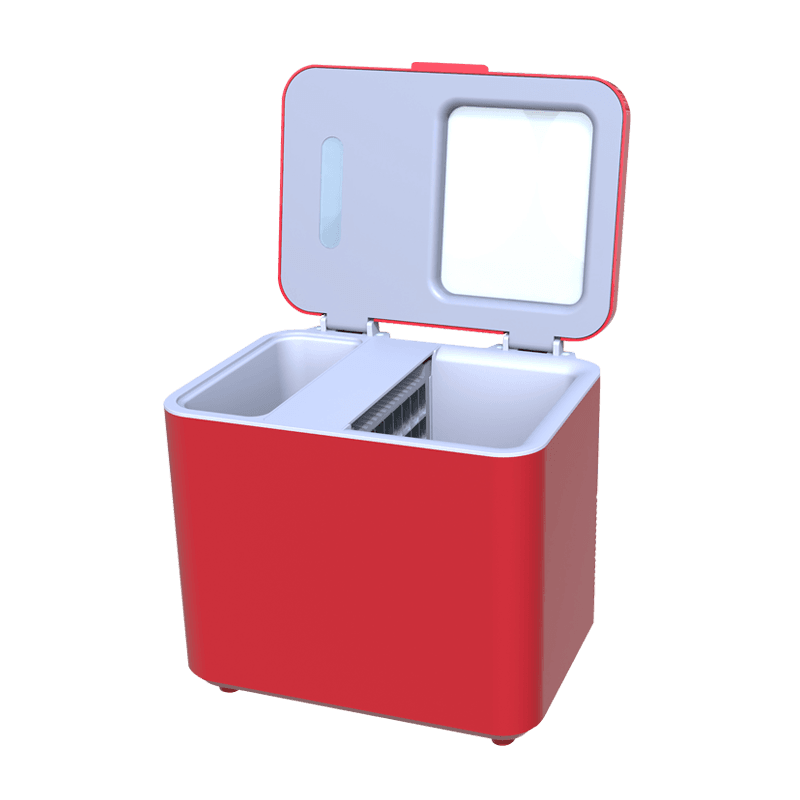
Home ice cube maker
1. A Practical Solution for Everyday Ice Needs
Many homes still depend on traditional ice trays. Although trays are inexpensive, they require substantial freezer space, take a long time to freeze, and can be inconvenient when a larger quantity of ice is needed quickly. Removing cubes from rigid trays may also be uncomfortable, and the resulting ice can vary in shape or fracture during release.
A countertop ice maker offers a different approach. Instead of waiting for a freezer compartment to complete a long freezing cycle, users can operate a dedicated appliance when ice is needed. This separates ice production from ordinary frozen-food storage and allows the freezer to remain available for meat, vegetables, desserts, and other products.
The Home Ice Cube Maker is especially suitable for users who value convenience but do not need the capacity or complexity of a large commercial machine. Its dimensions are small enough for many standard countertops, yet its dedicated refrigeration structure is more purposeful than a simple tray system. The product can support routine family use, weekend entertaining, drink preparation, and occasional food-service needs in a home environment.
Its compact format also makes the machine easier to position. A user may place it in a kitchen, pantry area with suitable ventilation, home bar, office break room, guesthouse, or recreational room. Because it does not require the space of a built-in appliance, it can be moved or stored according to seasonal needs and household routines.
The product is not intended to replace every type of commercial ice-making equipment. Large restaurants, hotels, event venues, and high-volume catering operations may require machines with much larger storage bins and continuous production capacity. However, comparing a compact household ice maker with commercial equipment is not always meaningful. The real advantage of the Home Ice Cube Maker is that it provides an appropriate balance between dedicated performance, compactness, energy-conscious operation, and accessible household use.
2. Solid Cube Design and Beverage Quality
The shape and density of ice influence how a drink feels, looks, and tastes. Small, thin, or highly irregular pieces generally expose more surface area to the surrounding liquid. This can cause them to melt rapidly, especially in beverages served at room temperature or in warm outdoor conditions. Rapid melting may dilute the drink before it can be enjoyed.
The Home Ice Cube Maker is designed to produce neat square-style ice cubes. A regular cube has a balanced form that can provide useful cooling while offering a relatively controlled melting rate. Especially when the cubes are solid and dense, their smaller relative surface area can help them remain present in a beverage for longer than fragmented or thin ice.
This characteristic is valuable for whiskey, spirits, cocktails, iced tea, juice, soft drinks, and cold coffee. A drink can be chilled without becoming excessively watery too quickly. Users who prefer to enjoy a beverage slowly may appreciate the way a substantial cube remains effective throughout the drinking period.
Cube geometry also contributes to presentation. A neat square piece appears organized and intentional in a clear glass. In home entertaining, visual appearance matters almost as much as temperature. A uniform cube can make a simple drink look more carefully prepared, while irregular chips may create a less polished impression.
The product information emphasizes the aesthetic appeal of clear-looking cubes in transparent glassware. The visual result naturally depends on water quality, freezing conditions, cleaning, and operating practices. Nevertheless, the regular shape itself supports a professional appearance even when the ice is used in ordinary household drinks.
For food preparation, cube-shaped ice is also convenient. It can be added to a container for rapid chilling, used around a serving bowl, or placed in a suitable ice pack. Its predictable form makes handling easier than loose fragments. The cubes can be scooped, counted, transferred, and arranged with less mess.
Why Cube Geometry Matters
Cube geometry creates several practical benefits. First, the shape is stable and easy to handle. Second, cubes can be arranged efficiently in a storage container. Third, a cube’s relatively balanced dimensions support consistent cooling around the beverage. Finally, a regular shape is generally easier to recognize, portion, and present.
These advantages distinguish a dedicated cube maker from appliances that produce only thin flakes, irregular nuggets, or very small pieces. Different ice forms have different uses, but solid cubes are particularly versatile for everyday drinks, food preparation, and general household cooling.
3. Technical Specifications at a Glance
The following table summarizes the principal specifications provided for the Home Ice Cube Maker.
| Specification | Product Detail | Practical Significance |
|---|---|---|
| Product model | Alien-ZF01 | Identifies the product configuration |
| Product category | Home ice cube maker | Designed for household and light personal use |
| Power supply | 220V/50Hz | Suitable for compatible electrical systems |
| Rated current and power | 0.65A / 140W | Supports a relatively modest operating load for a dedicated appliance |
| Refrigerant | R290 | Uses a modern refrigerant type with a 26-gram charge |
| Refrigerant charge | 26g | Specified quantity for the refrigeration system |
| Machine dimensions | 325 × 295 × 252mm | Compact countertop format |
These specifications show a product designed with compact domestic operation in mind. At 140 watts, the appliance is not built around the high electrical demand associated with industrial ice production. Its dimensions also indicate that the design team prioritized space efficiency and portability rather than maximum-volume storage.
Electrical compatibility should always be confirmed before installation or use. The stated 220V/50Hz specification is intended for matching power systems. Users should operate the machine with an appropriate socket, avoid unsuitable adapters, and follow the product’s final operating instructions.
The listed R290 refrigerant and 26-gram charge are important technical details. R290 is propane refrigerant, a substance widely used in certain modern refrigeration applications because of its low global warming potential compared with many older refrigerants. It is flammable, however, so refrigeration circuits must be designed, sealed, handled, and serviced appropriately. Users should never open, puncture, modify, or attempt to recharge the refrigeration system themselves.
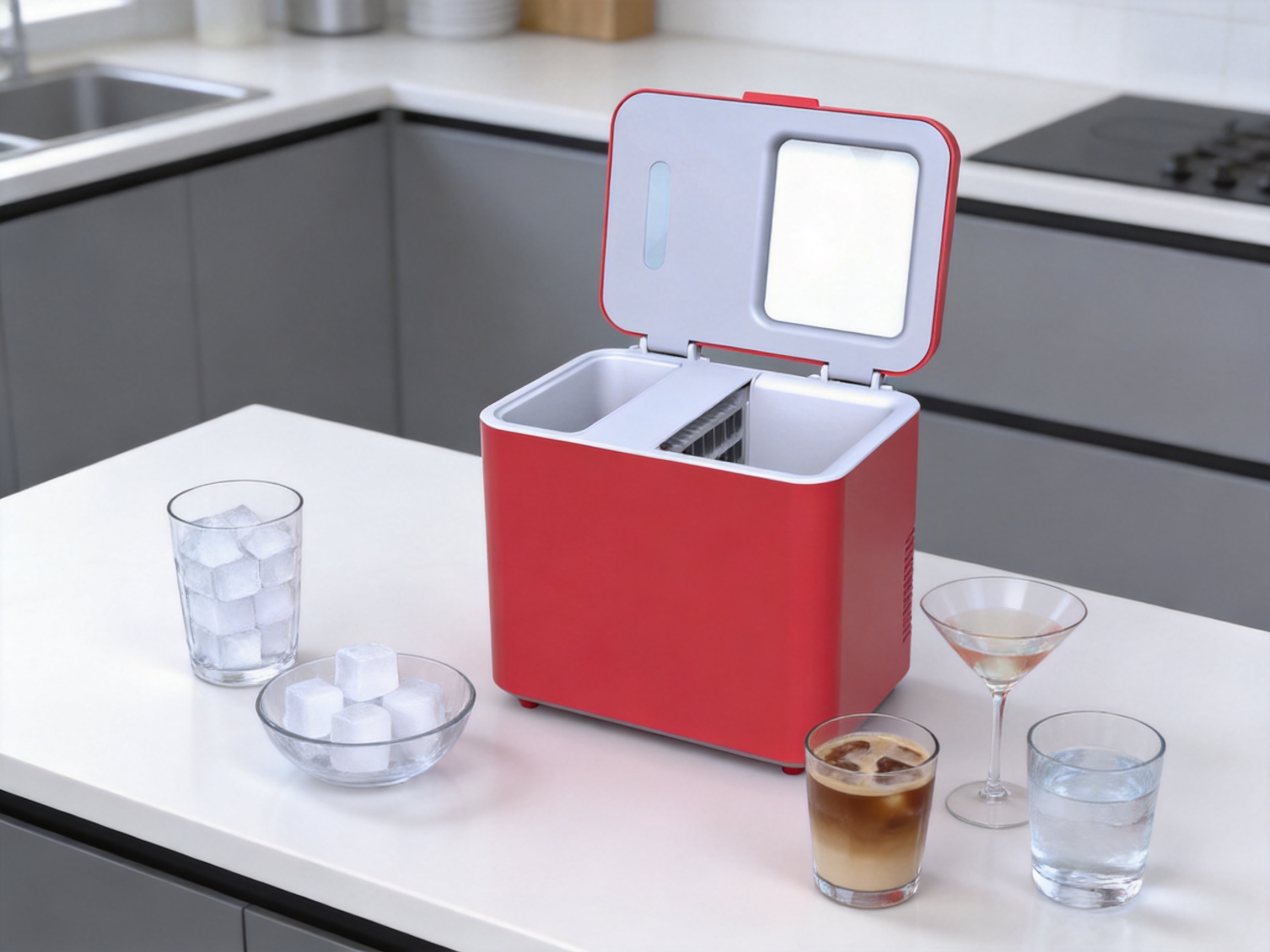
4. Compact Construction for Modern Kitchens
Counter space is one of the most limited resources in many kitchens. A product may perform well, but if it occupies too much room, requires complicated installation, or cannot be stored conveniently, it may not fit actual household life. The Home Ice Cube Maker’s 325 × 295 × 252mm dimensions provide a compact footprint that can be considered alongside other countertop appliances.
The rectangular proportions make the product easier to position against a wall or beside related beverage equipment. Users may place it near a coffee machine, water dispenser, cocktail station, or serving area, provided that sufficient ventilation and safe clearance are maintained. The appliance can also be moved away when the counter is needed for food preparation.
Compact construction has another benefit: it reduces the psychological barrier to ownership. A large ice machine can appear specialized and permanent, whereas a small unit feels accessible to ordinary users. It can serve a family during the week, support guests during a gathering, and be stored during periods when demand is lower.
The product’s size may also benefit small apartments, dormitory-style living arrangements where permitted, offices, studio spaces, and holiday accommodations. In these environments, every appliance must justify its footprint. A dedicated ice maker can be more useful than a second freezer compartment when the primary requirement is a steady supply of drink ice.
Compact does not mean that placement can be ignored. Like other refrigeration appliances, the machine should be kept on a stable, level surface. Airflow around the unit should not be blocked, and it should be protected from excessive heat, water splashes, and direct sunlight. Proper placement helps the refrigeration system operate under more favorable conditions and supports long-term reliability.
5. Energy-Conscious Appliance Design
Energy consumption is an important consideration for any appliance that may be used repeatedly. The Home Ice Cube Maker lists a rated power of 140W and a current of 0.65A. These figures indicate a compact electrical design appropriate for household ice production rather than an oversized commercial system.
Rated power does not automatically equal total daily energy consumption. Actual use depends on operating duration, ambient temperature, water temperature, ventilation, production demand, and how frequently the machine is started and stopped. Nevertheless, a defined 140W rating gives buyers a useful basis for understanding the appliance’s electrical scale.
A compact machine can be advantageous when users need ice intermittently rather than continuously. For example, a family may run the appliance before dinner, during a weekend gathering, or when preparing chilled drinks. The machine can then be switched off and cleaned according to the operating instructions when it is no longer needed.
Efficient use also depends on sensible habits. Starting with clean, reasonably cool water, keeping the appliance away from hot cooking surfaces, maintaining ventilation, and removing finished ice promptly can support consistent operation. Users should avoid treating the machine as a freezer for long-term storage because countertop ice makers are generally designed to make ice rather than preserve it indefinitely.
The energy-conscious advantage of the product is therefore best understood as a combination of modest rated power, compact refrigeration capacity, and flexible operation. It provides a dedicated function without requiring a large appliance to run continuously.
6. R290 Refrigerant and Responsible Refrigeration
The product uses R290 refrigerant with a specified 26-gram charge. Refrigerant selection affects environmental considerations, system design, safety requirements, and service procedures. R290 has become increasingly visible in compact refrigeration equipment because its global warming potential is low compared with many conventional alternatives.
Using R290 requires careful engineering. The refrigeration circuit must be correctly sealed, the charge must be controlled, electrical components must be suitable for the equipment design, and warning labels and service procedures must be respected. These requirements place importance on manufacturing discipline and quality control.
For the consumer, the key point is simple: the refrigeration system should remain closed and undamaged during normal use. The machine should not be disassembled by an unqualified person, and any suspected refrigerant leak, physical damage, unusual odor, or abnormal operating condition should be treated seriously. Service should be performed by qualified personnel following applicable regulations.
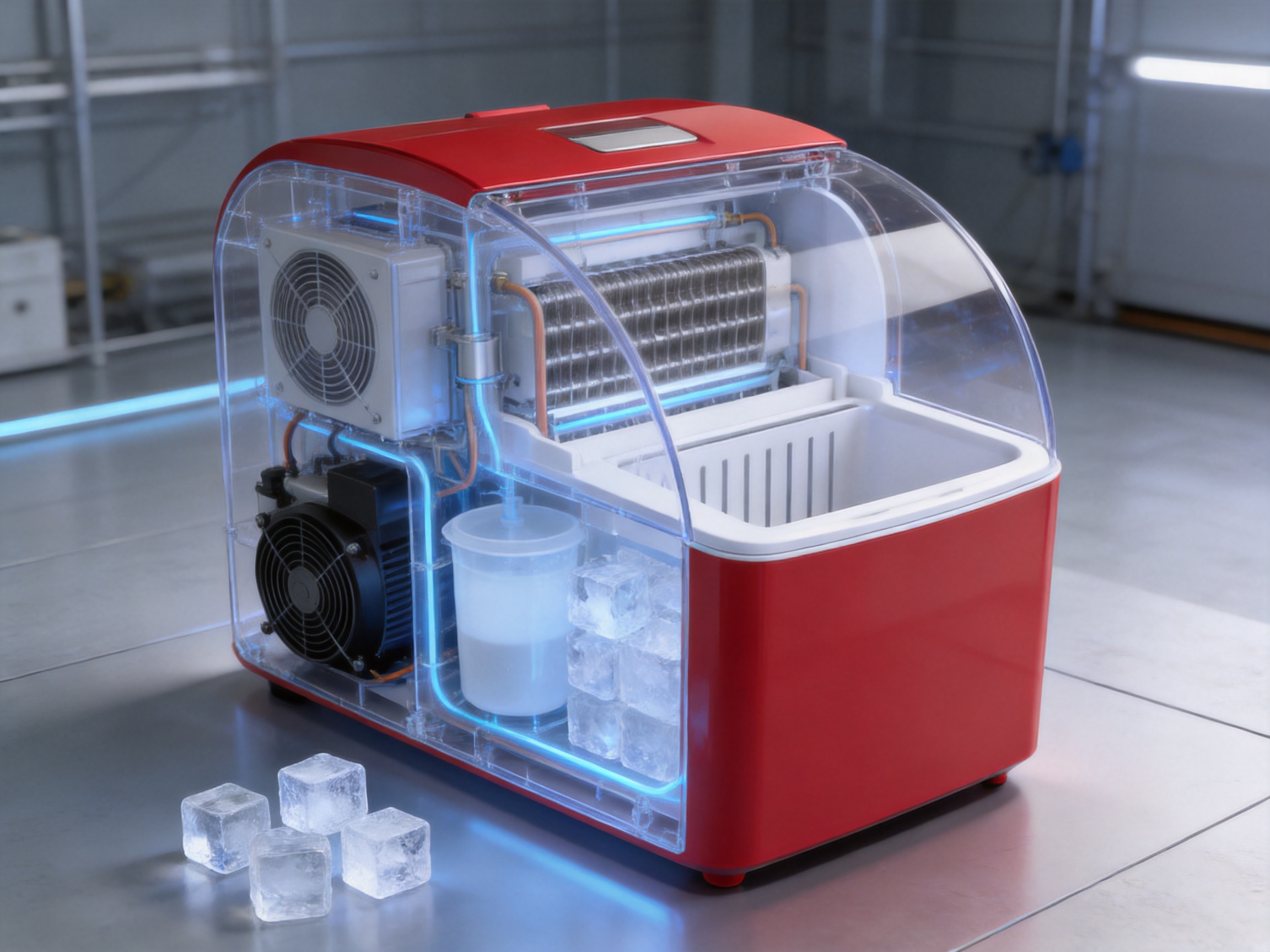
The inclusion of a defined refrigerant type and charge also demonstrates that the product is engineered as a complete refrigeration appliance rather than as a basic electrically cooled container. The compressor, heat-exchange components, insulation, controls, housing, and refrigerant circuit must work together to create the intended ice-making function.
7. Manufacturing Strengths and Product Development
Alien Technology Co., Ltd. is located in Zhouxiang Town, Cixi City, Zhejiang Province, an area recognized for small household-appliance production and convenient logistics. Regional concentration can provide manufacturers with access to component suppliers, tooling services, assembly resources, packaging providers, testing facilities, and transportation networks.
The company specializes in household appliances including ice makers, coffee machines, and air fryers. This specialization is relevant because these products share several development requirements: compact mechanical structures, electrical safety, thermal management, user-oriented controls, plastic and metal housing production, motor or compressor integration, and repeated household operation.
Experience across related appliance categories can encourage practical design thinking. A manufacturer that works with several small appliances must understand how to balance appearance, function, cost, reliability, packaging, and ease of use. The Home Ice Cube Maker reflects this type of balance by combining a compact form with a dedicated refrigeration system and a clear set of technical specifications.
The company’s stated mission is “Smart Technology, Simplifying Life, Enhancing Happiness.” In the context of this product, that mission can be seen in the emphasis on straightforward household convenience. The appliance does not require users to operate a large industrial system or manually manage complicated freezing equipment. Its purpose is to make a common task easier through a dedicated, appropriately sized device.
The company also identifies customer satisfaction, continuous improvement, innovation, reliable quality, and a stable, pragmatic business philosophy as important principles. These values are particularly significant for small appliances because product success depends not only on initial performance but also on consistent manufacturing, dependable component matching, clear communication, and responsive after-sales cooperation.
Manufacturing Process Considerations
Although detailed factory process data is not provided, a professionally produced ice maker normally depends on a coordinated manufacturing sequence. Product development begins with defining the intended ice form, electrical requirements, exterior dimensions, refrigeration architecture, control method, and user environment. Engineers then select compatible components and develop the enclosure around the internal system.
Housing production typically requires accurate molds, stable materials, controlled injection or forming conditions, and careful surface inspection. Dimensional consistency matters because panels, covers, controls, insulation, and internal supports must fit together correctly. A clean exterior is also important for a countertop product that remains visible in the kitchen.
The refrigeration assembly requires particular attention. Tubing, joints, compressor connections, heat exchangers, insulation, and refrigerant charging must be handled according to a controlled process. Leak testing is essential for a sealed refrigeration circuit. Electrical wiring and control components must also be assembled in a way that protects users from exposed conductors and reduces the risk of poor connections.
Final assembly can include checks of switch or knob operation, power input, unusual noise, vibration, drainage, ice release, cooling behavior, exterior finish, and packaging integrity. A product intended for international business cooperation must also be matched to the requirements of the destination market, including voltage compatibility, labeling, documentation, and shipping protection.
These manufacturing considerations help explain why a compact ice maker should not be judged only by its external size. Inside the small housing are multiple interacting systems. Reliable performance depends on how well those systems are selected, assembled, tested, and protected during transport.
8. Advantages Compared with Conventional Ice Trays
The most direct comparison is between a dedicated ice maker and ordinary freezer trays. Trays require users to fill them manually, place them in the freezer, wait for freezing, and remove the cubes by hand. This process is inexpensive but can be slow and inconvenient when ice is needed for guests or several drinks.
The Home Ice Cube Maker provides a separate production option. It can be used when the main freezer is full, when the user wants to avoid lifting heavy trays, or when a larger supply of uniform cubes is desired. It also keeps the ice-making task independent from frozen-food organization.
Uniformity is another advantage. Traditional trays may produce cubes with inconsistent edges because of uneven filling, freezer temperature variations, or difficult release. A dedicated ice-making mechanism is designed around repeatable formation, which can produce a more coordinated appearance for serving.
Hygiene and handling can also be easier to manage when the ice-making area is dedicated. Trays stored beside frozen food may be exposed to odors or spills if they are not covered properly. A purpose-built appliance can provide a more organized production environment, although users still need to clean it regularly and use safe water.
The main limitation is that a countertop ice maker requires electricity, water management, and cleaning. Trays are simpler and may be adequate for households with low ice demand. The better choice depends on usage patterns. For users who value convenience, uniform cubes, and independent ice production, the dedicated appliance provides a meaningful improvement.
9. Advantages Compared with Large Commercial Machines
Large commercial ice machines can provide substantially greater output, but they also require more space, higher investment, more complex installation, and often more demanding maintenance. They may be unnecessary for a family kitchen or a small office.
The Home Ice Cube Maker offers a more proportionate solution. Its compact dimensions allow it to fit into environments where a commercial machine would be impractical. Its 140W rating and household-oriented design are better aligned with intermittent personal use than with continuous restaurant-scale demand.
Portability is another advantage. A compact machine can be relocated as household needs change. It can support a home bar during a celebration, move to a beverage station during a family event, or be stored when not required. A built-in commercial unit cannot offer the same flexibility.
At the same time, buyers should maintain realistic expectations. A compact appliance is not intended to match the output, storage capacity, or continuous-duty construction of commercial equipment. Its competitive strength lies in accessibility, simplicity, space efficiency, and suitability for ordinary households.
10. Versatile Applications in the Home
The primary use of the Home Ice Cube Maker is beverage cooling. It can serve water, juice, soda, iced tea, cocktails, mocktails, wine-based drinks, spirits, and cold coffee. The regular cubes are suitable for glasses, pitchers, beverage dispensers, and ice buckets.
For coffee drinkers, ice cubes can support cold brew service and iced coffee preparation. For tea drinkers, they can cool freshly prepared tea when a chilled drink is needed quickly. In a home bar, solid cubes are useful for mixing, chilling, and presentation.
The machine can also support food preparation. Ice can be placed in an appropriate container to help cool ingredients, stabilize a serving bowl, or prepare an ice bath for selected kitchen tasks. The cubes can be used in insulated carriers during short transportation periods, provided that they are kept separate from foods and packaging in a hygienic manner.
Outdoor use may be possible in suitable protected settings, such as a covered patio or recreational area, but the appliance should be protected from rain, splashes, extreme heat, and unstable power sources. It is not a replacement for a portable cooler or a commercial outdoor ice system.
In offices and small workplaces, the appliance can provide a convenient source of ice for water, cold drinks, and employee refreshments. Guesthouses, family activity rooms, and entertainment spaces may also benefit from a dedicated ice supply without installing a permanent machine.
11. Storage Efficiency and Space Management
Regularly shaped ice is easier to store than irregular fragments. Cubes can be stacked or arranged in a container with less wasted space. The product information highlights the high stacking efficiency of square ice, which can be particularly helpful when users transfer ice to a freezer bin or insulated storage container.
Efficient stacking does not mean that ice should be stored indefinitely. Ice absorbs odors and may gradually lose quality when exposed to air. For the best flavor and appearance, users should store finished cubes in a clean, covered, food-safe container and use them within a reasonable period.
Cube storage also supports portion control. A user can prepare a known amount for a dinner, party, or beverage service without relying on a mixture of large and small pieces. This makes the appliance useful for planning as well as immediate cooling.
The compact machine itself benefits from efficient space management. Its modest footprint leaves room for food preparation and other small appliances. Buyers should still measure their available counter space and consider the clearance required for ventilation, water filling, ice removal, and cleaning.
12. Operation and User Convenience
The model is identified by the alias “Knobtype-ice-maker,” indicating a knob-oriented control design. A knob can be familiar and intuitive for users who prefer physical controls. It provides a direct interface without requiring a mobile application, network connection, or complicated digital menu.
A simple control system can be an advantage in shared household environments. Children should use the appliance only under appropriate supervision, but adults and older users can generally understand a physical control quickly. The absence of unnecessary digital features may also reduce potential points of failure.
Practical operation begins with placement on a stable, level surface and connection to a compatible power supply. The water reservoir should be filled with clean water according to the product instructions, and the machine should be allowed to operate in a properly ventilated location. Ice should be transferred or used as appropriate rather than left in the appliance for excessive periods.
Because operating details such as cycle duration, water capacity, indicators, and automatic shutoff are not included in the supplied specifications, buyers should consult the final user manual for those functions. Product documentation should always take precedence over general descriptions.
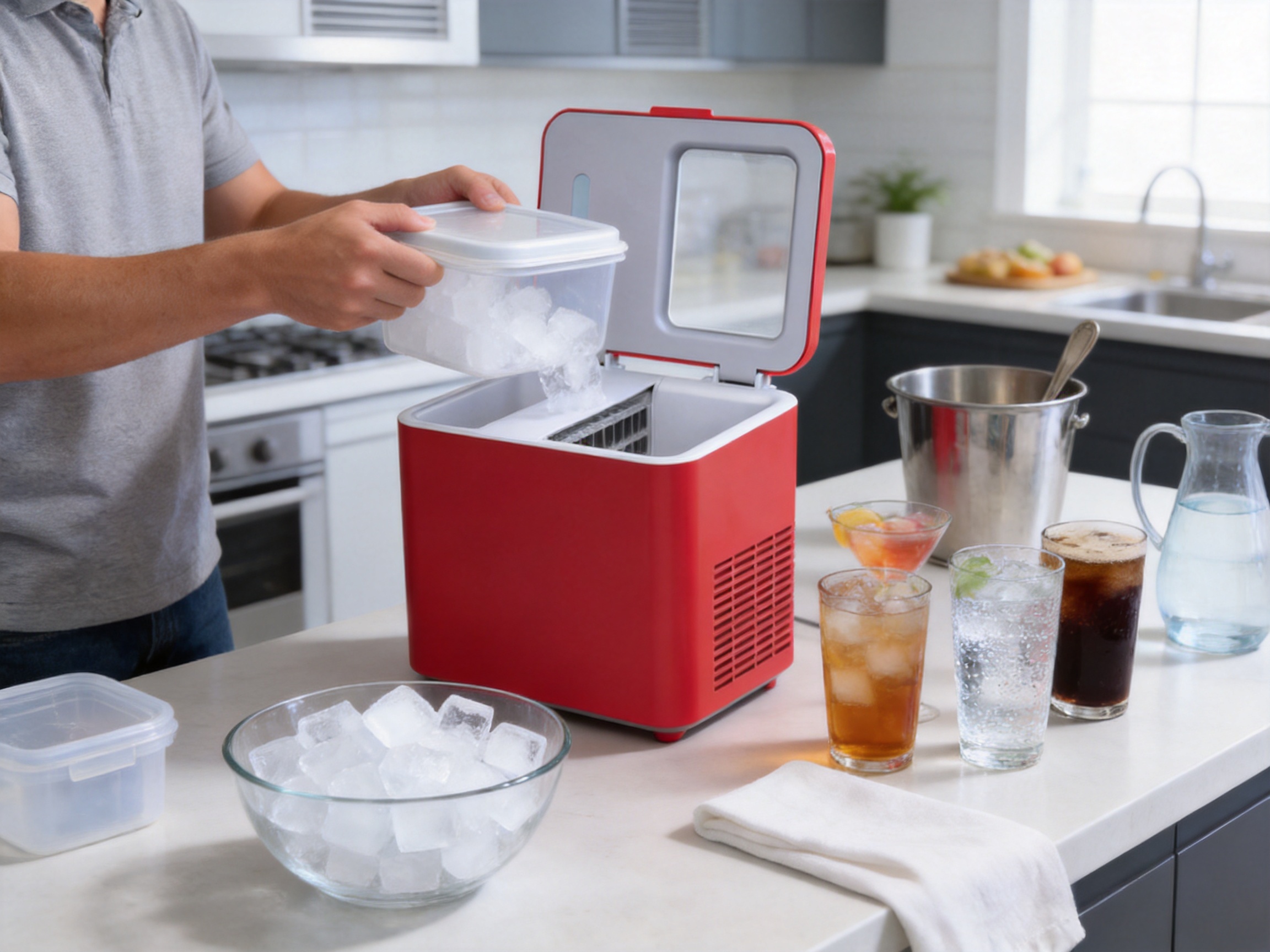
13. Cleaning, Hygiene, and Maintenance
Ice comes into direct or indirect contact with water and internal surfaces, so cleanliness is essential. Users should establish a regular cleaning routine based on the operating frequency, water quality, and manufacturer’s instructions. The water reservoir, ice-contact surfaces, removable parts, and exterior should be maintained in a clean condition.
Before cleaning, the machine should be switched off and disconnected from the power supply. Water should not be poured over electrical controls, ventilation openings, or other areas that are not designed for liquid exposure. Removable parts should be cleaned using suitable methods and dried before reassembly.
Strong chemicals, abrasive pads, sharp tools, and unauthorized descaling procedures may damage surfaces or components. If mineral deposits appear, the recommended cleaning method should be followed. In areas with hard water, more frequent attention may be necessary.
Users should discard old or melted ice during cleaning and should not allow ice to remain in a warm, damp environment for long periods. A clean, dry storage container helps preserve taste and reduces the possibility of odor transfer.
Maintenance also includes checking the power cord, plug, housing, and ventilation area. The machine should not be used if the cord is damaged, the housing is cracked, the refrigeration system appears compromised, or the appliance behaves unusually. Repairs involving the compressor, refrigerant circuit, electrical system, or sealed components should be assigned to qualified technicians.
14. Safety Considerations for R290 Equipment
R290 is flammable refrigerant, so safe handling is important even though the listed charge is small. The appliance should be kept away from open flames, sparks, and unauthorized heat sources. Users should not drill into the housing or attempt to modify the refrigeration system.
Ventilation around the appliance should remain unobstructed. Do not place it inside a tightly enclosed cabinet unless the product documentation specifically allows that installation. A clear airflow path helps manage heat and supports safe refrigeration operation.
If the unit is dropped or physically damaged, it should be inspected before being used again. Damage to refrigeration tubing may not always be visible. If a leak is suspected, move away from ignition sources, ventilate the area when safe, and contact qualified service personnel.
These instructions are not unique to this model; they are general principles for appliances using flammable refrigerants. The final safety manual, product labels, and applicable local regulations should always be followed.
15. Quality Expectations and Customer Cooperation
For buyers, distributors, and business partners, product quality includes more than the first successful ice-making cycle. It includes consistent assembly, stable supply, protective packaging, accurate specifications, usable instructions, and responsive communication when questions arise.
Alien Technology Co., Ltd. states that it welcomes new and existing customers for business cooperation. Its location in Zhejiang supports logistics and access to an established small-appliance manufacturing environment. For importers or distributors, cooperation discussions may include electrical versions, packaging requirements, documentation, inspection standards, order quantities, delivery schedules, spare parts, and after-sales arrangements.
Manufacturers and buyers should confirm all commercial and technical details before placing an order. Important points include the target market’s voltage and frequency, plug configuration, language requirements, labeling, warranty terms, carton dimensions, shipping conditions, and any required compliance testing.
A stable and pragmatic business philosophy is especially valuable in appliance cooperation. Buyers benefit from clear specifications and predictable communication, while manufacturers benefit from accurate market feedback and well-defined product requirements. Continuous improvement can then be based on actual usage, service experience, and regional customer expectations.
16. What Makes This Product Competitive?
The Home Ice Cube Maker competes through a combination of practical advantages rather than through a single extreme specification. Its most important strengths are compact size, dedicated refrigeration, regular cube design, moderate rated power, flexible household placement, and a manufacturer focused on small domestic appliances.
Compared with freezer trays, it offers greater convenience and more consistent dedicated production. Compared with large commercial systems, it offers lower space requirements and a more accessible household format. Compared with appliances that produce only irregular ice, its square-cube design supports presentation, stacking, and versatile use.
The product also benefits from a clear technical identity. The model number, power supply, current, rated power, refrigerant type, refrigerant charge, and dimensions are all specified. Clear technical information helps distributors and consumers evaluate compatibility before purchase.
Its competitive position is strongest among households, home entertainers, offices, small hospitality spaces, and other users who want more convenience than trays can provide but do not need a commercial machine. That focus allows the product to remain compact and practical.
17. Recommended Buying Checklist
Before purchasing, users should confirm that their electrical system matches the listed 220V/50Hz requirement. They should also measure the intended countertop area and allow room for airflow, water handling, ice removal, and cleaning.
Buyers should consider how much ice they normally use. The available information does not state production capacity, cycle time, or storage-bin volume, so those details should be confirmed from the final specification sheet or user manual before purchase.
It is also sensible to check the warranty, service arrangements, replacement-part availability, cleaning instructions, and local support. If the product is being imported, buyers should verify packaging protection, customs documentation, labeling, and destination-market requirements.
Water quality should be considered as well. Clean drinking water is generally the appropriate starting point for household ice, while hard water may cause mineral buildup over time. The machine should be used only in accordance with its instructions.
18. Frequently Asked Questions
Q1: What type of appliance is the Home Ice Cube Maker?
It is a compact household ice cube maker designed to produce regular solid-style ice cubes for drinks, food preparation, ice buckets, and general cooling applications.
Q2: What is the model number?
The stated model is Alien-ZF01. The product is also identified by the alias “Knobtype-ice-maker,” which suggests a physical knob-based control arrangement.
Q3: What are the machine dimensions?
The listed dimensions are 325 × 295 × 252 millimeters. Users should still allow additional clearance for ventilation, operation, water filling, and cleaning.
Q4: What power supply does it require?
The stated power supply is 220V/50Hz, with a listed current of 0.65A and rated power of 140W. Electrical compatibility must be confirmed before use.
Q5: Which refrigerant does the appliance use?
The refrigeration system uses R290 refrigerant with a specified charge of 26 grams. Because R290 is flammable, the sealed system must not be opened or serviced by unqualified users.
Q6: Why are square ice cubes useful?
Regular square cubes are easy to handle, visually neat, efficient to stack, and suitable for many beverages. Solid cubes may melt more slowly than thin or irregular pieces, helping reduce rapid dilution.
Q7: Can the ice cubes be used for whiskey and other spirits?
Yes. Solid cubes are suitable for whiskey, spirits, cocktails, and other beverages where gradual cooling and controlled dilution are preferred. Water quality and storage hygiene will affect the final experience.
Q8: Is this appliance suitable for a restaurant?
It may be suitable for light-duty or supplemental use, but the supplied information does not establish commercial production capacity. Restaurants and high-volume businesses should compare output, storage volume, duty cycle, certifications, and service support with their actual requirements.
Q9: Does the product replace a freezer?
No. It is a dedicated ice-making appliance, not a general freezer. Finished ice should be used or stored appropriately rather than treated as a permanent frozen-food compartment.
Q10: How should the appliance be cleaned?
Disconnect the machine before cleaning, follow the official manual, clean water- and ice-contact surfaces regularly, avoid abrasive materials, and keep liquids away from electrical controls and openings that are not designed for water exposure.
Q11: Can the user recharge the refrigerant?
No. The refrigeration circuit should not be opened, modified, or recharged by the user. Any refrigeration service should be handled by qualified personnel familiar with R290 equipment.
Q12: What manufacturing advantages does the supplier offer?
The supplier specializes in small household appliances and operates in Zhejiang, a major small-appliance manufacturing area with convenient logistics and supporting industrial resources. The company emphasizes reliable quality, customer satisfaction, continuous improvement, innovation, and pragmatic cooperation.
Q13: Is the product appropriate for small kitchens?
Its compact 325 × 295 × 252mm dimensions make it a practical candidate for many small kitchens, offices, home bars, and entertainment spaces. The installation location must still provide a stable surface and sufficient ventilation.
Q14: Does the product make clear ice?
The supplied information highlights the visual appeal of clear-looking cubes, but actual clarity depends on water quality, freezing conditions, cleaning, and operating details. Buyers should not assume a specific clarity level unless it is confirmed in the official technical documentation.
19. Final Assessment
The Home Ice Cube Maker is a focused appliance for people who want convenient access to regular, solid ice cubes without installing a large commercial system or relying exclusively on freezer trays. Its compact dimensions help it fit into modern household environments, while its 140W rated power and 220V/50Hz electrical specification define a practical domestic operating profile.
The regular cube format is one of its most important functional advantages. Neat cubes are useful for beverage presentation, relatively controlled melting, food preparation, and efficient storage. Their versatility makes the machine relevant to ordinary family use as well as entertaining, office refreshment, and small hospitality applications.
The product also reflects the strengths of a manufacturer specializing in small household appliances. Alien Technology Co., Ltd. operates in a Zhejiang manufacturing center with access to a developed supply chain and convenient logistics. Its stated commitment to smart technology, reliable quality, customer satisfaction, continuous improvement, innovation, and stable cooperation provides a useful foundation for product development and business partnerships.
As with any refrigeration appliance, performance and service life depend on correct placement, suitable power, clean water, regular maintenance, ventilation, and safe handling. R290 equipment requires particular respect for the sealed refrigeration system and should never be modified by the consumer.
For households seeking a compact and practical ice-making solution, the Home Ice Cube Maker presents a balanced proposition. It is not designed to compete with the largest commercial machines in output, but it can outperform traditional trays in convenience and consistency while requiring far less space and infrastructure than industrial equipment. Its combination of compact engineering, cube versatility, defined technical specifications, and small-appliance manufacturing expertise makes it a practical choice for everyday cooling needs.
References
1. Product specification sheet for the Home Ice Cube Maker, model Alien-ZF01.
2. Technical information supplied for rated voltage, frequency, current, power, refrigerant, charge, and machine dimensions.
3. Product information describing solid cube melting behavior, visual presentation, versatility, and stacking efficiency.
4. General household refrigeration appliance maintenance and cleaning principles.
5. General safety principles for appliances using R290 refrigerant.
6. Manufacturer profile and company information supplied for Alien Technology Co., Ltd.
7. General small-appliance product design and quality-control considerations.