
 English
 한국어
 Español
 Deutsch
Ice is no longer limited to the familiar hard cubes found in a freezer tray. For many households, cafés, offices, and hospitality settings, the texture of ice has become just as important as its temperature. Soft, chewable ice can transform an ordinary drink into a more enjoyable experience, cool beverages quickly, blend smoothly into recipes, and support attractive food presentation. A home chewing ice maker is designed to bring these benefits into the kitchen in a compact and practical format.
The Alien-ZJ01 home chewing ice maker is developed for people who want more than basic frozen water. It produces small, soft-textured ice that is pleasant to chew, easy to scoop, and highly effective at cooling drinks. Its design combines a modest footprint, a 130-watt power rating, a low-charge R600a refrigerant system, and a structure suitable for everyday household use. These characteristics make it an appealing alternative to conventional ice cube makers, large commercial machines, and purchased bagged ice.
Behind the product is Alien Technology Co., Ltd., a Zhejiang-based manufacturer specializing in household appliances such as ice makers, coffee machines, and air fryers. Located in Zhouxiang, Cixi City, an area recognized for small-appliance manufacturing and logistics, the company benefits from an established industrial environment, supply-chain access, and experience in designing products for daily home use.
This article examines the product’s performance advantages, practical applications, compact engineering, manufacturing strengths, quality-oriented philosophy, and suitability for modern households. It also explains why chewable ice can provide a better experience than traditional hard ice in drinks, food displays, cold compresses, and frozen desserts.
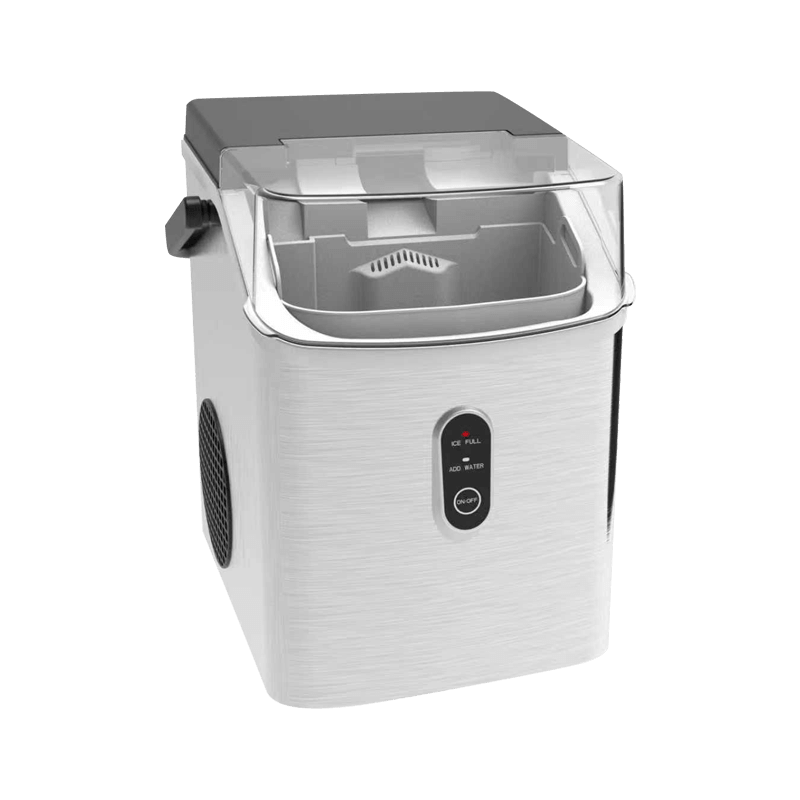
Home chewing ice maker
Understanding Chewing Ice
Chewing ice is distinguished by its texture. Instead of forming large, dense, rigid cubes, it consists of smaller and softer pieces that can be bitten more comfortably. The result is an ice product that cools beverages effectively while adding a satisfying sensory element. It is often valued for its gentle texture, light crunch, and ability to absorb or carry the flavor of the drink around it.
Traditional ice cubes are generally designed to melt slowly. That characteristic is useful when a beverage needs to remain cold for an extended period, but hard cubes can be difficult to chew and may be inconvenient in smaller glasses. Their large size also reduces the contact area between ice and liquid. When the objective is rapid cooling, a collection of smaller particles can perform more effectively because more surface area is exposed to the drink.
Chewable ice offers a different balance. Its small structure allows it to mix easily with beverages, while its soft body makes it more comfortable to bite. It is particularly attractive for iced coffee, soda, fruit drinks, milk-based beverages, mocktails, and other recipes in which ice is part of the overall experience rather than merely a cooling accessory.
The softer structure also makes this type of ice easy to handle. A spoon can scoop it without the resistance associated with large frozen cubes. Users can add a controlled amount to a glass, bowl, serving tray, or recipe. This simple handling advantage is important in busy kitchens, where convenience can influence how often an appliance is used.
Product Overview
The Alien-ZJ01 is designed as a home chewing ice maker for domestic kitchens and other small-scale environments. Its product concept is centered on producing ice with a soft, chewable texture while maintaining a compact appliance format. Rather than requiring a large freezer compartment or repeated manual preparation, it gives users a dedicated appliance for producing a specialized ice format.
Product Attribute |
Specification or Description |
Product Model |
Alien-ZJ01 |
Product Type |
Home chewing ice maker |
Power Supply |
220V/60Hz |
Current and Power |
0.55A / 130W |
Refrigerant and Charge |
R600a / 19g |
Machine Dimensions |
224 x 333 x 325 mm |
Primary Application |
Household drinks, food preparation, display cooling, cold compresses, smoothies, and shaved ice |
With dimensions of 224 x 333 x 325 millimeters, the unit is intended to occupy considerably less space than a large commercial ice machine. Its compact dimensions make it suitable for kitchen counters, beverage stations, home entertainment areas, office pantries, and small service environments. The exact amount of clearance required should be considered during installation, but the overall form is clearly oriented toward practical placement in space-conscious settings.
The 130-watt power rating reflects a compact refrigeration appliance rather than a high-consumption commercial system. This makes the product appropriate for routine household operation, especially when users need convenient access to specialty ice without operating a large machine. The 0.55-ampere current specification further indicates a relatively moderate electrical load under the stated operating conditions.
Soft Texture for a Better Chewing Experience
The defining advantage of the product is its soft and chewable ice texture. Many people enjoy chewing ice after finishing a beverage, but conventional cubes can be hard on teeth and uncomfortable to bite. A softer format provides a more pleasant experience because it yields more readily under pressure.
Texture also influences the way a beverage is perceived. A drink containing soft ice can feel more integrated, with the ice becoming part of the serving instead of remaining as separate, rigid blocks. This is especially noticeable in sweet drinks, sodas, flavored water, and iced coffee. The ice can be gently chewed after the liquid is consumed, extending the enjoyment of the beverage.
For families, the texture may be appealing to different age groups. Adults can enjoy the familiar crunch and cooling sensation, while children may find the smaller, softer pieces easier to manage than large cubes. As with any ice product, users should choose an appropriate portion and supervise young children where necessary, but the softer format is generally designed to be more comfortable than hard ice.
Compared with standard freezer-made cubes, the product is not simply offering a different shape. It is offering a different interaction. Traditional cubes are often handled with tongs or poured from a tray. Chewable ice can be scooped, stirred, sipped, and eaten. This creates more flexibility in the way it is used and helps explain why specialty ice has become popular in home beverages and food service.
Rapid Beverage Cooling
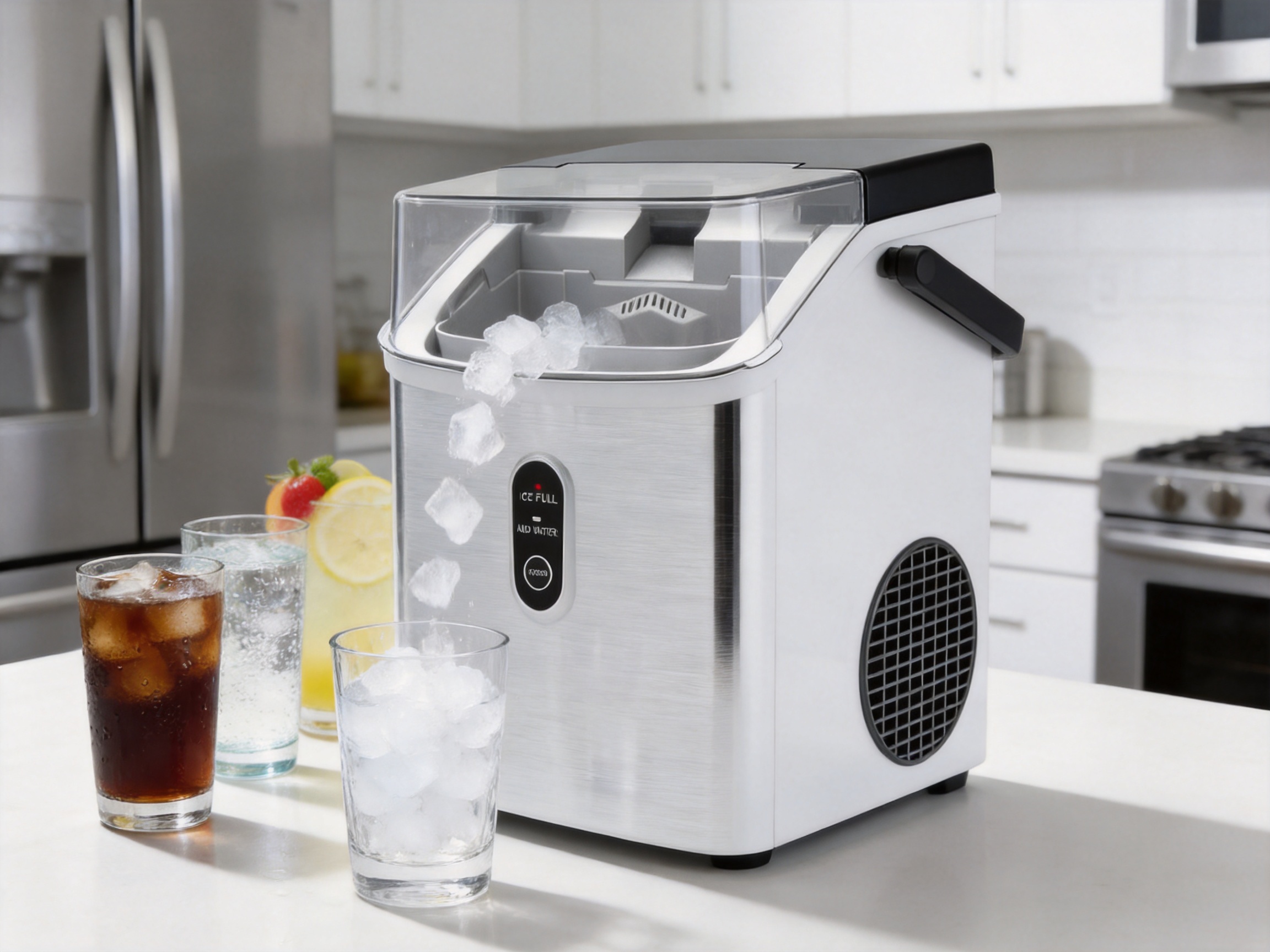
Small ice particles have a larger total contact area relative to their volume than large cubes. When added to a drink, this increased contact area allows the ice to interact with more of the liquid at the same time. As a result, beverages can cool quickly, which is useful when a cold drink is needed without a long waiting period.
This characteristic is particularly valuable for iced coffee. Coffee can be brewed hot and then cooled with chewable ice, helping create a refreshing drink without relying solely on refrigeration. The small ice pieces can distribute throughout the cup, making the cooling process more uniform. They can also blend naturally with milk, cream, syrups, or flavored sauces.
Soda and sparkling beverages are another strong application. A glass filled with soft ice can become cold rapidly, while the smaller pieces create a distinctive appearance. Fruit beverages, lemonade, iced tea, and flavored water can benefit in the same way. The ice is not only functional; it contributes to the presentation and drinking experience.
Compared with a few large cubes, smaller pieces can be more effective when a beverage must be cooled in a short time. This does not mean that chewable ice will always melt more slowly or preserve a drink longer than large cubes. The appropriate ice format depends on the intended use. The advantage of the Alien-ZJ01 is that it provides a specialized option for quick cooling and easy mixing, rather than forcing users to rely on one ice style for every drink.
Improved Flavor Infusion and Beverage Mixing
The structure of chewing ice can support the way flavors move through a beverage. Because the pieces are smaller and easier to stir, they can help distribute sweeteners, fruit concentrates, milk, coffee, and other ingredients. A spoon can move through the ice without the resistance caused by large hard cubes, allowing the drink to be mixed more smoothly.
This feature is useful in home beverage preparation. A user can prepare a glass of iced coffee, add milk and syrup, then stir the contents with less disruption. In fruit drinks, small ice pieces can help maintain an even texture from the first sip to the last. In mocktails, the ice can fill the glass attractively while allowing garnishes and liquid ingredients to remain visually connected.
Ice also affects dilution. Smaller ice pieces generally offer more surface area and may melt more quickly than large cubes, depending on the temperature and environment. That property can be beneficial when a recipe is designed to soften, dilute, or integrate as it is served. It can be less suitable when the goal is to keep a strong drink undiluted for a long period. The value of the product lies in giving users control over this trade-off.
For consumers who prepare drinks at home, this flexibility can reduce the need for multiple types of frozen ingredients. The same ice can be used for cooling, mixing, chewing, blending, and presentation. This is a practical advantage over ordinary ice trays, which produce only one basic form and often require advance preparation.
Food Presentation and Preservation Support
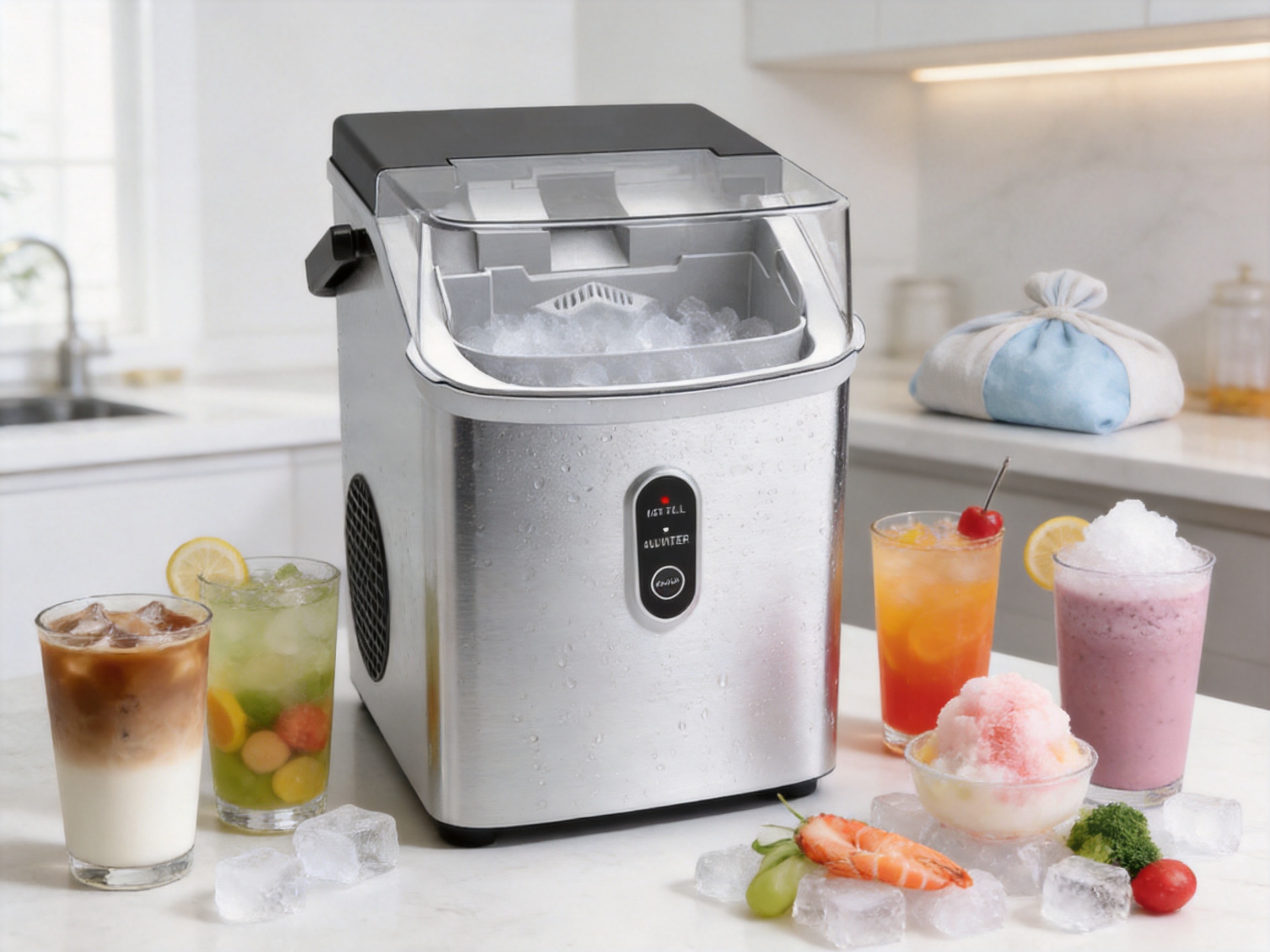
Chewable ice is not limited to beverages. Its small pieces can surround or coat foods in display situations, creating an attractive chilled base for fresh ingredients. Salad bars, seafood counters, buffet tables, and home entertaining setups can all benefit from a clean layer of ice that helps maintain a cold presentation.
Vegetables can be displayed over ice to create a crisp and refreshing visual effect. Seafood such as oysters can be arranged on a chilled surface, helping the serving area look professional and carefully prepared. Sashimi and similar foods can also be presented with ice as part of a controlled serving arrangement. The ice does not replace proper food-safety procedures, temperature monitoring, or hygienic handling, but it can support the presentation and short-term chilling of suitable foods.
The small size of the ice makes it easier to distribute evenly around food. Large cubes can leave gaps or create unstable arrangements, while smaller pieces can conform to the shape of a tray or serving bowl. This makes them useful for decorative displays and for situations where the ice needs to surround rather than merely sit beside the food.
For home entertaining, the product can help users create a more polished presentation without purchasing large bags of commercial ice. A chilled seafood platter, a vegetable serving tray, or a dessert station can look more deliberate when the ice is evenly distributed. The appliance therefore serves both a functional and aesthetic purpose.
Use in Cold Compresses
The soft and flexible nature of chewing ice can be useful for cold compress applications. Small pieces can conform more easily to areas of the body than rigid cubes, allowing a cold pack or wrapped ice application to follow the contours of an arm, knee, shoulder, or other area.
For household first-aid preparation, the ice may be placed inside a clean, suitable bag or wrapped in a cloth before use. Direct contact between ice and skin should be handled responsibly, and cold applications should be limited according to accepted safety guidance. The product does not replace medical advice, but its soft texture can make it more comfortable than a group of large, hard cubes.
The ability to use the same appliance for drinks, food presentation, and cold compresses increases its practical value. Many kitchen appliances perform one narrow task. A chewing ice maker can support several everyday needs while occupying relatively little space.
Versatility for Smoothies, Shaved Ice, and Desserts
Chewable ice can act as a base ingredient for smoothies, shaved ice, and similar cold preparations. Its small size makes it easier to combine with fruit, milk, yogurt, syrups, and flavor powders. Depending on the recipe and equipment, it can be blended or processed into a smoother frozen mixture.
For smoothies, the ice helps provide body and temperature. It can be added with fruit and liquid ingredients to create a colder, thicker drink. Users can adjust the quantity according to the desired consistency. Since the pieces are already relatively small, they may be easier to incorporate than large cubes, reducing the need to break or crush ice manually.
For shaved-ice-style desserts, the product can provide a convenient starting material. Syrups, fruit, condensed milk, nuts, and other toppings can be added according to personal preference. The soft texture can also make the preparation easier to spoon and portion.
These applications show why the machine may be more valuable than a conventional ice maker limited to standard cubes. A standard cube machine is generally used for chilling drinks. A chewing ice maker can also support food preparation, dessert making, home entertaining, and wellness-related cold applications.
Compact Design for Modern Homes
Kitchen space is limited in many apartments, condominiums, offices, and smaller homes. Large appliances may provide high output but can be difficult to install or store. The Alien-ZJ01 addresses this issue with a compact machine size of 224 x 333 x 325 millimeters.
A compact appliance can be placed near a coffee machine, beverage counter, home bar, or dining area. It can also be positioned in an office pantry where employees want convenient cold drinks without using a full-size commercial system. The dimensions support a flexible installation concept, although users should still provide suitable ventilation, stable placement, and access to the appropriate electrical supply.
Compactness may also improve product accessibility. If an appliance is easy to fit into the kitchen and easy to reach, users are more likely to operate it regularly. By contrast, an oversized machine may be reserved for special events because it is inconvenient to access. A small dedicated ice maker encourages frequent use for daily drinks and snacks.
The product’s compact format does not eliminate the need for responsible placement. Refrigeration appliances should be positioned on a level surface with appropriate airflow around heat-dissipating areas. Water handling and cleaning access should also be considered. A well-planned installation helps maintain reliable performance and supports long-term appliance hygiene.
Energy and Refrigeration Considerations
The Alien-ZJ01 uses a stated power rating of 130 watts and a current specification of 0.55 amperes under the listed 220V/60Hz supply. These figures position it as a relatively modest household refrigeration appliance. Actual energy consumption will depend on operating time, ambient temperature, usage frequency, ventilation, and the machine’s control cycle.
The product uses R600a refrigerant with a 19-gram charge. R600a isobutane is widely used in compact refrigeration equipment because it has a low global warming potential compared with many older refrigerants. It is classified as flammable, so refrigeration circuits must be manufactured, sealed, serviced, and handled according to applicable safety requirements.
The use of an appropriate modern refrigerant reflects the importance of balancing cooling performance, environmental considerations, and appliance size. A compact ice maker must remove heat efficiently within a relatively small housing. The refrigeration system, insulation, condenser, evaporator, airflow path, and control components must work together to achieve stable operation.
Users should never attempt to puncture or modify the refrigeration circuit. Service work involving refrigerant should be performed by qualified personnel. Correct electrical connection is also essential, particularly because the listed specification is 220V/60Hz. Buyers and distributors should confirm that the product configuration matches the electrical standards of the destination market before installation.
Advantages Over Conventional Ice Trays
Traditional ice trays remain inexpensive and familiar, but they require manual filling, freezer space, waiting time, and removal effort. They normally produce large, hard cubes or similarly shaped pieces. The user must plan ahead and maintain a supply of frozen water before drinks are needed.
A dedicated chewing ice maker offers a more specialized experience. It can produce a softer format without requiring users to manually break or crush cubes. The ice is easier to scoop and mix, and it can be used for drinks, desserts, displays, and cold compresses. This convenience is especially valuable for people who prepare iced beverages frequently.
Another difference is consistency. Ice trays may produce pieces with varying sizes, cracks, and freezing conditions depending on how they are filled and positioned. A purpose-designed appliance is intended to provide a more consistent type of ice. Consistency benefits both the appearance of drinks and the predictability of recipes.
The appliance also frees freezer space. In small kitchens, trays can occupy valuable shelf area and may spill if handled carelessly. A dedicated countertop machine separates ice production from ordinary frozen-food storage.
Advantages Over Hard-Cube Ice Makers
Hard-cube ice makers are useful when slow melting and long-lasting chilling are the priority. However, they are not always ideal for chewing, rapid mixing, or compact food displays. Their large pieces can be uncomfortable to bite and may require additional crushing for smoothies or shaved-ice recipes.
The Alien-ZJ01 is positioned around the needs that hard-cube systems do not emphasize. Its soft texture is gentler for chewing, its smaller pieces provide a larger cooling surface, and its form is easier to scoop into beverages or recipes. Users who value texture and versatility may therefore prefer it over a machine that produces only rigid cubes.
Rather than competing solely on output volume, a chewing ice maker competes on user experience. The product is designed to bring a specialty ice format into everyday life. That distinction matters because consumers increasingly choose appliances based on convenience, flexibility, visual appeal, and enjoyment—not only on basic mechanical function.
Advantages Over Purchased Bagged Ice
Bagged ice can be convenient for parties and large gatherings, but it requires transportation, storage, and timely use. Bags can be bulky, difficult to handle, and prone to melting during transport. The ice format may also be inconsistent, and users have limited control over when it was produced or how it was handled before purchase.
A home machine allows ice to be prepared where and when it is needed. This can reduce dependence on emergency purchases for ordinary household use. It also provides a repeatable source for people who regularly prepare cold beverages or entertain guests.
On-site production does not remove the importance of cleaning and water quality. The machine and its water-contact components must be maintained properly, and users should follow the manufacturer’s cleaning recommendations. When operated responsibly, however, a dedicated appliance can offer convenience and greater control over the ice experience.
Manufacturing Strengths and Industrial Location
Alien Technology Co., Ltd. is located in Zhouxiang, Zhejiang Province, within Cixi City. The area is known as a hub for small household appliances, with access to manufacturing resources, component suppliers, skilled labor, packaging services, and transportation networks. This industrial environment can support efficient product development and production coordination.
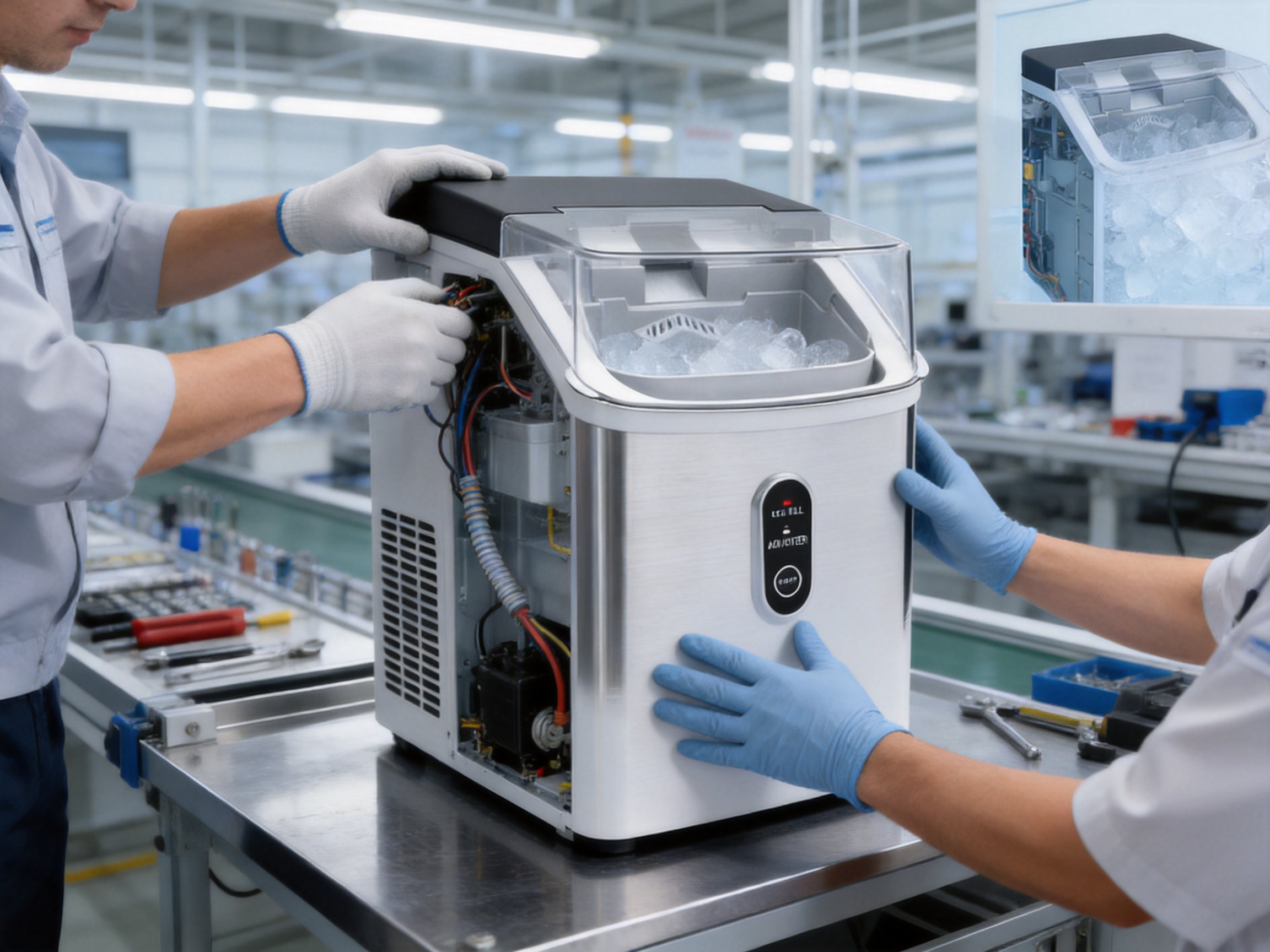
Manufacturing an ice maker involves more than assembling an outer shell. The appliance includes a refrigeration circuit, electrical controls, water-related components, thermal insulation, structural parts, ventilation pathways, and user-facing surfaces. These systems must be integrated carefully so that the machine can cool effectively while remaining compact and practical for home use.
A manufacturer operating in a mature appliance cluster can benefit from established knowledge in product engineering and supply-chain management. Access to specialized suppliers may support the sourcing of compressors, refrigerant-system components, motors, wiring, control boards, molded plastic parts, seals, and packaging materials. Coordinating these elements is essential for achieving stable production and consistent product quality.
The company’s product range includes ice makers, coffee machines, and air fryers. This shared focus on household appliances suggests familiarity with the demands of consumer-product design: compact dimensions, intuitive operation, heat or cold management, safe electrical performance, cleanable surfaces, and reliable daily use.
Quality-Oriented Product Development
The company describes its mission as “Smart Technology, Simplifying Life, Enhancing Happiness.” This philosophy is relevant to the Alien-ZJ01 because the product converts a specialized process into a simple household activity. The user does not need to manually crush ice, reserve extensive freezer space, or rely on an external source for every serving.
Humanized design is especially important for small kitchen appliances. A technically capable product may still be inconvenient if it is difficult to fill, clean, move, or operate. A user-centered approach considers how people actually prepare beverages, serve food, store appliances, and maintain hygiene in a home environment.
Reliable quality also depends on repeatable manufacturing. Refrigeration appliances require accurate assembly and inspection because small errors in sealing, wiring, insulation, or component placement can affect performance. Consistent production processes help ensure that products meet intended specifications from one unit to the next.
The company emphasizes customer satisfaction, continuous improvement, and innovation. These principles can support ongoing refinement in areas such as energy use, noise control, cleaning access, ice texture, component durability, packaging protection, and user instructions. Even when the core product concept remains stable, continuous improvement can make the appliance easier and more dependable to use.
Manufacturing Process Considerations
A modern home ice maker typically begins with product engineering and specification control. Designers determine the required dimensions, electrical ratings, refrigerant charge, cooling capacity, water pathways, control logic, and structural arrangement. The compact dimensions of the Alien-ZJ01 require efficient use of internal space because the refrigeration and water systems must fit within a relatively small housing.
Component sourcing follows the engineering requirements. Parts must be compatible with the stated 220V/60Hz electrical system and the R600a refrigeration circuit. Electrical components need appropriate insulation and protection, while refrigerant-system parts must be suitable for the pressure, temperature, and flammability characteristics of the selected refrigerant.
Assembly requires careful coordination. The refrigeration circuit must be connected and sealed correctly. Wiring must be routed to reduce the risk of abrasion or interference with moving and heated components. Water-contact areas must be positioned to support dependable operation and reasonable cleaning access. Housing panels and structural parts must be fitted securely to reduce vibration and protect internal systems.
Inspection and testing are essential stages of appliance production. A responsible quality process may include electrical checks, leakage checks, refrigeration performance checks, functional operation tests, visual inspections, and packaging verification. Specific inspection procedures depend on the manufacturer’s internal standards and the requirements of the destination market, but the overall objective is to identify faults before products reach customers.
Packaging is also part of manufacturing quality. Small appliances may be exposed to vibration, impact, humidity, and repeated handling during transportation. Proper internal protection helps preserve the housing, controls, refrigeration components, and accessories. A strong logistics network in Zhejiang can support efficient movement from factory to distributor while reducing unnecessary delays.
Product Reliability in Daily Use
Reliability is not defined only by whether an appliance operates on its first day. It also involves consistency over repeated cycles, stable cooling, secure electrical performance, manageable noise, durable external materials, and maintainable water-contact areas. A home chewing ice maker is likely to be used frequently, making long-term practical behavior important.
The compact form can support convenience, but it also makes thermal management important. Internal components need suitable airflow and heat dissipation. Users should avoid blocking ventilation openings or placing the appliance directly against surfaces that restrict air movement. Following installation guidance helps the machine operate within its intended conditions.
Regular care is equally important. Water containers and accessible surfaces should be cleaned according to the product instructions. Spills should be removed promptly, and the appliance should be disconnected before cleaning areas that should not be exposed to water. These habits help preserve hygiene and reduce the buildup of residue.
Consumers and commercial buyers should also consider regional compliance, warranty service, spare-parts availability, and technical support. These factors contribute to total product value and are particularly important when purchasing appliances for offices, hospitality environments, or distribution programs.
Suitable Users and Applications
The Alien-ZJ01 is suitable for households that frequently prepare iced drinks and want a more enjoyable alternative to hard cubes. Coffee enthusiasts can use it for iced coffee, cold brew combinations, milk-based drinks, and flavored coffee beverages. Families can use it for soda, fruit drinks, lemonades, smoothies, and chilled snacks.
It can also serve home entertainers. A beverage station equipped with a compact chewing ice maker can support parties, weekend gatherings, and outdoor-oriented serving areas where a steady supply of specialized ice is useful. The soft pieces can add visual interest to glassware and make drinks easier to mix.
Small offices may use the machine in break rooms or employee refreshment areas. Cafés, dessert counters, and specialty beverage businesses may also consider it for selected applications, subject to capacity requirements and local food-service regulations. The product’s compact size can be valuable in locations that cannot accommodate a full commercial ice-making system.
Food display applications include seafood presentations, salad bars, buffet arrangements, and chilled ingredient stations. For these uses, operators should establish appropriate hygiene procedures and temperature controls. The machine can provide the ice format, while safe handling remains the responsibility of the user or business operator.
Responsible Operation and Maintenance
Before using the appliance, buyers should verify that their electrical supply matches the listed 220V/60Hz specification. The machine should be placed on a stable, level surface with appropriate clearance for ventilation. It should not be operated near sources of excessive heat or in locations exposed to water beyond what the operating instructions permit.
Only clean, suitable water should be used in the water system. Users should follow the manufacturer’s guidance regarding water filling, cleaning cycles, drainage, and storage. If the appliance will not be used for an extended period, it should be emptied and cleaned as instructed.
Because R600a is flammable, the refrigeration system should not be opened, punctured, or repaired by unqualified individuals. Any unusual smell, visible damage, abnormal noise, electrical fault, or cooling problem should be treated seriously. The appliance should be disconnected and inspected by an authorized or appropriately qualified service professional.
For food-related use, the ice should be handled with clean utensils and stored in a manner that prevents contamination. Ice intended for direct consumption should not be allowed to contact unclean surfaces. Good hygiene practices protect the benefits of the appliance and help ensure that convenience does not compromise food safety.
Why the Product Fits Modern Consumer Trends
Modern consumers increasingly look for appliances that combine multiple functions in a compact form. Counter space is valuable, and buyers often prefer products that provide clear everyday benefits rather than equipment used only on rare occasions. The Alien-ZJ01 responds to this preference by combining beverage cooling, chewable texture, food presentation, dessert preparation, and cold-compress potential.
There is also growing interest in café-style experiences at home. Specialty coffee, mocktails, flavored sodas, smoothies, and visually attractive desserts are no longer limited to restaurants. A product that improves the texture and presentation of these items can help users create a more refined experience in their own kitchens.
Convenience is another important trend. People want to reduce preparation time and avoid unnecessary manual work. The product’s small-particle ice can be scooped and mixed more easily than hard cubes, making it a practical choice for fast drink preparation.
Finally, consumers are paying greater attention to appliance design, energy use, refrigerant selection, and manufacturing responsibility. The stated 130-watt power rating, compact construction, and use of R600a place the product within a modern discussion of efficient small-appliance engineering, while the company’s focus on quality and continuous improvement supports its broader market positioning.
Q&A
What is a home chewing ice maker?
A home chewing ice maker is an appliance designed to produce small, soft-textured ice that is comfortable to chew and easy to mix into drinks. Unlike conventional machines that produce large hard cubes, it focuses on texture, rapid cooling, scooping convenience, and versatility.
What is the main advantage of the Alien-ZJ01?
Its main advantage is the combination of soft, chewable ice and compact household design. The ice can cool drinks quickly, blend easily, support food displays, and serve as an ingredient for smoothies or shaved ice.
Is chewing ice suitable for iced coffee?
Yes. Its small particle size provides a large contact area with the coffee, helping cool the drink quickly. It can also be stirred easily with milk, cream, syrups, and other ingredients.
Can the ice be used with soda and fruit drinks?
Yes. Chewable ice is suitable for soda, lemonade, iced tea, fruit drinks, flavored water, and many other cold beverages. It adds cooling performance as well as a distinctive drinking texture.
Can this ice be used for food presentation?
It can be used as a chilled display base for suitable foods such as vegetables, oysters, seafood, and sashimi. Proper hygiene, food handling, and temperature control must always be followed.
Can the ice be used for a cold compress?
The soft pieces can conform more easily to body contours than large hard cubes. They should be placed in a suitable bag or wrapped in a cloth, and cold applications should be used responsibly. The product is not a substitute for professional medical advice.
What are the product’s electrical specifications?
The listed power supply is 220V/60Hz. The stated current and power are 0.55 amperes and 130 watts. Buyers should confirm compatibility with the electrical standards of their location.
What refrigerant does the product use?
The product uses R600a refrigerant with a listed charge of 19 grams. Because R600a is flammable, refrigeration-system service should be performed only by qualified personnel.
How large is the machine?
The listed dimensions are 224 x 333 x 325 millimeters. This compact size is intended to make the appliance suitable for household counters, beverage areas, offices, and other space-conscious locations.
How does it compare with ordinary ice trays?
Ordinary trays require manual filling, freezer space, and advance preparation, and they generally produce hard cubes. The chewing ice maker is designed to provide a softer texture, easier scooping, faster drink mixing, and greater application flexibility.
How does it compare with bagged ice?
A home machine can produce ice where and when it is needed, reducing the need to transport and store bulky bags. It also gives users access to a specialized ice texture instead of relying on whatever format is available for purchase.
What company manufactures the product?
The product is manufactured by Alien Technology Co., Ltd., a Zhejiang-based company specializing in household appliances including ice makers, coffee machines, and air fryers.
What manufacturing strengths support the product?
The company operates in Zhouxiang, Zhejiang Province, a region with a strong small-appliance manufacturing ecosystem. This location provides access to suppliers, production resources, logistics, and industry experience relevant to compact household appliance development.
What maintenance does the appliance require?
Users should follow the product instructions for cleaning, water handling, drainage, and storage. The machine should be placed on a level surface with suitable ventilation, and the refrigeration circuit should never be opened or modified by unqualified individuals.
Conclusion
The Alien-ZJ01 home chewing ice maker offers a practical alternative to conventional hard-cube systems, freezer trays, and purchased bagged ice. Its key distinction is the production of soft, chewable ice that is gentle on the teeth, pleasant to eat, easy to scoop, and effective at cooling beverages rapidly.
Its applications extend beyond drinks. The ice can support coffee preparation, soda service, smoothies, shaved ice, dessert making, seafood presentation, salad displays, and carefully managed cold-compress use. This range of functions gives the product a broader role in the household than a basic ice tray or single-purpose hard-cube machine.
The compact dimensions, 130-watt power rating, 220V/60Hz supply specification, and R600a refrigeration system reflect an appliance designed for modern domestic environments. Its space-conscious format makes it suitable for kitchens, offices, entertainment areas, and selected small commercial settings.
Manufacturing strength is another important part of the product story. Alien Technology Co., Ltd. operates in a major small-appliance region and focuses on household products that combine practical design, reliable quality, intelligent technology, and continuous improvement. The company’s experience across ice makers, coffee machines, and air fryers supports a product-development approach centered on everyday convenience.
For consumers who value fast cooling, soft texture, flexible food use, and compact appliance design, a home chewing ice maker can provide a meaningful improvement to daily routines. It turns ice from a basic utility into a versatile ingredient and an enjoyable part of the overall beverage and food experience.
References
1. Product specification sheet for the Alien-ZJ01 home chewing ice maker, including electrical rating, dimensions, refrigerant, and application information.
2. Manufacturer profile and corporate information for Alien Technology Co., Ltd., Zhejiang Province.
3. General principles of household refrigeration appliance design, including compressor systems, thermal management, insulation, and electrical safety.
4. General guidance on the responsible handling of R600a refrigerant in compact refrigeration equipment.
5. Food-service principles concerning ice hygiene, chilled food presentation, seafood display, and beverage preparation.