
 English
 한국어
 Español
 Deutsch
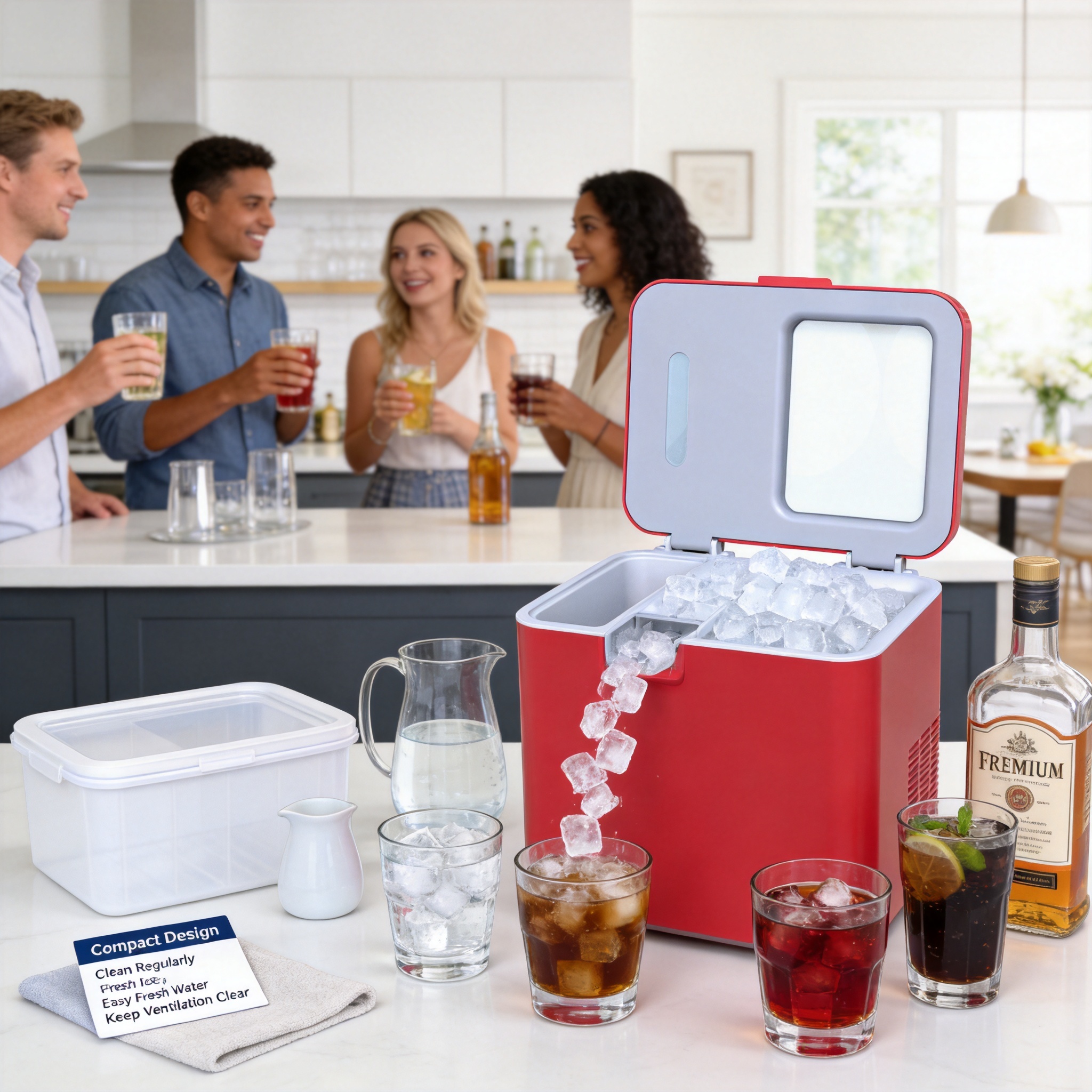
Ice is often treated as a small detail, but the quality, shape, and consistency of ice can significantly influence the way drinks are enjoyed. A well-designed ice maker can provide more than convenience. It can help households prepare chilled beverages quickly, reduce dependence on store-bought ice, improve presentation, and maintain a dependable supply for entertaining, cooking, and everyday use.
The Home Ice Cube Maker, identified by the model description Alien-ZF01, is designed for domestic users who want a compact appliance with a clear operating purpose: producing practical, solid, neatly shaped ice cubes at home. Its compact dimensions, moderate electrical demand, R290 refrigerant, and straightforward knob-type design make it suitable for kitchens, home bars, offices, small hospitality settings, and other spaces where storage and simplicity matter.
This article examines the product’s technical specifications, design advantages, ice quality, application scenarios, manufacturing strengths, energy considerations, maintenance requirements, and competitive position. It also explains why a compact ice maker can be a valuable improvement over ice trays and why a carefully manufactured appliance can offer advantages over less refined entry-level alternatives.
1. Why Home Ice Production Matters
Traditional ice trays remain inexpensive and familiar, but they are not always convenient. They require freezer space, need to be refilled manually, and often produce a limited quantity. Removing ice from a tray can also be difficult, particularly when the tray is overfilled, frozen unevenly, or made from a rigid material. In addition, freezer odors can transfer to exposed ice if the ice is stored for a long period.
A dedicated ice maker addresses many of these limitations. Instead of waiting several hours for water to freeze in a freezer, users can operate a separate appliance specifically designed for ice production. This approach frees freezer space and makes ice more accessible when preparing drinks, filling an ice bucket, organizing a gathering, or cooling ingredients during food preparation.
The value of an ice maker becomes especially apparent during warm weather, family events, celebrations, and informal entertaining. A household may use ice for water, juice, soft drinks, cocktails, coffee beverages, smoothies, and chilled desserts. In some situations, a continuous supply of fresh ice is more practical than trying to predict demand in advance and filling multiple trays.
Ice quality also affects the drinking experience. Dense, regular cubes generally remain useful for a longer period than small, fragmented pieces. They can cool a beverage effectively while limiting rapid dilution. This is particularly important for beverages whose flavor balance should not be weakened by excessive meltwater.
2. Product Overview
The Home Ice Cube Maker is a compact countertop appliance intended for convenient household ice production. Its listed model description is Alien-ZF01, and the product is also associated with a knob-type ice-maker configuration. The design emphasizes ease of use, manageable size, and a simple control approach rather than unnecessary complexity.
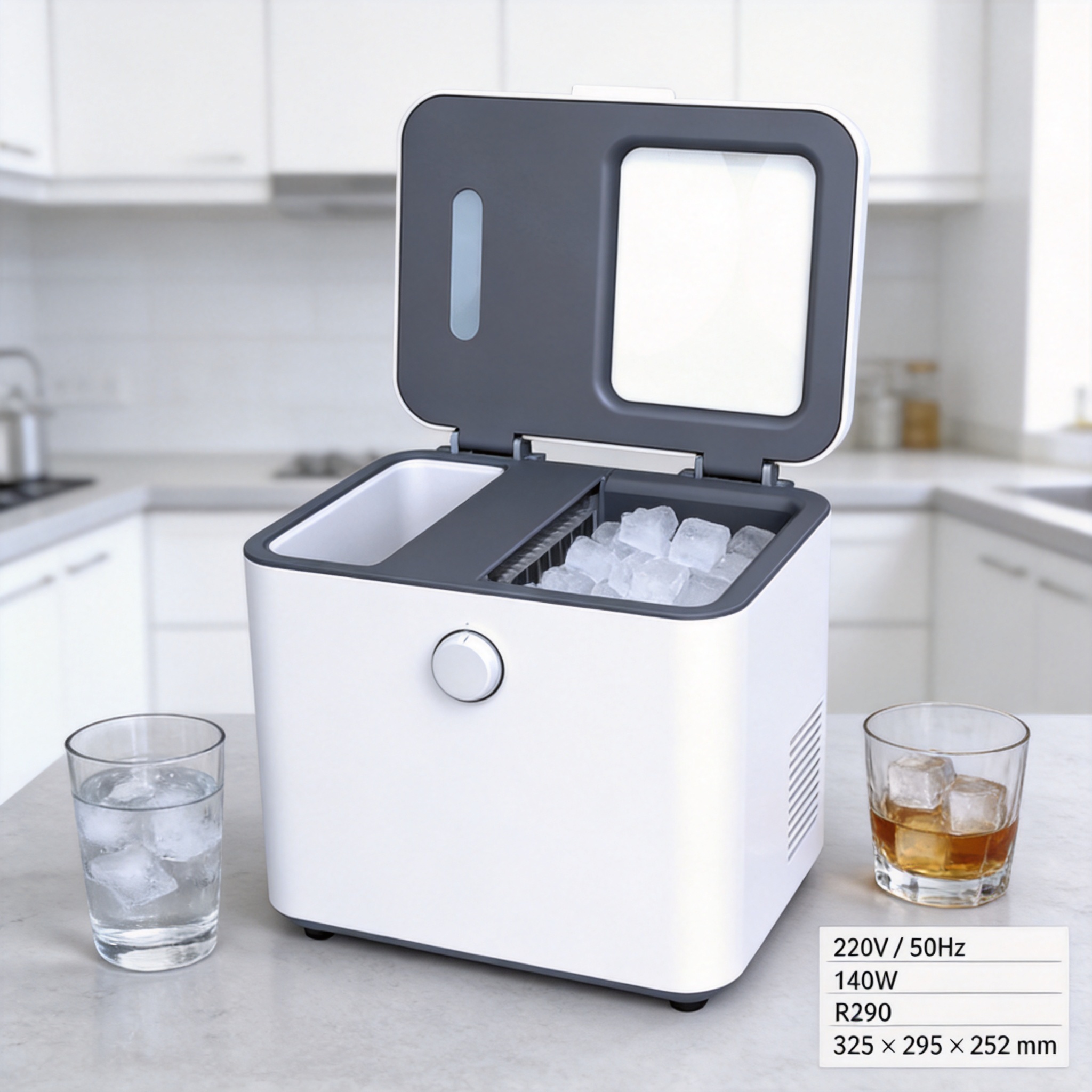
With dimensions of 325 by 295 by 252 millimeters, the machine is relatively compact for countertop equipment. Its footprint allows it to fit in many kitchens, beverage stations, offices, recreation rooms, and small service areas. Users should still leave sufficient clearance around the appliance for ventilation, safe operation, and access to the water reservoir and ice collection area.
The appliance operates on a 220-volt, 50-hertz power supply and has a listed current and power rating of 0.65 amperes and 140 watts. It uses R290 refrigerant with a stated charge of 26 grams. R290 is propane-based refrigerant commonly used in modern refrigeration equipment because of its low global warming potential compared with many older refrigerant options. As with all refrigerant-based products, safe handling, proper ventilation, and servicing by qualified personnel are important.
Product Attribute |
Specification |
Product Type |
Home ice cube maker |
Model Description |
Alien-ZF01 |
Control Style |
Knob-type configuration |
Power Supply |
220V / 50Hz |
Current and Rated Power |
0.65A / 140W |
Refrigerant and Charge |
R290 / 26g |
Machine Dimensions |
325 × 295 × 252mm |
The specification profile suggests a product designed for practical household use rather than heavy industrial production. Its moderate power rating supports a compact refrigeration system, while its dimensions make it easier to position in homes and small commercial environments. Buyers should evaluate their expected daily ice demand and confirm that the appliance’s production capacity matches their intended application.
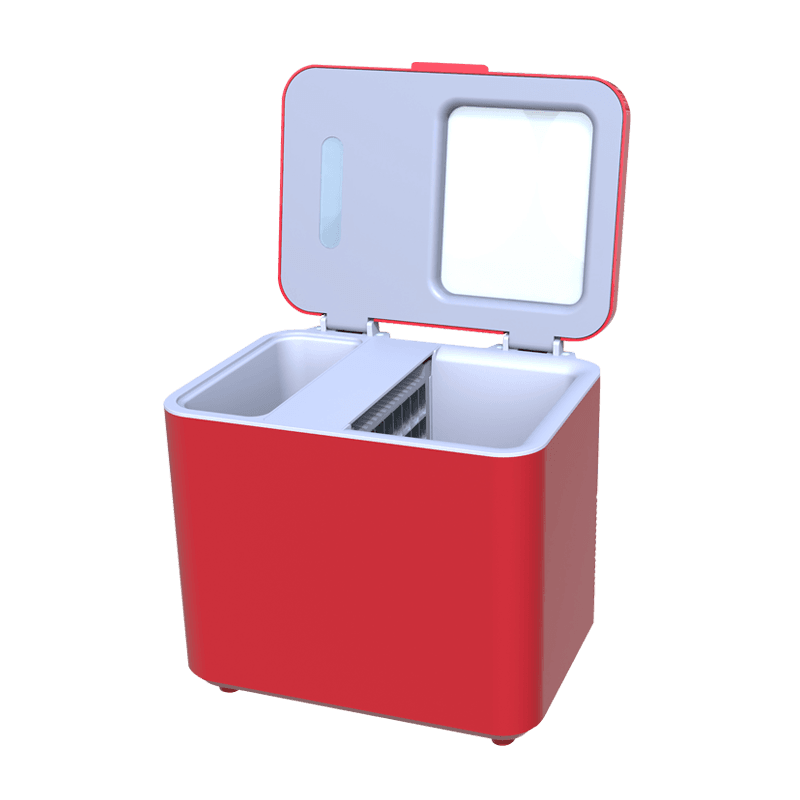
Home ice cube maker
3. Compact Design for Flexible Placement
One of the most important advantages of a household ice maker is its ability to operate independently from the main freezer. The Home Ice Cube Maker’s compact form allows it to serve as a dedicated ice station. This can make kitchen organization easier because users do not have to reserve a large amount of freezer space for trays or bags of ice.
The 325-by-295-millimeter footprint is suitable for many countertops, although users should measure their available area before purchase. A stable, level surface is recommended. The appliance should not be placed directly beside a heat source, under strong direct sunlight, or in an area where water spills are likely to reach electrical components.
Its compact size can be especially beneficial in apartments, dormitory-style accommodation, small offices, vacation properties, and entertainment areas. A large refrigerator may not always be located near a dining table, bar, or outdoor serving area. A dedicated ice maker can reduce repeated trips between the freezer and the serving location.
For commercial users, the machine may be useful as a supplementary ice source in a small office, showroom, meeting room, guest lounge, or low-volume beverage area. It should not automatically be treated as a substitute for a high-capacity commercial ice machine. Instead, its strongest position is in environments that need convenient, moderate-volume ice production without a large installation.
Compactness also contributes to easier transportation and storage. The appliance can be moved when cleaning the countertop or reorganizing a room. However, users should follow appropriate handling procedures, especially if the machine has recently been operated or transported. Refrigeration appliances generally benefit from being kept upright and allowed to stabilize after movement before being switched on.
4. Solid, Regular Ice Cubes and Their Practical Benefits
The product information emphasizes solid ice cubes with a neat square appearance. Regularly shaped ice offers several practical and visual benefits. Because a square cube tends to have a lower surface-area-to-volume ratio than many small or irregular ice pieces, it can melt more slowly under comparable conditions. This allows it to cool beverages while limiting rapid dilution.
Slow melting is particularly valuable for premium spirits, whiskey, neat liquor, iced coffee, fruit drinks, and other beverages where maintaining the original flavor is important. A drink that becomes excessively diluted may lose its intended aroma, body, and intensity. Larger, denser cubes can provide a more gradual cooling effect and a longer drinking period.
The regular shape also supports a clean presentation. Clear or relatively transparent cubes in a glass can make a drink appear more refined. When used in a transparent tumbler, square ice can create a professional appearance that is difficult to achieve with crushed ice or irregular fragments. This makes the product useful for both everyday enjoyment and social occasions.
Uniform cubes are also easier to handle. They can be placed into glasses, pitchers, coolers, and ice buckets with less mess. Their consistent shape allows users to estimate how much ice is required for a serving. Although actual cube clarity, density, and dimensions depend on the machine’s operating conditions and water quality, the product’s design intent is clearly oriented toward orderly, solid ice production.
For food preparation, ice cubes can help cool ingredients quickly. They may be used in cold-water baths for vegetables, seafood, or cooked foods that need rapid temperature reduction. They can also support the preparation of chilled beverages and certain desserts. Users must always follow appropriate food-safety practices and avoid reusing contaminated ice.
5. Advantages Compared with Conventional Ice Trays
5.1 Faster Access to Ice
Ice trays depend on the freezer’s available temperature, airflow, loading condition, and operating cycle. If the freezer is crowded or frequently opened, freezing may take longer. A dedicated ice maker is designed specifically for ice production, giving users a more direct way to obtain fresh ice when needed.
5.2 Less Freezer-Space Competition
Freezer space is often limited. Food, frozen ingredients, meal-preparation containers, and packaged products may compete for the same area occupied by ice trays. A countertop appliance moves ice production outside the freezer and helps preserve freezer capacity for other uses.
5.3 Easier Replenishment
Trays must be manually filled, carried, frozen, emptied, and refilled. A dedicated ice maker reduces these repetitive steps. Once the water supply is prepared and the machine is operated according to its instructions, the appliance can provide a more organized ice-making routine.
5.4 More Consistent Shape
Ice trays may create cubes with uneven fill levels, cracks, or inconsistent shapes. A purpose-built ice maker is engineered around a defined freezing process and mold structure. This can produce a more consistent result than manually filled trays, particularly when the machine is properly maintained.
5.5 Improved Serving Presentation
Regular cubes look more deliberate in a glass or serving container. They can help create a cleaner visual presentation for guests and support a more polished beverage service. This advantage is not only aesthetic; evenly shaped cubes are also easier to portion and arrange.
6. Advantages Compared with Basic Entry-Level Alternatives
The compact ice-maker market includes many basic appliances, but product quality can vary considerably. Some alternatives may focus only on low purchase cost, with limited attention to material selection, refrigeration reliability, serviceability, manufacturing consistency, or long-term user experience.
The Home Ice Cube Maker is positioned around a balanced combination of compact design, practical electrical specifications, R290 refrigerant, regular ice production, and a simple control system. This combination can be attractive to users who want a focused appliance rather than a feature-heavy product with unnecessary complexity.
A knob-type control can be an advantage for users who prefer direct operation. Mechanical or straightforward controls are often easy to understand and may reduce the learning curve for first-time users. They can also be useful in environments where multiple family members need to operate the appliance without consulting a complicated interface.
The use of R290 is another important design consideration. R290 refrigerant has a very low global warming potential compared with many commonly used synthetic refrigerants. Its use reflects the broader movement toward more environmentally responsible refrigeration technologies. Nevertheless, R290 is flammable, so the refrigeration circuit must be properly designed, sealed, labeled, and serviced by trained professionals.
The product’s 140-watt rating also reflects an emphasis on moderate household operation. A lower rated power does not automatically mean lower total energy use, because energy consumption depends on operating duration, ambient temperature, cooling efficiency, water temperature, ventilation, and frequency of use. However, a compact system can be more suitable than a large machine when the household requires a modest supply of ice.
Customers comparing alternatives should look beyond headline claims. Important evaluation points include the machine’s size, refrigerant, electrical compatibility, construction quality, cleaning access, control layout, after-sales support, and manufacturer experience. A reliable supplier that understands small household appliances can offer advantages over an anonymous product with limited technical documentation.
7. Refrigeration and R290 Considerations
The listed refrigerant is R290, with a charge of 26 grams. R290 is propane used as a refrigerant, not as a fuel for ordinary user operation. It is recognized for efficient thermodynamic performance and a low global warming potential, but it is classified as flammable. This means product engineering and manufacturing quality are particularly important.
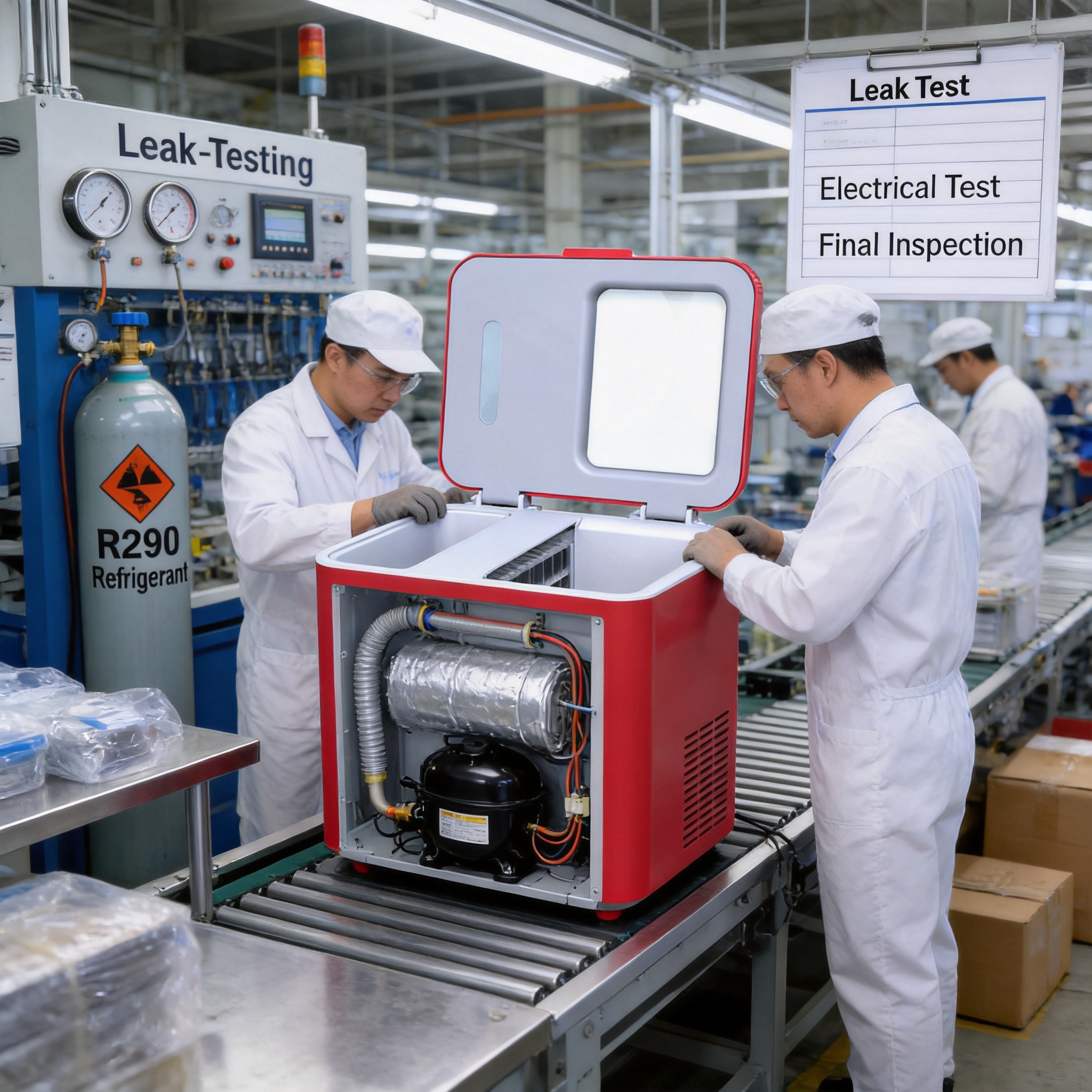
A properly designed R290 appliance requires suitable components, secure tubing connections, controlled refrigerant charging, leak testing, correct electrical protection, and appropriate warning labels. Production workers must understand the specific safety requirements associated with hydrocarbon refrigerants. Service personnel must also use compatible recovery, charging, and testing equipment.
The refrigeration system must be protected from damage during assembly, transport, and use. Users should not drill, cut, bend aggressively, or otherwise interfere with the sealed cooling circuit. If the appliance shows signs of refrigerant leakage, unusual odor, physical damage, or abnormal operation, it should be disconnected and inspected by a qualified professional.
R290 should not be viewed only as a marketing feature. Its value depends on the quality of the entire refrigeration system. Proper system design, component matching, manufacturing control, and final inspection are necessary to translate the refrigerant’s technical advantages into safe and dependable appliance performance.
8. Manufacturing Strengths and Process Discipline
Alien Technology Co., Ltd. is located in Zhouxiang, Zhejiang Province, an area known for small household-appliance manufacturing and convenient logistics. The company specializes in ice makers, coffee machines, air fryers, and related household appliances. This product focus gives the manufacturer familiarity with compact refrigeration, heating, electrical, plastic, metal, and user-interface components.
A company that develops several categories of small household appliances can benefit from shared engineering knowledge. Experience with electrical safety, thermal management, motors, controls, housing design, packaging, and production assembly can support improvements across different product lines. Such cross-category experience is valuable when creating appliances that must be compact, reliable, safe, and straightforward to use.
8.1 Product Design and Engineering Integration
A home ice maker combines several systems in a small enclosure. These include the refrigeration circuit, water-handling components, ice-forming structure, electrical controls, outer housing, insulation, ventilation path, and collection area. The systems must work together without making the product unnecessarily large or difficult to maintain.
Good engineering begins with the intended use environment. A household appliance should be easy to position, simple to operate, and resistant to normal daily handling. The design must also consider noise, heat release, water management, cleaning access, and protection against electrical hazards. Compactness is valuable only when it does not compromise essential safety or serviceability.
8.2 Component Matching
Refrigeration performance depends on the compatibility of the compressor, condenser, evaporator, capillary or expansion component, refrigerant charge, fan system, insulation, and control strategy. These elements must be matched rather than selected independently. An incorrect combination may result in poor freezing performance, excessive energy use, unstable operation, or shortened component life.
The stated R290 charge and 140-watt power rating indicate that the refrigeration system has been configured for a compact appliance format. Consistent component sourcing and controlled assembly are important for maintaining product-to-product uniformity. This is especially relevant when appliances are produced in volume for different markets.
8.3 Assembly Accuracy
Assembly quality is essential in any refrigeration appliance. Tubing connections must be formed and joined correctly. Electrical wires must be routed securely and protected from abrasion. Fans, switches, controls, insulation, and housing sections must be positioned accurately. Water-contact parts must be assembled cleanly and checked for leakage.
Manufacturing discipline can reduce variation between units. Standardized work instructions, trained operators, fixture-assisted assembly, process inspections, and traceable component management all support consistent production. These practices are particularly important for appliances containing sealed refrigeration systems and mains-voltage electrical parts.
8.4 Refrigerant Charging and Leak Testing
R290 systems require careful refrigerant handling. A controlled charging process helps ensure that each unit receives the intended amount. Too little or too much refrigerant can affect performance and may create abnormal operating conditions. Leak testing is equally important because a sealed system must remain secure throughout normal use.
Manufacturers with suitable equipment and trained personnel can integrate pressure testing, vacuum procedures, refrigerant charging, and final inspection into the production process. These operations should be performed according to applicable technical standards and factory safety procedures. The result is not only better performance but also stronger confidence in product safety and consistency.
8.5 Electrical and Functional Inspection
The appliance’s 220-volt, 50-hertz specification requires attention to electrical insulation, grounding or equivalent protection, switch performance, wire routing, connector quality, and power-cord integrity. Functional inspection can verify that the appliance starts correctly, the control responds as intended, the refrigeration system operates normally, and the water and ice functions work as designed.
Final testing should also examine abnormal sounds, excessive vibration, visible damage, water leakage, and signs of insufficient cooling. A structured inspection process helps identify problems before products are packed and shipped. This is especially important for export-oriented manufacturers serving customers with different regulatory and market requirements.
8.6 Housing and Material Quality
The external housing protects internal components and contributes to the appliance’s appearance. Materials should be selected for dimensional stability, cleanability, impact resistance, and suitability for the operating environment. Interior water-contact surfaces should be appropriate for their intended use and easy to clean.
Consistent molding, trimming, fastening, and surface inspection can improve the final appearance. A well-fitted housing can also reduce vibration, limit dust entry, and help maintain the correct airflow path. These details may not appear in a basic product specification, but they influence the user’s perception of quality over time.
8.7 Packaging and Logistics
Small appliances often travel through several stages before reaching the consumer. They may be moved from the factory to a warehouse, loaded into a container, transported by road, and delivered to a home or retailer. Packaging must protect the housing, controls, water components, and refrigeration system from impact and vibration.
The company’s location in a major small-appliance manufacturing area provides access to supplier networks and established logistics channels. This can support more efficient procurement, production coordination, and shipment planning. Reliable logistics are especially useful for business customers ordering multiple units or preparing products for overseas distribution.
9. A Manufacturing Philosophy Based on Practical Value
The company describes its mission as using smart technology to simplify life and enhance happiness. For a home ice maker, this philosophy is best expressed through practical details rather than excessive features. A product that is compact, understandable, serviceable, and dependable can provide greater everyday value than a machine overloaded with functions that users rarely need.
Humanized design means considering how people actually use the appliance. Users want to add water without unnecessary difficulty, access ice without making a mess, understand the controls quickly, and clean the product without specialized tools. They also expect the appliance to fit naturally into the kitchen and operate without demanding constant attention.
Reliable quality depends on more than final inspection. It begins with product planning, continues through component selection and process control, and ends with packaging and customer support. Continuous improvement can be based on production feedback, service information, customer comments, and new safety or efficiency requirements.
The company’s stated emphasis on customer satisfaction, innovation, stable operations, and pragmatic business practices is relevant to international buyers. Importers and distributors generally need a supplier that can communicate clearly, maintain production consistency, support documentation, and respond to product-development requirements. A manufacturer focused on household appliances is often better placed to provide category-specific support than a general trading company with no dedicated production capability.
10. Everyday Applications
10.1 Water and Soft Drinks
Ice cubes are a natural addition to water, soda, juice, iced tea, and flavored drinks. Regular cubes can cool beverages evenly while providing a clean appearance. A home ice maker allows users to prepare drinks for several people without emptying the household freezer.
10.2 Coffee and Cold Beverages
Iced coffee, cold brew, milk-based drinks, and other chilled beverages benefit from a convenient ice supply. Users should consider the drink recipe when selecting the amount of ice. Dense cubes may melt more slowly, helping maintain a balanced beverage over a longer period.
10.3 Spirits and Premium Drinks
Square ice cubes can complement whiskey, bourbon, rum, and other spirits served over ice. The slower melting characteristics associated with solid, regular cubes may help preserve flavor intensity compared with large amounts of rapidly melting crushed ice.
10.4 Entertaining
During parties and family gatherings, demand for ice can increase quickly. A countertop ice maker can function as a convenient support appliance near a beverage area. Users should plan ahead when large quantities are needed, because any compact household unit has practical production limits.
10.5 Food Preparation
Ice can be used in chilled preparation tasks, including cooling cooked foods, preparing cold-water baths, and keeping ingredients cool during short periods of handling. Food-safe procedures remain essential. Ice that has come into contact with unclean surfaces should not be added to beverages.
10.6 Offices and Small Service Areas
The machine may be suitable for offices, meeting rooms, break areas, guest lounges, and small reception spaces. Its compact size can be useful where a full commercial ice system would be excessive. Organizations should establish clear procedures for water filling, cleaning, and regular inspection.
11. Installation and Operating Guidance
Before operating the appliance, users should read the supplied instructions and verify that the local electrical supply matches the 220-volt, 50-hertz specification. The machine should be placed on a level, stable surface with sufficient room for airflow. Ventilation openings should not be blocked by walls, cabinets, packaging, cloth, or other objects.
After transportation, the appliance may need time to stand upright before operation. This allows the refrigeration system to stabilize. Users should follow the manufacturer’s specific recommendations regarding the waiting period, water filling, initial cleaning, and first ice-making cycle.
Only clean water suitable for drinking should be used when the ice is intended for consumption. The water reservoir should not be overfilled. Users should avoid adding flavoring, syrup, alcohol, or other liquids unless the manufacturer specifically states that such use is permitted.
The first batch of ice may be discarded after initial setup or cleaning. This can help remove residual manufacturing dust or odors from the water path. The collection area and water-contact surfaces should be cleaned regularly according to the instructions.
The appliance should not be operated in a location where it can be exposed to rain, standing water, excessive humidity, or extreme heat. It should also be kept away from combustible materials, especially because R290 is a flammable refrigerant. The refrigeration circuit must never be punctured or modified by the user.
12. Cleaning and Maintenance
Regular cleaning helps protect ice quality and supports reliable operation. Water-contact surfaces can develop mineral deposits over time, particularly in areas with hard water. Mineral accumulation may affect the appearance of ice, water flow, and the performance of internal components.
Users should follow the recommended cleaning method and use only approved cleaning products. Abrasive tools, harsh chemicals, and unsuitable solvents may damage surfaces or leave residues. After cleaning, internal areas should be rinsed properly when required, and the appliance should be dried or drained according to the operating instructions.
The ice collection area should be emptied and cleaned regularly. Ice should not be allowed to remain for extended periods if it becomes wet, contaminated, or exposed to an unsuitable environment. The exterior can generally be wiped with a soft, damp cloth, but water should not be allowed to enter electrical openings or controls.
Ventilation areas should be kept free of dust. Restricted airflow can increase heat buildup and make the refrigeration system work harder. If the appliance begins to make unusual noises, shows reduced cooling performance, leaks water, or displays electrical abnormalities, it should be stopped and checked by qualified service personnel.
13. How to Maximize Ice Quality
Water quality is one of the simplest ways to improve the appearance and taste of ice. Clean, fresh water can reduce unwanted odors and flavors. In areas with hard water, users may need to follow a more frequent descaling schedule.
Ambient temperature also affects operation. A hot room can increase the refrigeration system’s workload and extend the time needed to form ice. Keeping the appliance in a cool, ventilated area can support more stable operation.
The machine should not be placed directly beside an oven, kettle, radiator, or other heat-producing appliance. Adequate clearance around the condenser and ventilation openings helps the system release heat effectively.
Users should also avoid repeatedly opening or disturbing the appliance during a production cycle. Stable operation can help the unit maintain consistent freezing conditions. Ice should be transferred or stored in a clean container if it will not be used immediately.
14. Buyer Considerations and Competitive Evaluation
Before purchasing a home ice maker, buyers should identify their primary purpose. A person who needs occasional ice for drinks may prioritize compactness, simplicity, and low power demand. A family that regularly entertains may place greater importance on production speed, storage capacity, and ease of replenishment. A business buyer may focus on supply reliability, documentation, warranty terms, and distributor support.
The Home Ice Cube Maker is most compelling for users who value a compact, dedicated appliance with regular cubes and straightforward operation. Its specifications are appropriate for a household-oriented product, but customers should confirm local electrical compatibility, expected output, operating instructions, and service arrangements before ordering.
Competitive comparison should include more than price. A low-cost product may have attractive initial pricing but weak documentation, inconsistent assembly, limited spare parts, or inadequate support. A supplier with experience in ice makers and other small appliances may offer stronger long-term value through stable production, technical communication, and product customization capabilities.
Businesses purchasing for multiple markets should also consider packaging requirements, labeling, certification, plug configuration, language instructions, minimum order quantities, lead times, and after-sales procedures. These issues can have a major effect on the practical success of a product after it leaves the factory.
15. Business Cooperation and Supplier Value
Alien Technology Co., Ltd. welcomes contact from new and existing customers for business cooperation. Its product categories include ice makers, coffee machines, and air fryers, allowing buyers to discuss multiple household-appliance opportunities with one specialized manufacturer.
For distributors, an ice maker can complement other beverage and kitchen products. It may be marketed alongside coffee machines, air fryers, water dispensers, drinkware, or home-bar accessories. A supplier that understands related categories may be able to support coordinated product selection, packaging concepts, and market positioning.
For importers, clear technical information is essential. The available specification data includes power supply, current and power, refrigerant type and charge, dimensions, model description, product category, and image assets. Additional commercial discussions may cover production capacity, inspection standards, packaging, certifications, spare parts, warranty arrangements, and customization options.
For private-label customers, the compact design and focused product concept may provide a foundation for market-specific development. Branding, color, control labeling, packaging, instruction manuals, and accessory configurations can potentially be discussed with the manufacturer, subject to technical and commercial feasibility.
16. Responsible Use and Safety
Because the appliance uses mains electricity and R290 refrigerant, safe operation is essential. The product should be used only for its intended purpose. Users should not remove protective covers, alter the wiring, bypass safety components, or attempt to recharge refrigerant without proper qualifications and equipment.
R290 is flammable, so the machine should be kept away from open flames, sparks, and unauthorized modifications. If the refrigeration circuit is damaged, the area should be ventilated and the appliance should not be operated until it has been professionally assessed.
Children should be supervised when using or cleaning the appliance. The machine should not be used as a toy, and water should be handled carefully around electrical equipment. Any extension cord or power accessory, if permitted by the instructions, must be appropriately rated and used safely.
Responsible use also includes environmental consideration. The appliance should be disposed of through an appropriate recycling or appliance-recovery channel at the end of its service life. Refrigerant and electrical components should not be discarded in a way that creates unnecessary environmental or safety risks.
17. Frequently Asked Questions
Q1: What type of appliance is the Home Ice Cube Maker?
It is a compact household ice maker designed to produce solid, regular ice cubes for drinks, food preparation, entertaining, offices, and other everyday applications.
Q2: What are the machine dimensions?
The listed dimensions are 325 by 295 by 252 millimeters. Users should also allow additional space for ventilation, water filling, cleaning, and safe access around the appliance.
Q3: What power supply does the machine use?
The listed power supply is 220 volts at 50 hertz. The rated current and power are 0.65 amperes and 140 watts. Buyers should confirm compatibility with their local electrical system before purchase.
Q4: Which refrigerant does the ice maker use?
The product uses R290 refrigerant with a listed charge of 26 grams. R290 has a low global warming potential but is flammable, so the refrigeration system must not be modified or serviced by unqualified individuals.
Q5: What are the main advantages of square ice cubes?
Regular square cubes can provide a clean appearance, efficient stacking, and slower melting compared with many small or irregular ice pieces. They are useful for drinks where gradual cooling and limited dilution are desired.
Q6: Is the appliance suitable for commercial use?
It may be suitable for low-volume commercial or service environments such as offices, guest lounges, meeting rooms, and small beverage areas. It should not automatically be considered a replacement for a high-capacity commercial ice machine.
Q7: Can the ice maker replace a freezer and ice trays?
It can reduce dependence on ice trays and free up freezer space, but it does not replace the freezer’s broader storage function. It is best viewed as a dedicated supplementary appliance for producing and accessing ice.
Q8: What water should be used?
Clean water suitable for drinking should be used when the ice will be consumed. Users should follow the manufacturer’s instructions regarding water quality, filling levels, cleaning, and descaling.
Q9: How can users maintain good ice quality?
Regular cleaning, fresh water, suitable room temperature, unobstructed ventilation, and proper storage can support better ice quality. Hard-water areas may require more frequent cleaning to control mineral deposits.
Q10: What should users do if the machine leaks or makes unusual sounds?
The appliance should be switched off and disconnected if safe to do so. Users should not open the refrigeration circuit or attempt unauthorized repairs. A qualified service professional should inspect the product.
Q11: What manufacturing strengths support this product?
The manufacturer specializes in small household appliances and operates in Zhejiang, a major appliance-manufacturing region. Relevant strengths include product-category experience, component coordination, production organization, logistics access, and a stated commitment to quality, customer satisfaction, and continuous improvement.
Q12: Is a knob-type control easy to use?
A knob-type configuration can provide direct and understandable operation. It may be particularly suitable for users who prefer a simple control system without unnecessary digital complexity.
18. Conclusion
The Home Ice Cube Maker is a practical countertop appliance built around the everyday need for accessible, neatly shaped ice. Its compact dimensions, 140-watt rating, 220-volt/50-hertz electrical specification, R290 refrigerant, and knob-type configuration create a focused product profile for household and light-duty applications.
Its strongest advantages are convenience, freezer-space savings, regular cube presentation, and the potential for slower melting than small or irregular ice pieces. These benefits make it suitable for water, soft drinks, iced coffee, spirits, entertaining, food preparation, offices, and small service areas.
The product’s competitive value also depends on manufacturing discipline. A reliable ice maker requires careful refrigeration design, correct R290 handling, accurate assembly, electrical inspection, water-system cleanliness, protective packaging, and consistent quality control. Alien Technology Co., Ltd.’s specialization in ice makers and other small household appliances provides a relevant foundation for producing and supporting this type of equipment.
For consumers, the machine offers a convenient alternative to manually filled ice trays. For distributors and business buyers, it represents an opportunity to source a compact appliance from a manufacturer focused on household technology, practical design, and continuous improvement. With proper installation, cleaning, ventilation, and safe handling, it can become a useful part of a modern kitchen or beverage-service environment.
References
1. Product specification sheet for the Home Ice Cube Maker, model description Alien-ZF01.
2. Technical product information covering power supply, rated current, rated power, refrigerant type, refrigerant charge, and machine dimensions.
3. Manufacturer information for Alien Technology Co., Ltd., including company profile, product categories, manufacturing location, mission, and business philosophy.
4. General refrigeration engineering references concerning hydrocarbon refrigerants and the application of R290 in compact appliances.
5. General food-handling and appliance-maintenance guidance concerning clean water, ice hygiene, ventilation, descaling, and safe household equipment operation.
6. General household-appliance design principles covering compact construction, electrical safety, component matching, manufacturing inspection, and protective packaging.