
 English
 한국어
한국어 Español
 Deutsch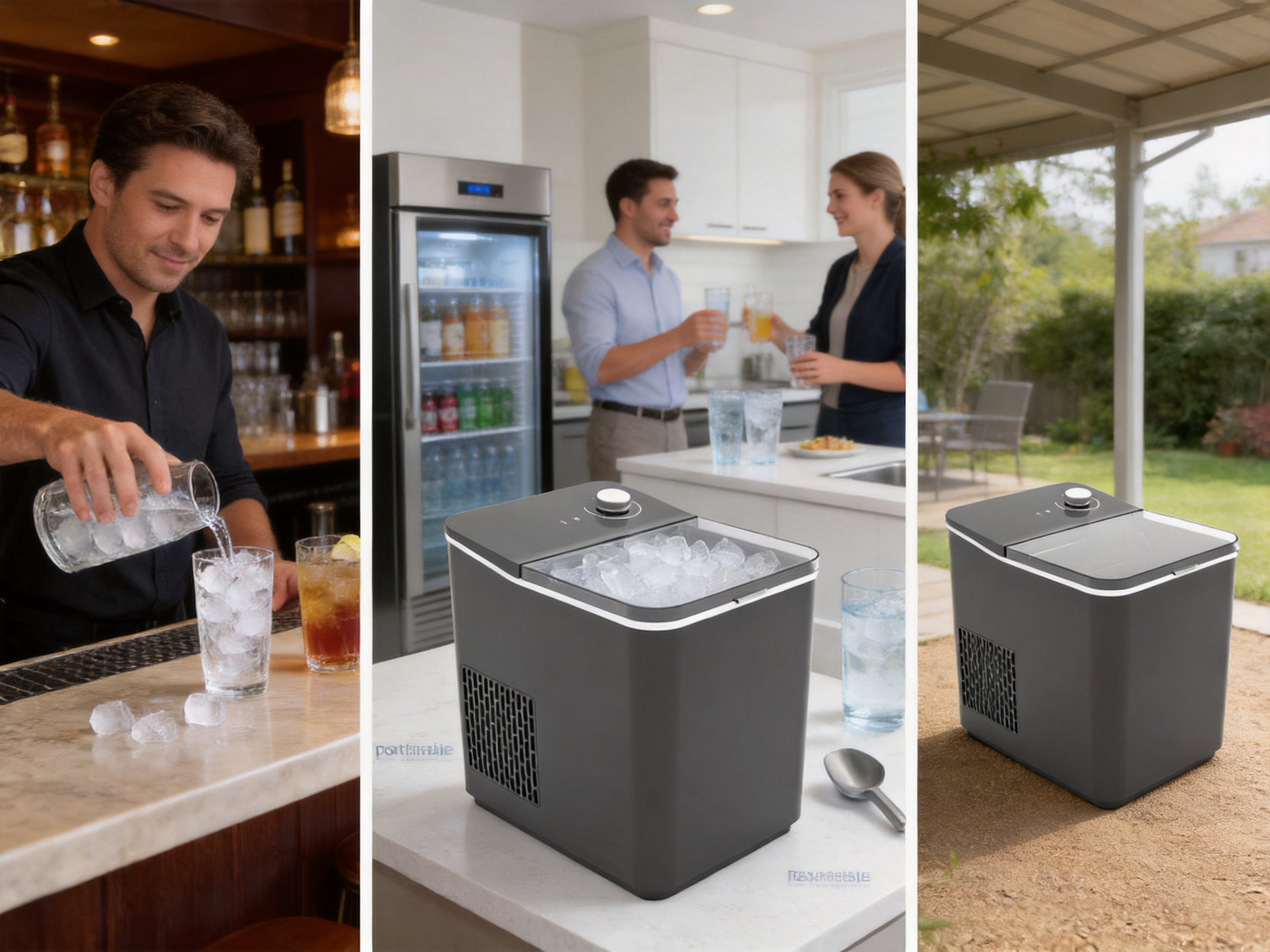
Ice has become an essential part of everyday food and beverage preparation. It cools water, soft drinks, juices, cocktails, coffee-based beverages, and mixed drinks, while also helping households create a more enjoyable hosting experience. However, many homes and small commercial spaces do not have a reliable supply of fresh ice available whenever it is needed. Freezer ice trays require advance planning, take valuable freezer space, and often produce irregular quantities. Large commercial ice machines can solve the supply problem, but they may be expensive, bulky, noisy, and unnecessarily powerful for ordinary domestic use.
The Knob-type Ice Maker, identified as the Alien-Z02 model, is designed to provide a practical middle ground. It is a compact bullet ice maker intended for kitchens, bar counters, offices, recreational areas, and other spaces where fresh ice is needed without installing a large appliance. Its high-performance refrigeration system is designed for quick ice production, while its compact construction makes it easier to position, move, and integrate into a variety of environments.
Beyond its basic ability to make ice, the machine combines a focused product design, efficient refrigerant selection, straightforward operation, and a manufacturing background rooted in household appliances. These characteristics allow it to compete with larger, less convenient ice-making appliances while maintaining a user-friendly footprint. Its 150-watt power rating, R600a refrigerant, compact body, and bullet-shaped ice output make it a particularly suitable choice for users who value convenience, moderate energy consumption, and dependable daily performance.
A Practical Solution for Fresh Ice at Home
The central advantage of a countertop ice maker is availability. Instead of filling trays and waiting for a freezer to complete several freezing cycles, users can prepare fresh ice when it is required. This is especially useful during family meals, weekend gatherings, warm-weather activities, office breaks, and home entertainment. The product is designed to support a more flexible routine by reducing the need to purchase packaged ice or plan several hours ahead.
The Alien-Z02 produces bullet-shaped ice. Bullet ice is generally recognized by its rounded exterior and hollow or partially hollow center. This shape provides several practical benefits. It can cool beverages quickly because the ice has a relatively large surface area in relation to its mass. It is also easy to place into narrow glasses, pitchers, cocktail shakers, and insulated bottles. The hollow center contributes to the distinctive appearance of the ice and allows it to blend naturally into both casual and presentation-focused drinks.
For household users, the shape offers a useful balance between cooling performance and versatility. Bullet ice is suitable for water, soft drinks, iced tea, fruit beverages, mocktails, cocktails, and many types of coffee drinks. It can also be used when serving chilled food or maintaining a cool environment in an insulated container. Although the machine is compact, its ice format is not limited to one specific type of beverage.
A further benefit is the reduced dependency on traditional freezer trays. Ice trays can spill, crack, absorb food odors, or occupy freezer shelves for long periods. They also require users to remove the ice manually and refill them before the next use. A dedicated ice maker separates ice production from frozen food storage, helping users maintain better organization inside the freezer. This separation is particularly valuable in apartments, compact kitchens, dormitories, offices, and recreational vehicles where storage space is limited.
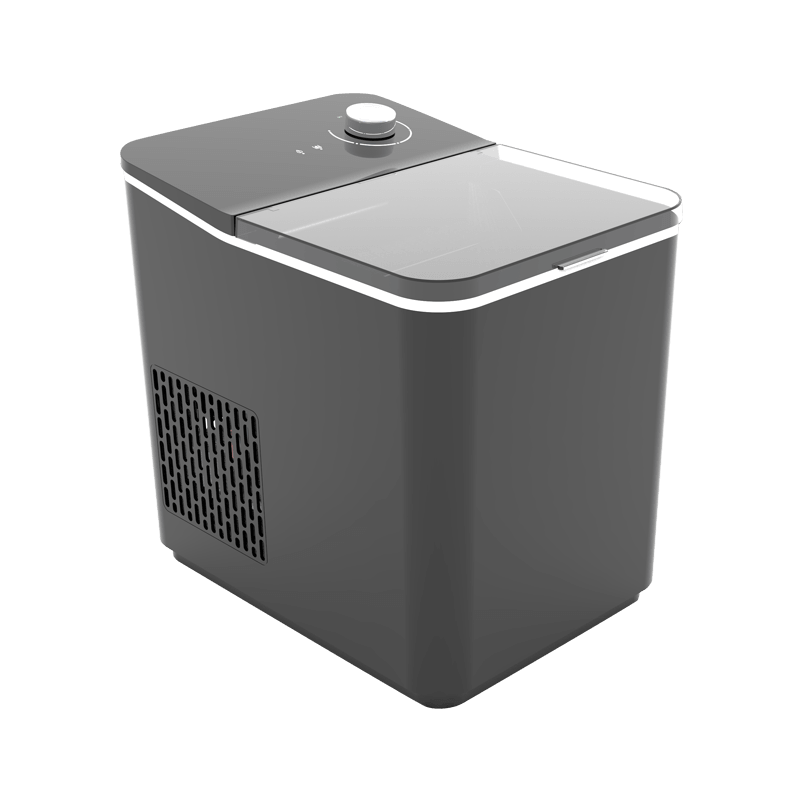
Knob-type ice maker
Compact Dimensions for Flexible Placement
Space efficiency is one of the most important characteristics of a modern countertop appliance. The product information describes the ice maker as compact and lightweight, making it suitable for kitchen countertops, bar counters, office refreshment areas, and outdoor locations where a suitable power supply is available. A small footprint allows the machine to remain accessible without dominating the surrounding work surface.
The listed machine dimensions are 313 by 226 by 309 millimeters. Another product description provides a compact-size measurement of 325 by 295 by 252 millimeters. Because these figures may relate to different measurement orientations, packaging configurations, or product documentation versions, purchasers and distributors should confirm the final dimensional specification for the intended configuration before installation. Regardless of the measurement reference used, the product is presented as a small countertop appliance rather than a full-size commercial ice machine.
Specification |
Provided Value |
Practical Significance |
Product type |
Knob-type bullet ice maker |
Designed for accessible countertop ice production |
Model description |
Alien-Z02 |
Identifies the supplied product configuration |
Power supply |
220V–240V, 50Hz |
Suitable for compatible electrical systems |
Current and power |
0.9A / 150W |
Supports moderate household energy demand |
Refrigerant |
R600a |
Natural hydrocarbon refrigerant with low global warming potential |
Refrigerant charge |
19g |
Specified charge for the refrigeration system |
Listed machine dimensions |
313 × 226 × 309mm |
Compact form for countertop placement |
Alternative compact-size description |
325 × 295 × 252mm |
Should be confirmed for the exact product configuration |
A compact appliance also offers logistical advantages. It is easier to transport from a warehouse to a retail location, from a retail location to a customer’s home, and from one room to another when necessary. Users can bring it to a kitchen island during food preparation, move it to a serving area during a party, or place it in a recreational space during outdoor activities. Its portability helps one appliance serve multiple locations instead of requiring a permanent installation.
Small dimensions should not be interpreted as a lack of usefulness. The design objective is to provide the core function of an ice maker in a form that fits modern living spaces. Many consumers live in apartments or homes where every square meter must be used efficiently. A compact ice maker can occupy a small part of a counter while providing a service that would otherwise depend on freezer capacity or packaged ice purchases.
Quick Ice Production and Beverage Convenience
The product uses a high-performance refrigeration system to produce bullet ice in a relatively short period. The exact production time may depend on ambient temperature, incoming water temperature, ventilation, power stability, water level, and operating conditions. Nevertheless, the product concept is centered on responsive ice making rather than long-term storage or large-volume commercial production.
Quick production is valuable because demand for ice is often unpredictable. A household may unexpectedly receive guests, run out of chilled beverage ingredients, or need ice for a meal being prepared immediately. A countertop appliance can respond to these situations more conveniently than freezer trays. It also gives users the ability to make fresh ice in batches, allowing production to align more closely with actual consumption.
The bullet shape helps support fast cooling. Ice with a hollow center has a greater exposed surface area than a solid block of the same general size. When placed in a beverage, it can transfer cooling energy efficiently while preserving the drink’s familiar appearance. The rounded shape also reduces sharp edges, making it easy to scoop and pour into different containers.
For hosts, the product can reduce preparation pressure. Instead of purchasing multiple bags of ice or checking freezer trays throughout the day, the user can prepare ice closer to serving time. This creates a smoother workflow for parties, celebrations, family dinners, and small hospitality occasions. For offices, fresh ice can improve the quality of shared beverages without requiring a large built-in water or ice system.
The machine is also useful for consumers who prefer control over the source and timing of their ice. Water can be added according to the user’s normal household practices, and ice can be produced in the quantity needed for immediate consumption. As with any appliance that handles water and ice, users should follow suitable cleaning and hygiene practices and use potable water for beverage preparation.
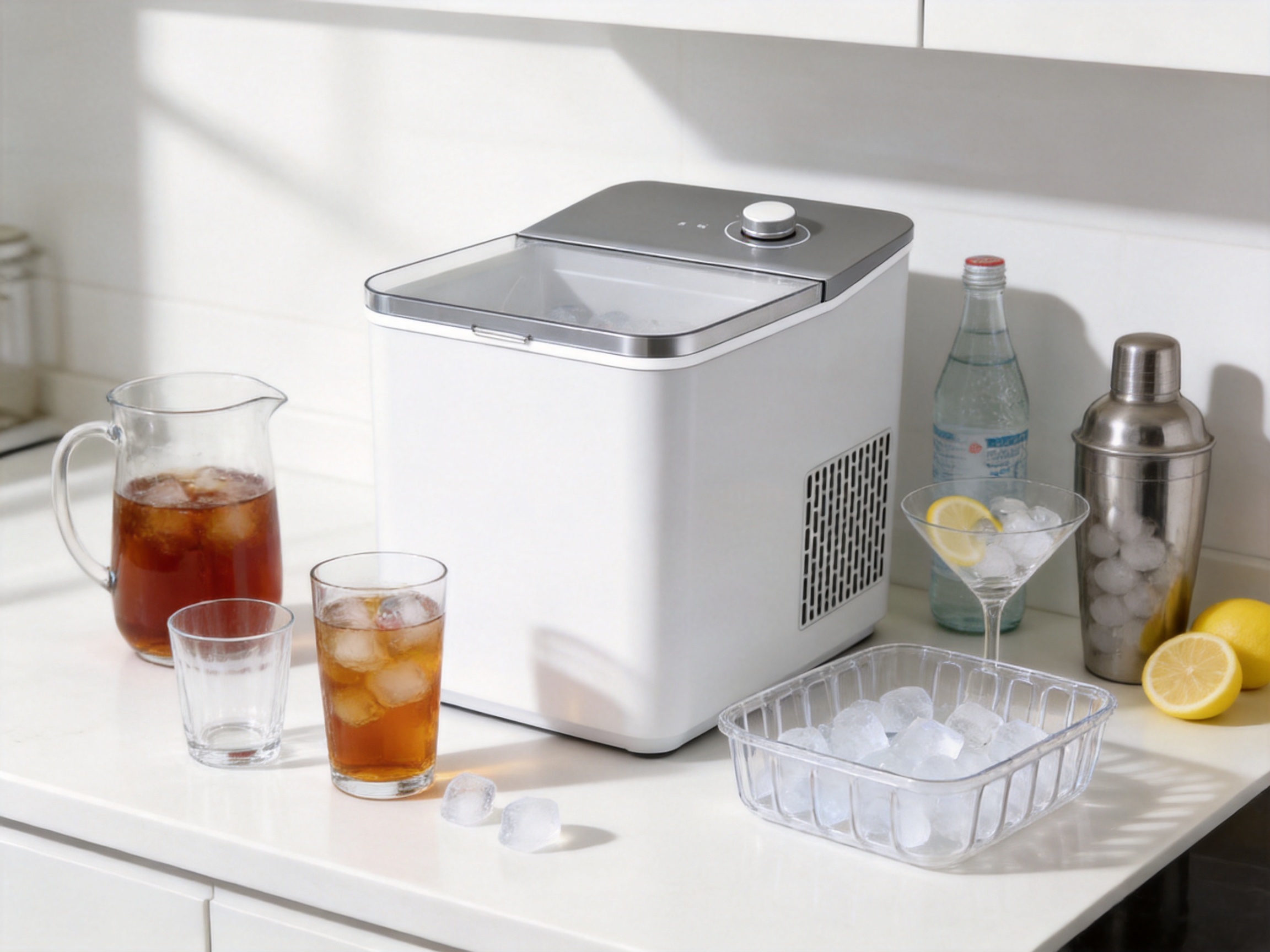
Why Bullet Ice Can Be More Versatile Than Traditional Cubes
Different ice shapes perform differently in practical use. Traditional solid cubes are familiar and widely used, but bullet ice has qualities that make it attractive for rapid cooling and convenient serving. Its curved shape fits well into glasses and bottles, while the hollow center creates a lighter, distinctive form that is easy to combine with beverages.
Bullet ice is particularly appropriate for drinks that need to become cold quickly. It can be used in iced tea, lemonade, carbonated drinks, fruit punch, chilled coffee, and mixed beverages. Its appearance also adds a more refined visual element than irregular pieces created by cracked trays. For home users who enjoy preparing drinks for guests, the consistency of machine-made ice can improve both presentation and convenience.
The claim that bullet ice is less prone to melting should be understood in practical rather than absolute terms. All ice melts when exposed to temperatures above freezing, and melting speed depends on room temperature, beverage temperature, container type, and exposure to air. The hollow shape and surface characteristics may help the ice function efficiently in a drink, but users should still expect gradual melting during normal use.
Another advantage is predictable sizing. Ice trays can create pieces that vary in volume because of uneven filling, tilted shelves, or water displacement. A dedicated machine is designed to form ice in a repeatable format. Consistency is useful when preparing beverages for several people, filling reusable bottles, or estimating how much ice is needed for a serving area.
Energy-Conscious Refrigeration with R600a
The ice maker uses R600a refrigerant with a stated charge of 19 grams. R600a, also known as isobutane, is a natural hydrocarbon refrigerant used in various household refrigeration appliances. It is valued for effective refrigeration performance and a very low global warming potential compared with many older refrigerant types.
The use of R600a reflects the broader movement toward more environmentally considerate refrigeration technologies. While the environmental impact of an appliance depends on the entire product life cycle, refrigerant selection is an important part of that consideration. A refrigerant with low global warming potential can reduce the potential climate impact associated with accidental release at the end of a product’s service life.
R600a systems must be designed, charged, transported, serviced, and disposed of responsibly because the refrigerant is flammable. Users should not open the refrigeration circuit, attempt unauthorized repairs, puncture tubing, or place the machine near uncontrolled ignition sources. Maintenance involving the sealed system should be performed by qualified personnel who understand the relevant safety requirements.
The product’s stated electrical rating is 150 watts, with a current rating of 0.9 amperes on a 220V–240V, 50Hz supply. Actual energy consumption may vary depending on operating time, ambient temperature, water temperature, ventilation, and the frequency of ice production. The moderate power rating supports the product’s role as a household countertop appliance rather than a high-capacity commercial machine.
Energy-conscious design is not limited to refrigerant choice. A compact body generally contains less material and requires less space to cool than a large machine. Responsive batch production can also help users avoid keeping a large ice-making system running continuously when only a small quantity is needed. To support efficient operation, the appliance should be placed with adequate ventilation, kept away from excessive heat, and operated according to the manufacturer’s instructions.
Simple Control and User-Oriented Operation
The product is described as a knob-type ice maker. A physical knob can provide an intuitive control experience for users who prefer direct operation without complicated menus. Turning a control is familiar, quick, and easy to understand, particularly in kitchens where users may be wearing gloves, handling ingredients, or working in a busy environment.
A straightforward interface can also reduce the learning curve for different members of a household. Children should not operate the machine without appropriate adult supervision, but adults and older users can generally understand a clear physical control more quickly than a system with multiple layers of digital settings. For a single-purpose appliance, simplicity can be a major advantage.
The product materials also use an alias referring to a touchscreen ice maker. This may indicate that different configurations, documentation versions, or product listings exist within the same development or sales family. Buyers and distributors should confirm whether the supplied unit uses a physical knob, a touchscreen, or another interface before ordering large quantities. The principal functional description provided here is the knob-type configuration.
Effective user-oriented design involves more than the control mechanism. It includes the arrangement of the water inlet, ice collection area, ventilation openings, outer housing, electrical components, and internal refrigeration structure. A well-planned layout helps reduce unnecessary movement during operation and makes the appliance easier to position on a counter. It also supports a cleaner appearance in modern kitchens and hospitality settings.
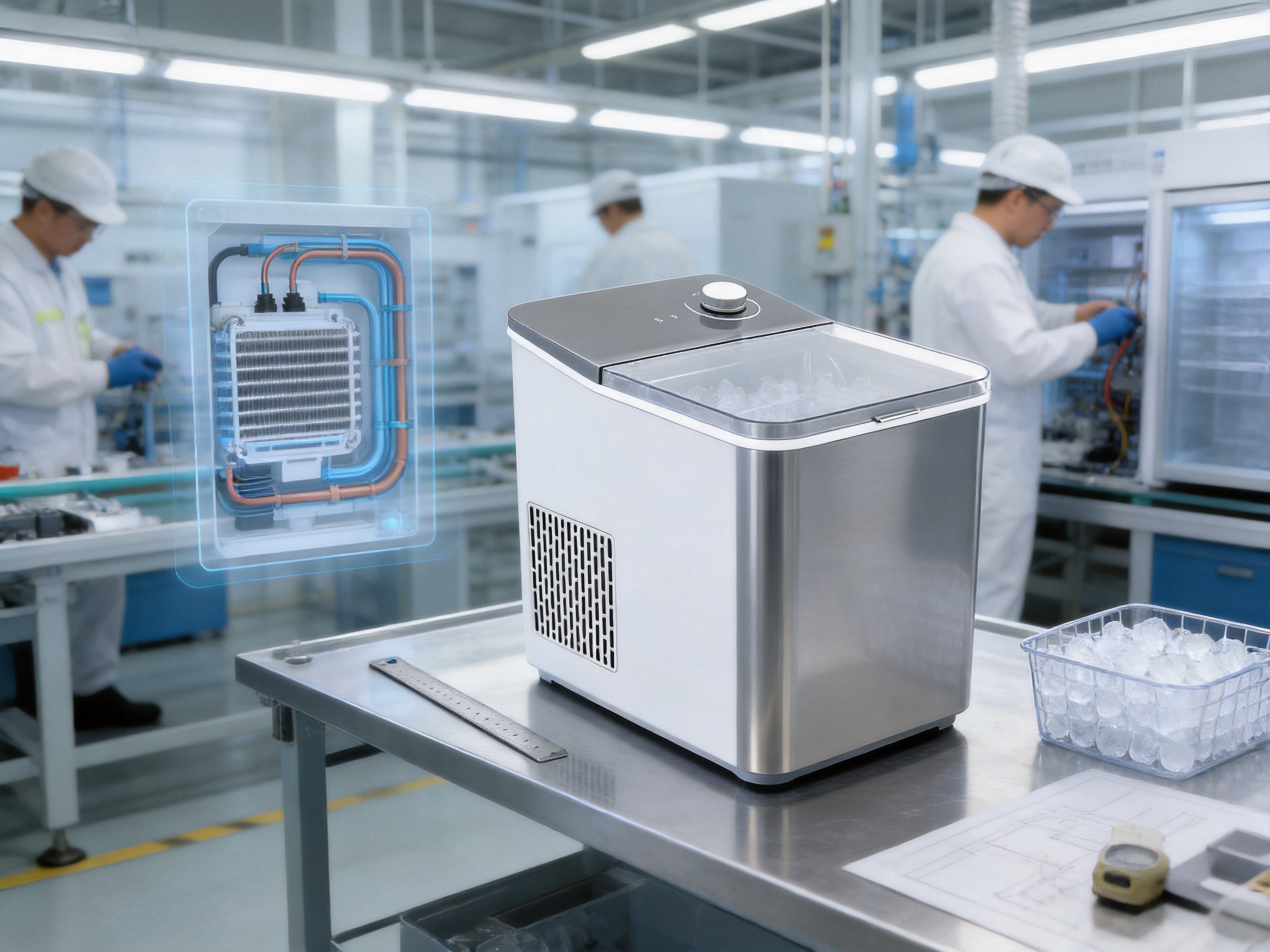
Manufacturing Strengths Behind the Product
Alien Technology Co., Ltd. is located in Zhouxiang, Zhejiang Province, an area known for the production of small household appliances and convenient logistics. This location provides a useful industrial foundation for a product such as a compact ice maker. Proximity to appliance suppliers, component manufacturers, packaging resources, transport services, and supporting technical labor can help a manufacturer coordinate production efficiently.
The company specializes in household appliances including ice makers, coffee machines, and air fryers. This product range creates valuable experience across several categories that share important manufacturing requirements. Ice makers require refrigeration integration, water management, thermal control, electrical safety, and housing assembly. Coffee machines require fluid pathways, heating systems, control interfaces, and food-contact considerations. Air fryers require heating, airflow management, insulation, and temperature control. Experience across these categories can strengthen a company’s ability to manage compact appliance design as a complete system.
Advanced manufacturing should be understood as a combination of processes rather than a single machine or production step. For a countertop ice maker, key processes may include product development, component sourcing, plastics processing, metal forming, refrigeration-system assembly, electrical integration, leak inspection, functional testing, appearance inspection, packaging, and shipment control. The supplied company information emphasizes reliable quality, continuous improvement, humanized design, and innovation. These principles are directly relevant to maintaining consistency across those stages.
Product development begins with understanding how users will operate the machine in real environments. The manufacturer’s focus on humanized design suggests attention to practical household requirements such as compact placement, accessible controls, manageable power consumption, and convenient ice output. A product designed around real user behavior is more likely to be accepted than one that focuses only on technical specifications.
Component coordination is equally important. The refrigeration system, refrigerant charge, compressor, heat exchange surfaces, water system, control mechanism, insulation, and outer enclosure must work together. A change in one component can influence freezing performance, noise, energy demand, condensation, or durability. Manufacturing strength comes from managing these relationships carefully rather than treating each part as an isolated item.
Assembly quality is particularly important for refrigeration appliances. Tubing connections and sealed-system components must be assembled correctly and inspected for potential leakage. Electrical connections must be secure, insulated, and appropriate for the specified voltage and frequency. Water-contact areas must be positioned to reduce unwanted leakage and support regular cleaning. Mechanical controls must operate smoothly and remain stable through repeated use.
Functional testing allows a manufacturer to identify problems before products leave the factory. A suitable inspection program may verify power-up behavior, control response, refrigeration operation, water circulation, ice formation, collection performance, abnormal noise, electrical stability, and external appearance. The exact internal testing standards of a manufacturer should be confirmed through its quality documentation, but these categories illustrate the importance of systematic production control.
Continuous improvement is another strength emphasized by the company. In household appliances, improvement can involve reducing unnecessary material, refining the user interface, improving insulation, optimizing airflow, strengthening high-use components, simplifying maintenance, or improving packaging protection. Small improvements made consistently can create meaningful gains in customer satisfaction and product reliability over time.
Innovation in this context does not always mean adding more digital features. It can mean developing a better balance between size and performance, selecting a more environmentally considerate refrigerant, improving the shape of the ice, creating a more accessible control, or making the appliance easier to integrate into different environments. Practical innovation is especially valuable for products intended for broad household use.
Quality Management and Production Consistency
Customers purchasing an ice maker expect the product to perform consistently from the first use. They expect the appliance to receive power correctly, cool water, form ice, and continue operating without unnecessary interruption. Manufacturing quality is therefore closely connected to customer trust.
A consistent production process begins with incoming material control. Housing materials, electrical components, refrigeration parts, controls, fasteners, insulation, packaging materials, and other items should be checked against defined requirements. Variations in material quality can affect product appearance, fit, thermal performance, or service life. Reliable suppliers and clear incoming inspection procedures help reduce such risks.
Process control is also important. Assembly workers need clear instructions for component placement, wiring, tubing connections, sealing, fastening, and inspection points. When processes are documented and repeatable, the manufacturer can reduce variation between production batches. This is especially significant when serving overseas customers who expect products from different shipments to maintain comparable specifications.
Final inspection should combine visual examination with functional verification. A visually attractive appliance is not sufficient if it does not produce ice correctly, and a functional appliance is not sufficient if its enclosure is damaged or its controls are poorly fitted. A balanced quality system checks both performance and presentation.
Packaging and logistics are additional manufacturing strengths for compact appliances. The product may pass through multiple handling stages before reaching the end user. Proper internal protection, moisture control, labeling, and carton design help reduce the risk of damage during transport. The company’s location in a region with convenient logistics can support more efficient movement of finished goods and components, although shipping arrangements should always be confirmed for each market and order.
Advantages Over Larger Commercial Ice Machines
The Alien-Z02 is not intended to replace high-capacity commercial ice machines in restaurants, hotels, supermarkets, or large catering operations. However, it has several advantages for users whose requirements are moderate. A commercial machine may offer higher output, but it can require more floor space, a larger electrical connection, plumbing installation, drainage, professional servicing, and a higher initial investment.
A countertop unit is easier to introduce into an existing household or small business environment. It does not require the same level of installation planning as a built-in machine. Users can place it where it is convenient, connect it to a compatible electrical supply, and begin using it according to the operating instructions. This lower installation burden is valuable for renters, small offices, event spaces, and temporary beverage stations.
Commercial equipment can also be excessive when demand changes throughout the day. A small household may need ice mainly during meals, weekends, or warm seasons. A compact appliance allows production to follow demand without maintaining a large system designed for constant heavy use. Its lower power rating and smaller physical presence can make it a more practical choice for occasional or moderate production.
Advantages Over Freezer Trays and Packaged Ice
Freezer trays are inexpensive and familiar, but they require time and freezer space. Their production rate is limited by the capacity of the tray and the freezer’s freezing cycle. Users must remember to refill them, and removing the ice can be inconvenient if the tray becomes brittle or stuck. A dedicated ice maker addresses these limitations by creating ice independently of the freezer.
Packaged ice offers convenience, but repeated purchases can become expensive. Bags may be difficult to store, may partially melt during transport, and can create unnecessary packaging waste. The quality and cleanliness of packaged ice may also vary depending on handling and storage conditions. Producing ice at home allows users to prepare it close to the time of use, reducing dependence on outside supply.
A countertop ice maker also gives users more control over timing. Ice can be produced before guests arrive, during food preparation, or when a beverage station needs replenishment. This flexibility is one of the most important reasons to choose a dedicated appliance.
Suitability for Different Environments
In a home kitchen, the machine can support daily beverages and special occasions without occupying a large section of the counter. Its compact format is useful in apartments and smaller homes, where conventional freezer capacity may be limited.
In a home bar, bullet ice can improve the presentation and cooling of mixed drinks. The consistent shape is suitable for cocktails, mocktails, and chilled spirits served in appropriate quantities. The machine can remain near the serving area, reducing repeated trips to a freezer.
In an office, it can support shared drinking water, cold beverages, and informal meetings. Its moderate electrical rating may be more suitable for an office refreshment area than a large commercial system, provided that the electrical installation and operating environment are appropriate.
In outdoor settings, the appliance may be useful for patios, recreational areas, and temporary beverage stations when used under suitable conditions. It should be protected from rain, standing water, extreme heat, and unstable electrical supplies. Outdoor use should always follow the safety instructions for the particular configuration.
In small hospitality businesses, the machine can serve as a supplemental ice source. It may be practical for a boutique café, guesthouse, studio, showroom, or event service that needs a moderate amount of ice but does not require continuous high-volume production. Operators should evaluate actual demand and maintain appropriate cleaning and food-safety procedures.
Responsible Use and Maintenance
Regular care helps preserve the quality and reliability of any appliance that handles water. Users should keep the exterior clean, wipe spills promptly, and follow the recommended procedure for cleaning the water-contact components. Ice should be handled with clean utensils or washed hands, and the water reservoir should not be left neglected for extended periods.
The appliance should be placed on a stable, level surface. Adequate clearance around ventilation openings is important because the refrigeration system needs to release heat during operation. Blocking airflow can increase operating temperature, reduce performance, and place unnecessary stress on internal components.
The specified electrical supply is 220V–240V at 50Hz. Users should confirm compatibility before operation. A suitable outlet should be used, and damaged cords, loose plugs, or overloaded extension arrangements should be avoided. Electrical repairs should be performed by qualified professionals.
Because the machine uses R600a, users must not interfere with the sealed refrigeration system. The refrigerant charge is only 19 grams, but even a small charge requires responsible handling. The appliance should not be punctured, burned, or dismantled without proper technical procedures. If unusual odors, hissing sounds, visible damage, or abnormal operation occur, the unit should be disconnected safely and inspected by an authorized technician.
Cleaning frequency depends on usage, water quality, ambient conditions, and the manufacturer’s instructions. In areas with hard water, mineral buildup may require additional attention. Proper cleaning can help maintain ice quality and support stable water flow. The use of unsuitable chemicals should be avoided unless specifically approved for the relevant components.
How the Product Supports the Company’s Mission
Alien Technology Co., Ltd. states a mission centered on smart technology, simplified living, and enhanced happiness. The compact ice maker reflects this mission through a direct and understandable benefit: it reduces the effort required to obtain fresh ice. Instead of relying on lengthy freezer cycles or frequent purchases, users have a dedicated appliance available when needed.
The company’s broader emphasis on reliable quality and customer satisfaction is also relevant. A household appliance becomes valuable when it performs consistently, fits naturally into daily routines, and does not create unnecessary complexity. The product’s compact design, moderate power specification, environmentally considerate refrigerant, and accessible control all support that practical orientation.
The company welcomes business cooperation with new and existing customers. For distributors, importers, retailers, hospitality suppliers, and private-label partners, its specialization in ice makers, coffee machines, and air fryers may provide opportunities for category expansion. A supplier with experience across several household-appliance segments can potentially support coordinated product sourcing and broader kitchen-appliance programs.
Purchasing Considerations for Distributors and End Users
Before purchasing, buyers should confirm the exact product configuration, including control type, final dimensions, ice production capacity, storage capacity, cycle time, noise level, packaging dimensions, warranty terms, and applicable market requirements. The supplied materials provide important core specifications, but not every commercial detail required for a final purchasing decision.
Electrical compatibility is essential. The listed machine is designed for 220V–240V and 50Hz operation. Buyers in regions using different voltage or frequency standards should not assume compatibility. Importers should also confirm plug type, labeling, manuals, certification requirements, and customs documentation for the destination market.
Distributors should verify whether the listed dimensions refer to the machine body, a specific orientation, or another measurement standard. The two dimension descriptions provided in the product materials should be reconciled before product listings, retail packaging, or installation guides are finalized.
Commercial buyers should also consider expected demand. This appliance is well suited to household and moderate-use environments, but businesses requiring continuous high-volume output may need a larger machine or several units. Choosing equipment according to actual demand helps prevent both undercapacity and unnecessary overspending.
Retailers can position the product as a convenience-focused appliance rather than merely a refrigeration device. Its strongest selling points include fresh bullet ice, compact placement, flexible use, moderate power demand, environmentally considerate refrigerant, and simple operation. These benefits are easy for consumers to understand because they connect directly to everyday problems.
Q&A
What type of appliance is the product?
It is a compact countertop bullet ice maker. The supplied product title describes it as a knob-type ice maker, and the model description is Alien-Z02.
What kind of ice does it produce?
It produces bullet-shaped ice with a hollow or partially hollow center. This type of ice is suitable for water, soft drinks, iced tea, cocktails, mocktails, chilled coffee, and other cold beverages.
Why is bullet ice useful?
Bullet ice has a rounded shape that fits easily into many glasses and bottles. Its hollow center and relatively high exposed surface area can help cool beverages efficiently, while its consistent appearance supports attractive serving presentation.
How quickly does it make ice?
The product is designed for quick ice making through a high-performance refrigeration system. Exact production time depends on room temperature, water temperature, ventilation, power stability, and operating conditions. Buyers should request the confirmed cycle-time specification for the exact configuration.
What are the listed dimensions?
The technical table lists dimensions of 313 × 226 × 309 millimeters. The product information also mentions 325 × 295 × 252 millimeters. These figures should be confirmed with the supplier because they may refer to different measurement orientations or configurations.
What power supply does it require?
The listed power supply is 220V–240V at 50Hz. The stated current and power are 0.9 amperes and 150 watts. Users should confirm electrical compatibility before connecting the appliance.
What refrigerant does it use?
It uses R600a, or isobutane, with a stated charge of 19 grams. R600a is a natural hydrocarbon refrigerant with very low global warming potential, but it is flammable and must be handled only through appropriate service procedures.
Is the ice maker suitable for outdoor use?
Its compact design allows placement in outdoor areas when suitable conditions are available. However, it must be protected from rain, direct water exposure, excessive heat, unstable power, and other hazardous conditions. The specific operating instructions should always be followed.
Can it replace a commercial ice machine?
It can serve as a convenient alternative for households, offices, small hospitality spaces, and moderate-demand applications. It is not automatically a replacement for a large commercial machine designed for continuous, high-volume production.
How does it compare with freezer trays?
It can make fresh ice without occupying freezer space or requiring users to refill trays and wait through long freezing cycles. It also produces a more consistent bullet shape and allows ice production closer to the time of use.
Does the product have a touchscreen?
The primary supplied description identifies the product as a knob-type ice maker. A separate product alias refers to a touchscreen configuration, so buyers should confirm the control interface of the exact unit before ordering.
What makes the manufacturer suitable for business cooperation?
Alien Technology Co., Ltd. specializes in ice makers, coffee machines, and air fryers and is located in a Zhejiang region known for small household-appliance manufacturing and convenient logistics. The company emphasizes humanized design, reliable quality, customer satisfaction, continuous improvement, and innovation.
What maintenance does the appliance require?
Users should keep the machine clean, use potable water, remove spills, maintain ventilation clearance, and follow the recommended cleaning schedule. The sealed refrigeration system should never be opened or repaired by unqualified personnel.
Conclusion
The Knob-type Ice Maker is designed around a straightforward but increasingly important household need: having fresh ice available without sacrificing freezer space or installing oversized commercial equipment. Its compact form makes it suitable for kitchens, bar counters, offices, and selected outdoor areas. Its bullet-shaped ice provides a versatile format for chilled beverages, while its refrigeration system is intended to support quick production.
The stated 150-watt power rating and R600a refrigerant reinforce its position as a practical, energy-conscious countertop appliance. The use of R600a also reflects attention to modern refrigerant trends, provided that the system is handled responsibly throughout its service life. The physical control, compact design, and flexible placement further support everyday usability.
From a manufacturing perspective, the product benefits from a company located in Zhejiang’s small-appliance manufacturing environment and experienced in producing ice makers, coffee machines, and air fryers. Its stated commitment to humanized design, reliable quality, customer satisfaction, continuous improvement, and innovation provides a foundation for serving both household users and business partners.
For consumers, the most important advantages are convenience, space efficiency, fresh ice availability, and flexible use. For distributors and commercial partners, the product offers a focused appliance category supported by a manufacturer with broader household-appliance capabilities. Buyers should confirm final dimensions, control configuration, production capacity, certification requirements, and operating details before purchase, but the product’s core proposition remains clear: reliable countertop ice making designed to simplify modern daily life.
References
1. Product specification sheet for the supplied compact bullet ice maker, including electrical rating, refrigerant type, refrigerant charge, and machine dimensions.
2. Product information supplied for the Alien-Z02 model, including product features, application scenarios, compact design, and bullet-ice benefits.
3. General refrigeration engineering guidance concerning R600a hydrocarbon refrigerants, sealed-system safety, ventilation, and qualified servicing.
4. General household-appliance design principles concerning countertop placement, user-oriented controls, water hygiene, functional testing, and manufacturing quality management.
5. Company profile information supplied for Alien Technology Co., Ltd., including product categories, manufacturing location, business mission, quality principles, and cooperation objectives.