
 English
 한국어
한국어 Español
 Deutsch
In modern kitchens, the quality of ice can be just as important as the quality of the beverage it chills. A carefully made ice cube keeps a drink cold, preserves its intended flavor, and contributes to a polished serving experience. By contrast, thin, irregular, or quickly melting ice may dilute a beverage, occupy unnecessary freezer space, and create an untidy presentation. The Home Ice Cube Maker, identified as the Alien-ZF01 model and also known as a knob-type ice maker, is designed to address these everyday concerns with a compact structure, practical electrical performance, and a focus on regular square ice cubes.
This countertop appliance is intended for homes and other small-scale environments where convenient ice production, efficient use of space, and dependable operation are important. Its 220V/50Hz power supply, 140W rated power, R290 refrigerant, and compact dimensions of 325 × 295 × 252 millimeters provide a balanced configuration for household use. Rather than relying on a large, complicated installation, the machine is designed as a self-contained appliance that can be placed where ice is needed most.
The product also reflects the manufacturing experience of Alien Technology Co., Ltd., a Zhejiang-based household appliance manufacturer specializing in ice makers, coffee machines, and air fryers. Located in Zhouxiang, Cixi City, an area known for small household appliance production and convenient logistics, the company combines product specialization, practical design, and a customer-oriented business philosophy. Its stated mission is to use smart technology to simplify life and enhance happiness, an approach that is particularly relevant to a product intended to make a frequent household task easier.
Why Ice Quality Matters in Everyday Use
Ice is often treated as a minor accessory, but its physical structure has a direct effect on the final drinking experience. When ice melts too quickly, it adds water to a beverage before the drink can be enjoyed. This can weaken the flavor of coffee-based drinks, soft drinks, fruit beverages, cocktails, and spirits. A denser, more substantial cube generally remains useful for a longer period, allowing the beverage to stay chilled while maintaining a more consistent taste.
Regularly shaped ice also provides practical advantages. Square cubes are easier to arrange in a glass, pitcher, or ice bucket than irregular fragments. They can be stacked more efficiently when temporarily stored, and their consistent shape gives a drink a more professional appearance. For households that entertain guests, serve premium beverages, or simply appreciate neat presentation, the shape of the ice becomes part of the overall experience.
The Home Ice Cube Maker is built around these principles. Its product information emphasizes solid cubes with a high density and relatively small surface area in contact with the surrounding beverage. These characteristics support a slow-melting performance. While actual melting time will depend on room temperature, beverage temperature, glass size, and other environmental factors, the design objective is clear: produce ice that provides sustained cooling with less immediate dilution than very thin or highly fragmented ice.
Product Overview and Core Specifications
The Alien-ZF01 is a compact home ice cube maker designed for users who want a dedicated source of regularly shaped ice without occupying the space of a large commercial machine. The appliance uses a 220V/50Hz power supply and has a rated current and power of 0.65A and 140W. It uses R290 refrigerant with a stated charge of 26 grams. The machine measures 325 millimeters in length, 295 millimeters in width, and 252 millimeters in height.
Product Attribute |
Specification |
Practical Significance |
Product type |
Home ice cube maker |
Suitable for household countertop use and convenient ice preparation |
Model description |
Alien-ZF01 |
Identifies the product configuration and design platform |
Power supply |
220V/50Hz |
Designed for compatible household electrical systems |
Current and power |
0.65A / 140W |
Provides a moderate electrical load for a compact appliance |
Refrigerant |
R290, 26g charge |
Uses a modern low-impact refrigerant option in the refrigeration circuit |
Machine dimensions |
325 × 295 × 252 mm |
Supports placement on many kitchen counters, bars, and service areas |
Control style |
Knob-type operation |
Offers a straightforward physical control approach |
The specification set demonstrates a clear product philosophy. Instead of emphasizing excessive size or unnecessary complexity, the machine focuses on an efficient combination of refrigeration performance, compact packaging, and easy control. This can be especially valuable in apartments, small kitchens, office pantries, guest rooms, beverage stations, and hospitality environments where counter space is limited.
Compact Dimensions for Flexible Placement
Counter space is one of the most important limitations in a modern kitchen. Large appliances may provide greater capacity, but they can also be difficult to position and may require a permanent installation. The dimensions of the Home Ice Cube Maker make it easier to consider a wider variety of locations. At 325 × 295 × 252 millimeters, the appliance can fit on many standard counters while leaving room for other kitchen tools.
The compact format also makes the machine easier to integrate into a beverage area. It can be positioned near glasses, drink ingredients, a coffee machine, or an air fryer without taking over the entire work surface. For a household that does not need a high-volume commercial ice supply, a smaller appliance may provide a more appropriate balance between utility and footprint.
Space efficiency extends beyond the physical machine. The regular shape of the ice it produces can support more orderly storage than random broken pieces. Square cubes can be arranged in containers or freezer compartments with less wasted space. This is useful when users prepare ice in advance for a gathering or need to keep a reserve available during warm weather.
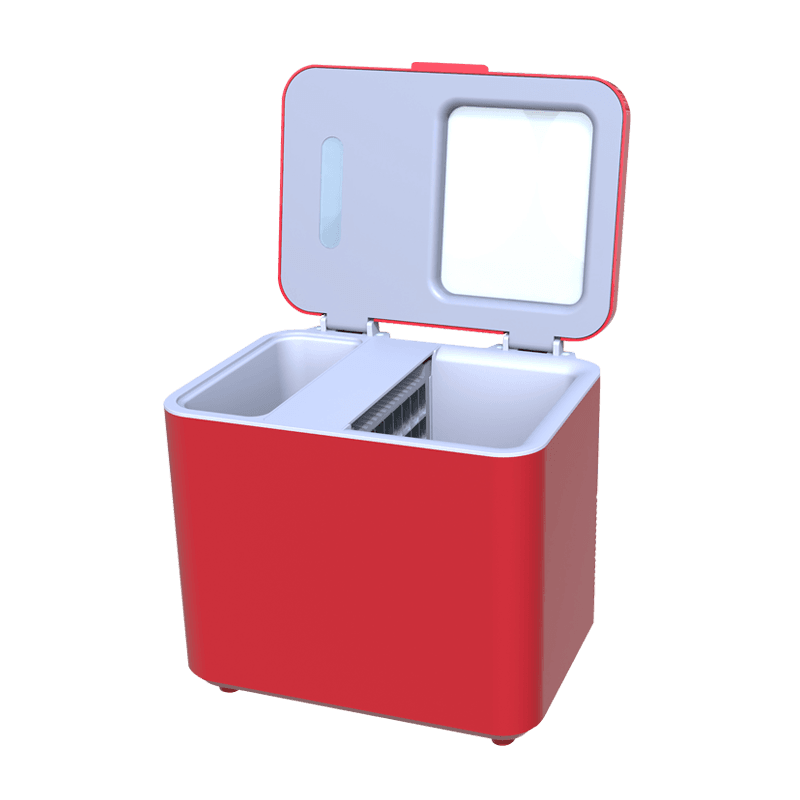
Home ice cube maker
Slow-Melting Ice for Better Beverage Flavor
One of the principal advantages of solid square ice is its potential to melt more slowly. Melting is influenced by surface area, density, temperature, airflow, and the temperature of the drink. A dense cube with a relatively compact surface area exposes less ice to the beverage than a collection of small fragments. As a result, the drink can remain cold for an extended period while receiving less water from the melting ice during the early stages of consumption.
This characteristic is particularly valuable for premium spirits. Whiskey, bourbon, scotch, and other neat or lightly diluted spirits are often consumed slowly. A rapidly melting ice cube can alter the flavor profile before the drink has been finished. A solid cube, in contrast, is intended to cool the beverage gradually and preserve a more controlled drinking experience.
The same principle applies to cocktails and non-alcoholic beverages. A cocktail may contain carefully balanced ingredients, and excessive dilution can change its sweetness, acidity, aroma, and mouthfeel. In iced tea, juice, sparkling water, and soft drinks, slower melting can help the original flavor remain recognizable for longer. The appliance therefore serves not only a cooling function but also a beverage-preservation function.
It is important to understand that slow melting does not mean that ice will remain unchanged in every environment. A hot room, a warm glass, direct sunlight, or a very hot beverage will accelerate melting. Nevertheless, a solid and regularly formed cube gives users a stronger starting point than thin shards or crushed ice when long-lasting cooling is desired.
Professional Appearance and Clear Presentation
Presentation has become an important part of home beverage preparation. A neatly shaped cube can make a simple drink appear more carefully prepared. The square geometry of the ice is visually clean, regular, and easy to recognize. When placed in a clear glass, well-formed ice can add structure and brightness to the drink, especially when combined with transparent beverages or layered cocktails.
The professional appearance is useful in several settings. Home hosts can serve drinks that look more polished during dinners and celebrations. Small cafés, bars, offices, and guest service areas can use regular ice to create a consistent visual standard. Even in everyday use, a well-shaped cube can make a cold drink feel more deliberate and enjoyable.
Unlike irregular pieces produced by breaking a large block, square cubes are less likely to create an uneven appearance from one glass to another. Consistency is valuable when several drinks are served at once. It also helps users estimate how many cubes are needed for a glass, pitcher, or cooler.
Versatility Beyond the Drinking Glass
Although beverage service is a major application, the usefulness of ice extends into many areas of the home. Ice cubes can be placed in an ice bucket to keep bottles chilled, used to cool freshly prepared drinks, or added to a serving pitcher. They can also support kitchen preparation when ingredients need to be cooled quickly.
In food preparation, ice may be used to cool blanched vegetables, stabilize certain mixtures, or maintain a low temperature during short preparation steps. It can also be placed in a sealed bag or suitable container as a temporary cold pack for household needs. These applications make an ice maker more useful than an appliance used only for parties.
The regular cube form is helpful in each of these situations. Cubes are easy to scoop, count, transport, and place. They are less messy than loose fragments and can be distributed more evenly around a bottle or container. Their compact geometry also makes them suitable for arranging in an insulated cooler.
For households with frequent visitors, the machine offers a convenient way to prepare ice according to demand. Instead of depending entirely on prepackaged bags or limited freezer trays, users can maintain a dedicated ice-making routine. This can reduce interruptions during gatherings and provide greater control over the quantity and timing of ice preparation.
Simple Knob-Type Control
The product alias identifies the machine as a knob-type ice maker. A physical knob provides a direct and familiar method of interaction. Users do not need to navigate a complicated menu or learn a large number of digital functions to begin using the appliance. This straightforward approach can be particularly attractive to families, older users, rental properties, and business settings where simplicity is more important than a long list of electronic features.
A knob-based design may also support quick visual adjustment. The user can identify the control position at a glance and make changes without relying on a phone application or a remote connection. For a compact appliance whose main purpose is to produce ice, minimizing unnecessary controls can make the overall experience more intuitive.
Physical controls can also contribute to a clean product identity. They help communicate that the appliance is practical, purpose-driven, and easy to operate. When the machine is placed in a kitchen or beverage station, a clear control interface reduces the time required for setup and routine use.
Refrigeration Configuration and R290 Refrigerant
The Home Ice Cube Maker uses R290 refrigerant with a stated charge of 26 grams. R290 is propane used as a refrigerant and is recognized in modern refrigeration discussions for its low global warming potential compared with many older refrigerant options. Its use reflects the broader movement toward more environmentally considerate refrigeration systems.
Because R290 is flammable, refrigeration systems using it require appropriate engineering, sealed-circuit design, correct component selection, and careful manufacturing and servicing procedures. Users should not open or modify the refrigeration circuit. Any repair involving refrigerant should be performed by qualified personnel following applicable safety requirements.
In a compact appliance, the refrigeration system must be carefully integrated into a limited internal space. The compressor, condenser, evaporator, tubing, electrical components, insulation, and ice-forming area all need to work together. Effective thermal management helps the machine produce solid ice while maintaining a compact external profile. The stated 140W power rating represents a practical electrical configuration for a small household refrigeration product.
The use of a specified refrigerant charge also demonstrates the importance of controlled production. Refrigerant quantity is not an arbitrary detail. It must correspond to the refrigeration circuit design, heat-transfer requirements, compressor characteristics, and safety considerations. Consistent filling and inspection processes are therefore important parts of reliable appliance manufacturing.
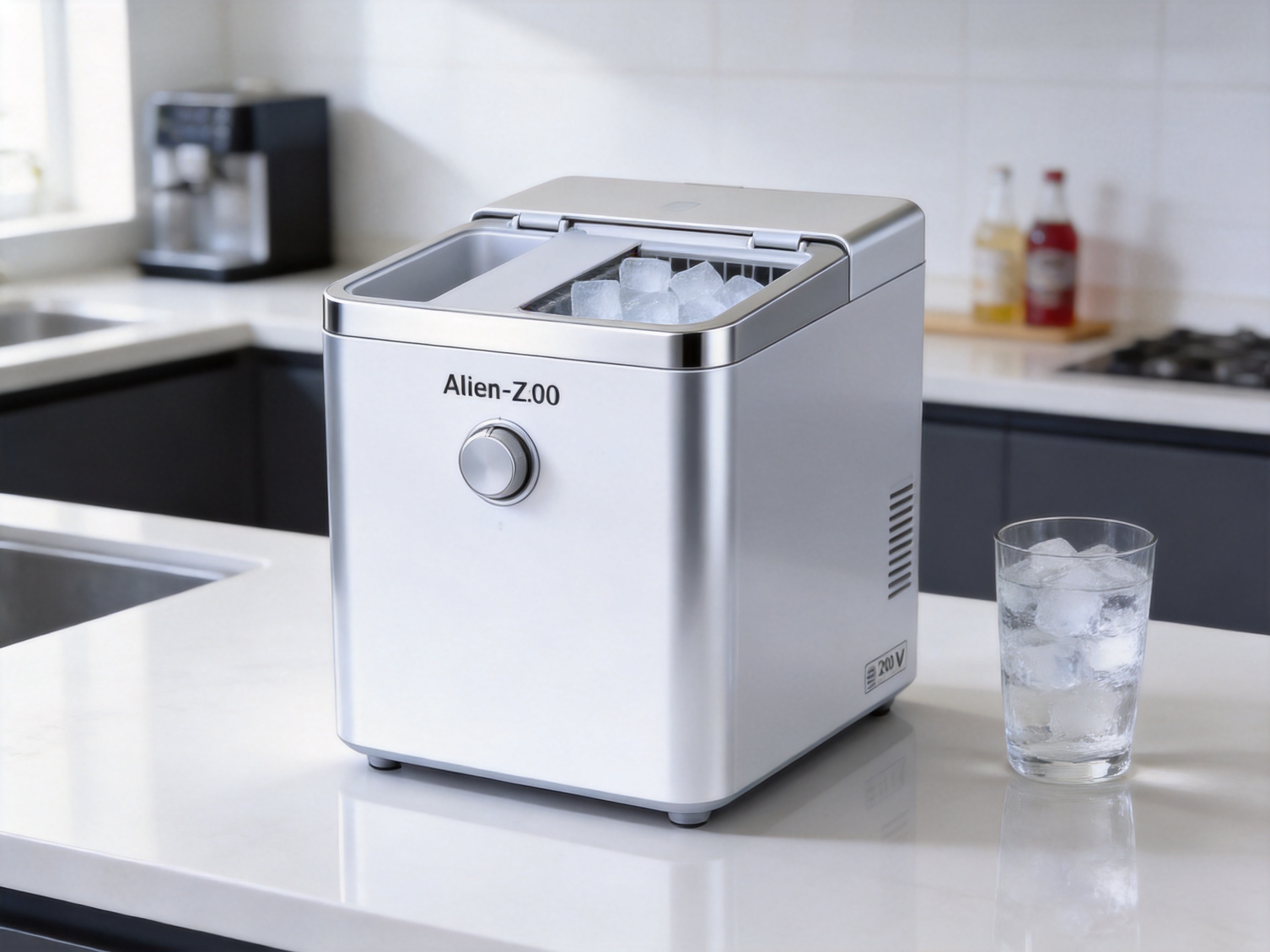
Manufacturing Strengths of the Zhejiang Production Base
Alien Technology Co., Ltd. is located in Zhouxiang, Cixi City, Zhejiang Province, an area associated with small household appliance manufacturing. This location provides several potential advantages for a company serving international buyers. A developed manufacturing environment can offer access to component suppliers, technical labor, tooling services, assembly resources, packaging support, and logistics networks.
For a product such as a countertop ice maker, supply-chain coordination is essential. The appliance contains mechanical, electrical, thermal, structural, and user-interface elements. The quality of the finished product depends on how effectively these elements are sourced, matched, assembled, and tested. A company operating within an established appliance cluster can coordinate these activities more efficiently than a manufacturer working in isolation.
The company’s focus on ice makers, coffee machines, and air fryers also provides product-category familiarity. These products share several important development requirements, including compact housing design, user safety, thermal management, motor or compressor integration, control systems, food-contact considerations, and attractive external styling. Experience across related household appliances can support a more complete understanding of how people use countertop products in real homes.
Advanced Manufacturing Approach and Quality Orientation
The company describes its business philosophy as stable, pragmatic, quality-focused, and committed to continuous improvement and innovation. For the Home Ice Cube Maker, these principles can be reflected in a manufacturing process that begins with product engineering and continues through component inspection, assembly, functional testing, and final quality control.
Product engineering is the first stage in turning the concept of a compact slow-melting ice maker into a manufacturable appliance. Engineers must coordinate the exterior dimensions with the internal refrigeration layout. They must also consider air circulation, insulation, water handling, ice release, electrical routing, control placement, noise management, and ease of assembly. A successful design is not simply attractive; it must be practical to produce consistently.
Tooling and molding are important for the external housing and internal structural parts. Consistent molds help maintain dimensional accuracy across production batches. Accurate dimensions are especially important where panels, covers, water containers, controls, and internal supports must fit together without excessive gaps or misalignment. A well-controlled housing can also improve the perceived quality of the appliance.
Electrical assembly requires disciplined attention to wiring, terminals, switches, insulation, and protective components. The stated 220V/50Hz operating configuration means that the appliance must be produced for compatible electrical environments. Correct wiring, secure connections, and appropriate inspection help reduce the risk of operational problems. A professional manufacturing process should include checks for electrical continuity, insulation performance, and basic functional operation before shipment.
Refrigeration assembly is another critical area. The refrigerant circuit must be assembled with suitable tubing, joints, compressor connections, and heat-transfer components. Leak prevention is essential because even a small loss of refrigerant can affect performance. A controlled production line may include vacuum procedures, leak inspection, refrigerant charging, and performance verification. These steps are especially important when using R290, which requires careful handling and safety-conscious process control.
Thermal testing helps verify whether the machine can produce the intended ice form under appropriate operating conditions. Testing may consider cooling response, ice hardness, formation consistency, water circulation, and release behavior. Although performance varies with ambient conditions and water temperature, repeatable testing gives the manufacturer a way to identify deviations and improve future production batches.
Final assembly quality depends on more than the refrigeration system. The knob, housing, internal supports, water-contact components, insulation, fasteners, and packaging must all be checked. A well-organized quality system can identify cosmetic defects, missing components, loose connections, abnormal vibration, unusual noise, and inconsistent operation before products reach customers.
How the Product Compares with Common Alternatives
Consumers typically compare a dedicated ice maker with freezer trays, irregular automatic ice machines, large commercial systems, and bags of purchased ice. Each alternative has a place, but the Home Ice Cube Maker offers a distinct combination of compactness, regular cube geometry, and dedicated production.
Alternative |
Typical Limitation |
Advantage of the Home Ice Cube Maker |
Traditional freezer trays |
Require manual filling, freezer space, and long preparation time |
Provides a dedicated appliance for more convenient ice preparation |
Crushed or irregular ice |
Melts quickly and can dilute beverages rapidly |
Focuses on solid, regular cubes intended for slower melting |
Large commercial ice machines |
May require more space, investment, and installation planning |
Uses a compact countertop format for household-scale needs |
Purchased bagged ice |
Requires storage, transportation, and repeated replacement |
Allows users to prepare ice at home when needed |
Highly complex smart appliances |
Can involve unnecessary controls and a steeper learning curve |
Uses a straightforward knob-type operating concept |
Compared with freezer trays, the machine is more convenient for users who need ice regularly and do not want to wait for a manual freezing cycle. Compared with crushed ice, its solid cube shape is better suited to long drinks and spirits. Compared with commercial equipment, its compact dimensions and moderate power rating make it more appropriate for a home or small service environment.
The comparison does not mean that the product replaces every type of ice equipment. High-volume restaurants, hotels, and event venues may require larger systems with substantially greater output. The strength of this appliance is its balance. It is aimed at users who want better control and more convenience than freezer trays provide, without the footprint and complexity of a commercial machine.
Operational Efficiency and Practical Energy Considerations
The rated power of 140W places the appliance within the general category of compact countertop refrigeration equipment. Actual energy consumption depends on operating time, ambient temperature, water temperature, insulation, ventilation, and the number of production cycles. Users can support efficient operation by placing the machine in a cool, ventilated location and avoiding unnecessary operation when the ice container is already full.
Ventilation around the appliance is important because the refrigeration system must release heat during operation. Blocking air openings or placing the unit directly beside a heat-producing appliance may reduce cooling efficiency. A suitable installation location helps the machine work within its intended conditions and may contribute to more consistent ice formation.
Using water at a reasonable starting temperature can also help. Extremely warm water may require additional cooling effort, while clean water at a moderate temperature can support a more predictable cycle. Users should follow the eventual operating and cleaning instructions supplied with the product, particularly regarding water level, drainage, storage, and sanitization.
The appliance’s compact design can contribute to practical household efficiency even when energy use is not the only consideration. It reduces the need to keep large amounts of bagged ice in storage and avoids dedicating substantial freezer space to trays or containers. For households with frequent beverage use, producing ice closer to the time of consumption can be a convenient alternative to long-term storage.
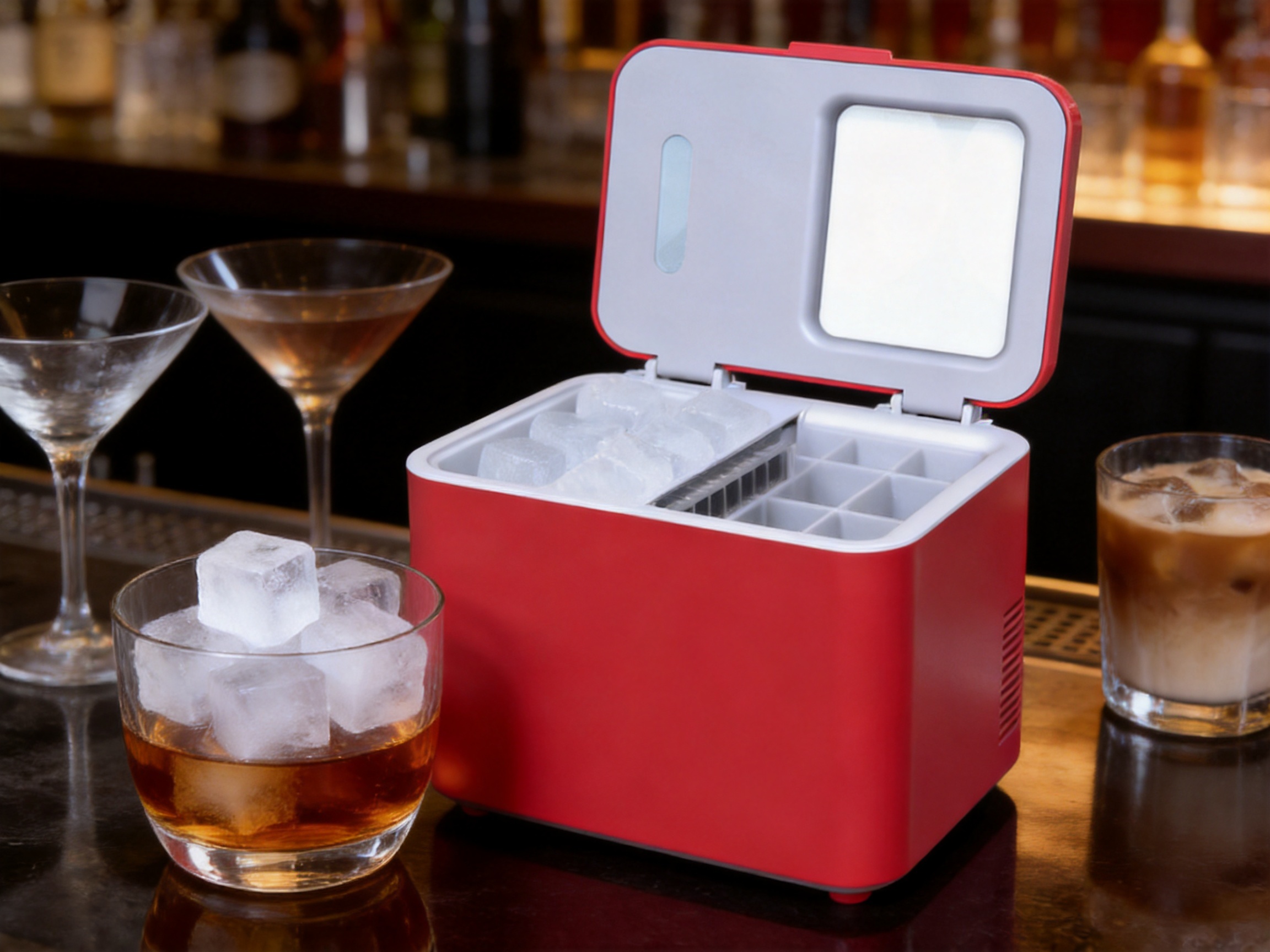
Designing for Reliability and Long-Term Use
Reliability in a small appliance comes from the interaction of many details. A compressor must operate correctly, the refrigeration circuit must remain sealed, electrical connections must remain secure, the control must respond consistently, and the housing must protect internal components during normal use. The product’s stated specifications provide a foundation, but manufacturing discipline determines whether that foundation is delivered consistently from one unit to another.
Alien Technology’s emphasis on reliable quality and continuous improvement is relevant to this challenge. An appliance manufacturer can improve reliability by monitoring production feedback, reviewing returned units, identifying recurring defects, and adjusting components or assembly procedures. This improvement cycle is especially valuable in products used repeatedly in humid kitchens and beverage areas.
Durability also depends on user care. Water-contact areas should be cleaned regularly, external surfaces should be kept dry, and the appliance should not be moved abruptly while operating. If the machine is stored for an extended period, users should follow suitable cleaning and drying procedures. Proper care protects hygiene and helps preserve the performance of the water and ice pathways.
Because R290 is used in the refrigeration circuit, users should never attempt unauthorized modifications. The sealed system, compressor, refrigerant tubing, and charging operation should be treated as technical components. Professional service is the appropriate choice when a refrigeration fault, suspected leak, or unusual operating condition occurs.
Suitable Applications for Homes and Small Businesses
The primary market for this ice maker is the household. It can support daily drinks, weekend entertaining, family meals, home bars, and seasonal gatherings. Its compact footprint makes it suitable for kitchens where freezer capacity is limited. The regular cube design also serves users who value presentation as much as basic cooling.
Small offices can benefit from a dedicated appliance in a pantry or staff refreshment area. Rather than relying on a freezer compartment shared with food, an ice maker can provide a more organized source of ice for water, soft drinks, and cold coffee. Guest rooms, vacation properties, and rental apartments may also use a compact ice maker as a convenience feature.
Small hospitality businesses may find the product useful for low-volume service, tasting areas, reception counters, or supplementary beverage stations. Its suitability depends on the required production quantity and local operating conditions. Businesses with high demand should evaluate capacity, duty cycle, service requirements, and regulatory obligations before choosing any countertop unit.
The ice can also support coffee-related beverages. Cold brew, iced coffee, iced tea, and blended drinks all depend on effective cooling. When ice melts more slowly, it can help reduce unwanted watering of a carefully prepared beverage. This makes the ice maker a natural companion to coffee machines and other beverage appliances in the same product family.
Installation and Everyday Use Recommendations
Before operating the appliance, users should place it on a stable, level, and water-resistant surface. Adequate clearance should be maintained around the ventilation areas so that heat can escape. The unit should be connected only to a compatible 220V/50Hz electrical supply, and the power cord should be positioned away from water and hot surfaces.
The water reservoir should be filled according to the product instructions, without exceeding the indicated level. Clean drinking water is appropriate for ice intended for beverages. If water remains in the machine for a long time, it should be replaced rather than repeatedly reused. Regular cleaning helps prevent unpleasant odors, mineral accumulation, and contamination in the water-contact areas.
Users should allow the appliance to complete its operating cycle rather than repeatedly switching it on and off. Stable operation gives the refrigeration system time to work efficiently. Ice should be transferred to a suitable container if it will not be used immediately, because a compact countertop ice maker may not function as a long-term freezer.
During operation, unusual smells, smoke, severe vibration, damaged wiring, or abnormal sounds should be treated as reasons to stop using the appliance and seek qualified assistance. The refrigeration circuit should not be opened by the user. These precautions are particularly important for any appliance containing a flammable refrigerant.
Cleaning, Hygiene, and Maintenance
Ice is a food-contact product, so hygiene should be treated as a basic operating priority. The water reservoir, ice-making surfaces, collection area, and any removable water-contact parts should be cleaned according to the manufacturer’s instructions. A clean, soft cloth can generally be used for exterior surfaces, while harsh abrasives should be avoided if they could damage the finish.
Mineral deposits may accumulate when hard water is used. The frequency of descaling depends on local water quality and how often the machine operates. Users should use only cleaning or descaling methods approved for the appliance. Improper chemicals can damage materials or leave residues that are unsuitable for contact with ice.
The exterior should be dried after cleaning, and standing water should not be allowed to collect around electrical components. If the machine will not be used for an extended period, it should be emptied, cleaned, dried, and stored in a clean location. These simple practices support better hygiene and help preserve the appliance’s internal pathways.
Why Product Specialization Matters
A company that manufactures several categories of small household appliances develops experience with the practical challenges of compact product design. Ice makers require refrigeration expertise, while coffee machines require fluid handling and heating control, and air fryers require airflow and thermal management. Working across these categories can encourage the sharing of design methods, quality procedures, supplier relationships, and user-focused engineering practices.
Alien Technology Co., Ltd. identifies ice makers, coffee machines, and air fryers as areas of specialization. This focus gives the company a clear position within the small appliance sector. Rather than presenting itself as a general supplier of unrelated products, it concentrates on appliances that are used frequently in everyday homes and that benefit from convenient, humanized design.
The company’s location in Zhejiang also supports business cooperation and logistics. Access to regional manufacturing resources can make it easier to coordinate production, packaging, shipment, and after-sales communication. For distributors and importers, a supplier with a defined product range and a practical production base may be easier to evaluate than a company with no clear specialization.
Customer-Oriented Product Development
The stated mission of using smart technology to simplify life and enhance happiness can be seen in the product’s focus on an everyday need. Making ice is a small task, but it is repeated often and can become inconvenient when freezer space is scarce or when guests arrive unexpectedly. A dedicated appliance creates a more direct path from water to usable ice.
Humanized design does not necessarily require a large display or numerous automated settings. It can mean a compact footprint, recognizable controls, manageable maintenance, and a shape that fits naturally into the kitchen. The knob-type interface and practical dimensions suggest an emphasis on accessibility and uncomplicated use.
Customer satisfaction also depends on communication. Product information should clearly state the voltage, frequency, power, refrigerant type, dimensions, operating limitations, cleaning instructions, and service requirements. Clear technical details help buyers determine whether the appliance is compatible with their homes and expectations. They also support more efficient communication between manufacturers, distributors, installers, and end users.
For business customers, cooperation may include product customization, packaging requirements, documentation, market-specific electrical configurations, and volume planning. Any such arrangements should be confirmed directly with the manufacturer. The company welcomes contact from new and existing customers interested in business cooperation, making communication an important part of its overall service approach.
What Makes the Ice Maker a Competitive Choice
The competitive value of the Home Ice Cube Maker comes from the way several modest advantages work together. Its compact dimensions make placement easier. Its 140W rating supports a household-scale format. Its R290 refrigerant reflects a modern refrigeration direction. Its regular square cubes are designed for slower melting and improved presentation. Its knob-type control avoids unnecessary complexity.
Many competing alternatives focus on only one benefit. Freezer trays are inexpensive but require planning and manual effort. Crushed ice cools quickly but melts quickly as well. Large machines can produce more ice but may be excessive for a normal home. Smart appliances can offer extra features but may be more difficult to operate. This model is positioned between these choices, emphasizing useful ice quality and practical convenience.
The product is also competitive because it supports multiple types of users. A spirits enthusiast may value the slow-melting cube. A host may appreciate the professional appearance. A small office may need a compact ice source. A family may want convenient cooling for everyday drinks. A distributor may value a product from a company with experience in multiple household appliance categories.
No appliance is ideal for every application, and responsible purchasing requires matching the product to the expected workload. Users should consider their ice demand, available electrical supply, counter space, ventilation, cleaning habits, and service access. Within its intended household and small-scale use range, however, the Home Ice Cube Maker offers a balanced and purposeful solution.
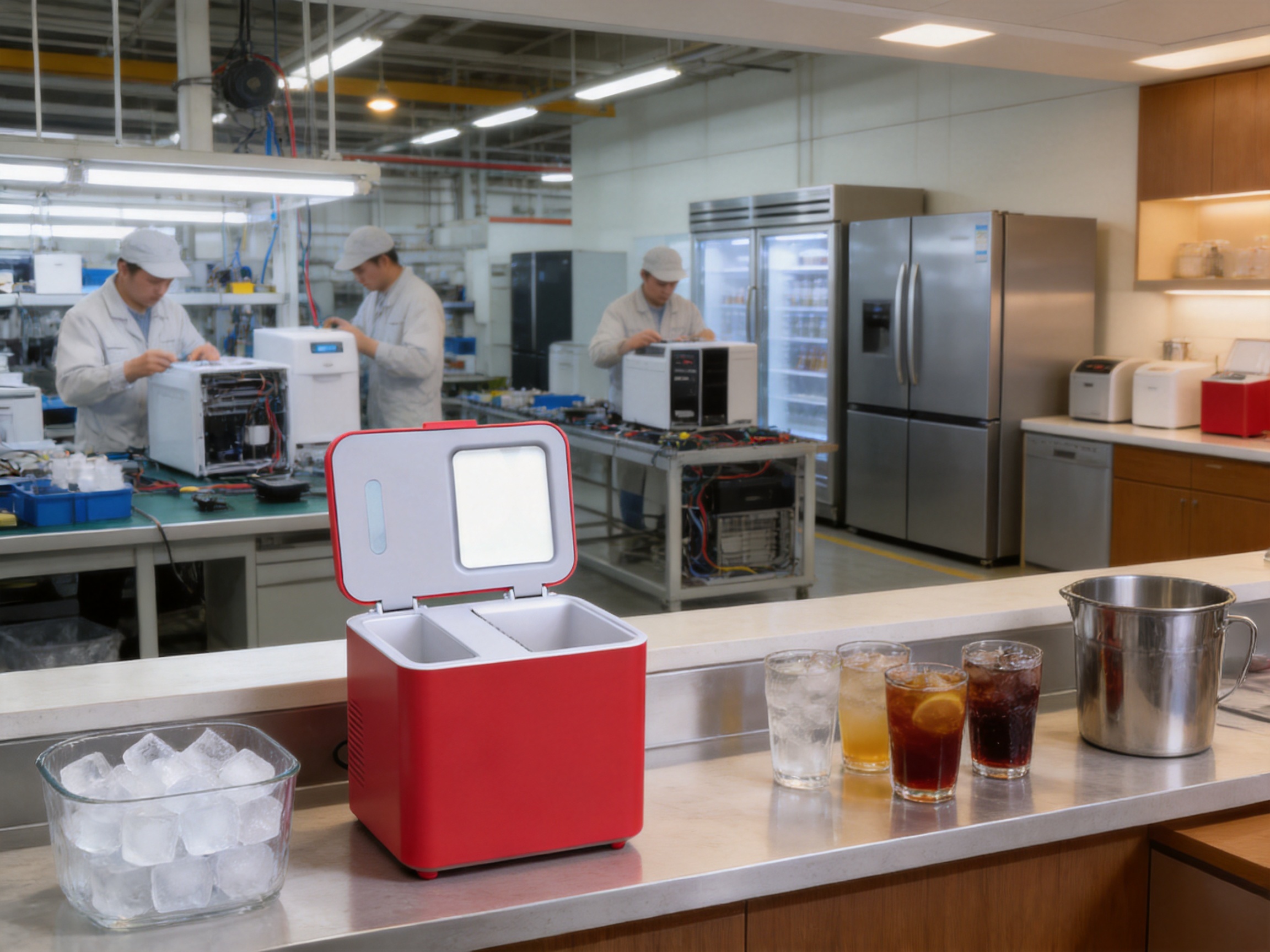
Frequently Asked Questions
What type of ice is this machine designed to produce?
The machine is designed to produce solid, regularly shaped square ice cubes. The product information emphasizes density, a compact surface area, and slow melting compared with irregular or very small pieces of ice.
Why are slow-melting cubes useful?
Slow-melting cubes can keep beverages cold for longer while limiting rapid dilution. They are especially suitable for whiskey, bourbon, cocktails, iced coffee, tea, soft drinks, and other beverages that users may consume gradually.
Is the appliance suitable for a small kitchen?
Yes. Its dimensions are 325 × 295 × 252 millimeters, making it a compact countertop appliance. Users should still provide adequate ventilation and place it on a stable surface with access to a compatible power supply.
What voltage and frequency does it require?
The stated power supply is 220V/50Hz. Buyers should confirm that their local electrical system matches this specification before purchase or use.
How much power does it use?
The product is specified at 0.65A and 140W. Actual electricity consumption can vary according to operating time, ambient temperature, ventilation, water temperature, and production frequency.
What refrigerant does the machine use?
The machine uses R290 refrigerant with a stated charge of 26 grams. R290 requires appropriate safety controls because it is flammable. Users should not repair or modify the sealed refrigeration circuit themselves.
Does the machine replace a commercial ice maker?
It is intended primarily for household and small-scale use. High-volume restaurants, hotels, and event venues may require equipment with a larger production capacity and different installation requirements.
What is the control method?
The product is described as a knob-type ice maker. Its physical control approach is intended to provide direct and straightforward operation without requiring a complicated digital interface.
Can the ice be used for purposes other than drinks?
Yes. The cubes can be used in ice buckets, kitchen preparation, coolers, and suitable temporary cold-pack applications. They should be handled hygienically and placed in clean containers when used around food or beverages.
How should the machine be maintained?
The water-contact areas, ice collection area, and exterior should be cleaned according to the manufacturer’s instructions. Users should replace old water, monitor mineral buildup, keep the appliance dry around electrical areas, and follow approved descaling procedures when necessary.
What should users do if the machine makes an unusual sound?
Unusual noise, severe vibration, smoke, abnormal odor, damaged wiring, or a suspected refrigerant problem should be treated seriously. The appliance should be switched off, unplugged if safe to do so, and inspected by qualified service personnel.
Who manufactures the Home Ice Cube Maker?
The product is manufactured by Alien Technology Co., Ltd., a household appliance company located at No. 138, Huixiang'an Road, Zhouxiang Town, Cixi City, Zhejiang Province. The company specializes in ice makers, coffee machines, and air fryers.
How can potential business customers communicate with the company?
Potential customers can contact Alien Technology Co., Ltd. by telephone at +86-13968281299 or by email at [email protected]. The company welcomes communication from new and existing customers regarding business cooperation.
Conclusion
The Home Ice Cube Maker is a compact appliance designed around the practical value of better-formed ice. Its solid square cubes are intended to melt slowly, preserve beverage flavor, and create a professional visual presentation. Its versatility extends from spirits and cocktails to coffee, soft drinks, ice buckets, kitchen preparation, and temporary cooling applications.
With 220V/50Hz operation, 140W rated power, R290 refrigerant, and dimensions of 325 × 295 × 252 millimeters, the product presents a balanced configuration for household and small-scale use. Its knob-type control supports straightforward operation, while its compact structure makes it easier to place in kitchens, offices, beverage stations, and hospitality areas.
The manufacturing strengths behind the product are equally important. Alien Technology Co., Ltd. operates within Zhejiang’s small household appliance manufacturing environment and focuses on ice makers, coffee machines, and air fryers. Its stated commitment to reliable quality, customer satisfaction, continuous improvement, innovation, and pragmatic business cooperation provides a foundation for developing appliances that are useful in everyday life.
For buyers seeking an alternative to freezer trays, crushed ice, large commercial systems, or repeated purchases of bagged ice, this appliance offers a focused combination of convenience, space efficiency, cube consistency, and beverage-friendly performance. Its greatest advantage is not a single feature but the coordinated relationship between compact engineering, slow-melting ice design, simple controls, and a manufacturer experienced in practical household appliances.
References
1. Product specification sheet for the Alien-ZF01 Home Ice Cube Maker, including electrical rating, refrigerant information, dimensions, and product configuration.
2. Product information describing the slow-melting characteristics, regular square form, versatility, and stacking efficiency of solid ice cubes.
3. General refrigeration engineering principles concerning heat transfer, refrigerant charging, sealed systems, ventilation, and appliance performance.
4. General food-contact appliance hygiene principles concerning water quality, cleaning, descaling, storage, and handling of ice.
5. Company profile information for Alien Technology Co., Ltd., including its product categories, location, mission, quality philosophy, and business cooperation policy.