
 English
 한국어
 Español
 Deutsch
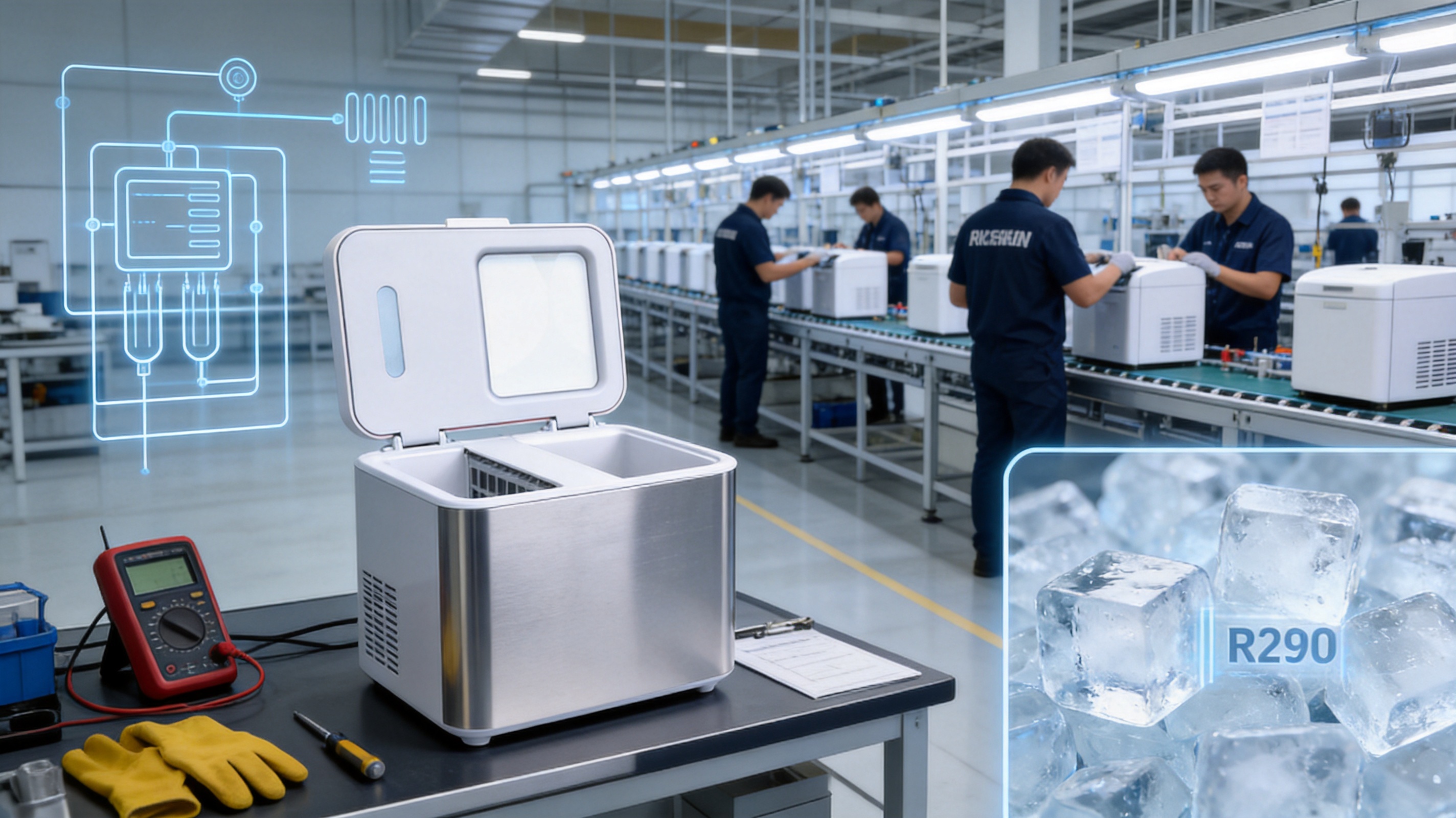
Ice is a small part of a drink, yet it can have a major effect on flavor, presentation, temperature, and overall enjoyment. Weak, fast-melting ice can dilute premium beverages, create an untidy appearance, and require frequent replacement. A well-designed ice maker addresses these everyday problems by producing convenient, consistent, and practical ice cubes whenever they are needed.
The Home Ice Cube Maker, identified as model Alien-ZF01, is designed for households and compact service environments that value dependable ice production, efficient use of space, and a clean, professional-looking result. Its regular solid-cube format provides a useful balance between cooling performance, versatility, storage efficiency, and visual appeal. With a rated power supply of 220V/50Hz, a 140W operating power rating, R290 refrigerant, and a compact body measuring 325 x 295 x 252 millimeters, the machine is suitable for kitchens, home bars, dining areas, offices, guest rooms, and other locations where convenient ice access is important.
Unlike irregular or very small pieces of ice, solid cubes offer a relatively low surface-area-to-volume ratio. This characteristic helps them melt more slowly when placed in a beverage. The result is a longer cooling period and less dilution, which is especially valuable for whiskey, neat spirits, cocktails, iced coffee, soft drinks, fruit beverages, and chilled water. The regular cube shape also looks refined in transparent glassware and can support a more professional presentation for both everyday and entertaining occasions.
The product is manufactured by Alien Technology Co., Ltd., a household-appliance company based in Zhouxiang, Zhejiang Province, a region widely associated with small-appliance production and convenient logistics. The company focuses on ice makers, coffee machines, air fryers, and related household products. Its stated mission is to simplify daily life through smart technology, humanized design, reliable quality, and practical innovation.
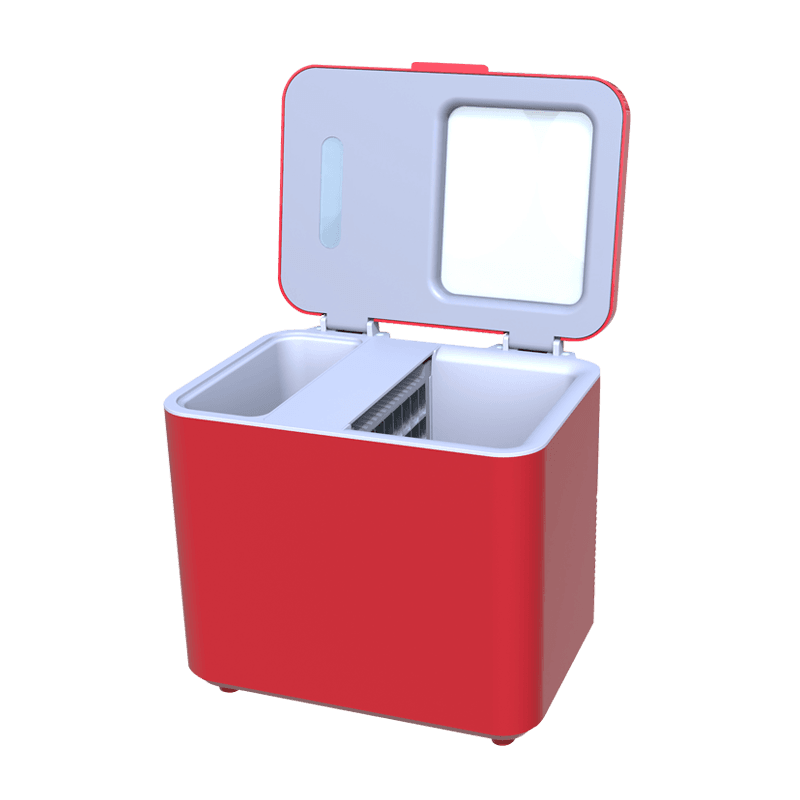
Home ice cube maker
A Practical Solution for Everyday Ice Needs
Many homes rely on freezer trays or bags of purchased ice. These methods can work, but they often involve limitations. Ice trays require preparation time, available freezer space, and manual handling. Purchased ice may be inconvenient to transport, difficult to store, or unavailable at the exact moment it is needed. A countertop ice maker provides a more direct solution by allowing users to make ice close to the point of use.
The compact dimensions of the Home Ice Cube Maker make it suitable for areas where counter space is limited. Measuring 325 x 295 x 252 millimeters, the machine has a footprint that can fit into many domestic kitchen layouts without occupying the space required by a full-size refrigeration appliance. It can also be considered for home bars, small cafés, office refreshment stations, hotel rooms, entertainment areas, and temporary event settings, provided that the electrical and operating requirements are suitable for the installation environment.
Compact size does not mean that the product is limited to one type of user. Families can use it to prepare ice for daily drinks. Hosts can operate it before gatherings so that cold beverages can be served continuously. Coffee enthusiasts can use solid cubes for iced coffee and cold brew. Cocktail users can benefit from a more attractive and slower-melting cube. Offices can keep a convenient source of ice near a pantry or meeting area.
The product is also useful for people who prefer to control the timing and handling of their ice. Instead of opening a freezer repeatedly or relying on a supplier, users can plan ice preparation according to their own schedule. This can support better organization for meals, parties, afternoon refreshments, and weekend entertaining.
Solid Cube Design and Melting Performance
The main functional advantage of the product is its solid-cube format. Ice shape has a direct influence on the speed of melting. Thin flakes, crushed ice, and small irregular pieces expose more surface area to surrounding air and liquid. They can cool a drink quickly, but they often melt faster. Solid cubes, by contrast, provide a more substantial frozen mass in a regular shape.
Because of their high density and relatively small surface area in contact with a beverage, solid ice cubes can melt slowly. This makes them particularly suitable for drinks that are intended to be enjoyed gradually. A whiskey served over a large, regular cube can remain cool while retaining more of its original character. The same principle can benefit neat spirits, mixed drinks, fruit beverages, and iced tea.
Slower melting does not mean that the ice never melts. All ice eventually absorbs heat from its surroundings. The benefit is that the cube can deliver cooling over a longer period without immediately adding a large amount of water to the drink. This balance is important for users who want temperature control without excessive dilution.
The regular form also improves handling. Cubes can be transferred using an ice scoop or other utensil, placed in a glass with less mess, and arranged in an ice bucket. Their predictable shape makes them easier to portion than irregular pieces. For households, this reduces the visual and practical inconvenience of handling broken or uneven ice.
Benefits for Premium Beverages
Premium beverages are often served slowly, making melting performance especially important. A drink that becomes heavily diluted within a short time may lose aroma, body, and balance. Solid cubes help extend the usable cooling period and preserve more of the beverage’s original profile.
In a clear glass, the cube can also become part of the presentation. Its neat geometry gives the drink a cleaner appearance, while a transparent or lightly colored cube can enhance the visibility of the beverage. This is useful for home entertaining, tasting sessions, restaurants, and hospitality settings that place value on presentation.
The cube format is not limited to alcoholic drinks. It can be used with iced coffee, cold tea, juice, sparkling water, lemon water, and flavored refreshments. Users can also consider making specialty ice with suitable food-safe ingredients, provided that the machine is used according to its instructions and cleaning requirements.
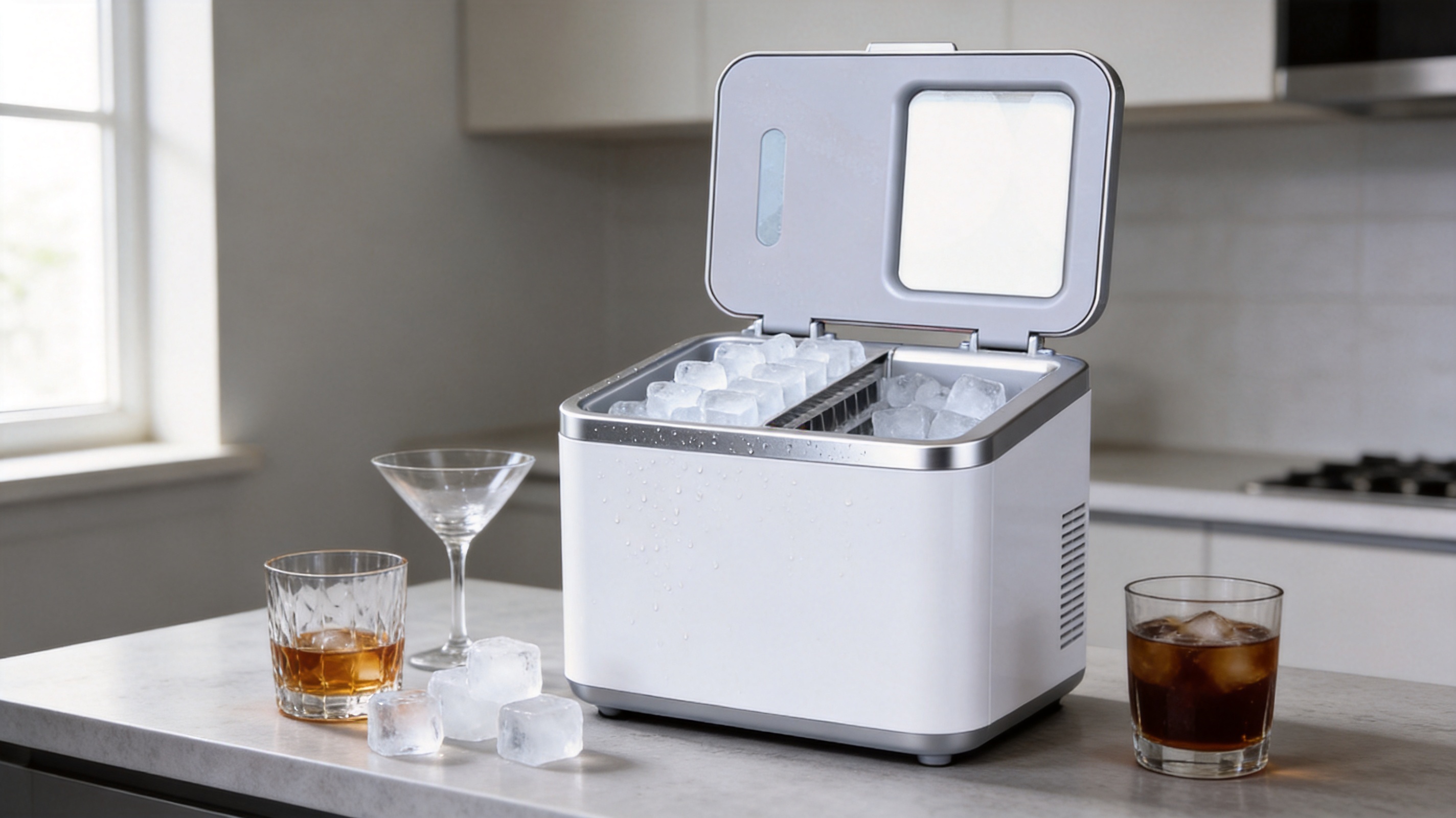
Professional Appearance in a Compact Appliance
Good appliance design combines performance with visual order. The Home Ice Cube Maker is intended to produce ice with a neat, square appearance rather than a random collection of fragments. This regularity can make a noticeable difference when drinks are served to guests or displayed on a dining table.
A professional-looking cube is easier to combine with different glass styles. It can sit neatly in a tumbler, highball glass, cocktail glass, or ice bucket. The predictable shape also helps users estimate how many cubes are needed for a particular drink. While serving preferences vary, regular cubes provide a more consistent foundation for preparation.
The machine’s compact size supports a clean countertop arrangement. It can be positioned near a beverage station, coffee area, or kitchen work surface without requiring the major space associated with a separate freezer. Its dimensions also make it easier to relocate when the user needs to reorganize a room or prepare for an event.
For commercial-minded home users, presentation is part of the experience. A tidy appliance that produces tidy ice can contribute to a more organized beverage routine. This is particularly relevant for people who host dinners, prepare cocktails, operate small hospitality areas, or want a more polished home bar.
Versatile Use Across the Home
Ice cubes have applications beyond putting them in a glass. Their wide range of uses makes an ice maker a flexible household appliance rather than a single-purpose device.
In the kitchen, ice can help cool prepared ingredients, support certain food-preparation techniques, and maintain a cold environment for suitable foods during short periods of handling. Ice can also be placed in an insulated container when users need to keep drinks cold during a picnic, family gathering, or outdoor activity. The machine’s convenient format means that ice can be prepared shortly before it is required.
At a home bar, the product can support mixed drinks, spirit service, mocktails, and chilled mixers. At a coffee station, cubes can be used for iced coffee, cold brew, and other cold beverages. In an office, they can supplement water, juice, and soft-drink service. In a guest room or entertainment area, they can make refreshments more convenient for visitors.
The appliance is also suitable for seasonal use. During warm weather, regular access to ice can improve comfort and hydration routines. During celebrations, the machine can support a higher volume of cold drinks without depending entirely on supermarket ice. In cooler seasons, it remains useful for cocktails, iced coffee, cold desserts, and special meals.
Suitable Use Scenarios
Use scenario | Product value | Typical benefit |
Home kitchen | Convenient countertop ice production | Less dependence on freezer trays |
Home bar | Regular solid cubes | Slower melting and improved presentation |
Office pantry | Accessible ice near beverages | Convenient service for staff and visitors |
Party or gathering | Ice prepared close to serving time | Better preparation flexibility |
Coffee station | Suitable cube format for cold drinks | Support for iced coffee and cold brew |
Small hospitality area | Compact footprint and professional cube shape | Efficient use of limited space |
Engineering Specifications at a Glance
The technical specifications describe a machine designed for household electrical systems and compact appliance operation. The product uses a 220V/50Hz power supply and has a current rating of 0.65A with a power rating of 140W. These specifications help buyers assess compatibility with their local electrical environment and plan an appropriate installation location.
The refrigerant is listed as R290 with a charge of 26 grams. R290 is propane-based refrigerant commonly used in modern refrigeration equipment. It has a low global warming potential compared with many older refrigerants, although it is flammable and must be handled within appropriate appliance-design, safety, servicing, transportation, and regulatory requirements. Users should not attempt to open the refrigeration system or modify the refrigerant circuit.
The 140W rating indicates a relatively modest electrical demand for a powered refrigeration appliance of this category. Actual energy consumption can vary according to operating time, ambient temperature, water temperature, ventilation, ice-production cycles, and usage patterns. Users should follow the product documentation for operating guidance and should allow sufficient ventilation around the appliance.
The machine dimensions are 325 x 295 x 252 millimeters. These measurements are important for both consumer planning and business procurement. Before installation, users should check the available counter width, depth, overhead clearance, rear ventilation space, cable reach, water-handling arrangements, and access for cleaning.
Specification | Listed value | Practical meaning |
Product type | Home ice cube maker | Designed for convenient ice production in compact environments |
Model description | Alien-ZF01 | Product identification for purchasing and communication |
Power supply | 220V/50Hz | Electrical compatibility requirement |
Current and power | 0.65A / 140W | Rated electrical operating information |
Refrigerant and charge | R290 / 26g | Refrigeration-system specification |
Machine dimensions | 325 x 295 x 252mm | Compact countertop form |
Advantages Compared with Common Alternatives
A product’s value is best understood by comparing it with the practical alternatives available to consumers. The Home Ice Cube Maker offers several advantages over conventional freezer trays, loose purchased ice, and irregular ice-making methods.
Compared with Freezer Trays
Freezer trays are inexpensive and familiar, but they require available freezer space and advance planning. Users must fill the tray, place it level in the freezer, wait for freezing, and remove the cubes manually. The cubes may also stick together, spill during handling, or absorb odors from nearby food.
A countertop ice maker provides a more direct process. It is positioned near the beverage area and can produce ice without occupying a tray-sized section of the freezer. This is especially useful in smaller kitchens or homes where freezer capacity is already limited.
Compared with Purchased Bagged Ice
Bagged ice can be useful for large gatherings, but it requires transportation, storage, and advance purchasing. Bags can take up substantial freezer or cooler space, and the user may have difficulty finding the desired quantity at busy times or during warm weather.
Producing ice at home gives users more control over timing. They can make ice before a meal, refresh the supply during an event, or prepare a quantity suitable for their immediate needs. This may reduce unnecessary storage and make everyday use more convenient.
Compared with Crushed or Irregular Ice
Crushed ice cools drinks quickly, but its small pieces tend to melt rapidly. It can also make drinks more diluted and create a less orderly appearance. Irregular ice may be practical for some applications, but it is less predictable when portioning and serving.
The regular solid cube is a stronger choice when users want slower melting, attractive presentation, and efficient stacking. Its geometry allows cubes to be placed closely together in a storage container, helping users make better use of available space.
Efficient Stacking and Space Management
Regular shape is an important but sometimes overlooked advantage. Ice cubes that have consistent dimensions can be arranged more tightly than pieces with random edges. This creates higher stacking efficiency in an ice bucket, insulated container, or freezer compartment.
Efficient stacking can reduce unused gaps between pieces. In a household environment, this means that a given container may hold more usable ice without becoming unnecessarily large. In a hospitality or event environment, it can simplify preparation and make it easier to estimate available supply.
Shape consistency also supports better storage hygiene. Cubes can be handled with a scoop or clean utensil and transferred without excessive crumbling. Fewer fragments may mean less loose ice residue around the serving area, although all equipment and storage containers must still be cleaned and maintained appropriately.
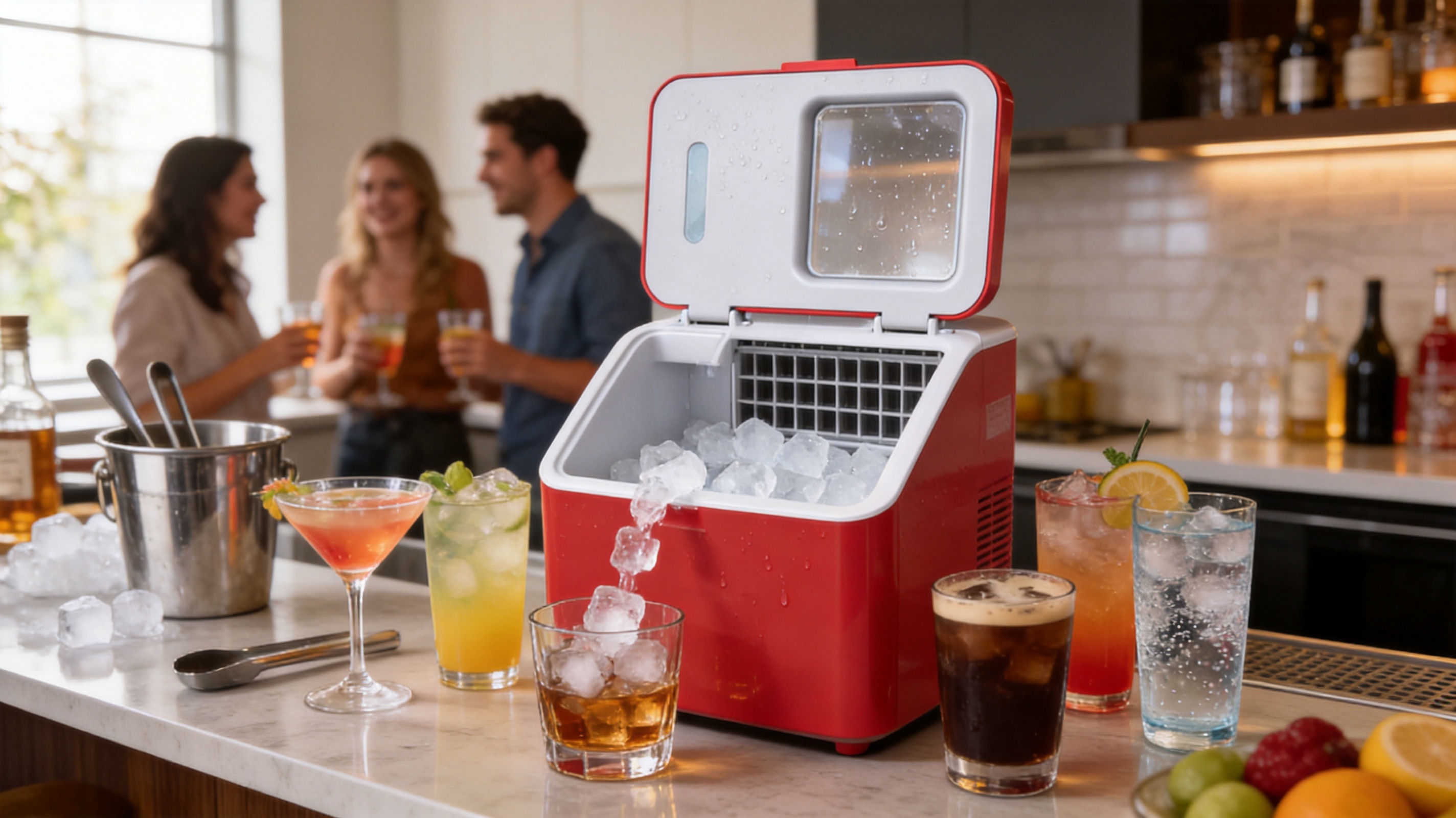
Manufacturing Strengths and Production Philosophy
The product is manufactured by Alien Technology Co., Ltd., which specializes in household appliances including ice makers, coffee machines, and air fryers. Its location in Zhouxiang, Zhejiang Province, places the company within a region known for small household-appliance manufacturing and supply-chain activity.
A focused product portfolio can support manufacturing experience across related appliance categories. Ice makers require coordination between mechanical components, refrigeration systems, electrical controls, insulation, enclosure design, water handling, and user-facing operation. Experience with other kitchen appliances can also encourage attention to compact construction, heat management, practical cleaning, and daily usability.
The company describes its approach through several core principles: reliable quality, customer satisfaction, continuous improvement, innovation, humanized design, and a stable, pragmatic business philosophy. These principles are relevant to an ice maker because the product must perform a repetitive task consistently while remaining simple enough for ordinary household use.
Integrated Appliance Development
An ice maker is not merely a cold box. Its performance depends on how multiple systems work together. The refrigeration circuit must remove heat effectively. The enclosure must protect internal parts and support stable operation. The electrical system must supply the compressor and related components. The water-contact areas must be suitable for repeated use and cleaning. The exterior must be compact enough for the intended countertop environment.
Manufacturing strength comes from coordinating these elements rather than treating each component in isolation. A well-integrated appliance can reduce unnecessary complexity, support easier assembly, and create a more coherent user experience. The stated focus on humanized design suggests attention to the way customers actually use the product in kitchens and beverage areas.
Attention to Practical Quality
For a household appliance, quality is not limited to whether the machine operates on the first day. Practical quality includes consistency over repeated cycles, secure assembly, appropriate electrical protection, stable enclosure construction, manageable cleaning, and clear product identification. It also includes packaging and logistics strong enough to protect the machine as it moves from factory to customer.
A manufacturer experienced in household appliances can establish repeatable processes for component sourcing, assembly, inspection, product testing, and shipment preparation. Specific factory procedures may vary by production batch and customer order, so purchasers should request the relevant quality documents, inspection records, certifications, and compliance information for their market.
Continuous Improvement
Ice-making technology benefits from incremental improvement. Small changes to airflow, insulation, water distribution, component matching, control logic, enclosure geometry, or assembly methods can influence performance and usability. A company committed to continuous improvement can use customer feedback and production experience to refine future versions.
This approach is especially valuable in competitive household-appliance markets. Buyers increasingly expect products to be compact, efficient, visually appealing, and simple to maintain. Continuous improvement helps manufacturers respond to these expectations while preserving the reliable functions that users depend on.
Refrigeration System and R290 Considerations
The use of R290 refrigerant is a significant technical specification. R290 is a natural refrigerant based on propane and is used in various refrigeration applications. Its low global warming potential has made it relevant to efforts to reduce the environmental impact associated with certain synthetic refrigerants.
However, R290 is classified as flammable. This means the appliance must be designed, assembled, labeled, transported, installed, and serviced in accordance with applicable safety requirements. The refrigerant circuit should remain sealed during normal use. Users should never puncture, drill, heat, or dismantle any part of the refrigeration system.
Manufacturers working with R290 need suitable production controls. These may include proper component selection, controlled refrigerant charging, leak inspection, electrical safety checks, and procedures appropriate for flammable refrigerant systems. The exact process depends on the applicable standards and the manufacturer’s quality system, but competent handling is essential.
For buyers, the R290 specification indicates that product compliance and after-sales service should be considered during procurement. Importers, distributors, and commercial users should verify the documentation required in their destination market. Household users should install the machine in a location with suitable ventilation and follow all warnings and instructions supplied with the product.
Installation and Everyday Operating Guidance
The appliance should be placed on a stable, level surface capable of supporting its weight and resisting moisture. A level position helps the machine operate properly and reduces the possibility of spills or vibration. The surrounding area should allow sufficient airflow according to the manufacturer’s instructions.
Users should check that the electrical supply corresponds to the listed 220V/50Hz requirement. The outlet should be appropriate for the appliance and should not be overloaded with multiple high-power devices. If the product is used in a region with different electrical standards, the buyer should consult the manufacturer or a qualified electrical professional before purchase or operation.
Water quality and cleanliness can influence the appearance and taste of ice. Users should use suitable potable water and maintain the water-contact areas according to the cleaning instructions. The ice storage area should not be treated as a long-term freezer. Ice may gradually melt, and melted water should be handled as directed by the product documentation.
Before first use, the machine should be unpacked carefully and inspected for visible shipping damage. Any required standing time after transport should be observed, particularly if the unit has been tilted. The exterior and removable areas should be cleaned as instructed before the first batch is used for consumption.
During operation, users should avoid blocking vents, placing hot objects against the machine, or operating it in excessive heat or direct sunlight. The appliance should be kept away from water splashes that are not part of its normal operation. If unusual odors, smoke, damaged cables, abnormal sounds, or refrigerant-related concerns appear, the machine should be switched off and inspected by qualified service personnel.
Cleaning, Hygiene, and Maintenance
Ice is a food-contact product, so cleanliness is essential. Regular cleaning helps reduce the buildup of mineral deposits, residue, and unwanted odors. The cleaning schedule should reflect water quality, frequency of use, storage conditions, and the manufacturer’s instructions.
Before cleaning, the appliance should be disconnected from the power supply when required by the instructions. Users should not immerse the main electrical body in water. Suitable cloths and approved cleaning methods should be used for the exterior, water-contact areas, ice storage section, and removable components.
Strong chemicals, abrasive tools, and unauthorized descaling products may damage surfaces or internal parts. A mild, compatible cleaning solution is generally preferable, but the product manual should always take priority. After cleaning, surfaces should be rinsed or wiped as directed, and the unit should be allowed to dry appropriately.
Maintenance also includes inspecting the power cord, checking for visible damage, keeping ventilation areas clear, and ensuring that the machine remains level. If the ice quality changes noticeably or the unit operates abnormally, users should stop and consult support rather than attempting unauthorized repairs.
Why the Product Supports Better Beverage Service
A good beverage experience depends on more than the liquid itself. Temperature, dilution, texture, visual presentation, and timing all matter. The Home Ice Cube Maker supports these factors by providing a regular solid cube that can remain effective for a longer period than smaller or more irregular pieces.
For whiskey and neat spirits, slower melting can help preserve concentration and aroma. For cocktails, a neat cube can improve appearance while providing steady cooling. For iced coffee, a solid cube can help create a cold drink without immediately turning it watery. For soft drinks and fruit beverages, the cube can provide sustained refreshment during meals and social occasions.
The product also helps users prepare beverages with greater consistency. When cube size and shape are regular, the user can repeat a serving style more easily. This matters in a home bar, a small hospitality setting, or any environment where several drinks need to look and perform similarly.
Procurement and Business Applications
Although the product is designed for home use, its compact format may interest distributors, retailers, hospitality suppliers, and businesses that serve customers in limited spaces. A countertop ice maker can be included in household-appliance portfolios alongside coffee machines and air fryers, creating opportunities for coordinated kitchen and beverage solutions.
Retailers can position the product around convenience, compact design, solid-cube performance, and everyday versatility. Distributors may highlight the listed electrical specifications, refrigerant information, dimensions, and product identification when preparing catalogs or quotation documents.
Before large-volume procurement, business buyers should confirm production capacity, packaging details, lead times, warranty terms, spare-parts availability, inspection procedures, labeling requirements, and destination-market compliance. They should also clarify whether product customization, private labeling, language-specific manuals, or packaging changes are available.
The manufacturer welcomes contact from new and existing customers for business cooperation. Direct communication can help buyers obtain current technical files, commercial terms, product samples, compliance documents, and after-sales support information.
Q&A
What type of appliance is this product?
It is a compact home ice cube maker designed to produce regular solid ice cubes for beverages, food preparation, entertaining, and general household use.
What are the product dimensions?
The listed machine dimensions are 325 x 295 x 252 millimeters. Buyers should also allow additional space for ventilation, cable access, cleaning, and comfortable operation.
What electrical supply does it use?
The product is specified for a 220V/50Hz power supply. It has a listed current and power rating of 0.65A and 140W. Users should confirm compatibility with their local electrical system before operation.
What refrigerant is used?
The product uses R290 refrigerant with a listed charge of 26 grams. Because R290 is flammable, the refrigeration circuit should not be opened or repaired by unqualified users.
Why are solid cubes useful?
Solid cubes have a relatively small surface area compared with their volume, so they can melt more slowly than crushed or very small pieces. This may help cool drinks for longer while reducing rapid dilution.
Can the cubes be used for whiskey and spirits?
Yes. Their slow-melting characteristics and neat appearance make them suitable for whiskey, neat spirits, cocktails, and other drinks served gradually. Users should select the amount of ice according to personal taste.
Can the product support iced coffee?
Yes. The cubes can be used for iced coffee, cold brew, iced tea, and other cold beverages. Users should follow normal hygiene practices and use clean, suitable water.
Is this product suitable for small kitchens?
Its compact dimensions make it suitable for many small kitchens, home bars, offices, and beverage stations. The installation area must still provide a stable surface, electrical access, and sufficient ventilation.
Does the regular shape help with storage?
Yes. Regular cubes can be stacked more efficiently than irregular pieces, which may help reduce unused gaps in an ice bucket, storage container, or freezer compartment.
How should the appliance be cleaned?
Cleaning should follow the manufacturer’s instructions. Users should clean water-contact and ice-storage areas regularly, avoid abrasive or incompatible chemicals, and keep the electrical body from being immersed in water.
Can users repair the refrigeration system themselves?
No. The sealed refrigeration circuit and R290 refrigerant system should only be handled by qualified service personnel using procedures appropriate for flammable refrigerants.
What company manufactures the product?
The product is manufactured by Alien Technology Co., Ltd., a Zhejiang-based household-appliance company specializing in ice makers, coffee machines, air fryers, and related products.
What should business buyers confirm before placing an order?
Business buyers should confirm current specifications, compliance documents, packaging, warranty conditions, production schedules, inspection arrangements, shipping requirements, spare-parts support, and any customization options.
Conclusion
The Home Ice Cube Maker is a practical countertop appliance built around the advantages of regular solid cubes. Its compact 325 x 295 x 252-millimeter form helps it fit into many home and small-service environments, while its 220V/50Hz electrical specification, 140W power rating, and R290 refrigeration system provide clear technical information for installation and procurement planning.
Its strongest consumer advantages are slower melting, professional appearance, versatile use, and efficient stacking. These characteristics make it different from freezer trays, crushed ice, irregular pieces, and purchased bagged ice. The product can support premium beverages, iced coffee, family meals, home entertainment, office refreshment, and small hospitality applications.
The manufacturer’s specialization in household appliances, location within an established small-appliance manufacturing region, and stated commitment to quality, customer satisfaction, humanized design, continuous improvement, and innovation provide a strong foundation for product development and business cooperation. As with any refrigeration appliance, correct installation, regular cleaning, appropriate ventilation, and qualified servicing are essential for safe and reliable operation.
For buyers seeking a compact and versatile source of attractive, slower-melting ice, this product presents a useful combination of practical performance, space-conscious design, and manufacturing experience.
References
1. Product specification sheet for the Home Ice Cube Maker, model Alien-ZF01.
2. Product information supplied by Alien Technology Co., Ltd.
3. General refrigeration engineering principles concerning ice density, surface area, melting behavior, and heat transfer.
4. General household-appliance guidance concerning electrical compatibility, ventilation, cleaning, and routine maintenance.
5. General safety guidance for appliances using R290 hydrocarbon refrigerant.
6. General food-hygiene principles for equipment used to produce and store consumable ice.