
 English
 한국어
한국어 Español
 Deutsch
Modern kitchens, home bars, offices, guest rooms, and outdoor entertaining areas all benefit from a reliable supply of ice. Waiting for a freezer to produce enough cubes can be inconvenient, while purchasing bags of ice often creates unnecessary expense, storage problems, and waste. A compact countertop ice maker offers a practical alternative by producing fresh ice when it is needed, without requiring a permanent connection to a household water line.
The Knob-type ice maker, identified as the Alien-Z02, is designed for users who want fast access to bullet-shaped ice in a compact appliance. It combines a high-performance refrigeration system, a space-saving structure, environmentally considerate refrigerant, and straightforward household operation. Its design is suitable for a broad range of daily situations, including preparing chilled beverages, serving cocktails, cooling soft drinks, filling portable coolers, and supporting small gatherings.
Unlike a conventional freezer ice tray, this type of appliance is designed specifically for dedicated ice production. Users can add water, start the machine, and collect freshly formed bullet ice without occupying freezer space. The hollow-centered shape of the ice promotes quick cooling and provides a distinctive appearance for beverages. At the same time, the rounded bullet form is convenient for scooping, pouring, and using in different types of glasses.
The product belongs to the bullet ice maker category and is part of a wider household-appliance portfolio that includes air fryers and coffee machines. Its development reflects a practical approach to small-appliance design: concentrate on the functions people use most often, reduce unnecessary size, maintain stable performance, and make the appliance easy to integrate into everyday living spaces.
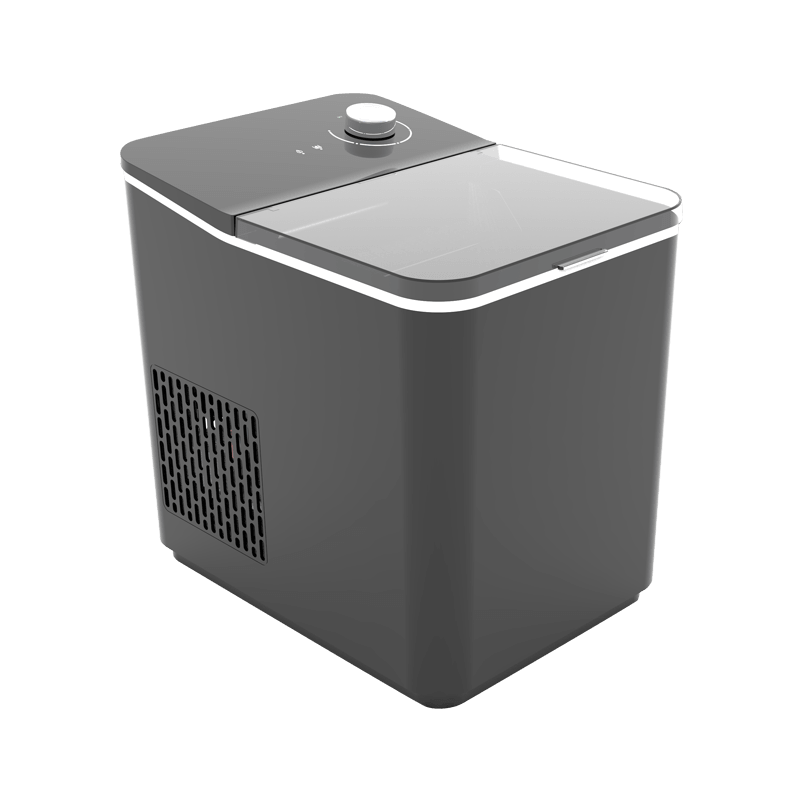
Knob-type ice maker
Product Overview
The Alien-Z02 is a compact home ice maker intended for countertop use. Its primary function is producing bullet-shaped ice through a dedicated refrigeration system. The appliance operates on a 220V–240V, 50Hz power supply and is rated at 0.9A and 150W. It uses R600a refrigerant with a stated charge of 19 grams.
These specifications position the machine as a practical household appliance rather than a large commercial ice-production unit. It is suited to homes, offices, small hospitality settings, recreational rooms, and other environments where users need a convenient supply of ice but do not require the capacity or infrastructure of a restaurant-grade machine.
Product Attribute |
Specification |
Product Type |
Bullet ice maker |
Model Description |
Alien-Z02 |
Operation Type |
Knob-type control |
Power Supply |
220V–240V, 50Hz |
Current and Power |
0.9A / 150W |
Refrigerant |
R600a, 19g charge |
Published Machine Dimensions |
313 × 226 × 309 mm |
Additional Product Size Information |
325 × 295 × 252 mm |
The supplied materials list two different dimensional measurements: 313 × 226 × 309 millimeters in the technical specification table and 325 × 295 × 252 millimeters in the product information. This difference may reflect alternative measurement methods, packaging-related information, a revised enclosure, or different interpretations of width, depth, and height. Buyers, distributors, and installation planners should confirm the final production dimensions with the supplier before creating a fixed cabinet opening or arranging a tight installation.
For ordinary countertop placement, the most important practical consideration is to allow additional clearance around the appliance. Ventilation space helps the refrigeration system release heat and supports dependable operation. The machine should be positioned on a stable, level, dry surface with sufficient room for the lid, controls, water filling, and removal of the ice basket.
Why Bullet Ice Is Useful
Bullet ice is recognizable by its rounded, elongated shape and hollow center. This shape gives the ice a distinctive visual character while also making it useful for beverage preparation. The hollow center increases the surface area that comes into contact with liquid, helping the ice cool drinks efficiently.
Bullet ice is especially suitable for soft drinks, fruit beverages, iced tea, juices, mixed drinks, and cocktails. It can be added directly to a glass or placed in a serving container for parties and family meals. Because the pieces are generally easy to handle, users can transfer them with a scoop, spoon, or clean hand when appropriate.
The form also offers a balance between cooling speed and drinking comfort. Large solid cubes can cool a beverage effectively but may occupy considerable space in a glass. Very small ice fragments can cool quickly but may melt faster and dilute a drink. Bullet ice provides an alternative format that is visually appealing, easy to use, and suited to many everyday beverages.
The product information emphasizes that the unique shape and hollow center make the ice less prone to melting. In real use, melting speed will depend on ambient temperature, beverage temperature, glass type, airflow, and the amount of ice used. Nevertheless, the bullet format is designed to provide useful cooling performance while maintaining a recognizable shape for a reasonable period.
For families, the advantage is convenience. For hosts, the advantage is presentation and availability. For small businesses, the advantage is having an independent source of ice without using valuable freezer capacity. The same appliance can serve several roles without requiring specialized operating knowledge.
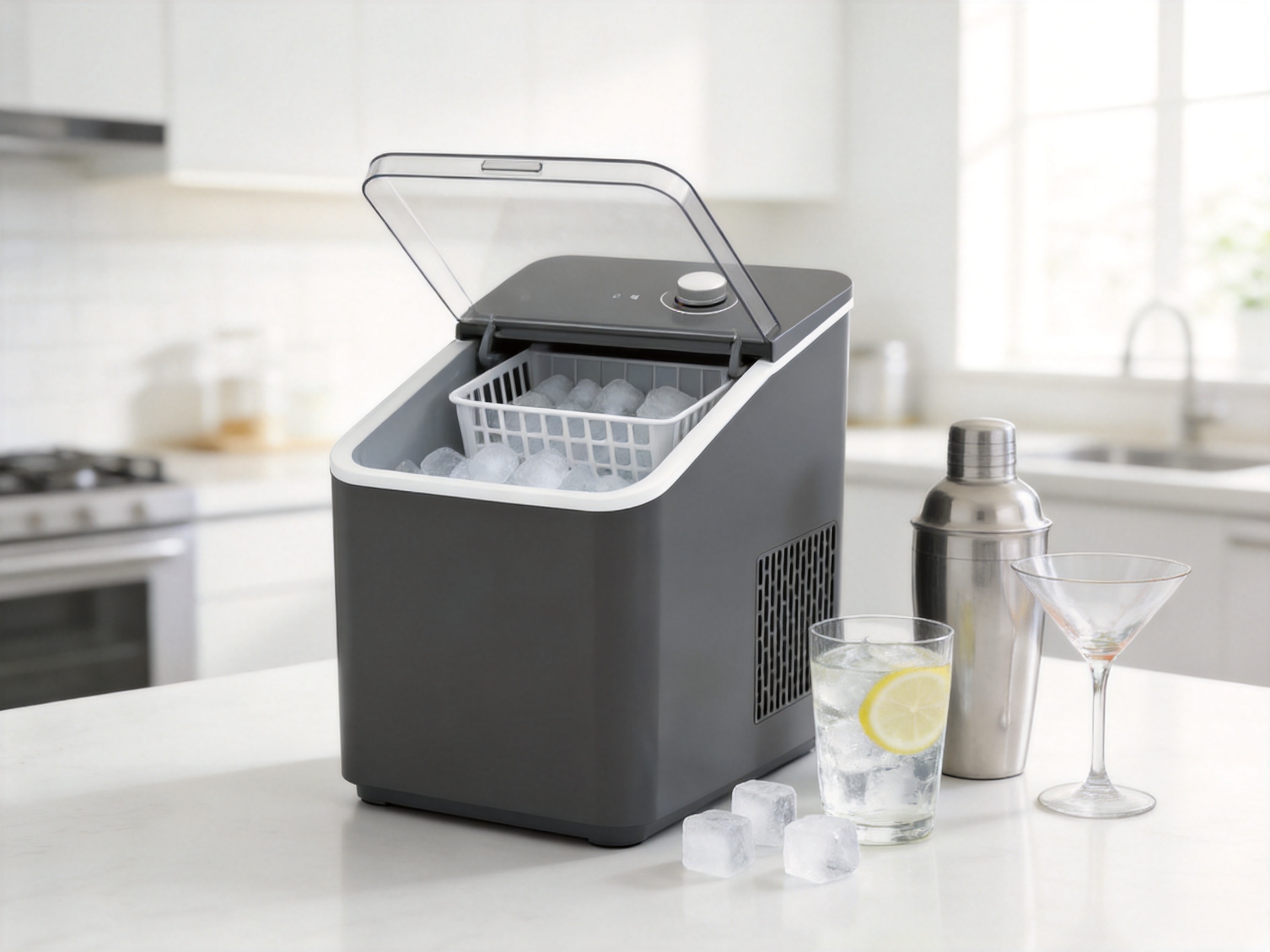
Fast Ice Making for Everyday Demand
The principal benefit of a dedicated ice maker is that it is designed to produce ice more quickly and directly than a standard freezer tray. A tray requires the user to fill individual cavities, place the tray in a freezer, wait for freezing, and then remove the cubes manually. The process can take many hours and may be difficult when freezer space is limited.
The Alien-Z02 uses a high-performance refrigeration system intended to produce bullet ice in a short time. This makes it useful when unexpected guests arrive, when a family is preparing a large meal, or when drinks must be served continuously during a gathering. Rather than planning ice production many hours in advance, users can operate the machine as part of the preparation process.
Actual production time and output may vary according to water temperature, room temperature, ventilation, cleaning condition, and the operating environment. Cooler water and a well-ventilated position may support efficient operation, while very high ambient temperatures can place a greater load on the refrigeration system. The product should therefore be used in accordance with the supplier’s operating guidance.
Fast production is also valuable for businesses that need moderate quantities of ice throughout the day. A small café, office pantry, accommodation facility, showroom, or event preparation area may not need a large commercial machine at every location. A compact unit can provide supplementary ice close to the point of use, reducing trips to a remote freezer or storage room.
Compared with manually filled ice trays, an automatic countertop design improves workflow. Users do not need to remove individual pieces from a frozen tray, and the rounded pieces are collected in a dedicated internal area. This reduces handling and makes the transition from water filling to beverage service more convenient.
Compact Design for Flexible Placement
Counter space is limited in many homes and commercial environments. An oversized appliance can obstruct food preparation, block access to cabinets, or make a small kitchen feel crowded. The compact structure of this ice maker is intended to address that problem.
Its stated dimensions allow it to fit into a range of locations, including kitchen countertops, home bars, office refreshment areas, recreational rooms, and outdoor serving stations. The product information also describes it as lightweight and compact, making it easier to place where ice is needed rather than forcing users to build their routine around a distant freezer.
Flexible placement is one of the product’s key advantages over large built-in ice machines. A built-in unit may require cabinet modification, plumbing, drainage, and professional installation. The countertop format is less demanding and can be moved or stored when not required. This is particularly helpful for renters, seasonal homes, mobile catering preparation, and occasional entertaining.
Outdoor use can be convenient for garden parties, patios, balconies, and recreational spaces, provided the appliance is protected from rain, direct water exposure, excessive heat, and unstable surfaces. The machine must always be connected to a suitable electrical supply and used in a safe, dry location.
The compact form also supports efficient logistics. Smaller appliances generally require less storage space at retail locations, in distributor warehouses, and in customer homes. For importers and resellers, a compact product can be easier to package, display, and transport than a larger commercial alternative.
Although the appliance is compact, it should not be placed so close to a wall or another heat-producing device that airflow is restricted. Refrigeration equipment removes heat from the water and releases that heat into the surrounding environment. Adequate clearance is therefore an important part of installation and long-term performance.
Energy and Refrigeration Considerations
The product is rated at 150 watts and 0.9 amps under a 220V–240V, 50Hz power supply. These figures indicate a household-scale appliance designed for practical ice production without the electrical requirements associated with much larger commercial systems.
The machine uses R600a, also known as isobutane, with a stated charge of 19 grams. R600a is a natural hydrocarbon refrigerant widely used in various modern refrigeration products. It has strong refrigeration characteristics and a low global warming potential compared with many older refrigerants. The use of this refrigerant aligns with the broader industry movement toward more environmentally considerate cooling technologies.
Refrigerant choice is only one part of environmental performance. Overall energy use also depends on operating frequency, ambient temperature, maintenance, insulation, ventilation, and the age of the appliance. Users can support efficient operation by cleaning the machine regularly, avoiding unnecessary continuous operation, keeping vents clear, and switching the appliance off when it is not needed.
The 150W rating helps explain the appliance’s intended role. It is not designed to replace a large commercial ice plant, but it provides a practical level of ice-making capability for household and light-duty applications. A compact power requirement may also make it easier to use in locations where electrical capacity is limited, subject to local electrical safety requirements.
Because R600a is flammable, servicing must be performed by appropriately trained personnel using suitable procedures and equipment. Users should not attempt to open the sealed refrigeration system, recharge refrigerant, or modify electrical components. Safe design, responsible manufacturing, correct installation, and professional maintenance are essential when using any refrigerant-based appliance.
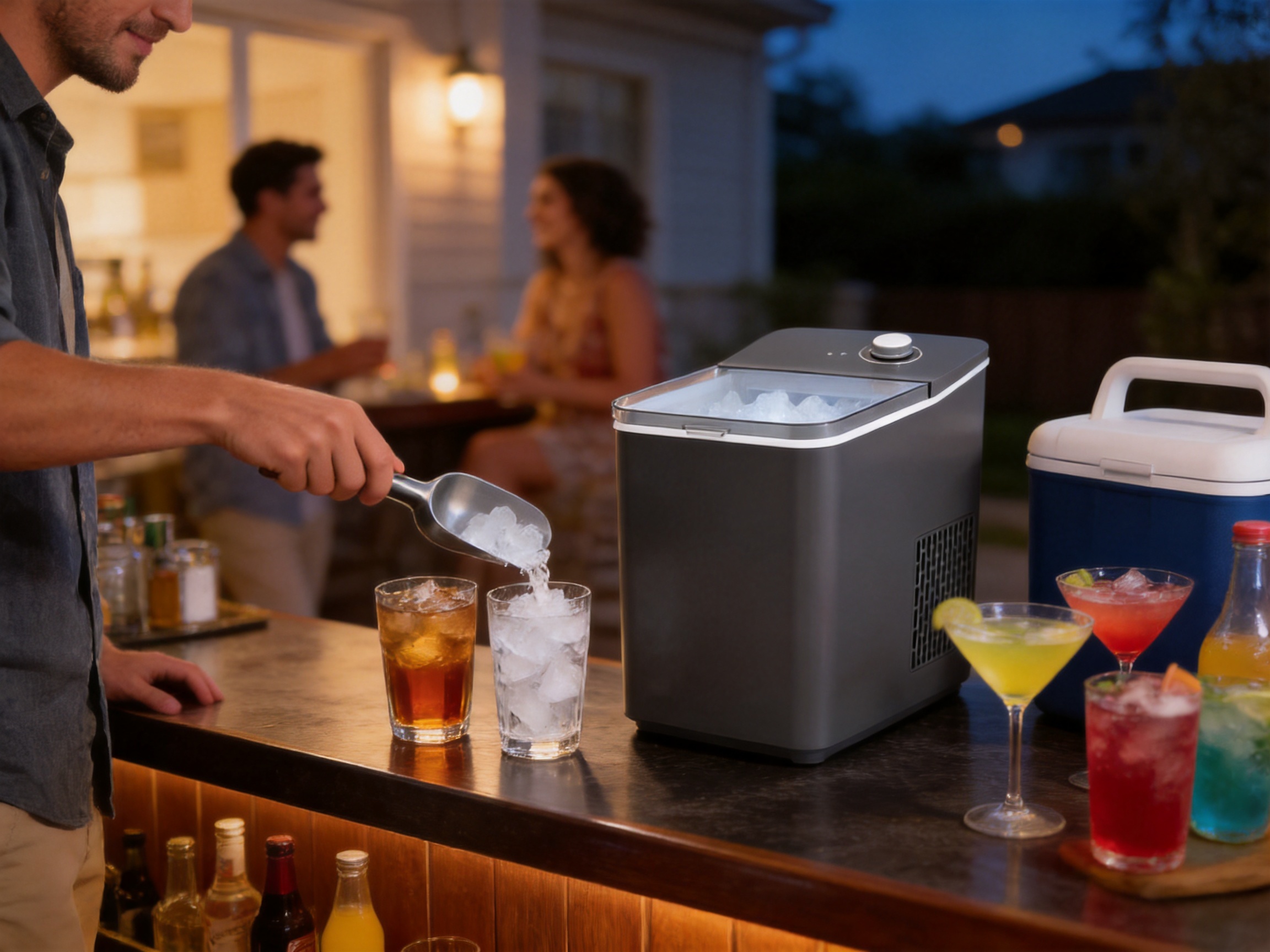
Simple Control and User Experience
A household appliance is most effective when its operation is easy to understand. The product is described as a knob-type ice maker, suggesting a straightforward control method intended to reduce unnecessary complexity. A physical knob can be useful for users who prefer direct, tactile operation rather than navigating multiple digital menus.
Simple control is particularly valuable in shared kitchens, offices, rental properties, hospitality areas, and family homes where people with different levels of technical experience may use the appliance. A clear control interface can reduce setup time and make it easier for users to begin producing ice without consulting lengthy instructions for every operation.
The supplied alias includes the phrase “Touchscreen ice maker,” while the product title identifies the appliance as knob-type. This may indicate that the product listing has used more than one naming convention or that the product information has been adapted from different catalog records. Before commercial publication, the seller should confirm the final control interface so that photographs, packaging, manuals, and advertising accurately match the production model.
Regardless of whether the final version uses a knob, touchscreen, or a combination of controls, the essential user experience should remain clear: add suitable water, connect the appliance to the correct power supply, select or start the ice-making function, and collect the finished ice when available. Clear labeling, responsive controls, and accessible maintenance areas can make a meaningful difference in customer satisfaction.
The best small appliances do not force users to learn complicated procedures for routine tasks. A focused interface allows the product to serve its purpose efficiently while leaving the user free to concentrate on cooking, entertaining, or business operations.
Advantages Compared with Common Alternatives
Compared with Freezer Ice Trays
Freezer trays are inexpensive and familiar, but they require substantial waiting time and consume freezer space. They also produce a limited amount of ice per batch and may be awkward to empty. Water can spill while the tray is being carried, and the individual cubes may stick together if the tray is not handled carefully.
A dedicated countertop ice maker avoids many of these inconveniences. It is designed specifically for ice production, offers a more convenient collection process, and can operate independently from the freezer. Users can keep frozen food in the freezer while producing ice on the counter.
Compared with Bagged Ice
Bagged ice can be useful for large events, but it requires purchasing, transporting, and storing the product. Bags may take up substantial freezer or cooler space, and the ice may not be available when stores are closed. A countertop machine provides an on-demand alternative for regular household quantities.
Producing ice at the point of use can also improve convenience and reduce reliance on disposable packaging. Users can make only the amount they need, helping avoid the problem of opening a large bag for a small beverage requirement.
Compared with Large Built-In Machines
Commercial or built-in machines can offer high output, but they often involve greater purchase cost, installation complexity, water connections, drainage requirements, and maintenance commitments. They may be excessive for a family kitchen or small office.
The compact Alien-Z02 is positioned as a more accessible solution for moderate demand. Its countertop format allows users to add ice-making capacity without remodeling a kitchen or installing permanent plumbing. This balance between functionality and simplicity is one of its strongest competitive advantages.
Compared with Generic Low-Cost Ice Makers
Price alone does not determine the value of a small appliance. A reliable product should combine refrigeration performance, appropriate materials, electrical safety, stable assembly, clear controls, and responsive after-sales support. The stated power, refrigerant, dimensions, and product identity provide a basis for transparent purchasing and distribution.
The strength of this model lies in its focused design. It does not attempt to be a large multifunctional appliance. Instead, it concentrates on producing bullet ice in a compact body while supporting practical household use, energy-conscious refrigeration, and flexible placement.
Manufacturing Strengths and Engineering Approach
The product is manufactured by Alien Technology Co., Ltd., a household-appliance company located in Zhouxiang, Zhejiang Province. The region is recognized as an important production area for small household appliances and benefits from established component networks, manufacturing experience, and logistics connections.
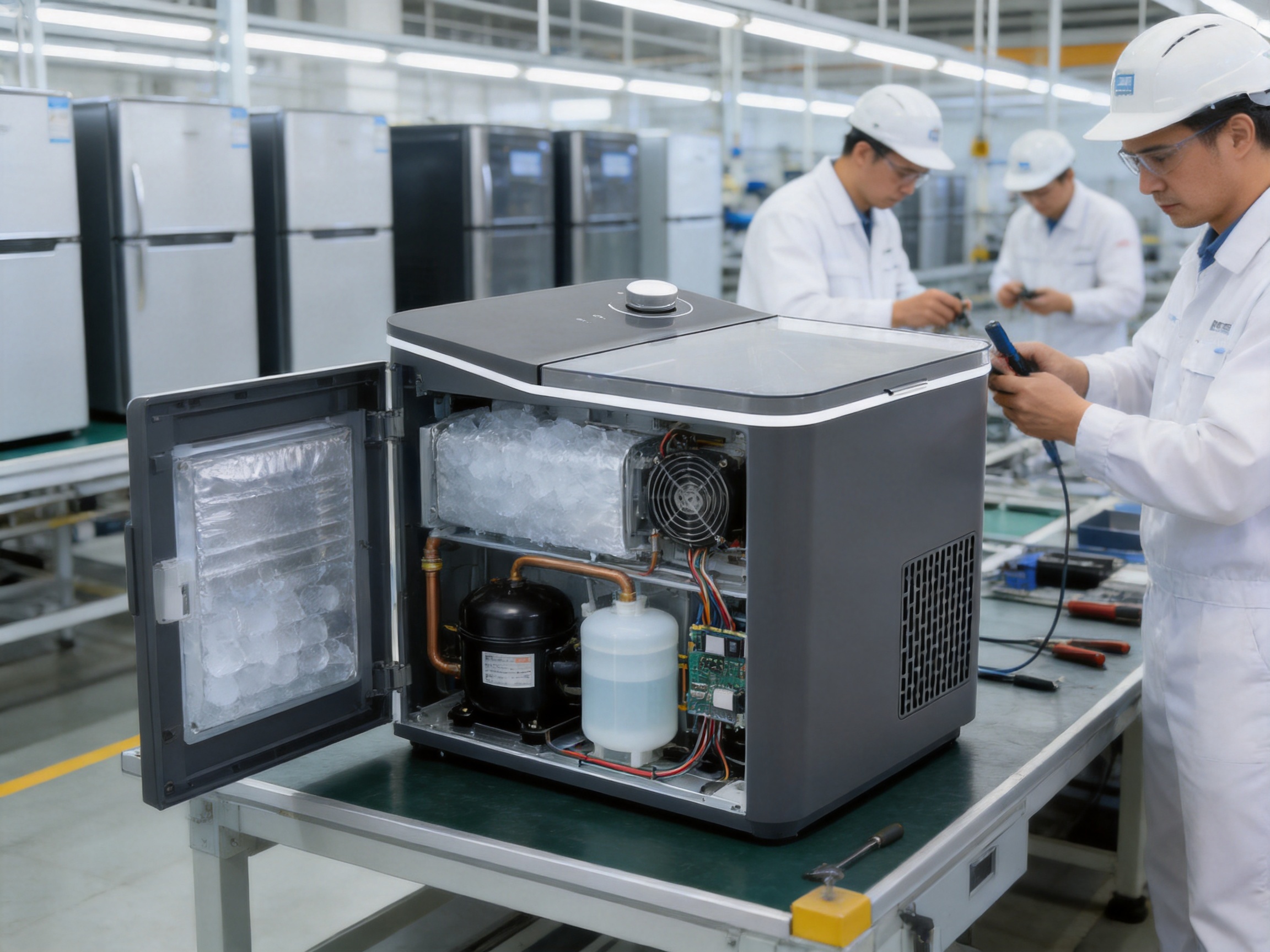
A strong small-appliance manufacturer must coordinate many processes rather than relying on a single successful feature. Product engineering, material selection, refrigeration integration, electrical assembly, inspection, packaging, and customer support all contribute to the final user experience. An ice maker may appear simple from the outside, but it contains a refrigeration circuit, control system, water-contact components, structural housing, heat-dissipation features, and safety-related electrical elements.
The compact enclosure requires careful internal layout. The refrigeration components must be positioned so that the machine can freeze water effectively while releasing heat safely. The water pathway must support convenient filling and drainage. The collection area must be accessible without making the overall structure unnecessarily large. This kind of space planning is central to successful countertop-appliance engineering.
Manufacturing consistency is also important. Two units with the same model number should provide a comparable operating experience, including stable control response, secure panel fit, reliable electrical connections, and consistent ice formation. Production-line checks can help identify assembly problems before products reach customers.
For a refrigerant-based appliance, quality control should include attention to sealed-system integrity, tubing connections, insulation, compressor operation, wiring, grounding, and protective components. R600a systems must be handled in accordance with applicable safety procedures because the refrigerant is flammable. Proper factory processes and trained technicians are therefore essential.
Material selection influences durability, hygiene, appearance, and maintenance. Exterior surfaces should withstand ordinary kitchen use and be easy to wipe clean. Internal water-contact areas should be designed with cleanliness in mind. Components exposed to moisture should be appropriately protected, and the finished enclosure should resist ordinary vibration and movement during operation.
The company’s focus on ice makers, coffee machines, and air fryers also suggests experience across several categories of small household appliances. These products share important manufacturing requirements, including compact mechanical design, heat management, user-centered controls, electrical reliability, and attractive but practical housings. Knowledge gained across categories can support more efficient product development and quality management.
Manufacturing strength should not be understood only as production volume. It also includes the ability to respond to customer requirements, maintain stable quality, coordinate export orders, provide technical documentation, and improve products over time. For distributors and brand partners, these capabilities are often as important as the physical appliance itself.
Quality, Inspection, and Production Reliability
Reliable ice production depends on the interaction of multiple systems. A refrigeration system that operates correctly but is paired with poor water management may deliver an unsatisfactory user experience. Likewise, a visually attractive housing cannot compensate for unstable electrical performance or difficult cleaning. Effective quality management evaluates the product as a complete system.
Typical inspection priorities for a countertop ice maker include power-on testing, control-function verification, refrigeration performance, water leakage checks, operating noise, housing fit, component security, and packaging protection. These checks help reduce the likelihood of products arriving damaged or failing during early use.
Dimensional control is also important. A compact appliance must maintain accurate enclosure dimensions so that internal components fit correctly and external panels align properly. Accurate dimensions support efficient packaging and help customers plan countertop placement. Since two dimensional specifications have been supplied for this model, final production documentation should clearly identify which measurement applies to the finished unit.
Electrical testing is essential for a product designed for 220V–240V operation. Wiring, insulation, switches, plugs, protective devices, and grounding arrangements should be evaluated according to the requirements of the destination market. Export customers should confirm the applicable certification and plug configuration for their region before ordering.
Refrigeration testing should verify that the sealed system maintains appropriate performance under expected operating conditions. The compressor, condenser, evaporator, tubing, and refrigerant charge must work together as intended. Factory verification can identify leaks, abnormal vibration, insufficient cooling, or other issues before shipment.
Packaging is another part of manufacturing quality. Small appliances may travel through several distribution stages before reaching the end user. Protective materials should reduce the risk of impact damage, panel deformation, control breakage, and movement of internal components. Clear cartons, product labels, manuals, and installation guidance can further improve the delivery experience.
A company that combines production discipline with continuous improvement is better positioned to serve international customers. Feedback from distributors and users can reveal opportunities to improve controls, insulation, cleaning access, dimensions, packaging, or documentation. This improvement cycle supports long-term competitiveness in a crowded household-appliance market.
Installation and Daily Operation
Before operating the ice maker, users should place it on a stable, level surface near a suitable electrical outlet. The location should be dry, clean, and ventilated. The machine should not be placed beside an oven, heater, radiator, or other source of intense heat. Direct sunlight and excessive ambient temperature may reduce cooling efficiency.
The product should be allowed to settle after transportation if required by the supplier’s instructions. This is particularly important for refrigeration appliances because movement during shipping can affect the position of internal fluids and components. Users should read the supplied manual before switching on the machine.
Only clean, potable water should be used unless the manufacturer provides different instructions. Water should be added carefully to avoid spills around electrical components. The machine should not be overfilled, and the water level should remain within the stated operating range.
Once the machine is connected to the correct power supply, the user can select the ice-making function using the supplied controls. Ice should be collected with a clean utensil or the provided basket, if included. If the machine will not be used for an extended period, it should be emptied, cleaned, dried, and disconnected according to the manual.
Freshly produced ice may be transferred to a separate insulated container when a larger quantity is needed for serving. The appliance itself is intended to make ice, not necessarily to function as a long-term freezer. Ice left inside may gradually melt, particularly in a warm room or when the machine is switched off.
Daily operation should include observing unusual sounds, water leakage, damaged cables, or abnormal odors. If any unsafe condition appears, the machine should be switched off and examined by qualified service personnel. Users should not bypass safety features or attempt unauthorized repairs.
Cleaning and Maintenance
Cleanliness is important because the appliance handles water and produces ice intended for consumption. The internal water reservoir, ice collection area, lid, and accessible surfaces should be cleaned according to the manufacturer’s recommended schedule. Regular cleaning helps control mineral deposits, odors, and residue.
In areas with hard water, mineral buildup may occur more quickly. A suitable cleaning procedure can help maintain water flow and ice quality. Users should only use cleaning agents approved or recommended for the appliance and should rinse all food-contact surfaces thoroughly.
The exterior can generally be wiped with a soft, damp cloth. Abrasive pads, harsh solvents, and excessive water should be avoided because they may damage the finish, labels, controls, or electrical areas. The machine should be unplugged before cleaning around electrical components.
Airflow openings and heat-dissipation areas should remain free of dust and obstruction. Restricted airflow can increase operating temperature and reduce refrigeration efficiency. The machine should not be pushed directly against a wall if doing so blocks ventilation.
Maintenance of the sealed refrigeration system must be performed by qualified professionals. Users should never puncture tubing, remove refrigerant components, or attempt to refill R600a themselves. Professional service protects both the user and the appliance.
Proper maintenance contributes to product longevity and helps preserve the advantages of compact refrigeration. A clean water pathway, clear ventilation, and undamaged electrical system support more stable operation and a better overall ownership experience.
Applications in Different Environments
Home Kitchens
In a family kitchen, the ice maker can support daily drinks, weekend meals, celebrations, and hot-weather refreshment. Its countertop format allows it to be used when needed and stored when additional counter space is required.
Home Bars and Entertainment Areas
Bullet ice is suitable for cocktails, mocktails, soft drinks, and mixed beverages. The distinctive shape can add visual interest to serving glasses, while on-demand production reduces the need to purchase ice before every gathering.
Offices
An office pantry may benefit from a dedicated ice source for water, tea, juice, and employee refreshments. A compact machine can provide useful capacity without requiring a large commercial installation.
Guest Rooms and Small Hospitality Settings
Small accommodation providers can use countertop ice makers in shared kitchens, lounges, or service areas. The appliance may be especially practical where a full-size ice machine would be too large or expensive.
Outdoor Events
For patios, garden gatherings, and temporary serving areas, the machine can be placed near the point of use when protected from rain and excessive heat. Users should ensure that the electrical connection and operating surface meet local safety requirements.
Retail Demonstration and Promotional Use
Distributors and retailers can demonstrate the product’s value by presenting it as a compact solution for real household situations. Showing the machine beside ordinary freezer trays or a large built-in unit can make its space-saving purpose easier for customers to understand.
Business and Distribution Potential
The household ice-maker market includes several customer groups with different priorities. Some buyers focus on speed, others on appearance, energy considerations, compactness, ease of cleaning, or price. A product that communicates a clear combination of benefits can appeal to a broad audience without becoming overly complicated.
The Alien-Z02 offers several points that distributors can emphasize: bullet-shaped ice, countertop convenience, a compact body, a 150W rating, R600a refrigerant, and suitability for home and light-duty use. These features can be communicated through product packaging, retail displays, online listings, instruction manuals, and demonstrations.
For wholesalers and importers, supplier communication is important. Before placing an order, buyers should confirm final dimensions, control type, ice-production performance, water capacity, carton size, net and gross weight, warranty terms, spare parts, plug configuration, certifications, and minimum order quantity. The dimensional discrepancy in the supplied materials makes this confirmation particularly important.
Private-label and customized orders may require adjustments to color, logo placement, packaging, user manuals, control markings, or regional electrical configurations. A capable manufacturer should be able to coordinate these requirements while protecting core product quality and safety.
The company’s location in a major small-appliance manufacturing region can provide logistical advantages. Access to component suppliers and established transport networks may support efficient production coordination and export shipment. However, delivery schedules and product availability should always be confirmed for each order.
After-sales support can strengthen the product’s market position. Customers may need guidance on cleaning, troubleshooting, storage, dimensions, or replacement parts. Clear documentation and responsive communication help reduce returns and improve confidence among retailers and end users.
Responsible Product Positioning
Marketing should present the ice maker accurately and avoid claims that cannot be verified. The product is described as a compact, high-performance household bullet ice maker, but actual production speed, daily output, noise level, and ice-storage behavior should be stated only when supported by official testing data.
The environmental benefit of R600a should be explained responsibly. Its low global warming potential is an important characteristic, but the complete environmental impact of an appliance also includes manufacturing, transport, electricity use, maintenance, and end-of-life disposal. Balanced communication is more credible than presenting one refrigerant feature as a complete sustainability solution.
Likewise, the statement that bullet ice is less prone to melting should be understood as a description of its shape and expected practical behavior, not as a guarantee that ice will remain frozen indefinitely. Ambient conditions strongly affect melting. Transparent product information helps users form realistic expectations.
A responsible product listing should also include electrical requirements, safe-use guidance, cleaning instructions, refrigerant warnings, and installation recommendations. This is especially important when the product is sold across different countries and regions.
How the Product Supports Simpler Living
The central purpose of a countertop ice maker is to remove friction from a common household task. Instead of planning freezer space, filling trays, waiting overnight, or purchasing bags, users can make ice close to the moment it is required.
This convenience supports a more flexible daily routine. A family can prepare chilled drinks during a meal. A host can respond to changing guest numbers. An office can provide refreshments without relying on a distant storage room. A small hospitality business can supplement its existing ice supply during periods of moderate demand.
The machine also supports a more organized kitchen. By separating ice production from food freezing, it reduces competition for freezer space. The compact body allows the appliance to be placed where it is most useful and removed when it is not needed.
Good design does not necessarily mean adding many features. In this case, practical value comes from combining focused functionality with compact dimensions, simple operation, and a refrigeration system suited to household use. That balance can make the product approachable for a wide range of customers.
Q&A
What type of ice does the machine produce?
The machine produces bullet-shaped ice with a hollow center. This format is suitable for cooling soft drinks, juices, iced tea, cocktails, mocktails, and other beverages.
Where can the ice maker be installed?
It is designed for countertop placement in locations such as home kitchens, home bars, offices, small hospitality areas, and protected outdoor serving spaces. The surface should be stable, level, dry, and adequately ventilated.
Does it require a permanent water connection?
The supplied information presents it as a compact home countertop machine, which generally means water is added manually rather than through a permanent plumbing connection. Users should verify the exact filling and drainage method in the official manual for the final model.
What electrical supply does it use?
The listed power supply is 220V–240V at 50Hz. The rated current and power are 0.9A and 150W. Buyers should confirm compatibility with the electrical standards and plug configuration of the destination country.
Which refrigerant is used?
The machine uses R600a refrigerant with a stated charge of 19 grams. Because R600a is flammable, the sealed refrigeration system should only be serviced by trained and qualified personnel.
Is the product suitable for commercial use?
It is primarily described as a home bullet ice maker, but it may also be useful for offices, small hospitality settings, and light-duty commercial applications. Businesses should confirm the expected output, duty cycle, warranty, and local compliance requirements before relying on it for continuous commercial production.
How quickly does it make ice?
The product is designed for quick ice making through a high-performance refrigeration system. Exact production time depends on water temperature, room temperature, ventilation, cleaning condition, and other operating factors. The supplier should be consulted for official cycle-time and output data.
How should the machine be cleaned?
The water reservoir, ice collection area, lid, and other accessible surfaces should be cleaned regularly according to the official instructions. Food-safe cleaning procedures and thorough rinsing are important because the appliance produces ice for consumption.
Can the machine be placed directly against a wall?
The machine should have adequate ventilation clearance. Placing it directly against a wall or beside a heat source may restrict airflow and reduce refrigeration performance. The final clearance requirements should be confirmed in the user manual.
What should buyers do about the different dimensions listed for the product?
The supplied materials list both 313 × 226 × 309 millimeters and 325 × 295 × 252 millimeters. Buyers should request confirmation of the final production dimensions, measurement orientation, and packaging dimensions before planning installation or placing a large order.
Is the product controlled by a knob or a touchscreen?
The product title describes it as a knob-type ice maker, while one supplied alias refers to a touchscreen ice maker. This inconsistency should be clarified with the supplier before advertising, ordering, or preparing retail materials.
What makes this model different from freezer trays?
It is designed specifically for dedicated ice production and does not require users to fill and freeze conventional trays. It can produce bullet ice on demand while preserving freezer space for food and other frozen items.
What makes the appliance environmentally considerate?
It uses R600a, a natural hydrocarbon refrigerant with a very low global warming potential compared with many traditional refrigerants. Efficient operation also depends on proper maintenance, clear ventilation, appropriate use, and responsible disposal at the end of the appliance’s service life.
Who manufactures the product?
The product is supplied by Alien Technology Co., Ltd., a Zhejiang-based manufacturer specializing in household appliances including ice makers, coffee machines, and air fryers.
Purchasing Checklist
Before purchasing or distributing the ice maker, customers should verify the final model name, control type, dimensions, power supply, plug, refrigerant information, water capacity, ice-production performance, operating noise, warranty, and included accessories.
Commercial buyers should also request product certifications, test reports, packaging specifications, carton markings, spare-parts availability, service procedures, production lead time, and export documentation. These details help ensure that the product can be sold and supported in the intended market.
Household users should consider where the machine will be placed, how often ice will be required, whether the available power supply is compatible, and whether there is enough room for ventilation and cleaning. They should also consider whether the compact machine will provide sufficient ice for their expected demand.
Retailers can improve customer satisfaction by explaining that the appliance is intended for moderate household or light-duty use rather than unlimited commercial production. Clear expectations help customers choose the right product and reduce misuse.
Conclusion
The Alien-Z02 compact bullet ice maker is designed to make everyday ice production more convenient, flexible, and accessible. Its principal strengths include a dedicated refrigeration system, bullet-shaped ice with a hollow center, compact countertop dimensions, a 150W household-scale power rating, and the use of R600a refrigerant.
Compared with freezer trays, it offers greater convenience and avoids long freezing delays. Compared with bagged ice, it provides an on-demand source that can reduce storage and purchasing concerns. Compared with large built-in machines, it offers a simpler installation approach and a more accessible format for homes and light-duty settings.
The product’s value also depends on the manufacturer behind it. Alien Technology Co., Ltd. operates in a Zhejiang small-appliance manufacturing center and focuses on ice makers, coffee machines, air fryers, and related household products. Its stated emphasis on humanized design, reliable quality, continuous improvement, and innovation reflects the requirements of a competitive international appliance market.
Successful ownership will depend on correct installation, suitable ventilation, regular cleaning, safe electrical use, and professional refrigeration service when necessary. Buyers should also confirm the final dimensions and control configuration because the supplied product information contains two different dimensional sets and two different control references.
When properly specified, installed, and maintained, this countertop bullet ice maker can provide a practical source of fresh ice for kitchens, offices, home bars, hospitality areas, and protected outdoor events. Its focused design demonstrates how a compact appliance can simplify a routine task while combining useful performance, flexible placement, and modern refrigeration considerations.
References
1. Product specification sheet for the compact bullet ice maker, including electrical rating, refrigerant type, charge, and published machine dimensions.
2. Product information for the Alien-Z02 home bullet ice maker, including design features, application descriptions, and compact-size information.
3. General technical literature on household refrigeration systems using R600a hydrocarbon refrigerant.
4. General guidance on countertop appliance installation, ventilation, electrical safety, and water-contact surface hygiene.
5. General engineering principles for small-appliance manufacturing, refrigeration-system integration, inspection, packaging, and quality control.