
 English
 한국어
 Español
 Deutsch
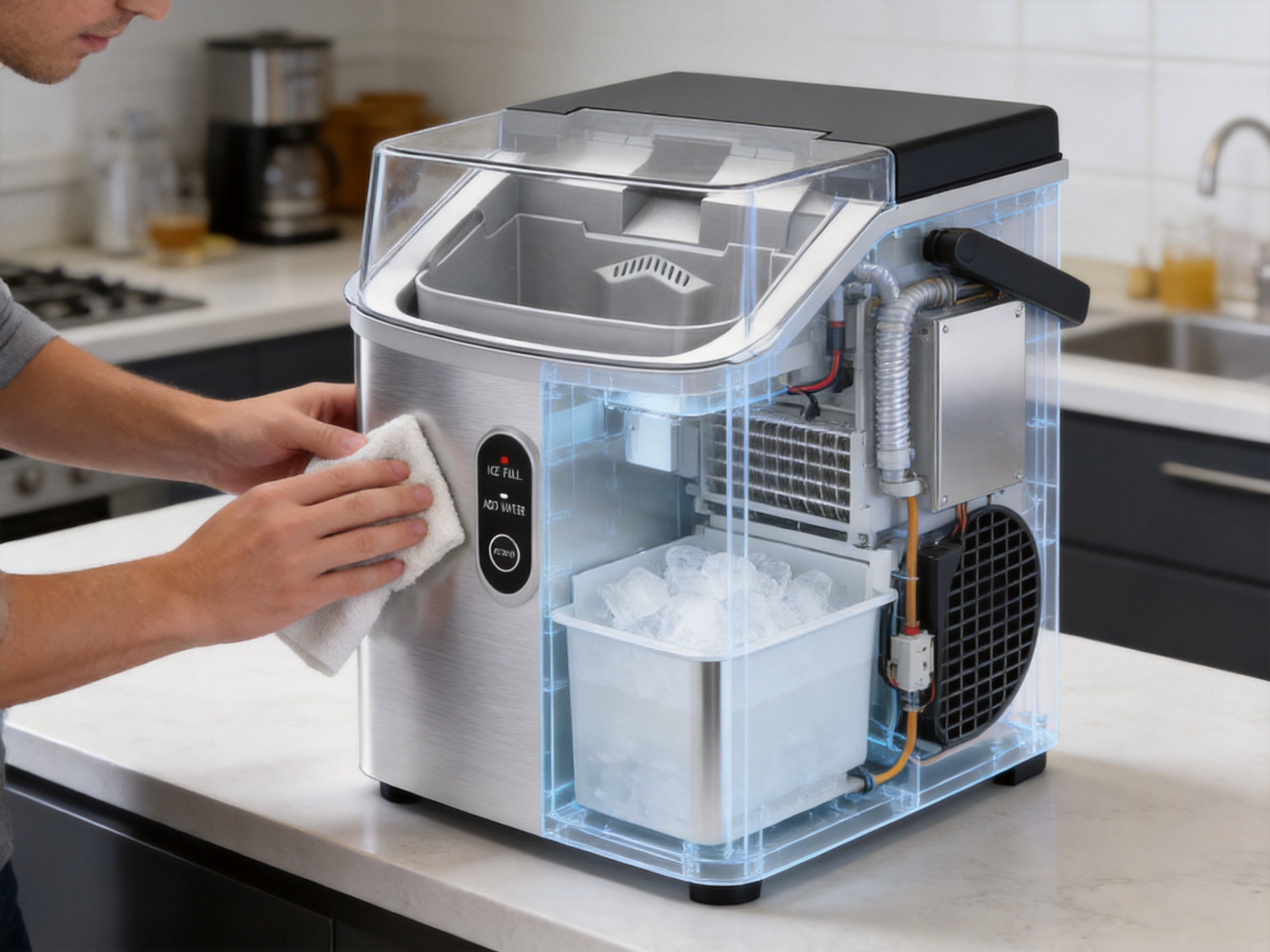
Chewable ice has become increasingly popular among people who want more than ordinary hard ice cubes. Its soft, compact texture is pleasant to bite, cools beverages quickly, and can be used in a wide range of food and household applications. The Home Chewing Ice Maker is designed to bring this experience into the home with a compact structure, practical power consumption, and a production concept centered on soft, easy-to-use ice.
Unlike traditional cube ice, which is mainly designed to preserve its shape for a long time, chewable ice is valued for its texture and versatility. It can be scooped easily, mixed into drinks, used as a base for frozen beverages, or arranged around food for cooling and presentation. This gives the product a wider role than a conventional ice tray or standard countertop ice maker.
The machine is identified as the Alien-ZJ01 model and belongs to the chewing ice maker category. It is manufactured by Alien Technology Co., Ltd., a household-appliance company based in Cixi, Zhejiang Province. The company specializes in ice makers, coffee machines, air fryers, and other small appliances, with a stated focus on humanized design, reliable quality, intelligent technology, and practical household convenience.
This article examines the product’s operating concept, main benefits, technical specifications, possible applications, user experience, and the manufacturing strengths behind it. It also compares soft chewing ice with more conventional forms of ice and explains why this type of appliance can be useful in homes, small food-service environments, beverage areas, and display settings.
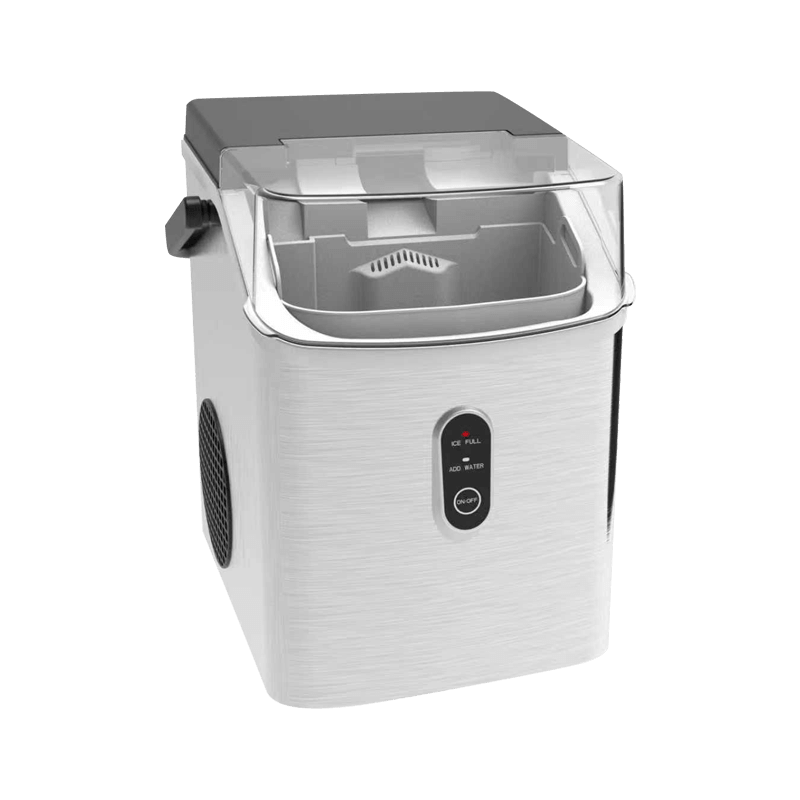
Home chewing ice maker
Understanding Chewable Ice
Chewable ice is made in a form that is softer and smaller than the large, dense cubes commonly found in household freezers. The texture is one of its defining characteristics. Instead of presenting a hard surface that can be uncomfortable to bite, it offers a gentler chewing experience and can be crushed or mixed with less effort.
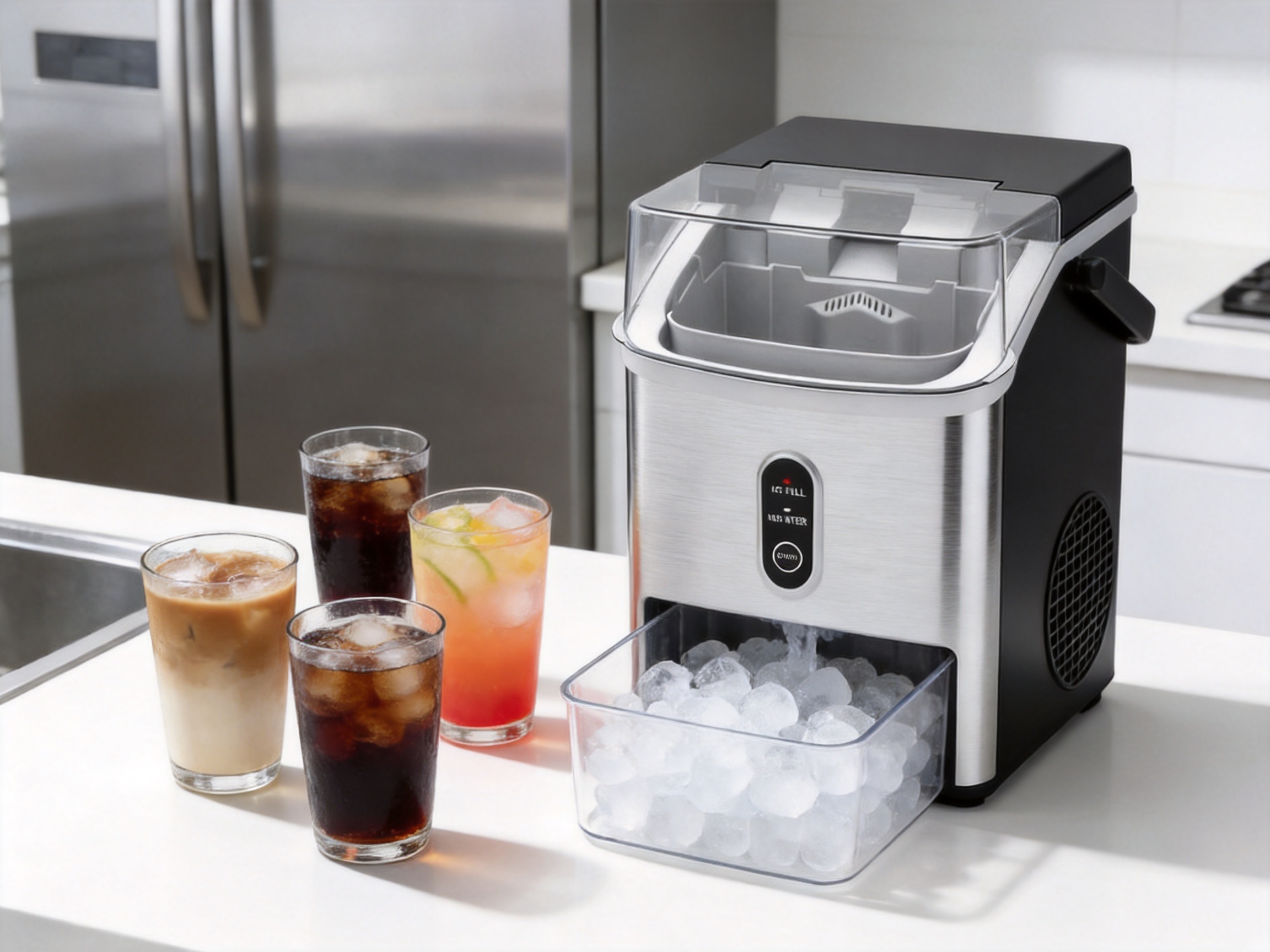
The name “chewing ice” reflects the way people use it. The ice is not only placed in a glass to chill a beverage; it can also become part of the drinking experience. Many users appreciate the light, soft texture and the pleasant sound created when the ice is chewed. This makes it particularly attractive for cold drinks, iced coffee, soft drinks, fruit beverages, and blended refreshments.
The small particle structure also affects cooling performance. Smaller pieces generally provide more surface area in relation to their volume than a single large cube. When placed in a drink, they can make contact with more of the liquid, helping the beverage cool quickly. This is useful when a drink has been prepared at room temperature and needs to become cold without a long waiting period.
Chewable ice can also absorb or carry flavor more readily than large, solid cubes. When used with fruit beverages, syrups, smoothies, or blended drinks, its texture allows it to combine easily with other ingredients. Rather than remaining as a separate hard block, it becomes part of the overall beverage consistency.
Product Overview
The Home Chewing Ice Maker is a compact countertop appliance intended for producing soft ice suitable for household drinks and other practical uses. Its dimensions are 224 x 333 x 325 millimeters, allowing it to fit into many kitchen counters, beverage stations, small cafés, office refreshment areas, or hospitality spaces where countertop room is limited.
The appliance uses a 220V/60Hz power supply and has a listed current and power rating of 0.55A/130W. Its refrigeration system uses R600a refrigerant with a listed charge of 19 grams. These specifications place the machine in the category of compact household refrigeration appliances rather than large commercial ice-production equipment.
The product’s compact format is one of its most practical advantages. A large ice machine may provide greater capacity, but it also requires more installation space and may be unnecessary for a family, small office, or modest beverage service area. This product is designed around a more accessible balance: a dedicated machine for soft ice without the footprint of a large floor-standing unit.
The model’s straightforward purpose also helps distinguish it from multifunction appliances. It is not primarily designed as a coffee brewer, food fryer, or general refrigerator. Its main role is to create a specific type of ice with a soft texture and broad usability. Focusing on this function allows the product to serve users who specifically prefer chewable ice rather than simply needing any form of frozen water.
Key Technical Specifications
Product Type |
Home chewing ice maker |
Model |
Alien-ZJ01 |
Power Supply |
220V/60Hz |
Current and Power |
0.55A / 130W |
Refrigerant |
R600a |
Refrigerant Charge |
19g |
Machine Dimensions |
224 x 333 x 325mm |
Primary Application |
Soft chewable ice for beverages, food use, cold compresses, and frozen refreshments |
Users should always confirm that the power specification is compatible with the electrical supply in their location before purchase or installation. The stated 220V/60Hz configuration is the supplied product specification and should be treated as an important selection requirement.
Why Soft Ice Can Be Better Than Conventional Ice Cubes
Traditional ice cubes remain useful for many applications, particularly when a drink needs to stay cold for an extended period and the user wants the ice to retain its shape. However, hard cubes are not always the most comfortable or versatile choice. They can be difficult to chew, challenging to scoop, and slow to combine with other ingredients.
Soft chewing ice addresses these limitations through its texture. It is gentler on the teeth and more suitable for users who enjoy chewing ice as part of their beverage experience. Its smaller form also makes it easier to distribute throughout a glass, mixing bowl, display tray, or serving container.
Compared with ordinary freezer ice, the dedicated appliance provides a more consistent way to produce the desired texture. Ice made in household trays can vary in size and hardness, while manually crushing cubes can be noisy, inconvenient, and inconsistent. A machine designed specifically for chewable ice reduces the need for these extra steps.
Soft ice can also be more convenient in beverages that require quick temperature reduction. Large cubes touch the drink at relatively few points. Smaller pieces can surround more of the liquid, increasing contact and helping deliver a faster cooling effect. This is especially relevant for iced coffee, soda, fruit drinks, and other beverages served immediately after preparation.
Another advantage is ease of portioning. A user can scoop the amount needed instead of removing and breaking apart large frozen pieces. This can help reduce preparation time and make the product more practical for children’s drinks, family gatherings, casual entertaining, and self-service beverage areas.
Comparison with Common Ice Formats
Characteristic |
Hard Cube Ice |
Crushed Ice |
Soft Chewable Ice |
Texture |
Dense and hard |
Irregular and often hard |
Soft and easier to chew |
Ease of Scooping |
Moderate |
Moderate, depending on size |
High |
Cooling Contact |
Lower surface area |
Higher surface area |
High surface area |
Mixing with Drinks |
Limited |
Good |
Very convenient |
Chewing Experience |
Hard and less comfortable |
Variable |
Soft and satisfying |
This comparison does not mean that soft ice replaces every other ice format. Instead, it shows that the product is designed for a different set of priorities: comfort, quick cooling, easy handling, and integration with beverages and food.
Core Advantage One: A Comfortable Chewing Experience
The most important benefit of the Home Chewing Ice Maker is the texture of the ice it is designed to produce. For many users, the appeal of this product begins with the simple pleasure of chewing soft ice. It can provide a satisfying mouthfeel without the hardness associated with ordinary cubes.
A gentler texture may also be preferable for people who do not enjoy biting down on dense ice. While users should always consider their own dental health and follow professional advice where necessary, the product’s soft format is intended to provide a more comfortable experience than hard, solid ice.
The texture can improve the overall enjoyment of a beverage. When drinking iced coffee or soda, some users like to continue enjoying the ice after the liquid has been consumed. Soft pieces are easier to bite, scoop, and finish, turning the ice from a temporary cooling accessory into part of the refreshment.
This characteristic offers a meaningful point of difference from conventional ice makers. Many standard machines focus on producing cubes quickly, but not all are designed around the sensory qualities of the ice. The Home Chewing Ice Maker is centered on the chewable format, making texture a primary product benefit rather than a secondary result.
Core Advantage Two: Rapid Beverage Cooling
The product information emphasizes the ability of small ice particles to cool drinks rapidly. This advantage is related to surface area. When ice is divided into smaller pieces, more of the ice comes into contact with the beverage. Heat can therefore transfer from the drink to the ice across a larger total contact area.
This is useful in everyday situations. A freshly brewed iced coffee can be cooled more quickly without being diluted by a large volume of water. A soft drink can reach a refreshing temperature soon after serving. Fruit beverages and flavored waters can also benefit from the fast distribution of small pieces throughout the glass.
Rapid cooling is particularly valuable when preparing drinks for several people. Instead of waiting for a refrigerator to cool each serving or relying on large cubes that take longer to work, the user can prepare beverages and add chewable ice as part of the serving process.
The ice’s soft structure also makes it suitable for mixing. It can be stirred into drinks with a spoon or combined with ingredients in a blender or similar preparation process. This gives the appliance a role in both simple refreshments and more creative beverage preparation.
Core Advantage Three: Flavor Integration and Coating
Small, soft ice has a useful relationship with food and flavor. Because it is easy to scoop and mix, it can be incorporated into smoothies, frozen drinks, shaved-ice-style refreshments, and other cold preparations. It does not require the same amount of crushing or breaking as hard cubes.
In a beverage, this can create a more unified texture. Rather than having a glass filled with large pieces that remain separate, the soft ice can become part of the drink as it is stirred or blended. It can help produce a thicker, colder, more substantial mouthfeel in suitable recipes.
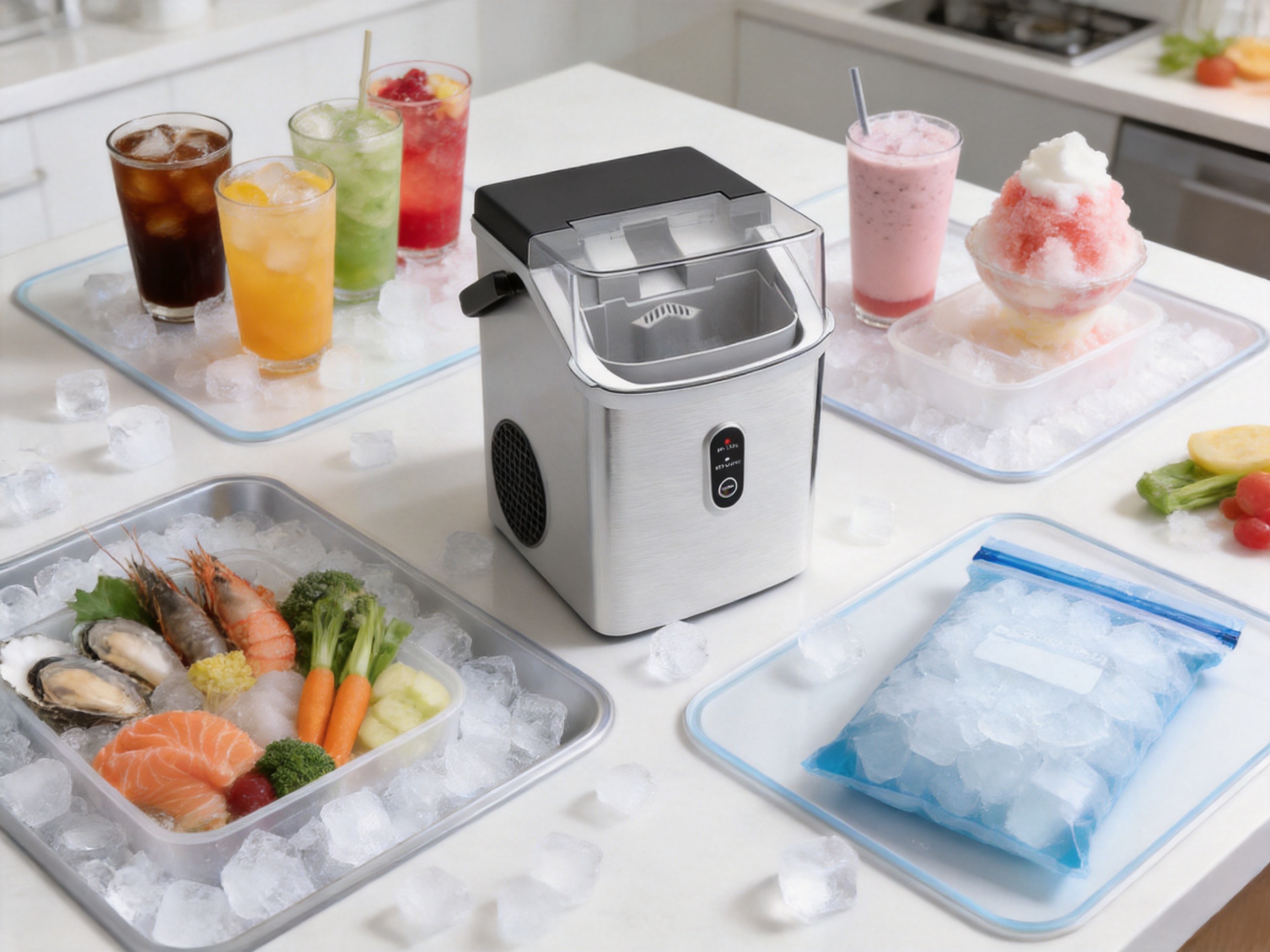
The product information also identifies coating and display as important applications. Soft ice can be arranged around foods such as vegetables in salad bars, oysters on seafood displays, and sashimi presentations. In these settings, the ice can help provide a cold visual foundation while surrounding food more closely than large cubes would.
For food presentation, the shape and softness of the ice can be useful because it is easy to distribute across a tray or display surface. It can fill gaps around items and create a more even cooling layer. Food operators should, of course, follow appropriate hygiene procedures, use clean containers, and ensure that the ice is handled as a food-contact material.
The ability to work with both drinks and food gives this product a broader application range than an appliance intended only for beverage ice. It may be useful in a home kitchen, a small hospitality environment, a buffet area, or a food presentation setting where a flexible cold medium is needed.
Core Advantage Four: Use in Cold Compresses
Another listed application is cold-compress use. Soft ice can conform more easily to the shape of a body part than large, rigid cubes. This can make it more practical for preparing a cold pack around areas such as an ankle, wrist, knee, or shoulder.
The small pieces can be placed into a suitable clean bag or dedicated cold-compress container. Their ability to shift and settle may allow the cold material to cover an area more evenly than several large cubes. This can be convenient for household first-aid preparation and general cooling purposes.
Any cold-compress application should be used responsibly. Ice should not normally be placed directly on skin for extended periods, and users should follow medical guidance for injuries or health conditions. The machine creates a cooling material; it is not a medical device and should not be presented as a replacement for professional diagnosis or treatment.
Even with this limitation, the application demonstrates the versatility of the ice format. The product is not restricted to drinking glasses. Its soft, movable structure allows it to adapt to different containers, surfaces, and household tasks where a cold material is needed.
Core Advantage Five: Versatility in Frozen Drinks and Desserts
Soft ice is also suitable as a base ingredient for smoothies, shaved-ice-style desserts, and other cold drinks. Because it is already divided into small pieces, it can reduce the preparation work required before blending or mixing.
For smoothies, the ice can contribute coldness and body. When combined with fruit, milk, yogurt, juice, or other ingredients, it can help create a thick and refreshing result. The exact recipe and blending method will determine the final consistency, but the manageable size of the ice makes it convenient for household preparation.
For shaved-ice-inspired refreshments, users can combine the ice with syrups, fruit, condensed milk, chocolate, or other toppings, subject to personal preference. Its soft structure can make it easier to spoon and flavor than hard ice that must first be processed mechanically.
The product can also support seasonal use. In warm weather, it can serve cold beverages and desserts. At gatherings, it can become part of a self-service drink station. During family meals, it can provide an easy way to cool beverages without requiring a large freezer compartment filled with trays.
This versatility strengthens the product’s value. A single-purpose appliance may be used only occasionally, whereas a machine that supports drinks, food displays, dessert preparation, and cold compresses can become a more regular part of household routines.
Compact Design for Everyday Spaces
The listed dimensions of 224 x 333 x 325 millimeters are suitable for a compact countertop appliance. The machine can be considered for kitchens where counter space is limited, although the user should still allow sufficient ventilation and access according to the operating instructions supplied with the product.
Compact size can be particularly important in modern apartments, office kitchens, dormitory-style accommodation, small cafés, and guest-service areas. A full-size commercial ice machine may offer more output than these environments require. A smaller appliance can provide a dedicated source of soft ice without occupying an entire corner of the room.
The machine may also be moved between suitable locations when needed. For example, it could be used in a kitchen during daily life and positioned near a beverage station during a family event. Any movement should be performed carefully, with attention to the refrigeration system and the manufacturer’s handling guidance.
Its countertop format also makes the ice-making process more visible and accessible. Users can position it near the preparation area, making it easier to scoop ice directly into a glass, bowl, display tray, or cold-compress container.
Although compact appliances are convenient, users should avoid placing them in excessively hot, wet, or poorly ventilated areas. A stable, level surface and an appropriate electrical connection are important for reliable operation and safe daily use.
Energy and Refrigeration Considerations
The product has a listed power rating of 130W and current rating of 0.55A. These figures describe the appliance’s electrical requirements as supplied. Compared with larger commercial ice systems, a compact household machine is generally intended for a smaller production scale and a more modest operating environment.
The machine uses R600a refrigerant with a listed charge of 19 grams. R600a is commonly associated with compact refrigeration equipment, but refrigeration systems must always be handled responsibly. Users should not attempt to open, modify, refill, or repair the sealed refrigeration circuit themselves.
The refrigeration specification also reflects the importance of manufacturing discipline. A small appliance still requires correct refrigerant charging, secure tubing connections, appropriate insulation, and careful testing. A compact format does not eliminate technical requirements; it concentrates them into a smaller structure where component arrangement and assembly accuracy are important.
Users can support efficient operation by keeping the air circulation area clear, avoiding unnecessary opening or interruption, maintaining clean surfaces, and following the recommended installation instructions. The machine should not be overloaded or used outside its intended operating conditions.
Manufacturing Strengths Behind the Product
Alien Technology Co., Ltd. is located in Zhouxiang, Cixi City, Zhejiang Province, an area known for the production of small household appliances and convenient logistics. This regional environment can support access to appliance-related supply chains, component resources, manufacturing services, and transportation networks.
The company specializes in several appliance categories, including ice makers, coffee machines, and air fryers. This product range indicates experience with compact appliances that combine heating, cooling, motors, electronic controls, food-contact considerations, and user-oriented design. Each category has different technical requirements, but all depend on consistent assembly and attention to everyday usability.
The company describes its mission as “Smart Technology, Simplifying Life, Enhancing Happiness.” In practical terms, this approach is reflected in the product’s focus on a specific household need: making soft ice available without requiring manual crushing, repeated freezer-tray preparation, or a large commercial installation.
Manufacturing strength in this type of appliance involves more than simply placing components inside a housing. The refrigeration system, power system, ice-forming structure, insulation, controls, and exterior panels must work together. A good design must also consider cleaning, accessibility, stability, noise expectations, heat dissipation, and the user’s ability to understand the appliance.
Although detailed factory process records and certification information are not provided in the product materials, several general production priorities are important for this category. These include incoming component control, dimensional consistency, refrigeration-system assembly, electrical safety checks, functional testing, appearance inspection, and packaging protection.
Component and Material Control
Reliable production begins with suitable components and materials. A compact ice maker requires electrical parts, refrigeration components, structural parts, insulation materials, seals, wiring, fasteners, and exterior panels. Variation in any of these areas can influence performance, durability, or user experience.
A disciplined manufacturing process checks incoming materials against defined requirements before they enter assembly. Components should be inspected for dimensions, appearance, electrical characteristics, and compatibility. This is especially important for refrigeration and electrical parts, where a small defect may affect the entire appliance.
Material control also supports consistency between production batches. When the product is made for customers in different markets, repeatable component standards help ensure that the same model continues to provide a similar experience over time.
Precision Assembly of the Refrigeration System
The refrigeration system is a central part of the appliance. Correct positioning of tubing, secure connections, appropriate insulation, and accurate refrigerant charging are all necessary for dependable operation. Even a compact system requires careful assembly because the available internal space is limited.
Manufacturing personnel must work with attention to cleanliness and connection integrity. The system should be checked for signs of leakage or damage before final closure. Proper assembly helps maintain cooling performance and protects the appliance from avoidable service problems.
The listed use of R600a also reinforces the need for suitable handling procedures. Refrigerant-related work should be carried out by trained personnel using appropriate equipment and safety methods. A responsible production environment treats the refrigeration circuit as a controlled technical system rather than an ordinary mechanical assembly.
Electrical Safety and Functional Testing
The product is specified for 220V/60Hz operation with a 130W power rating. Electrical assembly must therefore be compatible with the intended operating conditions. Wiring, terminals, switches, control boards, insulation, and grounding arrangements should be checked as part of production quality control.
Functional testing can include powering the unit, verifying control behavior, observing refrigeration operation, checking abnormal sounds, confirming stable operation, and evaluating the ice-making process. These checks help identify assembly mistakes before products are packaged and shipped.
Testing is especially valuable for appliances that may be used in homes by people without technical training. A dependable product should not require the user to compensate for inconsistent assembly or uncertain controls. Factory testing is one of the ways a manufacturer converts a design concept into a practical household appliance.
Appearance, Sealing, and Final Inspection
Final inspection can address the appearance of the housing, fit of panels, condition of surfaces, alignment of parts, labeling, and completeness of accessories. While appearance does not determine cooling performance by itself, a well-finished product communicates care and can be easier to clean and maintain.
Seals and closures also deserve attention. A compact appliance must protect internal components from ordinary kitchen conditions while allowing appropriate airflow and heat release. Proper panel fit and sealing can contribute to structural stability and a more finished user experience.
Packaging is another important manufacturing stage. Because the machine contains refrigeration components and exterior surfaces that may be damaged by impact, suitable protective materials and secure internal positioning are necessary during transportation. The company’s location in a region with convenient logistics may support efficient distribution, but packaging quality remains essential regardless of distance.
How the Product Compares with Competing Appliance Types
The Home Chewing Ice Maker competes not only with other chewable ice machines but also with alternative methods of obtaining cold ice. These include household freezer trays, manual ice crushers, standard cube makers, and larger commercial ice machines.
Freezer trays are inexpensive and simple, but they require advance preparation and usually produce hard cubes. They occupy freezer space and may not provide the desired chewable texture. Manual crushing can create smaller pieces, but it adds labor and may produce uneven sizes. It can also be inconvenient when preparing drinks for several people.
Standard cube makers can provide ice quickly, but their output is often optimized for shape retention rather than softness. For users who want to chew the ice or blend it into a beverage, the format may not be ideal.
Large commercial machines can offer high capacity, but they are more expensive, take up more space, and may be unnecessary for a household or small service area. The compact machine’s advantage is specialization at a smaller scale: it is designed for users who want soft ice without the infrastructure associated with heavy-duty production.
Alternative |
Main Strength |
Common Limitation |
Advantage of a Dedicated Chewable Ice Maker |
Freezer Tray |
Low cost and simple operation |
Requires advance freezing and produces hard cubes |
Provides a more specialized soft-ice format |
Manual Ice Crushing |
Can reduce cube size |
Requires effort and may produce uneven pieces |
Reduces preparation work and improves consistency |
Standard Cube Maker |
Convenient production of shaped ice |
Texture may be too hard for chewing |
Prioritizes soft texture and easy mixing |
Large Commercial Machine |
High production capacity |
Large footprint and greater installation demands |
Offers a more compact option for homes and small spaces |
The best choice depends on the user’s priorities. Those seeking long-lasting, hard ice may prefer cubes. Those seeking a softer texture, quick cooling, and easy mixing may find the dedicated chewing ice format more suitable.
Applications in the Home
In a home kitchen, the most obvious use is preparing cold drinks. The machine can support iced coffee, soda, tea, fruit drinks, flavored water, and homemade refreshments. Users can add the ice immediately before serving and adjust the quantity according to the drink and personal preference.
For families, the appliance may be useful during meals and gatherings. Guests can scoop soft ice into their own glasses, reducing the need for the host to prepare individual servings. It can also be placed near a beverage counter during celebrations or informal events.
The machine can support breakfast and snack preparation as well. Smoothies, fruit-based frozen drinks, and simple shaved-ice-style treats can be made with less manual ice preparation. This can encourage more varied use of the appliance throughout the week.
In an office or shared kitchen, soft ice can improve the beverage area without requiring a large unit. Employees can use it for coffee, tea, soda, or water. The compact dimensions may make it more practical where counter space is shared among several appliances.
For hospitality settings such as guest houses or small accommodation providers, chewable ice can be an appealing refreshment feature. It can be offered alongside cold drinks or placed in a self-service area, provided that the operator follows appropriate food-safety and cleaning procedures.
Applications in Food Presentation
Food presentation is another area where the product can provide value. Soft ice can be arranged around vegetables, seafood, sashimi, and other chilled items. It can contribute to visual presentation while helping maintain a cold environment around the displayed food.
Because the pieces are smaller and easier to distribute, they can fill spaces around food more evenly than large cubes. This may help create a stable presentation in trays or display containers. The ice can also be scooped away or rearranged as the display changes.
Food operators should treat display ice carefully. Clean water, sanitized equipment, clean scoops, and suitable food-contact containers are important. Ice that has been used for display should not automatically be returned to a drinking container or reused without following appropriate hygiene practices.
The product’s ability to support both household and small commercial presentation reflects its practical design direction. It is not limited to a single beverage recipe; it can become part of a broader cold-food preparation workflow.
Operating and Maintenance Principles
Regular care is essential for any appliance that handles water and produces ice. Users should follow the operating and cleaning instructions supplied with the machine. The water-contact areas should be kept clean, and the exterior should be wiped with suitable materials.
Before cleaning, the appliance should be switched off and disconnected from the power supply when required by the instructions. Water should not be allowed to enter electrical areas. Sharp tools and abrasive cleaners should be avoided if they could damage internal surfaces or protective finishes.
The machine should be placed on a stable, level surface. Adequate space should be left around ventilation areas, and the appliance should not be positioned close to direct heat sources. Keeping the surrounding area clear can help the refrigeration system release heat more effectively.
Users should also pay attention to the quality of the water used. Clean, suitable water can support better taste and more hygienic operation. If the appliance will not be used for an extended period, the user should follow the recommended procedure for draining, drying, and storing it.
Refrigerant-system repairs, electrical repairs, and internal modifications should be performed only by qualified service personnel. Attempting to alter the machine may create safety risks, damage the product, or affect its intended performance.
Design Philosophy: Practical Technology for Daily Life
The product reflects a practical form of household technology. Instead of adding unnecessary complexity, it addresses a specific daily preference: access to soft, chewable ice in a convenient countertop format.
This type of design can improve happiness through small routines. A cold drink can become more enjoyable, a smoothie can be prepared more easily, and a family gathering can feel more complete when refreshments are simple to serve. The value is not only in the mechanical process of freezing water but also in how the result fits into everyday habits.
The company’s stated philosophy of simplifying life is relevant here. A dedicated appliance can remove several steps from the user’s routine, including filling multiple trays, waiting for a freezer, crushing hard cubes, and cleaning up ice fragments. By producing a more suitable texture directly, the machine can make preparation more straightforward.
At the same time, the product remains focused. It does not attempt to replace every kitchen appliance. Its purpose is clear, and that clarity can help users understand what they are purchasing and how it can fit into their home or business environment.
Questions and Answers
What type of ice does this machine produce?
The machine is designed to produce soft chewing ice. This ice is smaller and gentler than conventional hard cubes, making it suitable for chewing, scooping, mixing, and rapid beverage cooling.
Why is chewable ice popular?
Many people enjoy its soft texture and pleasant chewing experience. It is also convenient because it cools drinks quickly, mixes easily with beverages, and can be used in smoothies, frozen refreshments, and food displays.
Is the machine suitable for iced coffee?
Yes. The product information specifically identifies iced coffee as an application. The small ice particles provide broad contact with the drink and can help lower its temperature quickly.
Can the ice be used in soda and fruit drinks?
Yes. Soft ice can be added to soda, fruit beverages, flavored water, and similar drinks. It is easy to scoop and can be distributed throughout the glass.
Can it be used to make smoothies?
Yes. The soft ice can serve as a base ingredient for smoothies and other blended drinks. Users should follow the instructions for their blender and ensure that the appliance is suitable for processing ice.
Can the ice be used for shaved-ice-style desserts?
Yes. The product information lists shaved ice and similar refreshments among its possible applications. Users can combine the ice with suitable syrups, fruit, dairy ingredients, or other toppings according to their recipes.
Can the ice be used in food displays?
Yes. It can be arranged around vegetables, oysters, sashimi, and other chilled foods. Appropriate hygiene procedures should be followed whenever ice is used near food.
Can the ice be used for a cold compress?
Yes, the soft texture can help it conform to body areas when placed in a suitable clean container or compress bag. It should not be applied directly to skin for extended periods, and medical advice should be sought for injuries or health concerns.
What are the machine’s dimensions?
The listed dimensions are 224 x 333 x 325 millimeters. Users should still measure their available counter space and allow additional room for operation and ventilation.
What power supply does the machine require?
The supplied specification is 220V/60Hz, with a listed current and power rating of 0.55A/130W. Buyers should confirm compatibility with the electrical supply in their location.
What refrigerant does it use?
The machine uses R600a refrigerant with a listed charge of 19 grams. The refrigeration circuit should not be opened or serviced by unqualified users.
Is it a large commercial ice machine?
No. It is presented as a compact home chewing ice maker. Its dimensions and power rating are more suited to household use and smaller beverage or food-service environments than to high-volume industrial production.
How does it differ from a standard cube maker?
A standard cube maker generally focuses on producing shaped, relatively hard ice. This machine is designed around a softer, chewable format that can be more comfortable to bite and easier to mix with drinks.
How does it differ from manually crushed ice?
Manual crushing requires extra work and can produce uneven pieces. A dedicated chewing ice maker is intended to provide the desired type of ice directly, reducing preparation effort and improving convenience.
Who manufactures the product?
The product is manufactured by Alien Technology Co., Ltd., a household-appliance company located in Cixi City, Zhejiang Province, China. The company specializes in ice makers, coffee machines, air fryers, and related household appliances.
What manufacturing strengths does the company emphasize?
The company emphasizes humanized design, reliable quality, intelligent technology, customer satisfaction, continuous improvement, and innovation. Its location in a small-appliance manufacturing hub also provides access to established logistics and supply-chain resources.
Can users repair the refrigeration system themselves?
No. Refrigeration and electrical repairs should be handled by qualified professionals. Users should not modify the sealed refrigeration circuit, change the refrigerant charge, or attempt unsafe electrical repairs.
What should users check before purchase?
Users should confirm the 220V/60Hz electrical requirement, available countertop space, ventilation conditions, intended ice volume, cleaning requirements, and suitability for their planned applications.
Overall Assessment
The Home Chewing Ice Maker is designed around a clear product proposition: make soft, enjoyable, easy-to-handle ice available in a compact household appliance. Its strongest advantage is not simply that it freezes water, but that it produces a particular texture with multiple practical uses.
For beverages, the ice can provide rapid cooling and easy mixing. For users who enjoy chewing ice, it offers a softer and more comfortable alternative to hard cubes. For food presentation, it can provide a flexible cooling and display medium. For frozen recipes, it can serve as a convenient base ingredient. For household cold compresses, its movable texture may help it conform to suitable containers.
The listed 130W power rating, R600a refrigeration system, and compact 224 x 333 x 325-millimeter body support its positioning as a countertop appliance rather than a large commercial machine. This makes it potentially appropriate for homes, offices, small hospitality settings, and modest food-service environments.
Behind the product is a manufacturer focused on small household appliances and operating in Zhejiang’s established appliance-manufacturing environment. The company’s stated strengths include practical design, reliable quality, innovation, and continuous improvement. For a product category that depends on refrigeration, electrical safety, precise assembly, and food-contact usability, these priorities are important.
Users should select the machine according to their actual needs, confirm electrical compatibility, follow operating instructions, and maintain suitable hygiene. When used correctly, the appliance can offer a more enjoyable and flexible way to prepare cold drinks, frozen treats, food displays, and other everyday cooling applications.
References
Alien Technology Co., Ltd. Product specification sheet for the Alien-ZJ01 Home Chewing Ice Maker.
Alien Technology Co., Ltd. Product application information for soft chewing ice, beverage cooling, food display, frozen refreshments, and cold-compress use.
Alien Technology Co., Ltd. Company profile and manufacturing overview.
General principles of household refrigeration appliance design, including electrical safety, refrigerant handling, ventilation, and routine maintenance.
General food-handling principles for ice used in beverages, food displays, and other food-contact applications.