
 English
 한국어
 Español
 Deutsch
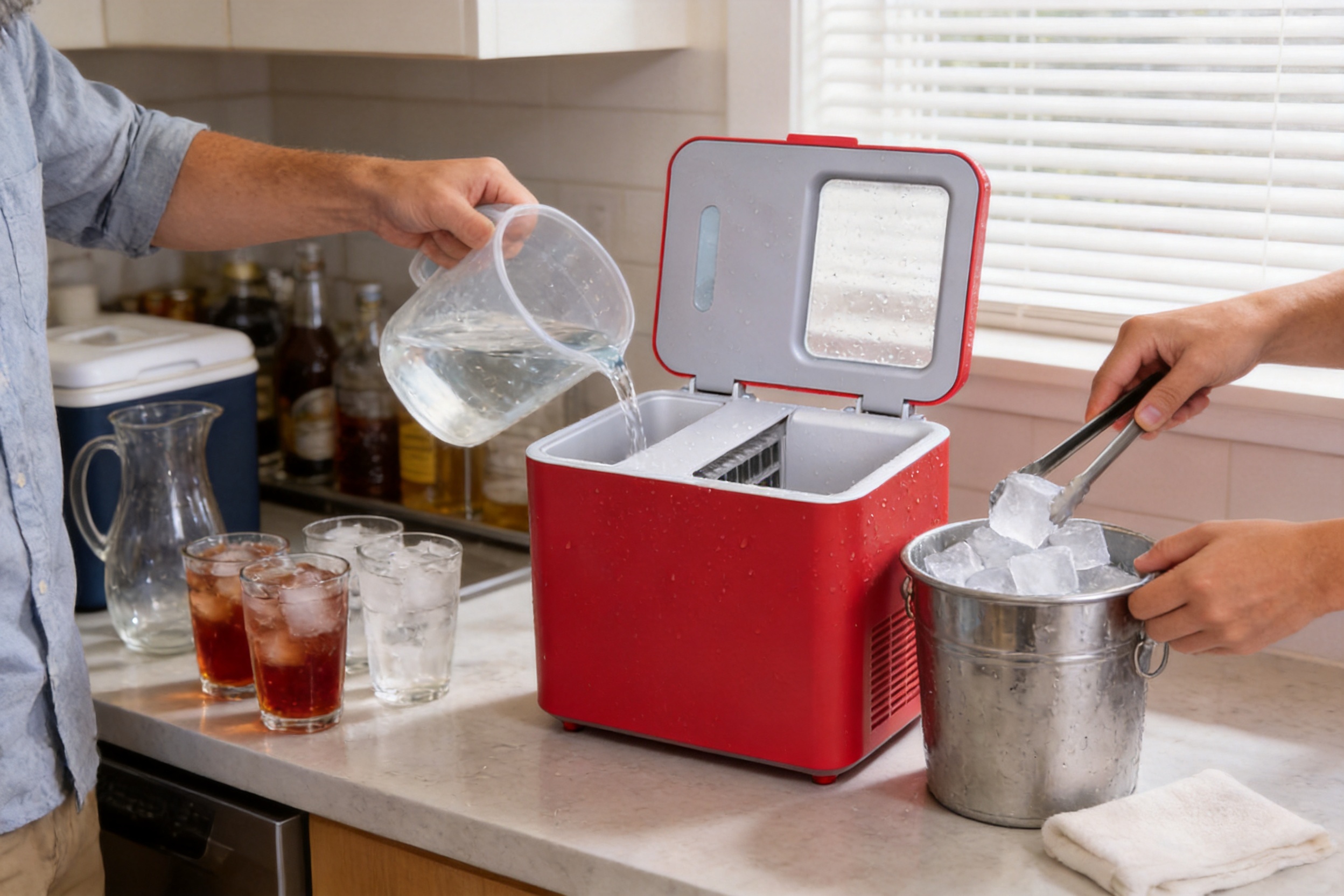
Ice is an essential part of modern food and beverage preparation. It cools drinks, improves presentation, supports hospitality, helps prepare food, and provides a practical solution for short-term chilling. However, not all ice is equally useful. Irregular pieces can melt quickly, occupy more storage space, and create an untidy appearance in a glass or ice bucket. A dedicated home ice cube maker offers a more controlled alternative by producing consistent, solid cubes in a compact appliance designed for convenient household use.
The Home ice cube maker, identified as Alien-ZF01, is designed around the needs of families, beverage enthusiasts, small hospitality settings, and users who want a dependable supply of regular ice cubes without relying entirely on conventional freezer trays. Its compact dimensions, efficient electrical specification, low refrigerant charge, and practical square-cube concept make it suitable for kitchens, entertainment areas, offices, beverage counters, and other locations where space and operating simplicity matter.
More than a basic cooling appliance, this ice maker reflects a product-development approach centered on practical design. Its regular cube format supports slow melting, neat presentation, efficient stacking, and flexible use. At the same time, the manufacturing background of Alien Technology Co., Ltd. provides an important foundation for product consistency, appliance specialization, quality control, and continued improvement.
Why Home Ice Production Matters
Many households use ice every day, yet traditional methods can be inconvenient. Standard freezer trays often require manual filling, careful carrying, and several hours of waiting. They can also produce cubes that vary in size or become contaminated by odors from frozen food. Bags of purchased ice may solve the immediate supply problem, but they require storage space and may not always be available when needed.
A dedicated home ice cube maker addresses these difficulties by combining refrigeration, ice formation, and cube storage in one appliance. Instead of making ice only when a freezer cycle permits, users can place the unit in a convenient location and prepare ice for drinks, meals, gatherings, or temporary cooling needs. This is particularly valuable during parties, family celebrations, warm weather, and periods when the freezer is already crowded.
The value of a home ice maker is not measured only by how much ice it can produce. Shape, density, appearance, melting behavior, energy use, footprint, maintenance requirements, and reliability all influence the ownership experience. A well-designed appliance should fit naturally into daily routines. It should be straightforward to operate, easy to position, and sufficiently adaptable for different occasions.
The Alien-ZF01 concept places special emphasis on regular solid cubes. This format has several advantages over loose, irregular, or highly fragmented ice. A square cube has a predictable geometry, a compact surface area relative to its volume, and an orderly appearance. These qualities support both functional cooling and attractive beverage service.
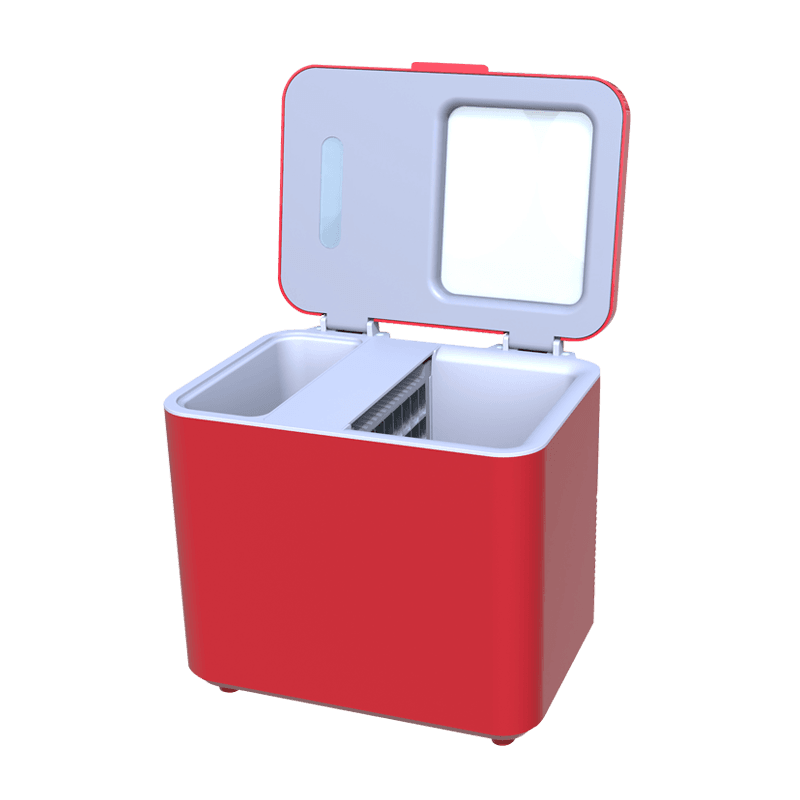
Home ice cube maker
Product Overview
The Home ice cube maker is categorized as an ice cube maker and is intended for household ice production. It operates on a 220V/50Hz power supply and uses a rated current of 0.65A with a stated power rating of 140W. The refrigeration system uses R290 refrigerant with a charge of 26 grams. The machine measures 325 by 295 by 252 millimeters, giving it a relatively compact rectangular footprint for countertop or dedicated appliance placement.
Specification | Product Information |
Product model | Alien-ZF01 |
Product category | Home ice cube maker |
Power supply | 220V/50Hz |
Current and power | 0.65A / 140W |
Refrigerant and charge | R290 / 26g |
Machine dimensions | 325 x 295 x 252 mm |
Primary ice format | Regular solid square cubes |
These specifications present a balanced appliance profile. The rated 140W power level is suitable for a compact refrigeration product and supports a design intended for ordinary household environments rather than heavy industrial production. The dimensions allow the unit to occupy a manageable amount of counter space while still providing a dedicated internal system for ice formation.
The R290 refrigerant specification is also significant. R290 is propane used as a refrigerant and is recognized in refrigeration engineering for its low global warming potential compared with many older refrigerant options. Because it is flammable, appliances using it must be designed, manufactured, labeled, transported, installed, and serviced according to applicable safety requirements. The stated 26-gram charge is a relatively small quantity, consistent with the compact scale of the product.
Users should always operate the appliance in accordance with its final instruction manual, safety labels, and local electrical requirements. The product should be placed in a well-ventilated area, kept away from open flames and heat sources, and serviced only by appropriately qualified personnel when refrigeration-system work is required.
Regular Square Cubes and Their Practical Advantages
Slow Melting and Better Beverage Balance
One of the most important benefits of solid, regular ice cubes is their slow melting behavior. A dense cube has less exposed surface area in relation to its total volume than a collection of small fragments. As a result, heat transfers into the cube at a slower overall rate, allowing the ice to remain effective for longer periods.
This characteristic is especially useful for beverages whose flavor should not be diluted too quickly. Premium whiskey, neat spirits, cocktails, iced coffee, fruit drinks, and specialty beverages can all benefit from ice that chills gradually. The drink becomes cooler while retaining a more stable flavor profile. Users who prefer to sip a beverage over time may find this advantage particularly valuable.
Slow melting does not mean that the ice never melts. Every ice cube eventually absorbs heat from its surroundings. The benefit is that a regular solid cube can provide a longer cooling period than a thin, fragmented, or highly porous piece of ice under comparable conditions. The result is a more controlled relationship between temperature and dilution.
Professional Appearance
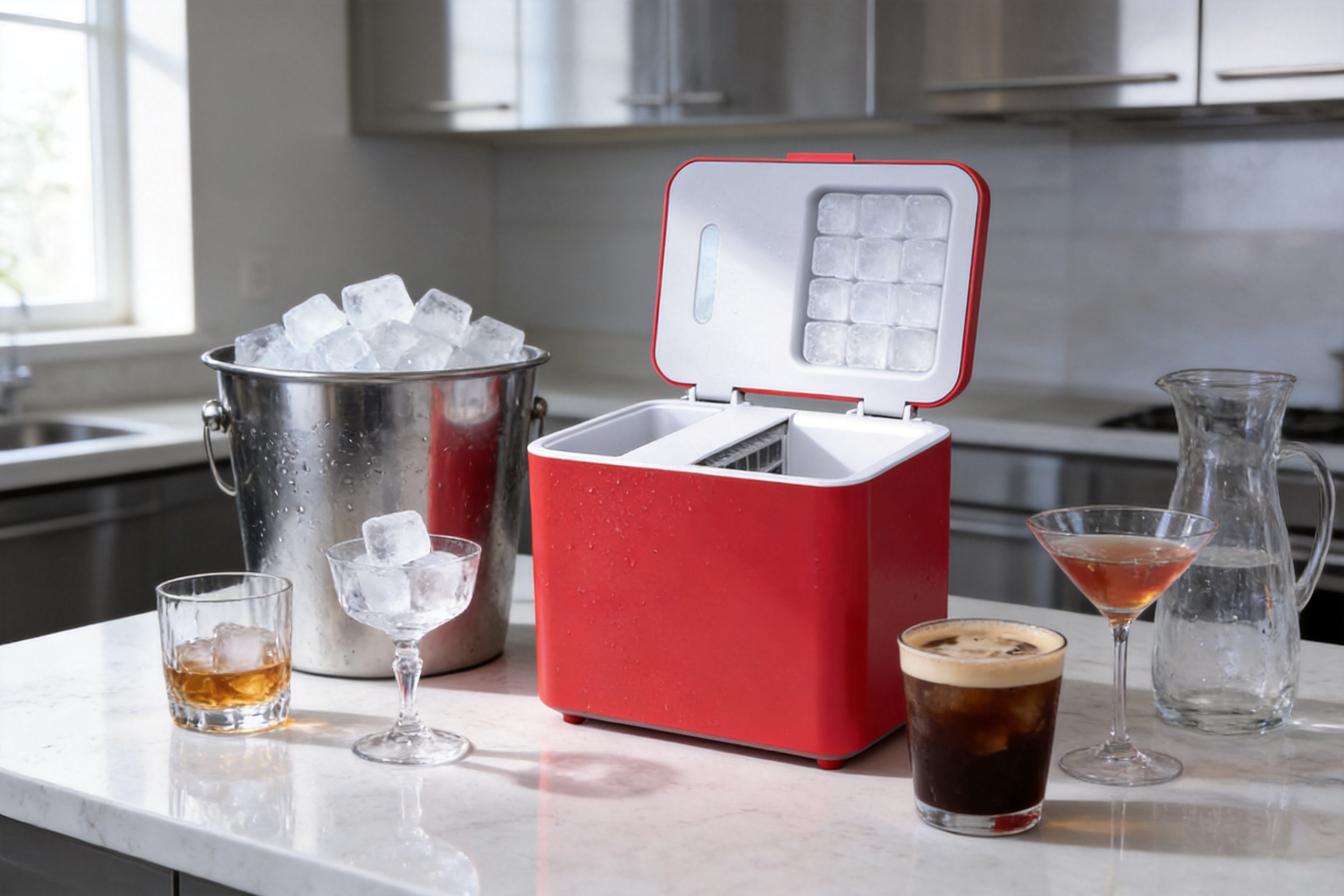
Presentation is an important part of beverage service. A neat square cube creates a clean, organized appearance in a transparent glass. It can make a simple drink look more deliberate and refined, which is useful in homes, cafés, reception areas, restaurants, hotels, and event settings.
Regular geometry also creates visual consistency. When cubes have a similar form, a serving tray or ice bucket appears more orderly. This can be particularly helpful when preparing drinks for guests. Clear or relatively transparent ice can further enhance the appearance of a beverage by allowing the color of the drink and the shape of the ice to remain visible.
The product information emphasizes the professional and aesthetic value of regular cubes. That value extends beyond decoration. Consistent shapes make it easier to estimate the amount of ice used in each glass, arrange cubes in a container, and maintain a uniform service standard.
Versatility Across Different Uses
Although beverages are the most obvious application, home-produced ice cubes can support many household activities. They may be placed in drinking glasses, pitchers, coolers, or ice buckets. They can be used for iced tea, cold brew coffee, fruit beverages, mixed drinks, soft drinks, and water.
Ice is also useful in kitchen preparation. It can help cool ingredients after blanching, maintain the temperature of food during short preparation periods, or support temporary cooling for containers. In an insulated bag or suitable cooling system, ice may also assist with short-term temperature management during transportation.
Because the cube shape is regular, the ice is easy to portion. Users can take a few cubes for an individual beverage or fill a larger container for a family gathering. The same product therefore supports both everyday routines and occasional high-demand situations.
Efficient Stacking and Storage
Irregular ice pieces often leave empty spaces between one another. A square or rectangular form can be arranged more closely, reducing wasted volume in an ice bucket or freezer container. This stacking efficiency is useful for households that want to keep a reserve of ice without dedicating excessive space to it.
Regular cubes also make containers easier to organize. They can be transferred into a lidded storage box, insulated cooler, or serving bucket with less unused space. The orderly form may reduce rolling and shifting when a container is moved, although users should still handle ice storage carefully to prevent spills and contamination.
For beverage professionals and serious home entertainers, efficient stacking can also simplify preparation. A uniform supply of cubes is easier to count, distribute, and replenish than a collection of uneven fragments. This supports a more predictable service process.
Advantages Over Common Alternatives
Compared with Manual Freezer Trays
Freezer trays are inexpensive and familiar, but they require repeated manual filling. The user must carry water to the freezer, avoid spilling it, wait for freezing, and remove individual cubes by twisting or flexing the tray. This process can be slow when a large quantity of ice is required.
A dedicated ice maker reduces these handling steps. It is designed specifically for the ice-making task and can be positioned close to the area where drinks are prepared. Users do not need to sacrifice freezer shelf space for multiple trays, and they can avoid the inconvenience of emptying trays at busy times.
Manual trays may also create inconsistent cubes when they are overfilled, tilted, or stored on an uneven shelf. A dedicated ice-making mechanism is designed to support greater regularity in the shape and production process. While the final performance depends on operating conditions and maintenance, the appliance concept is more specialized than an ordinary tray.
Compared with Purchased Bagged Ice
Bagged ice is useful for large gatherings, but it must be purchased, transported, and stored. Bags can be bulky, difficult to organize, and vulnerable to punctures or melting during transportation. Availability may also vary according to season, location, and demand.
A home ice cube maker provides a convenient alternative for regular household use. Instead of planning every purchase, users can make ice when it is needed. This can reduce dependence on external supply for ordinary beverage preparation and provide greater control over the freshness and handling of the ice.
Purchased ice may also consist of shapes that are not ideal for every drink. A regular square cube offers a consistent visual and functional format. For users who care about presentation or slow melting, the ability to produce a preferred cube style at home can be a meaningful advantage.
Compared with Irregular or Fragmented Ice
Crushed and fragmented ice cools quickly because it has a large exposed surface area. However, it can melt rapidly and dilute beverages faster. Small pieces may also be difficult to remove from a container without splashing or scattering.
Solid square cubes offer a different performance profile. They are designed for longer-lasting cooling and orderly storage. This makes them suitable for spirits, cocktails, table service, and situations where the user wants a drink to remain chilled without immediate heavy dilution.
Irregular ice can still be appropriate for some applications, including rapid chilling and certain blended drinks. The advantage of the Home ice cube maker is not that one ice format replaces every other format, but that it offers a dependable regular-cube option for users who value durability, appearance, and control.
Compared with Larger Commercial Equipment
Commercial ice machines can produce substantial quantities, but they often require more floor space, a higher investment, more complicated installation, and more intensive maintenance. For a home user, office, small beverage area, or compact hospitality environment, such equipment may be excessive.
The Home ice cube maker occupies a more practical middle ground. Its compact dimensions and 140W power rating are aligned with a smaller appliance format. It is intended to provide dedicated ice-making capability without the footprint and infrastructure associated with large commercial systems.
This compact approach can also simplify placement. A user may be able to locate the unit on a suitable countertop, preparation surface, or appliance shelf, provided that sufficient ventilation, stability, electrical safety, and clearance are maintained. The exact installation requirements should always be confirmed in the official product documentation.
Compact Form for Flexible Placement
The stated dimensions of 325 x 295 x 252 millimeters give the appliance a compact rectangular profile. The width and depth are suitable for many kitchen counters, while the height is modest enough to fit beneath common overhead storage in appropriate locations. Actual placement should account for ventilation, access to the controls, water filling, ice removal, power-cord routing, and cleaning.
Space efficiency is valuable in modern homes. Kitchens often contain multiple appliances, and counter space may be limited. A product that occupies a smaller footprint can remain accessible without dominating the room. It can also be moved between a kitchen, home bar, office pantry, or entertainment area when necessary, assuming the unit is handled according to manufacturer instructions.
Compact size does not eliminate the need for responsible placement. The appliance should rest on a stable, level surface. It should not be pushed tightly against walls or other heat-producing equipment if doing so restricts airflow. Water should be kept away from electrical connections, and the exterior should be wiped with appropriate care rather than immersed.
The practical value of a compact design is therefore a combination of physical size and thoughtful installation. When placed correctly, the unit can provide an organized ice-making station without requiring a permanent renovation or a dedicated utility area.
Electrical and Refrigeration Design Considerations
Power Supply
The product is specified for 220V/50Hz operation, a common electrical standard in many markets. The rated current is 0.65A and the stated power is 140W. These figures help distributors, installers, and users understand the basic electrical requirements of the appliance.
The unit should be connected only to a compatible, properly installed electrical outlet. Extension cords, adapters, overloaded circuits, or damaged plugs can create unnecessary hazards. Users should check local electrical compatibility before operation, particularly when the product is moved between countries or regions with different voltage standards.
Power consumption in actual use can vary according to ambient temperature, water temperature, production cycles, ventilation, and the condition of the appliance. The stated power rating should be understood as a product specification rather than a guarantee of identical energy use in every operating situation.
R290 Refrigerant
The use of R290 is a notable technical feature. R290 has a low global warming potential and is increasingly used in appropriately designed compact refrigeration appliances. Its environmental profile can be favorable compared with many high-global-warming-potential alternatives.
At the same time, R290 is classified as a flammable refrigerant. This means that safety is not only a matter of performance but also of engineering discipline. The refrigerant circuit, electrical components, ventilation pathways, warning labels, and service procedures must be designed with the properties of the refrigerant in mind.
The 26-gram charge indicates a small refrigerant quantity appropriate to the compact appliance category. Users must not attempt to puncture, modify, recharge, or repair the refrigerant system themselves. If the product is damaged, especially in a way that may affect the refrigeration circuit, it should be unplugged and handled by qualified service personnel.
Responsible product use includes keeping the appliance away from flames, sparks, and excessive heat. Adequate ventilation is important, particularly in enclosed spaces. The product should also be disposed of through appropriate channels at the end of its service life so that refrigerant and electrical components can be managed responsibly.
Manufacturing Strengths and Product Development Capability
Alien Technology Co., Ltd. is located in Zhouxiang, Zhejiang Province, an area recognized for the production and logistics of small household appliances. The company specializes in ice makers, coffee machines, air fryers, and related household appliances. This specialization gives the manufacturer a product-development base that is directly relevant to the Home ice cube maker.
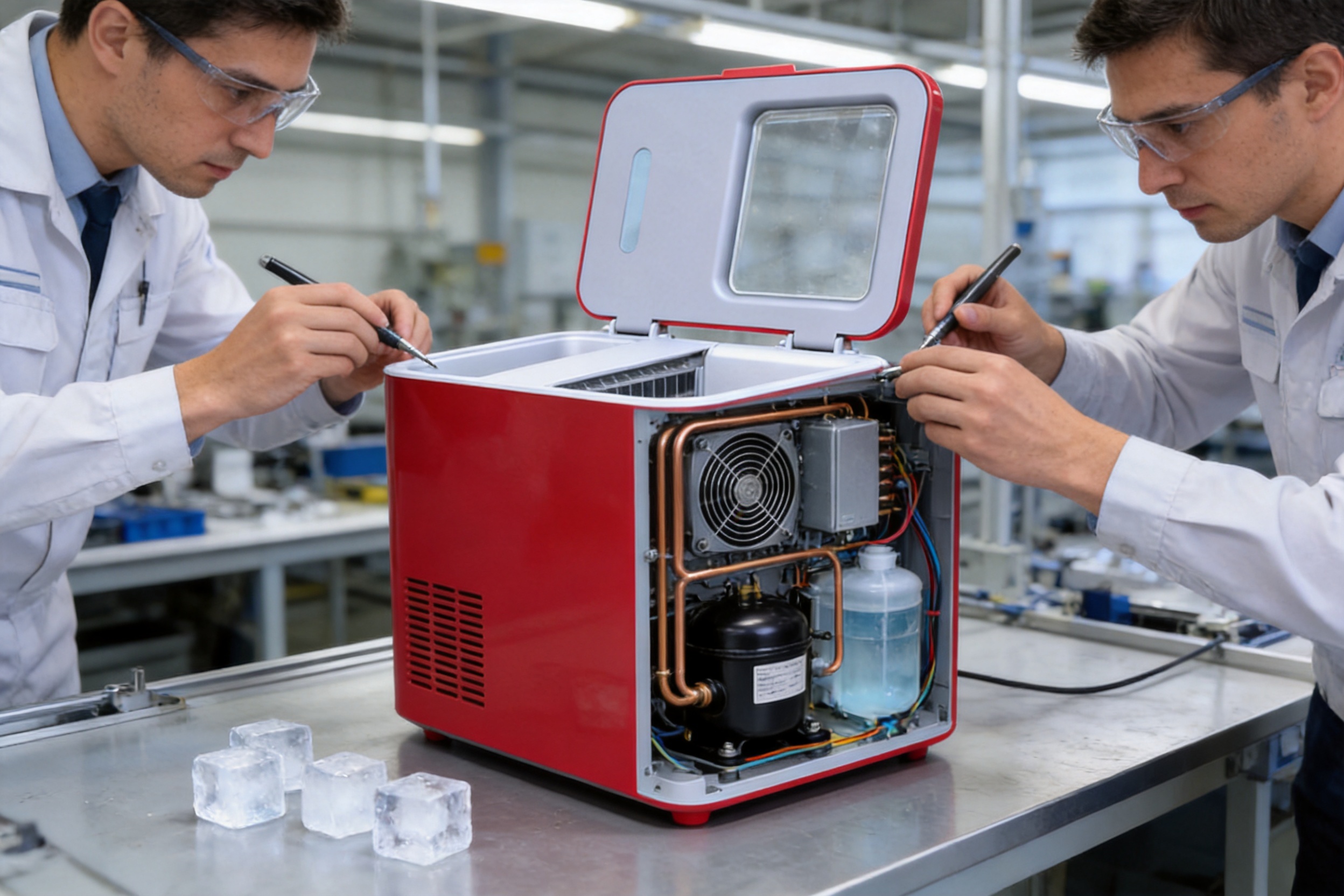
A manufacturer working across several small-appliance categories can develop useful experience in compact mechanical design, thermal management, electrical integration, user controls, plastic and metal component coordination, packaging, and export-oriented production. These capabilities are important because an ice maker combines several technical systems in a small enclosure. It must manage water, refrigeration, heat rejection, electrical power, mechanical movement, insulation, and user access.
The company’s stated mission is to use smart technology to simplify life and enhance happiness. In the context of this product, that mission can be understood through practical design decisions: a compact form, a dedicated ice-making function, a regular cube format, and specifications suitable for household use. The goal is not technology for its own sake, but useful technology that reduces routine effort.
Manufacturing strength also depends on process control. A reliable ice maker requires consistent component dimensions, secure electrical connections, appropriate sealing, correct refrigerant charging, accurate assembly, and inspection of finished units. Production quality is especially important in refrigeration appliances because small deviations can influence cooling performance, noise, energy use, safety, and service life.
Component Coordination
An ice maker is a system product rather than a single-function device. The refrigeration circuit must work with the evaporating surface or ice-forming area. Water must be delivered consistently to the intended formation location. The housing must protect internal components while allowing heat to dissipate. Controls must coordinate operating cycles, and the finished enclosure must remain stable during use.
Manufacturing experience in related appliances can support this coordination. Coffee machines require water pathways, heating or thermal management, controls, and user-focused cleaning considerations. Air fryers require airflow management, heat-resistant materials, electrical safety, and compact housing design. Ice makers require many of the same general disciplines, even though their thermal process is different.
The result is an appliance category in which manufacturing expertise matters as much as the headline specification. A compact product must be designed carefully because there is less room to compensate for poor layout, weak insulation, difficult access, or inconsistent assembly.
Quality and Continuous Improvement
The company identifies excellent quality, customer satisfaction, continuous improvement, and innovation as important values. These principles are relevant to the long-term development of a home ice maker. Customer feedback can reveal opportunities to improve controls, cleaning access, noise management, packaging, storage convenience, and energy performance.
Continuous improvement may also involve refining production fixtures, inspection procedures, material selection, assembly sequences, and supplier coordination. These improvements do not always appear in a product photograph, but they can contribute to more stable quality across production batches.
For international customers and distributors, a manufacturer’s willingness to communicate and support cooperation is another strength. Clear product information, responsive business contact, appropriate documentation, and attention to market requirements can make the difference between a successful appliance program and a difficult one.
Logistics and Supply-Chain Position
The company’s location in Zhejiang provides access to established manufacturing networks and logistics channels. This can support the sourcing of components, coordination with packaging suppliers, factory operations, and shipment preparation. For business customers, a strong regional supply base may improve communication and help support repeat orders.
Logistics capability is especially useful for small appliances because the products must be protected from impact, moisture, vibration, and rough handling during transport. Packaging design should hold the appliance securely and protect controls, housing surfaces, power components, and refrigeration-related structures. Proper packaging is part of product quality because a well-manufactured unit must also arrive in usable condition.
Designing a Better Home Beverage Experience
The Home ice cube maker can become part of a broader beverage routine. A user may keep chilled water ready for breakfast, prepare iced coffee during the afternoon, serve cocktails in the evening, or fill an ice bucket for guests. The regular-cube format works across these situations because it is visually neat and physically durable.
For whiskey and other spirits, larger solid cubes are often appreciated because they cool the beverage gradually. For mixed drinks, the same regular form provides an attractive presentation and predictable dilution. For soft drinks and juices, the cubes offer familiar cooling with a more orderly appearance than crushed ice.
The appliance can also support hospitality at home. Rather than opening a freezer repeatedly or discovering that a tray has not frozen, the host can organize ice preparation in advance. Ice may be transferred to a clean storage container or insulated bucket when appropriate. Users should follow hygienic handling practices and avoid returning used ice to the machine’s clean-water area.
Businesses may also consider the appliance for small offices, meeting rooms, showroom hospitality, boutique accommodation, or limited beverage service. The appropriate use depends on actual demand, local regulations, and the product’s confirmed capacity. It should not be presented as a substitute for high-volume commercial equipment without verified production data.
Operation, Care, and Hygiene
Good maintenance helps preserve performance and product life. Before first use, the unit should be unpacked, inspected for transport damage, positioned correctly, and prepared according to the official instructions. Any required settling period after transport should be observed so that the refrigeration system can stabilize.
Only clean, potable water suitable for ice production should be used. Water quality can influence taste, odor, mineral deposits, and the appearance of the ice. If local water contains high mineral content, users should pay particular attention to cleaning and follow any guidance concerning filtration or descaling.
The water reservoir, ice-contact surfaces, removable components, and surrounding areas should be cleaned at suitable intervals. Cleaning frequency depends on usage, water quality, ambient conditions, and the product manual. A clean cloth and approved cleaning method should be used. Harsh abrasives, unsuitable chemicals, and immersion of electrical parts should be avoided.
Ice should be handled with clean utensils or clean hands. The storage area should not be used as a general container for food, packaging, or personal items. If ice has been exposed to dirt, foreign objects, or an unusual odor, it should be discarded and the appliance cleaned before further use.
When the product will not be used for an extended period, it should be emptied, cleaned, dried as instructed, and stored in a safe location. The power should be disconnected before cleaning or moving the appliance. The refrigeration system and electrical components should not be modified by the user.
Positioning and Operating Environment
Ambient conditions affect all compact refrigeration appliances. A hot room, poor ventilation, warm water supply, or direct sunlight may increase the workload on the cooling system. Placing the appliance in a cool, dry, ventilated area can help support more stable operation.
The unit should remain level. An uneven surface may create noise, interfere with water movement, or affect the proper operation of internal components. Sufficient clearance should be maintained around ventilation areas, and the appliance should not be placed immediately beside an oven, hot cooking surface, radiator, or other heat source.
Noise perception depends on the environment and the operating cycle. A refrigeration appliance may produce sounds associated with the compressor, fan, water movement, or ice-release process. A stable surface and appropriate clearance can help prevent unnecessary vibration. If the appliance produces a sudden unusual sound, shows visible damage, or develops a refrigerant-related concern, operation should be stopped and professional assistance sought.
Users should also consider the distance between the ice maker and the sink or water source. The product is not necessarily plumbed directly into a water supply, and the exact filling process should be confirmed in the operating manual. Keeping the preparation area organized can reduce spills and make cleaning easier.
Why the Product Fits Modern Household Needs
Modern households often seek appliances that save time, occupy limited space, and serve more than one occasion. The Home ice cube maker responds to these expectations through a focused function rather than an unnecessarily complex feature set. Its core purpose is clear: provide regular home ice cubes in a compact appliance format.
The product can be valuable for people who entertain frequently, enjoy carefully prepared drinks, live in warm climates, have limited freezer capacity, or want a more consistent alternative to manual trays. It may also suit users who appreciate organized countertops and repeatable beverage presentation.
Its value is especially apparent when several benefits are considered together. The regular shape supports slow melting. The compact dimensions support flexible placement. The 140W rating reflects a household-scale electrical design. The R290 specification reflects a modern refrigerant choice when used within an appropriately engineered system. The manufacturer’s specialization supports the development and production of small household appliances.
No single ice maker is ideal for every user. High-volume commercial operations may require a larger machine, an automatic water connection, expanded storage, or a different cube format. However, for the intended home and small-scale environment, a compact regular-cube appliance can offer a strong balance of convenience, appearance, and practical performance.
Q&A
What is the main purpose of this appliance?
The appliance is designed to make regular solid ice cubes for household beverage service, food preparation, cooling, and related everyday uses. It provides a dedicated alternative to manual freezer trays and purchased bagged ice.
What makes regular square cubes useful?
Regular square cubes are visually neat, easy to stack, and suitable for portioning. Their dense shape and relatively small surface area can help them melt more slowly than fragmented ice, allowing drinks to remain cool while reducing rapid dilution.
Is the product suitable for whiskey and other spirits?
Yes, the stated advantages of solid, slow-melting cubes make the product suitable for whiskey, neat spirits, and cocktails where gradual cooling and controlled dilution are preferred. The exact serving style remains a matter of personal preference.
Can the ice be used for purposes beyond drinks?
Yes. The ice may be used in ice buckets, coolers, kitchen preparation, temporary food cooling, and ice packs when handled safely. The ice should be used hygienically and should not be applied directly to situations requiring medical-grade cooling unless specifically appropriate.
What electrical supply does the product require?
The stated specification is 220V/50Hz, with a rated current of 0.65A and power of 140W. Users must confirm compatibility with their local electrical system and use a properly installed outlet.
What refrigerant does the appliance use?
The product specification identifies R290 refrigerant with a 26-gram charge. R290 has a low global warming potential, but it is flammable. The unit must be operated with proper ventilation and serviced only by qualified personnel when the refrigeration system requires attention.
How much space does the ice maker require?
The stated machine dimensions are 325 x 295 x 252 millimeters. In addition to these physical dimensions, users should allow adequate clearance for ventilation, water filling, ice removal, cleaning, and safe power-cord placement.
Can it replace a large commercial ice machine?
It is intended as a home ice cube maker and may also suit small-scale applications. It should not automatically be treated as a replacement for high-volume commercial equipment. Businesses should evaluate confirmed production capacity, storage requirements, operating hours, and local regulations before selecting equipment.
How should the unit be cleaned?
The water-contact and ice-contact areas should be cleaned according to the official product instructions and usage conditions. Clean potable water, suitable cleaning materials, and hygienic handling practices are important. Electrical parts should not be immersed, and the appliance should be unplugged before cleaning or moving.
What company manufactures the product?
The product is manufactured by Alien Technology Co., Ltd., a Zhejiang-based company specializing in household appliances including ice makers, coffee machines, and air fryers. The company emphasizes quality, customer satisfaction, continuous improvement, innovation, and practical household technology.
Why is manufacturing experience important for an ice maker?
An ice maker combines refrigeration, water management, electrical components, mechanical operation, insulation, controls, and housing design. Manufacturing experience helps coordinate these systems, maintain consistent assembly, control quality, improve safety practices, and support reliable product development.
Where should the ice maker be placed?
It should be placed on a stable, level surface in a cool, dry, well-ventilated area. It should be kept away from open flames, direct sunlight, excessive heat, and restricted airflow. The final operating manual should be followed for clearance and installation requirements.
Conclusion
The Home ice cube maker offers a focused solution for users who want convenient access to regular, solid ice cubes. Its advantages are closely connected to the cube format: slow melting, controlled beverage dilution, professional appearance, broad versatility, and efficient stacking. These benefits distinguish it from ordinary freezer trays, irregular ice, fragmented ice, and oversized commercial equipment.
The product’s 220V/50Hz electrical specification, 140W power rating, R290 refrigerant with a 26-gram charge, and compact 325 x 295 x 252-millimeter dimensions define a household-oriented appliance profile. These features support placement in kitchens, home bars, offices, entertainment areas, and other compact environments, provided that proper ventilation, electrical compatibility, hygiene, and safety practices are observed.
Its manufacturing foundation is equally important. Alien Technology Co., Ltd. brings experience in small household appliances, a location connected to Zhejiang’s appliance-production and logistics networks, and a stated commitment to quality, customer satisfaction, continuous improvement, and innovation. Those strengths support the careful coordination required to produce a dependable compact refrigeration appliance.
For families, beverage enthusiasts, hosts, and small-scale users, the product represents a practical balance between convenience and performance. It does not attempt to be every type of ice machine. Instead, it focuses on delivering regular home ice cubes in a compact, useful, and aesthetically pleasing format.
References
1. Product specification sheet for the Home ice cube maker, model Alien-ZF01.
2. Manufacturer-provided product information concerning slow-melting solid cubes, beverage presentation, versatility, and stacking efficiency.
3. Manufacturer profile and corporate information for Alien Technology Co., Ltd.
4. General refrigeration engineering principles concerning cube geometry, surface-area-to-volume relationships, and heat transfer.
5. General appliance safety guidance for compact refrigeration products using R290 refrigerant.
6. General household food-safety principles concerning potable water, clean ice handling, appliance sanitation, and storage.