
 English
 한국어
 Español
 Deutsch

Ice is often treated as a simple kitchen convenience, but the quality, shape, density, and availability of ice can make a significant difference to drinks, food preparation, entertaining, and everyday comfort. A compact ice cube maker provides a dependable way to produce fresh ice at home without relying entirely on freezer trays, irregularly shaped frozen water, or frequent trips to purchase bagged ice. The Home Ice Cube Maker is designed for households, hospitality settings, offices, and beverage service environments that need a practical balance of compact size, efficient operation, attractive ice, and straightforward usability.
Built around the Alien-ZF01 platform, this ice cube maker combines a 220V/50Hz power supply, a rated current and power specification of 0.65A/140W, and R290 refrigerant with a 26-gram charge. Its machine dimensions are 325 x 295 x 252 millimeters, giving it a relatively compact footprint for countertop placement. These specifications position the appliance as a convenient solution for users who want ice available on demand while preserving valuable kitchen and service-counter space.
The product is especially suited to solid, regular ice cubes. Compared with thin or highly irregular ice, dense cubes can remain cold for a longer period and may dilute beverages more slowly. That quality is useful when serving whiskey, spirits, cocktails, soft drinks, iced coffee, fruit beverages, and other drinks whose flavor should remain balanced. The regular cube shape also offers practical advantages in storage, presentation, stacking, and handling.
Why Ice Quality Matters in Everyday Use
Ice does more than reduce the temperature of a drink. It influences the speed of cooling, the rate of dilution, the appearance of a beverage, and the overall serving experience. A large, dense cube generally exposes less surface area relative to its volume than many small fragments. As a result, it may melt more slowly under comparable conditions. This can help preserve the character of a drink for a longer period, especially when the beverage is intended to be enjoyed gradually.
For spirits, the role of ice is particularly important. A carefully made cube can cool whiskey, bourbon, rum, or other spirits without immediately overwhelming the drink with water. For cocktails, solid cubes can help maintain a controlled balance between chilling and dilution. In non-alcoholic drinks, they can keep juice, soda, tea, and flavored water refreshing without causing rapid weakening of the original taste.
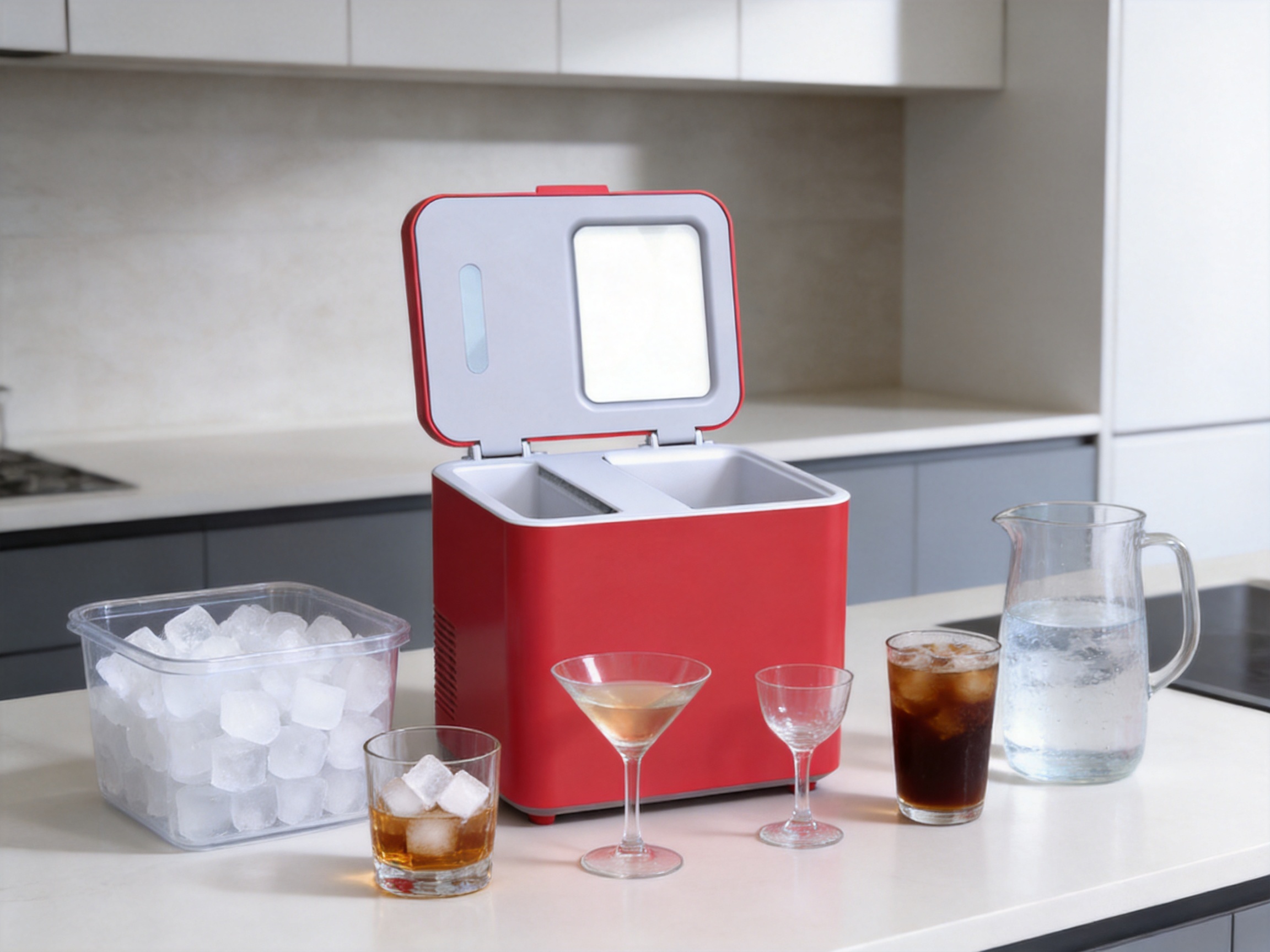
Ice quality also affects appearance. Regular, clean-looking cubes create a neat presentation in clear glassware. A well-formed cube can make an ordinary drink appear more carefully prepared, which is valuable for home entertaining, cafes, restaurants, offices, and event service. The visual effect is particularly noticeable when the ice is viewed through transparent glasses, pitchers, or beverage dispensers.
Traditional freezer trays can produce useful ice, but they also require advance planning. Trays occupy freezer space, may spill while being moved, and often produce cubes that vary in shape. Purchased bagged ice can solve the quantity problem but may be inconvenient, costly over time, and difficult to store in smaller kitchens. A countertop ice cube maker addresses these limitations by placing ice production close to the point of use.
Core Product Specification
The Home Ice Cube Maker has been configured as a compact household appliance with specifications intended for common residential electrical systems and countertop environments. The following table summarizes the available technical information.
| Specification | Product Detail |
|---|---|
| Product type | Home ice cube maker |
| Product category | Ice Cube Maker |
| Model description | Alien-ZF01 |
| Power supply | 220V/50Hz |
| Current and rated power | 0.65A/140W |
| Refrigerant and charge | R290/26g |
| Machine dimensions | 325 x 295 x 252 mm |
| Product format | Compact countertop appliance |
| Primary application | Household and light beverage-service use |
Users should always confirm local electrical compatibility, operating instructions, ventilation requirements, and maintenance guidance before installation or operation. The listed dimensions describe the machine itself, so additional clearance may be needed around the appliance for safe placement, heat dissipation, access, cleaning, and power-cord management.
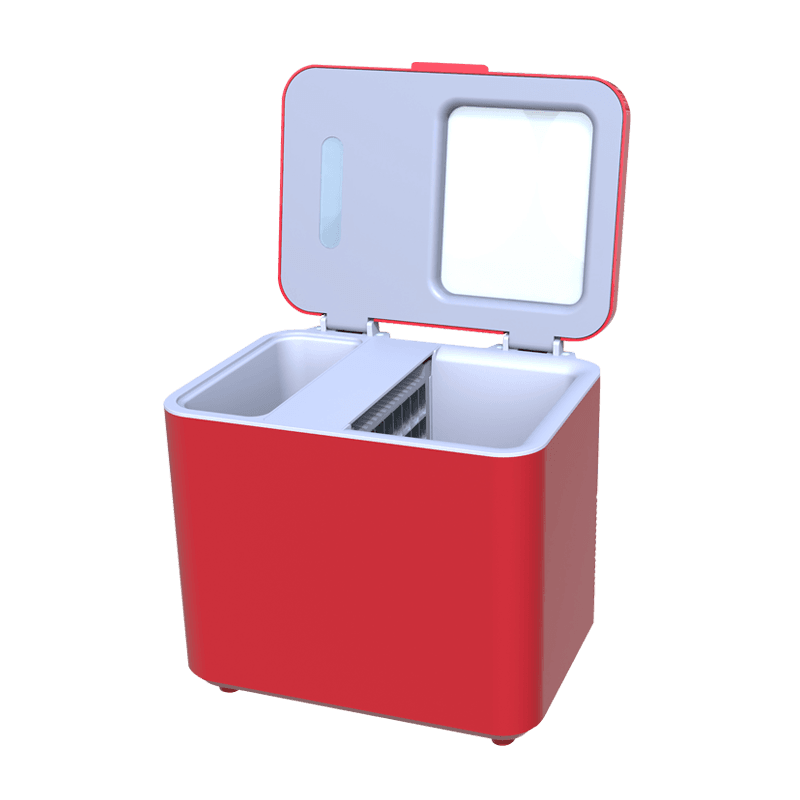
Home ice cube maker
Compact Dimensions for Flexible Placement
Space efficiency is one of the most important advantages of a countertop ice maker. At 325 x 295 x 252 millimeters, this model is designed to fit more easily into a kitchen, home bar, office pantry, beverage counter, entertainment area, or small hospitality workspace than many larger ice-producing systems. Its compact form makes it possible to position the appliance near the area where ice is most frequently needed.
A smaller footprint can improve daily convenience in several ways. In a home kitchen, the appliance can be placed on a stable counter without requiring a full cabinet renovation. In an office, it can serve staff and visitors without occupying an entire refreshment station. In a guesthouse or small service environment, it can support beverage preparation while preserving counter area for cups, ingredients, and other equipment.
Compactness also improves flexibility during special occasions. Users can move the machine to a serving area, a dining room sideboard, an outdoor-covered refreshment station, or a temporary event counter, provided that the location meets safety and environmental requirements. This makes the product more adaptable than a fixed ice-producing installation.
However, compact design should not be confused with careless placement. The appliance should stand on a level, stable, and dry surface. It should not be pushed tightly against a wall or placed near a direct heat source. Adequate ventilation and clearance are important for refrigeration equipment because the system must release heat while producing cold. Keeping the surrounding area clean and unobstructed can support reliable operation over time.
Dense, Regular Ice for Better Beverage Control
The product information emphasizes especially solid ice cubes. Density is valuable because it can influence melting behavior. When a cube has a relatively small surface area compared with its volume, it may melt more slowly than a collection of small, thin, or irregular pieces. This can be advantageous for drinks that are served over an extended period.
Slow melting does not mean that ice never dilutes a beverage. All ice eventually exchanges heat with its surroundings and melts. The practical advantage is better control. A slower-melting cube can cool a drink while reducing the speed at which water enters the beverage. This is useful for premium spirits, neat or lightly diluted drinks, cocktails, cold brew, iced tea, lemonade, and other beverages where flavor concentration matters.
Regular geometry also improves handling. Cubes with a consistent shape can be lifted, transferred, arranged, and portioned more easily than uneven fragments. They are less likely to create an untidy appearance in a glass or bucket. In a professional setting, consistency can help staff serve drinks with a more uniform presentation from one order to the next.
The shape can also be beneficial in a freezer or temporary storage container. Regular cubes can be arranged more efficiently, leaving fewer awkward gaps than irregularly formed pieces. This does not eliminate the need for suitable storage, but it can improve the use of available space when users need to hold ice for later serving.
Advantages for Spirits and Premium Drinks
Whiskey and other spirits are often served in a manner that allows the drinker to observe changes in aroma, temperature, and flavor over time. Large, solid cubes are compatible with this style of service because they can provide gradual cooling rather than an immediate rush of dilution. Clear glassware further highlights the neat visual effect of regular ice.
For cocktails, ice performs several roles at once. It cools the drink, contributes measured dilution, and creates visual volume. A consistently shaped cube makes the final presentation appear more deliberate. While the final cocktail recipe and mixing method remain important, the ice itself becomes part of the serving experience.
Advantages for Everyday Refreshments
Not every use requires premium spirits. The appliance can also support routine household needs, including iced water, fruit drinks, soda, tea, coffee-based beverages, and family gatherings. Having a dedicated ice source reduces the need to wait for freezer trays to solidify. It can also make it easier to prepare multiple drinks at the same time.
At parties or informal meetings, ice is often consumed faster than expected. A countertop machine provides an additional source that can complement existing freezer storage. The regular shape is suitable for serving in glasses, pitchers, buckets, and coolers, depending on the user's requirements.
Refrigeration System and R290 Refrigerant
The appliance uses R290 refrigerant with a listed charge of 26 grams. R290 is propane-based refrigerant commonly associated with modern compact refrigeration equipment. Its use reflects the industry's movement toward refrigerant options with a lower global warming potential than many older alternatives. The small listed charge is consistent with the compact scale of the appliance.
Because R290 is a flammable refrigerant, responsible handling is essential. Users should not open, puncture, modify, or attempt to recharge the refrigeration circuit. Any repair involving the refrigerant system should be completed by appropriately qualified service personnel following applicable safety rules. The machine should be operated in a well-ventilated location and kept away from ignition sources during servicing.
The refrigeration system is central to the appliance's ability to produce solid ice. A properly designed cooling cycle removes heat from the freezing area and transfers it to the surrounding environment. The effectiveness of that process depends not only on the refrigerant but also on the compressor, heat exchanger, insulation, airflow, temperature control, water delivery, and overall assembly quality.
Although the available product information does not specify every internal component, the stated use of R290 and the compact dimensions indicate a design focused on efficient small-appliance refrigeration. Users should follow the official operating and maintenance instructions for details such as ambient temperature limits, water quality, cleaning intervals, ice storage behavior, and recommended installation clearance.
Energy and Electrical Considerations
The listed rated power is 140 watts, with a current specification of 0.65 amperes under a 220V/50Hz supply. This provides a useful reference for planning installation and estimating the appliance's electrical requirements. The actual energy consumed over a day will depend on operating time, ambient temperature, water temperature, production frequency, and how often the machine cycles.
A 140-watt rating is appropriate for a compact countertop appliance rather than a large commercial ice production system. This makes the product suitable for users who need convenient household-scale ice rather than continuous high-volume output. The relatively modest power class can also simplify placement in kitchens and offices where electrical capacity is shared with other appliances.
Electrical safety should remain a priority. The machine should be connected to a properly installed outlet that matches the specified supply. Users should avoid damaged cords, loose connections, overloaded extension equipment, wet plugs, and unstable adapters. Water should be kept away from electrical connections, and the appliance should be unplugged before cleaning or moving it unless the operating instructions specify otherwise.
It is also important to distinguish rated power from total energy consumption. The listed figure describes the product's electrical rating, not a guaranteed daily electricity bill. Refrigeration appliances cycle on and off, so actual consumption changes with conditions. A machine operating in a hot room or with frequent use may work harder than one operating intermittently in a cooler environment.
Comparison with Common Ice-Making Alternatives
The main competitors to a compact ice cube maker are not only other countertop machines. Traditional freezer trays, built-in refrigerator ice systems, purchased bagged ice, and larger commercial machines all serve related purposes. The right choice depends on required volume, available space, desired ice form, purchase budget, and the importance of on-demand production.
| Ice Source | Typical Strength | Common Limitation | Where a Compact Cube Maker Helps |
|---|---|---|---|
| Freezer trays | Low purchase cost and simple operation | Slow preparation, spills, and irregular timing | Provides a dedicated on-demand ice source |
| Built-in refrigerator ice maker | Integrated storage and convenience | Depends on refrigerator capacity and installation | Can add ice capacity without replacing the refrigerator |
| Purchased bagged ice | Useful for occasional large events | Requires shopping, storage, and handling | Supports regular home production and reduces dependence on purchases |
| Large commercial ice machine | High production capacity | Greater cost, space, and installation demands | Offers a compact option for household or light-duty needs |
| Compact countertop ice maker | Flexible placement and convenient access | Requires regular cleaning and appropriate operating conditions | Balances portability, presentation, and everyday usability |
Compared with freezer trays, the principal advantage is convenience. Users do not need to fill multiple trays and wait for the freezer to complete a cycle before serving drinks. The dedicated machine is also easier to position near a home bar or beverage station. Compared with a refrigerator-integrated system, the countertop format offers flexibility because it can be added to an existing kitchen without replacing the primary refrigerator.
Compared with bagged ice, producing ice at home can improve availability and reduce the need to transport and store bulky bags. It may also give users greater control over cleanliness and timing, provided that the machine and water system are maintained properly. Bagged ice may still be preferable when a very large quantity is needed at once, so the compact appliance should be viewed as a practical everyday complement rather than a universal replacement for industrial supply.
Compared with larger commercial equipment, the compact machine is easier to accommodate and generally more suitable for homes, small offices, and light beverage service. Commercial machines may offer greater output, larger storage bins, advanced controls, and specialized ice shapes, but they also demand more installation space and operational planning. The Home Ice Cube Maker focuses on accessible, regular ice production in a smaller format.
Manufacturing Strengths and Quality-Oriented Design
The manufacturer is located in Zhouxiang, Zhejiang Province, an area known for small household appliance production and convenient logistics. This regional position can support access to an established appliance supply chain, component sourcing networks, manufacturing labor, packaging services, and domestic as well as international distribution channels. These conditions are valuable when producing compact appliances that require coordination among mechanical, electrical, refrigeration, plastic, and packaging operations.
The company specializes in household appliances including ice makers, coffee machines, and air fryers. This product range indicates experience across several categories that share important manufacturing requirements: heating or cooling control, compact structural design, user-oriented interfaces, electrical safety, thermal management, and repeated daily operation. Knowledge developed in one appliance category can contribute to design discipline in another, although each finished product must still be evaluated according to its own technical and safety requirements.
The company's stated mission is to use smart technology to simplify life and enhance happiness. In the context of this ice maker, that philosophy can be seen in the emphasis on practical convenience, a compact footprint, useful ice geometry, and a design intended for ordinary household routines. The product does not need to be complicated to be intelligent. A well-designed appliance can provide value by making a frequent task easier, more predictable, and less disruptive.
Integrated Product Development
Ice makers combine several technical systems in a relatively small enclosure. The water path must work with the freezing surface, the refrigeration circuit must remove heat, the outer housing must support the internal components, and the electrical system must operate reliably in a kitchen environment. Manufacturing quality therefore depends on coordination rather than on one isolated component.
A capable appliance manufacturer must manage dimensional consistency, assembly sequence, wiring arrangement, insulation, fastening, sealing, and final inspection. The stated commitment to excellent quality, customer satisfaction, continuous improvement, and innovation provides a framework for this kind of integrated production. These principles are especially important for refrigeration appliances because small assembly differences can affect noise, cooling performance, drainage, durability, and user safety.
Process Discipline and Continuous Improvement
Continuous improvement is relevant throughout the product life cycle. Feedback from customers, distributors, technicians, and production teams can identify opportunities to improve controls, cleaning access, packaging protection, component durability, and user instructions. For a compact ice maker, even small improvements can influence daily satisfaction because the product may be used repeatedly in a short period.
Process discipline also supports repeatability. A buyer expects one machine to perform in a manner consistent with another machine of the same model. Repeatability depends on controlled component sourcing, stable assembly practices, electrical testing, refrigeration-system handling, inspection, and packaging. While the available materials do not list specific factory certifications or test results, the company's stated quality-oriented business philosophy indicates a focus on dependable production and customer needs.
Logistics and International Cooperation
The company's location in a major small-appliance manufacturing area, combined with convenient logistics, supports business cooperation with domestic and international customers. Efficient logistics can help shorten movement between component suppliers, assembly facilities, warehouses, ports, and end markets. It can also support more responsive sample delivery, replacement-part coordination, and export preparation.
For international buyers, product cooperation should include clear confirmation of voltage, frequency, plug format, labeling, packaging, operating instructions, warranty arrangements, and market-specific compliance requirements. The listed version is specified for 220V/50Hz operation. Buyers serving other electrical regions should discuss whether a compatible version is available rather than connecting the appliance to an unsuitable supply.
Humanized Design for Daily Routines
A successful home appliance should reduce effort rather than create a new set of complicated tasks. The compact form of this ice maker makes it easier to place near the refrigerator, sink, coffee area, home bar, or dining space. Its regular ice output supports a range of serving styles, while the modest size helps it fit into homes where every countertop area matters.
Humanized design also includes the less visible details of operation. The machine should be easy to fill according to its instructions, simple to monitor, straightforward to clean, and convenient to move when necessary. Users benefit when maintenance access is understandable and when the product does not require specialized knowledge for ordinary care.
Because ice is consumed directly or placed in beverages, cleanliness is essential. Users should use suitable water, keep the water reservoir and ice-contact surfaces clean, empty unused water when recommended, and follow the manufacturer's sanitation guidance. The appliance should not be treated as maintenance-free. Regular care supports taste, hygiene, appearance, and long-term reliability.
The same principle applies to the external housing. Dust, moisture, and spills should be removed with appropriate methods. Abrasive tools and aggressive chemicals may damage surfaces or leave residues. The product should be dried properly after cleaning, and electrical components should not be exposed to water.
Applications Across Home and Light Commercial Environments
Home Kitchens and Dining Areas
In a standard kitchen, the machine can provide fresh ice for family meals, weekend gatherings, cold water, iced tea, and seasonal drinks. Its compact size allows it to supplement a refrigerator without requiring a major change to the kitchen layout. Users can produce ice near the preparation area and transfer it to glasses, pitchers, or an insulated container.
Home Bars and Entertainment Spaces
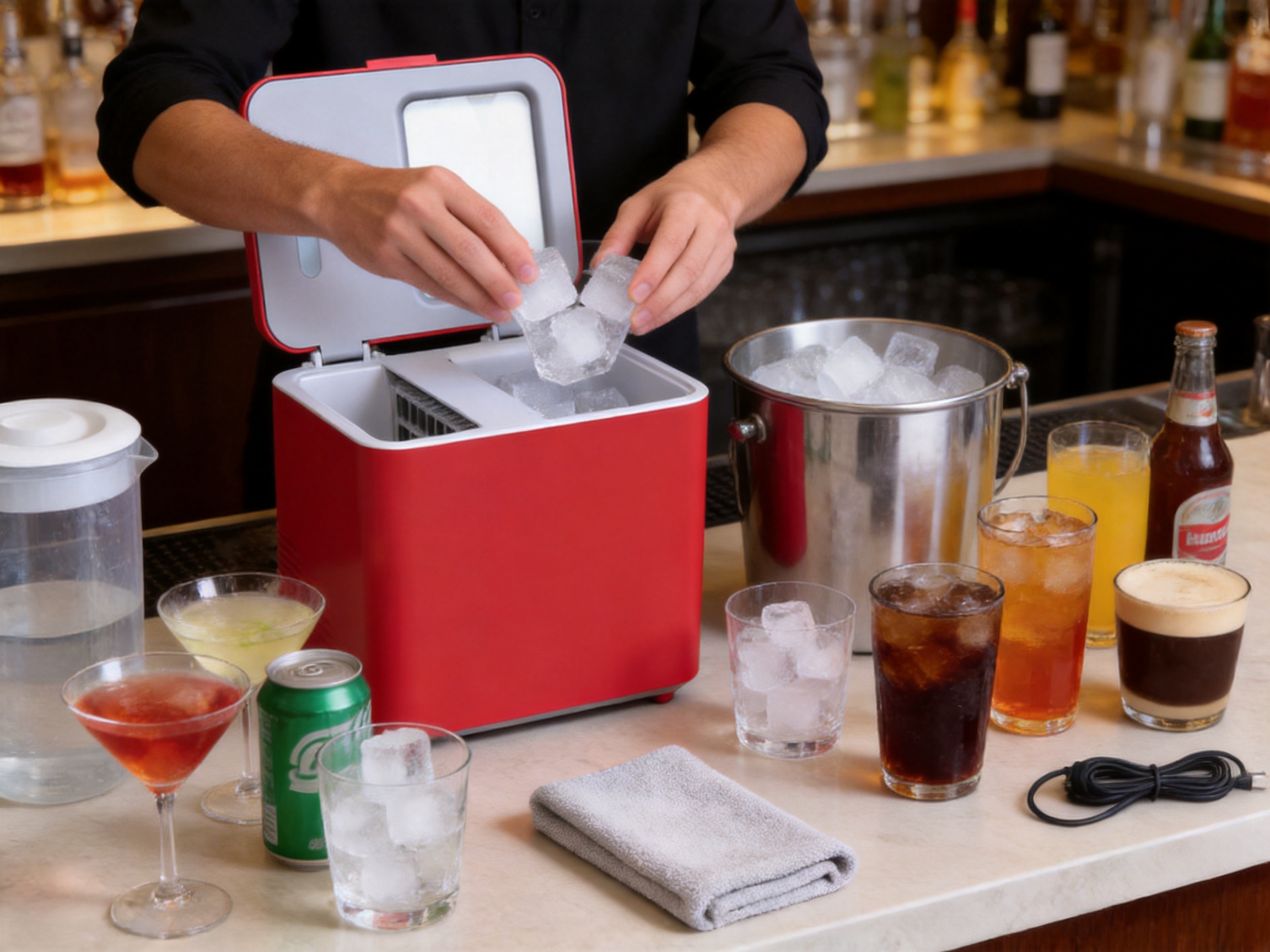
A home bar benefits from ice that is available at the point of service. Regular cubes can improve the appearance of whiskey, cocktails, mixed drinks, and non-alcoholic refreshments. The slow-melting characteristic described for solid cubes is especially useful when guests are expected to enjoy beverages over a longer period.
Offices and Staff Pantries
Offices often have limited kitchen facilities but still need cold drinks for employees, visitors, meetings, and events. A countertop machine can provide an independent ice source without requiring a commercial catering installation. It may also be useful near a coffee machine, especially where iced coffee and cold beverages are part of the daily routine.
Guesthouses and Small Hospitality Businesses
Small hotels, guesthouses, rental properties, cafes, and event venues may use compact ice equipment where demand is moderate rather than industrial. The machine can support welcome drinks, minibar service, small gatherings, or limited beverage preparation. Operators should assess expected volume carefully and ensure that the product is used within its intended capacity and environmental conditions.
Outdoor-Covered Serving Areas
The appliance may be convenient for temporary serving areas when a safe, dry, stable, and electrically suitable location is available. It should not be exposed to rain, excessive humidity, direct sunlight, extreme heat, or unstable surfaces. Proper protection and ventilation remain necessary even when the machine is used for a short event.
Installation and Operating Considerations
Before first use, the appliance should be inspected for shipping damage and placed on a level surface. Packaging materials should be removed according to local disposal requirements. If the manufacturer's instructions require a waiting period after transport, users should follow that instruction before switching on the machine. This is especially relevant to refrigeration appliances that may have been tilted during delivery.
The electrical supply should match the stated 220V/50Hz specification. The outlet should be properly installed and capable of supporting the appliance. The power cord should be routed so that it is not pinched, stretched, exposed to hot surfaces, or placed where people may trip over it.
Water should be added only in the manner and quantity described in the operating instructions. Overfilling can cause leaks or operational problems, while unsuitable water may influence taste, mineral deposits, and cleaning requirements. In areas with hard water, users may need to pay particular attention to scale control and maintenance.
The machine should have sufficient surrounding space for airflow. Heat released from the refrigeration system must be able to disperse. Blocking vents or placing the appliance beside an oven, radiator, or other hot equipment may reduce performance and increase stress on the cooling system.
During operation, users should observe the machine for unusual sounds, leaks, burning odors, damaged cables, or other signs of malfunction. If a serious problem occurs, the appliance should be switched off and disconnected from the power supply. Refrigerant-system repairs should not be attempted by unqualified users.
Cleaning, Hygiene, and Long-Term Care
Ice-making equipment requires a higher standard of cleanliness than many ordinary countertop appliances because water and ice come into direct contact with the product. A regular cleaning routine helps prevent residue, odor, mineral accumulation, and unwanted microbial growth. The precise cleaning schedule should follow the manufacturer's instructions and may depend on usage frequency and water quality.
Before cleaning, users should disconnect power when required by the instructions and remove remaining ice and water. Accessible water-contact surfaces can be cleaned with approved methods. The appliance should be rinsed as directed and allowed to dry appropriately. Cleaning chemicals should never be used in a way that leaves harmful residue in the water or ice path.
Ice that has been stored for an extended period may absorb odors from the surrounding environment. Users should keep ice in a clean container and avoid contact with raw food, chemicals, dust, or other contaminants. If the appliance includes a storage area, that area should also be cleaned at suitable intervals.
Regular inspection can reveal problems before they become more serious. Users should check the power cord, external housing, water area, drainage points, and ventilation openings. Any cracks, persistent leaks, damaged insulation, or refrigeration abnormalities should be addressed through qualified service support.
Responsible Use of Refrigeration Technology
The use of R290 brings environmental advantages associated with a lower global warming potential compared with many traditional refrigerants, but it also requires responsible handling because the refrigerant is flammable. This balance illustrates an important principle in modern appliance design: environmental considerations and safety procedures must operate together.
Consumers should never deliberately release refrigerant, dismantle the sealed system, or dispose of the appliance in a manner that ignores local requirements. At the end of the product's life, suitable recycling or waste-management channels should be used. Service personnel should follow applicable rules for recovery, repair, and disposal.
Responsible use also includes avoiding unnecessary operation. Users can produce only the amount of ice needed, keep the appliance in a suitable environment, maintain clean heat-dissipation areas, and switch it off when it will not be used for an extended period, subject to the manufacturer's guidance. These practices may support efficient use and reduce avoidable wear.
How the Product Supports Business Buyers
For wholesalers, distributors, hospitality suppliers, and private-label customers, the Home Ice Cube Maker offers a product category with broad consumer relevance. Ice is needed in homes, offices, beverage stations, restaurants, entertainment spaces, and small accommodation businesses. A compact model can appeal to customers who do not need the cost or infrastructure associated with a large commercial machine.
Business buyers may value the combination of recognizable specifications, compact dimensions, regular ice output, and a manufacturer experienced in several household appliance categories. The company welcomes new and existing customers for business cooperation, creating an opportunity for discussions about product sourcing, market positioning, packaging, distribution, and regional requirements.
Before placing an order, buyers should confirm minimum order quantities, lead times, packaging dimensions, available colors or configurations, sample procedures, warranty terms, spare parts, inspection arrangements, and shipping documentation. They should also verify that the intended destination accepts the specified voltage, frequency, refrigerant, labeling, and safety information.
For retail presentation, the product can be positioned around several clear consumer benefits: on-demand household ice, space-saving countertop placement, solid regular cubes, slower melting for selected beverages, versatile use, and a design aligned with modern compact-appliance lifestyles. Marketing claims should remain consistent with verified product performance and local advertising requirements.
Practical Advantages in Daily Use
The strongest advantage of the product is its combination of useful ice characteristics and manageable physical size. Some ice machines focus primarily on speed, while others prioritize capacity or unusual ice shapes. This model emphasizes solid, regular cubes that can serve both functional and visual purposes. It is a practical fit for users who want ice to remain effective in drinks for a reasonable period without occupying excessive counter space.
The second advantage is versatility. The cubes can be used in drinking glasses, ice buckets, pitchers, kitchen preparation, and temporary cooling applications. A product that serves several household roles can provide more value than an appliance intended for only one beverage type.
The third advantage is integration into existing spaces. Users do not need to redesign the kitchen or purchase a larger refrigeration system to gain an additional ice source. The compact dimensions help the appliance fit into homes and light service environments where space is limited.
The fourth advantage is the manufacturer's broader appliance experience. A company that works with ice makers, coffee machines, and air fryers operates within the wider household-appliance sector and understands the importance of humanized controls, practical dimensions, dependable daily use, and customer satisfaction. Its stated commitment to innovation and continuous improvement provides a foundation for developing products that respond to real household needs.
Limitations and Expectations
A responsible product evaluation should also acknowledge what a compact countertop appliance is not. It is not necessarily a replacement for a high-capacity commercial ice plant. Users with very large events, continuous restaurant demand, or industrial beverage service may require a larger machine with greater production and storage capacity.
The available specifications do not state production volume, cycle time, storage-bin capacity, noise level, cube weight, or detailed control functions. Buyers should request these values before making a purchasing decision based on a specific application. They should also clarify whether the product is intended for continuous operation, intermittent household use, or light commercial service.
Ice quality depends on water quality and maintenance as well as machine design. A well-designed appliance cannot fully compensate for contaminated water, poor cleaning, blocked ventilation, or unsuitable ambient conditions. Users should follow all operating instructions and should not exceed the intended use of the product.
These considerations do not reduce the value of the appliance. Instead, they help customers match the product to the right environment. The Home Ice Cube Maker is best understood as a compact, versatile, regular-cube solution for homes and moderate-use settings that value convenience, presentation, and space efficiency.
Q&A
What type of product is this?
It is a compact countertop home ice cube maker designed to produce solid, regular ice cubes for beverages, entertaining, kitchen use, and other everyday cooling applications.
What are the machine dimensions?
The listed machine dimensions are 325 x 295 x 252 millimeters. Users should allow additional surrounding space for ventilation, safe operation, cleaning, and access to the power cord.
What electrical supply does it require?
The specified power supply is 220V/50Hz. The listed current and power are 0.65A and 140W. Buyers in other electrical regions should confirm whether a suitable version is available before ordering or operating the product.
Which refrigerant does it use?
The product uses R290 refrigerant with a listed charge of 26 grams. Because R290 is flammable, the sealed refrigeration system should be serviced only by appropriately qualified personnel.
Why are solid cubes useful for drinks?
Dense cubes with a relatively small surface area can melt more slowly than smaller or irregular pieces under comparable conditions. This may help chill drinks while reducing the speed of dilution, which is useful for spirits, cocktails, iced coffee, tea, and other beverages.
Can the ice be used for purposes other than drinks?
Yes. The product information identifies uses including beverage glasses, ice buckets, kitchen preparation, and ice packs. Users should ensure that ice remains clean and is handled in a hygienic manner for its intended application.
Is the machine suitable for a commercial restaurant?
It may be suitable for light beverage service or smaller hospitality environments, but the available information does not provide a production-capacity figure. Restaurants and high-volume operators should confirm output, storage capacity, duty cycle, and service requirements before relying on it as a primary ice source.
How does it compare with freezer trays?
A countertop ice maker can provide a dedicated and more convenient ice source without requiring users to fill trays and wait for them to freeze. It also produces regular cubes and can be placed near the serving area.
Does the product require special maintenance?
Like all ice-making appliances, it requires regular cleaning, suitable water, ventilation, and inspection. The water-contact areas and ice-storage surfaces should be maintained according to the manufacturer's instructions.
Can users repair the refrigeration system themselves?
No. Users should not open or modify the refrigeration circuit. Repairs involving R290 or other sealed-system components should be performed by qualified service personnel using appropriate safety procedures.
What makes the manufacturer suitable for business cooperation?
The manufacturer is based in Zhejiang, a major small-appliance production area, and specializes in ice makers, coffee machines, and air fryers. Its stated strengths include quality, customer satisfaction, continuous improvement, innovation, practical business operations, and convenient logistics.
What should importers confirm before ordering?
Importers should confirm electrical compatibility, product capacity, cube characteristics, packaging, minimum order quantity, delivery schedule, warranty terms, spare parts, labeling, documentation, safety requirements, and any destination-market compliance obligations.
Conclusion
The Home Ice Cube Maker offers a focused answer to a common household need: reliable access to regular, solid ice without the space and infrastructure demands of a larger machine. Its 325 x 295 x 252-millimeter dimensions make it suitable for many countertop environments, while its 220V/50Hz electrical specification and 140-watt rating define a compact appliance profile for compatible markets.
Its most distinctive practical benefits are the regular cube form, slow-melting characteristics associated with solid ice, broad application range, and efficient use of storage and counter space. These qualities make it useful for premium drinks, family refreshments, home bars, offices, guesthouses, and light beverage service.
The product is also supported by a manufacturer with experience in household appliances and a stated commitment to quality, customer satisfaction, continuous improvement, innovation, and practical cooperation. Located in a Zhejiang manufacturing hub with convenient logistics, the company is positioned to serve both domestic and international business customers.
For the best results, the appliance should be matched to an appropriate workload, installed with proper clearance, connected to the correct electrical supply, maintained carefully, and serviced responsibly. When used in the right setting, it provides a convenient combination of compact design, attractive ice presentation, beverage control, and everyday flexibility.
References
1. Product specification sheet for the Home Ice Cube Maker, model Alien-ZF01.
2. Manufacturer-provided product information concerning solid ice cubes, slow melting, versatility, professional appearance, and stacking efficiency.
3. Manufacturer-provided company profile concerning household-appliance specialization, manufacturing location, logistics, quality principles, and business cooperation.
4. General refrigeration engineering principles concerning compact cooling systems, heat transfer, ventilation, and refrigerant handling.
5. General food-equipment hygiene principles concerning water quality, ice-contact surfaces, cleaning, storage, and safe handling.
6. General appliance safety principles concerning electrical compatibility, stable placement, ventilation, maintenance, and qualified refrigeration service.