
 English
 한국어
 Español
 Deutsch
Ice is often treated as a simple household necessity, but the quality, shape, density, and usability of ice can have a noticeable effect on drinks, food preparation, entertaining, and everyday convenience. A well-designed home ice cube maker can turn a routine task into a more reliable and enjoyable experience by producing consistently shaped cubes without requiring large freezer trays or constant manual preparation.
The Home Ice Cube Maker, identified as model Alien-ZF01, is designed for households that want a compact, practical, and efficient way to prepare ice. Its square ice format offers a balance of attractive appearance, storage efficiency, and slow melting performance. With a 140-watt power rating, a compact body measuring 325 x 295 x 252 millimeters, and an R290 refrigerant system, the appliance is suited to kitchens, home bars, offices, hospitality areas, and other spaces where convenient ice production is valuable.
Unlike irregular ice produced by loosely filled trays or ice that breaks apart during removal, regular square cubes provide a more professional presentation. They can be placed neatly in glasses, ice buckets, serving bowls, or storage containers. Their dense structure and relatively small exposed surface area help them remain solid for longer, allowing beverages to stay cold while reducing excessive dilution.
This article examines the product’s specifications, design advantages, manufacturing strengths, practical applications, maintenance considerations, and competitive benefits. It also explains why reliable production standards and a focused household-appliance manufacturing background are important when selecting a compact ice maker.
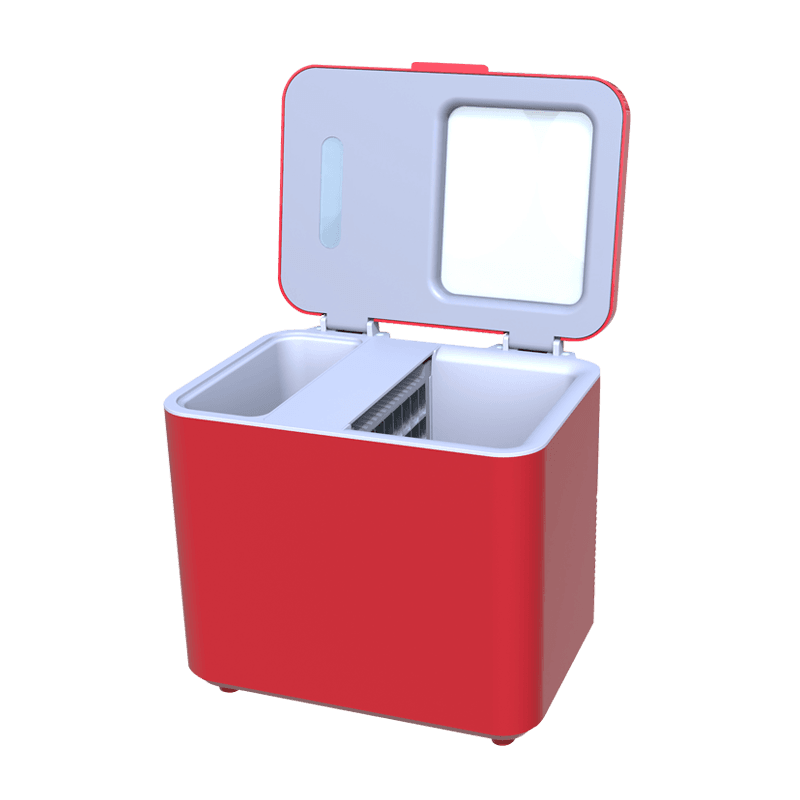
Home ice cube maker
Product Overview
The Home Ice Cube Maker is a compact appliance developed for convenient ice production in domestic and light commercial environments. Its design emphasizes functional simplicity, space efficiency, and the production of solid square ice cubes. Rather than treating ice as an afterthought, the product presents it as an important part of the drinking and serving experience.
The appliance operates on a 220-volt, 50-hertz power supply and uses 140 watts of power. Its listed operating current is 0.65 amperes. These specifications make it suitable for standard electrical environments that use this voltage and frequency. Buyers should always confirm compatibility with their local power supply before operation, especially when the appliance is intended for export markets.
The refrigeration system uses R290 refrigerant with a listed charge of 26 grams. R290, or propane refrigerant, is commonly associated with modern refrigeration equipment because of its low global warming potential compared with many older refrigerants. Since it is flammable under certain conditions, the appliance should be operated, transported, serviced, and disposed of according to applicable safety requirements and the manufacturer’s instructions.
The machine measures 325 x 295 x 252 millimeters. This compact footprint allows it to fit on many kitchen counters, beverage stations, sideboards, office refreshment areas, and small bar counters. The product can provide dedicated ice-making capability without occupying the amount of space associated with a large freezer or a full-size commercial ice machine.
Product Attribute | Specification |
Product Type | Home ice cube maker |
Model | Alien-ZF01 |
Power Supply | 220V/50Hz |
Current | 0.65A |
Power | 140W |
Refrigerant | R290 |
Refrigerant Charge | 26g |
Machine Dimensions | 325 x 295 x 252mm |
Primary Ice Format | Regular square ice cubes |
These specifications reveal a product designed around practical home use rather than oversized capacity. Its compact format is particularly useful for consumers who want ice available on demand but do not want to dedicate a large amount of kitchen space to a separate appliance.
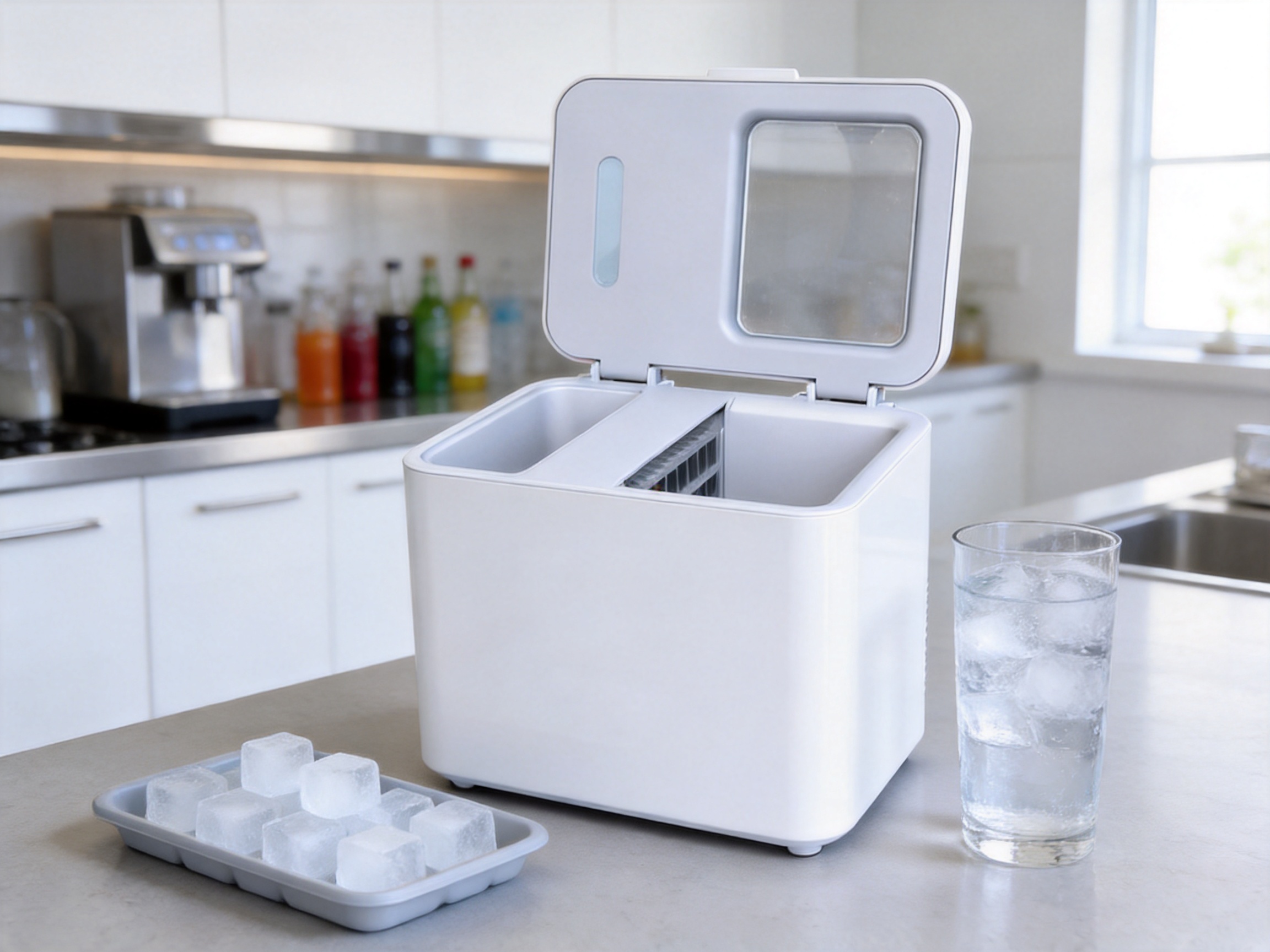
Why Regular Square Ice Cubes Matter
Slow Melting Performance
One of the most important advantages of a dense square ice cube is its resistance to rapid melting. Melting speed is influenced by several factors, including temperature, cube size, density, surface area, and the temperature of the beverage. A solid cube with a regular shape generally exposes less surface area relative to its volume than crushed or fragmented ice.
This characteristic is especially valuable for beverages where flavor balance matters. When ice melts too quickly, it adds water to the drink and can weaken its taste. Premium whiskey, neat spirits served over ice, cocktails, fruit beverages, and specialty coffee drinks can all benefit from ice that remains stable for longer. A slower melting rate allows the beverage to become cold without being diluted immediately.
The advantage is not limited to alcoholic drinks. Iced tea, lemonade, cold brew coffee, sparkling water, and soft drinks can also maintain their intended flavor for a longer serving period. For families, this means fewer complaints about watery drinks. For hosts, it means beverages can remain presentable while guests enjoy them at a relaxed pace.
Professional Appearance
Shape affects visual presentation. Irregular pieces can appear casual or inconsistent, while neat square cubes create a clean and organized appearance. In a transparent glass, regular ice can make even a simple drink look more carefully prepared. This is important for home entertaining, hospitality displays, restaurants, cafés, and offices that want a polished beverage service.
Clear or relatively clean-looking ice can also enhance the visual character of a drink. The square geometry catches light in a predictable way and gives beverages a structured, premium appearance. Even when the ice is used in a simple glass of water, the presentation can feel more deliberate and refined.
Versatile Everyday Use
Square ice cubes can be used in a wide range of situations. They are suitable for individual drinking glasses, pitchers, ice buckets, insulated coolers, and serving trays. In the kitchen, ice can be used to cool ingredients, help preserve chilled foods temporarily, or support preparation techniques that require rapid cooling.
Ice is also useful during gatherings, outdoor meals, family celebrations, and office events. A dedicated ice maker reduces dependence on purchasing bags of ice or waiting for multiple trays to freeze. The appliance can therefore support both planned occasions and unplanned needs.
Efficient Storage
Regular cubes are easier to arrange than irregular pieces. Their predictable shape permits closer stacking in containers and freezer compartments, helping users make better use of available storage space. This is particularly valuable in smaller kitchens, compact apartments, recreational vehicles, office pantries, and beverage stations.
Efficient stacking can also reduce the amount of empty space around stored ice. When cubes are uniform, users can organize them more easily, estimate how much ice is available, and transfer them between containers with less mess. The result is a more orderly approach to ice storage compared with loosely shaped or broken ice.
Compact Design for Modern Living Spaces
Kitchen space is increasingly valuable. Many homes have compact counters, integrated appliances, limited freezer capacity, or open-plan layouts where large machines can affect the appearance of the room. The Home Ice Cube Maker addresses this challenge with a footprint of approximately 325 x 295 millimeters and a height of 252 millimeters.
This form factor allows the appliance to be placed in a variety of locations. It may fit beside a coffee machine, under a cabinet with sufficient ventilation clearance, near a beverage preparation area, or on a utility counter. It can also be moved when necessary for parties, seasonal use, or storage.
Compact design is not only about saving space. A smaller appliance can be easier to position, clean, and integrate into existing household routines. It does not require a major kitchen renovation, special plumbing connection, or permanent installation area. Users can prepare the machine when needed and store it when the occasion is over, subject to the product’s handling and storage instructions.
The compact structure also supports flexible placement in offices and hospitality environments. An office can position the ice maker in a staff kitchen or meeting refreshment area. A small café, guesthouse, salon, studio, or showroom may use it where a large commercial ice system would be unnecessary or impractical.
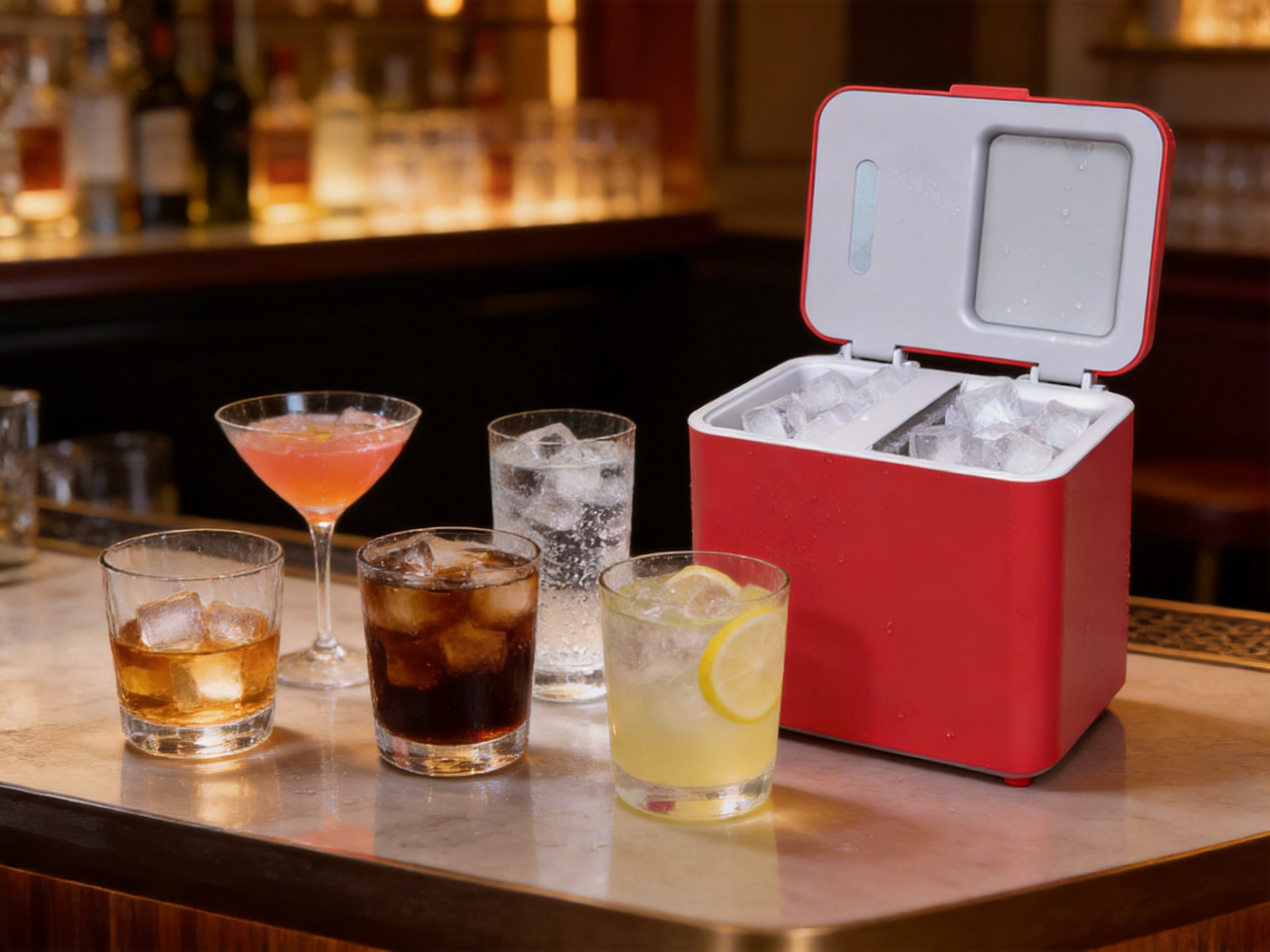
Energy and Refrigeration Considerations
The product’s listed power rating is 140 watts, with a current specification of 0.65 amperes. Actual energy consumption can vary according to operating duration, ambient temperature, water temperature, ventilation, ice production cycles, and usage patterns. Nevertheless, the stated rating indicates a machine developed for moderate household electrical demand rather than the high electrical load associated with large commercial systems.
The use of R290 refrigerant reflects an important direction in modern appliance engineering. Refrigerant selection affects environmental considerations, system design, safety requirements, and service procedures. R290 has a low global warming potential, which makes it attractive for certain compact refrigeration applications. However, its flammability means that the sealed refrigeration system must be manufactured and serviced with appropriate controls.
A responsible manufacturing process should include correct refrigerant charging, leak prevention, electrical insulation checks, component inspection, and final functional testing. These steps are especially important in a compact appliance, where refrigeration, electrical, and mechanical components operate within a relatively small enclosure.
Users should keep the ventilation openings clear, avoid placing the unit near strong heat sources, and provide the clearance recommended by the manufacturer. Good airflow helps the refrigeration system operate more effectively and can support longer service life. A machine that is crowded against a wall or surrounded by heat-producing equipment may experience poorer performance regardless of its rated specifications.
Manufacturing Strengths and Quality-Oriented Production
Product performance depends not only on the visible exterior but also on the quality of the manufacturing process behind it. Alien Technology Co., Ltd. is located in Zhouxiang, Zhejiang Province, an area recognized for the production and supply of small household appliances. This regional specialization provides access to component suppliers, manufacturing resources, logistics services, and technical experience related to compact consumer appliances.
The company specializes in household appliances including ice makers, coffee machines, and air fryers. This product range is significant because these appliances share several engineering requirements: compact mechanical layouts, heating or cooling systems, electrical safety, user-oriented controls, efficient assembly, and consistent appearance. Experience across related product categories can support a broader understanding of household usage patterns and production management.
A strong manufacturing process begins with product definition. The manufacturer must identify the intended environment, expected electrical conditions, physical dimensions, user requirements, and performance objectives. For the Home Ice Cube Maker, these objectives include compactness, regular ice formation, manageable power consumption, safe refrigeration operation, and practical household usability.
Component and Material Control
Reliable appliances depend on suitable materials and consistent components. The housing must provide adequate protection for internal parts while maintaining a clean appearance. Internal supports must hold refrigeration and electrical components securely. Water-contact areas must be appropriate for their intended application and easy to maintain.
Component control may include inspection of compressors, condensers, fans, water systems, electrical connections, switches, insulation materials, and fasteners. Consistent component sourcing reduces variation between production batches. It also helps the manufacturer identify problems earlier and maintain more predictable performance.
Assembly Precision
Compact appliances require careful assembly because limited internal space leaves little room for misplaced wires, loose fasteners, or poorly aligned parts. A quality-oriented assembly line should use defined work instructions and inspection points. Electrical connections must be secure, refrigeration tubing must be protected, and moving or vibrating components should be installed with suitable support.
Assembly precision also affects noise, durability, and user confidence. A machine that is assembled accurately is less likely to develop unnecessary vibration or rattling. Properly fitted panels and covers contribute to a cleaner appearance and can help prevent contamination from entering internal areas.
Refrigeration System Testing
The refrigeration circuit is central to ice-making performance. Testing may include inspection for leaks, confirmation of refrigerant charge, evaluation of cooling response, and verification of operating stability. When R290 is used, safe handling procedures are particularly important throughout charging, assembly, testing, and service.
Factory testing can help identify abnormal temperatures, insufficient cooling, unusual operating sounds, and inconsistent cycle behavior before products leave the facility. Such testing supports more dependable performance for customers and reduces the risk of avoidable after-sales issues.
Electrical Safety Checks
Because the appliance operates from a 220V/50Hz supply, electrical safety must be treated as a core production requirement. Quality checks may include cord inspection, grounding verification where applicable, insulation testing, current measurement, switch operation, and protection against incorrect assembly.
Electrical testing is not merely a final formality. It should be integrated into the production process so that defects can be detected before packaging. Clear product labeling and appropriate documentation further support safe use in different markets.
Functional and Appearance Inspection
Before shipment, a finished unit should be checked for basic operation, control response, cooling behavior, structural integrity, and exterior appearance. The product should be free from significant scratches, loose panels, visible assembly defects, or packaging damage. Functional inspection helps confirm that the machine meets its intended purpose, while appearance inspection supports a consistent customer experience.
For a product positioned as a practical and attractive household appliance, both kinds of inspection matter. Performance creates utility, while appearance affects the user’s perception of quality and the product’s ability to fit into a modern kitchen or beverage area.
Advantages Compared with Common Alternatives
The Home Ice Cube Maker competes with several common alternatives, including freezer trays, bagged ice, large built-in ice machines, and irregular ice produced by basic countertop devices. Each alternative has a place, but the compact square-cube format offers a useful combination of convenience, storage efficiency, and presentation.
Compared with Traditional Ice Trays
Traditional trays are inexpensive and familiar, but they require freezer space and advance planning. Users must fill the trays, place them in the freezer, wait for freezing, remove the cubes, and refill the trays. This process can be inconvenient when ice is needed quickly or in larger quantities.
A dedicated ice maker provides a more direct workflow. Once prepared according to the operating instructions, it can produce ice without tying up a freezer drawer. This frees freezer space for food and reduces the need to maintain several trays.
Compared with Purchased Bagged Ice
Purchased bagged ice can be useful for large events, but it requires transportation, storage, and advance buying. The ice may also contain more irregular fragments because of handling and movement. A home ice maker offers an on-demand alternative for regular household use, helping users avoid repeated trips to purchase ice.
Producing ice at home also gives users greater control over water selection, handling, storage, and serving. Clean operation and proper maintenance remain important, but the appliance can become a consistent part of the household routine.
Compared with Large Commercial Machines
Commercial ice machines may provide greater capacity, but their physical size, installation requirements, energy demand, price, and maintenance needs can be excessive for a household. The Home Ice Cube Maker is aimed at users who value compactness and practicality rather than industrial-scale output.
Its smaller dimensions make it more accessible to apartments, homes, offices, small businesses, and occasional event users. It can offer dedicated ice production without requiring the infrastructure associated with a large fixed system.
Compared with Irregular or Highly Fragmented Ice
Crushed or irregular ice can cool beverages quickly because of its larger exposed surface area, but it also tends to melt faster. It may dilute drinks rapidly and can be less visually consistent. Regular square cubes offer a different balance: slower melting, cleaner presentation, easier stacking, and more controlled serving.
The best type of ice depends on the drink and occasion, but square cubes are particularly appropriate when appearance and dilution control are important. They are well suited to spirits, cocktails, water, soft drinks, and beverages intended to remain enjoyable over a longer period.
Applications in the Home
Daily Beverages
For everyday use, the ice maker can support chilled water, iced tea, juice, soda, and flavored drinks. Families can prepare ice when convenient rather than relying on a freezer tray that may be empty at the moment it is needed.
Home Coffee and Cold Drinks
The company’s broader experience with coffee machines makes the ice maker relevant to modern home beverage preparation. Ice can be used for iced coffee, cold brew, blended drinks, and chilled milk-based beverages. Regular cubes are easier to portion and can provide consistent cooling from one serving to the next.
Home Bars and Entertaining
A home bar benefits from ice that looks orderly and melts slowly. Square cubes can improve the presentation of whiskey, cocktails, mocktails, sparkling water, and specialty beverages. During gatherings, an independent ice supply can reduce pressure on the freezer and allow hosts to maintain a dedicated serving station.
Outdoor Meals and Events
For outdoor meals, family celebrations, and informal events, ice is often needed in multiple places. The appliance can support preparation before an event, while stored cubes can be transferred to insulated containers or ice buckets. Users should keep ice protected from contamination and follow suitable food-handling practices.
Office and Small Business Use
Offices can place the unit in a staff kitchen or meeting area. Small hospitality businesses may use it for limited beverage service, provided that the product’s capacity and operating requirements match the business’s needs. Guesthouses, studios, salons, showrooms, and small cafés may also appreciate its compact footprint.
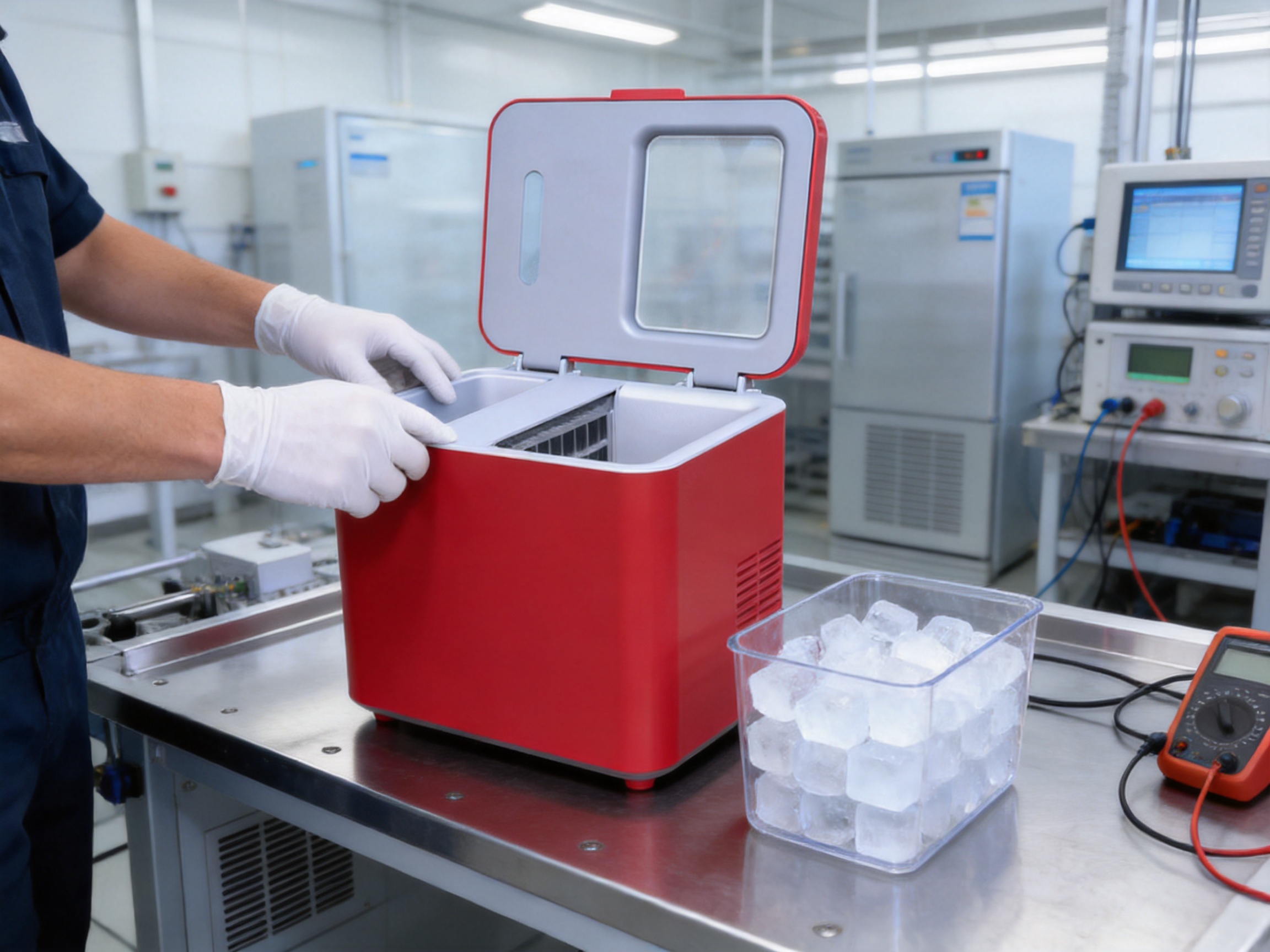
Practical Operation and Maintenance
Correct operation is essential for performance and hygiene. Before using the machine, place it on a stable, level surface with adequate ventilation. The surrounding area should be dry, clean, and free from strong heat sources. The appliance should not be operated in conditions that exceed the environmental limits stated in the instructions.
Use clean water suitable for the intended application. Water quality can affect taste, odor, mineral buildup, and the condition of internal water-contact components. If local water contains high mineral content, users should pay particular attention to cleaning and descaling guidance.
Clean the water reservoir and ice-contact surfaces regularly. Ice should not be left in the machine indefinitely, especially in warm environments. Remove unused ice as appropriate, empty residual water when recommended, and allow surfaces to dry during storage.
The exterior can generally be wiped with a soft, damp cloth, while abrasive cleaners and harsh chemicals should be avoided unless specifically approved. Do not immerse electrical components or pour water into areas that are not designed for cleaning.
Ventilation openings should remain unobstructed. Dust accumulation around air inlets or outlets can restrict airflow and cause the refrigeration system to work harder. Periodic inspection of the power cord, plug, housing, and visible components can help identify signs of damage early.
R290 refrigeration systems should not be opened or repaired by unqualified individuals. Any refrigeration service, refrigerant recovery, or sealed-system repair should be performed by trained personnel using procedures appropriate for flammable refrigerants.
Designing a Better User Experience
An appliance becomes genuinely useful when it fits naturally into daily routines. The Home Ice Cube Maker supports this goal through a compact structure, a clear functional purpose, and a cube shape suitable for many beverages. Users do not need to adapt their kitchen around a large machine; instead, the appliance can be placed where ice is most often prepared or served.
The regular shape also simplifies handling. Square cubes are easier to scoop, arrange, transfer, and store. They are less likely to create a chaotic pile than irregular fragments. This can be useful when preparing drinks for multiple people or when organizing ice in a cooler.
Visual consistency further improves the experience. When each serving contains similarly shaped cubes, the result looks more deliberate. This matters to homeowners who enjoy hosting, creators who photograph beverages, and small businesses that want a consistent presentation.
The product also supports a more controlled approach to beverage dilution. Users can select the amount of ice according to the drink and serving time. A dense square cube can remain present longer, allowing the beverage to stay cold while preserving its flavor profile.
Business and Cooperation Strengths
Alien Technology Co., Ltd. operates from Zhejiang Province and focuses on small household appliances. Its product categories include ice makers, coffee machines, and air fryers, allowing the company to serve distributors, importers, retailers, hospitality customers, and household-appliance brands seeking manufacturing cooperation.
The company’s stated mission is centered on smart technology, simplified living, and improved everyday happiness. In practical terms, this mission is reflected in the development of appliances that address familiar household tasks through compact, user-oriented designs.
The company also emphasizes reliable quality, customer satisfaction, continuous improvement, and innovation. These priorities are relevant to buyers who require more than a single finished product. Business customers often need stable communication, consistent specifications, repeatable production, packaging coordination, and dependable after-sales cooperation.
A manufacturing partner located in a well-established appliance region can offer logistical advantages. Access to nearby suppliers and transportation networks may support shorter coordination cycles, easier component sourcing, and more efficient shipment planning. These advantages can be especially valuable when serving multiple markets or developing product variations.
For potential business partners, important evaluation points include production capacity, quality-control procedures, product certification, sample approval, packaging standards, lead times, spare-parts support, and the ability to adapt products to local requirements. The product’s documented specifications provide a starting point for such discussions, while detailed commercial and technical terms should be confirmed directly with the manufacturer.
Responsible Product Positioning
The Home Ice Cube Maker should be selected according to actual usage needs. It is well suited to consumers who want compact, regular ice cubes for household beverages and light-duty serving environments. It may not be the correct choice for locations that require continuous, very high-volume commercial production.
Buyers should consider the number of users, expected daily ice demand, ambient temperature, available ventilation, electrical compatibility, water quality, storage arrangements, and maintenance resources. Proper expectations help ensure that the appliance delivers satisfactory performance over time.
It is also important to distinguish between a product’s rated specifications and actual operating results. Ice production can vary with room temperature, water temperature, ventilation, operating frequency, and maintenance. Clear instructions and responsible use are therefore essential to obtaining the best possible results.
Frequently Asked Questions
What type of appliance is the Home Ice Cube Maker?
It is a compact household ice-making appliance designed to produce regular square ice cubes for drinks, serving, food preparation, and general cooling needs.
What are the electrical specifications?
The listed power supply is 220V/50Hz. The listed current is 0.65 amperes, and the rated power is 140 watts. Users should verify that their local electrical system matches these requirements before operation.
What are the machine dimensions?
The listed dimensions are 325 x 295 x 252 millimeters. This compact size makes the appliance suitable for many kitchen counters, beverage stations, offices, and small hospitality areas.
Which refrigerant does the appliance use?
The machine uses R290 refrigerant with a listed charge of 26 grams. Because R290 is flammable, servicing and refrigeration-system repairs should be handled only by qualified personnel following applicable safety procedures.
Why are square ice cubes useful?
Square cubes provide a neat appearance, efficient stacking, and a relatively low surface-area-to-volume ratio. These characteristics can help them melt more slowly than smaller or highly irregular pieces, reducing rapid beverage dilution.
Can the ice be used for alcoholic and non-alcoholic drinks?
Yes. The cubes can be used for whiskey, cocktails, mocktails, water, juice, iced tea, soft drinks, cold brew coffee, and other chilled beverages. Users should select the amount of ice according to the drink and desired cooling level.
Is the appliance suitable for offices?
Its compact dimensions and moderate power rating make it potentially suitable for office kitchens, meeting areas, and refreshment stations. The expected volume of ice should be compared with the appliance’s actual production capacity before business use.
Does the ice maker replace a large commercial machine?
Not necessarily. The product is designed around compact household and light-duty use. Large restaurants, hotels, bars, and event venues with continuous high ice demand may require a larger commercial system.
How should the appliance be maintained?
Users should keep the water-contact areas clean, remove unused ice when appropriate, follow descaling guidance, maintain clear ventilation openings, and inspect the power cord and housing. Refrigeration-system service should be performed by qualified technicians.
Where is the manufacturer located?
Alien Technology Co., Ltd. is located at No. 138, Huixiang'an Road, Zhouxiang Town, Cixi City, Zhejiang Province. The company specializes in household appliances such as ice makers, coffee machines, and air fryers.
What makes the product attractive to distributors and business buyers?
The product combines a compact format, regular square ice design, modern R290 refrigeration, moderate power requirements, and broad household applications. The manufacturer’s focus on small appliances, quality, customer satisfaction, and continuous improvement may also support business cooperation.
Conclusion
The Home Ice Cube Maker offers a practical solution for consumers who want convenient access to regular, attractive, and relatively slow-melting ice. Its square cube format supports beverage presentation, flavor preservation, storage efficiency, and versatile everyday use. The compact dimensions allow it to fit into modern homes and smaller commercial environments without the space requirements of a large ice machine.
With a 220V/50Hz supply, 140-watt rating, 0.65-ampere current specification, R290 refrigerant, and 325 x 295 x 252-millimeter body, the Alien-ZF01 is positioned as a focused household appliance rather than an oversized industrial system. Its value lies in the balance between function, appearance, space efficiency, and convenience.
The manufacturing background of Alien Technology Co., Ltd. further strengthens the product’s position. Based in Zhejiang’s small-appliance production region and experienced in ice makers, coffee machines, and air fryers, the company is oriented toward practical household technology. Component control, assembly accuracy, refrigeration testing, electrical inspection, and final functional checks are all important foundations for producing dependable appliances.
For households, offices, small hospitality settings, and business buyers seeking a compact ice solution, the product provides a strong combination of usability and professional presentation. When operated with suitable ventilation, clean water, regular maintenance, and proper electrical and refrigerant safety practices, it can become a valuable part of a modern beverage-serving routine.
References
1. Product specification sheet for the Home Ice Cube Maker, model Alien-ZF01.
2. Manufacturer-provided product information concerning square ice cube performance, slow melting, appearance, versatility, and storage efficiency.
3. Manufacturer profile for Alien Technology Co., Ltd., including company mission, product categories, location, and business cooperation information.
4. General refrigeration engineering principles concerning refrigerant systems, ventilation, heat transfer, and appliance maintenance.
5. General food and beverage handling principles concerning clean water, ice storage, sanitation, and safe serving practices.
6. General household appliance quality-control principles covering component inspection, assembly verification, electrical testing, functional testing, and final appearance inspection.