
 English
 한국어
 Español
 Deutsch
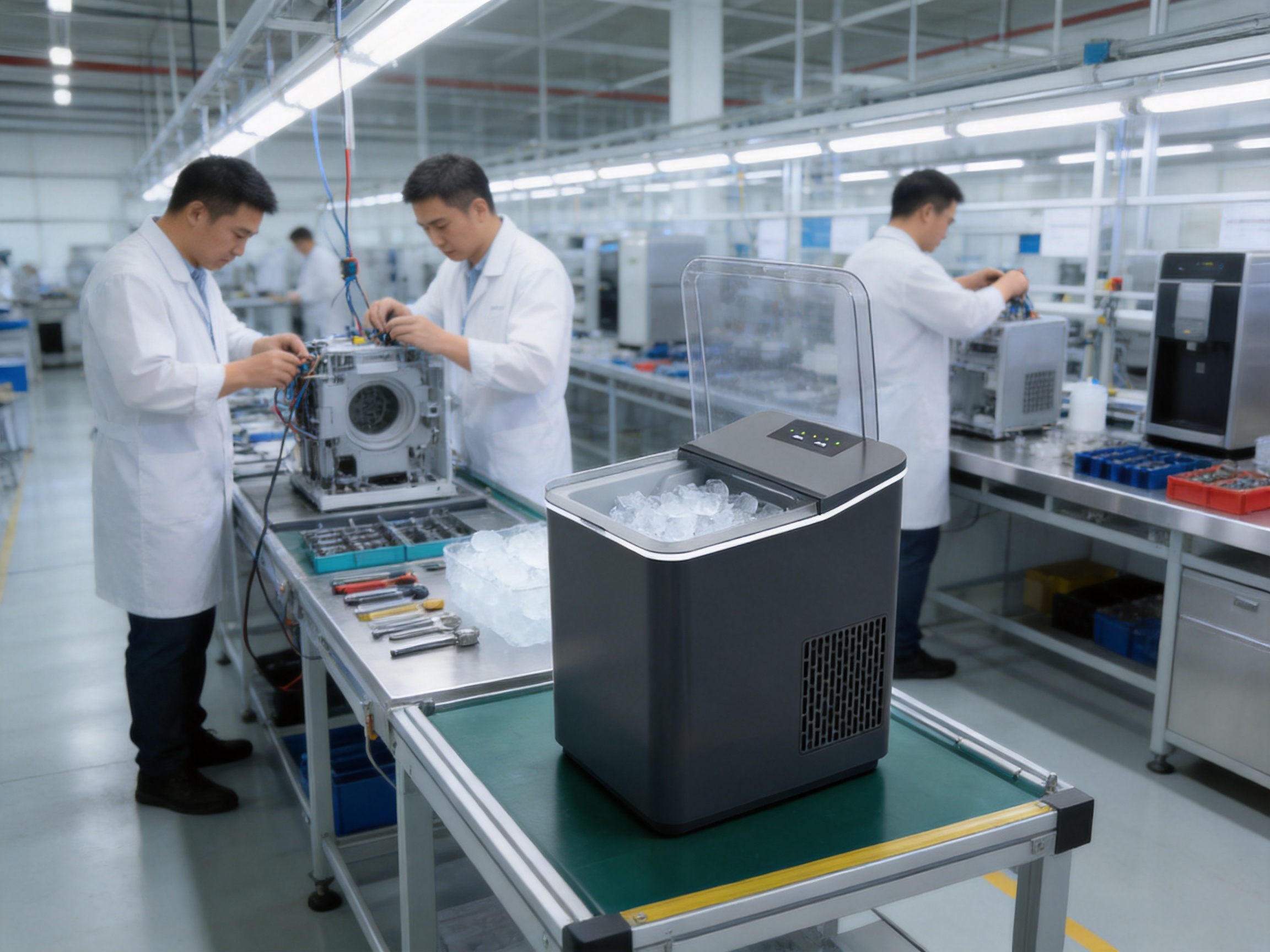
Ice is a small household necessity that can make a major difference in daily comfort. It cools beverages, supports food preparation, improves entertaining, and provides practical convenience in homes, offices, recreational vehicles, bars, cafés, and other compact commercial environments. Yet traditional ice-making methods often require planning, freezer space, ice trays, and considerable waiting time. A button-operated ice maker offers a simpler alternative by producing fresh ice on demand in a compact countertop design.
The Button-Operated Ice Maker, identified as the Alien-Z03 model, is designed around a straightforward idea: users should be able to make ice quickly without complicated controls or demanding installation. Its one-touch operation, compact dimensions, low rated power consumption, quiet operating concept, and removable ice basket make it suitable for users who value convenience and efficient use of space. At the same time, its bullet ice format supports a wide variety of beverages and everyday cooling applications.
This article examines the product’s design, operating advantages, specifications, potential applications, maintenance requirements, and competitive strengths. It also explains how the manufacturing background of Alien Technology Co., Ltd. supports the development of practical household appliances. The company specializes in ice makers, coffee machines, air fryers, and related small appliances, giving it a product portfolio closely connected to modern kitchen and lifestyle needs.
1. The Need for Convenient On-Demand Ice
Many households still depend on freezer trays or bags of purchased ice. Freezer trays are inexpensive, but they usually require several hours before the ice is ready. They also occupy freezer space and can be inconvenient when a larger quantity is needed for guests. Purchased ice may solve the immediate problem, but it requires storage, transport, and advance planning. In addition, the quality and shape of purchased ice may not always match the user’s preferences.
A countertop ice maker addresses these limitations by placing ice production directly where it is needed. Instead of waiting for a freezer compartment to complete a freezing cycle, users can add water, select the operating function, and begin production with a button. This process is particularly helpful during gatherings, hot weather, busy workdays, or situations where freezer space is limited.
The Button-Operated Ice Maker is intended for this type of flexible use. It can serve as a dedicated ice source in a kitchen or beverage area, while its compact footprint makes it practical for offices, recreational vehicles, small bars, and other locations where a full-size appliance would be excessive. The product is also appropriate for users who prefer uncomplicated controls rather than menus, touchscreens, or complicated programming systems.
2. Product Overview
The Button-Operated Ice Maker is a bullet ice maker with a simple control interface. Its main operating action is performed through a button, allowing the user to begin ice production without navigating a complex series of settings. This design approach is especially useful for families, older users, first-time appliance owners, and workplaces where different people may need to operate the machine.
The machine is designed to produce ice in short cycles, with the stated production time as little as six to ten minutes per cycle. Actual performance may vary according to water temperature, surrounding room temperature, ventilation, operating conditions, and the selected ice size. Nevertheless, the short cycle concept gives the appliance a clear advantage over standard ice trays, which commonly require much longer freezing periods.
Bullet ice is generally recognized by its rounded or hollow cylindrical form. This shape is convenient for drinks because it cools liquid efficiently while being easy to scoop and dispense. Bullet ice can be used in water, soft drinks, juices, cocktails, smoothies, and other chilled beverages. It is also useful for temporary food cooling and serving presentations.
The appliance has machine dimensions of 313 by 226 by 309 millimeters. This compact format allows it to fit on many countertops, worktables, beverage stations, and mobile living areas. Although users should always leave sufficient space around the unit for ventilation and safe operation, the product’s relatively small dimensions make it easier to integrate into existing environments than a large freestanding ice system.
Product Attribute |
Specification or Description |
Product Name |
Button-Operated Ice Maker |
Model Description |
Alien-Z03 |
Product Category |
Bullet Ice Maker |
Power Supply |
220V–240V / 50Hz |
Rated Current and Power |
0.9A / 150W |
Refrigerant and Charge |
R600a / 19g |
Machine Dimensions |
313 × 226 × 309 mm |
Control Method |
Button-operated control |
Stated Ice Cycle |
Approximately 6–10 minutes per cycle, depending on operating conditions |
Typical Applications |
Homes, offices, bars, RVs, parties, beverage stations, and small commercial spaces |
3. One-Touch Operation for Broad User Accessibility
One of the most important advantages of the product is its simple button control. A good household appliance should reduce the number of decisions required from the user. The Button-Operated Ice Maker follows this principle by making the core operation immediately understandable: prepare the appliance, add water according to the operating instructions, and press the button to begin.
Simple operation can be more valuable than a large collection of advanced functions. In a home, different family members may use the appliance at different times. In an office, visitors or employees may need to make ice without learning an extensive control system. In a recreational vehicle, a clear interface is useful because the user may be working in a limited space. For bars and small hospitality areas, quick operation can support a smoother service routine.
The button-operated format may also reduce the risk of incorrect selections caused by an overly complicated interface. A clearly designed control system helps users understand the basic operating sequence and encourages regular cleaning and responsible use. It is particularly suitable for users who prefer physical controls and direct feedback rather than app-based operation or complicated digital menus.
Compared with competing products that may emphasize numerous settings, connected functions, or decorative interfaces, this model focuses on the essential task of making ice. That focused design can improve everyday usability. Instead of paying for features that may rarely be used, customers receive a practical appliance centered on accessible ice production.
4. Fast Ice Making for Daily Convenience
The stated six-to-ten-minute ice cycle is a major selling point. Although the complete output over a longer period depends on water supply, room conditions, and the machine’s operating cycle, the short initial wait is useful in many real-life situations. A user can begin producing ice shortly before serving drinks, preparing a meal, or welcoming guests.
Fast ice making is also valuable when demand changes unexpectedly. A family may decide to prepare cold beverages on a warm afternoon. A small office may need additional ice for a meeting. A bar or beverage counter may experience a temporary increase in orders. In these situations, a countertop ice maker can provide supplemental capacity without requiring the purchase and storage of a large quantity of bagged ice.
Speed must be considered together with practical operation. The appliance is not positioned as a replacement for a high-volume commercial ice plant. Instead, its strength is responsive production in a compact machine. This makes it well matched to light commercial spaces, personal use, and situations where moderate quantities of fresh ice are needed at regular intervals.
Users should understand that production speed can be affected by environmental conditions. High ambient temperatures, warm water, insufficient ventilation, or an incorrect operating setup may extend the cycle. Allowing the machine to operate in a stable environment and following the instructions for water filling and placement can help users obtain more consistent results.
5. Multiple Ice Sizes for Different Uses
The product information identifies multiple ice sizes as one of the key benefits of the machine. Different beverages and serving situations call for different ice formats. Smaller pieces can be convenient for quick chilling and blended drinks, while larger pieces may be preferred for slower melting in certain beverages. The ability to select a preferred size gives users more control over the finished drink.
For everyday water and soft drinks, users may choose a size that provides effective cooling while fitting comfortably into the glass. For cocktails, ice size influences dilution and presentation. For smoothies and cold desserts, smaller pieces may be more practical. When the machine is used for temporary food preservation or serving, the preferred size can depend on the available container and the amount of cooling required.
Multiple size options also make the appliance more adaptable to different users. A household with varied preferences can use the same machine for several applications. A small business can adjust ice production to its beverage menu without purchasing multiple appliances. This flexibility is an important advantage over basic ice trays, which normally provide only one fixed shape and size.
The exact availability of sizes and the method used to select them should be confirmed in the product documentation supplied with the specific unit. Users should also remember that ice size, water temperature, and ambient temperature can affect cycle duration and the texture of the finished ice.
6. Compact Dimensions and Flexible Placement
With dimensions of 313 × 226 × 309 millimeters, the ice maker is designed for locations where counter space matters. Compact appliances are increasingly important because modern kitchens, offices, apartments, recreational vehicles, and hospitality areas often have limited room. A machine that provides a dedicated function without occupying the space of a full-size appliance can be easier to accommodate.
The product may be placed on a stable countertop, a beverage station, a worktable, or another suitable surface. It can be used in a home kitchen for regular beverage preparation, in an office pantry for staff use, or in a recreation area for parties and gatherings. Its size is also potentially useful in mobile settings such as RVs, provided the power supply, ventilation, stability, and installation requirements are appropriate.
Compact size does not eliminate the need for correct placement. The appliance should not be pushed tightly against a wall or surrounded by items that block air circulation. It should be kept away from excessive heat, direct water exposure, and unstable surfaces. Before moving the unit, users should follow the manufacturer’s recommendations, especially if the machine has recently been operating or has been tilted.
Compared with larger competing ice machines, the compact form provides a balance between useful production and manageable installation. It is not necessary to redesign a kitchen or dedicate an entire floor area to ice production. This makes the product attractive to consumers who want convenient ice without the cost and space requirements of a built-in system.
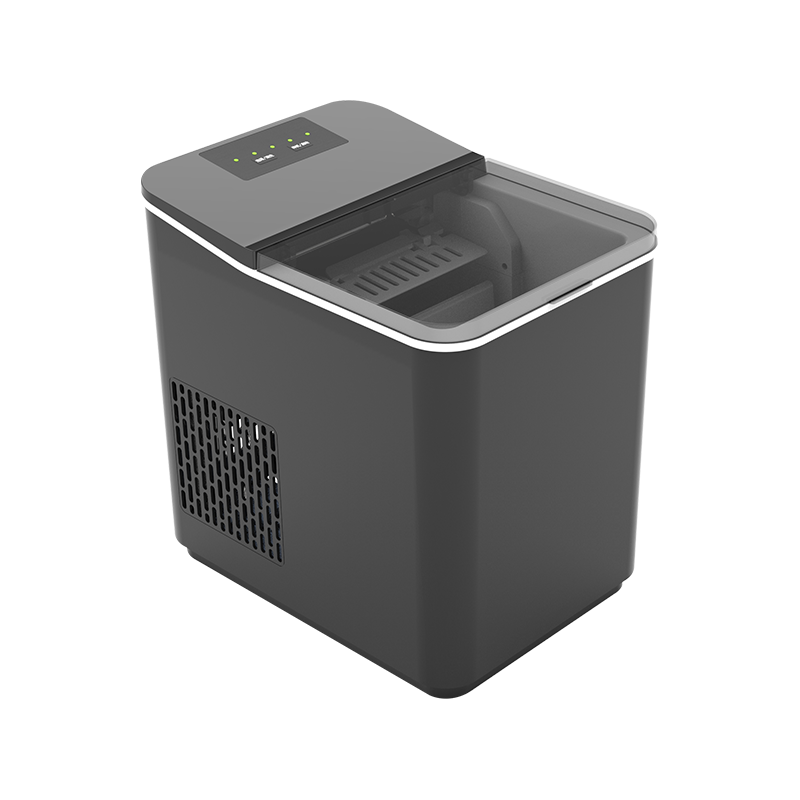
Button-Operated Ice Maker
7. Efficient Power Use and Refrigeration Design
The product has a stated power rating of 150 watts and a rated current of 0.9 amperes when used with a 220V–240V, 50Hz supply. These specifications indicate that the machine is designed as a relatively modest countertop appliance rather than a high-power industrial system. Lower rated power can be useful for households and small businesses that want to control operating costs while adding convenient ice production.
Energy use in real operation depends on the length of operation, room temperature, water temperature, ventilation, and the frequency of ice-making cycles. A machine that runs only when needed may support more efficient use than a large ice system that maintains a substantial supply continuously. Users can further reduce unnecessary consumption by turning the appliance off when ice is no longer required and following recommended cleaning and maintenance procedures.
The refrigeration system uses R600a refrigerant with a stated charge of 19 grams. R600a is an isobutane refrigerant commonly used in modern refrigeration equipment. As with any refrigerant-based appliance, handling, service, repair, and disposal should be performed according to applicable safety regulations and by appropriately qualified personnel. Users should not attempt to open or modify the refrigeration circuit.
The combination of a compact cabinet, modest power rating, and targeted refrigeration function demonstrates a practical engineering approach. Rather than creating an oversized appliance, the design concentrates cooling performance around the production of bullet ice. This can help make the product suitable for regular household use and supplementary commercial applications.
8. Quiet Operation for Shared Environments
Noise is an important consideration for countertop appliances. A machine placed in a kitchen, bedroom-adjacent area, office, or recreational vehicle should not create unnecessary disturbance. The product information highlights a noise-reduction design intended to support quieter operation.
Quiet operation is useful during conversations, meetings, evening gatherings, and work periods. In an office, excessive appliance noise can interrupt concentration. In a home, a loud machine can be inconvenient when family members are sleeping or relaxing. In a small hospitality area, reduced operating noise helps preserve a more pleasant customer environment.
Actual sound levels can vary depending on the surface beneath the machine, room acoustics, ventilation conditions, and the operating stage of the appliance. Refrigeration equipment may produce different sounds during startup, water circulation, cooling, and ice release. A stable, level surface can help reduce vibration, while adequate clearance supports normal airflow and cooling performance.
The focus on quiet operation gives the product an advantage over basic or poorly insulated countertop machines. Customers who compare models should consider not only production speed and capacity but also how the machine will sound in its intended environment. For many users, a quieter appliance is more likely to be used regularly because it creates less disruption.
9. Easy Cleaning and Maintenance
Regular cleaning is essential for any appliance that handles water and produces ice for consumption. The Button-Operated Ice Maker is designed with smooth interior surfaces and a removable ice basket, features that help simplify routine maintenance. A removable basket can make it easier to transfer ice, access the interior, and clean areas that may otherwise be difficult to reach.
Smooth surfaces reduce the number of places where water residue or mineral deposits can accumulate. They can also make wiping and rinsing more straightforward. Users should follow the supplied cleaning instructions and use only appropriate cleaning materials. Harsh chemicals, abrasive tools, or unauthorized treatments may damage surfaces or leave residues.
A basic maintenance routine should include emptying unused ice, draining remaining water when appropriate, wiping the interior, cleaning the basket, and allowing components to dry according to the instructions. The exterior should also be kept clean and dry. If the machine is used frequently, cleaning intervals may need to be shorter, especially in areas with hard water or high humidity.
Clean water quality can influence both ice taste and machine condition. Users should fill the reservoir with suitable potable water and avoid introducing beverages, syrups, or other liquids unless the official instructions specifically allow them. Mineral buildup may affect water flow and ice production over time, so descaling should be performed using an approved method when recommended.
Compared with ice trays, a countertop ice maker requires more active maintenance because it contains a water system and refrigeration components. However, the removable basket and smooth interior help make this responsibility manageable. A machine that is easy to clean is more likely to remain hygienic, attractive, and reliable over an extended service life.
10. Advantages Compared with Traditional Ice Trays
Traditional ice trays remain familiar and inexpensive, but they have several limitations. They normally require freezer space, extended freezing time, manual filling, and manual removal of individual ice pieces. A user may need multiple trays to prepare enough ice for a party or busy household. Water can also spill during filling, and trays may be difficult to stack in a crowded freezer.
The Button-Operated Ice Maker offers a more direct alternative. It is designed to produce ice on demand, without occupying the main freezer compartment. The short cycle time can provide greater responsiveness, and the bullet ice format offers a consistent shape. The removable basket can make it easier to collect ice in batches rather than removing individual pieces from a tray.
The machine may also be more convenient for locations without sufficient freezer capacity. In a small apartment, office pantry, RV, or temporary event area, a dedicated ice maker can provide useful capacity without requiring a large refrigerator. Its one-touch operation further reduces the effort involved in obtaining fresh ice.
Ice trays may still be appropriate for occasional users with minimal ice requirements. However, for people who regularly serve cold beverages or need ice at short notice, the dedicated appliance can offer greater convenience and more consistent availability.
11. Advantages Compared with Large Commercial Ice Systems
At the other end of the market, large commercial ice systems can produce substantial volumes but require more space, higher investment, dedicated installation, and more extensive maintenance. They may be unnecessary for a household, small office, mobile setting, or business that needs only moderate supplemental ice.
The compact ice maker provides a practical middle ground. It can deliver fresh ice without the installation complexity of a large fixed machine. Its 150-watt rating and compact cabinet support use in locations where power and floor space are limited. The machine can be added to an existing beverage area rather than replacing the entire refrigeration arrangement.
For a small bar or café, the product may function as an auxiliary ice source during busy periods or as a convenient option for a secondary serving station. For a household, it can provide dedicated ice without requiring the purchase of a commercial system. For an RV or mobile environment, its compact format may be more suitable than a large freestanding unit, subject to power compatibility and installation requirements.
The key competitive strength is not maximum industrial output. It is the combination of accessibility, compactness, speed, and practical operating cost. Customers can select a machine that matches their actual needs instead of paying for capacity they may rarely use.
12. Applications in Homes and Family Kitchens
In a household kitchen, the ice maker can support daily drinks, weekend entertaining, family meals, and seasonal use. It can be kept near a refrigerator, beverage station, kitchen island, or dining area. When guests arrive, the user can begin making ice without emptying freezer drawers or visiting a store.
Families may also appreciate the ability to select different ice sizes. Children and adults can use the same appliance for water, juice, chilled desserts, and special occasions. The simple button interface makes it accessible to a wide range of users, while the removable basket supports easier serving.
The machine may be especially useful during warm weather. Cold drinks are often consumed more frequently in summer, and a household can quickly reach the limits of its freezer ice supply. A compact countertop unit provides an additional source without requiring permanent remodeling or specialized plumbing.
Users should remember that ice makers are designed to produce ice rather than store it indefinitely. Ice may gradually melt inside the basket, with the resulting water returning to the reservoir or requiring removal depending on the appliance design. For best quality, ice should be transferred to a suitable insulated container when longer storage is needed.
13. Applications in Offices and Workplaces
Office environments often need simple shared appliances. A countertop ice maker can support staff kitchens, meeting rooms, training areas, reception spaces, and employee lounges. It provides a convenient source of ice for water, soft drinks, presentations, and informal events.
The button-operated interface is helpful in shared settings because users do not need extensive training. The compact dimensions make it easier to place on a pantry counter or side table. Quiet operation is also beneficial in workplaces where people may be concentrating or participating in meetings nearby.
For office use, responsibility should be shared clearly. A cleaning schedule can help ensure that the reservoir and basket remain hygienic. Users should avoid leaving old ice in the machine for extended periods and should follow the organization’s food and appliance safety procedures.
14. Applications in Bars, Cafés, and Small Commercial Spaces
Small beverage businesses often need flexible equipment. A compact ice maker can be used as a supplementary unit, a backup source, or a dedicated machine for a secondary service area. It may support drinks at a small bar, tasting room, food stall, café counter, or event station.
Its ability to produce ice in short cycles can be useful when demand fluctuates. A business may not need a large commercial ice system every hour of the day, but it may still benefit from an appliance that can respond quickly during peak periods. Multiple ice sizes may also help support different menu items.
Commercial users should evaluate the expected volume, local electrical standards, food safety requirements, ventilation, cleaning schedule, and warranty conditions before placing the appliance into service. The machine should be regarded as suitable for small or supplementary use unless official capacity information confirms a higher commercial duty rating.
15. Applications in RVs and Mobile Living
Recreational vehicles and mobile living spaces often have limited freezer capacity. A compact ice maker can provide extra convenience for outdoor meals, travel, camping, and social gatherings. Its dimensions may allow it to be stored or operated in a suitable interior area when the vehicle is stationary and the appliance has adequate ventilation.
Before use in an RV, owners should confirm that the electrical system provides the required 220V–240V, 50Hz supply and that the available circuit can safely support the appliance. Stability is also important. The machine should be operated on a level, secure surface and should not be used while the vehicle is moving unless the manufacturer specifically approves that practice.
Mobile users should also protect the appliance from excessive vibration, water spills, extreme temperatures, and unsuitable storage conditions. Proper preparation before travel can help prevent damage and extend service life.
16. Manufacturing Strengths of the Producer
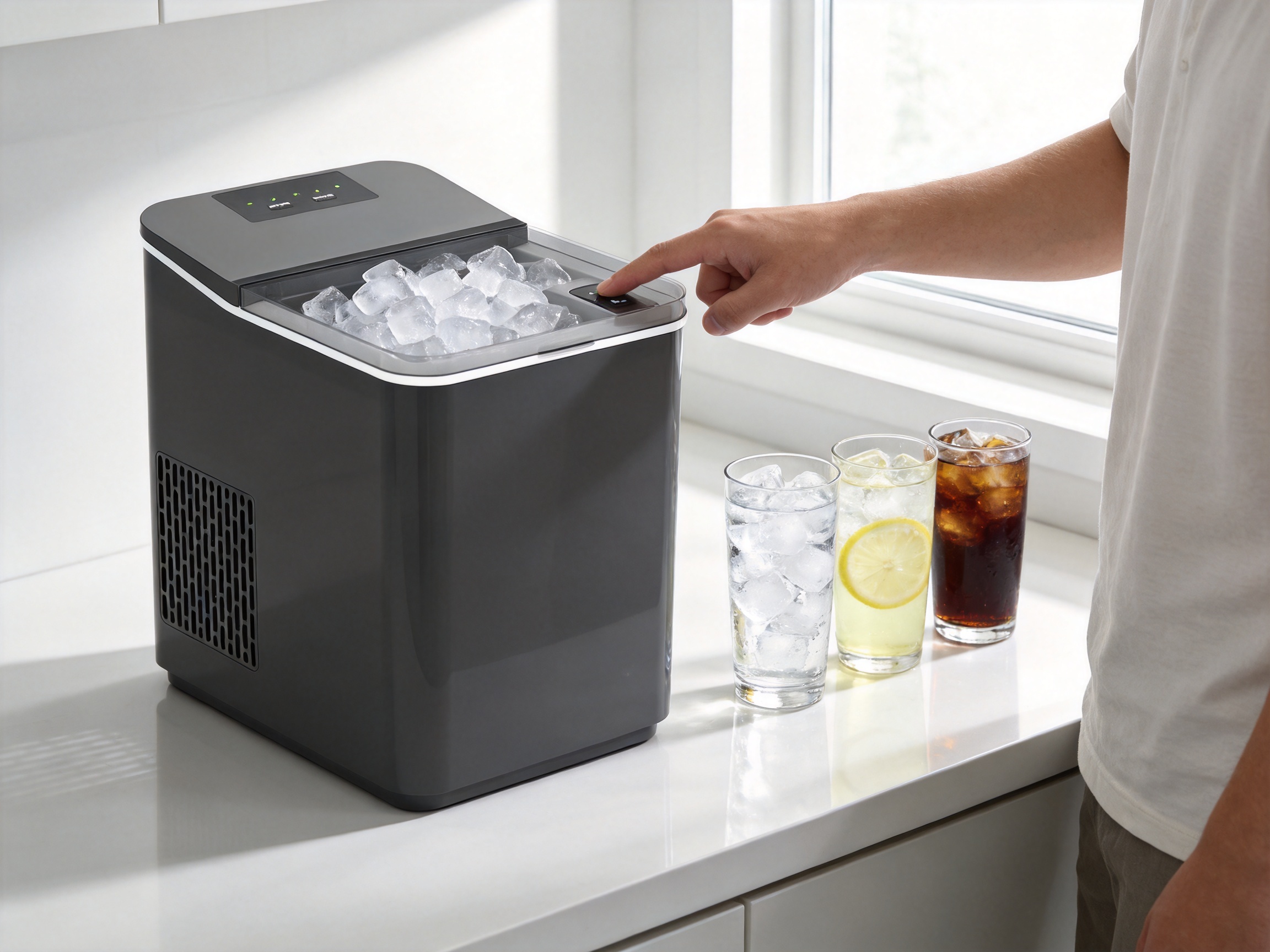
Alien Technology Co., Ltd. is located in Zhouxiang, Zhejiang Province, an area recognized for its concentration of small household appliance manufacturing and convenient logistics. This location provides an environment in which product design, component sourcing, production coordination, quality management, and shipment preparation can be organized around the needs of international appliance markets.
The company specializes in household appliances including ice makers, coffee machines, and air fryers. This product range is strategically connected. Each category involves practical kitchen functions, compact mechanical or thermal systems, user-oriented controls, and requirements for reliable everyday operation. Experience across these categories can support a broader understanding of household appliance design and manufacturing.
The company’s stated mission is “Smart Technology, Simplifying Life, Enhancing Happiness.” This mission is reflected in the product’s emphasis on direct controls, compact construction, fast operation, energy-conscious design, and easy maintenance. Rather than treating technology as an end in itself, the company presents technology as a way to reduce daily effort and improve the user experience.
The company also emphasizes reliable quality, customer satisfaction, continuous improvement, and innovation. These principles are particularly important in the small appliance sector, where customers expect products to function consistently in ordinary homes and workplaces. A successful appliance must not only look attractive; it must also be practical to manufacture, straightforward to operate, safe when correctly used, and supportable over time.
17. Process-Oriented Product Development
Advanced manufacturing is not limited to the final assembly line. It begins with product definition and continues through design, component selection, assembly, inspection, packaging, and after-sales support. For a compact ice maker, the development process must coordinate several systems, including the refrigeration circuit, water path, control button, electrical components, cabinet structure, ice basket, insulation, and drainage or water management functions.
A process-oriented manufacturer evaluates how these systems work together. The control interface must be understandable to the user. The cabinet must provide space for the refrigeration and water components while maintaining a compact footprint. The internal surfaces must be practical to clean. The cooling system must operate within the intended power range. The assembly structure must support repeatable production and inspection.
Designing for manufacturing can also improve consistency. Components that are easy to position, connect, inspect, and replace can reduce variation between units. Clear production procedures help workers perform the same steps in a repeatable sequence. Inspection points can then be established for electrical connections, structural fit, water sealing, control response, and refrigeration-related requirements.
Because the company works across ice makers, coffee machines, and air fryers, it can apply lessons from multiple appliance categories. For example, water handling experience from beverage appliances may inform reservoir and cleaning considerations, while thermal management experience from cooking appliances can contribute to broader process discipline. The specific internal production methods remain subject to the company’s technical and quality documentation, but the product portfolio demonstrates a focused orientation toward small household appliances.
18. Quality Considerations for Ice Maker Production
Quality in an ice maker involves more than external appearance. The machine must be assembled so that water remains in the intended path, electrical components are properly connected, controls respond correctly, and cooling functions operate as designed. The ice basket and interior surfaces should fit securely and remain accessible for cleaning.
Production quality can be supported by incoming material inspection, process checks, functional testing, and final product evaluation. Incoming inspection helps ensure that key components meet the required specifications. Process checks help identify problems before the unit is fully assembled. Functional testing can confirm that the control button, water system, cooling cycle, and ice release sequence operate correctly.
Final inspection may include checks of dimensions, external finish, labeling, power specifications, packaging, and operating performance. For export-oriented products, documentation and labeling should also correspond to the target market’s requirements. Electrical compatibility is particularly important because the listed product is specified for 220V–240V and 50Hz operation.
Consistent inspection helps protect both the customer and the manufacturer. Customers receive a product that is more likely to perform reliably, while the manufacturer can identify trends, improve production procedures, and reduce avoidable returns. This supports the company’s stated commitment to continuous improvement and customer satisfaction.
19. Materials, Assembly, and User-Centered Design
Everyday appliances benefit from materials that are appropriate for their environment. An ice maker must tolerate repeated contact with water, temperature changes, routine cleaning, and frequent handling of the basket. Its external housing should protect internal components while remaining easy to wipe. Internal surfaces should support hygienic maintenance and minimize unnecessary accumulation of residue.
Assembly quality is equally important. The machine’s compact size means that components must be arranged efficiently. Designers and production engineers must consider access during assembly, the routing of wires and tubes, vibration control, and the relationship between the water system and refrigeration system. A well-organized internal structure can make production more consistent and service work more manageable.
User-centered design is visible in the product’s main features. The one-touch button reduces operating complexity. Multiple ice sizes increase flexibility. The removable basket supports serving and cleaning. Compact dimensions help with placement. Quiet operation improves comfort. These features demonstrate that the product is designed around common user priorities rather than around technical specifications alone.
20. Responsible Use and Installation Guidance
Users should place the ice maker on a stable, level, and dry surface. Adequate clearance should be maintained around the machine to support ventilation. The appliance should be connected only to a suitable 220V–240V, 50Hz supply and should not be used with an incompatible power source.
Before first use, the machine should be cleaned according to the supplied instructions. The water reservoir should be filled only to the recommended level, and the ice basket should be positioned correctly. Users should avoid overfilling, moving the unit unnecessarily during operation, or blocking ventilation openings.
Because the product contains a refrigeration system using R600a, it should be kept away from open flames and excessive heat. The refrigeration circuit should not be punctured, modified, or repaired by unqualified individuals. If the appliance shows unusual leakage, damage, burning odor, or electrical behavior, it should be disconnected and inspected by an appropriate service professional.
These practices are not unique to this product; they are standard considerations for many compact refrigeration appliances. Proper use supports safety, reliable production, and a longer working life.
21. Maintenance Practices for Long-Term Performance
Regular cleaning is one of the most effective ways to protect the appliance. At suitable intervals, users should empty the ice basket, remove remaining water as directed, clean accessible surfaces, and dry the interior. The basket should be washed and rinsed with appropriate materials before being returned to the machine.
Water quality should also be considered. Hard water can leave mineral deposits that may affect appearance, flow, and performance. If descaling is recommended, users should use only the method and product approved by the manufacturer. Homemade cleaning mixtures should not be used unless specifically permitted in the official instructions.
The exterior should be wiped with a soft, damp cloth and kept dry around electrical connections. The appliance should not be immersed in water. Abrasive pads and aggressive chemicals may damage the surface or leave residues that are unsuitable for an ice-making environment.
When the machine will not be used for an extended period, it should be cleaned, drained, dried, and stored according to the instructions. Proper storage is especially important in humid environments or during transport.
22. Purchasing Considerations for Buyers
Customers evaluating the Button-Operated Ice Maker should first consider their expected ice demand. The appliance is well suited to personal, household, office, mobile, and small supplementary commercial use. Buyers who require continuous high-volume production should compare the product with larger commercial systems and confirm whether its capacity meets their operational needs.
Electrical compatibility is another essential consideration. The listed supply specification is 220V–240V at 50Hz. Buyers should verify that their location and electrical installation match these requirements. They should also review available counter space, ventilation clearance, water access, and the preferred location of the ice basket during service.
Other useful questions include whether multiple ice sizes are needed, how frequently the unit will be cleaned, whether noise is a concern, and whether the appliance will be moved between locations. A product that matches the user’s actual environment is more likely to provide long-term satisfaction than one selected only by appearance or advertised speed.
23. Why the Product Offers a Balanced Competitive Position
The Button-Operated Ice Maker competes through balance rather than through a single extreme specification. Its value comes from the combination of rapid cycle production, straightforward controls, multiple ice sizes, compact dimensions, modest rated power, quiet operation, and convenient maintenance features.
Against traditional ice trays, it offers faster access and less dependence on freezer space. Against complex smart appliances, it provides a simpler and more direct user experience. Against large commercial systems, it requires less space and is more appropriate for moderate demand. Against basic countertop machines, its attention to quiet operation, user accessibility, and cleaning convenience can make it more attractive for shared environments.
The company’s specialization in household appliances further supports this market position. Its product categories are connected to practical daily routines, and its stated focus on humanized design and reliable quality is consistent with the needs of users who expect an appliance to work without unnecessary complexity.
24. Frequently Asked Questions
Q1. What type of ice does the machine produce?
The product is a bullet ice maker. It is designed to produce bullet-shaped ice suitable for water, soft drinks, cocktails, smoothies, food cooling, and general household use.
Q2. How quickly can it make ice?
The stated production time is approximately six to ten minutes per cycle. Actual timing can vary according to water temperature, room temperature, ventilation, selected ice size, and other operating conditions.
Q3. Is the machine difficult to operate?
No. The appliance is designed around one-touch button operation. Users should follow the supplied instructions for filling the water reservoir, selecting any available ice size, starting production, and removing the finished ice.
Q4. Can the ice maker produce different ice sizes?
The product information identifies multiple ice sizes as a key feature. The exact choices and selection procedure should be confirmed in the operating documentation supplied with the unit.
Q5. Where can the ice maker be used?
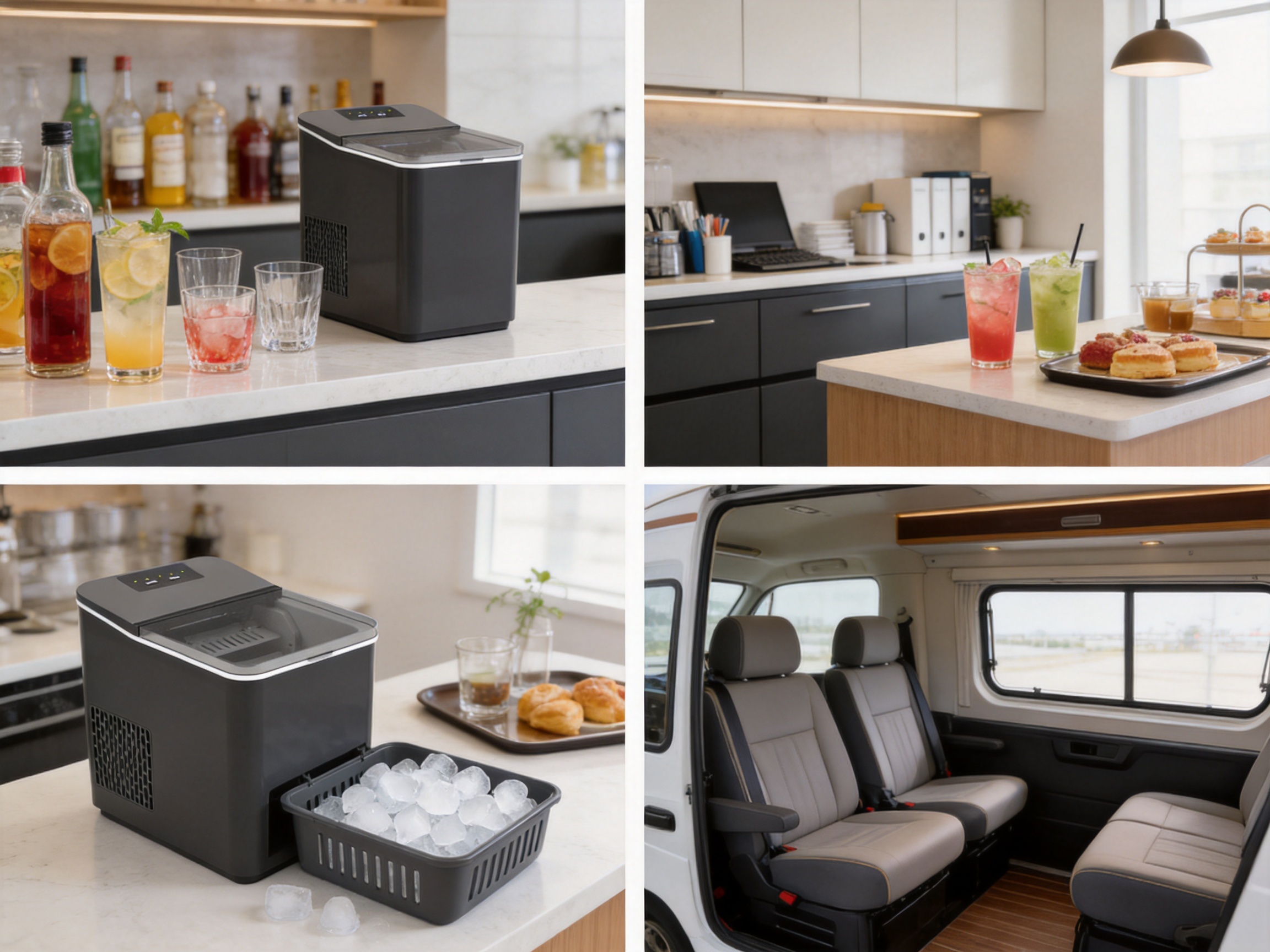
It is designed for homes, offices, bars, recreational vehicles, parties, beverage stations, and small commercial spaces. The installation environment must provide a stable surface, suitable ventilation, and the correct electrical supply.
Q6. What power supply does the machine require?
The listed power supply is 220V–240V at 50Hz. Buyers should confirm compatibility with their local electrical system before purchase or operation.
Q7. How much power does it use?
The stated current and power are 0.9 amperes and 150 watts. Actual energy consumption depends on operating time, ambient conditions, water temperature, and the frequency of ice-making cycles.
Q8. What refrigerant does the machine use?
The listed refrigerant is R600a, with a stated charge of 19 grams. The refrigeration circuit should not be opened or repaired by unqualified persons.
Q9. Is the machine suitable for a large restaurant?
The product is presented for homes, offices, bars, RVs, and small commercial spaces. A large restaurant should compare its required daily volume with the machine’s official production capacity and consider a higher-capacity commercial system if necessary.
Q10. How should the appliance be cleaned?
Users should empty unused ice, drain water as instructed, clean the removable ice basket, wipe the smooth interior surfaces, and maintain the exterior with suitable materials. The official cleaning instructions should always take priority.
Q11. Can ordinary tap water be used?
Users should use potable water that is suitable for ice production. In areas with hard water, mineral buildup may occur, so cleaning and descaling should be performed according to the manufacturer’s recommendations.
Q12. Does the machine store ice permanently?
The appliance produces ice in a basket, but it should not be assumed to provide long-term frozen storage. Ice may melt over time. For longer storage, users should transfer ice to a suitable insulated container.
Q13. Is the product quiet?
The product information highlights a noise-reduction design. As with other refrigeration appliances, sound may vary during startup, cooling, water movement, and ice release. Placement on a stable surface can help reduce vibration.
Q14. What makes the product different from an ice tray?
The machine can produce ice on demand in short cycles, provides a consistent bullet shape, offers multiple size options, and does not require the same freezer space as traditional trays. It is especially useful when ice is needed regularly or at short notice.
Q15. What makes the manufacturer suitable for appliance cooperation?
Alien Technology Co., Ltd. specializes in ice makers, coffee machines, and air fryers. It is located in Zhejiang, a major small-appliance manufacturing area, and states a commitment to reliable quality, customer satisfaction, continuous improvement, innovation, and practical design.
25. Conclusion
The Button-Operated Ice Maker is designed for users who want fresh ice without the inconvenience of trays, excessive freezer use, or complex controls. Its one-touch operation makes the appliance accessible, while its stated six-to-ten-minute cycle supports quick response when ice is needed. Multiple ice sizes add flexibility for beverages and food-related uses, and the compact 313 × 226 × 309 millimeter format allows placement in kitchens, offices, bars, RVs, and other space-conscious environments.
The product also combines a 150-watt rated power design, R600a refrigeration, quiet-operation intentions, smooth interior surfaces, and a removable ice basket. These features address the practical concerns that often determine whether a small appliance is genuinely useful in everyday life: convenience, operating cost, sound, cleaning, and placement.
Its competitive position is based on balance. It is more responsive than a traditional ice tray, less complex than a feature-heavy smart appliance, and more compact than a large commercial ice system. For households and small businesses with moderate ice requirements, this balance can provide a compelling combination of usability and value.
The manufacturing background of Alien Technology Co., Ltd. reinforces the product’s purpose. With a focus on household appliances and a location within Zhejiang’s established small-appliance manufacturing environment, the company is positioned to combine practical product development, production coordination, quality awareness, and international business support. Its stated mission of using smart technology to simplify life is reflected in an ice maker that focuses on the user’s essential need: fresh, convenient ice with minimal effort.
References
1. Product specification sheet for the Button-Operated Ice Maker, model description Alien-Z03.
2. Product information supplied for the Button-Operated Ice Maker, including operating features, applications, and maintenance characteristics.
3. Technical data supplied for the product power supply, rated current, rated power, refrigerant, refrigerant charge, and machine dimensions.
4. General household appliance design principles concerning compact refrigeration, user accessibility, ventilation, cleaning, and routine maintenance.
5. General safety guidance for appliances using R600a refrigerant and mains electrical power.
6. Company profile information for Alien Technology Co., Ltd., including its product categories, manufacturing location, mission, and business principles.