
 English
 한국어
 Español
 Deutsch
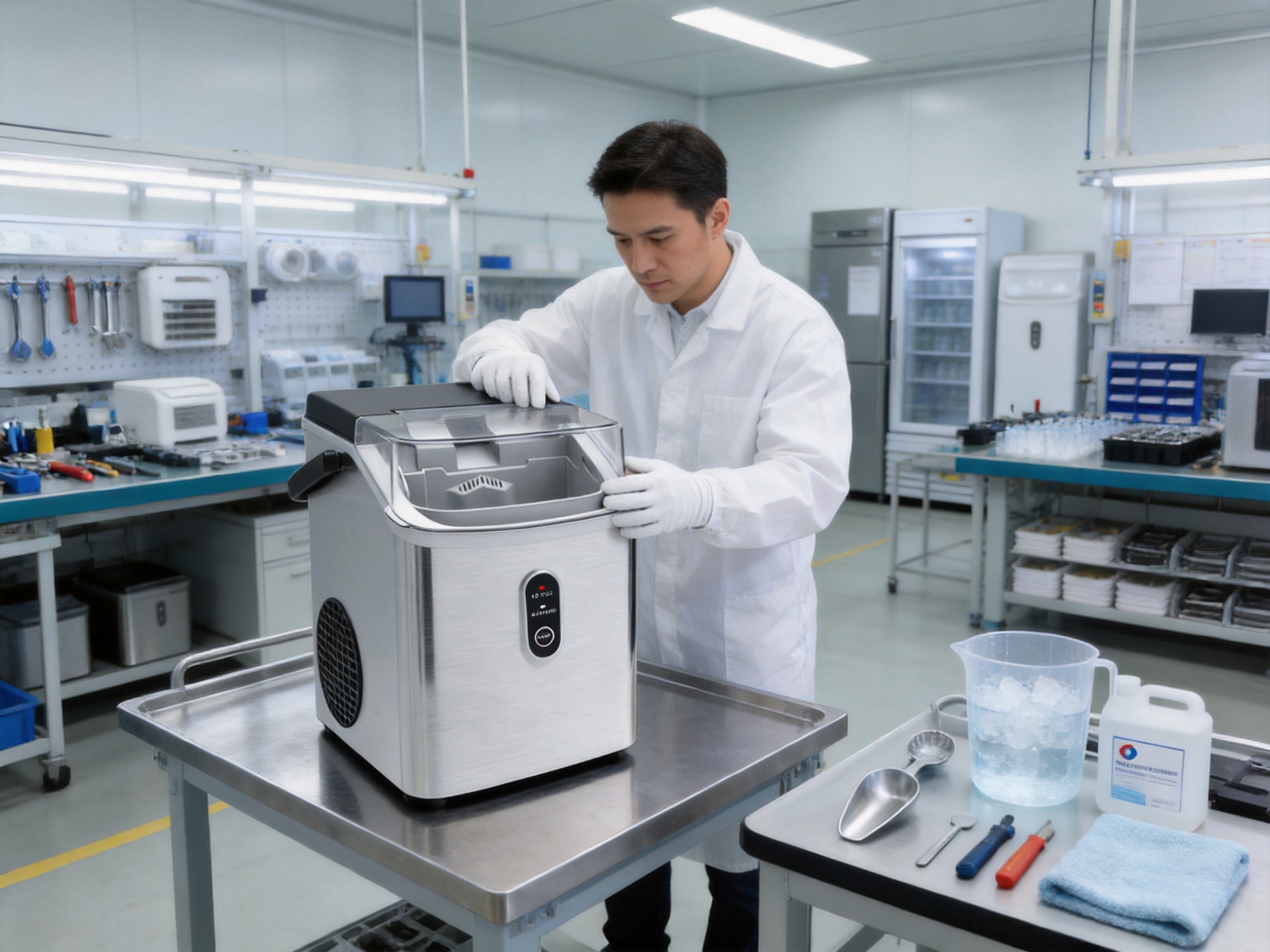
Ice is often treated as a simple household convenience, but different ice formats provide very different experiences. Large hard cubes may be attractive in a glass, while crushed ice cools quickly and blends easily into drinks. Chewing ice occupies a particularly interesting position between these two formats. It is soft enough to bite, small enough to mix, and versatile enough to support beverages, food displays, cold compresses, and frozen desserts.
The Home Chewing Ice Maker is designed around this distinctive type of ice. Identified by the model description Alien-ZJ01, it is a compact household appliance with a 130-watt power rating, a 220V/60Hz power supply, and a small footprint of 224 x 333 x 325 millimeters. Rather than focusing only on producing large, hard cubes, the machine is intended to create small, soft-textured ice that can be enjoyed directly, added to drinks, or used as a practical ingredient in the kitchen.
Its value comes from the combination of texture, cooling speed, ease of mixing, and everyday versatility. These characteristics make it a compelling alternative to conventional ice makers that produce only large cubes or standard bullet-shaped ice. It is particularly suitable for households that enjoy iced coffee, soda, smoothies, shaved ice, fruit drinks, seafood presentation, salad preparation, and other applications where ice needs to surround, coat, or quickly cool an item.
The appliance is manufactured by Alien Technology Co., Ltd., a household-appliance producer located in Zhouxiang, Zhejiang Province. The company specializes in ice makers, coffee machines, and air fryers, and operates in an area recognized for small household-appliance manufacturing and convenient logistics. Its stated mission is to use smart technology to simplify life and improve daily happiness. This product reflects that mission by concentrating advanced appliance functionality into a relatively compact machine designed for practical home use.
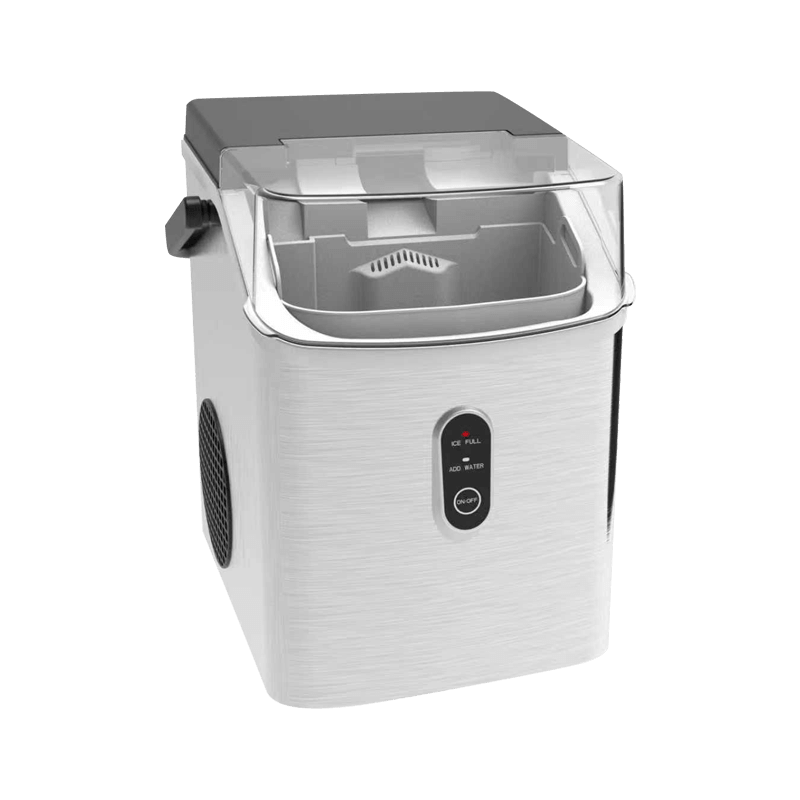
Home chewing ice maker
1. Understanding Chewing Ice
Chewing ice is different from the hard, dense cubes commonly produced by traditional refrigerator ice trays. Its defining quality is a softer, more delicate structure that is pleasant to bite. Instead of cracking sharply like a solid cube, chewing ice provides a lighter, gentler texture and a satisfying crunch. Many people appreciate it as a snack-like part of a cold drink rather than merely a tool for lowering beverage temperature.
The texture also influences how the ice behaves in the kitchen. Small particles have more exposed surface area than large cubes. When placed in a drink, they contact a greater volume of liquid and can lower the temperature rapidly. When stirred into coffee, soda, juice, or a smoothie, the pieces disperse quickly rather than remaining as separate blocks. When placed over food, the ice can form a more continuous layer around the item, helping with cooling and presentation.
These properties explain why chewing ice has become popular in cafés, restaurants, convenience stores, healthcare settings, and homes. It can serve several functions at once: a refreshing edible texture, an efficient cooling medium, a visual presentation element, and a flexible ingredient for cold recipes.
Softness and Comfort
The most direct advantage of chewing ice is the eating experience. Hard cubes can be uncomfortable to bite and may require a long time to soften. Chewing ice is designed for a gentler experience. Its soft texture is more accommodating for people who prefer to chew ice as part of a beverage or snack.
This does not mean that every user should bite ice regardless of personal dental conditions. Anyone with sensitive teeth, dental restorations, or specific medical advice should follow the guidance of a qualified dental or medical professional. Nevertheless, compared with dense conventional cubes, the soft format is naturally more suitable for users who want a lighter, more delicate texture.
Fast Beverage Cooling
Surface area is central to the cooling performance of small ice. A large cube has a relatively low surface-area-to-volume ratio. Small particles expose more of their total mass to the surrounding beverage. As a result, they can transfer cold into the drink quickly, especially when the beverage is stirred.
This is useful for iced coffee, soda, fruit punch, tea, and other drinks that need to become cold without waiting several minutes. The small format also makes it easier to distribute ice throughout a glass or pitcher. Instead of having a few large pieces concentrated in one location, the drink can contain a more even layer of cooling particles.
Easy Mixing
Chewing ice is easy to scoop and blend. A spoon or scoop can move it into a cup, bowl, blender, or serving container without the resistance associated with large hard cubes. This is valuable when preparing smoothies, frozen beverages, shaved-ice-style desserts, and mixed drinks.
Because the particles are small and soft, they can combine with other ingredients more readily. They can be stirred into a beverage, folded into a cold preparation, or used as a base material for a chilled recipe. This gives the machine a broader role than an appliance that produces ice for drinks only.
2. Product Overview and Technical Specifications
The Home Chewing Ice Maker is configured as a compact household machine. Its dimensions are 224 x 333 x 325 millimeters, allowing it to fit on many kitchen counters, beverage stations, utility surfaces, or small commercial preparation areas. Users should still measure the intended location and allow additional clearance for ventilation, power access, water filling, cleaning, and operation.
Product | Home Chewing Ice Maker |
Model description | Alien-ZJ01 |
Product category | Chewing Ice Maker |
Power supply | 220V/60Hz |
Current and power | 0.55A/130W |
Refrigerant and charge | R600a/19g |
Machine dimensions | 224 x 333 x 325 millimeters |
Primary intended use | Production of soft, chewable ice for beverages, food preparation, cooling, and frozen recipes |
The listed 130-watt rating indicates a relatively modest electrical requirement for a refrigeration-based countertop appliance. Actual energy use can vary according to ambient temperature, water temperature, operating duration, airflow, and usage pattern. The 220V/60Hz specification should be checked against the electrical standard of the intended installation area before purchase or operation.
The machine uses R600a refrigerant with a stated charge of 19 grams. R600a is a refrigerant commonly used in certain modern refrigeration appliances. Because it is flammable, the product should be handled, installed, serviced, and disposed of according to applicable safety requirements. Users should not open the sealed refrigeration system or attempt refrigerant repairs themselves.
The compact dimensions and low power category support the appliance’s role as a convenient household machine. It does not require the space associated with a large restaurant ice system, yet it can provide a specialized ice format that is difficult to reproduce consistently with a freezer tray or manual crushing method.
3. Advantages Over Conventional Ice-Making Methods
Many households obtain ice in one of three ways: freezing water in trays, buying bags of ice, or using a refrigerator ice dispenser. Each method has limitations. Trays require planning and freezer space. Purchased ice creates storage and transportation inconvenience. Refrigerator dispensers may produce hard cubes or crushed ice but do not necessarily deliver the soft, chewable texture associated with this product category.
Compared with Ice Trays
Ice trays are inexpensive, but they require manual filling, freezing time, removal, and storage. They also produce a fixed shape that may not be suitable for every drink or recipe. If the user needs more ice than the tray can hold, the process must be repeated. A dedicated chewing ice maker is designed to make the desired format directly, reducing dependence on repeated tray cycles.
The advantage is especially noticeable for gatherings. A household preparing iced coffee, cold tea, smoothies, or soft drinks for several people can use one specialized appliance instead of filling and emptying multiple trays. The machine also eliminates the need to break or crush hard cubes manually, an approach that can create uneven pieces and unnecessary mess.
Compared with Conventional Cube Makers
Traditional countertop cube makers are often optimized for recognizable cubes, bullets, or other hard shapes. These forms are useful when a drink needs long-lasting ice, but they are not always ideal for immediate chewing or rapid mixing. Large cubes also take more time to blend into a smoothie or shaved-ice-style preparation.
The Home Chewing Ice Maker differentiates itself by focusing on the final texture rather than only the shape. Its purpose is to produce small, soft particles that offer a more pleasant mouthfeel and faster contact with beverages. This specialization can provide a more satisfying result for users who specifically prefer chewable ice.
Compared with Manual Crushing
Manual crushing can produce small pieces, but it is inconsistent. Some fragments may be extremely hard, while others may become watery or melt quickly. The process can also be noisy, labor-intensive, and difficult to control. A dedicated appliance provides a more repeatable method of producing a soft ice format, reducing the need for hammers, crushing bags, or high-powered manual tools.
Repeatability is important for both home users and small food-service operators. A consistent ice texture supports more predictable beverage preparation, portioning, and presentation. It also makes it easier to develop recipes that depend on a particular amount or texture of ice.
4. Beverage Applications
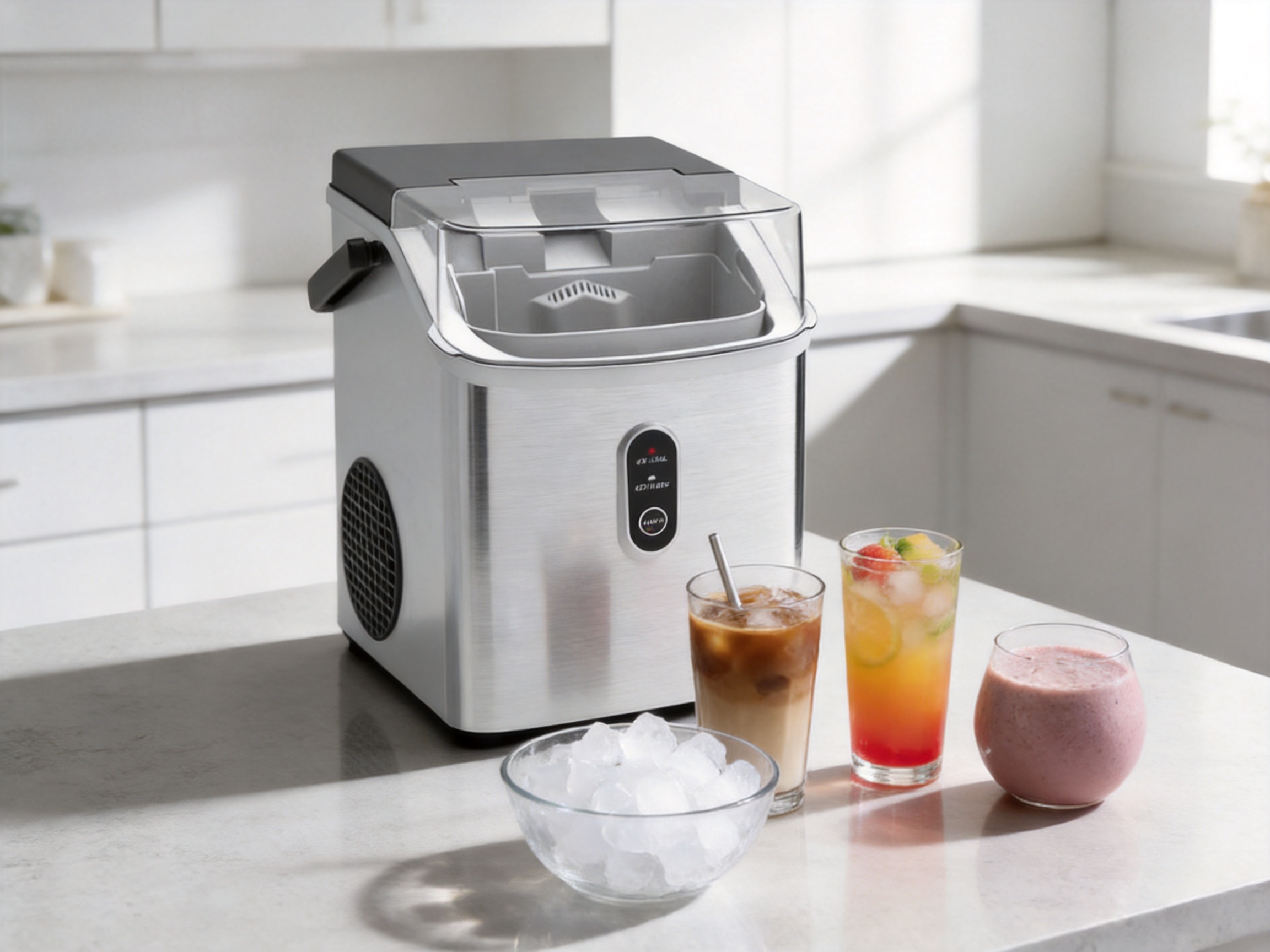
The machine is particularly well suited to beverages. Its ice can be used in iced coffee, soda, fruit drinks, tea, mocktails, cocktails, milk-based drinks, and blended recipes. Because the pieces are small, they can spread through the beverage and cool it quickly. Because the texture is soft, the ice can remain part of the drinking experience rather than being discarded at the end.
Iced Coffee
Iced coffee benefits from ice that cools quickly without requiring large, hard pieces. Chewing ice can be added to freshly prepared coffee after the coffee has been allowed to cool slightly. The small particles create broad contact with the liquid, helping produce a cold drink efficiently.
Users should consider the balance between cooling and dilution. Any ice eventually melts, so strong coffee or concentrated coffee bases may be useful when preparing a drink over a longer period. The soft particles are also easy to stir with milk, cream, syrup, or flavoring.
Soda and Sparkling Drinks
Chewing ice can provide a refreshing texture in soda and sparkling beverages. Its small size allows the drink to become cold throughout the glass. Users should add carbonated drinks carefully to avoid excessive foaming, and the ice should be handled hygienically before it comes into contact with ready-to-drink beverages.
Fruit Drinks and Tea
Fruit punch, lemonade, sweet tea, and flavored water can all benefit from small cooling particles. The ice can be distributed more evenly in a pitcher, making it useful for family meals and informal gatherings. It also creates an attractive visual effect when combined with colorful drinks, fruit slices, herbs, or edible garnishes.
Smoothies and Frozen Beverages
The soft texture makes the ice easier to scoop into a blender or mixing container. It can serve as a cooling ingredient in smoothies and frozen drinks, although users should follow the instructions of their blender manufacturer regarding ice and frozen ingredients. The amount of ice can be adjusted according to the desired thickness, sweetness, and intensity of the recipe.
5. Food Preparation and Presentation
Chewing ice is not limited to the beverage glass. Its ability to surround food makes it useful for temporary chilling and display. Restaurants, caterers, home cooks, and hosts can use it as a presentation medium for selected foods, provided that all food-contact and hygiene requirements are observed.
Salad and Vegetable Displays
Small ice particles can form a bed around vegetables in a salad bar or serving tray. The ice helps create a visually fresh display and can contribute to maintaining a cool environment during short serving periods. Vegetables should be placed in clean food-safe containers or on suitable surfaces, and melted water should be managed to prevent cross-contamination.
Seafood Presentation
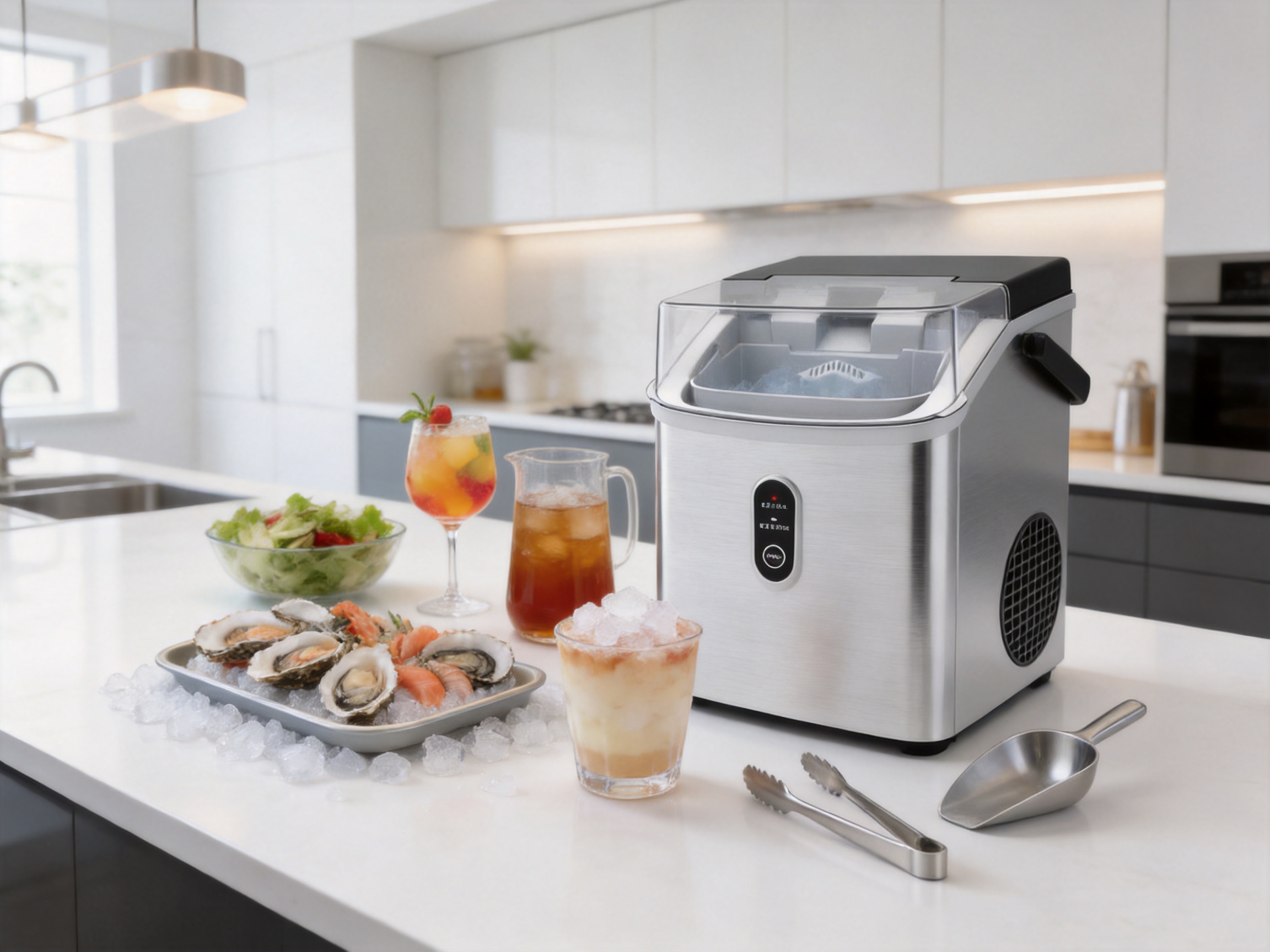
Oysters, shellfish, and other seafood items are often displayed over ice. Chewing ice can provide a smooth, close-fitting layer that supports presentation and helps maintain a chilled appearance. It is not a substitute for proper refrigeration, temperature control, or food-safety procedures. Seafood must remain within the safe temperature range recommended by local regulations and professional food-safety guidance.
Sashimi and Delicate Foods
Delicate foods such as sashimi require careful handling. Small ice can surround the serving container and create a clean, attractive presentation. The softness of the particles may help form an even layer without the sharp gaps associated with irregular crushed cubes. However, direct food contact should only occur when the ice, machine, utensils, and preparation surfaces are properly clean and suitable for that purpose.
Cold Compress Applications
The product information identifies cold compresses as another possible use. The small particles can conform more closely to the shape of a body part than large cubes. This may make them convenient for a wrapped cold pack or temporary cooling application. Ice should never be applied directly to skin for extended periods. A clean cloth or approved barrier should be used, and medical advice should be followed for injuries, swelling, or therapeutic treatment.
6. A Manufacturing Philosophy Built Around Practical Appliances
The company behind the product, Alien Technology Co., Ltd., is based in Zhouxiang, Zhejiang Province, a region associated with small household-appliance production. Its product range includes ice makers, coffee machines, and air fryers. This combination is significant because these appliances share several manufacturing requirements: compact refrigeration or heating systems, user-friendly controls, food-contact considerations, thermal management, electrical safety, and repeated daily operation.
A manufacturer working across these categories can develop practical experience in designing appliances for real household routines. Ice makers must manage water, cooling, drainage, condensation, airflow, and sanitation. Coffee machines must coordinate water movement, heating, dispensing, and cleaning. Air fryers must manage high temperatures, airflow, cooking chambers, and user protection. Experience across these products supports a broader understanding of how consumers use countertop appliances in limited spaces.
Component Integration
A compact ice maker depends on the coordinated performance of several systems. The refrigeration circuit must remove heat from water. The electrical system must provide appropriate power to the compressor and controls. The enclosure must protect internal components while allowing necessary airflow. Water-contact areas must be designed for convenient filling, production, and cleaning. The final machine must fit these elements into a small external footprint.
Good manufacturing is therefore not simply a matter of assembling parts. It involves matching components, controlling tolerances, checking connections, and ensuring that the finished product behaves consistently. The 224 x 333 x 325 millimeter form factor demonstrates the importance of spatial planning. Every internal component must be positioned so that cooling, drainage, service access, and user operation can coexist in a practical package.
Quality-Oriented Production
The company states that it pursues excellent quality, customer satisfaction, continuous improvement, and innovation. These principles are relevant to a product that may be operated repeatedly in a home environment. A quality-oriented production process typically gives attention to incoming materials, assembly accuracy, electrical connections, sealing, functional testing, appearance inspection, and packaging protection.
For a refrigeration appliance, testing may include confirming startup behavior, cooling performance, water flow, operating noise, leakage resistance, and the response of controls. Exact test methods depend on the manufacturer’s internal procedures and applicable standards. The important point is that reliable performance requires more than a successful prototype. It requires repeatable production and inspection across many units.
Humanized Design
The company’s mission emphasizes humanized design. In an ice maker, humanized design can include a manageable footprint, understandable operation, convenient access to water, easy removal of ice, simple cleaning, and clear maintenance requirements. These details matter because a product can have excellent technical performance yet become frustrating if it is difficult to use or maintain.
The chewing ice concept itself is an example of design responding to user preference. Instead of offering only a standard cube, the appliance is organized around a texture that many users find more enjoyable and versatile. It translates a familiar food-service experience into a household format.
7. Efficient Operation and Daily Convenience
One of the product’s strongest practical benefits is that it brings a specialized ice format into the home. Users do not need to rely on occasional purchases or plan freezer space around large quantities of ice. A countertop appliance can be placed near a beverage station, kitchen work area, dining room service table, or small hospitality area.
The compact dimensions support flexible placement, although the machine should always be used on a stable, level surface with adequate ventilation. The surrounding area should remain dry, clean, and free from objects that could block airflow. A dedicated location also makes it easier to maintain a consistent routine for filling, scooping, cleaning, and draining.
For families, the appliance can support different preferences at the same time. One person may enjoy chewing ice in soda, another may use it for iced coffee, and another may add it to a smoothie. During gatherings, the same machine can supply ice for drinks and contribute to a chilled serving display.
For small offices, studios, guesthouses, cafés, or boutique food businesses, a chewing ice maker can add variety to the beverage program. It may be used for specialty drinks, cold brew service, dessert preparation, or presentation. Operators should assess capacity, duty cycle, local electrical requirements, sanitation procedures, and applicable commercial regulations before using a household-oriented model in a business environment.
8. Cleaning, Hygiene, and Responsible Use
Any appliance that handles water and produces edible ice requires a consistent hygiene routine. Users should read the product instructions before operation and follow the recommended cleaning and sanitizing procedure. Water that remains in a reservoir for extended periods should not automatically be assumed to be suitable for consumption.
The exterior, water-contact components, ice collection area, scoop, and surrounding counter should be kept clean. Hands should be washed before handling the scoop or ice. The scoop should not be stored in a way that allows its handle to contact the ice. Ice intended for consumption should be protected from dust, splashes, pets, household chemicals, and other sources of contamination.
Cleaning frequency depends on usage, water quality, environmental conditions, and the manufacturer’s guidance. Hard-water deposits may accumulate over time and can affect flow or appearance. If mineral buildup, unusual odor, discoloration, leakage, or abnormal noise occurs, the appliance should be stopped and inspected according to the service instructions.
R600a refrigerant requires special care. The sealed refrigeration circuit should not be punctured, modified, or repaired by an unqualified person. The machine should be kept away from open flames and strong ignition sources during service or disposal. Electrical safety is equally important: use a properly grounded and suitable outlet, avoid damaged cords, and keep the power connection away from standing water.
9. Installation and Best-Practice Setup
Before first use, the machine should be positioned on a stable level surface. The surrounding space should permit air circulation and allow the user to open, fill, empty, and clean the appliance comfortably. A cramped installation may increase heat buildup and make routine maintenance difficult.
The specified power supply is 220V/60Hz, with a listed current and power rating of 0.55A/130W. This information should be compared with the local electrical supply. Users should not rely on an unsuitable adapter or improvised wiring. If the voltage or frequency is different, professional advice should be obtained before connection.
The water used should be clean and suitable for ice production. Water quality affects taste, appearance, mineral buildup, and maintenance requirements. If local water is very hard, users may need to follow a more frequent cleaning routine. Water should never be mixed with chemicals, flavorings, oils, or other substances unless the product instructions explicitly permit such use.
After installation, users should become familiar with the machine’s controls, production cycle, collection procedure, and cleaning access points. A short initial cleaning or discard cycle may be appropriate depending on the manufacturer’s instructions. Ice produced during setup should be handled according to the supplied guidance rather than immediately served.
10. Why the Product Stands Out in a Competitive Market
The countertop ice-maker market includes many products competing on speed, shape, capacity, appearance, and price. The Home Chewing Ice Maker takes a more specialized approach by emphasizing the texture and use of its ice. This positioning provides several points of distinction.
First, it serves users who want ice that can be chewed comfortably. A standard cube machine may cool a drink effectively, but it does not necessarily offer the same sensory experience. Second, the small particle format supports rapid beverage cooling and easy mixing. Third, the ice can be used beyond beverages, including chilled displays, cold food preparation, frozen recipes, and selected cold-compress applications.
Fourth, the appliance combines this specialized output with a compact form. A large commercial machine may provide high capacity, but it may be impractical for a home kitchen. A manual method may be inexpensive, but it lacks consistency and convenience. The product occupies a middle position: more capable than a tray or hand crusher, while more space-conscious than a full commercial system.
Its competitive strength therefore comes from focused functionality. Rather than attempting to be every kind of ice maker, it is designed around one desirable ice style and develops multiple applications from that core feature.
11. Suitable Users and Use Environments
The product is appropriate for households that regularly prepare cold beverages or enjoy chewable ice. It may be especially attractive to people who make iced coffee, cold tea, smoothies, fruit drinks, mocktails, and frozen desserts at home.
Families can use it during meals, weekends, celebrations, and warm-weather gatherings. The soft texture is appealing to users who enjoy eating the ice after finishing a drink. Hosts can also use it to create a visually attractive beverage station with different syrups, fruit, herbs, milk, and coffee ingredients.
Small offices may find it useful for shared refreshments, provided that cleaning and access policies are clearly established. Guesthouses and hospitality settings may use it as part of a self-service cold beverage area, subject to local requirements and the machine’s intended duty cycle.
Food businesses can consider the product for specialty applications, but they should not assume that a household model has the capacity or certification required for continuous commercial service. A careful assessment should include expected daily output, sanitation controls, service support, electrical installation, and the legal requirements of the operating location.
12. Maintenance as Part of Product Performance
Maintenance is not separate from performance; it helps preserve performance. A clean water pathway supports better taste and flow. A clean ice collection area supports hygienic handling. Clear ventilation helps the refrigeration system operate under appropriate conditions. Prompt attention to unusual sounds or leaks may prevent minor issues from becoming larger problems.
Users should maintain a simple schedule. Daily or frequent tasks may include wiping external surfaces, removing unused water when recommended, and keeping the scoop clean. Periodic tasks may include cleaning the reservoir, descaling suitable components, sanitizing food-contact areas, checking the power cord, and inspecting the area around the appliance.
Cleaning products should be compatible with the machine and thoroughly rinsed when required. Abrasive tools can damage surfaces, while strong unapproved chemicals may leave residues or degrade materials. The instruction manual should take priority whenever it provides a specific procedure.
If the machine is not used for an extended period, it should be emptied, cleaned, dried, and stored according to the manufacturer’s guidance. Before returning it to service, the user should inspect it for dust, odor, damage, or signs of moisture exposure.
13. Sustainability and Resource Awareness
A compact appliance can support resource awareness when it is used thoughtfully. Producing ice at home may reduce the need to purchase and transport packaged ice for routine use. Users can make only the quantity needed for a particular occasion and avoid storing large amounts in disposable bags.
Water and electricity should still be used responsibly. Users should avoid unnecessary repeated cycles, keep the machine in a suitable environment, and maintain the equipment so that it does not operate inefficiently because of blocked airflow or mineral buildup. Ice that has been exposed to contamination should not be reused for food or drinks.
End-of-life disposal should account for the electrical components and refrigerant system. The machine should be handled through an appropriate appliance-recycling or disposal channel where available. Because the product contains a refrigeration circuit, it should not be dismantled casually or placed in ordinary waste without checking local requirements.
14. Business and Cooperation Potential
Alien Technology Co., Ltd. welcomes contact from new and existing customers for business cooperation. Its location in Zhejiang provides access to a region with established small-appliance manufacturing capabilities and convenient logistics. This can be relevant to distributors, importers, private-label buyers, hospitality suppliers, and retailers seeking household ice-making products.
Potential partners may evaluate the machine according to their target market. Important considerations can include voltage and frequency compatibility, packaging, language requirements, warranty arrangements, spare parts, after-sales support, product labeling, safety documentation, minimum order quantities, and regional compliance.
The company’s broader product categories, including ice makers, coffee machines, and air fryers, may also support retailers that want to develop a coordinated small-appliance assortment. A supplier able to discuss multiple countertop-appliance categories can help buyers build a more consistent product range for kitchens, beverage areas, and lifestyle retail channels.
Successful cooperation depends on clear technical communication. Buyers should request current specifications, operating instructions, test documentation, packaging details, and shipment information before finalizing an order. The stated product specifications in this article should be confirmed against the latest official documentation for the intended market.
15. Frequently Asked Questions
Q1. What type of ice does this appliance produce?
It is designed to produce soft, small, chewable ice rather than only large, hard cubes. The texture is intended to be gentle to chew and easy to mix into beverages and recipes.
Q2. Why does small ice cool drinks quickly?
Small ice particles expose more surface area to the surrounding liquid. This allows heat to transfer from the beverage to the ice more efficiently, particularly when the drink is stirred.
Q3. Can the ice be used in iced coffee?
Yes. Iced coffee is one of the product’s intended applications. The ice can cool the drink quickly and can be stirred easily with coffee, milk, cream, or syrup.
Q4. Can it be used for smoothies?
The ice can serve as an ingredient in smoothies and other frozen beverages. Users should follow their blender’s instructions regarding ice and frozen ingredients and adjust the quantity according to the desired consistency.
Q5. Is the ice suitable for seafood or sashimi displays?
It can be used as a chilled presentation medium for seafood and delicate foods when appropriate hygiene and temperature-control procedures are followed. It does not replace refrigeration, and all local food-safety requirements must be observed.
Q6. Can the ice be used as a cold compress?
The small particles can conform to body contours and may be placed in a suitable wrapped cold pack. Ice should not be applied directly to skin for prolonged periods. Medical guidance should be followed for injuries or therapeutic use.
Q7. What are the electrical specifications?
The supplied product information lists a power supply of 220V/60Hz and current/power of 0.55A/130W. These specifications should be verified for the intended market and compared with the local electrical supply before operation.
Q8. What refrigerant does the machine use?
The listed refrigerant is R600a, with a stated charge of 19 grams. Because R600a is flammable, the refrigeration circuit should only be serviced by qualified personnel using appropriate procedures.
Q9. How large is the machine?
The listed dimensions are 224 x 333 x 325 millimeters. Users should provide additional surrounding space for ventilation, cleaning, water access, and safe operation.
Q10. How is this product different from a regular ice maker?
A regular ice maker may focus on producing hard cubes or other solid shapes. This appliance focuses on soft, chewable ice that cools quickly, mixes easily, and can be used in beverages, food presentation, frozen recipes, and selected cooling applications.
Q11. What kind of maintenance does it need?
It requires regular cleaning of water-contact and ice-contact areas, proper handling of the scoop, attention to water quality, and periodic inspection for mineral buildup, odors, leaks, or unusual operation. The supplied manual should determine the exact cleaning schedule.
Q12. Who manufactures the product?
The product is manufactured by Alien Technology Co., Ltd., a Zhejiang-based household-appliance company specializing in ice makers, coffee machines, and air fryers.
Conclusion
The Home Chewing Ice Maker offers a focused solution for people who want more than ordinary frozen cubes. Its soft texture creates a satisfying chewing experience, while its small particle size supports fast cooling, easy mixing, and broad kitchen use. It can improve iced coffee, soda, tea, smoothies, fruit drinks, frozen desserts, chilled food displays, and selected cold-compress applications.
Its technical profile reinforces its countertop character. With listed dimensions of 224 x 333 x 325 millimeters, a 130-watt power rating, a 220V/60Hz supply, and an R600a refrigeration system, it is designed as a compact specialized appliance. Users must confirm electrical compatibility, follow safety instructions, and maintain the machine carefully to protect hygiene and long-term performance.
The product’s greatest competitive advantage is specialization. It does not merely freeze water; it creates an ice format with a distinctive texture and a wide range of practical uses. Compared with trays, manual crushing, and conventional hard-cube machines, it offers greater consistency and a more enjoyable user experience for people who specifically prefer chewable ice.
Behind the product is a manufacturer focused on household appliances, humanized design, reliable quality, continuous improvement, and practical innovation. Its location in Zhejiang’s small-appliance manufacturing region supports production experience and logistics access, while its range of ice makers, coffee machines, and air fryers reflects an understanding of everyday countertop equipment.
For homes, beverage stations, hospitality settings, and selected food-service applications, the machine provides a convenient way to bring soft, versatile ice into daily routines. When combined with proper cleaning, safe operation, responsible water and energy use, and suitable food-handling practices, it can become a valuable addition to modern kitchen life.
References
Alien Technology Co., Ltd. Product Specification Sheet: Home Chewing Ice Maker, Model Description Alien-ZJ01.
Alien Technology Co., Ltd. Company Profile and Product Category Information.
General principles of refrigeration appliance operation, electrical safety, and refrigerant handling.
General food-safety guidance for ice production, seafood presentation, chilled foods, and food-contact surfaces.
General household appliance maintenance practices for water systems, refrigeration units, and countertop equipment.