
 English
 한국어
 Español
 Deutsch
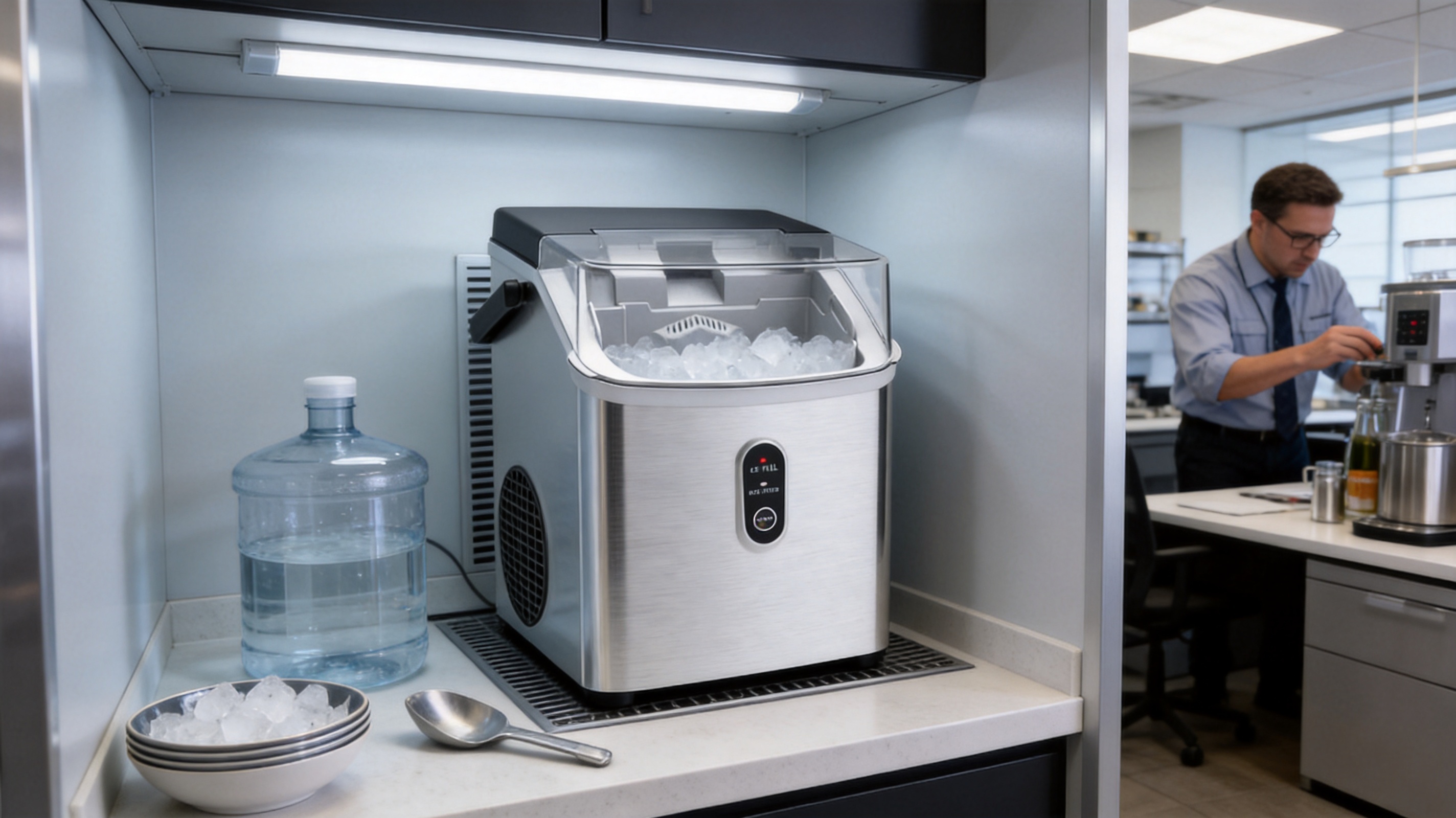
Ice is often treated as a simple accessory to a drink, yet the type, size, texture, and melting behavior of ice can significantly influence the entire drinking experience. Large, hard cubes may cool a beverage effectively, but they are not always comfortable to chew, easy to scoop, or suitable for food presentation. Fine crushed ice may melt too quickly and become difficult to handle. A compact chewable ice maker addresses these limitations by producing soft, small-format ice designed for direct chewing, rapid cooling, food display, cold compresses, and blended beverages.
The Home Chewing Ice Maker, identified by the product description as Alien-ZJ01, is designed around this more flexible approach to ice production. Its primary purpose is to create a soft, chewable ice texture that is gentle on the teeth and pleasant to enjoy. At the same time, its small particle size gives the ice a large contact area, allowing it to cool beverages quickly. The machine is compact enough for household use while offering a range of applications that extend well beyond a standard ice cube tray.
Manufactured by Alien Technology Co., Ltd., a Zhejiang-based household appliance producer, the unit reflects the company’s experience in ice makers, coffee machines, air fryers, and other small domestic appliances. The product combines a focused ice-making function with compact dimensions, moderate power consumption, and a design intended to simplify regular use. Its value lies not only in making ice, but also in producing a particular kind of ice that can improve convenience, comfort, presentation, and beverage preparation.
Understanding the Chewable Ice Concept
Traditional ice cubes are usually formed as dense blocks. Their hardness makes them durable and slow to melt, but it also makes them less comfortable to chew. They can be difficult to break with a spoon, inconvenient to mix into a drink, and unsuitable for people who prefer a softer texture. Chewable ice takes a different approach. Instead of emphasizing maximum hardness and long-lasting geometric form, it emphasizes texture, flexibility, and a satisfying mouthfeel.
The ice produced for this type of application is generally associated with smaller particles and a softer structure. This allows users to bite it more comfortably and creates the characteristic pleasant sound and texture that many people associate with chewable ice. The texture is the product’s defining feature. It is not simply ordinary ice that has been crushed after freezing; the goal is to create an ice format that is naturally more manageable for eating and mixing.
For households, the difference is noticeable in daily routines. A person can add a handful of soft ice to a cup of iced coffee, scoop it into a soft drink, use it as a base for a smoothie, or enjoy it directly. Children and adults may appreciate the texture for different reasons, while anyone who finds large hard cubes inconvenient may find small chewable ice easier to handle.
The ice format is also practical from a preparation standpoint. Because the particles are small, they can be distributed throughout a beverage instead of remaining in a few large blocks. This helps cool more of the liquid at once and can make the drink feel colder sooner. The ice can also be spooned into containers, bowls, food displays, and serving dishes without requiring a mallet, crusher, or specialized scoop.
Core Product Specifications
The Home Chewing Ice Maker is designed as a relatively compact household appliance. Its stated dimensions are 224 x 333 x 325 millimeters, giving it a footprint that can fit on many kitchen counters, beverage stations, office refreshment areas, and home entertainment spaces. The machine is smaller than many commercial ice systems and is intended for users who want dedicated ice production without allocating a large amount of floor or counter space.
Product Attribute |
Specification |
Practical Significance |
Product type |
Home chewable ice maker |
Designed for household beverage and food applications |
Model description |
Alien-ZJ01 |
Identifies the product series and configuration |
Power supply |
220V/60Hz |
Requires compatibility with the local electrical system |
Current and power |
0.55A/130W |
Indicates a moderate electrical demand for household operation |
Refrigerant and charge |
R600a/19g |
Uses isobutane refrigerant with the stated charge |
Machine dimensions |
224 x 333 x 325 mm |
Supports placement in compact kitchen and beverage areas |
Main ice characteristic |
Soft, small-format, chewable ice |
Suitable for direct chewing, rapid cooling, mixing, and presentation |
The listed 130-watt power rating positions the machine within the range of compact domestic refrigeration appliances. Actual energy use will depend on operating duration, ambient temperature, ventilation, water temperature, and usage patterns. Nevertheless, the stated rating suggests that the appliance is designed with household practicality in mind rather than the high electrical demand associated with large commercial ice-production equipment.
The use of R600a refrigerant is another important specification. R600a, or isobutane, is widely used in modern refrigeration equipment because it can provide efficient cooling performance with a relatively low refrigerant charge. As with all appliances using flammable refrigerants, installation, servicing, ventilation, and disposal should follow applicable safety requirements and the manufacturer’s instructions. The stated 19-gram charge demonstrates that the product uses a compact sealed refrigeration system appropriate to its small form factor.
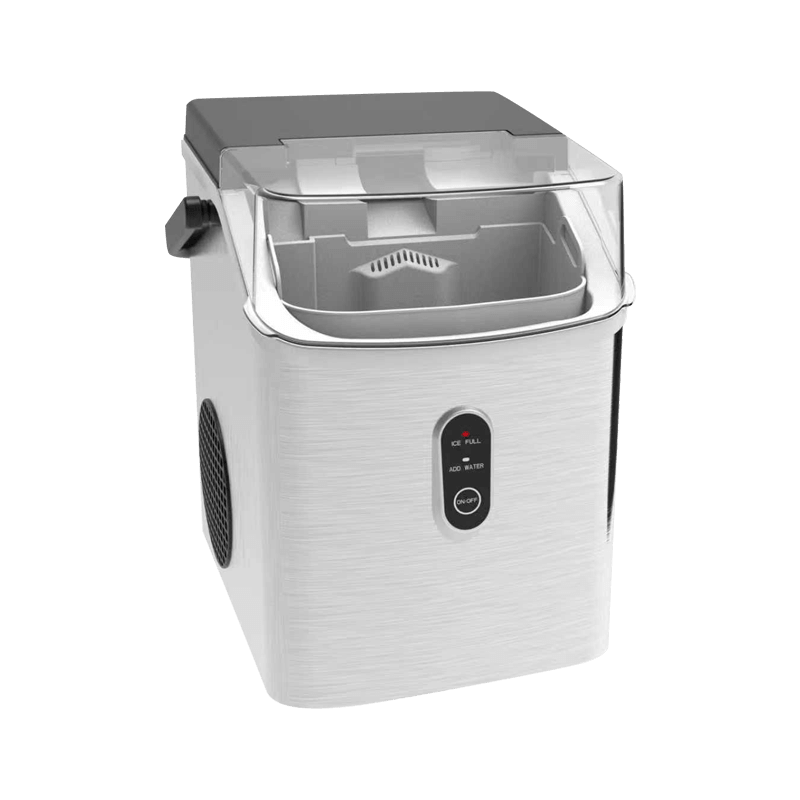
Home chewing ice maker
Rapid Cooling for Everyday Drinks
One of the strongest functional advantages of small-format chewable ice is its large surface area relative to its volume. When ice is divided into smaller particles, more of the ice comes into direct contact with the surrounding liquid. This allows heat to transfer from the beverage into the ice more quickly than it would with a small number of large, smooth cubes.
This rapid cooling characteristic is particularly useful for iced coffee. Coffee is often brewed warm and then cooled quickly to preserve convenience without waiting for a long period. Adding chewable ice can reduce the beverage temperature promptly while also creating a pleasing texture. The ice can be mixed into the coffee, allowing the drink to cool more evenly throughout the cup.
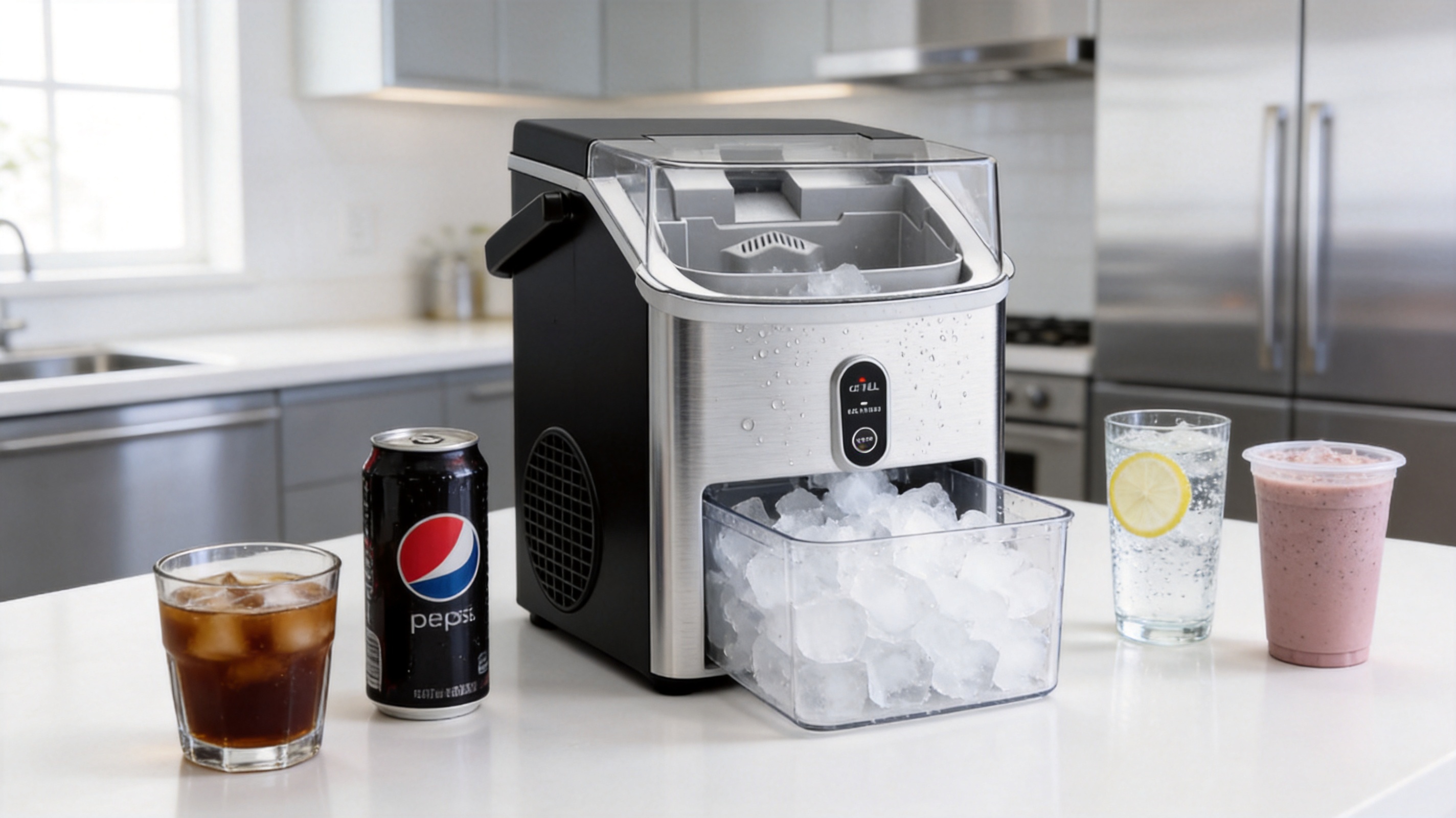
Carbonated drinks benefit in a similar way. Soda, flavored sparkling water, and other chilled beverages can reach a refreshing temperature soon after serving. Because the ice is small and easy to distribute, users can adjust the amount according to the drink size and their preferred level of coldness.
Small-format ice is also useful when preparing drinks for guests. A host can place a bowl or container of chewable ice near a beverage station, allowing people to add as much as they want. This is more flexible than offering only large cubes, which may require special tongs or may not fit comfortably into narrow glasses and bottles.
The rapid cooling advantage should not be confused with unlimited cooling capacity. All ice melts as it absorbs heat, and the speed of cooling depends on the temperature and volume of the drink, the quantity of ice, the container, and the surrounding environment. The benefit of this product is that its ice is well suited to quick contact and rapid temperature reduction, not that it eliminates the physical limits of refrigeration.
A More Enjoyable Chewing Experience
The central selling point of this appliance is the texture of its ice. Hard cubes can be unpleasant to chew, especially when they are thick, dense, or extremely cold. In contrast, softer ice particles can be bitten more easily and can provide a gentle, satisfying texture. The product information emphasizes that the ice is soft, comfortable on the teeth, and associated with a pleasant sound and mouthfeel.
This feature creates an experience that extends beyond thirst relief. Some users enjoy chewing ice as part of the beverage itself. The ice becomes an element of the drink, much like tapioca pearls, fruit pieces, jelly, or other textured ingredients. It can make a familiar soda, coffee, or fruit drink feel more interesting without requiring additional flavoring or preparation.
Soft chewable ice may also be easier to portion. Instead of waiting for a large cube to melt or attempting to break it apart, a user can take a spoonful and add precisely the desired amount. This is especially convenient for children, older family members, and anyone who prefers not to handle hard or sharp ice pieces.
However, individual preferences vary, and no ice texture is suitable for every person. Users with dental sensitivity or specific oral-health concerns should follow advice from a dental professional. The product’s soft texture is intended to make ice more comfortable to chew, but it should not be interpreted as a medical product or as a guarantee of suitability for every dental condition.
Versatility Beyond Ordinary Ice Cubes
A conventional ice maker is often judged by one question: how many cubes can it produce? A chewable ice maker invites a broader evaluation. Its ice can be used directly in drinks, mixed into recipes, incorporated into blended beverages, or arranged around food for cooling and presentation. This versatility makes the appliance useful in more situations than a machine focused solely on hard cubes.
Iced Coffee and Cold Brew Drinks
Iced coffee is one of the most natural applications. The soft ice can cool freshly prepared coffee, cold brew, flavored lattes, and milk-based coffee beverages. Its small size makes it suitable for different cup shapes and enables the user to control the amount added. The texture can also complement creamy drinks by creating a cold, soft contrast against the liquid.
Soda and Refreshing Beverages
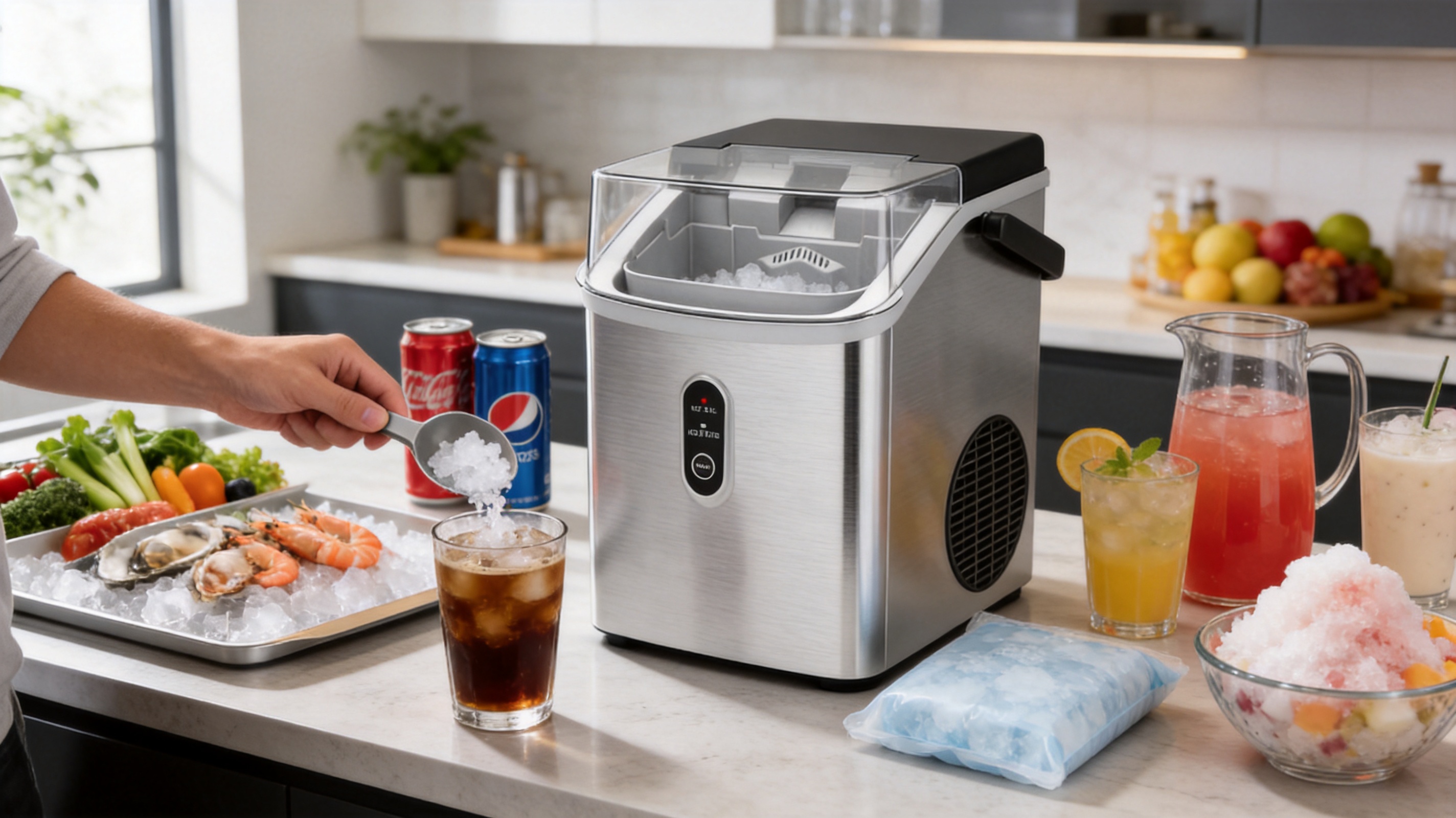
For soda, lemonade, iced tea, fruit punch, and sparkling water, chewable ice provides both temperature control and texture. It can be used for everyday drinking or placed in a serving bowl for parties and family events. The ice is easy to scoop and can be added to individual glasses without the noise and effort of crushing large cubes.
Smoothies and Blended Drinks
Small, soft ice particles can serve as a practical base ingredient for smoothies, slush-style drinks, and other chilled recipes. They can be combined with fruit, yogurt, milk, juice, or flavoring ingredients. The texture may help create a thicker, colder mixture, although users should always confirm that their blender is suitable for the intended ingredients and ice quantity.
Shaved-Ice-Style Desserts
The ice can also contribute to shaved-ice-style desserts and similar cold treats. A user may combine it with syrup, fruit, condensed milk, or other toppings. Since the product creates a smaller and softer ice format, it can reduce the need for separate crushing or shaving equipment in simple home preparations.
Food Display and Preservation
Chewable ice can be arranged around vegetables, seafood, oysters, sashimi, fruit, and prepared foods for temporary chilling and attractive presentation. Small particles can fill gaps around food more effectively than large cubes, helping create a consistent cold surface. This is useful for home entertaining, buffet-style service, small catering activities, and display counters.
Ice used around food should be handled hygienically. It should be made with potable water, stored in a clean container, and kept separate from surfaces or utensils that may introduce contamination. Ice used for display should not be returned to the machine or used as a drink ingredient after contact with raw seafood, unclean trays, or other exposed foods.
Cold Compress Applications
The product information also identifies cold compresses as an application. Small, soft particles can conform more easily to the shape of a body part than rigid cubes. When placed in a suitable clean, leak-resistant bag or wrapped appropriately, the ice may be useful for general household cooling purposes.
This use requires caution. Ice should not be applied directly to skin for extended periods, and people with circulation problems, reduced sensation, or medical conditions should seek appropriate professional guidance. The machine is a household ice appliance, not a medical device, and its cold output should be used responsibly.
Advantages Over Conventional Ice-Making Options
The product’s competitive position is based on texture and application flexibility rather than on simply replacing every kind of ice machine. A freezer tray is inexpensive and familiar, but it usually produces hard, uniform cubes and requires a long freezing period. A standard automatic cube maker may produce ice more conveniently, yet its output may still be too hard for users who prefer chewable ice. A separate ice crusher can create smaller pieces, but crushing adds noise, preparation time, and another appliance to the kitchen.
Compared with these alternatives, a dedicated chewable ice maker offers a more direct path from water to soft, ready-to-use ice. The user does not need to freeze large cubes first and then crush them. This reduces handling and makes the desired texture the default output rather than an additional preparation step.
Alternative |
Typical Strength |
Common Limitation |
Chewable Ice Maker Advantage |
Freezer ice tray |
Low purchase cost |
Slow preparation and hard cube texture |
Creates a dedicated soft ice format without manual removal from trays |
Standard cube ice maker |
Convenient automatic ice production |
Output may be hard and less comfortable to chew |
Prioritizes soft texture and small particles |
Manual ice crusher |
Can reduce existing cubes to smaller pieces |
Requires extra labor, noise, and equipment |
Produces the intended format directly |
Bagged crushed ice |
Available for occasional events |
Requires storage, transport, and repeated purchases |
Provides an at-home source for regular use |
Commercial ice system |
High output for businesses |
Larger footprint and greater investment |
Compact form suited to household and small-scale use |
Another competitive benefit is the product’s multi-purpose nature. A regular ice maker may be used only for drinks, while this model can support food presentation, smoothies, dessert preparation, and cold compress applications. This broader utility can improve the value of the appliance for households that want one compact unit to serve several everyday needs.
The compact dimensions also matter. Kitchen counters are increasingly crowded with coffee machines, air fryers, blenders, kettles, and other appliances. A smaller ice maker is easier to position beside a beverage station or store when it is not in use. Its footprint may be particularly attractive to apartment residents, office users, small cafés, guest rooms, and hospitality spaces where larger equipment would be impractical.
Manufacturing Strengths and Product Development Approach
Alien Technology Co., Ltd. is located in Zhouxiang, Cixi City, Zhejiang Province, an area recognized for its concentration of small household-appliance manufacturing and convenient logistics. This industrial environment can support access to component suppliers, production services, engineering resources, packaging providers, and transportation networks. Such proximity is valuable when a company develops appliances that combine refrigeration, electrical control, mechanical structure, molded parts, and user-facing design.
The company specializes in ice makers, coffee machines, air fryers, and related household appliances. This product range indicates experience with several demanding appliance categories. Ice makers require thermal management, water handling, insulation, electrical safety, and reliable operation. Coffee machines require heating, fluid movement, user controls, and food-contact considerations. Air fryers require airflow, temperature control, insulation, and durable housings. Experience across these categories can encourage transferable design practices and a broader understanding of daily household use.
The company describes its mission as “Smart Technology, Simplifying Life, Enhancing Happiness.” For the chewable ice maker, this philosophy can be seen in the effort to turn a specialized ice texture into an accessible home appliance. Instead of asking users to adapt to commercial-style equipment or perform several manual preparation steps, the product is designed to bring a convenient ice format directly into the kitchen.
Integrated Appliance Engineering
A compact ice maker must use its internal space efficiently. The refrigeration system, water pathway, ice-forming area, controls, insulation, housing, and electrical components must fit together without making the machine difficult to use. The stated dimensions suggest that the product development process places importance on compact integration. Achieving a useful ice-making function in a relatively small enclosure requires attention to component placement, heat dissipation, water access, and serviceability.
The use of a 130-watt system also reflects an effort to balance cooling capability with household electrical practicality. A machine must remove heat from water and release it into the surrounding environment while operating within the limits of its electrical design. Good appliance engineering involves matching the compressor or cooling components, fan or ventilation arrangement, controls, and insulation to the intended workload.
Refrigeration System Considerations
The specified R600a refrigerant and 19-gram charge indicate a compact refrigeration circuit. R600a is commonly selected in small refrigeration products because of its favorable thermodynamic characteristics and relatively low environmental impact compared with many older refrigerants. Its use requires careful design because it is flammable. Proper charging, sealed-system integrity, production testing, labeling, and service procedures are important aspects of responsible manufacturing.
A professional production process should include inspection of tubing connections, leak testing, electrical safety checks, functional cooling tests, and verification that the refrigeration circuit operates within expected parameters. These controls help protect performance and reduce the risk of defects reaching consumers. The exact factory procedures and certifications for a particular market should be confirmed with the manufacturer or distributor, but the product specifications show that refrigeration engineering is central to the design.
Quality-Oriented Production
The company states that it pursues excellent quality, customer satisfaction, continuous improvement, and innovation. For a household ice maker, these goals should translate into consistent assembly, reliable water-contact components, stable electrical connections, durable plastics, controlled insulation, and repeatable cooling performance. Product quality is not determined by one component alone. It results from the interaction of design, incoming-material inspection, assembly accuracy, testing, packaging, and after-sales support.
Consistency is particularly important for ice texture. If the water path, freezing conditions, mechanical action, or control logic varies from one cycle to another, the resulting ice may not have a stable size or softness. A quality-oriented manufacturing process therefore needs to control the conditions that affect ice formation. Even when the final product is compact, its performance depends on coordinated engineering across refrigeration, water management, and mechanical design.
Supply Chain and Logistics Advantages
Being located in a household-appliance manufacturing hub gives the company potential logistical advantages. Access to local suppliers can shorten procurement distances, make engineering communication easier, and support faster adjustments during product development. It can also help the manufacturer coordinate packaging, spare parts, shipping, and production scheduling.
Convenient logistics are especially useful for products intended for international customers. Ice makers may need different electrical configurations, packaging standards, user manuals, labels, and compliance documentation depending on the destination market. A manufacturer with experience in export-oriented appliance production can be better positioned to coordinate these requirements, although buyers should always verify the exact certification and voltage configuration needed for their country.
Designing the Product Around Real Household Behavior
Many appliances fail to deliver their full value because they are difficult to integrate into daily routines. The Home Chewing Ice Maker is most useful when it is placed where people naturally prepare drinks or serve food. A kitchen counter near a coffee machine is a logical location. An office pantry, outdoor entertainment area, guest lounge, or small refreshment counter may also benefit from the machine.
Its soft ice can reduce the need for several separate tools. A household does not necessarily need a tray for hard cubes, a crusher for smaller pieces, and a separate container for storage. The dedicated appliance focuses on the format that the user wants. This can make preparation faster and reduce clutter.
The product also supports portion control. A person can prepare a single cup of iced coffee without producing a large quantity of ice. For family gatherings, more ice can be collected and placed in a serving container. The ability to scoop small particles makes it easier to adjust quantities for different beverages and food presentations.
Because the appliance is relatively compact, it may be suitable for users who do not need the output capacity of a commercial machine. It can serve households, small offices, boutique hospitality environments, and limited-volume food service applications. Users with very high demand should compare the machine’s expected production rate and operating cycle with their needs before purchase, since the provided specifications do not state a daily output figure.
Water, Hygiene, and Responsible Operation
Ice is a food-contact product, so water quality and cleanliness are essential. Users should fill the appliance with potable water and follow the manufacturer’s instructions for filling, cleaning, draining, and storage. The water reservoir, ice-contact surfaces, scoop, and storage area should be kept clean and dry when the machine is not in use.
Regular cleaning helps prevent odor, residue, mineral buildup, and microbial growth. In areas with hard water, mineral deposits may accumulate more quickly. A suitable cleaning method should be selected according to the manufacturer’s instructions, and cleaning chemicals should never be used in a way that could leave unsafe residues on food-contact surfaces.
The machine should be placed on a stable, level surface with adequate ventilation. Refrigeration appliances release heat during operation, so surrounding clearance is important. Blocking ventilation openings, placing the unit beside a strong heat source, or operating it in an excessively hot environment may reduce performance and increase stress on the cooling system.
Users should also respect the electrical specification. The listed power supply is 220V/60Hz, and the appliance should be connected only to a compatible electrical system. Voltage and frequency requirements differ between countries and regions. A purchaser should confirm compatibility before ordering, particularly when importing the product. Improper electrical connection can damage the machine and create a safety hazard.
Because the appliance uses R600a refrigerant, users should not attempt to puncture, modify, or repair the refrigeration circuit. Any service involving the sealed cooling system should be performed by qualified personnel using appropriate procedures. The machine should also be kept away from flames and ignition sources during installation, operation, and servicing.
How the Product Fits Different Consumer Segments
Home Beverage Enthusiasts
People who regularly prepare iced coffee, cold brew, soda, fruit drinks, or smoothies may appreciate having a dedicated source of soft ice. The machine can become part of a beverage station, positioned beside a coffee machine, blender, or drinkware collection. Its texture adds variety while its small particle size supports quick cooling.
Families
Families often have different preferences. One person may want a cold drink, another may prefer to chew the ice, and someone else may use it in a dessert or smoothie. A multi-purpose ice format allows the same appliance to serve several routines. The soft texture may also be easier for children to scoop, although children should be supervised around appliances, cold food, and small pieces of ice.
Entertainers and Hosts
For gatherings, presentation is important. A bowl of chewable ice can be placed beside drinks or used around a seafood and vegetable display. Guests can serve themselves, while the host avoids repeatedly filling trays or crushing ice. The ice’s visual and tactile difference can also make a simple beverage station feel more distinctive.
Offices and Shared Spaces
Small offices, studios, salons, clinics, and reception areas may use the appliance to offer cold drinks without installing large equipment. The compact size can make it easier to place in a pantry or staff room. Shared use requires especially careful hygiene practices, including regular cleaning and clearly designated scoops or containers.
Small Hospitality and Food-Service Applications
Some boutique hospitality spaces may use chewable ice for welcome drinks, dessert preparation, buffet presentation, or room-service beverages. The product may be suitable where demand is moderate and space is limited. Businesses with continuous high-volume requirements should evaluate output capacity, duty cycle, cleaning procedures, warranty terms, and service support before selecting it as a primary ice system.
Value Created by Texture, Not Just Output
The value of this product is best understood through the experience it enables. A basic ice maker provides frozen water. A chewable ice maker provides a specific texture that affects the way a drink is cooled, consumed, served, and presented. That distinction can justify choosing this type of appliance even when another machine could produce ice at a similar general level.
Soft ice can make a drink feel more substantial. It can turn a simple glass of soda into a textured refreshment, make iced coffee more enjoyable, and give smoothies a cold foundation. It can also reduce preparation steps by eliminating the need to crush large cubes. For food presentation, the small particles can create more complete coverage around products and fit into spaces that large cubes cannot.
The compact size adds another layer of value. Consumers increasingly evaluate appliances not only by their individual function but also by how easily they fit into limited living spaces. A small appliance that serves drinks, desserts, food presentation, and temporary cooling can provide more practical benefit per unit of counter space.
Purchasing and Evaluation Considerations
Before purchasing, buyers should confirm the voltage and frequency specification. The listed configuration is 220V/60Hz. This may not match every region, and using an unsuitable converter or transformer may not be recommended unless expressly approved for the appliance. Buyers should also request information about local certification, plug type, warranty coverage, replacement parts, and service availability.
It is also important to distinguish between ice texture and production capacity. The available product information describes the power, refrigerant, dimensions, and applications but does not provide a stated ice output per day, cycle time, storage capacity, or operating noise level. Consumers with specific performance requirements should ask the supplier for these figures before ordering.
Potential buyers should consider where the machine will be installed, how often it will be used, the availability of potable water, the expected cleaning schedule, and the space needed for ventilation. Businesses should additionally evaluate food-safety procedures, staff training, equipment redundancy, and the cost of consumables and maintenance.
The product is most likely to offer strong value to users who specifically want soft, chewable ice. Someone who only needs occasional hard cubes may find a freezer tray adequate. Someone who needs very large volumes may require commercial equipment. The Home Chewing Ice Maker stands between these options by offering a specialized experience in a compact household-oriented format.
Frequently Asked Questions
What makes this ice different from ordinary ice cubes?
The product is designed to create soft, small-format ice intended to be comfortable to chew. Ordinary freezer cubes are generally harder and more rigid. The chewable format is also easier to scoop, mix, and distribute through beverages.
Can the ice be used in iced coffee?
Yes. The product information specifically identifies iced coffee as an appropriate application. The small particle size provides considerable contact with the beverage, helping it cool quickly while adding a soft texture.
Is the ice suitable for soda and sparkling drinks?
Yes. It can be added to soda, sparkling water, lemonade, fruit drinks, and other cold beverages. Users should add the amount appropriate for the drink and remember that any ice will gradually melt as it absorbs heat.
Can it be used for smoothies?
The ice can serve as a base ingredient for smoothies, slush-style beverages, shaved-ice preparations, and similar drinks. The blender or mixing equipment should be suitable for the quantity and texture of ice being used.
Can the ice be used to display seafood or vegetables?
Yes. The small particles can be arranged around vegetables, oysters, sashimi, and other foods for temporary cooling and presentation. Strict hygiene practices are necessary, and ice that has contacted raw food or unclean surfaces should not be used in drinks.
Can it be used as a cold compress?
The small, soft particles may conform more easily to body contours when placed in a suitable clean bag or wrap. The appliance is not a medical device, however. Ice should not be applied directly to skin for long periods, and people with medical conditions should seek professional advice.
How much electricity does the machine use?
The stated current and power are 0.55A and 130W. Actual consumption depends on operating time, room temperature, water temperature, ventilation, and usage conditions.
What are the machine dimensions?
The stated dimensions are 224 x 333 x 325 millimeters. Users should allow additional space around the appliance for ventilation, electrical access, cleaning, and safe operation.
What refrigerant does it use?
The listed refrigerant is R600a, with a stated charge of 19 grams. Because R600a is flammable, the sealed refrigeration circuit should not be modified or repaired by unqualified individuals.
Is the machine suitable for every country?
The listed power supply is 220V/60Hz. Buyers must verify that this configuration matches their local electrical system and should confirm plug, certification, warranty, and service requirements before purchase.
Is it a commercial ice maker?
The product is presented as a home chewing ice maker. It may be useful in small offices, hospitality spaces, and limited-volume service settings, but businesses requiring continuous high-volume production should request detailed output and duty-cycle specifications from the supplier.
What company manufactures the product?
The product is manufactured by Alien Technology Co., Ltd., a company located in Zhejiang Province that specializes in household appliances including ice makers, coffee machines, and air fryers.
Conclusion
The Home Chewing Ice Maker offers a specialized alternative to hard cubes, crushed ice, and large commercial systems. Its defining advantage is the production of soft, small-format ice that is pleasant to chew, easy to scoop, quick to cool beverages, and adaptable to a wide range of food and drink applications. Iced coffee, soda, smoothies, shaved-ice desserts, seafood displays, vegetable presentations, and household cold compresses can all benefit from the format.
Its compact dimensions and stated 130-watt power rating make it appropriate for many home and small-space environments. The listed R600a refrigeration system reflects the use of a modern compact cooling approach, while the company’s location in a major household-appliance manufacturing area supports access to supply-chain, engineering, and logistics resources.
Alien Technology Co., Ltd. brings experience across ice makers, coffee machines, air fryers, and other small appliances. Its stated emphasis on quality, customer satisfaction, continuous improvement, and innovation aligns with the needs of a product that must combine refrigeration, water management, food-contact usability, electrical safety, and compact design.
For consumers who want more than ordinary frozen cubes, this appliance provides a practical way to bring chewable ice into everyday life. Its strongest competitive advantage is not simply that it makes ice, but that it makes a more enjoyable and versatile kind of ice for modern beverage preparation, food presentation, and household use.
References
1. Alien Technology Co., Ltd. Product specification sheet for the Home Chewing Ice Maker, model Alien-ZJ01.
2. Alien Technology Co., Ltd. Company profile and household-appliance manufacturing overview.
3. General refrigeration engineering references concerning compact systems and R600a refrigerant.
4. General food-safety guidance concerning potable water, ice handling, food-contact surfaces, and sanitation.
5. General household-appliance safety guidance concerning electrical compatibility, ventilation, cleaning, and servicing.