
 English
 한국어
 Español
 Deutsch
Ice is often treated as a simple accessory to a drink, but the right type of ice can significantly influence texture, temperature, flavor, presentation, and overall enjoyment. Traditional hard cubes are useful for many applications, yet they are not always the best choice for people who prefer ice that can be chewed, blended, scooped, or used for gentle cooling. A home chewing ice maker addresses this need by producing soft, small-particle ice designed for convenient daily use.
The Home Chewing Ice Maker, identified as model Alien-ZJ01, is designed around the growing preference for soft-textured, chewable ice. Its compact structure, moderate 130-watt power rating, and practical household dimensions make it suitable for kitchens, beverage stations, offices, entertainment areas, and other locations where users want convenient access to specialty ice. Rather than relying on large, hard cubes, it creates ice that is easier to chew, faster to cool beverages, and simpler to combine with smoothies, shaved ice, and other recipes.
This article examines the product’s functions, design advantages, operating characteristics, applications, and the manufacturing strengths of Alien Technology Co., Ltd. It also explains how the company’s location in Zhejiang’s small-appliance manufacturing region supports efficient production, practical design, quality control, and business cooperation. The discussion is intended to help distributors, retailers, hospitality buyers, and household users understand the value of a dedicated chewing ice appliance.
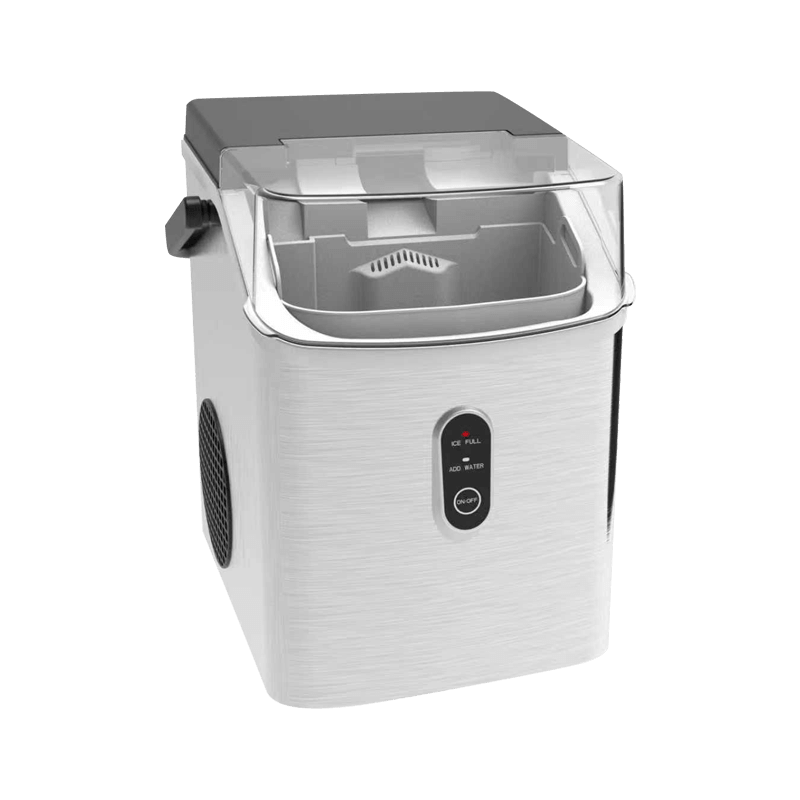
Home chewing ice maker
Understanding Chewable Ice
Chewable ice is distinguished from conventional ice by its softer texture and smaller particle structure. Instead of delivering a hard, solid block that must melt before it becomes comfortable to bite, chewing ice is designed to be gentler on the teeth and more enjoyable to consume directly. Its texture gives users a satisfying chewing experience while still providing the cooling effect expected from ice.
The sensory quality of chewing ice is one of its strongest advantages. A soft ice texture can provide a pleasant sound when bitten and a light, refreshing feel in the mouth. Many consumers enjoy this experience independently of the beverage itself. For them, ice is not merely a temperature-control material; it is part of the drinking experience.
Small-particle ice also interacts with beverages differently from large cubes. Because smaller pieces expose more surface area to the surrounding liquid, they can transfer cold more rapidly. This makes them especially appropriate for iced coffee, carbonated drinks, fruit beverages, milk-based drinks, and other refreshments that benefit from fast cooling.
The smaller form also makes the ice easier to scoop and distribute. A user can add a controlled amount to a glass, blend it with ingredients, or spread it over food displays. This versatility makes a chewing ice maker more useful than a conventional ice tray for households and small commercial settings that require flexible ice preparation.
Product Overview and Technical Profile
The Home Chewing Ice Maker is presented as a compact household appliance for producing soft, chewable ice. Its model designation is Alien-ZJ01, and its product category is Chewing Ice Maker. The appliance is intended to support beverage preparation, food presentation, cooling, and other everyday applications where small, soft ice particles are preferred.
| Specification | Product Detail |
|---|---|
| Product type | Home chewing ice maker |
| Model | Alien-ZJ01 |
| Power supply | 220V/60Hz |
| Current and power | 0.55A / 130W |
| Refrigerant | R600a |
| Refrigerant charge | 19g |
| Machine dimensions | 224 × 333 × 325 mm |
| Primary use | Chewable ice for drinks, food presentation, cold compresses, and blended recipes |
The electrical rating of 130 watts places the appliance in a practical range for a dedicated household ice machine. Its listed 0.55-ampere current specification indicates a design focused on controlled energy use rather than high-power commercial refrigeration. Users should always confirm that the local electrical supply matches the stated 220V/60Hz specification before operation.
The machine uses R600a refrigerant with a listed charge of 19 grams. R600a is commonly associated with compact refrigeration equipment and is valued in appliance engineering for its refrigeration performance and relatively low environmental impact compared with some older refrigerants. Because refrigerant systems must be handled responsibly, servicing should be performed by qualified personnel using appropriate procedures.
With dimensions of 224 by 333 by 325 millimeters, the unit is designed to occupy limited counter space. This is important in modern kitchens, apartments, office pantries, beverage corners, and hospitality areas where every centimeter of workspace matters. A compact body can also simplify shipping, storage, retail display, and installation planning.
The Core Advantage: A More Enjoyable Texture
The defining benefit of this appliance is the quality of the ice it is intended to produce. Conventional cubes can be hard, slow to chew, and inconvenient to break into smaller pieces. Chewable ice is softer and more manageable, creating a different relationship between the user and the beverage.
For families, texture can be especially important. Some people prefer to chew ice while drinking, while others want pieces that are easier to spoon into a glass. Soft ice can be suitable for children and adults who find hard cubes uncomfortable, although users should always supervise children and consider individual dental needs.
A pleasant texture can also encourage more creative beverage preparation. Users may add a generous amount of chewing ice to homemade soda, iced tea, flavored water, or coffee without needing to crush hard cubes separately. The ice can become part of the drink’s character rather than a last-minute cooling step.
Compared with ordinary freezer ice, dedicated chewing ice offers greater consistency. Ice made in trays can vary in size, freeze unevenly, acquire freezer odors, or become difficult to remove. A specialized appliance is designed around a repeatable production purpose, helping users access the same general ice format whenever needed.
For retailers and distributors, the texture provides a clear product story. A standard ice maker may be described mainly through output and convenience, while a chewing ice maker can be marketed through a strong consumer experience: soft, satisfying, quick to cool, and easy to mix. This distinction helps the product appeal to buyers who are seeking something more specialized than an ordinary cube machine.
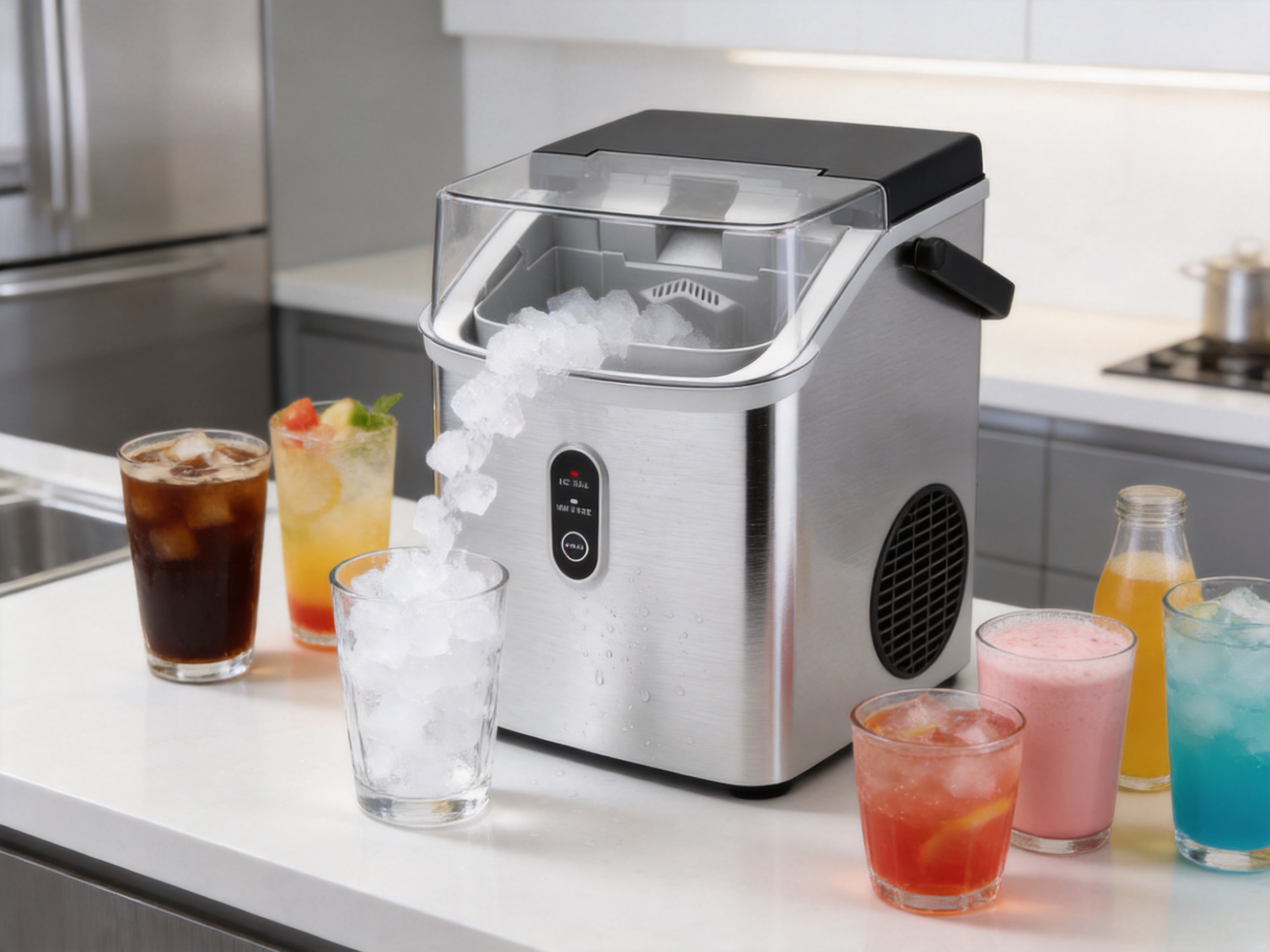
Rapid Cooling for Everyday Drinks
One of the most practical properties of small-particle ice is its large contact area. When many small pieces are placed in a beverage, more ice surface comes into contact with the liquid. This can accelerate cooling and help a drink reach a refreshing temperature quickly.
This advantage is useful for iced coffee, where users may want to cool freshly brewed coffee without waiting for a long period. It is also useful for carbonated beverages, fruit drinks, tea, sports drinks, and mixed refreshments. A larger hard cube may cool a drink gradually, but small pieces can distribute themselves throughout the glass and create a more immediate cooling effect.
Rapid cooling can improve convenience during busy mornings, family meals, gatherings, and informal entertaining. Instead of preparing ice well in advance, users can make the desired style of ice at home and use it when required. The appliance therefore supports a more responsive beverage routine.
Small ice particles may also help distribute cold more evenly. Large cubes tend to remain concentrated in a few areas of the glass, while smaller pieces can fill gaps between ingredients. This is particularly helpful when preparing blended beverages or drinks with fruit pieces, syrups, milk, or other additions.
Users should remember that any ice will eventually melt and dilute a beverage. The best results depend on balancing the amount of ice with the volume and type of liquid. For concentrated coffee, strong tea, and flavored drinks, the melting effect may be acceptable or even desirable. For delicate beverages, users can adjust the ice quantity according to personal preference.
Excellent Coating and Flavor Infusion
Another important characteristic is the ability of soft, small-particle ice to surround or coat food and beverages. Because the pieces can settle into small spaces, they can cover a larger area than a few large cubes. This makes the ice useful not only in drinks but also in food presentation and temporary cooling applications.
In salad bars, small ice particles can be placed around vegetables to create a cold serving environment and an attractive display. The ice can fill the spaces between containers or ingredients, helping the presentation look fresh and carefully arranged.
Seafood displays can also benefit from a coating layer of small ice. Oysters, shellfish, and other seafood items are commonly presented in chilled conditions. A soft ice format can help surround products without relying exclusively on large blocks that may leave gaps or create an uneven appearance.
Sashimi and other chilled foods require careful handling, clean preparation, and suitable food-safety practices. When used responsibly, small ice particles can support presentation by creating an even, visually appealing cooling bed. The ice itself should be produced, stored, and handled in a sanitary manner suitable for contact with food.
The same coating property can contribute to flavor infusion in beverages and recipes. When ice is mixed with syrups, fruit, herbs, or other ingredients, its small structure allows flavors to spread through the mixture. This can be useful for smoothies, flavored ice drinks, and creative refreshments served at home or in small food-service environments.
Use in Cold Compresses and Non-Beverage Cooling
The soft texture of chewing ice can be useful in cold-compress applications because it can conform more easily to the shape of a body part than a rigid cube or solid frozen pack. The particles can be placed inside an appropriate clean, sealed bag or compress sleeve, allowing them to distribute across the area being cooled.
This application should be approached with care. Ice should not be applied directly to bare skin for extended periods, and users should follow appropriate medical guidance for injuries or therapeutic cooling. The appliance is not a medical device, and its ice should not replace professional treatment. Nevertheless, the flexible structure of small ice particles can make them a convenient household cooling material when used correctly.
The ability to serve both beverage and general cooling needs increases the product’s usefulness. Buyers do not need a separate tool for every occasion. A single compact appliance can support drinks, food displays, recipe preparation, and occasional cooling tasks, making it attractive to households that value multifunctional equipment.
Versatility in Recipes and Beverage Preparation
Chewable ice can be used directly in a glass, but its potential extends well beyond ordinary iced drinks. Its soft texture makes it easier to scoop, portion, and blend with other ingredients. This supports a range of homemade recipes without requiring a separate crushing machine.
Smoothies are one of the most obvious applications. The ice can be combined with fruit, yogurt, milk, juice, or plant-based ingredients to create a cold, thick beverage. Because the pieces are soft and relatively small, they may be easier for a blender to process than large, hard cubes. Users should still follow the operating instructions of the blender and avoid overloading it.
Shaved ice-style desserts are another possible application. Chewable ice can provide a base for syrups, fruit, condensed milk, chocolate toppings, or other ingredients. While the exact texture may differ from professionally shaved ice, the product gives households a convenient way to prepare cold desserts without specialized commercial equipment.
The ice can also be used in mocktails, iced coffee recipes, frozen lemonade, fruit punches, and chilled tea. For entertaining, a supply of soft ice allows guests to customize their drinks. Some may prefer a lightly iced beverage, while others may enjoy a glass filled with ice that can be chewed after the drink is finished.
Small food businesses may find value in the product for tasting events, display counters, seasonal drinks, and specialty menu items. Its compact size makes it more accessible than large commercial ice systems for operations with moderate demand. Before using it in a commercial environment, buyers should verify capacity, operating requirements, sanitation procedures, and local regulations.
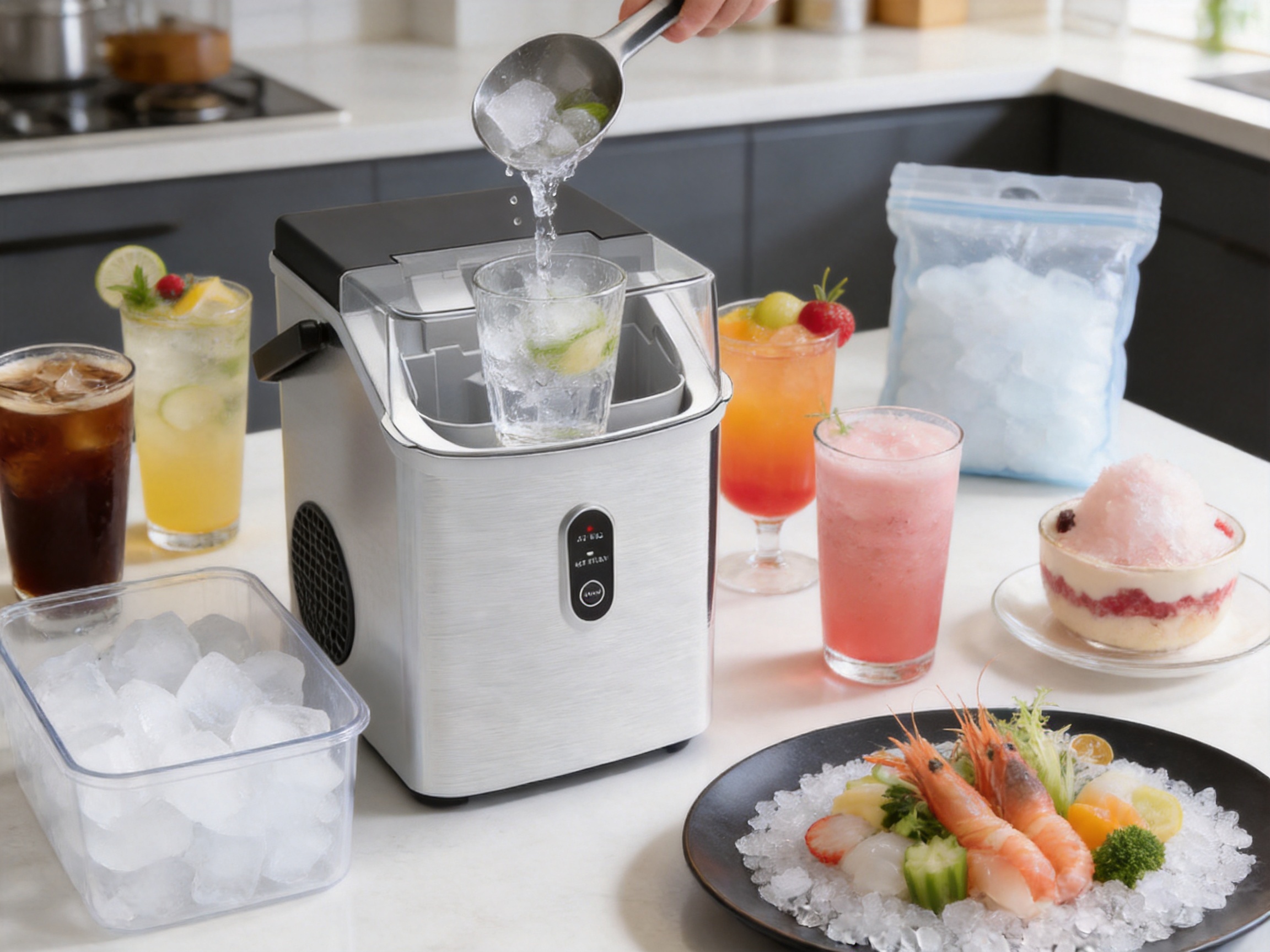
Compact Design for Modern Living Spaces
Space efficiency is a major consideration in household appliance purchasing. Kitchens are increasingly expected to support cooking, coffee preparation, food storage, entertaining, and beverage service, often within a limited floor plan. A large appliance may provide high output but still be impractical for many homes.
The listed dimensions of 224 × 333 × 325 millimeters give the Home Chewing Ice Maker a compact footprint. It can be planned for a countertop, beverage cabinet, office pantry, or hospitality station, provided that adequate ventilation, clearance, and access are available. Its vertical and horizontal proportions are suitable for buyers who want specialized functionality without dedicating an entire section of the kitchen to an oversized machine.
Compact design also improves portability within a property. A user may keep the appliance in the kitchen during normal use and move it to an entertainment area for a gathering, subject to safe handling and proper electrical connection. Distributors can also benefit from easier warehousing and more efficient packing compared with larger ice-production equipment.
A smaller product does not eliminate the need for responsible placement. Users should position the machine on a stable, level surface, keep ventilation openings unobstructed, avoid exposure to water, and allow sufficient space for operation and cleaning. The unit should not be placed near heat sources unless the operating instructions specifically permit it.
Energy-Conscious Household Operation
At 130 watts, the product is designed around moderate electrical consumption for a refrigeration-based household appliance. Actual energy use will depend on operating duration, ambient temperature, water temperature, usage frequency, and the machine’s operating cycle. Nevertheless, the stated power level supports the idea of a practical appliance intended for regular home use rather than a high-capacity industrial installation.
Energy-conscious operation begins with planning. Users can produce the amount of ice needed for a particular occasion instead of continuously operating a large freezer or purchasing packaged ice. Making ice close to the time of use may also reduce storage requirements and avoid the inconvenience of ice bags that occupy valuable freezer space.
Regular cleaning can support efficient performance. Mineral deposits, residue, or blocked airflow may reduce cooling effectiveness and cause an appliance to work harder. Following the manufacturer’s maintenance guidance helps preserve performance and supports hygienic ice production.
Users should also consider the local power supply. The listed specification is 220V/60Hz, and compatibility should be confirmed before purchase or installation. Electrical requirements can differ among countries and regions, so distributors should clearly communicate this point to customers.
Manufacturing Strengths of the Company
Alien Technology Co., Ltd. is located in Zhouxiang, Cixi City, Zhejiang Province, an area known for small household appliance manufacturing. This location provides a useful industrial foundation for a company producing ice makers, coffee machines, air fryers, and related appliances.
A manufacturing cluster can offer several advantages. Suppliers, component producers, packaging businesses, logistics providers, technical workers, and service partners are often located within a connected regional network. This can support more efficient sourcing, faster coordination, and practical product development.
The company’s product range reflects a focus on appliances that simplify everyday household tasks. Ice makers, coffee machines, and air fryers all belong to a consumer category in which ease of use, reliable operation, compact design, and clear functional benefits are important. Experience across these product groups can help a manufacturer understand household routines and develop equipment with practical user expectations in mind.
The company states its mission as “Smart Technology, Simplifying Life, Enhancing Happiness.” This mission is relevant to a chewing ice maker because the product transforms a specialized ice preference into a convenient household function. Instead of manually crushing ice, buying packaged specialty ice, or relying on an ordinary freezer, users can access a purpose-designed solution in their own kitchen.
The company also emphasizes humanized design, reliable quality, intelligent technology, customer satisfaction, continuous improvement, and innovation. These principles are particularly valuable in small appliances, where product success depends not only on the main function but also on details such as footprint, controls, cleaning access, safety, noise management, packaging, and after-sales communication.
Production and Quality Considerations
A reliable ice maker requires coordination among mechanical design, refrigeration engineering, electrical systems, materials, assembly, and quality inspection. The product must be able to operate as a complete system: the refrigeration circuit must cool effectively, the electrical components must work together safely, the housing must protect internal parts, and the ice-production process must remain consistent under normal conditions.
Manufacturing strength is therefore not limited to the visible exterior. It includes supplier selection, incoming material inspection, assembly control, electrical testing, refrigeration-system checks, appearance inspection, and functional testing. Each stage contributes to the final user experience.
For a compact appliance, dimensional accuracy is important. Internal components must fit within the stated 224 × 333 × 325 millimeter body while leaving room for insulation, airflow, wiring, drainage, and service access. A well-organized internal layout can support compactness without sacrificing basic maintainability.
Refrigerant handling is another important production consideration. The listed R600a charge is 19 grams, which indicates a controlled refrigerant system designed for the appliance’s compact scale. Proper charging, leak testing, component connection, and safety procedures are essential. Qualified production personnel and suitable factory equipment are necessary for dependable refrigeration performance.
Electrical testing should verify that the appliance operates appropriately at its specified 220V/60Hz supply. Testing may include power consumption, current behavior, insulation, grounding, start-up performance, and continuous operation. The exact procedures depend on applicable standards and the manufacturer’s quality system, but these areas are fundamental to responsible appliance production.
Water-contact components also deserve careful attention. Since the product creates ice for consumption and food-related use, the materials and surfaces that contact water or ice should be suitable for the intended application. Cleanable surfaces, controlled assembly environments, and clear user maintenance instructions can help support hygiene.
Advantages Over Conventional Ice-Making Methods
The first advantage over ordinary freezer trays is convenience. Tray ice requires preparation, freezer space, manual removal, and often additional crushing if the user wants smaller pieces. A dedicated chewing ice maker is designed to produce the desired style of ice without these extra steps.
The second advantage is texture. Tray ice is usually hard and uniform in shape, whereas chewing ice is intended to be softer and more pleasant to bite. This makes it particularly attractive to consumers who consider the eating experience an important part of drinking.
The third advantage is flexibility. A tray generally produces one basic ice format. A chewing ice maker can support drinks, smoothies, shaved ice-style recipes, food displays, and carefully managed cold-compress applications. This broader range of use helps justify the purchase for households that want more than simple cooling.
The fourth advantage is presentation. Small ice particles can fill spaces around food and create a more even visual effect. This is useful for gatherings, seafood presentation, salad service, and beverage counters.
Compared with buying packaged specialty ice, a home appliance can provide greater availability and reduce dependence on store schedules or local product availability. It can also help users control production timing and reduce the need to transport and store bags of ice.
Compared with large commercial ice machines, the compact Home Chewing Ice Maker may be more approachable for homes, small offices, boutique beverage counters, and low-volume food businesses. Its 130-watt rating and compact dimensions suggest a product designed for practical, moderate-scale use rather than large-volume industrial production.
These advantages do not mean that one ice format is best for every application. Large cubes may remain preferable for slow-melting cocktails, long storage, or certain commercial beverage programs. The strength of this product is specialization: it serves users who value softness, rapid cooling, easy mixing, and versatility.
Applications in Different Environments
Households
At home, the appliance can become part of a daily beverage routine. Families may use it for iced coffee in the morning, chilled juice at lunchtime, mocktails in the evening, and frozen desserts on weekends. Its compact size helps it fit into kitchens where storage space is limited.
Offices
An office pantry can use soft ice for water, coffee, tea, and employee refreshments. Because the ice is easy to scoop and mix, users do not need to handle large frozen blocks. The product can support a more comfortable shared beverage area, especially during warm weather.
Entertaining and Hospitality
For parties and small gatherings, chewable ice can improve the presentation of drinks and give guests an additional sensory experience. Hosts can prepare iced coffee, soda, fruit punch, mocktails, and dessert beverages with one appliance. Small hotels, guesthouses, and boutique hospitality businesses may also consider it for rooms, lounges, or breakfast areas, depending on their operational requirements.
Food Display
Small ice particles can be used around vegetables, seafood, oysters, sashimi, and other chilled items when appropriate food-safety procedures are followed. The ice can help form a consistent display surface and provide a clean, refreshing visual impression.
Small Beverage Businesses
Cafés, snack shops, dessert counters, and mobile beverage operators may use chewable ice for specialty drinks or seasonal menus. The product can help create a distinctive texture that separates a beverage from products made with standard cubes. Businesses should evaluate expected demand, cleaning time, operating conditions, and local health requirements before commercial deployment.

Care, Hygiene, and Responsible Use
Any appliance that produces ice for consumption should be maintained carefully. Users should follow the product manual for cleaning frequency, approved cleaning agents, water handling, drainage, and storage. The ice-making area should be kept free of dust, residue, and foreign materials.
Fresh, clean water should be used unless the manufacturer specifies otherwise. Water quality can affect taste, appearance, mineral buildup, and machine performance. In areas with hard water, periodic descaling may be necessary. The correct procedure should be confirmed through the operating instructions.
Ice should be handled with clean utensils and stored in a clean container if it is not used immediately. Users should avoid touching ice unnecessarily and should not mix newly produced ice with old ice that has been stored for an extended period.
The outer surface should be kept dry, and the appliance should be disconnected before certain cleaning or maintenance tasks if required by the instructions. Water should never be poured into electrical openings or used in a way that could damage internal components.
Because R600a is a flammable refrigerant, the appliance should not be opened or repaired by unqualified individuals. If damage, leakage, unusual odor, abnormal noise, or cooling failure occurs, the unit should be disconnected and inspected by an appropriate service professional.
How Distributors Can Present the Product
For distributors and retailers, the most effective product presentation should focus on benefits that consumers can immediately understand. “Soft, chewable ice” is a clear message that distinguishes the appliance from standard ice makers. Additional points include rapid beverage cooling, compact dimensions, easy scooping, recipe versatility, and multi-purpose use.
Technical information should be presented accurately. The product uses a 220V/60Hz power supply, operates at a listed 130 watts and 0.55 amperes, and uses R600a refrigerant with a 19-gram charge. These details help buyers evaluate compatibility and should not be replaced by vague statements about universal operation.
Retail displays can demonstrate the product through photographs, sample beverage concepts, or packaging that emphasizes the soft texture. Demonstrations should use safe, hygienic materials and should make clear that actual production time and output depend on operating conditions and the product’s instructions.
Business buyers may also be interested in private-label opportunities, regional distribution, packaging support, product customization, and coordinated logistics. A manufacturer located in a mature small-appliance area may be able to support different sales channels, although specific cooperation terms must be confirmed directly with the company.
After-sales support is also important. Retailers should provide customers with information about voltage compatibility, placement, cleaning, refrigerant safety, warranty procedures, and service contacts. Clear instructions reduce misuse and contribute to stronger long-term customer satisfaction.
Why the Product Fits Current Consumer Trends
Modern consumers increasingly look for appliances that combine convenience, specialized performance, and efficient use of space. They may not want a large machine for one occasional task, but they are willing to invest in a compact appliance that improves a frequently enjoyed routine.
Chewable ice fits this trend because it combines a recognizable product category with a distinctive sensory benefit. It is familiar enough for users to understand immediately, but specialized enough to feel different from ordinary freezer ice. This balance creates potential appeal across household, hospitality, and food-service markets.
Interest in home beverage preparation also supports the category. Iced coffee, mocktails, smoothies, fruit drinks, and homemade desserts are increasingly common parts of daily life. A machine that supports several of these activities can provide value beyond its primary function.
The product also aligns with the desire for more enjoyable everyday experiences. The stated company mission of simplifying life and enhancing happiness is reflected in the simple pleasure of having soft, refreshing ice available when needed. The appliance does not require a complex professional workflow; it is intended to bring a specialty texture into an ordinary home environment.
Purchasing and Evaluation Guide
Potential buyers should first confirm the electrical specification. The appliance is listed for 220V/60Hz operation, so local compatibility is essential. A suitable outlet and safe installation area should be prepared before use.
Second, buyers should consider the intended volume of use. The product is positioned as a household chewing ice maker, with a compact 130-watt design. It may be suitable for family beverages, small gatherings, offices, and moderate service requirements, but buyers with very high commercial demand should request detailed capacity and duty-cycle information.
Third, users should evaluate the available counter space. The machine dimensions are 224 × 333 × 325 millimeters, but additional clearance may be required for ventilation, water handling, cleaning, and access to controls.
Fourth, buyers should consider water quality and cleaning responsibilities. A machine producing edible ice requires a consistent hygiene routine. The convenience of automatic or dedicated ice production is greatest when maintenance is simple and performed regularly.
Finally, buyers should evaluate the supplier. Important questions may include manufacturing experience, quality-control procedures, packaging standards, spare parts, warranty arrangements, export experience, and communication support. Alien Technology Co., Ltd. welcomes contact from new and existing customers for business cooperation, making direct communication an appropriate step for commercial buyers.
Q&A
What is the main purpose of this ice maker?
The main purpose is to produce soft, chewable ice for household beverages and related uses. The ice can also support smoothies, shaved ice-style recipes, food displays, and carefully managed cooling applications.
How is chewing ice different from ordinary ice cubes?
Chewing ice is designed to have a softer texture and smaller particle structure. It is easier to bite, scoop, and mix, while its larger contact area can help cool beverages more quickly than large conventional cubes.
What drinks are suitable for this type of ice?
It is suitable for iced coffee, soda, iced tea, fruit drinks, mocktails, smoothies, punches, and other refreshments. The appropriate amount depends on the drink’s volume, strength, and desired level of dilution.
Can the ice be used in food displays?
Yes, small ice particles can be used around vegetables, oysters, seafood, sashimi, and similar chilled presentations when appropriate hygiene and food-safety procedures are followed.
Can it be used for a cold compress?
The soft texture may allow the ice to conform to body parts when placed in a suitable sealed compress bag. It should not be applied directly to skin for extended periods, and medical guidance should be followed for injuries or therapeutic use.
What are the electrical specifications?
The listed power supply is 220V/60Hz. The product is specified at 0.55 amperes and 130 watts. Buyers should verify local electrical compatibility before operation.
What refrigerant does the machine use?
The machine uses R600a refrigerant with a listed charge of 19 grams. Refrigeration-system servicing should be performed by qualified professionals.
How large is the machine?
The listed dimensions are 224 × 333 × 325 millimeters. Users should also allow additional space for ventilation, cleaning, and safe operation.
Is it suitable for commercial use?
It may be suitable for offices, small beverage businesses, boutique hospitality locations, food displays, and moderate-volume applications. Commercial buyers should confirm output, operating cycle, sanitation requirements, and local regulations with the supplier before purchase.
What company manufactures the product?
The product is manufactured by Alien Technology Co., Ltd., a Zhejiang-based company specializing in household appliances such as ice makers, coffee machines, and air fryers.
What manufacturing advantages does the company have?
The company is located in Zhouxiang, Zhejiang Province, a region known for small household appliance manufacturing and convenient logistics. Its product focus, regional supplier network, and stated commitment to quality, customer satisfaction, continuous improvement, and innovation support its manufacturing position.
What should users do if the appliance develops a problem?
Users should stop operation if they notice abnormal noise, unusual odor, refrigerant concerns, electrical faults, or cooling problems. They should disconnect the unit when appropriate and contact qualified service personnel or the supplier rather than attempting to repair the refrigeration system themselves.
Conclusion
The Home Chewing Ice Maker offers a focused solution for consumers who want more than ordinary hard cubes. Its soft, chewable texture creates a more enjoyable eating experience, while its small-particle structure supports rapid beverage cooling, easy scooping, quick flavor mixing, food presentation, smoothie preparation, shaved ice-style recipes, and other household applications.
The product’s compact dimensions and 130-watt power rating make it appropriate for modern kitchens and other space-conscious environments. Its 220V/60Hz electrical specification, R600a refrigerant system, and 19-gram refrigerant charge provide important technical reference points for buyers and distributors.
Its strongest competitive advantage is specialization. Traditional ice trays, packaged ice, and standard cube machines may satisfy basic cooling needs, but they do not necessarily provide the same combination of softness, chewability, rapid cooling, easy mixing, and multi-purpose use. For users who value texture and convenience, a dedicated chewing ice appliance can provide a noticeably different experience.
The product is supported by Alien Technology Co., Ltd., a manufacturer based in Zhejiang’s small-appliance production environment. The company’s focus on humanized design, reliable quality, intelligent technology, customer satisfaction, continuous improvement, and innovation aligns with the needs of contemporary household appliance buyers. Its experience in ice makers, coffee machines, air fryers, and related products gives it a practical foundation for serving both domestic and international customers.
With proper installation, responsible cleaning, safe refrigerant handling, and suitable operating expectations, the Home Chewing Ice Maker can become a versatile addition to household beverage preparation and small-scale food service. It turns a simple ingredient into a more enjoyable, flexible, and convenient part of everyday life.
References
1. Product specification sheet for the Home Chewing Ice Maker, model Alien-ZJ01.
2. Manufacturer-provided company profile for Alien Technology Co., Ltd.
3. Manufacturer-provided product information concerning chewable ice applications, beverage cooling, food presentation, smoothies, and shaved ice-style recipes.
4. General household refrigeration appliance safety and maintenance principles.
5. General food-handling guidance for ice used in beverages and chilled food displays.
6. General technical reference information concerning compact refrigeration systems using R600a refrigerant.