
 English
 한국어
한국어 Español
 Deutsch
Modern beverage service depends on ice that is consistent, attractive, easy to handle, and available whenever demand rises. A touchscreen bullet ice maker is designed to answer that need with a compact footprint, rapid cooling performance, practical cleaning access, and user-friendly operation. For homes, small offices, milk tea shops, cafés, fast food counters, convenience stores, and hospitality settings, the quality of ice can directly influence drink temperature, service speed, customer satisfaction, and daily workflow. This article explores the touchscreen bullet ice maker in depth, focusing on its product advantages, competitive strengths, operating logic, technical specifications, sanitation benefits, and the manufacturing capabilities behind it.
The product is a bullet ice maker with a touchscreen control interface and a compact body structure. Its ice form is especially valuable because bullet ice has a hollow or perforated center that increases contact area with beverages. This structure helps drinks cool quickly and evenly, making it well suited for cold coffee, tea drinks, juices, carbonated beverages, cocktails, smoothies, and self-service drink stations. Compared with many solid cube ice forms, bullet ice is easier to chew, easier to scoop, and less likely to clump during storage and dispensing. These qualities make it practical not only for home use but also for commercial environments where efficiency, cleanliness, and consistency are important.
The touchscreen design improves the user experience by making machine control more intuitive. Traditional button-based ice makers can be functional, but a clean touchscreen panel gives users clearer operation feedback and a more modern appearance. In a kitchen, service counter, pantry, or office refreshment area, appearance matters. A product that combines practical ice-making performance with a streamlined interface can fit naturally into contemporary spaces. The touchscreen also reduces the learning curve for new users, which is valuable in businesses where staff may rotate frequently or where customers may interact with the machine directly.
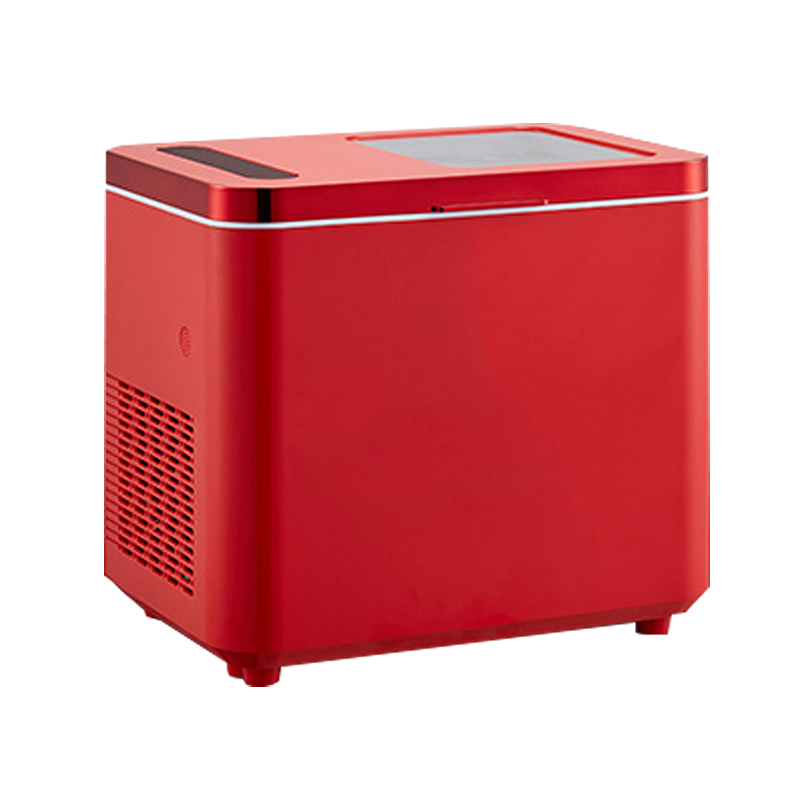
Touchscreen ice maker
Product Overview
The touchscreen bullet ice maker is designed around a practical balance of cooling performance, compact construction, and hygienic access. It uses a refrigeration system with R600a refrigerant and operates on a 220V-240V/50Hz power supply. The rated current and power are 0.9A and 150W, respectively, indicating a design focused on household and light commercial energy practicality. Its dimensions are 325 x 295 x 252 mm, making it suitable for countertops, small service spaces, pantry stations, and compact retail environments where floor area is limited.
The product is especially valuable for users who need quick ice availability without installing a large commercial ice machine. In many small beverage businesses, space is one of the most expensive resources. Large machines can create workflow obstacles, require dedicated installation zones, and complicate cleaning routines. A compact bullet ice maker can help operators add ice-making capability without redesigning the whole service area. For home users, the same compactness means the machine can be placed on a counter, moved when needed, and stored more easily than bulkier equipment.
The bullet ice shape is one of the product’s most important advantages. Its hollow center increases beverage contact area, allowing drinks to chill rapidly. This is particularly useful when preparing cold drinks during busy service hours. The shape also supports good flowability. Ice pieces are less likely to stick together compared with some traditional ice types, making them easier to scoop, pour, or dispense. In fast-paced settings, small details like scoopability can have a large impact on staff efficiency and customer wait time.
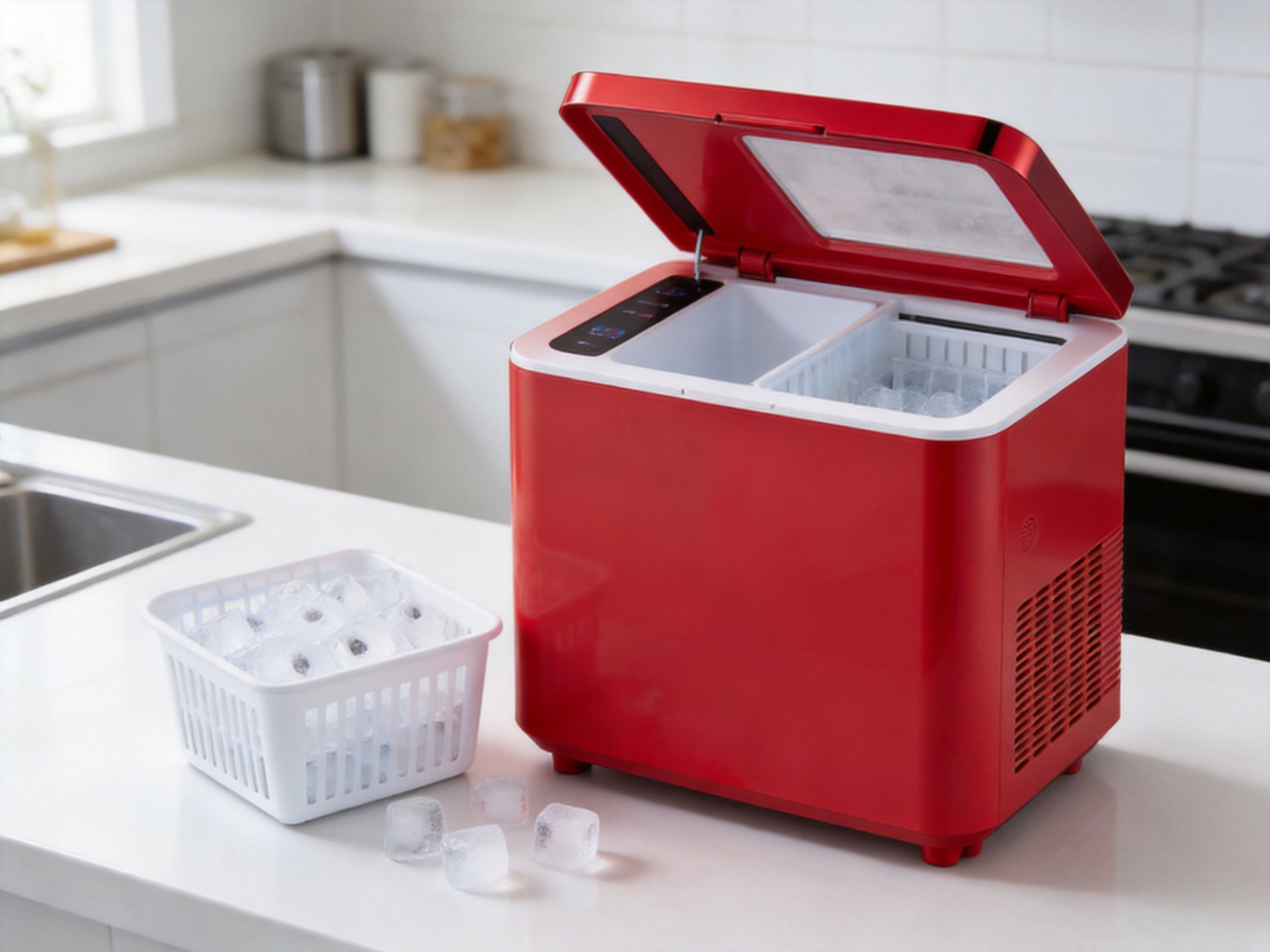
The machine also supports daily hygiene through a fully flip-top design. Cleaning is often one of the most overlooked aspects of ice maker selection, yet it is essential. Ice is consumed directly, which means the cleanliness of the ice storage area and ice-making area must be taken seriously. A fully opening structure allows users to access the areas that matter most, reducing hidden corners and making routine maintenance less complicated. Easier cleaning encourages more frequent cleaning, and more frequent cleaning supports safer, better-tasting ice.
Key Technical Specifications
Specification |
Details |
Product Type |
Touchscreen Bullet Ice Maker |
Power Supply |
220V-240V/50Hz |
Current/Power |
0.9A/150W |
Refrigerant/Charge |
R600a/19g |
Machine Dimensions |
325 x 295 x 252 mm |
Ice Style |
Bullet Ice with Hollow Center |
Control Style |
Touchscreen Interface |
Cleaning Access |
Fully Flip-Top Structure |
These specifications show that the machine is engineered for efficient daily use. The 150W power rating reflects a practical design for users who want reliable ice production without the burden of oversized electrical requirements. The use of R600a refrigerant is also significant. R600a is widely used in modern refrigeration products because it can support efficient cooling performance when properly engineered into the refrigeration circuit. For small household appliances and compact refrigeration systems, refrigerant selection, tubing accuracy, sealing quality, and compressor matching are all essential to stable operation.
The dimensions show that the machine is not intended to dominate a room or counter. Instead, it is a compact appliance that can provide important functionality while preserving workspace. In a café or milk tea shop, counter layout influences every action: cup preparation, ingredient access, sealing, serving, payment, and cleaning. A machine with a smaller footprint allows operators to keep essential tools nearby while avoiding clutter. In homes, the compact body supports daily convenience for parties, family meals, summer drinks, or regular use by people who enjoy cold beverages.
The Value of Bullet Ice
Bullet ice has a distinctive cylindrical shape with a rounded end and a hollow center. This geometry is not only visually recognizable but also functionally meaningful. The hollow center allows a larger surface area to contact the beverage. When more ice surface touches liquid, heat transfer improves, and the drink temperature falls more quickly. In busy drink preparation, rapid cooling helps maintain service speed and quality. Customers expect iced drinks to be cold immediately, not after several minutes of waiting.
Compared with large solid cubes, bullet ice is usually more comfortable to chew. This matters in many beverage categories where customers enjoy eating the remaining ice after finishing the drink. In milk tea shops, fast food restaurants, casual cafés, and convenience stores, chewable ice can become part of the product experience. Ice is not merely a cooling tool; it can influence mouthfeel, refreshment, and customer memory. A machine that produces ice with moderate hardness can help businesses deliver a more enjoyable drinking experience.
Bullet ice is also known for practical handling. Because of its shape, it can be easier to scoop and less prone to forming dense, sticky clumps. Clumping can slow service and create waste. When ice sticks together, staff may need to break it apart, which can introduce sanitation concerns and reduce efficiency. High flowability helps the ice move more smoothly from storage to scoop, container, or dispenser. This is one reason bullet ice is popular in self-service beverage stations and commercial drink operations.
The product’s ice form is particularly relevant for beverage establishments focused on speed. For example, during peak hours in a milk tea shop, staff members may need to prepare dozens or hundreds of drinks in a short period. Every second matters. Ice that is easy to scoop, visually consistent, and quick to chill can improve the entire workflow. The ice maker itself becomes part of the service system, supporting consistent output rather than becoming a bottleneck.
Touchscreen Operation and User Experience
A touchscreen interface brings the appliance closer to modern user expectations. Consumers are increasingly familiar with touch controls in ovens, coffee machines, air fryers, washing machines, and smart home devices. When an ice maker uses a touchscreen panel, users can understand the product more quickly and operate it with less hesitation. The control area can also give the product a cleaner and more premium visual appearance compared with exposed mechanical buttons.
In business environments, user-friendly controls reduce training time. New employees may need to learn many procedures at once, from beverage recipes to customer service standards. A simple control system helps prevent operation mistakes. In a home setting, intuitive controls make the appliance more approachable for different family members. A machine that is easy to use is more likely to be used regularly, which increases its value to the owner.
Touchscreen design also supports easy surface cleaning. Buttons and gaps can collect moisture, dust, sugar residue, or drink splashes in beverage environments. A smoother interface can be wiped more easily, helping the product remain visually clean. While internal hygiene is essential for ice quality, external cleanliness also matters, especially when the machine is visible to customers. A neat, modern front panel can improve the overall impression of a beverage counter or kitchen area.
Rapid Cooling Advantage
The cooling advantage of bullet ice starts with its form. The hollow center and curved external surface provide a favorable shape for heat exchange. When bullet ice enters a drink, liquid can contact both the outside and the inner cavity, increasing cooling efficiency. This is especially useful for drinks that are prepared at room temperature or slightly warm before ice is added. The faster the beverage reaches the desired temperature, the better the customer experience.
For competitors that produce larger solid forms of ice, the cooling effect may be slower because less surface area is immediately available relative to volume. Solid ice cubes can be excellent for slow melting in certain drinks, but in quick-service beverages, speed and texture often matter more. Bullet ice gives operators a practical alternative: fast chilling, manageable hardness, and convenient handling. This makes it a versatile option for daily beverage service.
The machine’s continuous ice-making principle further supports high efficiency. Instead of depending only on stored ice, users can produce ice continuously as needed. In environments where demand fluctuates, such as offices, small events, seasonal shops, or hot-weather beverage counters, continuous production can reduce the risk of running out. A compact machine that can keep producing ice through the day provides resilience without requiring large storage bins.
Cleanliness and Hygienic Design
Ice-making equipment must be designed with sanitation in mind because ice is often consumed directly. If a machine is difficult to clean, users may delay maintenance, and residue can accumulate. The fully flip-top design of this touchscreen bullet ice maker is an important advantage because it allows the user to open the ice storage and ice-making areas more completely. This improved access makes it easier to remove water residue, wipe surfaces, check for buildup, and maintain good daily hygiene.
In beverage service, sugar, tea, coffee, fruit syrup, and milk-based ingredients can create sticky surroundings. Even if the ice maker itself is not used to process these ingredients, it may sit near them. A design that supports quick visual inspection and cleaning helps operators protect ice quality. When staff can easily see and reach the relevant areas, cleaning becomes less of a burden and more of a normal routine.
Competitor products may advertise ice-making speed but overlook maintenance convenience. However, long-term performance depends heavily on cleaning access. A machine that is difficult to clean can become less pleasant to use over time. The flip-top structure helps solve this problem by reducing hidden corners and making essential areas accessible. For professional users, this can support compliance with internal hygiene standards. For home users, it makes maintenance simple enough to perform regularly.
Hygienic design is also related to taste. Ice can absorb odors or carry unpleasant flavors if water areas are not kept clean. Clean ice should taste neutral, fresh, and refreshing. By making daily cleaning easier, the machine helps preserve the quality of beverages. In coffee drinks, teas, and fruit beverages, off-flavors from ice can interfere with the intended taste profile. Clean ice protects the work that goes into preparing the drink.
Space-Saving Design for Practical Placement
With machine dimensions of 325 x 295 x 252 mm, the product is designed to fit into real-world spaces. The compact structure is one of its strongest competitive advantages. Many users want ice production but cannot accommodate a large commercial unit. Restaurants, cafés, office pantries, home kitchens, and small retail counters often have limited counter or shelf space. A compact ice maker makes it possible to add ice-making capability without major layout changes.
Space-saving design also makes the machine more flexible. It can be used seasonally, moved between locations, or positioned near the point of service. In event preparation, portability and compactness are valuable because demand may shift from one area to another. For example, a company pantry may need ice for regular daily use, while a meeting room or reception area may need extra ice during special events. A smaller appliance can be relocated more easily than built-in or oversized equipment.
For competitors with similar ice-making functions but larger bodies, the tradeoff can be inconvenient. A larger product may provide capacity but consume valuable workspace. This touchscreen bullet ice maker focuses on a balanced approach: practical ice production, efficient handling, and a footprint suitable for compact environments. This balance is often more important than maximum size, especially for users who value convenience and flexibility.
Energy and Refrigeration Considerations
The product operates at 0.9A and 150W, making it suitable for everyday appliance use. Energy performance in ice makers depends on several factors, including compressor efficiency, insulation, heat exchange design, water circulation, ambient temperature, and user habits. A well-designed compact ice maker should deliver ice-making performance while avoiding unnecessary energy consumption. The specified power level suggests a product intended for efficient use in household and light commercial settings.
The refrigerant is R600a with a 19g charge. R600a is commonly used in modern refrigeration appliances and is valued for its cooling performance characteristics when applied correctly. In manufacturing, the handling of refrigerant requires precision, safety controls, and skilled assembly. Proper charging is essential because too much or too little refrigerant can reduce efficiency, affect cooling consistency, or shorten component life. A manufacturer with strong process discipline can better ensure that each unit meets intended performance standards.
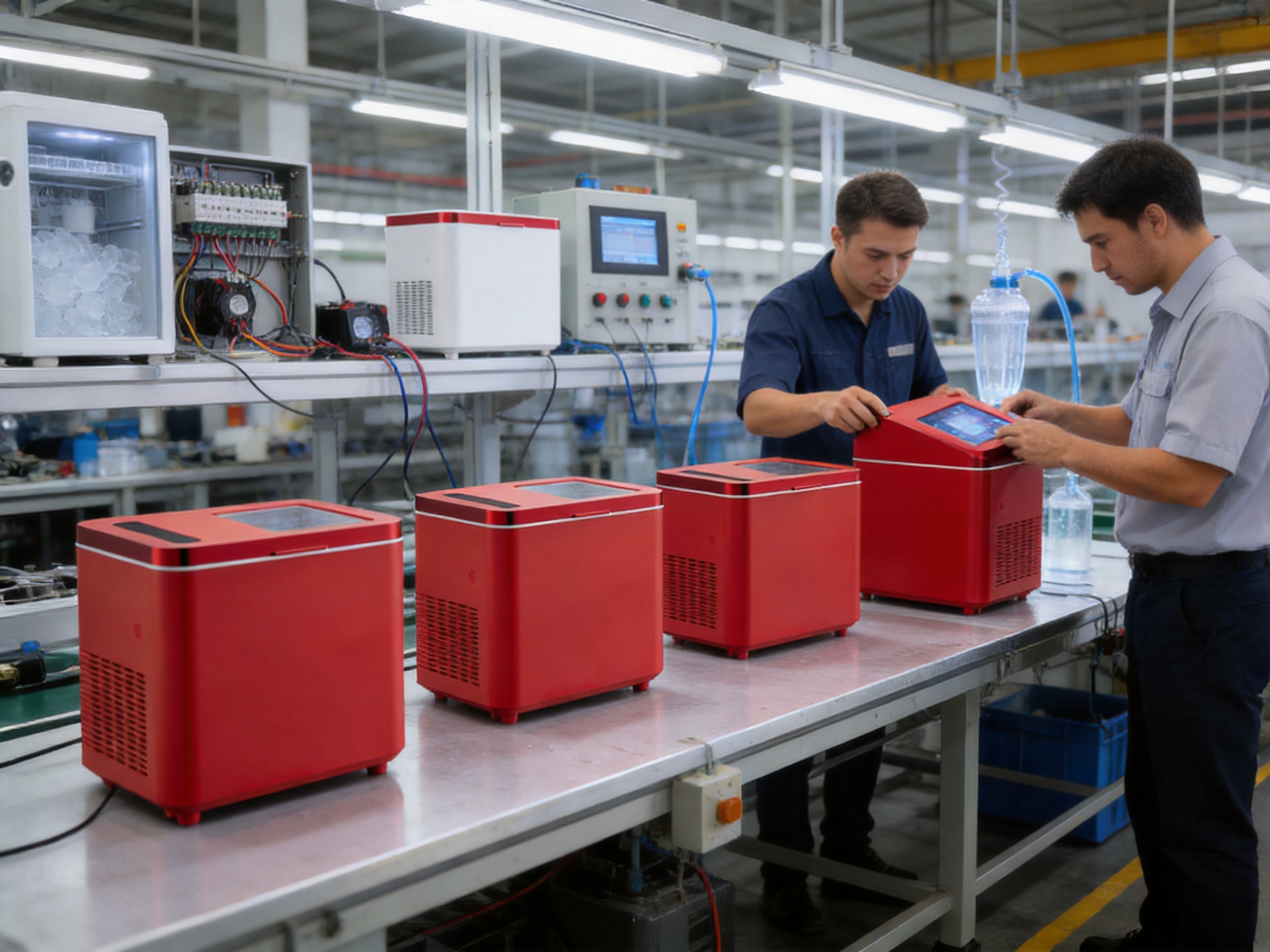
Refrigeration manufacturing is not merely a matter of assembling parts. It requires control over tubing, sealing, brazing, leakage testing, vacuuming, refrigerant charging, electrical safety, and final performance inspection. The strength of a manufacturer can be seen in the consistency of these processes. For a compact ice maker, even small variations can affect noise, cooling speed, and reliability. Advanced manufacturing practices help reduce these variations and support stable product quality.
Manufacturing Strength Behind the Product
The company behind this product is located in Zhouxiang, Cixi City, Zhejiang Province, an area known as a hub for small household appliances. This regional advantage matters because appliance manufacturing benefits from mature supply chains, skilled labor, component availability, logistics networks, and technical experience. When a manufacturer operates in an established appliance cluster, it can more efficiently source parts, coordinate production, test improvements, and respond to customer needs.
The company specializes in household appliances including ice makers, coffee machines, and air fryers. This product portfolio is important because these categories share manufacturing disciplines: heating control, cooling systems, electrical safety, user interface design, plastic and metal component processing, assembly control, and quality inspection. Experience across multiple appliance types can strengthen engineering knowledge and production flexibility. A company that understands both beverage appliances and kitchen appliances is better positioned to design products that fit modern living habits.
The company’s mission emphasizes smart technology, simplified living, and enhanced happiness. In product terms, this means designing appliances that are not only functional but also convenient, approachable, and reliable. The touchscreen bullet ice maker reflects this approach by combining rapid ice production with simple controls, a compact structure, and cleaning convenience. The product is not designed only as a technical machine; it is designed as a daily-use appliance that should reduce effort and improve enjoyment.
Advanced manufacturing strength can be understood through several practical capabilities. First, component selection must match the product’s intended use. The compressor, condenser, water pump, sensors, housing materials, control panel, and ice-making components all need to function together. Second, process control must be consistent. Assembly workers and inspection teams must follow defined standards to ensure every unit performs reliably. Third, testing must be thorough. Ice makers should undergo checks for electrical safety, refrigeration performance, water handling, leakage, and user interface response.
Quality control is particularly important for compact appliances because users expect them to work immediately and reliably. A small product may be placed in a visible location and used frequently. If it produces inconsistent ice, makes unusual noise, leaks, or becomes difficult to clean, the user experience declines quickly. Manufacturing discipline reduces these risks. The company’s focus on excellent quality, customer satisfaction, continuous improvement, and innovation supports the long-term competitiveness of the product.
Process Control and Quality Assurance
Reliable ice maker production depends on a chain of quality assurance steps. The first step is material and component inspection. Electrical components, refrigeration parts, control boards, plastic housings, seals, and water-contact components must meet specification requirements before assembly. Incoming inspection helps prevent quality problems from entering the production line. This is especially important for refrigeration appliances, where one weak component can affect the whole system.
The second step is precision assembly. Refrigeration tubing must be formed and connected correctly. Sealing quality is critical because refrigerant leakage can reduce performance and create safety concerns. Water circuits must also be assembled carefully to prevent leakage, blockage, or poor circulation. The touchscreen control system must be installed accurately so that the interface remains responsive and durable. Each subassembly contributes to final performance.
The third step is testing. A responsible manufacturing process should include electrical safety testing, functional testing, cooling performance checks, and inspection of visible appearance. For an ice maker, performance testing should confirm that the machine can cool properly, form ice as intended, and respond correctly to user controls. Water-related testing should confirm that the machine manages water flow properly and does not leak. These checks help ensure that products delivered to customers are ready for dependable use.
The fourth step is continuous improvement. Customer feedback, production data, and quality records should guide refinements in design and process. If a recurring issue appears, engineers can analyze root causes and improve the product or manufacturing method. Continuous improvement is one of the main ways a manufacturer strengthens competitiveness over time. It also supports customer trust because products become more refined with each development cycle.
Advantages Over Conventional Ice Makers
The touchscreen bullet ice maker offers several advantages over conventional ice makers. The first is user interface improvement. A touchscreen panel provides a more modern, intuitive, and easy-to-clean control experience compared with many mechanical button designs. This is valuable for both home and commercial users because it improves appearance and simplifies operation.
The second advantage is ice shape. Bullet ice delivers fast cooling due to increased contact area. It also offers good flowability and moderate hardness. Some traditional ice makers produce cubes that are hard, slow to chill, or prone to sticking together. While cube ice has its place, bullet ice is often more practical for quick-service drinks and casual consumption. Its chewable texture can improve the drinking experience and make beverages feel more refreshing.
The third advantage is compactness. Large ice makers may offer high capacity, but they often require more space and installation planning. This product is sized for practical placement, making it suitable for small counters and flexible use. In many real-world situations, a compact machine that is always within reach is more useful than a large machine that is difficult to place.
The fourth advantage is cleaning access. The fully flip-top design helps users open the machine more completely, reducing difficult-to-reach areas. Many appliances lose value when cleaning becomes frustrating. By making maintenance simpler, the product supports better hygiene and long-term satisfaction.
The fifth advantage is balanced power and refrigeration design. With a 150W rating and R600a refrigerant system, the machine is positioned as a practical daily-use appliance. It does not require the infrastructure of heavy commercial equipment, yet it provides the convenience of continuous ice-making. This balance helps users obtain reliable ice production without unnecessary complexity.
Application in Homes
In a home setting, the touchscreen bullet ice maker can transform daily beverage routines. Families who frequently drink iced tea, cold coffee, juice, soda, or sparkling water often find that refrigerator ice trays are inconvenient and slow. Built-in refrigerator ice makers may not produce enough ice for gatherings, summer days, or parties. A countertop ice maker provides a dedicated source of ice that can be used whenever needed.
The machine is also useful for entertaining guests. During a family dinner, barbecue, holiday gathering, or birthday party, ice demand can increase quickly. Running out of ice can interrupt service and require last-minute store trips. With a compact ice maker, hosts can prepare and replenish ice more conveniently. The bullet ice shape adds a pleasant texture to drinks and can make even simple beverages feel more carefully prepared.
Home users also benefit from easy cleaning. Appliances that are difficult to clean often end up unused. The fully flip-top design makes the machine more approachable. Users can open the relevant areas, wipe surfaces, and maintain cleanliness without complex disassembly. This is important for families who want convenience but do not want complicated maintenance routines.
Application in Cafés and Beverage Shops
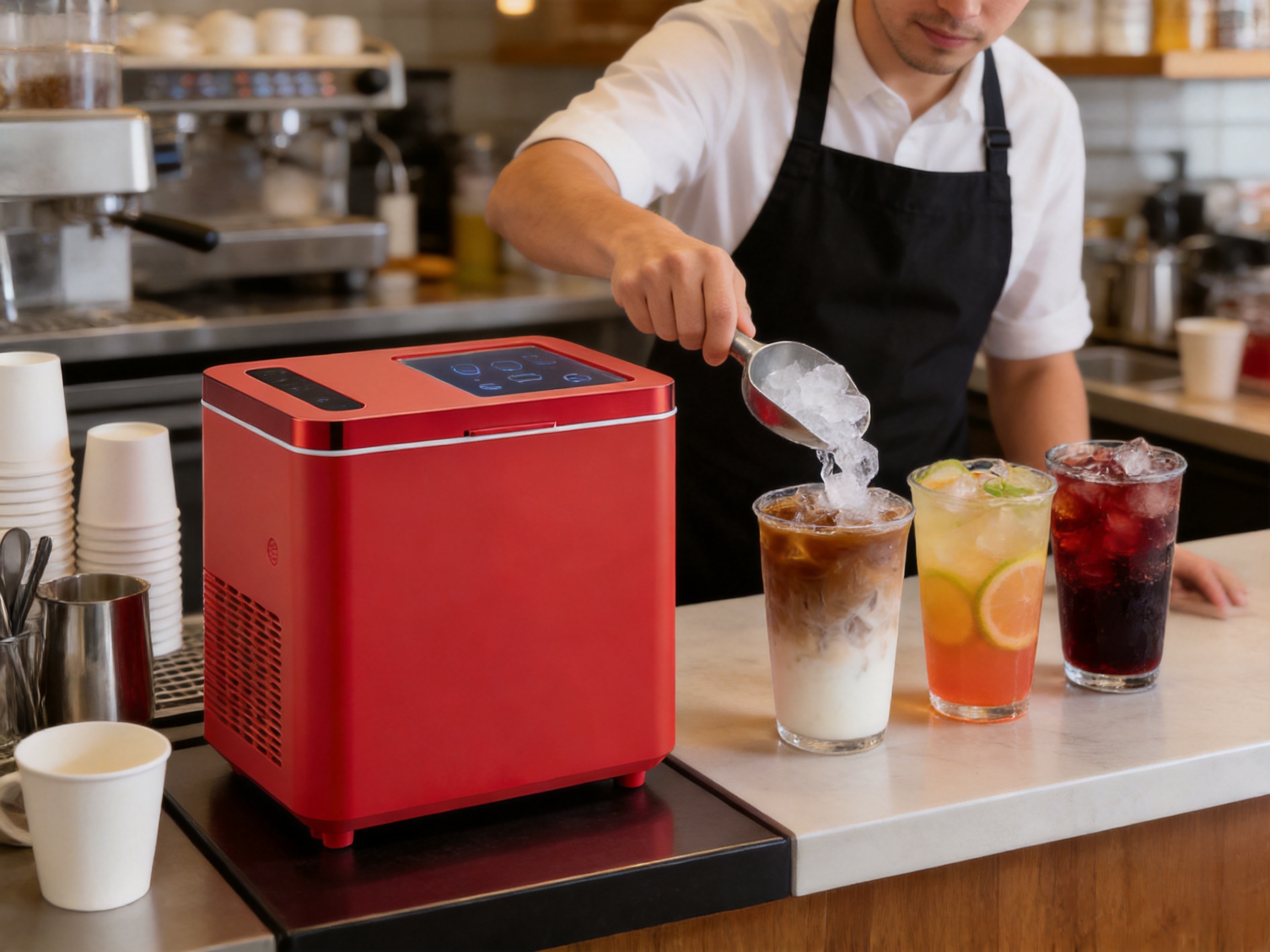
For cafés and beverage shops, ice is part of product quality. Iced coffee, cold brew, fruit tea, milk tea, and blended beverages all require reliable ice. If the ice supply is inconsistent, staff may struggle during peak periods. If the ice is difficult to scoop or clumped together, preparation slows. If the ice has an unpleasant taste, the drink quality suffers. A bullet ice maker addresses these challenges by producing practical, easy-handling ice that cools quickly.
Milk tea shops can particularly benefit from bullet ice. Many customers enjoy a crunchy ice texture along with tapioca pearls, fruit pieces, jelly, or foam toppings. Bullet ice offers moderate hardness, making it more enjoyable than overly hard solid ice. It also chills the drink quickly, helping maintain the correct serving temperature. In a business where customer satisfaction is influenced by temperature, texture, and speed, the right ice maker can be a meaningful operational asset.
The compact footprint is another benefit for small beverage shops. Counters are often crowded with sealing machines, blenders, tea containers, espresso machines, syrup bottles, cups, lids, and point-of-sale equipment. Adding a large ice machine may be difficult. A compact bullet ice maker allows shop owners to strengthen ice supply while preserving working space. This can improve workflow and reduce staff frustration.
Application in Offices and Shared Spaces
Offices increasingly invest in employee comfort through improved pantry and refreshment areas. Cold drinks, coffee stations, and water dispensers are common features in modern workplaces. A compact ice maker can enhance these spaces by providing convenient ice for employees and guests. During hot seasons, the ability to prepare iced beverages can improve the workplace experience and create a more welcoming environment.
Touchscreen operation is helpful in shared spaces because many different users may operate the machine. A simple interface reduces confusion and encourages proper use. The easy-cleaning structure also matters because shared appliances can become neglected if maintenance is difficult. When the ice maker is simple to inspect and clean, office managers or assigned staff can maintain it more consistently.
In meeting rooms, reception areas, and small hospitality corners, the machine can support professional beverage service. Guests often appreciate cold water, iced coffee, or chilled drinks. A reliable ice source helps companies present a thoughtful and prepared image. The machine’s compact design allows it to serve these needs without requiring a full commercial kitchen.
Design for Daily Reliability
Daily reliability depends on more than one feature. It is the result of integrated design: refrigeration performance, water management, control logic, material selection, structural stability, and user maintenance. The touchscreen bullet ice maker is designed to provide a practical experience from the first interaction to long-term use. Its compact dimensions make placement easy, while its flip-top design supports routine care. Its bullet ice form supports beverage quality, while its touchscreen controls support modern convenience.
Reliability also depends on how the product handles common user behavior. In real life, users may operate the machine during busy periods, move it occasionally, clean it quickly, or use it in warm environments. A good appliance should be forgiving and practical. While users should always follow operating instructions, thoughtful design can reduce the chance of misuse and make the product easier to maintain.
The company’s manufacturing background supports this reliability goal. Being located in a mature appliance production region provides access to experienced suppliers, technicians, and logistics. Specialization in ice makers, coffee machines, and air fryers gives the company a broad understanding of household appliance demands. This knowledge can be applied to improve usability, durability, safety, and customer satisfaction.
How the Product Supports Better Beverage Quality
Beverage quality is influenced by temperature, dilution, texture, taste, and presentation. Ice affects all of these factors. If ice cools too slowly, the drink may be served warmer than expected. If ice melts too quickly, the beverage may become diluted. If ice has a poor texture, customers may not enjoy it. If ice carries odors or impurities, the beverage flavor can be damaged. Therefore, ice should be treated as a key ingredient rather than an afterthought.
Bullet ice supports rapid cooling through its hollow structure. This helps beverages reach a refreshing temperature quickly. Its moderate hardness improves chewability and mouthfeel, especially in casual drinks. Its high flowability supports consistent portioning, helping staff add the right amount of ice more easily. Consistent ice portions improve recipe control, which is important for beverage businesses that want every drink to taste the same.
The machine’s cleaning-friendly design also protects flavor. A clean ice-making area helps maintain neutral ice taste. In coffee and tea beverages, subtle flavors can be affected by poor-quality ice. Clean, fresh ice supports the intended flavor profile and gives customers a better experience. For home users, the same principle applies: better ice can make everyday drinks more enjoyable.
Comparison with Common Competitor Designs
Many competitor ice makers compete mainly on capacity or basic price. While these factors are important, they do not fully determine value. A low-cost ice maker that is hard to clean, awkward to operate, or too large for the available space may not satisfy users over time. Similarly, a high-capacity unit may be unnecessary for a small café, home, or office if it consumes too much space and energy. The touchscreen bullet ice maker offers a more balanced value proposition.
Compared with button-controlled models, the touchscreen interface offers a cleaner and more modern operating experience. Compared with machines that have limited cleaning access, the fully flip-top structure supports better hygiene. Compared with machines producing hard solid ice, bullet ice provides rapid cooling, easier handling, and a popular crunchy texture. Compared with bulky models, the compact dimensions support easier placement and flexible use.
This balanced approach is especially important in markets where customers want products that are practical, attractive, and easy to maintain. A product does not need to be the largest to be the best choice. In many cases, the best choice is the machine that fits the user’s actual workflow. This touchscreen bullet ice maker is designed for exactly that: real-life convenience, reliable ice, and practical maintenance.
Commercial Efficiency and Workflow Benefits
In commercial beverage service, workflow efficiency has direct financial impact. Faster preparation can reduce customer waiting time, increase order throughput, and reduce staff pressure. Ice plays a larger role in this workflow than many people realize. If staff must struggle with clumped ice, refill ice manually from distant storage, or wait for insufficient ice production, service slows. A well-placed bullet ice maker can help create a smoother process.
High flowability makes scooping easier. Rapid cooling helps drinks reach the right temperature with less delay. Compact placement allows the machine to be located close to the preparation area. Touchscreen operation reduces confusion. Easy cleaning reduces downtime and supports end-of-day maintenance. These benefits combine to support better daily operations.
For small businesses, efficiency is not only about machines; it is about people. Staff members work better when tools are convenient and reliable. A compact, accessible ice maker helps reduce unnecessary movement and frustration. Better tools can also improve consistency, because employees are more likely to follow standard procedures when equipment supports the process.
Safety and Responsible Use
Like all electrical appliances, an ice maker should be used according to instructions and appropriate safety practices. The product operates on a 220V-240V/50Hz power supply, so users should ensure that the electrical environment is suitable. The machine should be placed on a stable, level surface with adequate ventilation. Water should be added according to the recommended method, and the product should not be operated in unsafe conditions.
Because the machine uses a refrigeration system, users should avoid damaging refrigerant tubing or internal components. Cleaning should be performed carefully, without harsh actions that could affect the machine’s structure. The use of clean water is also important for ice quality and machine longevity. Depending on local water conditions, users may consider filtered water to reduce scale and improve taste.
Responsible use extends product life and maintains performance. Regular cleaning, proper placement, suitable water quality, and careful operation all contribute to better results. A well-designed product makes these practices easier, but user habits still matter. The fully flip-top cleaning structure is valuable because it encourages the kind of maintenance that protects both performance and hygiene.
Why Manufacturing Location and Supply Chain Matter
Appliance manufacturing benefits from strong industrial ecosystems. The company’s location in Zhouxiang, Cixi City, Zhejiang Province offers access to a mature small household appliance environment. This can support faster component sourcing, skilled technical labor, and efficient logistics. For customers, a strong manufacturing base can translate into more stable production, improved product consistency, and better responsiveness to orders or cooperation requests.
Supply chain maturity matters because an ice maker includes many types of components. Refrigeration parts, electrical controls, water-handling components, molded housings, insulation materials, panels, packaging, and testing equipment all need to be coordinated. A manufacturer embedded in an appliance cluster can manage these elements more effectively. This is an advantage over companies that rely on less developed supply networks or lack specialized appliance experience.
The company’s broader experience with coffee machines and air fryers also adds value. Coffee machines require water management, heating control, flavor awareness, and user-friendly design. Air fryers require heat management, electrical safety, airflow understanding, and durable construction. Ice makers require refrigeration control, hygiene design, and water circulation. Experience across these categories supports a stronger engineering culture and helps the company design appliances that meet real household and commercial needs.
Customer-Centered Product Philosophy
A successful appliance should solve real problems. For ice makers, the real problems include slow ice availability, poor cleaning access, inconvenient controls, clumping ice, insufficient cooling performance, and lack of space. The touchscreen bullet ice maker addresses these problems through compact structure, bullet ice geometry, touchscreen operation, continuous ice-making principle, and flip-top cleaning access. This customer-centered approach reflects a practical understanding of daily use.
The company’s philosophy emphasizes reliable quality, customer satisfaction, continuous improvement, and innovation. These values are important because appliance customers want long-term dependability. A customer may be impressed by appearance at first, but long-term satisfaction depends on whether the machine remains useful, easy to clean, and stable in performance. Continuous improvement helps ensure that products evolve with customer expectations.
Humanized design is also a key concept. A machine can be technically capable yet frustrating if it is difficult to operate or maintain. Humanized design means considering how people actually use the product: where they place it, how they fill it, how they clean it, how they scoop ice, how often they use it, and how much space they have. The touchscreen bullet ice maker is built around this practical thinking.
Q&A Section
What type of ice does this machine produce?
It produces bullet ice, a popular ice shape with a hollow center. This shape increases contact area with beverages, supports rapid cooling, and offers a pleasant crunchy texture.
Why is bullet ice useful for beverage businesses?
Bullet ice is easy to scoop, less likely to clump, and quick to chill drinks. These qualities help beverage shops improve service speed, maintain drink quality, and provide a texture that many customers enjoy.
Is the machine suitable for home use?
Yes. Its compact dimensions and easy operation make it suitable for home kitchens, parties, family gatherings, and daily iced beverage preparation.
What are the machine dimensions?
The machine dimensions are 325 x 295 x 252 mm, allowing it to fit on many countertops and in compact service areas.
What power supply does it require?
The product is designed for a 220V-240V/50Hz power supply, with a rated current and power of 0.9A and 150W.
What refrigerant does the machine use?
It uses R600a refrigerant with a 19g charge. Proper manufacturing control and refrigerant charging are important for stable cooling performance.
How does the touchscreen improve usability?
The touchscreen interface makes operation more intuitive and gives the machine a modern appearance. It can also be easier to wipe clean compared with traditional button panels.
Why is the fully flip-top design important?
The fully flip-top design allows users to open the ice storage and ice-making areas more completely. This makes routine cleaning easier and helps reduce hidden sanitation corners.
How does this product compare with larger ice makers?
Larger ice makers may offer higher capacity, but they require more space and may be less flexible. This compact model provides practical ice-making capability while saving counter space.
What makes the manufacturer competitive?
The manufacturer is located in a mature small household appliance production region and specializes in appliances such as ice makers, coffee machines, and air fryers. This background supports strong supply chain coordination, manufacturing experience, quality control, and product development capability.
Conclusion
The touchscreen bullet ice maker is a practical and competitive appliance for users who value fast cooling, easy handling, compact placement, and hygienic maintenance. Its bullet ice shape improves beverage cooling efficiency and delivers a popular crunchy texture. Its touchscreen interface supports modern, intuitive operation. Its fully flip-top design makes cleaning easier and more thorough. Its compact body allows it to fit into homes, offices, cafés, milk tea shops, fast food counters, and other beverage service environments.
Compared with many conventional ice makers, the product offers a more balanced combination of usability, ice quality, space efficiency, and cleaning convenience. It is not only a machine for producing ice; it is a tool for improving beverage preparation and daily refreshment. Whether used in a family kitchen or a small commercial setting, it can help users serve cold drinks more efficiently and enjoyably.
The manufacturing strength behind the product further enhances its value. The company’s location in a well-developed household appliance manufacturing region, its experience across ice makers, coffee machines, and air fryers, and its commitment to quality, customer satisfaction, improvement, and innovation all support product reliability. In a market where customers expect appliances to be smart, convenient, and durable, this touchscreen bullet ice maker stands out as a thoughtful solution for modern ice-making needs.
References
ASHRAE Handbook: Refrigeration. American Society of Heating, Refrigerating and Air-Conditioning Engineers.
International Electrotechnical Commission. Household and Similar Electrical Appliances Safety Standards.
Food and Beverage Service Hygiene Guidelines for Ice Handling and Storage.
Refrigeration and Air Conditioning Technology, Technical Reference Edition.
Small Household Appliance Manufacturing Quality Control Practices, Industry Reference Materials.