
 English
 한국어
한국어 Español
 Deutsch
For households that enjoy chilled drinks, iced coffee, smoothies, sodas, cocktails, and refreshing daily beverages, the quality of ice matters far more than many people realize. A home chewing ice maker is designed not merely to freeze water, but to create a special style of soft, chewable ice that improves the drinking experience, cools beverages quickly, and adds a satisfying texture that traditional hard cubes cannot provide. This article introduces a compact home chewing ice maker engineered for modern kitchens, small apartments, family entertainment spaces, office pantries, and beverage lovers who want soft nugget-style ice available whenever they need it.
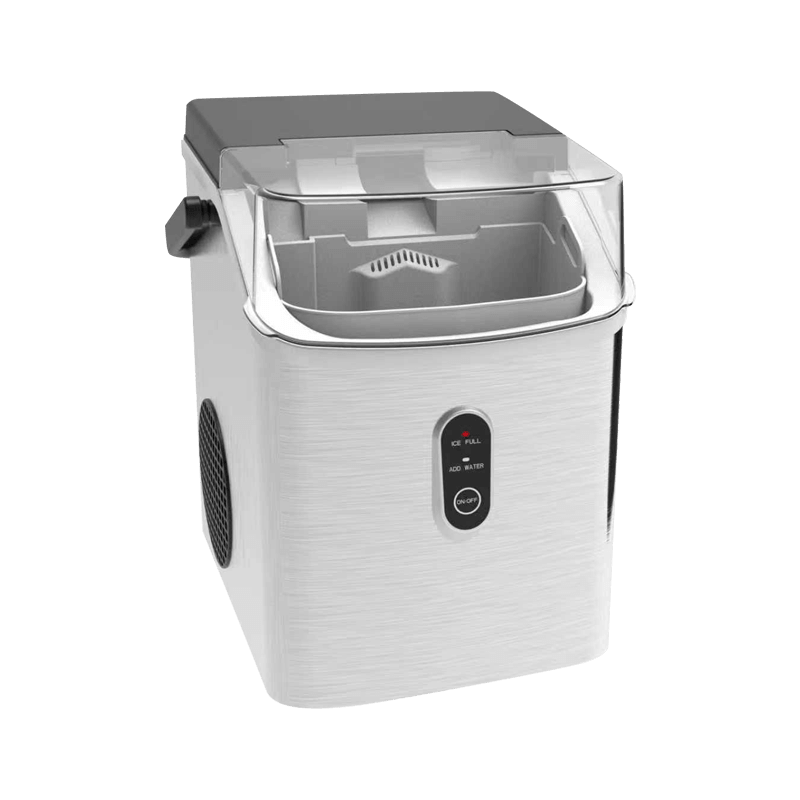
The product is a household chewing ice maker with a compact body, efficient cooling performance, and user-friendly operation. It produces soft-textured ice that is gentle on teeth, pleasant to chew, and suitable for many drink and food applications. Compared with ordinary cube ice makers, this type of machine offers a more enjoyable ice texture, faster cooling effect, easier mixing, and broader versatility in beverages, food displays, cold compresses, and dessert preparation.
Product Overview
This home chewing ice maker is built for users who appreciate the difference between common ice cubes and soft chewable ice. Traditional ice cubes are hard, dense, and sometimes slow to cool drinks because of their lower surface contact area. Chewing ice, by contrast, is softer, smaller, and more porous, allowing it to absorb and exchange temperature faster. It chills beverages rapidly and creates a refreshing drinking experience that feels premium, comfortable, and fun.
The machine belongs to the chewing ice maker category and is designed for household use. Its compact dimensions of 224 x 333 x 325 mm make it suitable for countertops, coffee corners, beverage stations, small bars, shared office kitchens, and family dining areas. With a rated power of 130 W and a current of 0.55 A, it is developed for efficient operation while meeting daily home ice-making needs.
The appliance uses R600a refrigerant with a charge of 19 g. R600a is widely used in modern refrigeration appliances because it supports effective cooling performance and is recognized for its favorable environmental profile compared with many older refrigerants. This reflects a design direction that balances household convenience, cooling efficiency, and responsible appliance engineering.
Key Specifications
Product Type |
Home Chewing Ice Maker |
Ice Style |
Soft chewable nugget-style ice |
Product Power Supply |
220 V / 60 Hz |
Current / Power |
0.55 A / 130 W |
Refrigerant / Charge |
R600a / 19 g |
Machine Dimensions |
224 x 333 x 325 mm |
Recommended Applications |
Iced coffee, soda, juice, cocktails, smoothies, shaved ice, food cooling, and cold compresses |
The Advantage of Chewable Ice
The central value of this appliance lies in the ice it produces. Chewable ice is not simply smaller ice; it has a softer, more satisfying structure. Many consumers enjoy the gentle crunch, the sound, and the way the ice absorbs beverage flavor. It provides a unique experience that has become associated with premium drink service in cafes, restaurants, convenience stores, and specialty beverage shops.
Hard ice cubes are effective for basic cooling, but they can feel heavy in the mouth and may be uncomfortable for people who like to chew ice. Chewable ice is softer and gentler on teeth. It allows users to enjoy the cooling function of ice while also enjoying its texture as part of the beverage. This makes it especially attractive for families, iced coffee drinkers, soda lovers, and anyone who wants a more satisfying cold drink at home.
Another important benefit is rapid cooling. Because chewable ice consists of smaller particles with a larger surface area, it contacts the beverage more fully. This helps transfer heat faster and lowers drink temperature quickly. Whether poured into iced coffee, sparkling water, fruit tea, cola, lemonade, or sports drinks, soft chewing ice can deliver a fast refreshing effect.
Why This Home Chewing Ice Maker Stands Out
In the household appliance market, many ice makers focus on basic bullet ice or cube ice. Those products can be useful, but they often do not deliver the premium chewable texture that modern consumers increasingly prefer. This home chewing ice maker is different because its design centers on the sensory experience of soft, chewable, drink-friendly ice. It is made for users who care about taste, texture, convenience, and daily comfort.
Compared with many conventional countertop ice makers, this model provides a more specialized result. Bullet ice machines typically produce hollow, hard pieces that chill beverages but do not blend as smoothly with drinks. Cube ice makers produce solid pieces that melt more slowly but may not provide fast cooling or chewable enjoyment. A chewing ice maker creates ice that is easier to scoop, easier to mix, and more pleasant to consume.
The product also offers a compact footprint. With dimensions of 224 x 333 x 325 mm, it is designed to fit comfortably in homes where countertop space is valuable. Many competing machines are bulky, difficult to place, or better suited to commercial counters. This machine brings a desirable ice style into a home-friendly form factor.
Energy-conscious design is another advantage. The rated power of 130 W supports practical operation for household use. While performance depends on environmental conditions, water temperature, and usage habits, the product is engineered around the needs of daily home ice production rather than excessive commercial-scale power consumption.
Designed for Everyday Drinks
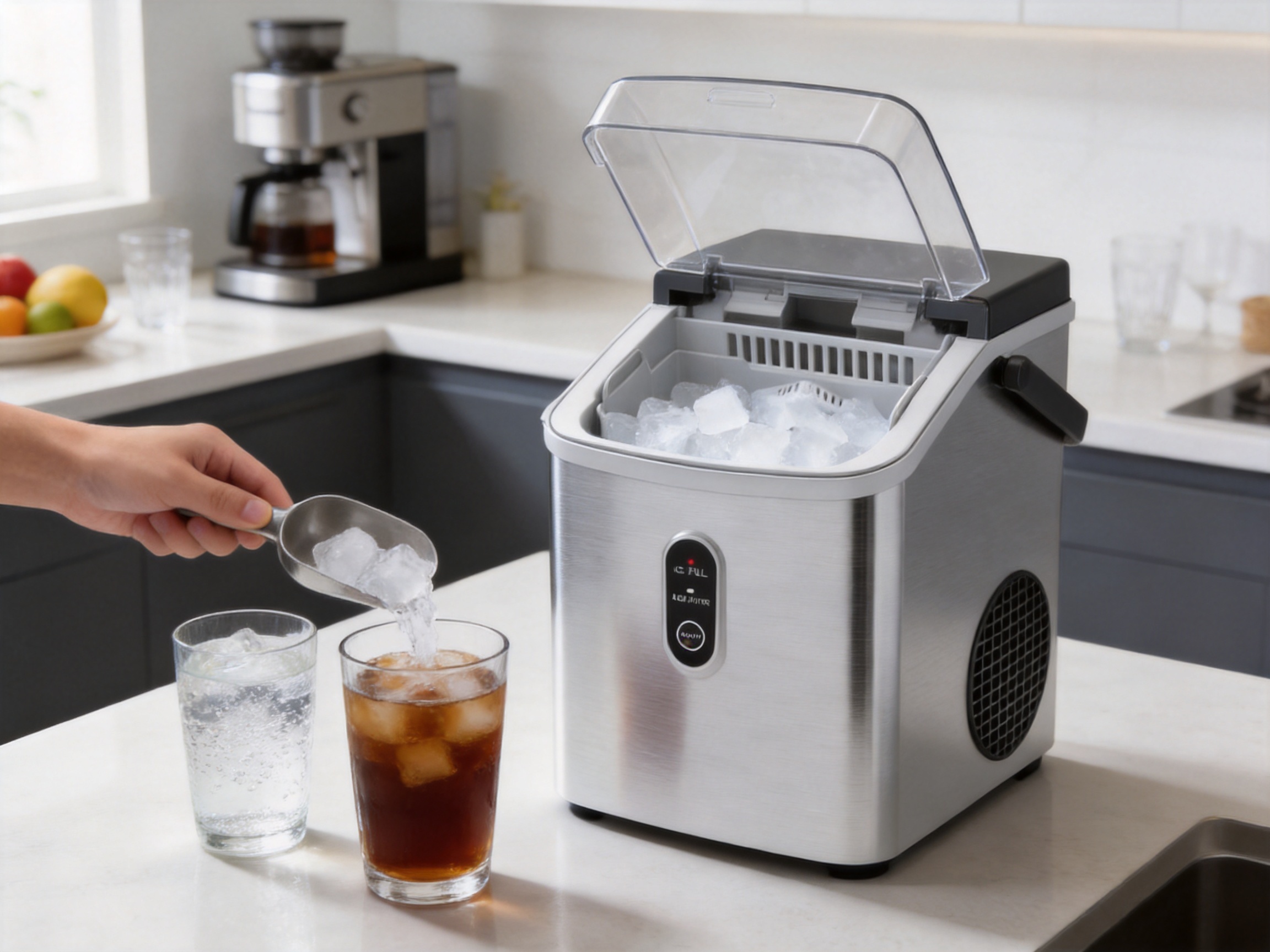
The most common use of chewable ice is in drinks. For iced coffee, the ice helps cool the drink rapidly without creating the bulky feeling of large cubes. Coffee enthusiasts often care about temperature, dilution, mouthfeel, and the way ice interacts with milk or syrup. Soft chewing ice distributes throughout the cup and helps create a café-style beverage experience at home.
For soda and sparkling beverages, chewable ice provides an especially refreshing effect. The small ice pieces spread through the drink and create an enjoyable cooling sensation with every sip. They also hold carbonation in a lively way, making the beverage feel crisp and energetic.
For fruit drinks, lemon tea, iced tea, infused water, and juice, the ice supports quick cooling and easy mixing. Because it is smaller and softer, it helps blend flavors more evenly. When users add fruit slices, mint leaves, honey, syrup, or flavored powders, chewing ice helps the drink feel more integrated and visually appealing.
For cocktails and mocktails, the texture of chewing ice can elevate presentation and drinking pleasure. It is ideal for crushed-ice-style drinks, summer refreshers, and beverages where fast cooling and easy sipping are important. It can create a relaxed bar-style atmosphere without requiring users to crush hard cubes manually.
Excellent for Smoothies, Shaved Ice, and Frozen Treats
Beyond drinks, this home chewing ice maker is a practical base for smoothies and frozen desserts. Because the ice is already soft and small, it can be blended more easily than large hard cubes. This can reduce stress on blending equipment and help create smoother beverage textures.
For homemade smoothies, users can combine chewing ice with fruit, yogurt, milk, juice, or protein powder. The ice helps thicken the drink while keeping it cold and refreshing. For families with children, it provides a convenient way to prepare fruit-based cold drinks at home.
For shaved ice and similar desserts, soft chewing ice can serve as an excellent starting material. It can be topped with syrup, fruit, condensed milk, sweet beans, chocolate, or other ingredients. Because the ice is chewable and easy to scoop, it is suitable for casual dessert preparation without the need for large commercial equipment.
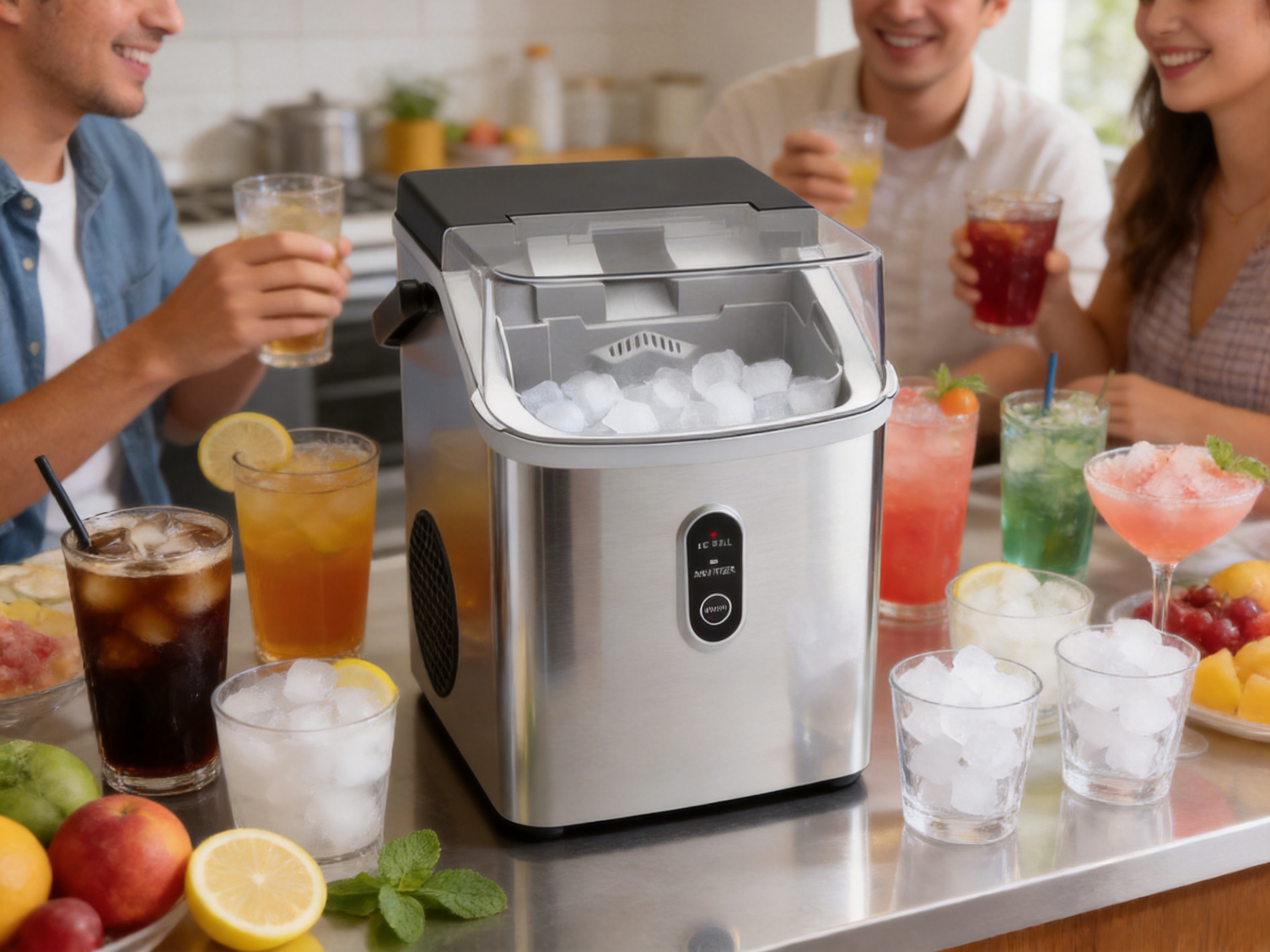
For slush-style beverages, chewing ice can be mixed with soda, fruit concentrate, tea, or flavored syrup. The result is a refreshing drink that feels more exciting than a standard cold beverage. This versatility makes the appliance useful not only in summer but throughout the year for parties, family gatherings, and personal enjoyment.
Food Cooling and Display Applications
Chewing ice is also useful for food presentation and cooling. Its small particle structure allows it to conform closely around food items. This makes it suitable for cooling vegetables, seafood, sashimi, oysters, fruit, and other items that benefit from stable cold contact.
In a home setting, this can be helpful during family meals, outdoor gatherings, barbecue events, or holiday parties. A bed of soft ice can keep fruit plates, beverage cans, seafood dishes, or salad ingredients cool and visually attractive. Compared with large cubes, chewable ice can surround items more evenly and create a cleaner display surface.
The same property is valuable because chewing ice can coat surfaces effectively. When used under food containers or serving trays, it helps maintain freshness. Although it is not a substitute for proper food safety practices, it can support temporary cooling during serving and presentation.
Cold Compress Use
Another practical application is cold compress preparation. Because chewable ice is soft and conforms well to curved surfaces, it can be used in a bag or compress pack for cooling body parts. Its ability to adapt to shape makes it useful for general household comfort, post-exercise cooling, and minor swelling relief when used appropriately.
Users should always follow medical advice and avoid applying ice directly to skin for prolonged periods. A cloth barrier or suitable ice pack should be used. However, compared with large hard cubes, soft chewing ice can be more comfortable because it molds more evenly around knees, ankles, elbows, shoulders, or other areas.
Gentle Texture and Pleasant Experience
The experience of chewing ice is one of the strongest reasons consumers choose this type of appliance. The soft texture creates a gentle crunch that many people find satisfying. It is not as harsh as dense cube ice and is more enjoyable to eat after a drink is finished.
This sensory quality is important because home appliances today are expected to do more than perform a basic function. They should improve lifestyle, create small moments of pleasure, and make daily routines easier. A home chewing ice maker turns ordinary water into an enjoyable ingredient for drinks, snacks, and family activities.
The pleasant sound and texture of chewing ice also create a sense of freshness. When poured into a glass, it gives drinks a premium look and feel. This can make home beverages feel closer to those served in cafés or specialty drink shops.
Compact Engineering for Modern Homes
Modern kitchens are often filled with appliances such as coffee machines, air fryers, mixers, toasters, and water dispensers. A successful countertop appliance must therefore be compact, attractive, and easy to integrate into daily life. This home chewing ice maker is designed with a space-conscious footprint that makes it practical for a wide variety of home environments.
Its dimensions allow it to sit on a kitchen counter, side table, pantry shelf, small beverage station, or office countertop. The vertical and rectangular form helps conserve space while keeping the machine accessible. Users do not need to remodel their kitchen or dedicate a large area to enjoy chewable ice.
Compactness also supports portability within the home. The appliance can be used in the kitchen during normal days, moved closer to a dining room during gatherings, or placed in a recreational area when entertaining guests. This flexibility distinguishes it from larger built-in or commercial ice equipment.
Reliable Cooling System
The use of R600a refrigerant supports efficient cooling in a compact appliance format. Refrigeration performance is central to ice quality because the machine must remove heat consistently and form ice with the right texture. A stable cooling system helps create reliable output and contributes to the softness and consistency expected from chewing ice.
R600a has become common in household refrigeration appliances because it can deliver effective thermal performance while aligning with modern environmental trends. The 19 g charge indicates a compact refrigeration circuit suitable for small appliance design. This reflects a balance between performance, size, and household practicality.
The 220 V / 60 Hz power supply and 130 W rated power provide the electrical foundation for the appliance. The design is intended for stable use in compatible markets and installation conditions. Users should always check local voltage requirements and follow the instruction manual to ensure safe operation.
Manufacturing Strength Behind the Product
The manufacturer behind this home chewing ice maker is located in Zhouxiang, Cixi City, Zhejiang Province, an area known for small household appliance production and supporting supply chains. This location provides access to component suppliers, logistics resources, skilled labor, and manufacturing experience in appliances such as ice makers, coffee machines, and air fryers.
Strong manufacturing capability is essential for an appliance that combines refrigeration, water handling, electrical control, plastic molding, assembly precision, and quality testing. A chewing ice maker requires careful coordination between the cooling system, ice-making mechanism, housing structure, water pathway, and user interface. The manufacturer’s specialization in household appliances supports this integrated approach.
The company’s mission emphasizes smart technology, simplified life, and enhanced happiness. These ideas are reflected in the product’s purpose: to make premium chewable ice convenient for home users. Rather than requiring consumers to visit restaurants or buy bags of ice, the appliance brings a specialized ice-making experience into daily life.
Advanced Manufacturing Processes
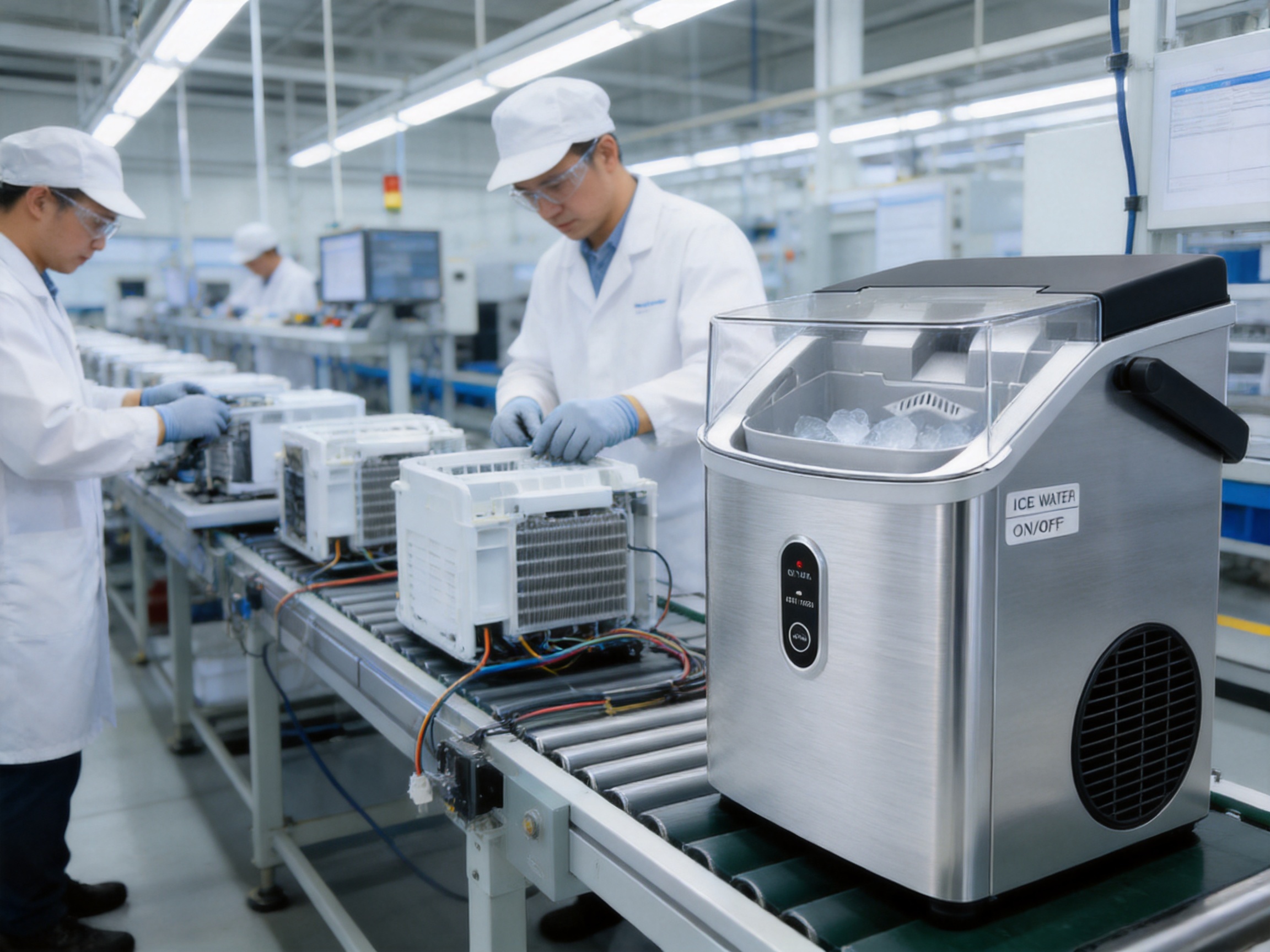
Producing a dependable home chewing ice maker requires more than assembly. It involves material selection, precision processing, refrigeration system integration, leak control, electrical safety verification, appearance inspection, and performance testing. Advanced manufacturing processes help ensure that each unit can meet user expectations for safety, consistency, and durability.
The manufacturing process typically begins with product engineering and component validation. Designers and engineers evaluate the machine structure, cooling layout, water flow path, air circulation, noise control, and serviceability. Components must be selected to support compact dimensions while maintaining stable ice-making performance.
Plastic housing components require accurate molding and finishing. Good mold design helps ensure parts fit tightly, look clean, and resist deformation during use. The compact body of the appliance depends on precise plastic parts that align correctly with internal components and external panels.
Metal and refrigeration components must be assembled with attention to sealing and cleanliness. Refrigerant circuits require controlled processing to reduce leak risk and maintain cooling efficiency. Proper charging of R600a refrigerant is important for achieving designed performance. Careful refrigeration system handling is a major difference between a serious manufacturer and a basic assembly operation.
Electrical components require secure wiring, insulation, grounding design where applicable, and compatibility with the rated power supply. Since the appliance combines water and electricity, safety design and testing are especially important. Quality-focused manufacturers pay close attention to electrical layout, protection design, and assembly consistency.
Performance testing is another key step. Ice-making function, cooling speed, current, power, operational stability, water flow, sound, and overall usability can be evaluated before products leave the factory. A strong testing process helps reduce defects and supports customer satisfaction.
Quality Control and Consistency
Quality control is one of the most important advantages a specialized appliance manufacturer can offer. For consumers, product quality is experienced through daily details: whether the machine starts smoothly, whether the ice texture is consistent, whether the body feels solid, whether operation is convenient, and whether the appliance continues to perform after repeated use.
A quality-oriented manufacturer controls the process from incoming materials to final inspection. Incoming components can be checked for dimensions, appearance, electrical parameters, and supplier consistency. During production, assembly steps can be standardized so that each machine is built according to defined procedures.
Refrigeration performance testing is especially important for an ice maker. Even small variations in refrigerant charge, cooling system assembly, or air circulation can affect ice quality. By maintaining standardized charging, sealing, and testing practices, the manufacturer can improve reliability and reduce performance variation between units.
Final inspection may include appearance checks, functional testing, packaging verification, and safety-related assessments. This helps ensure that products shipped to customers are complete, clean, and ready for use.
Humanized Design Philosophy
A home appliance should not be complicated. The best products are those that fit naturally into routines. This home chewing ice maker is developed around the idea of simplifying life. Its value is not only technical; it is practical. It gives users the ability to make refreshing ice at home without relying on freezer trays, purchased ice bags, or commercial beverage shops.
Humanized design includes compact size, convenient operation, easy placement, and a product purpose that matches real household habits. Many families prepare iced drinks daily, especially in warm seasons. Coffee lovers may want iced coffee every morning. Parents may want cold fruit drinks for children. Guests may expect chilled beverages during gatherings. The appliance supports all these scenarios.
Its soft ice output also improves usability. Chewing ice is easier to scoop and mix compared with large hard cubes. This makes drink preparation smoother and more enjoyable. The product therefore combines functional design with lifestyle value.
Advantages Over Traditional Freezer Ice
Many households still rely on freezer ice trays. While simple, freezer trays have several limitations. They take hours to freeze, occupy freezer space, absorb odors from stored food, and produce hard cubes that are not always pleasant to chew. Removing cubes from trays can also be inconvenient.
A home chewing ice maker solves many of these problems. It creates ice independently from the freezer, helping preserve freezer space for food storage. The ice style is softer and more enjoyable than tray cubes. The machine also supports more flexible use, especially when users need ice for drinks, parties, desserts, or cooling applications.
Purchased bagged ice is another common option, but it requires storage, transportation, and planning. Bags of ice can melt during transport, occupy freezer space, and may not provide the desired chewable texture. A home machine gives users more control and convenience.
Advantages Over Standard Bullet Ice Makers
Bullet ice makers are common in the countertop appliance market. They are often affordable and simple, but the ice they produce is usually harder and less satisfying to chew. Bullet ice may also melt unevenly or feel bulky in drinks. For users seeking premium soft ice, bullet-style machines may not deliver the desired experience.
This home chewing ice maker focuses on a different consumer need. It is designed for the soft, chewable texture that many people specifically prefer. The ice integrates better with iced coffee, soda, fruit tea, smoothies, and chilled beverages. It feels more refined and enjoyable in the mouth.
The difference is similar to comparing ordinary ice with ice designed for beverage culture. Consumers who value texture, fast cooling, and drink quality are likely to appreciate the chewing ice format more than standard bullet ice.
Advantages Over Large Commercial Ice Machines
Commercial ice machines can produce large amounts of ice, but they are usually expensive, heavy, noisy, and unsuitable for ordinary households. They may require plumbing, drainage, professional installation, or large dedicated spaces. For most home users, such equipment is unnecessary.
This compact home chewing ice maker offers a practical alternative. It brings the enjoyable qualities of chewable ice into a smaller appliance designed for everyday living spaces. Users can enjoy premium ice without adopting commercial-scale equipment or complicated installation requirements.
The result is a better balance between performance and practicality. It is suitable for personal and family use, small offices, home entertainment, and beverage stations where convenience matters more than industrial capacity.
Use Scenarios
Morning Iced Coffee
A coffee drinker can start the day by preparing iced coffee with soft chewing ice. The ice cools brewed coffee quickly and mixes well with milk or sweetener. The result is a café-style beverage without leaving home.
Family Meals
During lunch or dinner, the machine can provide ice for water, juice, tea, soda, or fruit drinks. Children and adults can enjoy refreshing beverages with a soft texture that is easier to chew.
Home Parties
For gatherings, chewable ice can be served in drink buckets, cocktail glasses, mocktails, or dessert bowls. It improves presentation and creates a more memorable beverage experience.
Fitness and Recovery
After exercise, users can prepare cold sports drinks or use ice in a compress bag. The soft ice texture is practical for both hydration and cooling comfort.
Food Presentation
Soft ice can be used under fruit, seafood, or cold dishes to help maintain freshness during serving. Its ability to conform around items makes it visually attractive and functional.
Operating Considerations
To get the best results from a home chewing ice maker, users should place the appliance on a stable, flat surface with suitable ventilation. Good air circulation helps the refrigeration system work efficiently. The machine should be used in accordance with the instruction manual and connected only to a compatible power supply.
Water quality can affect the taste and appearance of ice. Using clean drinking water is recommended. In areas with hard water, filtered water may help reduce mineral buildup and improve ice taste. Regular cleaning is also important because the machine handles water and ice intended for consumption.
Users should avoid placing the appliance near high heat sources such as ovens, direct sunlight, or heating equipment. A cooler environment can support better ice-making efficiency. The appliance should also be kept dry externally and handled carefully to protect electrical components.
Maintenance and Cleaning
Like all water-contact appliances, an ice maker benefits from regular maintenance. Users should empty unused water when appropriate, wipe accessible surfaces, and clean the internal water-contact areas according to the product manual. Proper cleaning helps maintain ice taste and hygiene.
If the machine is not used for an extended period, it should be cleaned, drained, dried, and stored in a suitable environment. This helps prevent odor, residue, or moisture-related issues. Good maintenance habits can extend the life of the appliance and preserve ice quality.
Because chewable ice is often consumed directly, cleanliness is especially important. Users should treat the appliance as they would a coffee machine, water dispenser, or blender: regular care leads to better results.
Market Demand for Chewing Ice
Consumer interest in premium home beverage appliances has grown significantly. Coffee machines, air fryers, soda makers, blenders, and ice makers have become part of modern kitchens because people want more control over taste, health, and convenience. Chewing ice fits this trend perfectly.
Many people first experience soft nugget-style ice in restaurants or beverage shops, then want the same texture at home. It has become associated with comfort, refreshment, and premium drink culture. A home chewing ice maker meets this demand by making the experience accessible without daily purchases from cafés or convenience stores.
The product also supports healthier beverage habits. When users can make enjoyable cold drinks at home, they may prepare more water, fruit tea, unsweetened iced coffee, infused drinks, or low-sugar beverages. The texture of the ice itself adds satisfaction, reducing the need for excessive sweeteners in some drink routines.
Company Manufacturing Strength and Business Reliability
The manufacturer specializes in household appliances including ice makers, coffee machines, and air fryers. This broader appliance experience is valuable because it demonstrates familiarity with heating systems, cooling systems, user interfaces, food-contact materials, compact appliance design, and mass production processes.
The company is located in a region with convenient logistics and a strong small-appliance industrial base. This can support efficient sourcing, production coordination, and shipping. For distributors, importers, retailers, and business partners, supply chain stability is an important factor when selecting a product manufacturer.
The company’s commitment to excellent quality, customer satisfaction, continuous improvement, and innovation supports long-term product development. In a competitive appliance market, manufacturers must improve not only appearance and features but also reliability, production efficiency, and after-sales cooperation.
The business philosophy is stable and pragmatic, which matters in manufacturing partnerships. A reliable manufacturer should be able to communicate clearly, support orders responsibly, maintain quality standards, and continue improving products based on market feedback.
Why Distributors and Retailers Should Pay Attention
For appliance distributors and retailers, a home chewing ice maker offers strong market positioning. It is more distinctive than a basic ice maker and more practical than large commercial machines. It serves a growing consumer preference for premium ice texture and home beverage convenience.
The product can be marketed to coffee enthusiasts, families, home entertainers, office users, small hospitality spaces, and lifestyle-focused consumers. Its compact size supports retail display and online sales. Its application range gives sales teams many ways to explain value beyond simple ice production.
Another advantage is product differentiation. Many countertop ice makers look similar and produce similar bullet ice. A chewing ice maker provides a clearer selling point: soft chewable ice that cools quickly, mixes easily, and enhances drinks. This makes it easier to communicate benefits to end users.
Q&A Section
What is a home chewing ice maker?
A home chewing ice maker is a countertop appliance designed to produce soft, chewable ice for beverages, desserts, food cooling, and other household uses. Unlike standard hard cube ice, chewing ice has a softer texture and is more pleasant to bite.
How is chewing ice different from ordinary ice cubes?
Chewing ice is softer, smaller, and easier to chew. It has a larger contact area with beverages, which helps drinks cool faster. Ordinary cubes are harder and denser, while chewing ice offers a more enjoyable texture and better mixing performance.
Is this machine suitable for iced coffee?
Yes. Chewing ice is excellent for iced coffee because it cools the coffee quickly and blends well with milk, cream, syrup, or other ingredients. It can help create a café-style drink experience at home.
Can the ice be used for smoothies and shaved ice?
Yes. The soft and small ice pieces can be used as a base for smoothies, slush drinks, shaved ice, and other frozen treats. They are easier to blend than large hard cubes.
Is chewable ice gentle on teeth?
Chewable ice is generally softer than traditional hard cubes, making it more comfortable to chew. However, people with dental sensitivity, dental work, or tooth concerns should still chew carefully and follow professional dental advice.
What are the power specifications?
The product power supply is 220 V / 60 Hz, with current and power rated at 0.55 A / 130 W. Users should confirm compatibility with their local electrical standards before use.
What refrigerant does the machine use?
The machine uses R600a refrigerant with a charge of 19 g. R600a is widely used in modern household refrigeration appliances.
Where can the machine be placed?
It can be placed on a stable countertop, beverage station, pantry surface, office kitchen counter, or home bar area. Users should allow suitable ventilation and keep it away from direct heat sources.
How large is the machine?
The machine dimensions are 224 x 333 x 325 mm, making it compact enough for many household countertop environments.
Why choose this product over a standard bullet ice maker?
A standard bullet ice maker usually produces harder ice. This home chewing ice maker is designed for soft chewable ice, which offers better texture, faster cooling, and easier mixing in beverages.
Can the ice be used for food displays?
Yes. Chewing ice can surround food items closely, making it useful for temporary cooling and presentation of fruit, seafood, vegetables, and cold dishes. Proper food safety practices should always be followed.
How should the appliance be maintained?
Users should clean the water-contact areas regularly, use clean drinking water, drain and dry the machine when not in use for long periods, and follow the instruction manual for detailed maintenance steps.
Conclusion
A home chewing ice maker is more than a convenience appliance. It is a lifestyle upgrade for people who enjoy cold beverages, soft chewable texture, fast cooling, and versatile ice applications. By producing gentle, nugget-style ice at home, it transforms ordinary drinks into refreshing café-style experiences and supports smoothies, desserts, food presentation, and cold compress use.
This product stands out from conventional ice makers because it focuses on the type of ice that many consumers genuinely prefer. Its compact dimensions, efficient 130 W design, R600a refrigeration system, and household-oriented engineering make it practical for modern homes and small shared spaces. It offers clear advantages over freezer trays, bagged ice, bullet ice makers, and oversized commercial machines.
Behind the product is a manufacturer with experience in household appliances, located in a strong small-appliance production region with convenient logistics and supply chain advantages. Its emphasis on smart technology, reliable quality, customer satisfaction, continuous improvement, and pragmatic manufacturing supports the development of products that meet real market needs.
For consumers, the benefit is simple: soft, satisfying, refreshing ice whenever needed. For retailers and business partners, the product offers differentiation in a competitive appliance market. For modern homes, it delivers a small but meaningful improvement to daily life, turning every glass of iced coffee, soda, tea, juice, or smoothie into a more enjoyable experience.
References
International Institute of Refrigeration. General principles of household refrigeration and refrigerant applications.
ASHRAE Handbook. Refrigeration systems and applications for small appliances.
Food and Beverage Industry Research. Consumer preferences for ice texture in cold beverages.
Household Appliance Manufacturing Review. Quality control practices in compact kitchen appliance production.
Materials and Design in Consumer Appliances. Plastic molding, assembly precision, and user-centered product design.