
 English
 한국어
한국어 Español
 Deutsch
In modern kitchens, convenience is no longer limited to faster cooking or smarter storage. Consumers increasingly want appliances that improve the quality of small daily pleasures, from a fresh cup of coffee to a chilled soda, a fruit smoothie, or a beautifully served seafood platter. Among these lifestyle upgrades, the home chewing ice maker has become one of the most appealing appliances for families, beverage lovers, and anyone who enjoys soft, chewable ice. Unlike ordinary cube ice, chewing ice is light, porous, easy to bite, and fast cooling. It turns simple drinks into café-style refreshments and makes daily hydration more enjoyable.
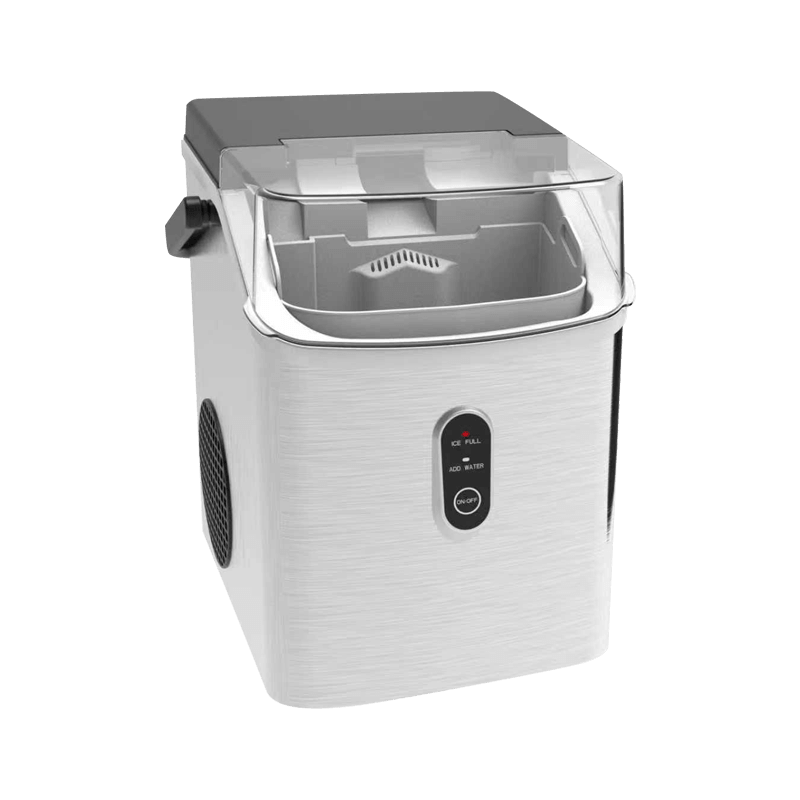
The Home Chewing Ice Maker, model Alien-ZJ01, is designed for users who want soft nugget-style ice at home without depending on convenience stores, restaurants, or commercial ice suppliers. Its core value is simple: it produces chewable ice with a gentle texture, rapid cooling performance, and excellent versatility. Whether used for iced coffee, soda, juice, cocktails, smoothies, shaved ice, salad display, seafood preservation, or cold compress applications, this type of ice offers advantages that conventional ice cubes cannot easily match.
This article explores the product’s features, technical specifications, competitive advantages, application scenarios, and the manufacturing strengths behind it. It also explains why a dedicated chewing ice maker is a practical investment for modern households and why professional appliance manufacturing capability is essential for stable product quality.
Understanding the Appeal of Chewing Ice
Chewing ice is often known for its soft and satisfying bite. It is different from hard freezer cubes, crescent ice, or large square cocktail cubes. Traditional ice cubes are usually dense and solid, which makes them slow to melt and sometimes uncomfortable to chew. Chewing ice, by contrast, has a softer structure with many tiny air spaces. This structure gives it a pleasant crunch while remaining gentle on teeth. The result is an ice form that is enjoyable not only as a cooling material but also as part of the drinking experience itself.
The popularity of chewing ice comes from several sensory and practical qualities. First, it is easy to chew. Many people enjoy the sound and feel of soft ice without the sharp hardness of freezer-made cubes. Second, it cools beverages quickly because smaller ice particles create a larger surface contact area with liquid. Third, it absorbs and carries flavors more effectively. When placed in soda, coffee, juice, or flavored drinks, the ice can take on part of the beverage taste, making the last sip as enjoyable as the first.
For households, this means the ice maker is more than a simple accessory. It becomes a daily refreshment station. A glass of water becomes more appealing. Iced coffee feels smoother and colder. Children’s juice drinks can be cooled quickly. Homemade smoothies and shaved ice desserts become easier to prepare. Even entertaining guests becomes simpler because the appliance helps create a premium beverage experience without requiring professional bar equipment.
Product Overview
The Home Chewing Ice Maker is designed as a compact household appliance for producing soft chewable ice. It is suitable for domestic kitchens, home bars, small offices, leisure rooms, and entertainment areas. Its dimensions of 224 x 333 x 325 mm make it convenient for countertop placement, allowing users to enjoy fresh ice without requiring a large built-in system or commercial installation.
The product uses a 220V/60Hz power supply, with a current and power rating of 0.55A/130W. It uses R600a refrigerant with a 19g charge. R600a is widely used in modern refrigeration appliances because it offers effective cooling performance with relatively low environmental impact when handled under proper manufacturing and service conditions. The product’s compact configuration shows a focus on household efficiency, balancing cooling capability, appliance size, and daily usability.
Its main purpose is to create the ultimate chewing ice experience. The ice produced is soft in texture, easy to scoop, pleasant to mix into beverages, and able to cool drinks rapidly. Because of its form, it is also useful beyond beverages. It can be used to coat food for display, preserve freshness in seafood presentations, support salad bar arrangements, and provide flexible cold compress coverage in medical or home care situations.
Key Technical Specifications
Specification |
Detail |
Practical Meaning |
Product Type |
Home Chewing Ice Maker |
Designed to produce soft, chewable nugget-style ice for everyday use. |
Model |
Alien-ZJ01 |
Compact household model for kitchens, home bars, and small spaces. |
Power Supply |
220V/60Hz |
Suitable for markets and environments using this electrical standard. |
Current/Power |
0.55A/130W |
Designed for practical household operation with moderate power demand. |
Refrigerant/Charge |
R600a/19g |
Supports efficient refrigeration in a compact appliance structure. |
Machine Dimensions |
224 x 333 x 325 mm |
Countertop-friendly size for convenient installation and daily access. |
The Ultimate Chewing Experience
The defining advantage of this appliance is the quality of the ice texture. Ordinary ice machines may produce bullet ice, cube ice, or crescent ice, but those formats are often harder and less suitable for chewing. The Home Chewing Ice Maker focuses on soft chewable ice, a type especially appreciated by consumers who want a satisfying crunch without harsh hardness.
The user experience is not just about temperature. It is about texture, sound, and comfort. When a beverage contains chewable ice, the entire drink feels more refreshing. The ice does not simply float as a cooling object; it becomes part of the beverage. Users can sip, scoop, chew, and enjoy. This experience is especially valued in iced coffee, soft drinks, sparkling water, tea, lemonade, fruit beverages, and homemade cocktails.
Compared with competitors that produce harder bullet ice, this product’s soft ice form offers a more enjoyable mouthfeel. Hard bullet ice may cool a drink, but it does not provide the same gentle bite. Freezer tray cubes are even less convenient because they require advance preparation, occupy freezer space, and may absorb freezer odors. A dedicated chewing ice maker gives users fresher, more consistent ice on demand.
For many households, this is the difference between basic cooling and premium refreshment. A glass filled with soft chewable ice feels similar to a drink from a professional beverage shop. This emotional value is important because small daily comforts are often what make an appliance truly loved.
Rapid Cooling for Everyday Drinks
One of the most practical benefits of chewing ice is rapid cooling. Because the ice pieces are small and irregular, they provide a larger surface contact area with the liquid. More surface area means faster heat exchange. When the ice touches warm or room-temperature liquid, it absorbs heat quickly and lowers the drink temperature faster than large dense cubes.
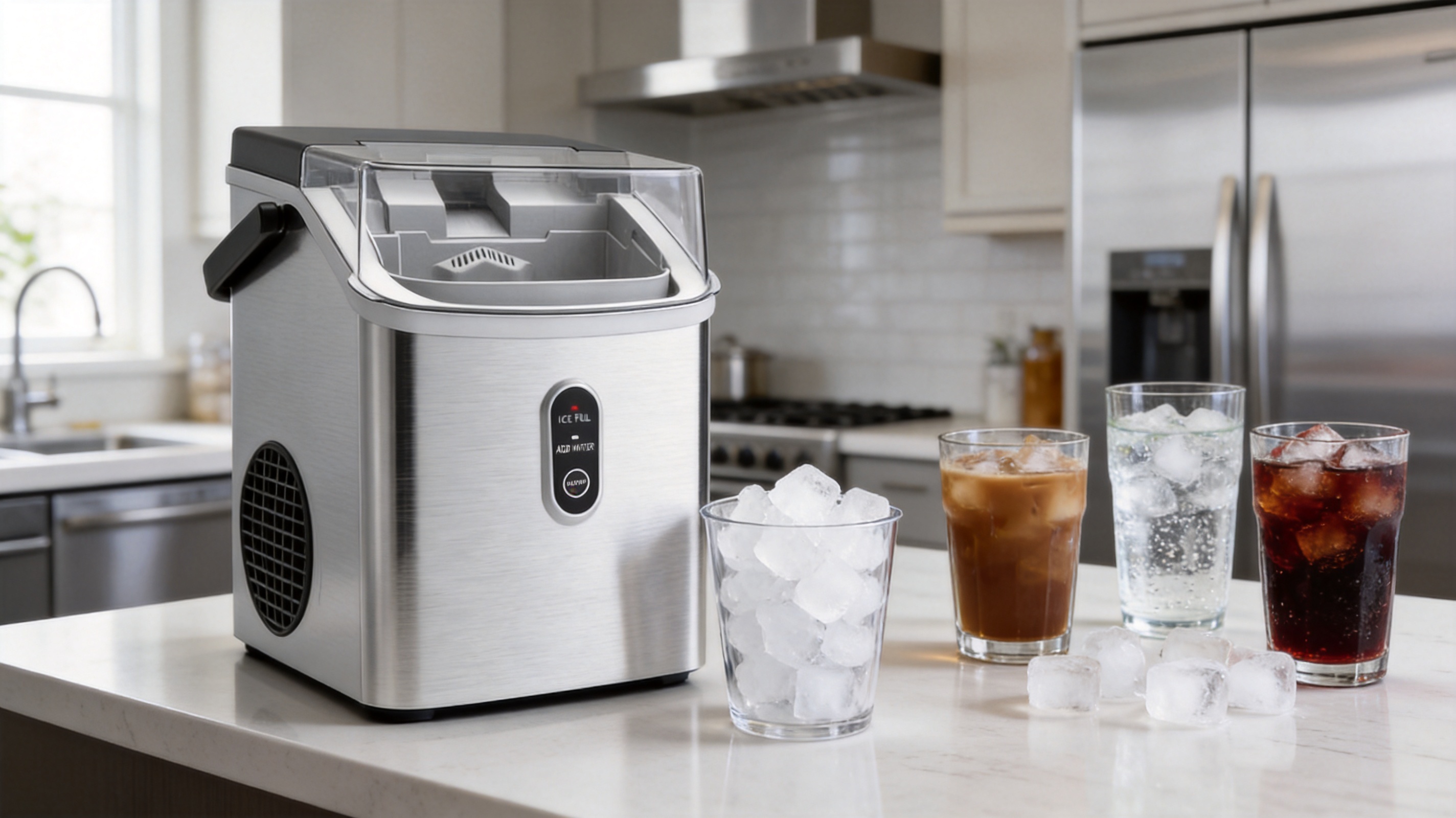
This advantage is especially useful for iced coffee. Coffee lovers often want to chill brewed coffee quickly without waiting for it to cool naturally. Large ice cubes may cool slowly and can cause uneven temperature distribution. Chewing ice mixes easily throughout the beverage, helping bring the temperature down rapidly. It is also suitable for cold brew, espresso-based iced drinks, milk coffee, tea, and flavored beverages.
Soda and sparkling drinks also benefit. Soft chewing ice creates a full glass appearance and delivers a cold, refreshing sensation from the first sip. Juice, lemonade, and sports drinks become more appealing, especially during warm seasons or after exercise. For families, this can encourage better hydration because cold drinks are often more enjoyable.
Compared with ice from freezer trays, chewing ice also has a convenience advantage. Freezer trays require hours to freeze, and users may run out during gatherings. The Home Chewing Ice Maker provides a dedicated solution that supports regular ice availability. For entertaining guests, family dinners, or weekend relaxation, this reliability is a meaningful benefit.
Excellent Coating and Flavor Infusion
Chewing ice is not only about cooling drinks. Its small particle size and soft structure allow it to coat surfaces effectively. This makes it useful for food display, preservation, and presentation. In salad bars, crushed or nugget-style ice can surround bowls and ingredients to maintain freshness. In seafood displays, it can conform around oysters, shrimp, sashimi, and other chilled items, helping keep them visually attractive and temperature-controlled.
At home, this property is useful for preparing party platters, fruit trays, dessert bowls, or chilled appetizers. Instead of using large pieces of ice that leave gaps, chewing ice can fill spaces more evenly. It creates a stable cooling bed that supports both appearance and function. Users who enjoy hosting guests can create displays that look more professional with less effort.
The same coating property supports flavor infusion. When chewing ice is mixed with beverages, it can absorb some of the drink’s flavor. This is why people often enjoy eating the remaining ice after finishing a soda or juice. The ice becomes lightly flavored, creating a satisfying final experience. Large cubes do not provide this effect as effectively because their dense structure and lower surface area reduce interaction with the beverage.
In medical or home care applications, the conforming nature of chewing ice can also be helpful. When used properly in sealed bags or appropriate cold compress arrangements, small ice pieces can fit around body contours better than large cubes. This makes cooling coverage more comfortable and even. While it does not replace professional medical equipment or advice, it adds a practical household benefit for minor cooling needs.
Versatility Beyond Ordinary Ice
The Home Chewing Ice Maker supports a wide range of uses. For beverages, it is ideal for iced coffee, soda, tea, lemonade, cocktails, mocktails, fruit water, smoothies, milkshakes, and sports drinks. For desserts, it can serve as a base for shaved ice, slush-style drinks, fruit ice bowls, and homemade frozen treats. For food presentation, it can help display seafood, fruit, salads, and chilled party foods. For household care, it may assist in preparing flexible cold packs when used safely.
This versatility gives the appliance an advantage over single-purpose kitchen devices. Some appliances are used only occasionally, but an ice maker can serve daily hydration, meal preparation, entertaining, and seasonal needs. In summer, its value is obvious. During parties, it reduces the need to buy bags of ice. For coffee drinkers, it improves the daily beverage routine year-round. For families, it provides a fun and convenient way to make drinks more appealing.
The texture also makes it easy to scoop and mix. Hard freezer cubes often stick together or require force to separate. Chewing ice is softer and more manageable, making it convenient to transfer into cups, pitchers, bowls, and food displays. This ease of use matters because household appliances must fit real daily habits. A product that is too difficult to operate may be ignored, but a product that simplifies small tasks becomes part of everyday life.
Advantages Over Competing Ice Solutions
Many consumers already have access to some form of ice, such as freezer trays, refrigerator ice dispensers, portable bullet ice makers, or store-bought ice bags. However, each option has limitations. The Home Chewing Ice Maker offers advantages by combining convenience, texture quality, compact size, and practical performance.
Compared with Freezer Ice Trays
Freezer trays are inexpensive, but they are slow and inconvenient. They require manual filling, careful placement, and hours of waiting. The cubes may absorb freezer smells from stored food, and the quantity is limited. When guests arrive or when several family members want cold drinks, trays can run out quickly. Chewing ice made by a dedicated appliance is fresher, easier to access, and more enjoyable to chew.
Compared with Refrigerator Ice Dispensers
Built-in refrigerator dispensers can be convenient, but many produce hard cubes or crushed ice rather than true soft chewing ice. Crushed ice from hard cubes can contain sharp fragments and uneven texture. It may cool quickly, but it does not always provide the soft, porous bite that chewing ice lovers prefer. A dedicated chewing ice maker focuses specifically on texture and beverage enjoyment.
Compared with Bullet Ice Makers
Portable bullet ice makers are common, but bullet ice is usually denser and harder. It is shaped for general cooling rather than chewability. Bullet ice can be useful, but it does not provide the same gentle crunch, flavor absorption, or coating performance. The Home Chewing Ice Maker stands out because it targets a more premium and sensory-focused ice experience.
Compared with Store-Bought Ice
Buying ice bags may be necessary for large events, but it is inconvenient for daily use. It requires transportation, storage, and freezer space. Bagged ice may also freeze into clumps. With a home chewing ice maker, users can prepare ice as needed, reduce dependency on external supply, and enjoy a fresher product. For people who frequently purchase ice, a household appliance can also reduce recurring effort over time.
Compact Design for Modern Living Spaces
Kitchen space is valuable. A good home appliance must provide strong function without occupying excessive room. With machine dimensions of 224 x 333 x 325 mm, this chewing ice maker is designed to fit conveniently on a countertop. Its form factor supports placement in kitchens, beverage corners, pantry areas, small office break rooms, or entertainment spaces.
Compact design does not only mean smaller dimensions. It also means the appliance can be integrated naturally into daily routines. Users can place it near a coffee machine for iced coffee preparation, near an air fryer and snack station for casual entertaining, or in a home bar area for evening drinks. Because it is not a large built-in system, it offers flexibility for renters, apartment residents, and families who want appliance convenience without renovation.
In competitive terms, countertop convenience is important. Large commercial ice machines may produce high volumes, but they are not suitable for most homes. Small portable machines may be easy to move, but if they produce the wrong ice texture, they do not meet the needs of chewing ice enthusiasts. This product balances household size with a specialized ice type, giving users the benefits of a focused appliance in a practical footprint.
Energy and Refrigeration Considerations
The product’s rated current and power of 0.55A/130W reflect a design intended for household use. Ice making requires refrigeration performance, but a home appliance must also remain reasonable in power demand. The use of R600a refrigerant with a 19g charge supports efficient cooling in compact refrigeration systems. R600a is commonly selected in modern appliances because it can deliver effective thermodynamic performance in suitable system designs.
Good refrigeration performance depends on more than refrigerant type. It also depends on compressor selection, evaporator design, heat exchange efficiency, insulation, airflow planning, assembly precision, and quality control. A well-designed ice maker must freeze water consistently, release ice effectively, manage internal temperature, and maintain operational stability over repeated cycles. These requirements highlight why manufacturing capability matters so much in this product category.
Consumers may focus first on ice texture, but long-term satisfaction depends on reliability. A product that makes good ice only when new is not enough. It must keep performing after regular daily use. This is where professional appliance engineering, supplier management, and factory testing become essential.
Manufacturing Strengths Behind the Product
Alien Technology Co., Ltd. is located in Zhouxiang, Zhejiang Province, an area known as a strong hub for small household appliance manufacturing. This location provides access to industrial supply chains, skilled labor, logistics resources, component suppliers, and manufacturing knowledge. For products such as ice makers, coffee machines, and air fryers, regional manufacturing ecosystems can improve production coordination and support faster response to market needs.
The company focuses on household appliances that simplify daily life and enhance comfort. This mission is closely aligned with the Home Chewing Ice Maker. The product is not merely a machine; it is a practical lifestyle solution. The company’s emphasis on humanized design, reliable quality, intelligent technology, continuous improvement, and innovation supports product development in a competitive market.
Advanced manufacturing is especially important for ice makers because they combine refrigeration, water handling, electronics, structural components, and user safety considerations. A professional production process must manage multiple quality points. Plastic parts need accurate molding. Metal components must be formed and assembled correctly. Refrigeration circuits require careful sealing and charging. Electrical systems must meet safety and performance requirements. Final assembly must be clean and consistent. Testing must verify that the machine operates as intended.
By specializing in household appliances, the company can apply cross-category experience. Knowledge gained from coffee machines can support water flow design, heating and control systems, user interface planning, and cleaning convenience. Experience with air fryers can support thermal management, structural durability, and electrical safety. Experience with ice makers directly supports refrigeration design, ice texture optimization, and system reliability. This cross-product capability strengthens the company’s overall engineering foundation.
Process Control and Quality Assurance
For a chewing ice maker, quality assurance begins before final assembly. It starts with design validation and component selection. The appliance must use materials suitable for contact with water and ice, components that can withstand repeated cooling cycles, and electrical parts that operate safely under household conditions. Component consistency is essential because small variations can affect ice quality, noise level, cooling efficiency, and lifespan.
During production, process control may include incoming material inspection, dimensional checks, refrigeration system assembly verification, leak detection, electrical safety testing, function testing, and visual inspection. Refrigerant charging must be accurate because too much or too little refrigerant can affect performance. Sealing quality is critical because leaks reduce cooling ability and product life. Water system cleanliness is important because users will consume the ice.
Final testing is also essential. A completed unit should be checked for power operation, cooling performance, ice formation, abnormal vibration, noise, and user control response. Packaging should protect the machine during transportation because refrigeration appliances can be sensitive to impact. Strong logistics support from the company’s manufacturing region helps ensure that finished products can reach customers efficiently.
These manufacturing practices create advantages over competitors that rely mainly on low-cost assembly without deep process control. In the home appliance market, initial appearance can be similar among products, but internal quality determines real value. A well-manufactured ice maker can provide more stable ice texture, better reliability, safer operation, and a more satisfying ownership experience.
Humanized Design for Daily Use
A successful home appliance should feel intuitive. Users should not need complicated training to enjoy it. The Home Chewing Ice Maker is positioned around easy use and mixing convenience. Its soft ice texture makes scooping simple, while its compact size allows it to remain accessible. The product is suitable for people who want practical enjoyment rather than complex operation.
Humanized design includes understanding how people actually use ice. Some users want a quick glass of water. Some want a large cup of iced coffee in the morning. Some want to prepare drinks for a family meal. Some want ice for weekend gatherings. The machine must support these ordinary scenarios with consistent convenience. It should be easy to place, easy to access, and easy to incorporate into daily beverage habits.
The chewing ice format also reduces preparation steps for other foods and drinks. For smoothies, the ice can mix more easily than large cubes, reducing strain on blenders and improving texture. For shaved ice-style desserts, soft ice provides a better starting point than hard cubes. For chilled food displays, users can arrange ice around items with less effort. The appliance therefore improves not only beverages but also food preparation creativity.
Applications in Home Beverage Culture
Home beverage culture has grown rapidly. Many consumers now prepare coffee, tea, sparkling drinks, smoothies, and cocktails at home. This trend is driven by convenience, cost control, personalization, and enjoyment. A chewing ice maker fits perfectly into this culture because ice is a core ingredient in many cold drinks.
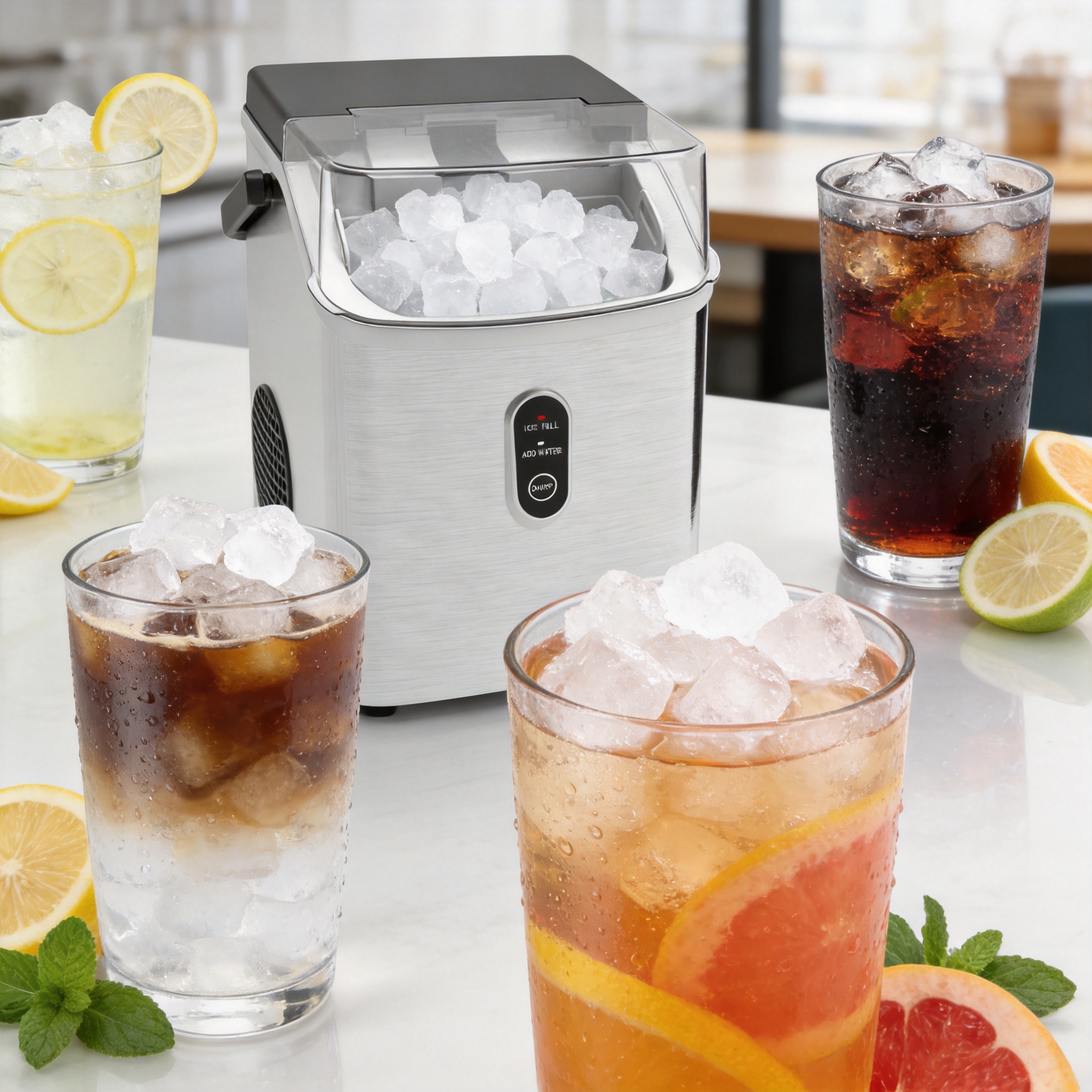
For iced coffee, chewing ice provides fast cooling and an enjoyable texture. It works well with cold brew, espresso over ice, milk-based coffee, sweetened coffee, and flavored syrups. The porous ice structure can absorb coffee flavor, making the remaining ice pleasant to chew. For tea, it helps quickly chill brewed tea and supports fruit tea presentations. For soda, it creates a full, refreshing cup similar to what many people enjoy in restaurants.
For cocktails and mocktails, chewing ice supports drinks where texture and chill are important. It is especially useful in crushed-ice style drinks, julep-inspired beverages, tropical drinks, and fruit-based mocktails. While large clear cubes are preferred for some slow-sipping spirits, chewing ice is ideal when rapid cooling, texture, and casual enjoyment are desired.
For healthy hydration, soft ice can encourage people to drink more water. Many people prefer water when it is very cold and served with enjoyable ice. Adding fruit slices, mint, cucumber, or citrus to a glass of chewing ice can create a simple, attractive drink with no complicated preparation.
Applications in Food Display and Preservation
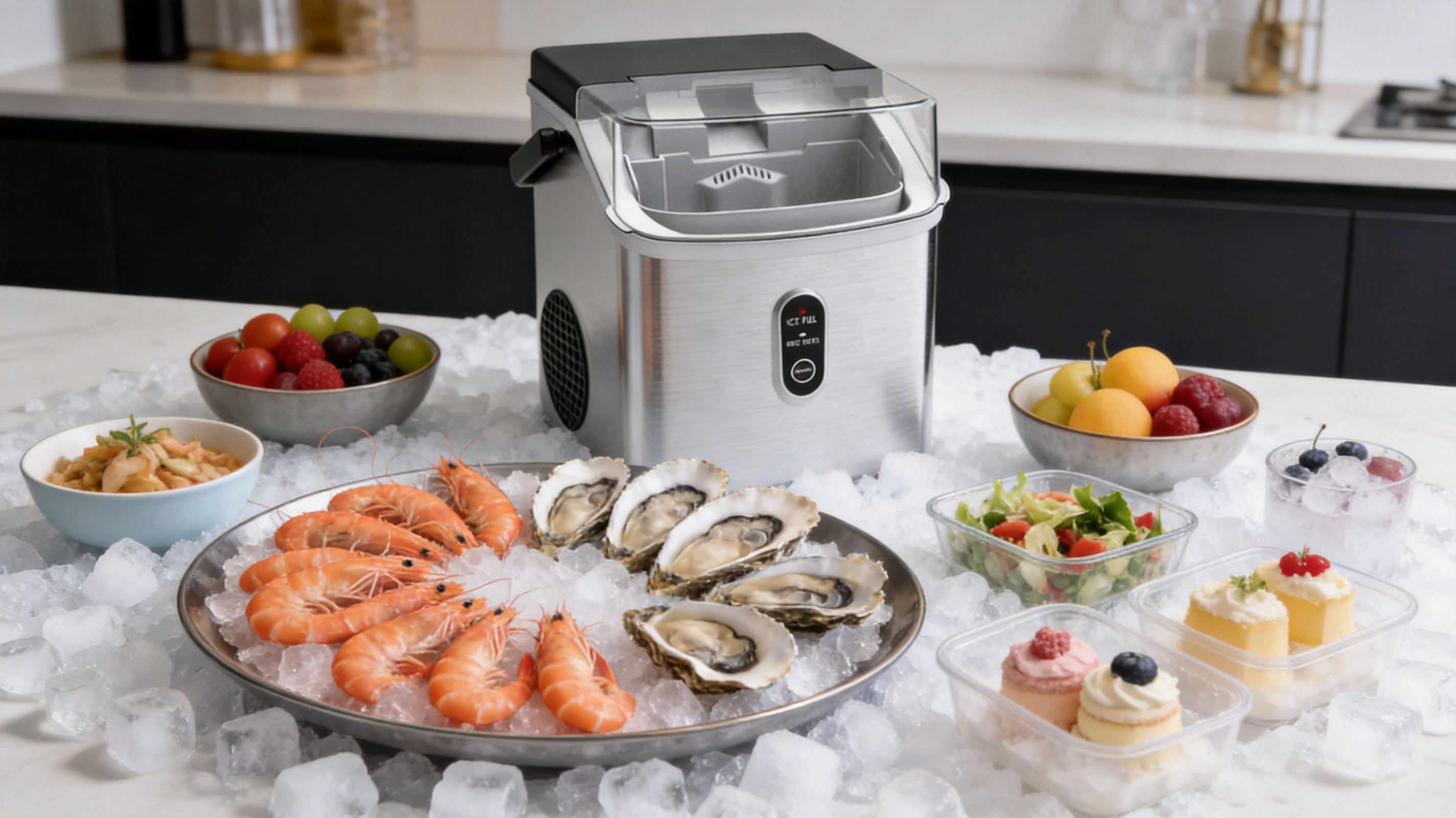
The product’s value extends into food presentation. Chewing ice can create an attractive cold bed for foods that need to remain chilled. At home parties, users can serve shrimp, oysters, fruit, salads, or desserts on a layer of soft ice. The ice conforms around serving dishes and food items, helping maintain cool temperatures while improving visual appeal.
For seafood, proper temperature control is important. While home users must always follow food safety guidelines, ice can support short-term presentation during meals or gatherings. Chewing ice fills gaps better than large cubes, providing more complete contact around containers and food surfaces. This creates both a functional and decorative effect.
For salads and vegetables, chewing ice can help maintain crispness during display. It can be placed under serving bowls or around containers to support cool conditions. For fruit, it creates a fresh and colorful presentation. For desserts, it can support chilled bowls or become part of the dessert itself.
Restaurants, cafés, and small hospitality settings may also find value in this type of ice for specific presentation purposes, depending on capacity needs and local usage requirements. While the product is positioned as a home appliance, the functional advantages of chewing ice are widely recognized across beverage and food service environments.
Why Texture Creates Product Differentiation
In a crowded appliance market, differentiation matters. Many ice makers claim convenience, but not all ice is the same. Texture is the key feature that separates a chewing ice maker from general ice machines. Consumers who specifically want soft chewable ice are often dissatisfied with hard cubes or bullet ice. Therefore, a product designed around this texture can serve a more passionate and loyal user group.
Soft chewing ice provides emotional satisfaction. It is fun, refreshing, and associated with restaurant-style drinks. This emotional quality gives the appliance a strong advantage because consumers buy lifestyle appliances not only for function but also for enjoyment. A coffee machine is valued because it creates a better morning routine. An air fryer is valued because it makes meals easier and healthier. A chewing ice maker is valued because it makes drinks and snacks more enjoyable.
Competitors that focus only on output quantity may overlook this sensory dimension. Quantity is useful, but for household users, the quality of the ice experience often matters more. A compact machine that produces the desired ice texture can be more attractive than a larger machine producing less enjoyable ice. This is why the Home Chewing Ice Maker’s emphasis on soft texture, rapid cooling, coating ability, versatility, and easy mixing gives it a clear market position.
Reliability Through Stable Business Philosophy
The company’s stated business philosophy emphasizes stable and pragmatic development. In manufacturing, this matters. Appliance customers need products that perform consistently, not products built only for short-term trends. A stable approach encourages careful quality improvement, practical design decisions, and long-term customer relationships.
Continuous improvement is especially important for household appliances. Customer feedback can lead to refinements in usability, cleaning, durability, packaging, component selection, and production efficiency. Innovation does not always mean unnecessary complexity. Sometimes the best innovation is making an appliance easier to use, more reliable, more compact, or better suited to real family habits.
The company’s mission of using smart technology to simplify life and enhance happiness aligns with the product’s value. Chewing ice may seem like a small pleasure, but small pleasures shape everyday comfort. A reliable appliance that provides enjoyable ice whenever needed can improve routines in a meaningful way.
Designing for Global Household Needs
Families around the world share common needs: convenience, safety, reliability, and enjoyable daily experiences. However, appliance markets also differ by voltage standards, kitchen size, beverage habits, and consumer preferences. A manufacturer serving global customers must consider these differences in product planning and production management.
The listed 220V/60Hz specification indicates a defined electrical configuration. For broader market deployment, appliance manufacturers often develop different configurations according to regional requirements. This requires engineering discipline, certification awareness, and supply chain coordination. The ability to manage product variations is a strength for companies experienced in household appliance manufacturing.
Global customers also value communication and cooperation. The company welcomes new and existing customers for business cooperation, which is important for distributors, retailers, and partners seeking reliable supply. In competitive appliance categories, product quality must be supported by responsive business service, packaging options, logistics coordination, and after-sales thinking.
Practical User Scenarios
Consider a coffee enthusiast preparing an iced latte at home. Instead of pouring hot espresso over large freezer cubes that crack and melt unevenly, the user fills a cup with soft chewing ice. The beverage cools quickly, mixes smoothly with milk, and delivers a café-style texture. The remaining coffee-flavored ice becomes part of the pleasure.
Consider a family dinner on a warm evening. Children want juice, adults want sparkling water, and guests want cold tea. The chewing ice maker provides a consistent supply of soft ice that makes every drink feel more refreshing. The appliance reduces the need for last-minute trips to buy ice and makes hosting easier.
Consider a weekend seafood platter. Soft ice is arranged around chilled serving dishes to create a fresh presentation. Because the ice pieces settle around surfaces, the display looks fuller and more professional than it would with large cubes. The same concept applies to fruit bowls, salads, and desserts.
Consider a person recovering from minor strain who wants a cold compress. When placed in an appropriate sealed bag and wrapped safely to protect the skin, small chewing ice pieces can conform better to the body than large cubes. This illustrates the appliance’s versatility beyond drinks, though users should always follow safe cold therapy practices and consult professionals when necessary.
Cleaning, Maintenance, and Ownership Mindset
Any appliance that handles water and produces consumable ice should be treated with proper care. Users should follow the manufacturer’s instructions for cleaning, water quality, draining, storage, and maintenance. Clean water and regular cleaning help maintain ice quality and support appliance longevity. The softer and more porous nature of chewing ice makes freshness especially important because users often chew the ice directly.
Owners should place the machine on a stable surface with suitable ventilation. Refrigeration appliances need airflow to release heat. Blocking vents or placing the machine in an overly hot environment can reduce performance. Users should also avoid moving refrigeration appliances roughly during operation.
Good maintenance supports the product’s competitive advantage. The best ice texture is achieved when the machine is clean, properly supplied with water, and operated under suitable conditions. A high-quality product and responsible user care work together to create long-term satisfaction.
Why the Product Fits Current Consumer Trends
Several consumer trends support the growth of home chewing ice makers. First, people are investing more in home comfort. Kitchens have become spaces for creativity, relaxation, and entertainment. Second, beverage customization is increasingly popular. Consumers want to prepare drinks at home that match or exceed café experiences. Third, compact appliances are attractive because many households need powerful function in limited space. Fourth, consumers appreciate products that support health-oriented habits, such as drinking more water or preparing homemade beverages instead of buying sugary drinks outside.
The Home Chewing Ice Maker fits all these trends. It makes water more appealing, improves homemade coffee and tea, supports entertaining, and occupies a manageable amount of counter space. It also provides a distinct experience that cannot be fully replaced by standard freezer ice.
In addition, the product belongs to a broader ecosystem of modern small household appliances, including coffee machines and air fryers. These products share a common purpose: making daily life easier, more enjoyable, and more personalized. A household that already values convenient cooking and beverage equipment is likely to appreciate the role of a chewing ice maker.
Business Value for Distributors and Retailers
For distributors and retailers, a home chewing ice maker offers strong market potential because it combines novelty with practical daily use. It is easy to demonstrate: place the ice in a drink and users immediately understand the difference. The product also has seasonal appeal during warm months and year-round appeal for coffee, soda, and home entertainment consumers.
Its compact dimensions support retail display, e-commerce packaging, and home delivery logistics. Its clear functional differentiation makes it easier to market than generic ice machines. Rather than competing only on price, sellers can highlight soft texture, rapid cooling, flavor infusion, food display versatility, and household convenience.
Manufacturing support is also important for business partners. A company located in a developed small-appliance manufacturing region with experience in ice makers, coffee machines, and air fryers can provide supply chain advantages. Reliable production, stable quality, and pragmatic cooperation help partners build customer trust.
Frequently Asked Questions
What makes chewing ice different from ordinary ice cubes?
Chewing ice has a softer, more porous texture that is easier and more pleasant to chew. Ordinary ice cubes are usually dense and hard, which makes them less comfortable to bite. Chewing ice also cools drinks quickly because its smaller pieces create more surface contact with liquid.
What drinks are best suited for this ice maker?
The ice is excellent for iced coffee, soda, sparkling water, fruit juice, lemonade, iced tea, cocktails, mocktails, smoothies, and milkshakes. It is especially useful when fast cooling and enjoyable texture are desired.
Can the ice be used for food display?
Yes. Chewing ice can be used as a cooling bed for seafood, salads, fruit, desserts, and chilled party foods. Its small pieces conform around bowls and serving containers better than large cubes, helping create an attractive display.
Is this product suitable for small kitchens?
Yes. With dimensions of 224 x 333 x 325 mm, it is designed for countertop use and can fit in many kitchens, home bars, pantry areas, or small office beverage stations.
How does this product compare with bullet ice makers?
Bullet ice makers usually produce harder ice intended for general cooling. This product focuses on soft chewable ice, which provides a gentler bite, faster beverage cooling, better flavor absorption, and stronger versatility for drinks and displays.
Why is manufacturing quality important for an ice maker?
An ice maker combines refrigeration, water handling, electronics, and structural components. Stable performance depends on accurate assembly, proper refrigerant charging, leak prevention, electrical safety, and final function testing. Strong manufacturing control helps ensure consistent ice quality and reliability.
What refrigerant does the product use?
The product uses R600a refrigerant with a 19g charge. This refrigerant is widely used in modern compact refrigeration appliances when applied through proper engineering and manufacturing processes.
Can chewing ice be used for cold compresses?
It can be used in suitable sealed bags or cold compress arrangements because the small pieces conform well to body contours. Users should always protect the skin from direct ice exposure and follow safe cold therapy practices.
What is the main advantage of owning a home chewing ice maker?
The main advantage is convenient access to fresh, soft, chewable ice at home. It improves drinks, supports food presentation, reduces reliance on store-bought ice, and adds a premium refreshment experience to everyday life.
Conclusion
The Home Chewing Ice Maker is a compact and practical appliance designed for a specific but highly valued purpose: producing soft, chewable ice that enhances beverages, food presentation, and everyday comfort. Its advantages are clear. The ice is gentle on teeth, satisfying to chew, fast cooling, easy to scoop, effective for flavor infusion, and versatile enough for drinks, desserts, displays, and cold compress applications.
Compared with freezer trays, refrigerator dispensers, bullet ice makers, and store-bought ice, this product offers a more enjoyable and specialized ice experience. Its compact dimensions make it suitable for modern homes, while its technical configuration supports household use. The product’s value is further strengthened by the manufacturing background of Alien Technology Co., Ltd., a company located in a strong small-appliance industrial region and focused on humanized design, reliable quality, intelligent technology, continuous improvement, and pragmatic cooperation.
For consumers, the appliance transforms ordinary drinks into refreshing experiences. For families, it supports hydration, entertaining, and creative food preparation. For business partners, it offers a differentiated product with strong lifestyle appeal. In a market filled with general-purpose appliances, a well-designed chewing ice maker stands out because it delivers something simple, memorable, and enjoyable every day: the pleasure of soft ice made at home.
References
ASHRAE Handbook: Refrigeration. American Society of Heating, Refrigerating and Air-Conditioning Engineers.
Food Safety Modernization and Temperature Control Guidelines. General food service safety literature.
Household Appliance Design Principles. Consumer appliance engineering reference materials.
Refrigeration and Air Conditioning Technology. Standard technical textbook on refrigeration systems.
Small Appliance Manufacturing Quality Control Practices. Industrial production and inspection reference materials.