
 English
 한국어
한국어 Español
 Deutsch
In modern homes, offices, hospitality spaces, recreational vehicles, and small refreshment areas, ice is no longer a seasonal convenience. It is part of everyday comfort, beverage preparation, food preservation, guest service, and lifestyle enjoyment. A compact ice maker that can deliver fresh ice quickly, operate quietly, and require minimal learning time has become an important appliance for users who value convenience and consistency. The button-operated bullet ice maker described in this article is designed precisely for that purpose: it offers simple one-touch control, fast ice production, efficient operation, practical dimensions, and reliable performance for everyday use.
This product is a bullet ice maker with a button-operated interface. Its core value is straightforward: the user fills the water reservoir, presses a button, and the machine begins producing fresh bullet-shaped ice. Unlike complex appliances that require multiple settings, long setup steps, or frequent intervention, this unit is built around effortless use. It is especially suitable for families, office pantries, small bars, RV travel, dormitory-style living spaces, and compact commercial environments where users want dependable ice without installing a large built-in ice system.
The product specifications indicate a power supply of 220V–240V at 50Hz, current and power of 0.9A and 150W, refrigerant and charge of R600a at 19g, and machine dimensions of 313 x 226 x 309 mm. These details show that the ice maker is compact, energy-conscious, and designed for countertop placement. Its use of R600a refrigerant also reflects a modern direction in household refrigeration appliances, emphasizing efficient cooling performance with responsible refrigerant selection.
Beyond the product itself, manufacturing capability is a major part of its value. A reliable ice maker depends not only on an attractive appearance or a fast cycle time, but also on precise refrigeration assembly, stable electrical control, quality-inspected components, well-designed water flow, accurate molding, and consistent final testing. Alien Technology Co., Ltd., located in Zhouxiang Town, Cixi City, Zhejiang Province, operates within a well-developed small household appliance manufacturing region. This location offers access to appliance supply chains, skilled workers, logistics convenience, and a mature production ecosystem. These advantages support the company’s ability to manufacture ice makers, coffee machines, and air fryers with an emphasis on practical design, reliable quality, and continuous improvement.
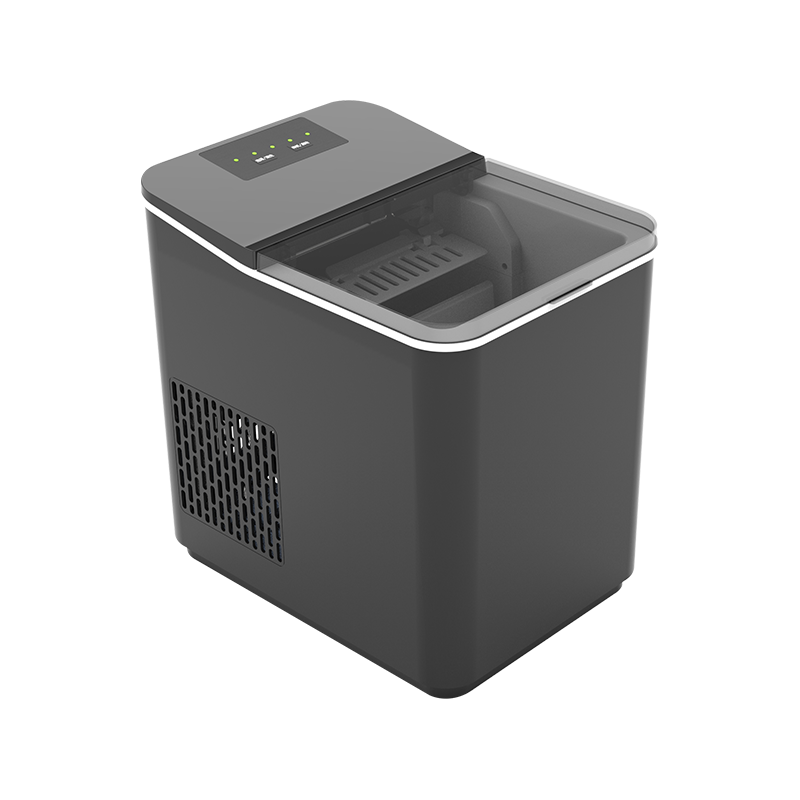
Product Overview: A Compact Ice Maker Built for Everyday Practicality
The button-operated bullet ice maker is designed for users who want immediate access to ice without relying on freezer trays or buying bagged ice. Traditional ice trays are inexpensive but slow, inconvenient, and limited in capacity. Bagged ice can be useful for large events, but it requires storage space, may melt during transport, and is not always available when needed. Built-in ice systems can be powerful, but they are often expensive, installation-dependent, and unsuitable for renters, small apartments, RVs, or temporary refreshment stations.
This product solves these problems by combining portability, quick production, and simple operation. With a cycle time as short as 6–10 minutes, the machine can begin producing ice far sooner than a freezer tray. The bullet-shaped ice is convenient for drinking glasses, cocktails, soft drinks, juice, iced coffee, smoothies, and daily beverage cooling. The removable basket supports easy transfer, while the smooth interior surfaces support convenient cleaning and maintenance.
The product’s compact dimensions, 313 x 226 x 309 mm, make it suitable for countertops, shelves, office beverage corners, small kitchens, or mobile settings. It does not require complicated installation. Users can place it on a stable surface, provide the correct power supply, add water, and begin operation. For many buyers, this simplicity is the difference between an appliance that is used every day and one that is forgotten after purchase.
Its button-operated design is particularly valuable for shared spaces. In an office, not every employee wants to learn a complex control panel. In a small hospitality environment, staff need equipment that can be operated quickly without constant supervision. In a home, children, elderly family members, and guests may all benefit from an intuitive interface. One-touch operation reduces confusion, shortens training time, and supports dependable daily use.
Key Product Specifications
Item |
Specification |
User Benefit |
Product Type |
Button-operated bullet ice maker |
Simple operation and convenient bullet-shaped ice for beverages |
Power Supply |
220V–240V / 50Hz |
Suitable for markets using this standard household power range |
Current / Power |
0.9A / 150W |
Efficient operation for daily household and light commercial use |
Refrigerant / Charge |
R600a / 19g |
Modern refrigerant choice supporting efficient cooling performance |
Machine Dimensions |
313 x 226 x 309 mm |
Compact countertop footprint for kitchens, offices, bars, and RVs |
Ice Cycle Time |
Approximately 6–10 minutes per cycle |
Fast access to fresh ice for drinks and daily use |
Cleaning Design |
Smooth interior and removable ice basket |
Easy maintenance and hygienic routine cleaning |
One-Touch Operation: The Advantage of Simplicity
One of the strongest advantages of this ice maker is its easy button control. In a crowded appliance market, many products compete by adding more settings, more display icons, and more technical functions. However, ice making is often a simple need: users want ice quickly and reliably. A complicated user interface can actually reduce user satisfaction if it creates hesitation, mistakes, or unnecessary steps.
The button-operated system of this ice maker directly addresses that issue. The user can start production quickly, and the process feels natural even to people who have never used a countertop ice maker before. In family environments, this is valuable because an appliance may be used by several people with different levels of technical confidence. In workplace environments, it helps reduce the need for instructions and reminders. In light commercial spaces, it supports consistent operation by different staff members.
Compared with competitors that depend on multi-level menus or overly sensitive touch panels, a button-operated interface offers a practical and durable feel. Physical or clearly defined button control can be more reassuring in busy environments where users may have wet hands, be preparing beverages quickly, or need to operate the appliance without carefully reading a screen. A direct control system also helps reduce the chance of accidental setting changes.
Simplicity is not a lack of design; it is a design discipline. To make an appliance feel simple, engineers must define the user workflow clearly, remove unnecessary friction, and ensure the machine responds predictably. This product’s one-touch operation reflects a user-centered approach: the technology remains inside the machine, while the user experience remains easy on the outside.
Fast Ice Production for Homes, Offices, Bars, and RVs
Speed is one of the most important buying factors for a compact ice maker. A machine that can produce ice in approximately 6–10 minutes per cycle offers a major improvement over freezer-based methods. Freezer trays may take hours to freeze water fully, and a household refrigerator ice compartment may not keep up with parties, family gatherings, or office use. Fast cycle production means users can begin serving chilled drinks soon after turning on the machine.
In the home, this supports daily routines such as iced coffee in the morning, cold lemonade in the afternoon, and cocktails or sparkling drinks in the evening. In offices, it helps improve the beverage experience for employees and visitors. In bars or small hospitality settings, it provides supplemental ice capacity and can serve as a convenient backup during peak periods. In RVs, cabins, and mobile leisure spaces, it reduces dependence on store-bought ice and provides a sense of comfort away from home.
Fast ice making also supports better planning. Instead of filling freezer trays the night before or making emergency trips to purchase ice, users can make ice on demand. This is particularly useful for spontaneous gatherings, warm weather, and shared spaces where ice consumption can be unpredictable. The faster the first batch appears, the more useful the machine becomes.
When compared with many low-cost alternatives, the advantage is not only speed but consistency. A well-designed refrigeration system must maintain stable performance over multiple cycles. The combination of appropriate compressor performance, refrigerant charge, water contact design, heat dissipation, and control timing determines whether the machine can keep producing usable ice without long interruptions. A reliable manufacturer must therefore control both design and assembly quality carefully.
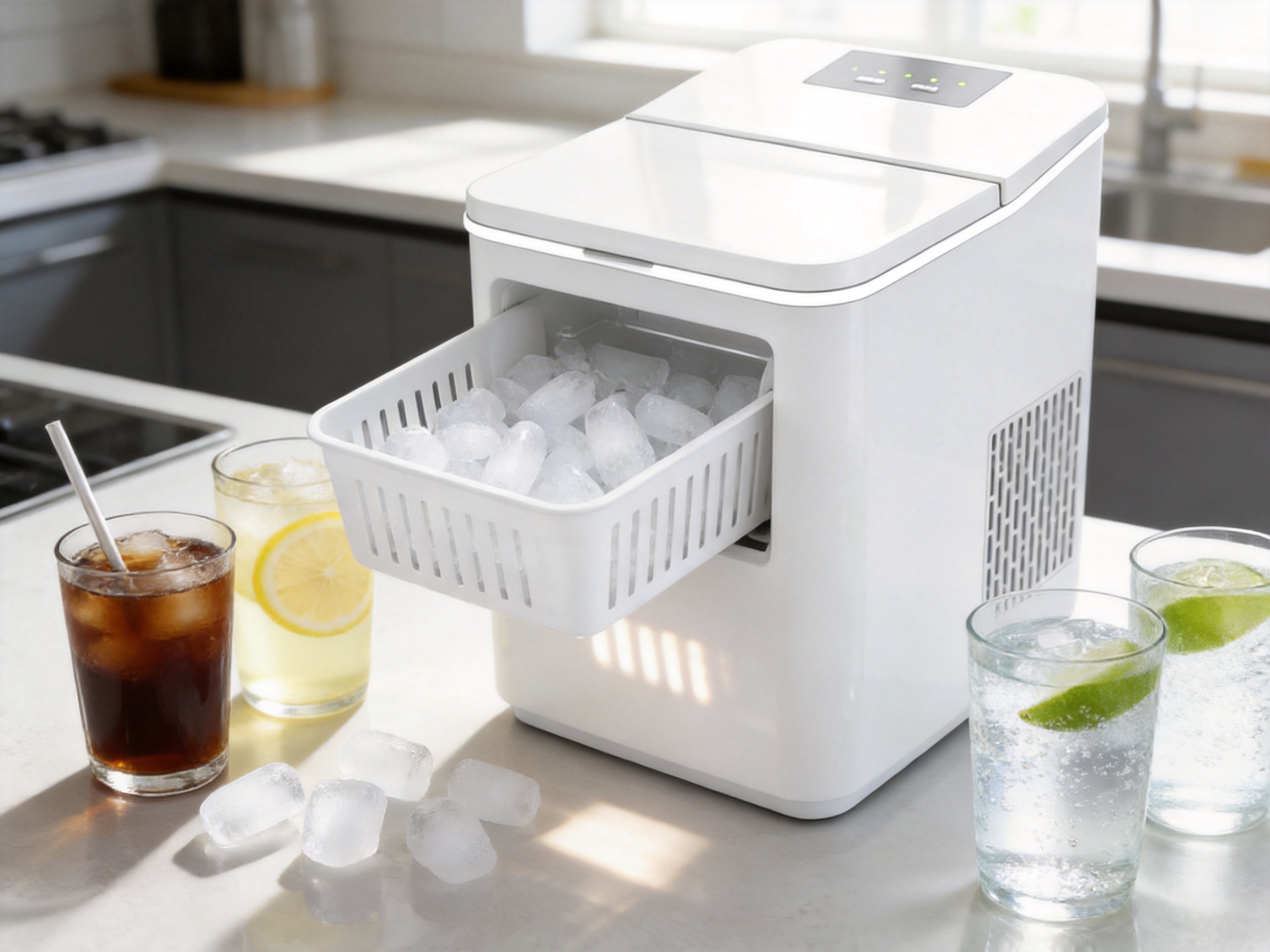
Bullet-Shaped Ice: Functional, Attractive, and Versatile
Bullet ice is a popular form for compact ice makers because it is practical and efficient. Its rounded shape and hollow or semi-hollow structure allow it to cool beverages effectively while being easy to scoop and pour. Unlike large cubes that may not fit small cups, bullet ice works well in many glass sizes. Unlike crushed ice, it is less messy and more suitable for general daily use.
The shape is particularly helpful for soft drinks, iced tea, iced coffee, fruit beverages, cocktails, smoothies, sports drinks, and water bottles with wider openings. It is also useful for chilling small food containers, supporting picnic preparation, or keeping ingredients cool temporarily during cooking and serving. Because the machine can produce ice quickly, users can adapt production to their needs rather than storing large amounts for long periods.
Multiple ice size options further improve versatility. Smaller ice pieces may be preferred for quick cooling, smaller cups, or soft drinks. Larger ice pieces may be better for slow sipping, cocktails, or maintaining cold temperatures over a longer time. This flexibility allows the same machine to serve different household or office preferences.
Compared with some competing compact machines that offer only one ice size, multiple size selection is a meaningful advantage. It gives users control without making operation complicated. The best appliance designs do not overwhelm users; they provide useful choices that improve everyday outcomes. In this case, the ability to choose ice size supports beverage quality, presentation, and practical convenience.
Efficient and Energy-Conscious Performance
The listed power rating of 150W reflects a product designed for efficient operation in daily use. For countertop appliances, energy consumption is an important factor because users may run the machine repeatedly during warm seasons, office hours, or entertainment events. A well-designed ice maker should produce ice quickly without excessive electricity demand.
Energy efficiency in an ice maker depends on several engineering factors. The refrigeration system must transfer heat effectively. The water delivery system must place water in contact with the cooling elements efficiently. The insulation and housing must help maintain internal conditions. The control system must manage cycle timing so that the machine does not run longer than necessary. When these elements work together, users receive faster ice production with reduced waste.
The use of R600a refrigerant is also relevant. R600a is widely used in modern refrigeration appliances because it can support efficient cooling performance when applied correctly. It requires careful manufacturing control, appropriate handling procedures, and quality assurance during assembly. A factory producing appliances with this refrigerant must pay attention to charging accuracy, leak testing, sealing quality, and safety procedures. This makes manufacturing discipline especially important.
Compared with inefficient or poorly assembled products, a carefully engineered ice maker can reduce operating noise, shorten unnecessary run time, and improve long-term reliability. Users may not see the internal details, but they experience the results through faster ice, lower operating disturbance, and more dependable daily performance.
Quiet Operation for Shared Living and Working Spaces
Noise is often overlooked when buyers compare ice makers, but it becomes very important after the appliance is placed in a real environment. A loud machine can disturb conversations, office concentration, sleep, or relaxed dining. This button-operated ice maker is designed with quiet operation in mind, making it suitable for kitchens, offices, bedrooms, small bars, and shared living spaces.
Quiet performance depends on the compressor, fan design, water circulation, housing structure, and vibration control. During manufacturing, component alignment and assembly precision can also affect sound quality. A product may have a good design on paper but become noisy if parts are poorly fitted or if vibration paths are not controlled. Therefore, quiet operation is both a design feature and a manufacturing quality result.
In home kitchens, quieter operation allows users to run the appliance while cooking, eating, or talking with guests. In offices, it can sit in a pantry or break area without causing unnecessary distraction. In RVs or compact apartments, lower noise is especially valuable because the appliance may be near sleeping or working areas. In small hospitality spaces, a quieter machine helps maintain a more professional customer environment.
Compared with low-cost competitors that may focus only on basic ice production, this product’s noise-reduction emphasis is a practical quality advantage. It shows that the user experience has been considered beyond the first batch of ice. A good appliance should fit naturally into daily life, and quiet operation helps achieve that goal.
Easy Cleaning and Maintenance
Cleaning is essential for any appliance that handles water and ice. A machine that is difficult to clean may become inconvenient over time, even if it performs well initially. This ice maker includes smooth interior surfaces and a removable ice basket, helping users complete routine cleaning more quickly and thoroughly.
The removable basket supports easy access and makes it simple to transfer ice or clean the basket separately. Smooth internal surfaces reduce areas where residue may collect. These design choices support better hygiene and reduce user frustration. In shared spaces, easy cleaning is particularly important because multiple people may use the machine and maintenance responsibilities must remain simple.
Compared with some competing products that have awkward corners, difficult-to-remove baskets, or poorly accessible reservoirs, this model’s maintenance-friendly design creates long-term value. Buyers often focus on speed and price at the time of purchase, but cleaning convenience strongly affects satisfaction after weeks or months of use. An appliance that is easy to maintain is more likely to remain in active service.
Good cleaning design also reflects manufacturing awareness. Molded parts must be smooth, edges must be properly finished, and removable components must fit securely without becoming difficult to handle. Consistency in plastic molding and assembly tolerances helps ensure the product feels well-made and remains convenient to use.
Compact Dimensions Without Sacrificing Practical Utility
With dimensions of 313 x 226 x 309 mm, this ice maker offers a compact footprint that suits modern spaces. Countertop appliances must compete for limited room with coffee machines, air fryers, kettles, toasters, blenders, and food preparation areas. A useful ice maker must therefore be large enough to perform reliably but small enough to fit comfortably in everyday environments.
This size is advantageous for apartments, office kitchens, dormitory-style settings, RVs, small bars, and family kitchens where space efficiency matters. It can be placed near beverage stations, coffee areas, or serving counters. Its portability also means it can be moved according to seasonal or event needs. For example, it may be used in the kitchen during daily life and moved closer to a patio or party area during gatherings.
Compared with built-in ice systems, this compact unit avoids installation complexity. Compared with very small novelty devices, it offers more serious practical value. The balance between size and function is an important competitive advantage. Users want a machine that feels capable but not intrusive, and the listed dimensions support that balance.
Compact design also challenges the manufacturer. Engineers must arrange the refrigeration system, water reservoir, ice basket, fan, electronics, and housing within a limited space while maintaining airflow, serviceability, safety, and user access. A successful compact appliance requires careful internal layout and production consistency.
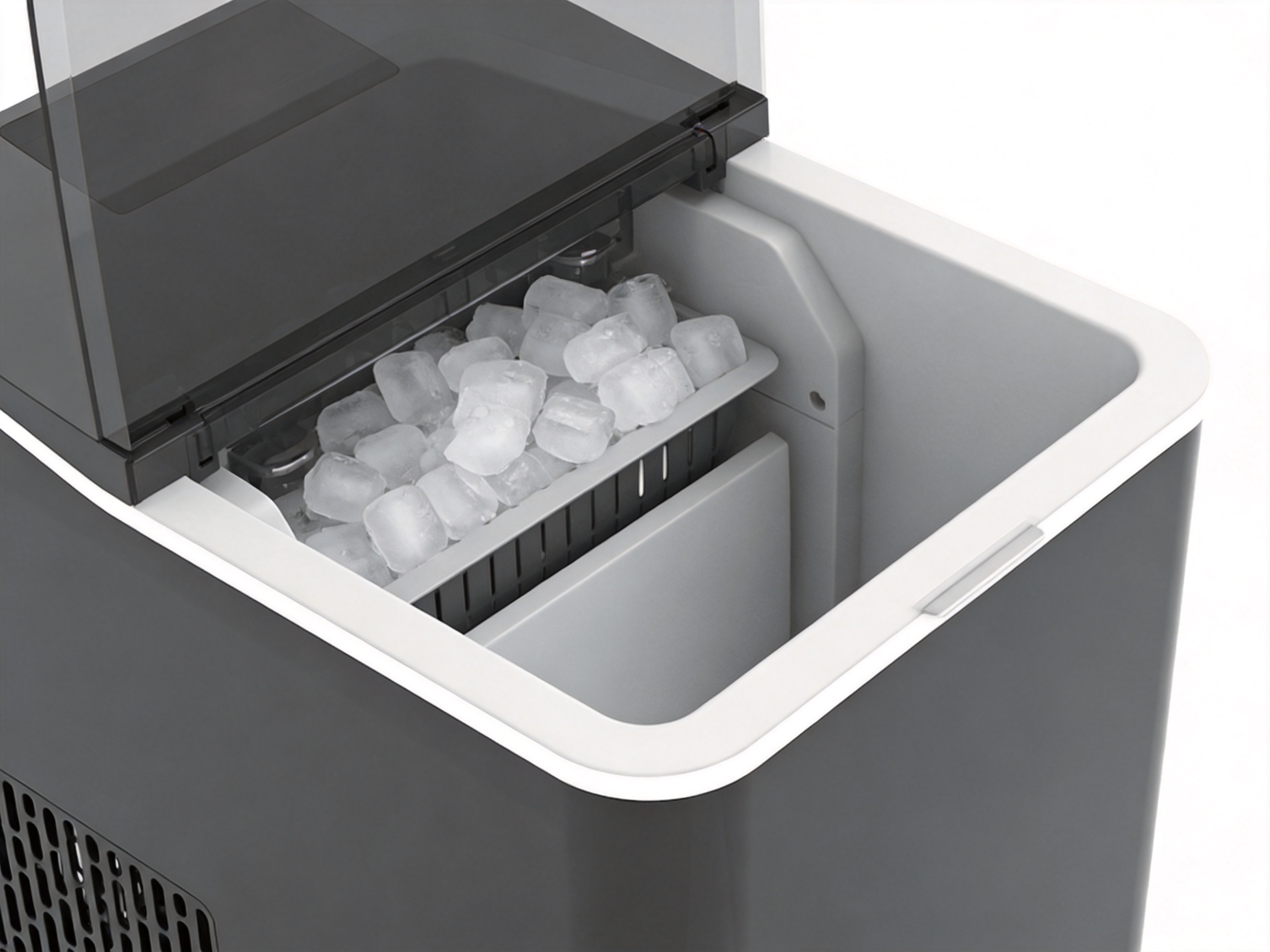
Advantages Over Common Competitor Products
The countertop ice maker market includes many products that appear similar at first glance. However, meaningful differences appear in daily use. This button-operated bullet ice maker offers several advantages that help distinguish it from competitors: simple control, fast cycle time, multiple ice sizes, compact dimensions, energy-conscious performance, quiet operation, and easy maintenance.
First, one-touch button control is a major usability advantage. Some competitors use complicated control panels or unclear icons that require repeated reference to the manual. This product keeps the user experience direct and approachable. A simple button operation reduces learning time and makes the appliance suitable for all ages and shared environments.
Second, fast ice making in approximately 6–10 minutes per cycle gives the product strong practical value. Many users purchase compact ice makers because they are dissatisfied with slow freezer trays or insufficient refrigerator ice output. A quick first batch and consistent cycle performance make the machine immediately useful.
Third, multiple ice size selection increases versatility. Competitors with only one size may not satisfy users who prepare different drinks or serve different preferences. The ability to choose ice size allows the machine to adapt to cocktails, smoothies, soft drinks, iced coffee, and food cooling tasks.
Fourth, the compact body is suitable for a wide range of spaces. Some competing units are either too bulky for small counters or too limited in function to be useful. This product’s dimensions support practical placement without making the appliance feel underpowered for daily needs.
Fifth, energy-saving design and optimized water usage help reduce waste. In a world where buyers increasingly consider operating cost and environmental impact, efficiency is a real selling point. A product that produces ice quickly while using power responsibly can appeal to both households and business users.
Sixth, quiet operation improves real-life comfort. A machine that performs well but produces irritating noise can become unwelcome in kitchens, offices, and bedrooms. Noise-reduction design gives this ice maker an advantage in environments where comfort matters.
Finally, easy cleaning and maintenance support long-term satisfaction. Competitors that are difficult to clean may lose appeal quickly. A removable basket and smooth interior surfaces make routine care more manageable and help keep the appliance pleasant to use.
Manufacturing Strengths Behind Reliable Ice Making
A good ice maker requires more than an appealing product description. It depends on manufacturing strength. Alien Technology Co., Ltd. operates in Cixi City, Zhejiang Province, an area known for small household appliance production. This regional advantage helps the company access suppliers, technical talent, manufacturing experience, and logistics channels related to appliance production.
The company specializes in household appliances such as ice makers, coffee machines, and air fryers. This product portfolio is important because it demonstrates familiarity with heating, cooling, water handling, airflow, plastic molding, electrical control, safety requirements, and user-centered design. Each appliance category has its own technical challenges, but they also share manufacturing disciplines: precise assembly, component reliability, stable production processes, and strict quality inspection.
For an ice maker, manufacturing quality begins with material selection. Food-contact areas must be suitable for water and ice use. Plastic parts must be molded with stable dimensions. The housing must be strong enough to protect internal components while presenting a clean appearance. The water path must be designed to reduce leakage risk and support efficient circulation. The refrigeration parts must be assembled and tested carefully.
Refrigeration assembly is especially critical. Compressor performance, refrigerant charging, copper tubing, sealing, and leak detection all influence the final product. R600a refrigerant requires accurate handling and a controlled process. A small deviation in charge amount or sealing quality can affect cooling performance, safety, and product life. Therefore, advanced manufacturing processes for this type of product include controlled charging, pressure checks, leak testing, functional testing, and final inspection before packaging.
Electrical safety is another key area. The appliance operates on 220V–240V power, so insulation, wiring, grounding where applicable, control board stability, and component positioning must be managed carefully. Quality-focused manufacturers inspect electrical performance and ensure that wiring is protected from heat, vibration, and moisture exposure. Proper assembly reduces the chance of faults and improves long-term reliability.
Advanced Production Processes and Quality Control
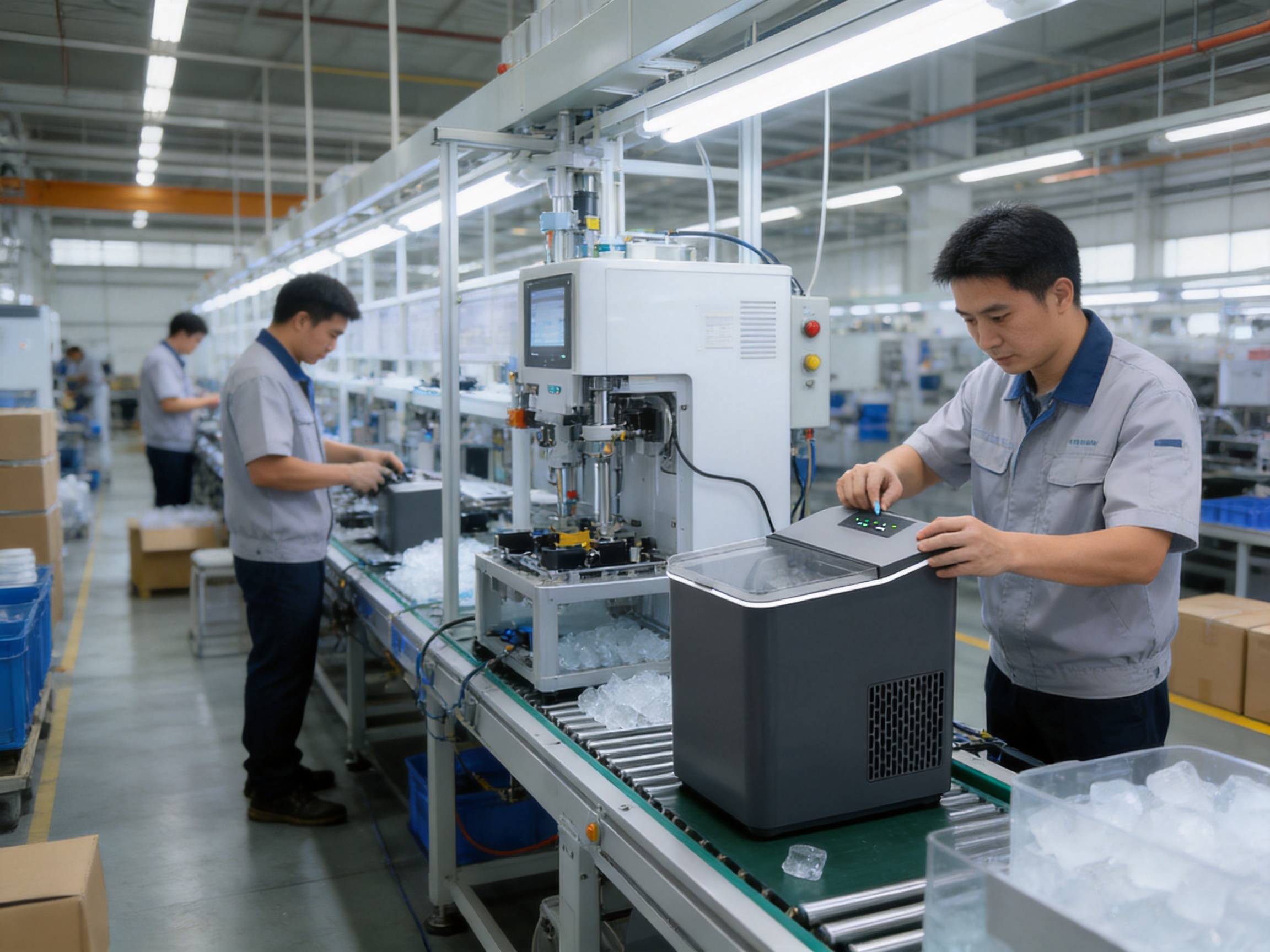
In modern appliance manufacturing, advanced production is not only about automation. It is about process control, repeatability, inspection, traceability, and continuous improvement. For this ice maker, a strong production process may include incoming material inspection, plastic part verification, refrigeration system assembly, water system installation, electronic control installation, housing assembly, performance testing, noise checking, leak testing, cleaning inspection, and packaging inspection.
Incoming material inspection helps prevent defective parts from entering production. Components such as compressors, fans, control boards, buttons, water pumps, sensors, baskets, and plastic housings must meet defined standards. If a component is inconsistent, the final appliance may suffer performance variation. A disciplined factory reduces such risks by establishing supplier requirements and checking key materials before assembly.
Precision assembly helps ensure that every product performs similarly. In an ice maker, small differences in tubing position, water flow, fan installation, or sensor alignment can affect cycle time and user experience. Production workers must follow standardized instructions, and supervisors must verify critical steps. Where appropriate, fixtures and testing equipment help maintain consistency.
Leak testing is essential for both the refrigeration system and the water system. Refrigerant leakage can reduce cooling performance and affect product safety. Water leakage can damage the appliance, the countertop, or surrounding equipment. Reliable manufacturers conduct tests to confirm that sealed systems and water paths meet requirements before products are shipped.
Functional testing confirms that the machine can start, circulate water, freeze ice, release ice, and respond to controls correctly. Performance testing may include checking the first ice cycle, evaluating cooling behavior, verifying indicator functions, and monitoring abnormal noise or vibration. This type of testing protects the user experience and reduces after-sales issues.
Packaging is also part of quality. A well-manufactured appliance can still be damaged if packaging is weak. Protective materials, carton strength, and shipping stability are important for products that may travel long distances. A company located in a region with convenient logistics can combine manufacturing and shipment experience to improve delivery reliability.
Humanized Design: Simplifying Life and Enhancing Comfort
The company’s mission emphasizes smart technology, simplifying life, and enhancing happiness. This philosophy is reflected in the ice maker’s design choices. Instead of creating unnecessary complexity, the product focuses on the features that users truly need: fast ice, simple control, compact size, quiet performance, energy efficiency, and easy cleaning.
Humanized design means understanding how people actually use an appliance. Users may operate the ice maker while preparing meals, hosting guests, working in an office, or traveling. They may not want to read complicated instructions. They may need to clean the machine quickly. They may want to move it from one place to another. They may care about noise because the appliance is near living or working areas. Each of these realities influences the product design.
The one-touch button interface is a clear example of humanized design. It reduces the mental effort required to start making ice. The removable basket is another example because it supports easy handling and cleaning. Multiple ice sizes support personal preference. Quiet operation respects the surrounding environment. Compact dimensions respect limited space. Energy-conscious design respects operating cost and resource use.
Compared with products that compete mainly on appearance or low price, this ice maker offers a more balanced user experience. It is not designed only to look good in a product photo; it is designed to become a useful part of daily life. That is where thoughtful engineering and manufacturing strength create lasting value.
Applications in Residential Settings
In a household, ice is used more often than many people realize. It supports cold drinking water, iced coffee, tea, juice, cocktails, smoothies, sports drinks, dessert preparation, and food cooling. During summer, gatherings, holidays, and family events, demand increases quickly. A compact ice maker can reduce pressure on the refrigerator and eliminate the need for constant freezer tray refilling.
This product is suitable for kitchens because it is compact and easy to operate. A family member can start it before preparing drinks, and fresh ice can be available quickly. The bullet ice format is convenient for everyday cups and beverage containers. Multiple ice sizes allow different preferences within the same household.
For apartments and rental homes, the appliance is especially useful because it does not require installation. Many renters cannot modify plumbing or install built-in systems. A countertop ice maker provides independence and convenience without permanent changes. It can also be packed and moved when the user relocates.
The machine is also useful for family members who enjoy entertaining. Instead of purchasing bagged ice before every gathering, hosts can produce ice in advance and continue making more as needed. This improves convenience and reduces the risk of running out during a party.
Applications in Offices and Shared Workspaces
Office refreshment areas increasingly serve as employee comfort zones. Coffee machines, water dispensers, refrigerators, and snack stations are common. Adding a compact ice maker improves the beverage experience and supports employee satisfaction. Workers can make iced coffee, cold water, tea, or soft drinks without leaving the office.
The button-operated interface is particularly suitable for offices because many different people may use the machine. Simple operation reduces confusion and prevents misuse. Quiet operation helps ensure the appliance does not disrupt the work environment. Easy cleaning supports shared maintenance routines.
For small businesses, clinics, studios, training centers, and reception areas, the machine can improve visitor service. Offering a cold drink with fresh ice creates a more welcoming environment. Because the machine is compact, it can fit into small pantries or beverage counters without requiring expensive installation.
Compared with relying on refrigerator ice trays in the office freezer, this product is more hygienic and convenient. Freezer trays may be touched by many people, spilled, forgotten, or contaminated by food odors. A dedicated ice maker provides a cleaner and more organized solution when maintained properly.
Applications in Bars, Small Hospitality Spaces, and Events
Bars, cafés, guesthouses, small restaurants, and event spaces often need flexible ice production. While large commercial ice machines may be necessary for high-volume operations, compact ice makers are valuable as supplemental equipment, backup machines, or dedicated units for specific service points.
This button-operated bullet ice maker can support small beverage stations, tasting rooms, private bars, outdoor counters, and temporary event setups. Its quick cycle time allows staff to respond to changing demand. Its simple controls reduce training requirements. Its compact size allows it to be placed near the point of service.
For small cafés that serve iced coffee or cold beverages, a compact unit may help during peak times or when refrigerator ice capacity is limited. For guesthouses and boutique hospitality spaces, it can provide fresh ice for guests without the cost and installation needs of a large system. For private events, it can serve as a convenient source of ice for drinks and cooling needs.
Compared with purchasing bagged ice, on-site ice production can improve convenience and reduce storage challenges. Bagged ice requires freezer space and can become clumped or partially melted. A compact ice maker produces fresh ice close to the time of use, improving presentation and practicality.
Applications in RVs, Cabins, and Mobile Living
RVs, cabins, boats in appropriate conditions, and mobile leisure spaces benefit greatly from compact appliances. Travelers often have limited freezer capacity and may not want to depend on store-bought ice. A compact ice maker provides comfort and independence during trips, camping stays, and seasonal living.
The machine’s dimensions support placement in compact environments, while one-touch operation makes it convenient during travel. Users can produce ice for cold water, drinks, picnic coolers, and food preparation. Fast cycle production is useful when arriving at a campsite or cabin because ice can be made soon after setup.
Quiet operation is especially important in RVs and cabins because living areas are close together. A noisy appliance can disturb rest or conversation. This product’s noise-reduction design makes it more suitable for such environments than louder alternatives.
Portability also gives users flexibility. The machine can be used at home during normal periods and taken to a cabin or travel location when needed. This dual-use value improves the return on investment and makes the product more appealing to active households.
Safety, Reliability, and Long-Term User Confidence
Safety and reliability are central to appliance value. A product that handles electricity, water, and refrigeration must be designed and manufactured with care. Users may focus on convenience, but manufacturers must manage technical safety behind the scenes.
The 220V–240V power supply specification requires electrical design discipline. Internal wiring must be properly routed and protected. The control system must operate consistently. Components must be selected for suitable ratings. The housing must help protect users from electrical parts and moving components. During production, electrical testing helps confirm that each machine meets requirements before shipment.
The water system must also be reliable. Water should circulate properly without leaking into electrical areas or onto the countertop. Seals, tubes, pumps, reservoirs, and fittings must be selected and assembled carefully. Repeated filling, draining, and cleaning should not easily damage the system.
Refrigeration reliability depends on compressor quality, refrigerant charge accuracy, tubing integrity, and heat dissipation. If any of these elements are poorly controlled, the machine may produce ice slowly, stop working, or become noisy. A manufacturer with experience in household appliances is better positioned to control these details.
Long-term confidence is built through consistent product performance. When users press the button and the machine reliably produces ice, trust grows. When cleaning is easy and noise is acceptable, the appliance becomes part of daily life. When manufacturing quality reduces faults, after-sales concerns decrease for both customers and distributors.
Why Manufacturing Location and Supply Chain Matter
The company is located in Zhouxiang Town, Cixi City, Zhejiang Province, a region associated with small household appliance manufacturing. This matters because appliance production depends on supply chain depth. A mature regional ecosystem can provide access to component suppliers, tooling resources, packaging services, technical workers, logistics providers, and related manufacturing knowledge.
For an ice maker, supply chain coordination includes compressors, fans, pumps, control boards, plastic parts, switches, refrigerant-related components, packaging materials, and testing equipment. Proximity to suppliers can help improve communication, shorten lead times, and support continuous improvement. When design changes or quality refinements are needed, a strong regional supply chain can respond more efficiently.
Logistics convenience also benefits customers. Finished appliances must be transported safely and on schedule. A manufacturer located in a developed production area can integrate production planning, packaging, warehousing, and shipment more effectively. This is valuable for distributors, retailers, and overseas buyers who depend on stable supply.
The company’s experience across ice makers, coffee machines, and air fryers also supports manufacturing resilience. These categories require knowledge of consumer appliance expectations, safety practices, appearance quality, and performance testing. Cross-category experience can improve product development and production management.
Design Details That Improve User Satisfaction
User satisfaction often depends on details that are not obvious in a specification list. For example, the feel of the button, the fit of the basket, the smoothness of internal surfaces, the stability of the housing, the clarity of operation, and the sound of the machine all influence whether users enjoy the appliance.
A well-designed button should respond clearly and consistently. A removable basket should be easy to lift but stable during operation. Interior surfaces should be smooth enough to clean without frustration. The housing should sit firmly on the countertop. Ventilation areas should support heat dissipation while fitting the compact design. These details require coordination between industrial design, engineering, tooling, and production.
Competitors may advertise similar features, but execution quality determines the real experience. A machine may claim quick ice production, but if it is loud, difficult to clean, or awkward to operate, users may become dissatisfied. This product’s balanced feature set helps address the full usage cycle: starting, producing, collecting, serving, cleaning, and storing.
The result is an appliance that supports both convenience and confidence. Users do not need to think about the machine constantly. They can simply make ice when needed and continue with their activities.
Business Value for Distributors and Retailers
For distributors and retailers, a product must offer more than technical specifications. It must be easy to explain, attractive to multiple customer groups, reliable enough to reduce returns, and supported by a manufacturer capable of stable production. This button-operated bullet ice maker has a clear selling story: fresh ice quickly, simple one-touch use, compact countertop size, quiet operation, multiple ice sizes, and easy cleaning.
These benefits are easy for sales teams to communicate. The product can be positioned for home kitchens, office pantries, RVs, small bars, and gift markets. Its compact size supports e-commerce shipping and retail display. Its practical use case makes it suitable for seasonal promotions, especially during warm months, holidays, and entertainment periods.
Manufacturing strength adds further value for business buyers. Stable production processes, quality inspection, and regional supply chain advantages help reduce risk. Retailers and distributors need products that arrive consistently, perform reliably, and satisfy end users. A manufacturer with household appliance experience can better support those expectations.
The company’s pragmatic business philosophy, emphasis on quality, and willingness to cooperate with new and existing customers also support long-term partnerships. In competitive appliance markets, supplier reliability is as important as product features.
Environmental and Resource Considerations
Modern consumers increasingly consider energy use, water efficiency, and responsible appliance design. This ice maker’s efficient operation and optimized water usage help address these concerns. By producing ice on demand, users can reduce dependence on bagged ice, which may involve plastic packaging, transportation, and freezer storage.
The use of R600a refrigerant reflects the direction of many modern refrigeration appliances. R600a can support efficient cooling and is commonly used in household refrigeration systems when proper safety and manufacturing controls are applied. Its use requires technical competence, which further highlights the importance of reliable production processes.
Water efficiency is also relevant. Ice makers must circulate water effectively to produce ice while minimizing unnecessary waste. A well-designed system helps users make the amount of ice they need without repeatedly discarding water or dealing with poor freezing performance.
Durability contributes to sustainability as well. A reliable appliance that lasts longer reduces replacement frequency. Manufacturing quality, component selection, and proper user maintenance all support longer service life. Easy cleaning helps users maintain performance, which can also extend practical product usefulness.
Practical Use and Maintenance Recommendations
To obtain the best performance, users should place the ice maker on a stable, level surface with adequate ventilation. The machine should be connected to the correct power supply, 220V–240V at 50Hz, according to the product specification. Users should add clean water according to the machine’s instructions and avoid overfilling.
Before first use, it is good practice to clean the removable basket and interior surfaces according to the user manual. During daily use, users should empty unused ice if it has been sitting for a long period and refresh the water regularly. Routine cleaning helps maintain taste, hygiene, and performance.
The machine should not be placed near high heat sources or in poorly ventilated areas, as heat dissipation affects ice-making efficiency. If the environment is very warm, cycle time may vary. Users should also allow the machine to stand upright before operation if it has been transported, following general refrigeration appliance handling practices.
For shared offices or hospitality spaces, a simple cleaning schedule can improve user satisfaction. Assigning responsibility for rinsing the basket, refreshing the water, and wiping the interior helps keep the appliance ready for use. Because the product is designed for easy cleaning, these tasks should remain manageable.
Frequently Asked Questions
What type of ice does this machine produce?
The machine produces bullet-shaped ice, a popular form for compact ice makers. Bullet ice is easy to scoop, suitable for many cup sizes, and versatile for water, soft drinks, iced coffee, cocktails, smoothies, and general beverage cooling.
How quickly can it make ice?
The ice maker can produce ice in approximately 6–10 minutes per cycle, depending on operating conditions such as water temperature, room temperature, ventilation, and selected ice size.
Is the machine difficult to operate?
No. One of its key advantages is button-operated control. The user can start the ice-making process with a simple button operation, making it suitable for homes, offices, RVs, and shared spaces where convenience is important.
Can users choose different ice sizes?
Yes. The product supports multiple ice sizes, allowing users to select ice that suits different beverages and cooling needs. Smaller ice may cool drinks quickly, while larger ice may be preferred for slower sipping or cocktails.
Where can this ice maker be used?
It is suitable for homes, offices, bars, RVs, small commercial spaces, guest areas, cabins, and temporary event beverage stations. Its compact dimensions make it practical for countertop placement.
What are the product dimensions?
The machine dimensions are 313 x 226 x 309 mm. This compact footprint helps it fit in kitchens, office pantries, beverage counters, and mobile living spaces.
What power supply does it require?
The product is designed for a 220V–240V / 50Hz power supply. Users should always confirm that their local power conditions match the product requirements before operation.
Is it energy efficient?
The machine is designed with efficient operation in mind, with a listed current and power of 0.9A / 150W. Its optimized operation helps provide practical ice production while supporting responsible energy use.
What refrigerant does it use?
The product uses R600a refrigerant with a charge of 19g. R600a is commonly used in modern household refrigeration appliances and requires careful manufacturing control and proper handling.
Is the ice maker noisy?
The product is designed for quiet operation, making it suitable for kitchens, offices, bedrooms, and other shared environments. As with all refrigeration appliances, some operational sound from the compressor, fan, and water movement is normal.
How easy is it to clean?
The machine includes smooth interior surfaces and a removable ice basket, making routine cleaning and maintenance more convenient. Regular cleaning helps maintain hygiene and ice quality.
How does it compare with freezer trays?
Compared with freezer trays, this ice maker is much faster and more convenient. Freezer trays can take hours, while this machine can begin producing ice in minutes. It also reduces the need for freezer space.
How does it compare with bagged ice?
Bagged ice requires purchase, transport, storage, and freezer space. This machine allows users to produce fresh ice on demand, reducing dependence on store-bought ice and improving convenience for daily use.
Why is the manufacturer important when choosing an ice maker?
An ice maker depends on refrigeration assembly, water system reliability, electrical safety, and quality testing. A manufacturer with appliance production experience and strong quality control can provide more consistent performance and long-term reliability.
Conclusion: A Practical Ice Solution Designed Around Real User Needs
The button-operated bullet ice maker offers a strong combination of simplicity, speed, compactness, efficiency, quiet operation, and easy maintenance. It is designed for people who want fresh ice without complicated installation or operation. With one-touch control, users can begin making ice quickly. With cycle times as short as 6–10 minutes, the machine provides timely ice for drinks, gatherings, offices, and travel. With multiple ice sizes, it adapts to different beverage preferences. With smooth surfaces and a removable basket, it remains convenient to clean.
Its advantages over many competitors come from balance. It is not only fast, not only compact, and not only simple; it combines these qualities into a product that fits daily life. The use of R600a refrigerant, efficient 150W operation, and compact dimensions show thoughtful engineering. The quiet design and maintenance-friendly structure show attention to the user experience after purchase.
Behind the product, Alien Technology Co., Ltd. provides manufacturing strength rooted in a mature household appliance region. Its experience with ice makers, coffee machines, and air fryers supports technical capability, production discipline, and an understanding of consumer appliance needs. Advanced manufacturing processes, including material inspection, precise assembly, refrigeration control, leak testing, functional testing, and final quality inspection, help transform design concepts into reliable finished products.
For households, the ice maker improves everyday comfort. For offices, it enhances refreshment areas. For bars and small hospitality spaces, it provides flexible supplemental ice production. For RVs and cabins, it brings convenience to compact and mobile environments. For distributors and retailers, it offers a clear, practical selling proposition supported by manufacturing expertise.
Fresh ice should be easy. This product makes that idea real through simple operation, fast production, and reliable design. It is a compact appliance built not merely to produce ice, but to simplify routines, support better beverages, and add convenience to modern living.
References
ASHRAE Handbook: Refrigeration. American Society of Heating, Refrigerating and Air-Conditioning Engineers.
International Electrotechnical Commission. Household and Similar Electrical Appliances Safety Standards.
United Nations Environment Programme. Refrigeration, Air Conditioning and Heat Pumps Technical Guidance Materials.
Engineering Principles of Household Refrigeration Systems. Appliance Design and Manufacturing Reference Series.
Food Contact Materials and Domestic Appliance Hygiene Guidelines. Consumer Appliance Quality Reference.
Small Household Appliance Manufacturing and Quality Control Practices. Industrial Production Management Reference.