
 English
 한국어
 Español
 Deutsch
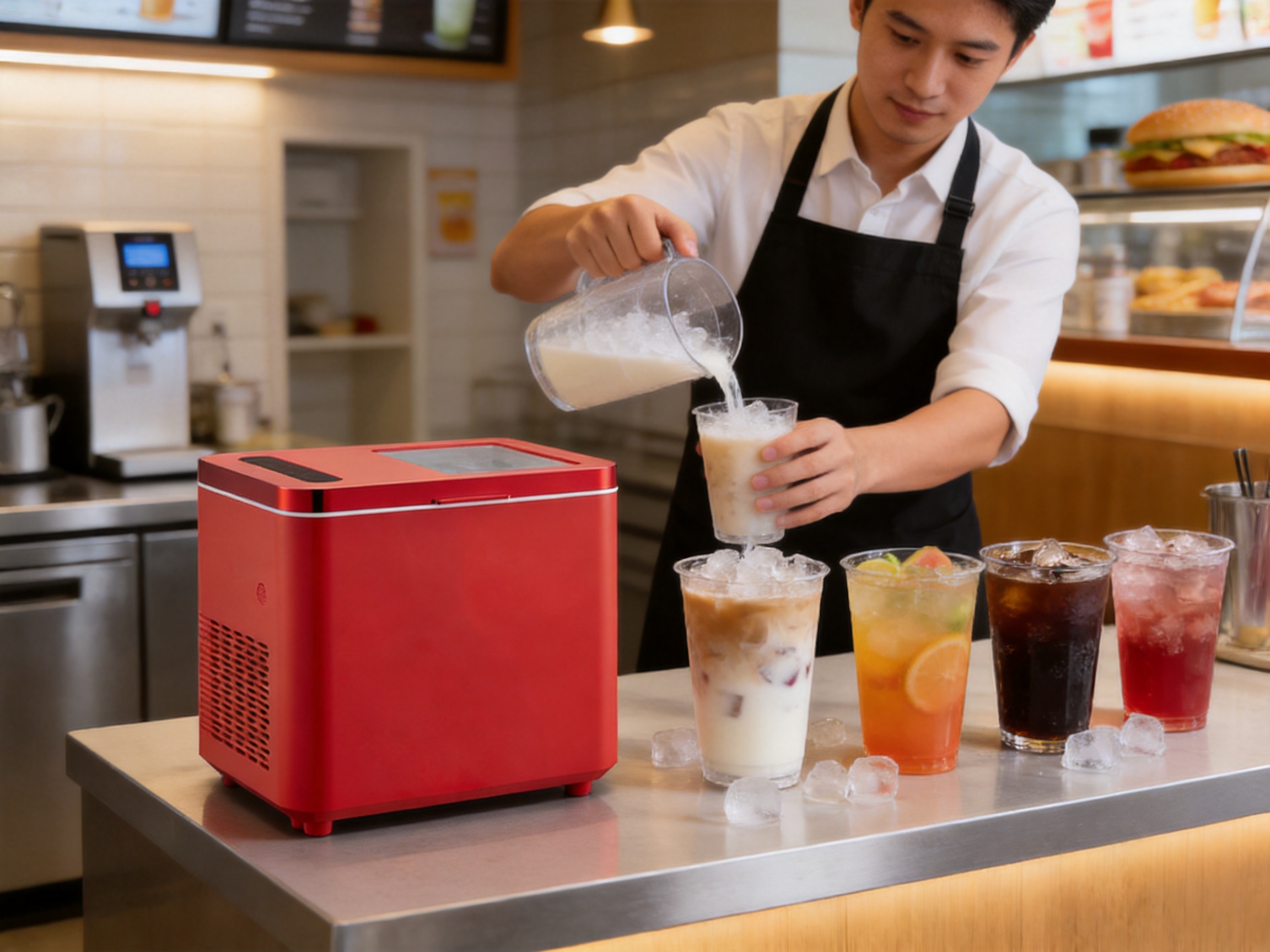
For homes, cafés, milk tea shops, fast-food restaurants, offices, and small commercial kitchens, an ice maker must do more than freeze water. It must produce ice quickly, operate consistently, fit into limited spaces, remain easy to clean, and deliver ice that suits a wide range of beverages. The touchscreen ice maker described in this article is designed around those practical requirements. Its bullet-style ice, compact dimensions, 150-watt operating power, and fully opening top structure make it a versatile solution for users who need convenient ice production without installing a large built-in ice system.
The product is identified as the Alien-Z01 touchscreen ice maker and belongs to the bullet ice maker category. It operates on a 220V–240V, 50Hz power supply and uses R600a refrigerant with a 19-gram charge. Its current and power ratings are 0.9A and 150W, while its external dimensions are approximately 325 × 295 × 252 millimeters. These specifications place the machine in a compact appliance class that can serve both domestic and light commercial environments.
Its design is especially relevant to businesses that serve cold drinks continuously. Bullet ice has a perforated center that increases the surface area exposed to the beverage. This structure allows the ice to cool drinks rapidly while providing a pleasant, moderately crunchy texture. Compared with conventional solid cubes, bullet ice can offer faster chilling and a more distinctive drinking experience. Compared with fragile flake ice, it is easier to scoop, store, and use in ordinary beverage preparation.
A Practical Ice-Making Solution for Modern Beverage Service
Ice production is a small but essential part of beverage service. A café may need ice for iced coffee, fruit tea, milk tea, soft drinks, smoothies, and chilled desserts. A restaurant may require ice for serving drinks, presenting seafood, or maintaining cold ingredients during preparation. At home, users may want an appliance that produces ice on demand without occupying the space or requiring the installation associated with a large refrigerator ice system.
The touchscreen ice maker addresses these needs through a compact countertop format. Its dimensions allow it to be positioned on many kitchen counters, service counters, beverage stations, office pantries, and mobile preparation areas. The machine does not require a dedicated water line in the way many large commercial units do, making it easier to place and relocate. This flexibility is valuable for small businesses that adjust their workstations frequently or for households that want an appliance available only when needed.
The product’s bullet ice format is another important part of its appeal. The hollow or perforated center reduces the amount of solid material in each piece and helps beverages cool more efficiently. Because the ice has a moderate level of hardness, it can provide a satisfying crunch without being as dense and hard as a large solid cube. This makes it suitable for milk tea shops, fast-food restaurants, casual dining venues, and home users who enjoy textured ice in their beverages.
Many conventional ice makers are designed around one narrow use case. Some produce large, hard cubes intended for slow melting. Others create thin flakes for food display or blended drinks. The bullet ice maker occupies a useful middle position. It produces ice that can cool drinks efficiently, can be handled with a scoop, and remains recognizable as a substantial piece rather than dissolving immediately. That balance gives it broad usability.
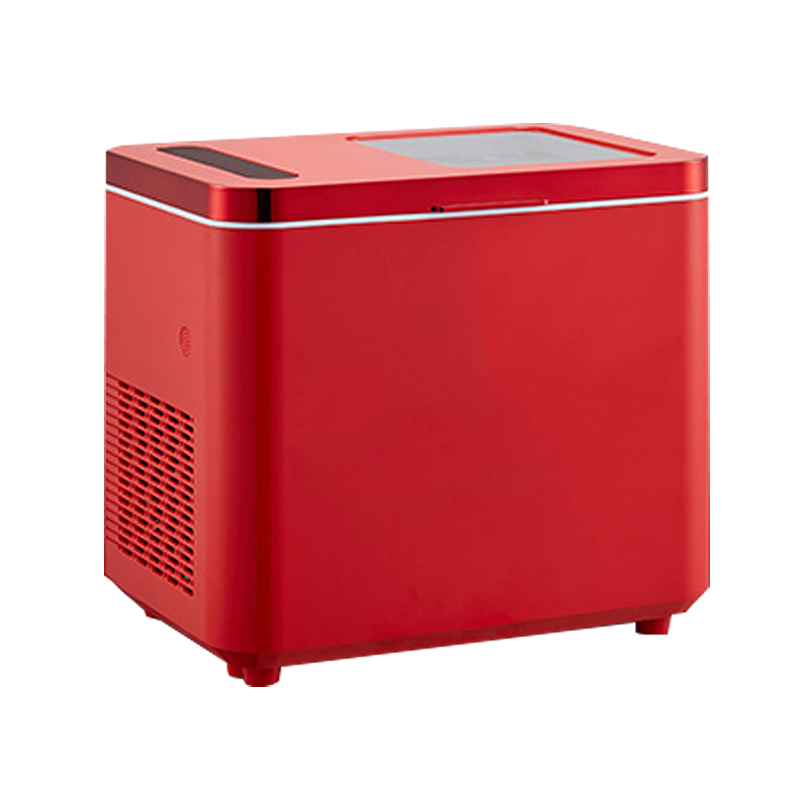
Touchscreen ice maker
Core Product Specifications
Understanding the basic specifications helps users determine whether the product is appropriate for a particular location. The machine is designed for electrical systems operating at 220V–240V and 50Hz. Its rated current is 0.9A, and its listed power consumption is 150W. These figures indicate a relatively modest electrical requirement compared with many larger commercial ice-production systems.
Product Attribute |
Specification |
Product Type |
Touchscreen bullet ice maker |
Model Description |
Alien-Z01 |
Power Supply |
220V–240V / 50Hz |
Rated Current |
0.9A |
Rated Power |
150W |
Refrigerant |
R600a |
Refrigerant Charge |
19g |
Machine Dimensions |
325 × 295 × 252mm |
The compact external size is one of the product’s most practical advantages. A machine measuring approximately 325 millimeters in length, 295 millimeters in width, and 252 millimeters in height can be integrated into areas where a full-size commercial machine would be impractical. Users should still leave adequate ventilation space around the appliance and follow the operating and installation guidance supplied with the unit. Compactness should not mean blocking air circulation or placing the machine directly beside a heat-producing appliance.
The 150W rating also supports efficient countertop operation. Actual energy use may vary according to ambient temperature, water temperature, production cycles, ventilation, and usage patterns. Nevertheless, the listed rating indicates that the unit is designed as a relatively low-power appliance rather than as a high-capacity industrial ice plant. This makes it suitable for locations where convenience and manageable electricity consumption are important considerations.
The use of R600a refrigerant reflects a refrigerant choice commonly associated with compact refrigeration appliances. As with any refrigerant system, servicing should be performed by qualified personnel, and users should not attempt to open or modify the sealed refrigeration circuit. Safe operation depends on correct manufacturing, transportation, installation, and maintenance practices.
Why Bullet Ice Performs Well in Beverages
Bullet ice receives its name from its rounded, elongated form. A central opening or perforation is a defining feature of this type of ice. That opening changes the relationship between the ice and the surrounding liquid. Instead of presenting only a smooth outer surface, the ice exposes additional internal surface area to the drink. The result is a strong cooling effect relative to the size of each piece.
For beverage shops, cooling speed is a major operational benefit. Customers generally expect cold drinks to be served promptly. Ice that cools quickly can help staff prepare drinks efficiently, especially during busy periods. The open shape can also help distribute ice through the beverage rather than allowing several large solid cubes to occupy the same space without rapid heat exchange.
Bullet ice is also well suited to drinks containing milk, tea, fruit syrup, coffee, carbonated beverages, and flavored powders. Its moderate hardness allows it to remain present while the drink is consumed, yet its shape may be easier to bite than a very dense cube. This balance has contributed to the popularity of bullet ice in milk tea shops and fast-food environments.
Another advantage is handling. The shape is generally easy to pick up with an ice scoop, and the pieces are less likely to form a single solid mass when stored under suitable conditions. This supports quick portioning at a beverage counter. Staff can scoop ice into cups, pitchers, or serving containers without needing to break apart a large frozen block.
Ice shape also influences presentation. A cup filled with rounded bullet pieces can have a clean, consistent appearance. For businesses, visual presentation is important because customers often associate uniform ice with organized preparation and product quality. At home, the distinctive shape adds variety to ordinary soft drinks, iced coffee, and homemade beverages.
Rapid Cooling and Efficient Beverage Preparation
The perforated design is one of the main ways this product differentiates itself from conventional ice makers. Solid cubes can cool a drink effectively, but their internal material is not directly exposed to the beverage. Bullet ice uses its central opening to increase contact with the liquid. The drink can circulate around more of the ice’s surface, helping heat transfer occur efficiently.
Rapid cooling is useful in several situations. A café can chill freshly brewed tea before adding milk or flavoring. A restaurant can prepare cold drinks quickly during lunch service. An office can produce ice for water, juice, or coffee without waiting for a refrigerator tray to freeze. A household can make ice shortly before guests arrive instead of filling and freezing multiple trays in advance.
Efficient cooling can also support more consistent drink preparation. When ice melts at a predictable rate and cools the beverage quickly, staff can follow recipes with greater confidence. This is particularly important for milk tea, iced coffee, and flavored drinks in which the balance between liquid, ice, and syrup influences the final taste.
It is important to recognize that ice production speed depends on the operating environment. High room temperatures, warm water, restricted ventilation, frequent lid opening, and heavy demand may affect production performance. The product’s design supports rapid cooling, but every ice maker requires appropriate conditions to operate at its best. Placing the machine on a stable surface, keeping the air path clear, and using clean water are simple ways to support reliable operation.
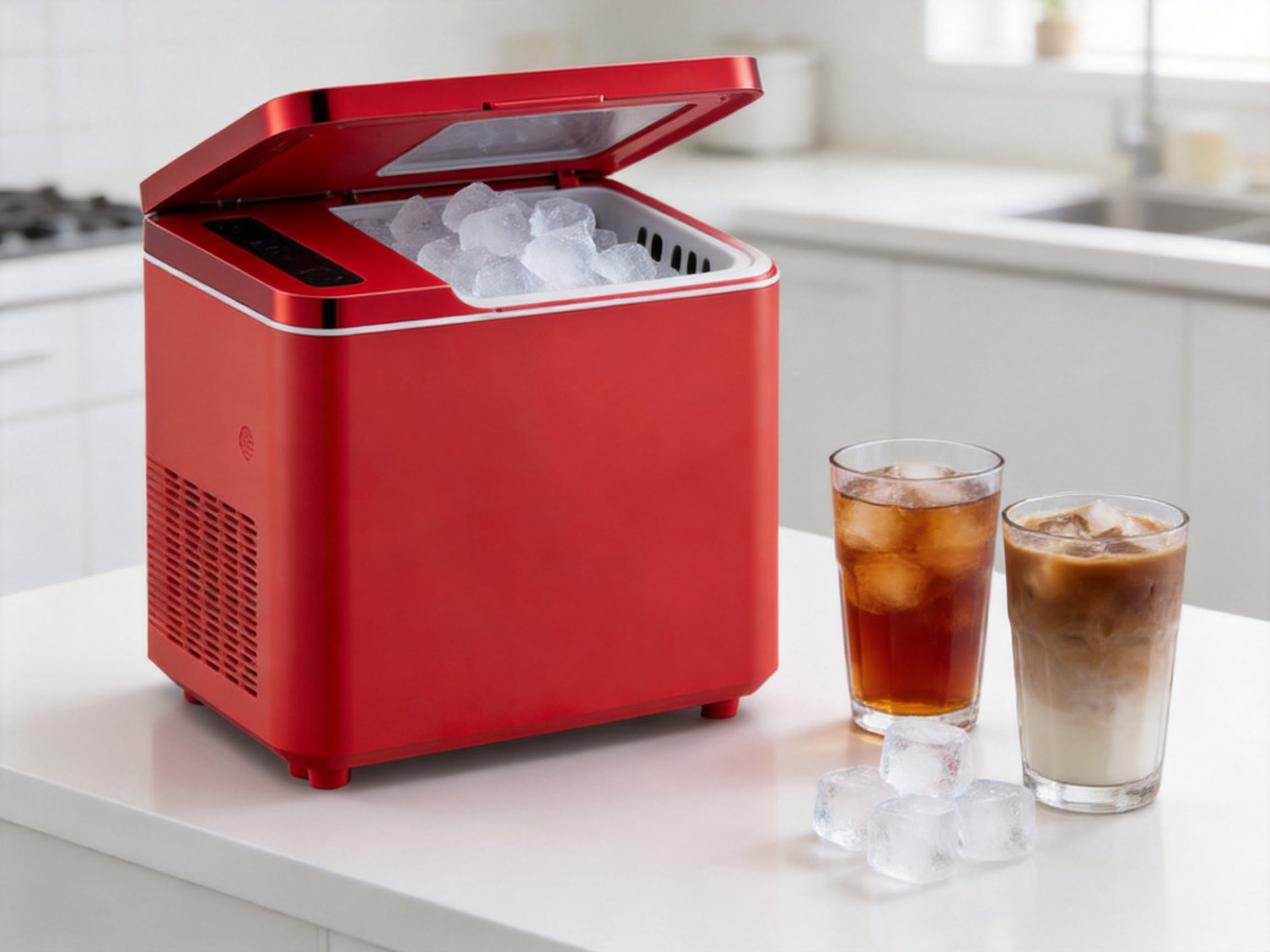
High Ice-Making Efficiency in a Compact Structure
The machine’s operating principle is designed for continuous ice production rather than relying solely on a single manually filled tray. This approach allows the appliance to produce multiple pieces over repeated cycles. For beverage service, continuous production is more convenient than waiting for separate trays to freeze and then removing them by hand.
A compact continuous ice maker can be especially useful for small commercial spaces. Large restaurants and hotels may require high-capacity floor-standing machines, but smaller cafés, kiosks, offices, and home kitchens often need a more flexible solution. The product allows these users to produce ice as demand develops while maintaining a smaller equipment footprint.
Efficiency should be understood in practical terms. The machine combines a moderate power rating, a compact refrigeration system, and a shape designed for repeated production. It is not positioned as a replacement for every industrial ice-making system. Instead, it offers a useful balance between accessibility and performance for users who require regular ice but do not need a large centralized installation.
Its compact structure may also simplify logistics. Retailers, distributors, and commercial buyers can store and transport a countertop unit more easily than a large machine. Businesses opening multiple small beverage stations may find a compact model easier to deploy across several locations. The smaller format can reduce the amount of counter redesign required before installation.
For households, the same compact design means the appliance can be placed in a kitchen, entertainment area, home bar, outdoor serving space, or office pantry when needed. Users can create a dedicated cold-drink station without making major changes to the room. The appliance’s flexibility is therefore both spatial and operational.
Non-Sticky Ice and Easier Dispensing
Ice storage presents a common challenge. If pieces freeze together, staff must separate them before serving. This slows down preparation and can create unnecessary waste, particularly when pieces break into irregular fragments. The bullet form is intended to reduce clumping during suitable storage and dispensing conditions.
Individual pieces are easier to handle with a scoop. This matters in fast-paced locations where employees may need to fill many cups within a short time. A free-flowing ice supply also supports more consistent portioning. Staff can estimate the amount of ice in each cup more easily when the pieces separate naturally.
The form is also compatible with automatic or assisted dispensing concepts. Although the exact dispensing arrangement depends on the installation and connected equipment, the general shape is more manageable than a large, irregular slab. Businesses that value speed and repeatability can benefit from ice that moves through the storage and serving process with fewer interruptions.
Good storage practice remains essential. Ice should be kept in a clean, suitable compartment, and the unit should not be overloaded beyond its intended capacity. Regular removal of excess ice, appropriate temperature control, and routine sanitation help preserve free-flowing performance. Shape alone cannot prevent clumping if ice is exposed to unsuitable temperatures or excessive moisture.
Fully Opening Top Design for Cleaning and Hygiene
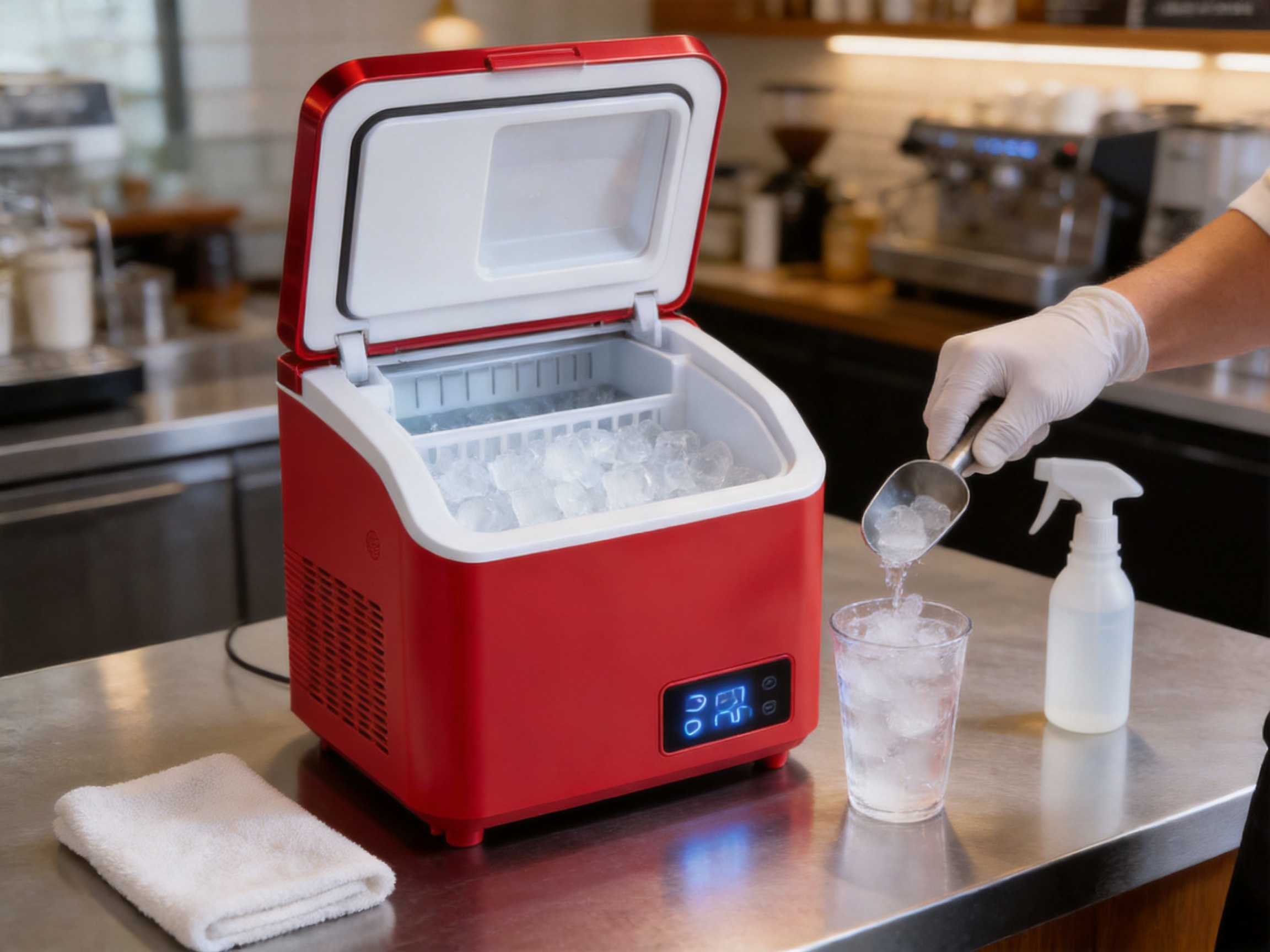
Hygiene is one of the most important considerations in any appliance that produces ice for direct consumption. Water and ice come into contact with internal surfaces, storage areas, scoops, and collection zones. If these areas are difficult to reach, routine cleaning may be neglected. The fully flip-top design of this product addresses that problem by allowing users to open the ice storage and ice-making areas more completely.
A wide opening improves visibility. Users can inspect the interior rather than relying only on a narrow opening or a small access door. Better visibility makes it easier to identify residue, water buildup, loose particles, or areas that require attention. It also makes wiping and rinsing more straightforward.
The design helps eliminate hidden or difficult-to-reach corners. In daily operation, small amounts of water can remain in seams, edges, and storage spaces. When a machine is easy to open, users are more likely to complete cleaning procedures regularly. This supports a cleaner operating environment and helps maintain the quality of the ice.
Cleaning routines should follow the manufacturer’s instructions and local food-safety requirements. In general, users should disconnect power before cleaning external or accessible internal areas, use clean materials, avoid immersing electrical components, and allow surfaces to dry appropriately. Cleaning solutions should be suitable for food-contact environments and should be rinsed according to their instructions.
The open-top structure is also useful for maintenance checks. A user can observe the ice-making area, confirm that water is flowing normally, and identify unusual buildup sooner. Early attention to small issues may help prevent more serious operational problems. For business operators, this can reduce downtime and support a more dependable service routine.
Touchscreen Operation and User Convenience
The product title identifies a touchscreen interface, which suggests a modern control experience designed to simplify interaction. A touchscreen can provide a clear operating surface without requiring numerous mechanical buttons. Depending on the final interface configuration, users may be able to start or stop production, monitor operating status, and access basic functions through an intuitive control panel.
A digital interface can be helpful for households and commercial users alike. New operators may find on-screen controls easier to understand than a collection of unlabeled switches. In a café, a simple control panel can make staff training faster, particularly when multiple employees use the equipment during different shifts.
The touchscreen should be kept clean and dry during operation. Beverage preparation can involve splashes, syrup, milk, and condensation, so staff should handle the control panel with clean hands and wipe it using an appropriate soft material. Excessive moisture should not be allowed to enter electrical openings.
Convenience is not limited to the control surface. The product combines digital operation with compact placement, accessible cleaning, and easy ice handling. These features work together to reduce the daily effort required from the user. A machine may have advanced controls, but if it is difficult to clean or awkward to access, its practical value is reduced. This product focuses on the complete operating experience rather than on the interface alone.
Advantages Compared with Common Alternatives
When evaluating an ice maker, buyers often compare bullet ice machines with freezer trays, refrigerator ice dispensers, solid-cube makers, flake ice machines, and larger commercial systems. Each type has a suitable application, but the compact touchscreen bullet ice maker offers several advantages for users who need flexible, rapid, and hygienic countertop production.
Compared with Manual Ice Trays
Manual trays require users to fill, freeze, remove, and often repeat the process several times. This can be inconvenient when a large quantity of ice is needed. Tray ice also depends on freezer space and may absorb odors from stored food. A dedicated ice maker produces ice on demand and separates ice production from ordinary freezer storage.
The product is therefore more convenient for frequent drink preparation. Users do not need to wait for a tray to freeze overnight or occupy a large section of the freezer. The continuous operating principle also provides a more suitable workflow for events, offices, and small beverage businesses.
Compared with Solid-Cube Ice
Solid cubes are often dense and slow to melt, which can be useful for spirits and premium drinks. However, they may cool beverages more gradually because less internal surface is exposed to the liquid. Bullet ice offers a different balance: rapid cooling, moderate hardness, and a crunchy texture.
For milk tea, iced coffee, soft drinks, and fast-service beverages, the speed and texture of bullet ice may be more attractive than the slow-melting characteristics of a large solid cube. The best choice depends on the drink, but the bullet format is particularly versatile for everyday cold beverages.
Compared with Flake Ice
Flake ice is soft, thin, and useful for food displays, seafood counters, and blended applications. However, it can compact more easily and may not provide the same recognizable pieces or crunchy texture. Bullet ice is easier to scoop as individual pieces and offers a more substantial presence in a drink.
Businesses that primarily serve beverages may therefore prefer bullet ice because it provides both efficient cooling and a visually appealing form. It can also be easier to portion and store in a countertop ice compartment.
Compared with Large Commercial Ice Systems
Large commercial machines can produce substantial quantities, but they require more floor space, higher investment, more complex installation, and potentially greater maintenance resources. A compact countertop unit is not designed to replace them in a high-volume hotel or large restaurant. Its advantage lies in accessibility and proportionality.
For a small café, office, home kitchen, or compact food-service counter, a large machine may be unnecessary. The touchscreen bullet ice maker supplies a practical level of production while occupying far less space. It can also be easier to relocate, clean, and integrate into an existing workspace.
Comparison Factor |
Touchscreen Bullet Ice Maker |
Manual Ice Trays |
Large Commercial Ice System |
Space Requirement |
Compact countertop format |
Uses freezer space |
Requires dedicated installation space |
Ice Shape |
Bullet-shaped, perforated pieces |
Usually solid cubes |
Varies by machine type |
Cooling Performance |
Rapid beverage cooling through increased contact area |
Depends on cube size and freezer temperature |
Depends on selected production system |
Operation |
Touchscreen-based countertop use |
Manual filling and removal |
Dedicated commercial controls |
Cleaning Access |
Fully opening top design |
Tray washing required |
May require more complex maintenance access |
Best Suited For |
Homes, offices, cafés, kiosks, and small food-service areas |
Occasional household use |
High-volume commercial operations |
Manufacturing Strengths and Product Development Philosophy
The manufacturer, Alien Technology Co., Ltd., is based in Zhouxiang, Zhejiang Province, an area known for small household appliance production and convenient logistics. This location provides access to an established appliance manufacturing environment, supplier networks, technical resources, and transportation channels. Such an ecosystem can support efficient sourcing, coordinated production, and responsive product development.
The company specializes in household appliances including ice makers, coffee machines, and air fryers. This product range places the company within the broader small-appliance sector, where compact engineering, user-centered operation, electrical safety, thermal management, and appearance design all influence product quality.
The company’s stated mission is “Smart Technology, Simplifying Life, Enhancing Happiness.” In the case of the touchscreen ice maker, that philosophy can be seen in the combination of digital operation, compact dimensions, quick cooling, easy ice handling, and accessible cleaning. These features are not isolated additions. They are connected to the everyday needs of people who want ice production to be simple and reliable.
The company also emphasizes humanized design, reliable quality, customer satisfaction, continuous improvement, and innovation. A humanized design approach means that product development considers how users actually behave. Users want to see the ice-making area, access the storage space, operate the controls easily, and clean the appliance without excessive effort. The fully opening top and compact countertop structure are consistent with that practical approach.
Reliable quality in a refrigeration appliance depends on multiple manufacturing stages. These may include material inspection, component verification, assembly control, electrical testing, refrigeration-system checks, appearance inspection, and functional testing. While the available product materials do not specify every factory procedure, the company’s quality-oriented philosophy indicates a focus on maintaining consistent performance across these important stages.
Continuous improvement is particularly valuable in small appliances because customer feedback can reveal details that are not obvious during initial development. Users may identify preferred control layouts, cleaning challenges, storage requirements, or transportation concerns. A manufacturer that listens to this feedback can refine future products and improve the overall ownership experience.
Advanced Manufacturing Processes Relevant to the Ice Maker
Producing a compact ice maker requires coordination between mechanical, electrical, refrigeration, and user-interface systems. The outer housing must protect internal components while maintaining an attractive countertop appearance. The refrigeration system must remove heat effectively within a small structure. The water path must support clean ice production. The control system must coordinate operating cycles. The lid and storage area must withstand repeated opening and closing.
Integrated Mechanical and Refrigeration Design
The product’s compact structure reflects the need to arrange refrigeration components efficiently. A small machine must balance internal volume, airflow, insulation, water circulation, ice formation, and storage capacity. Good engineering uses the available space carefully so that the product remains compact without making cleaning or servicing unnecessarily difficult.
The use of R600a refrigerant and a 19-gram charge forms part of the refrigeration specification. The refrigeration circuit must be assembled and sealed accurately, with attention to leakage prevention, pressure conditions, and safe operation. Proper factory testing is essential because refrigeration performance depends on the integrity of the complete system rather than on a single component.
Electrical and Functional Testing
With a listed power supply of 220V–240V, 50Hz and a rated power of 150W, the electrical system must be matched to the intended operating environment. Manufacturing quality control may include checks for wiring correctness, insulation, grounding, control response, operating current, and abnormal conditions. These tests help confirm that the appliance performs consistently before it reaches the user.
The touchscreen interface adds another area for functional verification. The control panel should respond reliably, provide clear operating feedback, and remain integrated with the ice-making cycle. Digital controls are most useful when they simplify operation rather than create uncertainty. A well-tested interface can support both first-time users and trained commercial staff.
Water and Ice-Contact Areas
Because the product makes ice intended for consumption, water-contact and ice-contact areas require careful material and assembly consideration. Surfaces should be suitable for regular cleaning, and the internal arrangement should minimize areas where stagnant water or residue can remain. The fully opening top makes the design more compatible with routine inspection and sanitation.
Manufacturing processes should also aim for consistent fit between panels, lids, seals, storage sections, and internal parts. Proper fit contributes to durability and helps reduce unwanted movement, gaps, or access problems during daily use.
Final Assembly and Inspection
Final assembly is where different systems become a complete appliance. A quality-focused process may include checks of the exterior finish, lid movement, touchscreen response, power connection, ice formation, water circulation, and abnormal noise. The goal is to identify issues before shipment rather than leaving discovery to the customer.
For a manufacturer serving international customers, packaging and logistics are also important. The unit must be protected against vibration, impact, moisture, and improper handling during transport. Convenient logistics from Zhejiang can help support distribution, but product protection and clear handling instructions remain essential at every stage.
Applications in Homes and Commercial Environments
In the home, the machine can support everyday drinks and social occasions. Families can prepare iced tea, lemonade, fruit drinks, iced coffee, and soft drinks without relying on freezer trays. Its compact dimensions make it practical for kitchens with limited storage. It can also be used in a home bar or entertainment area where guests expect chilled beverages.
In an office, the appliance can serve a pantry or break room. Employees can produce ice for water, coffee, tea, and refreshments without repeatedly purchasing bags of ice. The touchscreen interface may help different users operate the machine with minimal training, while the accessible top supports regular cleaning by the person responsible for pantry maintenance.
For cafés and milk tea shops, bullet ice is particularly appropriate. The shape cools beverages rapidly and offers the crunchy texture many customers expect. The machine can support drink preparation at a service counter, especially where demand is moderate and counter space is limited.
Fast-food restaurants can use the ice for soft drinks, cold tea, flavored beverages, and meal combinations. The free-flowing shape helps staff scoop portions quickly. Restaurants should assess expected daily demand carefully, since higher-volume operations may require multiple units or a larger commercial ice production system.
Small catering operations, kiosks, temporary event counters, and mobile beverage stations may also benefit from the product’s compact format. Its suitability for these settings depends on access to the correct power supply, clean water, stable placement, ventilation, and appropriate transportation procedures.
Maintenance Practices for Long-Term Performance
Regular maintenance is essential for preserving ice quality and machine performance. Users should establish a cleaning schedule based on frequency of use, water quality, environmental conditions, and local food-safety requirements. High-use commercial environments generally require more frequent attention than occasional household use.
The storage area, ice-making area, lid, water-contact surfaces, and scoop should be cleaned according to the supplied instructions. Any visible residue should be removed promptly. The touchscreen and exterior should be wiped with a suitable cloth, while electrical openings should be protected from excess moisture.
Water quality can influence both ice taste and internal cleanliness. Clean, suitable drinking water should be used. If local water contains high mineral content, users should pay close attention to scale formation and follow approved descaling guidance. Mineral deposits may affect water flow, ice appearance, and heat-transfer performance if allowed to accumulate.
Ventilation also matters. The machine should not be placed against a wall in a way that blocks airflow. It should be kept away from ovens, hot surfaces, direct heat, and excessive sunlight. Adequate ventilation helps the refrigeration system release heat and can support more consistent operation.
Users should avoid overloading the storage area and should remove old or unused ice when cleaning the machine. Ice is a food product, so storage hygiene matters even when the ice is intended only for beverages. A clean scoop should be used, and hands should not be placed directly into the ice compartment.
If unusual sounds, persistent water leakage, failure to produce ice, electrical odor, or abnormal screen behavior occurs, the unit should be switched off and inspected by qualified service personnel. Users should not dismantle the refrigeration circuit or attempt unauthorized repairs.
How the Product Supports Business Efficiency
For a small business, equipment value is measured not only by purchase cost but also by time saved, workspace preserved, and service consistency achieved. The touchscreen bullet ice maker supports these factors in several ways. Its compact size preserves valuable counter or floor area. Its continuous production principle reduces dependence on manually frozen trays. Its bullet shape supports quick scooping and portioning. Its accessible design can shorten cleaning tasks.
Speed can be particularly important during peak periods. When staff can produce and handle ice without complicated procedures, they can focus more attention on customer service and drink preparation. Consistent ice shape also helps maintain a repeatable appearance across servings.
The product may be useful for businesses that are expanding gradually. A new beverage shop may begin with moderate demand and later add equipment as sales grow. A compact unit provides an accessible starting point, while additional machines can potentially be deployed as separate service points. This modular approach may be more practical than investing immediately in a large centralized system.
Businesses should select equipment according to actual demand. If a site serves hundreds of drinks per hour or requires ice for food display and storage, a higher-capacity system may be more appropriate. The strength of this product is its balance of compactness, convenience, and useful ice production for small and medium applications.
Quality, Customer Support, and Cooperation
Alien Technology Co., Ltd. presents itself as a manufacturer committed to customer satisfaction, quality improvement, and innovation. These principles are important for distributors, retailers, hospitality businesses, and other buyers evaluating a long-term supplier relationship. Product performance is only one part of a successful cooperation. Communication, documentation, delivery coordination, after-sales response, and the ability to develop products for changing market needs are also significant.
The company welcomes new and existing customers for business cooperation. Its product categories include ice makers, coffee machines, and air fryers, allowing potential partners to discuss more than one type of household appliance. This broader product portfolio may be useful for distributors that prefer to work with a supplier capable of supporting several countertop appliance segments.
A manufacturer located in a major small-appliance production region can also benefit from established logistics and supply-chain connections. Zhejiang’s appliance industry provides a practical environment for sourcing, manufacturing, inspection, packaging, and export coordination. Buyers should still confirm product documentation, certifications, regional electrical requirements, warranty terms, packaging specifications, and order quantities before placing commercial orders.
Purchasing Considerations
Before purchasing, users should identify the expected ice demand, available countertop area, electrical standard, water source, ventilation conditions, and cleaning responsibilities. The machine is designed for 220V–240V, 50Hz operation, so buyers in regions with different electrical standards should confirm compatibility before use.
Counter space should be measured carefully. The listed dimensions are approximately 325 × 295 × 252 millimeters, but users should also allow room for airflow, lid opening, power access, and safe operation. A machine may fit physically beneath a cabinet but still be unsuitable if the lid cannot open fully for ice removal and cleaning.
Buyers should also consider the type of drinks being served. Bullet ice is well suited to iced tea, milk tea, iced coffee, soft drinks, fruit beverages, and similar applications. If the main purpose is long-term chilling of premium spirits, delicate food display, or large-scale ingredient storage, another ice style may be more appropriate.
For commercial users, staff should be trained in operation, sanitation, ice handling, and basic troubleshooting. A short written procedure can help maintain consistent hygiene between shifts. For household users, the most important habits are using clean water, maintaining ventilation, cleaning the interior, and following safety instructions.
Q&A
What type of ice does the machine produce?
The machine produces bullet-style ice with a perforated center. This shape provides increased contact area with beverages, supports rapid cooling, and offers a moderately crunchy texture.
Is the product suitable for milk tea shops?
Yes. Bullet ice is especially suitable for milk tea, fruit tea, iced coffee, soft drinks, and other beverages commonly served in cafés and fast-food establishments. Its shape is easy to scoop and its texture is popular in many beverage applications.
How large is the machine?
The listed dimensions are approximately 325 × 295 × 252 millimeters. This compact size makes it suitable for many countertops, beverage stations, offices, and home kitchens. Users should still provide additional space for ventilation and full lid movement.
What power supply does it require?
The specified power supply is 220V–240V at 50Hz. The listed current is 0.9A, and the rated power is 150W. Buyers should confirm that the local electrical system and outlet are compatible.
What refrigerant does it use?
The refrigeration system uses R600a refrigerant with a listed charge of 19 grams. Refrigeration-system servicing should be performed only by qualified personnel.
Does it require a dedicated water line?
The provided product information describes a compact countertop machine but does not specify a dedicated water-line installation. Buyers should consult the official operating documentation for the exact water-filling method and installation requirements.
Why is the bullet shape useful?
The central perforation increases contact between the ice and beverage. This helps the drink cool quickly. The shape also provides a crunchy texture and can be easier to scoop and dispense than irregular or clumped ice.
Is the ice likely to stick together?
The product information states that the shape supports high flowability and helps prevent clumping during storage and dispensing. Proper temperature, storage conditions, cleaning, and correct operating practices remain important for maintaining free-flowing ice.
How does the top design support hygiene?
The fully flip-top design allows users to open the ice storage and ice-making areas more completely. This improves visibility and access, making daily cleaning, inspection, and maintenance easier and reducing hard-to-reach corners.
Is the touchscreen easy to use?
The product is identified as a touchscreen ice maker, indicating a digital control interface intended to simplify operation. Users should follow the supplied instructions for the exact functions, indicators, and cleaning precautions for the screen.
Can it replace a large commercial ice machine?
It can be a practical alternative for homes, offices, cafés, kiosks, and small food-service areas with moderate ice demand. High-volume restaurants, hotels, and large catering operations may require a higher-capacity commercial system or multiple units.
What type of water should be used?
Clean drinking water should be used. Water quality affects ice taste, appearance, and internal cleanliness. In areas with hard water, users should monitor for mineral deposits and follow suitable cleaning or descaling instructions.
How should the machine be cleaned?
Users should follow the manufacturer’s cleaning instructions, disconnect power when appropriate, clean accessible water and ice-contact areas, wipe the exterior and touchscreen carefully, and avoid immersing electrical components. Commercial users should also follow applicable food-safety procedures.
Where is the manufacturer located?
Alien Technology Co., Ltd. is located at No. 138, Huixiang'an Road, Zhouxiang Town, Cixi City, Zhejiang Province. The company operates in a region known for small household appliance manufacturing and logistics.
What other products does the company manufacture?
The company specializes in household appliances such as ice makers, coffee machines, and air fryers. Its stated business philosophy emphasizes quality, customer satisfaction, continuous improvement, and innovation.
How can potential business partners make contact?
Business inquiries can be directed to the company through the contact details supplied in the product materials. The listed telephone number is +86-13968281299, and the listed email address is [email protected].
Conclusion
The touchscreen bullet ice maker offers a balanced solution for users who need convenient ice production in a compact format. Its most significant advantages include rapid beverage cooling, a distinctive perforated ice shape, moderate hardness, good flowability, a 150W power rating, and dimensions suited to countertop placement. These features make it relevant to households, offices, cafés, milk tea shops, fast-food restaurants, kiosks, and other small beverage-service environments.
The product also addresses one of the most important weaknesses found in many compact appliances: difficult cleaning access. Its fully flip-top design allows better inspection and more complete access to the ice storage and ice-making areas. This supports daily hygiene and makes routine maintenance less burdensome.
Compared with manual trays, it offers on-demand production. Compared with solid cubes, its perforated design can cool drinks quickly and provide a crunchy texture. Compared with flake ice, it offers more substantial, scoopable pieces. Compared with large commercial systems, it occupies less space and may be easier to integrate into a smaller operation.
The manufacturer’s location in Zhejiang’s small-appliance production region, together with its stated emphasis on smart technology, humanized design, reliable quality, continuous improvement, and innovation, provides a foundation for product development and manufacturing cooperation. As with any refrigeration appliance, the best results depend on correct installation, clean water, adequate ventilation, regular sanitation, and appropriate demand planning.
For buyers seeking a compact ice maker that combines touchscreen convenience, efficient bullet ice production, manageable power requirements, and easy cleaning access, this model presents a practical and versatile choice. Its value lies not in one feature alone, but in the way its ice shape, operating structure, physical size, hygiene design, and manufacturing philosophy work together to simplify everyday beverage preparation.
References
1. Product specification sheet for the touchscreen bullet ice maker, model description Alien-Z01.
2. Product information concerning bullet ice cooling performance, flowability, texture, production efficiency, and cleaning access.
3. Manufacturer profile and company information for Alien Technology Co., Ltd., Zhejiang Province.
4. General refrigeration appliance engineering principles concerning compact systems, airflow, refrigerant handling, and electrical testing.
5. General food-service equipment hygiene principles for ice storage, water-contact surfaces, cleaning, and safe handling.
6. General small-appliance manufacturing practices covering assembly inspection, functional testing, packaging, and continuous product improvement.