
 English
 한국어
한국어 Español
 Deutsch
For households that want more than ordinary hard ice cubes, a home chewing ice maker offers a different level of beverage enjoyment, food presentation, and everyday convenience. This product is designed to create small, soft, chewable ice with a pleasant texture that cools drinks quickly and feels gentle on the teeth. Unlike traditional cube ice, chewing ice is appreciated not only for its cooling power but also for its sensory appeal: it is soft enough to bite, easy to scoop, simple to blend, and versatile across drinks, desserts, cold food displays, and even cold-compress applications.
The Home Chewing Ice Maker is a compact household appliance built for users who enjoy iced coffee, soda, cocktails, smoothies, shaved-ice drinks, fruit teas, and chilled beverages throughout the day. With a machine dimension of 224 x 333 x 325 mm, a rated power of 130 W, and R600a refrigerant charge of 19 g, it is designed to fit modern kitchens, home bars, small offices, and leisure spaces where convenient access to soft ice is highly valued. Its purpose is simple: to provide a better ice experience at home without relying on store-bought ice bags or bulky commercial machines.
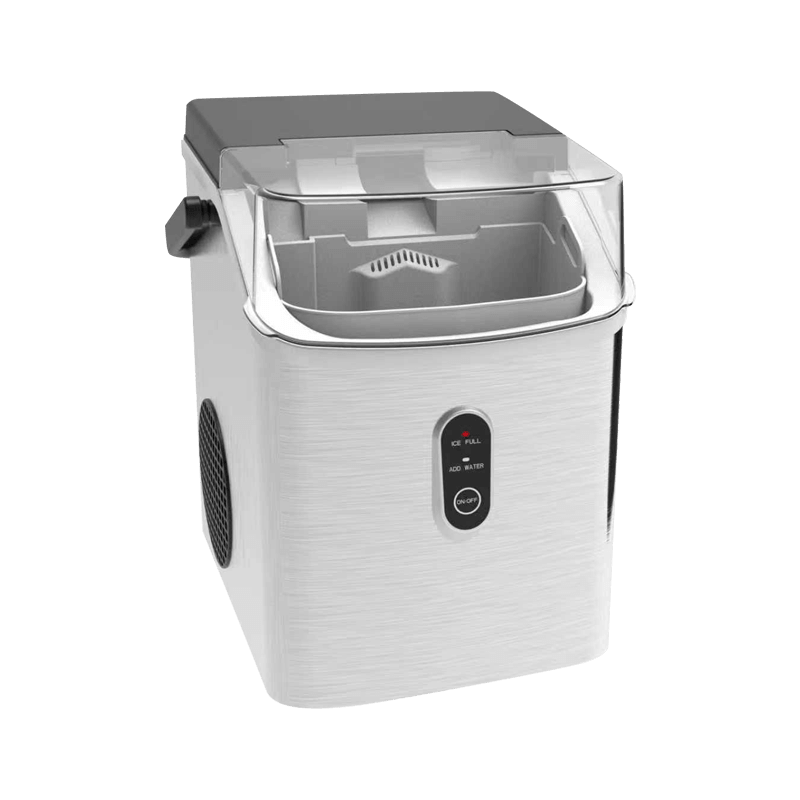
Product Overview: A Compact Appliance Built Around the Chewing Ice Experience
The core value of this chewing ice maker is the texture of the ice it produces. Chewing ice is known for being softer, lighter, and more porous than conventional cube ice. This structure gives it the ability to absorb liquid flavor quickly, cool beverages rapidly, and create a satisfying crunch without the harsh bite of dense ice cubes. For many users, the ice itself becomes part of the drinking experience rather than merely a cooling accessory.
Traditional household ice trays are slow, inconvenient, and often produce hard cubes that can dilute drinks unevenly. Refrigerator ice makers may be practical, but they are typically designed for standard ice cubes or crushed ice that lacks consistency. Portable ice makers can produce bullet ice, but bullet ice is usually hollow, smooth, and relatively hard. In contrast, a chewing ice maker is designed for people who want ice that is enjoyable to bite, easy to mix, and highly effective at rapid cooling.
The product is especially suitable for homes where cold beverages are consumed frequently. It can support morning iced coffee, afternoon soda, evening cocktails, fruit-infused water, and family dessert preparation. Because the ice is small and scoopable, it is also useful for smoothies, slush-style drinks, shaved-ice desserts, and chilled food displays. It helps users create café-style and beverage-shop-style experiences at home with less effort.
Specification |
Details |
Product Type |
Home Chewing Ice Maker |
Power Supply |
220 V / 60 Hz |
Current / Power |
0.55 A / 130 W |
Refrigerant / Charge |
R600a / 19 g |
Machine Dimensions |
224 x 333 x 325 mm |
Primary Ice Characteristic |
Soft, chewable, fast-cooling ice |
Typical Applications |
Iced coffee, soda, smoothies, shaved ice, cold food display, and cold compresses |
Why Chewing Ice Is Different from Ordinary Ice
Chewing ice is valued because it combines cooling performance with mouthfeel. Ordinary ice cubes are dense and hard. They cool drinks, but they can be uncomfortable to bite and may chill beverages more slowly because their surface area is relatively limited. Chewing ice, by comparison, is formed in smaller pieces with more surface area. This increased contact area allows the ice to interact quickly with the liquid surrounding it, reducing beverage temperature in a shorter time.
Soft chewing ice also holds flavor more effectively. When added to iced coffee, fruit tea, cola, or flavored sparkling water, it absorbs a small amount of the beverage and gradually releases that flavor as it is chewed. This makes the final portion of the drink more enjoyable, because the ice is not just frozen water; it becomes a lightly flavored extension of the beverage itself.
Texture is another major difference. Many consumers enjoy chewing ice, but hard cubes can be unpleasant and potentially tough on teeth. Chewing ice is softer, more brittle, and easier to bite. It produces the familiar sound and texture that ice lovers seek, while reducing the harsh resistance associated with dense cubes. This is one of the strongest reasons the product stands out in the household appliance category.
From a practical standpoint, chewing ice is easier to scoop, pour, and blend. It mixes well with beverages and ingredients because the pieces are smaller and less slippery than large cubes. For homemade smoothies or frozen drinks, chewing ice can reduce the workload on a blender compared with large, hard ice cubes. For serving seafood, salads, or chilled fruit, it can form a gentle cooling bed that surrounds items more evenly.
Key Advantage One: A Softer Texture That Enhances Daily Enjoyment
The most important advantage of the Home Chewing Ice Maker is the quality of the chewing experience. The ice is designed to be soft enough for comfortable biting while still retaining enough structure to chill beverages effectively. This balance is difficult to achieve with standard freezer ice, crushed ice, or bullet ice.
Many competing countertop ice makers focus only on production speed or convenience. They may produce ice quickly, but the resulting ice is often bullet-shaped and relatively hard. Bullet ice is useful, but it does not deliver the same soft crunch associated with premium chewing ice. Crushed ice from a refrigerator dispenser may seem similar at first glance, but crushed hard cubes can create sharp fragments and inconsistent pieces. Chewing ice provides a more uniform experience.
For families, the softer texture can make cold drinks more appealing. Children and adults who enjoy crunchy ice may prefer this style because it feels easier to chew. For home entertainers, it gives drinks a more premium presentation and mouthfeel. A glass filled with soft chewing ice immediately communicates freshness, abundance, and care, especially when paired with iced coffee, lemonade, soda, or cocktails.
In the growing home beverage culture, texture matters. Many consumers now prepare specialty drinks at home rather than buying them from cafés every day. The right ice can change the entire drink. Iced coffee becomes colder faster and feels more like a café beverage. Soda becomes crisp and refreshing. Fruit tea becomes more lively. Smoothies and slush-style drinks gain better consistency. The ice maker helps bring this elevated beverage experience into the home environment.
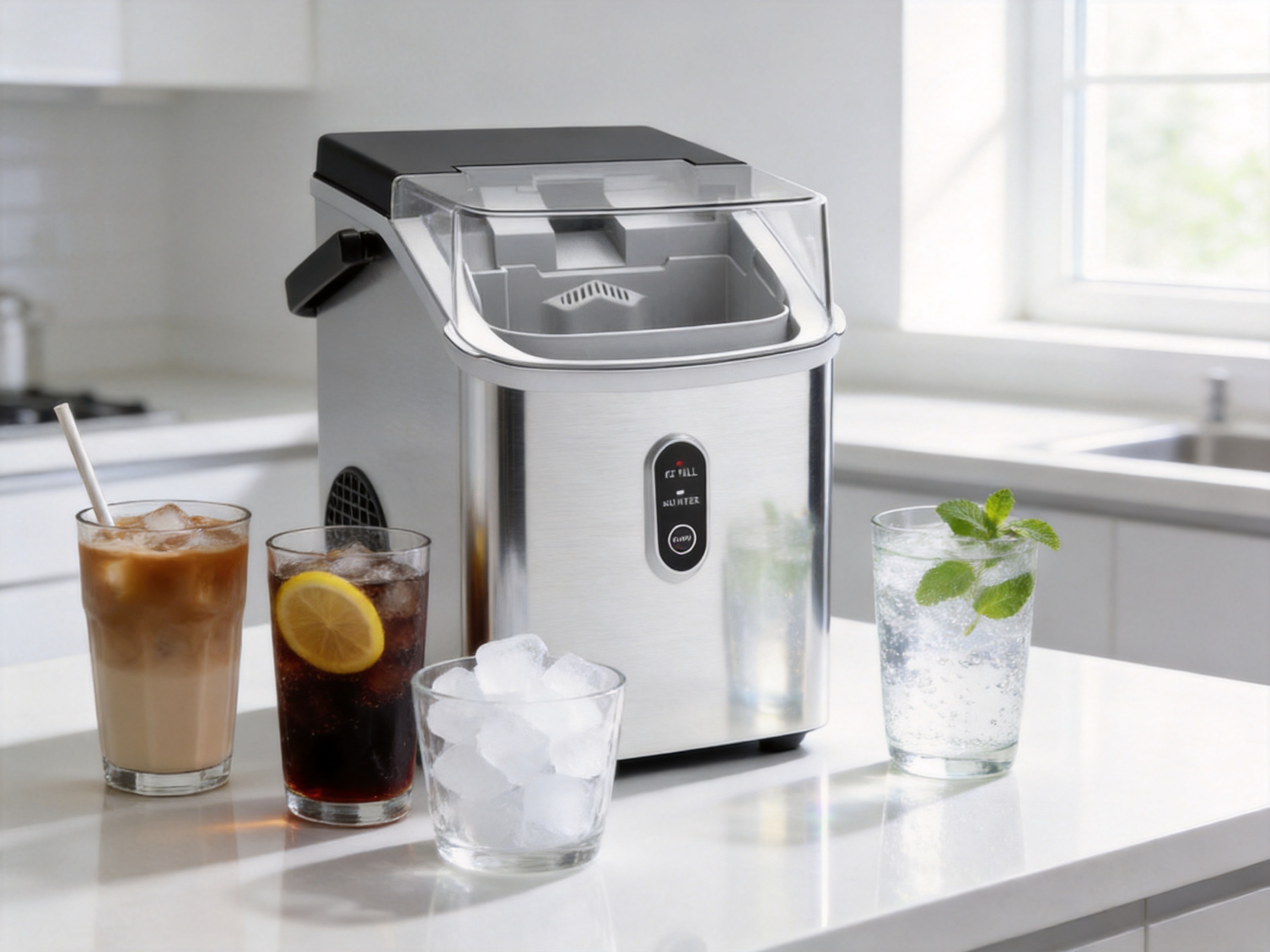
Key Advantage Two: Rapid Cooling Through Increased Surface Contact
Cooling speed is one of the most practical reasons to choose chewing ice. Smaller ice pieces have a larger total surface area compared with the same mass of larger cubes. This means more ice is in direct contact with the beverage, allowing heat transfer to happen faster. In everyday use, this translates into quicker chilling and a more refreshing first sip.
This advantage is especially important for iced coffee. Coffee is often brewed hot, and many users want to chill it without waiting a long time. Large cubes may cool the drink gradually, but chewing ice rapidly lowers the temperature because the small pieces surround the liquid more efficiently. The result is a cold drink with less delay.
Carbonated drinks also benefit from rapid cooling. Soda, sparkling water, and flavored carbonated beverages taste best when they are very cold. Chewing ice helps bring the beverage temperature down quickly and maintain a chilled sensation throughout consumption. Because the ice fills gaps in the glass more effectively than large cubes, the drink is surrounded by cooling surfaces from top to bottom.
In competitive comparison, many standard ice makers produce larger bullet ice pieces that chill more slowly and leave empty spaces in the cup. Crushed ice cools quickly but may be irregular and watery if produced by crushing already melting cubes. Chewing ice provides an appealing middle ground: it is small enough to cool fast, structured enough to remain enjoyable, and consistent enough for repeated beverage preparation.
Key Advantage Three: Better Flavor Coating and Infusion
Chewing ice is not only a cooling medium; it is also a flavor carrier. Its small particle structure and surface texture allow it to pick up beverage flavors quickly. When used in drinks such as cola, lemonade, iced tea, fruit juice, or coffee, the ice can absorb some of the flavor and create a pleasant chew at the end of the drink.
This quality is one reason chewing ice has a loyal following. People who enjoy it often describe the final ice in a finished drink as one of the best parts. The ice becomes lightly infused with the beverage, offering a refreshing and flavorful crunch. Hard cubes, by contrast, tend to remain separate from the drink experience. They cool the beverage but do not integrate with it in the same way.
The flavor-coating advantage extends beyond beverages. In food service-style applications at home, chewing ice can surround and cool ingredients gently. It can be used to present chilled fruit, seafood, oysters, sashimi-style dishes, or salad bar ingredients. The ice conforms around items more evenly than large cubes, supporting both cooling and visual presentation. For home parties or family gatherings, this can improve freshness and display quality.
For cold compresses, the same conforming ability is useful. Small, soft ice pieces can fit around body contours more comfortably than large rigid cubes. While any cold therapy should be used responsibly and with appropriate barriers to protect skin, the physical structure of chewing ice makes it practical for short-term cooling needs.
Key Advantage Four: Versatility Across Beverages, Desserts, and Food Presentation
A major benefit of this product is that it is not limited to one type of drink. It supports a wide range of daily uses, making it more valuable than a single-purpose kitchen gadget. In the morning, it can be used for iced coffee or cold brew. During the day, it can chill water, fruit tea, lemonade, or sports drinks. In the evening, it can support cocktails, mocktails, soda, and sparkling water. On weekends, it can help prepare smoothies, shaved ice, and frozen desserts.
For smoothies and blended drinks, softer ice can be easier to process than dense cubes. This may help achieve a smoother texture and reduce strain during blending. For shaved-ice-style desserts, chewing ice can act as a convenient base that is easier to work with than large frozen blocks. For fruit bowls and party trays, it can provide an attractive cooling layer.
Compared with conventional ice makers, this versatility is a strong competitive advantage. A standard bullet ice maker is convenient for filling cups but less ideal for chewability and dessert preparation. Refrigerator ice may be accessible, but its quality depends heavily on freezer conditions, water storage, and dispenser cleanliness. Store-bought ice can be useful for parties, but it requires planning, transportation, and freezer space. A home chewing ice maker provides continuous access to a preferred ice style whenever needed.
The product also supports changing consumer habits. More people are building home beverage stations, compact coffee bars, and small entertainment corners. They purchase espresso machines, soda makers, blenders, and insulated cups. A chewing ice maker fits naturally into this lifestyle because ice is the foundation of many cold drinks. Better ice makes every beverage system more complete.
Key Advantage Five: Compact Design for Modern Homes
With machine dimensions of 224 x 333 x 325 mm, the appliance is designed to provide useful functionality without taking over the kitchen. Countertop space is valuable, especially in apartments, small homes, offices, and shared living spaces. A compact ice maker allows users to enjoy specialty ice without needing a commercial-sized unit.
Its size makes it suitable for kitchen counters, pantry areas, home bars, break rooms, small cafés, guest rooms, and recreational spaces. It can be placed where ice is most often needed, reducing the inconvenience of walking back and forth to a freezer. For users who frequently prepare cold drinks, this convenience becomes noticeable very quickly.
Competitor products may be too bulky, too industrial-looking, or designed primarily for occasional use. This product focuses on household practicality. It combines the appeal of premium chewable ice with a footprint that can fit into daily living environments. Its design philosophy is not simply to produce ice, but to make good ice accessible in ordinary home routines.
Key Advantage Six: Responsible Refrigeration with R600a
The product uses R600a refrigerant with a 19 g charge. R600a is commonly used in modern household refrigeration appliances because of its efficient thermodynamic properties and lower environmental impact compared with many older refrigerants. In a compact ice maker, the refrigerant system must be carefully engineered to support stable cooling, reliable ice formation, and energy-conscious operation.
At 130 W rated power, the machine is designed for household use where efficiency and practicality matter. Consumers increasingly expect appliances to perform well without unnecessary energy waste. A well-designed refrigeration circuit, properly matched compressor system, and controlled ice-making process all contribute to the product’s overall user value.
In the competitive ice maker market, refrigeration quality is one of the most important differentiators. A low-quality machine may produce inconsistent ice, experience slow recovery, or struggle under frequent use. A carefully manufactured unit with appropriate refrigerant charge, stable component assembly, and proper testing can deliver a more dependable experience. This is where manufacturing discipline becomes essential.
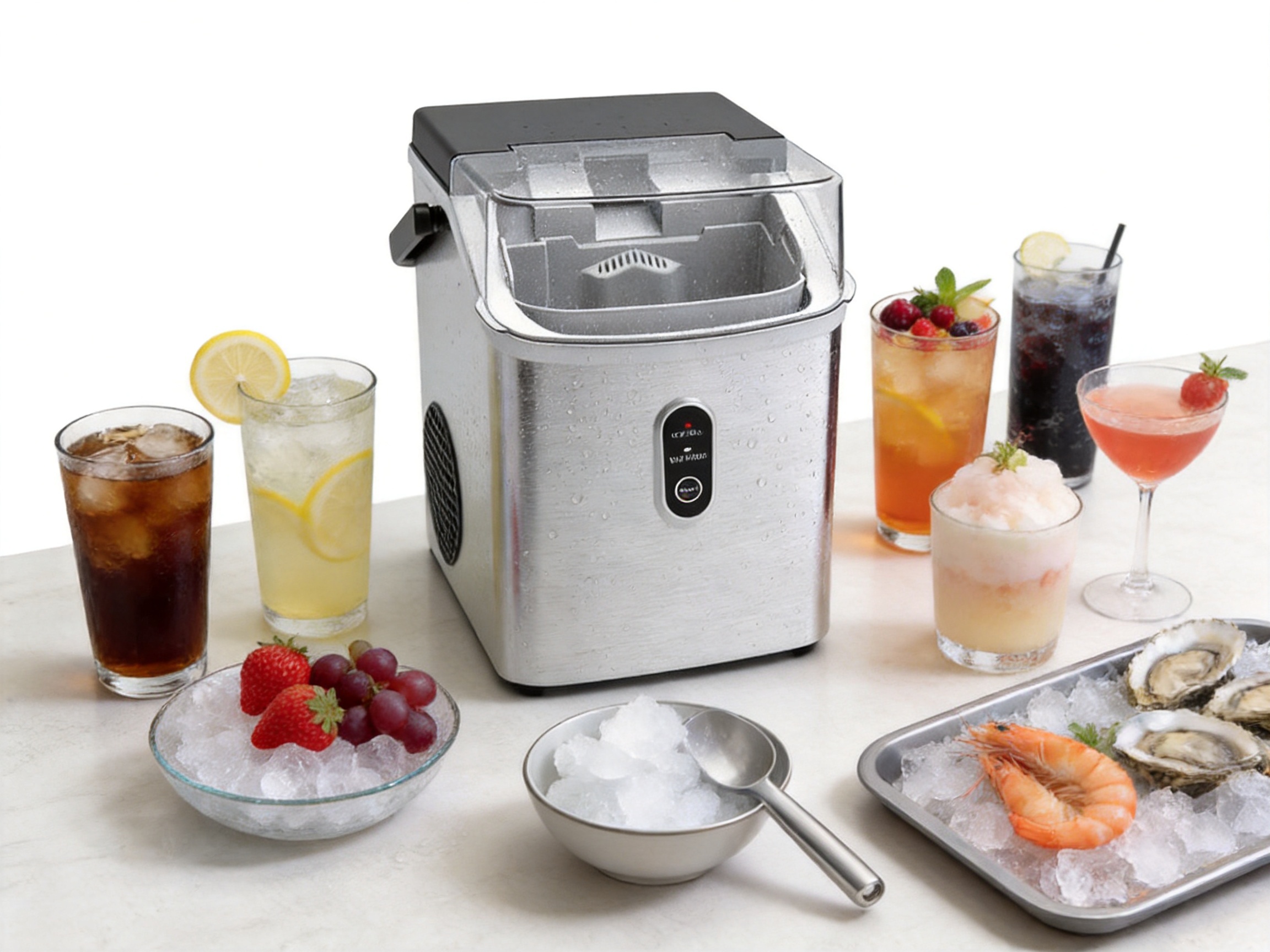
Manufacturing Strength: Built in a Region Known for Small Household Appliances
The manufacturer is located in Zhouxiang, Cixi City, Zhejiang Province, an area recognized for its concentration of small household appliance production and convenient logistics. This location provides practical industrial advantages. A mature appliance manufacturing ecosystem supports access to component suppliers, technical labor, tooling services, packaging resources, and efficient transportation networks. These factors can shorten development cycles, improve production coordination, and support consistent delivery.
For a home chewing ice maker, manufacturing strength is not only about assembly volume. It includes product design capability, material selection, refrigeration system integration, quality control, safety verification, appearance inspection, and packaging reliability. A compact ice maker contains multiple working systems: water handling, refrigeration, heat exchange, mechanical structure, electronic control, housing assembly, and user interface. Each system must work reliably with the others.
The company’s mission emphasizes smart technology, simplified living, and enhanced happiness. This philosophy is visible in the product’s purpose. The machine is designed to make a small but meaningful daily pleasure more convenient. Rather than treating ice as a basic commodity, it treats ice as part of lifestyle comfort. This user-centered approach is important in household appliance design because consumers judge products by how naturally they fit into everyday routines.
Advanced Manufacturing Processes Behind Product Reliability
Producing a reliable chewing ice maker requires more than assembling parts. The manufacturing process must control details that affect performance, safety, and consistency. The refrigeration system must be accurately charged with refrigerant. Tubing connections must be secure. Electrical components must be installed correctly. Water-contact components must be selected for household use. The housing must be dimensionally stable. Final units must be tested to confirm that they operate as intended.
One important process is incoming material inspection. Components such as compressors, fans, sensors, circuit boards, pumps, tubing, water tanks, and molded plastic parts should be checked before entering assembly. Dimensional accuracy, surface quality, electrical properties, and supplier consistency all affect the final product. Strong manufacturers maintain inspection procedures to reduce defects before they reach the production line.
Another key process is precision assembly. Compact refrigeration appliances require careful routing of internal components because space is limited. Airflow, heat dissipation, water flow, and service access must be considered. If parts are installed poorly, performance may decline or noise may increase. Skilled assembly procedures help ensure that the product remains compact while still functioning efficiently.
Refrigerant charging is especially important. With R600a systems, the refrigerant quantity must match the design requirements. Too little or too much refrigerant can affect cooling performance and efficiency. Controlled charging equipment and trained operators help maintain product consistency. Leak testing is also essential to confirm the integrity of the sealed system.
Electrical safety testing is another major manufacturing step. Household appliances must be designed and tested to reduce risks related to insulation, grounding, current leakage, overheating, and abnormal operation. A responsible manufacturer integrates safety checks into production rather than treating them as afterthoughts. This gives customers greater confidence in long-term daily use.
Performance testing helps confirm that the machine can produce the intended ice texture and cooling result. Since chewing ice quality depends on controlled freezing conditions, water handling, and mechanical design, production verification is important. Random sampling, batch testing, and final inspection procedures can help maintain consistent output across production runs.
Quality Philosophy: Stable, Pragmatic, and Continuously Improving
The company’s stated business philosophy emphasizes excellent quality, customer satisfaction, continuous improvement, innovation, stability, and pragmatism. These values are particularly relevant in the appliance industry, where users expect products to work reliably over time. A chewing ice maker is not a decorative item; it is a functional machine that may be used daily. Quality must be built into the product from design through delivery.
Customer satisfaction begins with understanding how people actually use the appliance. Users want ice that is pleasant to chew, available when needed, easy to access, and suitable for many drinks. They also want the machine to fit in their home, operate dependably, and be simple enough for routine use. A product that meets these expectations creates repeat trust.
Continuous improvement is important because consumer preferences evolve. Home beverage culture is expanding, and users increasingly compare home appliances with café and restaurant experiences. Manufacturers that listen to feedback can refine ice texture, improve usability, optimize cleaning access, reduce noise, enhance packaging, and strengthen durability. Innovation does not always require complexity; often, the best improvements are those that make daily use smoother and more satisfying.
How This Product Compares with Common Ice Solutions
The Home Chewing Ice Maker occupies a valuable position between basic household ice options and expensive commercial machines. It offers a specialty ice experience in a compact form. To understand its advantages clearly, it helps to compare it with common alternatives.
Compared with freezer trays, the product offers convenience, consistency, and speed of access. Freezer trays require filling, carrying, freezing, twisting, and storing. They also take hours to produce ice and often absorb freezer odors if not protected. Chewing ice from a dedicated machine provides a more immediate and enjoyable solution.
Compared with refrigerator ice dispensers, the product offers a more desirable texture. Refrigerator systems usually produce cubes or crushed ice. Crushed ice can be inconsistent because it is made by breaking hard cubes. The resulting fragments may be sharp, uneven, or watery. Chewing ice is intentionally produced for softness and chewability.
Compared with bullet ice makers, the product offers superior mouthfeel and drink integration. Bullet ice is common in countertop machines and can be useful for general chilling. However, it is usually harder and less absorbent than chewing ice. It may cool drinks adequately, but it does not create the same soft, satisfying crunch.
Compared with store-bought ice, the product offers independence and freshness. Buying ice requires trips to a store, freezer storage, and handling large bags that may partially melt and refreeze. A home ice maker gives users control over when and how ice is made. It also supports spontaneous use, whether for one glass of iced coffee or a weekend gathering.
Compared with commercial nugget ice machines, this product offers a household-friendly size and practical positioning. Commercial units may produce large quantities, but they are often expensive, heavy, and unnecessary for everyday domestic needs. A compact home chewing ice maker focuses on the daily consumer who wants premium ice without commercial complexity.
Applications in Everyday Beverage Culture
Iced coffee is one of the best uses for chewing ice. Whether the drink is cold brew, espresso over ice, iced latte, or sweetened coffee, the ice rapidly lowers temperature and contributes a soft texture. Because chewing ice can absorb coffee flavor, the final ice pieces can become a pleasant part of the drink rather than something to discard.
Soda and sparkling drinks also benefit. Chewing ice fills the glass densely and creates a refreshing cold sensation. The small ice pieces help keep the drink cold while offering a satisfying crunch between sips. This makes ordinary soft drinks feel more like fountain beverages.
Fruit tea, lemonade, and infused water become more visually appealing with chewing ice. The small pieces create an abundant, frosty appearance that pairs well with fruit slices, herbs, and colorful drinks. For home gatherings, this improves presentation with very little effort.
Cocktails and mocktails can also be enhanced. Many mixed drinks depend on ice quality for temperature, dilution, and presentation. While some classic cocktails require specific ice formats, many casual mixed drinks, julep-style beverages, highballs, and tropical drinks pair well with soft chewable ice. The texture adds a relaxed, refreshing character.
Smoothies and frozen drinks benefit from ice that blends and mixes easily. Chewing ice can help create slush-style consistency for fruit drinks, blended coffee, and dessert beverages. It can also be layered into cups for creative drinks with syrups, juices, milk, or tea bases.
Applications Beyond Drinks
Although beverages are the most obvious use, chewing ice has additional household value. It can be used as a cooling bed for food presentation. For example, chilled fruit, seafood, oysters, sashimi-style items, and salad ingredients can be placed over a layer of soft ice to maintain freshness during serving. The ice conforms around the food more evenly than large cubes, improving both cooling contact and display appearance.
For family parties, picnics at home, barbecue gatherings, and festive meals, this can be very useful. Instead of placing food over a few large cubes, users can create a more professional-looking chilled tray. The ice also looks abundant and clean, which enhances presentation.
In basic cold-compress use, chewing ice can be placed in an appropriate bag or wrapped with a protective cloth to provide localized cooling. Its small pieces allow it to shape around knees, wrists, shoulders, or other areas more comfortably than large cubes. Users should always follow safe cold-compress practices, avoid direct prolonged skin exposure, and consult medical guidance when needed.
Design Value for Home, Office, and Hospitality Settings
The product is highly relevant for home users, but it can also be useful in small offices, meeting rooms, boutique hospitality spaces, and recreational areas. In an office, access to quality ice can improve coffee corners and employee refreshment stations. In a guest room or small hospitality suite, it can provide a premium convenience that guests remember. In a home entertainment room, it can support drinks without requiring constant trips to the kitchen freezer.
Because the machine is compact, it can be integrated into different environments. A household may place it near a coffee machine. A small office may position it near a water dispenser or beverage refrigerator. A home bar may pair it with glassware, syrups, and mixers. This flexibility increases the value of the appliance because it supports lifestyle design rather than forcing users to adapt around it.
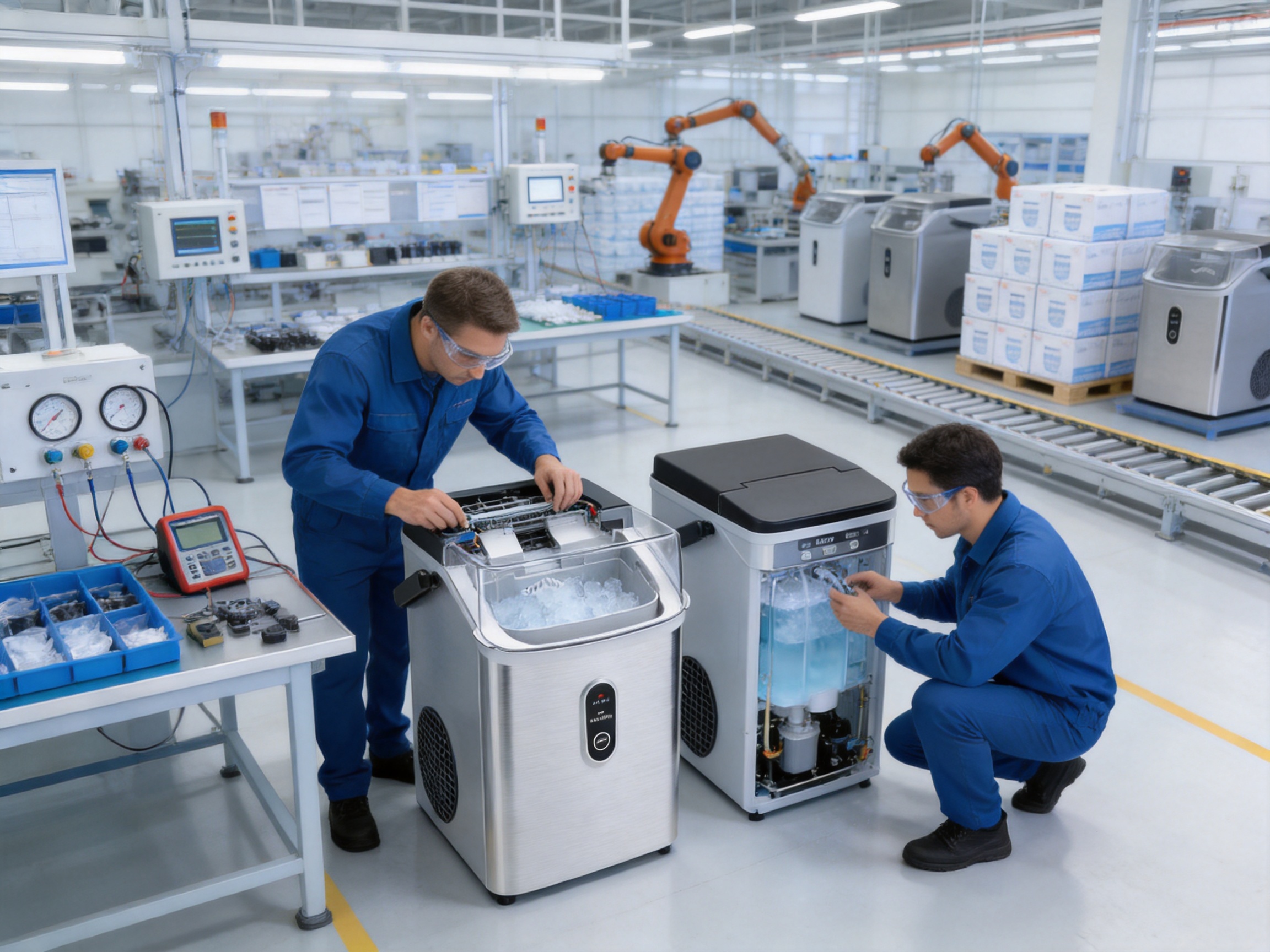
User Experience: Simple Access to a Premium Ice Style
A successful household appliance should reduce friction. The user should not need complicated preparation to enjoy the product’s core benefit. The Home Chewing Ice Maker supports a simple idea: when the user wants soft ice, the appliance should make that experience convenient. This is a major difference from ice trays, freezer storage bins, and store-bought bags.
Chewing ice is also easy to scoop and mix. Its size and texture make it practical for cups, pitchers, blender jars, serving trays, and ice buckets. Users can add a small amount to a single glass or a larger amount for group service. This flexibility is valuable because household needs vary from moment to moment.
Another user-experience advantage is emotional. Ice may seem simple, but the right ice can make daily drinks feel more enjoyable. A morning iced coffee feels more refreshing. A glass of soda feels colder and more satisfying. A homemade fruit drink feels more festive. These small improvements support the company’s mission of simplifying life and enhancing happiness through practical technology.
Why Manufacturing Capability Matters to Buyers
When buying an ice maker, many users focus first on ice style, size, and appearance. However, manufacturing capability is just as important. A product that contains refrigeration, water circulation, electrical control, and mechanical structures must be built with consistency. Poor manufacturing can lead to leaks, weak cooling, unstable ice output, early component failure, or inconvenient operation.
A manufacturer with experience in household appliances is better positioned to control these risks. The company specializes in appliances such as ice makers, coffee machines, and air fryers. This broader appliance background supports knowledge of heating and cooling systems, airflow, electronic controls, housing materials, consumer safety expectations, and mass-production quality management.
Experience across multiple small appliance categories can also support design efficiency. Coffee machines require water handling and user-friendly beverage preparation. Air fryers require thermal control, airflow management, and safety design. Ice makers require refrigeration and water-to-ice transformation. Together, these categories create a knowledge base in compact appliance engineering that can benefit product development and manufacturing reliability.
Supply Chain and Logistics Advantages
Location can influence product competitiveness. Being based in a recognized small-appliance manufacturing region provides access to a strong supply chain. This can help control costs, improve lead times, support parts availability, and enable faster response to production requirements. For customers and business partners, these advantages can translate into more stable cooperation.
Efficient logistics also matter for finished goods. Household appliances must be packaged, stored, and transported carefully. A manufacturer located in an area with convenient logistics can coordinate shipments more effectively, especially when serving domestic and international customers. Packaging design, drop protection, moisture control, and carton strength all contribute to the product’s condition upon arrival.
For business buyers, the company’s stable and pragmatic approach is important. A good manufacturing partner should not only promote product features but also support consistent delivery, communication, quality follow-up, and practical problem-solving. This is especially valuable for distributors, retailers, and appliance brands seeking reliable supply relationships.
Responsible Product Positioning in a Competitive Market
The home ice maker market includes many similar-looking products, but not all of them serve the same user need. Some focus on low price, some on large capacity, and some on basic convenience. The Home Chewing Ice Maker is positioned around ice quality and user enjoyment. Its strongest point is not merely that it makes ice, but that it makes a style of ice many users actively prefer.
This positioning is important because consumers are becoming more selective. They compare textures, drink quality, design, and overall experience. A machine that produces soft chewing ice can stand apart from ordinary countertop ice makers because it delivers a recognizable difference every time the user takes a sip or chews a piece of ice.
For retailers, this creates a clear selling story. Instead of presenting the product as another generic ice maker, it can be introduced as a lifestyle appliance for better iced coffee, better soda, better smoothies, and more enjoyable home refreshment. For end users, this makes the purchase easier to understand: the product improves something they experience every day.
Care, Placement, and Practical Use Considerations
To achieve the best experience with any home ice maker, users should place it on a stable, level surface with adequate ventilation. Refrigeration appliances need airflow to release heat efficiently. Crowded placement or blocked vents can reduce performance. The compact size makes placement easier, but users should still allow space around the machine according to product guidance.
Water quality also affects ice quality. Clean, fresh water helps produce better-tasting ice. If local tap water has strong mineral content or odor, filtered water may improve the final beverage experience. Since chewing ice is often eaten directly, taste matters more than it might with ice used only for cooling.
Routine cleaning is important for hygiene and performance. Ice makers handle water continuously, so users should follow cleaning recommendations, empty water areas when appropriate, and keep contact surfaces clean. A well-maintained machine will provide a fresher ice experience and better long-term satisfaction.
Users should also consider how they store or serve the ice. Chewing ice is best enjoyed fresh because its texture is part of its appeal. If stored in a freezer, it may harden over time, becoming less soft. For the best chewing experience, it should be used soon after production whenever possible.
Business Cooperation Potential
The manufacturer welcomes cooperation with new and existing customers. Because it specializes in household appliances, including ice makers, coffee machines, and air fryers, it can support partners looking for products aligned with modern home lifestyle trends. The chewing ice maker category is especially attractive because it connects with the rising popularity of iced beverages, home cafés, compact kitchens, and consumer interest in premium daily experiences.
For distributors and retailers, the product offers multiple marketing angles. It can be sold as a coffee companion, a summer beverage appliance, a home bar accessory, a family refreshment device, or a compact specialty ice solution. This flexibility helps reach different customer groups without changing the core product.
For private-label or channel partners, the manufacturer’s appliance background and regional supply chain can support product development discussions, quality management, and stable production planning. A practical, improvement-oriented manufacturing philosophy is valuable when building long-term market presence.
Q&A Section
What is the main difference between chewing ice and regular ice cubes?
Chewing ice is softer, smaller, and easier to bite than regular hard cubes. It has more surface area, which helps cool drinks quickly and absorb beverage flavors. Regular cubes are denser and usually less comfortable to chew.
Why is this ice maker suitable for iced coffee?
Iced coffee benefits from fast cooling and pleasant texture. Chewing ice rapidly lowers the drink temperature and can absorb coffee flavor, making the final ice pieces enjoyable instead of plain and hard.
How does this product compare with a standard bullet ice maker?
Standard bullet ice makers usually produce harder, smoother ice pieces. This chewing ice maker focuses on soft, chewable ice with better mouthfeel, quicker cooling, and stronger drink integration.
Can the ice be used for smoothies or shaved-ice drinks?
Yes. The soft and scoopable texture makes it suitable for smoothies, slush-style beverages, shaved-ice-style desserts, and other frozen drinks. It can be easier to mix and blend than large hard cubes.
Is the product only for beverages?
No. It can also be used for chilled food presentation, such as fruit, seafood, oysters, sashimi-style dishes, and salad ingredients. It may also be used in cold-compress applications when handled safely with proper protection for the skin.
What are the machine dimensions?
The machine dimensions are 224 x 333 x 325 mm, making it compact enough for many kitchen counters, home bars, office beverage stations, and small hospitality spaces.
What refrigerant does the appliance use?
The product uses R600a refrigerant with a charge of 19 g. R600a is commonly used in modern household refrigeration appliances and supports efficient cooling performance when properly engineered.
Why does manufacturing quality matter for a chewing ice maker?
A chewing ice maker combines refrigeration, water handling, electrical control, and mechanical structure. Good manufacturing quality helps ensure stable cooling, consistent ice texture, safe operation, and dependable long-term use.
What company strengths support this product?
The manufacturer is located in a strong small-household-appliance industrial region with convenient logistics. It specializes in appliances such as ice makers, coffee machines, and air fryers, and follows a quality-focused philosophy based on customer satisfaction, continuous improvement, innovation, stability, and practical manufacturing.
Who should consider buying this product?
It is ideal for users who frequently enjoy iced coffee, soda, fruit tea, smoothies, cocktails, mocktails, chilled desserts, or soft chewable ice. It is also suitable for families, home entertainers, small offices, and beverage-focused lifestyle spaces.
Conclusion: A Better Ice Experience for Modern Daily Living
The Home Chewing Ice Maker is designed for people who believe ice should do more than cool a drink. It should improve texture, enhance flavor, support presentation, and make everyday beverages more enjoyable. By producing soft, chewable ice, the appliance offers a clear advantage over ordinary cubes, crushed freezer ice, bullet ice, and store-bought ice bags.
Its compact dimensions, 130 W rated power, R600a refrigerant system, and household-focused design make it suitable for kitchens, coffee corners, home bars, offices, and small hospitality settings. Its versatility extends from iced coffee and soda to smoothies, shaved-ice desserts, food displays, and cold-compress uses. The product fits modern consumer habits, especially the growing interest in home beverage culture and convenient lifestyle appliances.
Behind the product is a manufacturer located in a mature small-appliance production region, supported by practical logistics, appliance-category experience, and a philosophy centered on quality, customer satisfaction, improvement, and innovation. These strengths matter because a reliable ice maker requires controlled manufacturing, careful assembly, refrigeration expertise, and consistent quality inspection.
In a competitive market, this product stands out by focusing on the ice experience itself. It gives users a softer crunch, faster cooling, easier mixing, and better flavor interaction. For households and business partners seeking a compact appliance with clear everyday value, the Home Chewing Ice Maker represents a practical and enjoyable solution.
References
ASHRAE Handbook: Refrigeration, American Society of Heating, Refrigerating and Air-Conditioning Engineers.
International Institute of Refrigeration, Principles of Household Refrigeration and Refrigerant Applications.
U.S. Department of Energy, Residential Refrigeration and Appliance Efficiency Guidelines.
International Electrotechnical Commission, Household and Similar Electrical Appliances Safety Standards.
Food and Beverage Service Practice Manual, Ice Handling and Beverage Presentation Principles.
Modern Small Appliance Manufacturing, Quality Control and Production Process Management.