
 English
 한국어
한국어 Español
 Deutsch
Modern households increasingly expect small appliances to do more than perform a basic task. A useful appliance should be compact, straightforward to operate, economical in everyday use, attractive on a countertop, and dependable over time. A home ice cube maker designed around these principles can make a meaningful difference in kitchens, home bars, offices, entertainment areas, and hospitality settings. Instead of relying only on freezer trays or purchasing bags of ice, users can produce purpose-made ice whenever they need it.
The Home Ice Cube Maker, identified by the model description Alien-ZF01, is designed for users who value regular square ice, efficient cooling performance, practical dimensions, and uncomplicated operation. Its knob-type configuration supports an approachable user experience, while its 140-watt electrical system and R290 refrigerant platform provide the technical foundation for household ice production. Measuring 325 by 295 by 252 millimeters, the appliance is sized to provide useful ice-making capability without demanding the space associated with larger commercial machines.
What distinguishes this type of ice maker is not only the ability to create frozen cubes. The shape, density, storage efficiency, cooling behavior, energy design, serviceability, and manufacturing discipline all influence the total value of the product. Regular square cubes offer a professional appearance and can melt slowly in beverages when they are sufficiently dense. The compact body allows flexible placement, while the simple control concept makes the machine accessible to a wide range of users.
This article examines the product’s design advantages, technical characteristics, practical applications, competitive strengths, manufacturing considerations, quality priorities, and suitable purchasing scenarios. It also explains how a specialized household-appliance manufacturer can support consistent production through engineering control, component management, inspection, assembly discipline, and customer-oriented improvement.
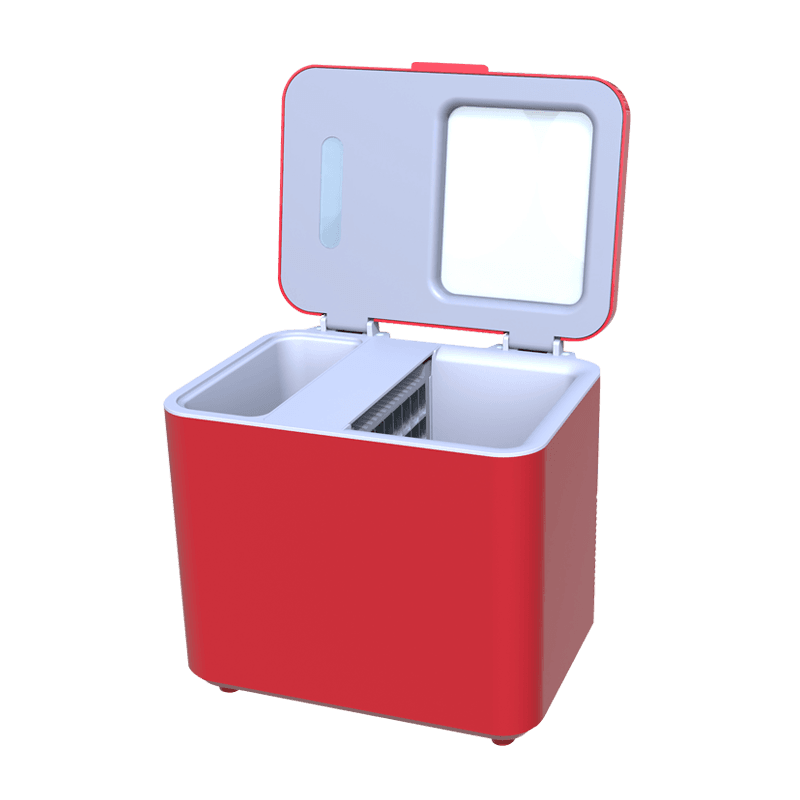
Home ice cube maker
1. Product Overview and Design Purpose
The Home Ice Cube Maker is intended to provide convenient ice production for ordinary domestic and light-duty commercial environments. Its central purpose is simple: transform an electrical power supply and water into usable ice cubes in a dedicated appliance. This eliminates the need to prepare ice manually in trays, wait for a household freezer to complete a freezing cycle, or depend entirely on pre-packed ice purchased from a store.
The product is configured for a 220-volt, 50-hertz power supply, a standard electrical format in many international markets. Its rated current and power are listed as 0.65 amperes and 140 watts. These specifications indicate a compact appliance designed around controlled household energy consumption rather than the substantially higher electrical demand of large-scale ice-production equipment.
The machine dimensions are 325 millimeters in length, 295 millimeters in width, and 252 millimeters in height. This footprint is important because countertop space is often limited. A machine that is too large can become difficult to place in a kitchen, office, recreation room, or small service area. By contrast, a compact body can be positioned near a beverage station, under a cabinet with suitable clearance, or on a dedicated appliance shelf, provided that ventilation and operating instructions are followed.
The model uses R290 refrigerant with a listed charge of 26 grams. R290 is propane-based refrigerant commonly used in certain modern refrigeration applications. Its use reflects a design approach that considers both cooling performance and refrigerant selection. Because R290 is flammable, installation, servicing, transportation, and end-of-life handling should be carried out according to applicable safety rules and the product’s operating instructions. Users should not attempt to open or modify the sealed refrigeration system.
The product description identifies the unit as a knob-type ice maker. This control arrangement emphasizes direct interaction. A physical knob can be intuitive for users who prefer clear, tactile operation instead of complicated menus or multiple electronic settings. In a household appliance, simplicity can be a competitive advantage because the product becomes easier to understand, easier to share among family members, and less dependent on lengthy instructions.
2. Why Regular Square Ice Matters
Ice shape is not merely a visual detail. It affects how ice occupies a storage container, how it contacts a beverage, how it behaves during melting, and how professional the final presentation appears. Irregular ice pieces may be perfectly functional, but regular square cubes offer several benefits in daily use.
First, square ice has a predictable form. Users can place multiple cubes into a glass, pitcher, cooler, or ice bucket with less wasted space. The regular geometry also makes the ice easier to portion. When a drink recipe calls for a certain amount of ice, consistent cube size and shape create a more repeatable serving experience.
Second, solid and relatively dense cubes can melt slowly when compared with smaller, thinner, or highly irregular pieces. A slow-melting cube remains in contact with the beverage for a longer period while adding water at a more gradual rate. This is particularly valuable for whiskey, spirits, cocktails, iced coffee, and other drinks where excessive dilution can change the intended flavor profile.
Third, square ice provides a clean and professional visual impression. A clear glass containing well-formed cubes can look more refined than a drink filled with broken or uneven fragments. This aesthetic benefit is useful at home, but it also matters when serving guests, preparing drinks for an event, or operating a small hospitality space.
Fourth, regular cubes can be stored efficiently. The straight edges allow pieces to be arranged closely in a freezer or insulated container. Compared with irregular shapes, square cubes can reduce unused gaps and make better use of available storage volume. In a small home freezer, this improved stacking efficiency can be especially helpful.
The product’s square-ice orientation therefore creates a clear point of differentiation from appliances that produce only irregular, thin, or loosely formed pieces. Its value lies not simply in making ice, but in making ice suited to presentation, controlled melting, storage, and broad household use.
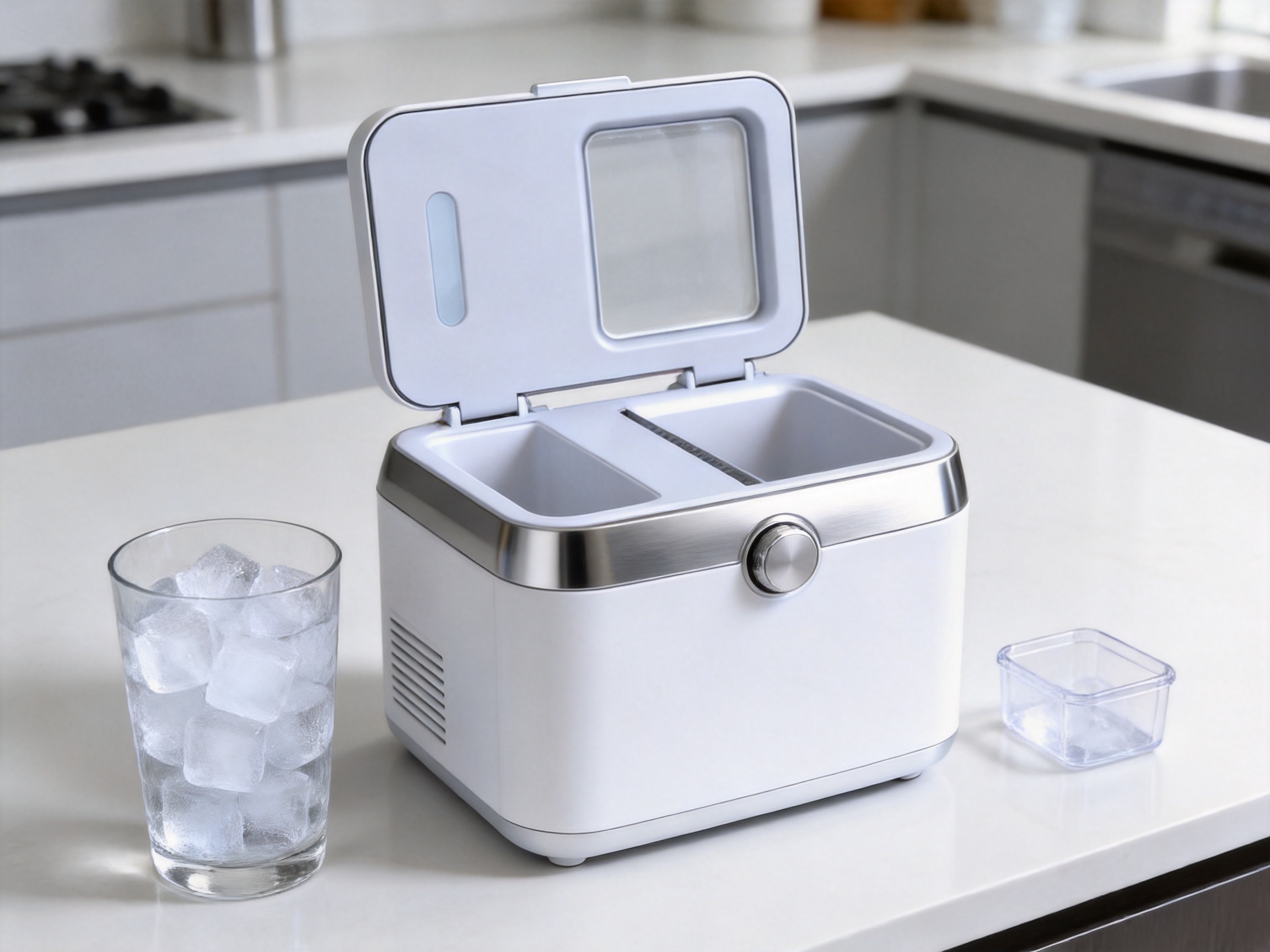
3. Technical Characteristics
The technical specifications provide a concise picture of the machine’s intended operating category. The 220V/50Hz supply makes the product appropriate for compatible electrical environments. Users should always verify that the local voltage and frequency match the rating before connecting the appliance. Using the correct power source supports safe operation and helps protect the compressor, electrical controls, and other internal components.
The listed current and power ratings are 0.65A and 140W. For a countertop ice maker, this is a modest power requirement. Actual energy use may vary according to ambient temperature, water temperature, usage frequency, ventilation, and the length of operating cycles. Nevertheless, the rating communicates that the appliance is designed for practical household ice production rather than continuous industrial output.
The R290/26g refrigeration specification identifies both the refrigerant type and the approximate charge. Refrigerant selection is a significant engineering consideration because it influences the design of the sealed cooling circuit, compressor operation, heat exchange, temperature control, and service procedures. A properly designed and sealed system can provide reliable cooling while maintaining a compact product form.
The machine dimensions of 325 by 295 by 252 millimeters demonstrate a deliberate balance between usable internal space and external compactness. The product is large enough to contain a dedicated ice-making mechanism and insulated storage area, but small enough to remain suitable for countertop placement. This balance is one of the most important design challenges in compact refrigeration products.
Compactness must not be confused with weakness. A small appliance can still be carefully engineered through efficient internal arrangement, suitable insulation, controlled airflow, and components selected for the expected operating load. The key is to ensure that the compressor, condenser, fan, water path, control mechanism, and ice-forming area work together rather than treating the product as a collection of unrelated parts.
| Specification | Listed Value | Practical Significance |
|---|---|---|
| Product type | Home ice cube maker | Designed for household and light-duty beverage cooling |
| Model description | Alien-ZF01 | Identifies the product configuration |
| Control style | Knob type | Direct and approachable user operation |
| Power supply | 220V/50Hz | Compatible with suitable electrical systems |
| Current and power | 0.65A/140W | Compact appliance electrical rating |
| Refrigerant and charge | R290/26g | Sealed refrigeration system specification |
| Dimensions | 325 x 295 x 252 mm | Space-conscious countertop format |
4. Advantages Over Basic Ice-Making Alternatives
4.1 More Convenient Than Freezer Trays
Traditional freezer trays are inexpensive, but they require manual filling, careful transport to the freezer, sufficient freezing time, and physical removal of the ice. Water can spill while a tray is carried, and frozen cubes may stick together or become difficult to release. The user must also remember to refill the tray after each use.
A dedicated ice maker reduces these repeated steps. It is designed specifically for ice production and can be placed close to the location where drinks are prepared. This improves convenience during family meals, social gatherings, warm-weather events, and everyday beverage preparation. The value is especially clear for users who consume ice regularly but do not want to dedicate substantial freezer space to trays.
4.2 More Consistent Than Irregular Hand-Broken Ice
Ice broken from a large block or a frozen container often produces pieces with inconsistent dimensions. Small fragments melt quickly, while larger pieces may be inconvenient to place in narrow glasses. Regular square cubes are easier to use across different drinks and serving formats. Their predictable shape also supports a more orderly appearance when presented to guests.
4.3 More Space-Efficient Than Large Ice Machines
Commercial ice makers can offer high production capacity, but they may be too large, expensive, or demanding for ordinary households. A compact countertop format serves a different market need. It prioritizes accessibility, manageable installation, and flexible placement. For families, home bars, offices, and small service areas, the smaller form can be a better match than a commercial unit designed for heavy continuous output.
4.4 More Specialized Than General-Purpose Refrigeration
A standard freezer can freeze water, but it is not necessarily optimized for convenient ice production. Water trays occupy space, ice may absorb odors, and retrieving cubes can be inconvenient. A dedicated machine gives ice production its own operating area and workflow. This specialization helps users organize beverage service more effectively.
4.5 More Attractive Than Randomly Shaped Ice
Presentation has practical commercial value. Drinks served at home, in a meeting room, or in a small hospitality setting benefit from a clean and consistent appearance. Square cubes create a more deliberate visual style and can support a premium impression without requiring complicated preparation.
5. Slow Melting and Beverage Quality
One of the product’s most important functional advantages is the potential for dense square cubes to melt slowly. Melting behavior depends on several factors, including cube size, density, surface area, drink temperature, ambient temperature, container shape, and air movement. A solid cube with a relatively small surface area in relation to its volume generally melts more gradually than thin chips or crushed ice.
Slow melting helps preserve beverage balance. When ice melts too quickly, the drink may become watery before it can be finished. This is a concern for spirits served neat or over ice, but it also affects cocktails, fruit beverages, iced tea, cold brew coffee, and soft drinks. A slower-melting cube provides cooling while limiting the speed at which water enters the drink.
Whiskey and other neat spirits are particularly associated with large, dense ice because the drink is often consumed slowly. The cube keeps the beverage cold and can soften the flavor gradually rather than diluting it immediately. Although individual users may prefer different levels of dilution, the ability to control that process is a valuable benefit.
The same principle applies to entertaining. A host can prepare drinks in advance with confidence that the ice will retain its form for a reasonable period. In an insulated bucket, regular cubes can also remain useful during service and can be replenished in a consistent manner.
It is important to recognize that an ice maker’s final cube quality depends on operating conditions. Water quality, ambient temperature, machine level, ventilation, and cleaning can influence the appearance and firmness of ice. Regular maintenance and appropriate operation are therefore essential to achieving the best result.
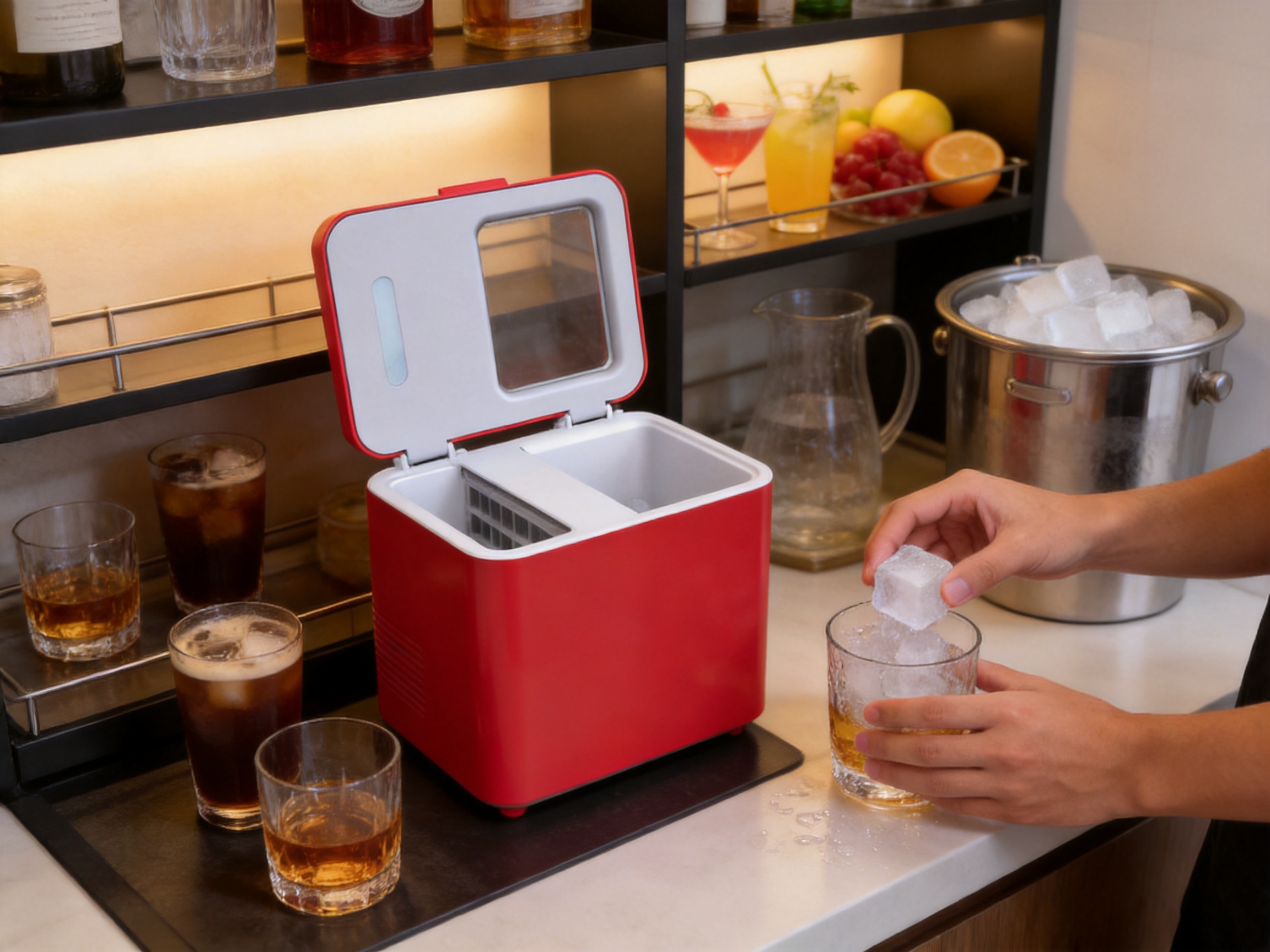
6. Versatility in Everyday Use
The Home Ice Cube Maker is suitable for more than one type of beverage. Its cubes can be used in drinking glasses, pitchers, ice buckets, coolers, and serving containers. The regular shape makes them useful for water, juice, soda, cocktails, mocktails, iced tea, and coffee-based drinks.
In a home bar, the appliance can support routine drink preparation without requiring users to purchase ice frequently. In a kitchen, it can provide cooling for beverages during meals or family gatherings. In an office, it can serve a shared refreshment area. In a recreation room, it can support cold drinks during games, celebrations, or informal events.
Ice can also contribute to kitchen preparation. It may be used for rapidly cooling certain foods or beverages, preparing chilled ingredients, or supporting temporary cold storage in suitable containers. Users should always follow food-safety practices and avoid reusing ice that has been exposed to contamination.
For outdoor activities, the cubes can be placed in an insulated cooler or ice bucket. The compact appliance itself may be useful in locations where a suitable electrical supply is available, although it should be protected from water exposure, unstable surfaces, excessive heat, and unsuitable transport conditions.
The product can also function as a supplementary ice source. A household may use its main freezer for long-term frozen storage while using the ice maker for immediate serving needs. This division of tasks reduces pressure on the freezer and allows users to produce fresh batches when required.
7. Compact Dimensions and Placement Flexibility
Space efficiency is a major advantage in contemporary homes. Kitchens often contain multiple appliances, and countertop area is limited. The dimensions of 325 by 295 by 252 millimeters allow the ice maker to occupy a relatively small area compared with many larger refrigeration products.
The appliance can be considered for placement in a kitchen, dining area, home bar, office refreshment corner, entertainment room, or small hospitality setting. Before installation, the user should provide a stable, level surface and allow adequate clearance for heat dissipation and access to controls. The machine should not be enclosed tightly in a cabinet unless the operating instructions specifically permit that arrangement.
A compact product is also easier to integrate into changing household layouts. It can be moved between a kitchen and a beverage station when necessary, although users should follow proper handling procedures and allow the refrigeration system to settle for the recommended period after relocation if required by the manual.
The small footprint can reduce visual clutter. Instead of storing large bags of purchased ice or dedicating a significant freezer compartment to trays, users can maintain a focused ice-making area. This is particularly useful for apartments, small houses, shared kitchens, and offices where every square meter matters.
Compactness also supports more efficient packaging, warehousing, and distribution. A carefully designed appliance with controlled dimensions can be easier to handle throughout the supply chain. This contributes to a more manageable product experience for distributors, retailers, and end users.
8. User-Friendly Knob-Type Operation
A physical knob offers a direct method of interaction. Users can understand the operating concept quickly without navigating multiple digital menus. This is useful for households with different levels of technical familiarity, including older users or guests who may need to operate the machine occasionally.
Knob controls can also support a clear relationship between action and response. Turning the control provides tactile feedback, while the product’s operating state can be observed through the machine’s normal indicators or operating behavior. This simplicity reduces the learning curve and can make routine use more comfortable.
From a manufacturing perspective, a simple control structure may also reduce the number of electronic interfaces exposed to users. That does not automatically guarantee greater durability, because reliability depends on component quality and design execution. However, a focused control architecture can make the product easier to assemble, inspect, explain, and service.
Good user experience extends beyond the knob itself. The water-filling area, ice collection space, body surfaces, ventilation openings, drainage arrangements, and cleaning access should all be considered. A product is genuinely user-friendly when its complete workflow is easy: filling, starting, monitoring, collecting, cleaning, and storing.
9. Manufacturing Strengths and Engineering Discipline
The performance of a compact ice maker depends heavily on manufacturing discipline. Refrigeration products combine mechanical, electrical, thermal, plastic, and assembly processes. A weakness in any one area can affect the final user experience. A capable manufacturer must therefore coordinate product design, component sourcing, production planning, inspection, testing, and after-sales support.
The manufacturer associated with this product specializes in household appliances including ice makers, coffee machines, and air fryers. This product range suggests experience across several appliance categories that share important manufacturing requirements: heating or cooling control, electrical safety, food-contact considerations, compact structural design, motor or compressor integration, and consumer-oriented usability.
Experience across related appliances can encourage useful engineering exchange. Lessons from airflow management in air fryers, water-path design in coffee machines, or compact control systems in small appliances may support improvements in ice-maker development. Each product still requires its own technical validation, but broader appliance experience can strengthen design thinking.
9.1 Product Engineering
Product engineering begins with translating a user need into a practical configuration. For this ice maker, that means balancing square-cube formation, countertop dimensions, power consumption, refrigerant requirements, control simplicity, and expected household use. The design must provide enough internal volume for useful ice production while keeping the external body compact.
Engineering work may include three-dimensional structural planning, component placement, airflow analysis, thermal evaluation, electrical layout, and prototype review. The objective is not merely to make a machine operate once, but to create a repeatable product that can be manufactured consistently and used safely.
9.2 Component Coordination
A compact refrigeration system requires coordinated selection of compressor-related parts, heat exchangers, fans, tubing, insulation, electrical controls, switches, seals, water-contact components, and external housing materials. Each component should be matched to the product’s intended operating conditions.
Component coordination also includes dimensional compatibility. Parts must fit correctly within the limited internal space, and service access should be considered during design. Proper fit reduces unnecessary stress, vibration, interference, and assembly variation.
9.3 Assembly Control
Assembly quality is particularly important in refrigeration appliances. Tubing connections, electrical terminals, control components, water channels, insulation, and housing panels must be assembled in a controlled sequence. Clear work instructions and trained operators help reduce omissions and incorrect installation.
Process control can include standardized fixtures, torque requirements where appropriate, visual checks, electrical tests, leak checks, functional operation, and final appearance inspection. These controls help convert a design specification into a reliable finished product.
9.4 Testing and Inspection
Testing should address both safety and function. Electrical inspection can help identify wiring errors, insulation problems, grounding issues, or abnormal current behavior. Refrigeration inspection can help verify cooling operation and detect leakage risks. Functional testing can evaluate startup, control response, ice-forming behavior, and abnormal noise.
Appearance inspection also has value. Scratches, gaps, uneven panels, damaged controls, poor labeling, or contamination can reduce customer confidence even if the machine operates. A professional manufacturing system therefore considers both internal performance and visible finish.
9.5 Continuous Improvement
Manufacturing strength is not limited to the first production run. Reliable companies collect feedback from production staff, distributors, service teams, and users. Repeated issues can reveal opportunities to improve a component, revise a work instruction, strengthen packaging, clarify the manual, or simplify maintenance.
Continuous improvement is especially important for household appliances because users operate them in varied environments. A machine may encounter different water qualities, room temperatures, usage patterns, and cleaning habits. Product development should consider these real-world conditions while maintaining clear operating limits.
10. Quality-Oriented Production Philosophy
A stable and pragmatic business philosophy is valuable in appliance manufacturing because customers depend on consistent supply and repeatable quality. The manufacturer’s stated emphasis on excellent quality, customer satisfaction, continuous improvement, and innovation aligns with the requirements of the ice-maker category.
Quality should be built into the process rather than added only at the end. This means defining specifications clearly, selecting appropriate suppliers, inspecting incoming materials, controlling assembly stations, testing finished units, and reviewing nonconformities. Final inspection remains important, but it cannot replace good process design.
Supplier management is another critical element. Refrigeration, electrical, plastic, packaging, and control components may come from different sources. Consistent supplier evaluation, incoming inspection, and traceability can help reduce variation. A change in a component should be reviewed carefully to ensure that it does not affect electrical safety, cooling behavior, noise, fit, or durability.
Production traceability can provide additional support. Recording batch information, inspection results, and process issues can help identify patterns if a concern arises. Traceability also supports more efficient corrective action and better communication between manufacturing, quality, sales, and service teams.
Packaging quality deserves attention because a compact appliance can still be damaged by shock, vibration, moisture, or incorrect handling during transportation. Proper internal protection, clear orientation markings, and suitable outer packaging help preserve the product between the factory and the customer.

11. Refrigerant and Electrical Safety Considerations
The listed R290 refrigerant requires responsible handling. R290 is flammable, so the refrigeration circuit must remain sealed and must be serviced only by qualified personnel using appropriate procedures and equipment. Users should never drill into the cabinet, modify refrigerant lines, expose the unit to open flame, or attempt unauthorized repairs.
The 220V/50Hz rating should be treated as a firm operating requirement. The appliance should be connected to a suitable outlet with the correct voltage and frequency. Users should avoid damaged cords, overloaded extension devices, wet connections, and unstable power arrangements. If the appliance shows unusual odor, smoke, repeated electrical interruption, or abnormal heating, it should be disconnected safely and inspected by an authorized technician.
Water and electricity must be managed carefully. The machine should be placed away from direct splashing and should not be immersed. Cleaning should follow the instructions provided with the product. Water containers and ice-contact surfaces should be maintained hygienically, while external electrical areas should be kept dry.
Safe operation also includes ventilation. Heat removed from the water and ice-forming area must be released through the refrigeration system. Blocking ventilation openings can reduce cooling efficiency and may increase stress on internal components. Adequate clearance supports better performance and helps protect the machine.
These considerations do not reduce the product’s convenience. Instead, they explain how users can obtain the intended benefits safely and consistently. Clear instructions and responsible servicing are essential parts of a complete appliance offering.
12. Cleaning, Hygiene, and Maintenance
Ice is a food-contact product, so cleanliness matters. The water reservoir, ice-making area, collection container, and accessible surfaces should be cleaned at suitable intervals. Users should follow the manufacturer’s recommendations concerning cleaning agents, rinsing, drainage, and sanitization.
Fresh water should be used according to the operating instructions. Stagnant water can affect taste and hygiene. If the machine will not be used for an extended period, it should be emptied, cleaned, dried as appropriate, and stored in a clean environment.
Regular inspection can help identify blocked openings, mineral buildup, unusual noise, damaged seals, or changes in ice quality. In areas with hard water, mineral deposits may accumulate more quickly. Appropriate cleaning practices can help protect water-contact components and maintain a better user experience.
Maintenance also supports efficiency. A clean machine can operate more effectively than one obstructed by residue or poor airflow. Users should avoid placing objects against ventilation openings and should keep the surrounding area free of dust and clutter.
Because the refrigeration circuit contains R290, sealed-system work should not be treated as ordinary household maintenance. Any refrigerant-related repair, compressor work, or tubing intervention should be performed by qualified service professionals.
13. Applications in Different Environments
13.1 Home Kitchen
In a home kitchen, the appliance can provide ice for daily drinks, family meals, weekend gatherings, and seasonal events. Its compact size makes it suitable for households that lack sufficient freezer space or prefer not to store large amounts of purchased ice.
13.2 Home Bar and Entertainment Area
A home bar benefits from regular square cubes because they support attractive presentation and controlled dilution. The machine can be positioned near glasses, mixers, spirits, and other beverage tools, creating a more organized preparation area.
13.3 Office and Meeting Room
In an office refreshment area, a dedicated ice maker can support water, soft drinks, iced tea, and coffee beverages. The knob-type control is easy for different users to understand, while the compact body helps preserve valuable counter space.
13.4 Small Hospitality Settings
Small cafés, guesthouses, studios, and event spaces may require supplemental ice without installing a large commercial system. The machine can serve light-duty needs where compactness and flexibility are more important than very high continuous production.
13.5 Social Events
During parties and family celebrations, ice consumption can increase quickly. A countertop ice maker offers an additional source that can be used alongside an existing freezer or purchased ice supply. Square cubes also improve the appearance of self-service beverage stations.
14. Purchasing and Partnership Value
For buyers evaluating a household ice maker, specifications are only one part of the decision. They should also consider product positioning, manufacturing consistency, support capability, packaging, customization possibilities, and communication with the supplier.
A manufacturer focused on ice makers, coffee machines, and air fryers may be well positioned to understand the needs of household-appliance distributors and retailers. This category experience can support product selection, documentation, packaging coordination, and discussions about target markets.
Business customers may also value a supplier that welcomes cooperation with both new and existing customers. Effective cooperation depends on clear communication regarding electrical standards, labeling, packaging, order quantities, inspection requirements, delivery schedules, and after-sales expectations.
The product’s compact form and practical feature set can make it suitable for different market channels. It may appeal to retailers serving kitchen-appliance customers, home-bar enthusiasts, office-supply buyers, hospitality operators, and seasonal gift markets. Its regular square-ice concept provides a clear selling point that is easy for consumers to understand.
For private-label or market-specific opportunities, buyers should confirm which aspects can be adjusted, such as packaging, color, labels, manuals, plug configuration, control markings, and electrical compliance requirements. Any modification should be validated carefully so that the product remains safe and functionally consistent.
15. How the Product Creates Long-Term Value
The long-term value of an ice maker is determined by more than its purchase price. Users also experience the convenience of on-demand ice, the time saved compared with freezer trays, the improved presentation of beverages, and the reduced need to purchase packaged ice repeatedly.
Regular square cubes may support better beverage control, especially for users who prefer slow dilution. The compact body can reduce the opportunity cost of countertop and freezer space. The simple knob-type operation can lower the effort required to learn and share the appliance.
Manufacturing quality contributes to long-term value by reducing the likelihood of premature performance problems. Careful assembly, appropriate component selection, controlled refrigeration processes, and final testing all support a more dependable ownership experience.
Maintenance and responsible use remain important. Even a well-made appliance requires correct voltage, sufficient ventilation, clean water-contact areas, and appropriate handling. When these conditions are met, the product can become a reliable part of a household beverage routine.
16. Frequently Asked Questions
Q1: What type of product is this?
It is a compact home ice cube maker designed to produce regular square ice for beverages, ice buckets, kitchen use, and other suitable cooling applications.
Q2: What are the machine dimensions?
The listed dimensions are 325 millimeters by 295 millimeters by 252 millimeters. This gives the product a countertop-oriented format suitable for space-conscious environments.
Q3: What power supply does the machine use?
The listed power supply is 220 volts at 50 hertz. Buyers should confirm that their local electrical system matches this specification before use.
Q4: What is the rated power?
The listed current and power are 0.65 amperes and 140 watts. Actual energy consumption can vary according to operating conditions and usage frequency.
Q5: Which refrigerant is used?
The product specification lists R290 refrigerant with a 26-gram charge. Because R290 is flammable, refrigerant-related service should be performed only by qualified technicians.
Q6: Why are square ice cubes useful?
Regular square cubes provide a clean appearance, stack efficiently, fit many types of glasses and containers, and may melt more slowly than small or irregular pieces when their density and surface-area relationship are favorable.
Q7: Is the machine suitable for whiskey and spirits?
Yes. Dense square cubes are well suited to whiskey and other spirits because they can cool the drink while helping control the rate of dilution. Individual preferences may vary.
Q8: Is the product suitable for offices?
Its compact dimensions and direct knob-type operation make it suitable for compatible office refreshment areas, provided that the installation environment has the correct power supply, ventilation, and hygiene practices.
Q9: Can it replace a commercial ice machine?
It is intended as a home and light-duty appliance. Buyers requiring very high continuous production should compare its capacity and duty requirements with those of a purpose-built commercial machine.
Q10: What should users consider when placing the appliance?
The machine should be placed on a stable, level surface with sufficient ventilation and away from direct water exposure, excessive heat, open flames, and obstructed airflow.
Q11: How should the product be maintained?
Users should clean the water-contact and ice-collection areas according to the instructions, use suitable water, remove residue, keep ventilation areas clear, and arrange qualified service for refrigeration or electrical problems.
Q12: What manufacturing strengths support the product?
The manufacturer focuses on household appliances and emphasizes quality, customer satisfaction, continuous improvement, innovation, and practical production. Relevant strengths include product engineering, component coordination, assembly control, inspection, testing, packaging, and customer cooperation.
Q13: Can the product be used outdoors?
It may be used only in a protected location with a compatible electrical supply and conditions allowed by the operating instructions. It should be protected from rain, splashing, unstable surfaces, excessive heat, and unsuitable transport.
Q14: Should users repair the refrigeration system themselves?
No. The sealed refrigeration system and R290 refrigerant require qualified professional service. Unauthorized repair can create safety risks and may damage the appliance.
Q15: Who may benefit most from this ice maker?
It is particularly suitable for households, home bars, offices, small hospitality environments, entertainment spaces, and buyers who value compact storage, regular square ice, and simple operation.
17. Conclusion
The Home Ice Cube Maker combines a compact countertop format with a practical focus on regular square ice. Its 325 by 295 by 252 millimeter dimensions support flexible placement, while the 140-watt rating reflects a household-oriented electrical design. The 220V/50Hz configuration and R290/26g refrigeration specification provide clearly defined technical requirements for suitable markets and responsible operation.
Its strongest product advantages come from the usefulness of the ice it is designed to make. Square cubes can offer professional presentation, efficient stacking, broad versatility, and potentially slower melting than smaller or irregular pieces. These qualities make the machine relevant to daily drinks, premium spirits, iced coffee, parties, offices, home bars, and light-duty hospitality applications.
The product’s value is further supported by a simple knob-type control and a manufacturing philosophy centered on quality, customer satisfaction, continuous improvement, and innovation. Effective production of a compact refrigeration appliance requires coordinated engineering, component control, assembly discipline, testing, packaging, and after-sales attention. These factors help transform a basic ice-making concept into a dependable household appliance.
For users seeking convenient ice without sacrificing countertop space, the product offers a focused and practical solution. For distributors and business customers, it represents a clear appliance category with understandable consumer benefits and opportunities for cooperation. With correct installation, safe handling, regular cleaning, and qualified servicing, a compact square-ice maker can become a valuable part of modern beverage preparation.
References
1. Product specification sheet for the Home Ice Cube Maker, model description Alien-ZF01.
2. Product information concerning square ice, slow melting, beverage presentation, versatility, and stacking efficiency.
3. General household refrigeration appliance safety principles.
4. General guidance for the safe handling of R290 refrigerant in compact refrigeration equipment.
5. General principles of electrical appliance installation, ventilation, cleaning, and preventive maintenance.
6. General manufacturing quality-control practices for compact household appliances.
7. General food-contact hygiene practices for ice-making and beverage preparation equipment.