
 English
 한국어
한국어 Español
 Deutsch
Modern homes, small offices, boutique bars, guest rooms, meeting spaces, and entertainment areas all need one simple thing that is often underestimated until it is missing: dependable ice. The Home Ice Cube Maker, model ZF01, is designed for users who want clean-looking square ice cubes, convenient operation, compact placement, and practical performance without depending entirely on freezer trays or store-bought bags of ice.
This article introduces the product’s core value, explains how its ice cube format improves beverage presentation and cooling performance, compares its advantages with many ordinary ice-making solutions, and outlines the manufacturing strengths behind it. It also includes a specification table, usage guidance, a Q&A section, and reference notes for readers who want a practical understanding of household ice-making technology.
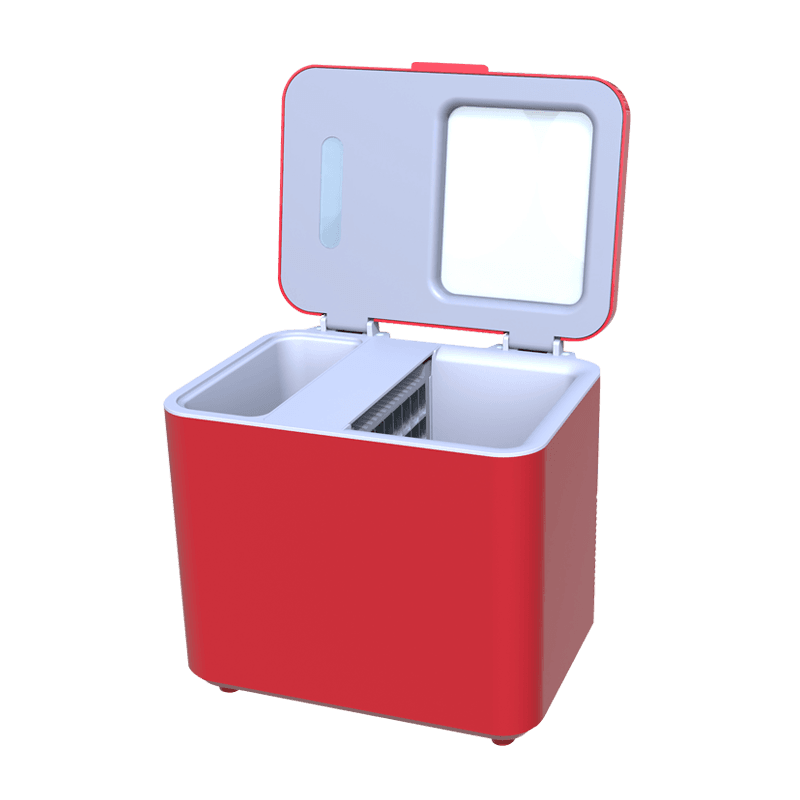
Home ice cube maker
Product Overview
The Home Ice Cube Maker is a compact household appliance developed for everyday ice production. It is especially suitable for families that regularly prepare cold drinks, iced coffee, fruit tea, cocktails, sparkling water, juices, smoothies, or chilled desserts. It is also useful in small commercial or semi-commercial environments where flexible ice supply is needed, such as reception areas, small offices, home studios, guest lounges, and private dining rooms.
The product is designed around a straightforward idea: make ice convenient, presentable, and easy to store. Unlike irregular freezer-tray ice or crushed ice that melts quickly, the cube-style output is neat, visually appealing, and practical. Square ice cubes can be arranged efficiently in glasses, ice buckets, storage boxes, and freezer compartments. Their regular shape also gives users a more refined serving experience, especially when preparing premium beverages.
The machine operates with a 220V/50Hz power supply and uses 140W rated power at 0.65A current. Its machine dimensions are 325 x 295 x 252 mm, giving it a compact footprint for kitchens, pantries, counters, office corners, and beverage stations. The refrigerant is R290 with a charge of 26g, reflecting an efficient refrigeration approach commonly used in modern compact cooling appliances.
For users who want a simple appliance that looks appropriate in a household setting and supports frequent ice needs, the ZF01 Home Ice Cube Maker offers a balanced combination of convenience, compact size, cooling utility, and presentation quality.
Key Specifications
Item |
Specification |
User Benefit |
Product Type |
Home Ice Cube Maker |
Suitable for household beverage cooling, entertaining, and daily ice preparation. |
Power Supply |
220V/50Hz |
Designed for standard household power environments in applicable markets. |
Current/Power |
0.65A/140W |
Provides practical ice-making performance while maintaining appliance-level energy use. |
Refrigerant/Charge |
R290/26g |
Uses a modern hydrocarbon refrigerant known for effective thermodynamic performance. |
Machine Dimensions |
325 x 295 x 252 mm |
Compact enough for countertop placement and flexible indoor use. |
Ice Shape |
Square Ice Cube |
Neat appearance, slower melting, efficient stacking, and wide beverage compatibility. |
Why Square Ice Cubes Matter
Ice shape is not merely a visual feature. It affects cooling behavior, melting rate, dilution, storage efficiency, and the final drinking experience. The Home Ice Cube Maker focuses on cube-style ice because square cubes offer a strong balance between surface area, density, appearance, and practical use.
When ice melts too quickly, it dilutes the drink before the user has time to enjoy it. This is a common weakness of small, thin, irregular, or crushed ice pieces. Square ice cubes, especially when formed with a more solid structure, typically melt more slowly because they have less exposed surface area relative to their volume. This helps drinks stay cold while preserving flavor.
The regular shape also improves aesthetics. In a clear glass, neat cubes create a cleaner and more professional impression than random fragments. Whether serving water with lemon, iced tea, cold brew coffee, whiskey, soda, or cocktails, square ice helps the drink look intentional rather than improvised.
Storage is another advantage. Irregular ice pieces create empty spaces in containers and freezer bags. Square cubes stack more predictably, making them easier to organize. This matters for families that make ice in batches and store it for later use. It also benefits users who prepare for parties, weekend gatherings, outdoor coolers, or seasonal beverage service.
Slow Melting for Better Flavor Preservation
One of the strongest product advantages is the slow melting behavior of dense cube-style ice. In beverages, cooling and dilution happen at the same time, but they are not always equally desirable. A drink should become refreshingly cold, but it should not become watery too quickly. This is especially important for premium spirits, neat whiskey, iced coffee, fruit infusions, high-quality tea, and carefully mixed cocktails.
Ordinary freezer tray ice often contains cracks, air pockets, or uneven shapes. These defects increase melting speed and can cause pieces to break apart in the glass. Many low-cost ice solutions produce small or hollow forms that cool quickly but melt rapidly. That may be acceptable for some casual drinks, but it is not ideal when flavor retention and presentation matter.
The cube-style ice produced by the Home Ice Cube Maker provides a more refined balance. The user can chill a drink over a longer period while reducing excessive dilution. For whiskey, brandy, rum, and other spirits, this means the beverage can open gradually without losing character too quickly. For iced coffee, it helps protect the aroma and strength of the drink. For juice or tea, it helps maintain the intended taste profile.
This slow melting advantage is one of the reasons square cubes are widely associated with professional beverage service. The ZF01 brings that practical benefit into a compact appliance format for everyday users.
Professional Appearance and Everyday Aesthetics
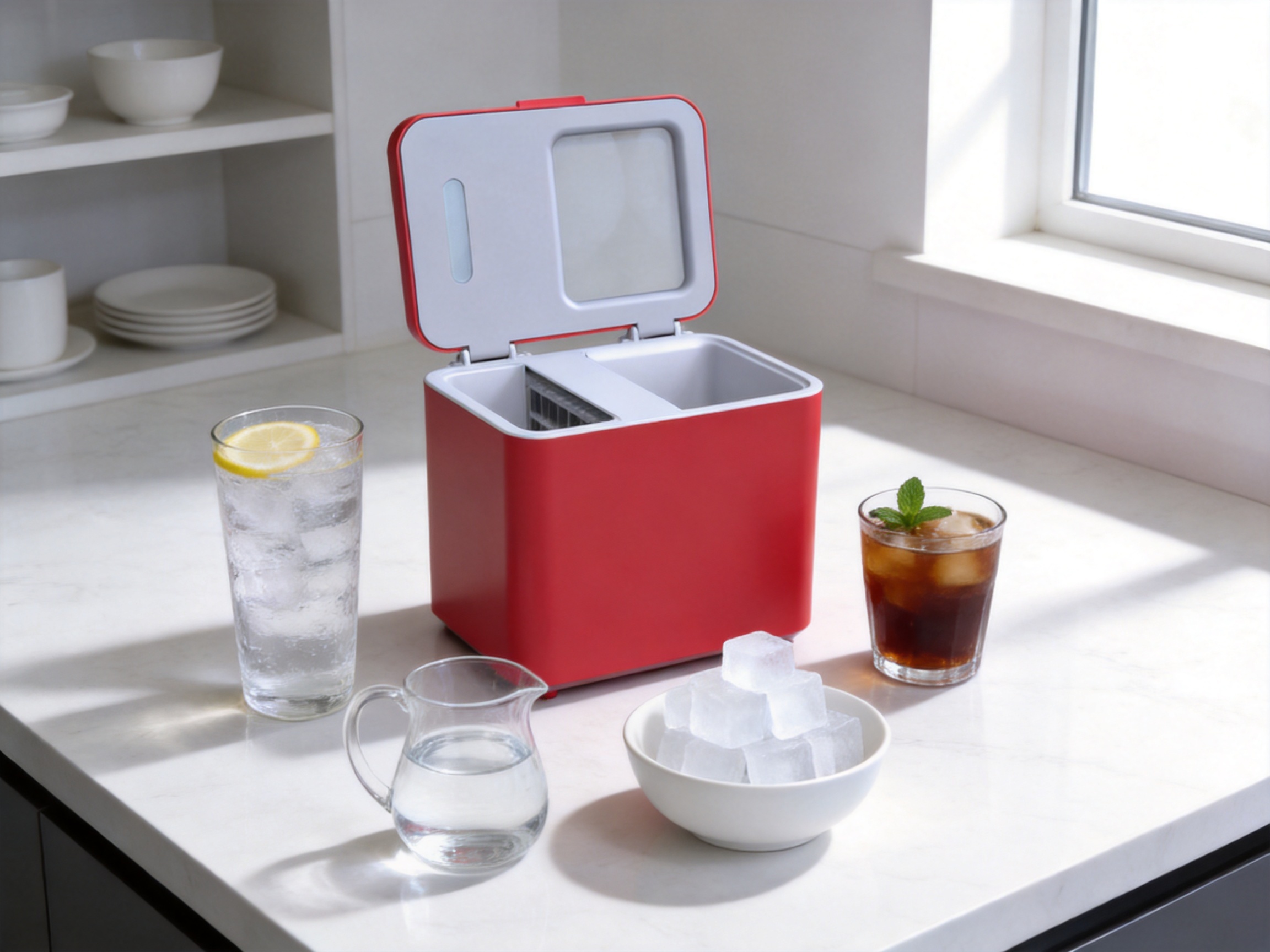
Kitchen appliances are increasingly expected to do more than perform a function. They should also support a lifestyle. A clean beverage station, a neat coffee corner, or a home bar looks more complete when every element is considered, including the ice. The Home Ice Cube Maker helps users serve drinks with a more polished look.
Square ice cubes create visual order. Their straight edges and consistent form look deliberate. In transparent glassware, they enhance the appearance of the drink and contribute to a premium impression. This matters when entertaining guests, photographing drinks, serving clients, or simply enjoying a relaxing evening at home.
Compared with traditional freezer trays, the machine also reduces the awkwardness of twisting plastic trays, spilling water in the freezer, or dealing with ice that absorbs odors from stored food. While proper water quality and cleaning habits remain important, a dedicated ice-making appliance helps separate ice preparation from general freezer storage.
The result is a better everyday ritual. Users can prepare ice without making the freezer messy. They can fill a glass, chill a bottle, cool fruit, or prepare a cocktail with ice that looks more refined than broken freezer fragments. This is a small upgrade, but it is one that users notice repeatedly.
Versatility Across Household and Light Commercial Scenarios
The Home Ice Cube Maker is not limited to one type of drink. Its cube-style ice is versatile enough for nearly all common cooling scenarios. At home, it can be used for water, soft drinks, tea, coffee, cocktails, smoothies, juice, and kitchen preparation. During gatherings, it can support ice buckets, pitchers, beverage dispensers, and chilled serving trays.
For iced coffee lovers, cube ice helps cool the drink while reducing fast dilution. For cocktail preparation, it gives bartending enthusiasts a more controlled and attractive ice format. For fruit tea or lemonade, it creates a clean and refreshing presentation. For sparkling water or soda, it chills efficiently while maintaining a neat look in the glass.
Beyond drinks, cube ice can be useful in food preparation. It may help cool blanched vegetables, stabilize cold dessert preparation, chill seafood serving trays, or maintain low temperatures for short-term kitchen tasks. It can also be placed in ice packs when suitable containers are used. Because the cubes have a regular shape, they are easier to distribute evenly in bags and containers.
Small offices and reception spaces can also benefit. Instead of relying on staff to purchase ice bags or refill freezer trays, a compact ice maker offers a more convenient option. It improves hospitality without requiring major installation or a large appliance footprint.
Space-Saving Storage Efficiency
Storage efficiency is a practical advantage that many users only appreciate after using cube ice regularly. Irregular ice pieces do not stack well. They leave gaps, take up unnecessary freezer space, and make containers difficult to close. Square cubes, by contrast, can be arranged more tightly and predictably.
This matters because most households already use freezer space for meat, vegetables, frozen meals, desserts, and prepared ingredients. A user who wants to store extra ice for a party or weekend use should not have to sacrifice excessive freezer volume. With regular cube ice, storage containers can be filled more efficiently.
Efficient stacking also improves dispensing. When cubes are more uniform, they are easier to scoop, pour, or transfer into glasses. They are less likely to form an awkward mass of sharp fragments. This creates a cleaner user experience and reduces waste.
The machine itself also supports space efficiency. With dimensions of 325 x 295 x 252 mm, it can fit on many countertops or utility surfaces without dominating the kitchen. The compact structure is especially valuable for apartments, small kitchens, rental homes, office beverage counters, and compact hospitality settings.
Advantages Over Freezer Trays
Freezer trays are inexpensive, but they have several limitations. They require long freezing times, occupy freezer space, spill easily, and often produce ice that absorbs freezer odors. Removing the cubes can be inconvenient, and the output depends heavily on freezer conditions. If the household needs ice quickly for guests, freezer trays are rarely flexible enough.
The Home Ice Cube Maker provides a more dedicated solution. It is designed specifically for ice production rather than sharing space with frozen food. This helps users manage ice needs more predictably. Instead of planning many hours ahead, users can operate the appliance when ice is required and store the resulting cubes as needed.
Another major advantage is consistency. Freezer trays vary in shape, size, water level, and freezing quality. Ice may crack, stick, or form unevenly. The cube ice produced by a dedicated machine is intended to be more uniform, which improves both appearance and storage.
For families that use ice occasionally, freezer trays may seem sufficient. But for users who frequently prepare cold beverages, entertain guests, or care about drink presentation, a dedicated ice cube maker offers a more convenient and satisfying experience. It replaces a manual, slow, and often messy process with a purpose-built appliance.
Advantages Over Bagged Ice
Bagged ice is convenient in emergencies, but it is not always ideal for daily household use. It requires a trip to the store, takes up freezer space, and may clump during transportation or storage. The user also has less control over the ice’s appearance, hygiene handling, and availability. During holidays or hot weather, local stores may run out of ice when demand is high.
A home ice cube maker reduces dependence on external supply. Users can produce ice when needed and avoid last-minute shopping. This is especially valuable for families that host gatherings, enjoy cold drinks every day, or live in areas where bagged ice is inconvenient to purchase.
Bagged ice often contains irregular pieces, broken fragments, and frost. It may be suitable for coolers, but it does not always look elegant in a glass. The Home Ice Cube Maker’s square ice is better suited to visible drink service because it offers a cleaner and more controlled appearance.
Cost and convenience also matter over time. While a bag of ice may seem inexpensive, repeated purchases add up, and the inconvenience of transport should not be ignored. A compact appliance provides an in-house ice solution that supports regular use without repeated store visits.
Advantages Over Many Compact Ice Makers
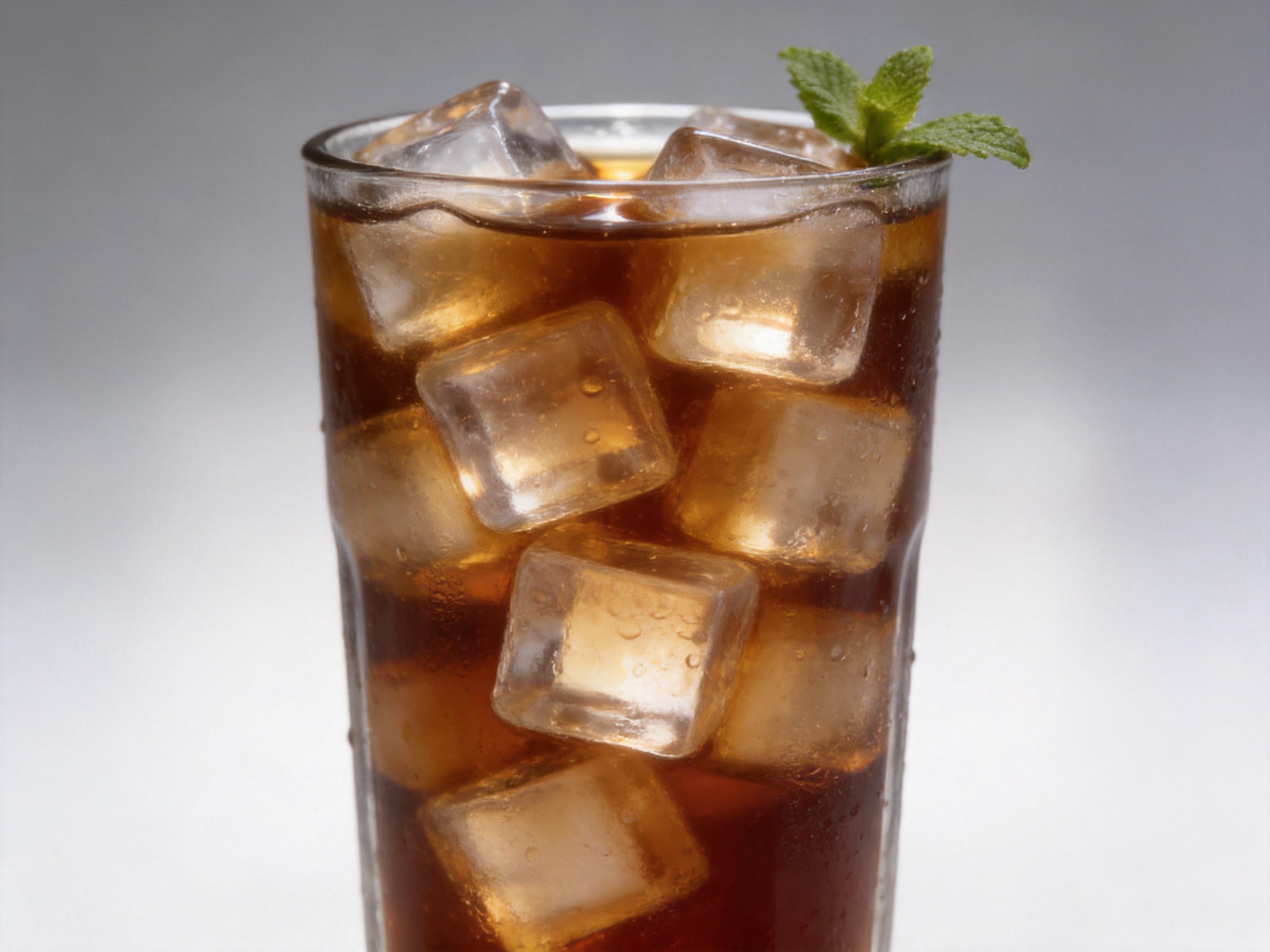
Many compact ice makers focus on producing ice quickly, but not all prioritize cube form, storage efficiency, and beverage aesthetics. Some produce bullet-shaped ice with a hollow center. Bullet ice can be useful for rapid cooling, but because of its shape and hollow structure, it may melt faster and dilute drinks more quickly. It also does not always create the same premium look as square cube ice.
The Home Ice Cube Maker’s cube-style focus gives it an advantage for users who care about drinking quality and presentation. Square cubes are associated with neatness, professionalism, and controlled dilution. They are better suited for whiskey glasses, cocktail tumblers, iced coffee cups, and elegant non-alcoholic beverages.
The compact dimensions are another competitive advantage. Some ice machines take up significant space and are difficult to integrate into smaller kitchens. This model maintains a practical footprint while still delivering the benefits of dedicated ice production.
The use of R290 refrigerant also reflects a modern refrigeration design direction. R290 is recognized for strong thermodynamic properties and is widely used in compact cooling equipment when applied with appropriate safety and manufacturing controls. Combined with a 140W appliance power level, the machine offers practical household performance in a compact body.
Refrigeration System and Cooling Logic
At the heart of any ice maker is the refrigeration system. The Home Ice Cube Maker uses a refrigeration circuit designed to remove heat from water and support the formation of solid cube ice. The specified refrigerant is R290 with a 26g charge. In compact appliances, efficient refrigeration design is essential because users want reliable output without large size or excessive power use.
R290, also known as propane refrigerant, is valued in the appliance industry for its favorable heat-transfer properties. It can support efficient cooling when the system is properly engineered, sealed, charged, and tested. Because it is a flammable refrigerant, responsible manufacturing requires strict process control, leak testing, component compatibility verification, and safety-focused assembly practices.
The 140W power rating indicates that the appliance is designed as a household-level product rather than a large commercial machine. This makes it appropriate for countertop use, daily beverage preparation, and compact indoor environments. The design challenge is to create effective cooling performance within a limited size. Achieving this requires careful coordination of compressor selection, condenser design, evaporator contact, water flow control, cabinet structure, and thermal insulation.
Users do not need to understand every technical detail to benefit from the machine, but the engineering behind the appliance directly affects reliability, ice quality, and operating convenience.
Compact Design for Modern Living Spaces
Modern homes often need appliances that are capable but not oversized. Countertop space is valuable, especially in apartments, townhouses, shared kitchens, small offices, and compact hospitality settings. The Home Ice Cube Maker’s dimensions of 325 x 295 x 252 mm make it easier to place than many larger ice machines.
The compact body supports flexible use. It can sit near a coffee machine, beside a water dispenser, on a pantry counter, or in a small refreshment area. Users who do not need continuous ice production can also store it away when not in use, depending on their space and usage habits.
A smaller appliance is only valuable if it still feels practical. The ZF01’s design aims to combine countertop convenience with useful ice output for common household scenarios. It is not intended to replace a large commercial ice machine in a high-volume bar, but it is well suited for the daily needs of families and smaller service spaces.
Its size also simplifies cleaning access and movement. Users can reposition it more easily than built-in or floor-standing machines. This matters for households that clean counters frequently, rearrange beverage stations seasonally, or use the appliance mainly during warmer months and gatherings.
Manufacturing Strength: Appliance Industry Location
The product is manufactured by Alien Technology Co., Ltd., located in Zhouxiang, Cixi City, Zhejiang Province, an area known for small household appliance production and efficient logistics. This regional industrial environment provides meaningful advantages. A strong appliance manufacturing cluster can support faster sourcing, specialized supplier access, component coordination, skilled labor availability, and practical production experience.
For household appliances such as ice makers, coffee machines, and air fryers, manufacturing strength depends not only on final assembly but also on supply chain management. Components such as compressors, pumps, electronic controls, molded parts, seals, thermal elements, wiring, switches, and packaging materials must meet consistent standards. Being located in an appliance-oriented industrial region helps a manufacturer coordinate these elements more effectively.
Logistics convenience also supports customer cooperation. Efficient transportation networks can improve production scheduling, delivery planning, sample development, and after-sales part support. For business buyers, distributors, and OEM or ODM partners, location and supply chain maturity are practical advantages that can reduce project uncertainty.
The company’s broader experience in household appliances gives it a useful foundation for ice maker development. Knowledge gained from coffee machines and air fryers can support electrical safety design, user-interface thinking, heating and cooling management, plastic housing design, quality inspection, packaging engineering, and mass-production control.
Advanced Manufacturing Processes
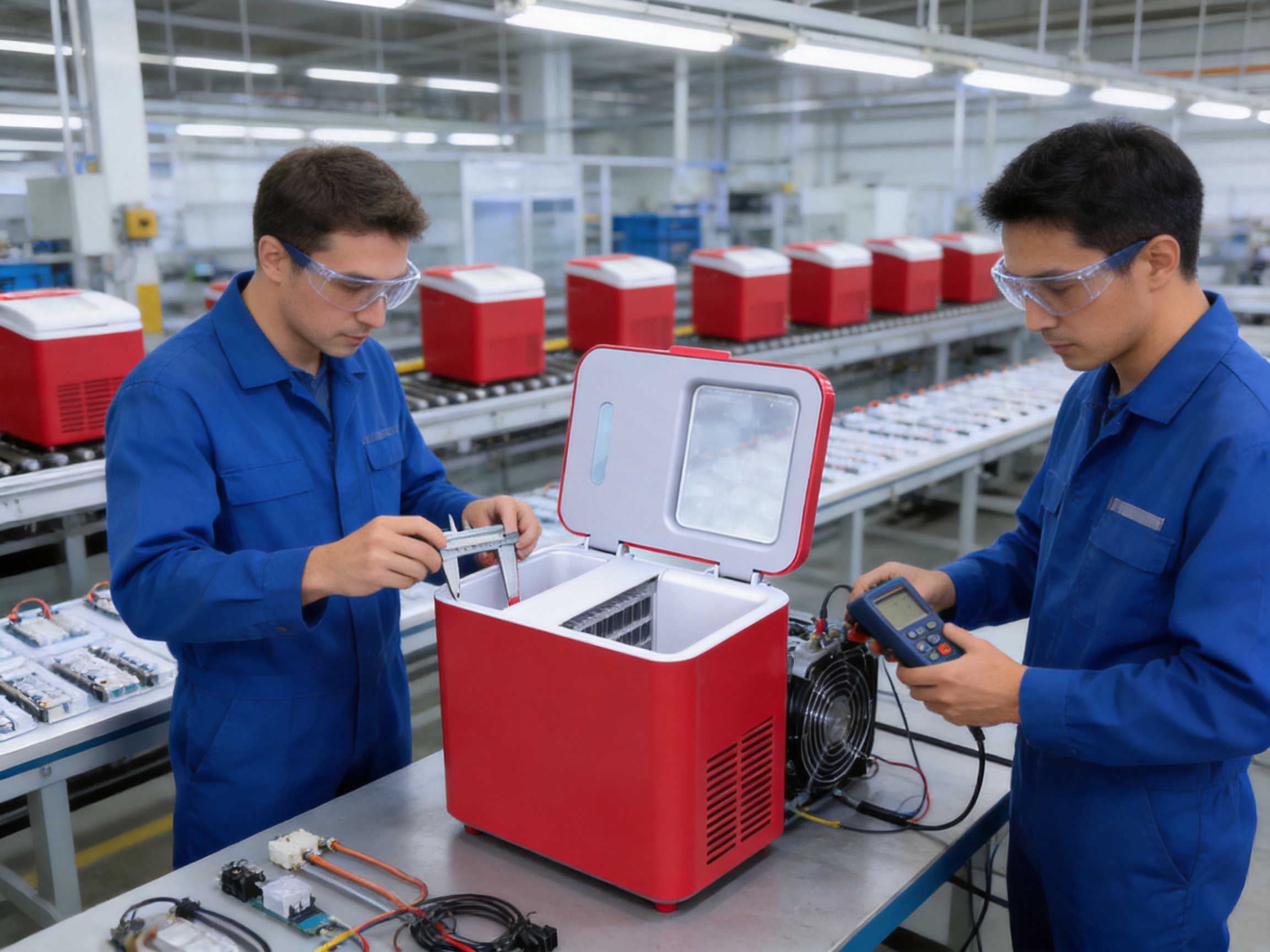
A reliable ice maker requires controlled manufacturing from raw materials to final inspection. The production process typically begins with incoming quality control. Critical parts such as compressors, condensers, evaporators, pumps, water-contact components, electrical boards, switches, and wiring assemblies must be checked against specifications before they enter production. This reduces the risk of defects appearing later in the assembly line.
Precision molding and structural assembly are also important. The cabinet and internal parts must fit correctly to support airflow, water management, insulation, and user safety. Poor housing alignment can affect appearance, vibration, durability, and serviceability. A mature appliance manufacturer uses tooling management, dimensional checks, and assembly jigs to improve consistency.
The refrigeration circuit requires especially careful workmanship. Tubing connections, brazing or joining processes, evacuation, refrigerant charging, and sealing must be performed under controlled conditions. Because the product uses R290 refrigerant, leak prevention and safety verification are critical. Proper process discipline helps ensure the refrigerant charge remains stable and the cooling system performs as intended.
Electrical assembly must also be systematic. Wire routing, insulation, grounding, connector security, and control-board protection all affect safety and long-term reliability. Functional testing confirms that the machine operates correctly before packaging. A responsible factory does not rely on appearance alone; it verifies performance.
Quality Control and Reliability Testing
Quality control is one of the most important differences between a dependable appliance and a low-cost imitation. For an ice maker, quality testing should cover electrical safety, cooling performance, water system operation, leakage prevention, noise behavior, user controls, and appearance.
Refrigeration leak testing is especially important. Even a small leak can reduce ice-making performance over time. Manufacturing procedures may include pressure testing, vacuum holding, refrigerant charging accuracy checks, and final operation testing. With R290 systems, leak control also supports safety requirements.
Functional testing helps confirm that the machine can complete its ice-making cycle properly. Inspectors can evaluate whether water is supplied correctly, whether the cooling surface reaches the intended condition, whether the cube formation process is stable, and whether the appliance responds correctly to operating controls.
Reliability testing may also include aging tests, repeated cycle checks, vibration observation, temperature-rise monitoring, and packaging drop or transport simulation. These tests help identify issues that may not appear during a quick inspection. A manufacturer with a stable and pragmatic quality philosophy understands that customer satisfaction depends on consistent performance after delivery, not only on passing a single production-line checkpoint.
For buyers, this manufacturing discipline provides confidence. It means the product is supported by process awareness, not merely assembled from parts.
Humanized Design for Daily Convenience
The company’s mission emphasizes smart technology, simplifying life, and enhancing happiness. In an ice maker, this philosophy should translate into practical daily convenience. A good product should not require complicated training. It should fit naturally into the user’s routine, make beverage preparation easier, and reduce small frustrations.
Convenience begins with placement. A compact machine can be positioned where ice is actually used. Users do not need to walk repeatedly to a freezer or open bags of ice. The appliance can become part of a home beverage station, supporting coffee machines, tea preparation, or cocktail tools.
Convenience also includes the ice format. Square cubes are easy to handle, easy to store, and easy to present. Their visual consistency reduces the need for extra preparation when serving guests. Instead of hiding ice in opaque cups, users can confidently serve drinks in clear glasses.
Humanized design also means considering cleaning and maintenance. Any appliance that handles water should be kept clean. Smooth surfaces, accessible components, and simple routines make users more likely to maintain the product properly. When a product is easy to care for, it is more likely to deliver stable long-term performance.
Water Quality, Taste, and Ice Clarity
Ice quality is strongly influenced by water quality. Even the best ice maker cannot transform poor water into perfect-tasting ice without proper water selection. Users who want better flavor should use clean drinking water. Filtered water may help reduce unpleasant odors, mineral taste, or visible impurities, depending on local water conditions.
Clear-looking ice is often associated with professional service, but clarity depends on several factors, including water mineral content, dissolved gases, freezing direction, temperature control, and ice-making method. The Home Ice Cube Maker provides a neat cube format that enhances beverage appearance, but users should understand that water quality and maintenance habits remain important.
To protect taste, users should avoid leaving water standing in the machine for excessive periods. The appliance should be cleaned according to instructions, and stored ice should be kept in clean, sealed containers to avoid odor absorption. Freezers can contain strong-smelling foods, so ice storage hygiene matters.
Good ice is not only about temperature. It is about taste, appearance, and freshness. By combining a dedicated cube ice maker with clean water and proper storage, users can achieve a more satisfying beverage experience than with ordinary freezer trays.
Energy Use and Practical Efficiency
The Home Ice Cube Maker is specified at 0.65A and 140W. This places it in a practical household appliance category. It is designed to provide ice-making performance without the scale, installation demands, or energy profile of a large commercial ice machine.
Energy efficiency in an ice maker depends on multiple factors. These include ambient temperature, water temperature, ventilation, refrigerant system efficiency, insulation, compressor performance, and user habits. If the appliance is placed in a hot or poorly ventilated area, it may need to work harder. If users start with very warm water, the freezing process will require more heat removal. Practical use therefore matters.
Users can support efficient operation by placing the machine on a stable, level surface with adequate airflow around it. They should avoid direct sunlight, heat sources, and cramped cabinets. Using cool drinking water may also help the appliance operate more effectively.
The compact design contributes to practical efficiency because it is intended for targeted use. Instead of running a large ice system for modest household needs, users can produce the amount of ice they need for daily drinks, entertaining, or short-term storage. This right-sized approach is often more sensible for homes and small offices.
Safety Considerations
Like any electrical appliance, an ice maker should be used responsibly. Users should connect it to a suitable power supply, keep it away from excessive moisture outside the intended water system, and avoid modifying the appliance. The rated supply is 220V/50Hz, so buyers should confirm compatibility with their local electrical environment before use.
Because the refrigeration system uses R290, the product must be manufactured and serviced with proper awareness. Users should not puncture refrigeration tubing or attempt unauthorized repairs. If service is needed, qualified personnel should handle the appliance according to appropriate safety procedures.
Ventilation is also important. The machine should not be tightly enclosed during operation. Adequate airflow helps the condenser release heat and supports stable performance. Blocking vents can reduce efficiency and may affect reliability.
Cleaning safety should be simple but consistent. Users should unplug the appliance before major cleaning operations, avoid harsh chemicals unless approved by the manual, and ensure water-contact areas remain sanitary. Ice is consumed directly in beverages, so cleanliness is part of safe use.
Ideal Users and Application Scenarios
The Home Ice Cube Maker is ideal for users who enjoy cold drinks regularly and want more control over ice availability. It is particularly useful for families who entertain guests, prepare iced coffee, host weekend gatherings, enjoy spirits or cocktails, or want a clean beverage presentation at home.
It is also suitable for compact office environments. A small meeting room or reception area can feel more hospitable when cold drinks are easy to prepare. Employees can enjoy iced water, tea, or coffee without relying on store-bought ice.
For small hospitality settings, the appliance may support low-volume service needs. Guest rooms, small lounges, boutique counters, private studios, and demonstration kitchens can benefit from a compact ice source. It should not be confused with a high-capacity commercial ice plant, but it can be a practical addition where moderate ice demand exists.
Seasonal use is another strong scenario. During summer, holidays, family dinners, barbecue events, and celebrations, ice demand rises sharply. A dedicated home ice cube maker reduces the pressure on the freezer and helps users prepare more confidently.
How to Get the Best Performance
To get the best results, users should start with clean drinking water. If local tap water has strong mineral taste or odor, filtered water may improve the final ice taste. Water should be fresh, and the appliance should be cleaned regularly.
Placement matters. The machine should sit on a stable, level surface with sufficient ventilation. It should not be placed directly beside ovens, stoves, heaters, or strong sunlight. Cooler ambient conditions generally support better refrigeration performance.
Users should also manage expectations. Compact ice makers are designed for convenience and daily flexibility, not unlimited commercial output. For large parties, it is sensible to make ice in advance and store it in clean containers. The square cubes’ efficient stacking helps in this preparation.
After ice is produced, it should be transferred or used according to the product’s operating instructions. If storing ice in a freezer, use clean sealed containers to prevent odor absorption. If the appliance will not be used for a period, empty remaining water, clean appropriate parts, dry the unit, and store it in a suitable location.
Why Manufacturing Experience Matters
Household appliances look simple from the outside, but they require many engineering decisions. An ice maker combines refrigeration, water handling, electrical control, plastic molding, airflow management, safety design, packaging, and user experience. A manufacturer with broader appliance experience can integrate these areas more effectively.
Alien Technology Co., Ltd. specializes in household appliances including ice makers, coffee machines, and air fryers. This product range indicates familiarity with appliances that involve temperature control, food or beverage interaction, user-facing design, and quality-sensitive assembly. Such experience can help the company refine product structure, improve production stability, and respond to market needs.
The company’s stated business philosophy emphasizes excellent quality, customer satisfaction, continuous improvement, innovation, and pragmatic stability. These values are relevant because the ice maker market includes many products that appear similar at first glance. Long-term customer satisfaction depends on what users experience after weeks and months of use: consistent operation, attractive ice, reliable controls, and easy maintenance.
Manufacturing strength also matters for business partners. Distributors and buyers need stable supply, consistent specifications, responsive communication, and the ability to improve products over time. A company located in a strong appliance manufacturing region and focused on practical household solutions has a clear foundation for cooperation.
Competitive Positioning
The Home Ice Cube Maker is positioned as a compact, practical, and presentation-focused ice solution. Its strongest competitive points are cube-style ice, slow melting, neat appearance, storage efficiency, compact dimensions, and a manufacturing background rooted in small household appliance production.
Compared with freezer trays, it offers greater convenience and more consistent output. Compared with bagged ice, it provides in-house availability and improved control. Compared with many bullet-ice compact machines, it offers a more refined cube format that better supports premium beverage presentation and slower dilution. Compared with large commercial units, it is easier to place, simpler for household environments, and more appropriate for moderate daily needs.
The product also aligns with modern consumer preferences. Users want appliances that save time, improve daily rituals, and fit into attractive living spaces. An ice maker is no longer only a summer convenience; it is part of a complete beverage lifestyle. Coffee culture, home bartending, health drinks, fruit teas, and sparkling water habits all increase demand for convenient ice.
By combining technical practicality with lifestyle value, the ZF01 Home Ice Cube Maker offers an appealing choice for users who want more than basic freezing. It brings order, convenience, and elegance to a daily household need.
Q&A Section
Q1: What is the main advantage of this Home Ice Cube Maker?
The main advantage is that it produces neat square ice cubes in a compact household appliance format. The cubes are suitable for attractive beverage presentation, slower melting, efficient storage, and versatile daily use.
Q2: Why are square ice cubes better than irregular ice?
Square ice cubes have a regular shape that improves appearance and stacking efficiency. When the cubes are solid and dense, they can also melt more slowly than small or irregular ice pieces, helping drinks stay cold without becoming diluted too quickly.
Q3: Is this product suitable for whiskey and cocktails?
Yes. Square ice cubes are well suited for whiskey, cocktails, spirits, iced coffee, and premium non-alcoholic drinks because they look clean in the glass and support better control over dilution.
Q4: Can it replace a commercial ice machine?
It is designed primarily for home and moderate-use environments. It can support daily household needs, offices, small lounges, and gatherings, but it should not be treated as a substitute for a high-capacity commercial ice machine in a busy bar or restaurant.
Q5: What power supply does it use?
The specified power supply is 220V/50Hz. Buyers should confirm that this matches their local electrical standard before use.
Q6: What refrigerant is used?
The product uses R290 refrigerant with a 26g charge. R290 is known for effective thermodynamic performance, but it requires proper manufacturing, handling, and service procedures.
Q7: How large is the machine?
The machine dimensions are 325 x 295 x 252 mm. This compact size makes it suitable for many countertops, beverage stations, small kitchens, and office areas.
Q8: How can users improve ice taste?
Users should use clean drinking water, consider filtered water if local water has odor or mineral taste, clean the appliance regularly, and store finished ice in sealed clean containers.
Q9: What makes the manufacturer competitive?
The manufacturer is located in Zhouxiang, Cixi City, Zhejiang Province, an area with strong small household appliance manufacturing resources and logistics. The company specializes in products such as ice makers, coffee machines, and air fryers, giving it relevant appliance production experience.
Q10: What are the best use scenarios?
The product is suitable for family drinks, iced coffee, cocktails, home bars, office refreshment areas, small hospitality spaces, parties, seasonal gatherings, and kitchen cooling tasks.
Conclusion
The Home Ice Cube Maker, model ZF01, offers a practical answer to a common household need. It helps users produce attractive square ice cubes without depending on slow freezer trays or store-bought bags. Its cube-style ice supports slower melting, cleaner beverage presentation, versatile use, and efficient storage.
With a compact body measuring 325 x 295 x 252 mm, a 220V/50Hz power supply, 140W rated power, and an R290 refrigeration system, the machine is designed for modern home and small-space use. It is especially valuable for users who care about drink quality, appearance, and convenience.
The product’s competitive value is strengthened by the manufacturer’s appliance industry background, regional supply chain advantages, quality-oriented philosophy, and experience in household appliances. Reliable ice making requires more than a cooling component; it requires controlled manufacturing, leak testing, electrical safety awareness, user-centered design, and continuous improvement.
For families, offices, and small hospitality settings seeking a compact and elegant ice solution, this Home Ice Cube Maker provides a balanced combination of function, style, and manufacturing confidence.
References
ASHRAE Handbook: Refrigeration. American Society of Heating, Refrigerating and Air-Conditioning Engineers.
International Electrotechnical Commission. Household and Similar Electrical Appliances Safety Standards.
International Institute of Refrigeration. Refrigerant Properties and Applications in Small Cooling Systems.
Food and Beverage Service Principles: Ice Handling, Beverage Dilution, and Presentation Practices.
Small Household Appliance Manufacturing Quality Control Guidelines and Production Process References.