
 English
 한국어
한국어 Español
 Deutsch
Chewing ice has become one of the most desirable forms of ice for modern home beverages, small gatherings, coffee bars, smoothie stations, and daily refreshment. Unlike traditional hard cubes that cool slowly and can be difficult to bite, chewing ice is soft, porous, pleasant in texture, and highly effective at chilling drinks quickly. The Home Chewing Ice Maker described here is designed for families and lifestyle users who want the enjoyable texture of nugget-style ice without relying on convenience stores, cafés, or commercial ice dispensers.
This article introduces the product’s design value, practical advantages, technical specifications, user benefits, and the manufacturing strengths behind it. It also explains why soft chewing ice offers a better experience in many everyday scenarios compared with standard cube ice, bullet ice, or crushed ice. With a compact body, home-friendly power requirements, efficient refrigerant usage, and a focus on dependable appliance manufacturing, this ice maker is positioned as a useful addition to kitchens, offices, beverage corners, and hospitality spaces.
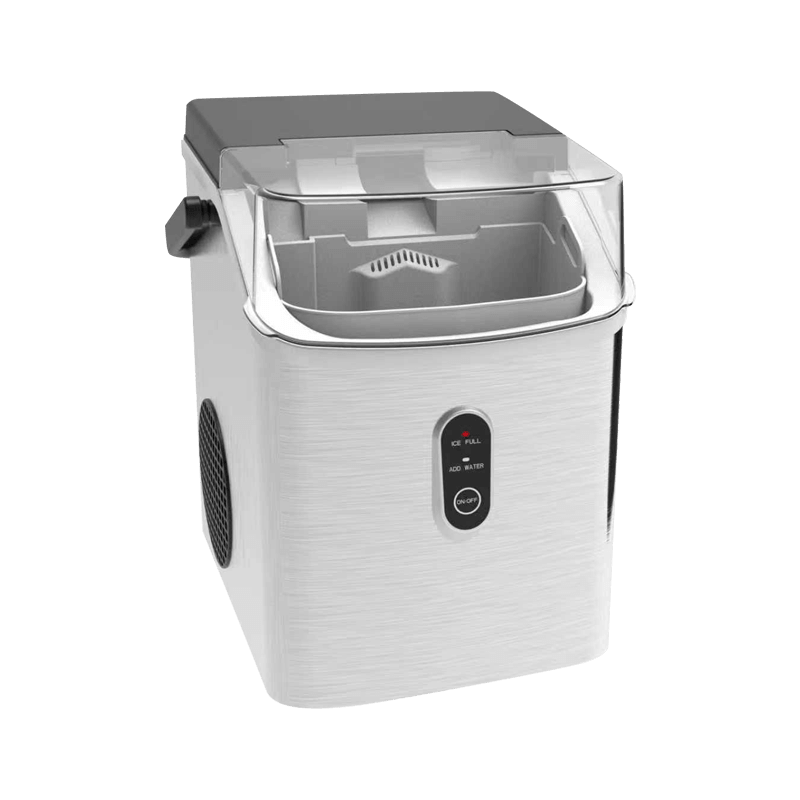
Product Overview
The product is a home chewing ice maker with the model description Alien-ZJ01. It is built for users who prefer chewable, soft-textured ice that can be enjoyed directly or added to drinks. Its category is chewing ice maker, and its primary function is to create ice with a small particle structure and a satisfying mouthfeel. This type of ice is often called nugget ice, chewable ice, soft ice, or pellet ice, depending on the market and user preference.
The product is especially suitable for iced coffee, soda, fruit tea, cocktails, lemonade, sparkling water, smoothies, shaved ice-style desserts, and cold food presentation. Because the ice is softer than regular cubes, it is easier to chew and mixes more naturally with drinks. Its porous form absorbs flavor more effectively, allowing beverages to taste colder and richer while maintaining a more enjoyable texture.
From a home appliance perspective, the key value of this ice maker is convenience. Instead of buying bags of ice or waiting for freezer trays to produce cubes, users can prepare chewing ice at home whenever needed. This improves daily beverage quality and supports modern home lifestyles where people want café-like enjoyment without leaving the house.
Core Specifications
Item |
Specification |
Product Type |
Home Chewing Ice Maker |
Model Description |
Alien-ZJ01 |
Product Power Supply |
220V/60Hz |
Current/Power |
0.55A/130W |
Refrigerant/Charge |
R600a/19g |
Machine Dimensions |
224 x 333 x 325mm |
Main Ice Style |
Soft chewing ice suitable for drinks and direct chewing |
Typical Applications |
Iced coffee, soda, smoothies, cold beverages, food display, and home entertaining |
The specification table shows that the machine is designed as a compact home appliance. Its dimensions of 224 x 333 x 325mm make it suitable for countertop placement in kitchens, pantries, office refreshment areas, or small beverage corners. The power rating of 130W supports household use while helping maintain practical energy consumption for a refrigeration appliance. The use of R600a refrigerant reflects a modern approach to refrigeration efficiency and environmental consideration, as R600a is widely used in compact cooling equipment due to its favorable thermodynamic performance.
Why Chewing Ice Is Different
Chewing ice is not simply broken cube ice. Its value comes from its structure. Traditional ice cubes are dense and hard because they freeze into solid blocks. Bullet ice is common in many portable ice makers, but it can still be relatively firm and may not deliver the same chewable texture that users expect from premium nugget ice. Crushed ice can cool drinks quickly, but it is often irregular, watery, and less pleasant to chew. Chewing ice solves these problems by offering a soft, porous, and bite-friendly texture.
The softness of chewing ice makes it more enjoyable for many users. It creates a light crunch rather than a sharp crack. This makes the ice more comfortable for casual chewing and gives beverages a distinctive refreshing quality. The texture also holds liquid on its surface and inside small pores, helping the ice carry flavor from the drink. As a result, the final sips of iced coffee, fruit tea, or soda can remain enjoyable instead of tasting like plain diluted water.
The small particle size of chewing ice also increases contact area. More surface area means faster heat exchange between the ice and the beverage. In simple terms, the drink becomes cold more quickly. This is important for iced coffee, carbonated drinks, and freshly mixed beverages that need rapid cooling without waiting several minutes. The ice maker therefore supports both taste and convenience.
Ultimate Chewing Experience
The most important advantage of this product is the chewing experience itself. Soft chewing ice is loved because it is gentle on teeth compared with hard cube ice, while still producing a satisfying crunch. The sound, texture, and mouthfeel create a small daily pleasure that many people associate with premium drink shops and healthcare-style ice dispensers. By bringing this experience into the home, the machine upgrades ordinary beverages into a more enjoyable routine.
For people who enjoy chewing ice after finishing a drink, this type of ice feels more intentional and refined. Instead of hard cubes that can be uncomfortable, chewing ice breaks down more easily. It also blends well with beverages, so every scoop feels refreshing rather than harsh. Families can use it for children’s drinks, adults can use it for coffee or sparkling beverages, and hosts can use it for party drinks where both appearance and mouthfeel matter.
The home chewing ice maker is also a practical alternative to buying chewable ice elsewhere. Many people travel to specific stores or restaurants to get the soft ice they prefer. Having a machine at home removes that dependence. It also supports cleaner storage and better timing, because users can make ice when needed instead of transporting it in bags where it may melt, clump, or absorb odors.
Rapid Cooling for Better Drinks
One of the major functional benefits of chewing ice is rapid cooling. Because each small piece has more surface area than a large cube, it can absorb heat from beverages quickly. This is ideal for drinks that are prepared fresh and need to be served cold immediately. Hot-brewed coffee poured over chewing ice can become an iced coffee quickly. Fruit tea can be chilled before the aroma fades. Soda can reach a satisfying cold temperature without long refrigeration time.
Rapid cooling also improves consistency. When large cubes are used, the outside of the drink may cool first while the center remains less cold for a short period. Small chewing ice distributes more evenly throughout the beverage. This creates a more uniform drinking temperature and a better first sip. In cafés and home beverage bars, the first sip matters because it defines the user’s impression of the drink.
For summer entertaining, rapid cooling is particularly useful. Guests may arrive at different times, and drinks may need to be prepared continuously. A home chewing ice maker helps users respond quickly. Instead of waiting for freezer ice trays, the machine supports a beverage station that feels organized and enjoyable. It can also reduce the need to store large volumes of frozen ice, freeing freezer space for food.
Excellent Coating and Flavor Infusion
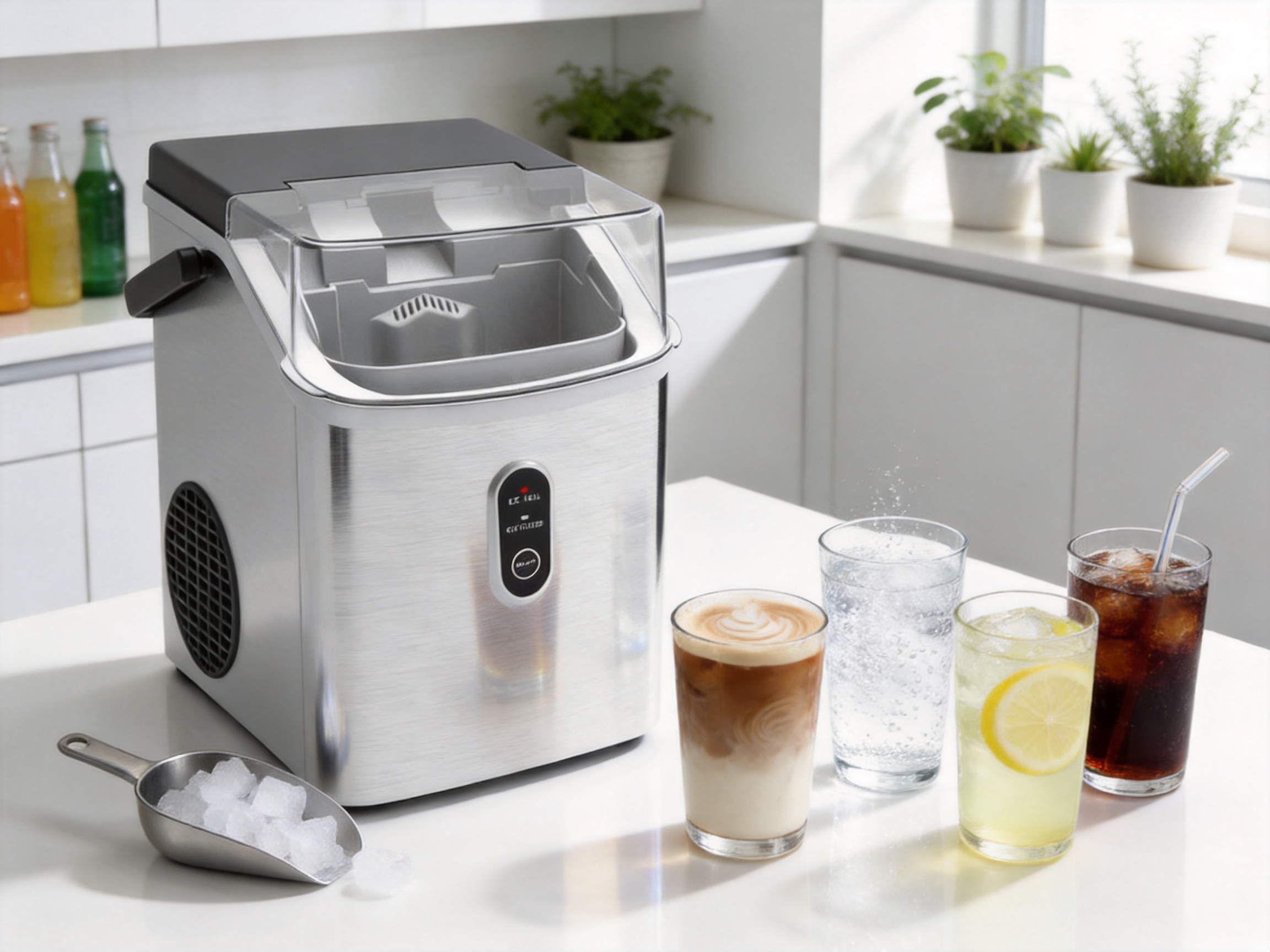
Chewing ice is not only useful inside cups. Its small, flexible structure allows it to coat and surround items more effectively than large cubes. In food presentation, this can help keep items cold while maintaining an attractive display. Vegetables in salad service, seafood arrangements, oysters, sashimi, and chilled fruit can benefit from ice that conforms around the food instead of leaving large gaps. Although this home model is designed primarily for household beverage use, the same ice principle explains why chewing ice is valued in many professional settings.
Flavor infusion is another important advantage. Chewing ice can absorb and hold beverage flavors on its surface. In drinks such as cola, lemonade, iced coffee, and fruit tea, the ice becomes part of the experience rather than a neutral cooling object. As the ice softens, it releases coldness and a subtle taste from the beverage. This is one reason many consumers prefer chewable ice over traditional cubes.
The coating ability also makes the ice suitable for cold compress use in general home care situations. Soft, small ice pieces conform better to shapes than rigid cubes. When placed inside a proper cold pack or protective wrap, the ice can fit around joints or muscles more evenly. Users should follow appropriate safety practices for cold therapy, including avoiding direct prolonged contact with skin, but the soft ice form is naturally more adaptable.
Versatility in Everyday Use
The product supports a wide range of household beverage and food applications. For iced coffee, chewing ice chills quickly and creates a coffeehouse-style texture. For soda, it keeps the drink lively and cold while adding a chewable finish. For smoothies and shaved ice-style desserts, the soft ice can serve as a convenient base ingredient. For fruit drinks, it helps maintain freshness and makes the cup look fuller and more appealing.
In family kitchens, the machine can support breakfast, lunch, afternoon refreshments, and evening entertainment. In home offices, it can make water, sparkling drinks, and cold brew more enjoyable throughout the day. For small parties, it gives hosts a simple way to create a premium drink station. For fitness users, chewing ice can be added to hydration drinks after exercise. For people who enjoy mocktails and craft beverages, it provides an important texture element.
Compared with a standard refrigerator ice maker, a dedicated chewing ice maker focuses on a specific ice quality. Refrigerator ice makers often produce hard cubes or crescent-shaped ice. Those forms are useful, but they do not provide the same soft chew. Freezer trays are inexpensive but slow and inconvenient. Bagged ice can be useful for bulk needs, but it may be inconsistent in quality and storage hygiene. A dedicated countertop chewing ice maker offers freshness, control, and texture.
Easy to Scoop, Mix, and Serve
The soft texture of chewing ice makes it easy to scoop and mix. This is a simple benefit, but it matters during daily use. Hard cubes can splash liquid when dropped into a glass. Large ice pieces may block straws or make cups awkward to fill. Chewing ice settles naturally into containers, allowing users to control the amount more precisely. It also creates an attractive filled appearance in transparent cups.
When mixed with beverages, chewing ice spreads evenly. This makes it useful for layered drinks, fruit teas, and iced coffee with milk. The ice supports stirring without large cubes striking the glass loudly. For blended drinks, it can reduce preparation effort because the ice is already in a smaller, softer form than solid cubes. Users can create slush-style drinks, fruit ice bowls, and dessert drinks with less strain on blending equipment.
Serving is also easier during gatherings. A container of soft chewing ice can be placed near drinks, allowing guests to scoop it into cups as needed. The texture is approachable and visually appealing. It signals attention to detail, which can make a simple beverage table feel more refined.
Compact Countertop Design
The machine dimensions of 224 x 333 x 325mm indicate a compact footprint. This is important because countertop space is valuable in modern homes. Many users want appliances that deliver specialized functions without dominating the kitchen. A home chewing ice maker should be convenient enough to keep accessible, because frequent use is only likely when the product is easy to reach and operate.
The width of 224mm allows the machine to fit into relatively narrow spaces. The depth of 333mm and height of 325mm make it suitable for many counters, beverage cabinets, or office refreshment areas. Its size supports daily home use rather than requiring commercial installation. This compactness differentiates the product from larger ice machines that may require plumbing, drainage, or dedicated floor space.
Compact design also helps with lifestyle flexibility. The machine can be used in a kitchen during normal days, moved to a dining area for a gathering, or placed in a small office. Users should always follow safe placement guidelines, including keeping ventilation space around the appliance, placing it on a stable surface, and using the specified power supply. Within those practical limits, the size makes the product adaptable.
Power and Refrigeration Efficiency
The product is specified for 220V/60Hz power supply with current and power listed as 0.55A/130W. This indicates a home appliance power class suitable for compact refrigeration operation. Users should confirm that their local electrical supply matches the product rating before use. Correct voltage and frequency are important for compressor performance, safety, and product longevity.
The refrigerant is R600a with a 19g charge. R600a, also known as isobutane, is widely used in modern refrigeration appliances because it provides efficient cooling performance with a relatively low refrigerant charge. Its use requires careful manufacturing control because refrigerant systems must be properly sealed, charged, and tested. A well-built refrigeration circuit is essential for stable ice production and long-term reliability.
In competitive comparison, efficient refrigerant usage is important because users want ice quickly without unnecessary energy waste. A compact machine with a suitable refrigerant charge can deliver practical cooling while remaining appropriate for household use. The design balance between cooling capacity, compressor performance, heat exchange, and insulation determines the final user experience.
Advantages Over Traditional Ice Cubes
Traditional ice cubes are familiar, but they are not always ideal. They are hard, dense, and slow to cool beverages. They can crack teeth if chewed aggressively and may be too large for some cups. They also take considerable time to freeze in trays. A home chewing ice maker provides a more specialized solution for people who value texture and speed.
Chewing ice cools drinks rapidly because of its smaller size and greater contact area. It is more enjoyable to chew because it is softer and less dense. It mixes better with drinks because it fills gaps in the cup. It can absorb flavor, making the drinking experience more satisfying. It also gives beverages a premium appearance associated with specialty drink shops.
Compared with freezer trays, the machine offers convenience. Users do not need to refill trays, wait for hours, twist trays, or deal with freezer odors. Compared with buying ice, it offers freshness and control. Compared with hard refrigerator ice, it provides a different texture altogether. These advantages make the product more than a simple cooling device; it becomes an experience appliance.
Advantages Over Bullet Ice Makers
Many countertop ice makers produce bullet-shaped ice. Bullet ice is useful and fast, but it is often smooth, hollow, and somewhat firm. It can cool beverages effectively, yet it does not usually provide the signature soft chew that nugget-style ice lovers prefer. The Home Chewing Ice Maker focuses on the chewable texture that distinguishes premium ice experiences.
Bullet ice tends to roll around in cups and may not absorb flavor as well. Chewing ice, by contrast, packs into the cup and creates a textured drinking experience. It is better for drinks where ice is not only functional but also part of the flavor and mouthfeel. For iced coffee, fruit tea, and carbonated beverages, this difference can be noticeable.
For users comparing products, the key question is not only how much ice a machine can make, but what kind of ice it makes. If the goal is simply to cool a cooler box, many ice types can work. If the goal is enjoyable, chewable, beverage-enhancing ice, a chewing ice maker offers a more targeted advantage.
Advantages Over Crushed Ice
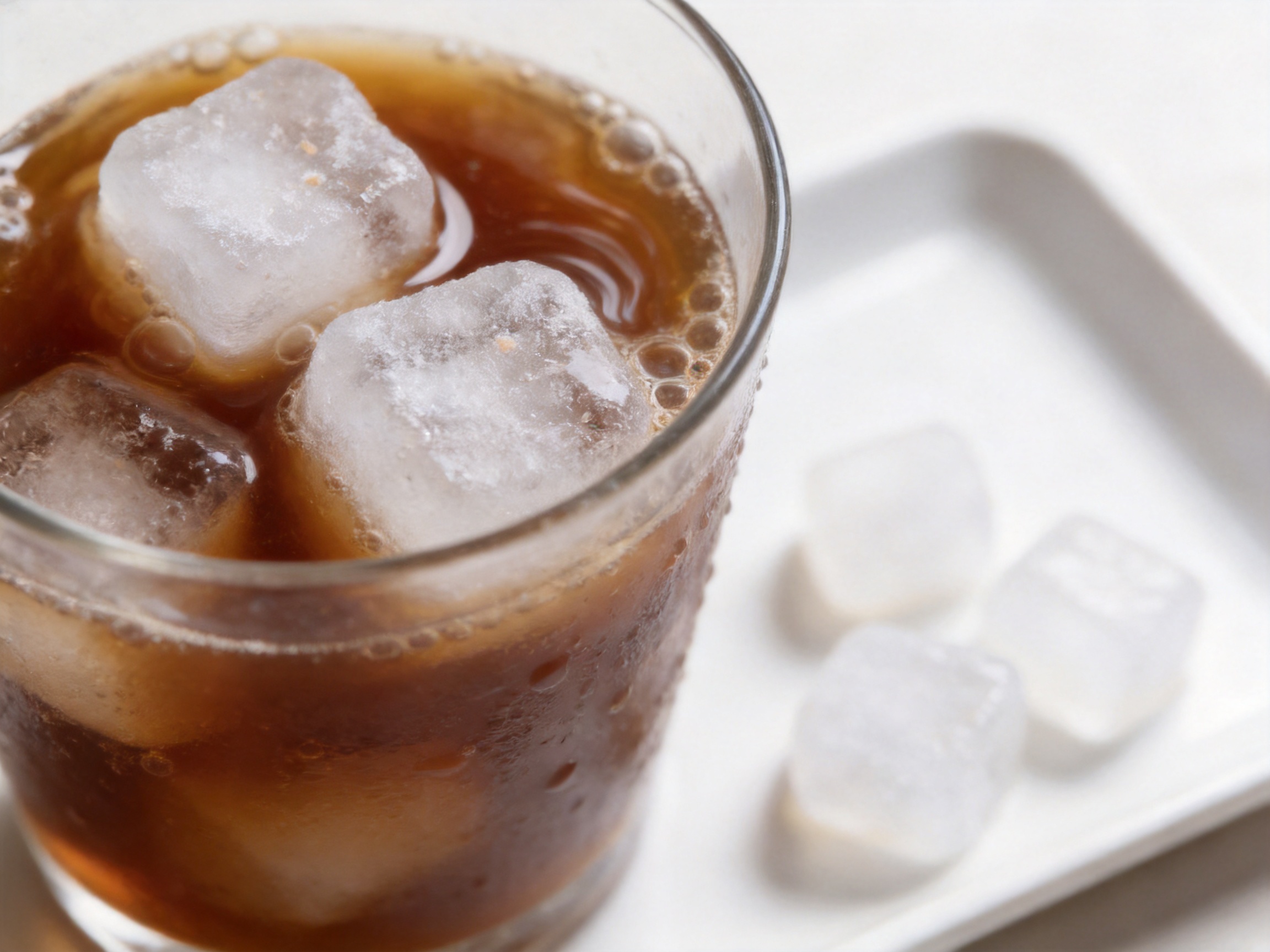
Crushed ice can appear similar to chewing ice at first glance, but the user experience is different. Crushed ice is usually made by breaking hard ice cubes into irregular fragments. These fragments can include sharp edges, uneven sizes, and rapid melting. It can become watery quickly and may not have the same soft, uniform bite.
Chewing ice is formed for texture rather than simply broken. Its softer structure provides a more consistent mouthfeel. It also scoops better and presents more cleanly in drinks. While crushed ice is useful for some cocktails and rapid chilling, chewing ice offers a balance of cooling, chewability, and beverage integration.
For families, consistency matters. A machine that produces a reliable chewing ice style allows users to repeat the same drink experience every day. Crushed ice made from freezer cubes can vary depending on cube hardness, crushing method, storage time, and freezer conditions. A dedicated chewing ice maker reduces that variability.
Manufacturing Foundation and Company Strength
Alien Technology Co., Ltd. is located in Zhouxiang Town, Cixi City, Zhejiang Province, an area known for small household appliance manufacturing and convenient logistics. This location gives the company access to a mature supply chain, skilled appliance manufacturing resources, and efficient transportation channels. For home appliances, these factors are important because product quality depends not only on design but also on stable component sourcing, precise assembly, and repeatable production control.
The company specializes in household appliances including ice makers, coffee machines, and air fryers. This product range reflects experience in temperature control, heating systems, airflow, refrigeration principles, electrical control, housing design, and user-oriented appliance engineering. A manufacturer that works across multiple appliance categories can apply broader design knowledge to improve usability and reliability.
The company’s mission emphasizes smart technology, simplifying life, and enhancing happiness. This mission aligns closely with the chewing ice maker’s purpose. The product is not merely a technical device; it is a lifestyle appliance that makes daily drinks more enjoyable. Humanized design, reliable quality, and intelligent technology are central principles for products that people use frequently at home.
Advanced Manufacturing Processes
A reliable chewing ice maker requires careful manufacturing at several stages. The refrigeration system must be assembled with precision, because cooling performance depends on stable compressor operation, properly formed tubing, correct refrigerant charging, and leak-free sealing. Even small inconsistencies can affect ice production, energy use, and long-term reliability. Advanced manufacturing therefore begins with process discipline.
In a strong appliance manufacturing environment, key processes typically include incoming material inspection, component matching, precision assembly, refrigeration circuit sealing, vacuuming, refrigerant charging, electrical safety testing, operational testing, appearance inspection, and packaging control. These steps help ensure that each unit leaving the production line meets functional and safety expectations.
For this product, the R600a refrigerant charge of 19g requires accurate charging equipment and trained handling. Refrigerant quantity must be controlled carefully to support cooling performance. Too little refrigerant can reduce ice-making efficiency, while too much can affect system balance. Proper sealing and leak detection are also essential. This highlights the importance of manufacturing expertise rather than simple assembly.
Electrical assembly is another important area. The product operates with 220V/60Hz power and includes refrigeration and control components. Wiring layout, insulation, grounding, switch reliability, and control board stability must be managed according to appliance manufacturing standards. A well-organized production process reduces the risk of loose connections, overheating, or inconsistent performance.
Quality Control and Reliability
Quality control is critical for home appliances because users expect safe, stable, and repeatable performance. A chewing ice maker must operate in a moist environment, involve refrigeration, and interact with water used for ice. Therefore, quality control must address electrical safety, water-contact materials, mechanical fit, cooling operation, and appearance.
Incoming material inspection helps verify that parts such as compressors, fans, control boards, housings, pumps, tubing, and seals meet specifications. During assembly, process checks help confirm that components are correctly installed. After assembly, functional testing can verify whether the machine cools properly, forms ice as intended, and operates without abnormal noise or vibration.
Leak testing is especially important for refrigeration appliances. A sealed refrigerant circuit must maintain pressure over time. Reliable sealing supports both performance and safety. Operational testing can also detect issues in compressor startup, cooling rate, fan airflow, and control response. Final inspection helps ensure that the machine is visually acceptable and properly packed for transportation.
Because the company pursues excellent quality, customer satisfaction, continuous improvement, and innovation, quality control should not be treated as a single final step. It is a continuous system. Feedback from users, distributors, and service teams can guide improvements in design, component selection, packaging, and instructions. This cycle supports long-term competitiveness.
Humanized Design for Daily Convenience
Humanized design means that a product should fit naturally into users’ daily lives. For a home chewing ice maker, this includes compact size, intuitive use, easy ice access, practical cleaning, and attractive placement. Users are more likely to enjoy an appliance when it does not create complexity. The best experience is simple: add water according to instructions, start the machine, and enjoy soft ice for drinks.
The product’s compact dimensions support placement in common home environments. Its focus on chewing ice supports a clear user need rather than trying to be too many things at once. This clarity is valuable. A specialized appliance should deliver its key function well. In this case, the function is soft, enjoyable ice that improves drinks and daily refreshment.
Ease of mixing and scooping further supports convenience. Users can prepare beverages quickly, serve guests easily, and enjoy ice directly if desired. In a busy household, small conveniences accumulate. A machine that reduces repeated trips to the store, saves freezer space, and improves drink quality can become part of daily routine.
Design Value for Coffee and Beverage Lovers
Iced coffee has become a daily habit for many consumers. However, making excellent iced coffee at home requires more than coffee beans and milk. Ice quality affects temperature, dilution, texture, and presentation. Chewing ice is especially suitable for iced coffee because it chills quickly and creates a café-style feel. It also holds coffee flavor as it softens, making the drink enjoyable until the end.
For espresso-based iced drinks, rapid cooling helps preserve flavor balance. For cold brew, chewing ice adds texture without requiring aggressive stirring. For milk coffee, the ice distributes evenly and helps create a creamy cold beverage experience. For flavored syrups and specialty drinks, the porous ice structure supports flavor integration.
Beverage lovers who enjoy soda, sparkling water, fruit tea, lemonade, or mocktails can also benefit. Chewing ice creates a fuller cup and a more refreshing sensation. It makes drinks look abundant and professional. For home entertaining, this can elevate simple ingredients into memorable beverages.
Applications Beyond Beverages
Although beverages are the main use, chewing ice can support other household needs. It can be used as a base for smoothies and slush-style drinks. Because it is softer than hard cubes, it can be easier to blend. It can be placed around chilled fruit bowls or dessert cups for presentation. It can support seafood or cold appetizer displays during short serving periods, provided food safety practices are followed.
For cold compress applications, chewing ice can conform to shapes better than large cubes when placed inside a proper bag or wrap. This makes it practical for temporary cooling needs. Users should avoid direct skin exposure for extended periods and should follow medical guidance where necessary. The key point is that the ice’s shape and softness make it adaptable.
Families may also use chewing ice for creative desserts. Fruit juice can be poured over the ice for a quick shaved ice-style treat. Syrups, milk, tea, or coffee can be combined with the ice for refreshing snacks. The machine therefore supports both everyday hydration and occasional creativity.
Competitive Positioning
In the home appliance market, competition often focuses on price, speed, capacity, and appearance. However, for chewing ice makers, texture is the central differentiator. A product that creates enjoyable soft ice offers a stronger lifestyle value than a generic ice maker that produces only hard shapes. Consumers who know and love chewing ice are usually looking for a specific experience, not just cold water in solid form.
This product’s advantages include its compact dimensions, soft ice purpose, efficient refrigeration specification, and support from a manufacturer experienced in small household appliances. Its use of R600a refrigerant, household power rating, and compact body position it for practical daily use. The company’s manufacturing background in appliances such as ice makers, coffee machines, and air fryers supports a broader understanding of consumer product expectations.
Compared with competitors that may focus only on low cost, this product can be presented around user experience: soft texture, rapid cooling, easy scooping, flavor infusion, and versatility. Compared with larger commercial machines, it is more accessible for home users. Compared with ordinary countertop ice makers, it provides a more desirable ice style. These points create a clear market identity.
Practical Use Recommendations
To achieve the best experience, users should place the machine on a stable, level surface with adequate ventilation. The appliance should be connected only to a matching power supply. Clean water should be used according to the instruction manual, and the machine should be cleaned regularly to maintain ice quality. Like any appliance that handles water, cleanliness affects taste and hygiene.
Users should avoid placing the machine near high heat sources, direct sunlight, or confined spaces where heat cannot dissipate. Refrigeration appliances need airflow to release heat. Good placement supports better performance and longer service life. The machine should also be allowed to stand appropriately after transport before operation if required by the manual, because refrigeration systems can be affected by movement.
Ice should be used fresh for the best texture. If stored for long periods in a freezer, chewing ice may harden or clump, reducing its signature softness. The strongest value of a home chewing ice maker is fresh production. Making ice shortly before use helps preserve the soft, enjoyable mouthfeel.
Safety and Environmental Considerations
Because the machine uses R600a refrigerant, it should be handled and serviced responsibly. R600a is efficient, but it is also flammable under certain conditions, as is common with this refrigerant class. Users should not attempt to puncture, modify, or repair the sealed refrigeration system by themselves. Service should be performed by qualified personnel where required.
Electrical safety is also important. The appliance should be kept away from excessive water exposure outside its intended water system. Users should not operate it with damaged cords or plugs. It should be unplugged before cleaning according to the product instructions. These basic safety habits support reliable use.
From an environmental perspective, efficient compact appliances can help reduce dependence on transported bagged ice, which often requires plastic packaging, freezer storage, and fuel for distribution. Producing ice at home can reduce some of these external steps. Responsible manufacturing, efficient refrigerant charging, and durable product design further contribute to better lifecycle value.

Company Capabilities and Customer Cooperation
Alien Technology Co., Ltd. combines a practical manufacturing location with a product focus on daily household appliances. Its address at No. 138, Huixiang'an Road, Zhouxiang Town, Cixi City, Zhejiang Province places it within a region known for appliance industry resources. This can support efficient procurement, production coordination, and shipment management.
The company welcomes cooperation with new and existing customers. For distributors, retailers, and business partners, a manufacturer with multiple appliance categories can provide valuable flexibility. Ice makers, coffee machines, and air fryers are all aligned with modern kitchen and lifestyle trends. This creates potential for product portfolios that serve consumers seeking convenience, health, and enjoyment at home.
The company’s philosophy of stable and pragmatic business development is also important. In appliance markets, long-term cooperation depends on consistency, communication, quality improvement, and reliable delivery. A product such as a chewing ice maker must satisfy end users repeatedly, and that requires manufacturing discipline behind the scenes.
Q&A Section
What is the main benefit of a home chewing ice maker?
The main benefit is that it produces soft, chewable ice at home. This ice is pleasant to bite, cools drinks quickly, mixes easily, and creates a premium beverage experience without requiring users to buy ice from stores or rely on hard freezer cubes.
How is chewing ice different from ordinary ice cubes?
Ordinary ice cubes are dense, hard, and slow to cool drinks. Chewing ice is smaller, softer, and more porous. It has more surface area, so it chills beverages faster and provides a satisfying texture that many users enjoy chewing.
Is this ice maker suitable for iced coffee?
Yes. Chewing ice is highly suitable for iced coffee because it cools coffee rapidly and gives the drink a café-style texture. It also holds some beverage flavor as it softens, helping the drink remain enjoyable through the final sips.
Can the ice be used for smoothies or shaved ice-style desserts?
Yes. The soft texture makes the ice useful as a base for smoothies, slush-style drinks, and simple shaved ice-style desserts. It can be mixed with fruit juice, syrup, milk tea, coffee, or other ingredients for creative refreshments.
What are the machine dimensions?
The machine dimensions are 224 x 333 x 325mm. This compact size makes it suitable for many countertops, beverage stations, small offices, and home kitchens.
What power supply does the product require?
The specified power supply is 220V/60Hz, with current and power listed as 0.55A/130W. Users should confirm local electrical compatibility before operation.
What refrigerant does the machine use?
The product uses R600a refrigerant with a 19g charge. R600a is widely used in compact refrigeration appliances because of its efficient cooling performance. The sealed refrigeration system should not be modified or repaired by unqualified users.
Does chewing ice melt faster than large cubes?
Because chewing ice has more surface area, it can cool drinks quickly and may soften faster than large dense cubes. This is part of its purpose. It is designed for rapid chilling, easy chewing, and beverage enjoyment rather than long-term ice storage.
How should users maintain good ice quality?
Users should use clean water, clean the machine regularly according to the instruction manual, keep the appliance in a ventilated location, and use the ice fresh when possible. Good cleaning habits help maintain taste and hygiene.
Why choose this product over a standard countertop ice maker?
The key reason is ice texture. Many countertop ice makers produce bullet ice, which is useful but not the same as soft chewing ice. This product is designed around the chewable ice experience, making it better for users who care about mouthfeel, rapid cooling, and premium drink presentation.
Conclusion
The Home Chewing Ice Maker brings a highly desirable ice experience into everyday life. Its soft, chewable ice is gentle, enjoyable, fast-chilling, and versatile. It improves iced coffee, soda, fruit tea, smoothies, desserts, and home entertaining. Compared with hard cubes, bullet ice, and irregular crushed ice, chewing ice offers a more satisfying balance of texture, cooling performance, flavor integration, and serving convenience.
The product’s compact dimensions, 220V/60Hz power specification, 130W power rating, and R600a refrigeration system position it as a practical home appliance. Its value is not limited to making drinks cold; it helps create a more enjoyable beverage lifestyle. For users who appreciate café-quality details at home, chewable ice can transform ordinary routines into refreshing moments.
Behind the product is Alien Technology Co., Ltd., a household appliance manufacturer located in Zhouxiang, Cixi City, Zhejiang Province. With experience in ice makers, coffee machines, and air fryers, the company combines appliance manufacturing knowledge with a mission of smart technology, simplified living, and enhanced happiness. Its focus on quality, customer satisfaction, continuous improvement, and practical cooperation supports the long-term value of the product.
For households, offices, small hospitality spaces, and beverage lovers, a dedicated chewing ice maker is a meaningful upgrade. It saves trips for specialty ice, reduces reliance on freezer trays, supports creative drinks, and provides the unique soft crunch that users love. In a market filled with ordinary ice solutions, this product stands out by focusing on what matters most: a better ice experience.
References
ASHRAE Handbook: Refrigeration, American Society of Heating, Refrigerating and Air-Conditioning Engineers.
International Electrotechnical Commission, Household and Similar Electrical Appliances Safety Standards.
Food and Beverage Ice Quality Guidance, Hospitality Equipment Design and Operation Literature.
Modern Refrigeration and Air Conditioning, Goodheart-Willcox Technical Publications.
Principles of Food Service Equipment Design, Commercial and Household Appliance Engineering References.