
 English
 한국어
한국어 Español
 Deutsch
Soft chewing ice has moved from restaurants, cafes, salad bars, and beverage counters into the modern home, and the Home Chewing Ice Maker described here is designed to make that transition simple, reliable, and enjoyable. Built for families, beverage lovers, entertaining hosts, home coffee enthusiasts, and anyone who appreciates the satisfying texture of chewable ice, this compact appliance creates a refreshing ice experience that ordinary hard cube makers cannot match. Its purpose is not only to freeze water, but to create a daily convenience: gentle, soft, quickly cooling ice that blends beautifully with drinks and adapts to many household uses.
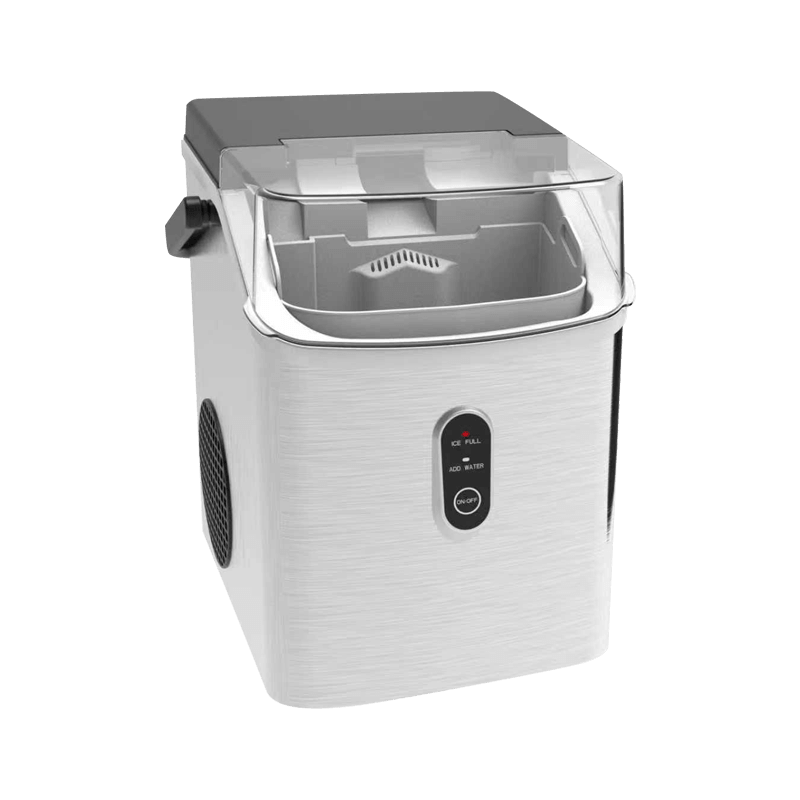
The product is a home chewing ice maker with the model description Alien-ZJ01. It belongs to the chewing ice maker category and is designed for household use, with a compact machine size of 224 x 333 x 325 mm. It operates with a 220V/60Hz power supply, a current and power rating of 0.55A/130W, and uses R600a refrigerant with a 19 g charge. These specifications point to a home appliance intended to balance performance, space efficiency, and practical daily operation.
Unlike traditional cube ice machines that produce dense, hard ice blocks, this machine focuses on soft-textured chewing ice. Chewing ice is valued because it is gentle on teeth, easy to scoop, pleasant to chew, and highly effective at cooling drinks quickly. Its small particle structure gives it a large contact area, allowing beverages such as iced coffee, soda, sparkling water, juice, tea, cocktails, and smoothies to chill rapidly and evenly. For many users, the experience is more important than the ice itself: the light crunch, the refreshing mouthfeel, and the way the ice absorbs and carries beverage flavor create a premium drinking experience at home.
Understanding the Value of Chewing Ice
Chewing ice is often called nugget ice, pellet ice, or soft ice, but its appeal is best understood through the way it feels and performs. Standard ice cubes are typically hard and slow to melt because they are solid, dense, and large. That can be useful for certain drinks, but it is not always ideal when users want immediate cooling, easy chewing, or smooth blending. Chewing ice, by contrast, is designed around texture, contact, and flexibility. It cools quickly, interacts well with flavors, and provides a satisfying sensory experience that has made it popular in food service and medical comfort applications.
The first major advantage is its soft texture. Many people enjoy chewing ice, but conventional ice cubes can be too hard, potentially uncomfortable, and sometimes risky for teeth if bitten aggressively. Soft chewing ice reduces that issue because it has a more delicate structure. It breaks apart more easily and feels lighter in the mouth. This quality is especially valuable for households where ice is used frequently in soft drinks, coffee beverages, hydration cups, and casual snacking.
The second advantage is rapid cooling. Because the particles are smaller and less dense than large cubes, chewing ice has more surface area in contact with the drink. This allows heat transfer to happen quickly. When placed in iced coffee, for example, the ice can reduce the beverage temperature efficiently without requiring long waiting time. For sodas and sparkling drinks, the fast chill enhances crispness. For fruit beverages and teas, it creates a refreshing serving temperature almost immediately.
The third advantage is flavor infusion. Chewing ice does not simply sit in a drink; it interacts with it. Its porous, soft texture can hold beverage flavor, making the ice itself enjoyable as it gradually absorbs coffee, fruit juice, soda, or tea. This makes the last sip of a drink more pleasant and helps create the “drink and chew” experience that many users seek. In smoothies, slush-style drinks, and shaved-ice-inspired desserts, the soft structure makes blending and mixing easier.
The fourth advantage is versatility. Chewing ice can be used for beverages, cold food displays, seafood cooling, salad bar presentation, cold compresses, and dessert preparation. In the home, it can support everything from morning iced coffee to evening entertaining. In small commercial or semi-commercial scenarios, the same ice style can improve presentation and customer experience. Its ability to conform around items also makes it useful when cooling irregular shapes or surrounding serving trays.
Product Overview
The Home Chewing Ice Maker is created for people who want restaurant-style soft ice without relying on store-bought bags or large commercial equipment. It is compact enough for household placement while offering the kind of ice that improves daily drink preparation. At 224 x 333 x 325 mm, the machine is sized to fit into kitchens, beverage corners, pantry counters, office refreshment areas, and entertainment spaces where a full-size ice system would be impractical.
The design intention is convenience. Users can make soft chewing ice when needed instead of planning around freezer trays or purchasing ice externally. This reduces preparation time, saves freezer space, and provides a fresher ice supply. Freshly made chewing ice also avoids common issues associated with stored freezer ice, such as odor absorption, clumping, and dull texture. For households that care about beverage quality, fresh ice is not a small detail; it is an important part of the final taste and experience.
The product’s power rating of 130W reflects a practical household appliance profile. It is powerful enough to support ice production while remaining suitable for daily domestic operation. The use of R600a refrigerant aligns with modern refrigeration trends that favor efficient refrigerant solutions. The specified 19 g refrigerant charge supports compact cooling performance while helping maintain a small appliance footprint.
Its category positioning as a chewing ice maker is important. Many countertop ice makers produce bullet ice, which is useful but different. Bullet ice has a hollow center and a harder surface. It cools drinks effectively, but it does not provide the same soft chew or flavor-holding character. This product is designed for a different user expectation: the desire for soft, scoopable, chewable ice. That clear specialization gives it an advantage over generic countertop ice machines.
Item |
Specification |
User Benefit |
Product Type |
Home Chewing Ice Maker |
Creates soft ice for beverages, snacks, desserts, and cooling applications. |
Power Supply |
220V/60Hz |
Designed for household electrical use in compatible regions. |
Current and Power |
0.55A/130W |
Balances ice-making performance with practical home energy demand. |
Refrigerant and Charge |
R600a/19g |
Supports compact refrigeration performance in a small appliance design. |
Machine Dimensions |
224 x 333 x 325 mm |
Compact footprint for kitchens, counters, offices, and beverage stations. |
Ice Style |
Soft chewing ice |
Gentle texture, fast cooling, easy mixing, and satisfying chew. |
Advantages Over Ordinary Countertop Ice Makers
Many countertop ice makers are marketed as convenient, but convenience alone does not define a premium ice experience. The difference lies in the type of ice, how it performs in real drinks, and how often users actually want to use it. Ordinary machines often produce bullet-shaped ice. Bullet ice can be made quickly, but it is usually harder, less chewable, and less effective for creating the specific mouthfeel many people associate with cafe-style drinks. The Home Chewing Ice Maker stands apart by focusing on soft chewing ice, which changes the experience from simple cooling to enjoyable refreshment.
The most obvious competitive advantage is texture. A user who wants chewable ice will not be satisfied with standard hard cubes or bullet ice. The softer structure is the core benefit. It is gentle, satisfying, and easy to enjoy. This makes the machine appealing not only to people who drink cold beverages, but also to those who treat ice as part of the drinking ritual. For many users, chewing ice is a comfort habit and a sensory pleasure. A product that delivers this texture at home provides value beyond basic refrigeration.
A second advantage is drink compatibility. Hard ice cubes can be too large for insulated cups, narrow glasses, or blended beverages. Chewing ice is easier to scoop and distribute. It fills spaces more evenly, surrounds liquid more completely, and helps keep beverages consistently cold. In iced coffee, it supports an attractive cafe-style presentation. In carbonated drinks, it enhances coldness without requiring large cubes. In juices and teas, it offers a refreshing texture that makes the drink feel more complete.
A third advantage is speed of cooling. Because chewing ice has a greater surface contact area, it can bring beverages to a cold serving temperature faster. This matters in daily life. If a user brews coffee and wants iced coffee quickly, soft ice can reduce the wait. If guests arrive and drinks need to be chilled, the ice can help create a fast, consistent result. For families, this turns ordinary drink preparation into a smoother routine.
A fourth advantage is versatility beyond beverages. While standard ice cubes are primarily used in drinks, chewing ice can coat, surround, and conform. It can support cold serving trays, seafood display, fruit presentation, salad cooling, and cold compress use. The product’s value therefore extends to entertaining, food preparation, and comfort care. A household appliance becomes more worthwhile when it serves multiple needs.
A fifth advantage is ease of mixing. Soft ice is easier to scoop with a spoon and easier to combine with other ingredients. This is useful for smoothies, mocktails, crushed ice drinks, slush-style beverages, and shaved-ice-inspired desserts. Users do not need to crush hard cubes manually or risk damaging a blender with dense ice. The machine provides a more suitable starting point for frozen drink creativity.
Everyday Beverage Applications
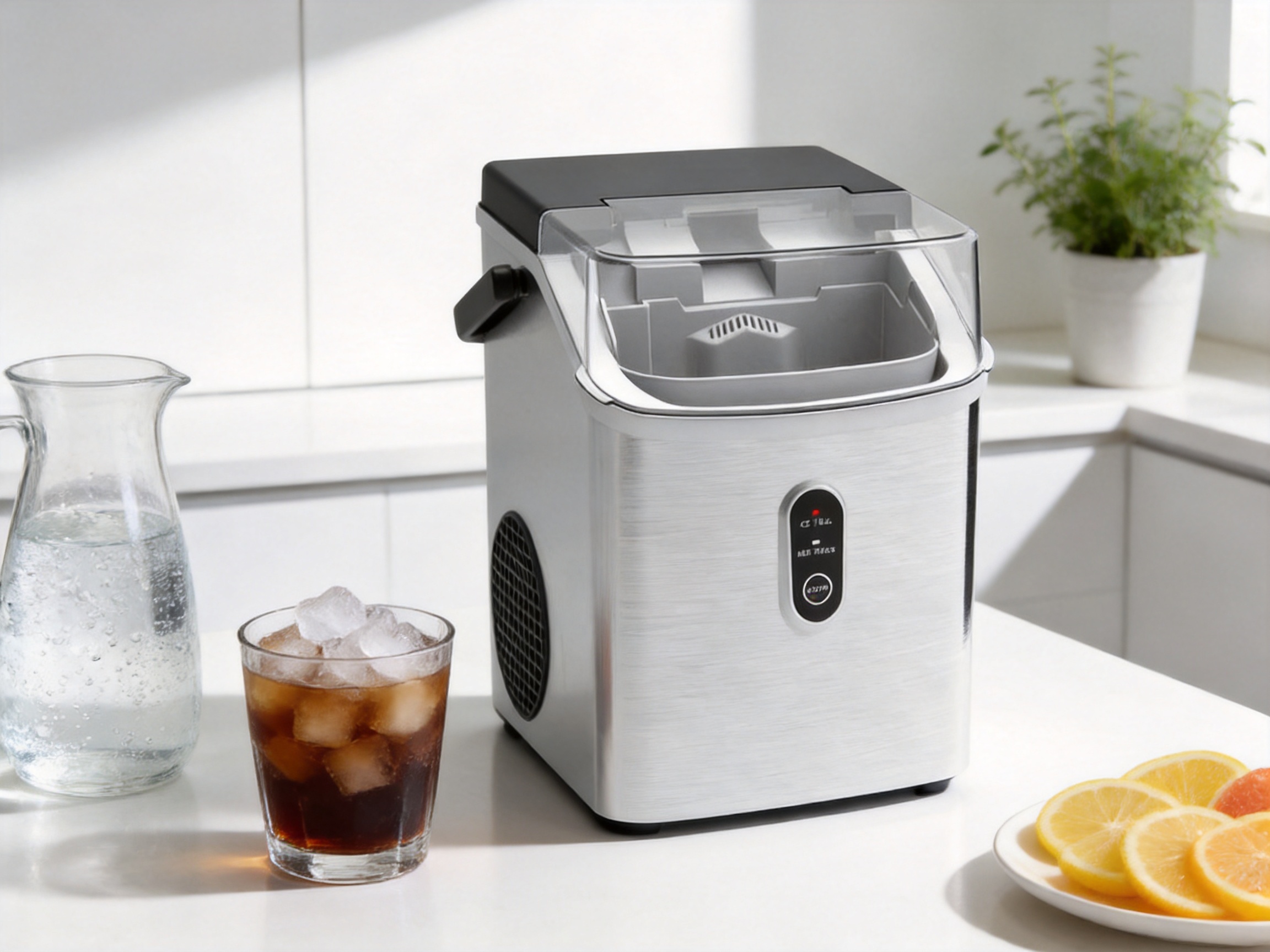
The Home Chewing Ice Maker is especially attractive for people who enjoy iced coffee. Iced coffee depends heavily on ice quality. If the ice is too large and slow to cool, the beverage may remain lukewarm for too long. If the ice is too hard and dense, it may not create the desired cafe-style feel. Chewing ice cools coffee rapidly and blends into the drink visually and texturally. It works with cold brew, espresso over ice, milk coffee, flavored lattes, and coffee-based desserts.
For soda and sparkling water, chewing ice provides a crisp and refreshing result. The small pieces chill the drink quickly and make each sip feel colder. The texture also enhances the sensory effect of carbonation. Many users prefer soft ice in soft drinks because it turns a simple beverage into a more enjoyable experience. The ice becomes part of the drink instead of merely a cooling tool.
Tea lovers can also benefit. Iced green tea, black tea, fruit tea, milk tea, lemon tea, and herbal drinks all pair well with soft chewing ice. The ice cools the tea quickly and can hold subtle flavors as it melts. In fruit teas, the small ice pieces mix well with fruit slices and syrups. In milk tea, the texture complements tapioca pearls, jellies, and other add-ins.
For juice and fruit beverages, chewing ice supports freshness. Orange juice, lemonade, watermelon juice, grape juice, and blended fruit drinks become more refreshing with soft ice. The ice helps moderate sweetness and keeps the drink pleasant during warm weather. It is also useful for hydration drinks after exercise, outdoor work, or family activities.
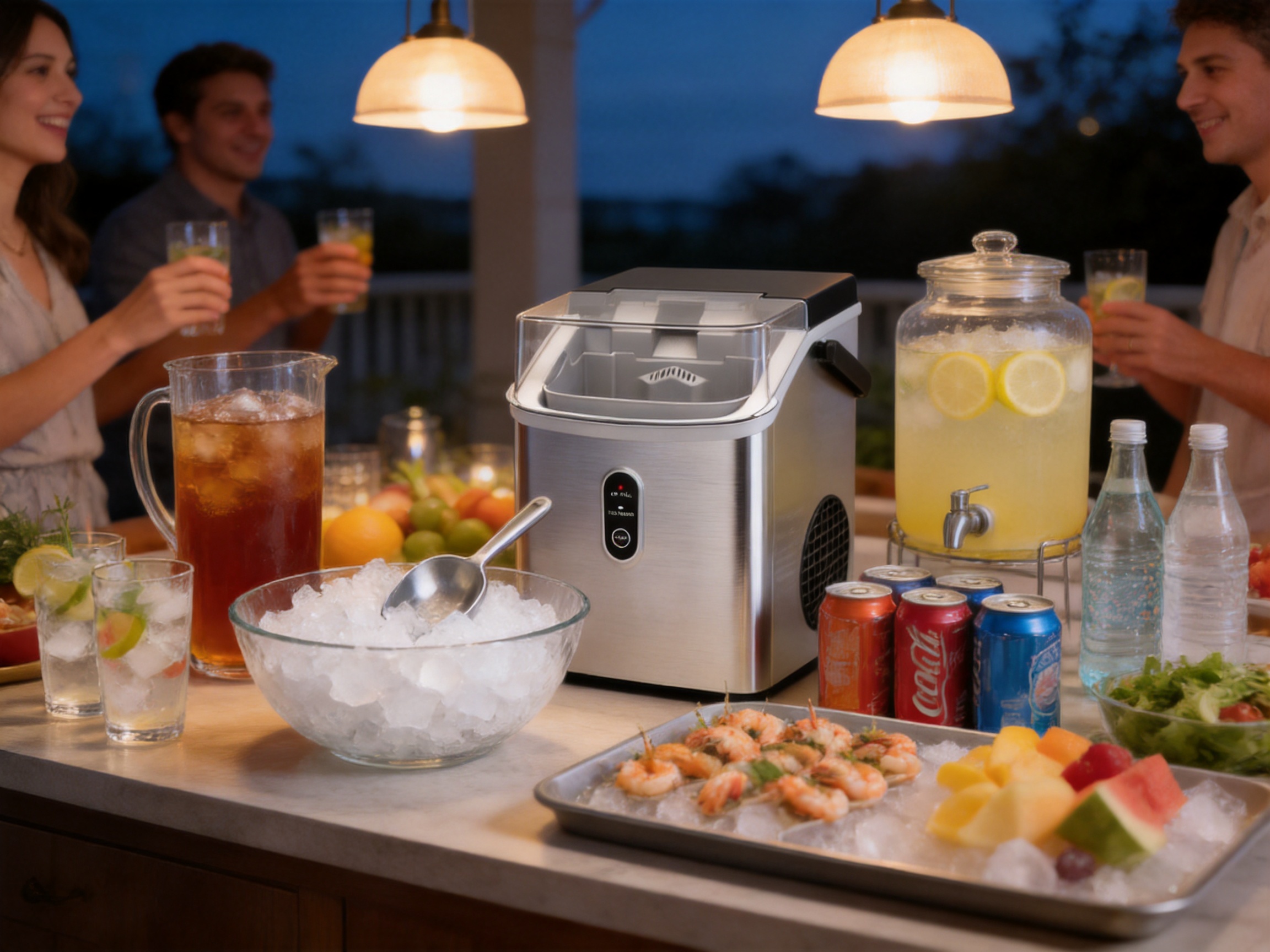
For entertaining, the machine supports a more polished serving experience. Guests notice ice quality, especially when drinks are served in clear glasses or special cups. A bowl of soft chewing ice at a home gathering can elevate the beverage station. It allows guests to build their own drinks, add ice easily, and enjoy a restaurant-like texture. This can be valuable for parties, barbecues, family celebrations, weekend brunches, and casual evenings.
Food Presentation and Cooling Uses
Chewing ice is not limited to cups. Its ability to coat and conform makes it useful for food presentation. In professional food service, small ice particles are often preferred for salad bars, seafood displays, oysters, sashimi, and chilled produce because they surround items evenly and create a clean visual effect. In a home setting, the same principle can improve serving trays and special meals.
For seafood, soft ice can help create an attractive chilled display. It can be spread across a tray and used to support shrimp, oysters, crab, or other cold items. Because the ice particles are small and easy to arrange, the presentation looks more refined than large irregular cubes. The ice can fill gaps and hold items in place while keeping them cold during serving.
For salads and vegetables, chewing ice can support freshness during preparation or presentation. It can be used under bowls, around containers, or as a cooling base for outdoor service. When hosting guests in warm weather, maintaining food temperature becomes important. A supply of soft ice gives the host more control and flexibility.
For desserts, soft ice provides a base for homemade shaved-ice-style treats, fruit bowls, syrups, and frozen drinks. While it is not identical to finely shaved ice, its chewable texture makes it excellent for casual desserts. Users can combine it with fruit, condensed milk, flavored syrups, yogurt, or tea-based toppings. Children and adults can both enjoy the creative possibilities.
For cold compress use, the shape and softness of chewing ice are practical. Because the small pieces conform more easily to body contours, they can be placed in a suitable bag or wrap for cooling knees, elbows, shoulders, or other areas. The soft structure helps distribute cold contact more evenly than a few large cubes. Users should always apply cold therapy safely, with a protective layer and appropriate time limits, but the physical form of the ice is well suited to this application.
Compact Design for Modern Homes
Space efficiency is a major concern for home appliances. Many households already have coffee machines, air fryers, kettles, blenders, toasters, water filters, and other countertop devices. A successful ice maker must therefore provide meaningful value without occupying excessive space. With dimensions of 224 x 333 x 325 mm, this Home Chewing Ice Maker is built around a compact profile that suits modern kitchens and beverage stations.
The narrow width helps it fit into limited counter areas. The depth and height are also practical for placement under cabinets in many settings, although users should always allow appropriate ventilation based on appliance use. The compact body makes it suitable for apartments, small homes, offices, break rooms, dormitory-style living areas where permitted, and recreational spaces.
A compact ice maker also supports lifestyle flexibility. It can be positioned near a coffee corner for daily iced coffee. It can be placed in an entertainment room for parties. It can support an office refreshment area where employees want cold drinks. It can also be stored when not in use, depending on household habits. The product’s size makes it less intimidating than large built-in systems and more specialized than simple ice trays.
From a design standpoint, the compactness also reflects manufacturing discipline. Small appliances require careful internal arrangement. Refrigeration components, water handling areas, insulation, airflow, controls, and exterior structure must work together within a limited volume. A product that delivers chewing ice in a compact footprint depends on thoughtful engineering and practical production control.
Manufacturing Strength and Industrial Background
The manufacturer, Alien Technology Co., Ltd., is located in Zhouxiang Town, Cixi City, Zhejiang Province, an area known as a hub for small household appliances and convenient logistics. This industrial environment is important because appliance manufacturing benefits from proximity to parts suppliers, experienced workers, tooling resources, logistics services, and production knowledge. A company operating in such a location can develop products with better coordination between design, sourcing, assembly, and shipment.
The company specializes in household appliances such as ice makers, coffee machines, and air fryers. This range shows familiarity with products that combine heating, cooling, airflow, water contact, food-related use, electronic control, and user-friendly design. Ice makers require refrigeration expertise, coffee machines require water path and temperature management, and air fryers require thermal airflow control. Experience across these categories supports broader appliance engineering capability.
The company’s mission, “Smart Technology, Simplifying Life, Enhancing Happiness,” is reflected in the product’s purpose. A chewing ice maker simplifies life by removing the need to buy ice or rely on freezer trays. It enhances happiness by improving everyday drinks and social occasions. Smart technology, in this context, means designing appliances that meet real household behavior rather than adding complexity for its own sake.
Manufacturing strength is not only about equipment; it is about process culture. The company emphasizes excellent quality, customer satisfaction, continuous improvement, innovation, and a stable, pragmatic business philosophy. For a household ice maker, these values matter. Users expect a machine that performs consistently, fits naturally into daily life, and is supported by a manufacturer that understands long-term quality rather than short-term appearance alone.
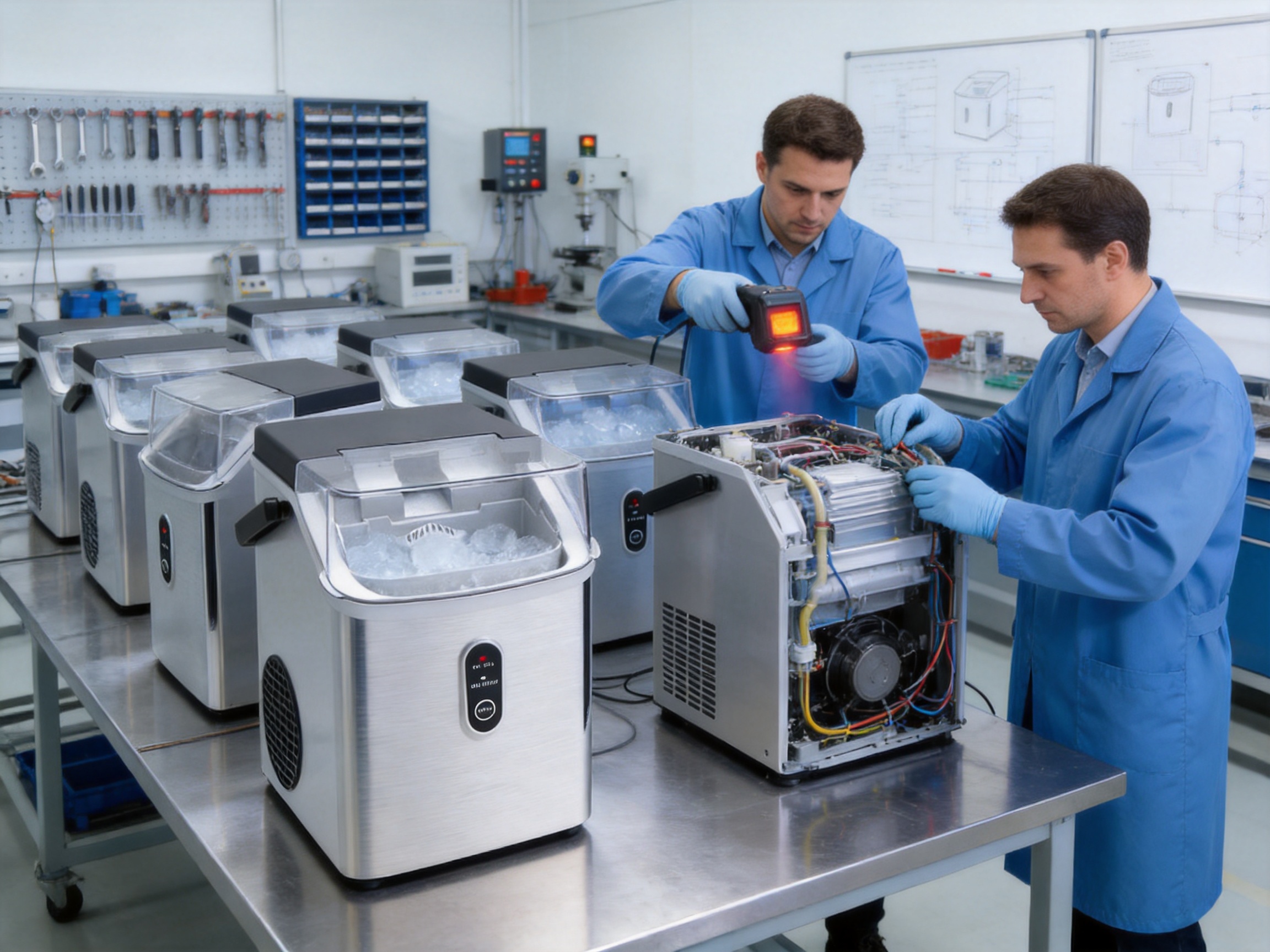
Advanced manufacturing for a compact ice maker typically includes controlled component procurement, precision plastic parts, refrigeration system assembly, leak prevention discipline, electrical safety checks, functional testing, and packaging verification. While the exact factory process may vary by production batch and model configuration, the essential strength lies in integrating multiple technical areas into one dependable appliance. The product must manage water, cold surfaces, moving components, insulation, and user interaction in a compact structure. That requires practical engineering experience and a mature production mindset.
Process Quality Behind a Better Ice Maker
A chewing ice maker may appear simple from the outside, but its internal quality depends on many process decisions. The cooling system must remove heat efficiently. The water-contact parts must be suitable for repeated use. The machine body must be assembled securely. The electrical system must support stable operation. The user interface must be intuitive. Each of these elements depends on manufacturing control.
Incoming material inspection is an important foundation. Components such as plastic housings, refrigeration parts, wiring, seals, motors, pumps, and fasteners must meet design requirements before assembly. If a seal is inconsistent, water handling may be affected. If a plastic part is poorly molded, fit and appearance may suffer. If electrical components vary too widely, product stability may decline. A disciplined manufacturer reduces these risks through supplier management and inspection procedures.
Precision assembly is also vital. Compact appliances leave little room for misalignment. Internal parts must fit properly, airflow paths must remain clear, and water systems must be positioned correctly. In ice makers, assembly quality affects cooling efficiency, noise control, durability, and user satisfaction. A company with small-appliance experience can apply practical assembly knowledge from related categories to improve consistency.
Refrigeration process control is especially important. The product uses R600a refrigerant with a specified charge of 19 g. Refrigerant charging must be controlled carefully because too little or too much refrigerant can affect performance. Proper sealing, leak prevention, and system cleanliness contribute to reliable cooling. This is one of the areas where manufacturing expertise directly affects user experience.
Functional testing helps confirm that the machine performs as intended before shipment. For an ice maker, testing may include power-on checks, cooling function verification, water movement observation, operating sound assessment, control response, and appearance inspection. These steps help ensure that the product received by the customer reflects the intended design.
Packaging is another practical manufacturing strength. Household appliances travel through warehouses, trucks, containers, and delivery networks. A compact ice maker must be protected from vibration, impact, and surface damage. Good packaging design supports product quality all the way to the user’s home. The company’s location in a region with convenient logistics further supports efficient distribution and cooperation with customers.
Why Soft Ice Improves the Home Coffee Experience
Coffee culture has changed household appliance expectations. Many users now own espresso machines, grinders, milk frothers, pour-over tools, and cold brew equipment. Ice quality is the next important step. A carefully brewed coffee can lose its appeal if poured over poor ice. Hard freezer cubes may carry odors, crack unpredictably, or cool unevenly. Soft chewing ice creates a more controlled and enjoyable iced coffee experience.
When hot espresso is poured over chewing ice, the large contact area cools it quickly. This helps preserve aromatic balance and reduces the time the coffee spends at a warm intermediate temperature. When cold brew is served over chewing ice, the texture gives the drink a cafe-style finish. When milk and syrup are added, the ice helps mix the drink and holds flavor as it melts.
For flavored coffee beverages, chewing ice is especially effective. Vanilla, caramel, mocha, hazelnut, fruit syrups, and milk foam all interact nicely with small ice pieces. The drink feels layered but still easy to stir. The ice is not an obstacle; it is an ingredient. This changes the way users think about home coffee preparation.
For users who enjoy reusable tumblers, chewing ice also fills the cup efficiently. Large cubes may leave empty spaces, while small ice pieces distribute more evenly. This can help maintain a consistent cold temperature during commuting, working, studying, or relaxing. The ability to scoop ice easily also makes daily preparation faster.
Healthier and More Convenient Hydration Habits
A good ice maker can encourage better hydration. Many people drink more water when it is cold and enjoyable. Soft chewing ice adds texture to plain water, sparkling water, lemon water, fruit-infused water, and electrolyte drinks. The simple pleasure of chewable ice can make hydration feel less like a task and more like a habit.
Families can use the machine to support healthier beverage routines. Instead of relying only on sugary packaged drinks, users can prepare cold water with fruit slices, unsweetened tea, light juice blends, or homemade sparkling beverages. Chewing ice makes these drinks more appealing. It can also help children and adults enjoy cold beverages without needing complicated recipes.
For people who work from home, a soft ice supply can improve daily comfort. A cup of iced water or cold coffee within reach can make long work sessions more pleasant. For people who exercise, cold hydration after activity is refreshing. For warm climates or summer months, the appliance becomes even more valuable.
The convenience factor is central. Freezer trays require planning and can be slow. Bagged ice requires shopping and storage. Refrigerator ice dispensers may produce hard cubes and may not provide the desired texture. A dedicated chewing ice maker gives users control over the kind of ice they actually prefer.
Practical Use in Home Entertaining
Entertaining is one of the strongest use cases for a home chewing ice maker. Drinks are central to hospitality, whether the occasion is a family dinner, birthday party, weekend brunch, barbecue, holiday gathering, or casual visit with friends. Ice availability and quality can affect the entire experience. Running out of ice is inconvenient, and serving low-quality ice can make drinks feel ordinary. A dedicated machine helps hosts prepare with confidence.
Soft chewing ice is easy for guests to use. It can be placed in a serving container with a scoop, allowing people to fill cups as needed. It works with many drink types, so the host does not need different ice for different beverages. Lemonade, soda, iced tea, coffee, mocktails, cocktails, fruit punch, and sparkling water can all be served with the same soft ice style.
The appearance also matters. A container of small, bright ice particles gives a beverage station a clean and inviting look. It suggests care and attention to detail. Guests often notice the difference immediately, especially if they associate chewing ice with restaurants or specialty drink shops. This small detail can make the home feel more welcoming and better prepared.
For outdoor entertaining, soft ice is useful for both drinks and chilled food support. It can fill beverage buckets, surround bottles, or help maintain serving temperature for certain cold dishes. Because it is easy to distribute, the host can use it flexibly throughout the event.
Comparison With Store-Bought Ice
Store-bought ice can be useful in emergencies or for large events, but it has limitations. It requires a trip to the store, takes up freezer space, and may not have the desired texture. It can also clump during storage and transportation. Most importantly, bagged ice is usually not soft chewing ice. It is often hard cube ice or irregular ice pieces designed for general cooling rather than eating enjoyment.
A home chewing ice maker offers freshness and control. Users know when the ice was made and can use clean water according to their own household standards. They do not need to carry heavy bags or worry about freezer odors. They also do not need to compromise on texture. The machine creates ice that is aligned with the user’s preference.
Over time, the convenience becomes part of the household routine. Instead of thinking about ice as something to buy or prepare far in advance, users can treat it as an available daily resource. This is especially useful for people who drink iced beverages regularly. The more frequently chewing ice is used, the more valuable the appliance becomes.
Comparison With Refrigerator Ice Dispensers
Many refrigerators include ice dispensers, but they are not always ideal. Refrigerator ice is often hard, large, and stored for extended periods. It may absorb odors from the freezer, and dispenser systems can be inconvenient to clean. The texture is usually designed for basic cooling rather than chewing. Users who specifically want soft ice may find refrigerator cubes unsatisfying.
A dedicated chewing ice maker solves a different problem. It is not merely a backup source of ice; it is a texture-focused appliance. It produces the kind of ice that beverage enthusiasts actively prefer. It can be placed where drinks are made, reducing trips to the refrigerator. It also supports entertaining by creating a visible ice station.
Another advantage is specialization. A refrigerator must perform many tasks: preserving food, freezing items, dispensing water, and making ice. A dedicated appliance can focus on producing the desired ice style. For users who value soft chewing ice, that specialization is a strong reason to choose this machine over relying only on refrigerator ice.
Design Philosophy: Simple Use, Better Experience
The best household appliances are not necessarily the most complicated. They are the ones that solve a real problem in a way that feels natural. The Home Chewing Ice Maker follows that philosophy by focusing on a clear benefit: making soft, enjoyable ice accessible at home. Its value is easy to understand from the first use. Fill, make, scoop, enjoy. The result is immediate and practical.
The product also supports emotional satisfaction. Small comforts matter in daily life. A cold drink after work, a refreshing coffee in the morning, a well-prepared beverage for a guest, or a chilled fruit drink on a hot afternoon can improve the mood of a household. Chewing ice adds delight to these moments. It turns simple drinks into something more memorable.
The company’s broader mission of simplifying life and enhancing happiness fits this design approach. The appliance does not ask users to change their lifestyle dramatically. Instead, it improves habits they already have. People already drink water, coffee, soda, tea, and juice. This machine improves those experiences with better ice.
Reliability Considerations for Household Appliances
Reliability is one of the most important qualities in an ice maker. Because the machine deals with water and refrigeration, users expect stable performance and practical maintenance. Manufacturing quality, component selection, and process discipline all contribute to long-term satisfaction. A machine that looks attractive but lacks reliable internal quality will not meet household expectations.
The product’s compact structure must be balanced with durability. Internal components need to tolerate repeated thermal cycles and daily use. Water-contact areas must be designed for practical cleaning. Exterior surfaces should handle normal kitchen conditions. Electrical and refrigeration systems must work together safely and consistently.
A manufacturer experienced in multiple household appliance categories brings useful knowledge to this challenge. Ice makers, coffee machines, and air fryers are different products, but all require attention to user safety, performance consistency, and assembly quality. Cross-category experience can strengthen design judgment and production discipline.
Customer satisfaction also depends on practical communication and cooperation. Alien Technology Co., Ltd. welcomes new and existing customers to contact them for business cooperation, reflecting an outward-facing approach to market needs. For distributors, retailers, and business partners, a manufacturer that understands cooperation and continuous improvement is valuable. For end users, that same mindset can translate into better products over time.
Environmental and Efficiency Perspective
The use of R600a refrigerant is noteworthy because it is widely used in modern refrigeration appliances. It supports efficient refrigeration performance and is common in compact cooling systems. In a small household appliance, refrigerant selection, charge control, and system design all influence performance. The specified 19 g charge reflects a compact system approach suitable for the appliance size.
Energy use is another practical consideration. With a rated power of 130W, the machine is positioned as a household appliance rather than a large commercial unit. Users should operate it according to instructions and regional electrical compatibility, but the rating indicates a design intended for home convenience. The balance between power and ice performance is central to product usability.
Making ice at home can also reduce certain inconveniences associated with bagged ice, such as plastic packaging and transportation trips. While the overall environmental impact depends on user behavior, local energy sources, water quality, and usage patterns, a home appliance can support a more controlled and potentially less wasteful routine for frequent users.
Business and Distribution Potential
From a business perspective, soft chewing ice is a strong product category because it connects with multiple consumer trends. Home coffee culture is growing. Countertop appliances are increasingly accepted. Consumers want restaurant-style experiences at home. Families are investing in convenience products that improve daily routines. A compact chewing ice maker sits directly at the intersection of these trends.
Retailers can position the product as a premium refreshment appliance rather than a generic ice maker. The selling point is not only that it makes ice, but that it makes the right kind of ice. Demonstrations can be especially effective because the texture difference is easy to feel and hear. Once consumers chew the ice or taste a drink made with it, the advantage becomes clear.
Distributors can also highlight the manufacturer’s location and appliance specialization. Being based in a small household appliance hub with convenient logistics can support supply chain efficiency and product category expansion. The company’s experience with ice makers, coffee machines, and air fryers provides a foundation for broader cooperation. For buyers seeking a supplier with practical manufacturing capability, this background matters.
The product can be marketed to households, small offices, home cafes, hospitality spaces, beverage enthusiasts, and gift buyers. It is suitable for seasonal promotions during summer, holiday entertaining campaigns, coffee accessory bundles, and kitchen appliance collections. Its compact size makes it easier to ship and display than larger ice systems.
User Experience From First Setup to Daily Routine
A successful appliance must fit into daily behavior. The Home Chewing Ice Maker is designed to become part of ordinary routines: morning coffee, afternoon hydration, evening drinks, weekend gatherings, and occasional food presentation. The user does not need to be a professional barista or host to appreciate the result. The product creates value through repetition. Each use reinforces the convenience of having soft ice available.
First-time users often notice the texture before anything else. The ice is softer than expected, easier to chew, and more pleasant in the mouth. The second impression is usually the cooling speed. Drinks become cold quickly, especially compared with large cubes. The third impression is versatility. Once users realize the ice works in coffee, tea, soda, water, juice, and desserts, it becomes a regular part of the kitchen.
Daily use also encourages creativity. Users may start by making iced coffee, then try fruit teas, lemonade, smoothies, cold brew floats, flavored sparkling water, or dessert bowls. Families may create signature drinks. Hosts may build drink stations. Office users may make hydration more enjoyable. This creative flexibility makes the appliance more engaging than a single-purpose gadget.
Care, Placement, and Practical Operation Tips
To get the best experience from a home chewing ice maker, users should place it on a stable, level surface with adequate space for ventilation. Like all cooling appliances, airflow matters. Proper placement can support performance and longevity. The machine should be used with a compatible power supply based on its rating, and users should follow the operating guidance provided with the product.
Water quality affects ice quality. Clean, fresh water generally produces better-tasting ice. If local water has strong mineral taste or odor, users may prefer filtered water according to household preference. Since chewing ice is often eaten directly, taste matters more than it might with ice used only for cooling.
Regular cleaning is also important. Any appliance that handles water should be kept clean to maintain freshness and hygiene. Users should empty unused water as recommended, wipe accessible surfaces, and follow cleaning intervals. Good maintenance helps preserve the pleasant taste and texture of the ice.
For best drink results, users can match ice quantity to beverage style. A full cup of chewing ice is ideal for soda, iced coffee, and sparkling water. A moderate amount may be better for juice or tea if the user wants slower dilution. For smoothies and slush-style drinks, the ice can be added gradually to reach the preferred texture.
Frequently Asked Questions
What makes chewing ice different from ordinary ice cubes?
Chewing ice is softer, smaller, and easier to chew than ordinary hard cubes. It has a pleasant texture and a large surface contact area, allowing it to cool drinks quickly and absorb beverage flavor more effectively.
Is this product only for beverages?
No. While beverages are the most common use, soft chewing ice can also support food presentation, seafood cooling, salad bar-style displays, dessert preparation, smoothies, shaved-ice-inspired treats, and cold compress applications when used safely.
Why is soft ice better for iced coffee?
Soft ice cools coffee quickly and creates a cafe-style texture. It mixes well with milk, syrup, and cold brew, and it can hold coffee flavor as it melts. This makes the drink more enjoyable from the first sip to the last.
How compact is the machine?
The machine dimensions are 224 x 333 x 325 mm, making it suitable for many kitchen counters, beverage stations, offices, and home entertainment spaces where a large ice system would be impractical.
What are the electrical specifications?
The product is specified for a 220V/60Hz power supply, with a current and power rating of 0.55A/130W. Users should ensure compatibility with their local electrical environment and follow product instructions.
What refrigerant does the machine use?
The machine uses R600a refrigerant with a 19 g charge. R600a is commonly used in modern compact refrigeration appliances and supports efficient cooling performance when applied in a properly designed system.
How does this product compare with bullet ice makers?
Bullet ice makers typically produce harder hollow ice pieces. This product focuses on soft chewing ice, which is gentler to chew, easier to mix, faster at cooling drinks, and more enjoyable for users who want a nugget-style ice experience.
Can it replace buying bagged ice?
For many daily household uses, yes. A home chewing ice maker can reduce reliance on store-bought ice by providing fresh soft ice at home. Large events may still require extra ice depending on the number of guests and usage volume.
Who is the ideal user?
The ideal user is anyone who enjoys iced coffee, soda, tea, smoothies, fruit drinks, cold water, entertaining, or chewable ice. It is also useful for families, small offices, home cafes, and hosts who want better drink presentation.
Why is manufacturing background important?
Ice makers require refrigeration control, water handling, electrical safety, compact assembly, and quality testing. A manufacturer with experience in household appliances such as ice makers, coffee machines, and air fryers is better positioned to manage these requirements.
Conclusion
The Home Chewing Ice Maker offers more than simple ice production. It brings the soft, satisfying, fast-cooling ice experience into everyday household life. Its value begins with texture: gentle on teeth, pleasant to chew, easy to scoop, and enjoyable in drinks. It continues with performance: rapid cooling, flavor interaction, versatile use, and compatibility with coffee, soda, tea, juice, smoothies, desserts, food displays, and cold compress needs.
Its compact dimensions of 224 x 333 x 325 mm make it practical for modern homes, while its 220V/60Hz power supply, 0.55A/130W rating, and R600a/19g refrigeration specification reflect a focused small-appliance design. Compared with ordinary hard cube makers, bullet ice machines, refrigerator dispensers, and store-bought ice, this product stands out because it produces the ice style many users actually prefer: soft chewing ice.
Behind the product is a manufacturer located in a strong small household appliance region, with experience in ice makers, coffee machines, and air fryers. The company’s focus on smart technology, reliable quality, customer satisfaction, continuous improvement, and pragmatic innovation supports the product’s positioning as a practical and enjoyable home appliance. Advanced manufacturing strength comes from process control, component management, refrigeration assembly discipline, functional testing, and a clear understanding of household user needs.
For consumers, the machine can improve daily refreshment. For families, it can make hydration and beverages more enjoyable. For hosts, it can elevate gatherings. For business partners, it offers a product category aligned with modern home beverage trends. In all cases, the advantage is clear: when ice is softer, fresher, easier to use, and more satisfying to chew, ordinary drinks become better experiences.
References
ASHRAE Handbook: Refrigeration. American Society of Heating, Refrigerating and Air-Conditioning Engineers.
Food and Beverage Service Principles: Temperature, Texture, and Presentation in Cold Drink Preparation.
Household Refrigeration Appliance Design and Testing Practices. Appliance Engineering Reference Series.
Modern Small Appliance Manufacturing: Quality Control, Assembly Methods, and Functional Verification.
Consumer Beverage Trends Report: Home Coffee, Iced Drinks, and Countertop Appliance Adoption.
Refrigerants in Compact Appliances: Application Characteristics and System Considerations for R600a.