
 English
 한국어
한국어 Español
 Deutsch
In modern kitchens, convenience is no longer limited to cooking speed or storage capacity. The quality of everyday beverages, the smoothness of entertaining guests, and the ability to prepare chilled drinks at any moment have become important parts of home comfort. A compact home ice cube maker answers this growing demand by bringing reliable ice production directly into the kitchen, pantry, office refreshment area, home bar, or small hospitality setting. Rather than depending on refrigerator trays, frozen bags of ice, or irregular ice from shared freezers, users can enjoy a dedicated appliance designed specifically for consistent cube production.
The Home Ice Cube Maker, model Alien-ZF01, is designed for households and light commercial environments that value efficient operation, compact dimensions, stable refrigeration performance, and a clean cube shape. It belongs to the ice cube maker category and reflects the broader strengths of a manufacturer specializing in small household appliances, including ice makers, coffee machines, and air fryers. With its 220V/50Hz power supply, 140W rated power, R290 refrigerant system, and space-conscious 325 x 295 x 252 mm body, the product is positioned as a practical solution for users who want fresh ice without the inconvenience of large equipment.
Unlike simple ice trays, which require hours of waiting and often produce cloudy, odor-absorbing, uneven pieces, a dedicated ice cube maker is engineered around refrigeration performance, water circulation, heat exchange, and repeatable ice formation. This allows it to create a more professional ice experience at home. For users who enjoy whiskey, cocktails, iced coffee, juices, sparkling beverages, mocktails, tea, smoothies, or chilled water, the difference can be felt in both function and presentation. Ice is not merely frozen water; it is an important ingredient that influences taste, dilution, temperature, and visual appeal.
Product Overview
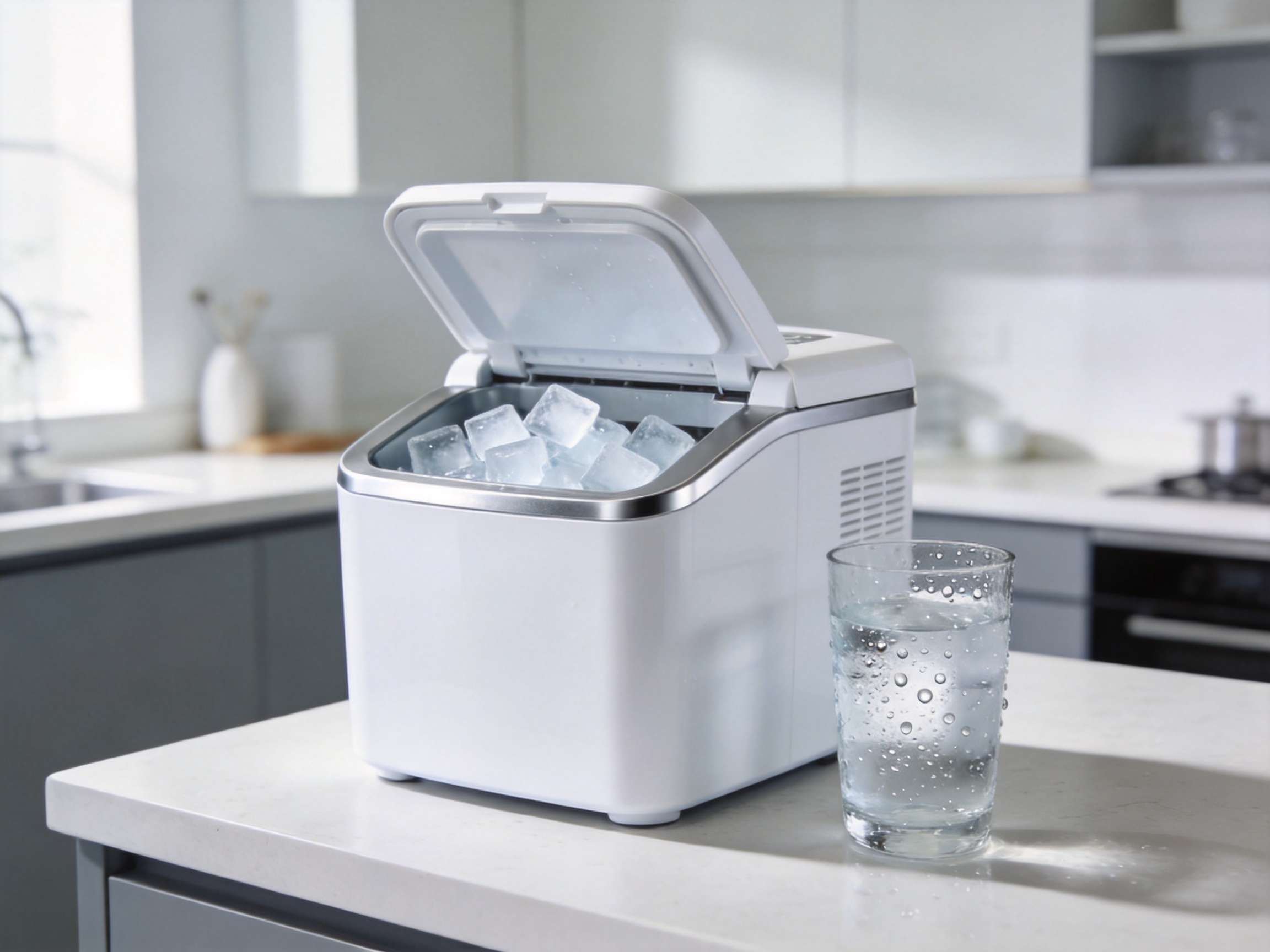
The Home Ice Cube Maker is a compact appliance developed for the everyday production of cube-shaped ice. Its design balances performance, usability, and household practicality. With dimensions of 325 x 295 x 252 mm, it can fit comfortably on many kitchen counters, beverage stations, office shelves, or home bar surfaces. The footprint is small enough to avoid dominating the space, while the internal refrigeration system provides the focused cooling required for steady ice production.
The unit operates on a 220V/50Hz power supply and uses a current and power specification of 0.65A/140W. This means it is intended to provide functional ice-making capability while maintaining reasonable household energy demand. Its refrigerant is R290 with a charge of 26g. R290 is widely recognized in modern refrigeration applications because it offers strong thermodynamic performance and a lower environmental impact profile compared with many older refrigerants. For a home appliance, this refrigerant choice supports efficient cooling and aligns with the increasing expectation that household products should combine performance with environmental responsibility.
The product is especially suitable for users who appreciate solid, square ice cubes. Square cubes are visually clean, easy to handle, and versatile. They work well in transparent glasses, cocktail shakers, pitchers, cooling buckets, and even food preparation tasks. Compared with irregular crushed ice or thin hollow shapes, dense cube ice can provide a slow melting rate, which helps chill drinks without rapidly diluting their flavor. This is particularly valuable for premium spirits, neat whiskey, craft cocktails, cold brew coffee, and drinks where balance matters.
While many competing products focus only on the speed of ice formation, this ice cube maker emphasizes the overall quality of the user experience. It is not only about producing frozen pieces quickly; it is about producing ice that looks appropriate, stores efficiently, melts more slowly, and supports multiple household scenarios. The value of the appliance lies in its ability to make everyday beverage service more refined, reliable, and convenient.
Key Technical Specifications
Product Category |
Home Ice Cube Maker |
Model |
Alien-ZF01 |
Product Power Supply |
220V/50Hz |
Current/Power |
0.65A/140W |
Refrigerant/Charge |
R290/26g |
Machine Dimensions |
325 x 295 x 252 mm |
Recommended Use |
Home kitchens, home bars, offices, small refreshment areas, and light hospitality use |
Ice Style |
Cube-shaped ice for beverages, cooling, storage, and kitchen preparation |
Why Cube Ice Matters
Many consumers purchase an ice maker because they want convenience, but they quickly discover that ice quality matters just as much as availability. A cube shape offers several practical advantages. First, cube ice has a regular geometry that enables efficient cooling. When placed in a glass, the cube shape maintains stable contact with the beverage while avoiding the overly rapid dilution associated with smaller fragments. The relatively compact form provides a useful balance between chilling ability and melt control.
Second, cube ice looks clean and professional. In beverage presentation, appearance matters. A glass of iced coffee, lemonade, whiskey, sparkling water, or cocktail immediately appears more refined when the ice is uniform. Square cubes also pair well with modern glassware because their edges and surfaces provide a sense of order. For home entertaining, this small visual improvement can elevate the entire serving experience. Guests may not always notice the appliance that made the ice, but they will notice that the drink looks carefully prepared.
Third, cube ice is highly versatile. Some ice shapes are optimized for specific uses, such as crushed ice for blended drinks or nugget ice for chewing. Cube ice, however, is a general-purpose form suitable for nearly all common scenarios. It can chill beverages in glasses, cool bottles in buckets, support food preparation, preserve ingredients temporarily, and serve as an ice pack base in a sealed bag. This versatility makes a cube ice maker a more complete household appliance.
Fourth, cube ice stores efficiently. Its regular shape allows it to stack in a freezer container with less wasted space than irregular ice. When users want to prepare ice in advance for a party, barbecue, family dinner, or weekend gathering, cube ice can be stored compactly. This improves freezer organization and reduces the frustration of bulky, uneven ice clumps.
Slow Melting for Better Beverage Quality
One of the most important advantages of solid cube ice is its slower melting behavior. The melting rate of ice depends on several factors, including surface area, density, water temperature, beverage temperature, glass material, room temperature, and agitation. In general, pieces with a more compact shape and relatively smaller surface area in contact with the liquid tend to melt more slowly than fine or irregular pieces. This is why dense cubes are preferred for drinks that should be chilled without becoming watery too quickly.
For whiskey and neat spirits, slow melting is especially valuable. Many drinkers want slight chilling and controlled dilution, not immediate dilution. A cube that melts gradually allows the drink to open slowly, preserving aroma and texture. For cocktails, balanced dilution is part of the recipe. Too much meltwater can flatten sweetness, weaken acidity, and reduce the intended strength. For iced coffee, rapid dilution can make the beverage taste thin and less aromatic. A stable cube shape helps preserve the flavor profile for longer.
Compared with refrigerator tray ice, which may vary in size, trap freezer odors, or crack unevenly, fresh ice from a dedicated machine can provide a more consistent experience. Compared with bagged ice, which may be partially melted and refrozen during transportation, freshly made cube ice gives users greater control over cleanliness, storage, and timing. Compared with crushed ice, cube ice is better suited for drinks where slow chilling and elegant presentation are desired.
The Home Ice Cube Maker supports this preference by focusing on cube-shaped output. This makes it particularly attractive for households that care about premium drinks, family gatherings, and daily refreshment. The machine allows users to move beyond the limitations of freezer trays and enjoy ice as a deliberate part of beverage preparation.

Compact Design for Everyday Spaces
A major challenge for many home appliances is space. A product may be powerful, but if it is too large or awkward, users may store it away and rarely use it. The Home Ice Cube Maker addresses this challenge through a compact 325 x 295 x 252 mm body. This size makes it easier to place on counters, sideboards, pantry shelves, beverage carts, and office refreshment counters. For apartments, small kitchens, dormitory-style living areas, and compact hospitality stations, space efficiency is a major advantage.
Many competing ice makers are either too bulky for casual home users or too basic to provide a satisfying experience. A compact appliance must be engineered carefully because the refrigeration system, water path, controls, insulation, and internal storage must all fit within a limited footprint. The value of this product lies in its ability to deliver practical ice-making functionality without requiring the kind of space associated with larger commercial machines.
Compactness also improves usability. When an appliance remains visible and accessible, users are more likely to use it regularly. A machine that can stay on the countertop is ready for weekday iced drinks, morning cold brew, afternoon sparkling water, evening cocktails, and weekend entertaining. Convenience becomes part of daily life rather than a special arrangement.
The machine’s form factor also supports seasonal use. During summer, it can serve as a constant refreshment companion. During holidays and celebrations, it can support gatherings. During quieter months, it can still be used for daily drinks or stored more easily because of its manageable size. This flexibility strengthens its value compared with larger equipment that may be difficult to move or store.
Energy-Conscious Refrigeration Performance
The unit’s 140W power rating reflects a balance between cooling capability and household practicality. Ice making requires energy because water must be cooled below freezing, heat must be removed through a refrigeration system, and the appliance must manage repeated production cycles. A well-designed compact ice maker needs sufficient power to perform reliably while avoiding unnecessary energy burden.
Some low-cost competitors may use underpowered systems that struggle in warmer environments, produce inconsistent ice, or require long waiting periods. Others may use larger systems that consume more energy than many home users need. The Home Ice Cube Maker is positioned between these extremes, providing a practical power level for regular household use. Its 0.65A current specification also supports integration into typical domestic electrical environments where compatible voltage standards are available.
The use of R290 refrigerant is another important technical feature. R290, also known as propane refrigerant, is used in many modern refrigeration products because it offers efficient heat transfer characteristics and has a low global warming potential compared with many conventional synthetic refrigerants. Although refrigerant handling is strictly a manufacturing and service matter, the design choice indicates attention to refrigeration performance and environmental trends.
For consumers, the practical result is a system designed to cool effectively in a compact space. For manufacturers, the use of R290 requires disciplined production processes, leak testing, charge accuracy, and component compatibility. This is where advanced manufacturing capability becomes essential. A refrigeration appliance is only as good as its sealed system quality, assembly precision, and final inspection standards.
Advantages Over Common Competitors
The Home Ice Cube Maker competes in a market where many products look similar at first glance. However, meaningful differences appear when users consider ice shape, size, energy design, refrigeration technology, manufacturing discipline, and long-term usability. Its advantages can be understood across several dimensions.
Better Than Ice Trays
Traditional ice trays are inexpensive, but they demand patience and freezer space. They can spill during filling, absorb odors from frozen foods, crack during removal, and produce inconsistent cubes. They also require users to remember to refill them. For families or frequent entertainers, trays often cannot keep up with demand. A dedicated ice maker provides a more reliable supply and reduces dependence on freezer conditions.
More Convenient Than Bagged Ice
Bagged ice is useful for emergencies or large events, but it is not ideal for everyday use. It requires a trip to the store, takes up freezer space, and may clump together if partially melted and refrozen. Users also have limited control over handling and storage before purchase. A home ice cube maker gives users the ability to make ice when needed, in their own environment, with greater control over water quality and storage.
More Refined Than Irregular Ice Machines
Some compact ice machines produce shapes that are quick to form but not ideal for premium beverages. Thin, hollow, or irregular pieces can melt quickly, diluting drinks faster. The square cube format is more visually refined and broadly useful. It fits well in glasses, stacks neatly, and supports slower melting compared with many smaller pieces. For users who care about beverage aesthetics, cube ice is a significant advantage.
More Space-Efficient Than Larger Equipment
Commercial ice machines can produce large volumes, but they are often unnecessary for home users. They may require plumbing, drainage, ventilation planning, and dedicated installation space. The compact home ice cube maker provides a more approachable alternative. It gives users the benefit of independent ice production without turning the kitchen into a commercial workspace.
More Environmentally Aligned Than Older Refrigerant Designs
Many older refrigeration products used refrigerants with higher environmental impact. The use of R290 reflects a more modern direction in refrigeration appliance design. While safe manufacturing and proper design are essential, R290 offers a strong combination of cooling efficiency and lower environmental burden. This helps the product stand out in a market where buyers increasingly consider sustainability alongside performance.
Professional Appearance and Beverage Aesthetics
Ice is part of presentation. A clear glass with uniform cube ice immediately appears more intentional than a glass filled with broken fragments or cloudy freezer pieces. Whether serving mineral water, iced tea, cocktails, cold brew coffee, lemonade, soda, fruit punch, or whiskey, the ice influences the first impression. Square cubes look clean, orderly, and professional.
For home users who enjoy entertaining, this detail matters. A dinner party, barbecue, birthday celebration, family gathering, or holiday meal feels more polished when drinks are served with attractive ice. Even simple water or juice can look more refreshing. For home bar enthusiasts, cube ice is a foundation for better drink building. It allows stirred drinks, shaken drinks, and on-the-rocks service to feel more consistent.
The product’s value therefore extends beyond temperature control. It contributes to lifestyle quality. It makes daily beverages more pleasant and special occasions more organized. A dedicated ice cube maker helps transform ice from an afterthought into a standard part of drink preparation.
Versatile Uses Throughout the Home
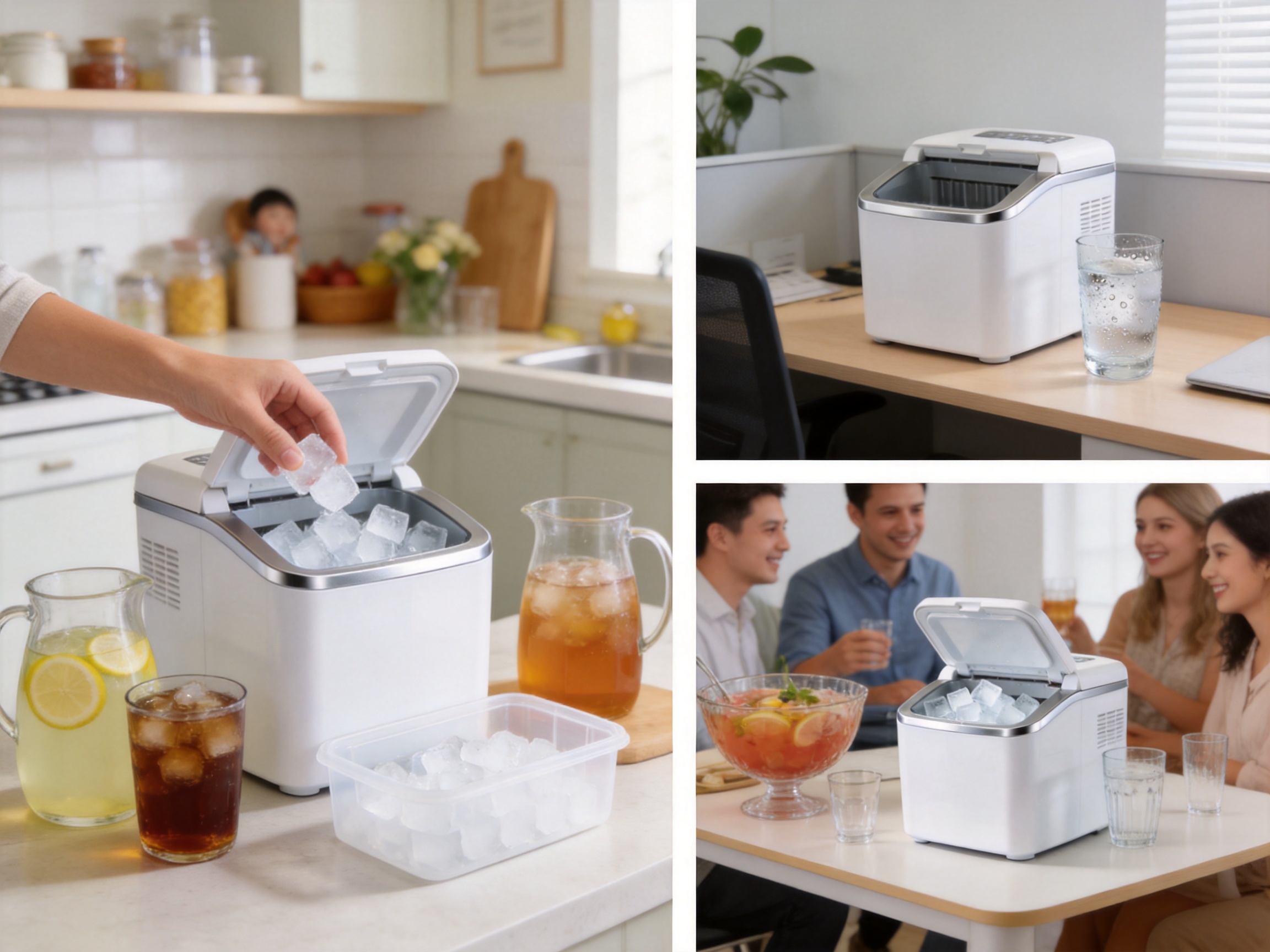
The Home Ice Cube Maker is not limited to cocktails or spirits. Its cube ice can support a wide range of household needs. In the kitchen, cubes can be used to cool blanched vegetables quickly, maintain cold temperatures for seafood preparation, chill mixing bowls for certain recipes, or cool soups and sauces safely before refrigeration. For families, cubes can be used in juice, milk tea, fruit drinks, sports beverages, and children’s cold drinks when appropriate.
In a home office or workplace refreshment area, fresh ice makes everyday hydration more appealing. Employees and family members are more likely to enjoy cold water, iced coffee, or tea when ice is readily available. In warmer climates or during summer, this convenience can be especially appreciated. For small meeting rooms, reception areas, and boutique service spaces, a compact ice maker can improve hospitality without requiring complex installation.
For home entertaining, cube ice has even broader value. Users can prepare ice ahead of time, transfer it to a freezer container, and build a reserve before guests arrive. Because cube ice stacks efficiently, it is easier to store than irregular pieces. During the event, the ice maker can continue producing additional cubes, reducing the risk of running out. This is particularly helpful for parties where guests may prefer different beverages at different times.
Ice can also be useful for non-beverage scenarios. In a sealed bag, it can function as a simple cold pack for minor bumps or food transport. It can help keep picnic items cool in a small insulated container. It can support flower arrangement preparation, dessert presentation, or chilled serving trays. A versatile cube ice maker becomes a practical appliance across many routines.
Manufacturing Strengths Behind the Product
A reliable ice maker requires more than a good design concept. It depends on disciplined manufacturing. Alien Technology Co., Ltd. is located in Zhouxiang, Zhejiang Province, an area known as a hub for small household appliances and supported by convenient logistics. This industrial environment provides access to appliance supply chains, skilled labor, component resources, packaging services, and transportation channels. Such regional advantages can help improve production efficiency, cost control, and delivery responsiveness.
The company specializes in household appliances, including ice makers, coffee machines, and air fryers. This specialization matters because these categories share important engineering themes: heating and cooling control, food-contact safety, user interface design, compact structure, electrical reliability, and consistent mass production. Experience across multiple appliance types helps the manufacturer understand how real households use products. It also encourages cross-category improvements in materials, assembly, testing, and quality assurance.
The company’s mission emphasizes smart technology, simplifying life, and enhancing happiness. In practical product terms, this means designing appliances that reduce everyday inconvenience. A home ice cube maker reflects that mission clearly. It simplifies access to ice, improves beverage enjoyment, and supports healthier hydration habits by making chilled water and homemade drinks more attractive than purchased sugary beverages.
Manufacturing strength is especially important for refrigeration appliances because the sealed system must be dependable. The compressor, condenser, evaporator, capillary or flow control components, refrigerant charge, water circuit, electrical system, insulation, and structural housing must work together. Small errors in assembly can affect cooling performance, noise, energy use, or product life. A capable manufacturer uses standardized assembly procedures and quality checkpoints to reduce variation.
Advanced Production Process
The production of a compact ice cube maker typically begins with engineering verification and material selection. Components must be chosen for compatibility with water, low temperature, electrical operation, and repeated thermal cycling. Food-contact areas should be designed for cleanliness and durability. Structural parts must maintain shape and alignment under normal use. Electrical components must meet safety and performance expectations.
During refrigeration system assembly, precision is crucial. Tubing must be shaped and connected correctly to maintain proper refrigerant flow. Joints must be sealed carefully to prevent leaks. The system must be evacuated to remove air and moisture before refrigerant charging. The R290 charge must be controlled accurately because the amount of refrigerant directly affects cooling performance, efficiency, and reliability. The stated charge of 26g reflects a compact system design that depends on precise manufacturing control.
Leak testing is one of the most important manufacturing steps. A refrigeration appliance with even a small leak will lose performance over time. Advanced production lines use pressure testing, vacuum testing, or refrigerant-specific detection methods to confirm system integrity. Products that pass these tests are better positioned to deliver consistent performance after shipping and during normal use.
Water path assembly is another essential process. An ice maker must move water reliably and keep it in contact with freezing surfaces under controlled conditions. Pumps, reservoirs, tubes, trays, and sensors must be aligned and tested. If water flow is uneven, ice shape and cycle reliability can suffer. Good manufacturing practice includes inspection of water-contact components, functional filling tests, and drainage checks.
Electrical safety and control verification follow. The appliance must operate within its rated voltage and current range. Wiring should be routed safely, terminals secured, and control components checked for correct response. Safety-related parts must be inspected to reduce the risk of abnormal operation. A finished unit should undergo functional testing to confirm that the cooling system, water system, controls, and indicators work as intended.
Aging or run-in testing may also be used to identify early failures before products leave the factory. By operating the machine under controlled conditions, manufacturers can observe noise, vibration, cooling behavior, water circulation, and ice formation. This process helps improve outgoing quality and supports customer satisfaction. For a product category where performance is immediately visible to the user, final testing is especially valuable.
Quality Control and Reliability
Quality control for a home ice cube maker should address both measurable specifications and user experience. Measurable factors include voltage performance, power consumption, insulation resistance, refrigeration pressure, refrigerant charge, water pump operation, leakage, component fit, and dimensional accuracy. User experience factors include ease of operation, ice shape consistency, noise impression, cleaning accessibility, and packaging protection.
Compared with competitors that may rely mainly on random inspection, a stronger manufacturing approach uses multiple checkpoints throughout production. Incoming components are inspected before assembly. Refrigeration joints are checked after brazing or connection. Vacuum and charge steps are monitored. Water systems are tested. Electrical safety is verified. Final product operation is confirmed. Packaging is inspected to protect the appliance during transportation.
Reliability also depends on design for manufacturability. A compact appliance must be easy enough to assemble consistently. Parts should align without excessive adjustment. Fasteners, seals, tubes, and wires should have defined positions. This reduces assembly variation and improves service consistency. Experienced appliance manufacturers understand that the best product designs are not only attractive on paper but also stable in mass production.
Alien Technology Co., Ltd. emphasizes excellent quality, customer satisfaction, continuous improvement, and innovation. These principles are meaningful when applied to real factory practice. Continuous improvement can involve analyzing customer feedback, refining assembly fixtures, improving packaging, upgrading components, optimizing production flow, and enhancing inspection standards. In competitive appliance markets, this ongoing improvement is essential because buyers expect products that are not only affordable but dependable.
Human-Centered Design Philosophy
A home appliance must fit into everyday routines. The best ice maker is not simply the one with the most technical features; it is the one that users can understand, place, clean, and rely on. Human-centered design means considering how people actually behave. They may want ice quickly before dinner, need extra cubes for guests, or prefer a machine that does not occupy too much counter space. They may want simple maintenance rather than complicated procedures.
The compact size of the Home Ice Cube Maker reflects this philosophy. It is easier to place and move than larger systems. The cube ice format reflects practical beverage needs. The power rating reflects home usage rather than excessive industrial scale. The use of modern refrigerant reflects awareness of environmental expectations. Together, these design choices create an appliance that supports daily convenience without unnecessary complexity.
Human-centered design also means versatility. Because cube ice can be used across many scenarios, the machine serves different family members and different occasions. One person may use it for iced coffee, another for sparkling water, another for evening cocktails, and another for food preparation. A product with broad usefulness is more likely to become part of the household routine.
Space-Saving Storage and Efficient Ice Management
The regular shape of cube ice offers an often-overlooked advantage: efficient storage. When users make ice ahead of time, they need to store it in the freezer. Irregular pieces leave gaps, clump unpredictably, and may occupy more volume than expected. Square cubes can stack more neatly, allowing users to prepare a greater amount in less space. This is useful in small freezers where every container matters.
Efficient storage is especially valuable before gatherings. A user can run the ice maker in advance, transfer cubes into a clean freezer-safe container, and build a reserve. Because the cubes are more regular, they can be portioned easily into glasses, buckets, or pitchers. This makes serving more organized and reduces last-minute stress.
Compared with ice produced by flexible trays, which may crack, chip, or stick together, machine-made cubes can provide a more uniform experience when handled properly. The user gains better control over quantity and timing. For households that frequently host guests, this can be a meaningful improvement over improvised ice preparation.
Environmental and Practical Benefits of R290
R290 refrigerant is an important feature in the product’s technical profile. It is known for strong refrigeration efficiency and low global warming potential. In household appliances, refrigerant selection has become increasingly important as global standards move away from older high-impact refrigerants. By using R290, the product reflects a more current direction in compact refrigeration design.
From a practical perspective, efficient refrigerant performance supports effective heat transfer in a compact appliance. This helps the machine produce ice while maintaining a manageable body size and power rating. From a manufacturing perspective, R290 requires careful design, controlled charging, and strict safety procedures. The ability to produce R290-based refrigeration appliances indicates a level of technical discipline in system assembly and testing.
Consumers do not need to handle refrigerant during normal use. The benefit they experience is a modern cooling system designed for performance and environmental responsibility. In a crowded market, this can distinguish the product from lower-grade alternatives that may not reflect the same level of refrigeration modernization.
Ideal Users and Application Scenarios
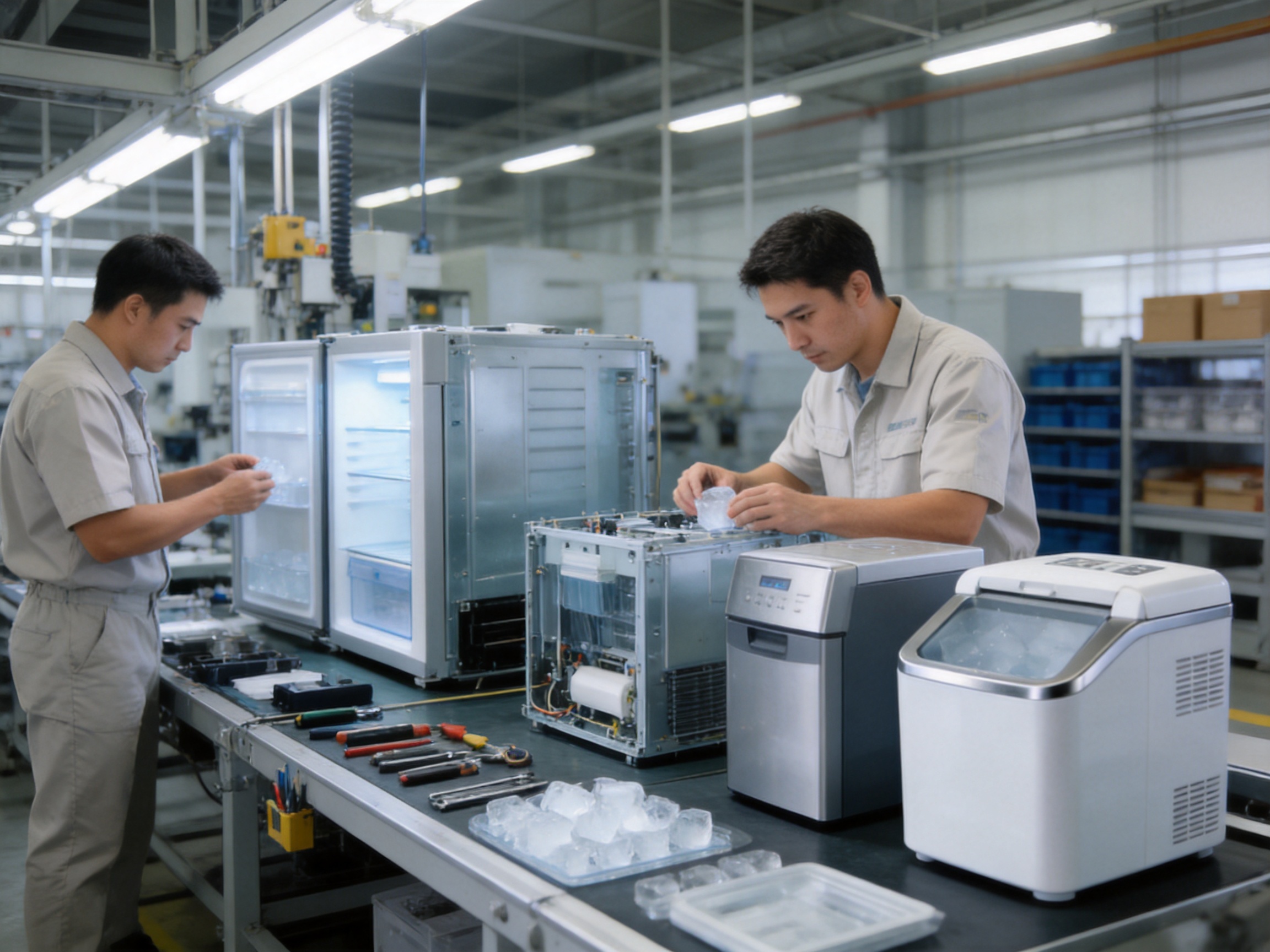
The Home Ice Cube Maker is suitable for many types of users. Families can use it to support daily hydration and mealtime drinks. Home entertainers can rely on it for parties, dinners, and holiday gatherings. Coffee lovers can use cube ice for iced coffee, cold brew, and milk-based beverages. Cocktail enthusiasts can improve drink presentation and dilution control. Office users can improve refreshment service for staff and visitors. Small hospitality spaces can provide a more polished beverage experience without installing a large commercial ice system.
It is also useful for people living in warm regions or during hot seasons. When ambient temperatures rise, demand for ice increases quickly. Refrigerator ice trays often cannot keep up, and buying bagged ice becomes inconvenient. A compact machine provides independence and readiness. Users can produce fresh cubes when they need them and store extra when demand is expected.
For health-conscious households, having fresh ice can encourage consumption of water, unsweetened tea, fruit-infused drinks, and homemade beverages. Instead of buying bottled drinks or convenience-store beverages, users can prepare refreshing drinks at home. This supports both cost control and healthier habits.
Comparison with Typical Alternatives
Ice Source |
Main Advantage |
Main Limitation |
How the Home Ice Cube Maker Improves the Experience |
Freezer Trays |
Low cost and simple |
Slow, limited quantity, inconsistent shape, freezer odor absorption |
Provides dedicated ice production and more consistent cube shape |
Bagged Ice |
Large quantity available for events |
Requires purchase, storage space, and may clump after refreezing |
Allows fresh ice production at home when needed |
Large Commercial Ice Machine |
High output capacity |
Large size, higher cost, installation requirements |
Offers compact countertop convenience for household and light use |
Irregular or Crushed Ice Devices |
Fast chilling for some beverages |
Rapid melting and less refined presentation |
Creates cube ice with better stacking, appearance, and slower dilution |
Company Capability and Industrial Location
Alien Technology Co., Ltd. is based at No. 138, Huixiang'an Road, Zhouxiang Town, Cixi City, Zhejiang Province. The location is significant because Zhouxiang and the surrounding region are associated with small household appliance manufacturing. A strong local industrial base supports sourcing, production coordination, technical talent, and logistics efficiency. For customers and business partners, this can translate into more stable supply, responsive communication, and flexible cooperation.
The company manufactures household appliances such as ice makers, coffee machines, and air fryers. These categories are central to modern kitchen convenience. By working across cooling, heating, and beverage-related products, the company develops experience in temperature control, compact appliance engineering, food-safe materials, and user-friendly design. This multi-category capability strengthens the development of each product line.
The company’s business philosophy is stable and pragmatic. This is important in appliance manufacturing because buyers need dependable production partners, not only attractive concepts. Stability supports consistent quality, while pragmatism supports practical product decisions. In the case of the Home Ice Cube Maker, the result is a product built around realistic household needs: compact size, practical power, modern refrigerant, cube-shaped ice, and broad daily usability.
Design Value for Business Cooperation
For distributors, retailers, and private-label partners, the Home Ice Cube Maker offers several market advantages. First, it belongs to a growing lifestyle appliance category. Consumers increasingly prepare café-style and bar-style drinks at home, and an ice maker supports this trend directly. Second, its compact size makes it easier to ship, display, store, and position in online or offline retail channels. Third, its technical specifications are clear and practical, supporting straightforward product communication.
The product also has strong seasonal and gift potential. It can be marketed for summer cooling, home bar upgrades, housewarming gifts, office refreshment, holiday gatherings, and family entertainment. Its benefits are easy for consumers to understand. Unlike some appliances that require education, the value of fresh ice is immediately obvious. This makes the product suitable for e-commerce descriptions, retail demonstrations, and lifestyle photography.
The manufacturer’s broader appliance capability can further support cooperation. Experience with coffee machines and air fryers indicates familiarity with consumer expectations in kitchen appliances. Partners may benefit from coordinated product development, packaging optimization, quality assurance systems, and supply chain management. In competitive markets, reliable manufacturing support can be as important as the product itself.
Maintenance and Use Considerations
To get the best performance from any home ice cube maker, users should follow sensible maintenance practices. Clean water helps produce better-tasting ice. The machine should be placed on a stable, level surface with adequate ventilation around it. Users should avoid placing it near strong heat sources, as high ambient temperatures can affect refrigeration efficiency. Regular cleaning of water-contact areas helps maintain freshness and hygiene.
Ice should be transferred to a clean container if users want to store it in the freezer for later use. This reduces exposure to odors and helps maintain cube quality. If the appliance is not used for a period of time, it should be cleaned and dried according to the product instructions. These simple habits can improve ice quality and support long-term reliability.
Because the appliance uses a refrigeration system, users should handle it with care during transport and placement. It should not be dropped, tilted excessively for long periods, or operated in unsuitable conditions. Proper use helps the machine deliver the convenience and consistency it was designed to provide.
Q&A Section
What makes this home ice cube maker different from using freezer trays?
Freezer trays are slow, limited in quantity, and often produce inconsistent cubes that may absorb freezer odors. This dedicated ice cube maker is designed specifically for ice production, giving users a more convenient and consistent way to make cube-shaped ice for daily drinks and entertaining.
Why is cube-shaped ice useful?
Cube-shaped ice is versatile, visually clean, and efficient to store. Its compact form can melt more slowly than smaller irregular pieces, helping chill drinks without diluting them too quickly. It is suitable for whiskey, cocktails, iced coffee, tea, juice, sparkling water, and general kitchen cooling tasks.
Is the machine suitable for small kitchens?
Yes. With dimensions of 325 x 295 x 252 mm, the appliance is designed to fit many home counters, beverage stations, office shelves, and compact hospitality areas. Its size makes it more practical than large commercial ice machines for household use.
What power supply does the appliance use?
The product uses a 220V/50Hz power supply and has a current and power specification of 0.65A/140W. Users should ensure that their local electrical environment is compatible with these specifications.
What refrigerant is used?
The appliance uses R290 refrigerant with a charge of 26g. R290 is valued in modern refrigeration for efficient cooling performance and a lower environmental impact profile compared with many older refrigerants.
Can the ice be stored in a freezer?
Yes. Users can transfer finished cubes to a clean freezer-safe container to build a reserve. The regular cube shape helps improve stacking efficiency and saves freezer space compared with irregular ice pieces.
Who is this product best suited for?
It is suitable for families, home bar enthusiasts, coffee lovers, office refreshment areas, small hospitality spaces, and anyone who wants convenient access to fresh cube ice without relying on trays or bagged ice.
What manufacturing strengths support the product?
The manufacturer is located in Zhouxiang, Zhejiang Province, a region known for small household appliance production and convenient logistics. The company specializes in ice makers, coffee machines, and air fryers, giving it experience in compact appliance design, temperature control, quality inspection, and practical household product manufacturing.
Conclusion
The Home Ice Cube Maker offers a practical and refined solution for modern households and light commercial refreshment spaces. Its compact dimensions, 140W power design, R290 refrigeration system, and cube-shaped ice output make it a strong alternative to freezer trays, bagged ice, and oversized commercial equipment. It addresses the real needs of users who want convenient ice, attractive presentation, slower drink dilution, and efficient storage.
Its advantages are not limited to the visible product. Behind the appliance is a manufacturer with experience in small household appliances, a location supported by an established industrial base, and a quality-oriented philosophy focused on customer satisfaction and continuous improvement. For consumers, this means a more convenient daily beverage experience. For business partners, it means a product category with strong lifestyle appeal and practical market value.
In a world where small comforts make daily life better, fresh cube ice is a simple but meaningful upgrade. A compact home ice cube maker brings that upgrade within easy reach, turning ordinary drinks into colder, cleaner, and more enjoyable experiences.
References
ASHRAE Handbook: Refrigeration, American Society of Heating, Refrigerating and Air-Conditioning Engineers.
International Institute of Refrigeration, Guide to the Role of Refrigerants in Sustainable Cooling.
European Committee for Standardization, Household and Similar Electrical Appliances Safety Standards.
Food and Beverage Service Principles, hospitality training literature on beverage temperature, dilution, and presentation.
General literature on ice geometry, melting behavior, and heat transfer in chilled beverages.