
 English
 한국어
한국어 Español
 Deutsch
In homes, offices, milk tea shops, fast food counters, small cafés, hospitality suites, and compact beverage stations, ice is no longer a simple accessory. It is a key part of drink quality, service speed, customer satisfaction, and daily convenience. A reliable countertop ice maker can determine whether a beverage is served at the right temperature, whether a busy service line keeps moving, and whether users enjoy a cleaner, simpler, and more efficient experience. The touchscreen bullet ice maker described here is designed for exactly that purpose: rapid, convenient, and hygienic ice production in a compact body that supports modern beverage preparation.
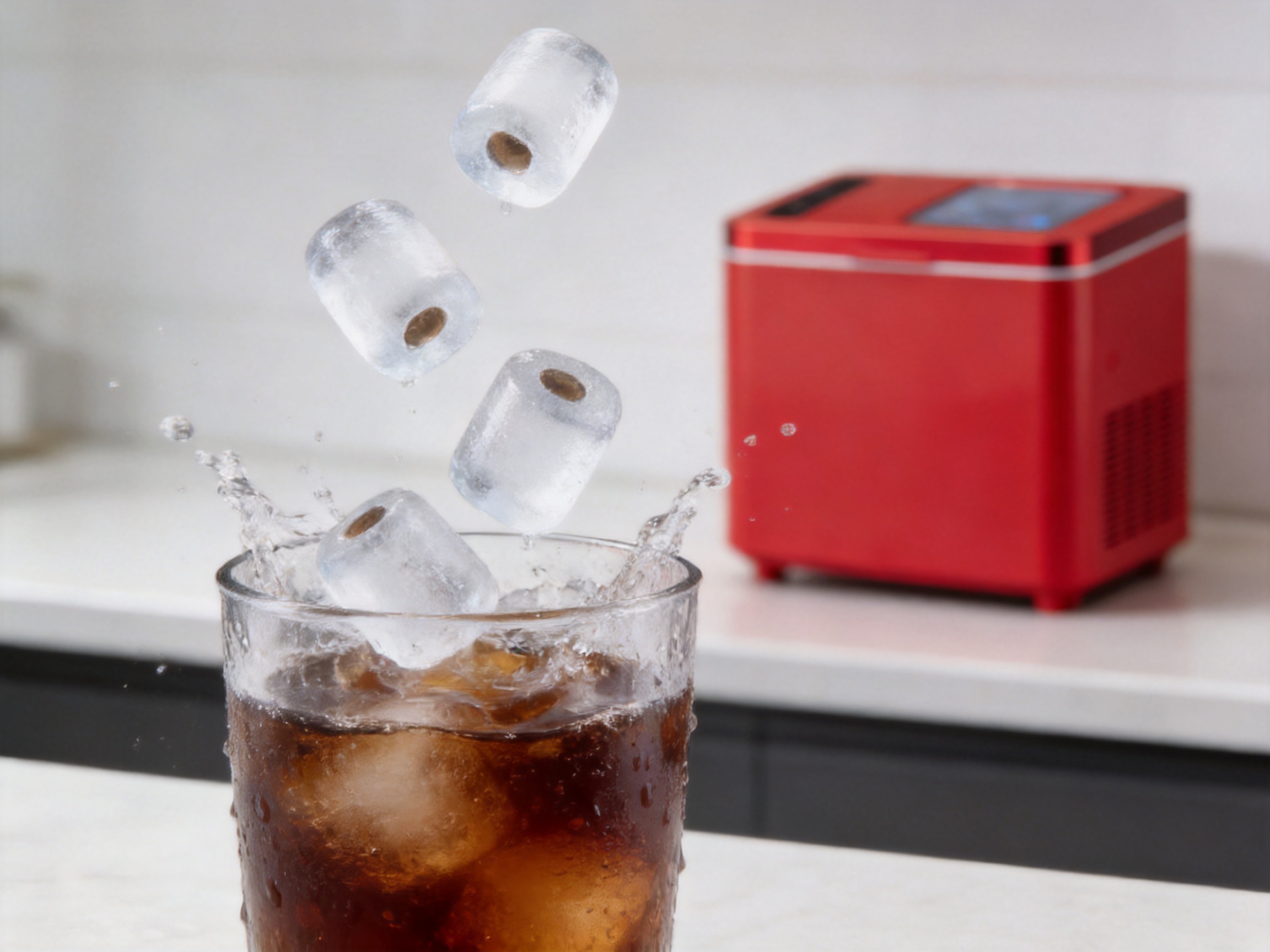
This product belongs to the bullet ice maker category, a format known for producing cylindrical ice pieces with a hollow center. That shape is not just visually distinctive; it also improves practical performance. The perforated center increases the ice surface area that touches the beverage, helping drinks cool quickly. The shape also reduces sticking and clumping, making the ice easier to scoop, dispense, and handle during continuous use. For beverage environments that require speed, cleanliness, and consistent drink texture, bullet ice provides a balance of performance and user comfort that many traditional ice types cannot match.
Built with a 220V-240V/50Hz power supply, 0.9A current, 150W rated power, R600a refrigerant, and compact 325 x 295 x 252 mm dimensions, this touchscreen ice maker is designed to combine practical power with countertop efficiency. Its compact footprint allows it to fit into small service areas, pantry spaces, office beverage corners, and home kitchens without occupying excessive space. At the same time, its flip-top structure supports easier cleaning and inspection, while the touchscreen interface gives users a more intuitive operating experience than conventional mechanical-button models.
Beyond the machine itself, the manufacturer’s strengths are important. Alien Technology Co., Ltd. is located in Zhouxiang, Cixi City, Zhejiang Province, an area known for small household appliance production and convenient logistics. This manufacturing environment supports efficient component sourcing, skilled appliance assembly, and stable quality control. The company focuses on household appliances such as ice makers, coffee machines, and air fryers, allowing it to develop knowledge across heating, cooling, airflow, temperature control, user interface design, and compact appliance engineering. These capabilities contribute to a product that is practical, service-friendly, and aligned with the needs of modern users.
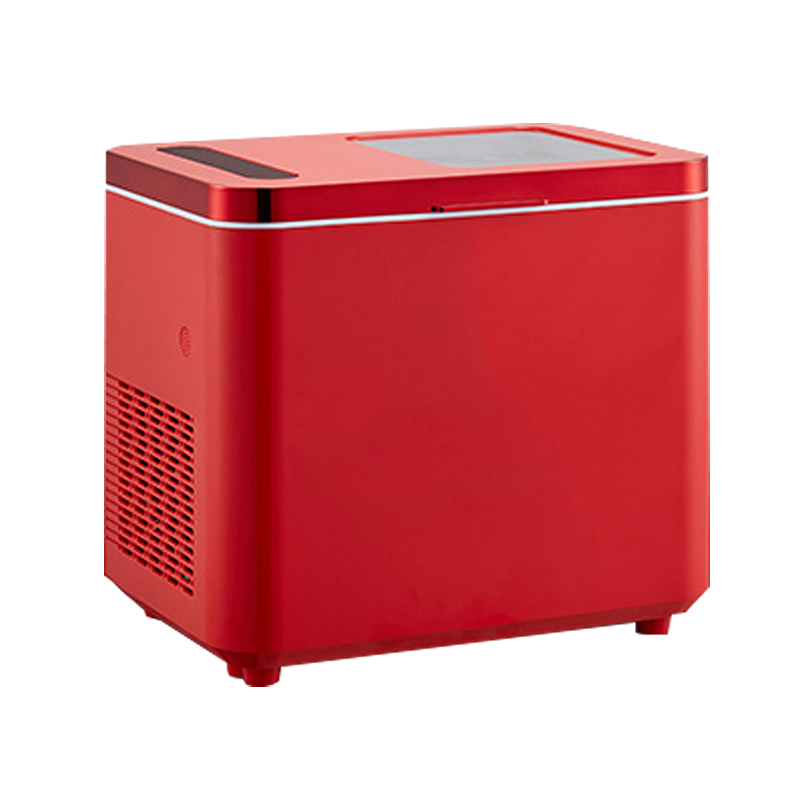
Touchscreen ice maker
Why Bullet Ice Matters in Everyday Beverage Preparation
Many users first judge an ice maker by how fast it can produce ice, but ice shape is just as important. Bullet ice offers an advantage because its hollow center allows beverages to cool more rapidly than many dense solid cubes of similar volume. The center hole exposes more surface area to the liquid, increasing heat exchange between the drink and the ice. In a busy beverage setting, that can mean a shorter wait time before serving a chilled drink. In a household setting, it can mean a more enjoyable cold beverage without needing to store large bags of ice in the freezer.
Bullet ice also delivers a satisfying texture. It is generally not as hard as solid commercial cube ice, which makes it easier to chew and more pleasant in many beverages. This is one reason bullet ice is popular in milk tea shops, soft drink counters, fast food restaurants, offices, and homes. Customers often appreciate ice that cools quickly but is not unpleasantly hard. For drinks with tea, fruit, coffee, soda, or flavored syrups, bullet ice can create a refreshing mouthfeel while still protecting the overall drinking experience.
Another key advantage is flowability. Traditional ice cubes can freeze together during storage, creating blocks that are inconvenient to scoop or dispense. Bullet ice, because of its rounded form and hollow structure, is less likely to form hard clumps during ordinary short-term storage and use. This makes it easier for staff to scoop ice quickly during peak hours and easier for household users to serve multiple drinks without frustration. In automated dispensing or semi-automated service layouts, high flowability also reduces the chance of ice bridging or jamming.
The machine’s compactness further increases the value of bullet ice technology. A countertop ice maker must deliver useful output without requiring the space of a full commercial ice machine. The bullet ice making principle supports continuous production in a relatively efficient structure, allowing the machine to remain small while still providing ice for daily needs. For users with limited counter space, the combination of fast cooling performance, easy handling, and compact machine design is highly attractive.
Core Product Specifications
The following table summarizes the key technical information of the touchscreen bullet ice maker.
Specification |
Details |
Product Type |
Touchscreen Bullet Ice Maker |
Power Supply |
220V-240V/50Hz |
Current and Power |
0.9A/150W |
Refrigerant and Charge |
R600a/19g |
Machine Dimensions |
325 x 295 x 252 mm |
Ice Type |
Bullet Ice with Hollow Center |
Operation Style |
Touchscreen Control |
Cleaning Access |
Fully Flip-Top Design |
Rapid Cooling Through a Smarter Ice Shape
The hollow center of bullet ice is one of the product’s most important practical advantages. When ice enters a beverage, heat transfer occurs where the drink contacts the ice surface. A larger contact area speeds up that exchange. The hollow middle of bullet ice creates additional surface area inside the ice piece, allowing the drink to interact with both the exterior and interior surfaces. This means faster cooling compared with ice pieces that have less exposed area.
For commercial beverage businesses, this fast cooling effect can improve service consistency. A cup of milk tea, fruit tea, soda, iced coffee, or juice should reach a pleasant drinking temperature quickly. If the ice cools too slowly, the beverage may taste warm at first or may require longer preparation time. Bullet ice helps reduce that problem. It is particularly suitable for operations where customers expect drinks to be served immediately and enjoyed at once.
In household use, rapid cooling also matters. A user may want to chill sparkling water, lemonade, cocktails, iced tea, or cold brew coffee without planning hours in advance. A compact ice maker that can produce practical bullet ice supports spontaneous entertaining and everyday convenience. Instead of relying on freezer trays that take hours, users can generate ice when needed and enjoy drinks with less waiting.
Compared with many low-cost ice making solutions, this machine focuses not only on producing cold material but on producing ice that performs well in actual beverages. Some competing products may emphasize capacity alone, but capacity without drink performance is incomplete. The design of bullet ice gives this product a meaningful advantage because it serves the end purpose of ice: improving the drinking experience.
Non-Sticky Ice for Better Handling and Dispensing
Ice handling is often overlooked until it becomes a problem. In busy environments, clumped ice slows staff down, frustrates users, and can create hygiene concerns when people try to break ice apart manually. Bullet ice’s rounded and hollow structure reduces the tendency for pieces to lock tightly together. While all ice can be affected by storage conditions, bullet ice is generally easier to scoop and dispense than many angular or irregular ice forms.
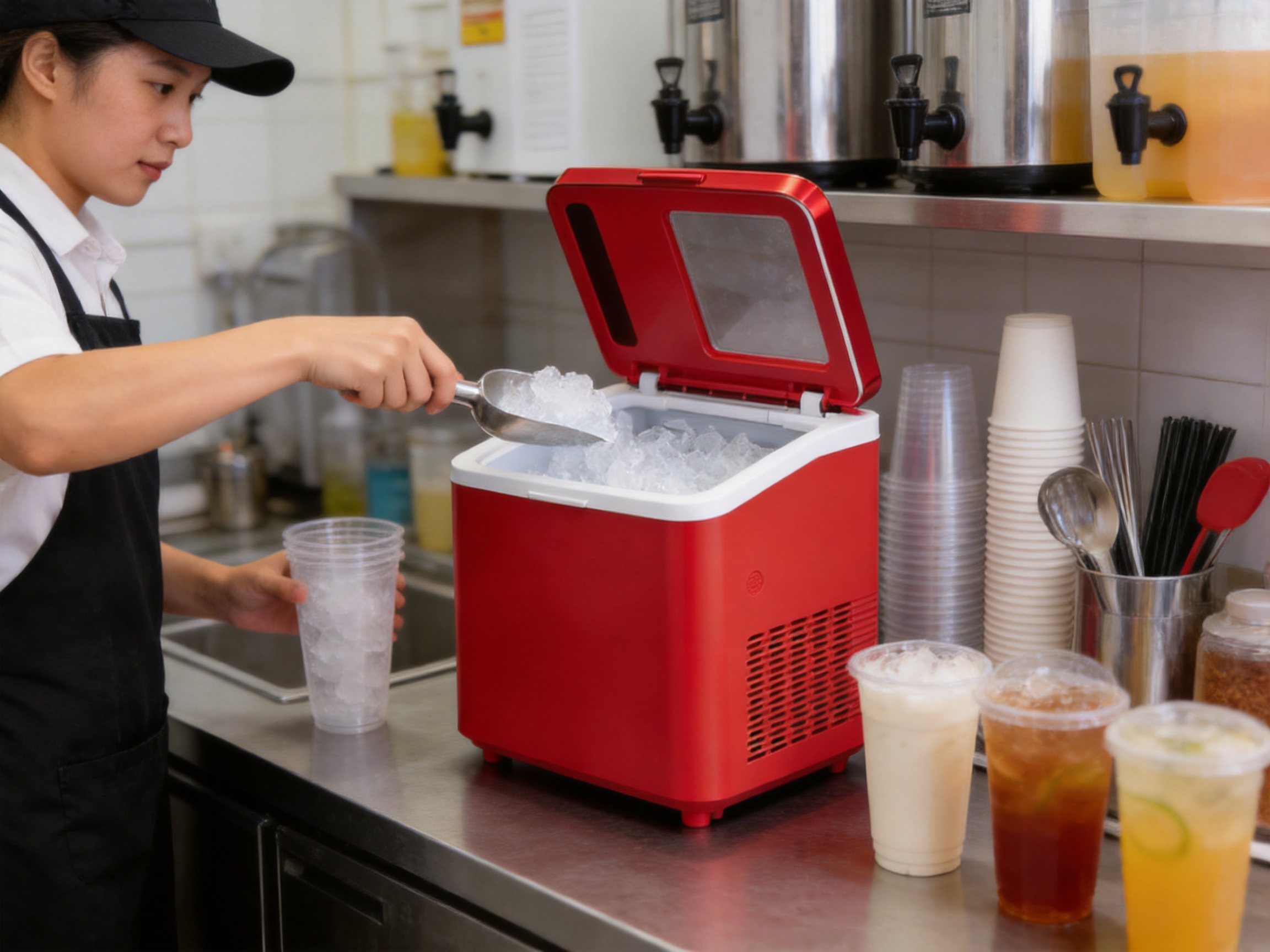
This non-sticky behavior is valuable in milk tea shops and fast food environments where ice must be added repeatedly throughout the day. Staff can work more smoothly because they can scoop consistent portions without fighting solid ice blocks. The result is better workflow, more predictable drink preparation, and less wasted time during peak service.
For offices and self-service areas, easy flowability is also important. Users may not be trained staff members, so the machine should make ordinary use simple. Ice that pours or scoops easily reduces mess and improves the experience for everyone. The user does not need to apply force, hit the storage bin, or touch the ice unnecessarily. This supports both convenience and hygiene.
Compared with conventional freezer ice trays or bagged ice stored for extended periods, fresh bullet ice from a countertop machine can be easier to manage. Freezer trays require twisting, cracking, and manual refilling. Bagged ice may form large frozen blocks after partial melting and refreezing. A countertop bullet ice maker offers a fresher, more controlled, and more convenient alternative.
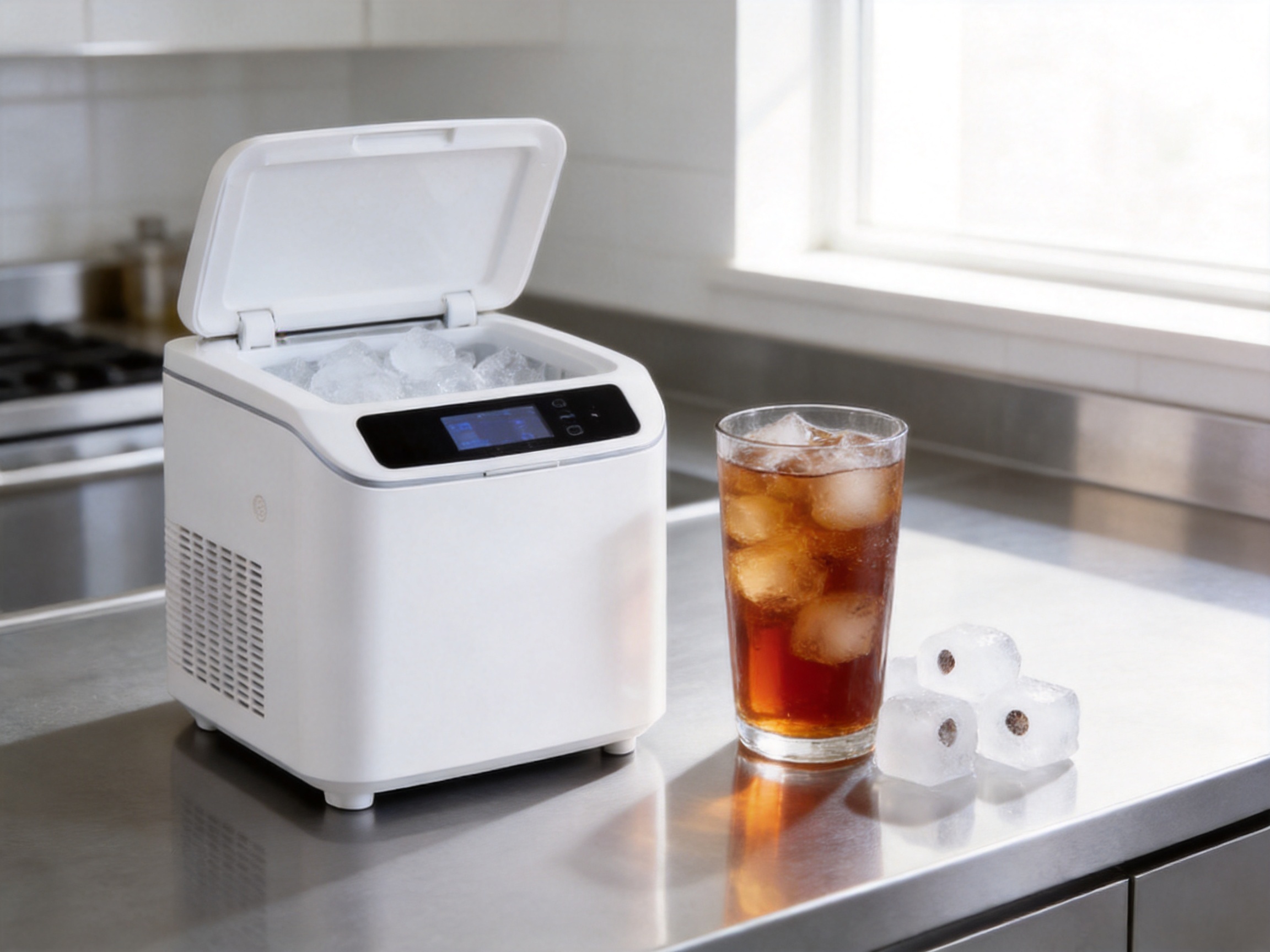
Touchscreen Control for a Modern User Experience
The touchscreen interface gives the product a more modern and intuitive feel than traditional appliance controls. Mechanical switches and small buttons may be functional, but they can also be less convenient to clean and less visually aligned with contemporary kitchens and beverage counters. A touchscreen surface can create a cleaner control area and a more straightforward operating experience.
In practical use, a touchscreen helps users quickly understand machine status and operation. For home users, the learning curve is reduced. For commercial or semi-commercial users, staff can operate the unit with less confusion, which is especially useful when new employees or temporary workers are involved. Simple, clear control contributes directly to efficiency.
Touchscreen operation also enhances the perceived value of the product. In a competitive appliance market, users increasingly expect devices to feel intelligent, responsive, and easy to operate. A product that combines compact ice making with a modern control interface can stand out from basic models that look and feel outdated.
Cleanability is another advantage. Raised buttons can trap dust, moisture, or residue around their edges. A touchscreen area is generally easier to wipe, helping maintain a cleaner appearance in kitchens and drink preparation areas. Although users should always follow cleaning instructions, the basic design direction supports better daily maintenance.
Compact Dimensions for Flexible Placement
With dimensions of 325 x 295 x 252 mm, the machine is designed to fit where users actually need ice. Many kitchens, offices, and beverage counters do not have space for large floor-standing ice machines. Even in commercial environments, counter space is valuable. A compact countertop ice maker can serve as a flexible ice production point without requiring major layout changes.
The low height helps the unit fit beneath cabinets or on small service counters. The moderate width and depth make it suitable for pantry corners, break rooms, reception beverage stations, home bars, and temporary event setups. This flexibility is one of the product’s major advantages over larger machines that may require dedicated plumbing, drainage, and installation space.
For small businesses, a compact machine can be especially useful as a supplemental ice source. It may support peak beverage periods, special drink stations, or backup production when the main ice supply is limited. For home users, it can support parties, family gatherings, weekend use, and daily cold drinks without requiring freezer storage.
Compared with bulky alternatives, the compact design reduces barriers to adoption. Users do not need to remodel a counter or sacrifice major workspace. The machine can be placed, used, cleaned, and moved with relative ease. This makes it attractive for users who want professional-style convenience without industrial-scale equipment.
Energy-Aware Design and Refrigerant Choice
The machine operates at 150W rated power with a current of 0.9A under the specified power supply conditions. This reflects a practical balance between cooling performance and countertop appliance efficiency. While actual energy consumption depends on usage patterns, ambient temperature, water temperature, and operating duration, the rated power shows that the unit is designed as a compact appliance rather than a heavy industrial machine.
The use of R600a refrigerant is also relevant. R600a, or isobutane, is commonly used in many modern refrigeration appliances because it offers efficient thermodynamic performance and has a lower global warming potential than many older refrigerants. Its use requires careful manufacturing controls, proper sealing, and trained production processes because it is a flammable refrigerant. A manufacturer that works with R600a must pay attention to refrigerant charging accuracy, leak testing, and safe assembly procedures.
For users, the practical benefit is a refrigeration system designed for efficient cooling in a compact format. The 19g refrigerant charge supports the cooling circuit while keeping the system suitable for a small appliance structure. When combined with an appropriate compressor, condenser, evaporator, and control system, the refrigerant helps the machine produce ice reliably.
Compared with competitors that may use less efficient designs or less refined refrigeration layouts, a well-built R600a system can support performance while aligning with current appliance industry trends. The refrigerant selection also indicates that the product is developed within a modern cooling technology framework rather than relying on outdated solutions.
Fully Flip-Top Design for Easier Cleaning
Cleanliness is essential for any appliance that touches water and produces ice used in beverages. Ice may appear simple, but it is consumed directly with drinks, so hygiene must be treated seriously. The fully flip-top design allows users to open the ice storage and ice-making areas more completely, making routine cleaning and maintenance easier.
This is a strong advantage over machines with narrow access openings or partially enclosed storage areas. If users cannot easily see and reach interior surfaces, cleaning becomes less thorough. Hidden corners can accumulate mineral deposits, dust, or moisture residue over time. A fully openable structure reduces the chance of neglected areas and encourages regular maintenance.
For commercial beverage users, easy cleaning can support better operational discipline. Staff are more likely to clean a machine properly when access is simple. In high-traffic settings, time is limited, and appliances that are difficult to clean may be cleaned less frequently or less effectively. A flip-top design improves visibility and reach, supporting a more hygienic workflow.
For households, the advantage is equally meaningful. Many consumers avoid small appliances that are difficult to maintain. If cleaning feels complicated, the product may be used less often. A clear, accessible design makes ownership easier and helps preserve long-term satisfaction.
Advantages Over Common Competing Ice Makers
The countertop ice maker market includes many options, but not all products deliver the same combination of ice quality, compactness, usability, and maintenance convenience. This touchscreen bullet ice maker stands out because it integrates several important features into one practical design.
First, the bullet ice shape offers faster cooling and enjoyable texture. Competing models that produce dense cubes may provide slower cooling because of lower surface area exposure. Some cube-style ice may also be too hard for users who like chewable ice. Bullet ice provides a middle ground: effective cooling, easier handling, and a pleasant crunch.
Second, the machine’s compact dimensions make it easier to place than larger models. Some competitors require more counter depth or height, which limits where they can be used. This unit’s 325 x 295 x 252 mm body supports flexible placement, especially in small kitchens, offices, and compact beverage counters.
Third, the touchscreen control creates a more modern experience. Low-cost competitors may rely on basic mechanical switches that are functional but less refined. The touchscreen helps the product feel cleaner, simpler, and more aligned with current user expectations.
Fourth, the flip-top cleaning access provides a hygiene advantage. Machines with restricted openings may hide areas that are difficult to clean. A fully flip-top structure gives users more confidence because they can access key interior zones for routine care.
Fifth, the product benefits from manufacturing experience in small household appliances. The company behind the machine also works with coffee machines and air fryers, meaning it understands multiple appliance technologies, including thermal control, compact design, user safety, and daily-use durability. This broader manufacturing background can support better product refinement than companies focused only on basic assembly.
Manufacturing Strengths Behind the Product
A good ice maker is the result of more than a refrigeration system. It requires integrated design, materials selection, component control, assembly discipline, testing, and packaging. Alien Technology Co., Ltd. operates in a region known for small household appliance production, which gives it access to supply chains, skilled labor, logistics networks, and manufacturing knowledge. This regional advantage helps support stable production and timely delivery.
The company’s product scope includes ice makers, coffee machines, and air fryers. This matters because these categories involve different but complementary engineering challenges. Ice makers require refrigeration, water handling, and low-temperature performance. Coffee machines require heating control, water flow precision, and user safety. Air fryers require airflow management, high-temperature materials, and consistent cooking performance. Experience across these categories can strengthen a company’s overall appliance engineering capability.
Advanced manufacturing processes for an ice maker may include precision plastic molding, refrigeration circuit assembly, evaporator installation, electrical control integration, leak detection, functional testing, and appearance inspection. Each process affects user satisfaction. For example, poor molding may cause water leakage or misalignment. Inaccurate refrigerant charging may reduce ice making performance. Weak electrical assembly may affect reliability. Careful testing helps reduce these risks before products reach customers.
The company’s stated mission emphasizes smart technology, simplifying life, and enhancing happiness. In manufacturing terms, this mission is reflected in products that are easy to operate, convenient to clean, and suitable for daily routines. A small appliance should not create more work for the user; it should solve a daily problem with minimal effort. The touchscreen interface, compact structure, and flip-top cleaning access all support that idea.
Stable and pragmatic business philosophy also matters in appliance manufacturing. Customers want consistent quality, responsive communication, and dependable cooperation. By focusing on excellent quality, customer satisfaction, continuous improvement, and innovation, the company positions itself as a manufacturer that can support both product performance and long-term business relationships.
Quality Control and Reliability Considerations
Reliability is especially important for an ice maker because it involves water, electricity, refrigeration, and repeated operating cycles. A product may look attractive, but if it fails to produce ice consistently, leaks water, or becomes difficult to clean, users will quickly lose confidence. Quality control must therefore cover both visible and invisible aspects of production.
One critical area is refrigeration system integrity. The refrigerant circuit must be properly sealed, charged, and tested. A small refrigerant leak can gradually reduce performance and shorten product life. Because the unit uses R600a, accurate charging and leak detection are especially important. Responsible manufacturing includes controlled refrigerant handling and testing procedures.
Another important area is water contact design. Components that hold or guide water should be made and assembled to reduce leakage, contamination risk, and residue accumulation. Smooth surfaces, accessible storage areas, and stable fit between parts all contribute to user satisfaction. The flip-top design helps after the product reaches the customer, but manufacturing precision is what ensures the structure works properly from the beginning.
Electrical control reliability is also essential. The touchscreen interface must respond consistently, and internal wiring must be organized and secured. Appliances that combine water and electricity require careful safety design. Proper insulation, component placement, and testing help protect users and maintain long-term function.
Appearance inspection is another meaningful step. Countertop appliances are visible in kitchens and service areas, so users expect clean lines, good finishing, and a professional appearance. A well-finished product communicates quality before it is even turned on. When visual quality is supported by functional reliability, the product becomes more competitive in both household and commercial markets.
Applications in Homes, Offices, and Beverage Businesses
This touchscreen bullet ice maker is suitable for a wide range of scenarios. In the home, it can support daily cold drinks, family meals, weekend gatherings, parties, home bars, and summer use. It reduces dependence on freezer trays and helps users enjoy fresh ice whenever they need it. Because of its compact design, it can fit into many kitchens without major rearrangement.
In offices, the machine can improve staff comfort and hospitality. A beverage corner with fresh ice makes water, tea, coffee, soda, and juices more enjoyable. It can also improve the impression given to visitors and clients. Compared with storing ice in a shared freezer, a dedicated ice maker can be more convenient and organized.
In milk tea shops and cafés, bullet ice is especially useful. It cools drinks quickly, mixes well with flavored beverages, and offers a pleasant texture. The high flowability of bullet ice helps staff scoop and add ice efficiently. During busy periods, every second matters, and a machine that supports smooth ice handling can improve service speed.
Fast food restaurants and snack counters can also benefit. Many drinks served in these environments require immediate cooling. Bullet ice can be added quickly and dispensed easily, supporting consistent beverage service. A compact unit may be used as a supplemental machine where a large central ice maker is not practical.
Hospitality settings such as small guesthouses, meeting rooms, lounges, and reception areas may also find the product useful. Guests often appreciate access to ice for drinks, and a compact machine can provide that service without requiring a large installation. The easy-clean structure is particularly valuable in shared-use environments where hygiene expectations are high.
User-Centered Design Philosophy
The best small appliances are designed around real user behavior. People want machines that start easily, produce useful results, fit into available space, and can be cleaned without frustration. This ice maker reflects that approach through its combination of touchscreen control, compact size, bullet ice output, and flip-top access.
The touchscreen responds to the expectation that appliances should be simple and modern. Users should not need complicated training to make ice. A clear interface makes the product approachable for households and efficient for commercial staff.
The bullet ice design responds to the expectation that ice should do more than occupy space in a cup. It should cool quickly, feel pleasant, and be easy to serve. The hollow-center structure addresses these needs directly.
The compact body responds to the reality of limited space. Many users want the convenience of on-demand ice but do not have room for a large machine. By keeping the structure compact, the product becomes accessible to more environments.
The flip-top design responds to hygiene concerns. Users want to see and reach the areas they need to clean. A machine that hides its interior may create uncertainty, while an openable design builds confidence.
Practical Use and Maintenance Guidance
To get the best performance from a countertop ice maker, users should place it on a stable, level surface with adequate ventilation around the unit. Refrigeration systems need airflow to remove heat effectively. If a machine is placed too close to walls or heat sources, ice making performance may be affected.
Users should add clean water according to the machine’s operating instructions and avoid using liquids other than water. Mineral content in water can influence cleaning frequency, so users in hard-water areas may need to clean the machine more often. Regular cleaning helps maintain ice taste, machine appearance, and hygienic operation.
After use, it is beneficial to empty remaining water if the machine will not be used for a period of time. Keeping water sitting inside any appliance for too long can lead to odor or residue. The flip-top design makes inspection and cleaning easier, helping users maintain the machine with less effort.
Ice should be used fresh whenever possible. Countertop ice makers are usually designed to make ice for immediate or short-term use, not to store ice for long periods like a freezer. Users who need longer storage may transfer ice to a freezer-safe container, understanding that some sticking may occur after extended freezing.
Routine wiping of the exterior and control area helps preserve the machine’s clean appearance. The touchscreen surface can be wiped carefully according to the manufacturer’s instructions. Users should avoid harsh chemicals unless specifically approved, as strong cleaners can damage surfaces or leave unwanted residues.
Business Value for Distributors and Buyers
For distributors, retailers, and business buyers, this touchscreen bullet ice maker offers a marketable combination of features. It belongs to a popular and practical appliance category, addresses both household and light commercial needs, and includes selling points that are easy for customers to understand: fast cooling bullet ice, touchscreen operation, compact size, and easy cleaning.
The product’s compact packaging potential and countertop format can also support logistics efficiency. Smaller appliances are easier to store, ship, display, and sell through multiple channels. In markets where consumers increasingly seek convenience appliances, an ice maker with clear user benefits can be positioned effectively for seasonal sales, beverage culture trends, home entertaining, and office comfort solutions.
The manufacturer’s location in a small appliance production hub provides another business advantage. Access to established supply chains and logistics networks can help support order fulfillment and product consistency. For buyers seeking long-term cooperation, the company’s focus on quality, customer satisfaction, improvement, and innovation is relevant.
Because the company manufactures multiple appliance categories, it may also be attractive for buyers who want broader cooperation beyond a single product. Ice makers, coffee machines, and air fryers often appeal to similar retail channels and household appliance buyers. This can create opportunities for product line development and coordinated sourcing.
Q&A Section
What type of ice does this machine produce?
It produces bullet ice, which has a rounded cylindrical shape with a hollow center. This shape helps drinks cool quickly and makes the ice easier to scoop and handle.
Why is bullet ice popular in beverage businesses?
Bullet ice cools beverages rapidly because its hollow center increases contact area with the drink. It also has a pleasant crunchy texture and is less likely to clump, making it suitable for milk tea shops, cafés, fast food counters, and self-service beverage stations.
Is the machine suitable for home use?
Yes. Its compact 325 x 295 x 252 mm body makes it suitable for home kitchens, dining areas, home bars, and parties. It is designed for convenient countertop use and fresh ice production.
What are the main advantages over ordinary ice trays?
Compared with freezer trays, this machine can produce ice on demand, reduce waiting time, provide more consistent bullet ice, and avoid the inconvenience of twisting trays and storing large amounts of ice in the freezer.
How does the touchscreen improve usability?
The touchscreen provides a modern and intuitive control experience. It can be easier to wipe clean than raised mechanical buttons and helps users operate the machine with less confusion.
Why is the flip-top design important?
The fully flip-top design allows users to open the ice storage and ice-making areas more completely. This improves visibility, makes cleaning easier, and helps reduce hidden unsanitary corners.
What refrigerant does the machine use?
The machine uses R600a refrigerant with a 19g charge. R600a is widely used in modern refrigeration appliances and supports efficient cooling when applied with proper manufacturing and safety controls.
Where can this ice maker be used?
It can be used in homes, offices, milk tea shops, cafés, fast food restaurants, guest lounges, small hospitality areas, and compact beverage counters.
What company manufactures the product?
The product is manufactured by Alien Technology Co., Ltd., a household appliance manufacturer located in Zhouxiang Town, Cixi City, Zhejiang Province. The company focuses on products such as ice makers, coffee machines, and air fryers.
What makes the manufacturer competitive?
The manufacturer benefits from a strong small-appliance production environment, experience across multiple appliance categories, attention to quality control, and a business philosophy centered on customer satisfaction, continuous improvement, and practical innovation.
Conclusion
The touchscreen bullet ice maker is a compact, efficient, and user-friendly appliance designed for modern beverage needs. Its hollow bullet ice provides rapid cooling, pleasant texture, and improved flowability. Its touchscreen interface supports simple operation, while its fully flip-top structure makes cleaning and maintenance easier. With practical specifications such as 220V-240V/50Hz power supply, 150W rated power, R600a refrigerant, and compact dimensions of 325 x 295 x 252 mm, it is well suited for homes, offices, and light commercial beverage environments.
Compared with ordinary ice trays, bulky machines, and basic countertop competitors, this product offers a stronger balance of speed, convenience, hygiene, and space efficiency. It is not only an appliance for making ice; it is a solution for improving beverage service and daily comfort.
Behind the product is a manufacturer with experience in small household appliances and a location in a well-developed appliance production region. Through integrated manufacturing capabilities, quality control, and a focus on practical innovation, the company is positioned to support reliable product performance and long-term cooperation with customers. For users and buyers seeking a compact ice maker that combines modern control, fast cooling ice, and easy maintenance, this touchscreen bullet ice maker presents a compelling choice.
References
ASHRAE Handbook: Refrigeration. American Society of Heating, Refrigerating and Air-Conditioning Engineers.
Household Refrigerating Appliances: Performance and Energy Considerations. International Electrotechnical Commission Technical Literature.
Food Service Equipment Design and Sanitation Principles. National Sanitation Foundation Educational Materials.
Small Household Appliance Manufacturing and Quality Control Practices. Appliance Industry Technical Review.
Refrigerants and Environmental Performance in Domestic Appliances. International Institute of Refrigeration Publications.