
 English
 한국어
한국어 Español
 Deutsch
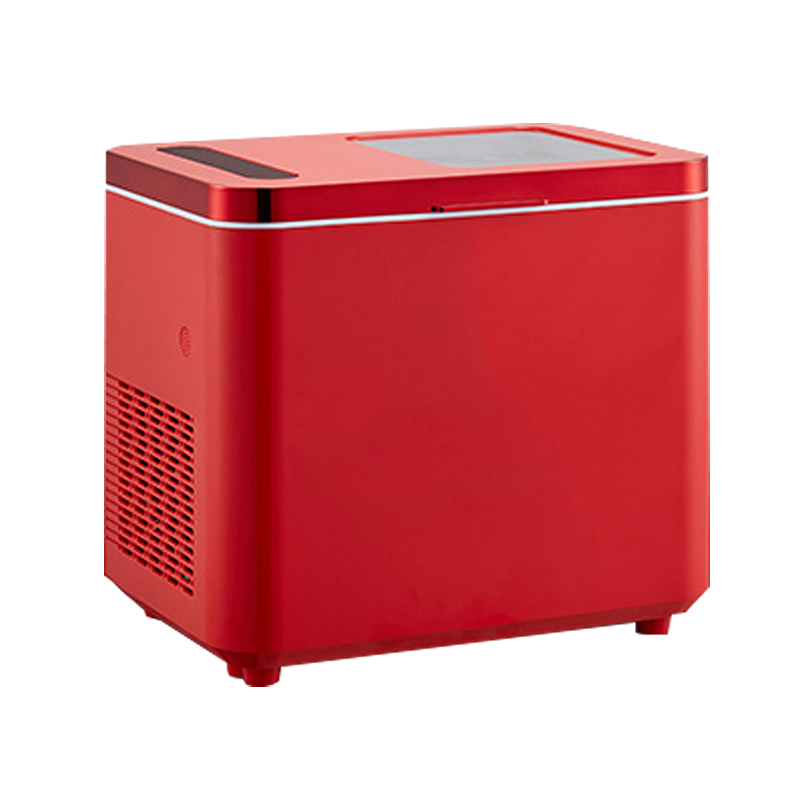
Ice is more than a simple ingredient in the food and beverage industry. It influences drink temperature, serving speed, product presentation, customer satisfaction, and daily operating efficiency. Cafés, milk tea shops, fast-food restaurants, convenience stores, offices, hotels, and home users all need ice that is practical to produce, easy to handle, and suitable for frequent use. The Touchscreen Ice Maker, identified as the Alien-Z01 model, is designed to meet these needs through a compact bullet ice-making format, efficient cooling performance, convenient cleaning access, and a space-conscious structure.
Unlike ordinary ice trays or basic countertop ice machines, this product is developed around the requirements of users who need a steady supply of usable ice without dedicating a large area to commercial refrigeration equipment. Its operating specifications include a 220V–240V, 50Hz power supply, a rated current and power of 0.9A and 150W, and R600a refrigerant with a 19-gram charge. With machine dimensions of approximately 325 × 295 × 252 millimeters, it can fit comfortably on many countertops, preparation stations, service counters, and household work surfaces.
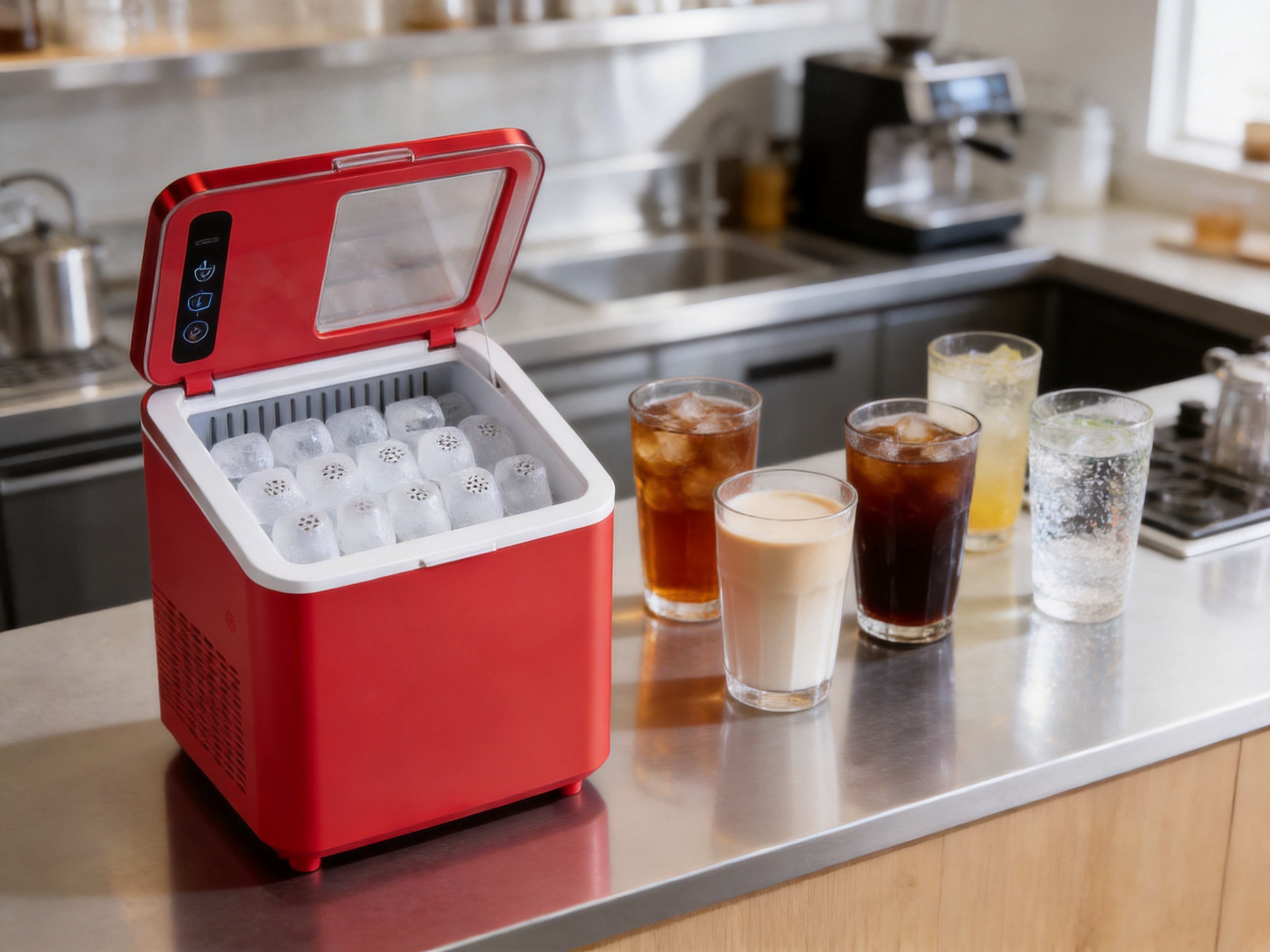
The machine’s ice format is especially suitable for beverage applications. The described ice structure increases contact with liquids, supports rapid cooling, and offers a pleasant crunchier texture compared with large, solid blocks. The shape is also designed to reduce sticking and improve handling, making the ice practical for scooping, transferring, and dispensing. These characteristics create a balanced solution for businesses that need fast service and users who value convenience.
Designed for Efficient Ice Production
The core advantage of this ice maker is its focus on continuous ice-making efficiency. Instead of relying on manually filled trays or intermittent household freezing methods, the machine uses a dedicated refrigeration and ice-forming process to produce ice in repeated cycles. This approach allows users to prepare a larger quantity of ice over time while reducing the labor associated with manual ice preparation.
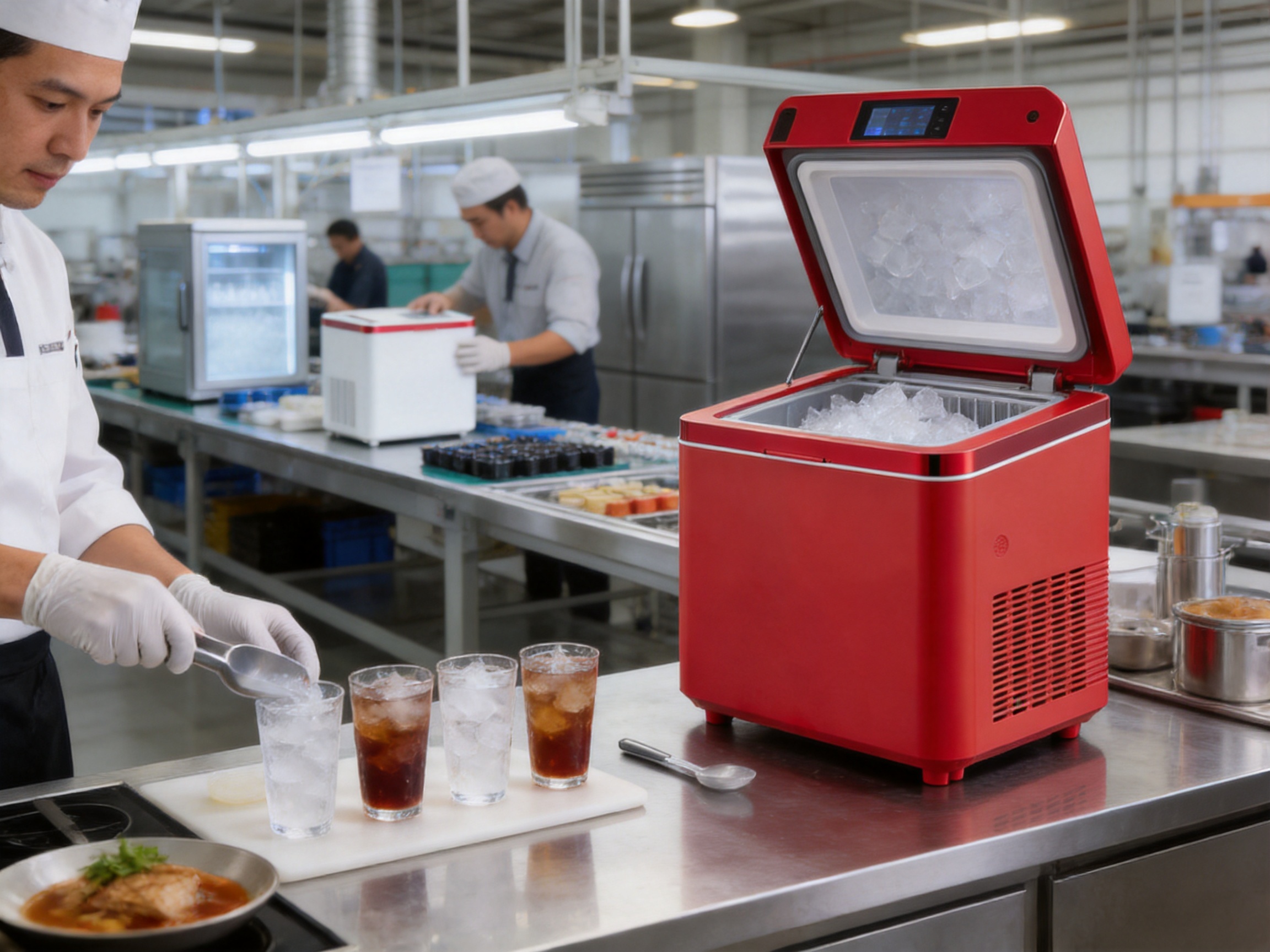
Continuous ice-making principles are particularly valuable in food and beverage environments. A milk tea shop may need ice for multiple drinks during a busy afternoon. A fast-food restaurant may require a consistent supply for soft drinks, iced coffee, fruit beverages, and food displays. A small café may need to serve cold drinks without storing large bags of purchased ice. In each situation, a compact ice machine helps convert counter space and electrical power into a dependable source of ready-to-use ice.
The 150W rated power specification supports an efficient countertop format. While actual production performance depends on ambient temperature, water temperature, ventilation, operating conditions, and usage frequency, the relatively modest power requirement makes the unit suitable for locations where energy consumption and available electrical capacity must be considered carefully. It is a practical balance between ice-making capability and compact appliance design.
Compared with traditional ice trays, this product reduces waiting time and improves consistency. Ice trays require manual filling, freezer space, repeated handling, and advance preparation. They can also produce irregular quantities and may be difficult to manage during periods of high demand. The Touchscreen Ice Maker is intended to make the process more organized by providing a dedicated appliance for ice production and storage.
Compared with large commercial ice systems, the machine offers a smaller footprint and a simpler installation concept. Many large systems require dedicated floor space, complex plumbing arrangements, extensive ventilation, or substantial electrical infrastructure. A compact countertop model can be more accessible to small businesses, startup operators, offices, and households that do not require the capacity of a full-size commercial installation.
Touchscreen ice maker
Ice Shape That Supports Rapid Cooling
The product information emphasizes a perforated center and a shape that increases contact with beverages. This design is important because the efficiency of cooling depends not only on the amount of ice but also on how much ice surface is exposed to the liquid. A shaped piece with an open or perforated center can provide more effective interaction between ice and beverage than a dense, solid piece of the same general size.
For beverage operators, rapid cooling has several practical benefits. Drinks can reach a refreshing serving temperature more quickly, service staff can prepare orders with greater confidence, and customers do not need to wait as long for a cold beverage. In fast-moving environments, even a small improvement in preparation time can be valuable when repeated across dozens or hundreds of orders.
The shape also helps distribute cooling throughout the drink. As the ice moves within a cup, the exposed surfaces interact with the beverage from multiple directions. This can be useful for iced tea, milk tea, fruit drinks, soda, cold brew, and other beverages that are prepared and served immediately. The ice format is therefore not only a storage product; it is an active part of the drink-serving process.
A perforated or hollow-style structure may also offer a distinctive drinking experience. The product information describes the ice as moderately hard and crunchy rather than extremely solid. This texture is popular in milk tea shops, fast-food restaurants, and other beverage businesses where customers may enjoy chewing small pieces of ice after finishing a drink.
At the same time, the product should be used according to the operator’s preferred beverage recipe and serving method. Ice quantity, cup size, liquid temperature, sugar content, and storage conditions all influence the final drinking experience. The machine provides a practical ice format, while the business can adjust its recipes and serving procedures to achieve the desired balance of cooling and dilution.
Non-Sticky Handling and Improved Storage Convenience
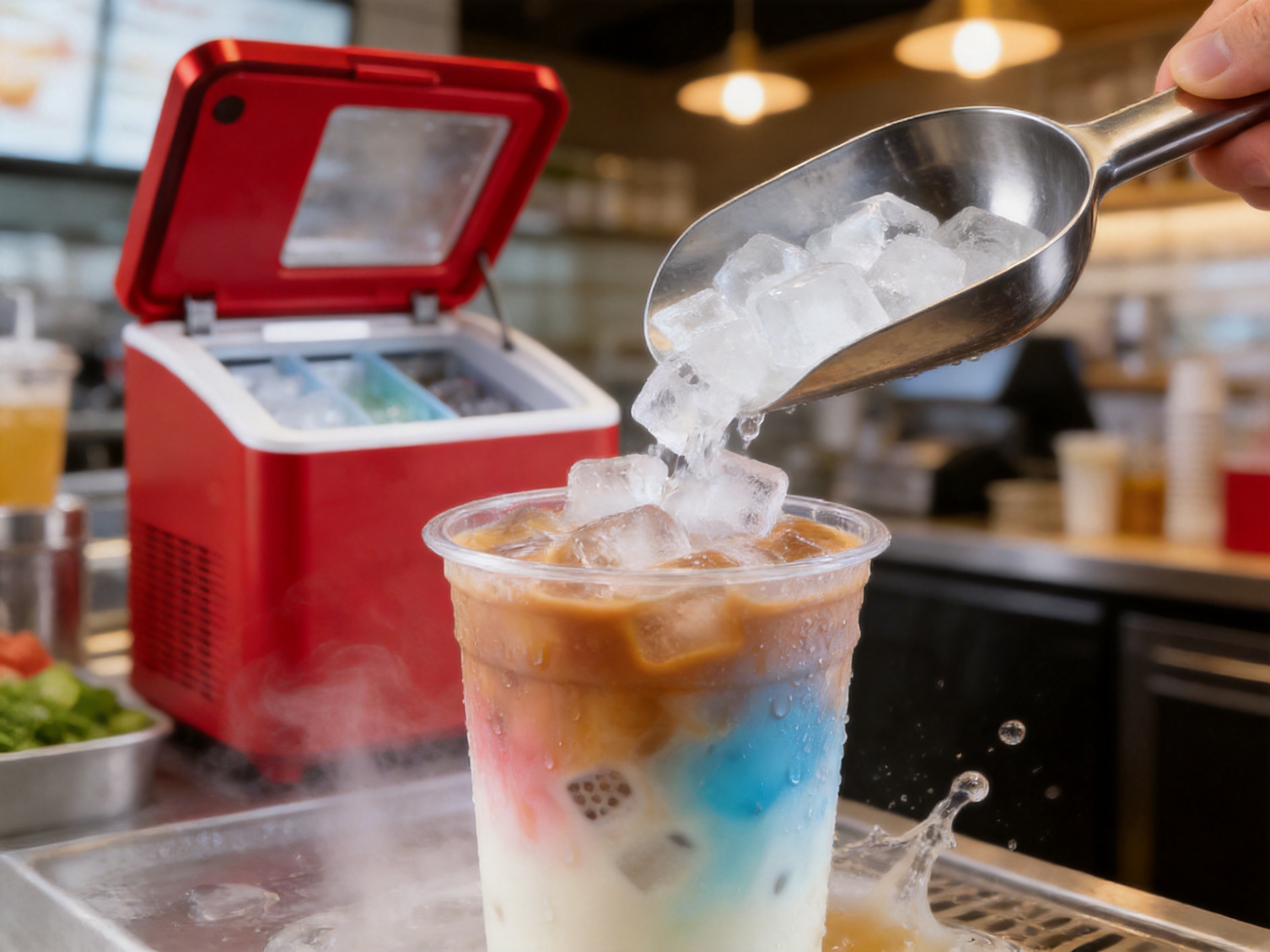
Ice that clumps together can create unnecessary work. Staff may need to break apart large masses before filling cups, and automatic dispensing equipment may struggle when pieces adhere to one another. The described ice shape is intended to offer high flowability and reduce sticking during storage and dispensing.
This feature supports faster service in several ways. A scoop can move through the stored ice more easily, allowing staff to portion drinks with less effort. Ice can also flow more consistently from a storage area or dispensing mechanism. When a business serves many beverages in a short period, smoother handling can help reduce interruptions at the counter.
Non-sticky ice is also useful for portion control. When pieces remain relatively separate, staff can more easily judge the amount being added to a cup, container, or food display. Consistent portions can support recipe standardization, cost management, and a more uniform customer experience.
The flowability of the ice is especially relevant to commercial environments that combine manual and automatic operations. A small beverage shop may use a scoop during normal service but later connect the ice-making process with a dispensing or storage system as the business grows. Ice that is less prone to clumping is more compatible with these different workflows.
Compared with irregular homemade ice, shaped machine-produced ice is generally easier to handle and distribute. Uniformity can help staff work more quickly and can create a more attractive appearance in transparent cups. The ice becomes part of the visual presentation of the beverage, not merely a method of lowering temperature.
Compact Dimensions for Flexible Placement
Space is one of the most important considerations when selecting an ice maker. Commercial kitchens and beverage counters often contain blenders, sealing machines, coffee equipment, refrigerators, packaging supplies, and ingredient containers. A large appliance can interfere with workflow, reduce preparation space, or require a separate equipment area.
With dimensions of approximately 325 × 295 × 252 millimeters, the Alien-Z01 is designed around a compact countertop footprint. Its rectangular proportions allow it to be placed on a preparation counter, service station, office pantry surface, hotel breakfast area, or home kitchen worktop, provided that adequate ventilation and safe operating clearance are maintained.
The compact structure can provide an advantage over larger ice makers that offer unnecessary capacity for smaller establishments. A small café, boutique restaurant, office, or household may not need a large storage bin or a floor-standing production system. Instead, it may benefit from an appliance that can be positioned near the point of use and operated without occupying an entire equipment zone.
Space efficiency can also reduce installation complexity. A smaller unit is easier to move during cleaning, rearrangement, or renovation. It can be relocated if the service counter changes, and it may be easier to transport between a warehouse, shop, event venue, or temporary food-service location.
Although the machine is compact, users should still place it on a stable, level surface. Proper airflow around the appliance is important for refrigeration equipment. Operators should avoid blocking ventilation openings, placing the unit next to strong heat sources, or positioning it where water spills can reach electrical components. These basic installation practices help support reliable operation and long service life.
Easy Cleaning Through a Fully Accessible Design
Hygiene is essential wherever ice is produced for consumption. Ice comes into direct contact with beverages, cups, scoops, and serving equipment. If an ice maker is difficult to open or contains inaccessible corners, routine cleaning may be neglected or performed incompletely. The product information highlights a fully flip-top design that allows users to open the ice storage and ice-making areas more thoroughly.
This design can make daily cleaning more practical. Users can inspect internal areas, remove residual water or ice, wipe accessible surfaces, and identify buildup before it becomes a larger maintenance issue. A wide opening also makes it easier to reach areas that would otherwise be difficult to clean with a cloth or soft brush.
Easy access supports a more consistent sanitation routine. In a busy commercial environment, cleaning procedures must be simple enough to fit into the daily schedule. A complicated machine may require more time, specialized tools, or partial disassembly, while a machine with a convenient opening can be incorporated into closing procedures more easily.
A suitable cleaning routine should follow the product manual and local food-safety requirements. Operators should use clean water, appropriate food-contact-safe cleaning materials, and dedicated cleaning tools. The unit should be disconnected from power when required by the maintenance procedure, and all cleaned parts should be allowed to dry properly before reuse. Ice that has been exposed to contamination should not be served.
The flip-top arrangement also improves visual inspection. Staff can check whether ice remains in the storage area, whether surfaces are clean, and whether any foreign material is present. This visibility is helpful for businesses that need clear internal procedures and regular quality checks.
Compared with enclosed designs that provide only a narrow access point, a fully accessible top can improve both cleanliness and user confidence. It supports the principle that hygienic equipment should be easy to inspect, easy to clean, and easy to maintain.
Technical Specifications at a Glance
The following specifications summarize the available product information for the Touchscreen Ice Maker.
| Item | Specification | Practical Meaning |
|---|---|---|
| Product model | Alien-Z01 | Identifies the compact bullet ice maker configuration. |
| Product category | Bullet Ice Maker | Designed to form shaped ice suitable for beverages and food-service applications. |
| Power supply | 220V–240V / 50Hz | Suitable for electrical systems operating within this voltage and frequency range. |
| Current and power | 0.9A / 150W | Reflects the rated electrical demand of the appliance. |
| Refrigerant | R600a / 19g | Uses R600a refrigerant with the stated charge amount. |
| Machine dimensions | 325 × 295 × 252 mm | Supports countertop placement in space-limited environments. |
| Ice characteristics | Rapid cooling, flowable, moderately hard, crunchy | Supports beverage cooling, handling, and customer enjoyment. |
| Cleaning design | Fully flip-top access | Allows more convenient inspection, cleaning, and maintenance. |
Electrical compatibility should always be confirmed before purchase or installation. The stated 220V–240V, 50Hz specification is appropriate only for compatible power systems. Users should also follow local electrical regulations and use a safe, properly grounded outlet where required.
Refrigeration Design and R600a Considerations
The machine uses R600a refrigerant with a stated charge of 19 grams. R600a, also known as isobutane, is widely used in certain refrigeration appliances because of its refrigeration performance and relatively low global warming potential compared with some older refrigerants. Its use reflects the broader movement toward more environmentally considerate refrigeration technologies.
Because R600a is flammable, refrigerant-related servicing must be performed by qualified professionals using appropriate procedures and equipment. Users should not attempt to open the sealed refrigeration circuit, modify the refrigerant charge, or repair leaks without professional authorization. Correct handling protects both the appliance and the people operating it.
The refrigeration system is most effective when the ice maker is used in a suitable environment. Excessive ambient heat, restricted airflow, direct sunlight, or placement near ovens and hot equipment can increase the cooling burden. Maintaining clearance around the unit and keeping the condenser area free from dust can support stable performance.
Refrigeration efficiency also depends on the water supplied to the machine. Extremely warm water may require more time to cool, while water quality can influence mineral deposits and cleaning frequency. Where local water conditions are hard or heavily mineralized, operators may need to consider appropriate filtration or a more frequent maintenance schedule.
The combination of a compact refrigeration system, moderate electrical rating, and R600a refrigerant makes the product suitable for users who want a modern countertop ice solution without the infrastructure associated with a large ice plant. It is an example of how appliance design can combine functional output with reduced physical scale.
Advantages Over Common Alternatives
Compared with Manual Ice Trays
Manual ice trays are inexpensive, but they require repeated filling, freezer space, and advance planning. Their ice may be irregular in shape and quantity, and removing the pieces can be inconvenient. The Touchscreen Ice Maker offers an automated alternative that is more suitable for repeated daily use.
The machine can also place ice production closer to the service area. Instead of transferring trays from a freezer to a counter, users can operate a dedicated appliance where drinks are prepared. This can reduce unnecessary movement and simplify the workflow.
Compared with Purchased Bagged Ice
Purchased bagged ice can be useful during occasional events, but regular dependence on it may create storage, transportation, and inventory challenges. Bags can take up refrigerator or freezer space, and operators must manage purchasing schedules and product turnover.
An on-site ice maker offers greater control over production timing. Businesses can make ice according to their own demand instead of relying entirely on external availability. This may be especially helpful for shops located far from suppliers or businesses that want to reduce the handling of large ice bags.
Compared with Large Floor-Standing Machines
Large floor-standing ice makers are appropriate for high-volume operations, but they can be excessive for small businesses and residential users. They may require more space, higher investment, more complex installation, and additional maintenance resources.
The compact model is better suited to applications where space and simplicity are priorities. Its small dimensions make it easier to integrate into a countertop workflow while still providing the key benefits of dedicated ice production, shaped ice, and accessible cleaning.
Compared with Basic Countertop Ice Makers
Some basic countertop machines focus primarily on producing ice quickly but may provide less emphasis on shape, flowability, cleaning access, or beverage performance. The Touchscreen Ice Maker is positioned around a more complete user experience, combining an efficient ice format with a structure intended to support handling and hygiene.
The product’s described ice characteristics are especially relevant to beverage businesses. Rapid cooling, moderate hardness, and non-sticky handling can make a meaningful difference in daily operation, even when the machine occupies only a small amount of counter space.
Manufacturing Strengths Behind the Product
The company behind the product, Alien Technology Co., Ltd., is located in Zhouxiang, Zhejiang Province, an area known for the development and manufacture of small household appliances. This location provides access to an established appliance supply network, manufacturing experience, component resources, packaging services, logistics connections, and supporting industrial capabilities.
A regional manufacturing ecosystem can benefit product development in several ways. Appliance makers can cooperate with specialized suppliers for refrigeration components, electrical parts, molded housings, metal components, controls, packaging, and quality inspection. Close access to supporting industries can help a manufacturer coordinate production and respond efficiently to product improvement requirements.
For a compact ice maker, manufacturing quality depends on the coordination of many details. The outer enclosure must be dimensionally consistent. The internal water and ice-making areas must be assembled accurately. Electrical wiring must be routed safely. Refrigeration components must be installed in accordance with design requirements. Hinges, covers, seals, controls, and structural parts must work together to create a product that is convenient in daily use.
The company’s focus on ice makers, coffee machines, and air fryers also indicates experience with several categories of small household appliances. These products share important development priorities, including compact design, thermal or refrigeration management, user-friendly operation, food-contact considerations, electrical safety, and ease of cleaning.
Although individual factory procedures and certifications should be confirmed directly with the manufacturer, a responsible production approach for this type of appliance generally includes incoming component inspection, assembly control, functional testing, electrical checks, appearance inspection, and packaging verification. These stages help identify defects before products are shipped to customers.
Product consistency is particularly important for international customers. A buyer may order multiple units for a chain of stores, a distributor, or a hospitality project. Consistent dimensions, controls, electrical specifications, and exterior quality make it easier to deploy the machines across different locations.
Humanized Design as a Manufacturing Objective
The company’s stated mission is “Smart Technology, Simplifying Life, Enhancing Happiness.” This mission is reflected in the product’s emphasis on practical user interaction. A machine is valuable not only because it can produce ice, but also because users can understand it, clean it, position it, and integrate it into their daily routine.
The flip-top design is an example of humanized engineering. It addresses a common problem—difficulty accessing internal areas—through a structural solution. The compact footprint addresses another practical issue: limited counter space. The shaped ice addresses beverage cooling and handling. Each feature connects the technical design to a real user requirement.
The touchscreen-oriented product concept also suggests an emphasis on accessible operation. Since detailed interface specifications are not provided, users should confirm the exact control functions, display options, cycle settings, indicators, and language support with the manufacturer. Nevertheless, an intuitive control system can help reduce training time and make operation more approachable for staff members.
Quality, Improvement, and Innovation
Alien Technology states that it pursues excellent quality, customer satisfaction, continuous improvement, and innovation. These priorities are significant in a competitive appliance market, where customers compare products not only by price but also by reliability, maintenance convenience, appearance, energy use, and after-sales support.
Continuous improvement may involve refining the ice-forming process, improving water circulation, reducing noise, strengthening hinges, optimizing insulation, improving control interfaces, enhancing surface durability, or simplifying cleaning procedures. Small improvements can have a major effect when a product is used every day.
Innovation does not always mean adding complexity. In many successful household appliances, innovation means making a familiar task easier, safer, cleaner, or more efficient. A compact ice maker that solves storage, access, cooling, and handling problems can provide meaningful innovation without requiring a complicated installation.
Applications Across Different Environments
Milk Tea and Beverage Shops
Milk tea shops require large quantities of ice for tea-based beverages, fruit drinks, smoothies, and specialty recipes. The product’s crunchy texture and rapid cooling characteristics are aligned with the expectations of many milk tea customers. Its flowable shape can also help staff scoop portions rapidly during peak periods.
The compact footprint may be useful for small-format beverage stores where every section of the counter has a defined purpose. The machine can be placed near drink assembly, subject to proper ventilation and operational safety, reducing the distance between ice production and beverage preparation.
Cafés and Coffee Shops
Cafés can use shaped ice for iced coffee, cold brew, iced tea, flavored sparkling drinks, and seasonal beverages. The ice maker can complement coffee equipment by providing a dedicated source of cooling ice without occupying the space of a large commercial system.
In cafés with limited back-of-house storage, producing ice on demand may help reduce dependence on purchased ice. Staff can incorporate cleaning and inspection into opening and closing routines, supporting a more organized beverage operation.
Fast-Food Restaurants
Fast-food restaurants often need ice that can be served quickly and handled efficiently. Non-sticky ice can support rapid scooping, while the cooling performance is useful for soft drinks and cold menu items. The moderate hardness and crunchy texture may also appeal to customers who enjoy chewing ice.
Restaurants should evaluate expected demand and determine whether one compact unit provides sufficient supply for their busiest periods. The product is especially suitable for smaller outlets, supplementary beverage stations, staff areas, or locations where a large floor-standing machine is impractical.
Hotels, Offices, and Hospitality Areas
Hotels can use compact ice makers in breakfast areas, guest-service zones, small bars, conference facilities, or staff kitchens. Offices can place the machine in a pantry or shared refreshment area, provided that cleaning responsibilities are clearly assigned.
Hospitality users often value quiet organization and attractive equipment placement. A small appliance that is easy to inspect and clean can be more convenient than an improvised ice-storage arrangement. It can also support occasional meetings, events, and customer service activities.
Households and Entertainment Areas
Home users may appreciate the product for family gatherings, parties, outdoor entertaining, home bars, and everyday cold beverages. The compact design can make it suitable for kitchens where freezer space is limited. It may also be useful in recreational rooms, vacation properties, or small hospitality accommodations.
Recommended Operating Practices
Before using the machine, operators should read the supplied manual and confirm that the electrical supply matches the required 220V–240V, 50Hz range. The unit should be placed on a stable, level surface away from direct heat and excessive moisture. Ventilation openings should remain unobstructed.
Use clean water suitable for ice production. Water quality affects both the taste of the ice and the cleanliness of the internal system. If water contains significant mineral content, scale may accumulate more quickly, making regular cleaning and maintenance increasingly important.
Do not place hands, utensils, or foreign objects into moving or active areas while the appliance is operating. Do not attempt to remove ice by force if it is temporarily connected or fixed within the machine. Follow the manufacturer’s instructions for restarting, draining, cleaning, and resolving operating alerts.
Ice should be handled with a clean scoop or other food-safe utensil. Users should avoid touching serving ice directly with bare hands. The storage area should be kept closed when not in use, and ice that has been exposed to dirt or other contamination should be discarded.
At the end of an operating period, clean the accessible ice-making and storage areas according to the recommended procedure. Remove standing water where instructed, wipe surfaces with suitable materials, and allow the machine to dry. Regular maintenance is generally more effective than waiting until visible buildup, unusual odor, or reduced performance occurs.
For commercial users, a written cleaning schedule can help maintain consistency. The schedule may identify daily surface cleaning, regular internal cleaning, periodic inspection of ventilation areas, and professional servicing when necessary. Staff training should explain both hygiene procedures and safe electrical operation.
Purchasing Considerations for Distributors and Business Buyers
Distributors and commercial buyers should assess the machine according to the intended market. Important questions include expected daily ice demand, operating temperature, available counter space, electrical compatibility, water quality, cleaning requirements, packaging configuration, warranty terms, spare-part availability, and after-sales support.
Buyers should also confirm the exact meaning of the touchscreen product designation. Relevant details may include whether the display provides operating status, cycle selection, cleaning guidance, water-level alerts, ice-full alerts, timer functions, or other controls. These features should be verified from the manufacturer’s current technical documentation rather than assumed from the product title alone.
For international distribution, importers should confirm applicable electrical, safety, environmental, labeling, and food-contact requirements in the target market. Refrigerant handling and transportation rules may also apply because the unit contains R600a. Compliance documentation and testing information should be requested directly from the manufacturer when required.
Packaging quality is another important consideration. A compact appliance may travel through multiple stages of handling before reaching the final user. Protective packaging should reduce the risk of damage to the housing, cover, control panel, water system, and refrigeration components. Buyers can request information about carton dimensions, gross weight, palletization, loading quantities, and shipping protection.
Bulk buyers may also discuss private labeling, color options, packaging customization, user manuals, language requirements, and order lead times. The manufacturer’s location in Zhejiang and its focus on small appliances may provide a useful foundation for business cooperation, but specific production capabilities and minimum order quantities should be confirmed directly.
Why This Product Is a Practical Competitive Choice
The Touchscreen Ice Maker stands out through the combination of several practical strengths rather than through one isolated specification. It is compact enough for countertop use, efficient enough for routine beverage preparation, shaped to support rapid cooling, designed for relatively smooth handling, and structured for easier cleaning.
Many competing products may offer one or two of these characteristics, but the value of this model lies in the way the features work together. A small machine is more useful when its ice cools drinks effectively. Ice with a pleasant texture is more valuable when it is easy to scoop. A high-flowability format is more practical when the storage area is accessible. A compact appliance is more suitable for long-term use when maintenance is straightforward.
The 150W power rating and 325 × 295 × 252-millimeter dimensions reinforce its countertop positioning. The stated 220V–240V, 50Hz supply specification makes it suitable for compatible electrical markets. The R600a refrigerant reflects the use of a modern refrigerant type, while the fully flip-top design responds directly to the hygiene requirements of ice-making equipment.
For businesses, the product can support faster beverage preparation, more organized counter operations, and reduced dependence on manual ice production. For households, it can provide a convenient way to prepare shaped ice without filling trays or using valuable freezer space. For distributors, it represents a product category with applications across food service, hospitality, offices, and home use.
Company Profile and Partnership Potential
Alien Technology Co., Ltd. is located at No. 138, Huixiang'an Road, Zhouxiang Town, Cixi City, Zhejiang Province. The company specializes in small household appliances, including ice makers, coffee machines, and air fryers. Its product range reflects an understanding of everyday appliances that combine heating, cooling, food preparation, and user convenience.
The company describes its mission as using smart technology to simplify life and enhance happiness. Its stated business values include quality, customer satisfaction, continuous improvement, innovation, stability, and pragmatism. These principles are relevant to international buyers seeking a manufacturing partner rather than a single standalone product.
A manufacturing partner with experience across related appliance categories may be able to support product development, model expansion, and coordinated sourcing. A buyer interested in ice makers may also require coffee machines or air fryers for the same retail channel, hospitality project, or private-label program. The company’s broader appliance focus can create opportunities for product portfolio cooperation.
Potential partners should communicate their technical requirements clearly. Useful information may include target market, voltage, plug type, preferred appearance, packaging needs, estimated order volume, required certifications, warranty expectations, and delivery schedule. Clear communication at the beginning of a project can help align design, production, inspection, and logistics.
Q&A
What type of ice does this machine produce?
The product is categorized as a bullet ice maker. Its ice is described as shaped, relatively flowable, moderately hard, and crunchy, with a perforated center or structure intended to increase contact with beverages.
Is the machine suitable for milk tea shops?
Yes. Its rapid-cooling characteristics, crunchy texture, and easy-to-scoop shape are particularly suitable for milk tea shops and similar beverage businesses. Operators should compare the machine’s production capacity with their peak demand before choosing the number of units required.
How much power does the ice maker use?
The stated electrical rating is 0.9A and 150W. Actual energy consumption may vary according to operating duration, ambient temperature, water temperature, ventilation, and usage conditions.
What voltage does it require?
The specified power supply is 220V–240V at 50Hz. Buyers should confirm compatibility with the electrical system in their country or region before purchase.
What are the machine dimensions?
The listed dimensions are approximately 325 × 295 × 252 millimeters. This compact size supports countertop placement, although users should leave sufficient clearance for ventilation, operation, and cleaning.
Does the product use environmentally considerate refrigerant?
The machine uses R600a refrigerant with a stated charge of 19 grams. R600a is commonly used in modern refrigeration equipment and has a relatively low global warming potential compared with certain older refrigerants. Because it is flammable, all refrigerant servicing must be completed by qualified professionals.
Is the ice likely to stick together during storage?
The product information states that its unique shape provides high flowability and helps prevent clumping. Actual results depend on storage temperature, humidity, operating conditions, and how frequently the ice is removed.
Is the machine easy to clean?
The machine uses a fully flip-top design intended to provide broad access to the ice storage and ice-making areas. This can make inspection, wiping, and routine maintenance more convenient. Users should follow the cleaning instructions supplied with the product.
Can the machine be used in a restaurant?
It can be suitable for restaurants, cafés, milk tea shops, fast-food outlets, hotels, offices, and other food-service environments. The buyer should evaluate expected ice demand, local hygiene rules, electrical requirements, ventilation, and available counter space.
Does the product include a touchscreen control panel?
The product title identifies it as a touchscreen ice maker, but detailed control-panel functions are not provided in the available specifications. Buyers should confirm the exact touchscreen features, operating modes, indicators, and language options with the manufacturer.
Can it replace a large commercial ice machine?
It may be a practical alternative for small businesses and moderate-use applications, but it should not automatically be considered a replacement for a high-capacity floor-standing system. The correct choice depends on daily demand, peak service volume, storage requirements, and operating conditions.
What kind of water should be used?
Clean water suitable for ice production should be used. If local water contains high mineral content, filtration and more frequent cleaning may be helpful. The final water-treatment approach should follow local requirements and the manufacturer’s instructions.
Who manufactures the product?
The product is manufactured by Alien Technology Co., Ltd., a Zhejiang-based company specializing in small household appliances such as ice makers, coffee machines, and air fryers.
How can potential buyers contact the company?
Potential buyers may contact Alien Technology Co., Ltd. through the supplied business telephone number, +86-13968281299, or the supplied email address, [email protected], to request current pricing, technical documentation, production details, and cooperation information.
Conclusion
The Touchscreen Ice Maker is a compact, beverage-oriented ice solution designed for users who need convenient production without the size and complexity of a large commercial system. Its key advantages include a countertop-friendly structure, a 150W rated power specification, compatibility with 220V–240V and 50Hz systems, R600a refrigerant, shaped ice for rapid cooling, relatively high flowability, a crunchy texture, and a fully flip-top design for easier cleaning.
These features make the machine suitable for milk tea shops, cafés, restaurants, fast-food businesses, hotels, offices, households, and other locations where cold beverages are prepared regularly. Its competitive value comes from the combination of cooling performance, handling convenience, space efficiency, and hygiene-oriented access.
Backed by a manufacturer located in Zhejiang’s small-appliance production region, the product also represents a potential business-to-business opportunity for distributors, retailers, hospitality suppliers, and private-label buyers. Alien Technology Co., Ltd.’s stated focus on quality, customer satisfaction, continuous improvement, innovation, and practical appliance design provides a foundation for cooperation, subject to verification of specific production capabilities and compliance documentation.
For final purchasing decisions, users should confirm production capacity, operating noise, control functions, cleaning procedures, warranty coverage, certifications, packaging, and after-sales support. When matched with the right application and maintained correctly, this compact bullet ice maker can become a valuable part of an efficient beverage preparation workflow.
References
1. Product specification sheet for the Alien-Z01 Touchscreen Ice Maker, including electrical supply, rated power, refrigerant, dimensions, and product category information.
2. Product information provided for the Alien-Z01 ice format, including rapid cooling, flowability, texture, continuous ice-making efficiency, compact structure, and flip-top cleaning access.
3. General refrigeration engineering principles concerning countertop appliance ventilation, refrigerant handling, heat transfer, and routine maintenance.
4. General food-service hygiene principles for the production, storage, handling, and serving of ice intended for human consumption.
5. Manufacturer profile and company information for Alien Technology Co., Ltd., including its Zhejiang location, appliance categories, business mission, and stated commitment to quality and innovation.