
 English
 한국어
한국어 Español
 Deutsch
In modern kitchens, convenience is no longer limited to cooking faster or storing food better. Today, people also expect home appliances to improve daily comfort, make beverages more enjoyable, support healthier routines, and bring professional-style experiences into ordinary family life. A home chewing ice maker answers exactly that demand. It is not simply a machine that freezes water. It produces soft, chewable ice with a pleasant texture, fast cooling ability, and wide usability across drinks, food presentation, cold therapy, smoothies, and entertaining.
The product introduced here is a compact home chewing ice maker designed for users who want a reliable supply of soft, small-particle ice at home. Unlike traditional hard cube ice, chewing ice is known for its gentle bite, porous structure, and satisfying texture. It cools drinks quickly, blends easily with beverages, and is comfortable to chew without the harsh density of standard freezer ice. For families, coffee lovers, soda drinkers, smoothie makers, and people who enjoy refreshing drinks throughout the day, this type of ice can noticeably upgrade the experience.
As a household appliance, the product combines compact dimensions, practical electrical performance, and a user-centered ice experience. With a machine size of 224 x 333 x 325 mm, it is suitable for countertops, refreshment areas, small kitchens, office pantries, and entertainment corners. Its listed power configuration of 220V/60Hz and 0.55A/130W shows that it is built as a practical appliance for everyday use. The refrigerant specification of R600a/19g reflects a modern refrigeration approach commonly valued for efficient cooling performance in small appliances.
Behind the product is Alien Technology Co., Ltd., a manufacturer located in Zhouxiang Town, Cixi City, Zhejiang Province, an area recognized for small household appliances and convenient logistics. The company focuses on products such as ice makers, coffee machines, and air fryers, giving it a broad foundation in compact kitchen appliance development and manufacturing. Its mission, “Smart Technology, Simplifying Life, Enhancing Happiness,” aligns closely with the role of a home chewing ice maker: it simplifies access to premium ice and enhances daily beverage enjoyment.
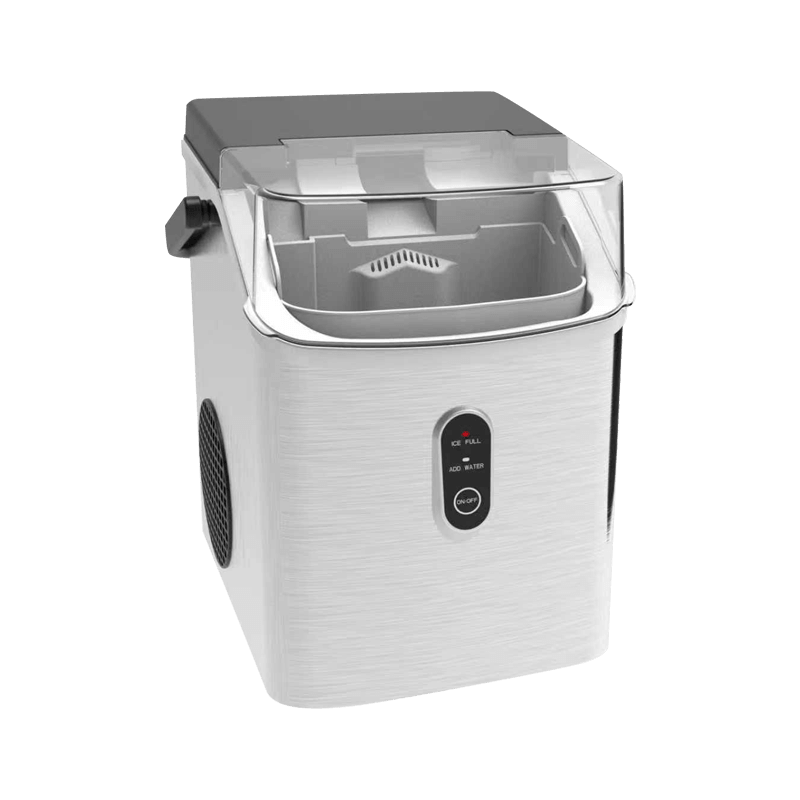
Home chewing ice maker
The Rise of Chewing Ice in the Home Appliance Market
For many years, ice at home meant frozen cubes from trays or hard ice from refrigerator compartments. While such ice is useful, it has limitations. Standard cubes are dense, slow to chill beverages, difficult to chew, and often too large for specialty drinks. When used in iced coffee or soda, they may not deliver the immediate cooling sensation people expect. When blended into smoothies or crushed drinks, they can place more strain on blenders and may not create an even texture.
Chewing ice, sometimes referred to as nugget-style or soft pellet-style ice, has gained popularity because it changes the way ice functions. Instead of acting only as a cooling object, it becomes part of the drinking and eating experience. Its small particle size increases surface area, allowing it to cool liquids rapidly. Its softer texture makes it more enjoyable to bite. Its porous structure allows flavors from coffee, juice, soda, or syrups to infuse into the ice more quickly, making every sip and chew more flavorful.
In commercial settings, soft chewing ice has long been appreciated in beverage service, hospitality, salad bars, seafood displays, and healthcare applications. Bringing this type of ice into the home gives users access to a once-specialized experience without needing to visit restaurants, cafes, convenience stores, or hotels. The home chewing ice maker therefore represents a shift from basic utility to lifestyle enhancement.
This product is especially relevant for households where cold drinks are part of daily routines. Iced coffee drinkers can enjoy rapid chilling without waiting. Soda lovers get a softer crunch and better carbonation refreshment. Families can make smoothies, shaved ice, fruit drinks, and chilled desserts more easily. For hosts, having chewable ice available can make gatherings feel more premium and thoughtful. For users who enjoy chewing ice, the gentle texture provides a more comfortable alternative to hard cubes.
Product Overview
The home chewing ice maker is designed to produce soft, chewable ice suitable for beverages, food cooling, display, and mixed drink preparation. Its purpose is simple but valuable: to make high-quality chewing ice available whenever users need it. The product brings together refrigeration engineering, compact appliance design, and user-focused functionality.
Its form factor is suitable for residential environments. With dimensions of 224 x 333 x 325 mm, it is small enough to fit into many kitchen layouts while still providing a dedicated ice-making function. Users who do not have a large built-in ice system can still enjoy a specialized ice experience. The machine can serve as a dedicated refreshment appliance near coffee stations, bar counters, dining rooms, or entertainment areas.
The appliance operates on a 220V/60Hz power supply, with current and power listed as 0.55A/130W. This specification places it in the category of practical countertop appliances rather than heavy commercial machinery. The use of R600a refrigerant with a 19g charge reflects the product’s focus on compact refrigeration performance.
Specification |
Details |
Product Type |
Home chewing ice maker |
Power Supply |
220V/60Hz |
Current and Power |
0.55A/130W |
Refrigerant and Charge |
R600a/19g |
Machine Dimensions |
224 x 333 x 325 mm |
Main Ice Experience |
Soft, chewable, small-particle ice |
Typical Uses |
Iced coffee, soda, smoothies, shaved ice, food cooling, cold compress applications |
The table highlights the product’s practical profile. It is not oversized, not overly complex, and not limited to a single beverage type. Instead, it is designed as a flexible household solution for everyday refreshment.
The Core Advantage: A Better Chewing Experience
The most important reason to choose a chewing ice maker is the texture of the ice. Hard cubes can be unpleasant to bite and may even feel risky for teeth. Chewing ice, by contrast, is known for its softer and more satisfying structure. It delivers a pleasant crunch without the severe hardness of freezer cubes. This makes the product appealing to users who love the sensory pleasure of chewing ice after finishing a drink.
Texture matters more than many consumers initially realize. Ice is often treated as a background element, but in cold beverages it affects taste, temperature, sound, mouthfeel, dilution, and enjoyment. A hard cube cools slowly and remains separate from the drink. Chewing ice interacts more actively. It absorbs liquid flavor, releases chill quickly, and becomes part of the beverage’s character.
This product’s emphasis on soft texture gives it a direct advantage over ordinary ice tray solutions and many basic countertop ice makers that produce bullet-shaped or hard cube-style ice. Those alternatives can make ice, but they may not provide the same gentle bite or beverage-friendly structure. For users who specifically want chewable ice, the difference is significant.
The pleasant sound and texture of chewing ice also contribute to the overall drinking experience. Many people associate soft nugget-style ice with restaurants, cafes, hospitals, and premium beverage counters. Having this experience at home turns ordinary drinks into more enjoyable moments. A glass of water becomes more refreshing. A cold soda feels livelier. Iced coffee becomes smoother and colder faster. Fruit juices and flavored drinks become more playful and satisfying.
Rapid Cooling for Drinks That Need Immediate Refreshment
Another major advantage of chewing ice is rapid cooling. Because the ice is made of small particles, it has a larger contact area with liquid compared with large cubes. More surface contact means faster heat exchange. Drinks can cool quickly and evenly, which is especially important for iced coffee, soda, tea, fruit drinks, and cocktails.
For iced coffee lovers, this is a meaningful benefit. Coffee brewed hot or concentrated can require fast chilling to preserve flavor and avoid waiting. Large cubes may cool slowly, while crushed ice can sometimes melt too quickly or unevenly. Chewing ice provides a balanced solution: fast cooling, pleasant texture, and easy mixing. It can help create a coffeehouse-style iced drink at home without complicated equipment.
Soda and sparkling beverages also benefit from soft chewing ice. The small-particle structure makes the drink feel colder right away, while the ice itself becomes infused with the beverage flavor. After drinking, users can enjoy the remaining flavored ice as a treat. This sensory bonus is one of the reasons chewing ice has a loyal following.
For families with children or guests, rapid cooling is useful in everyday situations. If juice, tea, or water needs to be served cold quickly, chewing ice can do the job efficiently. It reduces the need to pre-chill every beverage and gives the household more flexibility. When guests arrive unexpectedly, a countertop chewing ice maker can help create a polished serving experience.
Excellent Coating Ability for Food Presentation and Preservation
Chewing ice is not limited to beverages. Its small, soft particles can tightly surround and coat food, making it valuable for presentation and cooling. In food service environments, similar ice forms are often used for salad bars, seafood displays, oysters, sashimi, and chilled food arrangements because they conform around the item instead of leaving large gaps.
At home, this advantage can be used for entertaining and food preparation. For example, seafood served at a gathering can be placed over a bed of soft ice for a fresh and attractive presentation. Fruits can be chilled before serving. Bottled drinks can be nestled into chewing ice for quick cooling. Small desserts or chilled ingredients can be kept cool during preparation.
The coating function comes from the ice’s particle size and shape. Large cubes leave empty spaces and may not evenly contact food surfaces. Chewing ice fills those spaces, creating more consistent cooling. This is useful when the goal is not only to make something cold, but also to keep it visually appealing and evenly chilled.
In medical and wellness settings, the same conforming quality is helpful for cold compress applications. Soft, small-particle ice can adapt to body contours more easily than large cubes. When properly wrapped and used safely, it can provide localized cooling for temporary relief. This versatility makes the appliance more than a drink accessory; it can support a wider range of household needs.
Flavor Infusion: Turning Ice into Part of the Drink
One of the most enjoyable qualities of chewing ice is its ability to take on flavor. Because the particles are small and often porous, beverages can enter the ice structure more easily. This makes the ice taste like the drink itself. In a cola, the ice can become cola-flavored. In iced coffee, the ice can absorb coffee notes. In fruit tea, the remaining ice can carry fruit and tea flavors.
This feature gives chewing ice an advantage over standard hard cubes, which often remain flavorless until they melt. Standard cubes dilute the drink without contributing much texture or taste. Chewing ice becomes more integrated with the beverage, producing a more satisfying finish.
For home drink creators, flavor infusion opens creative possibilities. Users can mix syrups, fruit concentrates, milk teas, cold brew coffee, lemonade, or herbal drinks with chewing ice to create layered refreshments. The soft particles make it easier to stir, scoop, and combine with other ingredients. The result is not merely a cold drink, but a textured beverage experience.
This is particularly useful for smoothies and shaved-ice-style desserts. Chewing ice can serve as a base that blends or crushes more easily than dense cubes. It can support a smoother texture and reduce the effort needed to create frozen drinks. Families can experiment with fruit, yogurt, milk, coffee, or flavored syrups to create simple desserts at home.
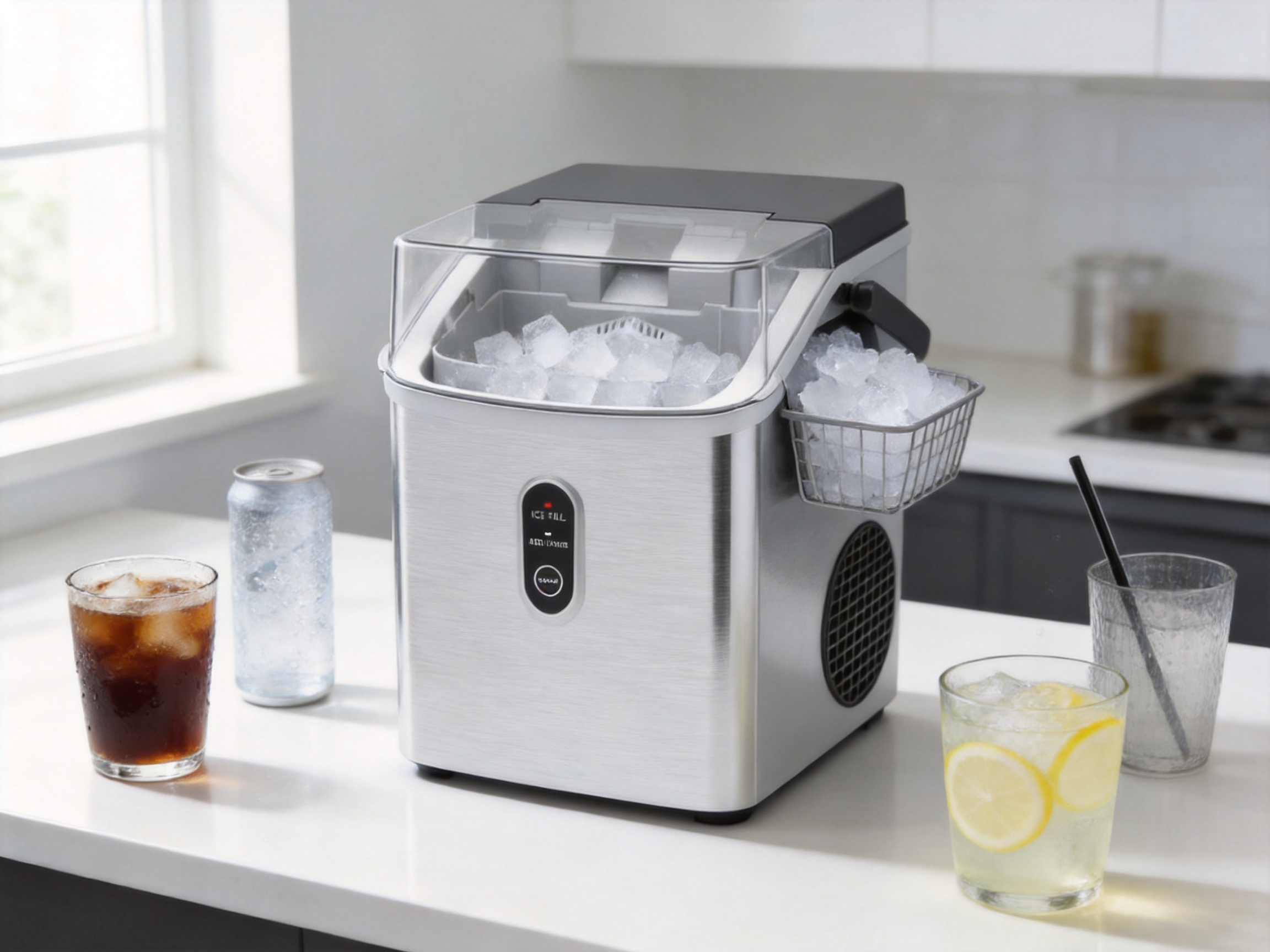
Versatility Across Everyday Scenarios
A good home appliance should not serve only one narrow purpose. The best countertop appliances earn their space by being used often, in different ways, by different members of the household. The home chewing ice maker meets this standard because soft ice can be used across many scenarios.
For morning routines, it supports iced coffee, cold brew, iced tea, and chilled water. For lunch, it helps cool fruit drinks or sparkling beverages. In the afternoon, it can be used for smoothies, blended drinks, and refreshing snacks. In the evening, it can elevate mocktails, cocktails, soda, or dessert presentations. During gatherings, it becomes a service tool for keeping drinks and foods cool.
It can also support healthier hydration habits. Some people drink more water when it is served very cold with chewable ice. The texture makes plain water more interesting and satisfying, which can encourage regular hydration. For households trying to reduce sugary drink consumption, pleasant ice can make simple water or lightly flavored drinks more appealing.
In warm seasons, the appliance becomes even more useful. Rather than depending on limited freezer trays or purchasing packaged ice, users can create soft ice at home. This saves effort and offers fresher results. It also avoids the inconvenience of storing bulky ice bags in a freezer.
Ease of Use and Mixing
Soft chewing ice is easy to scoop, pour, and mix. This may seem like a small detail, but it affects daily convenience. Hard cubes can splash when dropped into glasses. Large ice shapes may not fit narrow cups or bottles. Crushed ice can clump or melt rapidly. Chewing ice offers a practical middle ground: small enough to handle easily, soft enough to chew, and structured enough to provide cooling power.
When adding ice to beverages, users can better control the quantity. A spoon or scoop can portion the ice according to the drink size. This is helpful for iced coffee cups, tumblers, water bottles, cocktail glasses, and dessert bowls. The ice also mixes readily with liquids, making it suitable for drinks where temperature and texture should be evenly distributed.
For families, easy handling makes the appliance more accessible. Different users can prepare drinks according to their preferences. A child may want a fruit drink with a small amount of ice, while an adult may want a tumbler filled with chewing ice for cold brew. Hosts can serve different beverage styles without changing equipment.
This ease of use is one of the product’s advantages over freezer tray ice. Ice trays require filling, freezing, twisting, cracking, and storing. Hard cubes may stick together or take up freezer space. A dedicated chewing ice maker simplifies the process by focusing on continuous convenience and better ice quality.
Compact Design for Modern Countertops
Countertop space is valuable. A home appliance must justify its footprint. With dimensions of 224 x 333 x 325 mm, this chewing ice maker is designed to fit into domestic environments without dominating the kitchen. Its compact size makes it suitable for apartments, small homes, office corners, beverage stations, and entertainment spaces.
Compared with large built-in ice machines or commercial-style equipment, a compact home unit offers a more accessible solution. Users do not need to remodel a kitchen or dedicate a large area. They can place the machine where ice is most needed, such as near a coffee maker, bar counter, or dining area. This flexibility is important in modern homes where appliances are often arranged by lifestyle habits.
The product also complements other household appliances. Since Alien Technology Co., Ltd. manufactures small appliances such as coffee machines and air fryers, the company understands the importance of compactness, usability, and kitchen integration. A chewing ice maker fits naturally into this ecosystem of everyday convenience appliances.
The dimensions also make the product easier to package, move, and distribute. For international buyers, distributors, or retail channels, compact appliance design can support efficient logistics and storage. For end users, it means easier placement and a lower barrier to adoption.
Power and Refrigeration Performance
The listed electrical specification of 220V/60Hz and 0.55A/130W indicates that the machine is designed for practical household operation. Ice making requires controlled refrigeration, and an efficient system is essential for both performance and user satisfaction. The appliance must create cold conditions reliably while remaining suitable for residential use.
The refrigerant specification, R600a/19g, is notable because R600a is widely used in compact refrigeration products. It is valued in many appliance applications for effective cooling characteristics. In a small ice maker, the refrigerant system must be carefully matched to the machine size, cooling load, and intended ice output. A well-designed refrigeration system supports consistent ice formation and dependable daily performance.
While consumers often focus on appearance and features, the refrigeration circuit is the heart of an ice maker. Compressor selection, refrigerant charge control, tubing layout, heat exchange efficiency, insulation, and assembly precision all influence product performance. A manufacturer with experience in small household appliances is better positioned to manage these factors.
This is where manufacturing capability matters. An ice maker is more complex than a simple container or heating appliance. It must coordinate water handling, freezing surfaces, refrigeration components, electrical controls, and structural design. Poor manufacturing can lead to inconsistent ice, noise, leakage, inefficient cooling, or shortened service life. A strong production system helps reduce these risks.
Advantages Over Ordinary Ice Makers
Not all ice makers are designed for the same user experience. Many countertop ice makers produce bullet ice, which is convenient but not always ideal for chewing. Bullet ice can be hollow and smooth, but it may still be harder than true chewing ice. Some machines produce cube-like ice, which is useful for slow melting but less satisfying for users who want soft texture and rapid cooling.
The home chewing ice maker stands out by focusing on the user experience of soft ice. Its value is not just that it produces frozen water, but that it produces a style of ice suited to modern beverages and sensory enjoyment. This makes it more specialized and desirable for users who care about texture.
Compared with traditional freezer ice, the product offers convenience and quality. Freezer ice can absorb odors, freeze unevenly, and require hours of preparation. It may be too hard to chew and too large for many drinks. Chewing ice made in a dedicated appliance is fresher, more suitable for beverages, and more enjoyable.
Compared with buying bagged ice, the appliance provides independence. Bagged ice requires transport, storage, and planning. It may melt on the way home, take up freezer space, and may not have the desired texture. A home unit allows users to produce ice as part of their daily routine.
Compared with commercial machines, this product is more appropriate for households because it is compact and practical. Commercial ice makers can be large, expensive, and unsuitable for residential settings. A countertop home chewing ice maker gives users the ice style they want without unnecessary scale.
Advantages for Iced Coffee and Home Beverage Stations
Iced coffee has become a daily habit for many consumers. Home coffee stations now often include coffee machines, grinders, syrups, milk frothers, tumblers, and specialty cups. A chewing ice maker is a natural addition because ice quality strongly affects iced coffee quality.
When hot coffee is poured over poor-quality ice, the result can be watery, uneven, or insufficiently chilled. Large cubes may not cool quickly enough, while fine crushed ice may melt too fast. Chewing ice offers a desirable balance. It chills quickly, mixes well, and gives the drink a cafe-style texture.
For cold brew, chewing ice enhances the drinking experience by creating a dense, cold, textured beverage. It also works well with milk-based drinks such as iced lattes, flavored coffee, and sweet cream beverages. Because the ice can absorb flavor, the final sips remain enjoyable rather than becoming bland.
Users who build home beverage stations often care about aesthetics and convenience. A compact chewing ice maker allows them to serve drinks that look and feel professional. Whether preparing one morning coffee or several drinks for guests, the appliance helps standardize the cold drink experience.
Advantages for Soda, Sparkling Water, and Soft Drinks
Soda and sparkling water are among the best matches for chewing ice. The small ice particles create a cold, refreshing texture that pairs well with carbonation. The drink feels lively, crisp, and immediately chilled. After the liquid is gone, the remaining ice often carries the flavor of the beverage, creating a satisfying finish.
For households that use sparkling water makers or regularly serve canned drinks, this appliance adds value. It turns ordinary drinks into a more enjoyable experience without requiring complicated recipes. A glass filled with soft chewing ice and sparkling water can feel more refreshing than the same drink served with standard cubes.
Chewing ice also supports flavored hydration. Users can add lemon, mint, fruit juice, tea, or syrup to create simple low-effort drinks. The ice makes the beverage feel colder and more substantial, which can improve satisfaction even with lighter flavors.
Advantages for Smoothies, Shaved Ice, and Desserts
Frozen drinks and desserts often depend on ice texture. Dense cubes can be difficult to blend and may create uneven results. Soft chewing ice is easier to combine with fruit, syrups, milk, yogurt, and other ingredients. This makes it a useful base for smoothies, slush-style drinks, and shaved-ice-inspired desserts.
Families can use the ice to create simple treats without needing large commercial dessert equipment. Fruit syrups over soft ice can create refreshing snacks. Blended fruit and chewing ice can produce quick smoothies. Coffee, milk, and ice can be mixed into chilled dessert drinks. Children and adults can customize flavors according to preference.
The product’s versatility in desserts helps distinguish it from basic ice-making appliances. A machine that produces only hard cubes may be useful for drinks, but it is less flexible for texture-based recipes. Chewing ice gives users more creative options.
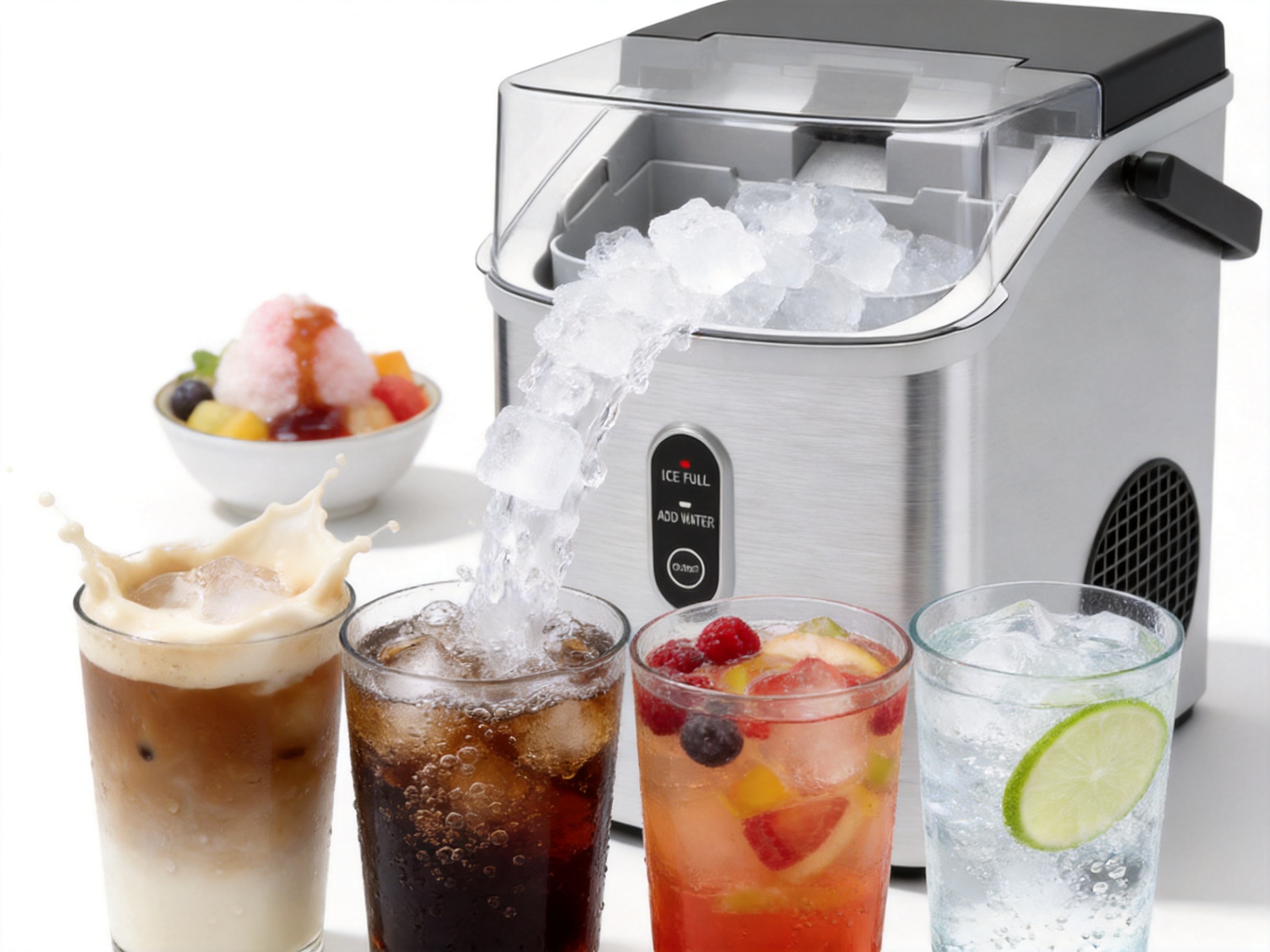
Manufacturing Strength Behind the Product
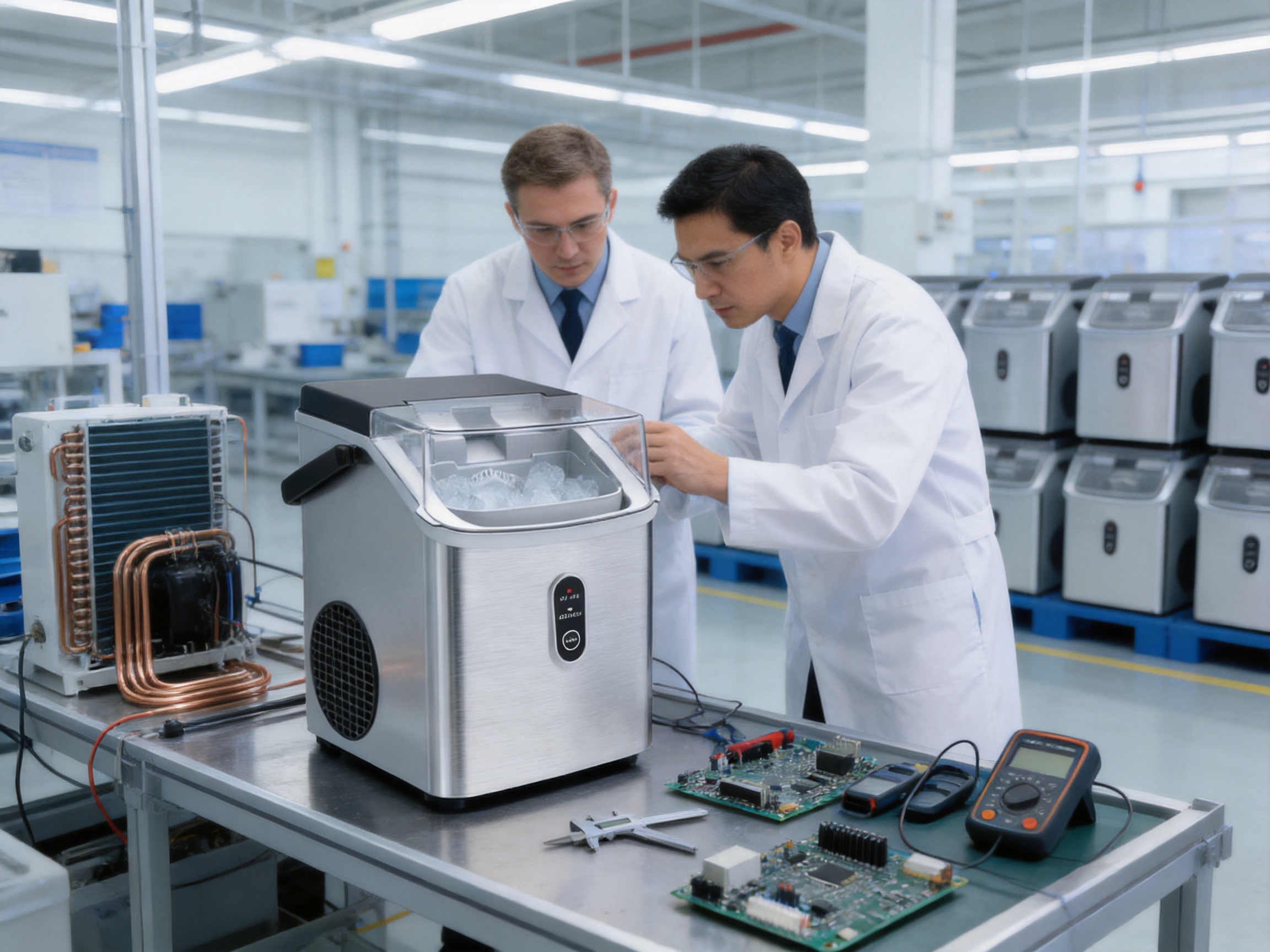
A product’s visible benefits depend on invisible manufacturing strength. Ice makers require precision in refrigeration assembly, electrical control, material selection, water-contact design, and final testing. Alien Technology Co., Ltd. is positioned in Zhouxiang, Zhejiang Province, a region with a strong foundation in small household appliances and convenient logistics. This location supports access to supply chains, skilled labor, production resources, and distribution channels.
The company specializes in ice makers, coffee machines, and air fryers. This product range reflects experience with several important appliance technologies. Ice makers require refrigeration and water system engineering. Coffee machines require fluid control, heating, user interface design, and reliability. Air fryers require thermal control, airflow design, and safety considerations. Together, these product categories help build a manufacturing culture familiar with compact structure, household safety, user convenience, and quality consistency.
The company’s mission emphasizes smart technology, simplified living, and enhanced happiness. For a home chewing ice maker, this philosophy is practical rather than abstract. The appliance simplifies access to premium ice. It improves the enjoyment of common drinks. It supports home entertaining and everyday refreshment. It turns a simple kitchen function into a pleasant lifestyle upgrade.
Manufacturing strength can be expressed through several stages: design planning, component selection, assembly control, refrigeration charging, electrical inspection, performance verification, appearance checking, packaging, and logistics. Each stage matters. A compact ice maker may look simple from the outside, but it depends on reliable internal coordination.
Design and Engineering
The engineering phase defines how the product will deliver soft chewing ice within a compact body. Designers must consider airflow, heat dissipation, water movement, ice formation, user access, electrical layout, and cleaning convenience. Since the machine dimensions are 224 x 333 x 325 mm, every internal component must be arranged efficiently. Compactness cannot come at the expense of cooling performance or reliability.
A good design balances aesthetics, function, and serviceability. The appliance should look suitable for the home, be easy to place, and support comfortable operation. At the same time, internal components must have proper spacing and installation stability. Refrigeration lines need secure placement. Electrical connections must be protected. Water-contact areas must be designed for practical use.
Experience in multiple small appliance categories helps the manufacturer understand how consumers interact with countertop products. Controls should be intuitive. Surfaces should be manageable. The overall structure should support routine use. These details help differentiate a well-developed product from a generic ice-making device.
Material and Component Control
The quality of an ice maker depends heavily on its components. Refrigeration elements, electrical parts, structural materials, water-contact components, and control systems must all match the product’s intended function. Component inconsistency can cause unstable performance, excessive noise, poor cooling, or durability problems.
A manufacturer focused on stable quality must control incoming materials carefully. Components should be checked for dimensional accuracy, electrical compatibility, surface condition, and assembly suitability. For refrigeration products, the precision of components and connections is especially important because leakage or improper charging can affect performance.
Using R600a refrigerant requires careful handling and proper process discipline. The refrigerant charge must be controlled according to the system design. Too much or too little refrigerant can reduce efficiency or affect ice production. Process control during refrigeration assembly is therefore essential.
Assembly Process
Assembly is where engineering becomes a real product. In an ice maker, assembly includes installing the refrigeration system, connecting internal water and electrical components, fitting housing parts, securing controls, and ensuring that the final structure is stable. Even small errors can influence user experience.
Advanced manufacturing is not only about automation. It is also about standardization, trained workers, process documentation, inspection points, and continuous improvement. A consistent assembly process helps ensure that each unit delivers the expected ice texture and performance. Since the product is intended for home use, reliability and safety are critical.
The company’s pragmatic business philosophy and focus on continuous improvement support this type of manufacturing discipline. For buyers and distributors, consistency is as important as innovation. A product must perform well not only in samples, but across production batches.
Quality Testing and Performance Verification
Testing is especially important for ice makers because users can quickly notice performance problems. If the machine does not cool effectively, produces poor ice, leaks, or operates inconsistently, satisfaction declines. A strong quality system should include inspection of electrical performance, refrigeration function, appearance, assembly fit, and operational behavior.
Performance verification may include checking cooling response, ice formation behavior, component operation, and overall stability. Electrical inspection helps confirm safe operation under the intended power conditions. Appearance checks ensure that the product meets consumer expectations. Packaging checks help protect the unit during transport.
These processes support the product’s competitiveness in the marketplace. Many competing products may appear similar online, but manufacturing consistency determines long-term reputation. A product made by a manufacturer with small appliance specialization and a commitment to quality can offer buyers more confidence.
Company Strength and Market Position
Alien Technology Co., Ltd. is located at No. 138, Huixiang'an Road, Zhouxiang Town, Cixi City, Zhejiang Province. The surrounding region’s appliance manufacturing environment provides an advantage in production support and logistics. Convenient logistics matter because household appliances must move efficiently from factories to domestic and international markets. A strong location can reduce delays, support supplier coordination, and improve delivery responsiveness.
The company’s product scope includes ice makers, coffee machines, and air fryers. This combination positions it in the fast-growing small household appliance market, where consumers increasingly value convenience, compactness, and healthier or more enjoyable home routines. Ice makers serve refreshment needs, coffee machines support daily beverage rituals, and air fryers support convenient cooking. Together, these categories reflect the company’s understanding of modern home lifestyles.
The company also emphasizes customer satisfaction, excellent quality, continuous improvement, and innovation. These are important commitments in the appliance industry. Customers expect products to be dependable, easy to use, and worth the investment. Distributors and partners expect stable supply, product consistency, and communication. Continuous improvement helps the manufacturer respond to market feedback and refine future product versions.
The home chewing ice maker fits well within this strategic direction. It is a product that simplifies life by removing the need to buy specialty ice. It enhances happiness by improving drinks and entertaining. It uses intelligent appliance design to bring a premium experience into the home. In this sense, the product is not an isolated machine but an expression of the company’s broader mission.
Why This Product Is Competitive
The home chewing ice maker has several competitive advantages in the household ice appliance category. First, it focuses on chewing ice texture, which is a high-demand feature among consumers who want soft, enjoyable ice rather than ordinary hard cubes. Second, it supports rapid cooling because of its small particle size. Third, it is versatile across drinks, food presentation, desserts, and cold compress applications. Fourth, it is compact enough for home use. Fifth, it comes from a company with experience in small appliance manufacturing.
Many competitors compete mainly on basic ice production. They may state how much ice they can make or how fast the first batch appears, but the actual user experience can be less distinctive if the ice texture is not special. This product’s advantage is that it addresses the emotional and sensory side of ice: the chew, the cooling speed, the flavor infusion, and the satisfying mouthfeel.
Another competitive point is its suitability for modern beverage culture. Iced coffee, sparkling water, fruit teas, smoothies, and home mocktails are all popular. A chewing ice maker supports these trends directly. Instead of being a seasonal appliance used only in summer, it can become part of daily beverage preparation year-round.
Its compact format also makes it accessible. Large ice systems may be impractical for many homes, while freezer trays are inconvenient and low quality. This product occupies a practical middle position: specialized enough to improve the experience, compact enough for everyday living.
User Experience in Daily Life
Imagine a typical morning. A user prepares coffee and wants it iced without waiting for the drink to cool naturally. With chewing ice available, the coffee can be poured over soft ice, stirred quickly, and enjoyed immediately. The drink feels cold, textured, and refreshing. The final pieces of ice carry coffee flavor rather than tasting like plain frozen water.
At lunch, a family member may fill a glass with ice and add sparkling water and lemon. The result is crisp and refreshing. In the afternoon, children may enjoy fruit drinks over soft ice. In the evening, guests may be served chilled beverages with a premium feel. The appliance contributes quietly but repeatedly to small moments of comfort.
For people who enjoy chewing ice, the machine provides a consistent source of the texture they prefer. Instead of searching for restaurants or stores that serve soft ice, they can enjoy it at home. This is a strong emotional benefit and an important reason consumers choose this product category.
For hosts, the machine can improve presentation. Drinks served with soft chewing ice feel more carefully prepared. Food displays can be chilled more attractively. The appliance helps create an impression of hospitality and attention to detail.
Care, Placement, and Practical Use Considerations
Like any kitchen appliance, a chewing ice maker should be placed thoughtfully. It should sit on a stable, level surface with appropriate surrounding space for ventilation. Since refrigeration equipment releases heat during operation, airflow is important. Users should follow the product’s instructions for water filling, cleaning, and maintenance.
Water quality can influence ice quality. Clean water helps produce better-tasting ice and supports hygiene. Depending on local water conditions, users may prefer filtered water for improved flavor. Regular cleaning helps maintain freshness and reduces unwanted tastes or residue.
Users should also consider where the appliance fits their routine. A coffee station, beverage corner, or kitchen counter near cups and water supply can be ideal. If used for entertaining, placement near a serving area can reduce repeated trips to the kitchen.
Safe use is important for cold compress applications. Ice should not be applied directly to skin for extended periods. It should be wrapped appropriately and used with caution. The product’s soft ice can conform well, but general cold therapy safety practices should still be followed.
Applications by User Group
Families
Families benefit from the product’s versatility. Children may enjoy cold fruit drinks, adults may use it for coffee or sparkling water, and everyone can enjoy refreshing drinks in warm weather. The appliance can also support parties, family dinners, and weekend desserts.
Coffee Enthusiasts
For coffee lovers, ice quality affects drink quality. Chewing ice is suitable for iced coffee, cold brew, lattes, and flavored coffee beverages. It cools quickly and creates a cafe-style texture at home.
Health-Conscious Users
People trying to drink more water may find that chewable ice makes hydration more enjoyable. The texture can encourage drinking cold water or lightly flavored beverages instead of sugary alternatives.
Home Entertainers
Hosts can use the ice for drinks, food presentation, chilling bottles, and dessert service. It adds a premium touch to gatherings without requiring complex preparation.
Small Offices and Refreshment Areas
The compact size makes the appliance useful for office pantries or small refreshment corners. Employees can enjoy cold drinks, iced coffee, or sparkling water with better ice quality.
Frequently Asked Questions
What makes chewing ice different from ordinary ice cubes?
Chewing ice has a softer, smaller-particle structure that is easier and more enjoyable to chew. Ordinary cubes are usually denser and harder. Chewing ice also cools drinks faster because it has more contact area with the liquid.
Why is this ice maker useful for iced coffee?
Iced coffee needs quick and even cooling. Chewing ice chills coffee rapidly, mixes easily, and creates a pleasant texture. It can also absorb coffee flavor, making the final ice more enjoyable instead of plain and watery.
Can the ice be used for soda and sparkling water?
Yes. Chewing ice works very well with soda and sparkling water. It makes drinks feel colder, enhances the refreshing texture, and often absorbs the beverage flavor.
Is the machine suitable for home kitchens?
Yes. With dimensions of 224 x 333 x 325 mm, the machine is designed as a compact home appliance suitable for countertops, beverage stations, small kitchens, and office refreshment areas.
What are the power specifications?
The product power supply is 220V/60Hz, with current and power listed as 0.55A/130W. The refrigerant and charge are listed as R600a/19g.
Can chewing ice be used for food presentation?
Yes. Its small particles can coat and surround food more evenly than large cubes. It can be used for chilled displays such as seafood, fruit, beverages, or cold serving arrangements.
Is chewing ice useful for smoothies and shaved ice?
Yes. The soft texture makes it easier to mix or blend with fruit, syrups, milk, yogurt, and coffee. It can serve as a base for smoothies, slush-style drinks, and simple frozen desserts.
How does this product compare with buying bagged ice?
Buying bagged ice requires transport, freezer storage, and planning. A home chewing ice maker provides fresh soft ice at home and avoids dependence on store-bought ice.
Why is the manufacturer’s background important?
Ice makers require reliable refrigeration, electrical control, assembly precision, and quality testing. Alien Technology Co., Ltd. specializes in household appliances including ice makers, coffee machines, and air fryers, which supports its experience in compact appliance manufacturing.
Can the ice be used for cold compresses?
Soft chewing ice can conform well to body areas when used for cooling. However, it should be wrapped properly and used safely, avoiding direct or prolonged ice contact with skin.
Conclusion
The home chewing ice maker is a practical and enjoyable appliance for modern living. Its greatest value lies in the ice experience it creates: soft texture, gentle chewing, rapid cooling, excellent flavor infusion, and versatile use. It improves iced coffee, soda, sparkling water, smoothies, desserts, food presentation, and everyday hydration. Compared with ordinary freezer cubes, bagged ice, and many basic countertop ice makers, it offers a more specialized and satisfying result.
Its compact dimensions make it suitable for home and small office environments, while its listed specifications show a practical design for household use. The use of R600a refrigerant and a compact refrigeration system supports the product’s role as a dedicated ice-making appliance. More importantly, the product is backed by a manufacturer located in a strong small-appliance production region, with experience in ice makers, coffee machines, and air fryers.
Alien Technology Co., Ltd. brings together manufacturing capability, product focus, and a mission centered on smart technology and improved daily life. The company’s commitment to quality, customer satisfaction, continuous improvement, and innovation supports the long-term competitiveness of the product. In a market where many appliances promise convenience, this home chewing ice maker stands out by delivering a specific and highly appreciated experience: fresh, soft, chewable ice whenever users want it.
For households that enjoy cold drinks, for coffee lovers building a home beverage station, for hosts who want better presentation, and for anyone who appreciates the satisfying crunch of soft ice, this product offers a compelling upgrade. It transforms ice from a basic cooling tool into a daily pleasure and a useful part of modern home refreshment.
References
ASHRAE Handbook: Refrigeration. American Society of Heating, Refrigerating and Air-Conditioning Engineers.
Food and Beverage Service Principles: Temperature Control and Presentation Practices. Hospitality Training Reference Series.
Small Household Appliance Design and Manufacturing: Principles of Compact Product Engineering. Appliance Industry Technical Reference.
Refrigeration Fundamentals for Domestic Appliances. Cooling Systems Engineering Reference.
Consumer Beverage Trends: Iced Coffee, Sparkling Drinks, and Home Refreshment Appliances. Market Lifestyle Review.