
 English
 한국어
한국어 Español
 Deutsch
A home chewing ice maker is more than a countertop appliance; it is a daily comfort machine designed for people who love soft, chewable, fast-cooling ice in beverages, snacks, smoothies, and food displays. The product introduced here is a compact home chewing ice maker developed for modern kitchens, small offices, refreshment stations, home bars, and entertainment spaces. With a soft nugget-style ice texture, a practical countertop footprint, reliable refrigeration components, and a user-focused design, it answers a growing demand for ice that is not only cold, but also enjoyable to chew, easy to scoop, and versatile in use.
Unlike ordinary cube ice makers that produce hard, dense blocks of ice, this chewing ice maker is designed to create softer, smaller ice particles that provide a pleasant bite and a distinctive texture. Chewing ice is valued because it cools drinks quickly, absorbs flavor better than solid cubes, blends easily into recipes, and feels gentle on the teeth. For families who enjoy iced coffee, sparkling drinks, fruit sodas, cocktails, smoothies, shaved-ice desserts, or chilled food presentation, the appliance delivers a practical and enjoyable upgrade to daily refreshment.
Product Overview
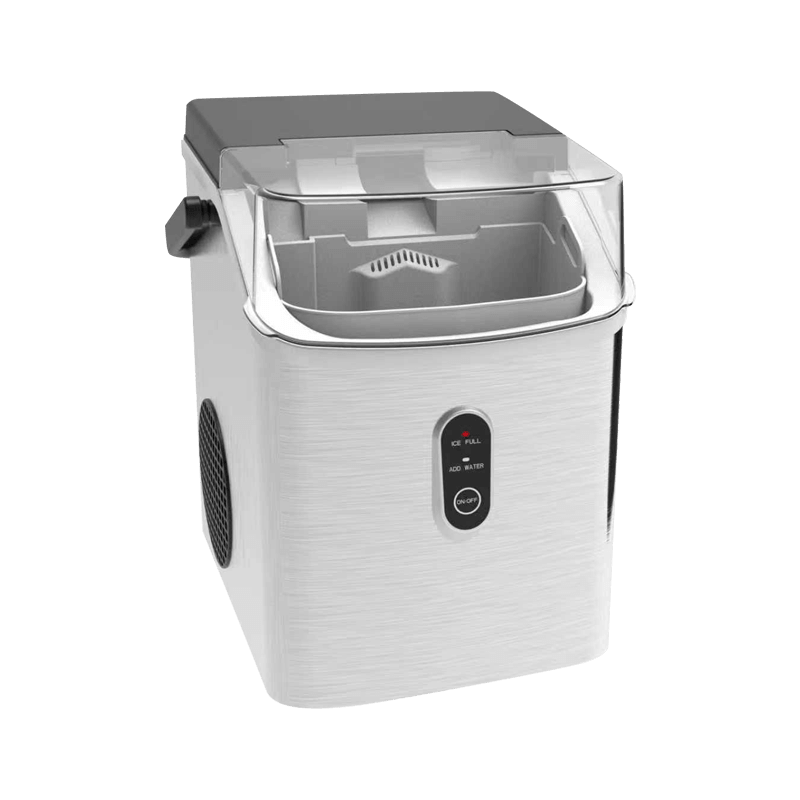
This home chewing ice maker is positioned in the chewing ice maker category and is designed for residential and light commercial scenarios where convenience, ice texture, and compact size matter. Its purpose is simple: to provide a steady supply of soft, chewable ice without requiring users to buy bagged ice, crush hard cubes manually, or rely on large commercial machines. The appliance brings the popular texture of nugget-style ice into a household format that is easier to place, operate, and maintain.
The product uses a 220V/60Hz power supply and operates at 0.55A with 130W power. It uses R600a refrigerant with a 19g charge, supporting efficient cooling performance in a compact appliance structure. Its dimensions are 224 x 333 x 325mm, allowing it to fit comfortably on kitchen countertops, coffee bars, office pantries, dormitory refreshment corners, and small hospitality setups. This footprint is one of its major advantages because many users want high-quality ice without sacrificing large amounts of counter space.
The appliance is especially valuable for users who enjoy the sensory experience of chewing ice. The soft texture is the fundamental advantage of chewing ice. It is gentle, satisfying, and highly suitable for beverages that benefit from rapid cooling. Because the ice has a smaller particle size and larger surface area than conventional cubes, it chills beverages more quickly and interacts more closely with liquid. This makes it ideal for iced coffee, soda, juice, lemonade, tea, mocktails, cocktails, and flavored sparkling water.
Beyond drinks, chewing ice works as a functional cooling medium. It can coat and surround food more effectively than large cubes, making it useful for salad bars, seafood presentation, oysters, sashimi, fruit displays, and cold compress applications. Its soft form allows it to conform to surfaces, fill gaps, and provide consistent cooling contact. This versatility gives the product advantages over many standard countertop ice makers that only produce bullet ice or cube ice.
Key Specifications
Product Category |
Home Chewing Ice Maker |
Power Supply |
220V/60Hz |
Current and Power |
0.55A/130W |
Refrigerant and Charge |
R600a/19g |
Machine Dimensions |
224 x 333 x 325mm |
Primary Ice Style |
Soft Chewing Ice |
Recommended Applications |
Iced coffee, soda, smoothies, chilled food displays, cold compresses, home bars, and daily beverages |
The Advantage of Soft Chewing Ice
The most important reason to choose a chewing ice maker is the ice itself. Traditional ice cubes are hard and dense. They cool drinks effectively, but they can be uncomfortable to chew and may dilute beverages unevenly. Bullet ice is common in many countertop ice makers, but it often has a firmer exterior and a hollow center that melts in a different way. Chewing ice, by contrast, is softer, more porous, and easier to bite. It offers a highly enjoyable mouthfeel that has made it popular in cafes, restaurants, hospitals, beverage shops, and homes.
Soft chewing ice provides a balanced experience. It is firm enough to cool a drink and maintain structure, yet soft enough to chew without the sharp cracking sensation of hard cubes. This makes it appealing to people who like to enjoy ice as part of the beverage experience rather than merely as a cooling accessory. When placed in iced coffee, cola, sparkling water, or fruit tea, the ice becomes part of the drink’s texture. It carries flavor on its surface and enhances the overall sensation.
Because chewing ice is made of smaller pieces, it creates a large contact area with liquids. The larger the contact area, the faster heat transfers from the beverage to the ice. This means drinks can reach a refreshing temperature quickly, even when poured at room temperature or over a small amount of ice. For households that frequently prepare iced drinks, this rapid cooling ability is a major advantage. It can reduce waiting time and improve consistency from one drink to the next.
Chewing ice also performs well in blended drinks and desserts. Its soft structure reduces stress on blenders compared with hard ice cubes, making it easier to create smoothies, frozen lemonades, slush drinks, shaved ice treats, and milk-based cold desserts. For users who enjoy homemade beverages, this flexibility expands the appliance’s value beyond simple ice production. It becomes part of a broader kitchen lifestyle focused on convenience and creativity.
Why This Appliance Stands Out from Competitors
Many countertop ice makers on the market are designed primarily for speed and volume, but they often produce standard bullet ice or dense cubes. While those ice types are useful, they do not deliver the same chewable comfort, cooling coverage, or flavor interaction. This chewing ice maker stands out by prioritizing the ice texture that many consumers actually prefer for premium beverages. Its competitive advantage begins with the ability to produce soft, chewable ice in a home-sized machine.
Another advantage is its compact construction. At 224 x 333 x 325mm, the appliance is designed to fit in realistic household spaces. Many users do not have room for a large built-in ice system, and many commercial-style nugget ice machines are too heavy, expensive, or complex for home use. This machine offers a practical balance: it brings a desirable ice type to a compact countertop format, making it accessible for families, apartment residents, small offices, and casual entertainment areas.
Energy-conscious operation is another important competitive factor. The 130W rated power supports household use without the heavy energy demand associated with larger refrigeration equipment. The use of R600a refrigerant also reflects modern appliance trends. R600a is widely used in small refrigeration appliances because it can support efficient cooling performance with a relatively low refrigerant charge. In a compact ice maker, this contributes to responsive cooling while supporting responsible design practices.
The appliance also offers versatility that many competing ice makers cannot match. Standard cubes are useful in glasses, but they are less suitable for coating food displays or conforming to irregular shapes. Chewing ice can surround vegetables, seafood, fruit, and packaged items more completely. It can also be used for cold compresses because it molds gently around body parts. This ability to combine beverage enjoyment, food presentation, and practical cooling gives the product a broader range of use cases.
Ease of use further separates the product from less user-friendly alternatives. Chewing ice is naturally easy to scoop, portion, and mix. It works well with spoons, cups, pitchers, shakers, and blender jars. Users do not need to crush cubes or break apart large pieces. The ice is ready for use in everyday beverage preparation and party settings, saving time and reducing effort. For households that value simplicity, this convenience can be more important than raw ice production numbers.
Designed for the Modern Home Beverage Experience
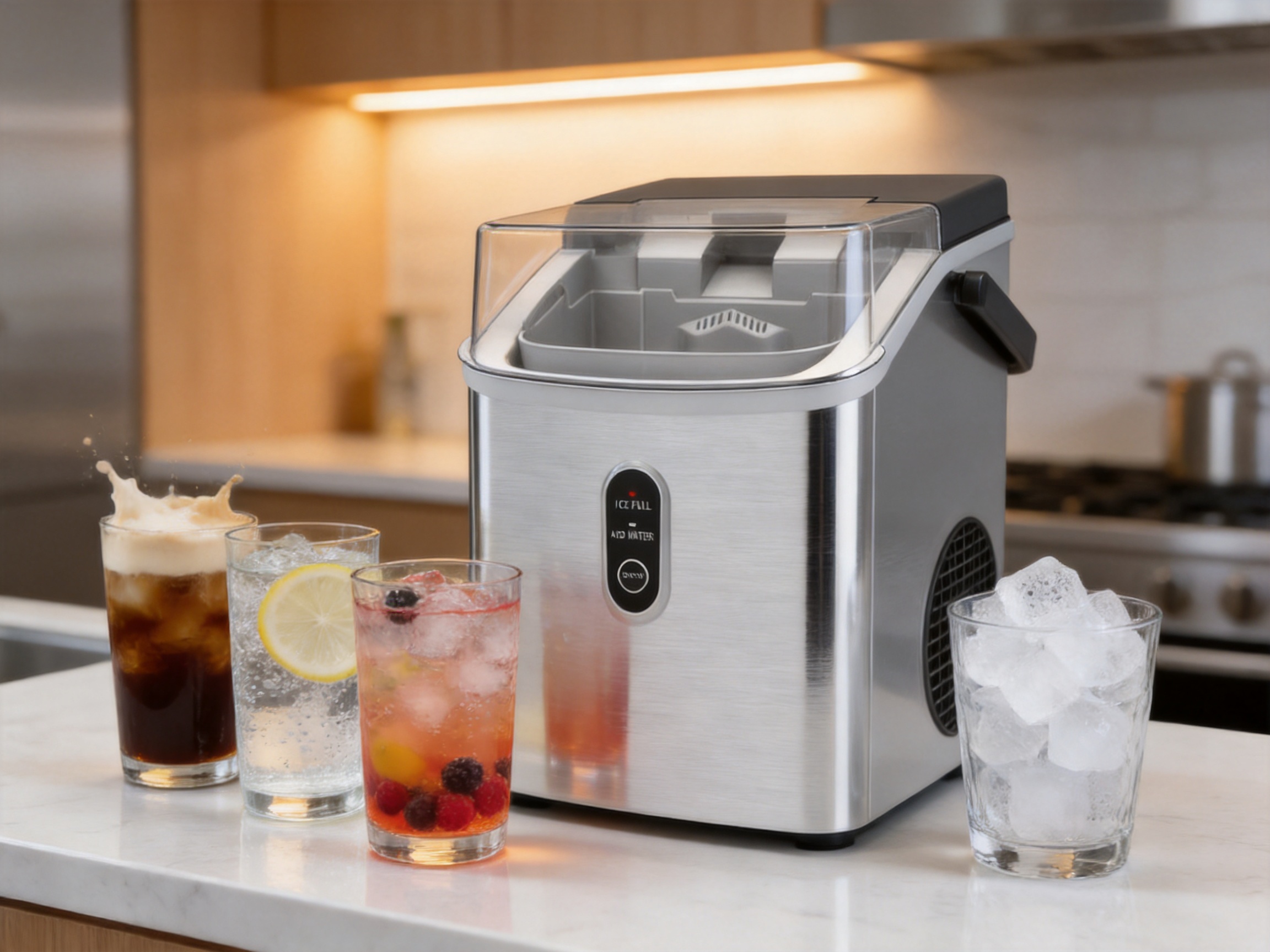
Home beverage culture has changed significantly in recent years. Many consumers now prepare iced coffee at home, mix sparkling drinks, experiment with fruit teas, and build small home bars. A chewing ice maker fits naturally into this trend because ice quality influences the taste, texture, and appearance of the final drink. When a beverage is poured over soft chewing ice, it looks full, cools quickly, and feels satisfying from the first sip to the last.
For iced coffee lovers, chewing ice is especially useful. Coffee can be sensitive to dilution, and rapid cooling helps preserve aroma and flavor. Smaller ice pieces chill the coffee quickly while creating an enjoyable texture in lattes, cold brew, espresso tonics, and flavored coffee drinks. Because the ice can absorb a light coating of coffee flavor, it creates a more integrated beverage experience than large cubes that remain separate from the drink.
For soda and sparkling beverages, chewing ice provides a refreshing crunch that pairs well with carbonation. The ice captures bubbles around its surface and keeps the drink lively. In lemonade, fruit soda, or iced tea, it distributes cooling evenly throughout the cup. In cocktails and mocktails, it supports crushed-ice style presentation without requiring a separate ice crusher. This makes the machine useful for casual hosting and family gatherings.
The product is also suitable for wellness-oriented drinks. Smoothies, vegetable juices, infused water, and low-sugar fruit beverages can all benefit from soft ice. Users can blend it more easily than hard cubes, mix it with ingredients quickly, or place it directly into bottles and tumblers. For families with different beverage preferences, a chewing ice maker becomes a shared appliance that supports many daily routines.
Food Preservation and Display Applications
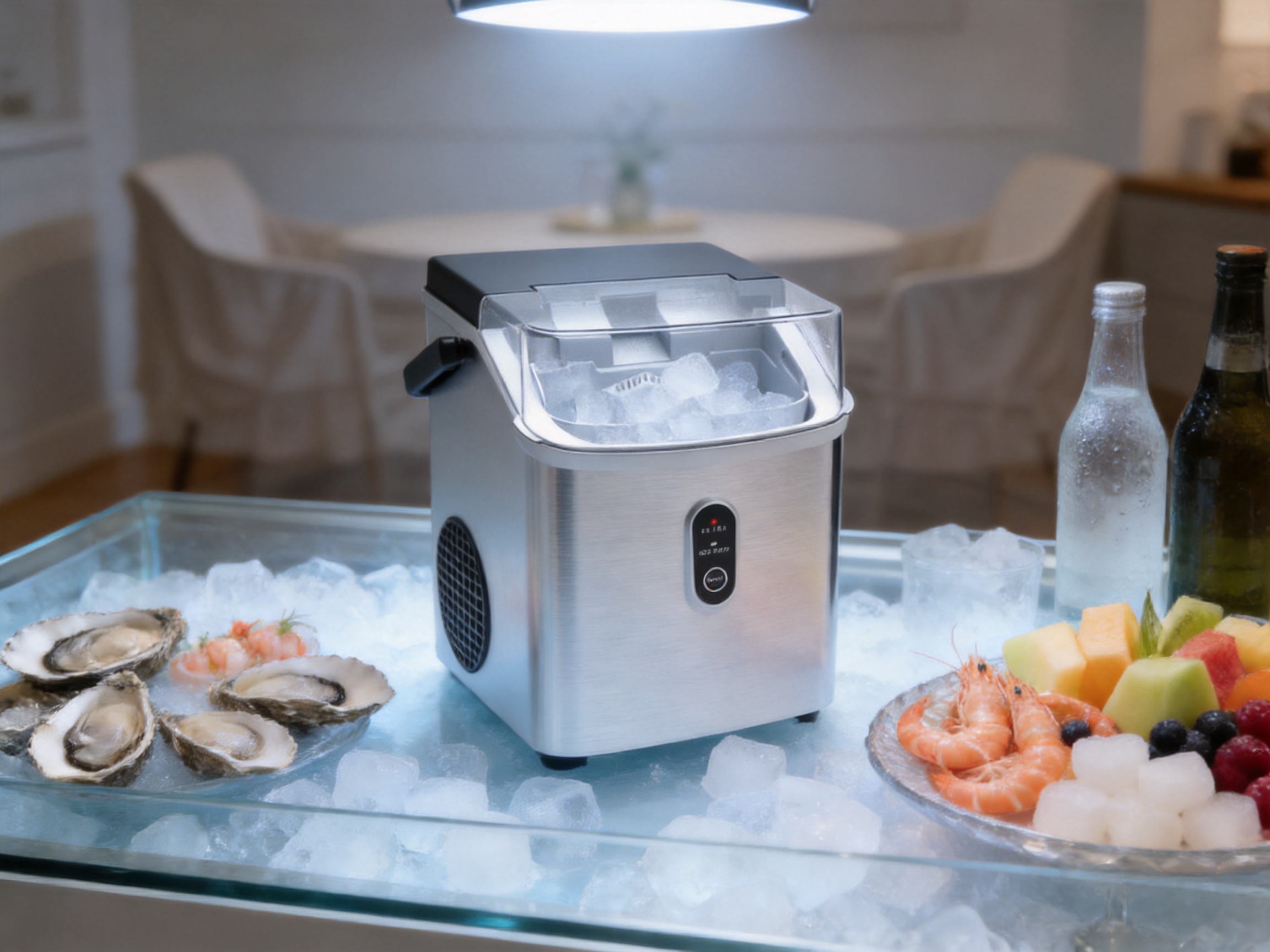
Although many users buy a chewing ice maker for beverages, its usefulness extends to food preservation and presentation. Soft chewing ice can tightly coat items and create a stable cold surface. In salad bars, it helps keep vegetables crisp and visually fresh. For seafood displays, it surrounds oysters, shrimp, crab, and sashimi more evenly than large cubes. Its small particle size fills gaps and improves contact, helping maintain a cool environment around delicate foods.
In home entertainment, this can improve presentation. A family hosting a dinner party can use chewing ice under seafood, fruit, yogurt cups, bottled drinks, or dessert bowls. The ice creates a professional-looking display while also performing a practical cooling function. Because it is soft and scoopable, it is easy to arrange in trays and containers.
Chewing ice also has practical value in cold compress use. Its soft texture allows it to conform to body parts more comfortably than rigid ice cubes. When placed in a suitable bag or wrap, it can provide cooling contact for sports recovery, minor swelling, or comfort applications. This does not replace medical guidance, but it demonstrates the broader utility of a soft ice format. A household appliance that supports drinks, food presentation, and basic cooling comfort offers more value than an ice maker limited to beverage cubes.
Compact Engineering and Countertop Convenience
One of the strongest features of this home chewing ice maker is its compact size. Kitchen space is valuable, and many households hesitate to add appliances that are bulky or difficult to store. With dimensions of 224 x 333 x 325mm, the machine is designed to occupy a manageable area while still delivering the specialty ice texture users want. It can be placed near a coffee machine, on a bar counter, beside a water station, in an office pantry, or in a recreation room.
The compact form makes the appliance flexible. Users can place it where ice is most needed rather than being tied to a refrigerator freezer. For example, a home office can keep chilled drinks available during work hours. A small cafe-style beverage corner can pair the chewing ice maker with coffee and tea equipment. A family room or entertainment space can support movie nights and gatherings without repeated trips to the kitchen freezer.
Countertop convenience also reduces dependence on bagged ice. Bagged ice can be inconvenient to purchase, transport, store, and handle. It may clump in the freezer and take up space. A home ice maker allows users to produce fresh ice when needed and reduce last-minute shopping. For people who host frequently or consume iced drinks daily, this convenience becomes part of the appliance’s long-term value.
The design also helps reduce the need for manual ice crushing. Many people enjoy crushed ice but dislike the noise and effort of crushing cubes. Chewing ice provides a similar sense of texture and drink coverage, but in a softer, more uniform form. This makes the product suitable for users who want the crushed-ice experience without extra accessories or preparation steps.
Manufacturing Strengths Behind the Product
The product is manufactured by Alien Technology Co., Ltd., a household appliance company located in Zhouxiang, Zhejiang Province, an area known for small household appliance production and convenient logistics. This manufacturing environment supports efficient sourcing, skilled production, component availability, and practical delivery arrangements. For a product such as a chewing ice maker, the surrounding industrial ecosystem can be a major advantage because refrigeration appliances require reliable parts, controlled assembly, and consistent quality inspection.
The company specializes in household appliances including ice makers, coffee machines, and air fryers. This product portfolio is important because it demonstrates experience in appliances that combine heating, cooling, airflow, water handling, user controls, and compact structures. Ice makers require knowledge of refrigeration, water circulation, sealing, thermal exchange, electrical safety, and user-friendly housing design. Experience across multiple appliance categories can contribute to improved engineering discipline and production maturity.
The company’s mission, “Smart Technology, Simplifying Life, Enhancing Happiness,” aligns closely with the purpose of a home chewing ice maker. The product is not only a technical device; it is intended to improve everyday life by making refreshing drinks easier, more enjoyable, and more accessible. Humanized design, reliable quality, and intelligent technology are important themes in the development of modern home appliances. A successful chewing ice maker must be simple for users, stable in operation, and compact enough for real household environments.
Advanced manufacturing strength is reflected in several areas: material selection, refrigeration system assembly, production process control, functional testing, safety checks, and appearance inspection. For a compact ice maker, small details matter. Water contact parts must be suitable for repeated use. Refrigeration components must be installed precisely. Electrical systems must be assembled with stable connections. Housing parts must fit properly to reduce vibration and improve user experience. The final product must be tested to confirm that it operates as intended.
Because the company operates in a strong appliance manufacturing region, it can draw on specialized supply chains and production knowledge. This can support faster product development, stable cost control, and consistent manufacturing quality. For overseas buyers, distributors, and brand partners, these strengths matter because they affect long-term supply reliability, product consistency, and cooperation efficiency.
Process Control for Reliable Appliance Quality
A high-quality chewing ice maker depends on more than its concept. It must be manufactured through controlled processes that ensure stability from unit to unit. In refrigeration appliances, process control includes component inspection, assembly accuracy, leak testing, electrical testing, operating performance checks, and packaging verification. Each step protects the user experience and reduces the likelihood of problems after delivery.
Incoming material inspection is the first layer of quality control. Critical components such as compressors, refrigeration tubing, pumps, control boards, sensors, switches, seals, and housing parts must meet defined specifications. If parts are inconsistent, ice texture and machine reliability can suffer. A disciplined manufacturer checks components before they enter final assembly, reducing risk and improving production stability.
Refrigeration system assembly is another key area. The refrigerant charge must be accurate, tubing connections must be secure, and the cooling system must be sealed properly. The product uses R600a refrigerant with a 19g charge, which requires careful handling and controlled production procedures. Accurate refrigerant charging helps ensure proper cooling performance, while leakage prevention protects product reliability.
Electrical safety and operating performance are equally important. The appliance is designed for 220V/60Hz operation and rated at 0.55A/130W. During production, electrical tests help verify insulation, grounding where applicable, circuit stability, and safe operation. Functional tests can confirm that the machine cools, circulates water, forms ice, and responds properly to controls. These checks are essential because users expect a home appliance to work reliably with minimal attention.
Appearance and packaging checks complete the process. Countertop appliances are visible in the home, so fit, finish, and visual quality influence customer satisfaction. Packaging must protect the appliance during transportation, especially for export or long-distance logistics. A manufacturer with experience in household appliances understands that final quality includes both internal performance and the condition in which the product reaches the customer.
Humanized Design for Daily Use
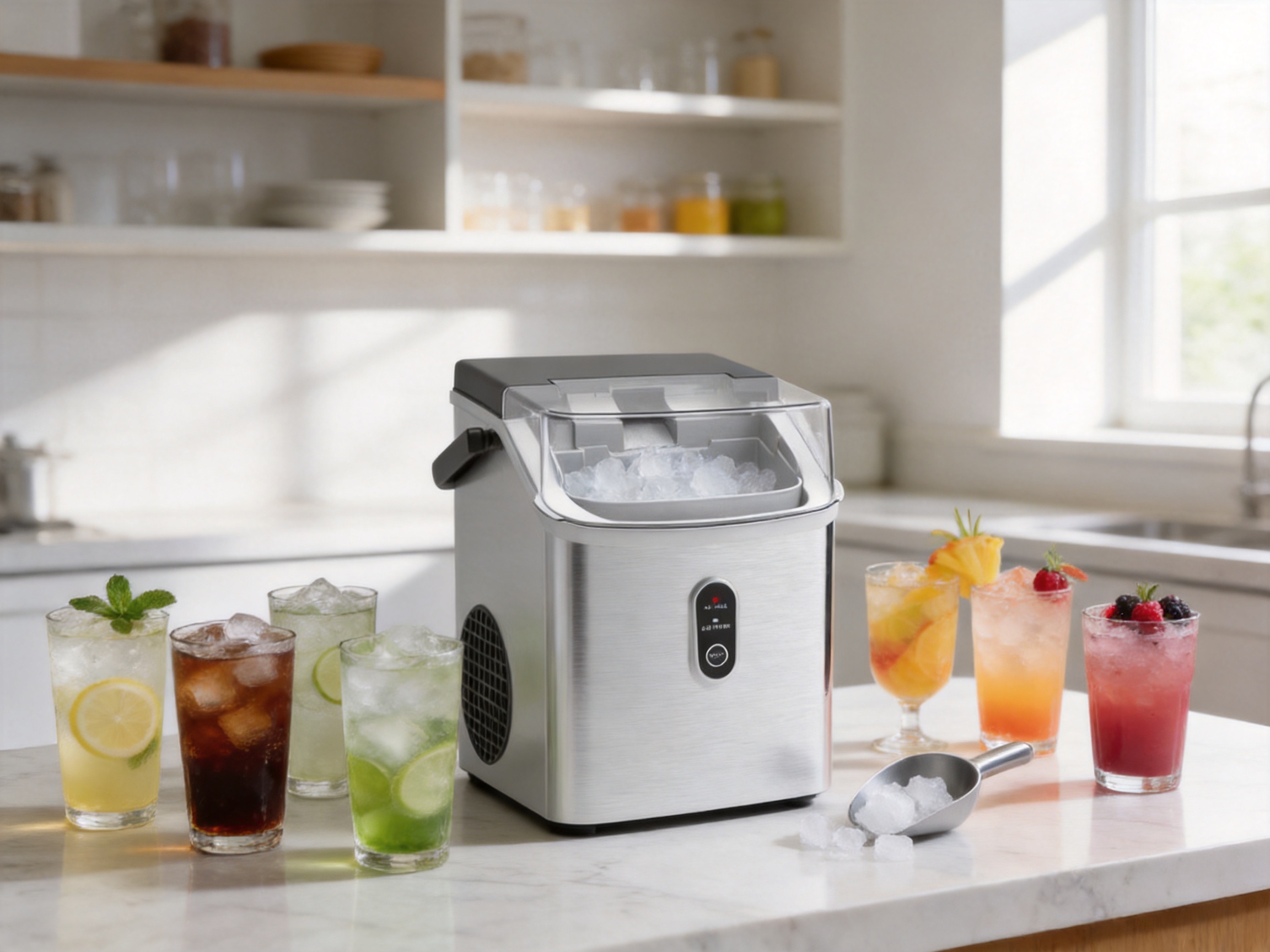
Humanized design means that the product should match real user habits. In the case of a chewing ice maker, users want ice quickly, want it to be easy to access, and want the appliance to fit smoothly into everyday routines. The value of soft chewing ice is strongest when the machine is convenient enough to use often. A product that is compact, practical, and easy to integrate into beverage preparation has a better chance of becoming a daily-use appliance rather than a rarely used gadget.
The ice texture itself is part of humanized design. It is gentle on teeth, pleasant to chew, and easy to mix. Users do not need special tools to enjoy it. A spoon, cup, tumbler, pitcher, or serving tray is enough. This simplicity is one reason chewing ice is so popular. It gives drinks a premium feeling with minimal effort.
The compact dimensions also support humanized placement. A large appliance can become inconvenient even if it performs well. By keeping the size manageable, the machine supports practical placement in kitchens and beverage corners. It can complement coffee machines and air fryers as part of a modern household appliance lineup. It helps users create a more complete home refreshment station without turning the counter into a crowded workspace.
Easy mixing is another benefit. Chewing ice blends naturally with beverages and ingredients. It can be added to a glass, stirred into a drink, layered into a dessert cup, or used as a base for smoothies and shaved ice. This reduces preparation time and makes the product appealing to families, busy professionals, and hosts who want reliable refreshment without complicated steps.
Applications in Different Living and Business Scenarios
Family Kitchens
In a family kitchen, the chewing ice maker supports daily drinks, weekend meals, children’s fruit beverages, iced coffee, and summer refreshments. It can help reduce the need to fill ice trays and wait for freezer ice. It can also reduce the problem of freezer odors transferring to ice. Freshly made chewing ice provides a cleaner, more enjoyable beverage experience when the machine is used and maintained properly.
Home Bars and Entertainment Rooms
For home bars, the appliance improves drink presentation and texture. Soft ice works well in mojitos, julep-style drinks, frozen cocktails, mocktails, soda mixes, and fruit punches. It creates a generous, chilled appearance in glasses and allows guests to enjoy a premium ice texture. In entertainment rooms, it supports movie nights, sports events, parties, and family gatherings.
Office Pantries
In offices, a chewing ice maker can improve employee refreshment options. Iced coffee, sparkling water, and chilled tea are increasingly common in workplace pantries. A compact chewing ice maker provides a convenient upgrade without requiring a large commercial ice machine. Its countertop size makes it suitable for smaller offices that want better beverage service.
Small Hospitality and Retail Settings
Small hospitality environments, such as boutique guest houses, small beverage counters, meeting rooms, and customer lounges, can also benefit from chewable ice. It enhances perceived service quality and makes drinks feel more carefully prepared. While capacity requirements should always be matched to usage volume, the appliance can be a useful solution for light-duty applications where soft ice texture is a selling point.
Food Presentation and Cooling Support
For food display, chewing ice helps create a continuous cold bed. It can surround food items effectively, improving presentation and cooling contact. This makes it useful for temporary displays, catered trays, seafood service, fruit arrangements, and chilled dessert stations. The ice’s small particle size allows smoother shaping and a more professional appearance than large, irregular cubes.
Comparison with Common Ice Types
Understanding the product’s strengths becomes easier when comparing chewing ice with other ice types. Hard cube ice is excellent for slow melting and long-lasting cooling, especially in spirits or drinks where dilution control matters. Bullet ice is fast and common in countertop machines, but it often lacks the soft chew and coating effect of nugget-style ice. Crushed ice provides good drink coverage, but usually requires a crushing step and may be inconsistent. Chewing ice combines convenience, texture, cooling speed, and scoopability in one format.
Ice Type |
Main Strength |
Limitation |
Best Use |
Hard Cube Ice |
Long-lasting cooling |
Hard to chew and slower surface cooling |
Spirits, water pitchers, long-duration cooling |
Bullet Ice |
Common in compact machines |
Less satisfying chew and less uniform coating |
General household drinks |
Crushed Ice |
Good drink coverage |
Often requires separate crushing and can be uneven |
Cocktails, snow cones, chilled displays |
Soft Chewing Ice |
Gentle chew, rapid cooling, easy mixing, versatile coating |
May melt faster than dense cubes due to high surface area |
Iced coffee, soda, smoothies, food displays, cold compresses |
This comparison shows why the home chewing ice maker occupies a valuable position. It is not simply another ice machine; it is designed around a specific and highly desirable ice experience. For many users, the slightly faster melting rate is not a weakness but part of the benefit, because the ice cools drinks quickly and integrates well with flavors. The best choice depends on the intended use, and for everyday refreshment, soft chewing ice offers exceptional comfort and versatility.
Quality, Safety, and Responsible Refrigeration
Any appliance that combines water and electricity must be designed and manufactured with careful attention to safety. A reliable chewing ice maker should use suitable electrical design, stable insulation, secure water pathways, and materials appropriate for repeated contact with water and ice. Manufacturing checks help ensure that the appliance performs consistently and safely in normal use.
The use of R600a refrigerant reflects a modern approach to compact refrigeration. R600a is commonly used in small refrigeration systems because it can deliver efficient cooling with a relatively low charge. In this product, the refrigerant charge is 19g. As with all refrigerants, proper manufacturing controls, sealing, and handling procedures are important. The quality of the refrigeration system directly affects ice formation, energy use, noise behavior, and long-term reliability.
Responsible appliance design also includes user maintenance considerations. Water quality, cleaning routines, and placement conditions can affect performance. Users should follow the product manual, use suitable water, clean the machine regularly, and keep ventilation areas unobstructed. Good maintenance helps preserve ice quality and prolong appliance life.
Manufacturers with stable appliance production experience understand that quality is not a single inspection at the end of the line. It is a process that begins with design choices and continues through supplier control, assembly, testing, packaging, and after-sales support. This broader quality mindset is important for buyers who want dependable products in competitive markets.
Advantages for Distributors and Business Buyers
For distributors, importers, and appliance retailers, the home chewing ice maker offers strong market appeal because it connects with several consumer trends. Home coffee culture, healthier homemade drinks, compact countertop appliances, entertaining at home, and premium ice experiences are all growing areas. A chewing ice maker is easy to explain to customers because the benefit is sensory and immediate: softer ice, better drinks, faster cooling, and more enjoyable chewing.
The product also fits well into appliance portfolios that already include coffee machines and air fryers. A customer who buys a coffee machine may also want better ice for iced coffee. A customer who enjoys air fryer snacks may want chilled drinks for gatherings. These products complement one another in a modern kitchen lifestyle. Retailers can position the chewing ice maker as a beverage upgrade that enhances the value of other appliances.
The manufacturer’s location in a small household appliance hub supports business cooperation. Convenient logistics, production experience, and supply chain access can help improve responsiveness. The company’s stable and pragmatic business philosophy is also important for long-term partnerships. Appliance buyers often need consistent supply, practical communication, quality assurance, and willingness to improve products based on market feedback.
Customization opportunities may also be relevant for business customers, depending on project requirements. Countertop appliances are often adapted for different markets through packaging, manuals, appearance details, plug standards, and certification planning. A manufacturer experienced in household appliances is better positioned to support these practical needs.
Maintenance and Use Considerations
To get the best experience from a chewing ice maker, users should place the machine on a stable, level surface with sufficient ventilation. It should be kept away from high heat sources and used according to the rated power requirements. Proper placement supports refrigeration efficiency and helps the appliance operate consistently.
Water quality matters. Clean drinking water helps produce better-tasting ice and reduces mineral buildup. In areas with hard water, users may consider filtered water or regular descaling routines if recommended by the manual. Clean water not only improves flavor but also supports the internal water system.
Regular cleaning is essential for any ice maker. Because ice is consumed directly, the water path and ice storage area should be maintained carefully. Users should follow the cleaning instructions supplied with the product and avoid harsh chemicals unless specifically recommended. A simple routine of draining, wiping, rinsing, and periodic deeper cleaning can help maintain freshness.
Ice should be used promptly for the best texture. Soft chewing ice has a high surface area and a porous structure, so it is designed for immediate enjoyment rather than long-term freezer storage. If stored in a freezer, pieces may harden or clump over time. The strongest experience comes from fresh ice used soon after production.
Users should also understand that ambient temperature, water temperature, and usage patterns can influence performance. Like all compact ice makers, the appliance performs best under suitable indoor conditions. Keeping the unit clean, ventilated, and supplied with fresh water helps maintain ice quality.
Q&A Section
What makes chewing ice different from ordinary ice cubes?
Chewing ice is softer, smaller, and more porous than ordinary hard cubes. It is easier to bite, cools drinks quickly because of its larger surface area, and mixes well with beverages and ingredients. This makes it especially suitable for iced coffee, soda, smoothies, and crushed-ice style drinks.
Is this machine suitable for home use?
Yes. The machine is designed as a home chewing ice maker with compact dimensions of 224 x 333 x 325mm. It can fit on many countertops, beverage stations, office pantries, and home bar areas.
What drinks benefit most from soft chewing ice?
Iced coffee, cold brew, soda, sparkling water, lemonade, iced tea, fruit drinks, cocktails, mocktails, smoothies, and shaved-ice style desserts all benefit from soft chewing ice. The ice cools quickly and adds an enjoyable texture.
Can chewing ice be used for food display?
Yes. Chewing ice can coat and surround food more effectively than large cubes. It is useful for vegetables, seafood, oysters, sashimi, fruit trays, and chilled serving displays. Its soft texture helps create a smooth, professional-looking cooling bed.
Does the machine use modern refrigerant?
The product uses R600a refrigerant with a 19g charge. R600a is commonly used in compact refrigeration appliances and supports efficient cooling performance when handled through proper manufacturing and safety procedures.
How does this product compare with bullet ice makers?
Bullet ice makers are common and useful, but bullet ice is usually firmer and less chewable. This home chewing ice maker focuses on soft nugget-style texture, faster beverage cooling, easier mixing, and broader applications such as food coating and cold compress use.
Is the ice gentle on teeth?
Chewing ice is designed to be softer than dense cubes, making it more comfortable to chew. However, users with dental sensitivity or dental conditions should always follow personal dental advice and chew with care.
Can the ice be used in a blender?
Yes. The soft texture makes chewing ice easier to blend than hard cubes in many smoothie and frozen drink recipes. Users should still follow the capacity and operating instructions of their blender.
What maintenance is recommended?
Users should clean the machine regularly, use clean drinking water, keep the appliance ventilated, and follow the user manual. Regular maintenance supports better-tasting ice and more reliable operation.
Why is manufacturing experience important for this product?
Ice makers involve refrigeration, water circulation, electrical control, sealing, and structural assembly. A manufacturer with household appliance experience can better manage component selection, process control, testing, packaging, and product improvement.
The Value of a Specialized Ice Experience
A home chewing ice maker offers a specific kind of value that cannot be fully measured by basic ice output alone. The true value lies in the quality of the daily experience. A glass of iced coffee becomes more satisfying. A soda becomes colder and more refreshing. A smoothie becomes easier to prepare. A seafood tray becomes more attractive. A cold compress becomes more comfortable. These small improvements accumulate across daily life.
Consumers increasingly choose appliances that improve routines rather than simply perform tasks. Coffee machines are popular because they make better coffee more convenient. Air fryers are popular because they make cooking simpler and more enjoyable. A chewing ice maker belongs in the same lifestyle category: it turns an ordinary household need into a better experience. Ice becomes not just a utility, but a feature of the drink and the moment.
The product’s strengths are especially clear for families and individuals who use ice frequently. If a household only needs occasional cubes, a freezer tray may be enough. But for people who enjoy iced beverages every day, entertain guests, make smoothies, or appreciate chewable ice, a dedicated machine offers convenience and consistency. It can also reduce reliance on store-bought ice and make beverage preparation more spontaneous.
From a competitive perspective, the combination of soft ice texture, compact size, efficient rated power, modern refrigerant, and manufacturing support creates a strong product proposition. It addresses a real user preference while remaining practical for countertop placement. It also gives distributors a differentiated product in a market crowded with standard bullet ice makers.
Company Strength and Cooperation Potential
Alien Technology Co., Ltd. is located at No. 138, Huixiang'an Road, Zhouxiang Town, Cixi City, Zhejiang Province. The company benefits from the regional strengths of a small household appliance manufacturing base, including convenient logistics and an established industrial environment. This location supports efficient production organization and business cooperation for domestic and international customers.
The company focuses on household appliances such as ice makers, coffee machines, and air fryers. This focus reflects a clear understanding of modern kitchen and lifestyle appliances. By working across several appliance categories, the company can combine knowledge of user habits, compact product engineering, heating and cooling systems, and mass production management.
The company emphasizes excellent quality, customer satisfaction, continuous improvement, and innovation. These principles are especially important in competitive appliance markets. Buyers want products that are not only attractive at launch but also stable across repeated production batches. Continuous improvement allows feedback from customers and markets to shape future versions, packaging, usability, and quality control.
For business partners, direct communication is available by phone at +86-13968281299 and by email at [email protected]. The company welcomes new and existing customers to contact them for business cooperation. This openness is valuable for distributors, private-label buyers, retail channels, and project partners seeking practical appliance solutions.
Conclusion
The home chewing ice maker is a compact appliance built around a highly enjoyable and practical ice format. Its soft chewing ice is gentle, satisfying, fast-cooling, easy to scoop, and versatile. It improves iced coffee, soda, smoothies, cocktails, fruit drinks, food displays, and cold compress applications. Compared with standard cube or bullet ice makers, it offers a more distinctive user experience and a broader range of daily uses.
Its technical profile, including 220V/60Hz power supply, 0.55A/130W operation, R600a/19g refrigerant, and compact 224 x 333 x 325mm dimensions, supports countertop convenience and household practicality. Its competitive edge comes from combining specialty ice texture with manageable size and everyday usability.
Behind the product, Alien Technology Co., Ltd. provides manufacturing experience in household appliances, a strong regional production environment, and a business philosophy centered on quality, customer satisfaction, improvement, and innovation. For consumers, the appliance offers better refreshment at home. For business buyers, it offers a differentiated product with clear market appeal. In a world where small comforts matter, soft chewing ice can make daily drinks and gatherings noticeably more enjoyable.
References
ASHRAE Handbook: Refrigeration, American Society of Heating, Refrigerating and Air-Conditioning Engineers.
International Institute of Refrigeration, Refrigeration Technologies and Applications.
Food and Beverage Service Principles, hospitality training reference materials.
Household Appliance Design and Manufacturing Quality Control, appliance engineering reference materials.
Refrigerant Safety and Environmental Guidelines for Small Refrigeration Systems, industry technical reference materials.