
 English
 한국어
한국어 Español
 Deutsch
Modern kitchens, beverage counters, office pantries, boutique hotels, milk tea shops, and fast-service restaurants all share one practical need: reliable ice that can be produced quickly, handled easily, and served hygienically. A touchscreen bullet ice maker answers that need by combining compact structure, rapid ice production, user-friendly control, and a bullet-shaped ice form that is especially suitable for drinks. Designed as a practical countertop appliance, this product brings together efficient refrigeration, convenient cleaning access, and a smooth touch operation experience for users who expect both performance and simplicity.
The product is a bullet ice maker with a touchscreen interface, a compact body, and a design focused on fast cooling and daily convenience. Its bullet-style ice has a hollow center, which increases the surface area in contact with beverages. This makes drinks cool faster than they would with larger, denser ice forms. The hollow structure also creates a pleasant crunch and moderate hardness, making the ice popular in iced coffee, milk tea, soft drinks, juices, cocktails, and quick-service beverage applications.
In a market where many compact ice makers appear similar at first glance, true value comes from details: stable electrical performance, smart interior layout, refrigeration efficiency, ease of cleaning, ice flowability, and manufacturing consistency. This touchscreen bullet ice maker is positioned not merely as a small appliance, but as a solution for households and light commercial users who need dependable, clean, and convenient ice production without complicated operation.
Product Overview
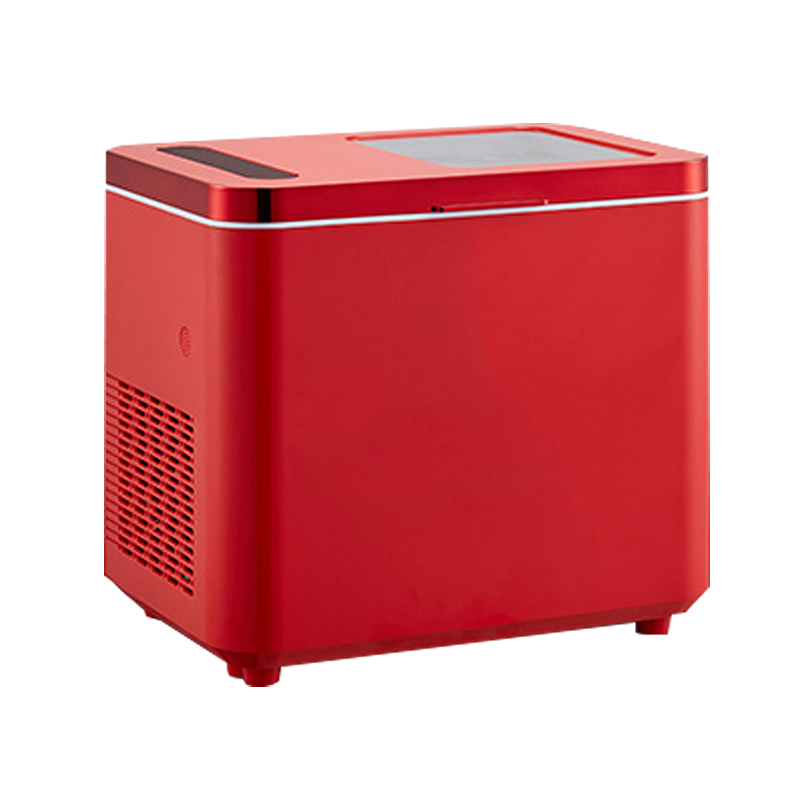
The touchscreen bullet ice maker belongs to the Bullet Ice Maker category. It is designed for users who need a compact machine that can produce ice efficiently while remaining easy to operate and maintain. With a power supply of 220V-240V/50Hz, a current and power rating of 0.9A/150W, R600a refrigerant with a 19g charge, and machine dimensions of 325 x 295 x 252 mm, the product offers a balanced combination of performance and space efficiency.
Its compact footprint allows it to fit on countertops, service counters, office pantry surfaces, bar stations, and small kitchen work areas. Unlike bulky commercial machines that require dedicated installation space, this unit is intended to deliver practical ice-making capability in a form that can be placed where ice is needed most. The machine is suitable for homes, small beverage businesses, break rooms, hospitality settings, and entertainment areas.
The touchscreen interface improves the user experience by replacing complicated mechanical controls with a cleaner and more intuitive panel. Users can operate the machine with minimal training, which is especially helpful in shared environments such as offices, small restaurants, and beverage shops where multiple people may need to use the appliance throughout the day.
Another key design feature is the fully flip-top structure. This allows users to open the ice storage and ice-making areas more completely, making routine cleaning, inspection, and maintenance easier. In appliances that deal directly with water and consumable ice, cleanability is not a minor convenience; it is a core quality feature. A design that reduces hidden corners and improves access supports better hygiene and longer machine life.
Key Technical Specifications
Item |
Specification |
User Benefit |
Product Category |
Bullet Ice Maker |
Produces hollow bullet ice suitable for rapid beverage cooling and easy dispensing. |
Power Supply |
220V-240V/50Hz |
Compatible with common electrical standards in many international markets. |
Current/Power |
0.9A/150W |
Balances ice-making performance with practical energy consumption. |
Refrigerant/Charge |
R600a/19g |
Uses an efficient refrigerant suitable for compact refrigeration appliances. |
Machine Dimensions |
325 x 295 x 252 mm |
Compact enough for countertops, pantries, drink stations, and small service areas. |
Control Type |
Touchscreen |
Simple, modern operation with an intuitive user experience. |
Cleaning Design |
Fully flip-top access |
Improves visibility, reduces cleaning difficulty, and supports hygienic maintenance. |
Why Bullet Ice Matters
The shape of ice has a direct effect on how it performs. Bullet ice is not merely a visual style; it is a functional shape. The hollow center increases contact with the beverage, allowing heat transfer to occur more quickly. When placed in iced coffee, tea, juice, milk tea, or soda, bullet ice can chill the drink rapidly while still being easy to scoop, pour, and handle.
Compared with large cube ice, bullet ice is generally faster to produce and easier to use in casual beverage settings. Compared with crushed ice, it is cleaner to handle and less likely to melt into a watery mass before serving. Compared with irregular ice forms, bullet ice is more consistent in shape, which improves flowability during storage and dispensing. This makes it well suited for locations where speed and convenience matter.
One of the most important advantages of this bullet ice maker is the non-sticky nature of its ice output. Because bullet ice has a smooth and uniform shape, it is less prone to clumping during short-term storage. This matters for users who need to scoop ice repeatedly throughout the day. In beverage shops and self-service drink areas, clumped ice slows down service, creates waste, and can frustrate staff. High flowability helps maintain a smoother operating rhythm.
The moderate hardness of bullet ice also contributes to user satisfaction. Solid ice can sometimes feel too hard when chewed, while crushed ice can melt too quickly. Bullet ice sits between these extremes. Its texture is crunchy and enjoyable, which is one reason it has become popular in milk tea shops, fast food restaurants, casual dining environments, and home beverage preparation.
Rapid Cooling for Better Beverage Service
Fast cooling is one of the most visible advantages of hollow bullet ice. When a customer orders an iced drink, they expect it to be cold immediately, not several minutes later. The perforated center of the ice increases the contact surface between the ice and the liquid. This helps remove heat from the drink more efficiently. For businesses, faster cooling can improve beverage consistency, customer satisfaction, and service speed.
In household use, rapid cooling is equally valuable. Whether preparing iced coffee before work, cooling fruit tea for guests, making lemonade for children, or serving sparkling drinks during a family gathering, users appreciate ice that works quickly. The appliance reduces dependence on freezer trays, which often require long preparation times and may not supply enough ice for parties or frequent daily use.
For food and beverage establishments, rapid cooling supports operational efficiency. Staff can prepare cold drinks quickly without excessive stirring or waiting. The ice shape is especially suitable for drinks that are served in transparent cups, as the clean bullet appearance looks neat and professional. A consistent ice shape also helps businesses maintain portion control, which can affect both drink quality and cost management.
Touchscreen Operation and User-Friendly Control
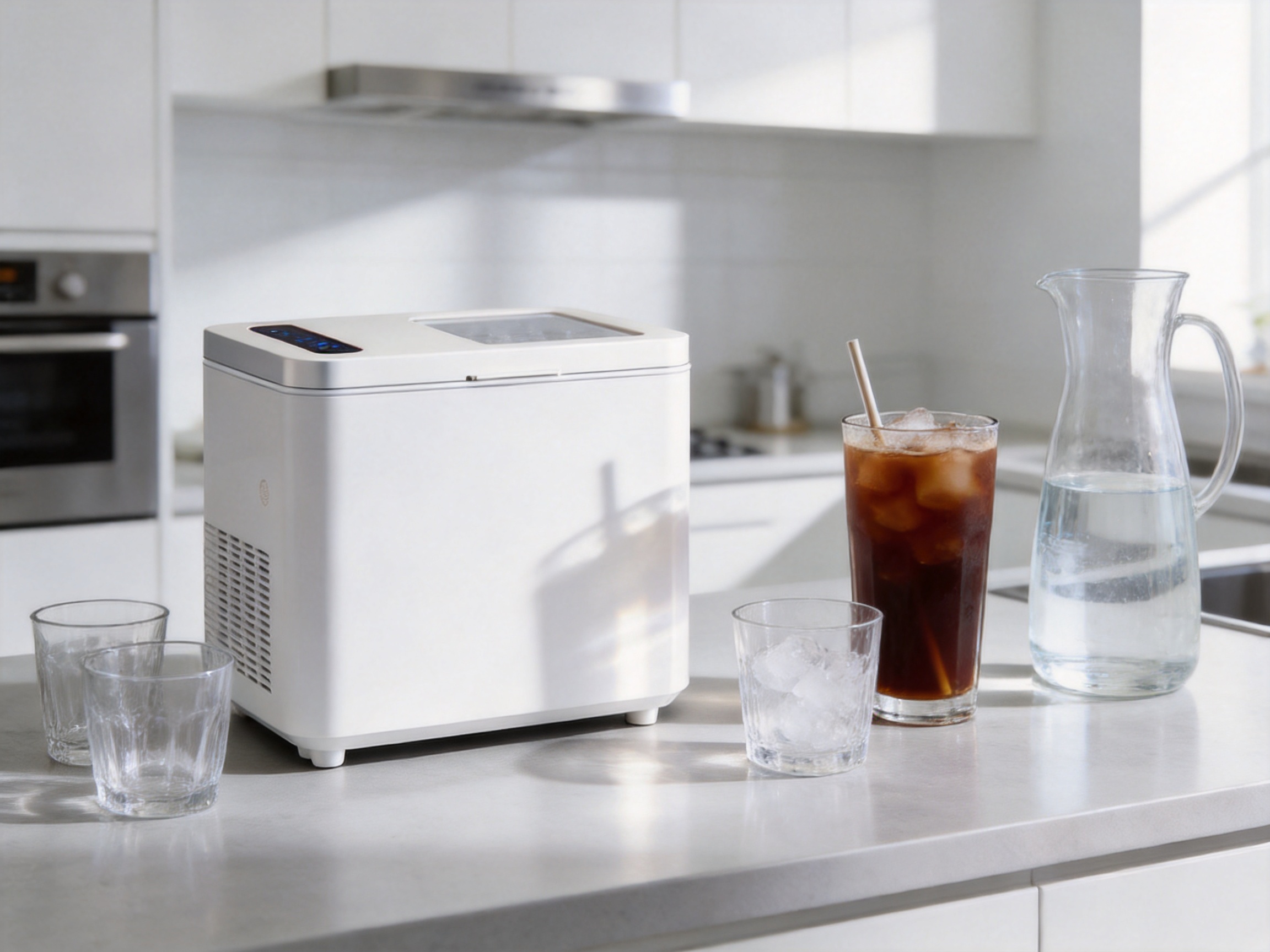
The touchscreen interface gives the machine a modern appearance and makes operation straightforward. A good ice maker should not require complicated instruction before use. In shared settings, simplicity is essential. Staff turnover, different user habits, and time pressure all make intuitive controls valuable. The touchscreen supports easy interaction and helps users monitor or operate the machine with confidence.
Traditional button-based appliances can be functional, but they may collect dirt around button gaps or become less responsive over time. A touchscreen control surface can be easier to wipe and keep clean. It also gives the product a more refined countertop presence, which matters in visible service environments such as beverage counters, hotel refreshment stations, reception areas, and open kitchens.
The interface supports the overall design philosophy of simplifying daily life through intelligent appliance design. The goal is not to make the appliance unnecessarily complex, but to make the essential functions clear, accessible, and reliable. This balance between technology and practicality is important for small household appliances, where users want convenience rather than complication.
Compact Design Without Sacrificing Practicality
With dimensions of 325 x 295 x 252 mm, the machine is designed to occupy limited countertop space while still providing meaningful ice-making capability. Space-saving design is a major advantage over many competing units that may be too bulky for small kitchens, dormitory pantries, office corners, food trucks, and compact beverage counters.
Many users want ice-making convenience but do not have room for large commercial equipment. This product addresses that gap. Its compact structure results from the operating principle and internal layout of a bullet ice maker. By organizing refrigeration, water contact, and ice collection in a space-efficient manner, the machine offers practical performance in a manageable body size.
For small businesses, space has a direct financial value. Every centimeter of a beverage counter may be needed for cups, syrups, coffee equipment, sealing machines, blenders, cash register systems, or display items. A compact ice maker can be placed near the drink preparation area without disrupting workflow. This reduces staff movement and supports faster order completion.
In home use, compact size makes the machine suitable for kitchens, dining rooms, home bars, recreational rooms, and outdoor entertainment preparation areas. It can support weekend gatherings, daily iced drinks, and seasonal beverage needs without requiring freezer space to be filled with ice trays.
Hygienic Cleaning with a Fully Flip-Top Structure
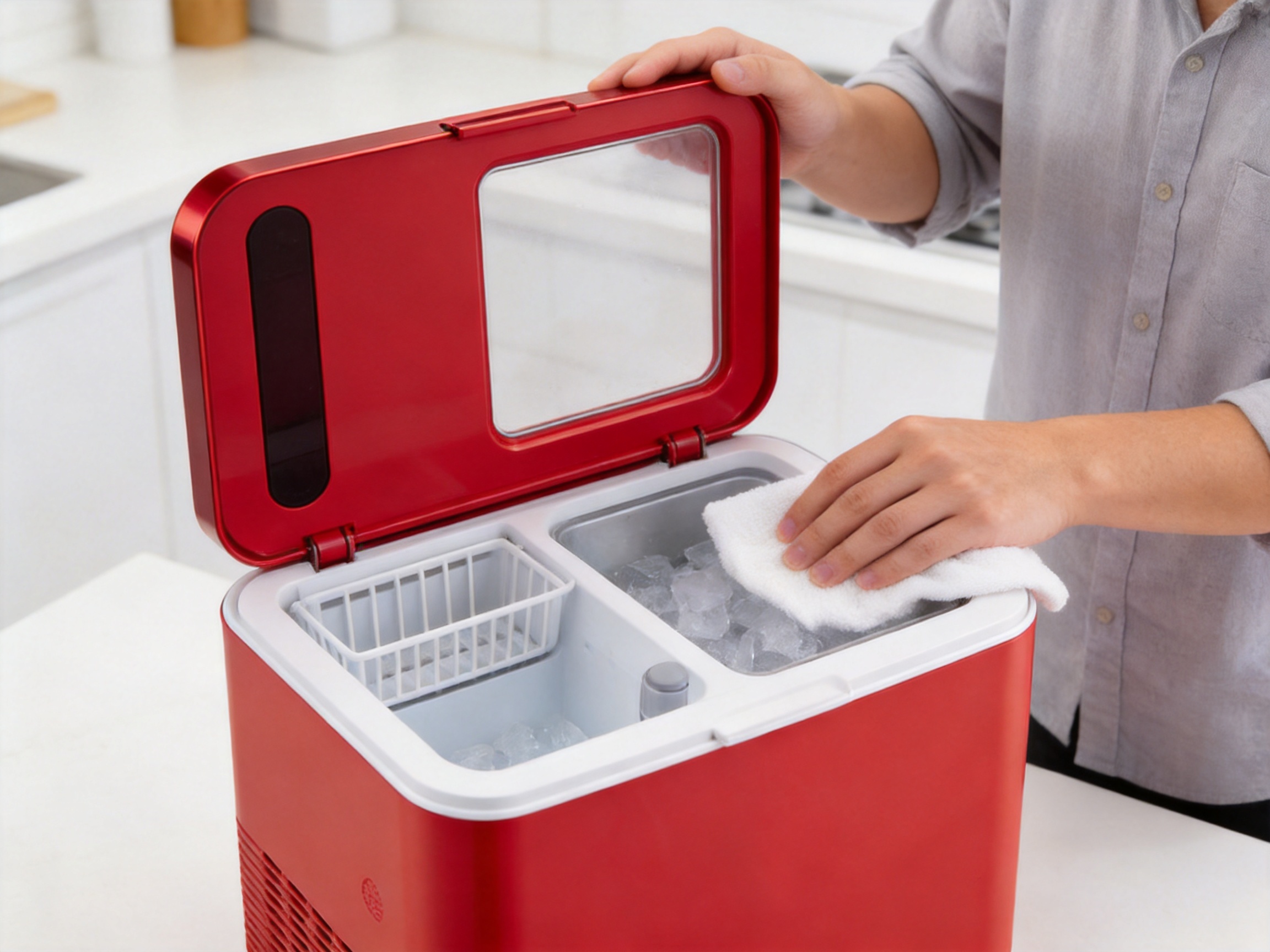
Ice is consumed directly, so cleanliness must be treated as a product performance factor. The fully flip-top design allows users to open the ice storage and ice-making areas more completely, improving access for cleaning and maintenance. This is a clear advantage over machines with narrow openings, hidden interior corners, or difficult-to-reach surfaces.
When users can see and reach the interior more easily, they are more likely to clean the machine properly and regularly. Better cleaning access helps reduce residue accumulation, water odor, and hygiene concerns. It also helps users inspect the ice-making area and remove any particles or deposits that may appear through normal use.
In commercial or semi-commercial settings, cleaning convenience saves labor. Employees can perform daily cleaning routines faster and more thoroughly. This reduces downtime and supports better compliance with internal hygiene standards. In household settings, the same design makes maintenance less intimidating. Users are less likely to neglect cleaning when the process is simple and visible.
This focus on cleanability distinguishes the product from competitors that prioritize exterior appearance while overlooking the interior user experience. A good ice maker must be attractive, efficient, and easy to keep sanitary. The flip-top structure supports all three goals by combining access, visibility, and convenience.
Energy-Conscious Refrigeration Performance
The machine operates at 0.9A/150W, a practical power rating for a compact ice maker. This level of power is suitable for countertop ice production while avoiding the burden of oversized energy demand. For users who make ice frequently, energy-conscious performance contributes to lower operating costs and more responsible appliance use.
The refrigerant specification, R600a/19g, reflects the use of an efficient refrigerant commonly applied in modern compact refrigeration appliances. R600a is valued in appliance design because it can support effective cooling performance in properly engineered systems. In an ice maker, refrigeration efficiency affects production speed, consistency, and energy use.
Competitor products may claim fast ice production, but without a balanced refrigeration system, performance can become unstable. Some machines may produce irregular ice, overwork the compressor, or lose efficiency in warm environments. A reliable design requires coordination between refrigerant charge, compressor performance, evaporator layout, insulation, airflow, water circulation, and control logic.
The touchscreen bullet ice maker is built around this systems-based approach. Rather than relying on a single feature, it combines efficient cooling with compact structure and user-friendly operation. This integrated design supports more consistent results in daily use.
Advantages Over Competing Ice Makers
The compact ice maker market includes many products that look similar, but important differences become clear during daily operation. This touchscreen bullet ice maker offers several competitive advantages that matter to users in real conditions.
First, the bullet ice shape provides faster cooling than many larger solid ice forms because of its hollow center. This is especially valuable for beverage businesses and households that frequently prepare iced drinks. The shape is not only efficient but also pleasant to chew, making it popular among customers who enjoy crunchy ice.
Second, the ice is designed for high flowability. Clumping is one of the most common frustrations with ice storage and dispensing. Bullet ice with a smooth form can be easier to scoop and handle, supporting faster service and reducing waste.
Third, the machine is compact. Some competing ice makers provide performance but require too much space. Others are small but lack practical ice output or convenient access. This unit aims for a strong balance: meaningful ice-making capability in a countertop-friendly size.
Fourth, the fully flip-top design improves cleaning. Many competing products have limited access, forcing users to clean through small openings. This can leave hidden areas neglected. The flip-top structure supports more thorough daily maintenance and better hygiene.
Fifth, the touchscreen panel gives the appliance a cleaner, more modern operating experience. In visible service environments, appliance appearance matters. A smooth control interface looks professional and can be easier to wipe than mechanical button layouts.
Sixth, the product is supported by a manufacturer specializing in small household appliances, including ice makers, coffee machines, and air fryers. This broader appliance expertise helps the company apply cross-category experience in materials, assembly, electrical safety, quality control, user-interface design, and mass production management.
Manufacturing Strength Behind the Product
Alien Technology Co., Ltd. is located in Zhouxiang, Cixi City, Zhejiang Province, an area known for its small household appliance manufacturing ecosystem and convenient logistics. This location provides access to component suppliers, skilled labor, manufacturing services, and transportation networks. For appliance production, such an industrial environment can improve supply chain responsiveness, cost control, and production efficiency.
The company specializes in household appliances such as ice makers, coffee machines, and air fryers. This portfolio is strategically important because these categories share many manufacturing requirements: reliable electrical systems, heat or refrigeration control, food-contact materials, compact mechanical design, user safety, and consistent assembly quality. Experience in multiple appliance categories helps strengthen product development and manufacturing discipline.
The company’s mission emphasizes smart technology, simplified living, and improved happiness. In practical product terms, this means designing appliances that are easy to use, reliable in daily routines, and suited to modern lifestyles. The touchscreen bullet ice maker reflects this philosophy by combining intelligent control with straightforward operation and practical cleaning access.
Advanced manufacturing strength does not depend only on machinery. It also requires process control, quality awareness, supplier management, inspection systems, design validation, and continuous improvement. A manufacturer that pursues excellent quality, customer satisfaction, and innovation is better positioned to deliver products that perform consistently over time.
Advanced Manufacturing Processes
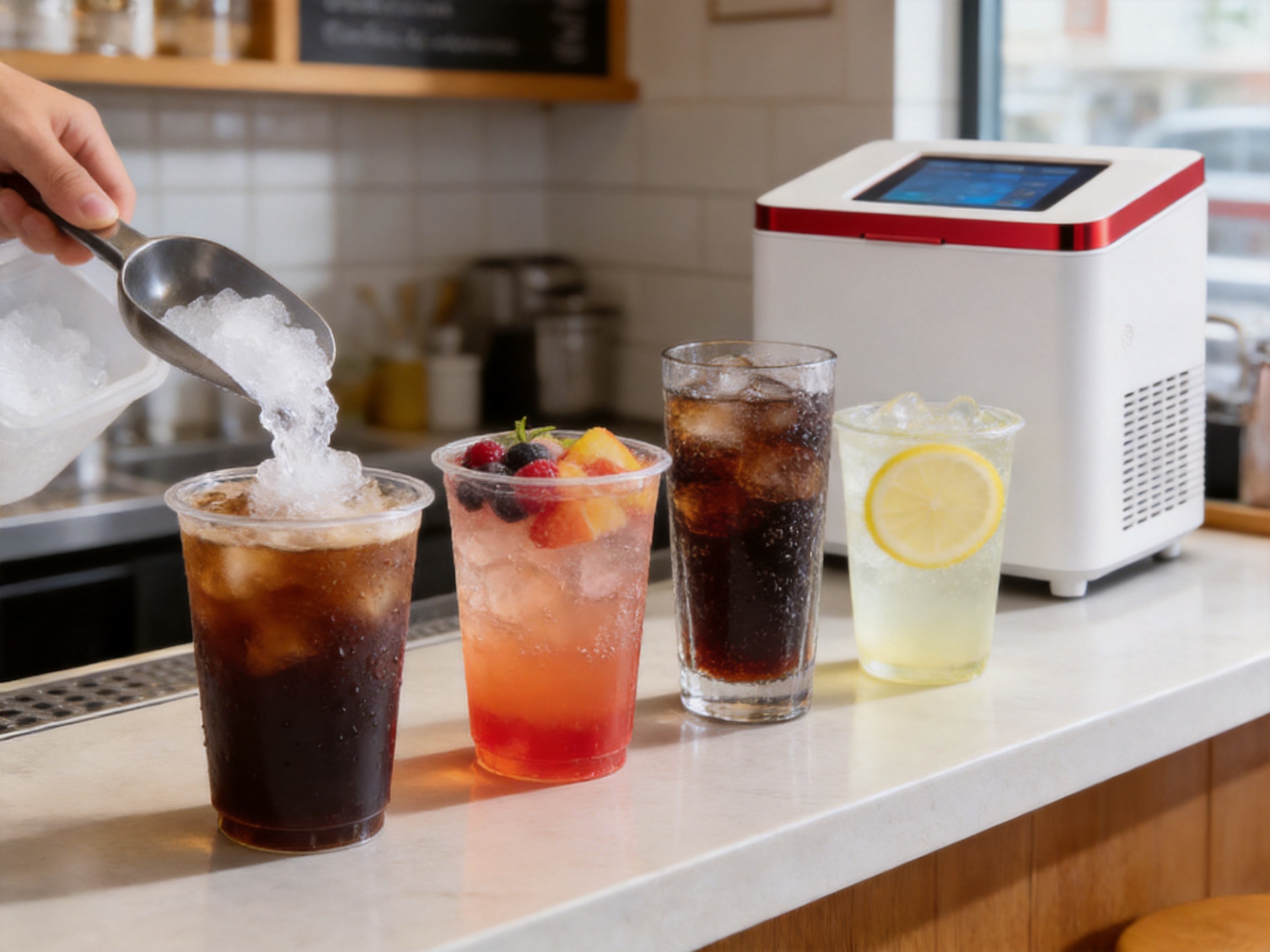
The production of a compact ice maker involves multiple manufacturing stages, each of which affects the final product’s reliability. A professional appliance manufacturer must manage plastic molding, metal component fabrication, refrigeration system assembly, electrical installation, sealing, leak testing, functional testing, packaging, and shipment preparation.
Plastic housing components must be molded with dimensional consistency. Poor molding accuracy can create gaps, weak assembly points, poor fit, or water leakage risks. A refined manufacturing process helps ensure that the outer shell, top cover, internal support structures, and storage areas align correctly. For a compact appliance, even small dimensional errors can affect usability and durability.
The refrigeration system requires careful handling. Compressor assembly, refrigerant charging, tubing connection, and leak prevention are central to ice-making performance. The use of R600a refrigerant requires proper process discipline and safety management. Accurate refrigerant charge is important because too little or too much refrigerant can reduce cooling efficiency, affect ice formation, or increase system stress.
Water-contact components must be selected and assembled with attention to cleanliness and food safety expectations. Since the appliance produces consumable ice, interior surfaces should be smooth, accessible, and suitable for regular cleaning. The fully flip-top design supports this goal not only during use but also during manufacturing inspection, because visible and accessible internal structures can be checked more effectively.
Electrical assembly is another key process. Touchscreen controls, power supply components, sensors, and internal wiring must be installed securely. Stable electrical performance supports user safety and machine reliability. A disciplined assembly process includes routing wires correctly, preventing interference with moving or heated components, and verifying that the control system responds properly.
Quality testing is essential before shipment. A complete inspection process may include appearance checks, power-on tests, control function tests, refrigeration performance verification, water circulation checks, leakage inspection, insulation review, noise observation, and packaging integrity checks. These procedures help ensure that customers receive machines ready for dependable operation.
Quality Control and Reliability
Reliability is one of the strongest differentiators in the small appliance industry. A low-quality ice maker may work at first but soon develop problems such as weak cooling, leaking, poor ice formation, noisy operation, or control failures. To compete successfully, a manufacturer must control quality from design through final shipment.
For this touchscreen bullet ice maker, reliability begins with the product architecture. A compact refrigeration appliance must manage heat removal effectively. It must also maintain stable water flow and produce consistent ice forms. This requires coordination between the refrigeration circuit, water system, control interface, housing ventilation, and ice collection area.
Material selection also matters. Exterior surfaces need durability for repeated contact and cleaning. Interior parts need resistance to water exposure. Touchscreen panels need responsiveness and surface stability. Seals and joints need to prevent unwanted leakage. Packaging must protect the unit during transport, especially because refrigeration appliances can be sensitive to impact.
Manufacturing consistency is equally important. A well-designed product can still fail if assembly procedures are inconsistent. By operating in an established appliance manufacturing region and focusing on continuous improvement, Alien Technology Co., Ltd. can support stable production practices and responsive optimization. Feedback from customers and distributors can be used to refine details in design, manufacturing, and service support.
Ideal Applications
This touchscreen bullet ice maker is suitable for a wide range of scenarios. In homes, it supports families who enjoy iced coffee, fruit tea, soft drinks, smoothies, cocktails, and cold water. It is particularly useful during summer, parties, family dinners, and outdoor entertainment preparation. Instead of waiting for freezer trays, users can produce ice as needed.
In offices, the machine improves pantry service. Employees can enjoy cold drinks throughout the workday, and visitors can be served beverages more professionally. Because the unit is compact, it can fit into office break rooms without requiring major installation.
In small beverage shops, the machine can serve as a convenient ice source for milk tea, lemonade, iced coffee, and soda. The bullet ice shape is popular with customers, while the high flowability makes it easier for staff to scoop quickly. For small shops with limited counter space, the compact body is a major advantage.
In fast food restaurants and snack bars, the machine can support peak beverage preparation and backup ice production. The moderate hardness and rapid cooling characteristics make bullet ice suitable for many casual drinks. The easy-clean design helps staff maintain hygiene during daily routines.
In hospitality environments such as guesthouses, boutique hotels, meeting rooms, and reception areas, the appliance offers a convenient way to provide ice without installing a large commercial system. Its touchscreen appearance also gives it a clean, modern look suitable for customer-facing areas.
How the Product Supports Beverage Quality
Ice quality affects beverage quality in several ways. First, the speed of cooling determines how quickly a drink reaches a pleasant serving temperature. Bullet ice helps achieve rapid cooling because of its hollow center. Second, ice texture affects customer experience. Crunchy, moderately hard ice can make a drink feel more refreshing and enjoyable. Third, ice handling affects hygiene and service efficiency. Ice that flows well and resists clumping is easier to scoop cleanly.
In milk tea and iced coffee businesses, these details can influence repeat purchases. Customers may not consciously analyze the ice, but they notice whether a drink feels cold, fresh, and pleasant. A consistent ice form helps create a consistent drink experience. For businesses, consistency is essential to brand reputation and customer loyalty.
At home, beverage quality is about comfort and convenience. A family that can produce ice quickly is more likely to enjoy cold drinks whenever desired. The appliance can also reduce the need to buy bagged ice, which may be inconvenient to store and transport. Producing ice on demand can be cleaner and more practical for daily use.
Space-Saving Benefits for Modern Living
Modern kitchens and service counters are often crowded with appliances. Coffee machines, air fryers, blenders, kettles, water dispensers, and cooking tools all compete for space. A compact ice maker must justify its place by being useful, efficient, and easy to maintain. With its 325 x 295 x 252 mm body, this product offers strong placement flexibility.
Small size also makes the appliance easier to relocate. Users may keep it in the kitchen during daily use and move it to a dining area or entertainment space during gatherings. Small businesses may adjust counter layouts during seasonal menu changes. A compact ice maker supports this flexibility better than a fixed or oversized unit.
The space-saving structure does not mean the product is limited to occasional use. Its continuous ice-making principle supports efficient production over time. This makes it useful for users who need ongoing ice rather than a single frozen tray. The balance between compactness and production efficiency is one of the central advantages of the product.
Maintenance Guidance for Long-Term Use
Good maintenance helps an ice maker perform consistently. Users should operate the machine with clean water and clean the interior regularly according to usage frequency. In high-use environments, daily cleaning is recommended. In household environments, regular scheduled cleaning helps prevent odor, residue, and mineral buildup.
The fully flip-top structure makes maintenance easier by allowing users to access the storage and ice-making areas. Users can wipe visible surfaces, remove remaining water or ice, and inspect the interior more conveniently. This design reduces the chance that hidden corners will be ignored.
The machine should be placed on a stable, level surface with adequate ventilation around it. Like all refrigeration appliances, it needs to release heat during operation. Blocking ventilation areas can reduce efficiency and may affect ice-making performance. Users should also avoid placing the unit near high-heat appliances or direct sunlight when possible.
When moving the appliance, users should handle it carefully and allow it to remain upright before operation if it has been transported. Proper handling helps protect the refrigeration system. For best performance, the machine should be used in a clean environment and maintained with attention to water quality and interior hygiene.
Design Philosophy: Practical Intelligence
The best small appliances are not those with the most complicated functions, but those that solve daily problems elegantly. This touchscreen bullet ice maker reflects a practical intelligence approach. It uses a modern touchscreen interface, but the purpose is simplicity. It uses a compact structure, but the purpose is placement flexibility. It produces bullet ice, but the purpose is faster cooling, pleasant texture, and easy handling.
This design philosophy aligns with the manufacturer’s broader focus on smart technology and simplified living. In today’s appliance market, customers expect products that are reliable, intuitive, and attractive. They want technology that reduces effort rather than creating new complexity. The ice maker answers this expectation by focusing on the core user journey: add water, operate easily, produce ice efficiently, scoop conveniently, clean thoroughly, and repeat with confidence.
Why Manufacturer Experience Matters
When choosing an ice maker, buyers often compare visible features such as size, appearance, and control panel. However, the manufacturer behind the product is equally important. Appliance manufacturing requires experience, supply chain control, process discipline, and product testing. A company that specializes in related categories such as ice makers, coffee machines, and air fryers has valuable knowledge of consumer expectations and appliance production standards.
Alien Technology Co., Ltd. benefits from being located in a strong small-appliance manufacturing region. This environment supports efficient sourcing, skilled production, and practical logistics. The company’s commitment to quality, customer satisfaction, continuous improvement, and innovation strengthens its ability to serve buyers who need stable product supply and dependable performance.
For distributors, importers, and business customers, manufacturing strength can be as important as product design. Reliable production helps reduce after-sales issues, protect customer reputation, and support long-term cooperation. For end users, manufacturing strength appears in the form of consistent operation, safe structure, thoughtful design, and durable daily use.
Q&A Section
What type of ice does this machine produce?
It produces bullet-shaped ice. Bullet ice has a hollow center that increases contact with beverages, helping drinks cool quickly. The shape is also easy to scoop and has a pleasant crunchy texture.
Why is bullet ice useful for drinks?
Bullet ice offers rapid cooling because its hollow structure increases surface area. It is suitable for iced coffee, milk tea, soda, juice, cocktails, lemonade, and many casual beverages. It also flows well and is less likely to clump compared with some irregular ice shapes.
Is the machine suitable for home use?
Yes. Its compact dimensions make it suitable for home kitchens, dining areas, home bars, and entertainment spaces. It is useful for daily cold drinks, parties, family gatherings, and summer use.
Can small beverage shops use this ice maker?
Yes. The product is suitable for light commercial applications such as milk tea shops, small cafes, snack bars, office pantries, and hospitality counters. Its compact structure and fast-cooling bullet ice are especially useful where space and service speed matter.
What are the main technical specifications?
The machine uses a 220V-240V/50Hz power supply, has a current and power rating of 0.9A/150W, uses R600a refrigerant with a 19g charge, and measures 325 x 295 x 252 mm.
How does the touchscreen improve the user experience?
The touchscreen provides simple, modern operation. It makes the appliance easier to use in shared environments and gives the machine a clean, professional appearance. A smooth control surface can also be easier to wipe than traditional button layouts.
Why is the fully flip-top design important?
The fully flip-top design allows users to open the ice storage and ice-making areas more completely. This improves access for cleaning, reduces hidden corners, and supports better hygiene in both home and business use.
How does this product compare with many competing ice makers?
It offers a strong combination of compact size, touchscreen operation, rapid-cooling bullet ice, high ice flowability, convenient cleaning access, and manufacturing support from a company specializing in small household appliances. These advantages make it practical for both domestic and light commercial users.
What makes the manufacturer a strong partner?
Alien Technology Co., Ltd. is located in a well-developed small household appliance manufacturing area and specializes in appliances such as ice makers, coffee machines, and air fryers. Its focus on quality, customer satisfaction, continuous improvement, and innovation supports dependable production and long-term cooperation.
How should users maintain the ice maker?
Users should operate it with clean water, clean the interior regularly, keep it on a stable and level surface, provide ventilation around the machine, and avoid placing it near excessive heat. The flip-top structure makes cleaning and inspection easier.
Conclusion
The touchscreen bullet ice maker is a practical and competitive appliance for users who need quick, clean, and convenient ice production. Its bullet ice shape offers rapid beverage cooling, enjoyable texture, and easy handling. Its compact body saves space while supporting flexible placement in homes, offices, beverage shops, and hospitality environments. Its touchscreen panel simplifies operation, while the fully flip-top structure makes cleaning more accessible and hygienic.
Beyond product features, the strength of the manufacturer adds important value. Alien Technology Co., Ltd. brings experience in small household appliances, a manufacturing location with strong supply chain support, and a business philosophy centered on quality, improvement, innovation, and customer satisfaction. These strengths help transform a compact ice maker into a reliable product solution for modern beverage needs.
For buyers comparing countertop ice makers, the most important question is not only how fast a machine can make ice, but how well it fits real daily use. This product answers with fast-cooling bullet ice, simple touchscreen control, compact dimensions, easy cleaning, and practical manufacturing reliability. It is designed for users who want ice production to be efficient, hygienic, enjoyable, and easy to manage.
References
1. ASHRAE Handbook: Refrigeration, American Society of Heating, Refrigerating and Air-Conditioning Engineers.
2. International Electrotechnical Commission, Household and Similar Electrical Appliances Safety Standards.
3. Food and Beverage Service Principles: Beverage Temperature, Ice Handling, and Service Efficiency.
4. Modern Small Appliance Manufacturing: Quality Control, Assembly Process, and Product Reliability.
5. Refrigeration Technology Fundamentals: Heat Transfer, Refrigerant Application, and Compact Cooling Systems.