
 English
 한국어
한국어 Español
 Deutsch
Modern home life increasingly depends on small appliances that are practical, efficient, attractive, and easy to use. Among these appliances, the home ice cube maker has become an essential tool for families, beverage lovers, home entertainers, office pantries, small hospitality spaces, and anyone who values fast access to fresh ice. This article focuses on a compact home ice cube maker designed for daily convenience, drink quality, and dependable performance. With a practical structure, stable cooling system, square ice cube output, and space-saving dimensions, it delivers a strong balance of functionality and home-friendly design.
The product is designed for users who want more than ordinary freezer ice. Traditional freezer trays can be slow, messy, inconsistent, and difficult to store. They often produce ice that absorbs freezer odors, melts quickly, or looks unattractive in premium beverages. By contrast, a dedicated home ice cube maker can provide fresh ice when needed, support better drink presentation, and reduce the inconvenience of preparing ice in advance. For families, gatherings, home bars, tea shops, office kitchens, and small leisure spaces, this type of machine creates a more professional and enjoyable cooling experience.
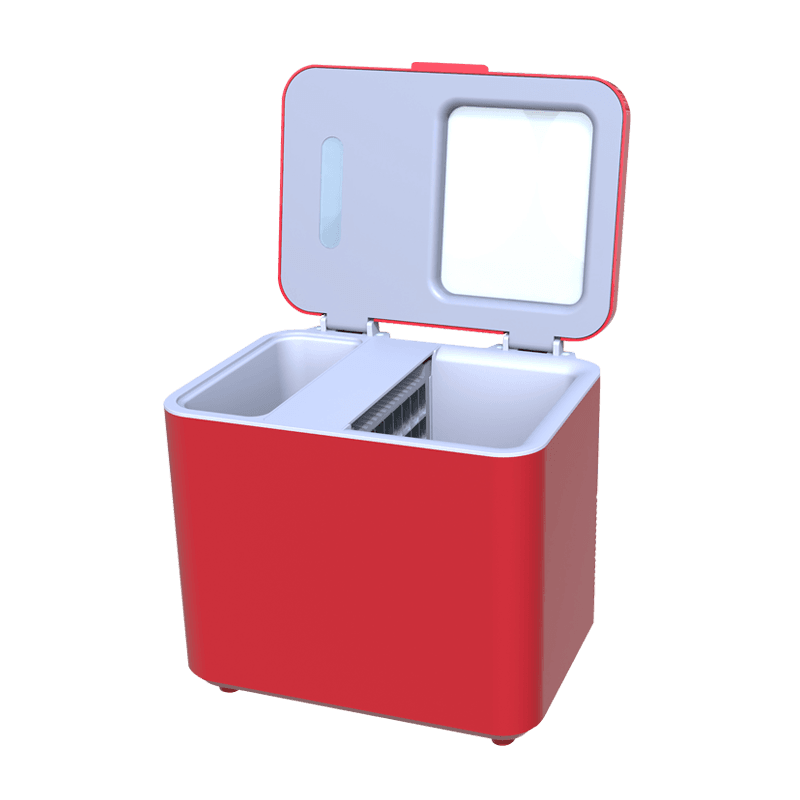
The supplied model information identifies the product as a home ice cube maker with the model description Alien-ZF01. It is positioned in the ice cube maker category and is suitable for customers seeking a compact, efficient, and visually appealing solution for making square ice cubes. The product has a rated power supply of 220V/50Hz, current and power of 0.65A/140W, R290 refrigerant with a 26g charge, and machine dimensions of 325 x 295 x 252 mm. These specifications indicate a compact household appliance with a controlled power profile and a refrigeration system designed for stable home operation.
Behind the product is Alien Technology Co., Ltd., a household appliance manufacturer located in Zhouxiang Town, Cixi City, Zhejiang Province, an area known for small appliance manufacturing and convenient logistics. The company focuses on household appliances including ice makers, coffee machines, and air fryers. Its operating philosophy emphasizes smart technology, simplified living, improved happiness, reliable quality, continuous improvement, innovation, and customer satisfaction. These strengths help support the product’s competitive position in a market where consumers expect durability, attractive appearance, stable performance, and responsive manufacturing capability.
Product Overview: A Compact Ice Cube Maker Built for Daily Use
This home ice cube maker is designed to solve a simple but common problem: people need clean, attractive, conveniently available ice without depending on slow freezer trays or store-bought bags. Whether cooling fruit juice, soda, iced tea, cocktails, spirits, water, coffee, or food ingredients, users benefit from a machine that can produce ice in a practical shape and with reliable consistency. Its compact dimensions make it suitable for kitchens, dining rooms, small apartments, offices, home bars, recreation rooms, and compact commercial-adjacent settings where space matters.
The machine dimensions of 325 x 295 x 252 mm show that the unit is not oversized. It is built to fit naturally on a countertop or appliance shelf without overwhelming the surrounding space. Many households already have multiple small appliances, including coffee machines, air fryers, kettles, and blenders. A good ice cube maker must therefore justify its place by being compact, attractive, and useful throughout the year. This product’s footprint supports that goal by offering a dedicated ice-making function while preserving valuable counter area.
The rated power of 140W suggests a practical approach to household performance. Ice making requires refrigeration, pumping, heat exchange, and cycle control, but household users usually prefer appliances that do not consume excessive energy. By using an appropriate power range, the machine aims to support reliable ice production without becoming unnecessarily demanding for ordinary home electrical environments. The 220V/50Hz power supply also reflects suitability for markets using this standard.
The use of R290 refrigerant is also significant. R290, also known as propane refrigerant, is widely recognized in refrigeration applications because of its efficient thermodynamic properties and low global warming potential compared with many older refrigerants. A charge of 26g indicates a compact sealed system with a limited refrigerant amount appropriate for a small appliance. For consumers and distributors who increasingly value environmental responsibility, the use of R290 can be viewed as a forward-looking feature when properly engineered, manufactured, and handled in accordance with safety standards.
Core Specifications
Product Category |
Home Ice Cube Maker |
Model Description |
Alien-ZF01 |
Power Supply |
220V/50Hz |
Current and Power |
0.65A/140W |
Refrigerant and Charge |
R290/26g |
Machine Dimensions |
325 x 295 x 252 mm |
Primary Ice Style |
Square ice cubes |
Typical Use Scenarios |
Home kitchens, home bars, offices, small gatherings, beverage preparation, food cooling, and daily household use |
Why Square Ice Cubes Matter
Ice may appear simple, but its shape has a direct effect on beverage experience. Square ice cubes offer several advantages over irregular ice, crushed ice, and many thin or hollow ice shapes. Their regular form is visually neat, easy to stack, convenient to handle, and suitable for a wide range of drinks. For users who care about presentation, the square shape immediately creates a sense of order and professionalism. In a clear glass, square cubes look clean and deliberate, elevating even simple beverages.
One of the most important advantages of solid square ice is its slower melting rate. Ice melts according to temperature difference, surface contact, density, and exposed surface area. A dense cube with a relatively compact shape tends to melt more slowly than thin, irregular, or porous ice. When ice melts slowly, the drink remains cold for longer while dilution is reduced. This is especially important for premium whiskey, neat spirits, cocktails, iced coffee, and other beverages where flavor balance matters.
Slow-melting ice also improves practical comfort. In warm weather, people often want drinks to remain chilled throughout conversation, meals, or outdoor relaxation. Fast-melting ice can water down the drink before it is finished, making the taste flat and less satisfying. Square cubes provide a more stable cooling effect, allowing users to enjoy a drink at a better temperature with less compromise in flavor. This advantage is easy to notice in daily use and is one of the major reasons that dedicated ice cube makers are increasingly popular.
The square shape also supports high stacking efficiency. Because the edges and faces are regular, cubes can be stored more compactly than irregular freezer ice. This helps when users transfer ice into a container, ice bucket, or freezer storage bag. Space saving is valuable in household freezers, where available space is often limited by frozen foods, prepared meals, and other items. A more organized ice shape makes it easier to store, scoop, and serve ice cleanly.
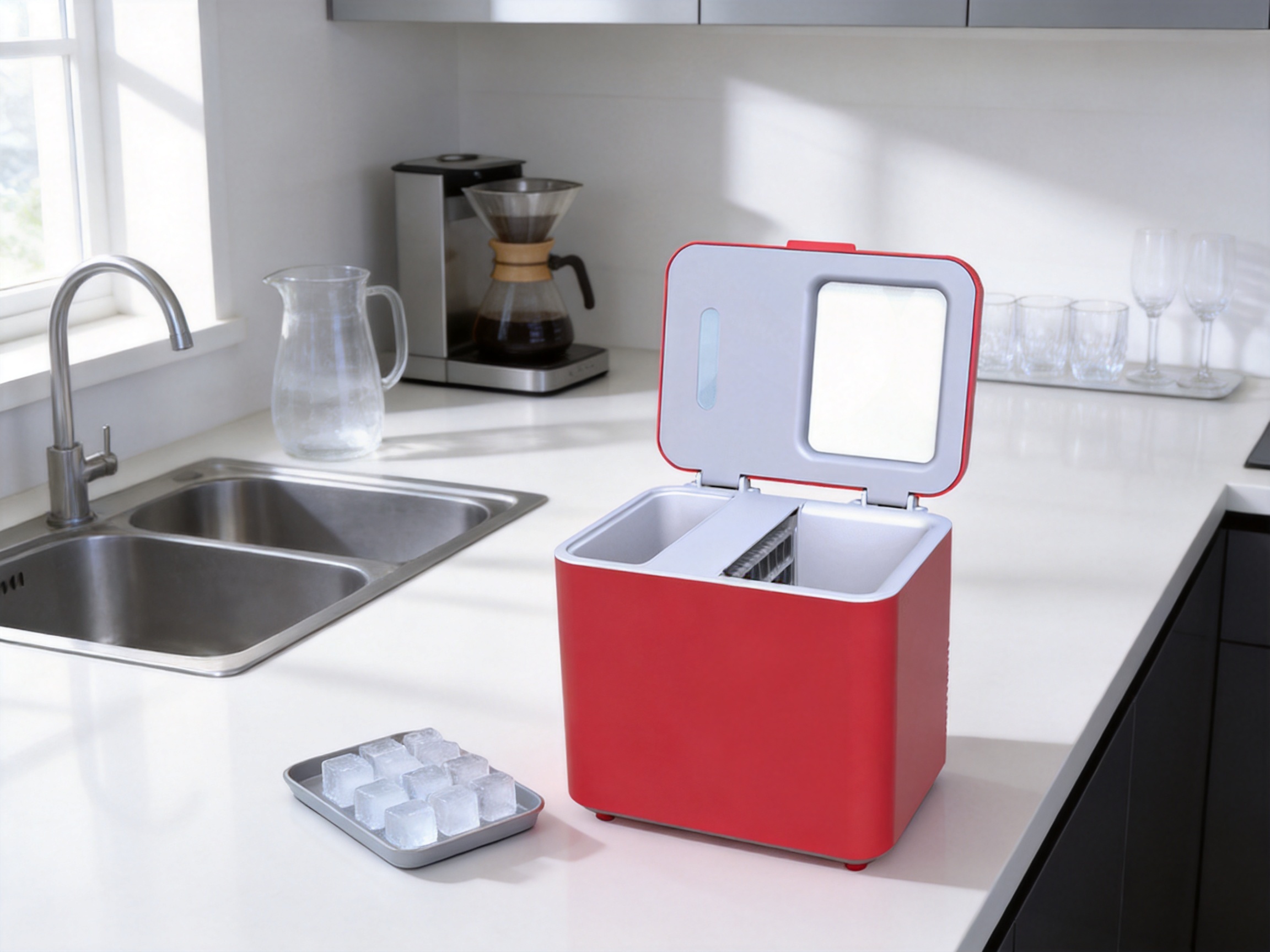
Advantages Over Traditional Freezer Ice
Traditional freezer trays are inexpensive, but they have many limitations. They require users to fill trays carefully, carry them to the freezer without spilling, wait several hours, and twist or strike the tray to remove the cubes. If the freezer contains strong-smelling foods, the ice may absorb odors. If the trays are uncovered, the surface can collect frost or small particles. The result is often ice that looks cloudy, tastes stale, and feels inconvenient to prepare.
A dedicated home ice cube maker changes the process. Instead of planning hours ahead, users can make ice more conveniently and repeatedly. Freshly made ice is especially useful during family dinners, parties, hot summer days, and beverage preparation. The appliance becomes an independent ice source rather than an afterthought hidden in the freezer. This independence is one of its biggest competitive advantages because it gives users more control over timing, quantity, and freshness.
Compared with freezer trays, the machine also improves the user experience by reducing mess. There is no need to balance a flexible tray full of water while walking across the kitchen. There is less chance of spilled water freezing onto shelves. Users can avoid the frustration of cracking trays or struggling to release cubes. The entire process becomes more appliance-driven, which aligns with the modern preference for convenient household automation.
Another advantage is consistency. Freezer trays can produce cubes of uneven size if the tray is not filled evenly or if the water freezes under unstable conditions. A purpose-built ice cube maker is engineered around repeatable cycles, controlled refrigeration, and structured ice formation. Consistency matters not only for aesthetics but also for beverage performance. Uniform cubes chill drinks predictably, fit glasses more neatly, and look more professional when served to guests.
Advantages Over Store-Bought Bagged Ice
Store-bought bagged ice can be useful for large events, but it is not always ideal for daily home use. It requires a trip to the store, takes up freezer space, may clump together, and often contains irregular pieces. Once opened, the bag can become messy and difficult to reseal. In some cases, bagged ice may break into small fragments that melt rapidly and dilute drinks quickly. For everyday beverages, this can be inconvenient and wasteful.
A home ice cube maker allows users to produce ice on demand. This reduces dependence on external supply and makes daily use more convenient. If unexpected guests arrive or the weather becomes hot, the user does not need to leave home to buy ice. If a family member wants iced coffee or cold juice, ice can be prepared fresh. This convenience is a meaningful advantage in real household routines.
There is also a storage benefit. Bagged ice can occupy a large section of the freezer, especially when bought in advance for possible use. In smaller homes and apartments, freezer space is valuable. A compact ice maker can reduce the need to store large quantities of ice long term. Users can make what they need, transfer extra cubes if desired, and avoid keeping bulky bags in the freezer.
Freshness is another selling point. Ice made at home from selected water gives users more confidence in taste and cleanliness. While commercial ice is widely used, many consumers prefer controlling the source of their own ice, especially for drinks served to family members or guests. A dedicated ice cube maker supports that preference and contributes to a more personal beverage experience.
Advantages Over Competing Ice Maker Designs
The market includes many compact ice makers, but not all machines deliver the same balance of usability, dimensions, power, refrigerant choice, and ice style. Some units are bulky, difficult to place, or visually mismatched with modern kitchens. Others produce ice shapes that melt too quickly or are less suitable for premium drinks. Some rely on less environmentally preferable refrigerants or have inefficient internal layouts. A strong home ice cube maker must therefore succeed not only in making ice, but also in fitting into the household environment.
This product’s square ice cube focus helps distinguish it from machines that produce irregular, hollow, or soft ice forms. Hollow bullet-style ice can be convenient for rapid cooling, but it often melts faster because of greater surface area and internal voids. For users who prioritize slow melting, clean appearance, and drink quality, square cubes have a clear advantage. The resulting ice is more appropriate for spirits, cocktails, restaurant-style service, and home entertaining.
The compact body also gives the product a competitive edge. At 325 x 295 x 252 mm, the machine is sized for practical placement. Some competing appliances become inconvenient because they require too much counter depth or height. A well-proportioned unit is easier to keep accessible, which encourages regular use. If an appliance must be stored away after every use, it becomes less valuable in daily life. A compact ice maker that can remain on the counter is more likely to become part of the user’s routine.
The 140W power rating further supports household suitability. Ice makers need enough power to operate effectively, but excessive consumption, noise, or heat output can reduce user satisfaction. A carefully engineered power profile helps balance performance with comfort. For distributors and buyers, this balance is important because customer reviews often depend on everyday impressions: whether the machine is easy to place, easy to use, acceptable in energy consumption, and reliable over repeated cycles.
The use of R290 refrigerant is another competitive factor. As environmental expectations rise, appliance makers are shifting toward refrigerants with lower climate impact. R290 is appreciated for its low global warming potential and efficient cooling behavior when applied in properly designed systems. This gives the product an advantage over older designs that may rely on less sustainable refrigerants. For markets where environmental compliance and responsible product positioning matter, this feature can strengthen appeal.
Drink Quality and Flavor Protection
A major reason to choose a better ice cube maker is flavor protection. Ice is not just frozen water; it becomes part of the beverage. If ice melts too quickly, it changes the concentration, aroma, sweetness, bitterness, acidity, and overall balance of a drink. A carefully prepared cocktail may lose its intended taste if the ice turns into water too rapidly. A glass of whiskey may become thin and muted. Iced coffee may taste weak before the user finishes it. Slower-melting square cubes help reduce these problems.
In premium spirits, controlled dilution is especially important. Some drinkers add a small amount of water or ice intentionally to open aromas, but excessive dilution is undesirable. A dense square cube can cool the drink gradually while preserving character. This makes the ice maker attractive to users who enjoy whiskey, brandy, rum, gin, vodka, or crafted cocktails at home. It also helps hosts present drinks with a professional look and feel.
For non-alcoholic beverages, the benefits are equally practical. Lemon tea, fruit drinks, sparkling water, soda, milk tea, and cold brew coffee all benefit from clean, attractive ice. Families with children may use ice for juice or water during hot weather. Office users may use cubes for iced coffee and afternoon drinks. In each case, the ability to produce fresh ice improves convenience and enjoyment.
Ice can also assist in kitchen preparation. Cooks use ice to cool boiled vegetables quickly, stop cooking processes, prepare chilled desserts, stabilize seafood displays, or create cold water baths. A compact home ice cube maker supports these tasks without requiring a large commercial ice machine. This versatility expands the value of the appliance beyond beverages alone.
Professional Aesthetics for Home Entertaining
Presentation matters. In modern homes, guests notice the details: the glassware, the table setting, the drink garnish, and the ice. Square ice cubes create a clean and premium visual effect. Their neat geometry suggests care, organization, and hospitality. When placed in a transparent glass, the cubes reflect light attractively and create a sense of freshness. This can make even simple sparkling water feel more refined.
Home entertaining has grown in popularity because people increasingly enjoy creating café-style, bar-style, or restaurant-style experiences at home. A home ice cube maker supports this trend by giving hosts an easy way to improve drink service. Instead of serving cloudy freezer pieces or crushed fragments, hosts can offer uniform cubes that match the quality of their glasses and ingredients. This small improvement can change the overall impression of the gathering.
The product is also suitable for everyday personal rituals. A morning iced coffee, afternoon lemon water, or evening drink can become more enjoyable when prepared with proper ice. Small daily improvements contribute to a feeling of comfort and happiness in the home. This aligns with the broader purpose of smart household appliances: simplifying tasks while improving quality of life.
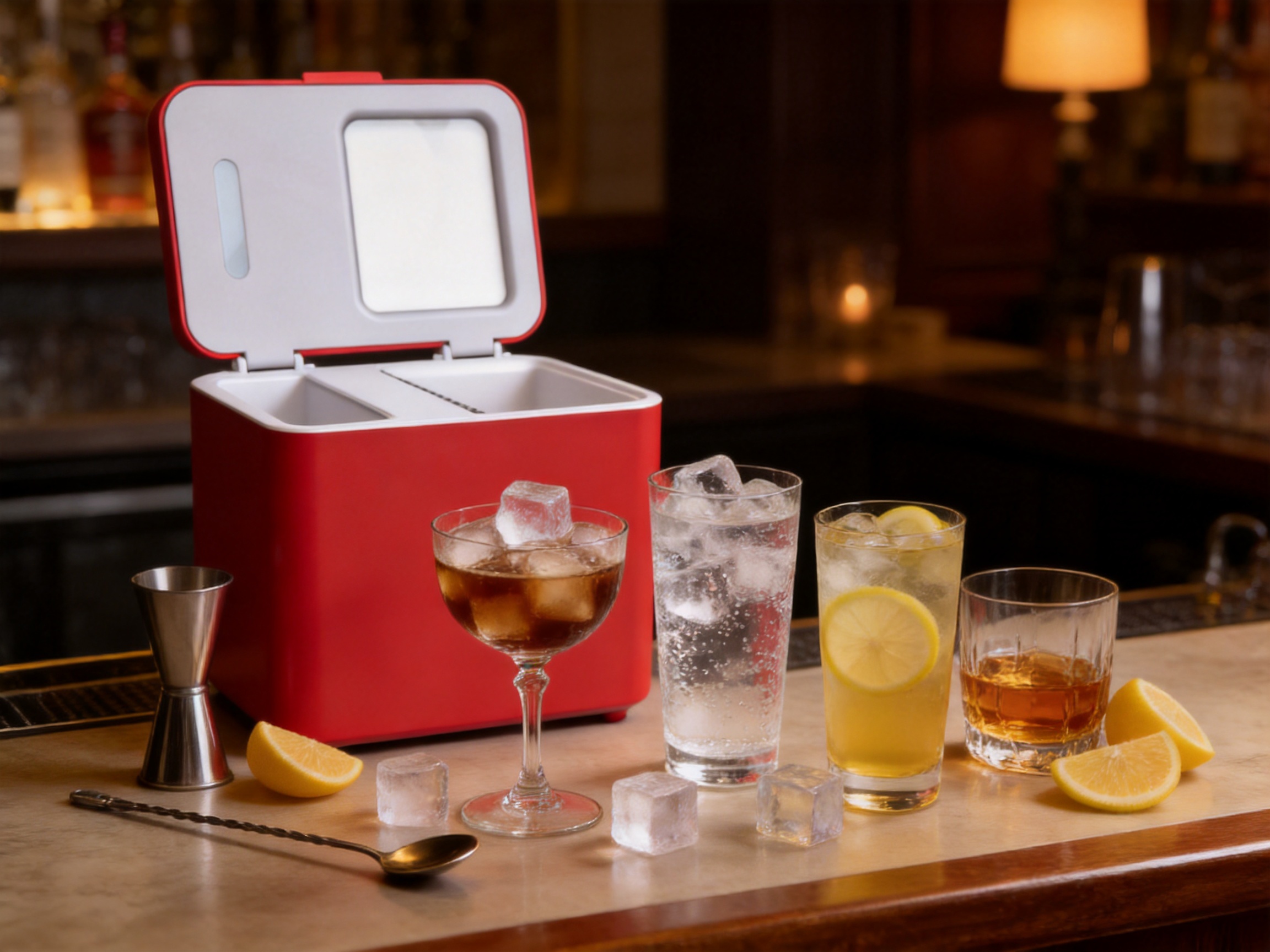
Versatility Across Household and Light-Service Scenarios
The ice cube maker is not limited to one type of user. Families can use it for daily drinks, children’s beverages, cold desserts, and cooking preparation. Young professionals can use it for iced coffee, cocktails, and compact apartment entertaining. Offices can use it in pantry areas to support employee comfort. Small hospitality environments may use it as a supplementary ice source for selected drinks or display purposes. Its compact size and practical output style make it adaptable.
In a home kitchen, the appliance can sit near a sink, coffee station, or beverage area. In a home bar, it can support whiskey, cocktails, soda water, and chilled mixers. In an office, it can improve the quality of refreshments without requiring a large refrigerator ice system. In a recreational space, it can support gatherings, movie nights, games, and summer relaxation. The broad range of uses improves return on investment for users because the appliance remains useful throughout different seasons and occasions.
During summer, demand for ice rises sharply. Families may need ice several times a day for drinks, fruit bowls, or cooling towels. During holidays, guests may increase ice needs unexpectedly. During ordinary weeks, the machine can still serve smaller daily needs. This flexibility makes a compact ice maker more valuable than single-purpose appliances used only occasionally.
Engineering Considerations: Cooling, Control, and Reliability
A reliable ice maker depends on more than exterior appearance. Its core performance comes from refrigeration engineering, water handling, temperature control, internal airflow, insulation, and assembly quality. The machine must repeatedly freeze water into a desired shape, release the ice properly, manage heat, and maintain stable operating conditions. If any part of this system is poorly designed, ice quality and user satisfaction decline.
The refrigeration system is central. A compressor-driven system must provide enough cooling capacity while remaining stable for household use. The refrigerant charge must match the evaporator, condenser, capillary or throttling structure, compressor capacity, and intended cycle behavior. The use of R290 requires careful design because, while efficient and environmentally favorable, it must be handled with proper safety procedures. Good manufacturing practice includes leak control, sealed system integrity, ventilation awareness, and component compatibility.
Water management is also important. Ice makers must guide water to the freezing area consistently. Internal pathways should reduce unnecessary splashing, stagnation, or contamination risk. Surfaces that contact water should be suitable for repeated use and easy cleaning. A well-designed structure supports both performance and hygiene. For users, the result should be ice that is fresh, consistent, and easy to collect.
Control systems help ensure repeatable performance. Temperature sensing, cycle timing, water level management, and operation protection all contribute to stable output. In compact appliances, engineering teams must fit these functions into a small body without creating service difficulties or heat accumulation. The compact dimensions of this product highlight the importance of thoughtful internal layout. Good layout supports performance, safety, durability, and ease of assembly.
Advanced Manufacturing Strengths Behind the Product
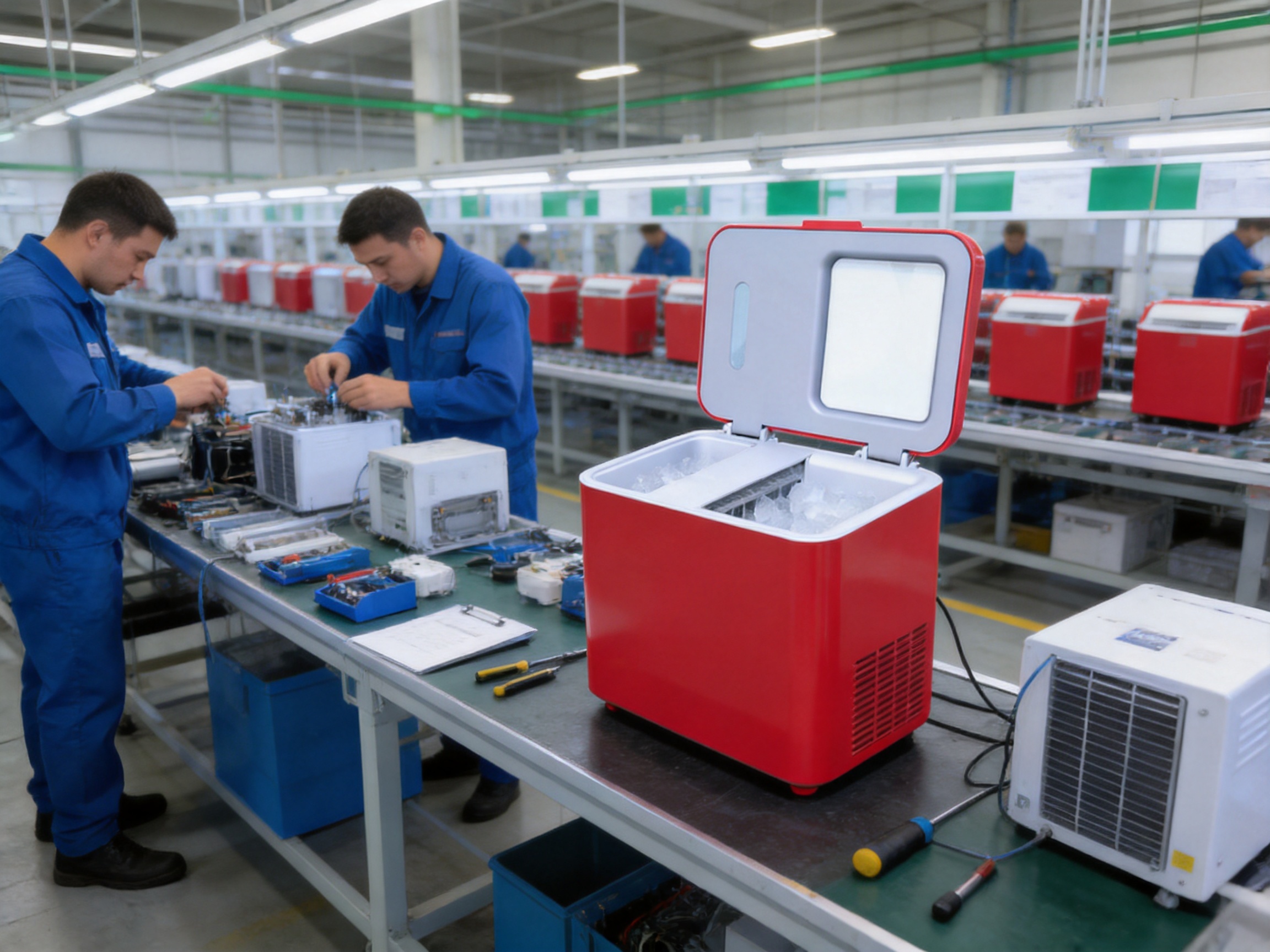
Alien Technology Co., Ltd. operates in Zhouxiang, Cixi City, Zhejiang Province, a region with a strong small household appliance manufacturing ecosystem. This location provides advantages in component supply, skilled labor, production coordination, packaging resources, logistics access, and industry knowledge. For appliance products, manufacturing location matters because quality depends on many linked processes: design, sourcing, molding, metal processing, refrigeration assembly, electrical installation, inspection, aging tests, packaging, and shipment management.
The company’s specialization in ice makers, coffee machines, and air fryers gives it a broad understanding of household appliance requirements. These product categories share important disciplines: thermal control, electrical safety, user interface design, airflow management, food-contact materials, reliability testing, and consumer-friendly appearance. Experience across several appliance categories can strengthen engineering judgment and manufacturing efficiency. It allows the company to apply lessons from one product line to another, improving durability, usability, and production consistency.
Advanced manufacturing begins with product design and material selection. For an ice maker, exterior panels must be durable, visually attractive, and resistant to normal kitchen conditions. Internal components must tolerate moisture, temperature changes, vibration, and repeated operation. Water-contact areas require careful material choices. Refrigeration components must be compatible, stable, and precisely assembled. By controlling these choices early in development, the manufacturer can reduce defects and improve long-term reliability.
Tooling and part consistency are also important. A compact ice maker requires accurate fit between shell parts, internal brackets, water system components, refrigeration lines, and electrical modules. Poor fit can lead to noise, vibration, leakage, inefficient cooling, or user dissatisfaction. Strong manufacturing processes use controlled molds, inspection procedures, assembly fixtures, and standardized work instructions to maintain repeatability. This helps ensure that units produced at scale match the intended design.
Refrigeration assembly is one of the most demanding stages. Copper tubing, brazing, vacuuming, refrigerant charging, leak testing, and system sealing must be performed carefully. Because the product uses R290 refrigerant, production discipline is especially important. Proper equipment, trained personnel, accurate charging systems, and leak detection procedures help protect product safety and performance. A manufacturer with appliance experience and practical process control is better positioned to deliver stable quality to distributors and end users.
Electrical safety is another essential manufacturing strength. Household appliances must be assembled with correct wiring, insulation, grounding or protection design where applicable, secure connectors, and reliable control modules. Quality control should include electrical performance checks, operating tests, and safety-related inspections. For an ice maker operating around water, electrical reliability is particularly important. Responsible manufacturing reduces the risk of faults and supports user confidence.
Quality Control and Testing
Quality control for a home ice cube maker should cover incoming materials, production process checks, functional performance, appearance inspection, packaging strength, and final sampling. Incoming inspection helps ensure that compressors, fans, pumps, sensors, plastic parts, metal parts, and electronic components meet required standards. Process inspection catches problems before they become finished-goods defects. Final testing confirms that the machine operates as intended before shipment.
Functional testing is especially important. Each unit or sampled batch may be checked for power operation, cooling performance, water flow, ice formation behavior, noise, vibration, and control response. Refrigeration leak testing is critical for sealed system products. Dimensional and visual inspection helps ensure that the appliance looks good and fits properly. Packaging inspection reduces transport damage, which is vital for export and long-distance logistics.
Aging or endurance testing can provide additional confidence. Repeated cycle operation allows engineers to observe stability under real working conditions. It can reveal issues related to heat buildup, component fatigue, water flow irregularities, or control timing. When combined with user feedback and continuous improvement, these tests help refine product quality over time.
The company’s stated commitment to excellent quality, customer satisfaction, continuous improvement, and innovation supports this quality-focused approach. In competitive appliance markets, one successful production run is not enough. Manufacturers must continuously monitor defects, analyze feedback, improve processes, and update designs as needed. This mindset creates long-term value for distributors, retailers, and consumers.
Humanized Design and Ease of Use
Consumers prefer appliances that are simple to understand. A good ice cube maker should not require complicated training or constant adjustment. The ideal user experience is direct: add water, start the machine, allow ice to form, and collect cubes when ready. Humanized design means that the appliance fits naturally into daily habits. It should be easy to place, easy to clean, easy to monitor, and easy to store when not in use.
The compact form supports user convenience. A large appliance may be difficult to move or clean around, while a compact unit can be positioned where it is most useful. It can be placed near glassware, beverage ingredients, or a sink. Users are more likely to use the machine frequently when it is accessible and does not create clutter.
Humanized design also includes visual simplicity. A household appliance should look at home in modern kitchen environments. Clean lines, organized proportions, and practical surface design all contribute to perceived quality. Although technical specifications matter, consumers often form first impressions from appearance and touch. A product that looks professional and well-made is easier to trust.
Maintenance convenience is another part of user-centered design. Ice makers work with water, so routine cleaning is important. Surfaces and access points should support regular care. Users should be encouraged to use clean water, empty remaining water when appropriate, and follow cleaning guidance. A machine that is easy to maintain will deliver better ice quality and longer service satisfaction.
Energy Awareness and Environmental Responsibility
Energy and environmental considerations are increasingly important in home appliances. Consumers want convenience, but they also care about responsible operation. The product’s 140W power rating places it in a practical range for a compact ice maker. While actual energy use depends on operating time, ambient temperature, water temperature, and usage behavior, the specification suggests attention to household compatibility.
The R290 refrigerant choice is also meaningful. Older refrigerants may have higher global warming potential, while R290 is recognized for lower environmental impact when properly used in suitable equipment. It can also provide efficient heat transfer performance. For environmentally aware buyers, this refrigerant selection helps position the machine as a more modern refrigeration appliance.
Responsible environmental design is not only about refrigerant. It also includes durability, repair awareness, packaging efficiency, manufacturing yield, and logistics planning. A product that lasts longer creates less waste. A manufacturer that controls defects reduces scrap and rework. Efficient packaging helps protect the product while minimizing unnecessary material. Because Alien Technology Co., Ltd. is located in a small-appliance production and logistics hub, it can benefit from coordinated supply chains and shipping resources that support efficient delivery.
Space Saving and Storage Efficiency
Space is one of the most important concerns in modern kitchens. Many people live in apartments or homes where counters and freezers are already full. The product’s compact dimensions directly address this issue. At 325 x 295 x 252 mm, it can fit into many countertop arrangements while still offering a dedicated ice-making function. This makes it practical for users who want ice convenience without committing to a large built-in system.
The square ice cubes further improve space efficiency after production. Regular cubes can be stacked more tightly in containers or freezer bags. This is useful when preparing for gatherings or storing extra ice for later. Irregular pieces create empty gaps and clump unpredictably, while square cubes are easier to arrange. For users who value order and cleanliness, this is a small but satisfying advantage.
Space-saving design also supports broader market appeal. Retailers and distributors can promote the product to apartment dwellers, small households, offices, dormitory-style environments where allowed, and compact hospitality spaces. A machine that is too large limits its own market. A compact appliance with strong practical benefits can reach more users.
Application in Coffee, Tea, and Modern Beverage Culture
Iced beverages are now a major part of global drink culture. Iced coffee, cold brew, fruit tea, lemon tea, sparkling drinks, and milk-based beverages are enjoyed at home as well as in cafés. A home ice cube maker allows users to create these drinks more easily. Instead of waiting for freezer trays, users can prepare fresh ice and enjoy café-style beverages in their own kitchens.
For iced coffee, ice quality matters because coffee flavor can be diluted quickly. Square cubes help slow this process, maintaining a stronger taste for longer. For tea and fruit drinks, attractive ice improves visual appeal. For sparkling water, slow melting helps preserve the refreshing sensation without turning the drink flat too quickly. For smoothies and blended drinks, cubes can assist cooling before blending or serving, depending on preparation method.
The company’s experience with coffee machines is relevant here. Understanding coffee culture, beverage preparation, and household appliance usability can inform better ice maker development. Consumers often group beverage appliances together into a home drink station. An ice maker, coffee machine, and kettle can form a convenient setup for hot and cold drinks. A manufacturer familiar with multiple beverage-related appliances can better understand how consumers actually use them together.
Application in Home Bars and Premium Spirits
Home bars have become increasingly popular among consumers who enjoy craft cocktails, whiskey tasting, and social gatherings. In this setting, ice is not optional; it is a fundamental ingredient. Bartenders understand that ice affects dilution, texture, aroma, and presentation. Home users who want better results should also pay attention to ice shape and quality.
Square cubes are particularly suitable for premium spirits and simple mixed drinks. Their clean appearance pairs well with rocks glasses, highball glasses, and cocktail service. They cool the drink while keeping dilution more controlled than small fragments. When entertaining guests, the host can serve drinks with confidence, knowing that the ice looks intentional and refined.
For cocktails, different recipes require different ice styles, but square cubes are highly versatile. They can be used for stirring, serving, chilling glasses, or filling ice buckets. Their regular shape makes them easy to handle with tongs or scoops. This versatility gives the machine greater value than appliances that produce ice suited only to one narrow purpose.
Application in Food Preparation and Cooling
Beyond drinks, ice cubes are useful in the kitchen. Cooks often use ice baths to stop vegetables from overcooking after blanching. This preserves color, texture, and freshness. Ice can help cool boiled eggs, chill dessert mixtures, stabilize whipped preparations, and support seafood handling. During hot weather, ice can help keep fruit plates, salad bowls, or serving trays cooler for short periods.
The regular shape of square cubes makes them easy to measure and distribute. They can be placed evenly around containers or used in cooling bowls. Because they stack neatly, users can prepare a reserve for cooking tasks without wasting freezer space. This makes the appliance a helpful kitchen assistant rather than only a beverage tool.
Ice can also be used for household first-aid cooling applications when properly wrapped and used carefully. While a dedicated medical cold pack is often preferable, ordinary ice cubes can assist with temporary cold compress needs. This adds another layer of versatility to the appliance.
Manufacturing Location and Supply Chain Advantages
Zhouxiang Town in Cixi City, Zhejiang Province is recognized as part of a strong small household appliance manufacturing area. This provides meaningful advantages for appliance production. Local supplier networks can support faster component sourcing, tooling adjustment, production scaling, and packaging coordination. Skilled workers and technical teams familiar with small appliances can improve assembly efficiency and problem-solving speed.
Convenient logistics are also important. Appliances must be shipped safely, on time, and in good condition. A manufacturer located in a region with established transport resources can better support domestic and international customers. Efficient logistics reduce delivery uncertainty and help distributors maintain inventory planning. For buyers, this can be as important as product design because supply reliability affects sales performance.
The company’s willingness to cooperate with new and existing customers reflects a practical business approach. In appliance markets, customers may need product customization, packaging support, documentation, order planning, and after-sales coordination. A stable and pragmatic manufacturer can provide valuable support beyond the physical product. This strengthens long-term partnerships.
Why This Product Is Attractive for Distributors and Retailers
Retailers and distributors need products that are easy to explain, visually appealing, practical, and supported by reliable manufacturing. This home ice cube maker offers a straightforward value proposition: it makes square ice cubes for better drinks and everyday cooling in a compact countertop form. Consumers immediately understand the benefit. The product does not require a complicated sales story because the inconvenience of lacking ice is familiar to nearly everyone.
The specifications provide clear selling points. The compact dimensions help retail placement and online product descriptions. The 140W power rating supports practical household positioning. The R290 refrigerant adds an environmental advantage. The square cube style gives a premium beverage benefit. Together, these features create a balanced product suitable for multiple sales channels.
For online sales, visual presentation is important. A compact ice maker with neat styling and clear ice cube benefits can perform well in product photography, short videos, and lifestyle descriptions. For offline retail, demonstration or display can quickly show the appliance’s purpose. Customers who enjoy entertaining, iced drinks, or kitchen convenience are likely to recognize its value.
Retailers also benefit from a manufacturer with appliance category experience. Since Alien Technology Co., Ltd. produces ice makers, coffee machines, and air fryers, it understands the expectations of household appliance buyers. This can support more professional packaging, product documentation, quality control, and order fulfillment.
Use and Care Recommendations
To obtain the best performance from a home ice cube maker, users should place it on a stable, level surface with adequate ventilation. Like all refrigeration appliances, it must release heat during operation. Crowding the vents or placing the unit near strong heat sources can reduce efficiency. Users should allow suitable clearance around the machine and avoid direct sunlight when possible.
Water quality affects ice taste and appearance. Using clean drinking water is recommended. If local tap water has strong mineral content or odor, filtered water may improve ice quality. Regular cleaning is important because water appliances can accumulate mineral deposits or residue over time. Users should follow the product manual for cleaning steps, drainage, and maintenance frequency.
After use, it is sensible to remove unused ice if it will not be consumed promptly and to manage remaining water according to instructions. Keeping the machine clean and dry when stored helps protect internal surfaces and reduce odor. Routine care supports better ice quality and longer product life.
Users should also operate the machine according to its rated voltage and frequency. The specification is 220V/50Hz, so it should be used in compatible electrical environments. Using inappropriate adapters, unstable power sources, or damaged cords should be avoided. Safe use protects both the appliance and the household.
Q&A Section
Q1: What is the main purpose of this home ice cube maker?
The main purpose is to provide fresh, convenient square ice cubes for daily drinks, home entertaining, food preparation, and household cooling needs. It reduces dependence on freezer trays and store-bought ice while improving presentation and convenience.
Q2: What makes square ice cubes better for premium drinks?
Square ice cubes have a neat, professional appearance and can melt more slowly than many smaller, hollow, or irregular ice pieces. Slower melting helps keep drinks cold while reducing excessive dilution, which is especially valuable for whiskey, cocktails, iced coffee, and premium beverages.
Q3: What are the key technical specifications?
The product operates on 220V/50Hz power, with current and power listed as 0.65A/140W. It uses R290 refrigerant with a 26g charge, and its machine dimensions are 325 x 295 x 252 mm.
Q4: Is the product suitable for small kitchens or apartments?
Yes. Its compact dimensions make it suitable for countertops, small kitchens, apartments, offices, home bars, and other spaces where a large ice machine would be impractical.
Q5: How does it compare with freezer trays?
Compared with freezer trays, the machine offers greater convenience, more consistent ice formation, fresher ice availability, less mess, and a more professional cube shape. Users do not need to wait many hours or struggle with tray removal.
Q6: How does it compare with bagged ice?
It reduces the need to buy, transport, and store bulky bags of ice. It also allows users to make fresh ice from selected water, improving control over taste and cleanliness.
Q7: Why is R290 refrigerant important?
R290 is recognized for efficient refrigeration properties and low global warming potential compared with many older refrigerants. When applied in properly designed and manufactured equipment, it supports a more environmentally responsible product direction.
Q8: What company manufactures the product?
The product is manufactured by Alien Technology Co., Ltd., a household appliance company located in Zhouxiang Town, Cixi City, Zhejiang Province. The company specializes in products such as ice makers, coffee machines, and air fryers.
Q9: What manufacturing strengths support this product?
The manufacturer benefits from a strong small-appliance industrial location, experience across multiple household appliance categories, practical logistics, quality-focused production, refrigeration assembly knowledge, and a business philosophy centered on customer satisfaction, improvement, and innovation.
Q10: What maintenance habits are recommended?
Users should operate the machine in a ventilated location, use clean drinking water, clean the appliance regularly according to the manual, remove unused ice when appropriate, manage remaining water properly, and use the machine only with a compatible 220V/50Hz power supply.
Conclusion: A Practical Upgrade for Modern Cooling Needs
A compact home ice cube maker is a meaningful upgrade for households and small spaces that value convenience, drink quality, and attractive presentation. This product combines a practical countertop size, square ice cube output, controlled power specification, and R290 refrigeration system into a useful daily appliance. Its advantages are easy to understand: fresher ice than freezer trays, more convenience than bagged ice, better appearance than irregular pieces, and slower melting for improved beverage enjoyment.
The square ice cube format is central to its appeal. It supports slow melting, professional aesthetics, broad versatility, and efficient storage. Whether used for whiskey, cocktails, iced coffee, tea, juice, food preparation, or gatherings, the cubes provide a cleaner and more refined experience. For users who care about both function and presentation, this is a strong advantage over many competing ice shapes.
The manufacturer’s strengths further support the product’s market value. Alien Technology Co., Ltd. is located in a well-developed small appliance manufacturing region and specializes in household appliances including ice makers, coffee machines, and air fryers. Its focus on smart technology, simplified living, reliable quality, continuous improvement, innovation, and customer satisfaction aligns well with the needs of modern appliance buyers. With controlled production processes, refrigeration assembly knowledge, quality testing, and logistics advantages, the company is positioned to support both end users and business partners.
For families, beverage enthusiasts, hosts, offices, and compact hospitality settings, this home ice cube maker offers a convenient way to improve everyday life. It is not merely a machine that freezes water. It is a tool for better drinks, easier entertaining, cleaner storage, kitchen versatility, and greater independence from slow or inconvenient ice sources. In a market full of small appliances, the best products are those that earn their place through repeated daily usefulness. This compact ice cube maker does exactly that.
References
ASHRAE. Handbook of Refrigeration: Principles, Systems, and Applications.
International Institute of Refrigeration. Refrigeration and Sustainable Development Guidelines.
United Nations Environment Programme. Refrigerants and Environmental Impact Assessment Reports.
McGee, Harold. On Food and Cooking: The Science and Lore of the Kitchen.
Gisslen, Wayne. Professional Cooking: Principles of Food Preparation and Kitchen Practice.
Specialty Coffee Association. Brewing and Beverage Preparation Standards.
Household Appliance Manufacturing Quality Control Manual: Electrical Safety, Performance Testing, and Production Inspection Practices.
Food Contact Materials and Water Appliance Hygiene Reference Guide.