
 English
 한국어
한국어 Español
 Deutsch
In modern homes, offices, bars, recreational vehicles, and small commercial spaces, the demand for convenient ice is no longer limited to special occasions. People want fresh ice for iced coffee, cocktails, fruit drinks, smoothies, lunch boxes, seafood trays, outdoor gatherings, and everyday hydration. A button-operated bullet ice maker answers that demand with a compact, practical, and user-friendly approach. Designed for fast ice production, simple control, quiet performance, and easy maintenance, this appliance gives users a steady supply of ice without the inconvenience of freezing trays, buying bagged ice, or relying on a refrigerator ice dispenser that may be slow, noisy, or difficult to clean.
The Button-Operated Ice Maker introduced here is a bullet-style ice maker built for people who value speed, simplicity, reliability, and everyday usability. With one-touch button operation, users can start ice production immediately, making it suitable for first-time users, busy families, elderly users, office teams, and hospitality environments that require quick ice access. Its compact dimensions, efficient power profile, removable ice basket, smooth interior surfaces, and optimized refrigeration system create a balance between convenience and performance. More importantly, it reflects the strength of a specialized household appliance manufacturer with experience in ice makers, coffee machines, air fryers, and other practical products for modern living.
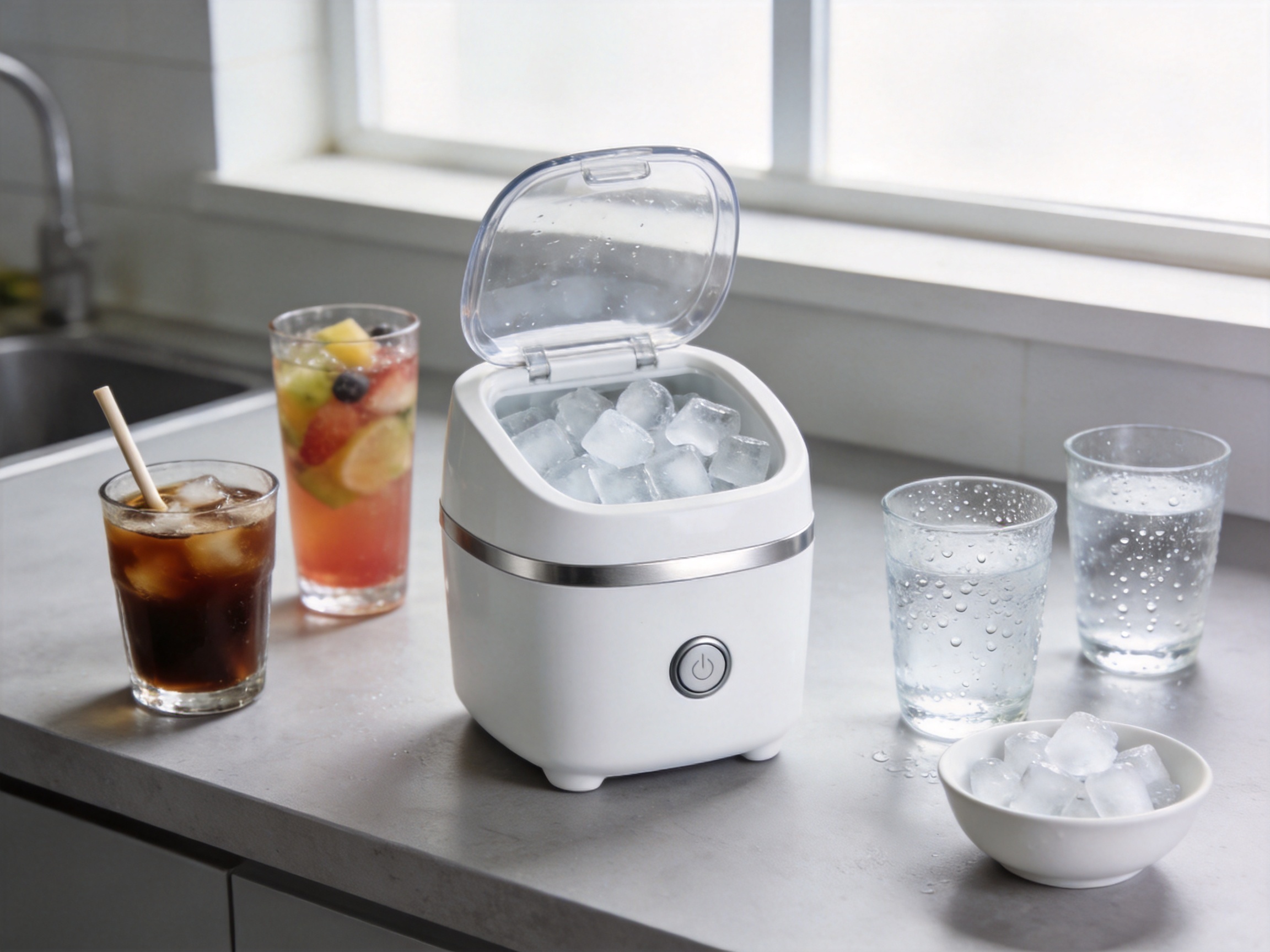
A Compact Ice Solution for Everyday Convenience
The most immediate value of a compact ice maker is convenience. Traditional ice trays require hours to freeze, occupy freezer space, and often absorb odors from stored food. Bagged ice can be inconvenient to transport, may melt before use, and requires planning before parties or business service hours. Built-in refrigerator ice makers are helpful but are often limited by slow production, complex repairs, and sanitation concerns. A countertop bullet ice maker provides an independent and flexible alternative. It can be placed where ice is needed most, whether that location is a kitchen counter, office pantry, home bar, studio apartment, meeting room, RV counter, small café station, or beverage preparation area.
The button-operated design makes this appliance especially accessible. Rather than requiring complicated programming, multiple menus, or technical knowledge, it uses direct control to simplify the ice-making process. Users add water, position the basket, press the button, and allow the machine to begin its cycle. For households with different age groups or shared working spaces where many people may use the same appliance, this simple interface reduces confusion and improves user satisfaction. The product is designed around the practical idea that appliances should make life easier, not add another layer of operational complexity.
Bullet ice is particularly useful because of its shape. Unlike solid cubes that may freeze very hard and take longer to form, bullet ice typically has a rounded body and hollow center, allowing faster formation and good cooling performance in beverages. It is convenient for iced tea, cold brew coffee, cocktails, soft drinks, juice, water bottles, and portable coolers. The shape is also pleasant to handle and less likely to damage blender blades compared with very large, hard cubes. For families and businesses that need ice frequently but do not require industrial-scale production, a bullet ice maker provides a practical middle ground.
Core Product Identity and Technical Profile
This Button-Operated Ice Maker belongs to the bullet ice maker category and is designed for 220V–240V, 50Hz power environments. It operates with a current and power rating of 0.9A and 150W, combining functional ice-making performance with controlled energy consumption. The refrigeration system uses R600a refrigerant with a charge of 19g, reflecting a modern approach to compact cooling technology. With machine dimensions of 313 x 226 x 309 mm, the product is compact enough for countertops while still offering enough internal capacity for routine household and light commercial use.
Product Item |
Specification |
User Benefit |
Product Category |
Button-Operated Bullet Ice Maker |
Produces practical bullet ice for beverages, cooling, and daily use. |
Power Supply |
220V–240V / 50Hz |
Suitable for many household and commercial power environments. |
Current / Power |
0.9A / 150W |
Balances ice-making performance with controlled power consumption. |
Refrigerant / Charge |
R600a / 19g |
Supports efficient compact refrigeration performance. |
Machine Dimensions |
313 x 226 x 309 mm |
Compact footprint for kitchens, offices, bars, RVs, and small spaces. |
Control Method |
One-touch button operation |
Easy to use for beginners, families, staff, and shared environments. |
Ice-Making Cycle |
Approximately 6–10 minutes per cycle |
Provides fresh ice quickly when compared with freezer trays. |
Maintenance Design |
Smooth interior and removable ice basket |
Helps make cleaning faster and more convenient. |
The technical profile demonstrates a product that is neither oversized nor underpowered. At 150W, the appliance is designed for practical use without the burden of excessive energy consumption. The dimensions allow it to fit into spaces where larger commercial machines would be inappropriate. The use of a removable ice basket and easy-clean interior supports hygienic daily operation, which is especially important for equipment that comes into direct contact with water and ice. These details may appear simple, but they are key factors in long-term customer satisfaction.
One-Touch Operation: Simplicity as a Competitive Advantage
Many appliances fail not because they lack features, but because users do not want to spend time learning how to operate them. The button-operated ice maker is designed around the opposite idea: the best daily appliance should feel natural from the first use. One-touch control eliminates hesitation. A user does not need to interpret complicated icons, navigate digital submenus, or select unnecessary settings before producing ice. This is especially valuable in shared spaces such as offices, break rooms, small bars, rental properties, guest houses, and RVs, where users may not be familiar with the equipment.
Compared with competitors that emphasize excessive panel functions, a simple button system can provide better reliability and fewer user errors. More buttons and more display functions may look impressive at first, but they can increase confusion and may create additional failure points over time. A direct button-operated system gives the product a clear personality: easy, fast, practical, and dependable. For customers seeking a no-hassle ice maker, this simplicity is not a limitation; it is a key advantage.
The simplicity of the interface also improves the product’s suitability for multi-generational households. Children under supervision, adults, and elderly family members can understand the operation quickly. For busy mornings, family dinners, parties, and business service moments, reduced operating steps matter. Users can concentrate on preparing drinks or serving guests rather than managing a complex machine. In real-world appliance use, intuitive operation often creates more value than rarely used advanced features.
Fast Ice Production for Busy Lifestyles
Speed is one of the strongest reasons to choose a countertop ice maker. This machine can produce ice in as little as 6–10 minutes per cycle, providing a responsive alternative to conventional freezer trays. Instead of planning hours in advance, users can begin producing ice shortly before they need it. For iced coffee in the morning, drinks during lunch, evening cocktails, weekend gatherings, or unexpected guests, quick-cycle ice making provides immediate flexibility.
Fast production is particularly useful in small hospitality environments. A home bar, office pantry, meeting room, small beverage counter, or boutique guest space may not require a large commercial ice machine, but it still needs dependable ice availability. In these situations, a compact bullet ice maker can serve as an efficient support appliance. It reduces the need to store large quantities of ice and helps maintain freshness because ice can be made close to the time of use.
Compared with many competing cooling methods, fresh on-demand ice offers better control. Freezer trays can become contaminated by freezer odors. Bagged ice may be handled by multiple parties before reaching the user. Refrigerator ice compartments may not be cleaned often enough. A countertop ice maker allows the owner to manage water quality, cleaning schedule, and usage directly. This creates confidence, especially in homes and businesses where beverage presentation and hygiene matter.
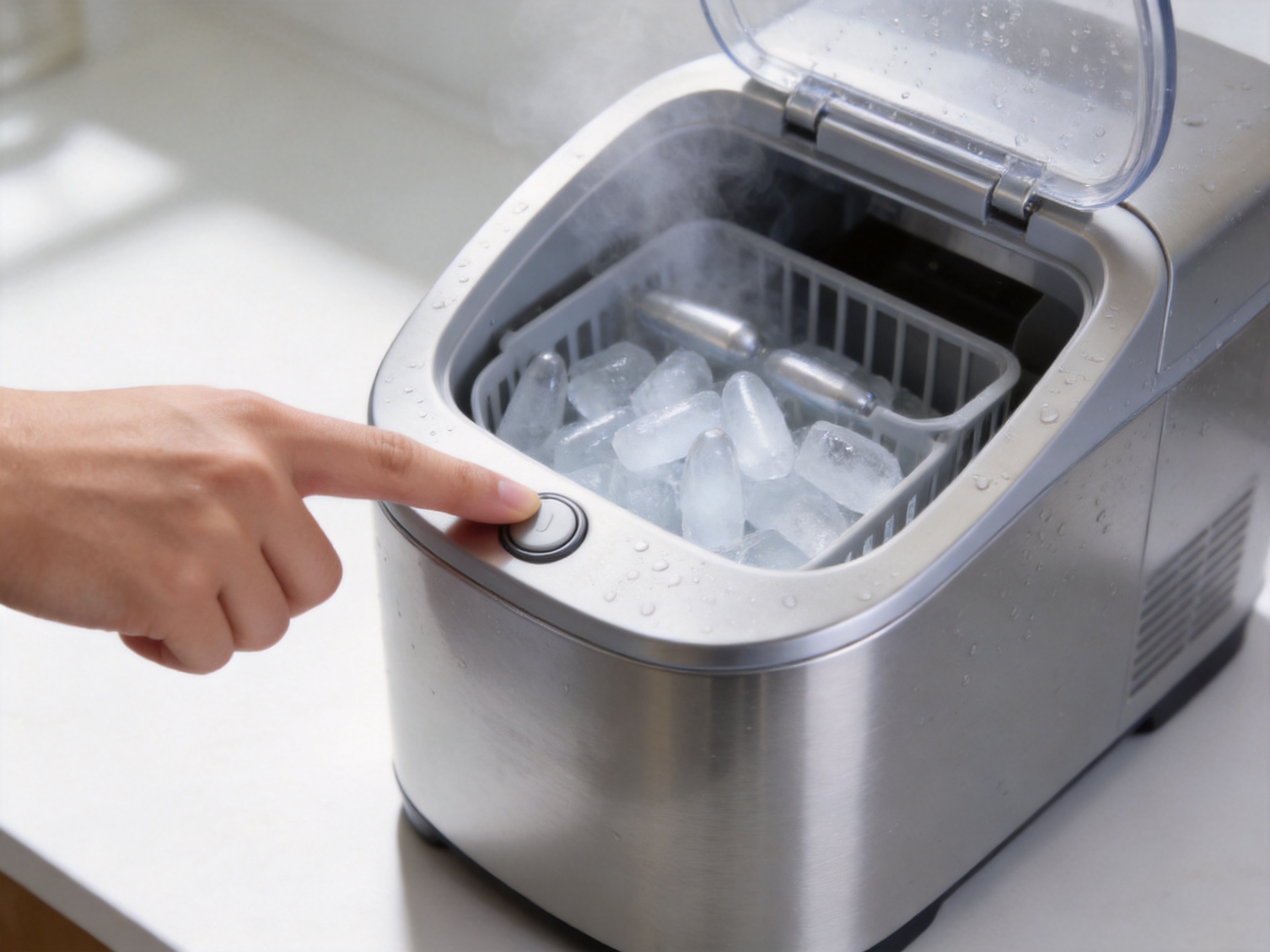
Multiple Ice Sizes for More Flexible Use
The ability to choose different ice sizes adds practical versatility. Smaller bullet ice can chill drinks quickly and fit easily into narrow cups or bottles. Larger bullet ice can last longer in beverages and be useful when slower melting is preferred. For cocktails, iced coffee, fruit tea, smoothies, sports drinks, food cooling, and picnic containers, different ice sizes give the user more control over the final experience. A single appliance becomes useful in more situations, increasing its value in daily life.
Competing machines that offer only one ice option may satisfy basic needs but provide less flexibility. Modern users often prepare a wide range of beverages at home. One person may want small ice for a water bottle, another may prefer larger ice for a mixed drink, and a third may use ice for cooling fruit or preserving food presentation. A machine that responds to different uses has broader appeal and reduces the need for additional equipment.
Ice size selection also supports better beverage quality. For delicate drinks, excessively large ice may be inconvenient, while overly small ice may melt too quickly. Bullet ice provides a balanced shape, and size options allow users to adapt the ice to the drink. In home entertainment and small beverage service, these details contribute to a more refined user experience. The product is therefore not only a utility appliance; it is also a tool for better hospitality and daily enjoyment.
Energy-Saving Design and Responsible Use
Energy efficiency is an important consideration for modern appliances. Users want performance, but they also care about electricity cost, heat output, and responsible resource use. This button-operated ice maker is designed with low power consumption and optimized water usage in mind. With a 150W power rating, the machine is suited for regular use without requiring the same electrical commitment as larger commercial systems. Its compact refrigeration structure focuses energy where it is needed: producing fresh bullet ice efficiently.
The use of R600a refrigerant supports effective cooling in compact household appliances. R600a is widely used in modern refrigeration products because it can provide efficient cooling performance when properly applied in sealed systems. In a countertop ice maker, the refrigeration design must be stable, compact, and responsive. The controlled refrigerant charge and thoughtful system layout help the machine produce ice quickly while maintaining a manageable appliance size.
Energy-saving performance is also related to user behavior. Because the machine produces ice quickly, users can make ice when needed rather than running a large system continuously. For many households and small offices, this is more practical than maintaining large ice storage. Efficient cycles, appropriate water use, and a compact footprint all contribute to lower waste. This is an advantage over less efficient competitors that may consume more energy, use oversized components, or require longer operating times to achieve similar results.
Quiet Operation for Comfortable Environments
Noise is one of the most overlooked aspects of appliance satisfaction. A machine may perform well technically, but if it disrupts conversations, work, sleep, or relaxation, users may avoid using it. This button-operated ice maker is designed with noise reduction in mind, making it suitable for kitchens, offices, bedrooms, small apartments, reception areas, and RVs. Quiet operation supports the product’s role as a daily appliance rather than a machine reserved only for occasional use.
In offices and meeting rooms, low noise is especially important. Employees may want ice for drinks throughout the day, but they do not want a loud appliance interrupting calls, presentations, or focused work. In homes, a quieter ice maker can operate during meal preparation, family gatherings, or evening relaxation without becoming a distraction. In RVs and small living spaces, noise control is even more valuable because appliances are often close to sleeping or seating areas.
Compared with competitors that focus only on ice speed, a balanced design that includes acoustic comfort is more user-centered. High-quality appliance design requires attention to the full experience: how the product sounds, how it feels to operate, how easy it is to clean, how much space it uses, and how consistently it performs. Quiet operation reflects careful engineering and attention to real usage conditions.
Easy Cleaning and Maintenance for Better Hygiene
Ice is consumed directly, so cleanliness is essential. A good ice maker must be easy to clean, because difficult maintenance often leads to neglected maintenance. This product uses smooth interior surfaces and a removable ice basket to simplify cleaning. Users can access the areas that matter most, remove collected ice, wipe surfaces more easily, and maintain the machine with less effort. This design supports better hygiene and helps extend product life.
Compared with refrigerator ice makers or complicated internal ice systems, a countertop unit with accessible parts gives users more control. Refrigerator ice systems are often hidden and may be difficult to inspect. Freezer trays can become stained, cracked, or exposed to food odors. Bagged ice depends on external handling and storage. A removable basket and visible interior offer transparency. Users can see the condition of the machine and clean it as needed.
Maintenance-friendly design is also important for offices and rental properties. When multiple people use an appliance, cleaning responsibility must be simple and clear. If maintenance is complicated, it may be ignored. A removable basket, smooth surfaces, and straightforward operation make it easier for staff, hosts, or family members to maintain the machine. In this way, easy cleaning becomes not only a convenience feature but also a competitive advantage tied to health, trust, and long-term usability.
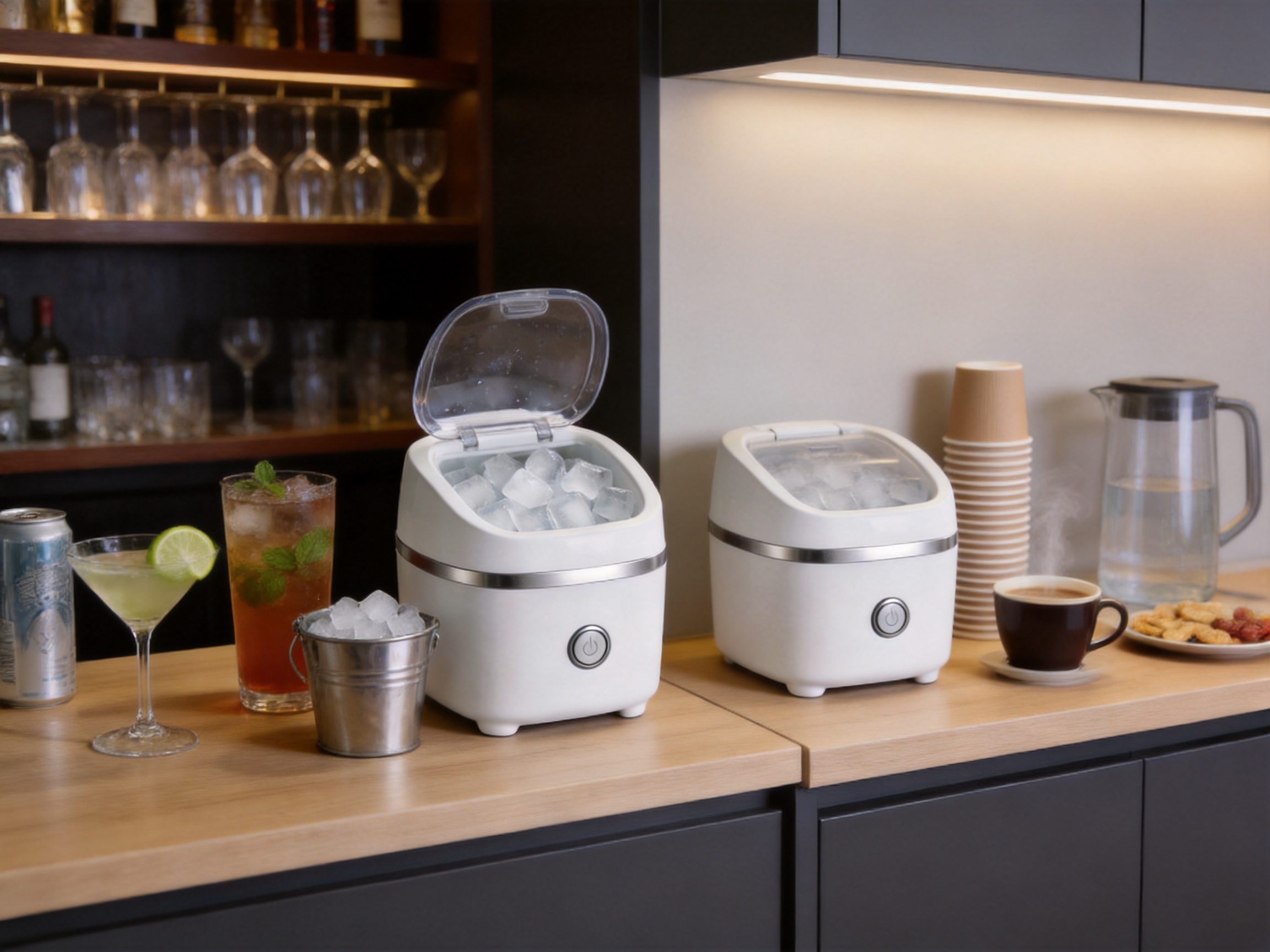
Applications Across Homes, Offices, Bars, RVs, and Small Businesses
The versatility of the button-operated bullet ice maker is one of its strongest market advantages. In the home, it supports daily beverages, family dinners, weekend parties, children’s drinks, iced coffee, smoothies, and food preparation. In the office, it improves pantry convenience and employee comfort. In bars and entertainment areas, it provides fast access to drink ice without requiring an expensive commercial installation. In RVs, it offers travel-friendly independence. In small commercial environments, it can serve as a flexible support machine for light ice needs.
For homes, the product adds comfort and hospitality. A family can prepare cold drinks without filling the freezer with trays. Guests can be served fresh ice without sending someone to buy a bag from a store. During summer, holiday events, or outdoor gatherings, the machine can operate repeatedly to support demand. Its compact dimensions allow it to remain on a counter or be stored when not in use.
For offices, the product can contribute to workplace satisfaction. A simple appliance that provides ice for water, coffee, tea, and soft drinks makes break areas more appealing. Because operation is button-based, employees can use it without instructions. Because it is designed for quiet operation, it can fit into shared work environments. Because maintenance is straightforward, office administrators can manage cleaning more easily.
For recreational vehicles and small apartments, space efficiency is critical. The 313 x 226 x 309 mm size allows the appliance to fit into compact environments where a large freezer or commercial ice machine would not be practical. RV travelers, campers with powered sites, and small-space residents can enjoy fresh ice without relying on convenience stores or limited freezer capacity. This independence improves comfort during travel and compact living.
Advantages Over Common Competitor Products
The button-operated bullet ice maker offers several advantages when compared with ordinary competitor products. First, its one-touch control system is more accessible than complex digital panels that may confuse casual users. Second, its fast 6–10 minute cycle offers better responsiveness than freezer trays and many refrigerator ice systems. Third, its compact footprint allows flexible placement in spaces where larger equipment cannot fit. Fourth, its removable basket and smooth interior make cleaning more practical. Fifth, its quiet operation improves comfort in homes and offices.
Another advantage is the balance between performance and simplicity. Some competing products may emphasize decorative designs or extra functions that do not improve daily usability. Others may focus on low price while compromising material quality, refrigeration stability, noise control, or cleaning convenience. A well-designed button-operated model focuses on the features users actually experience every day: quick ice, easy operation, manageable size, simple cleaning, and reliable performance.
Compared with large commercial ice machines, this appliance is more affordable, portable, and easier to install. Commercial machines often require plumbing, drainage, professional installation, and dedicated space. This product can be used more flexibly and moved as needs change. For small businesses, it can reduce the cost and complexity of providing ice where demand does not justify a large machine. For households, it offers commercial-style convenience in a manageable countertop format.
Compared with low-end compact ice makers, the product’s value lies in thoughtful manufacturing and usability details. A compact ice maker must maintain stable cooling, water circulation, ice release, and user safety within a small housing. Poorly manufactured units may suffer from inconsistent ice production, excessive noise, weak materials, or inconvenient cleaning structures. A manufacturer with appliance specialization can control these factors through better process design, component selection, assembly discipline, and final inspection.
Manufacturing Strength: Specialized Appliance Expertise
The company behind this product is located in Zhouxiang, Cixi City, Zhejiang Province, a region known for small household appliance manufacturing and convenient logistics. This location provides access to a mature supply chain, experienced technical labor, component resources, and efficient transportation networks. For appliance production, this industrial environment is a major strength. It helps manufacturers coordinate materials, improve production efficiency, respond to customer demand, and support stable quality.
The company specializes in household appliances such as ice makers, coffee machines, and air fryers. This product mix reflects expertise in heating, cooling, fluid handling, airflow, compact structure design, and user-centered appliance engineering. Ice makers require refrigeration knowledge and water system control. Coffee machines require precision water heating, pumping, and beverage preparation reliability. Air fryers require thermal management, airflow design, and safety considerations. Experience across these categories strengthens the company’s ability to produce practical, durable, and well-designed appliances.
Manufacturing strength is not only about having production lines. It depends on how a company manages design, sourcing, assembly, inspection, improvement, and customer feedback. A stable and pragmatic business philosophy supports long-term product consistency. A commitment to quality, customer satisfaction, continuous improvement, and innovation helps ensure that each product generation becomes more refined. For buyers, distributors, and end users, this manufacturing philosophy is important because it reduces uncertainty and supports dependable cooperation.
Advanced Manufacturing Processes and Quality Control
A reliable ice maker requires precise coordination among refrigeration components, water circuits, electronic controls, housing parts, insulation, and user-contact surfaces. Advanced manufacturing begins with component selection. Compressors, pumps, sensors, wiring, control boards, fans, molds, and baskets must meet performance requirements. Incoming inspection helps verify that parts conform to specifications before assembly. This step is essential because even a small component inconsistency can affect cooling speed, noise, water movement, or long-term reliability.
During assembly, process discipline is critical. Refrigeration systems must be sealed correctly, refrigerant must be charged accurately, water pathways must be positioned properly, and electrical connections must be secure. The compact size of a countertop ice maker increases the importance of precise assembly because there is limited internal space. Poor layout can increase vibration, noise, heat buildup, or service difficulty. A skilled manufacturing team can optimize internal organization so that the product remains compact while performing consistently.
Quality control may include functional testing, power checks, water circulation inspection, ice-making performance verification, leakage inspection, noise observation, and appearance review. These steps help ensure that each unit leaving the factory can meet user expectations. In appliance manufacturing, final inspection is not a formality; it is a core part of product reliability. Customers do not only purchase a design concept. They purchase the actual machine that arrives in their home, office, or business. Strong inspection systems help convert engineering intent into dependable delivered quality.
Continuous improvement further strengthens manufacturing. Feedback from users, distributors, service teams, and production staff can reveal opportunities to improve button feel, ice release, basket handling, cleaning access, packaging protection, or assembly efficiency. A company committed to improvement can refine products over time rather than treating each model as static. This is a significant advantage in competitive appliance markets, where user expectations evolve quickly.
Humanized Design for Better Daily Experiences
The company’s mission emphasizes smart technology, simplifying life, and enhancing happiness. The button-operated ice maker demonstrates this philosophy through humanized design. Humanized design means the product is developed around real people and real environments rather than only technical specifications. It asks practical questions: Can a new user operate it easily? Can it fit on a counter? Can it make ice quickly enough for a gathering? Can it be cleaned without frustration? Is the noise acceptable in a quiet room? Does the product make daily routines smoother?
One-touch operation is a direct expression of humanized design. It respects the user’s time and reduces mental effort. Fast ice making supports spontaneous living. Multiple ice sizes respond to diverse preferences. Quiet operation protects comfort. Easy cleaning supports health and reduces maintenance stress. Compact dimensions respect limited space. These features work together to create a product that feels practical in everyday life.
Humanized design is also visible in the product’s broad suitability. Many appliances are designed for narrow use cases, but this ice maker adapts to home, office, bar, RV, and small commercial settings. That versatility reduces purchasing risk. A customer can buy the product for one purpose and later use it in another environment. For example, a household may first use it in the kitchen, then move it to a home bar for a party, then take it to a powered travel location. Flexible usefulness increases long-term value.
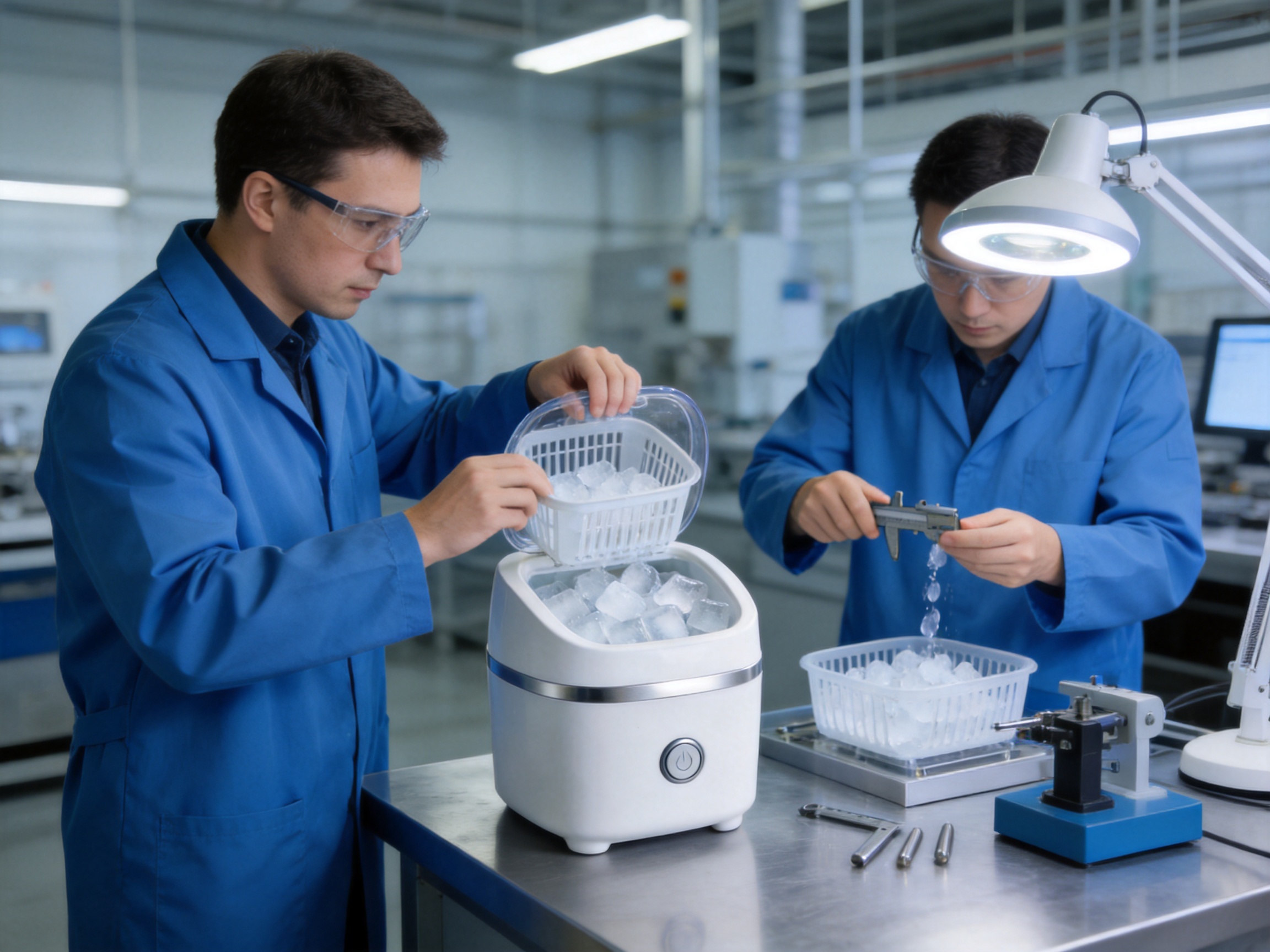
Reliability Through Practical Engineering
Reliability is a central concern for any appliance that uses water and refrigeration. The button-operated bullet ice maker is designed to provide consistent daily performance through practical engineering choices. The power supply, refrigerant charge, machine dimensions, and control method are matched to the product’s intended use. Rather than pursuing unnecessary complexity, the design focuses on the essential requirements of fast and convenient ice production.
Practical engineering is often more valuable than feature overload. A product with too many complex functions may be more difficult to use, harder to repair, and more expensive to produce. A focused product can deliver a better balance of cost, usability, and durability. In this machine, the priorities are clear: make ice quickly, operate simply, fit easily, run quietly, consume energy responsibly, and clean conveniently. This clarity helps the product stand out in a crowded market.
The refrigeration system is central to performance. Compact ice makers must remove heat from water efficiently while maintaining stable operation in varied indoor conditions. Water must circulate correctly, ice must form and release properly, and the machine must repeat the process cycle after cycle. Manufacturing experience and quality testing help ensure these functions remain consistent. This is especially important for users who rely on the appliance frequently rather than occasionally.
Design Value for Distributors and Business Partners
For distributors, retailers, and business partners, a button-operated bullet ice maker has strong market potential because it addresses a clear and growing consumer need. The product is easy to explain, easy to demonstrate, and suitable for many customer groups. Its benefits are visible: press the button, wait a short cycle, and fresh bullet ice is produced. Products with obvious value are easier to sell because customers can immediately understand the practical advantage.
The compact size also supports logistics and retail display. Smaller appliances are generally easier to store, ship, and present in showrooms or online product listings. The specification profile is straightforward, and the use cases are broad. A distributor can position the product for homes, offices, parties, summer promotions, RV travel, coffee drinkers, home bars, and small businesses. This flexibility supports seasonal and year-round sales strategies.
The manufacturing base in a small-appliance industrial region further supports business cooperation. Convenient logistics, specialized supply chains, and production experience can help maintain stable delivery and scalable production. A company that welcomes cooperation with new and existing customers and follows a pragmatic business approach can be a valuable partner for private label projects, regional distribution, product customization discussions, or long-term appliance sourcing.
How the Product Enhances Beverage Culture
Ice has become part of modern beverage culture. Iced coffee, cold brew, fruit tea, sparkling drinks, cocktails, mocktails, protein shakes, and infused water are now common in homes and workplaces. A convenient ice maker supports these habits by making chilled drinks easier to prepare. Instead of treating ice as an afterthought, users can make it part of their beverage routine. Fresh bullet ice improves presentation and enjoyment, especially when entertaining guests.
For coffee lovers, ice is essential for iced coffee and cold brew service. A dedicated ice maker pairs naturally with coffee machines, creating a complete beverage station. For air fryer users and home cooks, ice can support food cooling, ingredient preparation, and serving presentation. The company’s broader appliance expertise therefore aligns with modern kitchen lifestyles: convenient cooking, convenient beverages, and convenient daily routines.
For home entertainment, fresh ice changes the hosting experience. Guests can refill drinks without waiting for freezer trays. Hosts can prepare pitchers of tea, lemonade, cocktails, or soda with confidence. Outdoor meals and summer events become easier to manage. In these moments, the ice maker contributes to comfort, hospitality, and enjoyment. The appliance may be compact, but its effect on social experiences can be significant.
Care, Use, and Maintenance Recommendations
To achieve the best performance, users should place the ice maker on a stable, level surface with adequate ventilation around the appliance. The machine should be used indoors in a suitable environment and connected to the correct power supply. Clean water should be added according to the product’s operating instructions, and users should avoid overfilling. Before first use, it is advisable to clean the removable basket and interior surfaces according to the manual.
Regular cleaning helps maintain ice quality. Because the product has smooth interior surfaces and a removable basket, cleaning can be performed more conveniently. Users should empty unused ice and water as needed, wipe accessible surfaces, and allow the machine to dry when it will not be used for an extended period. Good maintenance habits help prevent odor, residue buildup, and performance decline. For shared spaces, a simple cleaning schedule can keep the machine ready for daily use.
Users should also pay attention to operating conditions. Like all compact refrigeration appliances, performance can be influenced by ambient temperature, water temperature, ventilation, and frequency of use. Cooler water and proper airflow may support faster results, while high room temperatures may require more time. Understanding these normal factors helps users get the best experience from the machine and evaluate performance fairly.
Safety and Practical User Awareness
Household appliances should always be used with care. Users should read the operating instructions before use, keep the appliance away from unstable surfaces, avoid immersing electrical parts in water, and ensure that the power supply matches the rated requirement. Children should use the appliance only under appropriate supervision. These practices are standard for responsible appliance ownership and help protect both the machine and the user.
Because the product uses a refrigeration system, it should be handled carefully during transportation and placement. Users should avoid tipping, dropping, or damaging the appliance. If the machine has been moved significantly, allowing it to rest before operation may be recommended depending on the manual instructions. Proper care preserves the internal system and supports long-term performance.
The product’s simple control system contributes to safety by reducing misuse. When controls are intuitive, users are less likely to press incorrect combinations or operate the product in unintended ways. Clear function, visible access, and practical maintenance design all support safer daily use. In this sense, simplicity is not only convenient; it is part of responsible product design.
Why This Ice Maker Fits Modern Appliance Trends
Modern appliance trends favor compactness, convenience, energy awareness, easy cleaning, and multi-scenario use. The button-operated bullet ice maker fits these trends closely. It is compact enough for small spaces, simple enough for shared use, fast enough for spontaneous needs, and versatile enough for homes and businesses. It also aligns with the growing preference for countertop appliances that improve daily routines without requiring permanent installation.
Consumers increasingly want appliances that provide immediate lifestyle value. Air fryers became popular because they made cooking faster and simpler. Coffee machines became popular because they brought café-style drinks into the home. Compact ice makers are following a similar path by bringing quick ice production to everyday environments. They help users enjoy cold drinks, entertain guests, and reduce dependence on store-bought ice.
The product’s button-operated approach gives it an advantage in this trend because it does not intimidate users. As homes fill with smart devices and complex controls, many people appreciate products that remain direct and dependable. A machine that performs one important task well can be more satisfying than a machine with many unnecessary features. This product succeeds because it understands that the user’s goal is simple: fresh ice, quickly and easily.
Company Strength and Customer-Oriented Philosophy
The manufacturer, Alien Technology Co., Ltd., is based at No. 138, Huixiang'an Road, Zhouxiang Town, Cixi City, Zhejiang Province. The company operates in a region with strong small-appliance manufacturing capability and convenient logistics. Its specialization in ice makers, coffee machines, and air fryers gives it practical insight into the needs of modern households and small commercial customers. This background supports its ability to develop appliances that combine useful functions with accessible operation.
The company’s mission, “Smart Technology, Simplifying Life, Enhancing Happiness,” is reflected in the button-operated ice maker’s product concept. The appliance uses technology not for complexity, but for convenience. It is designed to simplify the process of obtaining ice and improve daily enjoyment. This mission-driven approach can help guide product development toward features that users actually value.
The company emphasizes excellent quality, customer satisfaction, continuous improvement, and innovation. These principles matter because the appliance market is highly competitive. Customers compare products not only by price but also by reliability, ease of use, cleaning convenience, service support, and long-term satisfaction. A manufacturer that pursues continuous improvement can respond to these expectations more effectively and maintain stronger relationships with customers and business partners.
Q&A Section
Q1: What type of ice does this machine produce?
It produces bullet-style ice, a practical shape commonly used for beverages, food cooling, and general daily ice needs. Bullet ice forms quickly and is convenient for cups, bottles, cocktails, iced coffee, smoothies, and soft drinks.
Q2: How fast can the ice maker produce ice?
The machine can produce ice in approximately 6–10 minutes per cycle, depending on factors such as water temperature, room temperature, and operating conditions. This is much faster than traditional freezer trays.
Q3: Is the machine difficult to operate?
No. The product is designed with one-touch button operation. Users can add water, place the basket correctly, press the button, and begin ice production without complicated settings.
Q4: Where can this ice maker be used?
It is suitable for homes, offices, bars, RVs, small apartments, meeting rooms, guest spaces, and small commercial environments where convenient ice is needed without installing a large commercial machine.
Q5: What are the main advantages compared with freezer trays?
It is much faster, more convenient, and does not require freezer space. It also helps users avoid ice that absorbs freezer odors and allows fresh ice to be made close to the time of use.
Q6: What are the main advantages compared with large commercial ice machines?
It is more compact, easier to place, simpler to operate, and does not require the same installation complexity. It is ideal for households and light-use environments that do not need industrial-scale production.
Q7: Is the product energy-conscious?
Yes. The machine is designed with efficient operation and optimized water usage in mind. Its rated power is 150W, making it suitable for practical daily use while avoiding the excessive consumption associated with oversized equipment.
Q8: Is the appliance easy to clean?
Yes. The smooth interior surfaces and removable ice basket make cleaning more convenient. Regular cleaning is recommended to maintain fresh ice quality and good hygiene.
Q9: Why is button operation important?
Button operation makes the appliance easy for many users, including beginners, families, staff members, and guests. It reduces confusion, speeds up use, and lowers the chance of user error.
Q10: What manufacturing strengths support this product?
The manufacturer is located in a mature small-appliance production region and specializes in products such as ice makers, coffee machines, and air fryers. Its strengths include appliance expertise, supply chain access, practical engineering, quality control, and a philosophy of continuous improvement.
Conclusion: A Practical Ice Maker Built for Real Life
The Button-Operated Bullet Ice Maker is a strong example of practical appliance design. It addresses a clear user need: fresh ice without delay, complexity, or unnecessary installation. Its one-touch operation makes it accessible. Its fast 6–10 minute cycle makes it responsive. Its multiple ice sizes make it flexible. Its compact dimensions make it easy to place. Its efficient power profile and R600a refrigeration system support practical operation. Its quiet design and easy-clean structure improve daily satisfaction.
Compared with competitor products, its strength lies in balance. It does not rely on excessive features to appear advanced. Instead, it focuses on the features that matter most in daily use: speed, simplicity, cleanliness, flexibility, and reliability. It is more convenient than freezer trays, more flexible than refrigerator ice systems, and easier to install than large commercial machines. For homes, offices, bars, RVs, and small commercial spaces, it provides an efficient and user-friendly ice solution.
The product also benefits from the strengths of a specialized appliance manufacturer located in a mature production region. With experience in ice makers, coffee machines, and air fryers, the company understands the importance of humanized design, reliable quality, and continuous improvement. Its mission to simplify life through smart technology is clearly reflected in this ice maker. For customers and business partners seeking a practical, marketable, and well-designed compact ice solution, this button-operated bullet ice maker offers compelling value.
References
1. Household Refrigeration Appliance Design Principles, Technical Overview of Compact Cooling Systems.
2. Small Appliance Manufacturing and Quality Control Practices, Industry Production Reference.
3. User-Centered Design in Kitchen Appliances, Consumer Product Design Review.
4. Compact Ice Maker Performance and Maintenance Guidelines, Appliance Operation Handbook.
5. Refrigerant Applications in Modern Household Appliances, Refrigeration Technology Reference.